Showing posts with label sam cooke. Show all posts

Friday, January 30, 2026

Seeking an Uneasy Peace

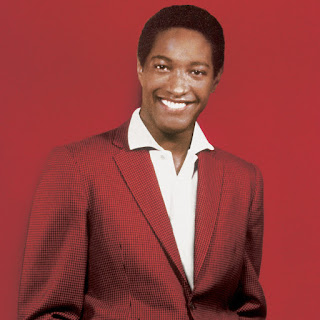
A few nights ago, I had a dream that I was hearing a song I'd never heard before. Sam Cooke, maybe the smoothest singer of the 20th Century, and a charter inductee into the Rock and Roll Hall of Fame, was singing it. The backing track was definitely in his style. It was like finding buried treasure.

But there's no way this song would have been released as a record, because it was racially motivated. Sam sung of visiting Chinatown, on Addison Road. He dragged out the A on "Addison," not like a New York or Newark accent, but beautifully.

There is no Addison Road in Sam's hometown of Chicago, but there is an Addison Street, on the North Side, and Wrigley Field, home of baseball's Chicago Cubs, is at its intersection with Clark Street. There is a song titled "Allison Road," but that was a hit for The Gin Blossoms, in 1994, 30 years after Sam's life came to a tragic and suspicious end at a "no-tell motel" in Los Angeles.

And Chicago does have a Chinatown, but it's on the South Side. Sam grew up, at 724 E. 36th Street, in a neighborhood known as Bronzeville for having so many black people living there. (A housing project is now on the site, facing Ellis Park.) Chicago's Chinatown is about a mile to the northwest, usually said to be bounded by 18th Street, Clark Street, Cermak Road (formerly 20th Street) and the South Branch of the Chicago River.

In the song, Sam spoke of his "brothers," which I took to mean a group of black men, meeting with the men of Chinatown, and teaming up in an "uneasy peace." I took "Uneasy Peace" to be the title of the song.

To my dismay, I woke up after hearing only the 1st verse. Would such an alliance have worked? Would they have moved on to a team-up with Latinos, of which Chicago already had many? There was a rise in Native American activism by the end of the 1960s, and even in 1965, Johnny Cash had an album of songs about "Indians," called Bitter Tears, so maybe they could have been added to the "uneasy peace."

I wanted to hear what happened next. Now, I never will. But I know this: If the song were real, Sam couldn't have released it. If the musical South Pacific (on stage in 1949 and in film in 1958) had to use Polynesian people as a stand-in for black people, and the musical West Side Story (on stage in 1957 and in film in 1961) had to use Puerto Ricans as an analogue for blacks, and the people backing those stories needed to use allegories to get their point of "bigotry is bad" across, there's no way the white establishment would have let Sam use a song about African-Americans and Asian-Americans teaming up, for a fight with a white gang, or simply to stand up for their rights to the white establishment.

Given that he was killed 5 months after the signing of the Civil Rights Act of 1964, a little over a year after the March On Washington and the Birmingham Church Bombing, a year and a half after the assassination of Medgar Evers, 3 months before Bloody Sunday in Selma, and 8 months before the Voting Rights Act of 1965 was signed and the Watts riot broke out not far from where he was killed, there's no way even someone with Sam's clout would have gotten away with it.

No way. Radio networks would have told their disc jockey not to play it. Sponsors of those networks would have stepped in to tell them, "Don't play it," even before the networks could tell their DJs. The people who bankrolled newspapers wouldn't have allowed print ads for the record.

Forget TV. Sam was signed to RCA Victor Records, which gave him a good deal of leeway, but not that much, and RCA also owned NBC, so Sam wasn't going to be singing that song on The Tonight Show or in a "spectacular." (By the end of the 1960s, they were being called "specials.") Ed Sullivan liked Sam, gave him his national TV debut in 1957, and had no problem with putting black people "here, on this great stage" on his "really big shew," from the beginning to the end; but CBS chairman Bill Paley and his lawyers would have put the kibosh on having Sam sing such a song. Even Sam's unintentional farewell song, the powerful but hardly offensive "A Change Is Gonna Come," might not have been allowed on the air.

Would the song have helped to widen the dialogue on race relations? Would it have helped Asians as well as blacks? Would it have helped to forge, if nothing else, an "uneasy peace" between both groups and white people? Or would it have angered white people to the point of making things worse?

I'd like to think the 2nd and 3rd verses of the song would have had a theme of, "Listen to us. Listen to your black, brown, yellow and red brothers and sisters. Your national creed says, 'All men are created equal.' That includes us. We're not asking for special treatment, just equal treatment. Give us the same chances you give each other."

It would have been a powerful message in 1965. It would be a powerful message in 2026, with Donald Trump sending men with Nazi-style tactics to round people up in Portland, Maine and Portland, Oregon -- and, apparently, to murder people in cold blood in Minneapolis.

When I heard Bruce Springsteen's rush-written, but superbly-written, new song "The Streets of Minneapolis" -- a very different song from his epic "The Streets of Philadelphia" -- and then an even angrier song on the subject by British singer Billy Bragg, I wrote this online:

Bruce Springsteen is 76. Billy Bragg is 68.

Beyoncé is 44. Bruno Mars is 40. Lady Gaga is 39. Kendrick Lamar is 38. Taylor Swift is 36. Morgan Wallen and Ariana Grande are 32. Megan Thee Stallion and Post Malone are 30. Sabrina Carpenter is 26.

What are they doing?

The implication being that these are performers in their prime, who reach more music fans than anybody else, and thus should be doing what these old men are doing, but aren't.
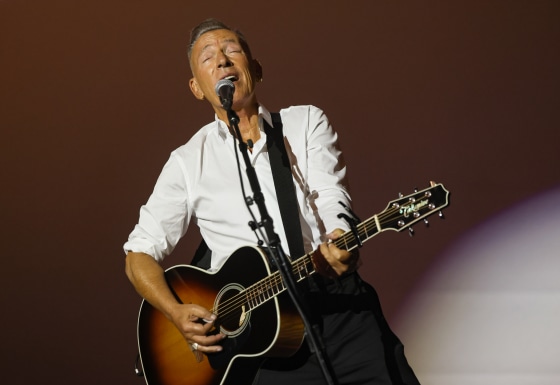
Less than 24 hours after I posted it, Lady Gaga released a cover of Mr. Rogers' theme song, "Won't You Be My Neighbor?" A lot of people said it was just what we need at this time. It doesn't directly address the subject at hand, any more than did Elvis Presley's "If I Can Dream," which closed his 1968 "Comeback Special." But, like that song, it seems to send a message of hope and brotherhood. So Gaga is off the hook: She rose to the occasion.

The rest of them, they're "on the clock." Time for them to step up. Taylor talks a good game, but she really doesn't back it up well. Megan is great on personal empowerment, but she hasn't tried to do a rally-the-people song. Kendrick has, but "Not Like Us" isn't on the same level as what Bruce just did.

One of these people needs to step up, the way Bruce did, before other old men like Paul McCartney, Bob Dylan and Paul Simon do so. Sam Cooke would be 95 if he had lived, so he'd almost certainly be out of the picture, anyway.

But we need the great performers of this time to stand up and make themselves heard on the great issues of the day, as has happened before. Bruce must be feeling like the old women at protests holding up signs referring to their previous activism.

At this point, an "uneasy peace" would be preferable to the "cold civil war" that Trump launched in 2015, and, from then until June 2020, and against from November 2024 until this week, seemed to be winning.

Now, the outcome is again in doubt. It's time for the great artists to launch "D-Day."

I don't know if there will be a "Hiroshima," but there must be a "Battleship Missouri Surrender."

Wednesday, December 11, 2024

December 11, 1964: The Death of Sam Cooke

December 11, 1964, 60 years ago: Sam Cooke dies under mysterious circumstances in Los Angeles.

Born on January 22, 1931 in Clarksdale, Mississippi, as Samuel Cook (no middle name), he was taken to Chicago by his family at age 2. He attended Wendell Phillips Academy, an all-black high school on the South Side, named for a well-known abolitionist. That school had already produced singers Nat "King" Cole and Dinah Washington, comedian George Kirby, Negro League star Ted "Double Duty" Radcliffe, and Pro Football Hall-of-Famer Buddy Young. Actress Marla Gibbs was a classmate of Sam's. The school would later produce jazz bandleader Herbie Hancock and football players Mike Pruitt and Chris Hinton.

In 1950, only 19 years old, Sam was good enough to be asked to replace R.H. Harris as lead singer of The Soul Stirrers, then the country's most popular black gospel group. He infuriated gospel fans by turning secular in 1957, adding an E to the end of his name, and had a Number 1 hit with "You Send Me."

The hits kept coming: "Only Sixteen" in 1959, "Wonderful World" and "Chain Gang" in 1960, "Cupid" in 1961, "Twistin' the Night Away" in 1962, "Another Saturday Night" in 1963, and "Good News" in 1964. Sam wrote, or co-wrote, all of these, some with his brother Charles Cook, with Robert "Bumps" Blackwell producing them. He also had hits with covers of the blues songs "Frankie and Johnny" and "Little Red Rooster."

His concerts became a sensation, including at the Copacabana in New York. Women threw themselves at him. He was married twice, raised his 1st wife's son, had 3 children with his 2nd wife, and is believed to have had 3 other children.

In 1963, he signed a contract with Allen Klein, who would later manage The Rolling Stones and mismanage The Beatles. Cooke had no problem with him, as he negotiated one of the best record-and-royalty deals any star, regardless of race, had ever gotten to that point.

That year, he heard Bob Dylan's song "Blowin' in the Wind," which had verses reflecting the civil rights and antiwar struggles. It stuck in his mind, and made him want to write a similar song. But he was afraid of losing the white fans he'd gained. So he compromised, recording "Blowin' in the Wind," and singing it at his shows. He didn't lose any fans.

On October 8, 1963, he made reservations for himself, his wife Barbara, his brother Charles, and his backing group at the Holiday Inn North in Shreveport, Louisiana, a segregated city. When they got there, the desk clerk, according to a contemporary report, "glanced nervously," and said there were no vacancies.

Sam had a fit. He demanded to see the manager, and refused to leave until he did. Barbara was scared, telling him, "They'll kill you!" He said, "They ain't gonna kill me, because I'm Sam Cooke." He must have forgotten that his fellow Phillips alumnus, Nat "King" Cole, an even bigger star, had been badly beaten onstage at a concert in Birmingham, Alabama in 1956. And that was with thousands of witnesses.

Finally, Sam was convinced to leave. He found a payphone, and called the all-black Castle Motel, and made a reservation there. The police had been tipped off: When the Cooke party got to the Castle, they were arrested for disturbing the peace. It took until 2019 for the City of Shreveport to offer an official apology to the Cooke family.

On January 30, 1964, Sam recorded a new song he'd written, "A Change Is Gonna Come." It had been 7 months since the assassination of Medgar Evers and the removal of George Wallace from the schoolhouse door, 5 months since the March On Washington that featured Martin Luther King's "I Have a Dream" speech, 4 months since the Birmingham church bombing, 3 months since the Shreveport arrest, 2 months since the assassination of John F. Kennedy, and 17 days since Dylan released his civil rights-heavy album The Times They Are A-Changin'. (It had also been 5 days since The Beatles hit Number 1 in America with "I Want to Hold Your Hand," but that had nothing to do with civil rights.)

Klein loved the song, and booked Sam on The Tonight Show Starring Johnny Carson for February 7. It was the 3rd time he'd appeared on the show. He sang "A Change Is Gonna Come." Johnny did not object. Nor did producer Fred de Cordova. Nor did NBC executives. Nor did NBC censors. Nor did NBC's sponsors. In fact, there was very little attention paid to it, mainly because this was the day The Beatles arrived in America, to perform on The Ed Sullivan Show 2 days later. (Sam had appeared on Sullivan, twice in 1957 after his initial burst of success, but hadn't done so since.)

On March 1, Sam's album Ain't That Good News was released, with "A Change Is Gonna Come" on it. But it wasn't yet released as a single. And he got nervous, not singing it in concert after The Tonight Show. On November 16, Sam recorded "Shake," a great dance number, and it was set to be released on December 22, with "A Change Is Gonna Come" as the B-side.

On December 10, 1964... We may never know the full facts. Sam was in Los Angeles, and had dinner with Al Schmitt and Schmitt's wife at Martoni's, an Italian restaurant popular with music industry people like Schmitt. They drank martinis, apparently to excess. They made plans to go to a nightclub named PJ's. The last time Schmitt saw Sam, he was at the bar at Martoni's, talking to a woman Schmitt didn't recognize.

Interviewed in 2020, Schmitt said that he and his wife went to PJ's, "But Sam never showed up. So I went home. I was told later he got there about 15 minutes later, just before closing time, and they wouldn't let him in. He was with this girl."

"This girl," apparently the same one Schmitt saw Sam talking to at the Martoni's bar, was Elisa Boyer, then 22. Sam took her to his cherry-red Ferrari, and drove her to South Central Los Angeles, to the Hacienda Motel, known to the Los Angeles Police Department as a hangout for men cheating on their wives. They checked in at 2:35 AM on December 11, signing the register as Mr. and Mrs. Sam Cooke.

Boyer told the police that Sam pinned her on the bed and began to tear off her clothes, intending to rape her. Then he went to the bathroom to take off his clothes. She then grabbed her clothes, and his as well. She found a phone booth and called the police, saying she'd been kidnapped.

The hotel's manager, Bertha Franklin, told the police that Sam, wearing the one piece of clothing he still had, a sport coat, came at her in a drunken rage, grabbed her, and asked, "Where's the girl?" She said she pushed Cooke away, grabbed a gun, and fired 3 shots. One missed, another went through Sam's heart, another through his lung. He yelled, "Lady, you shot me!" And he fell, dead, at age 33.

The LAPD, notorious for racism at the time (and for a long time after), ruled his death a justifiable homicide.

Nobody who knew Sam believed that. They knew he was a womanizer and, if not an out-and-out alcoholic, certainly a drinker. But he was not by nature a violent man. He was not known to go to "no-tell motels." His sister, Agnes Cooke-Hoskins, said, "My brother was first class all the way. He would not check into a $3-a-night motel. That wasn't his style."

And not only was the Hacienda a known hooker's hangout, but Franklin herself had a criminal record as a madam. The prevailing theory is that Boyer was a prostitute who decided to take Sam's money, and also his clothes so that he couldn't just run out after her.

What's more, at his funeral, singer Etta James noticed that he'd been beaten: "His hands were broken and crushed... They tried to cover it up with makeup, but I could see massive bruises on his head." These injuries were not mentioned in the autopsy report. Some people suspect that he was killed elsewhere, and dumped at the Hacienda, and that Boyer and Franklin were paid off to tell the story they told.

Sam had met Muhammad Ali, football star Jim Brown, and Nation of Islam spokesman Malcolm X at the Hampton House hotel in Miami after Ali won the Heavyweight Championship of the World 10 months earlier, beating Sonny Liston. Ali said, "If Cooke had been Frank Sinatra, the Beatles or Ricky Nelson, the FBI would be investigating."

His body was flown to his hometown in Chicago for one funeral, then back to Los Angeles for another. He was laid to rest at Forest Lawn Memorial Park Cemetery in the L.A. suburb of Glendale, California.

Bertha Franklin had to quit her job at the Hacienda. She died in 1966, at age 57, of a massive heart attack. The Hacienda still stands, under the name Polaris Motel, at 9137 South Figueroa Street, 4 miles (52 blocks) south of the Los Angeles Coliseum, and 7 miles (80 blocks) south of the Crypto.com Arena (formerly the Staples Center).

Sam's Ferrari from that night would figure in another rock star's death. Dennis Wilson, the drummer for the Beach Boys, bought it, and it was parked nearby when he drowned in Marina Del Rey in 1983, 19 years to the month later. In 2007, a Japanese collector bought the car.

On January 11, 1965, exactly 1 month after the murder, as "Shake" was becoming a Top 10 hit and "A Change Is Gonna Come" was struggling to reach the Top 40, Elisa Boyer was arrested for prostitution. Maybe somebody told her to "lay low," and she misunderstood. In 1979, she murdered her boyfriend, and was found guilty, and sentenced to 25 years to life in prison. As of December 11, 2024, at the age of 82, she is still incarcerated. Al Schmitt died in 2021.

In 1986, Sam Cooke was 1 of 10 charter acts inducted into the Rock and Roll Hall of Fame. Had he lived, he would have been 55. In 1989, The Soul Stirrers were elected to the Rock Hall in the "early influences" category, making Sam only the 2nd double inductee. (Clyde McPhatter had been elected as a soloist in 1987 and as one of The Drifters in 1988.)

Sam was played by Paul Mooney in The Buddy Holly Story in 1978, and Leslie Odom Jr. in One Night In Miami in 2020.

Saturday, November 12, 2011

How Old Are You Now? Music Edition

In a few weeks, I'll be 42 years old. That seems ancient. But is it?

In 1955, Boyd Bennett & the Rockets had a hit with "Seventeen." This would make her 73 years old today.

In 1958, Chuck Berry had a hit with "Sweet Little Sixteen." That same year, Johnny Maestro & the Crests had "Sixteen Candles." This would make both girls now 71.

In 1959, Sam Cooke sang "Only Sixteen," in which he played a kid who said that he and his then-girlfriend were that age a year ago. This would make both characters 71 as well.

In 1960, Johnny Burnette had a hit with "You're Sixteen." ("You're sixteen, you're beautiful, and you're mine.") This would make her 67. In 1973, Ringo Starr covered the song -- his version's girl would now be 54.

In 1961, Neil Sedaka sang "Happy Birthday Sweet Sixteen." This would make her now 66.

In 1963, Chuck Berry wrote "Memphis," in which a man tells a long-distance phone operator to "get in touch with my Marie." At the end of the song, we find out that "Marie is only six years old" and is his daughter, taken away by his estranged wife -- or perhaps his sister, and the singer is a little boy now living with "my uncle"; either way, Marie is not his girlfriend. Johnny Rivers had a much bigger hit with the song the next year. If Marie was 6 in 1963, she's 54 now.

In 1963, in the Beatles' song "I Saw Her Standing There," Paul McCartney sang, "Well, she was just 17, you know what I mean!" Assuming that this had just happened, she would now be 65.

In 1970, Alice Cooper had a hit with "I'm Eighteen." Which means the character he played in the song is now 59. Alice, real name Vincent Furnier, is 63.

In 1971, in her song "Gypsies, Tramps and Thieves," Cher sang, "I was 16, he was 21." Assuming that the events in the song had just happened (probably hadn't), she's now 56, he's 61.

In 1975, Harry Chapin released a song titled "She Is Always Seventeen." The song begins with John F. Kennedy's Inaugural Address in 1961. If she was 17 then, that means she's 67 now.

In 1976, in his song "Rock and Roll Never Forgets," Bob Seger sang, "Well, now Sweet Sixteen's turning 31." Which means she's now 66. This would match Seger's actual age.

In 1977, in his song "Running On Empty," Jackson Browne sang, "In '65, I was 17" and, "In '69, I was 21." This is true: He was born in 1948. Which means he's now 63.

In 1977, KISS had a hit song titled "Christine Sixteen." Which means she's now 50.

In 1983, the Stray Cats had a hit song titled "She's Sexy & 17." Which means she's now 45.

Probably the best-known song in which a character's age is mentioned in the lyrics, but not the title, is "It Was a Very Good Year," first recorded by the Kingston Trio in 1961, with the best-known version being the one in 1965 by Frank Sinatra.

In the song, the singer remembers the very good years he had when he was 17, 21 and 35. But the singer does not specifically say how old he is now, only that, "Now, the days are short. I'm in the autumn of the year." (Sinatra titled the album for which he recorded it September of My Years.)

Frank Sinatra was born on December 12, 1915. So if he's playing himself in the song...

* He was 17 for nearly all of 1933. I seriously doubt that this Depression year was a good year for an Italian teenage boy in Hoboken, New Jersey.

* He was 21 for nearly all of 1937. It might have been better, but he didn't become famous as a singer until 1940 or so.

* He was 35 for nearly all of 1951. That was actually a horrible year for Sinatra: His 2nd wife, the fabulous (in more ways than one) actress Ava Gardner, left him, and his career was going badly. He began to lose his voice due to psychosomatic stress.

But the days did not turn out to be short for him, at least not at that point. September of My Years actually boosted his career, and at 50 he became bigger than ever before. He continued to perform before adoring crowds until 1994, when his health started to fail. He died on May 14, 1998, age 82.

If you were 13 and screaming over Sinatra outside the Paramount Theater in Times Square in 1944, you're now 80.

If you were 13 and screaming over Elvis Presley when he went national in 1956, you're now 68.

If you were 13 when the Beatles arrived in America in early 1964 (if so, surely, you were screaming over them), you're now 60 or 61.

And, if, like me, you were 13 in 1983 when Michael Jackson changed from Motown kid to an Elvis-sized phenomenon in his own right, you're now 42.

*

For me, 17, 1987, was a very good year -- until the end; 21, 1991, had its good moments, but also some dreadful ones; 35, 2005, was, in some ways, the best year of my life, but in some aspects (sports, for example) it was not a year I would care to repeat.

42? According to Douglas Adams, in his Hitchhiker's Guide to the Galaxy series, 42 is "the answer to life, the universe and everything."

It's also the only uniform number retired for all of baseball, for Jackie Robinson.

In the original, British, soccer-themed version of Fever Pitch, the climactic scene revolves around the final game of the 1989 Football League season, in which London-based Arsenal Football Club had to defeat Liverpool Football Club by 2 goals in order for the tiebreakers to fall into place and give them the title. This at a time when they hadn't won at Anfield, Liverpool's home ground, by any score in 15 years.

When the game reaches halftime scoreless, Steve (played by Mark Strong) says, "We're doing okay, aren't we?"

Paul (Colin Firth): "Well, what's the use of 'okay'? We might as well be losing 8-0!"

Steve: "I don't think that's really true, Paul. I'd say, if you want to win a game 2-0, you've got a much better chance if it's 0-0 (pronounced "nil-nil") at halftime than if you're 8 goals down. You see where I'm coming from?"

Paul: "You're living in cloud-cuckoo-land! Join the real world!"

Steve: "In the real world, it's 0-0 at halftime!"

Paul: "Might as well be 8-0."

Steve: "Jesus, Paul! You need medical help! You've got some kind of disease that turns people into miserable bastards!"

42 times 2 = 84. These days, it's hardly surprising for a man to live to be 84 years old. Unless he's lived his life like a cross between Evel Knievel, Charlie Sheen and a Mob hitman.

No, life isn't great for me. But it's been considerably worse. I haven't had a lot of offense, but I haven't allowed too many goals, either.

Maybe my life really is "nil-nil at halftime."

And Arsenal did win that game, 2-0, and win the title. If they could do it...