Showing posts with label nasl. Show all posts

Friday, November 7, 2025

Cities' World Championships, 1871-2025

Just in case someone feels like calling Los Angeles "The City of Champions."

This includes the big four: Major League Baseball (MLB), the National Football League (NFL, counting a Super Bowl won in January toward the previous calendar year, so the 1969 Jets are 1968 World Champions), the National Basketball Association (NBA) and the National Hockey League (NHL).

It also includes the pre-NBA National Basketball League from 1936 to 1946, the American Basketball League from 1926 to 1946, Stanley Cups won in the pre-NHL era from 1893 to 1917, the Women's National Basketball Association (WNBA), the old North American Soccer League (NASL, 1968 to 1984), and Major League Soccer (MLS Cup). It does not, however, include the Canadian Football League (CFL)'s Grey Cup; or "rebel leagues" like the AAFC, the AFL, the ABA and the WHA.

Ties will be broken by the most recent title.

For NFL teams, in the Super Bowl era, 1967-onward, the years listed will be the calendar year for the regular season, not the calendar year of the Super Bowl. In other words: The Philadelphia Eagles are the 2025 Super Bowl winners, but that makes them the 2024 NFL Champions.

Also, despite what we now know to be true, and what we suspect to be true, none of these titles will be given an asterisk. Giving Boston a higher ranking than they deserve.

1. New York (includes North Jersey & Long Island), 74: 
* Baseball: New York Giants, 1888, 1889, 1905, 1921, 1922, 1933 and 1954; Brooklyn Dodgers, 1899, 1900 and 1955; New York Yankees, 1923, 1927, 1928, 1932, 1936, 1937, 1938, 1939, 1941, 1943, 1947, 1949, 1950, 1951, 1952, 1953, 1954, 1956, 1958, 1961, 1962, 1977, 1978, 1996, 1998, 1999, 2000 and 2009; New York Mets, 1969 and 1986.
* Football: New York Giants, 1927, 1934, 1938, 1956, 1986, 1990, 2007 and 2011; New York Jets, 1968.
* Basketball: Original Celtics, 1927 and 1928; Brooklyn Visitations, 1931 and 1935; Jersey Reds, 1938; New York Jewels, 1939; New York Knicks, 1970 and 1973; New York Liberty, 2024. The team now known as the Brooklyn Nets lost NBA Finals in 2002 and 2003, as the New Jersey Nets; and won the ABA Championship in 1974 and 1976, as the New York Nets.
* Hockey: New York Rangers, 1928, 1933, 1940 and 1994; New York Islanders, 1980, 1981, 1982 and 1983; New Jersey Devils, 1995, 2000 and 2003.
* Soccer: New York Cosmos, 1972, 1977, 1978, 1980 and 1982; New York City FC, 2021. The New York Red Bulls lost the MLS Cup Final in 2008 and 2024.

2. Boston (includes Foxboro, Providence, Hartford & Mohegan Sun), 55: 
Boston Braves, 1872, 1873, 1874, 1875, 1877, 1878, 1879, 1883, 1884, 1891, 1892, 1893, 1897, 1898 and 1914; Boston Red Sox, 1903, 1904, 1912, 1915, 1916, 1918, 2004, 2007, 2013 and 2018; New England Patriots, 2001, 2003, 2004, 2014, 2016 and 2018; Boston Celtics, 1957, 1959, 1960, 1961, 1962, 1963, 1964, 1965, 1966, 1968, 1969, 1974, 1976, 1981, 1984, 1986, 2008 and 2024; Boston Bruins, 1929, 1939, 1941, 1970, 1972 and 2011.

The Connecticut Sun lost the WNBA Finals in 2004 and 2005. The New England Revolution have lost 5 MLS Cup Finals, most recently in 2014.

3. Montreal, 41: Montreal AAA, 1893, 1894, 1902 and 1903; Montreal Victorias, 1895, 1896, 1897, 1898 and 1901; Montreal Shamrocks, 1899 and 1900; Montreal Wanderers, 1906, 1907, 1908 and 1910; Montreal Canadiens, 1916, 1924, 1930, 1931, 1944, 1946, 1953, 1956, 1957, 1958, 1959, 1960, 1965, 1966, 1968, 1969, 1971, 1973, 1976, 1977, 1978, 1979, 1986, 1993; Montreal Maroons, 1926 and 1935.

The Montreal Expos never reached the World Series. CF Montréal, formerly the Montreal Impact, have never reached the MLS Cup Final. The Montreal Alouettes have won 8 Grey Cups, most recently in 2023.

4. Los Angeles (includes Anaheim & Inglewood), 39: Los Angeles Dodgers, 1959, 1963, 1965, 1981, 1988, 2020, 2024, 2025; Los Angeles Angels, 2002; Los Angeles Rams, 1951 and 2021; Los Angeles Raiders, 1983; Los Angeles Lakers, 1972, 1980, 1982, 1985, 1987, 1988, 2000, 2001, 2002, 2009, 2010 and 2020; Los Angeles Sparks, 2001, 2002, 2003 and 2016; Anaheim Ducks, 2007; Los Angeles Kings, 2012 and 2014; Los Angeles Aztecs, 1974; L.A. Galaxy, 2002, 2005, 2011, 2012, 2014 and 2024, plus the CONCACAF Champions League in 2000; Los Angeles FC, 2022.

The Los Angeles Clippers have never reached the NBA Finals.

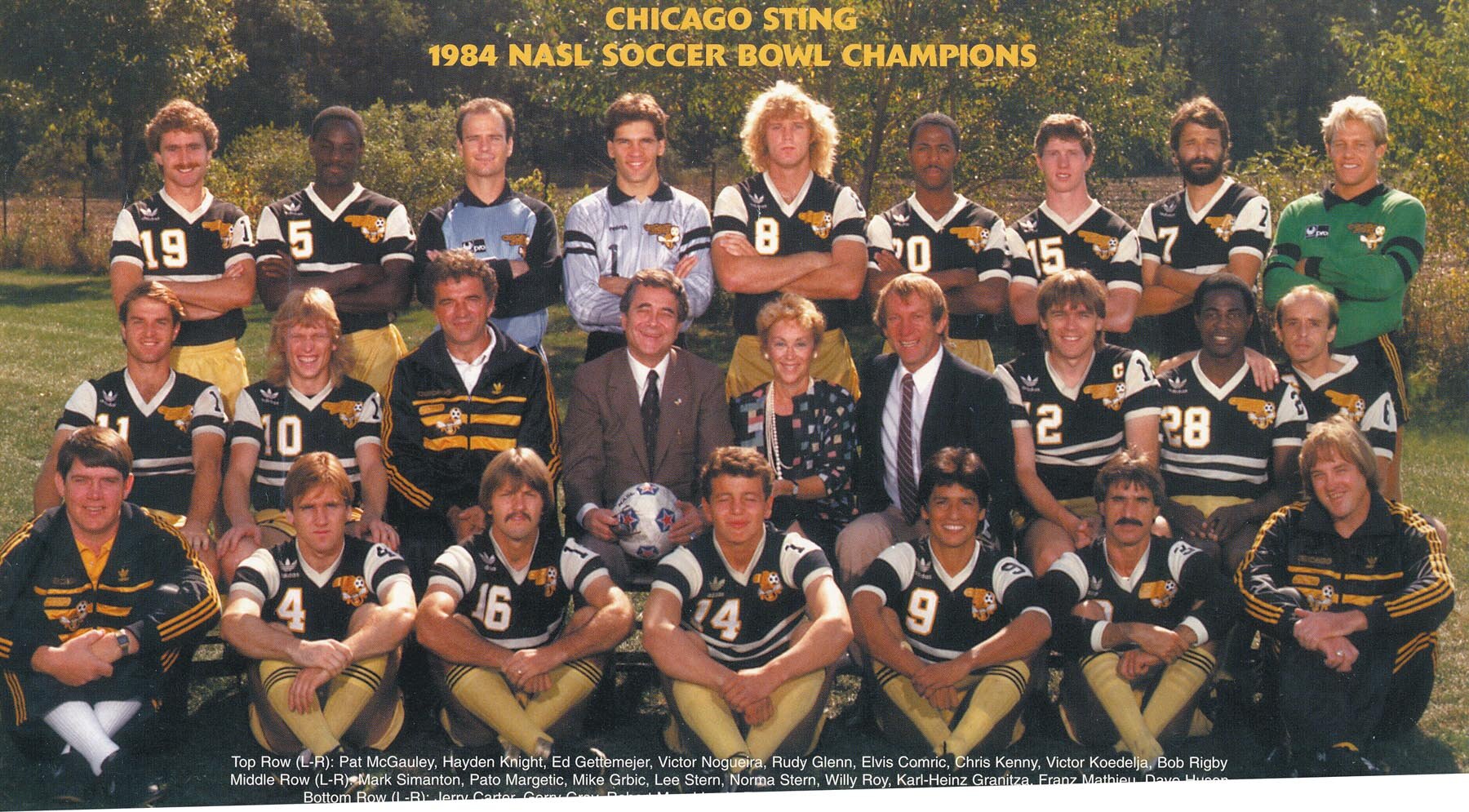
5. Chicago, 38: Chicago Cubs, 1876, 1880, 1881, 1882, 1907, 1908 and 2016; Chicago White Sox, 1906, 1917 and 2005; Chicago Bears, 1921, 1932, 1933, 1940, 1941, 1943, 1946, 1963 and 1985; Chicago Cardinals, 1925 and 1947; Chicago American Gears, 1947; Chicago Bulls, 1991, 1992, 1993, 1996, 1997 and 1998; Chicago Sky, 2021; Chicago Blackhawks, 1934, 1938, 1961, 2010, 2013 and 2015; Chicago Sting, 1981 and 1984; Chicago Fire, 1998.

6. Philadelphia (includes South Jersey & Delaware), 30: Philadelphia Athletics (National Association version), 1871; Philadelphia Athletics (American League version), 1910, 1911, 1913, 1929 and 1930; Philadelphia Phillies, 1980 and 2008; Frankford Yellow Jackets, 1926; Philadelphia Eagles, 1948, 1949, 1960, 2017 and 2024; Philadelphia Warriors (formerly the ABL's SPHAs), 1934, 1936, 1937, 1940, 1941, 1943, 1945, 1947 and 1956; Wilmington Bombers, 1942 and 1944; Philadelphia 76ers, 1967 and 1983 Philadelphia Flyers, 1974 and 1975; Philadelphia Atoms, 1973.
The Philadelphia Union reached the 2022 MLS Cup Final, but lost. Philadelphia is scheduled to get a WNBA team in 2030, upon the completion of a new arena.
7. Detroit (includes Pontiac & Auburn Hills), 26: Detroit Wolverines, 1887; Detroit Tigers, 1935, 1945, 1968 and 1984; Detroit Lions, 1935, 1952, 1953 and 1957; Detroit Pistons, 1989, 1990 and 2004; Detroit Shock, 2003, 2006 and 2008; Detroit Red Wings, 1936, 1937, 1943, 1950, 1952, 1954, 1955, 1997, 1998, 2002 and 2008.
Detroit is scheduled to get a WNBA team in 2029.
8. San Francisco (includes Oakland & San Jose), 22: Oakland Athletics, 1972, 1973, 1974 and 1989; San Francisco Giants, 2010, 2012 and 2014; Oakland Raiders, 1976 and 1980 (1983 doesn't count, they were then representing Los Angeles); San Francisco 49ers, 1981, 1984, 1988, 1989 and 1994; Golden State Warriors, 1975, 2015, 2017, 2018 and 2022; San Jose Earthquakes, 2001 and 2003.

The Golden State Valkyries are a new WNBA team. The San Jose Sharks reached the 2016 Stanley Cup Finals, but lost. The Oakland Seals, a.k.a. the California Golden Seals, never reached the Finals.

9. Milwaukee (includes Green Bay, Oshkosh & Sheboygan), 19: Milwaukee Braves, 1957; Green Bay Packers, 1929, 1930, 1931, 1936, 1939, 1944, 1961, 1962, 1965, 1966, 1967, 1996, and 2011; Oshkosh All-Stars, 1941 and 1942; Sheboygan Redskins, 1943; Milwaukee Bucks, 1971 and 2021.

The Milwaukee Brewers have won just 1 Pennant, and lost the World Series.

10. Toronto, 19: Toronto Blue Jays, 1992 and 1993; Toronto Raptors, 2019; Toronto Blueshirts, 1914; Toronto Maple Leafs, 1918, 1922, 1932, 1942, 1945, 1947, 1948, 1949, 1951, 1962, 1963, 1964, 1967; Toronto Metros, 1976; Toronto FC, 2017.

The Toronto Argonauts have won the most Grey Cups, 19, most recently in 2024. The Toronto Tempo will begin play in the WNBA in 2026.

11. Cleveland (includes Akron & Richfield), 17: Cleveland Guardians, 1920 and 1948 (then as the Cleveland Indians); Akron Pros, 1920; Canton Bulldogs, 1922, 1923 and 1924; Cleveland Browns, 1950, 1954, 1955 and 1964; Cleveland Rosenblums, 1926, 1929 and 1930; Akron Wingfoots, 1938; Akron Non-Skids, 1939 and 1940; Cleveland Cavaliers, 2016.
The Cleveland Rockers reached the 2008 WNBA Finals, but lost. Cleveland is scheduled to get a new WNBA team, as yet unnamed, in 2028.
12. St. Louis, 16: St. Louis Cardinals, 1885, 1886, 1926, 1931, 1934, 1942, 1944, 1946, 1964, 1967, 1982, 2006, 2011; St. Louis Rams, 1999; St. Louis Hawks, 1958; St. Louis Blues, 2019.
The NFL's Cardinals never reached a championship game while they played in St. Louis. St. Louis City have not yet reached the MLS Cup Final.
13. Pittsburgh, 16: Pittsburgh Pirates, 1909, 1925, 1960, 1971 and 1979; Pittsburgh Steelers, 1974, 1975, 1978, 1979, 2005 and 2008; Pittsburgh Penguins, 1991, 1992, 2009, 2016 and 2017.
The Pittsburgh Pipers won the 1968 ABA Championship.
14. Washington (includes Landover), 14: Washington Senators, 1924; Washington Nationals, 2019; Washington Commanders, 1937, 1942, 1982, 1987 and 1991 (then the Washington Redskins); Washington Wizards, 1978 (then the Washington Bullets); Washington Mystics, 2019; Washington Capitals, 2018; D.C. United, 1996, 1997, 1999, 2004, plus the CONCACAF Champions League in 1998.
15. Baltimore, 12: Baltimore Orioles (National League version), 1894, 1895 and 1896; Baltimore Orioles (American League version), 1966, 1970 and 1983; Baltimore Colts, 1958, 1959 and 1970; Baltimore Ravens, 2000 and 2012; Baltimore Bullets, 1948.
That original version of the Bullets folded in 1954. The team that replaced them in 1963 reached the 1971 NBA Finals, but lost, and moved to Washington in 1973, and are now the Washington Wizards.
16. Minneapolis (includes St. Paul & Bloomington), 11: Minnesota Twins, 1987 and 1991; Minneapolis Lakers, 1949, 1950, 1952, 1953 and 1954; Minnesota Lynx, 2011, 2013, 2015 and 2017.
The Minnesota Vikings are 0-4 in Super Bowls. The Minnesota Timberwolves have never reached the NBA Finals. The Minnesota Wild have not yet reached the Stanley Cup Finals, while the Minnesota North Stars lost them in 1981 and 1991. Minnesota United have never reached the MLS Cup Final.
17. Ottawa, 11: Old Ottawa Senators, 1903, 1904, 1905, 1906, 1909, 1910, 1911, 1920, 1921, 1923, 1927. The new Senators reached the Stanley Cup Finals in 2007, but lost. The Ottawa Rough Riders won 9 Grey Cups, while the Ottawa Redblacks won the Grey Cup in 2016.
18. Houston, 10: Houston Astros, 2017 and 2022; Houston Rockets, 1994 and 1995; Houston Comets, 1997, 1998, 1999 and 2000; Houston Dynamo, 2006 and 2007. The Houston Texans have not yet reached a Super Bowl. Nor did the Houston Oilers, although they did win the 1st 2 AFL Championships in 1960 and 1961.
19. Kansas City (includes K.C., Missouri & K.C., Kansas), 9: Kansas City Royals, 1985, 2015; Kansas City Chiefs, 1969, 2019, 2022, 2023; Kansas City Spurs, 1969; Sporting Kansas City, 2000 and 2013. The Kansas City Kings, now the Sacramento Kings, never reached the NBA Finals.
20. Seattle, 9: Seattle Seahawks, 2013; Seattle SuperSonics, 1979; Seattle Storm, 2004, 2010, 2018, 2020; Seattle Metropolitans, 1917; Seattle Sounders, 2016, 2019. The Seattle Mariners have reached 4 American League Championship Series, but have never won a Pennant.
21. Dallas (includes Arlington & Irving), 9: Texas Rangers, 2023; Dallas Cowboys, 1971, 1977, 1992, 1993 and 1995; Dallas Mavericks, 2011; Dallas Stars, 1999; Dallas Tornado, 1971. The Dallas Wings have not yet reached the WNBA Finals under that name, despite winning 3 titles as the Detroit Shock. FC Dallas reached the MLS Cup Final in 2010, but lost.
22. Miami (includes Fort Lauderdale), 9: Miami Marlins, 1997 and 2003; Miami Dolphins, 1972 and 1973; Miami Heat, 2006, 2012 and 2013; Florida Panthers, 2024 and 2025. Inter Miami have not yet reached the MLS Cup Final.
23. Denver, 7: Denver Broncos, 1997 and 1998; Denver Nuggets, 2023; Colorado Avalanche, 1996, 2001 and 2022; Colorado Rapids, 2010. The Colorado Rockies have never won a World Series, getting swept in their only attempt in 2007. The hockey team of the same name only reached 1 Playoff series in its 6 seasons.
24. Tampa Bay (includes Tampa & St. Petersburg), 5: Tampa Bay Buccaneers, 2002, 2020; Tampa Bay Lightning, 2004, 2020, 2021; Tampa Bay Rowdies, 1975. The Tampa Bay Rays are 0-2 in World Series.
25. San Antonio, 5: San Antonio Spurs, 1999, 2003, 2005, 2007 and 2014.
26. Cincinnati, 5: Cincinnati Reds, 1919, 1940, 1975, 1976 and 1990. The Cincinnati Bengals won the AFC Championship in 1981, 1988 and 2021, but lost all 3 Super Bowls. The Cincinnati Royals never reached the NBA Finals. FC Cincinnati have not reached the MLS Cup Final.
27. Edmonton, 5: Edmonton Oilers, 1984, 1985, 1987, 1988 and 1990. The Edmonton Elks, formerly the Edmonton Eskimos, have won 14 Grey Cups, most recently in 2015.

28. Las Vegas, 4: Las Vegas Aces, 2022, 2023 and 2025; Vegas Golden Knights, 2023. The Las Vegas Raiders have not reached a Super Bowl since arriving.

29. Atlanta, 4: Atlanta Braves, 1995, 2021; Atlanta Chiefs, 1968; Atlanta United, 2018. The Atlanta Falcons won the 1998 NFC title, but lost the Super Bowl. The Atlanta Hawks have never reached the NBA Finals (not since they were in St. Louis, anyway). The Atlanta Dream are 0-3 in WNBA Finals. Neither the Atlanta Flames (before they moved to Calgary) nor the Atlanta Thrashers (now the new Winnipeg Jets) got anywhere near the Stanley Cup Finals. 

30. Phoenix (includes Glendale), 4: Arizona Diamondbacks, 2001; Phoenix Mercury, 2007, 2009 and 2014. The Arizona Cardinals won the 2008 NFC Championship, but lost the Super Bowl. The Phoenix Suns are 0-3 in NBA Finals. The Arizona Coyotes never reached the Stanley Cup Finals.

31. Indianapolis (includes Fort Wayne & Anderson), 4: Indianapolis Colts, 2006; Fort Wayne Pistons, 1944 and 1945; Indiana Fever, 2012. The Indiana Pacers won 3 ABA titles, but lost their only NBA Finals appearance in 2000.

32. Buffalo (includes Orchard Park, Rochester & Syracuse), 4: Rochester Royals, 1946 and 1951; Syracuse Nationals, 1955; Rochester Lancers, 1970. That's it. Despite the temporary status of the Toronto Blue Jays in 2020 and 2021, Buffalo has not officially been represented in MLB since 1915 (and if you don't count the Federal League, not since 1885). The Buffalo Bills' 1964 and 1965 AFL titles don't count, and they're 0-4 in Super Bowls. The Buffalo Braves never reached an NBA Finals. The Buffalo Sabres are 0-2 in Stanley Cup Finals.

33. Columbus (not close enough to counted with Cincinnati), 3: Columbus Crew, 2008, 2020, 2023. The Columbus Blue Jackets have never reached the Stanley Cup Finals.

34. Winnipeg, 3: Winnipeg Victorias, 1896, 1901 and 1902. The old Winnipeg Jets won the Avco Trophy, the World Hockey Association title, in 1976, 1978 and 1979; but neither the old Jets (who became the Phoenix/Arizona Coyotes and may be about to move again) nor the new ones (the former Atlanta Thrashers) have ever been to the Stanley Cup Finals. The Winnipeg Blue Bombers have won 12 Grey Cups, most recently in 2021.

35. Oklahoma (includes Oklahoma City & Tulsa), 2: Tulsa Roughnecks, 1983; Oklahoma City Thunder, 2025. The team that won 3 WNBA titles as the Detroit Shock, and now known as the Dallas Wings, did not reach the WNBA Finals as the Tulsa Shock.
36. Portland, 2: Portland Trail Blazers, 1977; Portland Timbers, 2015 MLS Cup. The Portland Fire are scheduled to debut in the WNBA in 2026.
37. Vancouver, 2: Vancouver Millionaires, 1915; Vancouver Whitecaps, 1979. The Vancouver Canucks are 0-3 in Stanley Cup Finals. The reborn Whitecaps haven't yet reached an MLS Cup Final. The BC Lions have won 6 Grey Cups, most recently in 2011.

38. Quebec City, 2: Quebec Bulldogs, 1912 and 1913. The Quebec Nordiques won the Avco Trophy in 1977, but never made the Stanley Cup Finals.
39. New Orleans, 1: New Orleans Saints, 2009. The city's NBA teams (the Jazz, 1974 to 1979; and the Hornets/Pelicans, since 2002) have never reached the NBA Finals. The Buccaneers won the 1st ABA title in 1968, but that doesn't count here.
40. Salt Lake City, 1: Real Salt Lake, 2009. The Utah Jazz are 0-2 in NBA Finals, although the Utah Stars won the 1971 ABA title.
41. Carolina (includes Charlotte & Raleigh), 1: 2006 Carolina Hurricanes. The Carolina Panthers won the 2003 and 2015 NFC titles, but lost both Super Bowls. The Charlotte Hornets and Charlotte FC have never made their sports' finals.

42. Sacramento, 1: Sacramento Monarchs, 2005. The Kings have never reached the NBA Finals, though some think their 2001 denial was asterisk-worthy. The Sacramento Athletics have newly arrived, and have not reached the World Series.

43. Calgary, 1: Calgary Flames, 1989. The Calgary Stampeders have won 8 Grey Cups, most recently in 2018.

44. Victoria (British Columbia, not close enough to be counted with Vancouver), 1: Victoria Cougars, 1925.
45. Orlando, none: The Orlando Magic have been to the NBA Finals in 1995 and 2009, but lost both. Orlando City have won the 2022 U.S. Open Cup, but have not reached the MLS Cup Final.
46. Tennessee (includes Memphis & Nashville), none: The Tennessee Titans won the AFC title in 1999, but lost the Super Bowl. The Nashville Predators reached the 2017 Stanley Cup Finals, but lost. Nashville SC have won the 2025 U.S. Open Cup, but have not reached the MLS Cup Final. The Memphis Grizzlies have not yet reached the NBA Finals.
47. San Diego, none: The closest they've come is the San Diego Chargers winning the 1963 AFL Championship. The Chargers won the AFC title in 1994, but lost the Super Bowl. The San Diego Padres are 0-2 in the World Series. The San Diego Clippers got nowhere near the NBA Finals before moving to Los Angeles. San Diego FC are a new team in MLS, and have not yet reached the MLS Cup Final.
48. Jacksonville, none: Their closest call is the 2 AFC Championship Games reached by the Jacksonville Jaguars, in the 1996, 1999 and 2017 seasons.
49. Austin, none: With the advent of Austin FC in MLS in 2021, Austin is the newest metropolitan area currently with a team in either MLB, the NFL, the NBA, the NHL or MLS.
50. Hamilton, Ontario, none: The long-defunct hockey version of the Hamilton Tigers never reached the Stanley Cup Finals. The Hamilton Tiger-Cats have won 8 Grey Cups, most recently in 1999. Of the teams that are part of their heritage, the Hamilton Tigers won 5, and the Hamilton Wildcats won 1.
51. Regina, Saskatchewan, none: The Saskatchewan Roughriders have won 4 Grey Cups, most recently in 2013.
52. Sarnia, Ontario, none: The long-defunct Sarnia Imperials won 2 Grey Cups.

Thursday, October 3, 2024

October 3, 1984: The Last North American Soccer League Game

October 3, 1984, 40 years ago: Soccer Bowl '84 is played at Varsity Stadium in Toronto. Playing Soccer Bowl '83 in Canada (albeit all the way across the country in Vancouver) didn't help the Toronto Blizzard the year before, and playing on their actual home field doesn't help them now, as they lose 3-2 to the Chicago Sting.

The Blizzard -- who won the North American Soccer League title in 1976, as "Toronto Metros-Croatia" -- trailed 2-0 after 70 minutes, but scored twice in 3 minutes to equalize. But Patricia "Pato" Margetic, the Argentine striker who'd scored the Sting's 2nd goal, scores in the 82nd to win it.

Attendance at the 21,739-seat Varsity Stadium is just 16,842. No one knows it yet, but this is the last game that the original NASL will ever hold.

The Sting, who had also won the title in 1981, had already announced that this would be their last season in the League, as they had already been admitted to the Major Indoor Soccer League -- which played soccer in arenas on hockey rinks covered with artificial turf, with the boards ensuring the ball wouldn't go out of bounds unless it went over the boards, resulting in higher scores. It was exciting, but it was a bastardized version of the sport, something that no one would have called "The Beautiful Game." Instead, it was called "pinball soccer." 

Clive Toye, who built the New York Cosmos' dynasty, and also the Sting's '81 champs, was now running the Blizzard, and made postgame comments that Sting coach Willy Roy and striker Karl-Heinz Granitza -- both Germans, and the latter would later honor his Chicago experience by running a bar in Berlin named State Street -- were "cheats," and that the Sting were "unworthy champions."

During the ensuing off-season, NASL President Howard Samuels died, and Toye was named interim President. Then the Cosmos folded, due to striker/part-owner Giorgio Chinaglia's mismanagement. Without the flagship franchise, the League was doomed, no matter what Toye did, and he did try.

But when the time came to prepare for a 1985 season, only 2 teams -- the Blizzard and the Minnesota (formerly Fort Lauderdale) Strikers -- were still interested in playing, and the League folded, after 17 seasons. North America was without a "first division" in soccer for 11 years, setting the sport in the United States back a generation. The damage was incalculable.

Another league named the North American Soccer League played from 2011 to 2017, but it was never more than a second division, behind Major League Soccer, founded in 1996. The Chicago Fire would win the MLS Cup in 1998; Toronto FC, in 2017.

*

There was another, much-more-watched, sporting event involving a Chicago team on October 3, 1984. The Chicago Cubs, playing in their 1st postseason series since the 1945 World Series, beat the San Diego Padres, playing in their 1st postseason series since their founding in 1969, in Game 2 of the National League Championship Series. The game, at Wrigley Field in Chicago, ended 4-2 in the Cubs' favor.

The Cubs now needed just 1 more win to win their 1st Pennant in 39 years. It would take them another 32 years to win that Pennant.

The fact that ABC got great ratings for this series in the Chicago area, but lousy ratings everywhere else, led to a decision from the new Commissioner of Baseball, Peter Ueberroth: From now on, all postseason games would have to be played at stadiums that had lights, because the team owners wanted the revenue that came from games on prime-time TV. And Wrigley was the last stadium that didn't have lights.

Ueberroth ruled that, the next time the Cubs made the Playoffs, they would have to play their "home games" at the next-closest stadium in the National League Eastern Division, which they were in. But that would have been Busch Memorial Stadium, home of the St. Louis Cardinals, their arch-rivals. Why not Comiskey Park, home of the crosstown Chicago White Sox? Ueberroth didn't say.

So the process for putting lights up at Wrigley Field began. In 1988, the 1st night game was played there. In 1989, the next time the Cubs won the NL East, they hosted night games in the NLCS. In 1990, they hosted the All-Star Game there, which they also wouldn't have been allowed to do without lights.  Game 4 of the 1984 World Series remains the last World Series game to be played entirely in daylight.

Thursday, December 29, 2022

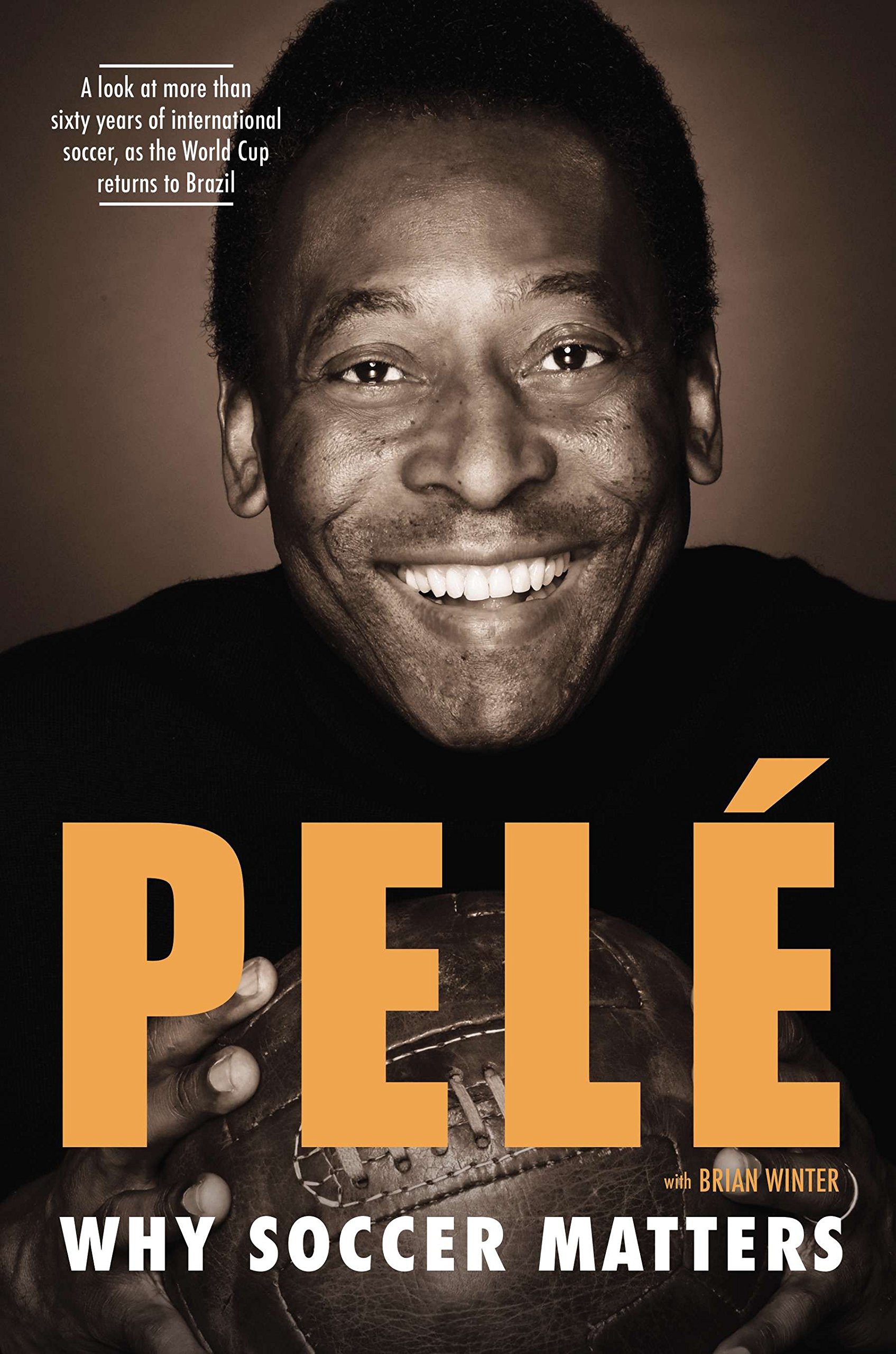
Pelé, 1940-2022

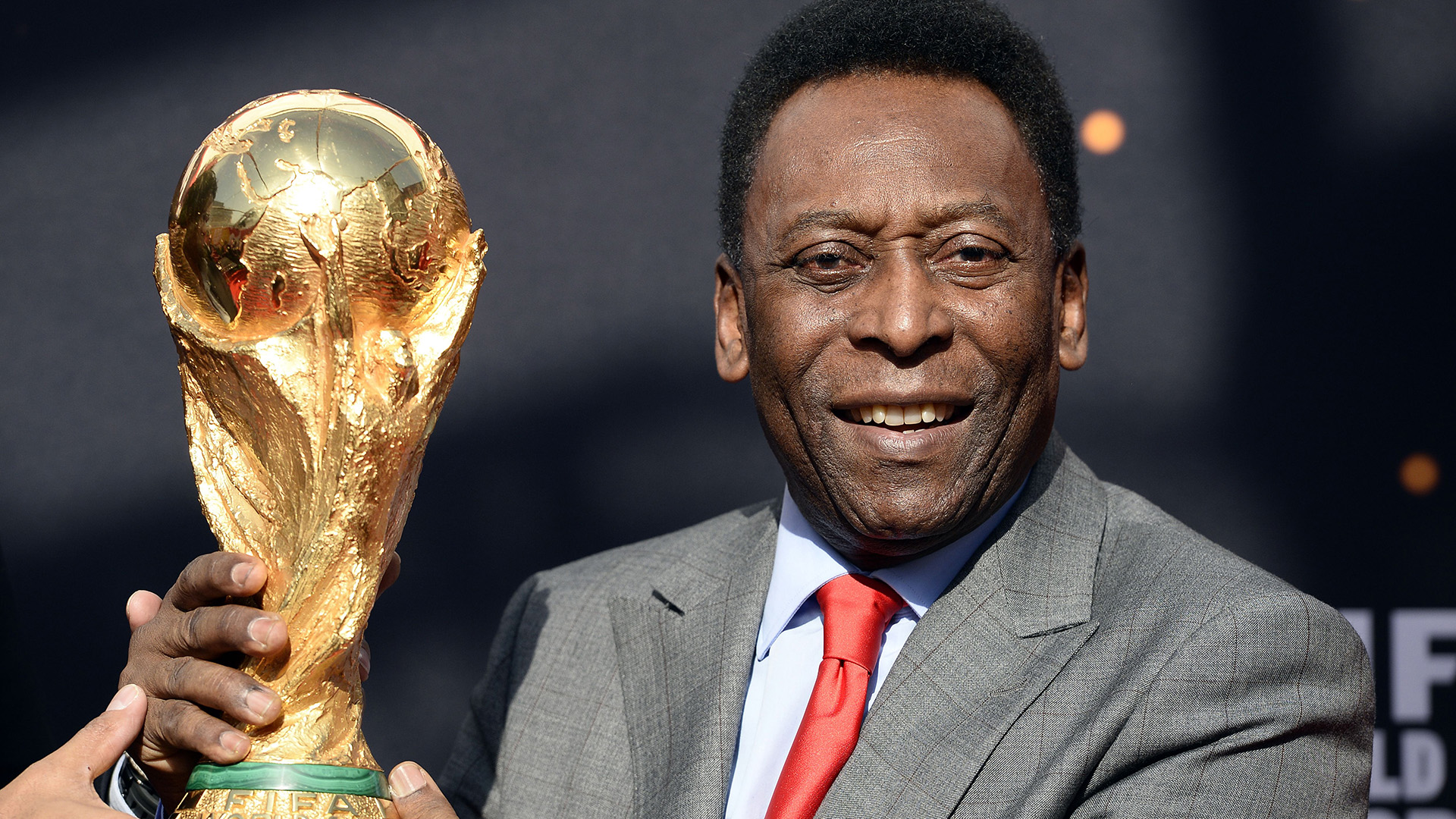
He never won this trophy. He won the previous version 3 times.

The word "GOAT," meaning "Greatest Of All Time," frequently gets thrown around for current soccer stars Lionel Messi and Cristiano Ronaldo. Neither one is the greatest. Both have cheated, and have benefited from the cheating of teammates. Given a certain Brazilian forward, Cristiano isn't even the greatest Ronaldo to play for Real Madrid in the 21st Century.

But even Ronaldo de Lima must bow to another Brazilian as the greatest player in the history of the sport.

Edson Arantes do Nascimento was born on October 23, 1940 in Três Corações (Three Hearts), Minas Gerais, Brazil. His father, João Ramos do Nascimento, was a forward known as Dondinho. He was much-heralded, but a knee injury curtailed his career.

Like millions of Brazilians, he broke down in tears upon hearing his homeland's defeat, on home soil, to Uruguay in the 1950 World Cup Final. The defeat, at the new Stadio Maracanã in Rio de Janeiro, became known as Maracanaço"The Agony of Maracanã."

Edson, then 9 years old, told his father that, one day, he would win the World Cup for him. Dondinho would live to see Brazil win it 4 times, the 1st 3 with his son.

Edson, named for inventor Thomas Edison, whom Dondinho admired, grew up in Bauru, in the Brazilian State of São Paulo. Like his father, and most other Brazilian "futebol" players, he became known by a single name. Often it's the player's first name, but it would not be "Edson" by which he would be known. Nor would it be "Dico," which his family had called him.

As a boy, his favorite player was a goalkeeper for Rio de Janeiro team Vasco da Gama, known as Bilé. But in his accent, "Bee-LAY" became "Peh-LAY." The more he was called "Pelé," the more he complained, but the more it stuck. While the Hebrew word for "miracle" is pronounced "Peh-LAY," the word "Pelé" has no known meaning in Brazil's main language, Portuguese.

As a teenager, Pelé was among the earliest group of Brazilians to play indoor soccer, which he said forced him to think and act more quickly, making him better at the traditional outdoor version. In 1956, only 15 years old, he was signed to Santos Futebol Clube of Santos, an industrial and port city near the city of São Paulo.

He remained with Santos for 18 years, as the club refused all offers from the giants of South American, and eventually European, football. He helped them win the Campeonato Paulista, the State Championship, 10 times. He helped them win the Campeonato Brasileiro Série A, the National Championship, 6 times, including 5 in a row from 1961 to 1965.
Pelé in uniform for Santos

He helped them win back-to-back titles in the Copa Libertadores, the South American continental club championship. Each time, they beat the winners of the European Cup to win the Intercontinental Cup (now called the FIFA Club World Cup): Benfica of Lisbon, Portugal, featuring Eusébio, in 1962; and AC Milan of Italy, featuring Gianni Rivera, in 1963. (Like Pelé, Eusébio, a native of the African nation of Mozambique, then a colony of Portugal, is the greatest player his continent has ever produced. Also like Pelé, he was nicknamed "The Black Pearl.")

After the 1962 Intercontinental Cup, in which Pelé scored 3 goals, Benfica goalkeeper Costa Pereira said, "I arrived hoping to stop a great man, but I went away convinced I had been undone by someone who was not born on the same planet as the rest of us."

Not yet 18 years old, the Brazilian national team, Seleção (The Selection), called him up for the 1958 World Cup in Sweden. The Seleção was a mix of black and white players, and the very white Scandinavian people of Sweden were very intrigued by them. Pelé, away from his homeland for the 1st time, and his teammates essentially had their choice of whatever women were willing to throw themselves at them. Did I mention that he was not yet 18?

In the Group Stage, Brazil beat Austria 3-0 at Uddevalla, drew 0-0 with England at Gothenberg, and beat the Soviet Union 2-0 at Gothenburg. In the 66th minute of the Quarterfinal against Wales, also in Gothenburg, Pelé scored his 1st World Cup goal, and Brazil won, 1-0. (That's as far as Wales got: Northern Ireland also made it to the Knockout stage, but England didn't.) In the Semifinal at Solna, Pelé exploded onto the world stage with a hat trick, as Brazil beat a strong France team led by Raymond Kopa and Just Fontaine, 5-2.

The Final was held on June 29, 1958, at the Råsunda Fotbollsstadion in Solna, outside Stockholm. Brazil played the host nation -- which must have given some of their fans flashbacks to 1950, knowing that the home team could be beaten in the Final. Sweden had Gunnar Gren and Nils Liedholm, although Gunnar Nordahl, the other member of "Gre-No-Li," the Swedish trio who starred for AC Milan in the 1950s, never played in a World Cup.

But Brazil, managed by Vicente Feola, had Gilmar in goal; a defense of Djalma Santos, Orlando, Hideraldo Bellini and Nílton Santos (no relation to Djalma); halfbacks Zito and Didi, whom Pelé credited as his mentor; and a forward line of Garrincha (possibly the best player in the world at the time), Vavá, Pelé and Mário Zagallo.

Although Liedholm scored in the 4th minute, it was no contest: Vavá tallied in the 9th and the 32nd, Pelé in the 55th, and Zagallo in the 68th. Agne Simonsson got a consolation goal in the 80th, but Pelé put an exclamation point on the board in the 90th. Brazil won, 5-2.
With the Jules Rimet Trophy

It had been 8 years, minus 17 days, since Maracanaço. Pelé had kept his promise to his father, and the nation that, perhaps even more than England, loves soccer more than any other, was World Champions for the 1st time.

*

This win made Pelé world-famous and a hot commodity. Internazionale of Milan signed him to a contract, but, following a revolt by Santos' fans, the team's chairman tore up the contract. Another Italian team, Juventus of Turin, tried to sign him. So did Real Madrid of Spain. So did Manchester United of England, eager to rebuild their squad following the Munich Air Disaster of 1958.

Pelé was just getting warmed up. In an era where there was no merchandising and no TV money, playing games and taking in their share of the gate receipts as the only way for soccer teams to make money, so Santos were constantly touring and playing big-name teams. In 1959, they toured Europe, beating Inter 7-1 at the San Siro in Milan, and beating Barcelona 5-1 at the Camp Nou. In calendar year 1959 alone, he scored 126 goals.

Charlie George, who starred for North London team Arsenal in the early 1970s, said, "I was a scorer of great goals, not a great goalscorer." Pelé became renowned as both. Most of his goals were not preserved on film, including the one he said was his favorite, in a 1959 Campeonato Paulista match against Atlético Juventus of São Paulo. He asked a computer expert to simulate it, based on his description. This was the result, and if it happened just like that, I can see why he chose it.

In 1961, against Rio team Fluminense at the Maracanã, he took the ball on the edge of his own penalty area, and dribbled it all the way down the pitch past several defenders, before scoring. A plaque outside the stadium calls it "the most beautiful goal in the history of the Maracanã." It is known as the Gol de Placa: The goal worthy of a plaque. That same year, President Jânio Quadros of Brazil had him declared an "official national treasure," to prevent his being transferred out of the country. He was not yet 21 years old.

The 1962 World Cup was played in Chile. Brazil attempted to match Italy in 1934 and '38 as back-to-back winners. They played their Group Stage games in Viña del Mar. Zagallo and Pelé scored to give them a 2-0 win over Mexico. They only got a 0-0 draw against Czechoslovakia, led by Josef Masopust, Pelé was injured in the game, and would not play in the tournament again. But 2 goals by his replacement up top, Amarildo, got them a 2-0 win over Spain.

Still in Viña del Mar, 2 goals by Garrincha and 1 by Vavá gave them a 3-1 win over England. In the Semifinal, as they had in the 1958 Final, they had to play the host nation in their national stadium, in the capital of Santiago. Garrincha and Vavá each scored twice, and Brazil won 4-2. The Final was a rematch with Czechoslovakia. Masopust scored in the 15th, but Amarildo scored in the 17th, Zito in the 69th, and Vavá in the 78th. Brazil won 3-1, and were World Champions again. 

They hoped to make it 3 straight in England in 1966. They played their Group Stage games at Goodison Park, the home of Everton, the blue club of Liverpool. It didn't go so well. Pelé and Garrincha scored to give Brazil a 2-0 win over Bulgaria. But the Bulgarians decided to hack him to pieces. Hungary decided on the same tactic, and beat Brazil 3-1. Portugal also fouled Pelé relentlessly, with no sanction from the referees. With Eusébio scoring twice, Portugal beat their former colony 3-1.

Brazil were out. This remains the only time since the 1st World Cup of 1930 that they did not qualify for the Knockout Stage. To be fair, they were in something of a transition: Their 1958 and 1962 championship players were aging, and their 1970 players were still on their way in.

With both Santos and the Brazil team, Pelé continued to play all around the world. This included one of Brazil's warmup matches for the 1966 World Cup, a 2-0 loss to Arsenal at Highbury on November 16, 1965; and 4 games at the old Yankee Stadium for Santos: A 4-1 win over Internazionale Milano on June 5, 1966, during their "Grande Inter" era; a 4-2 win over Italian team Napoli on June 21, 1968; a 5-3 loss to the North American Soccer League's New York Generals on July 12, 1968; and a 3-3 draw with
Eusébio's Benfica on September 1, 1968.

The Nigerian Civil War of 1967-70 was very nasty. But the factions agreed to a 48-hour ceasefire, as Pelé led Santos into the capital of Lagos to play the national team on January 26, 1969. He scored both Santos goals in a 2-2 draw.

On November 19, 1969, still only 29 years old, he led Santos into the Maracanã to play Vasco da Gama. In all competitions to that point, he had been credited with 999 goals. Since this game featured one of the big clubs in the biggest city, against the man known as O Rei (The King), it was nationally televised.

He thought he had his 1,000th goal when he was brought down in the penalty area. "It had to be a penalty," he said later. "It had to come when the whole world could stop, and not miss it." He got it, and a crowd of 125,000 in the gigantic stadium erupted in cheers, enough of them rushing the pitch that the game could not continue. (With renovations, including being made all-seater, it now has a capacity of 78,838.)

Still, he and Brazil had a lot to prove in the 1970 World Cup, to be played in Mexico. This would be the 1st World Cup televised around the world in color, and the Seleção's yellow shirts really stood out. Their Group Stage games were played at Estadio Jalisco in Guadalajara, home of Chivas. The opener was a rematch of the 1962 Final against the Czechs, and Pelé had a goal in the 4-1 demolition. 

Next came England. A corner came Pelé's way, and as he headed the ball toward the net, he yelled, "Goal!" But it wasn't: England goalkeeper Gordon Banks knocked it away, for what became known as the Save of the Century. Still, Brazil would not be denied, and Jairzinho gave Brazil a 1-0 win.

The postgame photo of Pelé and England Captain Bobby Moore embracing, exchanging shirts -- the already-legendary yellow Number 10 and the white Number 6 --  became iconic: Each country's best player ever, one white, one black, coming together in a moment of sportsmanship.
The Group Stage concluded with Pelé scoring 2 goals in a 3-2 win over Romania. The Quarterfinal was also played in Guadalajara, and while Pelé didn't score, it was still a demonstration of what he called O Jogo Bonito: "The Beautiful Game": A 4-2 defeat of Peru. The Semifinal, too, was in Guadalajara, against another South American side. Pelé didn't score in that one, either, but it didn't matter, as his teammates came through, beating Uruguay 3-1.

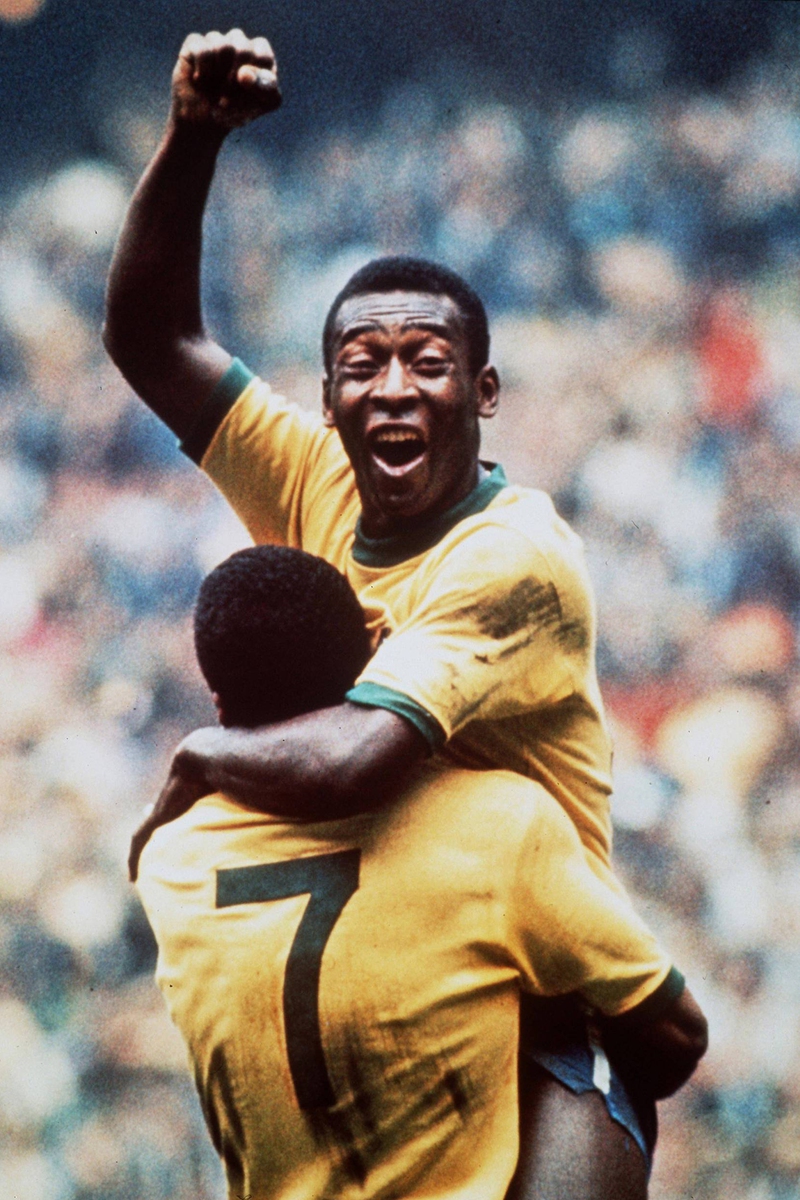
The Final was held at the Estadio Azteca on June 21. The opponents were Italy, also with something to prove, after an ignominious exit in 1966. Brazil didn't give them a chance. In the 18th minute, Pelé found a Rivelino cross and headed it in. While the Azzurri (Blues) did tie it up, the 2nd half was all Brazil: Gérson, Jairzinho and Captain Carlos Alberto all tallied, the last 2 on assists by Pelé, and perhaps the greatest soccer team ever assembled completed their masterpiece, 4-1.
Celebrating his 1970 Final goal with Jairzinho (Number 7).


They became the 1st team to win the Jules Rimet Trophy 3 times, and got to keep it. A new trophy was commissioned for the 1974 World Cup, as shown in the photo at the top of the page. Also noteworthy: Mário Zagallo became the 1st man to win the World Cup as both a player and as a manager. He has since been joined by Franz Beckenbauer of Germany and Didier Deschamps of France.

Pelé played his last international match on July 18, 1971, in a friendly with Yugoslavia at the Maracanã, before 138,575 fans. He didn't score, and it ended in a 2-2 draw. With him, Brazil won 67 games, drew 14, and lost 11 -- with both him and his predecessor as their greatest player, Garrincha, in the lineup, they lost exactly none. After closing the 1973-74 season with Santos, he retired. The only man with 1,000 goals, and the only man with 3 World Cups, he seemed to have nothing left to prove.

*

The New York Cosmos did have something to prove. In 1971, they replaced the bankrupt New York Generals in the North American Soccer League. They wore green, yellow and white to capitalize on Brazil having those colors. It didn't work: They averaged just 4,517 fans per home game in the old Yankee Stadium. For the 1972 season, they moved to James M. Shuart Stadium, a 15,000-seat stadium on the campus of Hofstra University, across the Jericho Turnpike from the Nassau Coliseum in Hempstead, Long Island. They won the NASL Championship.

They played there again in 1973, before moving to Downing Stadium, a crumbling 22,500-seat horseshoe on Randalls Island in the middle of the East River for 1974. They were drawing fewer fans than ever. If a 2nd New York team failed within 2 years, the League was doomed.

So the team's owners, Warner Communications chairman Steve Ross and Atlantic Records boss Ahmet Ertegun, went fishing, and caught a bigger fish than Roy Scheider did in the year's biggest blockbuster, Jaws. Ertegun, a native of Turkey who knew the European game well, told Pelé, "In Madrid, you can win a cup. In New York, you can win a country." Intrigued, Pelé signed a contract that made him the highest-paid athlete in the world -- to be paid with money that the Cosmos didn't yet have.

On June 15, 1975, 21,278 paid their way into Downing Stadium for Pelé's debut, and another 50,000 were turned away, because there was no room for them. ABC broadcast the game live on Wide World of Sports. Knowing this, the Cosmos painted the patchy spots on the field green. If anything, that made it look worse. Pelé scored on his debut, but the game with the Dallas Tornado ended in a 2-2 draw. The Tornado included Kyle Rote Jr., probably the best American-born player at the time, and the son of a New York Giants legend.

Still, the Cosmos averaged only 10,450 fans per game. Pelé complained about the bad field, saying that, even in Brazil, he hadn't played home games on a worse one. The Cosmos made a deal to play in the new Giants Stadium once it was ready, but played their 1976 home games at a newly-renovated Yankee Stadium. So Pelé joined Babe Ruth, Lou Gehrig, Joe DiMaggio, Mickey Mantle, Frank Gifford, Sam Huff, Joe Louis and Rocky Marciano as heroes of the big ballyard in The Bronx. Average attendance rose to 18,227.

The 1977 season was to be their 1st at the Meadowlands, and Pelé announced it would be his last. The Cosmos spared no expense: They brought in his Brazil teammate Carlos Alberto, German superstar Franz Beckenbauer, and Italian striker Giorgio Chinaglia. Attendance rose to an average of 34,142, peaking at 77,691 for a Playoff game with the Fort Lauderdale Strikers. This would remain a record for a soccer game in America until the 1994 World Cup.
The City, and the suburbs, really took to the Cosmos. They got the best tables in restaurants, and danced the night away at Studio 54, the discothèque of all discothèques. "We were as big as the Yankees," the Bronx-born, Long Island-raised goalkeeper Shep Messing said, "and bigger than the Giants." Pelé did TV commercials for Pepsi, even appearing in a print ad for the soda in the Yankees' Yearbook.
On August 28, 1977, at Civic Stadium (now Providence Park) in Portland, Oregon, the Cosmos beat the original version of the Seattle Sounders to win Soccer Bowl '77. In 21 seasons, Pelé had led his team to 7 national league championships.

On October 1, 1977, his testimonial match was held at a sold-out Giants Stadium. The Cosmos' opponent was Santos. He was to play the 1st half for the Cosmos, and the 2nd half for Santos. It was televised around the world, including on ABC's Wide World of Sports. His wife and father were in attendance. So was President Jimmy Carter, on his 53rd birthday. So was Bobby Moore. So was Muhammad Ali, the Heavyweight Champion of the World, who had survived a brutal fight with Earnie Shavers at Madison Square Garden across the Hudson River 2 days before.
 
When Pelé got the entire stadium to "Say it with me, three times: Love! Love! Love!" prior to the match, Ali, who liked to call himself "The Greatest" and generally refused to take a back seat to anyone, said, "Now I understand: He is greater than me."
Pelé, too, could "Float like a butterfly, sting like a bee."

Pelé scored on a 30-yard free kick in the 1st half, but was unable to help Santos come back in the 2nd half. The Cosmos won 2-1. Late in the game, it started to rain, and a Brazilian newspaper printed the headline, "Even the sky was crying."

Without him, the Cosmos actually had a higher average attendance in 1978, 47,856, and made it back-to-back titles. They won another title in 1980, and another in 1982. But, despite their bringing in other European and South American stars,  the novelty began to wear off. From 1983 to 1984, attendance dropped from 27,242 to just 12,817.

The team folded. Without a New York team, the League folded, and that set American soccer back a generation. When Major League Soccer was founded in 1996, the Meadowlands team was named the New York/New Jersey MetroStars, because it couldn't get the legal rights to the Cosmos name. They became the New York Red Bulls in 2006, and moved to a new stadium in Harrison, New Jersey in 2010. That same year, a new New York Cosmos was founded, but in a minor league, and they "went back to their roots" by playing at Hofstra. They have since moved about a mile away to the Mitchel Athletid Complex. New York City FC began play at the new Yankee Stadium in 2015.

*

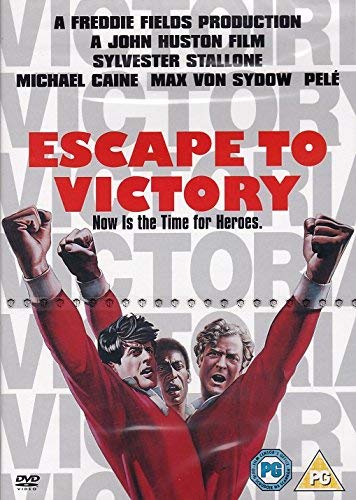
In 1981, Pelé appeared in the film Escape to Victory, set in a Nazi prisoner-of-war camp in World War II. He played Corporal Luis Fernandez, from the Caribbean nation of Trinidad & Tobago, then still a British colony, and thus a soldier in the British Army. (Despite direction by John Huson, the movie was ridiculous, but maintained some historical accuracy: It takes place in 1941, and Brazil did not enter the war until 1943, so he couldn't play a Brazilian.)

Among the other footballers in the film: American Werner Roth, a Cosmos teammate; England's Bobby Moore, Mike Summerbee and John Wark; Belgium's Paul Van Himst; Poland's Kazimierz Deyna, who had played in the NASL, as had Moore; and Argentina's Osvaldo Ardiles.

Michael Caine also starred, and Sylvester Stallone, cast to sell the film to the American market, played Captain Robert Hatch, an American serving in the Canadian Army (Pearl Harbor had not yet been attacked), who plays in goal. (Like I said: The movie was ridiculous.) Swedish actor Max von Sydow played the German camp commander.
Left to right: Stallone, 
Pelé, Caine

In 1994, Pelé was appointed a UNESCO Goodwill Ambassador by the United Nations, and did a commercial for MasterCard to promote the 1994 World Cup, which America hosted and Brazil won, their 4th title. (They won a 5th in 2002, which remains more than any other country: Germany and Italy have each won 4; Argentina, 3; Uruguay and France, 2; England and Spain, 1.) 

From 1995 to 1998, he served in the cabinet of the President of Brazil, Fernando Henrique Cardoso, as Extraordinary Minister for Sport. However, as during his playing days, which included a military dictatorship, his relationship with his homeland's government has frequently been complicated. It says something that both his country's hard right and its hard left believed he was against them. He did, however, help them gain the hosting of the 2014 World Cup (which, like their previous attempt at hosting in 1950, ended in competitive disaster for the team) and the 2016 Olympics.

Pelé married 3 times. He is known to have 2 sons and 5 daughters. He outlived his 1st child, daughter Sandra Machado (1964-2006). His son Edson Cholbi Nascimento was born shortly after the 1970 World Cup triumph. Under the name Edinho, he, too, played for Santos -- with some irony, as a goalkeeper. He later managed the team, with his brother Joshua playing. In 2014, Edinho was arrested for laundering money from drug trafficking. He maintains his innocence, but was convicted, and sentenced to 12 years in prison. In 2019, he was allowed to serve the remainder of his term under house arrest.

In 2012, Pelé had a hip operation, but his rehabilitation from it proved difficult. From 2017 onward, he did not appear in public without a wheelchair. In 2019, having already had a kidney removed, he was hospitalized to remove stones from his remaining kidney. Shortly thereafter, he was diagnosed with colon cancer.

As the 2022 World Cup was played in Qatar, he fell into multiple organ failure, and was taken to Albert Einstein Hospital in São Paulo. He died there today, December 29, 2022, at the age of 82.

With his death, Mário Zagallo is the last surviving player from Brazil's starting XI in the 1958 World Cup Final (with 4 other survivors from the team who did not play in the Final); Zagallo and Amarildo are the last 2 from the 1962 Final (with 3 others who did not play in the Final); there are 7 surviving players from the 1970 Final: Brito, Piazza, Clodoaldo, Jairzinho, Gérson, Tostão and Rivelino; and there are 2 surviving players from the Team of the Century picked by FIFA in 1998: Franz Beckenbauer of Germany and Michel Platini of France.

*

Pelé finished his career claiming 1,283 goals in all competitions. FIFA, the governing body for world soccer, refusing to count friendlies, credits him with 757. For comparison's sake, see his 2 current challengers for the title of "Greatest Of All Time": Cristiano Ronaldo is credited with 837, Lionel Messi with 820. Diego Maradona, the other major contender for the title, had "only" 446 for Argentina and his clubs combined.

But those 3, between them, are 2-for-14 in World Cups, the wins being Maradona's in 1986 and Messi's mere days ago. And, more blatantly than Crissy or Messi ever did, Maradona cheated. Pelé was 3-for-4. Maradona? Messi? Throw in Alfredo di Stéfano, and it's possible that neither one of them is even the best Argentine player ever. Cristiano? As I said at the start, he's not even the best Ronaldo to have played for Real Madrid in the 21st Century, and he's not the greatest player for his own country, which would be Eusébio.

These kids today, they don't know: Pelé is the greatest. It's why the Brazilians call him O Rei: The King. You don't believe them? You don't believe me? Okay, listen to those who know. Some of these were written in the wake of his death, some written many years before:

* Bobby Moore, England and West Ham United (who died in 1993): "Pelé was the most complete player I've ever seen. He had everything. Two good feet. Magic in the air. Quick. Powerful. Could beat people with skill. Could outrun people. Only five feet and eight inches tall, yet he seemed a giant of an athlete on the pitch. Perfect balance and impossible vision. He was the greatest because he could do anything and everything on a football pitch."

* Bobby Charlton, England and Manchester United: "I sometimes feel as though football was invented for this magical player."

* Franz Beckenbauer, Germany and Bayern Munich (and Pelé's New York Cosmos teammate): "Pelé is the greatest player of all time. He reigned supreme for 20 years. There's no one to compare with him."

* Johan Cruijff, Netherlands and Ajax Amsterdam (died 2016): "Pelé was the only footballer who surpassed the boundaries of logic."

* Alfredo di Stéfano, Argentina and Real Madrid (died 2014): "The best player ever? Pelé. Lionel Messi and Cristiano Ronaldo are both great players with specific qualities, but Pelé was better."

* Ferenc Puskás, Hungary and Real Madrid (where he was a teammate of di Stéfano -- died 2006): "The greatest player in history was di Stéfano. I refuse to classify Pelé as a player. He was above that."

* Just Fontaine, France (beaten by Brazil in the 1958 World Cup Semifinal) and Stade de Reims:
"When I saw Pelé play, it made me feel I should hang up my boots."

* Zico, Brazil and Rio de Janeiro team Flamengo, perhaps the 1st man to be  known as "The White
Pelé": "This debate about the Player of the Century is absurd. There's only one possible answer: Pelé. He's the greatest player of all time, and by some distance I might add."

* Michel Platini, France and Juventus: "To play like Pelé is to play like God."

* Romário, Brazil, Vasco da Gama and Dutch team PSV Eindhoven: "It's only inevitable I look up to Pelé. He's like a god to us."

* Cafu, Brazil, São Paulo FC, AS Roma and AC Milan: "He is everything to us."

* José Mourinho, trophy-winning manager at FC Porto in Portugal, West London team Chelsea and Manchester United in England, Internazionale in Italy and Real Madrid in Spain, known for calling himself "The Special One": "I think he is football. You have the real special one: Mr. Pelé."

* Rio Ferdinand, England and Manchester United: "The legend who stood tallest among legends… always had time for everyone!"

* Jack Wilshere, England and Arsenal: "A true gentleman! I was very lucky to meet him and exchange shirts and have a brief chat about the game we love. Your words will never leave me!"

* Mesut Özil, Germany and İstanbul Başakşehir, formerly of Real Madrid and Arsenal: "I'm sure 'Heaven FC' with Maradona and Pelé together will be invincible forever."

* Erling Haaland, Norway and Manchester City: "Everything you see any player doing, Pelé did it first."

* Kylian Mbappé, France and Paris Saint-Germain: "The king of football has left us but his legacy will never be forgotten."

* Tony Meola, American goalkeeping legend: "Pele is the player by which every player since is measured by. Thank you for your friendship my friend."

* Do you still believe that Cristiano Ronaldo, of Sporting Clube de Portugal, Manchester United, Real Madrid and Juventus has been better? Then listen to what CR7 himself says: "Pelé is the greatest player in football history, and there will only be one Pelé." (I can't find a record of Messi's assessment of Pelé.)

* Billie Jean King, tennis legend: "Much of sports is entertainment for fans & Pelé's athleticism & skill made him globally known. I had the honor of spending time w/him. He was joyful & had that something special."

* President Joe Biden: "Before there was Messi, Ronaldo, Beckham, there was Pelé... For a sport that brings the world together like no other, Pelé’s rise from humble beginnings to soccer legend is a story of what is possible."

* Former President Barack Obama: "Pelé was one of the greatest to ever play the beautiful game. And as one of the most recognizable athletes in the world, he understood the power of sports to bring people together." 

* Nelson Mandela, founding President of the Republic of South Africa (died 2013): "To watch him play was to watch the delight of a child combined with the extraordinary grace of a man in full."

* Henry Kissinger, former U.S. Secretary of State, a native of Germany and a soccer fanatic:
"Performance at a high level in any sport is to exceed the ordinary human scale. But Pelé's performance transcended that of the ordinary star by as much as the star exceeds ordinary performance."

* Kirin Rijiju, Minister of Justice for India: "I learnt about Pelé before I knew the world.
I grew up in remote village with Pelé as my idol. He made football the most beautiful game. FIFA 'Player of the Century' but in fact he is the greatest human superstar of all time."

* Silvio Almeida, recently appointed Brazil's Minister for Human Rights: "Pelé was the first thing that made me like Brazil. Seeing a black Brazilian man, like me, being unquestionably the best at what he did made me believe that, in spite of it all, there was something to believe in."

* Roger Bennett, Liverpool native, Everton fan, and co-host with Michael Davies of NBC Sports' soccer talk show Men In Blazers: "The gold standard against whom all are measured."

* Eduardo Galleano, Uruguayan journalist known as "global soccer's pre-eminent man of letters" (died 2015): "He gave us moments so worthy of immortality, they make us believe immortality exists."

Fernando Kallás, Portuguese journalist: "I believe referring to Pelé as 'one of the greatest' today is disrespectful. If you don’t feel like referring to him as the GOAT, just stick to being sorry for his loss, talking about his accomplishments, bla bla bla. But don’t use his death to question his place as the GOAT."

* Boy George, lead singer of British rock group Culture Club: "The worlds greatest footballer Pelé! When I met him he thought I was George Michael but it was ok I knew exactly who he was!"

* Andy Warhol, artist and professional celebrity (died 1987): "Pelé was one of the few who contradicted my theory: Instead of 15 minutes of fame, he will have 15 centuries."

* And, let me post this again: Muhammad Ali (died 2016): "He is greater than me."

I'm not saying to forget Messi, or any other player. But it is time to drop the debate about who is the greatest soccer player who has ever lived. It is, and will forever remain, Pelé.
His greatest accomplishment is that he got our nation, notorious for its insularity, and not caring about what goes on in the rest of the world, to care about soccer for the first time. It only lasted for a few years, but it provided the building blocks for American soccer fandom today. American soccer fans may not owe him as much as Brazilian fans do, but we're a strong 2nd in that regard.

ObrigatoPelé.