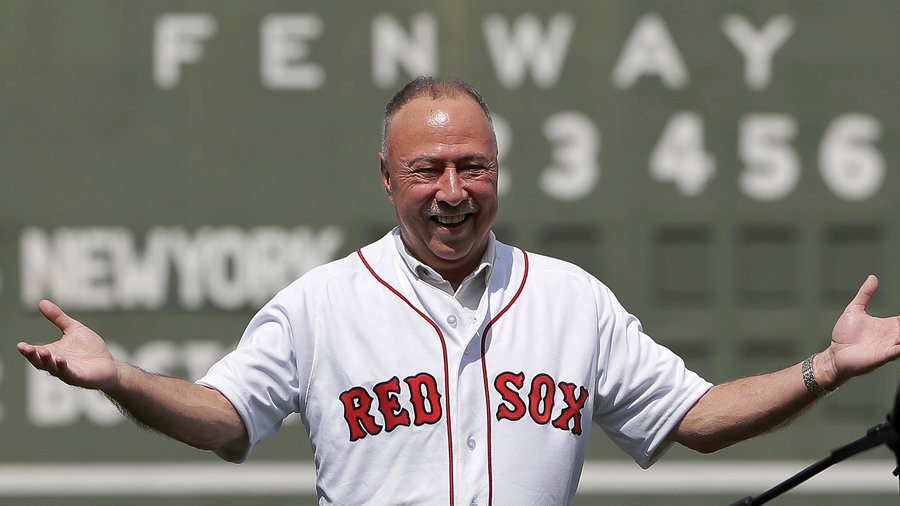
November 2, 2001, 20 years ago: A statue of head coach Joe Paterno is dedicated outside the east stand of Beaver Stadium on the campus of Pennsylvania State University in State College, Pennsylvania. It calls him "Joseph Vincent Paterno: Educator, Coach, Humanitarian."
On July 22, 2012, 6 months after his death, and 8 months after the scandal that forever tarnished his name, the statue was removed, since it was being called a roadblock in the healing process.
On July 22, 2012, 6 months after his death, and 8 months after the scandal that forever tarnished his name, the statue was removed, since it was being called a roadblock in the healing process.
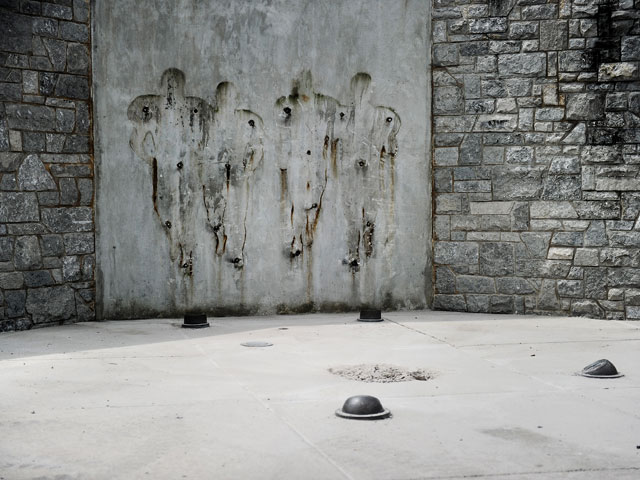
As Yogi Berra, an Italian-American sports figure a year older than Paterno, once put it, "The future ain't what it used to be." How right he was:
* Joe Paterno not only wasn't running a clean program, as was so often said, but he ran one that, in a way, was dirtier than any Southeastern Conference or Southwest Conference program ever was.
* O.J. Simpson killed his ex-wife and another person, and then went to prison -- on a totally different charge.
* Pete Rose was permanently banned from baseball.
* Many of the villains of "professional wrestling" turned out to be great guys in real life, while Hulk Hogan was exposed as a massive jackass.
* Michael Jackson was accused of molesting children, and died at age 50.
* Bill Cosby went to prison.
* Dustin Diamond (Screech from Saved By the Bell) turned out to be a jerk and a sex fiend, and died at age 44.
* Arnold Schwarzenegger and Jesse Ventura got elected Governor -- and Ventura turned out to be the better one.
* Donald Trump became President. And while I could have guessed that he would have gotten 746,000 Americans killed (at last count), I would've guessed it was through a war rather than a pandemic.
* And people like Dennis Miller, James Woods, Roseanne Barr, and the brothers Randy and Dennis Quaid, whom we thought were on our side, turned out to be on the same side as Trump.
Of course, to answer Bowling for Soup's famous question, "And when did Ozzy become an actor?" that's easy: He's been playing Ozzy Osbourne since 1970.
*
November 2, 1769: A Spanish exploration party sails into San Francisco Bay, the 1st European settlers to visit. In 1776, the Presidio of San Francisco is founded.
November 2, 1792: Voting begins in America's 2nd Presidential election. Incumbent President George Washington is essentially unopposed, and wins all 15 States for 132 Electoral Votes. Vice President John Adams is also re-elected.
November 2, 1795: James Knox Polk is born in Pineville, North Carolina, now a suburb of Charlotte. He lives most of his life in and around Columbia, Tennessee, now a suburb of Nashville. He graduated from the University of North Carolina, well before the invention of basketball. However, UNC still beats Duke: Its Presidential connection is that Richard Nixon graduated from its law school.
A member of the U.S. House of Representatives from Tennessee from 1825 to 1839, Speaker of the House from 1835 to 1839, and Governor of Tennessee from 1839 to 1841, Polk was elected President in 1844. Texas was annexed right before his Inauguration, so he doesn't get credit for adding Dallas, Houston and San Antonio. But in 1846, he launched the Mexican-American War, which was essentially won in a year and a half. Having achieved his ambitions, he kept his promise to not run for re-election, contracted cholera, and died on June 15, 1849, just 3 months after leaving office -- the shortest ex-Presidency ever.
Cities whose teams are possible because of his expansionism are San Francisco, Oakland, San Jose, Los Angeles, Anaheim, San Diego, Phoenix, Salt Lake City and, now, Las Vegas.
*
November 2, 1804: Thomas Jefferson is re-elected President. The Democratic-Republican defeats the Federalist Party nominee, Charles Cotesworth Pinckney, a hero of the War of the American Revolution and a delegate to the Constitutional Convention. Oddly, the only office he held under the Constitution was one previously held by Jefferson: U.S. Minister to France. (Today, we would say, "Ambassador.")
The popular vote was not counted by every State in those days. Jefferson won 162 Electoral Votes. Pinckney won just 14, carrying only 2 States, and his native South Carolina was not one of them: He won Connecticut and Delaware, which both tended to go Federalist for as long as that party existed. Pinckney would be nominated again in 1808, but lose to Jefferson's Secretary of State, James Madison.
November 2, 1821, 200 years ago: William Adams Richardson is born outside Boston in Tyngsborough, Massachusetts. A lawyer and judge, he served as U.S. Secretary of the Treasury from March 17, 1873 to June 3, 1874, under President Ulysses S. Grant. During this time, the Panic of 1873 struck the American stock market, and he issued $26 million in paper money to meet demand. It eased the immediate emergency, but what became known as the Long Depression began, lasting 5 years.
He resigned over the Sanborn Incident, which involved favoritism and profiteering in the collection of unpaid taxes. Grant let him save face by accepting a judgeship on the U.S. Court of Claims, now part of the U.S. Court of Appeals. He became its Chief Justice in 1885, and held that post until he died in 1896.
November 2, 1832: Andrew Jackson is re-elected President, defeating his arch-rival, Henry Clay. It's a landslide: "Old Hickory" wins 54 percent of the vote and 219 Electoral Votes, to Clay's 37 percent and 49 Electoral Votes.
November 2, 1847: Charles James Sweasy is born in Newark, New Jersey. The 2nd baseman on the 1st openly professional baseball team, the 1869-70 Cincinnati Red Stockings, he later played for several teams in the National Association and the National League, including winning the NA Pennant with the 1873 Boston Red Stockings, which featured some of his former Cincinnati teammates, and were the forerunners of the Atlanta Braves. He returned to Newark, and died in 1908, age 60.
November 2, 1852: Franklin Pierce is elected the 14th President of the United States. The Democratic nominee, who had served New Hampshire in both houses of Congress, defeats the Whig Party nominee, General Winfield Scott, a hero of the recent Mexican-American War, 254 Electoral Votes to 42. Pierce took almost 51 percent of the popular vote, Scott almost 44 percent.
Scott, a.k.a. Old Fuss and Feathers, won only 4 States: Whig strongholds Massachusetts, Connecticut, Kentucky (home State of the late Whig leader Henry Clay) and Tennessee (ironically, the home State of such Democratic icons as Andrew Jackson and James K. Polk, who were both dead and thus unable to campaign for Pierce).
But as the Pierce family made its way to Washington for the Inauguration, their train derailed outside Andover, Massachusetts. Franklin and his wife Jane escaped with minor injuries, but their 11-year-old son Benjamin, their only surviving child, was killed. Franklin never recovered from this loss, and his drinking got out of control, making him the 1st alcoholic President. He may also have been the worst President, taking actions that turned the Civil War from a possibility into an inevitability.
November 2, 1865: Warren Gamaliel Harding is born in Blooming Grove, now a part of North Bloomfield Township, Ohio, outside Columbus. November 2 remains the only day on the calendar to be a birthday of 2 Presidents. That will remain the case no matter who wins next Tuesday.
He lived most of his life in nearby Marion, ran a newspaper, and was elected Lieutenant Governor and then a U.S. Senator. Elected President in 1920, he died in office on August 2, 1923, as the Teapot Dome scandal began to swirl around his Administration.
He got off easy with the law (2 of his Cabinet officers went to prison), but not with history (he is generally regarded as one of the worst, and dumbest, Presidents ever, and that's before you get into his womanizing).
November 2, 1792: Voting begins in America's 2nd Presidential election. Incumbent President George Washington is essentially unopposed, and wins all 15 States for 132 Electoral Votes. Vice President John Adams is also re-elected.
November 2, 1795: James Knox Polk is born in Pineville, North Carolina, now a suburb of Charlotte. He lives most of his life in and around Columbia, Tennessee, now a suburb of Nashville. He graduated from the University of North Carolina, well before the invention of basketball. However, UNC still beats Duke: Its Presidential connection is that Richard Nixon graduated from its law school.
A member of the U.S. House of Representatives from Tennessee from 1825 to 1839, Speaker of the House from 1835 to 1839, and Governor of Tennessee from 1839 to 1841, Polk was elected President in 1844. Texas was annexed right before his Inauguration, so he doesn't get credit for adding Dallas, Houston and San Antonio. But in 1846, he launched the Mexican-American War, which was essentially won in a year and a half. Having achieved his ambitions, he kept his promise to not run for re-election, contracted cholera, and died on June 15, 1849, just 3 months after leaving office -- the shortest ex-Presidency ever.
Cities whose teams are possible because of his expansionism are San Francisco, Oakland, San Jose, Los Angeles, Anaheim, San Diego, Phoenix, Salt Lake City and, now, Las Vegas.
*
November 2, 1804: Thomas Jefferson is re-elected President. The Democratic-Republican defeats the Federalist Party nominee, Charles Cotesworth Pinckney, a hero of the War of the American Revolution and a delegate to the Constitutional Convention. Oddly, the only office he held under the Constitution was one previously held by Jefferson: U.S. Minister to France. (Today, we would say, "Ambassador.")
The popular vote was not counted by every State in those days. Jefferson won 162 Electoral Votes. Pinckney won just 14, carrying only 2 States, and his native South Carolina was not one of them: He won Connecticut and Delaware, which both tended to go Federalist for as long as that party existed. Pinckney would be nominated again in 1808, but lose to Jefferson's Secretary of State, James Madison.
November 2, 1821, 200 years ago: William Adams Richardson is born outside Boston in Tyngsborough, Massachusetts. A lawyer and judge, he served as U.S. Secretary of the Treasury from March 17, 1873 to June 3, 1874, under President Ulysses S. Grant. During this time, the Panic of 1873 struck the American stock market, and he issued $26 million in paper money to meet demand. It eased the immediate emergency, but what became known as the Long Depression began, lasting 5 years.
He resigned over the Sanborn Incident, which involved favoritism and profiteering in the collection of unpaid taxes. Grant let him save face by accepting a judgeship on the U.S. Court of Claims, now part of the U.S. Court of Appeals. He became its Chief Justice in 1885, and held that post until he died in 1896.
November 2, 1832: Andrew Jackson is re-elected President, defeating his arch-rival, Henry Clay. It's a landslide: "Old Hickory" wins 54 percent of the vote and 219 Electoral Votes, to Clay's 37 percent and 49 Electoral Votes.
November 2, 1847: Charles James Sweasy is born in Newark, New Jersey. The 2nd baseman on the 1st openly professional baseball team, the 1869-70 Cincinnati Red Stockings, he later played for several teams in the National Association and the National League, including winning the NA Pennant with the 1873 Boston Red Stockings, which featured some of his former Cincinnati teammates, and were the forerunners of the Atlanta Braves. He returned to Newark, and died in 1908, age 60.
November 2, 1852: Franklin Pierce is elected the 14th President of the United States. The Democratic nominee, who had served New Hampshire in both houses of Congress, defeats the Whig Party nominee, General Winfield Scott, a hero of the recent Mexican-American War, 254 Electoral Votes to 42. Pierce took almost 51 percent of the popular vote, Scott almost 44 percent.
Scott, a.k.a. Old Fuss and Feathers, won only 4 States: Whig strongholds Massachusetts, Connecticut, Kentucky (home State of the late Whig leader Henry Clay) and Tennessee (ironically, the home State of such Democratic icons as Andrew Jackson and James K. Polk, who were both dead and thus unable to campaign for Pierce).
But as the Pierce family made its way to Washington for the Inauguration, their train derailed outside Andover, Massachusetts. Franklin and his wife Jane escaped with minor injuries, but their 11-year-old son Benjamin, their only surviving child, was killed. Franklin never recovered from this loss, and his drinking got out of control, making him the 1st alcoholic President. He may also have been the worst President, taking actions that turned the Civil War from a possibility into an inevitability.
November 2, 1865: Warren Gamaliel Harding is born in Blooming Grove, now a part of North Bloomfield Township, Ohio, outside Columbus. November 2 remains the only day on the calendar to be a birthday of 2 Presidents. That will remain the case no matter who wins next Tuesday.
He lived most of his life in nearby Marion, ran a newspaper, and was elected Lieutenant Governor and then a U.S. Senator. Elected President in 1920, he died in office on August 2, 1923, as the Teapot Dome scandal began to swirl around his Administration.
He got off easy with the law (2 of his Cabinet officers went to prison), but not with history (he is generally regarded as one of the worst, and dumbest, Presidents ever, and that's before you get into his womanizing).
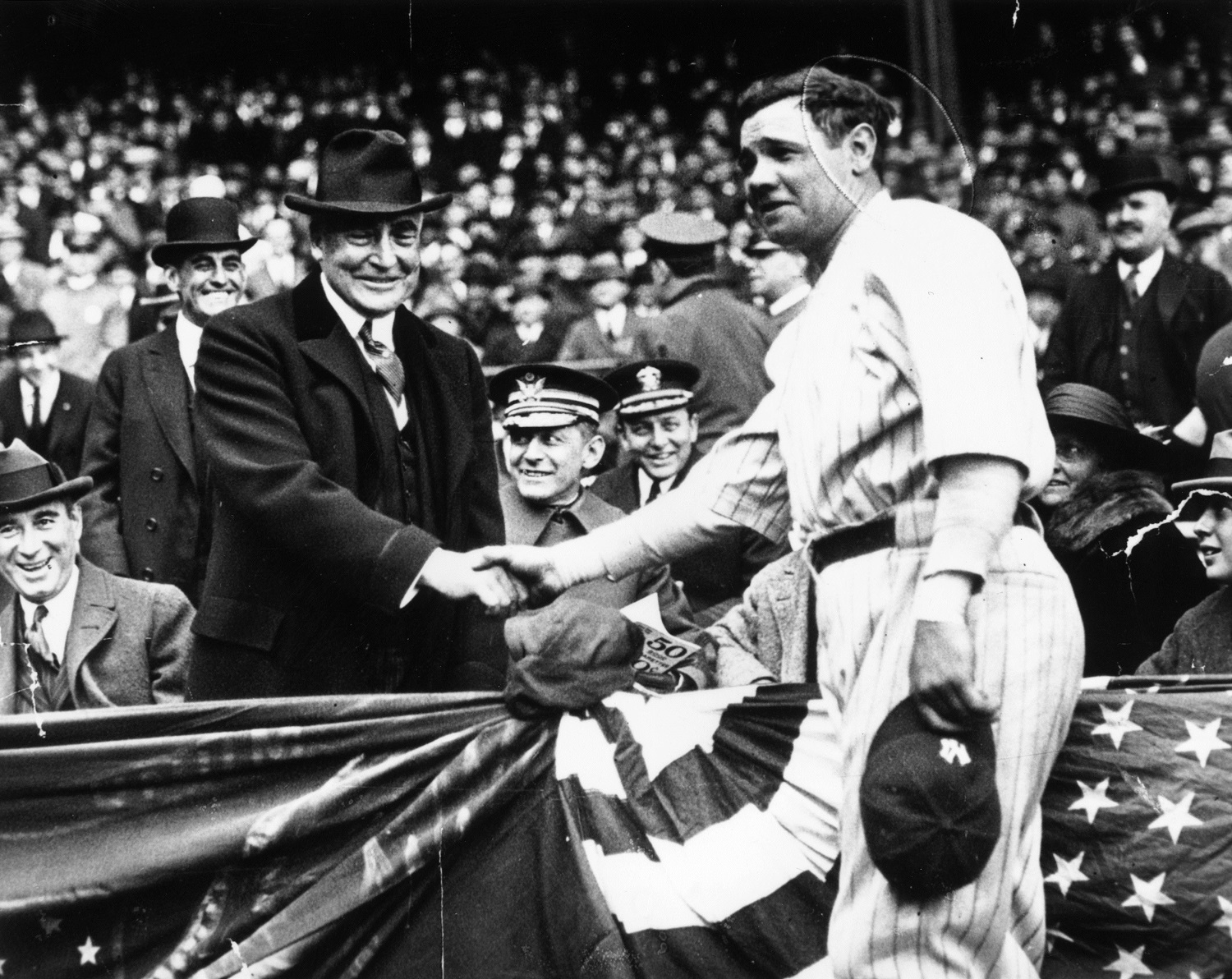
He was a big baseball fan, and on Opening Day of the 1923 season, as the Yankees visited Washington to face the Senators, he threw out the ceremonial first ball, and shook hands with Babe Ruth.
 November 2, 1880: James Abram Garfield is elected the 20th President of the United States, in one of the narrowest races ever. In fact, in terms of total popular vote, it remains the closest ever. The Republican nominee, who had served Ohio in both houses of Congress, won 4,446,158 votes. The Democratic nominee, a hero General of the Civil War, Winfield Scott Hancock (named for the losing candidate of 1852), won 4,444,260 -- a margin of 1,898 votes. (Garfield had also been a General in the Civil War.)
But it's Electoral Votes that matter, although that was also rather close: Garfield won 214 to Hancock's 155. Each man won 19 States. Whether the Republicans stole the votes of any State, as they had for Rutherford B. Hayes 4 years earlier, has never been proven.
Garfield was inaugurated on March 4, 1881. On July 2, he was shot. He could have survived, but his doctors' incompetence led to an inability to find the bullet, and a subsequent infection that killed him on September 19. Only William Henry Harrison died earlier upon his Inauguration than Garfield's 200 days.
His opponent, known as Hancock the Superb and The Thunderbolt of the Army of the Potomac for his heroism at the Battle of Gettysburg in 1863, developed diabetes, chose not to run again in 1884, and died in 1886.
Chester Arthur, Garfield's Vice President and successor, also got sick, with kidney disease, did not run for a term of his own in 1884, and died in 1886. Samuel Tilden, cheated out of the Presidency in 1876, did not run in 1880 or 1884, and he, too, died in 1886. None of them lived to see what would have been the end of the Garfield-Arthur ticket's 2nd term -- or that of Hancock and his running mate, Congressman William H. English of Indiana. He lived until 1896.
November 2, 1881, 140 years ago: The American Association of Professionals is founded, challenging the National League, with the motto "Liberty to All." The members are St. Louis‚ Cincinnati‚ Louisville‚ Allegheny‚ Athletic (Philadelphia)‚ and Atlantic (Brooklyn). This AA has officially, for many years, been considered by Major League Baseball to be a "major league."
But it's Electoral Votes that matter, although that was also rather close: Garfield won 214 to Hancock's 155. Each man won 19 States. Whether the Republicans stole the votes of any State, as they had for Rutherford B. Hayes 4 years earlier, has never been proven.
Garfield was inaugurated on March 4, 1881. On July 2, he was shot. He could have survived, but his doctors' incompetence led to an inability to find the bullet, and a subsequent infection that killed him on September 19. Only William Henry Harrison died earlier upon his Inauguration than Garfield's 200 days.
His opponent, known as Hancock the Superb and The Thunderbolt of the Army of the Potomac for his heroism at the Battle of Gettysburg in 1863, developed diabetes, chose not to run again in 1884, and died in 1886.
Chester Arthur, Garfield's Vice President and successor, also got sick, with kidney disease, did not run for a term of his own in 1884, and died in 1886. Samuel Tilden, cheated out of the Presidency in 1876, did not run in 1880 or 1884, and he, too, died in 1886. None of them lived to see what would have been the end of the Garfield-Arthur ticket's 2nd term -- or that of Hancock and his running mate, Congressman William H. English of Indiana. He lived until 1896.
November 2, 1881, 140 years ago: The American Association of Professionals is founded, challenging the National League, with the motto "Liberty to All." The members are St. Louis‚ Cincinnati‚ Louisville‚ Allegheny‚ Athletic (Philadelphia)‚ and Atlantic (Brooklyn). This AA has officially, for many years, been considered by Major League Baseball to be a "major league."
The AA elects H.D. McKnight as its president. It votes to honor the NL blacklist in the case of drunkenness, but not to abide by the NL reserve clause. The new league will rely on home gate receipts‚ visiting teams getting just a $65 guarantee on the road‚ as opposed to the NL's policy of giving 15 cents from each admission to the visitors. The AA will allow Sunday games‚ liquor sales‚ and 25-cent tickets (about $6.50 in today's money)‚ all prohibited by the NL (which then charged 50 cents for all games).
Six of their clubs would eventually join the National League. Two would be contracted out of existence in 1900: The Louisville Colonels and the original Baltimore Orioles. The other 4 are still in business today, albeit under other names: The St. Louis Browns (St. Louis Cardinals), the Cincinnati Red Stockings (Cincinnati Reds), the Pittsburgh Alleghenys (Pittsburgh Pirates), and the Brooklyn Grays (who replaced the Atlantics in 1884, and are known today as the Los Angeles Dodgers).
November 2, 1889: North Dakota is admitted to the Union as the 39th State. At the same time, South Dakota is also admitted, as the 40th State. This is the only time 2 States have been admitted on the same day, and it begins a 10-day stretch in which 4 States are added.
Neither State has any major league teams, and very few professional teams at any level, due to being so sparsely populated: Between them, they have only 1.6 million people, and aside from Mount Rushmore, which is outside Rapid City, South Dakota, they don't have much in the way of tourist attractions.
For the most part, the Dakotas are considered part of the Minneapolis-St. Paul sports "market," and most people there are Twins and Vikings fans, though western South Dakota has a noticeable presence of Denver Broncos fans.
*
November 2, 1903: Travis Clayton Jackson is born in Waldo, Arkansas. The shortstop played on the New York Giants' Pennant winners of 1922, '23, '24, '33 and '36, winning the World Series in 1922 and '33.
He managed in the minor leagues from 1936 to 1960. In 1982, he was elected to the Baseball Hall of Fame, in his 45th year of eligibility -- the longest any player has had to wait, and still live to see his election. He died in 1987.
*
November 2, 1903: Travis Clayton Jackson is born in Waldo, Arkansas. The shortstop played on the New York Giants' Pennant winners of 1922, '23, '24, '33 and '36, winning the World Series in 1922 and '33.
He managed in the minor leagues from 1936 to 1960. In 1982, he was elected to the Baseball Hall of Fame, in his 45th year of eligibility -- the longest any player has had to wait, and still live to see his election. He died in 1987.
November 2, 1912: Cornelius Alexander McGillicuddy Jr. is born in Philadelphia. Like his father, he never actually legally changed his name to "Mack." But he became known as Connie Mack Jr.
By the time Connie Sr. became majority owner of the Philadelphia Athletics in 1937, Connie Jr. was managing the concessions at Shibe Park. In 1938, he was named assistant treasurer. But there was a dispute in the family: Connie's sons from his 1st marriage, Earle and Roy, believed that they would be handed control of the team when their father either died or retired, and this appears to have been Connie's plan as well; but Connie's 2nd wife Katherine and their son Connie Jr. were adamant that Connie Jr. would run the team.
In 1950, when the father's 50th Anniversary as team manager became a massive flop, as his senility had become obvious, the sons, united for one of the few times in their lives, ganged up on their father, allied themselves with the other owners, the heirs of the Shibe family, and stripped their father of his power, making him owner but nothing else.
But that was the end of their getting along. Later in 1950, Earle and Roy bought Connie Jr. out, and the financial maneuvers they needed to do so were the death knell of the A's in Philadelphia. Connie Jr. moved to Florida, ran a successful shrimp business there, and lived until 1996, long enough to see his son Connie Mack III elected to the U.S. Senate as a Republican from Florida. His grandson, Connie Mack IV, has served in the U.S. House of Representatives. Still, while their names appeared on the ballot as "Connie Mack," legally, the family name remains McGillicuddy.
*
November 2, 1920: Richard Alan Sisler is born in St. Louis, where his father, George Sisler, is one of the greatest players in baseball, with the St. Louis Browns. Dick would go on to become a decent player himself, playing 1st base like his father, and later the outfield, batting .276 in a career that lasted from 1946 to 1953.
As a rookie with the 1946 St. Louis Cardinals, he played on a World Series winner. In 1950, he hit a 10th-inning home run on the last day of the season to give the Philadelphia Phillies their only National League Pennant between 1915 and 1980. He was an All-Star that season.
He later served as a coach, helping the Cincinnati Reds win the 1961 Pennant, and stepped in as their manager in 1964 when Fred Hutchinson was dying of cancer, nearly taking them to another Pennant. With some irony, they were battling his former Pennant-winners, the Cardinals and the Phillies, for it, and the Cards ended up beating both the Reds and the Phils by 1 game.
He managed the Reds in the 1965 season, and then never managed again, despite his managerial record being a fine 121-94, .562. But he coached for the Cardinals on their Pennant teams of 1967 (winning another World Series) and 1968, and later for the San Diego Padres under John McNamara and the Mets under Joe Torre. He later worked as a minor-league instructor with the Cardinal system, and died in 1998.
Dick's brother, Dave Sisler, would be a major league pitcher. Another brother, George Sisler Jr., wouldn't make the major leagues, but was a longtime baseball executive.
Also on this day, the Ocoee Massacre takes place, in Ocoee, Florida, about 12 miles west of Orlando. When black people tried to vote in that day's Presidential election, won by Warren Harding, they were attacked, and most of their owned homes and businesses were burned down. There were an estimated 35 deaths, and it has been called "the single bloodiest day in modern American political history."
I learned about this massacre... this year, on its 100th Anniversary. It wasn't taught to me in any school.
There is no point in doing a "Scores On This Historic Day" post for the event: The baseball season was over, the football season was in midweek, the NHL season didn't start until December 22, and the NBA wasn't founded until 1946.
November 2, 1921, 100 years ago: William Mosienko (no middle name) is born in Winnipeg. A 5-foot-8 right wing for the Chicago Blackhawks, he's in the Hockey Hall of Fame and the Manitoba Hockey Hall of Fame. On March 23, 1952, he scored 3 goals in just 21 seconds, still an NHL record, as the Hawks beat the New York Rangers 7-6 at Chicago Stadium. He died in 1994.
November 2, 1928: Leon Joseph Hart is born in Pittsburgh. A 2-way end, he helped Notre Dame win National Championships in 1946, 1947 and 1949, and was awarded the 1949 Heisman Trophy, denying the previous year's winner, Doak Walker of Southern Methodist, back-to-back wins.
He was drafted by the Detroit Lions, and helped them win the NFL Championship in 1952, 1953 and 1957, playing alongside fellow Heisman winners Walker and Howard "Hopalong" Cassidy of Ohio State (1955). He only made 1 Pro Bowl, in 1951. He was elected to the College Football Hall of Fame, and died in 2002.
Also on this day, William Raymond Daniel is born in Swansea, Wales. A centreback, Ray Daniel played for North London club Arsenal in the 1952 FA Cup Final, despite having a broken arm. Walley Barnes' injury in that game forced him to leave the pitch, but Daniel played on, leaving Arsenal with essentially 9 men, 2 at the back, and they lost to Newcastle United.
But Daniel missed only 1 match in the 1952-53 season, and Arsenal edged Preston North End in the closest title race in Football League history. He then went to Sunderland (who know a thing or two about hating Newcastle), and played for both of the big clubs in Wales, Cardiff City and Swansea Town (now Swansea City). He later worked for the postal service, and lived until 1997.
November 2, 1937: A benefit game -- effectively, an all-star game -- is held for the family of the late Montreal Canadiens legend Howie Morenz at the Montreal Forum. Morenz had broken his leg in a game the preceding January, and then died of a heart attack in March, often blamed on the near-party atmosphere his former teammates kept bringing to his hospital room.
The Howie Morenz Memorial Game featured a combined team of the 2 Montreal clubs, the Canadiens and the Maroons. (The Great Depression finally caught up with the Maroons, and they went out of business at the conclusion of the 1937-38 season.) Canadiens Hall-of-Famers in this game included Aurel Joliat, Toe Blake, and Babe Siebert -- who would drown in a boating accident 2 years later, and whose family would be the subject of the next NHL benefit game, also at the Forum. The Maroons included Frank "King" Clancy, at the end of the line after a Hall of Fame career with the Ottawa Senators and the Toronto Maple Leafs.
The Montreal team played an All-Star team made up of the rest of the NHL, including Hall-of-Famers: From the Leafs, Red Horner, Charlie Conacher and Harvey "Busher" Jackson; from the New York Rangers, Frank Boucher; from the New York Americans, David "Sweeney" Schriner and Leafs legend Clarence "Hap" Day; from the Boston Bruins, Clarence "Tiny" Thompson, Eddie Shore and Aubrey "Dit" Clapper; and from the Detroit Red Wings, Ebenezer "Ebbie" Goodfellow and Marty Barry. The 2 representatives from the Chicago Black Hawks, Johnny Gottselig and Harold "Mush" March, aren't in the Hall, but should be.
The Canadiens retired Morenz's Number 7, and then the Montreal All-Stars lost to the NHL All-Stars 6-5. The attendance was 8,683, not a sellout, but $26,595 (Canadian) was raised for the Morenz family. That's about $493,562 in current Canadian dollars, or $398,475 in U.S. dollars at the current exchange rate.
Morenz's son, Howie Morenz Jr., was 10 years old at the time, and was presented with his father's jersey. He went on to play professionally, but bad eyes kept him from reaching the NHL, and he became an executive in the food supply industry, before dying in 2015, at age 88.
Howie's daughter Marlene married a later Canadiens Hall-of-Famer, Bernie "Boom-Boom" Geoffrion. Their son Dan Geoffrion played for the Canadiens, the Quebec Nordiques and the Winnipeg Jets. And Dan's son Blake Geoffrion played for the Nashville Predators before coming to the Canadiens, honoring his grandfather Boom-Boom (whose Number 5 is retired) and his great-grandfather the Stratford Streak (number 7) by wearing Number 57. Unfortunately, a head injury ended his playing career in 2013.
Bernie died in 2006. Dan is now a scout for the Leafs. And Blake is now an executive in the Columbus Blue Jackets' organization.
*
November 2, 1941, 80 years ago: John Maguire Dowd is born outside Boston in Brockton, Massachusetts. From 1969 to 1978, he worked as an investigator for the U.S. Department of Justice. In 1989, Major League Baseball hired him to investigate the charge that Pete Rose had bet on baseball. He uncovered overwhelming evidence confirming it.
In 2017, he was hired by Donald Trump to defend him against charges relating to Trump's relationship to the Russian government. In a weird turn of events, one of the lawyers Dowd recommended to Trump was named Ty Cobb, a former U.S. Attorney in Maryland, and apparently a distant relative of the man whose record for most hits in a Major League Baseball career was broken by Rose. But in 2018, first Dowd, and then Cobb, left Trump's legal team, citing Trump's choices to ignore their legal advice.
November 2, 1946, 75 years ago: The NBA's Boston Celtics play their 1st game, losing 59-53 to fellow New Englanders the Providence Steamrollers at the Rhode Island Auditorium.
The Steamrollers, named for a defunct NFL team, would only last the 1st 3 NBA seasons. The Celtics would take a few years to get untracked, but became the NBA's dominant franchise, winning 16 titles in 30 seasons from 1957 to 1986, and a 17th in 2008. They and the New York Knicks are the only original NBA franchises still playing in their original city.
Also on this day, Thomas Marian Paciorek is born in Detroit. An outfielder and 1st baseman, Tom appeared in the major leagues from 1970 to 1987, batting .282. He played in the 1974 World Series with the Los Angeles Dodgers, was an All-Star with the Seattle Mariners in 1981, and was a Met for half of 1985. He has since broadcast for several teams, including the Chicago White Sox, and the 2000 season for his hometown Tigers, although he never played for them.
A few people on baseball-themed pages on Facebook -- never on Twitter -- have seen my name, "Pacholek," and asked if I'm related to Tom Paciorek. While I am also of Polish descent, there is no connection between us. It's as if these people can't even read the difference in spelling. Or maybe they're just too intellectually lazy to notice.
November 2, 1949: David Bruce Wohl is born in Flushing, Queens, New York City, and -- like me, 20 years later -- grows up in East Brunswick, Middlesex County, New Jersey. A lefthanded quarterback, he led East Brunswick High School to its 1st 2 Conference Championships in football, in 1965 and 1966, also winning a share of the Central Jersey Group IV Championship in the latter year.
But his best sport was basketball. He played at the University of Pennsylvania, leading them to the Ivy League Championship in 1970 and 1971. He played the 1971-72 season for the Philadelphia 76ers, early in the 1972-73 season for the Portland Trail Blazers, a year for the Buffalo Braves, and from 1974 to 1976 with the Houston Rockets.
He played for the Nets in their 1st 2 seasons in the NBA: 1976-77, their last season at the Nassau Coliseum as the New York Nets; and 1977-78, their 1st season at the Rutgers Athletic Center as the New Jersey Nets. As the only EBHS graduate ever to play in the NBA, his Number 12 was the 1st ever retired by our basketball team.
He went into coaching, and served as an assistant with the Nets, the Milwaukee Bucks, and the Los Angeles Lakers, winning an NBA Championship ring as Pat Riley's assistant in 1985. He was hired to coach the Nets, and ran them for 3 seasons. He set up a Martin Luther King Day doubleheader for January 19, 1987. The opener was the Nets vs. the Lakers, and the nightcap was his alma mater, EBHS (I was a senior, and attended), against Perth Amboy, a good team then and the top team in the County when he played. The Nets lost, but EB won.
He later served as an assistant coach with the Miami Heat (before Riley got there), the Sacramento Kings, the Los Angeles Clippers, the Lakers again, the Orlando Magic, the Boston Celtics, and the Minnesota Timberwolves. He has since served as general manager of the Clippers and the Oklahoma City Thunder. He is currently out of the game. He should not be confused with the comic book writer David Wohl, creator of Witchblade.
*
November 2, 1951, 70 years ago: Jackie Robinson, who starred in football at the school, but left before receiving his degree, is named the grand marshal of UCLA's Homecoming Parade. The next day, with Robinson on hand, UCLA upsets then-Number 9-ranked California 21-7 at the Los Angeles Coliseum.
November 2, 1951, 70 years ago: Jackie Robinson, who starred in football at the school, but left before receiving his degree, is named the grand marshal of UCLA's Homecoming Parade. The next day, with Robinson on hand, UCLA upsets then-Number 9-ranked California 21-7 at the Los Angeles Coliseum.
November 2, 1968: It looks like President Lyndon Johnson's bombing halt in Vietnam is going to give the election to Vice President Hubert Humphrey, the Democratic nominee. So former Vice President Richard Nixon, the Republican nominee, tells campaign aide H.R. Haldeman, who wrote it down, to "throw a monkey wrench into it."
So he calls Anna Chennault, an official of the anti-Communist "China Lobby" and widow of Claire Chennault, beloved by the Nationalist Chinese for his role in the Army Air Force during World War II. And she calls called Bui Dai, the South Vietnamese Ambassador, to the Paris Peace Talks, and tells him, "Hold on. We are going to win." In other words, you'll get a better deal from a President Nixon than from a President Humphrey. And the peace talks stalled. And Nixon won in a squeaker.
From 1969 onward, the official count of the U.S. service dead in Vietnam is 21,264 – 36 percent of all deaths. "Madame Chennault" and Richard Nixon can be blamed for this.
November 2, 1971, 50 years ago: The Baltimore Orioles' Pat Dobson pitches a no-hitter against the Tokyo-based Yomiuri Giants‚ winning 2-0 at Korakuen Stadium. It is the 1st no-hitter in the history of exhibition games between Japanese and American teams. The Orioles compile a record of 12-2-4 on the tour.
Also on this day, Bryan Fortay (as far as I know, no middle name) is born in Jersey City, Hudson County, New Jersey, and grows up in East Brunswick, Middlesex County. He was 2 years behind me at East Brunswick High School, and I experienced the hype around the most heralded quarterback in County history -- even more than Joe Theismann of neighboring South River.
He more than just a good quarterback. He was the top punter in the State, and returned an interception 79 yards for a touchdown. He was a member of our 1987 County Champion basketball team, and got us back to the Final in 1989, scoring over 1,000 career points.
As a sophomore in 1986, he got us to the Conference Championship, but we missed the Playoffs. As a junior in 1987, he got us another Conference Championship and into the Playoffs, but we got clobbered in the Semifinals by arch-rival Madison Central (now known as Old Bridge). As a senior in 1988, we got destroyed by Madison in the regular season (so, no threepeat) and beaten solidly again in the Playoffs.
That didn't seem to hurt his stock, as Jimmy Johnson wanted him for the University of Miami. But Johnson left for the Dallas Cowboys, and new coach Dennis Erickson had a different pet project, Gino Torretta. Bryan got a 1989 National Championship ring, but as Torretta's backup. He transferred to Rutgers, and did all right there, including a last-play touchdown to win a Halloween thriller over Virginia Tech, 50-49 in 1992.
But the NFL wasn't interested, He was not drafted. The CFL didn't seem to be interested, either. He was signed by the Frankfurt Galaxy in NFL Europe, and in 1995 played for them and for the Miami Hooters of the Arena Football League.
But that was it. He came back to New Jersey, and, last I heard, was still working with his father, breeding horses in Monmouth County. Not a bad living, but not what we were told to expect.
November 2, 1974: The Rutgers football team loses 9-7 to Connecticut at Rutgers Stadium. They will not lose another "home game" for nearly 3 years, until Penn State beat them at the Meadowlands on September 2, 1977. They won't lose again at Rutgers Stadium for 4 years, until November 25, 1978, against Colgate University.
*
November 2, 1981, 40 years ago: Sharod Lamar White is born in Charleston, South Carolina. A receiver, Roddy White starred at the University of Alabama at Birmingham, and made 4 Pro Bowls with the Atlanta Falcons. In a career lasting from 2005 to 2015 he caught 808 passes for 10,863 yards and 63 touchdowns. The Falcons have inducted him into their Ring of Honor. He is now eligible for the Pro Football Hall of Fame.
November 2, 1991, 30 years ago: James Richard Garoppolo is born in the Chicago suburb of Arlington Heights, Illinois. "Jimmy G" backed up Tom Brady on the New England Patriots, winning rings despite not taking a snap in either Super Bowl XLIX or LI. He is now the starting quarterback for the San Francisco 49ers, and led them to the 2019 NFC Championship, but lost Super Bowl LIV to the Kansas City Chiefs.
November 2, 1994: Jonathan Stanley Loáisiga Estrada is born in Managua, Nicaragua. Known professionally as Jonathan Loaisiga, and nicknamed "Lasagna," the righthanded pitcher made his major league debut with the Yankees in the 2018 season. He was injured for much of 2019, had a decent season in 2020, but was inconsistent in 2021. If he's going to help make the difference for the Yankees in 2022 and beyond, his control and his health will need to improve further.
November 2, 1995: The Yankees name Joe Torre as their new manager‚ replacing Buck Showalter. George Steinbrenner thought he was the guy. The New York Daily News didn't think so: Citing his lackluster managerial record up until then, and also the circus that tended to surround Steinbrenner, especially where managers were concerned, they printed the headline "CLUELESS JOE."
You know the rest of the story. World Champions in his 1st season, 1996. Wild Card in 1997. World Champions in 1998, winning more games than any team ever had in a regular season and postseason combined, 125, including a 4-game sweep in the World Series. World Champions in 1999, including the best postseason record of the 1995-present Division Series era, 11-1. World Champions in 2000, beating the Mets in the World Series. American League Champions in 2001, missing another title by 1 run. Division Champions in 2002. AL Champions in 2003, with the dramatic AL Championship Series win over the Boston Red Sox.
Then, of course, the downturn, the kind of things that the Daily News probably expected when it printed the headline. A shocking ALCS loss in 2004. Pathetic performances in the AL Division Series in 2005, 2006 and 2007.
Joe got lowballed by George's heirs, of both the family and the business variety: His sons Hank and Hal, Yankee brass Randy Levine and Lonn Trost, and general manager Brian Cashman. He walked out, and managed the Los Angeles Dodgers to a pair of Division titles, before taking a job in Major League Baseball's office.
Joe and the House of Steinbrenner made up. He's been elected to the Baseball Hall of Fame, and is honored in Monument Park at the new Yankee Stadium.
November 2, 1996, 25 years ago: Toni Stone dies in the Oakland suburb of Alameda, California at age 75. Born Marcenia Lyle Stone in Bluefield, West Virginia, she was the 1st woman to play in the Negro Leagues, playing 2nd base for the Indianapolis Clowns in 1953. She also played for the Kansas City Monarchs in 1954.
Her replacement as the Clowns' 2nd baseman was also a woman, Connie Morgan, who lasted until 1955. She also lived until 1996. One other woman played in the Negro Leagues, Mamie Belton (later known by her married name, Mamie Johnson), who pitched for the Clowns from 1953 to 1955, and lived until 2017.
Also on this day, Saturday Night Live debuts the sketch "The Culps." Will Ferrell plays balding, bearded Marty Culp, and Ana Gasteyer plays his wife Bobbi Mohan-Culp, middle school music teachers who are hopelessly unhip. The sketch runs for 6 years, and it never becomes good. The Will Ferrell era really was the worst of SNL.
November 2, 1997: The Negro Leagues Baseball Museum, founded in 1990, moves into its current building in Kansas City, just a few blocks from the site of Kansas City Municipal Stadium, the home of the Kansas City Monarchs (and also MLB's Athletics, 1955-67; and Royals, 1969-72).
Among the exhibits is the Field of Legends, a "baseball field" with statues of 12 figures from Negro League history. Each position on the field is manned by a player generally considered to be the best player the Negro Leagues ever had at it: Pitcher Leroy "Satchel" Paige, catcher Josh Gibson, 1st baseman Walter "Buck" Leonard, 2nd baseman John Henry "Pop" Lloyd, shortstop William "Judy" Johnson, 3rd baseman Ray Dandridge, left fielder James "Cool Papa" Bell, center fielder Oscar Charleston, and right fielder Leon Day.
The batter is Martín Dihigo. On either side are the "managers": Andrew "Rube" Foster, a former pitcher who founded the Negro National League in 1920; and John "Buck" O'Neil, whose interview for Ken Burns' 1994 Baseball miniseries made him the semi-official voice of the Negro Leagues until his death in 2006. All are in the Baseball Hall of Fame, except for O'Neil, and his absence makes no sense at all.
*
November 2, 2004: A groundskeeper finds a grenade in the Wrigley Field turf. Police bomb and arson investigators are called to evaluate the right field discovery. The rusty, hollowed-out shell turns out to be harmless, and its origins remain a mystery.
Also on this day, George W. Bush achieves -- due to shenanigans in Ohio, I won't say "wins" -- a 2nd term as President, defeating the Democratic nominee, Senator John F. Kerry of Massachusetts. Although Kerry was a rich liberal Catholic from Massachusetts with the initials JFK, and as a young man had met President John F. Kennedy, he was no Jack Kennedy.
During the campaign, Bush ran as the man who was fighting to avenge the 9/11 attacks, while his fellow Republicans mocked Kerry for saying that Democratic leadership could "reduce terrorism to the level of a nuisance."
By 2016, after 8 years of Barack Obama as President, 4 years of Hillary Clinton as Secretary of State, and 4 years of Kerry himself as Secretary of State, Kerry had been proven correct: They have reduced terrorism, at least against American targets, at home and abroad, to the level of a nuisance.
November 2, 2009: Game 5 of the World Series. Trying to stave off elimination at home at the hands of the Yankees, the defending World Champion Philadelphia Phillies back Cliff Lee with a 6-1 lead after 3 innings, thanks to 2 home runs by Chase Utley (a future Met villain) and another by Raul Ibanez (a future Yankee hero). Utley's shots tie him with Reggie Jackson for the record for most home runs in a single World Series: 5.
The Phillies lead 8-2 after 7, but the Yankees come storming back, and close to within 8-6 with the tying runs on in the 9th. As the Fox cameras panned Citizens Bank Park, I could see the looks on the faces of Phillies fans. They weren't thinking of how they'd won the Series the year before, or in 1980. Most of them remembered the Series defeat of 1993. Many remembered the Playoff disaster of 1977. Some remembered September "Phillie Phlop" of 1964. They all at least knew of the earlier team disasters. They all seemed to be saying, "Oh, no, it's happening again!"
But Ryan Madson gets the final out for the save, and the Phillies would play Game 6 in New York 2 nights later.
November 2, 2042, only 21 years from today: According to the 1993 Star Trek: Deep Space Nine episode "If Wishes Were Horses," this was the day that baseball died.
It was Game 7 of the World Series, and only 300 people attended, perhaps a side effect of World War III having gone on since 2026 (only 6 years from now), in the Star Trek chronology. Buck Bokai, the man who broke Joe DiMaggio's record of a 56-game hitting streak in 2026, hit a home run in the bottom of the 11th inning, and the London Kings won.
I am a devoted Trekkie. Not so much that I dress up (or "cosplay") and go to conventions, but enough that I dismiss the J.J. Abrams films of 2009-16 and the current CBS series Star Trek: Discovery as "alternate timelines" and "non-canon." But one big problem I have with Star Trek is their account of the death of baseball, at a time when I could well still be alive. (I would be 72 years old.)
In contrast, another science-fiction TV series of the 1990s, Space Precinct, showed the 42,000-seat Tokyo Dome jammed with spectators for Game 1 of the 2040 World Series between the Yankees and the Yomiuri Giants. I'd much prefer that scenario.
Before that 1993 DS9 episode, non-canon novels suggested that Major League Baseball had continued well beyond 2042. Spock's World by Diane Duane stated that Ambassador Sarek of Vulcan, eventually to become Spock's father, visited Earth in 2180, and attended a World Series game. Crisis On Centaurus by Brad Ferguson said that the 2265 World Series was played between the Tokyo Giants (presumably, the former Yomiuri Giants) and the Moscow Dynamos (presumably, an offshoot of the sports club known in the 20th Century for its successes in soccer and ice hockey).