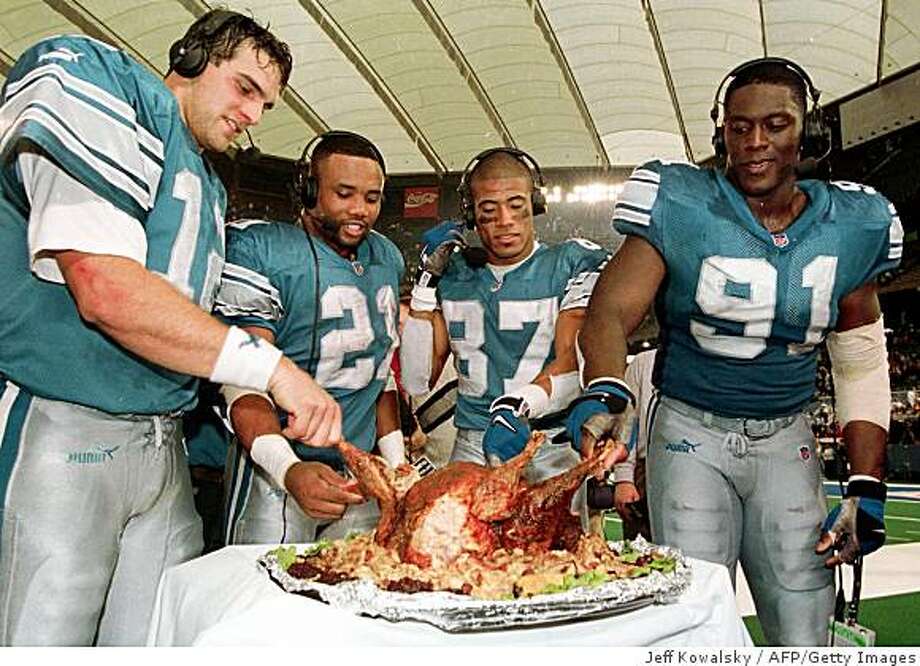
The foods served that day included items we would now recognize as traditional in Thanksgiving dinners: Turkey, berries, fruit, and various squashes, including pumpkins. Also served at that meal were some items which would not become traditional to Thanksgiving, but would become traditional to what would become known as New England cuisine. These included fish, lobster and clams.
Since no game that would later be called "football" was brought over by the Pilgrims, it's unlikely that such a game was played at Plymouth Plantation that day. There may have been games of some kind, but not football.
November 26, 1789: President George Washington, 7 months after taking office as the 1st President of the United States, had, the previous month, proclaimed this to be a day of thanksgiving in America.
Still no football. Sport wasn't exactly a priority in America's infancy. Survival as a nation was.
November 26, 1863: President Abraham Lincoln, trying to tap into national patriotism and to seek God's blessings during the American Civil War, proclaimed this to be a day of thanksgiving. Thus did it become the last Thursday in November -- usually the 4th, but sometimes the 5th, Thursday.
The month before, the Football Association was founded in England. But English football -- or association football, abbreviated to "assoc." and eventually turned into the word "soccer" -- wasn't played by many Americans at this point. But the tradition of Thanksgiving caught on.
November 6, 1869: Rutgers College and the College of New Jersey -- later to become Rutgers University and Princeton University -- play what's now called the 1st college football game, at College Field in New Brunswick, New Jersey, on what's now the parking lot behind Rutgers' College Avenue Gym.
The game was played 25-a-side, and was, essentially, an overcrowded soccer game. The Rutgers men got scarlet fabric -- cheap and thus easy to obtain -- and, to more easily tell each other apart, wrapped it around their heads like turbans. Thus were invented both school colors and the football helmet. Thus distinguishable, Rutgers outscored Princeton 6 goals to 4. They played each other again the following Saturday, November 13, at Princeton, and, this time, Princeton more than got revenge, winning 8-0. But neither game was played on a Thanksgiving Day.
November 17, 1869: From that day's edition of the Evening Telegraph of Philadelphia:
Foot Ball: A match between twenty-two players of the Young America Cricket Club and the Germantown Cricket Club will take place on Thanksgiving Day at 12 1/2 o'clock, on the grounds of the Germantown Club.
Philadelphia's proximity to Rutgers and Princeton, who had played the first and second recognized college football games in America earlier in the month, suggests that this match was organized by players from those games, or at least by spectators at those games.
November 25, 1869: Said game was played, with the next day's Philadelphia Inquirer saying that the rules were "adopted chiefly from those of Rugby School, England," rather than soccer. While I can't find a reference to the final score anywhere, this 2018 Inquirer article says the Germantown team won.
The clubs merged in 1890, and the combined club kept the Germantown Cricket Club name. It is still in business today, although they now specialize in tennis and swimming. It hosted tennis' U.S. Open from 1921 to 1923, and the Davis Cup from 1924 to 1927, and again in 1938.
May 12, 1875: Norwich Free Academy and New London High School play each other in football for the 1st time, making this the oldest high school football rivalry not just in Connecticut, but in the entire country. By the 1890s, it is moved to Thanksgiving. The schools are 14 miles apart, and Norwich leads 77-68-11. (UPDATE: Norwich won the 2019 game, 49-12.)
November 30, 1876: The 1st Thanksgiving Day college football game is played. Two and a half years earlier, a game between Harvard University and McGill University was played, a hybrid of the soccer that the Bostonians (or, rather, the Cantabridgeans) had been playing and the rugby preferred by the Montrealers. Harvard had gathered the presidents of the various colleges that were already playing football, and had the rules standardized.
This game was played at, interestingly, the site of what was long alleged to be the 1st baseball game: The Elysian Fields in Hoboken, New Jersey, outside New York City, roughly halfway between the schools involved: Princeton of New Jersey and Yale University of New Haven, Connecticut. Yale won, 2-0 -- under today's scoring, it would have been 14-0.
November 30, 1882: The Intercollegiate Football Association decides to hold an annual collegiate championship game in New York on Thanksgiving Day, between the 2 teams with the best records. Yale settles it, beating Princeton 2-1, at the original Polo Grounds, at 110th Street and 5th Avenue in New York. (Polo had actually been played there, but never was at its successors built in 1890 and 1911 at 155th Street and 8th Avenue.)
On the same day, west of Boston, the oldest public school football rivalry in the country begins: Needham vs. Wellesley, 3.5 miles apart. The rivalry is also close in margin: Wellesley leads 61-59-9. In 2015, Needham won, 12-7, in a game played at Fenway Park. The rivalry is 30 years older than Fenway, Major League Baseball's oldest ballpark.
November 24, 1887: The two oldest high schools in America, each playing football for the first time, begin their rivalry: The Boston Latin School and English High School. They are 2.8 miles apart, and play annually at Harvard Stadium (which would seem to be natural). Latin has dominated the series, leading 81-36-13, including 51 of the last 54.
November 28, 1889: Baltimore City College and Baltimore Polytechnic Institute, both of them high schools, play each other for the 1st time. They have played at Baltimore's largest football stadium ever since: Municipal Stadium starting in 1922, Memorial Stadium in 1954, and M&T Bank Stadium in 1998. Crowds of over 25,000 would attend.
However, this game is no longer played on Thanksgiving, due to Maryland extending its State Playoffs. It is now played on the 1st Saturday in November, and it couldn't be much closer, with City leading 63-62-6. City won this year's game 10-6.
The City-Poly tradition is kept alive, however. Every Thanksgiving morning at 9:00 AM, alumni -- whether they played football for their respective school or not -- are invited to play in a flag football game at Herring Run Park in Baltimore.
November 30, 1893: Gonzaga College High School and St. John's College High School, both of Washington, D.C., begin playing each other. They no longer play on T-Day if either makes the District of Columbia Interscholastic Athletic Association playoffs. St. John's won this year's game, 32-28. Gonzaga leads the series 47-46-5.
T-Day is also the day that the DCIAA holds its annual football championship game. This season, it will be between Maret and Coolidge.
November 29, 1894: New Jersey's oldest and most-played high school football rivalry is 1st played, in Cumberland County, South Jersey: Millville vs. Vineland. Vineland leads 66-62-19. (Early in the 20th Century, they would play 2, sometimes even 3, times a season.)
November 25, 1897: North Jersey's oldest high school football rivalry is 1st played, in Newark: Barringer vs. East Orange. They play at Newark City Schools Stadium, for a trophy known as The Left-Footed Kicker. East Orange leads the series 59-39-9. They haven't always played on T-Day, due to their respective leagues' scheduling requirements, but they do so today.
November 24, 1887: The two oldest high schools in America, each playing football for the first time, begin their rivalry: The Boston Latin School and English High School. They are 2.8 miles apart, and play annually at Harvard Stadium (which would seem to be natural). Latin has dominated the series, leading 81-36-13, including 51 of the last 54.
November 28, 1889: Baltimore City College and Baltimore Polytechnic Institute, both of them high schools, play each other for the 1st time. They have played at Baltimore's largest football stadium ever since: Municipal Stadium starting in 1922, Memorial Stadium in 1954, and M&T Bank Stadium in 1998. Crowds of over 25,000 would attend.
However, this game is no longer played on Thanksgiving, due to Maryland extending its State Playoffs. It is now played on the 1st Saturday in November, and it couldn't be much closer, with City leading 63-62-6. City won this year's game 10-6.
The City-Poly tradition is kept alive, however. Every Thanksgiving morning at 9:00 AM, alumni -- whether they played football for their respective school or not -- are invited to play in a flag football game at Herring Run Park in Baltimore.
November 30, 1893: Gonzaga College High School and St. John's College High School, both of Washington, D.C., begin playing each other. They no longer play on T-Day if either makes the District of Columbia Interscholastic Athletic Association playoffs. St. John's won this year's game, 32-28. Gonzaga leads the series 47-46-5.
T-Day is also the day that the DCIAA holds its annual football championship game. This season, it will be between Maret and Coolidge.
November 29, 1894: New Jersey's oldest and most-played high school football rivalry is 1st played, in Cumberland County, South Jersey: Millville vs. Vineland. Vineland leads 66-62-19. (Early in the 20th Century, they would play 2, sometimes even 3, times a season.)
November 25, 1897: North Jersey's oldest high school football rivalry is 1st played, in Newark: Barringer vs. East Orange. They play at Newark City Schools Stadium, for a trophy known as The Left-Footed Kicker. East Orange leads the series 59-39-9. They haven't always played on T-Day, due to their respective leagues' scheduling requirements, but they do so today.
On the same day, for the 1st time, an American football game was played in Europe for the 1st time. Played on the grounds of Racing Club de France (whose soccer team is now in France's 4th division) in Levallois-Perret, 4 miles northwest of central Paris, between a pair of arts schools, École des Beaux-Arts and Académie Julian. Most of the players, on each side, were American architecture students. Unfortunately, according to the most definitive source I can find, "the score was not preserved for history."
November 24, 1898: The oldest rivalry west of the Mississippi River -- barely west of it -- is first played between schools in the St. Louis suburbs, 5 miles apart. Both sides can claim bragging rights: Webster Groves leads the rivalry 58-50-7, but, counting only Thanksgiving games, Kirkwood leads 40-37-5.
If those numbers sound low for a rivalry that began in the 19th Century, it's because they haven't played every season. In the event that either school reaches the State Playoffs, the schools have an agreement that their junior varsities will play on Thanksgiving Day instead, to keep the tradition going.
*
November 28, 1901: The longest-running high school football game in the South is first played, between Woodberry Forest School of Woodberry Forest in Northern Virginia (but not close to Washington, D.C.) and Episcopal High School in Alexandria, Virginia (just outside D.C.) Although 88 miles apart, it is still an intense rivalry known simply as The Game, played on the 2nd Saturday in November, rather than on the 4th Thursday. Woodberry Forest leads, 59-52-1, but Episcopal won this year's game 20-16.
November 21, 1903: East Boston and South Boston -- a.k.a. Eastie and Southie -- play each other for the 1st time, although not on Thanksgiving Day. Their T-Day tradition would begin in 1914. The game is held annually at White Stadium, which is well to the southwest of both schools. Eastie beat Southie last year, in the 100th edition of the game, and holds a 51-44-5 lead.
November 26, 1903: The 1st Harvard Cup is held, the championship of the City of Buffalo. The game was always held at All-High Stadium, before the Buffalo Public Schools joined the New York State Public High School Athletic Association after the 2009 season.
November 30, 1905: Xavier High School of Manhattan and Fordham Prep of The Bronx play New York City's Thanksgiving classic, officially named the Turkey Bowl. They played many games at the Polo Grounds, and then at Downing Stadium on Randall's Island.
These days, when it's Xavier's turn to host, they play at the Aviator Sports and Events Center at Floyd Bennett Field in Brooklyn. When it's Fordham Prep's turn, they play a few doors down at Jack Coffey Field on the Fordham University campus. Fordham Prep leads all-time, 52-40-4.
Also on this day, the annual cross-State, cross-river rivalry between Phillipsburg High School of New Jersey and what's now named Easton Area High School of Pennsylvania begins. Easton won the 1st game, 26-0, and leads the series 65-42-5. It's actually been broadcast live on ESPN a couple of times. They play at Fisher Stadium on the Easton campus of Lafayette College. As with many other rivalries, there is a girls' game known as a "Powder Puff" played the day before.
November 27, 1913: Stonington High School of Connecticut and Westerly High School of Rhode Island play for the 1st time. The game ends in a scoreless tie. Although across a State Line from each other, they are just 2.6 miles apart.
Stonington leads the overall rivalry 74-68-17. But if only T-Day games are counted (and you can be sure that this is how Westerly counts it), Westerly leads 47-44-9.
November 25, 1915: Abington Senior High School and Cheltenham High School, 3 miles apart in the suburbs north of Philadelphia, play each other for the 1st time. Abington leads 59-34-6. Future Baseball Hall-of-Famer Reggie Jackson was a senior in the 1963 game, leading Cheltenham to a 13-7 win.
November 27, 1919: Loyola Blakefield School and Calvert Hall College, private schools in the Baltimore suburb of Towson, Maryland, begin playing what is now the oldest continuous Catholic high school football rivalry in America. It has often been held as a doubleheader with City vs. Poly at Municipal, Memorial and M&T Bank Stadiums, and is televised on WMAR-Channel 2. Loyola leads the series 49-42-8. Today, they will play each other for the 100th time, at Johnny Unitas Stadium on the campus of Towson University.
*
November 25, 1920: The 1st Thanksgiving Day parade is produced, by Gimbel's department store in Philadelphia. Gimbel's went out of business in 1987, but the Philly parade is still held every year, and is billed as America's oldest Thanksgiving Day parade.
It features floats, balloons, marching bands (local and otherwise), and celebrities. It goes up the Benjamin Franklin Parkway and ends at the Philadelphia Museum of Art. Yes, the building whose steps Rocky Balboa always ran up.
The American Professional Football Association, which would become the National Football League in 1922, plays its 1st season's T-Day games. Only one of the games could be called a local rivalry, and the Akron Pros, led by back-head coach Fritz Pollard and end Paul Robeson, both black, defeat Jim Thorpe's Canton Bulldogs 7-0.
The Dayton Triangles beat the Detroit Heralds 28-0. The Hammond Pros (who are an NFL team) lose to the Chicago Boosters (who are not) 27-0. The Rochester Jeffersons (who are an NFL team) lose to All-Tonawanda (who are not) 14-3. The Columbus Panhandles (who are an NFL team) and the Elyria Athletics (who are not) play to a scoreless tie.
And the Decatur Staleys beat the Chicago Tigers 6-0. An urban legend states that the stakes of this game was that the loser would leave the league. Actually, the evidence that the Tigers were even in the league is slim. But they played the next week, and then never played again. Meanwhile, the Staleys -- a "company team," or what English soccer fans would call a "works side," made up of employees of the A.E. Staley Starch Company -- move to Cubs Park (renamed Wrigley Field in 1926) the next season and become the Chicago Bears. The name lives on: Their mascot is named Staley Da Bear.
November 30, 1922: A vicious fight breaks out at Comiskey Park, and even George Halas, the Bears' founder/owner/head coach/two-way end, gets involved. The Chicago Cardinals win the crosstown rivalry 6-0.
November 27, 1924: New York's traditional parade begins with the 1st Macy's Thanksgiving Day Parade. Every year, the parade begins at the American Museum of Natural History at 77th Street and Central Park West, turns down Broadway at 59th Street/Columbus Circle, turns down 7th Avenue at 45th Street/Times Square, and ends at 34th Street/Herald Square in front of Macy's headquarters store.
The first float includes an animatronic turkey wearing a Pilgrim hat, and the last has Santa Claus on a sleigh, thus signifying the start of the holiday shopping season. Ho, ho, ho!
The parade has never been canceled. Not during the Great Depression or World War II, when resources would have been conserved more than usual, and attendance might have been done. Not in 1938 or in 1989, when snowstorms hit New York on T-Day. Not in 1963, 3 days after the funeral of the assassinated President John F. Kennedy. And not in 2001, just 72 days after the 9/11 attacks. They did, however, cancel the balloons in 1971, due to high winds, but the parade otherwise went on.
Also on this day, the San Francisco public high school championship is first held on Thanksgiving. The source I have said it's played at Kezar Stadium, but that can't be, because Kezar didn't open until the following year. The old 49ers stadium was demolished in 1989 -- before the earthquake that interrupted that year's World Series -- and was replaced with a smaller facility that now hosts only high school sports.
November 26, 1925: Harold "Red" Grange, just 5 days past his last game for the University of Illinois, plays his 1st professional football game. That was within the rules at the time, as there was no NFL Draft, let alone restrictions connected to it.
November 25, 1926: Central Jersey's oldest rivalry is 1st played, Perth Amboy vs. Carteret. However, this year, for the 1st time, what had been the Thanksgiving rivalries were moved back to the opening game of the season, to aid in scheduling the State Playoffs. Amboy won this year's game 21-6, and lead the series 48-43-2.
Also, for the 1st time, an NFL game is played in New York City on a Thanksgiving Day. The New York Giants defeat the Brooklyn Lions 17-0 at Ebbets Field. The Lions will not play the 1927 season. The Giants will win the NFL Championship.
*
November 30, 1933: The New York Giants and the Brooklyn Dodgers play each other in football on Thanksgiving Day. No, I'm not making that up: There was an NFL team in Brooklyn from 1930 to 1944. The Giants win 10-0.
The Giants had played the Staten Island Stapletons on T-Day from the Stapes' establishment in 1929 until they went out of business after the 1932 season, and would play the Dodgers through 1939. Aside from the New York Yanks -- officially "Yanks," not "Yankees" -- playing in Detroit in 1950, there would not be another New York team playing an NFL game on Thanksgiving until 1972, the Giants would not do so again until 1982, and no New York team would host another T-Day game until 2010.
November 29, 1934: Detroit Lions owner George Richards gets the NFL to schedule his team for Thanksgiving Day, against the defending NFL Champions, the undefeated Chicago Bears, with the greatest running back tandem ever, Red Grange (who is in his last season) and Bronko Nagurski. Richards owns a small radio network, and he thinks that, in this 1st season of Lions football in Detroit, this game can sell his team and his network.
It works, at least at the bank: The University of Detroit Stadium is sold out, 26,000 seats, and the listening audience is the biggest Richards has ever had. But the Bears win the game, 19-16. They do not, however, go undefeated, losing the NFL Championship Game to the Giants.
November 23, 1939: President Franklin D. Roosevelt moves Thanksgiving Day up. In this year that November had 5 Thursdays, he established the day as always the 4th Thursday in November. He thought an earlier Thanksgiving would produce more shopping time, thus helping both businesses and customers.
November 24, 1943: San Jose High School begins playing crosstown rival Abraham Lincoln High School on Thanksgiving. This is believed to be the only Thanksgiving high school football rivalry played west of Kirkwood and Webster Groves, Missouri. They play for the Big Bone, a cow femur donated by a butcher shop. Lincoln dominates the series, leading 40-24, including winning the last 21 straight going into this game.
*
November 26, 1953: The Lions beat the Green Bay Packers 31-15 at Briggs Stadium in Detroit -- renamed Tiger Stadium in 1961. This was the 1st Thanksgiving Day NFL game broadcast live on television, on the DuMont Network.
November 24, 1960: The American Football League plays a Thanksgiving game in its 1st season. The New York Titans beat the Dallas Texans 41-35 at the Cotton Bowl in Dallas. By 1963, these teams would be known as the New York Jets and the Kansas City Chiefs, respectively.
November 23, 1961: The Titans host the Buffalo Bills on Thanksgiving, and win 21-14 at the Polo Grounds.
November 22, 1962: Sacking Bart Starr 11 times, the Lions hand the Green Bay Packers what turns out to be their only loss of the season, 26-14 at Tiger Stadium in Detroit. The Packers go 13-1 and then beat the Giants in the NFL Championship Game at Yankee Stadium.
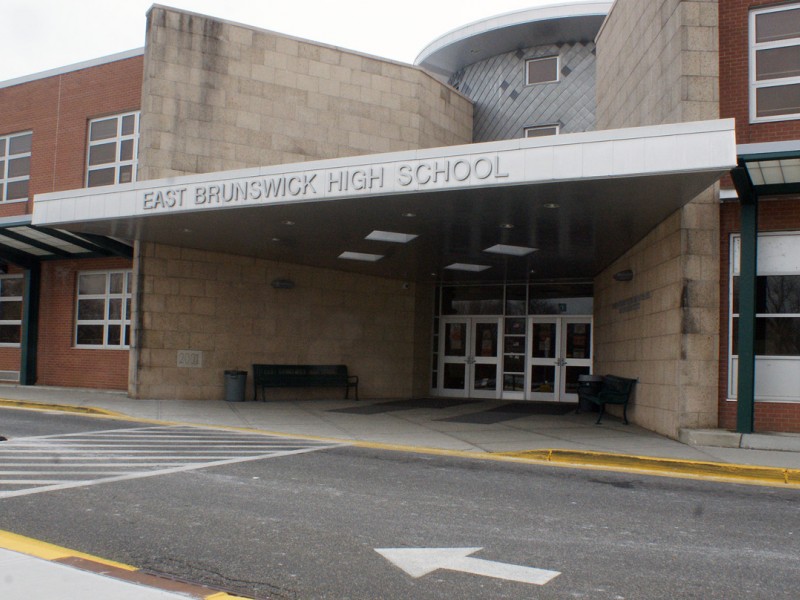
November 28, 1963: For the 1st time, my alma mater, East Brunswick High School, in only its 3rd season of varsity football, plays on Thanksgiving. Jay Doyle, their 1st athletic director, wrestling coach and football coach (he remained AD and wrestling coach until his death in 1972, but gave up coaching football after the 1st 2 seasons) was from Long Island, where there isn't any tradition of playing on T-Day, and he didn't want to play on the day.
But the assassination of President John F. Kennedy the preceding Friday led to the postponement of the season finale against Sayreville, intended for the Saturday. So the game was moved to Thanksgiving, and EB won, 13-12.
We would not play on T-Day again until 1978, as pretty much every other school in Middlesex County was already locked into a Turkey Day rivalry. In 1978, we would begin playing Colonia High School of Woodbridge. More on that later.
November 24, 1966: The NFL wanted to add a 2nd game to Thanksgiving, to increase TV ratings. The only team, aside from the established Lions, who were willing to host it were the Dallas Cowboys. They beat the Cleveland Browns 26-14 at the Cotton Bowl, and a new tradition is born.
From this point onward, Detroit hosts the early game, at 12:30 PM, because it would be before noon Dallas time. So Dallas hosts the 3:30 game. And, starting in 1970, after the NFL-AFL merger, since both Detroit and Dallas are in the NFC, CBS has the NFC games plus games where an AFC team hosts an NFC team, and NBC has the AFC games plus games where an NFC team hosts an AFC team, an AFC team, gets sent to either Detroit or Dallas every year. This held through the 2013 season, despite various network shifts and the addition of the 3rd game in 2006.
November 25, 1971: Nebraska vs. Oklahoma used to be a huge rivalry, before conference shifts split them up, and it was never bigger than on this Thanksgiving Day. Nebraska was ranked Number 1, Oklahoma was Number 2, and they met at Owen Field in Norman. In seesaw battle, Nebraska won, 35-31. It was one of several college football games that have been nicknamed "The Game of the Century."
This also marks the Cowboys' 1st Thanksgiving game at their new Texas Stadium. They win 28-21 over the Los Angeles Rams. They move into AT&T Stadium in 2009.
November 28, 1974: The last NFL game is played at Tiger Stadium. The Lions lose 31-27 to the Denver Broncos. Their remaining games this season will all be on the road. The next season, the Lions began playing out in the suburbs, at the Silverdome in Pontiac. They move back into the city in 2002.
At Texas Stadium, Roger Staubach gets hurt, but backup Clint Longley steps into the quarterback role. With 35 seconds left, he throws a touchdown pass to Drew Pearson, and the Cowboys beat their arch-rivals, the Washington Redskins, 24-23.
Pearson had played at South River High School in New Jersey. Ironically, as a sophomore there, his quarterback was future Redskin Joe Theismann. South River played New Brunswick at Rutgers on Thanksgiving every year from 1919 to 1976, first at Neilson Field, and then at Rutgers Stadium. The schools still play each other, just not on T-Day, and alternate between their home fields.
But 1974 was also the 1st year that the New Jersey State Interscholastic Athletic Association played State Playoffs, and this would end up breaking up several longstanding rivalries.
November 27, 1975: The football version of the St. Louis Cardinals takes the place of the Cowboys on Thanksgiving, losing to the Buffalo Bills 32-14 at Busch Memorial Stadium.
In 1976, the Cards would visit the Cowboys, and the Cards would host again in 1977. But that was it: The Kirkwood-Webster Groves rivalry is king on Thanksgiving in eastern Missouri, and only twice more, both times in Dallas, would the Cards play on T-Day before moving to Arizona. Nor have the St. Louis Rams played on T-Day, either home or away, since moving from Los Angeles.
November 26, 1976: Rutgers University's football team completes an undefeated season, defeating Colgate University 17-9 at Giants Stadium at the Meadowlands in East Rutherford, New Jersey. They do not, however, go to a bowl game: They turn down an invitation to the Independence Bowl, thinking it too small for an undefeated team, even one with as weak a schedule as Rutgers had -- and don't receive any other invitations.
Suffice it to say, if there had been a Big East Conference at the time, the Scarlet Knights would not have gone 11-0, because this was the year that the University of Pittsburgh, led by Heisman Trophy winner Tony Dorsett, ran over everybody on the way to an undefeated National Championship season.
Also on this day, the Lions beat the Bills 27-14, but the Bills' O.J. Simpson rushes for 273 yards, a single-game NFL record (since broken).
*
November 22, 1984: East Brunswick needs to beat Colonia away to clinch its 1st-ever undefeated regular season, and its 1st Middlesex County Athletic Conference Championship in 12 years. But they trail 27-13 at the half, and between injuries and ejections after a fight, 3 key players are out.
The Bears come back, and score a touchdown in the last 30 seconds to win it, 33-27. It is often called the greatest game in EBHS' 59-season football history.
The next season's game gets postponed by rain, and EB will not play on T-Day again until 1994.
November 23, 1989: The Philadelphia Eagles crush the Cowboys 27-0 at Texas Stadium. The game is remembered as the Bounty Bowl, since it was alleged that head coach Buddy Ryan offered his defenders bonuses for knocking Cowboy players out of the game with injuries.
November 26, 1992: Alabama vs. Auburn, the Iron Bowl, is played at Legion Field in Birmingham. It is the last game as head coach for Auburn's Pat Dye, whom the NCAA had recently caught with his hand in the cookie jar. Alabama won 17-0.
November 25, 1993: Georgia plays Georgia Tech at Grant Field in Atlanta. Introducing the game on ABC, Keith Jackson says, "This is the day when the waistline takes a whuppin', and ancient rivalries are replayed." The Bulldogs-Yellow Jackets rivalry is known as "Clean, Old-Fashioned Hate." Or, as Jackson said, as he so often did in games like this, "These two teams just... don't... like each other."
Indeed, as the 4th quarter began, Georgia led 16-10, but began to run up the score. They scored 4 touchdowns in the quarter. The 4th made it 43-10, and Bulldog coach Ray Goff ordered a 2-point conversion. The Jackets didn't like that, and a fight started. When order was restored, Tech stopped the 2-pointer, and the score held at 43-10.
But this time around, Turkey Day football was just getting warmed up. The Bears beat the Lions 10-6 at the Silverdome. And then, as snow fell on the Dallas-Fort Worth Metroplex, and got through the hole in the Texas Stadium roof and covered the field, the Miami Dolphins lined up for a late field goal, but it was blocked. Leon Lett, who tarnished an overwhelming Cowboy victory in the previous season's Super Bowl, actually costs the Cowboys the game this time, by trying to recover the blocked kick in the end zone. Except he can't handle it, the Dolphins pounce on it, and it's the winning touchdown: Miami 16, Dallas 14. CBS announcer Verne Lundquist says, "Not Leon Lett!" Yes, Leon Lett.
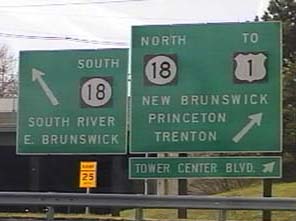
November 24, 1994: With the former high schools in Old Bridge, original school Madison Central and newer Cedar Ridge, reconsolidating after 25 years, a new Thanksgiving Day rivalry is formed with neighboring East Brunswick. EB wins the 1st-ever "Battle of Route 18," 33-18 at Old Bridge's Vince Lombardi Field. (Although he lived much of his life in New Jersey, the old Packer coach had no connection to the town. They just wanted to honor him.)
EB has played OB, under its previous names Madison Township (the town's name was changed in 1975) and Madison Central (the school's name change didn't follow that of the town) every season since 1963, OB's 1st season. From 1963 to 1974, EB led 9-1-2. From 1975 onward, OB leads 35-11, including 21-3 on Thanksgiving. Overall, OB leads 36-20-2. This season, with the game moved back to the season opener, Old Bridge won, 17-14.
Also on this day, 20 Thanksgivings after the Clint Longley Game, the Cowboys again needs a backup quarterback to fill in for an injured future Hall-of-Famer. Troy Aikman went down, and Jason Garrett stepped in. The Cowboys beat Brett Favre and the Packers 42-31.
November 26, 1998: The Lions and the Pittsburgh Steelers go to overtime. Referee Phil Luckett tells visiting Steeler captain Jerome Betts to call the coin as he tosses it in the air. Bettis starts to call heads, but stops himself and calls tails. Luckett goes with Bettis' aborted original call, and says the call was heads. The coin lands tails, the Lions get the ball, and kick a game-winning field goal without the Steelers even getting the ball back: Lions 19, Steelers 16.
The next season, the rule was changed: The captain is now required to call the coin before the toss. Another rule change, effective in 2012, means that a team can still win without giving the ball back if they score a touchdown, but not a field goal: If they kick a field goal, the team behind gets another chance.
November 23, 2006: The NFL goes to a 3-game schedule: Detroit in the 12:30 game, Dallas in the 3:30 game, and a 3rd game at 8:30, chosen for high ratings. The Lions lose to the Dolphins 27-10, the Cowboys beat the Tampa Bay Buccaneers 38-10, and the Chiefs beat the Broncos 19-10 at Arrowhead Stadium.
November 22, 2012: Jets quarterback Mark Sanchez runs headfirst into the rear end of one of his own linemen, and drops the ball. Against his team's arch-rivals, the New England Patriots. It's picked up and returned for a touchdown. Not that it mattered: The Pats won 49-19. But "The Butt Fumble" marked the end of Sanchez' tenure as Jets starting quarterback.
*
Thanksgiving games, current NFL teams: Detroit Lions 80, Dallas Cowboys 52, Chicago Bears 36, Green Bay Packers 36, Chicago/St. Louis/Arizona Cardinals 23, New York Giants 15 (oldest team to have never hosted), Denver Broncos 11 (most of any AFC team), Washington Redskins 11, Kansas City Chiefs 10, Buffalo Bills 9; New York Jets, Pittsburgh Steelers and Minnesota Vikings 8; Philadelphia Eagles, Miami Dolphins, Los Angeles/Oakland Raiders and Houston Oilers/Tennessee Titans 7; Cleveland/St. Louis/Los Angeles Rams, San Francisco 49ers and Cleveland Browns 6; New England Patriots and San Diego/Los Angeles Chargers 5; Baltimore/Indianapolis Colts, Seattle Seahawks and Atlanta Falcons 4; New Orleans Saints 3; Baltimore Ravens 2; Houston Texans, Carolina Panthers, Tampa Bay Buccaneers and Houston Texans 1; Jacksonville Jaguars 0.
The Jaguars are in their 25th season, and have never played on Thanksgiving. The Chargers have not played on Turkey Day since 1969. The Rams and Browns have also not yet played on T-Day in the 21st Century, and the Bills are doing so for the 1st time today.
Records:
1. Baltimore Ravens: 2-0, 1.000
2. New Orleans Saints: 2-0, 1.000
3. Houston Texans: 1-0, 1.000
4. Carolina Panthers: 1-0, 1.000
5. Philadelphia Eagles: 6-1, .857
6. Cleveland/St. Louis/Los Angeles Rams: 5-1, .833
7. Minnesota Vikings: 6-2, .750
8. Miami Dolphins: 5-2, .714
9. Houston Oilers/Tennessee Titans: 5-2, .714
10. San Diego/Los Angeles Chargers: 3-1-1, .700
11. Dallas Cowboys: 32-19, .627
12. Baltimore/Indianapolis Colts: 2-1-1, .625
13. Kansas City Chiefs: 6-4, .600
14. New England Patriots: 3-2, .600
15. San Francisco 49ers: 3-2-1, .583
16. New York Giants: 7-5-3, .567
17. Chicago Bears: 18-15-2, .543
Teams playing on Thanksgiving and winning an NFL Championship in the same season:
1920 Akron Pros beat Canton Bulldogs 7-0
1921 Chicago Bears lose to Buffalo All-Americans 7-6
1922 Canton Bulldogs beat Akron Pros 14-0
1923 Canton Bulldogs beat Toledo Maroons 28-0
1924 Canton Bulldogs beat Milwaukee Badgers 53-10
1925 Chicago Cardinals tie Chicago Bears 0-0
1926 Frankford Yellow Jackets (Philadelphia) beat Green Bay Packers 20-14
1928 Providence Steam Roller beat Pottsville Maroons 7-0
1929 Green Bay Packers tie Frankford Yellow Jackets 0-0
1930 Green Bay Packers beat Frankford Yellow Jackets 25-7
1931 Green Bay Packers beat Providence Steam Roller 38-7
1932 Chicago Bears beat Chicago Cardinals 24-0
1933 Chicago Bears beat Chicago Cardinals 22-6
1934 New York Giants beat Brooklyn Dodgers 27-0
1935 Detroit Lions beat Chicago Bears 14-2
1938 New York Giants tie Brooklyn Dodgers 7-7
1948 Cleveland Browns beat Los Angeles Dons 31-14 (All-America Football Conference)
1949 Cleveland Browns beat Chicago Hornets 14-6 (AAFC)
1952 Detroit Lions beat Green Bay Packers 48-24
1953 Detroit Lions beat Green Bay Packers 34-15
1957 Detroit Lions beat Green Bay Packers 18-6
1961 Green Bay Packers beat Detroit Lions 17-9
1962 Green Bay Packers lost to Detroit Lions 26-14
1964 Buffalo Bills beat San Diego Chargers 27-24 (American Football League)
1965 Buffalo Bills tie San Diego Chargers 20-20 (AFL)
1967 Oakland Raiders beat Kansas City Chiefs 44-22 (AFL)
1969 Minnesota Vikings beat Detroit Lions 27-0
1969 Kansas City Chiefs beat Denver Broncos 31-17
1971 Dallas Cowboys beat Los Angeles Rams 28-21
1973 Miami Dolphins beat Dallas Cowboys 14-7
1992 Dallas Cowboys over New York Giants 30-3
1993 Dallas Cowboys lose to Miami Dolphins 16-14
1995 Dallas Cowboys over Kansas City Chiefs 24-12
Also on this day, the annual cross-State, cross-river rivalry between Phillipsburg High School of New Jersey and what's now named Easton Area High School of Pennsylvania begins. Easton won the 1st game, 26-0, and leads the series 65-42-5. It's actually been broadcast live on ESPN a couple of times. They play at Fisher Stadium on the Easton campus of Lafayette College. As with many other rivalries, there is a girls' game known as a "Powder Puff" played the day before.
November 27, 1913: Stonington High School of Connecticut and Westerly High School of Rhode Island play for the 1st time. The game ends in a scoreless tie. Although across a State Line from each other, they are just 2.6 miles apart.
Stonington leads the overall rivalry 74-68-17. But if only T-Day games are counted (and you can be sure that this is how Westerly counts it), Westerly leads 47-44-9.
November 25, 1915: Abington Senior High School and Cheltenham High School, 3 miles apart in the suburbs north of Philadelphia, play each other for the 1st time. Abington leads 59-34-6. Future Baseball Hall-of-Famer Reggie Jackson was a senior in the 1963 game, leading Cheltenham to a 13-7 win.
November 27, 1919: Loyola Blakefield School and Calvert Hall College, private schools in the Baltimore suburb of Towson, Maryland, begin playing what is now the oldest continuous Catholic high school football rivalry in America. It has often been held as a doubleheader with City vs. Poly at Municipal, Memorial and M&T Bank Stadiums, and is televised on WMAR-Channel 2. Loyola leads the series 49-42-8. Today, they will play each other for the 100th time, at Johnny Unitas Stadium on the campus of Towson University.
*
November 25, 1920: The 1st Thanksgiving Day parade is produced, by Gimbel's department store in Philadelphia. Gimbel's went out of business in 1987, but the Philly parade is still held every year, and is billed as America's oldest Thanksgiving Day parade.
It features floats, balloons, marching bands (local and otherwise), and celebrities. It goes up the Benjamin Franklin Parkway and ends at the Philadelphia Museum of Art. Yes, the building whose steps Rocky Balboa always ran up.
The American Professional Football Association, which would become the National Football League in 1922, plays its 1st season's T-Day games. Only one of the games could be called a local rivalry, and the Akron Pros, led by back-head coach Fritz Pollard and end Paul Robeson, both black, defeat Jim Thorpe's Canton Bulldogs 7-0.
The Dayton Triangles beat the Detroit Heralds 28-0. The Hammond Pros (who are an NFL team) lose to the Chicago Boosters (who are not) 27-0. The Rochester Jeffersons (who are an NFL team) lose to All-Tonawanda (who are not) 14-3. The Columbus Panhandles (who are an NFL team) and the Elyria Athletics (who are not) play to a scoreless tie.
And the Decatur Staleys beat the Chicago Tigers 6-0. An urban legend states that the stakes of this game was that the loser would leave the league. Actually, the evidence that the Tigers were even in the league is slim. But they played the next week, and then never played again. Meanwhile, the Staleys -- a "company team," or what English soccer fans would call a "works side," made up of employees of the A.E. Staley Starch Company -- move to Cubs Park (renamed Wrigley Field in 1926) the next season and become the Chicago Bears. The name lives on: Their mascot is named Staley Da Bear.
November 30, 1922: A vicious fight breaks out at Comiskey Park, and even George Halas, the Bears' founder/owner/head coach/two-way end, gets involved. The Chicago Cardinals win the crosstown rivalry 6-0.
November 27, 1924: New York's traditional parade begins with the 1st Macy's Thanksgiving Day Parade. Every year, the parade begins at the American Museum of Natural History at 77th Street and Central Park West, turns down Broadway at 59th Street/Columbus Circle, turns down 7th Avenue at 45th Street/Times Square, and ends at 34th Street/Herald Square in front of Macy's headquarters store.
The first float includes an animatronic turkey wearing a Pilgrim hat, and the last has Santa Claus on a sleigh, thus signifying the start of the holiday shopping season. Ho, ho, ho!
The parade has never been canceled. Not during the Great Depression or World War II, when resources would have been conserved more than usual, and attendance might have been done. Not in 1938 or in 1989, when snowstorms hit New York on T-Day. Not in 1963, 3 days after the funeral of the assassinated President John F. Kennedy. And not in 2001, just 72 days after the 9/11 attacks. They did, however, cancel the balloons in 1971, due to high winds, but the parade otherwise went on.
Also on this day, the San Francisco public high school championship is first held on Thanksgiving. The source I have said it's played at Kezar Stadium, but that can't be, because Kezar didn't open until the following year. The old 49ers stadium was demolished in 1989 -- before the earthquake that interrupted that year's World Series -- and was replaced with a smaller facility that now hosts only high school sports.
November 26, 1925: Harold "Red" Grange, just 5 days past his last game for the University of Illinois, plays his 1st professional football game. That was within the rules at the time, as there was no NFL Draft, let alone restrictions connected to it.
It is the annual Thanksgiving Day tussle between Chicago's NFL teams, the Bears and the Cardinals, and Wrigley Field is packed to the gills to watch "the Galloping Ghost" put on his Number 77 jersey for the Bears -- the same colors as UI, dark blue and orange, and the first truly famous uniform number in North American sports. (The NHL wouldn't adopt numbers for another year, and Major League Baseball not until 1929.) The game ends in a scoreless tie.
Grange is one of the greatest all-around players in football history, a sensational running back and one of the best defensive backs of his era. He is also, by far, the most important player in the history of the NFL: If he had failed, the NFL might never have become bigger than it was in 1925, and likely would have gone out of business during the Great Depression, and another sport would have had to fill the gap between the end of the World Series in October and Opening Day in April. Maybe it would have been soccer, that other "football."
But Grange did succeed, and, along with his coach George Halas and his contemporary Jim Thorpe, he was one of the 1st 3 men elected to the Pro Football Hall of Fame.
November 25, 1926: Central Jersey's oldest rivalry is 1st played, Perth Amboy vs. Carteret. However, this year, for the 1st time, what had been the Thanksgiving rivalries were moved back to the opening game of the season, to aid in scheduling the State Playoffs. Amboy won this year's game 21-6, and lead the series 48-43-2.
Also, for the 1st time, an NFL game is played in New York City on a Thanksgiving Day. The New York Giants defeat the Brooklyn Lions 17-0 at Ebbets Field. The Lions will not play the 1927 season. The Giants will win the NFL Championship.
*
November 30, 1933: The New York Giants and the Brooklyn Dodgers play each other in football on Thanksgiving Day. No, I'm not making that up: There was an NFL team in Brooklyn from 1930 to 1944. The Giants win 10-0.
The Giants had played the Staten Island Stapletons on T-Day from the Stapes' establishment in 1929 until they went out of business after the 1932 season, and would play the Dodgers through 1939. Aside from the New York Yanks -- officially "Yanks," not "Yankees" -- playing in Detroit in 1950, there would not be another New York team playing an NFL game on Thanksgiving until 1972, the Giants would not do so again until 1982, and no New York team would host another T-Day game until 2010.
November 29, 1934: Detroit Lions owner George Richards gets the NFL to schedule his team for Thanksgiving Day, against the defending NFL Champions, the undefeated Chicago Bears, with the greatest running back tandem ever, Red Grange (who is in his last season) and Bronko Nagurski. Richards owns a small radio network, and he thinks that, in this 1st season of Lions football in Detroit, this game can sell his team and his network.
It works, at least at the bank: The University of Detroit Stadium is sold out, 26,000 seats, and the listening audience is the biggest Richards has ever had. But the Bears win the game, 19-16. They do not, however, go undefeated, losing the NFL Championship Game to the Giants.
November 23, 1939: President Franklin D. Roosevelt moves Thanksgiving Day up. In this year that November had 5 Thursdays, he established the day as always the 4th Thursday in November. He thought an earlier Thanksgiving would produce more shopping time, thus helping both businesses and customers.
November 24, 1943: San Jose High School begins playing crosstown rival Abraham Lincoln High School on Thanksgiving. This is believed to be the only Thanksgiving high school football rivalry played west of Kirkwood and Webster Groves, Missouri. They play for the Big Bone, a cow femur donated by a butcher shop. Lincoln dominates the series, leading 40-24, including winning the last 21 straight going into this game.
*
November 26, 1953: The Lions beat the Green Bay Packers 31-15 at Briggs Stadium in Detroit -- renamed Tiger Stadium in 1961. This was the 1st Thanksgiving Day NFL game broadcast live on television, on the DuMont Network.
November 24, 1960: The American Football League plays a Thanksgiving game in its 1st season. The New York Titans beat the Dallas Texans 41-35 at the Cotton Bowl in Dallas. By 1963, these teams would be known as the New York Jets and the Kansas City Chiefs, respectively.
November 23, 1961: The Titans host the Buffalo Bills on Thanksgiving, and win 21-14 at the Polo Grounds.
November 22, 1962: Sacking Bart Starr 11 times, the Lions hand the Green Bay Packers what turns out to be their only loss of the season, 26-14 at Tiger Stadium in Detroit. The Packers go 13-1 and then beat the Giants in the NFL Championship Game at Yankee Stadium.
November 28, 1963: For the 1st time, my alma mater, East Brunswick High School, in only its 3rd season of varsity football, plays on Thanksgiving. Jay Doyle, their 1st athletic director, wrestling coach and football coach (he remained AD and wrestling coach until his death in 1972, but gave up coaching football after the 1st 2 seasons) was from Long Island, where there isn't any tradition of playing on T-Day, and he didn't want to play on the day.
But the assassination of President John F. Kennedy the preceding Friday led to the postponement of the season finale against Sayreville, intended for the Saturday. So the game was moved to Thanksgiving, and EB won, 13-12.
We would not play on T-Day again until 1978, as pretty much every other school in Middlesex County was already locked into a Turkey Day rivalry. In 1978, we would begin playing Colonia High School of Woodbridge. More on that later.
November 24, 1966: The NFL wanted to add a 2nd game to Thanksgiving, to increase TV ratings. The only team, aside from the established Lions, who were willing to host it were the Dallas Cowboys. They beat the Cleveland Browns 26-14 at the Cotton Bowl, and a new tradition is born.
From this point onward, Detroit hosts the early game, at 12:30 PM, because it would be before noon Dallas time. So Dallas hosts the 3:30 game. And, starting in 1970, after the NFL-AFL merger, since both Detroit and Dallas are in the NFC, CBS has the NFC games plus games where an AFC team hosts an NFC team, and NBC has the AFC games plus games where an NFC team hosts an AFC team, an AFC team, gets sent to either Detroit or Dallas every year. This held through the 2013 season, despite various network shifts and the addition of the 3rd game in 2006.
November 25, 1971: Nebraska vs. Oklahoma used to be a huge rivalry, before conference shifts split them up, and it was never bigger than on this Thanksgiving Day. Nebraska was ranked Number 1, Oklahoma was Number 2, and they met at Owen Field in Norman. In seesaw battle, Nebraska won, 35-31. It was one of several college football games that have been nicknamed "The Game of the Century."
This also marks the Cowboys' 1st Thanksgiving game at their new Texas Stadium. They win 28-21 over the Los Angeles Rams. They move into AT&T Stadium in 2009.
November 28, 1974: The last NFL game is played at Tiger Stadium. The Lions lose 31-27 to the Denver Broncos. Their remaining games this season will all be on the road. The next season, the Lions began playing out in the suburbs, at the Silverdome in Pontiac. They move back into the city in 2002.
At Texas Stadium, Roger Staubach gets hurt, but backup Clint Longley steps into the quarterback role. With 35 seconds left, he throws a touchdown pass to Drew Pearson, and the Cowboys beat their arch-rivals, the Washington Redskins, 24-23.
Pearson had played at South River High School in New Jersey. Ironically, as a sophomore there, his quarterback was future Redskin Joe Theismann. South River played New Brunswick at Rutgers on Thanksgiving every year from 1919 to 1976, first at Neilson Field, and then at Rutgers Stadium. The schools still play each other, just not on T-Day, and alternate between their home fields.
But 1974 was also the 1st year that the New Jersey State Interscholastic Athletic Association played State Playoffs, and this would end up breaking up several longstanding rivalries.
November 27, 1975: The football version of the St. Louis Cardinals takes the place of the Cowboys on Thanksgiving, losing to the Buffalo Bills 32-14 at Busch Memorial Stadium.
In 1976, the Cards would visit the Cowboys, and the Cards would host again in 1977. But that was it: The Kirkwood-Webster Groves rivalry is king on Thanksgiving in eastern Missouri, and only twice more, both times in Dallas, would the Cards play on T-Day before moving to Arizona. Nor have the St. Louis Rams played on T-Day, either home or away, since moving from Los Angeles.
November 26, 1976: Rutgers University's football team completes an undefeated season, defeating Colgate University 17-9 at Giants Stadium at the Meadowlands in East Rutherford, New Jersey. They do not, however, go to a bowl game: They turn down an invitation to the Independence Bowl, thinking it too small for an undefeated team, even one with as weak a schedule as Rutgers had -- and don't receive any other invitations.
Suffice it to say, if there had been a Big East Conference at the time, the Scarlet Knights would not have gone 11-0, because this was the year that the University of Pittsburgh, led by Heisman Trophy winner Tony Dorsett, ran over everybody on the way to an undefeated National Championship season.
Also on this day, the Lions beat the Bills 27-14, but the Bills' O.J. Simpson rushes for 273 yards, a single-game NFL record (since broken).
*
November 22, 1984: East Brunswick needs to beat Colonia away to clinch its 1st-ever undefeated regular season, and its 1st Middlesex County Athletic Conference Championship in 12 years. But they trail 27-13 at the half, and between injuries and ejections after a fight, 3 key players are out.
The Bears come back, and score a touchdown in the last 30 seconds to win it, 33-27. It is often called the greatest game in EBHS' 59-season football history.
The next season's game gets postponed by rain, and EB will not play on T-Day again until 1994.
November 23, 1989: The Philadelphia Eagles crush the Cowboys 27-0 at Texas Stadium. The game is remembered as the Bounty Bowl, since it was alleged that head coach Buddy Ryan offered his defenders bonuses for knocking Cowboy players out of the game with injuries.
November 26, 1992: Alabama vs. Auburn, the Iron Bowl, is played at Legion Field in Birmingham. It is the last game as head coach for Auburn's Pat Dye, whom the NCAA had recently caught with his hand in the cookie jar. Alabama won 17-0.
November 25, 1993: Georgia plays Georgia Tech at Grant Field in Atlanta. Introducing the game on ABC, Keith Jackson says, "This is the day when the waistline takes a whuppin', and ancient rivalries are replayed." The Bulldogs-Yellow Jackets rivalry is known as "Clean, Old-Fashioned Hate." Or, as Jackson said, as he so often did in games like this, "These two teams just... don't... like each other."
Indeed, as the 4th quarter began, Georgia led 16-10, but began to run up the score. They scored 4 touchdowns in the quarter. The 4th made it 43-10, and Bulldog coach Ray Goff ordered a 2-point conversion. The Jackets didn't like that, and a fight started. When order was restored, Tech stopped the 2-pointer, and the score held at 43-10.
But this time around, Turkey Day football was just getting warmed up. The Bears beat the Lions 10-6 at the Silverdome. And then, as snow fell on the Dallas-Fort Worth Metroplex, and got through the hole in the Texas Stadium roof and covered the field, the Miami Dolphins lined up for a late field goal, but it was blocked. Leon Lett, who tarnished an overwhelming Cowboy victory in the previous season's Super Bowl, actually costs the Cowboys the game this time, by trying to recover the blocked kick in the end zone. Except he can't handle it, the Dolphins pounce on it, and it's the winning touchdown: Miami 16, Dallas 14. CBS announcer Verne Lundquist says, "Not Leon Lett!" Yes, Leon Lett.
November 24, 1994: With the former high schools in Old Bridge, original school Madison Central and newer Cedar Ridge, reconsolidating after 25 years, a new Thanksgiving Day rivalry is formed with neighboring East Brunswick. EB wins the 1st-ever "Battle of Route 18," 33-18 at Old Bridge's Vince Lombardi Field. (Although he lived much of his life in New Jersey, the old Packer coach had no connection to the town. They just wanted to honor him.)
EB has played OB, under its previous names Madison Township (the town's name was changed in 1975) and Madison Central (the school's name change didn't follow that of the town) every season since 1963, OB's 1st season. From 1963 to 1974, EB led 9-1-2. From 1975 onward, OB leads 35-11, including 21-3 on Thanksgiving. Overall, OB leads 36-20-2. This season, with the game moved back to the season opener, Old Bridge won, 17-14.
Also on this day, 20 Thanksgivings after the Clint Longley Game, the Cowboys again needs a backup quarterback to fill in for an injured future Hall-of-Famer. Troy Aikman went down, and Jason Garrett stepped in. The Cowboys beat Brett Favre and the Packers 42-31.
November 26, 1998: The Lions and the Pittsburgh Steelers go to overtime. Referee Phil Luckett tells visiting Steeler captain Jerome Betts to call the coin as he tosses it in the air. Bettis starts to call heads, but stops himself and calls tails. Luckett goes with Bettis' aborted original call, and says the call was heads. The coin lands tails, the Lions get the ball, and kick a game-winning field goal without the Steelers even getting the ball back: Lions 19, Steelers 16.
The next season, the rule was changed: The captain is now required to call the coin before the toss. Another rule change, effective in 2012, means that a team can still win without giving the ball back if they score a touchdown, but not a field goal: If they kick a field goal, the team behind gets another chance.
November 23, 2006: The NFL goes to a 3-game schedule: Detroit in the 12:30 game, Dallas in the 3:30 game, and a 3rd game at 8:30, chosen for high ratings. The Lions lose to the Dolphins 27-10, the Cowboys beat the Tampa Bay Buccaneers 38-10, and the Chiefs beat the Broncos 19-10 at Arrowhead Stadium.
November 22, 2012: Jets quarterback Mark Sanchez runs headfirst into the rear end of one of his own linemen, and drops the ball. Against his team's arch-rivals, the New England Patriots. It's picked up and returned for a touchdown. Not that it mattered: The Pats won 49-19. But "The Butt Fumble" marked the end of Sanchez' tenure as Jets starting quarterback.
*
Thanksgiving games, current NFL teams: Detroit Lions 80, Dallas Cowboys 52, Chicago Bears 36, Green Bay Packers 36, Chicago/St. Louis/Arizona Cardinals 23, New York Giants 15 (oldest team to have never hosted), Denver Broncos 11 (most of any AFC team), Washington Redskins 11, Kansas City Chiefs 10, Buffalo Bills 9; New York Jets, Pittsburgh Steelers and Minnesota Vikings 8; Philadelphia Eagles, Miami Dolphins, Los Angeles/Oakland Raiders and Houston Oilers/Tennessee Titans 7; Cleveland/St. Louis/Los Angeles Rams, San Francisco 49ers and Cleveland Browns 6; New England Patriots and San Diego/Los Angeles Chargers 5; Baltimore/Indianapolis Colts, Seattle Seahawks and Atlanta Falcons 4; New Orleans Saints 3; Baltimore Ravens 2; Houston Texans, Carolina Panthers, Tampa Bay Buccaneers and Houston Texans 1; Jacksonville Jaguars 0.
The Jaguars are in their 25th season, and have never played on Thanksgiving. The Chargers have not played on Turkey Day since 1969. The Rams and Browns have also not yet played on T-Day in the 21st Century, and the Bills are doing so for the 1st time today.
Records:
1. Baltimore Ravens: 2-0, 1.000
2. New Orleans Saints: 2-0, 1.000
3. Houston Texans: 1-0, 1.000
4. Carolina Panthers: 1-0, 1.000
5. Philadelphia Eagles: 6-1, .857
6. Cleveland/St. Louis/Los Angeles Rams: 5-1, .833
7. Minnesota Vikings: 6-2, .750
8. Miami Dolphins: 5-2, .714
9. Houston Oilers/Tennessee Titans: 5-2, .714
10. San Diego/Los Angeles Chargers: 3-1-1, .700
11. Dallas Cowboys: 32-19, .627
12. Baltimore/Indianapolis Colts: 2-1-1, .625
13. Kansas City Chiefs: 6-4, .600
14. New England Patriots: 3-2, .600
15. San Francisco 49ers: 3-2-1, .583
16. New York Giants: 7-5-3, .567
17. Chicago Bears: 18-15-2, .543
18. New York Jets: 4-4, .500
19. Cleveland Browns: 3-3, .500
20. Seattle Seahawks: 2-2, .500
21. Jacksonville Jaguars: 0-0 (no winning percentage, as you can't divide by zero)
22. Detroit Lions: 37-40-2, .481
23. Buffalo Bills: 3-4-1, .438
21. Jacksonville Jaguars: 0-0 (no winning percentage, as you can't divide by zero)
22. Detroit Lions: 37-40-2, .481
23. Buffalo Bills: 3-4-1, .438
24. Los Angeles/Oakland Raiders: 3-4, .429
25. Green Bay Packers: 14-20-2, .417
26. Denver Broncos: 4-7, .364
27. Atlanta Falcons: 1-2, ..333
28. Chicago/St. Louis/Arizona Cardinals: 6-15-2, .304
29. Washington Redskins: 3-8, .273
30. Pittsburgh Steelers: 2-6, .250
31. Tampa Bay Buccaneers: 0-1, .000
32. Cincinnati Bengals: 0-1, .000
*
*
Teams playing on Thanksgiving and winning an NFL Championship in the same season:
1920 Akron Pros beat Canton Bulldogs 7-0
1921 Chicago Bears lose to Buffalo All-Americans 7-6
1922 Canton Bulldogs beat Akron Pros 14-0
1923 Canton Bulldogs beat Toledo Maroons 28-0
1924 Canton Bulldogs beat Milwaukee Badgers 53-10
1925 Chicago Cardinals tie Chicago Bears 0-0
1926 Frankford Yellow Jackets (Philadelphia) beat Green Bay Packers 20-14
1928 Providence Steam Roller beat Pottsville Maroons 7-0
1929 Green Bay Packers tie Frankford Yellow Jackets 0-0
1930 Green Bay Packers beat Frankford Yellow Jackets 25-7
1931 Green Bay Packers beat Providence Steam Roller 38-7
1932 Chicago Bears beat Chicago Cardinals 24-0
1933 Chicago Bears beat Chicago Cardinals 22-6
1934 New York Giants beat Brooklyn Dodgers 27-0
1935 Detroit Lions beat Chicago Bears 14-2
1938 New York Giants tie Brooklyn Dodgers 7-7
1948 Cleveland Browns beat Los Angeles Dons 31-14 (All-America Football Conference)
1949 Cleveland Browns beat Chicago Hornets 14-6 (AAFC)
1952 Detroit Lions beat Green Bay Packers 48-24
1953 Detroit Lions beat Green Bay Packers 34-15
1957 Detroit Lions beat Green Bay Packers 18-6
1961 Green Bay Packers beat Detroit Lions 17-9
1962 Green Bay Packers lost to Detroit Lions 26-14
1964 Buffalo Bills beat San Diego Chargers 27-24 (American Football League)
1965 Buffalo Bills tie San Diego Chargers 20-20 (AFL)
1967 Oakland Raiders beat Kansas City Chiefs 44-22 (AFL)
1969 Minnesota Vikings beat Detroit Lions 27-0
1969 Kansas City Chiefs beat Denver Broncos 31-17
1971 Dallas Cowboys beat Los Angeles Rams 28-21
1973 Miami Dolphins beat Dallas Cowboys 14-7
1992 Dallas Cowboys over New York Giants 30-3
1993 Dallas Cowboys lose to Miami Dolphins 16-14
1995 Dallas Cowboys over Kansas City Chiefs 24-12