Showing posts with label hideki irabu. Show all posts

Tuesday, July 30, 2019

July 30, 1999: I Came, I Saw, I Conquered

July 30, 1999, 20 years ago: It was my greatest achievement as a sports fan.

I, a Yankee Fan, walked into Fenway Park during a Yankees vs. Red Sox Pennant race, saw the Yankees win, walked out still wearing my Yankee cap, and got out of New England in one piece.

It was a good time in America. Bill Clinton was President, the economy was booming, and the nation was at peace. New York City was safer and cleaner than it had ever been in my lifetime. And the Yankees were winning.

But, in the Yankee-Red Sox rivalry, it turned out to be a weird time. This was the year the rivalry, kind of dormant since the 1980s ended, picked up again. But it was also the time that the Red Sox were planning on building a new Fenway Park, while the Yankees were merely talking about building a new Yankee Stadium.

Plans were made to build the new Fenway across Jersey Street/Yawkey Way from the old one, with its "front door" on Boylston Street. Plans were made for it to have much more office, concession and restroom space than the original, but keep the same dimensions, including a new Green Monster. The old park would be torn down, except for the original Green Monster, and a new field put in place.
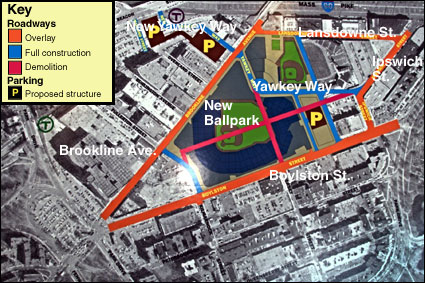
The New Fenway plan

They were planning on having it open by 2003, and they got endorsements from Sox legends Ted Williams, Carl Yastrzemski and Johnny Pesky, as well as celebrity Sox fans like Stephen King and Doris Kearns Goodwin.

As it turned out, Massachusetts politics got in the way, as it so often does. When John Henry and his people bought the Sox from the Yawkey Trust in 2002, they decided building a World Series winner was more important than building a new ballpark. And so, since then, we have a new Yankee Stadium with 1 World Series win, and the same Fenway Park, modernized as much as possible, with 4 World Series wins *.

But in 1999, it was possible that this would be the last season with a Yankees-Red Sox Pennant race at the old Fenway Park. And this was one of those few Summers in which I had money. I had seen 3 games at Fenway (in 1991, 1994 and 1996), but not against the Yankees. I had seen a Yankees-Red Sox game, but at Yankee Stadium (in 1991). This could have been my last chance, or so I thought. So I went.

*

I made a reservation for a bed-and-breakfast in the Allston section of Boston, just off the Boston University campus. The game was going to be on WNYW-Channel 5 (for the 1st time since 1950, the Yankees' "free TV" carrier was not WPIX-Channel 11), so I set my VCR (remember them?) to record it.

I packed my backpack, walked to the bus station at Tower Center, just off Exit 9 of the New Jersey Turnpike, and took the bus into Port Authority Bus Terminal. I boarded a Greyhound bus at Gate 84, and made a leisurely, uneventful ride to Boston. Everything was in place, except for one thing. I had no game ticket. That's a story in and of itself.

At any rate, we arrived a little early at South Station, the city's venerable rail terminal, which had just had a bus terminal added. I got on the subway, known as "The T" for "transit." South Station is on the Red Line, and I changed at Park Street under (or, "changed at Pahk Street undah," as they say up theah) to the Green Line, and checked in. I had plenty of time to get back on the Green Line and get to the little green pinball machine off Kenmore Square.

One thing Fenway has in common with Yankee Stadium (old or new) is that, as soon as you get out of the subway, there are the scalpers, asking, "Anybody buying? Anybody selling?" I made the left turn from Commonwealth Avenue onto Brookline Avenue, took the bridge over the Massachusetts Turnpike and the Boston & Albany Railroad (now serving Amtrak, MBTA commuter rail, and the T's Orange Line), and past the most famous of all Red Sox bars, the Cask 'n' Flagon, across Ted Williams Way (the recently renamed Ipswich Street) from the big left field wall, the Green Monster.

I went to Yawkey Way (which has since had its previous name of Jersey Street restored), stuck my Yankee cap in the backpack, and looked for a scalper. I found one, with a ticket for an Obstructed View seat in Section 12, behind 1st base. List price was $24, and he was offering it for $42. In 2019 dollars, he was charging $65 for a $37 seat, so you can see just how much the Red Sox' 2003-present success has driven up prices.

The look on the scalper's face when, after making the exchange, I put my cap back on, was worth it.

*

I made my way inside the venerable old ballyard. One thing I've done on every visit to Fenway (except one, having forgotten until I was on the bus to go back home, and I felt terrible about it) is look for one of the little red Jimmy Fund boxes.

One good thing you can do is look for the Jimmy Fund boxes. The Dana-Farber Cancer Institute has run the fund since 1948, when the Boston Braves pitched in to raise money for a kid named Einar Gustafsson, then 12 years old and a patient of the Institute's founder, Dr. Sidney Farber.

Gustafsson was called the much more generic "Jimmy," not so much because he had a decidedly non-English name (in the post-World War II era, a decidedly patriotic, pro-America time), but to protect his privacy. In the 1st year, $200,000 was raised for cancer research – about $2.1 million in today's money.

When the Braves left town in 1953, Farber turned to the Red Sox. Later that year, when Ted Williams returned from the Korean War, he volunteered, and became the face of the Fund, becoming close friends with Farber and raising money all over the country, especially after his retirement as a player in 1960 gave him more time to do so, until becoming too ill to do so a few years prior to his death in 2002.

*

Here were the lineups for the game. For the visiting Yankees, coming in at 61-39, leading the American League Eastern Division:

1. 11 2B Chuck Knoblauch
2. 2 SS Derek Jeter
3. 21 RF Paul O'Neill
4. 51 CF Bernie Williams
5. 24 1B Tino Martinez
6. 45 DH Chili Davis
7. 20 C Jorge Posada
8. 47 LF Shane Spencer
9. 18 3B Scott Brosius
P 14 Hideki Irabu

For the host Red Sox, coming in at 55-46, 6 1/2 games behind the Yankees, but in good position to take the 1 Wild Card berth then available in the AL:

1. 20 CF Darren Lewis
2. 13 3B John Valentin
3. 23 1B Brian Daubach
4. 5 SS Nomar Garicaparra
5. 25 LF Troy O'Leary
6. 44 DH Butch Huskey
7. 33 C Jason Varitek
8. 15 2B Donnie Sadler
9. 7 RF Trot Nixon
P 31 Mark Portugal

I was familiar all 9 position players. I had seen Huskey play for the Mets. Valentin had been with the Sox since 1992. And I had seen the other 7 play for the Trenton Thunder, now the Yankees' Class AA farm team in the Eastern League, but then belonging to the Boston system.

The home plate umpire was Mike Reilly. Had I known that I would one day become a fan of English soccer team Arsenal, and that a referee named Mike Riley would badly screw them over in 2004 (just 4 days after the Sox beat the Yankees for the Pennant), and then even more so as the supervisor for Premier League referees, I would have taken this as a bad sign. As far as I know, there is no connection between them, besides similar (if differently-spelled) names and a similar profession.

The other umpires: At 1st base, Brian O'Nora, of whom I have no memory; at 2nd base, Laz Diaz, not a good one; and at 3rd base, Rich Garcia, who wrote his name into Yankee history in the 1996 Playoffs, controversially giving Derek Jeter a home run despite then 12-year-old fan Jeffrey Maier seeming to interfere with play. (The call was correct: Baltimore Oriole right fielder Tony Tarasco was not going to catch the ball anyway.)

The game-time temperature was 84 degrees, quite tolerable, since there was a 17 mile-per-hour wind. Conspicuously, it was blowing from right field to left field, making the Green Monster slightly more tempting a target than usual, but not making it too easy a target. The sky was overcast, but there was no threat of rain. Given a cold drink, you couldn't have asked for a better night for baseball, a better place to watch it (I make a lot of remarks about Fenway to tease Sox fans, but I don't mean them), or a better pair of opponents.

*

Baseball games generally don't start on the hour or the half-hour. For TV's sake, the time printed on the ticket is usually at 5, or 10, or (in the case of Toronto Blue Jays home games) 7 minutes after the hour. Usually, first pitch comes at 7 or 8 minutes after. So this game should have started at 7:07 PM.

Instead, plate umpire Reilly shouted, "Play ball!" early, and Portugal threw the 1st pitch at 7:04. As I found out when I got back home and ran back the tape, this caught the Channel 5 camerman, and announcers Bobby Murcer and Tim McCarver, by surprise. They missed the 1st pitch of the game. They almost missed the 2nd pitch, too.

I had emerged from Fenway's concourse about halfway between 3rd and home, just in time to see that 1st pitch, and saw the 2nd pitch. It was a meatball -- or, since the pitcher's name was Portugal, maybe it was a chouriço -- and Knoblauch cooked it, sending it over the Monster. I was far from the only fan who had not yet reached his seat, and the Yankees were already up 1-0.

I got to Section 12, found my row, and, at just the right moment, turned around to see Jeter hit the 5th pitch of the game. This was no cheap Green Monster hit: He sent it to center field, into the bleachers behind the Red Sox bullpen. I was still not in my seat (neither were a few hundred others), and it was 2-0 Yankees.

Finally, I got to my seat. On the 9th pitch of the game, to O'Neill, Portugal was so fershimmeled that the force of his delivery knocked him down. And by "him," I don't mean O'Neill, I mean Portugal. He literally fell off the mound.

You would think that this would leave the Red Sox shellshocked and unable to come back. But this was Fenway Park. Strange things happen. Irabu did not have his best stuff in the bottom of the 1st inning, and after starting things by getting Lewis to pop up, he gave up a home run to Valentin. He got Daubach to ground out, but he allowed a single to Nomar and an RBI double to O'Leary, tying the game, before he struck Huskey out to end the threat.

Fenway was still buzzing after hosting the All-Star Game 17 days earlier, with the pregame ceremony honoring Ted Williams and the in-game pitching of Pedro Martinez. At this point, with the score 2-2, everyone on hand, regardless of who they were rooting for, was expecting a classic.
The 1999 All-Star Game

But the game would not be close. With 1 out in the top of the 2nd, Spencer hit a ground ball to Nomar, then in a 3-way discussion with Jeter and Alex Rodriguez, then with the Seattle Mariners, as to who was the best shortstop in baseball. Met fans argued that the best was their shortstop, Rey Ordoñez, but he wasn't as good a fielder as any of the 3, and he was a lousy hitter. Nomar did his role in this discussion no favors on this play, botching the grounder. Three straight singles followed: By Brosius, by Knoblauch to get Spencer home, and by Jeter to get Brosius home.

Jimy Williams was the Sox manager at the time, and he had seen enough. He took Portugal out, and brought in Korean pitcher Jin Ho Cho. O'Neill almost hit it out, deep enough to score Knoblauch. Nixon (full name: Christopher Trotman Nixon) made a bad throw, and Jeter was able to score as well. 6-2 Yankees.

Is any game ever really out of reach at Fenway Park? The Sox led off the bottom of the 2nd with Varitek drawing a walk and Sadler singling. Cliche Alert: Walks can kill you, especially the leadoff variety. But Irabu got out of the inning, on his way to getting 10 straight batters out.

Tino led off the top of the 3rd with a single. Chili walked. Posada doubled Tino home. Spencer popped up, and then Brosius singled home Chili and Jorge. 9-2 Yankees.

The Sox, now with Rich Garcés on the mound -- a Venezuelan righthander known as El Guapo, the Handsome One, although he should have been called El Gordo, the Fat One -- kept the Yankees from scoring in the 4th and the 5th. The Sox scored in the bottom of the 5th on a triple by Lewis and a sac fly by Valentin, making in 9-3, but that was as close as they would get. Garces and Mark Guthrie kept the Yanks off the board in the 6th, but in the bottom of the inning, Irabu struck out the side: Garciaparra, O'Leary and Huskey.

The Yankees ended any doubt in the top of the 7th: Single by Chili, home run by Jorge, walk by Spencer, double by Brosius, single by Knoblauch. 13-3. At the 7th inning stretch, the Sox fans sang, "For it's root, root, root for the Red Sox!" I could only answer, "If they don't win, it's the same!"

By this point, there were about 10,000 people left in Fenway, and about 5,000 of them were chanting, "Let's go, Yankees!" I was one of them.

I did not, however, make a nuisance of myself. I was 29 years old, no longer a kid. Certainly, I yelled encouragement to my team's players, but I did not taunt the Sox players, and I did not go out of my way to antagonize the fans around me, most of whom were reasonable, and none of them tried anyting. This may have been my 1st Yankees game at Fenway Park, but, as the saying goes, this was not my first rodeo.

Yankee manager Joe Torre went against his usual instinct, and kept Irabu in the game. Or maybe he figured that, since this was Fenway, he needed to keep his bullpen as rested as possible. Irabu allowed a single to pinch-hitter Reggie Jefferson in the 7th, and a single to Nomar in the 8th. 

But in the 9th, he got Huskey to pop up to Tino, got Lenny Webster (who had replaced Varitek behind the plate) to ground to Brosius, and ended the game with his 123rd pitch of the night, fanning Lou Merloni (who had replaced Sadler at 2nd base) for his 12th strikeout, against just 1 walk.

Cue John Sterling on the radio, the team then being broadcast on WABC, 770 AM: "Ballgame over! Yankees win! Theeeeeeee Yankees win!"

Yankees 13, Red Sox 3. For the Yankees: 13 runs, 16 hits, no errors, 8 men left on base. For the Red Sox: 3 runs, 7 hits, 2 errors, 5 men left on base.

The winning pitcher: Hideki Irabu (8-3), a surprising complete game from the tubby Japanese pitcher who was already being considered a bust, despite having been part of a World Championship team the season before. Obviously, no save. The losing pitcher: Mark Portugal (6-8).

Knoblauch went 5-for-6, with the leadoff home run, and 4 RBIs. Jeter went 2-for-6 with a home run and 2 RBIs. Posada went 3-for-5, with a home run and 3 RBIs. Brosius didn't hit a home run, but went 3-for-5 with 2 RBIs. Not only did Knoblauch almost outhit the Sox all by himself, but the Sox were 0-for-4 with runners in scoring position. That tells a lot.

The attendance was 33,777, and, as Yankee broadcaster Michael Kay would say, the time of the game, a slightly unmanageable, but enjoyable 3 hours and 3 minutes.

*

I had been to Fenway, and seen the Yankees kick the Sox' asses. That was the easy part. The hard part would be getting out alive.

Not yet knowing that, in soccer leagues around the world, visiting fans are put in the same section, kept segregated from the home fans, and kept behind until after the home sections have been emptied, and only then let out, I stuck around for as long as they would let me, even finding my way to the edge of the bleachers, looking for the famous red seat that marked the spot where Ted Williams hit what is, officially, Fenway's longest home run, a 502-foot shot in 1946.

(There may have been a longer one hit by Babe Ruth in the 1920s, or over the Green Monster. But, as far as those home runs that have been measured, this blast by the Splendid Splinter is the longest.)

This being the era before camera phones, I used my regular camera, but it was already dark, and I didn't get a good picture.
A better photo than the one I took

I was not the only Yankee Fan who felt like sticking around. I even ran into a Boston University student who had played football at my high school. (BU had dropped its football program in 1997.) Finally, the ushers began asking us to leave. They did so politely. We followed their instructions.

I tried to find my way to the main entrance, the big wooden doors on Yawkey Way. There were enough people left that it was easy to bump into people. And I did bump into someone. I looked up, and, before I could see who it was, I said, "Sorry, mister."

It was Bobby Murcer. Star Yankee outfielder of the early 1970s who returned at the end of the decade, and broadcaster since his retirement as a player in 1983. Next to him was Tim McCarver, the longtime St. Louis Cardinals and Philadelphia Phillies catcher who had broadcast for the Mets in the 1980s, who was in the 1st of 3 seasons doing so for the Yankees. They were nice enough to not be mad at me for literally bumping into Bobby. (I did not ask for autographs. I never see the point in it.)
Bobby Murcer, at the old Yankee Stadium.
Sadly, both their lives ended in 2008.

I walked out of Fenway. Here is where the real trouble could have begun. I had to get back to the T, without getting killed for wearing a Yankee cap in the aftermath of a Yankee shellacking of the home team. But enough time had passed since the final pitch, and enough of a margin of the score, for it to not be so bad. Nobody bothered me.

I decided to press my luck. I got off the Green Line at Arlington, and walked over to the Bull & Finch Pub on Beacon Street. Although it only opened in 1969, unlike on the show where the sign said 1895 but the script said 1889, The Bull & Finch was used as the basis for the bar on the TV show of the same name, Cheers.

Since then, both the bar and the restaurant above, Hampshire House, used on the show is the basis for Melville's, have been bought by someone who turned all of it into a single establishment called Cheers, with the permission of the ship's production company.

I went down those famous steps, walked in, still wearing the Yankee cap, but did not yell, like Norm Peterson (played by George Wendt), "Good evening, everybody!" After all, there, not only would a Yankee Fan announcing his presence in such a way have been a bad idea, as seen on an early episode; but, unlike with Norm, nobody would have known my name.

There was an empty stool, I ordered a Samuel Adams beer, drank it, paid for it, and walked out in one piece, cap still on my head. I got back to my hotel, and slept a very restful night.

(Sam Adams is still regarded as good beer, but, since it is so easily identified with the Red Sox, I haven't had one since 2004. On principle.)

*

The next day was a hot Saturday. I had time to visit the John F Kennedy Presidential Library, but, while trying to get back to South Station to head home, I had my Walkman with me, and the Red Sox were beating the Yankees, with the newly-acquired Roger Clemens on the mound -- for us, not them.

By the time I got on the bus to head back to New York, the game was over, and the Sox had won. They would win the Sunday game, too. In other words, of the 3 games in the series, the Yankees won only the one that I went to. This has frequently worked out the other way, including this year, when the Yankees took 3 out of 4 from Houston at home, and they only lost the one that I saw live.

But once the bus reached the "neutral zone" of New Haven, Connecticut, I realized that I had accomplished my mission. I had been to the belly of the Beast, and not only escaped, but emerged victorious. As Julius Caesar said after the Battle of Zela (in what's now Zile, Turkey) in 47 BC, "Veni, vidi, vici." I came, I saw, I conquered.

*

The Yankees did go on to win the American League East, but the Red Sox went on to win the Wild Card. In the AL Division Series, the Yankees swept the Texas Rangers, while the Red Sox beat the Cleveland Indians, to set up an AL Championship Series showdown.

The Yankees won Game 1 in 10 innings, on Bernie Williams' walkoff home run, and won Game 2 as well. Game 3 was the much-hyped showdown between Clemens and Pedro Martinez, but it didn't pan out: The Red Sox shellacked us, 13-1. Sox fans acted as if they just won the World Series, but, at the time, how would they have known? As they would say in English soccer, they had"won their Cup Final."

Game 4 was incredibly controversial. It was only 3-2 Yankees going into the ninth inning, but Ricky Ledée hit a grand slam, and Sox fans threw garbage on the field. When the field was cleared, and play resume, Yankees scored again to make it 9-2. There were questionable calls from the umpires, but Sox fans has absolutely no right to complain. Their team made 9 errors in the series, 4 in that Game 4 alone. Their team did it to themselves.

The Yankees won Game 5 to clinch the Pendant at Fenway Park on October 18, before winning the World Series against the Atlanta Braves in 4 straight, clinching at Yankee Stadium on October 27.

The Yankees-Red Sox rivalry would get wilder, and nastier. But, for me, it was never better than on July 30, 1999, 20 years ago today.

Wednesday, January 22, 2014

Top 10 Baseball Players from Japan

The Yankees have signed Masahiro Tanaka, outbidding the Los Angeles Dodgers and the Chicago Cubs for his services. The cost: $155 million over 7 years (2014 through 2020, with an opt-out clause after 2017), plus the $20 million fee his agent, Casey Close, demanded just for the right to negotiate with him.

There's already a rumor going around that the greatest Japanese Yankee, Hideki Matsui, talked him into it. If so, and Tanaka turns out to be everything we've heard he is, that deepens Matsui's status as a Yankee Legend.

A 6-foot-2, 205-pound, 25-year-old righthanded pitcher from Itami, Hyogo Prefecture (what we call a State, they call a Prefecture), Japan -- 14 miles northeast of Kobe, and about 300 miles west of Tokyo -- he had pitched for the Tohoku Rakuten Golden Eagles, of the Japanese city of Sendai, since 2007. Overall, his won-lost record is 99-35.

He went 24-0 with a 1.27 ERA in 2013, helping Rakuten win the Pacific League pennant and the Japan Series. They won the Japan Series by beating Japan's foremost sports team, the Tokyo-based Yomiuri Giants. (Like our 2 major leagues, their 2 have a dispute over the designated hitter: The Pacific League uses the DH, the Central League does not.)

To be fair, the standard of play in Japanese baseball is roughly equivalent to North America's Class AAA (Triple-A) ball. Still, 24-0 is 24-0. And your control isn't affected by how good the opposing hitters are: In 2013, Tanaka's WHIP was a miniscule 0.943; in his career, a nifty 1.108.

You don't hear the word "nifty" very often these days. It's a good word.

The Yankees were also impressed by what Yankees.com called his "businesslike demeanor." Translation: He'll be a lot more like Derek Jeter and Hideki Matsui than he will like Robinson Cano and Melky Cabrera.

He wore Number 18 with the Golden Eagles -- currently worn on the Yankees by his countryman Hiroki Kuroda. He has not currently been assigned a uniform number. The following numbers lower than 60 -- not counting the officially or unofficially retired -- are currently unassigned: 14, 17, 19, 24, 33, 34, 39, 40, 45, 48, 55 and 57. Might he get 55, Matsui's number? It's not like it's being considered for retirement, as it was given to both Russell Martin (who was good in it) and Lyle Overbay (who was occasionally passable in it). (UPDATE: He got 19.)

Presuming Tanaka doesn't flame out, or get hurt, in spring training -- and nobody else does, either -- and no further transactions are made involving pitchers, he will give the 2014 Yankees a starting rotation of (though not necessarily in this order) CC Sabathia, Tanaka, Kuroda, Ivan Nova and David Phelps, unless Michael Pineda really is back from the injury that's caused him to miss the last 2 seasons, in which case Phelps becomes the long man out of the bullpen.

*

Japan has loved baseball from the first time it arrived there, except for the World War II years, when it was held up as an example of Western decadence. After the war, when General Douglas MacArthur was military governor, he had baseball restarted there, and the rest is history.

Trying to determine who are the...

Top 10 Baseball Players From Japan

...is a difficult exercise, because, until 1995, with one exception, they didn't play over here, so we have no idea of how they would have played against major league competition.

However, 59 players born in Japan have played in the North American major leagues, and, surely, we can get a Top 10 from that.

There is a Japanese Baseball Hall of Fame, located at the Tokyo Dome, home of the Yomiuri Giants. It currently has 97 inductees -- including Sadaharu Oh, whose 868 home runs for the Giants is the most of any player in any country's "major leagues" -- and 2 North Americans, Lefty O'Doul (who should be in our Hall of Fame, but isn't) and Horace Wilson, a Maine-born professor who is said to have introduced baseball to Japan in 1872.

The JBHOF, as yet, includes only one of the following, who have made their mark in North America, one of whom will hopefully be displaced by Tanaka in the coming years:

Honorable Mention to Masanori Murakami, the 1st Japanese player in the North American major leagues. He made 9 appearances for the San Francisco Giants in 1964, and 45 more in 1965, all but 1 of them as a relief pitcher. He went 5-1 with 8 saves and a 3.75 ERA (a 106 ERA+). But contractual obligations required him to go back to Japan, where he continued pitching until 1982. He became a pitching coach and a scout, and now broadcasts MLB games for Japanese TV network NHK.

Honorable Mention to Dave Roberts, born the son of a Japanese woman and a black U.S. soldier on Okinawa. He and Johnny Damon, the son of a Thai woman and a white U.S. soldier who met in Thailand (but was born at Fort Riley, Kansas, though he did live for a time on Okinawa) were both key figures in the Red Sox' 2004* run. I say Roberts gets an "Honorable Mention" because, as far as I know, he did not take the dishonorable route of performance-enhancing drugs.

10. Masato Yoshii. The 1st Japanese player for the Mets, the pitcher went 18-16 for them in 1998 and '99, helping them reach the Playoffs in the latter year. Then they traded him to the Colorado Rockies for one of the Bobby Joneses, and he was never the same pitcher, going 6-15 for them in 2000, and pitching poorly for the Montreal Expos in 2001 and '02, and that was it.

Shortly thereafter, the Mets got another Japanese player, Kazuo Matsui. When he arrived in Flushing in 2004, Met fans boasted that they had the best Matsui in New York. Yeah, right: The biggest thing he did for the Mets was force them to move Jose Reyes from shortstop to 2nd base, and experiment that ended the next season when they were switched. But he did hit a decent .267 for a career included stops with the Rockies and Houston Astros, and ended in 2010.

9. Hideki Irabu. Save your jokes, and have some respect for the dead. For a while, the guy could pitch. He arrived in New York in 1997, and went 24-16 for the Yankees in 1998 and '99, helping them win the World Series both times. He was sent to the Montreal Expos, and pitched for them in 2000 and '01, before finishing up with the Texas Rangers in 2002. Injuries doomed him to a career record of just 34-35.

Irabu gave me 2 fond memories in July 1999, when, within a span of 3 weeks, I saw him pitch the Yankees to victories over the Mets at Shea Stadium and the Red Sox at Fenway Park (the latter being that rare feat of a complete game with Joe Torre as manager).

8. Shigetoshi Hasegawa. He arrived in 1997 with the team then known as the Anaheim Angels, and, no doubt with Ichiro in mind, signed with the Seattle Mariners in 2002, and remained with them until 2005. He was a middle reliever, but still managed to save 16 games in his All-Star season of 2003. His career ERA+ was 125.

7. So Taguchi. A very versatile player, he could play all outfield positions and 2nd base. Arriving with the St. Louis Cardinals in 2002, he had 3 seasons batting at least .288, and appeared in the postseason 4 times, including winning World Series rings with the Cardinals in 2006 and the Philadelphia Phillies in 2008. He finished his career with the Chicago Cubs in 2009, batting .279 lifetime.

6. Daisuke Matsuzaka. Not even Nomo was this hyped upon his arrival in North America as this pitcher was. When "Dice-K" came to the Red Sox in 2007, the rumor was that he had a "gyroball" that was "unhittable." Not quite, but he did go 15-12, and won a game each in the AL Championship Series and the World Series. In 2008, he went 18-3 as the Sox came within a game of another Pennant.

But that was it: He's been very hittable ever since, crashing out with the infamous 2012 Sox (apparently, Bobby Valentine can only manage Japanese players in Japan), and clowning through 7 games for the Mets last year (wearing Dwight Gooden's Number 16, which may be a desecration if you're a Met fan). He is currently without a club. And he's only 33.

5. Hiroki Kuroda. He arrived with the Dodgers in 2008, and pitched for them until 2012, then coming to the Yankees. His career record stands at just 68-70, but his ERA+ is a strong 118, his WHIP a nifty 1.179. (Yeah, I like saying "nifty.") He's appeared in the postseason with the Dodgers in 2008 and '09 and the Yankees in '12.

4. Yu Darvish. In just 2 seasons pitching for the Rangers, he is already 29-18. He finished 3rd in the American League's Rookie of the Year voting in 2012 and 2nd in its Cy Young Award voting in 2013. Last year, he led the AL in strikeouts, and in both most strikeouts and fewest hits per 9 innings. He's only 27, so he should have several more good years left.

3. Hideo Nomo. When "the Tornado" debuted for the Dodgers in 1995, he became the 1st Japanese player in our major leagues in 30 years, and the excitement he brought to Southern California was reminiscent of Mexican pitching legend Fernando Valenzuela in 1981, Fernandomania presaging Nomomania. He was the National League's Rookie of the Year and its starting pitcher in the All-Star Game.

In 1996, he won 16 games (a career high he would reach 3 times) and pitched a no-hitter -- the only one ever thrown at homer-happy Coors Field in Denver. But injuries interfered, and he bounced around, including finishing the 1998 season with the Mets.

In 2001, pitching for the Red Sox, he threw another gem -- the only one ever thrown at homer-happy Camden Yards in Baltimore -- becoming only the 4th pitcher to toss no-hitters in both leagues. (There are now 5.) He's also one of the few pitchers to have led both leagues in strikeouts.

But the injury bug struck again, and after missing the entire 2006 and '07 seasons, he struggled through 3 games with the Kansas City Royals in 2008, and retired with a career record of 123-109, striking out 1,908 batters. He is the only one of these 10 players already in the Japanese Baseball Hall of Fame -- presumably, they waited 5 years like ours does, as he was just elected.

2. Hideki Matsui. The left fielder known (stereotypically) as Godzilla starred for the Yankees for 7 seasons. In his first home game at Yankee Stadium (the old one), the 2003 home opener, he hit a grand slam. In his last home game at Yankee Stadium (the new one), Game 6 of the 2009 World Series, he hit a single, a double and a home run, for 6 RBIs (tying a Series single-game record), clinching the World Championship for his team and the Series MVP award for himself. He played 1 season each for the Los Angeles Angels, the Oakland Athletics and the Tampa Bay Rays, before hanging up his spikes in 2012.

Between Yomiuri and The Bronx, he hit over 500 home runs. His major league batting average was .282, his OPS+ 118, and while he didn't hit 50 home runs in any season (as many predicted he would, with a swing that was tailor-made for Yankee Stadium, topping out at 31 in 2004), he helped the Yankees reach the postseason in 6 of his 7 seasons with them.

1. Ichiro Suzuki. I said Matsui was "the greatest Japanese Yankee," but he's not the greatest Japanese player to have played for the Yankees. Ichiro will, however, be best known for his 12 seasons with the Seattle Mariners, starting in 2001, when he became the 2nd player (after Fred Lynn of the 1975 Red Sox) to be named Rookie of the Year and MVP in the same season (even though he was no rookie, except by MLB's strict definition of being a player in his 1st season in MLB).
He has made 10 All-Star Teams. He has won 10 Gold Gloves, with a right-field arm that compares favorably with those of Hall-of-Famers Roberto Clemente and Dave Winfield. He has 2,742 hits -- in the North American major leagues alone. Counting what he did in Japan, he has over 4,000 hits.

He's led the American League in hits 7 times, including 2004 when he got 262, breaking the record of 257 set by George Sisler 84 years earlier. He's topped .300 10 times, .350 4 times, and topped out at .372 in 2004, the 2nd of his 2 batting titles. His lifetime average is .319 -- 4th-highest among active players with at least 3,000 plate appearances. He's stolen 472 bases.

When he arrived, I didn't like the hype over him, and thought, "He can't be that good." I even called him "Fluky Suzuki." Boy, was I wrong: He has stood the test of time. And now, he's a Yankee.

If any Japanese player is going to reach our Hall of Fame, based on what he did here, it's going to be Ichiro.

Sunday, May 6, 2012

My Top 10 Favorite Live Yankee Games

I don't want to make anyone feel old. Least of all, myself.

But today is an anniversary.

Two, actually. One caused the other.

On May 6, 1967, 45 years ago today, my parents got married. They're still together.

On May 6, 1977, 35 years ago today, they wanted to celebrate their 10th without their 7-year-old child (my sister wasn't born yet), so they dropped me off at the Jersey Shore home of my mother's parents.

My Grandma was a Brooklyn Dodger fan turned Met fan from Queens.

My Grandpa was a Yankee Fan from The Bronx.

Yeah, it was a mixed marriage.

Anyway, on May 6, 1977, a Friday night in the New York Tri-State Area (of which their Shore-area retirement community is a part -- barely, it's about equidistant from Midtown Manhattan and Center City Philadelphia), my Grandpa was watching the Yankees play on Channel 11.

Who knows how different my life would have been if, at that moment, it had been my Grandma running the TV, and watching the Mets on Channel 9? (They lost that day.)

Strange, I remember the game between the Yankees and the Oakland Athletics (hardly anybody called them anything other than the A's in those days) being a Saturday afternoon game at the Oakland Coliseum. And yet, records show that the game was on a Friday night at the old Yankee Stadium. If it was at night, and Yankee home night games always started at 8:00 in those days, I wouldn't have been allowed to stay up the whole way, even if it was a Saturday. And yet I was.  (This one ended at 10:10 -- making it 2 hours and 10 minutes, quick even by the standards of that time.  Michael Kay would have approved.)

But my memory is correct on the result: The Yankees won, 4-1, thanks to 2 home runs for 3 RBIs by Roy White. (That's a recent photo of him, above.)

Ed Figueroa outpitched former Yankee George "Doc" Medich. Thurman Munson doubled home the other run. Attendance that night was a mere 17,780, despite the Yankees being defending American League Champions and being tied for first place in the AL Eastern Division as a result of that night's game.

The A's, having been broken up by cheapskate owner Charlie Finley, were a shell of the team that had finished 2nd in the AL Western Division the season before, and had won the preceding 5 AL West titles, including the 1972, '73 and '74 World Series. Included in the exodus were future Hall-of-Famers Reggie Jackson and Jim "Catfish" Hunter, now on the Yankees.

Batting cleanup for the A's that day was Dick Allen, the former Philadelphia Phillies and Chicago White Sox slugger, who, not completely through his own fault, had burned pretty much all bridges except the one that led to the Oakland Coliseum. (Not surprising: There's something about Oakland, and its teams -- the A's, the Raiders and the Golden State Warriors -- that seems to attract people who don't fit in anywhere else.) Wearing Number 60 that season, instead of his more familiar Number 15, he went 0-for-4. I have no memory of seeing him in that game, and if I did I wouldn't have comprehended what he meant to the Phils' and ChiSox' fans not that much earlier. "Crash" (don't call him "Richie") only played another 28 games in the major leagues and retired.

Here's a link to the box score.

I fell in love with the team in Pinstripes, a love that was cultivated by my Grandpa (who died in 1984) and tolerated (sometimes barely) by everyone else. From that moment onward, I was a Yankee Fan.

It would be another year before I saw my first live big-league game, on May 27, 1978. That was also at the old Stadium, and Ed Figueroa started that one for the Yankees as well. And the final score was also 4-1. But it didn't go so well: The Yankees lost by that score, to the Toronto Blue Jays, then a 2nd-year expansion team.

But I have never lost that bug known as Baseball Fever. My finances have not let me attend as many games as I would have liked, but I've seen some good ones.

*

My Top 10 Favorite Live Yankee Games

Honorable Mention. November 4, 2009. I was at the new Yankee Stadium the night they won the 2009 World Series. But only at it, not in it. You know how you come out of the Subway station at 161st Street, and you hear people yelling, "Anybody buying?" and "Anybody selling?"

That night, nobody was selling tickets. Some people were practically on their knees begging. I must have told a dozen people that I didn't have a ticket, that I was in the same boat they were in. One guy was in tears when he asked me. I felt awful for him, but what could I do? If I'd known a guy -- or if I'd known a guy who knew a guy -- and could have afforded it, would I have sold him the ticket or kept it for myself? Of course, I would have kept it for myself. It would have been a once-in-a-lifetime opportunity.

I tried a backdoor method of getting in -- almost literally. I asked if I could have a table at NYY Steak, so I could at least be in the ballpark. I was told that was for ticketed spectators only. It was worth a shot, however long.

I ended up watching the first half of the game at an Outback Steakhouse on the East Side (so I got my baseball and my steak), and the second half in Times Square on the big screen, with half a million of my closest friends.

Honorable Mention. August 4, 1985. The Yankees lost this one, 4-1 to the White Sox, so I can't put it in the Top 10. Tom Seaver pitched for the Pale Hose, and won his 300th career game. The reason I went was because it was Phil Rizzuto Day. His Number 10 was retired, and he was given his Monument Park Plaque. It was also the first time I saw Mickey Mantle in person. He gave the Scooter some golf clubs. But Seaver ended up as the story, and, at age 40, with several thousand Met fans showing up in the Stadium they hated so much and cheering him on, he went the distance. All of us, including Yankee Fans, stood up and applauded. Some, including myself, even tipped our caps.

10. April 12, 1990. My first Opening Day. I'd won the tickets in a radio contest. Although the Yankees went on to finish last in a season for (so far) the only time in my lifetime, they won this one.

Tied 4-4 with the Cleveland Indians in the bottom of the 8th, '86 Met Jesse Orosco was pitching in relief of future big-league manager Bud Black. After he opened the inning by striking out Mel Hall, Jesse Barfield, the former Toronto Blue Jays slugger (and father of current big league player Josh Barfield) came up, and I yelled, "Come on, Jesse!" Forgetting that the opposing pitcher was also named Jesse. How embarrassing.

Barfield worked Orosco for a walk. Roberto Kelly grounded into a force play. Man on 1st with 2 out. Future big-league manager Bob Geren came up, and singled Kelly over to 3rd. Doug Jones was brought in to relieve, and Luis Polonia singled home Kelly. Steve Sax completed the rally by singling home Geren.

Yanks 6, Indians 4. Eric Plunk, who'd blown a save in relief of starter Dave LaPoint, ended up as the winning pitcher. Attendance: 50,114.

9. April 19, 2009. My first game at the new Yankee Stadium. The Yanks had gotten off to a bad start there, losing 2 of the first 3, and losing them badly, to the Indians. Nick Swisher had already made 2 pitching appearances thus far.

Outside, for what turned out to be the last time, I saw Pan Man, Freddy Shuman. Somebody told him, "Freddy, don't retire!" And I said, "Retire? At this rate, we may need him to pitch!" (Freddy was great. Kind of scary looking, old with no teeth and a missing eye. But he was a great guy.)

It was a very confusing day. Nobody, no one in the crowd of 43,068, not even anyone on the Stadium staff, was yet sure where everything was. (Good thing they had those pinstriped "HOW MAY I HELP YOU?" signs.) I knew the old Stadium like the back of my hand. The new one? Honestly, it still confuses me. It still doesn't feel like my home park.

(Cue Charlton Heston from the end of Planet of the Apes: "You maniacs! You blew it up! Ah, damn you! God damn you all to hell!" Okay, the old Stadium wasn't blown up, just knocked down, and I don't really want them to go to hell... but I hate what they did.)

The Yankees were trailing the Indians again, 3-1, in the bottom of the 7th. To make matters worse, the Indian pitcher was American Idle himself, Carl Pavano. He was relieved after 6 strong innings. Whereas A.J. Burnett was no good: 6 1/3 innings, 3 hits, but 7 walks, and 3 runs (all earned).

But in the 7th, the Yankees struck. Robinson Cano led off with a double. Hideki Matsui singled him home. 3-2 Cleveland. Pitching change. Cody Ransom tried to bunt Matsui over to 2nd, but it backfired as the Tribe got the lead runner. So with Ransom on 1st, Jorge Posada came up. And he hit one deep to right field. It was high, it was far, it was...

Debated. For the first time under the new rule, a potential Yankee homer was reviewed on videotape. It was almost a Jeffrey Maier situation: Did a fan reach out and touch the ball, and bring it over the fence? The umpiring crew, led by Jerry Crawford (a good one, and the son of a good one, Shag Crawford), decided it was legit, and it counted. 4-3 New York.

Ransom hit a bases-loaded double in the 8th, and that made it a 7-3 final in the Yankees' favor. Jonathan Albaladejo was the winning pitcher, in relief. The Yankees had won my first game in the new Stadium, which they hadn't done in my first game at the old Stadium.

8. June 11, 1988. The 1st 4 live games I saw, the Yankees lost. Finally, on the 5th try, they won. It was an NBC Game of the Week, against the Baltimore Orioles, and the Yankees were so banged-up that Billy Martin, in his 5th run as manager (soon to come to an unceremonious end), started Rick Rhoden, a good-hitting pitcher, as the designated hitter (but NOT as the pitcher), and batted him 7th. It worked, too: Rhoden drove home a run with a sacrifice fly.

How did the 8 and 9 hitters feel? Well, the 8th was Rafael Santana, the former Met shortstop, and he was batting .213. The 9th was Joel Skinner, a decent catcher who has made a name for himself as a good minor-league manager (but not yet a good major-league one), and he was batting .229. Santana did not get a hit that day, but Skinner got 2.

John Candelaria, the Brooklynite lefty who'd starred for the Pittsburgh Pirates "Family" of the late 1970s, and had pitched for the Mets the year before, had signed a free-agent contract with the Yankees, and outpitched the Orioles' Jeff Ballard.

I was sitting in the right-field stands with my parents and Grandma. In the bottom of the 5th, with the score tied 3-3, the bases loaded and only 1 out, Oriole manager (and Hall of Fame player) Frank Robinson took Ballard out and brought in Doug Sisk. The Mets won the '86 Series despite having Sisk on the roster, and as soon as I saw him come in, I said to my family, "This game is over. The Yankees are going to win."

The first batter Sisk faced was slugger Jack Clark, and he walked him to give the Yankees the lead. The next batter was the Yankee center fielder, a big young prospect wearing Number 54. He cranked a grand slam into the bleachers. Nice opposite-field job, we had a great view of it. (So I was right.) That made it 8-3 Yankees. In spite of future Hall-of-Famer Eddie Murray knocking one out later, the Yanks held on for an 8-6 win. Attendance: 33,826.

That prospect in center field? The Yankees soon traded him to the Seattle Mariners for Ken Phelps. The Mariners made him their right fielder. His name was Jay Buhner. This has been lambasted as one of the worst trades in Yankee history. But if the Yankees had kept Buhner, they probably wouldn't have gotten Paul O'Neill.

7. June 9, 1999. My first away game as a Yankee Fan. Part of a stretch where I saw the Yankees in 3 away parks within 2 months.

It was the finale of an Interleague 3-game series at Veterans Stadium in Philadelphia. I went to 17 Phillies games there, and while I didn't enjoy all of them (the Phillies were crap for a lot of those years), I was treated well at all of them... except this one. Apparently, Phillies fans hate the Yankees as much as they hate the Mets. I got rougher treatment that night than I got on any of my visits to Fenway. Nothing violent, although I thought it might get that far.

Anyway, the Phils took the first 2 games of the series and the Philly Phaithful smelled blood. But David Cone started. For the first time ever, I saw a Yankee pitcher bat live. I know he batted for the Mets in the National League, but, still, he looked so overmatched, with the helmet and batting gloves looking too big for him. But he doubled down the left-field line (the opposite field, mind you), as part of an 8-run 6th inning that sparked the Yanks to an 11-5 win. Not that it shut the Philly fans up at all.

Tino Martinez homered off Phils starter Chad Ogea. Future Yankee Bobby Abreu homered off Cone. Attendance: 42,047.

6. April 26, 1995. My 2nd Opening Day -- and, thus far, my last. The opening was delayed by the strike that began the preceding August. When it was settled earlier in the month, I went up to the Stadium to get a ticket, got one, and then, seeing that the seating area was not closed off, I walked out to the seat I'd bought, and just sat there for a few minutes, taking in the majestic, empty House That Ruth Built. I'd never felt so much at peace in my life.

The game began with Joe DiMaggio throwing out the first ball. At age 80, the Yankee Clipper, throwing right in front of the mound, got the ball over the plate. So while I only saw Mickey Mantle, and didn't see Mickey Mantle play baseball, I can truthfully say that I saw Joe DiMaggio throw a baseball.

The opponent was the Texas Rangers, and neither their starter, Kenny Rogers, nor ours, Jimmy Key, pitched well. Bernie Williams and Danny Tartabull homered for the Bronx Bombers, who won, 8-6. (Key ended up as the winning pitcher anyway.) Attendance: 50,425, despite a lot of lingering anger over the strike.

5. September 14, 1991. The Yankees lost 3 out of 4 in this series to the Boston Red Sox. But not this one, the first live Yanks-Sox game I ever saw. And, yes, the Red Sox fans were just as obnoxious in person as I'd been told they were.

Those visiting Chowdaheads had to watch Scott Sanderson, better known for pitching for the Montreal Expos and Chicago Cubs, pitch 8 shutout innings, while the Yankees got runs home thanks to doubles by Sax and Randy Velarde, and a sacrifice fly by Don Mattingly.

Greg Cadaret almost blew it, though, allowing a run in the 9th, but Steve Farr came in and put it away. Yankees 3, Red Sox 1. Attendance: 45,758.

4. August 2, 1999. Just 3 days after my glorious night in Fenway (it's at Number 1), it was the 20th Anniversary of the death of Thurman Munson. Something told me that I had to be at Yankee Stadium that night. (It was a time when I had some money. Not a lot, but enough to see 13 major league games that season and a few minor-league ones.)

This was right after the trading deadline. Joe Torre had talked Brian Cashman -- and, more importantly, one G. Michael Steinbrenner III -- out of trading Andy Pettitte. And the aforementioned GMS3 said, "We're going to find out what kind of man Andy is."

This was his first start since, and it was against those pesky Toronto Blue Jays. And who started for them? None other than one of the guys, along with Homer Bush, that we traded to the Jays to get Roger Clemens: David Wells.

Jim Leyritz had just been reacquired, and as John Sebastian's theme from Welcome Back, Kotter played, a highlight reel of Leyritz's first tour of Pinstripes played, including his famed '95 and '96 postseason homers. And a similar highlight reel was shown, and a moment of silence held, for Thurman. Diana Munson threw out the ceremonial first ball.

The Yankees honored their former Captain, particularly when their next official Captain, Derek Jeter, took Wells deep -- appropriately, hitting it into Monument Park -- in the bottom of the 8th for a 2-run homer. That, and Mariano Rivera's Cutter of Death in the 9th, made Pettitte, who pitched beautifully for 8 innings, the winning pitcher.

Yankees 3, Blue Jays 1. Attendance: 40,825. After 4 times seeing the Yanks lose to the Jays live, I finally saw us beat the Peskies on the 5th try. (My record against them is now 2-6, including 2 Yankee losses in Toronto.)

3. July 27, 1991. Not my first Old-Timers' Day, but my best. It was the first time back for my guy, Reggie Jackson. In the Old-Timers' Game, Reggie, by then wearing his age on his back, 44, and never renowned as a good fielder, not only got a hit, but made a shoestring catch in right field, and got a thunderous ovation.

When I got home and ran back the tape of the Channel 11 broadcast, I discovered that Bobby Murcer had a battery pack on his belt while he was batting and playing center field. He was miked up and talking to Seaver in the booth. Ron Guidry was pitching, and I think it was Ron Blomberg at the plate. (It was Yankees vs. Yankees -- or, as they put it on the scoreboard, "Bombers" vs. "Pinstripes.")

Seaver: "I think you're playing him too much to pull, Bobby."

Murcer: "Well, that's where Reggie wants me to play him."

Seaver: "Look where Reggie is: He's practically in the concession stand."

Murcer: "Uh-oh! Dive, Reggie! Dive, dive, dive!"

Reggie dove, and made the catch. He looked as shocked as everybody else.

Before that game, there was a ceremony honoring DiMaggio on the 50th Anniversary of his 56-game hitting streak. Of the 7 surviving members of the 1941 Yankees, other than Joe himself, 5 were on hand. Bill Dickey was ill and only lived another year and a half, and Frank Crosetti never came to Old-Timers' Day. But Phil Rizzuto, Tommy Henrich, Marius Russo, and brief Yankees Johnny Sturm and former National League star French Bordagaray came. (With Henrich's death in 2009, they're all gone now.)

DiMaggio, not a man who made a lot of public statements, said something nice about all of them, including saying, 3 years before the Scooter was finally elected, "Nobody had a better view than I did, in center field, of watching him play shortstop... And, Phil, I just want you to know, that you're my Hall-of-Famer. And I mean that." Biggest cheer I ever heard in that old yard.

This was one of the first times that the Yankee players I grew up watching came out as Old-Timers: Reggie, Murcer, Guidry, Hunter, Figueroa, White, Chris Chambliss, Graig Nettles, Mickey Rivers, Sparky Lyle. (Lou Piniella was managing in Cincinnati, Goose Gossage was pitching in Texas, Willie Randolph was playing in Milwaukee, and of course Munson was dead. I don't know where Bucky Dent was that day, but I don't think he was working in baseball at the moment.)

Mantle and Whitey Ford were also there. Yogi Berra was still in the middle of his feud with George Steinbrenner, and did not come. Former Yankee broadcaster Frank Messer made the introductions.

Another Yankee Legend on hand was Dave Winfield, in the opposing dugout with the team then known as the California Angels. Pat Kelly played 3rd base for the Yankees and hit a rare (for him) home run, and catcher Matt Nokes hit 2. Cadaret started for the Yankees, but Tim Leary and Steve Howe almost blew it for him, turning a 12-4 Yankee lead into a 12-10, before Farr slammed the door. Attendance: 45,647.

2. July 11, 1999. The 2nd of 3 away games in that summer stretch. The Yankees had lost the first 2 games of this Interleague series at Shea with the Mets, the latter on Matt Franco's umpire-aided (and, as we now know, steroid-aided) single off Mariano in the bottom of the 9th.

My father had asked me to take him to a Yankees-Mets game, and this was the one I could get the tickets for. We sat in the Mezzanine, the 3rd of Shea's 4 decks. One section over from us were the Bleacher Creatures, doing their best imitation of an English soccer end section, singing about how Mike Piazza is a horse's ass. (Which... he is.) And about a perceived sexual habit of his.  (Which, as far as I know, is not true.) One section over from that, Jon Stewart -- a big Met fan and not yet a political pundit -- was filming for the talk show he had at the time (not like the one he has now).

The Mets took a 2-0 lead, then the Yankees led 3-2 thanks to a homer by Ricky "Seize" Ledee, then the Mets tied it up.

The veteran Orel Hershiser started for the Mets, and he fell apart in the top of the 5th.  O'Neill and Bernie singled, then Hershiser walked Tino to load the bases with nobody out. Scott Brosius singled home O'Neill, it was 4-3 Yankees, and my father thought I was going to lose my mind. I would have been willing to trade it to see the Yankees beat the Mutts in the Flushing Toilet.

Bobby Valentine panicked and pulled Hershiser, replacing him with... Rigo Beltran. I'd forgotten about him. As far as I know, no relation to Carlos Beltran. Or Robert Beltran, Chakotay in Star Trek: Voyager. It didn't work: Chad Curtis singled home Bernie and Tino. That made it 6-3, and that was the final.

The winning pitcher for the Yankees? Hideki Irabu. R.I.P.

1. July 30, 1999. The 3rd in the string of 3 away games in the best summer of my life, the last one before things were ruined by things like stolen elections, 9/11, steroid accusations and the dickery of the so-called "job creators." And this one was the best of all: I walked into the belly of the beast, and we Yankee Fans, as they say in England, took the piss.

I'd seen 3 previous games at Fenway Park, but this was the first Yanks-Sox game I'd seen there. I knew there was a chance I could get hurt, so I tried to keep it as low-key as possible.

I figured it was better to be safe than sorry, although I knew that most Red Sox fans were not English-soccer-style hooligans. At the time, the stereotype of a Red Sox fan was a tweedy guy from the suburbs, maybe a college professor, very literate, given to big pronouncements of how baseball reminds him of life, death, the changing of the seasons, the French Revolution, whatever. And he doesn't drink much at the game. And he keeps score. And he knows the game. Not like what the stereotype became over the next few years: Like the Saturday Night Live "Boston Teens" sketch with Jimmy Fallon and Rachel Dratch. (I wasn't surprised to see Jimmy play a Red Sox fan in the U.S. version of Fever Pitch. I was very surprised to find out he's a Yankee Fan in real life.)

I hid my cap, walked up to a scalper (figuring it was my only chance to get a ticket, and I was right, as the attendance was a packed house of 33,777), and paid $42 for a $24 obstructed-view seat behind first base. Once the ticket was in my hand, I put my cap on. The scalper didn't seem to mind. Guess he was all about the money.

Irabu started again for the Yankees on that unseasonably cool Friday night. Mark Portugal, once a decent pitcher for the Houston Astros, started for the Sox. As I'm making my way to my seat, Chuck Knoblauch hits Portugal's 2nd pitch of the game over the Green Monster. I'm walking up the steps to my seat, when I turn around, and see Jeter hit Portugal's 5th pitch of the game on a beeline to the TV camera in dead center field. It's 2-0 before I even get to my old, cramped wooden seat, behind a pole that prevents me from seeing the shortstop. (What the hell, the shortstops that night were only Jeter and Nomar Garciaparra.) With his 13th pitch of the game, Portugal literally fell off the mound. (He retired after that season. Probably for the best.)

The Sox tied it 2-2 in the bottom of the 1st, but then the Yankees unloaded the lumber: 4 runs in the 2nd, 3 more in the 3rd, another 4 in the 7th. Amazingly, only 1 more homer, by Jorge Posada. Jeter had 2 hits, Posada 3, and Knobby went 5-for-6 with 4 RBIs. For him, 5 hits and 4 RBIs was usually a week's work.

Yankees 13, Red Sox 3. I don't know what was more amazing: That I ran into a guy who played football at my high school, and was now attending Boston University, in the right-field stands... or that Joe Torre let Irabu go the distance. It might have been the last good game he ever pitched. Shame what happened to him.

Getting back to that night, when the game started, there were 5,000 people chanting, "Let's go Yankees!" and 28,000 chanting, "Yankees suck!" By the 7th inning stretch, there were 5,000 chanting, "Let's go Yankees!" and 5,000 others stunned into silence. The other 23,000 had left. This turned Fenway Park into Yankee Stadium North, much as Camden Yards sometimes turns into Yankee Stadium South.

I figured the hard part was going to be getting out of the ballpark, the neighborhood, the city and New England alive. All were accomplished. This in spite of that fact that, after the game, I rode the Green Line subway from Kenmore to Arlington, and walked down the steps of the Bull & Finch Pub (new owners have since officially turned it into a "Cheers" with the permission of the show's creators), and had a Sam Adams, paid, got out, and got back to my bed & breakfast just off the BU campus... all while still wearing my Yankee cap.

I don't know for sure if the picture below is from that game, but it does show Irabu (and Brosius) at Fenway, so it could be.

Anyway, unless I ever see the Yankees win a clincher, that'll be my favorite live game ever. I tried to see the Yankees clinch once, in Toronto for the 2006 AL East title. They lost, because Torre decided to start the "junior varsity." Sean Henn on the mound for a clincher, honestly... But the Sox also lost that night, so the Yanks clinched anyway. Which I didn't find out until I was on the bus heading back for the border.

Incidentally, the largest crowd I've ever been in at an MLB game was not at Yankee Stadium. A friend of the family knew a guy who'd briefly been an Astros pitcher, Dave Meads, and got members of my family tickets to see the Astros play the Phillies at Veterans Stadium on July 3, 1987. Right behind home plate. Just 60 feet away from me, Mike Schmidt was jacking 'em out in batting practice. Just 120 feet away from me, Nolan Ryan, age 40, was firing 100-MPH pellets. The Phils won, 2-1.

Then there were some postgame fireworks, because the Phils wouldn't be home on the 4th. The game lasted 2 hours and 24 minutes, and because of the huge crowd, and the incompetence of the people running the parking lot, it took us 2 hours and 40 minutes to walk out of the Vet, get to our car (it was parked behind John F. Kennedy Stadium, where the Wells Fargo Center is now), and get out of the parking lot and onto the Walt Whitman Bridge.

The attendance was 56,825, and with the Marlins having moved out of Joe Robbie Stadium, there is now no MLB stadium with a capacity that size -- Dodger Stadium, listed as 56,000 even but with a record crowd of 57,099, is the largest. So my personal best seems safe, although I have seen football and soccer games with larger crowds.

Thursday, July 28, 2011

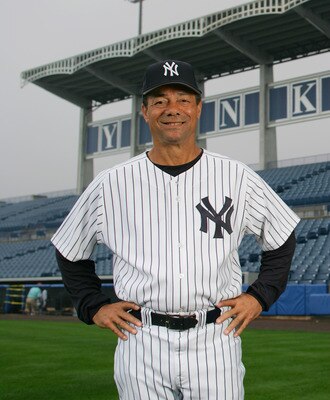
Hideki Irabu, 1969-2011

Hideki Irabu was found dead in a house in Rancho Palos Verdes, California yesterday. He was 42 years old – a few months older than I am.

He had been a great pitcher in Japan, but found adjusting to life in the North American major leagues difficult. From July 1997 through September 1999, he pitched for the Yankees, and while he had his moments, it wasn't easy.

He got out of shape, and the thing he's best remembered for –until now, anyway – was George Steinbrenner calling him "a fat pussy toad." I've only read the remark, not heard it spoken. Whether, by "pussy," George meant the adjective meaning "full of pus" or the vulgarism usually meant to describe someone cowardly, isn't clear.

In 1998, he went 13-9. In 1999, he went 11-7. In both seasons, the Yankees won the World Series. So we should, at the least, thank Irabu for that.

In July 1999, within a few days of each other, I saw Irabu conquer Yankee Fans' 2 most offending opponents on the road. On July 11, he pitched 7 strong innings to beat the Mets at Shea Stadium, 6-3 – outdueling Orel Hershiser, no less. Ricky Ledee aided him with a home run.

On July 30, manager Joe Torre actually let him pitch a complete game – at Fenway Park. He allowed 7 hits, 1 walk, 3 runs, 12 strikeouts, and, thanks to Chuck Knoblauch and Derek Jeter leading off the game with home runs, and a later homer by Jorge Posada, the Yanks won, 13-3. Both times, it was fun to be partying with my fellow Yankee Fans in the Flushing Toilet and in Scumway Park.

But that was pretty much it. He did not appear in either the '98 or the '99 World Series. With the money he was making, we began to call him "Hideki I-Rob-You." Prior to the 2000 season, he was traded to the Montreal Expos, before washing out with the Texas Rangers in 2002. He was only 33. 

He went back to Japan, where things didn't work out, and he returned to the U.S., where he last threw a professional pitch in 2009, for the Long Beach Armada in the Golden Baseball League, an independent league in California, full of aging former players, including ex-Met Kevin Mitchell, who's a player-manager there.

Irabu leaves a wife and two children. It looks like he did not find peace in life. I hope he has found it in death.

UPDATE: There is no gravesite, as he was cremated.

*

Irabu's death makes him the 1st member of the 1998 World Champion Yankees, and the first of the 1999 World Champs, to die. As far as I know (each of these distinctions to follow is "AFAIK"), he is the 1st member of the Joe Torre generation of Yankees to die – hard to believe, considering that Torre himself and pitching coach Mel Stottlemyre both battled cancer and bench coach Don Zimmer was thrown to the ground by his head, by Pedro Martinez.

He also becomes the most recent member of a World Series-winning team to die, replacing Mike Sharperson of the 1988 Dodgers (1961-1996, car crash).

All members of the 1996, 2000 and 2009 World Champion Yankees are still alive. Aside from Jim "Catfish" Hunter and Thurman Munson, all players for the 1977 World Champions are still alive; aside from those 2 and Jim Spencer, all players for the 1978 World Champions are still alive.

Going back before that, you have to go back to 1962, 49 years ago, to find another World Champion, and then the surviving players get scarcer:

1962: Yogi Berra, Whitey Ford, Moose Skowron, Bob Turley, Ralph Terry, Bobby Richardson, Tony Kubek, Hector Lopez, Joe Pepitone, Phil Linz, Jim Coates, Art Ditmar, Luis Arroyo, Jim Bouton, Bud Daley, Billy Gardner, Jack Reed, Rollie Sheldon, Tex Clevenger.

1961: Yogi, Whitey, Moose, Turley, Terry, Richardson, Kubek, Lopez, Coates, Ditmar, Arroyo, Daley, Gardner, Sheldon, Clevenger, Joe DeMaestri, Bob Cerv (hurt late in the season, did not play in the Series).

1958: Yogi, Whitey, Moose, Turley, Richardson, Kubek, Andy Carey, Don Larsen, Bobby Shantz, Virgil Trucks, Johnny Kucks, Jerry Lumpe, Norm Siebern, Zach Monroe.

1956: Yogi, Whitey, Moose, Turley, Turley (traded '57 but returned '60), Richardson, Cerv, Carey, Larsen, Kucks, Lumpe, Siebern, Jerry Coleman, Charlie Silvera, Billy Hunter, Eddie Robinson. (Silvera, a backup catcher, has 6 rings but only appeared in one Series game, in 1949. Cerv was traded after this season, returned in '60, traded again after the season, returned again in '61, traded again in '62. He had brief callups in '51, '52 and '53, but wasn't on the Series roster except in '55, '56 and '60. The Billy Hunter mentioned here is best known as Earl Weaver's 3rd base coach with the 1970s Orioles, and managed the Rangers in 1977 and '78, and should not be confused with the head of the NBA players' union. And this Eddie Robinson should not be confused with the legendary Grambling State football coach.)

1953: Yogi, Whitey, Silvera, Bob Kuzava, Jim McDonald, Bill Renna. (Coleman had just returned from the Korean War and, while he played in 8 games that season, was not on the World Series roster.)

1952: Yogi, Silvera, Kuzava, McDonald, Irv Noren. (Coleman was in the service, and Whitey was as well.)

1951: Yogi, Coleman, Silvera, Kuzava, Noren, Bobby Brown. (Whitey was in the service.)

1950: Yogi, Whitey, Coleman, Silvera, Brown.

1949: Yogi, Coleman, Silvera, Brown.

1947: Yogi, Brown, Allie Clark.

The earliest living World Series-winning player is Hall-of-Famer Stan Musial, of the 1942, '44 and '46 St. Louis Cardinals. He became such when Tommy Henrich, the "Old Reliable" of the 1937,  '38, '39, '41, '47, '49 and '50 Yankees, died last year.