Showing posts with label 1856. Show all posts

Thursday, November 4, 2021

MLB Title Droughts as of 2021

This is my 564th post of the calendar year, setting a new record.

Last World Series Win:
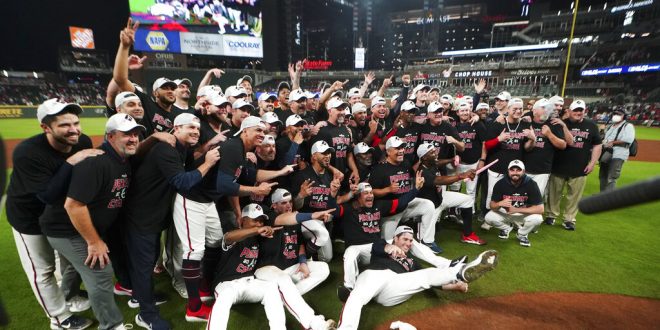
1. 2021 Atlanta Braves
2. 2020 Los Angeles Dodgers
3. 2019 Washington Nationals
4. 2018 * Boston Red Sox
5. 2017 * Houston Astros
6. 2016 Chicago Cubs
7. 2015 Kansas City Royals
8. 2014 San Francisco Giants
9. 2011 St. Louis Cardinals
10. 2009 New York Yankees
11. 2008 Philadelphia Phillies
12. 2005 Chicago White Sox
13. 2003 Miami Marlins
14. 2002 Los Angeles Angels
15. 2001 Arizona Diamondbacks
16. 1993 Toronto Blue Jays
17. 1991 Minnesota Twins
18. 1990 Cincinnati Reds
19. 1989 Oakland Athletics
20. 1986 New York Mets
21. 1984 Detroit Tigers
22. 1983 Baltimore Orioles
23. 1979 Pittsburgh Pirates
24. 1948 Cleveland Indians
25. None in 24 seasons: Tampa Bay Rays
26. None in 29 seasons: Colorado Rockies
27. None in 45 seasons: Seattle Mariners
28. None in 50 seasons: Texas Rangers
29. None in 52 seasons: Milwaukee Brewers
30. None in 53 seasons: San Diego Padres

Last Pennant:
1. 2021 Atlanta Braves
2. 2021 * Houston Astros
3. 2020 Los Angeles Dodgers
4. 2020 Tampa Bay Rays
5. 2019 Washington Nationals
6. 2018 * Boston Red Sox
7. 2016 Chicago Cubs
8. 2016 Cleveland Indians
9. 2015 Kansas City Royals
10. 2015 New York Mets
11. 2014 San Francisco Giants
12. 2013 St. Louis Cardinals
13. 2012 Detroit Tigers
14. 2011 Texas Rangers
15. 2009 New York Yankees
16. 2009 Philadelphia Phillies
17. 2007 Colorado Rockies
18. 2005 Chicago White Sox
19. 2003 Miami Marlins
20. 2002 Los Angeles Angels
21. 2001 Arizona Diamondbacks
22. 1998 San Diego Padres
23. 1993 Toronto Blue Jays
24. 1991 Minnesota Twins
25. 1990 Cincinnati Reds
26. 1990 Oakland Athletics
27. 1983 Baltimore Orioles
28. 1982 Milwaukee Brewers
29. 1979 Pittsburgh Pirates
30. None in 45 seasons: Seattle Mariners

*

November 4, 1796, 225 years ago: For the 1st time in American history, a Presidential election is truly contested. President George Washington has agreed to serve only 2 terms, and his time is just about up.

The Federalist Party nominates its 1st candidate, the incumbent Vice President, John Adams. The Democratic-Republican Party nominates its 1st candidate, the 1st Secretary of State, and the author of the Declaration of Independence, Thomas Jefferson. Once great friends, the 2 titans of 1776, Adams of the North and Jefferson of the South, are now political arch-rivals.

Adams wins the States of Massachusetts (his home State), New Hampshire, Vermont, Rhode Island, Connecticut, New York, New Jersey and Delaware; and 3 of the 7 Electoral Votes in Maryland; and 1 vote each in Pennsylvania, Virginia (Jefferson's home State) and North Carolina, for a total of 71 Electoral Votes.

Jefferson wins the entire States of Georgia, South Carolina, Tennessee and Kentucky, plus 11 out of 12 Electoral Votes in North Carolina, 20 out of 21 in Virginia, 4 out of 7 in Maryland, and 14 out of 15 in Pennsylvania, for a total of 68. In other words, had "faithless electors" not abandoned Jefferson in Virginia, North Carolina and Pennsylvania -- or had he hung onto 2 more Votes in Maryland -- he would have won. Instead, Adams becomes the 2nd President of the United States.

But the way elections worked at the time, by finishing 2nd, Jefferson becomes Vice President, setting up 4 years of partisan nastiness -- not so much by each man as by their respective supporters. There is a rematch in 1800, and Jefferson wins. Things got so bad that Adams snuck out of town in the middle of the night on Inauguration Day, March 4, 1801, and did not attend the ceremonies.

He and Jefferson never saw each other again. Eventually, Adams' wife Abigail talked him into sending a letter of reconciliation from Quincy to Charlottesville, and their friendship was restored, if not face-to-face.

They died on the same day, July 4, 1826 -- the 50th Anniversary of the signing of the Declaration of Independence. Knowing he was dying, Jefferson wanted to know if he would make it, and, every time he drifted back into consciousness, he would ask, "Is this the Fourth?" They kept telling him it wasn't, and he kept drifting away and drifting back and asking, until they could finally tell him the truth, that it was, and he could finally die in peace at age 83.

Long-distance communication being what it then was, Adams didn't know this. A few hours later, at age 90, he spoke his last words: "Thomas Jefferson lives. Independence forever." At this time, his son, John Quincy Adams, was the President.

*

November 4, 1808: James Madison, then Secretary of State to outgoing President Thomas Jefferson, is elected the 4th President of the United States. The Father of the Constitution, and the nominee of the Democratic-Republican Party, he defeats Charles Cotesworth Pinckney, who was making his 2nd run, 122 Electoral Votes to 47. Madison won 12 States to Pinckney's 5.

November 4, 1856: James Buchanan is elected the 15th President of the United States. He wins 19 States for 174 Electoral Votes. John C. Fremont, the 1st man to run for President as the nominee of the Republican Party, wins 11 States for 114 Electoral Votes. Millard Fillmore, the 13th President, in his only run for the top job, was the nominee of the American Party -- an anti-immigrant group known as "The Know-Nothings" for the way they tried to cover up their activities -- wins only Maryland, and its 8 Electoral Votes.

Fremont was a hero General of the Mexican-American War. In the early 21st Century, the History Channel series The Conquerors would call him "The Conqueror of California." He was 1 of the State's 1st 2 U.S. Senators, and, long after this election, served as Territorial Governor of Arizona. He was also the 1st major-party nominee to have facial hair, in his case a mustache and a beard.

(Abe Lincoln didn't yet have the beard in 1860, but from 1864 to 1908, every man elected President but 1, William McKinley, would have at least a mustache, and most of them had beards. But aside from the mustachioed Thomas Dewey in 1944 and 1948, no major-party nominee has had facial hair since 1916.)

Despite being the only President who never married -- legends that he was gay remain, though hardly proven -- Buchanan must have seemed like the perfect guy at the time: He had served Pennsylvania in both houses of Congress, had been Secretary of State under President James K. Polk, and had been U.S. Minister (today, we would say, "Ambassador") to both Britain and Russia.

Indeed, the fact that Buchanan was serving as Minister to Britain under President Franklin Pierce (who was now so unpopular that he couldn't possibly be re-elected), and wasn't available to speak out on the issue of slavery, meant he had offended no one.

That would change. Buchanan satisfied no one, combining a depression shortly after he was sworn in (the Panic of 1857) with an unwillingness to do anything to stop the rising tensions leading to the Civil War. He was every bit as bad as Pierce was -- the 2 worst Presidents this country has ever had. Yes, worse than Herbert Hoover, Richard Nixon and George W. Bush. Until, that is, Donald Trump.

November 4, 1879: William Penn Adair Rogers is born in Oologah, Oklahoma Territory. Will Rogers was a stage performer, famous for his rope tricks, and a newspaper columnist, one of the nation's leading commentators and humorists in the early 20th Century, until his death in a plane crash, flying with famed aviator Wiley Post, at America's northermost point, Barrow, Alaska, on August 15, 1935.

What did he have to do with sports? As far as I know, nothing. But on January 1, 1947, the Will Rogers Bowl was played at Taft Stadium in Oklahoma City. Pepperdine beat Nebraska Wesleyan 38-13. Only 800 people paid to see it, so it was never played again.

*

November 4, 1884: One of the closest and nastiest elections in American history ends. Grover Cleveland was the Democratic nominee, the Governor of New York. He had a reputation for honesty, to the point where, when he was accused of fathering a child out of wedlock, institutionalizing the mother to keep her quiet, and putting the kid up for adoption, and his advisers asked him what to do, he said, "Above all, tell the truth." So they said nothing.

In contrast, the Republican nominee was, as the song went, "Blaine! Blaine! James G. Blaine! The continental liar from the State of Maine!" He was a U.S. Senator, and had been Speaker of the U.S. House of Representatives, and Secretary of State under President James Garfield. Indeed, he was standing next to Garfield when he was shot. Had Charles Guiteau's aim been a little off, Garfield would likely have been running for re-election against Cleveland, and, without Blaine's many scandals (which had nothing to do with Garfield), he might have won easily.

Just before the election, Blaine had attended a dinner in New York, where one of the speakers, the Rev. Samuel Burchard, called the Democrats "the Party of Rum, Romanism and Rebellion!" In other words, they were against the movement for the Prohibition of alcohol, they had great support among Roman Catholics (and thus, it was believed, would be puppets of the Pope in a country dominated by Protestants), and supported slavery and the South during the Civil War.

That speech hit the papers. It cost Blaine the State of New York, which had a lot of Catholic and anti-Prohibition voters, and was wobbling on Cleveland even though he had been popular as Governor and as Mayor of Buffalo. And it made all the difference: By winning New York, Cleveland took the Electoral Vote 219 to 182. He won just 48.9 percent of the popular vote, to Blaine's 48.3. In fact, Cleveland ran for President 3 times, and won the popular vote all 3 times (though he lost the Electoral Vote in 1888, winning it again in 1892), but on none of those occasions did he win a majority.

When Cleveland was beaten in 1888, under dubious circumstances, his opponent, Benjamin Harrison, returned Blaine to the State Department, but he resigned due to ill health in 1892, and died just before the term ended in 1893. Had Burchard -- not related to another Republican activist by that name, a Congressman from Wisconsin -- kept his mouth shut, Blaine would have become the 22nd President of the United States, and Cleveland would only be remembered for, "Ma! Ma! Where's my pa?" Instead, the Democrats' answer was, "Gone to the White House, ha, ha, ha!"

So what was the truth? In 1874, between offices and in private law practice (he had been Sheriff of Erie County), Cleveland paid child support for Maria Halpin and her son, named Oscar Folsom Cleveland. Maria was, apparently, mentally ill, and was indeed institutionalized, though there is no evidence that it was on Cleveland's request. The boy was adopted, was given the name James E. King Jr., and became a doctor like his adoptive father.

The thing was, in those days, long before DNA or even blood tests would have shed some light on the subject, Grover Cleveland was not the only possible father. Another possible father was Cleveland's law partner, whose name was Oscar Folsom. But of the several possible fathers, Cleveland was the only one who was not married at the time, and thus would be the one least scandalized -- or so he thought.

By today's standards, we would find what Cleveland did next to be much worse: He married Frances Folsom, the daughter of Oscar Folsom, who had died and left her guardianship to him. She was 21 when they married in 1886, making her by far the youngest First Lady ever, and their wedding the 1st ever held in the White House itself.

But as icky as their relationship sounds, it lasted for the rest of his life, until 1908. She died in 1947 -- as did Oscar Folsom Cleveland/Dr. James D. Fox Jr. Grover and Frances Cleveland had 5 children: Ruth, Esther, Marion, Richard and Francis. Ruth was not, as the legend says, the namesake of the Baby Ruth candy bar. She died of diphtheria at age 12. The rest all lived until at least 1974, and Francis lived until 1995. Rev. Burchard died in 1891, Blaine in 1893, and Harrison in 1901.

*

November 4, 1916: Walter Leland Cronkite Jr. is born in St. Joseph, Missouri. He was the anchor and managing editor of The CBS Evening News from 1962 to 1981, presiding over such events as the Civil Rights Movement, the Cuban Missile Crisis, the assassination of President John F. Kennedy, the Great Society, the Vietnam War, 2 Arab-Israeli Wars, the assassinations of Martin Luther King and Robert F. Kennedy, the 1968 Democratic Convention and the riot outside, the 1st manned Moon landing, the Kent State Massacre, President Richard Nixon's visit to China, Watergate and Nixon's resignation, the U.S. Bicentennial, the Camp David Accords, and the Iran Hostage Crisis. "And that's the way it is."

He became known as "the most trusted man in America." When he summed up his visit to Vietnam early in 1968 and said that it was time to stop fighting and find a diplomatic way out, President Lyndon Johnson said, "If I've lost Cronkite, I've lost Middle America," and chose not to run for re-election.

His connection to sports is that he did voiceovers in ads for his alma mater, the University of Texas, that aired during college football broadcasts. He died in 2009.

November 4, 1918: Lieutenant Wilfred Owen, having already survived enough encounters with death in World War I to make most people think he was invincible, is killed in action as his unit crosses the Sambre-Oise Canal in northern France. The native of Oswestry, Shropshire in the West Midlands of England was just 25. Had he lived just 7 more days, he would have made it.

He and Siegfried Sassoon were regarded as the greatest British poets whose work was based on the events of that war. Certainly, both were better than the leading American poet killed in that war, Joyce Kilmer.

I knew Owen's name before I knew his story: He was one of the poets for whom streets were named in Greenbriar, the retirement community my grandparents moved to in Brick, Ocean County, New Jersey. (Sassoon and Kilmer were not among them, even though Kilmer was from New Jersey.)

What passing-bells for these who die as cattle?
Only the monstrous anger of the guns.
Only the stuttering rifles' rapid rattle
Can patter out their hasty orisons.
No mockeries now for them; no prayers nor bells,
Nor any voice of mourning save the choirs, 
The shrill, demented choirs of wailing shells;
And bugles calling for them from sad shires.

What candles may be held to speed them all?
Not in the hands of boys, but in their eyes
Shall shine the holy glimmers of goodbyes.
The pallor of girls' brows shall be their pall;
Their flowers the tenderness of patient minds,
And each slow dusk a drawing down of blinds.


Also on this day, James Furman Bisher is born in Denton, North Carolina. Dropping his first name, Furman Bisher went to, yes, Furman University in Greenville, South Carolina. But he transferred to the University of North Carolina, graduating at age 20, and then becoming editor of a local newspaper.

After editing a military newspaper and the Armed Services Radio Network while in the U.S. Navy in World War II, he became sports editor of the Charlotte News (now part of the Charlotte News & Observer). In 1949, he got the only interview Shoeless Joe Jackson ever did after his 1921 trial, and covered the 1st NASCAR race.

In 1950, he was hired by the Atlanta Constitution, also wrote for the Atlanta Journal, and finally for the combined paper. He covered every Masters from 1950 to 2008, every Kentucky Derby from 1950 to 2011, and every Super Bowl from II to XLV -- missing I. He was elected to the National Sportscasters and Sportswriters Hall of Fame, and the Georgia Sports Hall of Fame. The man who succeeded Grantland Rice as the South's greatest sportswriter died in 2012.

Also on this day, Arthur William Matthew Carney is born in Mount Vernon, Westchester County, New York. He was wounded on D-Day, but survived World War II to become one of the finest actors of his generation, either comedic or dramatic.

If you only know Art Carney as Ed Norton on The Honeymooners, you're missing a lot. And if you don't even know him for that, let the record show that not only was Norton the basis for every sitcom "wacky neighbor" that followed, but his entry into the Kramden apartment was obviously ripped off by Michael Richards as Cosmo Kramer on Seinfeld. (The difference being, Kramer was the one coming up with get-rich-quick schemes, while Norton was always getting roped into them.)

Carney gained famed before that. His 1st film was Pot of Gold, in 1941. Jimmy Stewart once went on
The Tonight Show, and told Johnny Carson it was the last film he made before going off to The War. When he got back, he did what everybody else with money was doing at the time: He bought a television set. As he told Carson, the first thing Stewart saw on the set was a movie, and he decided it was the worst film he'd ever seen. And then he saw himself walk onto the screen, and realized it was
Pot of Gold. He'd never seen the finished version until then. And he went to his grave still believing it was a lousy movie. Carney's opinion of it is not publicly known.

Among his early roles, Carney was noted for impersonating both Franklin Roosevelt and Dwight D. Eisenhower. On The Morey Amsterdam Show, he played Charlie the doorman, and popularized the catchphrase, "Ya know what I mean?" This was long before the unseen character of Carlton the doorman on Rhoda, and long before Jim Varney's Ernest P. Worrell also used the catchphrase.

In 1950, Jackie Gleason hired him for his variety show, and The Honeymooners grew out of that. In addition to sewer worker Ed Norton to Gleason's bus driver Ralph Kramden, he participated in the "Reginald Van Gleason III" sketch, as Reggie's uptight, monocle-wearing father. As a result of appearing on The Jackie Gleason Show and The Honeymooners, Carney won 6 Emmy Awards.

In 1960, he starred in the Twilight Zone episode "The Night of the Meek," playing a hard-luck department store Santa Claus who turns into the real thing. He played Santa again in the 1984 TV-movie The Night They Saved Christmas. In 1965, he debuted the role of Felix Ungar on Broadway in Neil Simon's The Odd Couple, opposite Walter Matthau's Oscar Madison. (The name was spelled "Ungar" in the play and the movie. It became "Unger" on the TV show)

In 1974, he starred in Harry and Tonto, and won the Oscar for Best Actor, beating out Dustin Hoffman, Jack Nicholson, Al Pacino and Albert Finney. As Norton would have said, "Va va va voom!" In 1978, he played a key role in the Star Wars Holiday Special. In 1979, he, George Burns and Lee Strasberg played old guys looking for one last thrill, so they rob a bank, in Going In Style. (Burns was 83, Strasburg was 78, and Carney was 60 but could pass for older.)

In 1988, he made my favorite commercial of all time, and for a product I don't even like, Coca-Cola. With Brian Bonsall of Family Ties as his grandson, "Grandpa's Magic Pinecone" turns into the Rockefeller Center Christmas Tree. It gets me every time.

Art Carney died on November 9, 2003, just after his 85th birthday, at his home in Westbrook, Connecticut. You know the clueless middle-aged GEICO executive who starred with the Gecko in those commercials? That's Art's grandson, Brian Carney.

*

November 4, 1922: The football team of the University of Alabama goes to Philadelphia, and beats the University of Pennsylvania 9-7 at Franklin Field. The stadium of that name that had stood since 1895 would soon be demolished, and replaced on the same site by the current Franklin Field.

This upset of an Ivy League school is considered a landmark day in the history of Southern football, and it helped launch 'Bama on a run of success that continued throughout the 1920s and '30s and established the school's legend, before Bear Bryant was even a player (and while he was one).

Also on this day, Edwin Frank Basinski is born in  Buffalo. An infielder, he was a wartime callup for the Brooklyn Dodgers, appearing in 39 games in the 1944 season, and 108 more in 1945. He had 56 more games, all with the 1947 Pittsburgh Pirates, finishing with a "lifetime" batting average of just .244. He did, however, play in the minor leagues until 1959, including a long tenure with the Portland Beavers, which earned him a place in the Pacific Coast League Hall of Fame.

At age 99, Eddie Basinski is the 2nd-oldest living former MLB player, 1 of 12 living former Brooklyn Dodgers, and the last living player whose name is mentioned in jazz singer Dave Frishberg's ode to ballplayers of his youth, "Van Lingle Mungo."

Also on this day, British archaeologist Howard Carter discovers the tomb of King Tutankhamen (reigned 1334-1325 BC) in the Valley of the Kings, about 400 miles south of the Egyptian capital of Cairo.

November 4, 1924: President Calvin Coolidge, who took the office on the death of Warren Harding the year before, is elected to a full term in his own right. The Republican, who had been Governor of Massachusetts before being Vice President, took advantage of a split in the Democratic Party that nullified a split in the Republican ranks.

The slogan was "Keep Cool with Coolidge," and the nation agreed. He won 382 Electoral Votes, and 54 percent of the popular vote. John W. Davis, a former Congressman from West Virginia and U.S. Ambassador to Britain, won 136 Electoral Votes, but his 29 percent represents the lowest popular-vote percentage in the history of the Democratic Party. Senator Robert La Follette of Wisconsin, formerly a Republican but now the leader of the Progressive Party, won his home State for 13 Electoral Votes, and took 16 percent of the vote.

Coolidge had recently lost his 16-year-old son John to an infection that could have been easily treated had antibiotics been invented. He had also recently watched the Washington Senators win the District of Columbia's only World Series to date. He did not like baseball, but his wife Grace did.

He was known as "Silent Cal" for his reticence. Legend has it that 2 women, seeing him at a party, made a bet. So one walked up to him and said, "I made a bet with my friend that I could get you to say 3 words to me." And Coolidge said, "You lose."

Even when he decided not to run for a 2nd full term, he was brief: He told the press simply, "I do not choose to run for President in 1928," and walked away. He may have seen the Crash of 1929 coming, and didn't want to get blamed for it. He should be, but he left his successor, Herbert Hoover, holding the bag.

November 4, 1927: William Calhoun (no middle name) is born in San Francisco. A forward, Bill Calhoun is the last surviving player from the 1951 Rochester Royals, the only NBA Championship for the franchise now known as the Sacramento Kings. 

Also on this day, Carl Ernest Sawatski is born in Shickshinny, Pennsylvania. He played in the major leagues from 1948 to 1963, mainly as a backup catcher, including to Del Crandall on the 1957 World Champion Milwaukee Braves. His lifetime batting average was .242. He later served as general manager of the Arkansas Travelers of the Class AA Texas League, and then as President of that League. He died in 1991.

November 4, 1928: Arnold Rothstein is rubbed out. "The Brain," who led the Mob's fix of the 1919 World Series, was also the guy who figured out that Prohibition was the way to turn organized crime in America into big business, while Al Capone was still an up-and-comer.

But, like drug dealers who got hooked on their own product, the lure of his original line of work, gambling, proved too much for "The Big Bankroll." He lost $320,000 (about $4.87 million today) in a 3-day high-stakes poker game. He said (O the irony) that the game was fixed, and refused to pay up.

He was shot at the Park Central Hotel, where a man then a rising star, Albert Anastasia, would see his reign as "the Boss of All Bosses" come to a similar end in 1957. It took Rothstein 2 days to die, and he refused to rat his killer out, telling the police, "You stick to your trade, I'll stick to mine." He was 46, and he always knew he would come to such an end: A favorite saying of his was, "The odds on everything in life, including life itself, are six to five against."

A man was arrested for the murder, but was acquitted for lack of evidence, and they may have gotten the wrong guy anyway.

Rothstein was played by Robert Lowery (who played Batman in a 1949 film serial) in The Rise and Fall of Legs Diamond in 1960, future Fugitive star David Janssen in The Big Bankroll in 1961, Michael Lerner in Eight Men Out in 1988, F. Murray Abraham in Mobsters in 1991, and Michael Stuhlbarg on
Boardwalk Empire in the early 2010s. In the 1974 film The Godfather Part II, Mario Puzo had Hyman Suchowsky, the character based on Meyer Lansky (played by Lee Strasberg), give himself the "street name" Hyman Roth because he admired Rothstein.

In The Great Gatsby, F. Scott Fitzgerald used Rothstein as a character, giving him the name Meyer Wolfsheim, a man who managed to "play with the faith of 50 million people." The character does not appear in the 1926 and 1949 film versions, but was played by Howard Da Silva in 1974, and by Indian film superstar Amitabh Bachchan in 2013.

Also on this day, Jay Lowell Van Noy is born in Garland, Utah. He played 6 games as an outfielder for the St. Louis Cardinals in 1951. He later coached at Brigham Young University, was elected to the Utah Sports Hall of Fame, and died in 2010.

*

November 4, 1930: Richard Morrow Groat is born in the Pittsburgh suburb of Wilkinsville, Pennsylvania. Dick Groat is a rare 2-sport star. He played basketball at Duke University long before that was cool, setting an NCAA record with 839 points in the 1952 season, and his Number 10 was the 1st they ever retired. He played the 1952-53 season with the Fort Wayne Pistons.

He gave up basketball because he was better at baseball. A 5-time All-Star, the shortstop won the World Series, the National League batting title, and the NL Most Valuable Player with the 1960 Pittsburgh Pirates. His hometown team traded him to the St. Louis Cardinals, and he won another World Series in 1964. He has since gone back to basketball, broadcasting for the University of Pittsburgh's team. He is 1 of 11 surviving '60 Pirates, and 1 of 16 surviving '64 Cards.

November 4, 1931
, 90 years ago: Marie Mansfield (no middle name) is born in the Jamaica Plain section of Boston. A pitcher, she played in the All-American Girls Professional Baseball League from the 1950 to 1954. Except for a brief time with the Battle Creek Belles in Michigan, it was all for the Rockford Peaches in Illinois.

She helped them win the Pennant in 1950, and led the League in strikeouts in 1953. In 1990, under her married name of Marie Kelley, she sat with Mary Pratt and Dottie Green, fellow Boston-area natives who played in the AAGPBL, for an interview with Ken Burns for his Baseball miniseries. Dottie died in 1992, before the miniseries could air. Mary died earlier this year. Marie is still alive.

November 4, 1937: Emmette Bryant (no middle name) is born in Chicago. A guard, Em Bryant played 4 seasons for the Knicks, but they didn't win anything until after they got rid of him. His 1st season away from them, 1968-69, he won the NBA Championship with the Boston Celtics. That's how the Celtics' luck went in those days.

He later coached under his former teammate Bill Russell with the Seattle SuperSonics, and remained in Seattle, working for the State of Washington through its Department of Social and Health Services. He says, "I'm just a teacher that happened to play pro ball." He is still alive.

Also on this day, Loretta Jane Swit is born in Passaic, Passaic County, New Jersey. For 11 seasons, 1972 to 1983, she played Major Margaret "Hot Lips" Houlihan, the head nurse of a U.S. Army hospital in the Korean War, on M*A*S*H. Sally Kellerman played the role in the 1970 film version. The actresses didn't look much like each other then, but bear a stronger resemblance to each other now.

Swit was also the 1st actress to play New York Police Detective Christine Cagney, in the 1981 TV-movie Cagney & Lacey, also on CBS. But when it was picked up as a series, her M*A*S*H
commitment prevented her from playing the role, which made a star out of Sharon Gless, along with Tyne Daly as Detective Mary Beth Lacey. Swit retired from acting in 1998.

*

November 4, 1943: Charles Bishop Scarborough III is born in Pittsburgh. Probably the 2nd-most famous graduate of the University of Southern Mississippi, behind Brett Favre, and a U.S. Air Force veteran of the Vietnam War who still holds a pilot's license, Chuck Scarborough has been the news anchor at WNBC-Channel 4 in New York since 1974. No one has done New York local news longer. In 2017, he cut back, and now anchors only the 6:00 PM broadcast.

From 1980 to 2012, he and Sue Simmons -- who, I was surprised to find out, is actually a year older -- anchored the news program together, first as NewsCenter 4, then as News 4 New York. At 32 years, it remains the longest anchor pairing in New York history.

November 4, 1944: President Franklin D. Roosevelt has what turns out to be his last campaign rally, at Fenway Park in Boston. Orson Welles introduces him. While FDR speaks, Welles sits next to Frank Sinatra on the stage. FDR says:

Today, in this war, our fine boys are fighting magnificently all over the world. And among those boys are the Murphys and the Kellys, the Smiths and the Joneses, the Cohens, the Carusos, the Kowalskis, the Schultzes, the Olsens, the Swobodas, and, right in with all the rest of them, the Cabots and the Lowells.

All of these people, and others like them, are the life-blood of America. They are the hope of the world. It is our duty to them to make sure that, big as this country is, there is no room in it for racial or religious intolerance, and that there is no room for snobbery.

Boy, did FDR know his audience. A year later, he was dead, but Sinatra starred in The House I Live In, a 10-minute film in which he stops a group of boys from abusing a Jewish kid, and sings the inclusive title song: "That looks like America to me." 

In his 1966 song "That's Life," Sinatra would sing, "I've been a puppet, a pauper, a pirate, a poet, and pawn and a king." As metaphors go, it was accurate. Both FDR and Welles could have said the same.

November 4, 1946
, 75 years ago: Danny Ray Godby is born in Logan, West Virginia. An outfielder, he played 13 games in the major leagues, all for the St. Louis Cardinals late in the 1974 season. He returned to his home State and became a high school coach, and is still alive.

Also on this day, Laura Lane Welch is born in Midland, Texas. In 1977, she married George W. Bush, which made her the First Lady of Texas from 1995 to 2000, and First Lady of the United States from 2001 to 2009.

It's always struck me as odd that, while her husband seemed to revel in his lack of intellectualism, not seeming to mind that people thought him stupid and/or ignorant, she was a librarian.

Also on this day, UNESCO is founded: The United Nations Educational, Scientific and Cultural Organization. Based in Paris (not in New York, like the UN's General Assembly), its purpose is "to contribute to promoting international collaboration in education, sciences, and culture in order to increase universal respect for justice, the rule of law, and human rights along with fundamental freedom proclaimed in the United Nations Charter."

It has selected 1,121 "World Heritage Sites" for having cultural, historical, scientific or other form of significance, and they are thus legally protected by international treaties. There are 24 of them in America. None are officially in my home State of New Jersey: The the Statue of Liberty is officially within the State of New York, but it is closer to land in New Jersey.

Independence Hall in Philadelphia is the only other such site in the Northeastern U.S., although there are 4 others that have been nominated for consideration: The Moravian Church Settlements in Bethlehem, Pennsylvania; and, in New York, Ellis Island (which might be included in an extension of the Statue of Liberty's site), the Brooklyn Bridge and Central Park.

*

November 4, 1950: Grover Cleveland Alexander dies on his farm in his hometown of St. Paul, Nebraska, after years of drinking and epilepsy wrecking his health. He was 63. He won Pennants with the 1915 Philadelphia Phillies, the 1918 Chicago Cubs, and the 1926 and 1928 St. Louis Cardinals. He won 373 games, sharing the all-time NL lead with Christy Mathewson, and 3rd all-time behind Cy Young (split over both leagues) and Walter Johnson (American League). He pitched 90 shutouts, 2nd only to Johnson.

He will forever be best remembered for pitching the most famous strikeout in baseball history, to Tony Lazzeri of the Yankees with the bases loaded and 2 outs in the bottom of the 7th inning, with the Cards up 3-2. What everybody -- including the 1952 film The Winning Team, starring Ronald Reagan as Alex -- tends to forget is that it didn't end the game.

After Mathewson, Johnson and Young, he was only the 4th pitcher elected to the Hall of Fame. In 1999, The Sporting News listed him 12th on their 100 Greatest Baseball Players, trailing only Johnson (4th) and Mathewson (7th) among pitchers. Since he played before uniform numbers were worn, the Phillies honor him with a "P" stanchion with their retired numbers.

Also on this day, Nat "Sweetwater" Clifton, the 1st black player to sign with an NBA team, makes his debut, 4 days after Earl Lloyd of the Washington Capitols became the 1st black player to play in an NBA game. He scores only 4 points, but has 9 assists, and helps the Knicks to defeat the defending NBA Champions, the Minneapolis Lakers, 71-69.

November 4, 1952: General Dwight D. Eisenhower, the great American hero of World War II, is overwhelmingly elected President. The Republican nominee won 442 Electoral Votes, while the Democratic nominee, Governor Adlai Stevenson of Illinois, won only 9 States for 89 Electoral Votes. "Ike" won the popular vote, 55 to 44 percent, ending 20 years of Democratic governance in the White House. The Republicans also win both houses of Congress.

November 4, 1955: Cy Young dies in Newcomerstown, Ohio. Belying his name, he was 88. The next season, Major League Baseball instituted the Cy Young Award, for the most valuable pitcher in baseball. In 1967, they began handing them out for the most valuable pitcher in each League.

His 511 wins -- and 313 losses -- will never be approached under the current rules and thought processes of baseball. In 1999, 88 years after he pitched his last game, he was named to the Major League Baseball All-Century Team, and The Sporting News named him Number 14 on their list of the 100 Greatest Baseball Players, behind only Johnson, Mathewson and Alexander among pitchers.

*

November 4, 1960
: The Twilight Zone airs the episode "The Howling Man." Chaim Winant, credited as H.M. Wynant, plays a man who, in 1925, was fooled into releasing the Devil from a castle's dungeon, and finally manages to track him down and imprison him again. John Carradine plays the castle's keeper, and Robin Hughes plays the eponymous howling man.

Wynant is still alive at age 94, and acted as recently as 2018. Carradine, founder of one of the great acting families that includes David, Keith, Robert and Ever, died in 1988. Hughes died in 1989.

Also on this day, Kathleen Mary Griffin is born in the Chicago suburb of Oak Park, Illinois. A member of the Chicago-based comedy troupe The Groundlings, her 1st TV appearance was in a commercial promoting the Chicago White Sox.

Kathy Griffin played restaurant critic Vicki Groener on the NBC sitcom Suddenly Susan, hosted several comedy specials, and starred in Bravo's reality series Kathy Griffin: My Life On the D-List. In 2008, her 1st ablum, For Your Consideration, made her the 1st female comedian to debut at the top of Billboard magazine's Top Comedy Albums chart. In 2014, her album Calm Down Gurrl won the Grammy Award for Best Comedy Album.

From 2009 to 2016, she co-hosted New Year's Eve Live on CNN with Anderson Cooper. She was fired from broadcast after her May 30, 2017 video of herself holding up a Donald Trump mask that made it look like she was holding up his bloody severed head. Her career has never recovered, but, while she apologized for the video, she has not let up on her criticism of Trump.

She is now dealing with lung cancer, and had half of a lung removed. It would be terribly ironic if she died before Trump. But she's a lot likelier than he is to get into Heaven.

November 4, 1961, 60 years ago: East Brunswick High School, in its 1st season of varsity football, plays South River for the 1st time. South River, the school to which East Brunswick sent its students until EBHS opened in 1958, wins, 26-0. The schools would play 15 times, with an even split, 7-7-1. However, South River would deal EB their only loss in 2 State Championship seasons, 1966 and 1972.

November 4, 1967: Tampa Stadium opens, adjacent to Tampa's minor-league ballpark, Al Lopez Field. At first, it seated 46,481 people. A 1975 expansion raised capacity to 74,301. Its unusual shape led to its nickname, The Big Sombrero.

It became home to the football team at the University of Tampa, but they dropped their program after the 1974 season. It was home to the Tampa Bay Rowdies from 1975 to 1993, and they won the Tampa Bay area's 1st league championship, the North American Soccer League title, in 1975.

The NFL's expansion Tampa Bay Buccaneers moved in for 1976, and lost their 1st 26 games. They managed Division titles in 1979 and 1981, but were mostly awful. Indeed, the Tampa Bay Bandits may have been -- along with the Philadelphia Stars -- the only United States Football League team better-run than the NFL team in the same market.

Tampa Stadium hosted Super Bowl XVIII in 1984 (Los Angeles Raiders over Washington Redskins) and Super Bowl XXV in 1991 (Giants over Buffalo Bills). It hosted the Outback Bowl from 1986 to 1998, and the Tampa Bay Mutiny of Major League Soccer from 1996 to 1998. In 1997, the University of South Florida entered Division I and played there for that season.

In 1996, restaurant chain Houlihan's bought the naming rights, and until its replacement by the adjacent Raymond James Stadium in 1998 and its demolition the next year, it was known as Houlihan's Stadium.

November 4, 1969: John Lindsay, denied renomination by the Republican Party, and running as the nominee of the Liberal Party, is re-elected Mayor of New York. The opposition to him had fragmented: The Democratic nominee was Mario Procaccino, a conservative serving as City Comptroller and widely viewed as a racist; while the nominee of the Republican and Conservative Parties was John Marchi, a State Senator from Staten Island who was so conservative he made Barry Goldwater look like Bobby Kennedy.

When Lindsay was denied renomination, he looked finished. The fact that he had presided over race riots and municipal strikes while calling New York "Fun City" didn't help. He may have been the 1st major politician to run having used the expression "Mistakes were made" -- used many times by many people since, without specifically saying, "I have made mistakes" -- and used an expression that would later be used by some of his successors, calling the job of Mayor of New York "the second-toughest job in America."

On this day, Lindsay got 41 percent of the vote -- not a majority, but a plurality, and over the 40 percent threshold for a runoff -- while Procaccino got 34 percent and Marchi got 22 percent.

What saved Lindsay? It wasn't just liberals and minorities, afraid of what Procaccino or Marchi would do. It was the Mets. Their run to a World Series win allowed him to identify with them, and he was in the locker room when they won the Series at Shea Stadium on October 16, 19 days before the election. He then gave them a ticker-tape parade and a big ceremony at City Hall. (He gave the Super Bowl-winning Jets a ceremony, too, but not a parade.)

Lindsay's 1st term was hard. His 2nd term was a bit more peaceful in terms of civil strife, but harder in terms of holding the City's government and economy together. He might have wished he had lost. He did not run for a 3rd term in 1973 -- he wouldn't have had a chance -- and he died in 2000.

Also on this day, William T. Cahill, a Republican Congressman representing Camden County, is elected Governor of New Jersey. After 16 years of Democratic Governors, under Robert Meyner and, since a Governor of New Jersey can't serve 3 consecutive terms, Richard J. Hughes, people wanted something different, and when Meyner was nominated to regain the office, he couldn't get any traction.

Cahill got the State legislature to pass the bill creating the New Jersey Sports and Exposition Authority, which built the Meadowlands Sports Complex. But he raised taxes, and 3 major Republican officials were convicted of crimes. He was denied renomination by his own Party in 1973. He went on to teach at Princeton University, and died in 1996.

Also on this day, The Allman Brothers Band release their self-titled debut album. It includes the song "Whipping Post."

Lead guitarist Duane Allman was killed in a motorcycle crash in Macon, Georgia in 1971. Bass guitarist Berry Oakley was also killed in a motorcycle crash, just a year later and only 3 blocks from the site of Duane’s crash. Both died before the band's biggest hit, the next year: "Ramblin' Man." Lead singer and organist Greg Allman and drummer Butch Trucks died in 2017. Guitarist Dickey Betts is about to turn 77. Drummer Jai Johanny "Jaimoe" Johanson is 76.

Also on this day, Matthew McConaughey (no middle name) is born in Uvalde, Texas. Admit it: After playing a stoner in Dazed and Confused, a lawyer in A Time to Kill, winning an Oscar as an AIDS patient in Dallas Buyers Club, and apparently playing another stoner in some Cadillac commercials, you forgot he was in a baseball movie, playing left fielder Ben Williams in the 1994 remake of Angels In the Outfield. 

Also on this day, Sean John Combs is born in Manhattan, and grows up in nearby Mount Vernon, Westchester County, New York. The rapper, music producer, and fashion designer is known by many names: Sean John, Puff Daddy, Puffy, P. Diddy, or just Diddy. Personally, I will always think of him as The Guy Who Got Jennifer Lopez Arrested.

*

November 4, 1980: Sadaharu Oh retires after 22 seasons with the Tokyo-based Yomiuri Giants. The 1st baseman had a .301 lifetime batting average, 2,786 hits, and 868 home runs, still over 100 more than any player in the North American major leagues has hit. He won the Central League's Most Valuable Player 9 times, and 11 Japan Series in 13 years between 1961 and 1973.

As a manager, he took the Giants to the 1987 Pennant, the Fukuoka SoftBank Hawks to Japan Series titles in 1999 and 2003, and the Japan team to victory in the 1st World Baseball Classic in 2006. He is still alive, age 78.

November 4, 1981
, 40 years ago: The Cincinnati Reds trade outfielder Ken Griffey Sr. to the Yankees for pitching prospects Freddie Toliver and Brian Ryder. Ryder had been one of the Yankees' top prospects, but gets hurt, and never reaches the majors, throwing his last professional pitch at age 23. Toliver makes the majors, but is never effective, and last plays in 1993 with a career record of 10-16.

Griffey plays fairly well for the Yankees for 5 years, but the most notable effect of his Bronx tenure is that it made his son Ken Griffey Jr. refuse to ever to play for the Yankees. So when his contract with the Seattle Mariners ran out in 1999, he went "home" to the Reds.

Also on this day, Dallas Green resigns as Phillies manager, to become the general manager of the Cubs. He will use his Philly connections to fleece his former team, including getting Ryne Sandberg. Pat Corrales is named Phillies manager, but is fired in 1983, and replaced by GM Paul Owens, who then leads them to a Pennant -- the 1st of 2 they won while Sandberg was in Chicago, who won none. So maybe it wasn't so bad a trade.

Also on this day, Vincent Lamar Wilfork is born in the Miami suburb of Boynton Beach, Florida. A defensive tackle, he helped the University of Miami win the 2001 National Championship. He made 5 Pro Bowls, and helped the New England Patriots win Super Bowls XXXIX and XLIX. He was named to their 50th Anniversary Team. He will be eligible for the Pro Football Hall of Fame in 2021.

November 4, 1982: Devin Devorris Hester is born in the Miami suburb of Riviera Beach, Florida. The 4-time Pro Bowler is pro football's ultimate return man. In the 2006 season, as a rookie, he helped the Chicago Bears reach Super Bowl XLI, and became the 1st player, and is still the only one, ever to return the opening kickoff of a Super Bowl for a touchdown. The Bears lost to the Indianapolis Colts anyway.

He finished his career in 2016 with 255 receptions, 3,311 receving yards, 16 touchdowns, 11,028 return yards, and the following NFL records: 20 career kick return touchdowns, 14 career punt return touchdowns, and 6 kick return touchdowns in a season. He was named to the NFL's 2000s All-Decade Team, and will be eligible for the Pro Football Hall of Fame in 2022. As part of their 100th Season celebrations, the Bears named him to their 100 Greatest Players.

November 4, 1984: Dustin James Brown is born in Ithaca, New York. He captained the Los Angeles Kings to the 2012 and 2014 Stanley Cups. He is still with them, but is no longer their Captain.

November 4, 1988: The expansion Charlotte Hornets make their NBA debut. It doesn't go so well: They got clobbered, 133-93 by the Cleveland Cavaliers at the Charlotte Coliseum. Laker legend Kurt Rambis and Bloomfield, New Jersey native Kelly Tripucka each put up 16 points for the Hornets, but the Cavs get 22 points from Ron Harper and 20 from Brad Daugherty.

Also on this day, the film They Live premieres. John Carpenter cast pro wrestler Roddy Piper as a common laborer who becomes a rather uncommon hero, uncovering an alien conspiracy. All along, we thought Hulk Hogan was a good guy and "Rowdy Roddy" was a jerk. In real life, it was the other way around all along.

Most alien invasion movies are about the successful attempt to stop the invasion, or about the rebellion to reverse the invasion after it's taken over. They Live was different: It was about an invasion that had succeeded, and the world didn't even know it.

I was working in a theater when it came out, and loved it -- ironically, to the point where it became one of the reasons I quit that lousy job.

Piper gave one of the classic lines in film history: "I have come here to chew bubblegum and kick ass. And I'm all out of bubblegum.

Also on this day, Desmond Demond Bryant is born in Galveston, Texas. A 3-time Pro Bowler in 8 seasons with the Dallas Cowboys, Dez Bryant has caught 531 passes for 7,459 yards and 73 touchdowns. But they released him after last season. He was signed by the New Orleans Saints, but got hurt in practice, and never played for them. He now layed for the Baltimore Ravens.

November 4, 1989The expansion Orlando Magic -- named for nearby Walt Disney World, "The Magic Kingdom" -- make their NBA debut, at the now-demolished Orlando Arena (a.k.a. the O-Arena). The New Jersey Nets spoil the party, winning 111-106. Dennis Hopson scored 24 points for the visitors, while the Magic's Terry Catledge led all scorers with 25.

*

November 4, 1991
, 30 years ago: Star Trek: The Next Generation airs the episode "Unification, Part I." Leonard Nimoy plays Ambassador Spock, now 138 years old, and Captain Jean-Luc Picard (Patrick Stewart) and the crew of the USS Enterprise-D must determine whether the unthinkable has happened: The United Federation of Planets' greatest living diplomat has defected to the Romulan Star Empire, warlike offshoots of Spock's people, the Vulcans.

The next week's Part II explains what has happened: Spock saw an opportunity at what 20th Century Earth would call détente, and possible reunification between the Vulcan and Romulan peoples. It was a setup: Spock was not a defector, but a patsy. But the unification movement, while not yet reaching the level of the Romulan government, is real, and Picard agrees with Spock's decision to stay behind.

Part I also features the death of Spock's father, Ambassador Sarek (Mark Lenard). Part II ends with Spock's mind-meld with Picard, who had previously mind-melded with Sarek, finally resolving the lifelong conflict between father and son.

November 4, 1996, 25 years ago: Jerry Rice of the San Francisco 49ers becomes the 1st NFL player to catch 1,000 passes. He catches another for a touchdown, and the 49ers beat the New Orleans Saints, 24-14 at the Superdome in New Orleans.

Easily the greatest receiver ever, and possibly the greatest player, he finished his career with 1,549 receptions, 22,895 receiving yards, 23,546 all-purpose yards, 197 receiving touchdowns, and 208 overall touchdowns, all still records.

Also on this day, Star Trek: Deep Space Nine airs the episode "Trials and Tribble-ations," Paramount Pictures' official tribute to the 30th Anniversary of the Star Trek franchise. It was written by David Gerrold, who had written the Original Series' most popular episode, "The Trouble With Tribbles." Sets were recreated, and computer-generated imagery (CGI) was combined with these new sets to create the illusion that DS9's characters were involved in the original episode.

Captain Benjamin Sisko (Avery Brooks) and the crew of the USS Defiant are sent 104 years into their past by Arne Darvin (Charlie Brill, reprising his earlier role), seeking revenge for his arrest and exile from the Klingon Empire for the failure of his mission of that time, to stop the Federation's attempt to acquire the border world known as Sherman's Planet.

In the original episode, Darvin had poisoned a grain shipment, intending to kill the people on the planet, but the tribbles had eaten it, killing them, leading to his being discovered by Captain James T. Kirk (William Shatner) and the crew of the Constitution-class USS Enterprise.

Now, Darvin's plan uses he Defiant and a Bajoran artifact it had found to go back in time. He planted a bomb in a fake tribble, with the intention of blowing up the space station in orbit around the planet, thus killing Kirk, and making him a hero of the Empire. Using the Defiant's replicators to create 23rd Century Starfleet uniforms and equipment, Sisko and his officers board the station to try to find the bomb.

In the process, Dr. Julian Bashir (Alexander Siddig) and Chief Petty Officer Miles O'Brien (Colm Meaney) end up in the famous scene where Chief Engineer Montgomery Scott (James Doohan) starts a fight by punching out Lieutenant Korax (Michael Pataki), a Klingon officer who had first said that the Enterprise, Scotty's pride and joy, should be hauling garbage; then, when Scotty insisted that he rephrase that, said that the ship should be hauled away as garbage. O'Brien replaces the original actor who was asked by Kirk who started the fight, using the same line, "I don't know, sir." Which, in the new version, unlike the old one, is true.

*

November 4, 2002: Around the Horn premieres on ESPN, sort of a McLaughlin Group for sports. Max Kellerman hosts until January 30, 2004. Tony Reali has been the host and moderator since February 2, 2004.

Current regular panelists include: Woody Paige of the Colorado Springs Gazette, formerly the Denver Post; Bob Ryan and Jackie MacMullan, both formerly of The Boston Globe; Bill Plaschke of the Los Angeles Times; Tim Cowlishaw of The Dallas Morning News; Kevin Blackistone of Fanhouse.com, formerly of The Dallas Morning News; Israel Gutierrez, formerly of The Miami Herald; Frank Isola of the New York Daily News; Sarah Spain and Jorge Sedano of ESPN; Pablo S. Torre and Mina Kimes of ESPN The Magazine; Bomani Jones, who co-hosts Highly Questionable on ESPN with Miami Herald columnist Dan Le Batard; Jon Weiner, a.k.a. "Stugotz," who co-hosts Le Batard's radio show; Justin Tinsley of ESPN's The Undefeated; Domonique Foxworth, a former NFL cornerback who now hosts an ESPN radio show; Dianna Russini, a correspondent for ESPN's NFL Live!; and Ramona Shelbourne, Clinton Yates, Elle Duncan, David Jacoby, Malika Andrews, 
Emily Kaplan, Joon Lee and Harry Lyles Jr. of ESPN.com.

Notable former panelists: J.A. Adande and T.J. Simers, formerly of the Los Angeles Times; Charlie Pierce, Michael Holley and Michael Smith, formerly of The Boston Globe; Richard Justice, formerly of the Houston Chronicle; Jemele Hill, formerly of the Detroit Free Press; Kate Fagan, formerly of ESPN; and, most controversially, Jay Mariotti of Fanhouse.com, formerly of the Chicago Sun-Times, on nearly every episode until 2011, when he was fired following a domestic violence scandal.

As of this weekend, Paige is the all-time leader in appearances, with 2,810, and in wins, with 635. Kimes holds the record for highest winning percentage, with a minimum of 100 appearances: 30.7 percent. 

Other win totals: Cowlishaw 503, Plaschke 401, Mariotti 329 (until his firing, he and Paige were neck-and-neck for the all-time lead for a few years), Blackistone 323, 
Adande 320, MacMullan 258, Ryan 206, Guiterrez 175, Jones 159, Isola 145, Smith 136, Spain 105, Torre 103, Yates 92, Kimes 58, Shelburne 42, Fagan 41, Hill 22, Sedano 20, Kaplan 19, Duncan 9, Tinsley 8, McNutt 6, Lee 5, Stugotz 4, Foxworth 3, Jacoby 3, Lyles 2, Russini 1 and Andrews 1. Simers won the pilot episode, but only won 10 until he drifted away.

November 4, 2004: With the original Charlotte Hornets having been moved to New Orleans 2 years earlier, the expansion Charlotte Bobcats make their NBA debut, 16 years to the day after the original Hornets did.

This game was also played at the now-demolished Charlotte Coliseum, but it didn't go much better: The Washington Wizards beat the 'Cats, 103-96. Emeka Okafor scored 19 for the hosts, but Antawn Jamison (a North Carolina graduate) dropped 24 on them for the Wiz.

When the Hornets changed their name to the New Orleans Pelicans, the Bobcats were given the Charlotte Hornets name and records (1988-2002), and have added them to the Bobcats' history (not that it was much).

November 4, 2007: The Minnesota Vikings beat the San Diego Chargers 35-17 at the Metrodome in Minneapolis. Adrian Peterson rushes for 296 yards, an NFL record that still stands, and 3 touchdowns.

November 4, 2009: Game 6 of the World Series. The Yankees beat the Philadelphia Phillies, 7-3 at the new Yankee Stadium, and clinched their 27th World Championship, 8 years to the day after they should have.

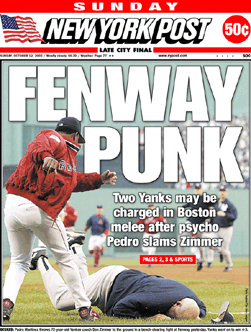
Andy Pettitte started and won. Mariano Rivera got the save. Hideki Matsui, in what turned out to be his last game with the Yankees, drove in 6 runs, including hitting a home run, a blast, off a "blast from the past," Pedro Martinez. I don't think any Yankee homer -- not by Chris Chambliss, Reggie Jackson, Bucky Dent, Don Mattingly, Jim Leyritz, Bernie Williams, Tino Martinez, Scott Brosius, Derek Jeter, even Aaron Boone -- has ever made me feel better, because of what Pedro the Punk represents.

Jeter, Rivera, Pettitte and Jorge Posada, the holdovers from 2001, got their rings, Posada his 4th (his 5th title, though I don't think he got a ring for 1996), the others their 5th. For Alex Rodriguez, Mark Teixeira and CC Sabathia, their 1st. And Pedro never appeared in another major league game.

The slates had been wiped clean. As Hank Steinbrenner requested, the universe had been restored to order.

Let's hope that no future baseball season will ever have to wait until November 4 to be resolved. We need scheduling reform.

Yes, the Yankees had taken Title 27. They have not taken Title 28. They have not even won a Pennant. Since then, they have lost in the AL Championship Series in 2010, 2012, 2017 and 2019; in the AL Division Series in 2011, 2018 and 2020; in the AL Wild Card Game in 2015 and 2020; and missed the Playoffs completely in 2013, 2014 and 2016.

Explain to me why Cashman still has a job.

November 4, 2011, 10 years ago: 
The Jerry Sandusky scandal breaks, on an off-week for the Penn State football team. Not surprisingly, the Nittany Lions lose 3 of their last 4 games (and barely win the other). Very surprisingly, after this date, Joe Paterno is removed from power, proving to him that he is not, as he believed, the most powerful person in the Pennsylvania State University system, and he never coaches another game.

The fact that Paterno was already dying of cancer was not widely known, but it meant that he wouldn't have coached in 2012 and beyond anyway. But it should not generate sympathy for him. His tolerance of Sandusky's indefensible actions is his greatest crime, but hardly his only one. For decades, his supporters said he "ran a clean program." Even before November 4, 2011, this had been revealed as a lie. But we had no idea just how big the lie was.

Thursday, October 11, 2018

October 11, 1948: The Last Cleveland World Series Win

October 11, 1948, 70 years ago: The Cleveland Indians defeat the Boston Braves behind "rookie" 30-year-old knuckleballer Gene Bearden, 4-3 at Braves Field, and take Game 6 and win the World Series. It is their 2nd title, the 1st coming in 1920.

Larry Doby and Satchel Paige thus become the 1st black players to play on a World Series winner. And Lou Boudreau, age 31, both shortstop and manager, becomes the last player-manager to win a World Series, or even a Pennant.

The Indians have never won another World Series. They have had some close calls, some of them truly agonizing:

* Losing the World Series in 1954 (getting swept by the New York Giants despite winning 111 games, then an AL record), 1995 (in 6 games to the Atlanta version of the Braves), 1997 (blowing a 2-0 lead in the 9th inning of Game 7 and losing to the Florida Marlins in the 11th) and 2016 (nearly coming from behind to beat the Chicago Cubs in the 10th inning in Game 7, but falling just short).

* Losing the American League Championship Series in 1998 (blowing a 2-games-to-1 lead against the Yankees) and 2007 (blowing a 3-games-to-1 lead against the Boston Red Sox).

* Losing the AL Division Series in 1996 (to the Baltimore Orioles), 1999 (to the Red Sox), 2001 (blowing a 2-games-to-none lead against the Seattle Mariners), 2017 (blowing a 2-games-to-none lead against the Seattle Mariners) and 2018 (getting swept by the Houston Astros).

* Finishing 2nd in the single-division American League in 1951 (to the Yankees), 1952 (to the Yankees again, this time by just 2 games), 1953 (to the Yankees again), 1955 (to the Yankees again, but just 3 games), 1956 (to the Yankees again), and 1959 (to the Chicago White Sox).

* Being just a game out of 1st place in the AL Central Division when the Strike of '94 hit.

* And nearly 2 generations of never even being in a Pennant race from 1960 to 1993.

Some people blame the trade, just before the 1960 season, of slugging right fielder Rocky Colavito to the Detroit Tigers for Harvey Kuenn. In 1994, just as the Indians moved from Cleveland Municipal Stadium into Jacobs (now Progressive) Field, Terry Pluto of the Cleveland Plain Dealer wrote a book titled The Curse of Rocky Colavito. The Indians won the Pennant the next year, but that wasn't considered the end of the curse.

But at least they're still in Cleveland, despite a number of fears of having to move in the 1960s, '70s and '80s. In contrast, despite all their success in the 19th Century and winning Pennants in 1914 and 1948, that 1948 World Series Game 6 was the last late-season meaningful game the Boston franchise of the National League would ever play. The Braves would be in Milwaukee by the next time they reached the Series, in 1957.

There is 1 surviving player from each of these teams, 70 years later: The Indians' Eddie Robinson and the Braves' Clint Conatser, both 97 years old.

*

October 11, 1779: Kazimierz Michał Władysław Wiktor Pułaski -- Polish count, American general, friend of Benjamin Franklin, savior of George Washington's life at the Battle of Brandywine, survivor of Valley Forge, Edgar Allan Poe lookalike and all-around badasski -- is killed at the Battle of Savannah in Georgia, during the War of the American Revolution. He was 34, and has been hailed as "The Father of the American Cavalry."

Along with Andrzej Tadeusz Bonawentura Kościuszko, he is the top hero of Polish-Americans, and Pulaski Day is a holiday in many places with high concentrations of Poles, on the 1st Monday in March (near his birthday, March 6, 1745). The Pulaski Bridge connects the highly-Polish Greenpoint neighborhood of Brooklyn with Long Island City in Queens.

Unfortunately, the better-known bridge is the Pulaski Skyway, the "Black Beast," the long, ugly iron monstrosity that connects the downtowns of Newark and Jersey City, over the New Jersey Turnpike, the Passaic River and the Hackensack River, and recently underwent a major renovation that required half its lanes to be closed. At least it's safer to ride on it now -- and to cross under it on the Turnpike.

What does he have to do with sports? Nothing, as far as I can tell. But I'm a Polish-American who has made hundreds of trips under the Skyway, and a few over it, to get to sporting events and watch parties, and I wanted to discuss him.

October 11, 1809: Meriwether Lewis dies of gunshot wounds to the head and stomach at Grinder's Stand, an inn on the Natchez Trace in present-day Hohenwald, Tennessee. He was 35, and there is debate as to whether the alcoholic, heavily-indebted Lewis committed suicide or -- more likely, since there were 2 wounds -- was murdered (and, if so, by whom).

With William Clark in 1804, '05 and '06, he led the Corps of Discovery, exploring the Louisiana Purchase, and becoming the 1st American citizens to reach the Pacific Ocean. The Purchase area included the following cities that now have major league sports teams: St. Louis, Kansas City, Minneapolis, Denver, Seattle and Portland.

October 11, 1811: Inventor John Stevens' boat, the Juliana, begins operation as the 1st steam-powered ferry service, operating between Midtown Manhattan and Hoboken, New Jersey. This would later prove vital in early baseball, connecting New York City with Hoboken and its Elysian Fields, where the game was first popularized in the 1840s.

Stevens had 13 children. One, John Cox Stevens, would be the 1st commodore of the New York Yacht Club, winning the 1st America's Cup in 1851. Another, Robert Livingston Stevens, built New Jersey's 1st railroad, the Camden and Amboy Railroad, which went through, among other towns, the one where I grew up, East Brunswick (although passenger service was already terminated by the time our family moved there). Another, Edwin Augustus Stevens, founded the Stevens Institute of Technology in Hoboken.

October 11, 1821: George Williams (no middle name) is born in Dulverton, Somerset, England. On June 6, 1844 -- exactly 100 years before D-Day -- he founded the Young Men's Christian Association, or YMCA, in London, in the hopes that he could provide a place for good young men to visit, so they wouldn't go to the kind of places where they could face temptation. The Young Women's Christian Association (YWCA) would be added in 1855.

The YMCA and YWCA promoted "Muscular Christianity," combining faith and athleticism. In 1891, Dr. James Naismith, an instructor at the International YMCA Training School in Springfield, Massachusetts, produced the greatest success of this movement, inventing basketball.

Williams was knighted by Queen Victoria in 1894, and lived until 1905. In 1926, Sir George Williams University was founded in Montreal. In 1974, this Protestant school was merged with the Catholic Loyola University to form the non-sectarian Concordia University.

October 11, 1856: For a game between the host Atlantics of Brooklyn and the Athletics of Philadelphia, scorecards are printed for the 1st time. The attendance was said to be 30‚000, which may have been the largest attendance for a baseball game up until that time.

I can find no definitive account of who won, but one source I have says that the Atlantics, founded the year before and led by the best player of the period, Dickey Pearce, were undefeated in 1856. Indeed, the Atlantics would remain the dominant team in the Eastern U.S. into the 1870s, until the National Association was formed and the Boston Red Stockings took the title away.

I see one source that suggests that there is a direct corporate lineage between the Atlantics and the Brooklyn, and thus the Los Angeles, Dodgers. This is most likely wishful thinking. But, if true, it would make the Dodgers the oldest continuously-operating professional sports team, if not in the world, then certainly in America. But since they left Brooklyn, their true history starts in 1958, not eighteen-anything. The aforementioned Philadelphia Athletics should not be confused with the American League team founded in 1901 and now playing in Oakland, California, either.

October 11, 1872: Emily Wilding Davison is born in Blackheath, Southeast London. She was an early feminist, fighting for women's right to vote in Britain in the late 19th and early 20th Centuries. She was arrested 9 times, and would lead her fellow suffragettes in hunger strikes. In return, prison officials would force-feed them.

On June 4, 1913, she attended the Epsom Derby in Surrey, south of London. She had bought a round-trip ticket, indicating that she expected to return to London alive. Along with the 2,000 Guineas Stakes and the St. Leger Stakes, the Epsom Derby is part of British thoroughbred racing's Triple Crown.

King George V owned one of the competing horses, Anmer. Anmer was ridden by Herbert Jones, who had previously won the Triple Crown in 1900, aboard Diamond Jubilee, a horse so named because it was born in 1897, the year of Queen Victoria's 60th Anniversary on the throne, and owned by her son, then the Prince of Wales, soon to be King Edward VII, father of George V, who kept Jones on to race the royal thoroughbreds after his father died.

Emily Davison ran onto the track, and waited for Anmer to reach her. As newsreel footage examined for the 100th Anniversary of the incident showed, she had a clear view of the oncoming horses, and purposely targeted the King's horse, and attempted to attach a sash to Anmer's bridle. The sash was emblazoned with the colors of the British women's suffrage movement. Had she succeeded, it would not have meant that the King, or even that Jones, supported women's right to vote, but it would have been one strong public statement.

Instead, she mistimed her action, and Anmer crashed into her. Both she and Jones were thrown and injured. Both suffered concussions. Davison also received a fractured skull, most likely when she hit the ground, but her other injuries may also have killed her. She died 4 days later, at age 40.

Women age 30 and up got the right to vote in Britain in 1918. At the same time, the voting age for men was lowered to 21. Women age 21 and up got the right to vote in 1928. It has since been reduced to 18. American women got the right to vote in 1920, with the ratification of the 19th Amendment to the Constitution of the United States. Prior to that, only 4 States had given women the right to vote, including New York in 1917.

Herbert Jones survived the incident, and continued racing for another 10 years. In 1928, he laid a wreath at the funeral of Emmeline Pankhurst, in her memory and in that of Emily Davison. When his wife died in 1951, he fell into a deep depression, and, unlike Davison, did take his own life. He was 70, and outlived King George V by 15 years and Davison by 38 years. In 2013, on the 100th Anniversary, a plaque was placed at Epsom Downs Racecourse in her memory.

October 11, 1876: Paul Masson is born in Mostagenem, France. He won 3 Gold Medals in cycling at the 1st Olympics, in Athens, Greece in 1896. As far as I can tell, he was no relation to the winemaker of the same name.

*

October 11, 1895: Howard Goodsell Cann is born in Bridgeport, Connecticut. From 1923 to 1958, he was the head basketball coach at New York University. Which means that, in the 1924-25 season, he coached George Goldberg, a freshman from the defending City Champions, Theodore Roosevelt High School in The Bronx -- my grandfather. Alas, Grandpa had to drop out of school and go to work.

Howard's father, Frank Cann, had been NYU's athletic director, so Howard played there, and then coached there. He coached football in 1932 and 1933, which means he coached Ed Smith, who became a professional model -- and posed for sculptor Frank Eliscu, who used Smith as the model for the Heisman Trophy.

Cann wasn't a very good football coach. He was an exceptional basketball coach, winning 5 Metropolitan New York Conference Championships (1934, 1938, 1946, 1948 and 1957), and the 1934-35 National Championship. That season, during Christmas week, NYU began the tradition of hosting college basketball doubleheaders at Madison Square Garden, which popularized the sport like nothing before or since -- even Nike ads.

He succeeded his father as NYU's AD in 1931, retired in 1958, was elected to the Basketball Hall of Fame in 1968, and died in 1992.

October 11, 1896: George Preston Marshall is born in Grafton, West Virginia, not far from Washington, D.C. He inherited the Palace Laundry chain from his father, and used its employees -- or, rather, found ringers to work at the laundromats -- to found his 1st professional sports team, the Washington Palace Five, an early pro basketball team. It only lasted until 1928, but it wet his whistle for competitive sports.

In 1932, he was awarded the rights to an NFL team in Boston. Like a lot of early pro football teams, he named it after the baseball team with whom he shared a home field: The Boston Braves. In 1933, he bought his partners out, and moved the team to Fenway Park.

The Red Sox wouldn't let him have a team called the Braves playing in their park. He decided it would cost less to change the name, and thus his stationery, than to change the Indian logos on the uniforms -- as a laundryman, he would have known this -- and made them the Redskins, sounding a bit like Red Sox. Unfortunately, choosing one Native American name, then another, would not be the most racist thing he ever did.

In 1936, the Redskins won the NFL Eastern Division for the 1st time, but the crowds they were getting were pitiful. Since it was an even-numbered year, and thus, under the rules of the time, the Eastern Division titlists' turn to host the NFL Championship Game, Marshall asked for, and received, permission to move the game to the Polo Grounds in New York. The Redskins lost to the Green Bay Packers, but the game got 29,545 fans -- barely half-filling the old Harlem Horseshoe, but about twice what Marshall was getting at Fenway.

With that in mind, Marshall asked for, and received, permission to move the team to his hometown for the 1937 season. The Washington Redskins were an immediate hit in the Nation's Capital, and, led by Sammy Baugh, beat the Chicago Bears for the NFL Championship. To this day, Baugh is the only rookie quarterback to lead his team to an NFL Championship, counting Super Bowls. The Redskins would reach the title game again in 1940 (losing to the Bears), 1942 (beating them), 1943 (losing to them) and 1945 (losing to the Cleveland Rams).

Like Clark Griffith, owner of the Washington Senators and thus his landlord at Griffith Stadium, he enjoyed the annual picture-posing with the President -- in his case, a picture showing him and the Commissioner handing the commander-in-chief his annual pass to all NFL home games, rather than posing with the opposing manager as the Prez threw out the ceremonial first ball on Opening Day.

He was married to Academy Award-nominated actress Louise Griffith -- who also introduced Commissioner Bert Bell and Packers owner-coach Curly Lambeau to their wives, actress friends of hers. But the Marshalls' marriage broke up: Louise called George "the Marshall without a plan." Indeed, after World War II, the Redskins stunk for a generation.

A big reason why was their refusal to racially integrate. Indeed, within the 3 major U.S.-based sports leagues, the last team to bring in black players was the Redskins. Whether this was because he was personally racist, or because he was trying to protect his financial interests -- as the Southernmost team in the NFL, he built a radio and TV network to broadcast Redskin games in the South -- only he knew for sure. But he was bad enough to pander to said interests, frequently publicly saying, "We'll start signing Negroes when the Harlem Globetrotters start signing whites."

This was an untenable situation as Washington, D.C. became a majority-black city after World War II. When Clark Griffith died in 1955, his son Calvin moved the Senators to Minnesota, choosing it because he'd heard it had so few black people. Washington Post sportswriting titan Shirley Povich liked to write that, upon scoring a touchdown, Jim Brown "integrated the end zone," and that a black player who scored a go-ahead touchdown made the score "separate but unequal."

Griffith Stadium held only 27,000 for baseball, 35,000 with added bleachers for football. In 1961, the new District of Columbia Stadium opened, built and operated on D.C. Armory land by the federal government, specifically the U.S. Department of the Interior. Attorney General Robert F. Kennedy and Interior Secretary Stewart Udall said that unless Marshall signed a black player, the Redskins would not be allowed to use it. President John F. Kennedy refused to contradict his Cabinet members, one of them, of course, being his brother.

Marshall needed those 56,000 seats. Showing that he loved greenbacks more than he hated blacks, he decided that he couldn't take the chance that the Kennedy brothers and Udall were bluffing. He caved, and drafted Heisman Trophy winner Ernie Davis. Davis refused to play for the Redskins, so Marshall traded his rights to the Cleveland Browns for flanker Bobby Mitchell, and he became the 1st black Redskin in 1962.

A year later, Marshall was a charter inductee into the Pro Football Hall of Fame -- probably due to the influence of his friends, Lambeau and Chicago Bears owner-coach George Halas. Later that year, he suffered a stroke, and his influence over the Redskins was over. General manager Bill McPeak built the team up, and by 1969 -- the year Marshall died and the stadium was renamed for RFK -- they were contenders again. They would make the Super Bowl in 1972 and then 4 times from 1982 to 1991.

October 11, 1897: The Baltimore Orioles beat the Boston Beaneaters 9-3, to win the Temple Cup. However, the Beaneaters had already won the National League Pennant, ending the Orioles' streak of 3 straight. With the Pennant meaning more to most fans than the Cup, the crowd is so small that the Baltimore front office refuses to give the exact number to the newspapers. The Temple Cup is never competed for again, for it is seen as virtually meaningless.

October 11, 1898, 120 years ago: The Boston Beaneaters beat the Washington Nationals 8-2 in Washington, and win their 2nd straight National League Pennant -- their 5th in the last 8 years, their 8th overall, and their 12th if you count their days as the Boston Red Stockings of the National Association.

Future Hall-of-Famers on the 1898 Beaneaters include outfielders Hugh Duffy and Billy Hamilton, 3rd baseman Jimmy Collins, pitchers Kid Nichols and Vic Willis, and manager Frank Selee.

For the team that will, by 1912, be known as the Boston Braves, this is the end of a golden age. They had finished 1st in their League 12 times in their 1st 28 seasons, effectively dominating professional baseball the way no team would again until the Yankees started winning Pennants in 1921. But in their last 54 seasons, they would win just 2 more Pennants.

But at least they would still exist, and still do, if not in the same city (they're in the suburbs of Atlanta now). The Nationals would be contracted out of existence after the 1899 season, opening the door to a new team called the Washington Senators in the American League in 1901. Today's Washington team in the NL has no connection to the earlier one except for the name "Washington Nationals."

The last survivor of the Beaneaters' 1890s dynasty was Duffy, who played all 3 outfield positions, and who lived on until 1954, spending the last few years of his life still involved in Boston baseball, as an executive with the Red Sox.

October 11, 1899: The South African Republic declares war on the United Kingdom, which had refused to withdraw its troops from the nation, beginning the Second Boer War. "Boer" is the Dutch word for "farmer," and South Africans used it to describe the descendants of the Dutch-speaking settlers of the eastern Cape Frontier. They developed a local variant of the Dutch language, calling it Afrikaans, and used "Boer" for "farmer" as well. (It was similar to the later term "Habitantes" for farmers in Quebec, which got the Montreal Canadiens nicknamed "Les Habitantes" or "The Habs.")

It was a nasty war, with the Boers using guerrilla tactics, but, within 2 1/2 years, the British had won. By 1910, South Africa had been consolidated as a commonwealth within the British Empire. People of Dutch descent are still much more common in South Africa than they are in America, where the British also took territory from the Dutch.

Britain's influence on South Africa can be seen in that nation's success in the sports of cricket and rugby, at both of which it remains a world power. It has been less successful in soccer, mainly because, until the all-races government was established in 1994, soccer was seen as a black man's sport, while cricket and rugby were seen as white men's sports. As long as apartheid was in place, countries that played South Africa's cricket or rugby teams (the latter known as the Springboks) were also considered pariahs in world sport.

The President of South Africa at the time was Paul Kruger, who remained a popular figure in the country. In 1967, the country's mint began producing gold coins of their currency, the rand, with his picture on it. The "Krugerrand" became the most popular gold coin in the world.

Also on this day, Edwin Hawley Dyer is born in Morgan City, Louisiana. Like so many mediocre players -- he went 15-15 as a pitcher for the St. Louis Cardinals in the 1920s -- Eddie became a successful manager, leading the Cardinals to the 1946 World Championship, having played on their 1926 World Championship team. He was the 1st former pitcher to manage a World Series winner -- the next would be Bob Lemon of the 1978 Yankees. Dyer died in 1964.

*

October 11, 1905: Frederick Christ Trump is born in The Bronx. On May 30, 1927, the Ku Klux Klan held a Memorial Day march in Queens, to protest "Protestant American citizens being assaulted by Roman Catholic police of New York City." At the time, especially in the North, the KKK was more concerned with hating Catholics than with hating black people.

Among the 7 "berobed marchers" mentioned in the Long Island Daily Press as having been arrested was Fred Trump, then a 21-year-old house-builder living in the Queens neighborhood of Woodhaven.

In 1936, he married Mary Anne MacLeod -- herself an immigrant, from Scotland, just as Trump's father had been an immigrant from Germany, although both were Protestant. They ended up having 5 children, including a son named Donald in 1946.

In 1950, among the apartment buildings he'd built and run was one in Brooklyn, where one of his tenants was folksinging legend Woody Guthrie. He wrote and recorded a song titled "Old Man Trump" -- Fred was 44, Woody was 37:

I suppose that Old Man Trump knows just how much racial hate
He stirred up in that bloodpot of human hearts
When he drawed that color line
Here at his Beach Haven family project.

Beach Haven ain't my home!
No, I just can't pay this rent!
My money's down the drain,
And my soul is badly bent!
Beach Haven is Trump’s Tower
Where no black folks come to roam,
No, no, Old Man Trump!
Old Beach Haven ain't my home!


Donald learned many things from his father. In 1973, Fred and Donald, then 68 and 27, respectively, were investigated by the Civil Rights Division of the U.S. Department of Justice for racist renting practices in the apartment buildings they'd built and run. In other words, they were officially too bigoted for Richard Nixon. The case was settled 2 years later, with the Trumps caving in, but not publicly admitting to having done so. So there's another lesson Donald learned from his daddy: Even if you get caught doing something bad, never admit that you did something bad.

One thing Donald didn't learn from his father was to think big. He was actually ashamed that his father had never "graduated" from building in Brooklyn and Queens to doing so in Manhattan. So Donald did. Fred still gave Donald loans totaling $413 million, which Donald later claimed was "only" $1 million.

Fred died of Alzheimer's disease on June 25, 1999. In 2015, having begun a campaign for President, Donald was asked about his father's KKK arrest in 1927. Donald lied, saying his father was not arrested. There's another thing Fred never taught his son: If you're going to tell a lie, make it one that's not so easy to prove.

*

October 11, 1906: Earl Harry Clark is born in Fowler, Colorado, and grows up in nearby Pueblo. A star in baseball, football and basketball at Colorado College (not to be confused with the University of Colorado or Colorado State University), "Dutch" Clark was the 1st native of his State to be named an All-American. A 6-time All-Pro, he was an original Detroit Lion in 1934, and helped them win the 1935 NFL Championship. He later served as head coach of the Lions and the University of Detroit.

His Number 7 was the 1st retired by the Lions. He was named to the NFL's 1930s All-Decade Team, and he was a charter inductee into both the College Football Hall of Fame in 1951, and the Pro Football Hall of Fame in 1963. He died in 1978.


October 11, 1909: Ronald William Starling is born in outside Newcastle in Pelaw, Tyne and Wear, England. A forward, Ronnie Starling had a career that spanned 21 years (but also included World War II, when Football League play was suspended), and included winning the 1935 FA Cup with Yorkshire team Sheffield Wednesday. "The Man with the Fluttering Feet" lived until 1991.

October 11, 1913: New York Giants manager John McGraw loses his 3rd straight World Series – something that, over a century later, no other team, let alone manager, has done since, although his former Orioles teammate, Hughie Jennings, did it with the 1907-08-09 Detroit Tigers.

In Game 5‚ Christy Mathewson is good‚ but his fellow future Hall-of-Famer Eddie Plank is better: His 2-hitter wins the 3-1 finale. Plank retires the 1st 13 batters‚ bettering the mark of 12 set by the Cubs' Mordecai "Three-Finger" Brown on October 9‚ 1906. It is the A's' 3rd title, all in the last 4 years.

This turns out to be the last postseason appearance for Mathewson, who, at this point, is identified with the World Series as much as anyone, even though his team is only 1-for-4 in them.

The last survivor of the 1913 A's was Amos Strunk, who lived until 1979. He was also the last survivor of the A's' 1910 and 1911 World Champions, and of the 1st game played at their Shibe Park, on April 12, 1909. When the Phillies were closing the park, renamed Connie Mack Stadium, in 1970, they discovered that he was the last survivor of the 1st game, 61 years earlier, and invited him. Despite living just 8 miles away in Haverford, he sent back a letter angrily saying he wanted nothing to do with the place. Apparently, he still held a grudge against Mack for some reason. He was also a member of the 1918 World Champion Boston Red Sox.

Also on this day, Manchester United defeats Burnley 2-1. Immediately thereafter, there are allegations of a betting scam, and a United player eventually goes to jail. Showing that Man U cheating long predated the 1986 arrival of Alex Ferguson.

October 11, 1915: Game 3 of the World Series. The largest paid attendance that baseball has yet recorded, 42,300, crams into Braves Field, which the Red Sox use for the World Series this year, and in 1916 and 1918, because it's larger than Fenway Park. (The Braves are returning the favor the Sox did for them in 1914, when they left the small, outdated South End Grounds and Braves Field wasn't ready yet.)

Duffy Lewis singles home Harry Hooper in the bottom of the 9th for a 2-1 hometown win over the Philadelphia Phillies. Dutch Leonard walks none‚ yields 3 hits‚ and sets down the last 20 Phils to face him.

October 11, 1916: Game 4 of the World Series. Dutch Leonard outpitches Rube Marquard, Larry Gardner hits his 2nd home run of the Series, and the Red Sox beat the Brooklyn Robins (Dodgers), 6-2 at Braves Field. One more win, and they take the Series.

October 11, 1919: Arthur Blakey (no middle name) is born in Pittsburgh. One of the greatest drummers in the history of jazz, in 1947 Art Blakey formed a group that would eventually be known as the Jazz Messengers.

Just as he, through working with singer Billy Eckstine's band, had worked with Eckstine, Sarah Vaughan, Dizzy Gillespie, Charlie Parker and Miles Davis, Blakey himself would have, at one time or another in his Messengers, Benny Goldson, Wayne Shorter, Chuck Mangione, Keith Jarrett, and the brothers Wynton and Branford Marsalis. He died in 1990.

*

October 11, 1921: Game 6 of the World Series. Emil Meusel, brother of the Yankees' Bob and known as "Irish" even though the family is German, hits a home run for the Giants. So does Frank Synder, and the Giants beat the Yankees 8-5, and tie the Series at 3 wins apiece.

Since this is the last best-5-out-of-9 World Series, Game 7 will not decide it. But it will go a long way toward deciding it.

Also on this day Grant David Warwick is born in Regina, Saskatchewan. A right wing, he won the Caleder Memorial Trophy as NHL Rookie of the Year in 1942, with the New York Rangers. In 1947, he was selected to play in the NHL's 1st official All-Star Game. He later played for the Boston Bruins and the Montreal Canadiens, and lived until 1999.

His brothers Bill and Dick also played pro hockey, although Bill only played 14 NHL games and Dick didn't make it to the majors at all. But Bill was good enough in minor-league hockey to join his brother Grant in the Saskatchewan Sports Hall of Fame.

Also on this day, John Anderson (no middle name) is born in Salford, Greater Manchester, England. A winger, he helped hometown club Manchester United win the 1948 FA Cup. He died in 2006.

October 11, 1923: Game 2 of the World Series. Babe Ruth hits 2 home runs, Aaron Ward hits 1, and the Yankees tie up the Series by beating the Giants 4-2.

October 11, 1924: Colorado Stadium opens on the campus of the University of Colorado in Boulder. Then known simply as the Silver and Gold, they defeat Regis College (of Denver, now Regis University) 39-0.

The school's teams were renamed the Buffaloes in 1934. In 1944, head coach Fred Folsom died, and the stadium was renamed Folsom Field in his memory. It currently seats 50,183. It may be best known for its inclusion in the opening montage of the 1978-82 ABC sitcom Mork & Mindy, which was set in Boulder, with series stars Robin Williams and Pam Dawber balancing on the goalposts. (In real life, Dawber is married to a former UCLA quarterback, actor Mark Harmon.)

Also on this day, Huddersfield Town defeats Arsenal 4-0 at Leeds Road in Huddersfield. The home team was the defending Football League Champions, and would win the title again under manager Herbert Chapman.

Arsenal chairman Sir Henry Norris met Chapman for the 1st time on this day, and hired him to manage Arsenal after the season. Huddersfield would win a 3rd straight League title without him in 1926, and finish 2nd the next 2 seasons.

Chapman would build the Arsenal side that won the FA Cup in 1930 and 1936; and the League in 1931, 1933, 1934, 1935 and 1938; and would lead the building of Arsenal Stadium, a.k.a. Highbury, into what then constituted a modern facility. Unfortunately, he would die midway through the 1933-34 season, and not see most of his achievements come into being.

Also on this day, Malvin Greston Whitfield is born in Bay City, Texas. A graduate of the same Ohio State track & field program that had recently produced Jesse Owens, he was unable to compete in the 1944 Olympics because they were canceled due to World War II, in which he served as one of the Tuskegee Airmen.

He won the Gold Medal in the 800 meters at the 1948 Olympics in London, and repeated in the event in 1952 in Helsinki. In 1954, he won the James E. Sullivan Award, annually given to the best amateur athlete in America. For 47 years, he worked for the State Department, running athletic clinics in Africa, before retiring. He died on November 19, 2015. CNN anchor Fredricka Whitfield is his daughter.

Also on this day, Samuel McKee McCrory is born in Beflast, Northern Ireland. A forward, he played professional soccer in Wales for Swansea Town (the team now known as Swansea City), and in England for Ipswich Town, Plymouth Argyle, Southend United and Cambridge United. In 455 League games (not all in the top division), he scored 187 goals. He played 1 game for Northern Ireland, at the 1958 World Cup. He died in 2011.

October 11, 1925: Having already played some minor and semi-pro teams, the New York Giants football team plays its 1st game against an actual NFL team, although it's not one that most modern fans will recognize. At the Cycledrome in Providence, Rhode Island, a stadium built for bicycle racing (a big sport in the Roaring Twenties), they lose 14-0 to the Providence Steam Roller.

This team, officially having no S on the end, was no pushover, and deserves to be remembered today: It will win the NFL Championship in 1928 (73 years before the Patriots will win New England’s next NFL title), and host the NFL’s first night game in 1930 (5 years before Major League Baseball allows games to be played under lights), before the Great Depression puts it out of business in 1931.

Although the Pawtucket Red Sox and the Providence Bruins are at the highest minor-league levels in their respective sports, the State of Rhode Island has never had another major league sports team: The closest they've come since is the Patriots, who since 1971 have played in stadiums in Foxboro, Massachusetts, 10 miles from the State Line, and closer to Kennedy Square in Providence than to Downtown Crossing in Boston.

Also on this day, Elmore John Leonard Jr. is born in New Orleans, but grew up in Detroit and was a hard-core Tigers fan.  Or, perhaps I should say, "hard-boiled," as he was the writer of hard-boiled crime fiction.

Among his works that got turned into movies are Hombre (a Paul Newman film), 3:10 to Yuma
(made with Glenn Ford and Van Heflin in 1957, and Russell Crowe and Christian Bale in 2007), Mr. Majestyk (starring Charles Bronson), Get Shorty (with John Travolta), Out of Sight (in which George Clooney is a thief fooling around with the cop trying to catch him, played by Jennifer Lopez), and Rum Punch (which became the Quentin Tarantino film Jackie Brown starring Pam Grier). He is also responsible for the story that became the TV series Justified. He died in 2013.

October 11, 1926: Myron Nathan Ginsberg is born in Manhattan. How he became Joe Ginsberg, I don't know. He caught one of Virgil Trucks' 2 no-hitters in 1952, was a member of the Cleveland Indians' Pennant winners of 1954, and was one of the several catchers the Mets tried in their inaugural season of 1962. He died in 2012.

Also on this day, George Earle Plummer is born in Rocky Mount, North Carolina, and grows up in Brooklyn. We knew him as Earle Hyman. On his 13th birthday, his parents took him to a production of Henrik Ibsen's play Ghosts. "And I just freaked out," he later said.

He eventually joined the American Shakespeare Company, and this led to him being cast in TV adaptations of Macbeth, Julius Caesar and Coriolanus. He's best known for playing Russell Huxtable on The Cosby Show, although he was only 11 years older than the actor playing his son, Bill Cosby. He was also the voice of Panthro on the cartoon ThunderCats -- whether a black actor voicing a black cat was progress or not, he never publicly said. He lived until 2017.

October 11, 1928, 90 years ago: Alfonso Antonio Vicente Eduardo Angel Blas Francisco de Borja Cabeza de Vaca y Leighton is born in... London. An exiled Spanish nobleman, he succeeded his father to become Marquis of Portago, and became a professional racer of cars and bobsleds under the name Alfonso de Portago. He entered 5 Formula 1 races, and didn't win any, although he finished 2nd at the 1956 British Grand Prix, at Silverstone in Northamptonshire, so perhaps he could have won one. 

On May 12, 1957, he and his fellow driver Edmund Nelson were killed in a crash at Cavriana, Italy, part of the Mille Miglia (1,000 miles) endurance race. The Marquis was 28 years old. In their memories, in 1977, on the 20th Anniversary, the Mille Miglia became a "vintage race," with only cars built up to 1957 permitted to enter.

Also on this day, Frederick Cheney LaRue is born outside Dallas in Athens, Texas. Although he held no official position in the Administration, or the re-election campaign, of President Richard Nixon, he attended a meeting with Attorney General John Mitchell, a friend of his, at which the Watergate burglary was planned. He later assisted in the cover-up, pleaded guilty to obstruction of justice, and served 4 months in prison.

He remained a Nixon loyalist, refusing to testify against him or other other Watergate figure. They remained friends until Nixon's death in 1994, followed by LaRue's death in 2004.

*

October 11, 1930: Amon G. Carter Stadium opens on the campus of Texas Christian University in Fort Worth, named for the publisher of the Fort Worth-Star Telegram, who had contributed toward its construction. TCU wallops the University of Arkansas, 40-0. It now seats 45,000, and annually hosts the Armed Forces Bowl.

Also on this day, Reuben LaVell Edwards is born in Orem, Utah. In spite of playing football at Utah State University and getting a master's degree at the University of Utah, he coached at Brigham Young University, as an assistant starting in 1962 and then as head coach from 1972 to 2000.

He won 257 games, 19 Conference Championships (the 1st 18 in the Western Athletic Conference, the last in the Mountain West), and a dubious but official National Championship in 1984. BYU's former Cougar Stadium is named for him, and he's in the College Football Hall of Fame. He died in 2016. His former assistants include Mike Holmgren, Brian Billick and Andy Reid.

Also on this day, William Charles Fischer is born in Wausau, Wisconsin. Bill Fischer had a rather unremarkable career as a baseball pitcher, going 45-58 from 1956 to 1964. The most notable moment in his career was with the Kansas City Athletics on May 22, 1963. He gave up a walkoff home run to Mickey Mantle, and it hit the frieze (it's usually, but incorrectly, called "the facade") above the right field stands, coming closer than any other fair ball to being hit out of the old Yankee Stadium. Fischer is still alive, at age 88.

(UPDATE: Fischer died on October 30, 2018.)

Also on this day, Ronald Campbell Simpson is born in Glasgow, Scotland. The son of Glasgow Rangers centreback Jimmy Simpson, he was the starting goalkeeper for Newcastle United in the 1952 and 1955 FA Cup Finals, and then returned home to Glasgow to play for Celtic, where he won 4 Scottish League titles and the 1967 European Cup, as one of the "Lisbon Lions." He also played for Scotland in their shocking win over recent World Cup winners England at Wembley Stadium in 1967. He died in 2004.

October 11, 1934: Burleigh Grimes is released by the Pittsburgh Pirates. At the age of 41, he was the last remaining pitcher who had an exemption from the rule banning all doctored pitches that fell under the umbrella term "spitball."

In 1935, he went go 10-5 as pitcher and manager of the Bloomington Bloomers of the Illinois-Indiana-Iowa League (a.k.a. the Three-I League), and then hung up his spikes. He lived long enough to accept his election to the Hall of Fame.

October 11, 1936: The Cleveland Rams play their 1st game, defeating the Syracuse Braves 26-0 at Cleveland Municipal Stadium. They played that season in the 2nd league to be named the American Football League. It folded after the next season, and the Rams joined the NFL.

They won the NFL Championship in 1945, but got so few fans that they moved to Los Angeles the next year. They were replaced by the Browns, who became much more successful. The Rams moved to St. Louis in 1995, and back to Los Angeles in 2016.

October 11, 1937: Robert Charlton (no middle name) is born in Ashington, Northumberland, England. A cousin of Newcastle United legend Jackie Milburn, it was Manchester United that took an interest in the young forward.

He became one of manager Matt Busby's "Busby Babes" that won the English Football League in 1957. (They also won the League in 1956, but Charlton did not make his senior debut until the 1956-57 season. We just passed the 60th Anniversary of that game, in which he scored 2 goals in a 4-2 United over, ironically, the South London team known as Charlton Athletic.) They nearly became the 1st team in the 20th Century to "do The Double," but they lost the 1957 FA Cup Final in controversial fashion to Birmingham club Aston Villa.

In 1958, they advanced to the Semifinal of the European Cup, beating Red Star Belgrade in the Quarterfinal. But on their way back, their plane crashed after takeoff following a refueling stop in Munich, Germany, ending the would-be dynasty. Of the 44 people on board, 23 died. There were 17 people connected with the club on board, and 8 players died, while 2 others were so badly hurt that they never played again.

Busby himself was badly hurt, and would not return to the team until the next season started. Bobby survived with minor injuries, and recovered in time to play in the FA Cup Final, which a weakened United lost to Bolton Wanderers.

By 1963, United were still not doing well in he League, but they won the FA Cup, beating Leicester City in the Final. In 1965, Bobby, Scotsman Denis Law and Northern Irishman George Best had become "United's Holy Trinity," and they won the League title. They won it again in 1967, and became the 1st English team to win the European Cup, defeating Benfica of Lisbon, Portugal in the Final. (Celtic, of Glasgow, Scotland, were the 1st British team to win it, the year before.)

He was selected for England in the 1958 World Cup, but didn't play. Many Englishmen believe that the Munich Air Disaster prevented England from winning the World Cup in 1958 and 1962, forgetting that Brazil would have wrecked them as they wrecked everybody else. Bobby did play in 1962, and in 1966 was joined by his brother Jack, who starred for Leeds United (and later famously managed the Republic of Ireland national team), and his Man United teammate Nobby Stiles. England won on home soil, with Bobby scoring twice in the Semifinal against Portugal, and then winning the Final over West Germany.

Bobby won 2 Golden Balls in 1966: As outstanding player of the World Cup, and the Ballon d'Or as world player of the year. He continued to play for Man United through 1973, scoring 249 goals. His receding hairline earned him the nickname "Captain Combover," before he finally accepted reality and went fully bald. He played for England again in the 1970 World Cup, and became the national side's all-time leading scorer, a record recently broken by later Man United player (and fellow victim of hair loss) Wayne Rooney.

He was knighted for his service to sport and country, and remains one of the most beloved figures in the history of soccer, possibly England's greatest player ever -- or, at least, one of the top two, alongside his 1966 Captain, West Ham United defender Bobby Moore. For fans not old enough to have seen Milburn, or 1930s Everton star Dixie Dean, he remains England's definitive Number 9. And, unlike many other attacking players for Man U, he was never once accused of diving to win a penalty.

October 11, 1938, 80 years ago: Darrall Tucker Imhoff is born in San Gabriel, California, and grows up in another Los Angeles suburb, Alhambra. He starred for the University of California basketball team that won the National Championship in 1959 and almost did it again in 1960, and for the 1960 U.S. Olympic basketball team that won the Gold Medal in Rome.

His pro career was less successful. He was the opposing center for the Knicks when Wilt Chamberlain scored 100 points for the Philadelphia Warriors in a 1962 game. He reached the NBA Finals with the Los Angeles Lakers in 1965, '66 and '68, then was traded to the Philadelphia 76ers -- as one of the players sent there for Wilt. He was, however, an All-Star in the 1967 season.

Cal retired his Number 40. He later ran a basketball camp in Oregon, having stayed there after closing his career with the Portland Trail Blazers. He died in 2017.

October 11, 1939: President Franklin D. Roosevelt is presented with the Einstein-Szilárd Letter. Written by Hungarian physicist Leó Szilárd, and co-signed by German physicist Albert Einstein, both Jews opposed to Nazi Germany, it set out to warn the President about the possibility of a bomb using nuclear energy, and the dangers of the Nazis building one before America could.

FDR responded by setting up the Manhattan Project, with the idea of beating the Nazis to it. He did, although he didn't live to see it. It would be his successor, Harry Truman, who would use the 1st 2 atomic bombs of warfare -- and not on Germany, which had already surrendered by that point, but on Japan.

*

October 11, 1941: Joseph Auer (no middle name) is born in Trenton, Mercer County, New Jersey. a running back, he helped the Buffalo Bills win the American Football League Championship in 1964 and 1965, still the only times the Bills have gone as far as the rules have allowed them to go. (These would be the last 2 AFL Championships before the AFL-NFL merger began, allowing the AFL Champion to face the NFL Champion in what became known as the Super Bowl.)

In 1966, he was taken in the expansion draft by the new Miami Dolphins. He scored the 1st touchdown in franchise history, and was named the team's Most Valuable Player that season. He only played 1 season in the NFL, with the 1968 Atlanta Falcons. He later became a race car designer. He is still alive.

UPDATE: He died on March 9, 2019.

October 11, 1943, 75 years ago: The Yankees defeat the Cardinals, 2-0 at Sportsman's Park, to take Game 5 and the World Series. It is the Yankees' 10th World Championship. It will be 2006, and the Cardinals themselves, before another team wins a 10th World Series.

Bloomfield, New Jersey native Hank Borowy was the last surviving player from the Yankees' 1943 World Champions, living until 2004.

October 11, 1944: Michael Gary Joseph Fiore is born in Brooklyn. Mike Fiore was basically a journeyman, but on April 13, 1969, the 1st baseman hit the 1st home run in Kansas City Royals history, off John "Blue Moon" Odom of the Oakland Athletics – appropriately enough, the team whose move out of Kansas City had made the Royals possible. He remained in the majors until 1972.

Also on this day, Rodney William Marsh is born in Hatfield, Hertfordshire, England. He isn't quite the soccer legend that Sir Bobby Charlton is -- few ever have been -- but he starred at forward for West London club Queens Park Rangers and for Manchester City, before coming to the U.S. to play for the North American Soccer League's Tampa Bay Rowdies. He helped QPR win their only major trophy, the 1967 League Cup, and got the Rowdies into the 1978 and '79 Soccer Bowls.

He later had a media career, and is now very active on Twitter, tweeting about the sport both in England and America.

October 11, 1946: Game 5 of the World Series. Leon Culberson hits a home run to back up Joe Dobson, and the Boston Red Sox beat the St. Louis Cardinals 6-3 at Fenway Park. They need 1 more win to take their 1st World Championship in 28 years.

But Indeed, they won't win another World Series game until October 5, 1967, nearly 21 years later, and it will be another 58 years before they get that 4th win.

Also on this day, in one of the rare trades that works out well for both teams, the Yankees trade Joe Gordon, Allie Clark and Ed Bockman to the Cleveland Indians for Allie Reynolds. Gordon, a future Hall-of-Famer, and Clark, a native of South Amboy, New Jersey, would help the Indians win the 1948 World Series.

Dan Daniel, the legendary sports columnist of the New York World-Telegram, will later report that Yankee GM Larry MacPhail and newly-hired manager Bucky Harris originally wanted another Cleveland pitcher, Red Embree. But, Daniel said, Joe DiMaggio advised them to take Reynolds, a part-Cherokee pitcher from Oklahoma, whose record with (perhaps appropriately) the Indians had not been good, but DiMaggio had never been able to hit him well.

The Yankee Clipper guessed well, as "the Superchief" (Yankee broadcaster Mel Allen nicknamed him that not just for his heritage but because his fastball reminded Allen of the Santa Fe Railroad’s fast Chicago-to-Los Angeles train, the Super Chief) began a portion of his career that put him in Yankee Stadium's Monument Park. Had he come along 30 years later, with his fastball and his attitude, he might have been a Hall of Fame closer.

It is around this time that, allegedly, MacPhail and Boston Red Sox owner Tom Yawkey had been drinking (as both men liked to do -- a lot), and wrote out on a cocktail napkin an agreement to trade their biggest stars for each other, Joe DiMaggio for Ted Williams.

At first glance, it looked like a great idea: DiMaggio, a righthanded hitter, hated hitting into Yankee Stadium's left- and center-field "Death Valley," while, at Fenway Park, he would have the nice close left-field wall -- whose advertisements would come down in this off-season, debuting nice and clean and green for 1947, giving rise to the nickname "the Green Monster." In contrast, Williams, hitting to a right field that was 380 feet straightaway at Fenway, would flourish with Yankee Stadium's right field "short porch."

But it wouldn't have been a good trade. DiMaggio wouldn't have been happy in the smaller city of Boston, and he would have forced his brother Dom to move out of center field. He also would have had every bit the trouble with the Boston media that Williams had. And Williams would have been scorched by the press of much bigger New York.

Neither man would have closed his career as well as he actually did: DiMaggio might have outright retired after his 1948 heel spur (at age 34), and Williams might have said the hell with it at the end of his Korean War service in 1953 and retired (at 35).

Why did the trade not happen? Supposedly, in the morning, a sobered-up Yawkey decided that Williams was more valuable than DiMaggio. (Yeah, right: Ted was a great hitter, but Joe was nearly as great a hitter and a great fielder.) So he called up MacPhail and demanded a throw-in. A rookie left fielder who could also catch a little. MacPhail refused, and the deal collapsed. The rookie's name was Larry Berra. Yes, Yogi, although the nickname he already had was not yet widely known.

Also on this day, Kenneth Scott Cooper is born in Blackpool, Lancashire, England. A goalkeeper, he reached his hometown team, Blackpool FC, in the 1969-70 season, but didn't get into a League game. He spent the entire decade of the 1970s in America, playing for the Dallas Tornado, winning the 1971 North American Soccer League Championship, and also reaching the NASL Final (they didn't yet call it the "Soccer Bowl") in 1973.

He later coached in the Major Indoor Soccer League, leading the Baltimore Blast to the 1984 title, and winning MISL Coach of the Year in 1984 and 1988. His last coaching job was in 1996 with the Tampa Bay Terror. His son, Kenny Cooper Jr., mirrored his father's career, having signed for Manchester United but never getting into a game for them, and then starring in America, including for the successor team to his father's, FC Dallas. He also played for the New York Red Bulls in the 2012 season, but hasn't played since 2015 due to injury.

October 11, 1947: Thomas M. Boswell (I don't have a record of what the M. stands for) is born in Washington, D.C. The longtime columnist for the Washington Post helped keep alive the flame of baseball fandom in the Nation's Capital, never ceasing in his belief that the city needed to get Major League Baseball back after Bob Short moved the Senators to Texas in 1971.

He spoke nobly in Ken Burns' Baseball miniseries about Senators legend Walter Johnson: "We live in a disposable society, but we don't dispose of Babe Ruth, we don't dispose of Walter Johnson, and we treat these men as family, and as contemporaries though they are dead." He also spoke poignantly in it about the fall of Pete Rose: "We want our heroes to be good at life... (Pete) fooled me completely."

However, his job also led him to cover the team then closest to D.C., and that was the Baltimore Orioles (which led Burns to ask him about O’s manager Earl Weaver). Covering the Orioles allowed Boswell to become part of the propaganda machine for Cal Ripken.

His books include Why Time Begins On Opening Day, and How Life Imitates the World Series. The former book is sunny and optimistic, like Opening Day itself; the latter is more serious, suggesting the pressure that comes with October play.

*

October 11, 1951: Jon Wesley Miller is born in Novato, California, and grows up in nearby Hayward, as a fan of the San Francisco Giants. In 1974, he got his 1st professional broadcasting job, with the World Champions on the other side of San Francisco Bay, the Oakland Athletics.

He would join the broadcast teams of the Texas Rangers in 1978, the Boston Red Sox in 1980, and the Baltimore Orioles in 1983. It was with the Orioles -- who, conveniently for him, share the Giants' colors of black and orange -- that he attracted the attention of federal government workers, and journalists who cover them, in the Washington, D.C. area, who had to go up to Baltimore if they wanted to see Major League Baseball during their city's 1972-2004 interregnum.

He became known for his clear voice, his attention to detail over the radio, and his impressions of other broadcasters. He also tended to wear Hawaiian shirts, cargo shorts and flip-flops, and, had he worn bifocals, would have been a dead ringer for Ben Franklin wearing that stuff. Thank God he was on radio, not TV!

But he was so good, ESPN hired him to anchor Sunday Night Baseball in 1990. His hometown Giants lured him back in 1997, and he's still there, having given up the ESPN gig after the 2010 season, when the Giants finally won their 1st World Series in San Francisco.

That same year, the Baseball Hall of Fame gave him their Ford Frick Award, tantamount to election for broadcasters. Good thing you don't need to be retired to get it, unlike players or managers, and fans can still hear him. He is the best in the business -- even better than Vin Scully, of whom he does a near-flawless impression. (His Phil Rizzuto needs work, though.)

October 11, 1953: Gordie Howe scores a goal, assists on one by Red Kelly, and wins a fight against Fern Flaman. The Detroit Red Wings beat the Toronto Maple Leafs 4-0 at the Olympia Stadium in Detroit.

Eventually, the achievements of scoring a goal, assisting on another, and getting into a fight, all in the same game, would become known as a "Gordie Howe Hat Trick." This was the 1st time Howe himself did it.

But despite the longest career in NHL history, being the NHL's all-time leader in both goals and assists at the time of his retirement, and getting into quite a few fights, he only pulled off the triple feat twice. This 1st was at the beginning of this season (it was only the Wings' 3rd game), and the other was at the end, in the last game of the regular season, also against the Leafs at the Olympia: He scored, assisted on 2 goals by Ted Lindsay, and fought Ted "Teeder" Kennedy (no relation to the Kennedys of American politics).

Like many other statistics, including such made-up ones like the triple-double in basketball, checking the history of Gordie Howe Hat Tricks is retroactive. It's been determined that the 1st one in NHL play was by Harry Cameron, a Hall-of-Famer for the Toronto St. Patricks (the team that became the Maple Leafs), on December 22, 1920 -- nearly 8 years before Howe was born.

Ironically, the apparent all-time leader in Gordie Howe Hat Tricks is the man who is now the NHL's chief disciplinary officer: Brendan Shanahan, with 17. He starred with the New Jersey Devils, was essentially traded to the St. Louis Blues for Scott Stevens in 1991, and helped the Wings win the Stanley Cup in 1997, 1998 and 2002. If the Playoffs are included, then the leader appears to be Rick Tocchet, who had 18 from 1985 to 2000, including the 1992 Stanley Cup with the Pittsburgh Penguins.

October 11, 1955: Norman Ellard Nixon is born in Macon, Georgia. The point guard was a 2-time All-Star with the Lakers, and won the 1980 and 1982 NBA Championships with them. He later became a player agent, and is now a studio analyst with Fox Sports.

He was married to actress Debbie Allen, and they both appeared, along with his Laker teammate Kareem Abdul-Jabbar and the film's hero, Julius "Dr. J" Erving, in The Fish That Saved Pittsburgh. Norm's son DeVaughn Nixon is an actor.

October 11, 1956: AL President Will Harridge announces that Calvin Griffith, who has owned the Senators for a year since the death of his uncle Clark, cannot move the team to Los Angeles as he would like, unless unanimously approved by the other AL owners. That doesn't happen, and he's stuck in D.C. -- for now.

Over 20 years later, he will admit the real reason he wanted to leave Washington: Not that Griffith Stadium was too small, or that D.C. was a bad baseball market (either of which would have been a defensible argument), but because it was becoming a majority-black city. That's why he eventually chose Minneapolis: It was the whitest major city in America at the time.

October 11, 1957: Luciano Favero is born in Santa Maria di Sala, Veneto, Italy. A right back, he played for Turin club Juventus, winning the 1985 European Cup (the Final known as the Cup of Blood, because it was played at the Heysel Stadium in Brussels, Belgium, despite a pregame tragedy that killed 39 Juventus fans) and the 1986 Serie A (Italian league) title.

October 11, 1959: The Philadelphia Eagles beat the Pittsburgh Steelers 28-24 at Franklin Field, but the occasion is not a happy one. Bert Bell, who had quarterbacked the University of Pennsylvania on that field (though at the previous stadium on the site, in the 1910s), had founded the Eagles in 1933, was briefly the Steelers' owner in the early 1940s, and had served as NFL Commissioner since 1946, suffers a heart attack, and dies at age 63.

He and his family had been seated in the east end zone, the closed end of Franklin Field's horseshoe. He preferred to sit among average fans, always remembering that he was the caretaker of their game. Tommy McDonald, the Eagles' Hall of Fame receiver, scored a touchdown at the open, west end of the horseshoe. In an interview done on the (now artificial) turf at Franklin Field, he said he turned around to see everyone looking at the other end, and couldn't figure out why, and it was a few minutes before he learned what had happened.

Bell's death comes 2 years to the month, and under similar circumstances, as that of Tony Morabito, the considerably younger (47) founding owner of the San Francisco 49ers, who died while watching his team play the Chicago Bears at Kezar Stadium. (They were losing when he died. When told, the players came from behind to win.) Bell and Morabito had both been told by their doctors to stop going to the games, because it was bad for their hearts. They refused, and "died with their boots on."

Had Bell lived another 15 months, he would have seen the Eagles win the 1960 NFL Championship Game on that field, beating the Green Bay Packers, a game which also featured McDonald scoring a touchdown. Nevertheless, he died doing what he loved, watching football; a game between the 2 teams with which he was involved; at one of his favorite places, Franklin Field; surrounded by his family; in a game that his hometown team won.

Also on this day, Paul Richard Miller is born in Stepney, East London. A centreback, he played for North London soccer team Tottenham Hotspur, winning the 1981 and 1982 FA Cups and the 1984 UEFA Cup (the tournament now known as the UEFA Europa League).

However, he was also a member of the "Spurs" team that blew all of the "Domestic Treble" they were still eligible for as March 1987 began: They lost the League Cup in the Seminfinal to North London arch-rivals Arsenal, fell apart in the race for the League title that was won by Everton, and lost the FA Cup Final to Coventry City on an own goal.

*

October 11, 1960: Curtiss Glen Ford is born in Jackson, Mississippi. An outfielder, Curt Ford was a member of the St. Louis Cardinals' 1985 and '87 Pennant winners. He recently managed a minor-league team in the St. Louis area.

Also on this day, Gábor Pölöskei is born in Mosonmagyaróvár, Hungary. The midfielder starred for his homeland's 2 greatest soccer teams, Ferencvárosi and MTK (both in Budapest), and scored 2 goals for Hungary in the 1982 World Cup. He later managed MTK and Budapest's other legendary club, Honved.

October 10, 1961: Jon Steven Young is born in Salt Lake City, Utah, but grows up in the New York Tri-State Area, in Greenwich, Connecticut. A great-great-great-grandson of Mormon leader Brigham Young, Steve Young quarterbacked the university named for his ancestor, before being signed by the Los Angeles Express of the United States Football League to one of the most ridiculous contracts ever negotiated. As punishment, he had to play for the NFL's Tampa Bay Buccaneers after the Express folded, and was stuck as Joe Montana's backup on the San Francisco 49ers after that.

But once Montana got hurt, he became a 2-time NFL MVP, and the MVP of Super Bowl XXIX, throwing 6 touchdown passes, a Super Bowl record even Montana couldn't touch. In all, he has 3 Super Bowl rings, though he only played in the 1. He made 7 Pro Bowls, becoming the best lefthanded quarterback ever.

The 49ers retired his Number 8, and he's in the College and Pro Football Halls of Fame. He now has a media career, as a studio analyst for ESPN and a talk-show host at San Francisco's KNBR radio.

October 11, 1963: Ronny Rosenthal (apparently, his full name) is born in Haifa, Israel. The soccer winger helped Maccabi Haifa win Israel's top league in 1984 and '85, Club Brugge win Belgium's in 1988, and Liverpool win England's in 1990. He was the 1st non-British player to move to a British club for a fee in excess of £1 million. Unfortunately, he later played for Tottenham.

He later became a scout. His brother Lior Rosenthal also played for Maccabi Haifa, and for Israel. Ronny's son Tom Rosenthal played professionally, including for London team Queens Park Rangers.

Also on this day, The Twilight Zone airs the episode "Nightmare at 20,000 Feet." A man recently released from a psychiatric hospital believes he sees some sort of creature tearing up the wing of the plane he's on. Ironically, this man is played by a man who would go on to become one of the great heroes of fictional space travel, William Shatner, who'd already appeared on the show before, in the 1960 episode "Nick of Time."

Shatner's performance was so memorable that, when the movie version of The Twilight Zone was made in 1982, this was one of the stories adapted for it, with John Lithgow taking the role. Years after that, Lithgow would star in the sci-fi-themed comedy 3rd Rock from the Sun, as High Commander Dick Solomon. Shatner would make some guest appearances as their commander-in-chief, known only as The Big Giant Head. Dick asks him how his trip was, and he says it was fine, except he saw something horrible outside the ship. And Dick says, "The same thing happened to me!"

October 11, 1964: Al Downing is cruising through the 1st 5 innings of Game 4 of the World Series, but he loads the bases in the 6th, and Ken Boyer, the Cardinal Captain and 3rd baseman who will soon be named NL MVP, hits a grand slam. The 4 runs his hit drives in are all the runs the Cards get, but that’s all they need, as they beat the Yankees 4-3, and tie up the Series at 2 games apiece.

This is not the most famous home run Downing will ever give up -- 9 1/2 years later, pitching for the Dodgers, he will give up Hank Aaron's 715th career homer -- but it is the most damaging. However, there were plenty of reasons the Cardinals ended up winning this Series, and Downing shouldn't be blamed -- at least, not more than any other Yankee. Winning is a team effort, and so is losing.

October 11, 1965: After dropping the 1st 2 games of the World Series to the Twins in Minnesota, the Dodgers have won 3 straight in Los Angeles. Sandy Koufax pitches a 4-hit shutout, and the Dodgers win 7-0.

The home team has won all 5 games. The Dodgers only have to win 1 of the last 2 in Minnesota to take the title.

Also on this day -- we think, although, for years, he said it was in 1969 -- Orlando Hernández Pedroso is born in Villa Clara, Cuba. "El Duque" (The Duke), brother of fellow pitcher and fellow Cuban escapee Livan Hernández, pitched for the 2 most demanding bosses in the Western Hemisphere: Fidel Castro and George Steinbrenner.

El Duque starred for the Cuban national team in the 1980s and '90s, including winning an Olympic Gold Medal in 1992, before defecting. In 1998, the Yankees signed him, and he became a "rookie" sensation with his high leg kick, bubbly personality and astonishing array of pitches. These factors, and the mystery surrounding his true age, led to comparisons with Negro League legend Satchel Paige.

Not until 2002 did he not pitch for a Pennant winner, helping the Yankees win the World Series in 1998 (he saved them with a dazzling performance vs. the Indians in Game 4 of the American League Championship Series, then winning Game 2 of the World Series), 1999 (MVP of the ALCS and winner of Game 1 of the World Series) and 2000 (his streak of 8 straight postseason wins coming to an end in Game 3 of the World Series, still the only Series game the Mets have won since 1986), and the Pennant in 2001.

He won another World Series with the 2005 Chicago White Sox, and finished his career with the Mets in 2006 and '07. He returned to Yankee Stadium for Old-Timers' Day in 2013 and '14, but not this year.

Oh yes: El Duque had a dance. David Cone won 5 World Series to El Duque's 4, but, as Luis Sojo pointed out in this 1998 Adidas commercial, he doesn't have a dance.

October 11, 1967: Carl Yastrzemski, Reggie Smith and Rico Petrocelli hit the only back-to-back-to-back home runs in World Series history. Petrocelli adds another, and the Red Sox defeat the Cardinals, 8-4 at Fenway Park, and send the World Series to a deciding Game 7.

Cardinal manager Red Schoendienst, himself a World Series winner as a player with the Cardinals of 1946 and the Milwaukee Braves of 1957, announces his choice to pitch Game 7: Bob Gibson, on 3 days rest. Sox manager Dick Williams, knowing that his ace, Jim Lonborg, would have only 2 days rest, announces his starter to the Boston media: "Lonborg and champagne."

Those words are put on the front page of the Boston Globe the next day, and it ticks the Cards off. And the last thing anyone wants to see in a World Series game is a ticked-off Bob Gibson.

Also on this day, former Dodger star Gil Hodges, who married a Brooklyn woman, Joan Lombardi, and stayed in the Borough after the Dodgers moved, leaves the managerial post of the Washington Senators to become the manager of the Queens-based Mets. The Mets do compensate the Senators. Hodges will only manage the Mets for 4 seasons before a heart attack claims his life, but one of those seasons will be the Miracle of '69.

This is also a huge day in the history of the National Hockey League, as five of its "Second Six" expansion teams play their 1st regular season games on this day. (The Los Angeles Kings will debut on October 14.) At the Oakland Coliseum Arena (now named the Oracle Arena), the Oakland Seals defeat the Philadelphia Flyers, 5-1. Bill Sutherland scores the 1st Flyer goal.

This is a false dawn, as the Flyers will finish 1st in the NHL Western Division, be mostly competitive until the late 1980s, and win the 1974 and '75 Stanley Cups; while the team later known as the California Golden Seals will make the Playoffs just once before moving to become the Cleveland Browns in 1976, and in 1978 becoming the last major league sports team to date to actually fold.

At the St. Louis Arena, the St. Louis Blues and the Minnesota North Stars play to a 2-2 tie. Larry Keenan scored the 1st goal for St. Louis, Bill Masterton, a longtime minor-league star finally getting his chance with expansion, scores the 1st for Minnesota. But, with no helmet and a shaved head offering no protection, later in the season, he will hit his head on the ice, and become the only player in the League's 99-year history (so far) to die as the direct result of an in-game injury. The NHL will dedicate an annual trophy for perseverance and courage in his memory.

At Pittsburgh's Civic Arena, former Ranger star Andy Bathgate scores the 1st goal in Pittsburgh Penguins history, but they lose 2-1 to the Montreal Canadiens, as Jean Beliveau scores his 400th career NHL goal.

October 11, 1968, 50 years ago: Billy Martin, age 40, gets his 1st managing job, with the Minnesota Twins. Over a 20-year career, he will manage the Twins, the Detroit Tigers, the Yankees and the Oakland Athletics into the postseason, and the Texas Rangers to their highest finish until the 1996 season -- but only the Yankees will he get into the World Series, and, for all his "genius," he wins just 1 World Series.

Also on this day, the expansion Seattle Pilots hire their 1st manager, 50-year-old Cardinals coach Joe Schultz, who had been a backup catcher in the 1940s and the son of 1910s and '20s outfielder Joe "Germany" Schultz.

His tenure with the Cardinals, owned by beer baron Gussie Busch, has already had a tremendous effect on him: According to Ball Four, former Yankee pitcher Jim Bouton's diary of the 1969 season, Schultz will frequently tell his Pilots to "Zitz get 'em, and then go pound that Budweiser!" He forgot that he no longer had to toe the company line, now that he'd left the company. As Bouton pointed out, "I've never zitzed anyone before. Sounds like fun."

As Leonard Nimoy would say, the manager's language would also contain some colorful metaphors: Bouton would say that Schultz' favorite word was "shitfuck," and that his other favorite word was "fuckshit." Bouton also once overheard him say to an attractive woman, "Hey, blondie, how's your old tomato?" Schultz was also fond of liverwurst sandwiches. What he was not fond of, apparently, was putting Bouton and his knuckleball into games.

The Pilots went 64-98, though it was hardly all Schultz' fault, and they were moved to become the Milwaukee Brewers before the 1970 season. Schultz was hired as a coach by the Kansas City Royals for that season, and by the Detroit Tigers in 1971. When Martin was fired late in the 1973 season, Schultz was hired as interim manager, and then served as coach under Ralph Houk through 1976. He died in 1996.

Also on this day, Claude Lapointe (unusually for a French-Canadian, no middle name) is born in the Montreal suburb of Lachine, Quebec. A center, he played for the Quebec Nordiques, moved with them to Denver as the Colorado Avalanche, and won the Stanley Cup in 1996. He later played for the Islanders.

October 11, 1969: As expected, the New York Mets lose the 1st World Series game in franchise history, as Don Buford hits a leadoff home run off Met ace Tom Seaver, and the Orioles win, 4-1. Most people expected the O's to win this game, and to win the Series. But, as it turns out, they will not win another game that counts until April 7, 1970.

Fast facts with which you can amaze your friends: The Mets have been in 5 World Series, and have never won Game 1 -- including in the Series they have ended up winning. They are 0-5 in Game 1s, 2-3 in Game 2s, 4-1 in Game 3s, 3-2 in Game 4s, 2-3 in Game 5s, 1-1 in Game 6s, and 1-1 in Game 7s. Total: 13-16.

Also on this day, the football team of the U.S. Military Academy at West Point -- usually called just "Army" -- plays the University of Notre Dame at Yankee Stadium. It is the 22nd and last time it will be played in The House That Ruth Built. It is a mismatch: Army had given up being a big-time football program, and Notre Dame, led by local boy Joe Theismann of South River, New Jersey, had not. The Fighting Irish win, 45-0.

The matchup has been played 50 times (not every year) since 1913, and it's hardly worthy of the term "rivalry": Notre Dame has won it 39 times (including the last 15), Army only 8 (and not at all since 1958), and there have been 4 ties.

It's been played in the New York Tri-State Area 39 times. Ten of these were on the West Point campus: 1 at Michie Stadium, the Cadets'/Black Knights' home since 1924; and 9 times at their previous field, known only as "The Plain." Old Yankee Stadium hosted 22 times, Giants Stadium 3, and once each at the new Yankee Stadium (in 2010, a 27-3 Notre Dame win), Ebbets Field, the Polo Grounds and Shea Stadium. It's been played on Notre Dame's campus in South Bend, Indiana 9 times, once at Municipal/John F. Kennedy Stadium in Philadelphia, and once at Soldier Field in Chicago.

Also on this day, Enrique Ballestrero dies in Montevideo, Uruguay at age 64. "Quique" Ballestero was a member of the Uruguay team that won the 1st World Cup, on home soil in 1930.

*

October 11, 1970: The love affair between Boston Red Sox fans and local boy Tony Conigliaro comes to an end – or, as it turned out, an interruption – as the Sox trade him to the California Angels for 2nd baseman Doug Griffin.

Despite a courageous comeback from his August 18, 1967 beaning, his eyesight had begun to deteriorate again, and he was making a nuisance of himself within the organization. There was also dissension between him and his brother and teammate, Billy Conigliaro.

The fans, knowing little about this, were shocked, but the team decided that Tony C had to go. He would be back for the Sox, twice, both times briefly: First as a player in 1975, but was released before they won the Pennant; and then as an interviewee for a broadcast position in 1982. But his playing career would end with a fizzle, and his useful life with a tragedy.

Also on this day, thanks to the merger of the AFL and the NFL, the 2 teams founded by Paul Brown face each other for the 1st time. Brown, the founder, owner, general manager and head coach of the Cincinnati Bengals, founded in the AFL in 1968, takes them into Cleveland Municipal Stadium, where he had built the Cleveland Browns into a powerhouse from 1946 to 1962, with his 1st shot at revenge over Browns owner Art Modell, who had fired him in 1963. He doesn't get it, losing 30-27.

On November 15, at the new Riverfront Stadium in Cincinnati, the Bengals get the win Brown wanted, 14-10.

October 11, 1971: Just one year to the day after trading Tony C, the Red Sox trade his brother Billy, and the pitching hero of the 1967 "Impossible Dream" Pennant, Jim Lonborg, who hadn't been the same since a skiing accident following that season. They are sent to the Milwaukee Brewers, along with 1st baseman George Scott.

Although Lonborg turned out to still have something left, as he went on to help the Phillies make the Playoffs 3 times, letting go of Scott turned out to be the bigger mistake, as they really could have used his bat in 1972, '73, '74 and '75.

And what did the Sox get in this trade? Pitchers Marty Pattin and Lew Krausse, and outfielder Tommy Harper. Harper would be a good hitter and baserunner, but nothing Earth-shaking. Pattin would also not develop into much in Boston, although he would become a good pitcher later in Kansas City. (He also turned out to be the last member of the 1969 Seattle Pilots still active in the majors.) Krausse was pretty much finished.

By the time the Sox won the Pennant again in 1975, all 3 of them were gone, and after losing the World Series that year, the Sox would trade 1st baseman Cecil Cooper to the Brewers to get Scott back. Trading him away was a mistake, and, considering how fat Scott got and how good Cooper got, getting Scott back wasn't a good idea, either.

October 11, 1972: The Pittsburgh Pirates lead the Cincinnati Reds 3-2 in the bottom of the 9th inning of the final game of the NLCS at Riverfront Stadium in Cincinnati. But Johnny Bench hits a home run off Dave Guisti, over the left-field fence to tie the game‚ over the head of the Pirates' legendary right fielder, Roberto Clemente, who had joined the 3,000 Hit Club just 2 weeks earlier. The Reds collect 2 more singles, and Bob Moose, who had come in to relieve Guisti, throws a wild pitch, and the Reds win, 4-3.

Not since Jack Chesbro in 1904 had a wild pitch decided a Pennant, and not since Johnny Miljus in the 1927 World Series had a wild pitch ended a postseason series. By a weird coincidence, Miljus threw his wild pitch as a Pirate, and Chesbro had also pitched for them before coming to the Highlanders/Yankees.

The Reds, taking their 2nd Pennant in 3 years, would go on to lose the World Series to the Oakland A's. The Pirates, having won their 3rd straight NL East title but having only 1 Pennant to show for it, would lose something far greater: A plane crash on New Year's Eve would make this game the last one that Clemente would ever play.

This was also the opening night of the World Hockey Association. The 1st game is played at the Edmonton Gardens, and the Alberta Oilers -- they would switch from the Province's name to the City's the next season -- beat the Ottawa Nationals 7-4. Ron Anderson scores the team's 1st goal.

The Quebec Nordiques, trying to get good publicity, named Montreal Canadiens legend Maurice "the Rocket" Richard as head coach, but they lose their 1st game, 2-0 to the Cleveland Crusaders at the Cleveland Arena. Richard immediately quits, saying he wasn't meant to be a coach. Nords management asks him to stay on long enough to hire a replacement. They win their 2nd game, but the Rocket has had enough, and Maurice Filion is hired.

October 11, 1973: Dmitri Dell Young is born in Vicksburg, Mississippi, and grows up in Oxnard, California. The slugging 1st baseman known as "Da Meathook" helped the Cardinals reach the postseason in 1996, although personal problems and diabetes led the Detroit Tigers to release him in 2006 before they could win that season's AL Pennant.

He is now retired, and runs a charity in Southern California.  His brother Delmon Young, once a key cog for the Minnesota Twins and Detroit Tigers, now plays in the Mexican League, for the Pericos de Puebla (meaning "Parakeets of the Town").

Also on this day, Steven John Pressley in Elgin, Scotland. The centreback is one of the few players to win the Scottish soccer league with both of the mutually-loathing Glasgow giants: With Rangers in 1993 and 1994 (also the Scottish Cup and Scottish League Cup in 1993, making a Treble), and with Celtic in 2007 (also the Scottish Cup, making a Double). He also won the Scottish Cup with Edinburgh club Heart of Midlothian, a.k.a. Hearts, in 2006. He now manages Pafos in Cyprus.

October 11, 1974: Billy Joel releases his album Streetlife Serenade. It's far from being his best work, but it does have 3 gems: "Streetlife Serenader," his tribute to his fellow suburban Long Island Baby Boomers; "The Entertainer," showing his disillusionment with stardom even though he's only 25 years old; and "Los Angelenos," a very nasty take on the city that made him both miserable and famous.

No wonder that, 15 years later, he included a reference to "California baseball" in "We Didn't Start the Fire," and began flipping the bird at the words in concert, inevitably getting cheers at all his concerts in New York. And Philadelphia. And Boston. (I'm presuming he didn't do that in San Francisco or San Diego, no matter how much they might hate the Dodgers, or Los Angeles in general.)

Also on this day, Jason William Arnott is born in Wasaga Beach, Ontario, on Georgian Bay, part of Lake Huron. He scored 417 goals in a 19-season NHL career, plus 32 more in the Playoffs, none bigger than his double-overtime winner in Game 6 of the Stanley Cup Finals, to give the New Jersey Devils the trophy.

He is now a scout for his last NHL team, the St. Louis Blues, and the arena in his hometown of Wasaga Beach is named for him.

October 11, 1975: Luis Tiant shuts down the Big Red Machine, and drives in the 1st run (despite the designated hitter rule preventing him from coming to bat all season long), as the Red Sox win the opening game of the World Series, 6-0 over the Cincinnati Reds at Fenway Park. The Sox score all their runs in the 7th inning. One of the most talked-about World Series is underway with a surprising flourish.

Like El Duque, El Tiante is a Cuban with weird mound mannerisms. Like El Duque and Satchel Paige, encouraging questions about his age, apparently approaching his 35th birthday at this point. He liked to stand in the shower, smoking a cigar (showers are not conducive to keeping a cigarette lit), looking at himself in a mirror (they are also not conducive to keeping mirrors clear), and say, in heavily-accented English, "Damn, I am a gooooooood-looooooooking son of a biiiiiiiitch!"

Also on this day, the Rutgers football team loses 34-20 to Lehigh, at Taylor Stadium in Bethlehem, Pennsylvania. They will not lose again for nearly 2 years, until September 2, 1977, when Penn State beats them at the Meadowlands.

Also on this day, Mike Wong, a 20-year-old center from Minneapolis, makes his NHL debut, for the Detroit Red Wings. It is only the 2nd NHL game played by a player of Asian descent, after Chinese-Canadian Larry Kwong played 1 game for the 1948 New York Rangers. The Wings lose 5-2 to the California Golden Seals at the Olympia Stadium. Wong would last 4 seasons in the NHL.

Earlier that day, Hillary Rodham and Bill Clinton are married in their living room in Fayetteville, Arkansas. Despite all odds – including "self-inflicted wounds," and rooting for rivals, as Hillary grew up in the Chicago suburbs as a Cubs fan, Bill in Arkansas as a Cardinals fan – they are still together, dividing their time between Washington, D.C. and Westchester County, New York, and are the now grandparents of 2.

Later that night, Saturday Night premieres on NBC. After this 1st season, it will be renamed Saturday Night Live. The original cast, known as "the Not Ready for Prime Time Players," includes John Belushi, Gilda Radner, Chevy Chase, Jane Curtin and Garrett Morris -- but not, as is commonly believed, Bill Murray, who replaced Chase after 1 season.

The 1st guest host is George Carlin, who begins his monologue with a whacked-out version of the Lord's Prayer, and goes on to do "Baseball and Football," a routine he will expand on a few times. (This version is from 1990, from the State Theatre in New Brunswick, New Jersey.)

Not long before Carlin died, someone took a poll to determine the greatest standup comedians of all time. Carlin came in 2nd. Coming in 1st was Richard Pryor, who, like Carlin, was at the peak of his powers in the mid-Seventies.

A month into SNL's run, Pryor was asked to host the show. But, nervous that he would issue some four-letter words — they didn't seem as nervous about such language coming from Carlin, creator of the bit "Seven Words You Can Never Use On Television," none of which he used when he hosted -- the show was not quite "Live, from New York." They used a 7-second delay, in case they had to bleep anything out. They did. Ever since, even SNL hasn't been totally live.

October 11, 1976: Emily Erin Deschanel is born in Los Angeles, the daughter of renowned cinematographer Caleb Deschanel and actress Mary Joe Deschanel. She would be joined by sister Zooey Claire Deschanel in 1980.

Both Emily and Zooey would become actresses, Emily best known for playing Dr. Temperance Brennan, a forensic anthropologist, on the Fox crime drama Bones. So, like DeForest Kelley on Star Trek, she would be known for playing a doctor whose nickname was "Bones." But she never said, "He's dead, Jim." Though, if you had mentioned that to the character, she might have said, "I don't know what that means."

October 11, 1977: The Yankees win Game 1 of the World Series in 12 innings, beating the Dodgers 4-3, as Paul Blair singles home Willie Randolph.

And, apparently, the scene shown taking place before that game in the miniseries The Bronx Is Burning actually happened: George Steinbrenner really did leave 20 tickets to be given to Joe DiMaggio and his entourage at the Yankee Stadium will-call window for this game, but the tickets weren't at the window, and there really was a brouhaha about it, before Joe and George smoothed things out, allowing Joe to throw out the first ball before Game 6.

On this same day, Ty Allen Wigginton is born in San Diego. One of several bright young stars for the New York Mets who never did quite pan out, he did at least make the AL All-Star Team as an Oriole in 2010. But the Cardinals released him before he could play with them in the 2013 World Series, and he hasn't played in the majors since. He is now the head coach at Lake Norman High School in Mooresville, North Carolina.

Also on this day, Desmond Tremaine Mason is born in the Dallas suburb of Waxahachie, Texas. In 2001, as a rookie with the Seattle SuperSonics, the guard won the NBA Slam Dunk Contest. The Sonics traded him away in 2003, but the franchise reacquired him in 2008, making him an original member of the Oklahoma City Thunder. He retired in 2010, and now hosts a sports-talk show on an Oklahoma City radio station.

Also on this day, CBS airs the M*A*S*H episode "War of Nerves," in which the visiting psychiatrist, Major Sidney Freedman, discovers that the war has left both the staff of the 4077th Mobile Army Surgical Hospital and himself on the edge of emotional exhaustion. The soldiers, however, find their own prescription: A bonfire.

October 11, 1978, 40 years ago: The Dodgers go 2 games up with a 4-3 win in Game 2 at Dodger Stadium. Ron Cey drives in all the Dodger runs, and Reggie Jackson does the same for the Yankees. But Bob Welch saves Burt Hooton's win in dramatic fashion by striking Reggie out with the bases loaded and 2 out in the 9th inning.

Thus far, the only teams that have ever come back from 2 games to 0 to win the Series have been the ’55 Dodgers and the '56 and '58 Yankees. The Bronx Bombers are in deep trouble, and the people who said the Dodgers would overturn the result of last year's Series are looking very smart.

They're not. That will be proven in dramatic fashion in Game 4.

October 11, 1979: The Minnesota North Stars defeat the Hartford Whalers, 4-1 at the Metropolitan Sports Center in the Minneapolis suburb of Bloomington. But that's not the big story. The big story is that Gordie Howe has returned to the NHL after 8 years.

While the Detroit Red Wings still held his NHL rights even though he had retired 8 years earlier, and Wings owner Bruce Norris swore that Gordie would never play in the NHL again, and that his sons Mark and Marty wouldn't play in the NHL, either, the Whalers and Red Wings reached a gentleman's agreement in which the Red Wings agreed not to reclaim him. (This is surprising, since Norris was no gentleman.)

Mark and Marty would also play for the Whalers in the NHL. The Whalers had been known as the New England Whalers in the World Hockey Association, before being let into the NHL along with the Quebec Nordiques, Winnipeg Jets and Edmonton Oilers. Gordie, 51, signed on for one final season, and played in all 80 games of the 1979-80 schedule, helping his team to make the Playoffs with 15 goals, giving him a record 801 in NHL play.

One particular honor was when Howe, Phil Esposito and Jean Ratelle were selected to the mid-season All-Star Game by coach Scotty Bowman, as a nod to their storied careers before they retired. Howe had played in 5 decades of All-Star Games, and he would skate alongside the 2nd-youngest player to ever play in an All-Star Game, 19-year-old Wayne Gretzky, who would break his career goal-scoring record in 1994. 

As it happened, the game was played in Detroit, at the then-new Joe Louis Arena. The Detroit crowd gave him a standing ovation, lasting so long that he had to skate to the bench to stop people from cheering. He had one assist in the Wales Conference's 6–3 win. I'm guessing Bruce Norris, who sold the Wings to Mike Ilitch in 1982 and died in 1986, was fuming.

Also on this day, the Philadelphia Flyers retire the Number 1 of goaltender Bernie Parent before their season opener at The Spectrum. They beat the New York Islanders 5-2. Their last game of the season will also be against the Isles, but it will not be in their favor.

Also on this day, Game 2 of the World Series is played. As he did in that season's All-Star Game, Pittsburgh Pirate Dave Parker makes a great throw all the right from right field to home plate, and catcher Ed Ott hangs on to tag out Eddie Murray. It is the decisive play in a 3-2 Pirate win over the Baltimore Orioles. The Series is tied going back to Pittsburgh.

Because of the bad weather that postponed Game 1, and the relative closeness of Baltimore and Pittsburgh (246 miles), Game 3 will be played tomorrow, instead of a day off for travel.

Also on this day, Jamar Beasley (no middle name) is born in Fort Wayne, Indiana. The older brother of U.S. soccer legend DaMarcus Beasley, He played in Major League Soccer for the New England Revolution and the Chicago Fire, but hasn't played for an MLS team since 2001. Since then, he has mostly bounced around indoor soccer leagues, and now plays for the Cedar Rapids Rampage.

Also on this day, Kim Yong-dae is born in Miryang, Korea. He may be the greatest goalkeeper that South Korea has ever produced. He won the Korean FA Cup with Busan 'lPark in 2004 and FC Seoul in 2015. He won the K League with Seongnam Ilhwa Chunma in 2006 and FC Seoul in 2010 and 2012. He played for South Korea at the 2000 Olympics and the 2006 World Cup. He now plays for Ulsan Hyundai, sponsored by the automaker.

*

October 11, 1980: In one of the most exciting and controversial games in postseason history‚ the Phillies tie the NLCS at 2 games apiece with a 10-inning 5-3 win over the Astros at the Astrodome.

In the 4th inning‚ Houston is deprived of an apparent triple play when the umpires rule that pitcher Vern Ruhle had trapped Garry Maddox's soft line drive. In the 6th‚ Houston loses a run when Gary Woods leaves the base early on Luis Pujols' would-be sacrifice fly. (Luis, a future big-league manager, is no relation to Albert Pujols.)

On this same day, the Dallas Mavericks make their NBA debut. They win, beating their fellow Texans, the San Antonio Spurs, 103-92 at Reunion Arena.

October 11, 1981: The Yankees won the 1st 2 games of their strike-forced Playoff series for the AL East title in Milwaukee. But the Brewers, playing in their 1st postseason series (and the 1st by any Milwaukee baseball team since the '59 Braves), won the next 2 at Yankee Stadium, forcing a deciding Game 5.

This led to a postgame locker room tirade by George Steinbrenner, lambasting the players, telling them how they had let him down, and how they had let New York down. Trying to play peacemaker, Bobby Murcer said, "Now is not the time, George, now is not the time." George insisted that it was
the time, and continued to rant, until catcher Rick Cerone stood up and told The Boss to his face, "Fuck you, George." Stunned, George left the room.

Apparently, Cerone fired the Yankees up more than Steinbrenner did: Back-to-back home runs by Reggie Jackson and Oscar Gamble, and a later homer by, yes, Cerone give the Yanks a 7-3 victory over the Brewers, and the series. The Yanks will move on to face the Oakland Athletics in the ALCS. The Brewers, however, will be back.

On this same day, the Playoff for the NL East is won by Steve Rogers. No, not Captain America:
This one doesn't even work in America. Steve Rogers of the Montreal Expos drives in 2 runs and shuts out the Philadelphia Phillies, and the Expos win, 3-0, in Game 5 of the series.

In 50 seasons of play, half a century, this remains the only postseason series ever won by the Montreal Expos/Washington Nationals franchise.

October 11, 1982: Terrell Raymonn Suggs is born in Minneapolis. A 7-time Pro Bowler, the linebacker is the all-time sacks leader for the Baltimore Ravens, was NFL Defensive Player of the Year in 2011, and the next season helped the Ravens win Super Bowl XLVII.

Also on this day, Jeffrey David Larish is born in Iowa City, Iowa, and grows up in the Phoenix suburb of Tempe, Arizona. He briefly played for the Detroit Tigers and Oakland Athletics from 2008 to 2010.

October 11, 1985: Hurricane Gloria hits the New York Tri-State Area. This was a Friday afternoon. It was supposed to hit the next morning, threatening a football game at East Brunswick High School, against highly-regarded Edison. Instead, it soaks the Friday boys' soccer game against Sayreville, who, at that point, had never beaten us in that sport in 25 years of trying -- and the game was played anyway, and they took a 1-0 lead! That woke us up, though, and we won, 4-1. I stayed through the whole thing, and got drenched.

The next day was a beautiful Autumn Saturday, just right for football. But the grass at Jay Doyle Field was still soaked, so the game had to be postponed until the next day, the 1st time in our 25-year football history that EBHS ever played on a Sunday. We beat Edison, 22-14, to advance to 3-0. The grass field was replaced by artificial turf in 2005.

Also on this day, Kellen M. Davis (I can find no record of what the M stands for), is born in the Detroit suburb of Adrian, Michigan. A tight end, he was likely named for another great tight end, Kellen Winslow. He was with the Chicago Bears when they lost Super Bowl XLI, and with the Seattle Seahawks when they won Super Bowl XLVIII. He played the 2015 and '16 seasons with the Jets, but hasn't played in the NFL since, due to an injury.

Also on this day, Álvaro Fernández Gay is born in Villa Soriano, Uruguay. A midfielder, he led Nacional, of the national capital of Montevideo, to the Uruguayan Premier Division title in 2009. He came to America, and helped the Seattle Sounders win the U.S. Open Cup in 2010 and 2011. He also played for the Chicago Fire, and was loanded to Al Rayyan, which he helped win the 2013 Emir of Qatar Cup. Álvaro Fernández returned to the Sounders, and helped them win the 2016 MLS Cup. He now plays for Argentine club San Martín de San Juan.
This is also the date on which the events in the alternate-history 2009 film version of the comic book series Watchmen begin, before the flashbacks to earlier times. The fact that Hurricane Gloria was fading out to sea that night means that it really was raining in New York when Ozymandias killed The Comedian.

October 11, 1986: Former Detroit Tigers star Norm Cash dies when he slips off his boat on Lake Michigan near Beaver Island, Michigan, hits his head, and falls into the lake and drowns. One of the most beloved players in Tiger history, the 1961 AL batting champion, a member of their 1968 World Champions, and slugger of 377 career home runs, he was only 51.

On the same day, Game 3 of the NLCS is played at Shea Stadium. Lenny Dykstra tees off on Dave Smith of the Astros, and becomes the 1st Met to hit a postseason walkoff home run. Mets 6, Astros 5. The Mets lead 2 games to 1.

Also on this day, Saturday Night Live premieres its 12th season on NBC. Parodying the season opener of CBS' Dallas, trying to explain the reappearance of Patrick Duffy as the supposedly dead Bobby Ewing, Madonna appears at the cold opening, and says SNL's Season 11 "was all a dream, a horrible, horrible dream."

This was the debut of Phil Hartman, Dana Carvey, Kevin Nealon, Jon Lovitz, Victoria Jackson and Jan Hooks. Carvey debuts his Church Lady character, and plays British rocker Derek Stephens, singing "Chopping Broccoli."

Nealon debuts his Subliminal Man character, who, at work, uses subliminal suggestions to get out of trouble ("Your fault"), get a date with a secretary played by Jackson ("Hot sex"), and goodies ("raise," "promotion," and, as they were going for the Pennant, "Mets tickets") from his boss, played by Lovitz. Lovitz would later get even, introducing his character Tommy Flanagan the Pathological Liar. Yeah, yeah, that's it. That's the ticket.

Sigourney Weaver was the host, but Tina Turner had to back out as musical guest, so former New York Dolls lead singer David Johansen is hired, in character as Buster Poindexter.

October 11, 1987: The Dallas Cowboys break the NFL strike, while the Philadelphia Eagles remain committed to the players they've used since the regulars walked off. The Cowboys win 41-22, and Eagles coach Buddy Ryan tells the media that the Cowboys were taking cheap shots against his under-experienced side. This, Buddy would remember.

Also on this day, the Miami Dolphins play their 1st regular-season game at Joe Robbie Stadium, after 21 seasons at the Orange Bowl. They were supposed to host the New York Giants on September 27, but the strike canceled that game. The Miami scabs beat the Kansas City Chiefs' scabs 42-0. The stadium has gone through several name changes, and is now Hard Rock Stadium.

Also on this day, Michael Alex Conley Jr. is born in Fayetteville, Arkansas, where his father, also named Mike Conley, was attending the University of Arkansas. Mike Sr. would win a Gold Medal in the triple jump at the 1992 Olympics in Barcelona. Mike Jr. was a point guard at Ohio State, and has been with the Memphis Grizzlies since 2007.

On this same day, Anthony Benjamin Beltran is born in the Los Angeles suburb of Claremont, California. A right back, Tony Beltran plays for Real Salt Lake, and helped them win the 2009 MLS Cup. He has made 3 appearances for the U.S. national team, none in tournaments.

October 11, 1988, 30 years ago: David Cone, not yet a Met when they won their 1986 title, comes through big-time, allowing only 5 hits in a complete-game 5-1 victory over the Dodgers, sending the NLCS to a Game 7.

Also on this day, Omar Alejandro Gonzalez is born in Dallas. A centreback, he helped the LA Galaxy (officially just the letters, no periods, not the full city name) win the MLS Cup in 2011, '12 and '14. He was a member of the U.S. team that won the 2013 and 2017 CONCACAF Gold Cups, and reached the Round of 16 at the 2014 World Cup -- but failed to qualify for the 2018 World Cup. He now plays for Pachuca in the Mexican league (but is on loan to Guadalajara-based Atlas).

Also on this day, a car crash claims the life of Matt Black, a junior at East Brunswick High School, and the backup quarterback on their football team. I had graduated in 1987, and I knew some of the players, and they told me that the police didn't suspect foul play or driving under the influence. It was just an accident.

The funeral was held 3 days later, on a Friday afternoon, and as a result, that night's scheduled game with Piscataway was pushed back to the following Sunday afternoon. For the rest of the season, while the script "Bears" logo we wore from 1984 to 2003 was kept on the left side of our helmets, a black 10 (his uniform number, and black being not just the color of mourning but his name) was put on the right side. I was at that game, and we beat Piscataway, 33-8.

October 11, 1989: Michelle Sung Wie is born in Honolulu. Remember when "Big Wiesy" was the wunderkind (or however that German term would be said in Hawaiian) who was going to revolutionize women's golf the way Tiger Woods did for the men's game? At age 29, she has won... exactly 1 major tournament, the 2014 U.S. Women's Open. Total LPGA tour wins: 5. Then again, that's 5 more tourneys, and 1 more major, than most golfers will ever win.

*

October 11, 1990: Sebastian Rode is born in Seeheim-Jugenheim, Germany. A midfielder for, he won the Bundesliga with Bayern Munich in 2015 and 2016, and the DFB-Pokal (the German version of the FA Cup) in 2016 (for a Double). In 2016, he joined Borussia Dortmund, and helped them win the 2017 DFB-Pokal. Germany's national team being loaded (including winning the 2014 World Cup) has prevented him from yet playing a senior match for them.

Also on this day, the Philadelphia Flyers retire the Number 7 of Bill Barber. Why they didn't retire it 4 days earlier, prior to their home opener, I don't know. They beat the New Jersey Devils, 7-4 at The Spectrum.

October 11, 1991: Giovanny Urshela (no middle name) is born in Cartagena, Colombia. A 3rd baseman, the Yankees acquired him from the Toronto Blue Jays this year, and he spent the rest of the season at Triple-A Scranton.

October 11, 1992: Belcalis Marlenis Almánzar is born in The Bronx. We know her as Cardi B, who has, in the last couple of years, become one of the top rappers in the business.

October 11, 1993, 25 years ago: The Phillies notch their 2nd 4-3‚ 10-inning victory of the NLCS, and take a 3-games-to-2 lead over the Braves. As with that earlier bit of modern-day ruffians, the '86 Mets, it is Lenny Dykstra who wins it for "Macho Row," with a home run off Mark Wohlers. Darren Daulton also knocks a round-tripper.

October 11, 1996: Game 3 of the ALCS at Camden Yards. The Orioles won Game 2 after the controversial Yankee win in Game 1, and lead 2-1 in the top of the 8th. But Derek Jeter doubles, and is singled home by Bernie Williams to tie it.

Then it gets bizarre: Tino Martinez doubles to left, sending Bernie to 3rd base. Todd Zeile -- a good hitter who had homered earlier in the game, but would go on to make more errors than any other player in the 1990s -- takes the relay throw from left field, and fakes throwing to 2nd... and, in the process, drops the ball, rolling toward Cal Ripken. Bernie sees this, takes off and scores, giving the Yankees a 3-2 lead.

This may have rattled Mike Mussina, who'd been dueling pretty well with Jimmy Key until now. He hangs a curveball to Cecil Fielder, who hangs it into the left field stands. That makes it 5-2 Yankees, and that turns out to be the final score.

If, in 2018, Oriole fans are still bitter about the Jeffrey Maier incident in Game 1, they need to think again, and look at the Zeile play. That's where they lost this series. It also may have convinced the Oriole brass to move Ripken from shortstop to 3rd base, and get rid of Zeile.

To his credit, Zeile did play another 8 years in the majors, including for both New York teams (in 2003 with the Yankees, and finishing his career in 2004 with the Mets). He finished with 2,044 hits, including 253 home runs. He played for 11 different teams, and hit at least 1 home run for all of him. No one else has done it for 10. Among the teams he played for was the Dodgers, which is somewhat appropriate, because he was born on September 9, 1965, the day of Sandy Koufax' perfect game.

October 11, 1997: Game 3 of the ALCS. The Orioles waste a masterful pitching performance from Mussina, as Cleveland scores a run in the bottom of the 12th inning when Marquis Grissom steals home on a botched bunt attempt. Baltimore catcher Lenny Webster fails to chase after the ball‚ which he is sure was tipped by batter Omar Vizquel.

Mussina gives up only 3 hits and 1 run in 7 innings‚ while striking out 15 Indians, still an ALCS record. Orel Hershiser holds Baltimore scoreless through 7 innings‚ allowing only 4 hits‚ as the Indians win‚ 2-1, which is also the lead they now hold in the series.

October 11, 1998, 20 years ago: Game 5 of the ALCS at Jacobs Field in Cleveland. The series, already full of interesting moments, is tied, and the feeling before the game was that the winner of this game would take the series.

The Yankees once again take the early lead with a 3-run 1st inning, but the Indians respond. A leadoff homer by Kenny Lofton and a sacrifice fly by Manny Ramírez (not yet using steroids, as far as we know) make it a 1-run game. Paul O'Neill singles home a run in the 2nd to make it 4–2 Yankees. Chili Davis homers in the 4th to put the Yankees ahead by 3, but Jim Thome, who always hits the Yankees well, hits his 3rd homer of the series in the bottom of the 6th to make it a 2-run game.

Chuck Knoblauch, still fighting for redemption after his Game 2 "brainlauch," starts a key 4-6-3 double play in the 8th inning for the 2nd night in a row. David Wells, who claimed to have heard Indian fans insulting his dead mother all through the game, and the Yankee bullpen hold off any further Indians scoring, and the Yankees win 5-3. The series goes back to The Bronx, with the Bombers are 1 win away from the Pennant.

October 11, 1999: The Red Sox defeat the Indians‚ 12-8‚ to win their ALDS, 3 games to 2. Troy O'Leary's 2 homers‚ including a grand slam‚ power the Sox to the victory‚ as the outfielder drives home 7 of Boston's runs. Nomar Garciaparra draws 2 intentional walks, and, both times, O'Leary follows with a homer. Pedro Martinez picks up the win by hurling 6 hitless innings in relief of Derek Lowe.

*

October 11, 2000: The Yankees, who slouched into the postseason, losing 16 of their last 19 games, snap out of a 21-inning scoreless streak, scoring 7 runs in the bottom of the 8th, including a home run by Jorge Posada, and beat the Seattle Mariners 7-1, tying the ALCS at 1 game apiece. On his 31st (or 35th, as it turns out) birthday, Orlando "El Duque" Hernandez improves his postseason record to 7-0.

Also on this night, the expansion Minnesota Wild play their 1st home game, at the Xcel Energy Center, built on the site of the old St. Paul Civic Center. They retire the team's uniform Number 1 for their fans. They get goals from Marian Gaborik, Darby Hendrickson and Wes Walz, but that's not enough, as the Philadelphia Flyers play them to a 3-3 tie.

October 11, 2003, 15 years ago: Pedro Martinez commits 3 felonies: Assault with a deadly weapon on Karim Garcia, conspiracy to commit murder against Jorge Posada, and assault (and possibly attempted murder) on Don Zimmer.

In spite of this, he is not arrested. The felonies, after all, occurred at Fenway Park, not Yankee Stadium.

The Yankees beat the Red Sox, 3-2, with Roger Clemens outpitching Martinez, and take a 2-games-to-1 lead in the ALCS.

The New York Post, in one of the rare instances in which I agree with it, labeled Pedro the Fenway Punk. Ever since, he has been the opposing athlete I have loathed the most. Which is why my favorite home run of all time is no longer the one that Aaron Boone hit 5 days later, but the one Hideki Matsui hit off Pedro to clinch the 2009 World Series -- which turned out to be Pedro's last game in the major leagues.

On the same day, the Cubs beat the Florida Marlins 8-3 at Pro Player (Joe Robbie/Land Shark/Sun Life) Stadium, and take a 3-games-to-1 lead in the NLCS. Just 1 more win, and the Cubs will have their 1st Pennant in 58 years.

They needed another 13 years to get that 1 more NLCS win.

October 11, 2004: The Houston Astros win a postseason series for the 1st time in their 43-season history, defeating the Braves‚ 12-3‚ to take their Division Series. Carlos Beltran is the hero for Houston with 4 hits‚ including 2 HRs‚ and 5 RBIs.

October 11, 2006: Cory Lidle, newly acquired by the Yankees as pitching help for the stretch drive and the postseason, dies when his single-engine plane crashes into an Upper East Side apartment high-rise. He was 34. Killed with him is his pilot instructor, Tyler Stanger.

That night, the Mets are scheduled to open the NLCS against the Cardinals at Shea Stadium, but the rain that falls shortly after Lidle's crash gets the game postponed. It's just as well. This, of course, was the only season between 1988 and 2015 in which the Mets were still playing after the Yankees were eliminated.

October 11, 2009: In the final baseball game to be played at the Metrodome, and good riddance, the Yankees advance to the the ALCS by defeating the host Twins, 4-1. A costly 8th inning baserunning blunder by Nick Punto ends Minnesota's hopes of a comeback. Alex Rodriguez went 5-for-11 with 2 homers and six RBIs in the 3-game Division Series sweep. The Twins move into Target Field the following Spring.

Also on this day, Jonathan Papelbon, who had never given up a run in any of his previous 26 postseason innings, allows 2 inherited runners to score in the 8th, and yields another 3 runs in the 9th, giving the Los Angeles Angels of Anaheim, who trailed 5-1 going into the 6th inning, a 7-6 victory over the Red Sox.

The Halos' comeback victory -- or, if you prefer, the Red Sox' characteristic choke -- at Fenway completes a 3-game sweep of ALDS over a team which historically had been their nemeses, having been eliminated from the Playoffs in their past 4 post-season encounters with Boston. The Angels will now face the Yankees for the Pennant.

*

October 11, 2010: The San Francisco Giants beat the Atlanta Braves 3-2 in Game 4 of the NLDS, and win the series at Turner Field. After the last out, the Giants come onto the field and applaud Braves manager Bobby Cox, who has announced his retirement. This was his last game.

The former Yankee 3rd baseman's (1968-69) 1st game as a major league manager was also for the Braves, on April 7, 1978, at Atlanta-Fulton County Stadium. The Braves were beaten by the Dodgers 13-4. Now, 32 seasons later, with the game and the world having changed so much, Cox is done.

He won 2,504 games, 15 Division titles (1985 AL East with Toronto, 1991-93 and 1995-2005 with Atlanta), 5 Pennants (1991, '92, '95, '96 and '99), and the 1999 World Series. Ironically, the Braves had to fire him in 1981 before they won a Divsion title the next year; it was in Toronto that he became a good manager.

He was elected to the Hall of Fame, and the Braves retired his Number 6. But he was also thrown out of more games than any uniformed person in baseball history, 158 -- plus 3 in the postseason. He remains the last person ejected from a World Series game.

Also on this day, the ABC crime drama Castle airs the episode "Punked," in which a murder that appears -- at least, as suggested by mystery writer turned police consultant Richard Castle, played by Nathan Fillion -- to have been committed by a time-traveler, is explained as being part of the "steampunk" subculture.

A variation on the computer era term "cyberpunk," these are people who look back at the late Victorian era (the 1870s, '80s and '90s) and -- on their own time, of course -- act as though the horrors of the 20th and 21st Centuries had never happened, while still embracing the optimism and technological advancement of the age of Thomas Edison and Jules Verne, without thinking of the advances in medicine and sanitation that they would come to know, meaning that a minor infection could kill you, and cities smelled so bad that you might want to die.

There is a great deal of literature on the subject. There are other variations: Dieselpunk takes after the 1930s, with Art Deco available but World War II not having happened yet; and sandalpunk, embracing antiquity.

Castle would examine many subcultures in its 8 seasons on the air (2009-16), including horror (vampires in the 2nd season, zombies in the 4th, ghost hunters in the 5th), science fiction roleplaying (5th), and "real life superheroes" (4th).

October 11, 2011: Red Bull Arena in Harrison, New Jersey, in its 2nd year of operation, hosts a U.S. national team match for the 1st time. It doesn't go so well: The USMNT loses 1-0 to Ecuador.

October 11, 2012: For the 1st time since the divisional playoffs began in 1995, all 4 series will go the distance to a Game 5. Both the Nationals and Orioles knot their respective series against the Cardinals and Yankees. Washington and Baltimore join the A's and Giants, who also forced a decisive game with victories over the Tigers and Reds in yesterday's LDS games.

The Nats win their game 2-1 in the bottom of the 9th, on a home run by Jayson Werth, one of the heroes of the 2008 title-winning Phillies. They are now 1 win away from the 1st postseason series win by any Washington team since the 1924 Senators.

Also on this day, John Junior "Champ" Summers dies of cancer in Ocala, Florida. The former outfielder, who ended his career with the San Diego Padres in the 1984 World Series, was 66.

Also on this day, Carroll Hoff "Beano" Cook dies at age 81 in the Pittsburgh suburb of Green Tree, Pennsylvania. You know, not to speak ill of the dead, but if your nickname is "Beano," "Carroll" doesn't sound so bad for a man. He was born in San Francisco, and lived in Boston before moving to Pittsburgh, and his new friends nicknamed him after Boston, a.k.a. "Beantown." He could have gone with "Hoff Cook."

Beano became one of the early mainstays of ESPN, nicknamed "The Pope of College Football." In spite of his degree from, and publicity work for, the University of Pittsburgh, he seemed to like Notre Dame a lot.

If there's one thing for which he's remembered, it's his prediction that Notre Dame quarterback Ron Powlus, USA Today's high school player of the year for 1992, would win the Heisman Trophy twice. Powlus turned out to be a good college quarterback, but was never seriously considered for the Heisman. (He was signed by 3 NFL teams, never played a regular-season down for any of them, and is now the quarterbacks coach at the University of Kansas, under his former Notre Dame coach Charlie Weis.)

In 1981, after Baseball Commissioner Bowie Kuhn gave the 52 freed hostages from Iran lifetime passes to MLB games, Cook, a real football guy, said, "Haven't they suffered enough?" Not as much as football players with brain injuries, as we now know.

Also on this day, Bill Ezinicki dies in Gloucester, Massachusetts, outside Boston, at age 88. A hard-hitting right wing in hockey (if not in politics), he won Stanley Cups with the Toronto Maple Leafs in 1945, 1947, 1948 and 1949, and played in the 1st official NHL All-Star Game in 1947. He closed his NHL career with the Rangers in 1955. He later became one of the best pro golfers in New England, winning regional if not national or international tournaments.

Also on this day, Helmut Haller dies in his hometown of Augsburg, Germany as a result of long battles with heart trouble, Parkinson's disease and dementia. He was 73. The soccer right winger starred with hometown club BC Augsburg, before moving on to Italian sides Bologna and Turin-based Juventus, before returning to his hometown, where his former club, in financial trouble, had merged with TSV Schwaben Augsburg, to become FC Augsburg.

He helped Bologna win Serie A, the Italian national league, in 1964, and Juventus to do so in 1972 and 1973. He was a member of the German national team that finished 2nd at the World Cup in 1966 and 3rd in 1970.

October 11, 2013: Johnny Kovatch dies in Santa Barbara, California at the age of 101. As far as I know, he is the 2nd-longest-lived former NFL player, behind Clarence "Ace" Parker, who died less than a month later.

But while Ace was a member of the Pro Football Hall of Fame, and also played Major League Baseball, Kovatch played just 1 game in the NFL, with the 1938 Cleveland Rams. He did, however, have a distinguished career as a college assistant coach, at Indiana, Nebraska, Kansas, and his alma mater, Northwestern.

October 11, 2014: Carmelo Simeone dies in Buenos Aires at age 80. The soccer defender, nicknamed "Cholo," helped Buenos Aires club Boca Juniors win League titles in 1962, 1964 and 1965, and represented Argentina at the 1966 World Cup.

October 11, 2015: Down 2 games to none, with the next 2 games in Arlington, the Toronto Blue Jays had to win against the Texas Rangers to keep their best season in 22 years alive. They get a strong start from Marco Estrada, and a home run by Troy Tulowitzki, and beat the Rangers 5-1. From this game onward, the Rangers have played 6 postseason games, and lost all of them -- all of them to the Blue Jays.

Through the 2018 season, this is the last major league game played by Josh Hamilton. From 2008 to 2011, he was a great redemption story. But his relapses with alcohol and cocaine from 2012 onward, coupled with his injuries from 2014 onward and his infamous performance with the Los Angeles Angels in the 2014 American League Division Series against the Kansas City Royals, have tarnished him, perhaps to the point of no return.

He was the hero (but not the winner) of the 2008 Home Run Derby at the old Yankee Stadium, and the AL Most Valuable Player in 2010, powering the Rangers past the Yankees in the ALCS, partly due to Girardi trusting the pathetic Boone Logan in not 1 but 2 lefty-on-lefty situations that resulted in long home runs. At this point, he had a .290 lifetime batting average, and exactly 200 regular season home runs. He didn't reach the major leagues until he was 26, was a star from 27 to 32, and, at 35, may well be done.

People, especially in sports, love to give a fallen hero a second chance. They tend not to give a third. It goes from, "You disappointed us, but we still have faith in you" to, "You let us down. Again. Just go away, already! We don't want to see you anymore!"

The Rangers did bring Hamilton back for the 2017 season, but he hurt his left knee again. He was operated on, and while rehabbing that knee, hurt the right one. He was released on April 21, 2017. Through April 30, 2019, he hasn't been signed by any other professional baseball team, at any level, anywhere in the world, and he hasn't appeared in a major league game since October 11, 2015.

Also on this day, Dean Chance dies of a heart attack on his farm in New Pittsburg, Ohio. He was 74. In 1964, back when the Cy Young Award was given to the best pitcher in both Leagues, he won it for going 20-9 with a 1.65 ERA for the Los Angeles Angels. He also made the All-Star Team with the Minnesota Twins, pitching a no-hitter for them in 1967. Unfortunately for him, he also lost the season finale to Jim Lonborg and the Red Sox, costing the Twins the Pennant. He was 128-115 for his career.

October 11, 2017: Didi Gregorius hits 2 home runs, and the Yankees beat the Cleveland Indians 5-2, and take the deciding Game 5 of the ALDS at Yankee Stadium. It is the Bronx Bombers' 1st win in a postseason series (as opposed to a postseason round) in 5 years.

October 11, 2161: According to the TV series Star Trek: Enterprise, this was the day the United Federation of Planets was founded.

Of course, to get that far, we not only had to get through a World War III in 2053, but also the end of baseball in 2042.

Not worth it.