
For the first time, a member of one of the New Jersey Devils' Stanley Cup-winning teams has died. And he was my favorite hockey player of all time.
Claude Percy Lemieux -- sure doesn't sound like the name of a tough guy, but he was one -- was born on July 16, 1965 in Buckingham, Quebec, a city that has since been amalgamated into the larger city of Gatineau, across the Ottawa River from Ottawa, Ontario, the capital of Canada. He grew up in Mont-Laurier, Quebec, about 110 miles north of Ottawa, and 140 miles northeast of Montreal.
A right wing, he was drafted by his home-Province Montreal Canadiens in 1983, and made his NHL debut on October 13 of that year, wearing uniform Number 32 in a 4-2 loss to the Boston Bruins at the Boston Garden. In the 1985-86 season, he played only 10 regular-season games for the Canadiens, but starred in their run to the Stanley Cup, scoring 10 goals with 6 assists.
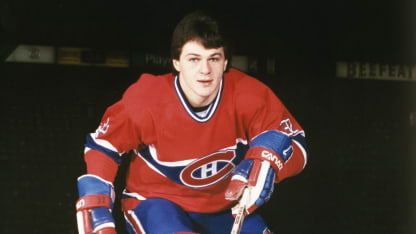
That convinced the organization to give him a better chance, and he scored 27, 31 and 29 goals in the next 3 seasons, helping Les Habitantes reach the Stanley Cup Finals again in 1989. He was also a member of the victorious Team Canada at the 1987 Canada Cup.
He tailed off a bit in 1989-90, and the Habs traded him to the Devils for Sylvain Turgeon. This turned out to be a bad trade for Montreal, as Turgeon did nothing for them, and they left him unprotected in the 1992 expansion draft. He was chosen by the Ottawa Senators, and the Canadiens won the Cup again in 1993, without him.
The Devils were a team on the rise, and soon had a strong Canadiens connection. In addition to Lemieux, they had another 1986 Cup-winner, scoring right wing Stéphane Richer; a tough left wing, Tom Chorske; goaltender Martin Brodeur, son of Denis Brodeur, team photographer for the Canadiens and the Montreal Expos; head coach Jacques Lemaire, who'd won 8 Cups as a Canadiens center; and assistant coach Larry Robinson, who'd won 6 Cups as a Canadiens defenseman.
Having switched to Number 22, Claude scored 30 goals in 1990-91, 41 in 1991-92, and 30 plus 51 assists in 1992-93. He slumped again in 1993-94, but helped the Devils reach the Eastern Conference Finals. In 1992 and 1994, they lost to their geographic rivals, the New York Rangers.
Lemieux was a fighter. He was never afraid to face an opponent, and earned the nickname "Le Pest." But he wasn't exactly the most courageous of men. The one and only time an event was held at the Boston Garden with me as a paying customer came on March 2, 1995. Bruin star Cam Neely had recently returned from an awful knee injury, and Claudie crashed him into the boards. The home crowd lost their minds, and booed vociferously. Neely started throwing punches, and Lemieux "turtled": He dropped to his knees and covered his head. The booing got worse. The referee threw Neely out of the game, and gave Claudie no penalty. The Bruin fans went from angry to frothing-at-the-mouth rage. The game was a disaster: The Bruins won, 7-2.
But Lemieux always seemed to play better against the Rangers, and against the Devils' other rivals-by-geography, the Philadelphia Flyers. Indicative of this was the strike shortened 1994-95 season. In 45 regular-season games, he scored only 6 goals. But something happened once the Playoffs began.
In the Conference Quarterfinals against the Bruins, Lemieux scored 2 goals in Game 1, and the Devils won in 5 games. In the Conference Semifinals against the Pittsburgh Penguins, he scored a goal in Game 1, but the Devils lost; but they won the next 4 games, with Lemieux scoring twice in Game 2, once in Game 3, and 2 in the clinching Game 5. It was 8 goals in 10 games.
In the Conference Finals against the Flyers, he scored in Game 3, which the Devils lost. But in Game 5 at The Spectrum in Philadelphia, with 44 seconds left and the game tied, he fired a wobbly 65-foot shot that got past Flyer goaltender Ron Hextall, and the Devils won, 3-2. He scored again in Game 6, and the Devils clinched, and reached the Stanley Cup Finals for the 1st time. It was 11 goals in 16 games.
In Game 1 of the Finals, against the Detroit Red Wings at the Joe Louis Arena in Detroit, he scored the go-ahead goal, what turned out to be the winning goal, early in the 3rd period. He scored again in Game 3, and the Devils swept the Wings in 4 straight. It was 13 goals in 20 games, and he was awarded the Conn Smythe Trophy as the Most Valuable Player of the Playoffs.
The Devils were only a 13-year-old franchise, but they had won their 1st title, and had begun to develop their own legends. And Claude Lemieux was one of them.
And yet, just before the start of the 1995-96 season, he was traded -- twice. The Devils traded him to the New York Islanders for Steve Thomas. This was a bad trade for the Devils, as Thomas did little for them. And then, before the ink was dry on the deal, the Isles traded him to the Colorado Avalanche for Wendel Clark. This was 2 bad trades for the Isles, as Lemieux literally did nothing for them, and Clark didn't do much more.
Lemieux did something for the Avs, who had been the Quebec Nordiques since 1972, but couldn't get a state-of-the-art arena, something Denver promised their owners, and got for them in 1999. He scored 39 goals with 32 assists in 1995-96, helping them to reach the Western Conference Finals against the Wings.
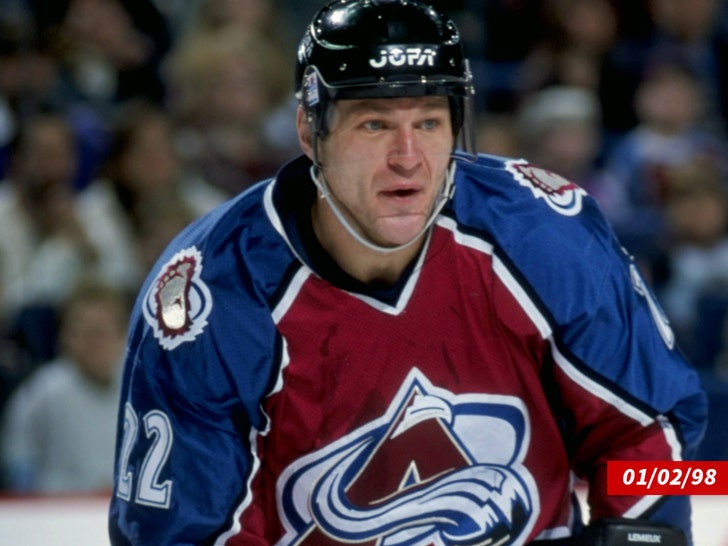
In Game 6, Lemieux checked Kris Draper into the boards. Draper suffered a concussion, and his nose, cheekbone and jaw were broken, leading to him having reconstructive surgery on his face and his jaw wired shut for several weeks. This incident sparked a bitter rivalry between the two teams. The NHL suspended Lemieux for 2 games, and most observers thought it wasn't enough.
The Avs won, to clinch a place in the Finals, and there was a postgame handshake. Dino Ciccarelli, a future Hall-of-Famer who was making what turned out to be his last serious run at the Cup, said, "I can't believe I shook this guy's friggin' hand after the game. That pisses me right off."
The Avs won the Cup. This made Lemieux only the 8th player to win the Cup with at least 3 different teams, following Jack Marshall, Hap Holmes, Frank Foyston, Jack Walker, Gord Pettinger, Al Arbour (yes, the Islander coach) and Larry Hillman. He has since been followed by Mike Keane, Joe Nieuwendyk and Mark Recchi, making 11. Holmes is the only player to have done it with 4 different teams.
So if you're a Red Wings fan reading this, and you still hate Claudie for what he did to Draper, I understand, and I won't tell you to get over it. But I still love the guy. Interestingly, when Budd Lynch introduced Claudie before Game 1 of the 1995 Finals, nearly a year before the unwarranted hit on Draper, Claudie still got the hell booed out of him, since he was already known as a dirty player.
Early in the 1999-2000 season, the Avs traded him, along with 2 draft picks, to the Devils for Brian Rolston and a draft pick. He played another 70 games for the Devils, scoring 17 goals, played in all 23 Playoff games, and scored 4 goals with 6 assists, to help them win another Cup.
This made him only the 5th player to win Cups in 3 different decades, following Dit Clapper, Maurice and Henri Richard, and Jean Béliveau. He has been followed by Patrick Roy, Nieuwendyk and Recchi, making 8.
For the next season, he signed with the team then known as the Phoenix Coyotes. He remained with them until the middle of the 2003 season, when he was traded to the Dallas Stars. He was released after that season, and it looked like his career was over. But he signed with Zug of Switzerland's league, and finished the season with them.
In 2005, he was named president of the minor-league Phoenix RoadRunners. In 2007, he left, and played on the Spike TV show Pros vs. Joes. His competitiveness was re-sparked, and he signed with the China Sharks of Asia League Ice Hockey. After 2 games, the Worcester Sharks of the American Hockey League signed him. After 23 games, he was promoted to the San Jose Sharks, and 6 years after his last previous NHL game, he played 18 more, at age 43, and hung up his skates.
He scored 379 goals with 407 assists, for 786 points. After his retirement, he became an NHLPA-certified player agent. He was not related to Penguins legend Mario Lemieux, but he was the brother of Jocelyn Lemieux, briefly a teammate in Montreal, who played 12 seasons in the NHL. He was married twice, with 3 sons and a daughter. One of his sons, Brendan Lemieux, played 7 seasons in the NHL, with the Rangers, the Flyers, the Winnipeg Jets, the Los Angeles Kings and the Carolina Hurricanes.
Since he was still an active player in March 1996, when the Montreal Forum closed and the Bell Centre opened, he was not among the former Canadiens stars who participated in the ceremonies. But 3 nights ago, he participated in a ceremony that has become one of the Canadiens' traditions: Before a home Playoff game, a former star will carry a lit torch to center ice. Wearing his former Number 32 jersey, Lemieux carried the torch before Game 3 of the Eastern Conference Finals at the Bell Centre. But they lost, 3-2 in overtime to the Carolina Hurricanes.
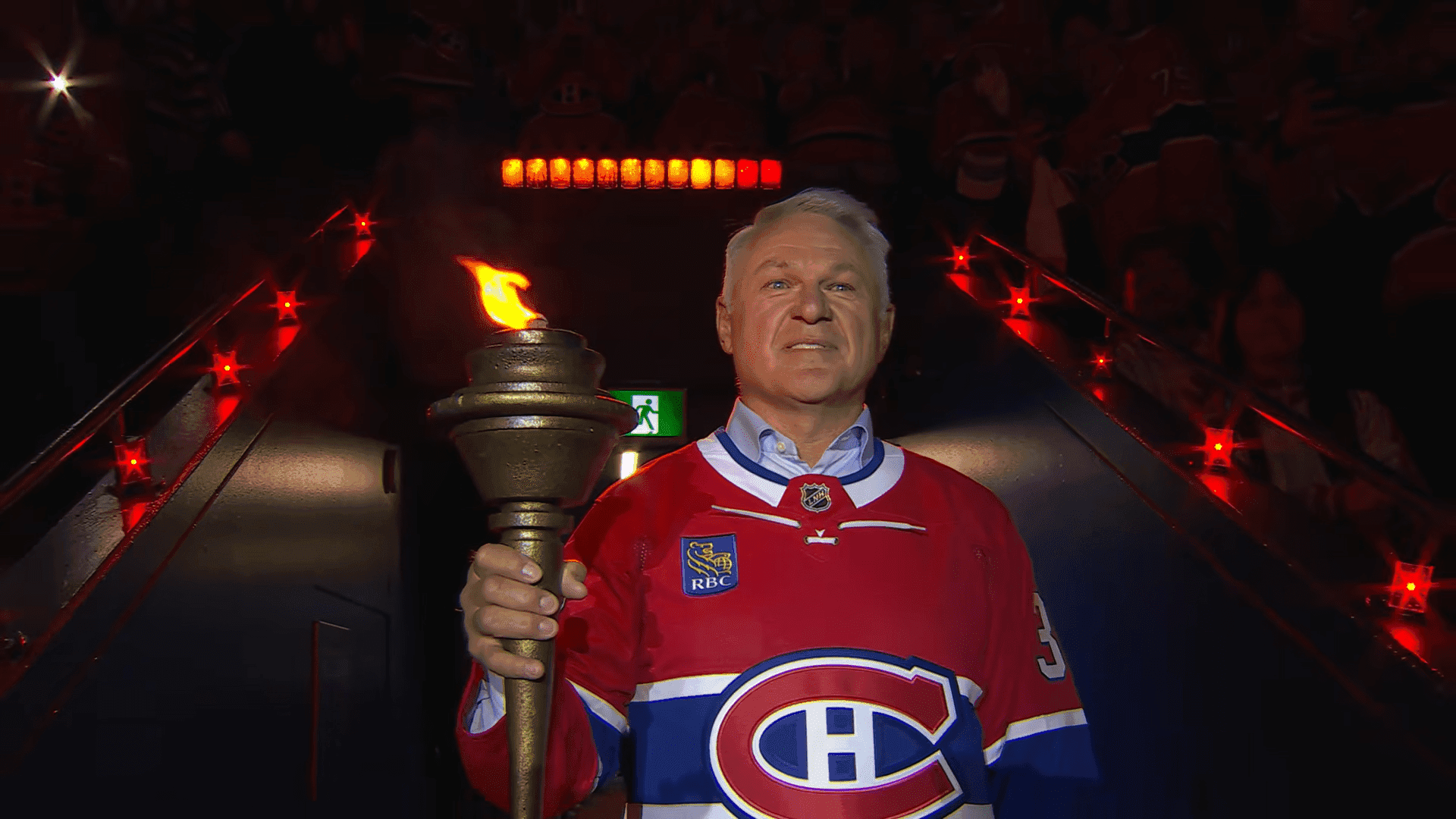
Today, May 28, 2026, Claude Lemieux was found dead by one of his sons, in the rear warehouse of a furniture store he owned in the Miami suburb of Lake Park, Florida. He was 60 years old. Local authorities determined that he died by suicide, though they have not released the method.
Given his aggressiveness, it is possible that he had been to suffer from chronic traumatic encephalopathy (CTE). Like the NFL, and soccer with its many headings of the ball, hockey has begun to face serious allegations of repeated head trauma leading players to experience memory loss, other loss of cognitive function, or other physical difficulty, including from one of Lemieux's 1995 Devils teammates, Mike Peluso.
The families of Chicago Blackhawks Hall-of-Famers Bobby Hull and Stan Mikita have also alleged that they suffered from CTE. It's also been alleged for Canadiens legend Henri Richard.
Claude Lemieux was a hero to some, a villain to others. He is now a tragedy to all.


No comments:
Post a Comment