/arc-anglerfish-arc2-prod-pmn.s3.amazonaws.com/public/GQCKTQK6E5H53KW63DSUACA6MU.jpg)
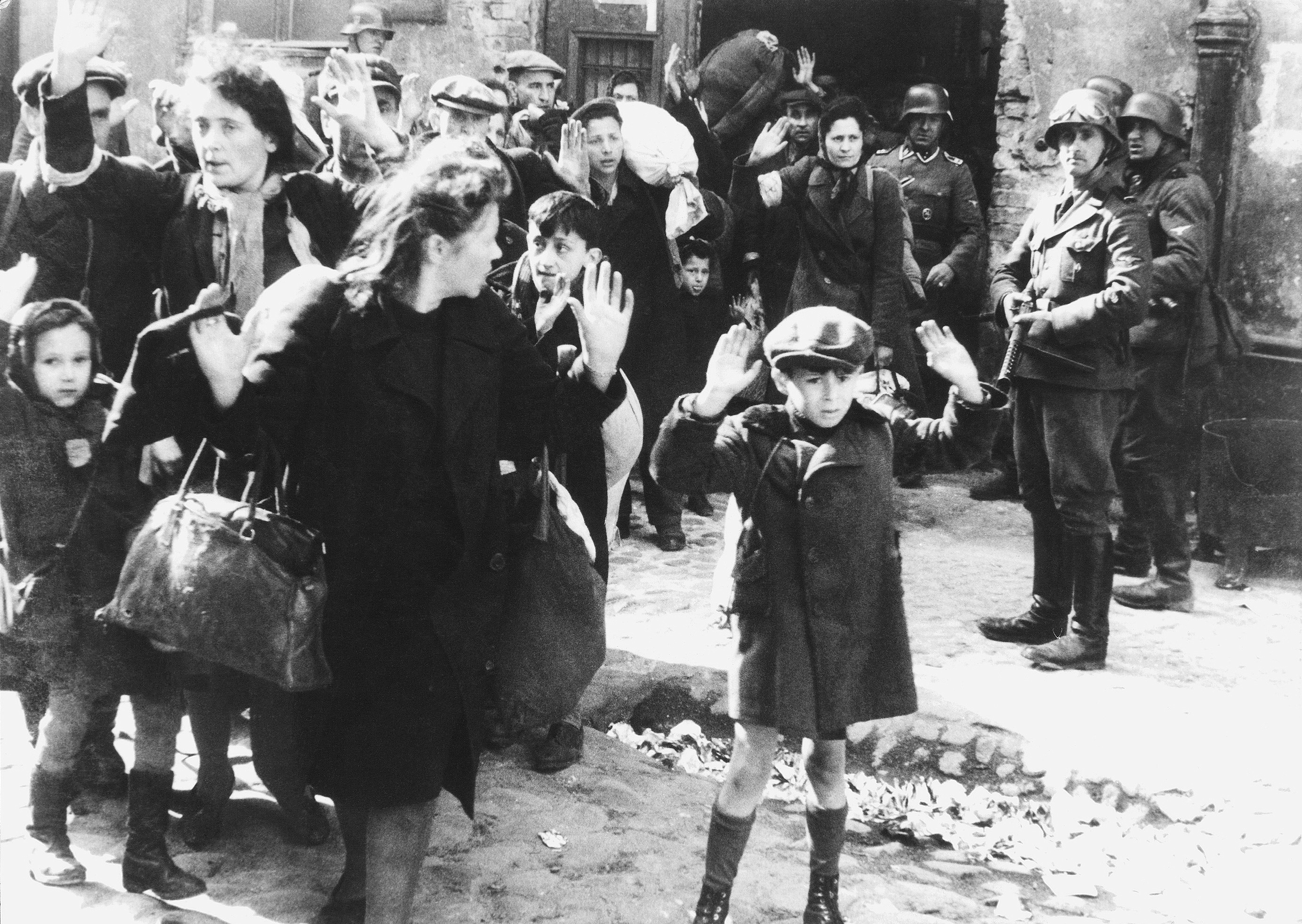
Himmler's boss, Adolf Hitler, had been considering this since 1939: He wanted to tear the city down, and replace it with a modern city in the German style. He specifically said to get rid of historical monuments and the Polish national archives. Hitler didn't just want genocide, he wanted to completely wipe Poland from public memory.
By January 1945, 85 percent of the buildings that had stood in Warsaw before the initial German invasion of September 1, 1939 had been destroyed. In 2005, an estimate was made that the value of the damage was, in current U.S. dollars, $54.6 billion.
With Poland a client state after World War II -- the Eastern European version of the West's NATO was founded in 1955 as "The Warsaw Pact" -- the Soviet Union funded the rebuilding of the city, but in the Communist style. As a result, it is not considered an architectural marvel. No, if you want to see a classical Polish city, the only one left is Kraków, which was always the country's home of culture.
The 778-foot, 42-story Palace of Culture and Science was erected in 1955, a copy of the Moscow State University Building. It has nicknames of both genders: Since the State University Building is one of Moscow's "Seven Sisters," the Palace is called "The Eighth Sister"; but it's also known as "Stalin's Dick." (Also, "Stalin's Syringe.")
You've heard of Polish jokes? Here is an actual Polish joke, from Poland: Where is the best view of the city of Warsaw? From the Palace of Culture and Science. Why? Because, from there, you can't see the Palace of Culture and Science.
Much like Colonial Williamsburg in America, Warsaw's "Old Town" was reconstructed. The project was the world's first attempt to resurrect an entire historic city core, and was included on the UNESCO World Heritage list in 1980.

Today, Warsaw is a thriving national capital, a metropolis of 1.8 million people, the 8th-largest in the European Union behind Berlin, Madrid, Rome, Bucharest, Paris, Vienna and Hamburg.