
April 8, 1966, 60 years ago: Time magazine prints its most famous cover, asking a big question: "Is God Dead?"
Why did the question come up? The question was already steeped in German philosophy in the 19th Century. In 1797, German writer Jean Paul wrote Siebenkäs (Sevencheese), in which a character says, "'The Dead Christ Proclaims That There Is No God." Philipp Mainländer and George Hegel had also written on the subject. In 1862, French writer Victor Hugo had his character Gerard de Nerval say, "God is dead, perhaps" in Les Misérables.
In his 1882 book The Gay Science (sometimes translated as "The Joyful Science," it has nothing to do with homosexuality), Friedrich Nietzsche came right out and said it: "Gott ist tot." He said, "The belief in the Christian God has become unbelievable," adding that everything that was "built upon this faith, propped up by it, grown into it," including "the whole of European morality," is bound to "collapse." He repeated the line "God is dead" in his next and most-known book, Thus Spoke Zarathustra.
The World Wars of the 20th Century, in which both Germany as aggressor and the nations defending themselves used God as justification, would likely have convinced him that he was right, at least about the collapse part.
What's more, Nietzsche believed it was a good thing: He often wrote of an "overman" who was "beyond good and evil," superseding established concepts of what was moral and what was not. And that was part of the problem: After his death in 1900, this belief in an Übermensch was twisted into the official beliefs of the aggressors of the World Wars, Kaiser Wilhelm II and Chancellor Adolf Hitler.
It was an American of German descent, Otto Fuerbringer, who, as editor of Time, released that cover, the magazine's first without a photograph in its 43 years of publishing to that point. But the issue did not attempt to answer the question. In more recent terms, the cover was "clickbait."
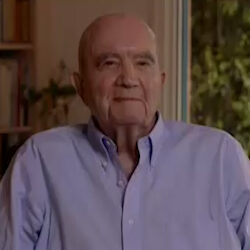
Otto Fuerbringer
The article accompanying the magazine cover, titled "Toward a Hidden God" and written by the magazine's religion editor, John T. Elson, mentioned the so-called "God Is Dead" movement only briefly in its introduction. In a footnote, it identified the leaders of the movement, and explained how those theologians had been trying to construct a theology without God.
The article pointed out that, while this movement had roots in the philosophy of Nietzsche, it also drew on a broader range of thinkers, who had expressed concerns about the role of God in an increasingly secularized world. The immediate reality did not indicate a death of God, or a death of religion, and the article pointed out that the recent Second Vatican Council had done much to revitalize Christianity, and the Roman Catholic Church in particular.
The article cited a poll in which 97 percent of Americans declared a belief in God, but only 27 percent called themselves "deeply religious."
Time received around 3,500 letters to the editor, still the largest number of responses to any one story in the history of the magazine. In its issue of December 26, 1969, Time ran a follow-up cover story asking, "Is God Coming Back to Life"?
A month before the controversial cover, John Lennon of The Beatles gave an interview in which he said, "Christianity will go. It will vanish and shrink. I needn't argue about that; I'm right and I'll be proved right. We're more popular than Jesus now." When it was published in the American magazine Datebook on July 29, evangelical Americans lost their minds, and convinced radio stations to ban the Beatles, and even held record burnings, as if it was Nazi Germany. Lennon had to apologize.
On November 29, 1993, Time did a cover story on psychology, discussing how people were moving away from the teachings of Sigmund Freud. Freud had died in 1939, and was famously atheist: He wouldn't have said God was dead, he would have said God never existed in the first place. But the 1993 cover showed a painting of Freud, with his head coming apart like pieces of a puzzle, asking, "Is Freud Dead?"
And on April 3, 2017, with Donald Trump having become President, despite so many of his statements having been proven to be lies, Time printed this cover.

Trump was defeated in 2020, so the answer became, "No, but it sure was sick for a while." Trump was returned to the Presidency in 2024, so truth remains seriously ill.
Otto Fuerbringer died in 2008; John T. Elson, the following year.
April 8, 1966 was a Friday -- indeed, it was Good Friday, the traditional date of the Crucifixion of Jesus, with Easter to follow on Sunday. Actresses Cynthia Nixon and Robin Wright were born on this day.


