Showing posts with label freddy parent. Show all posts

Thursday, March 15, 2018

Top 10 Athletes From Maine

And, completing the 50-State Sweep:

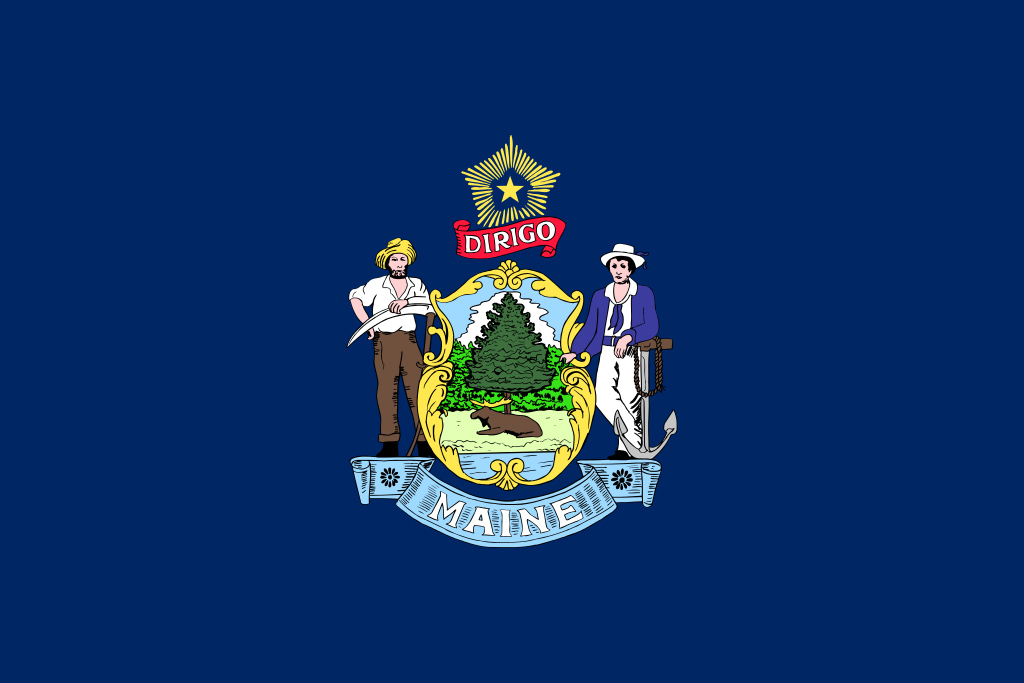
March 15, 1820: Maine is separated from Massachusetts, and admitted to the Union as the 23rd State, as part of the Missouri Compromise of 1820, with Missouri becoming the 24th State: 1 new State were slavery was legal, 1 where it was not.

Top 10 Athletes From Maine

Of the 26 NFL players born in Maine, the best was probably John Bunting of Portland, a linebacker who won an NFC Championship with the Philadelphia Eagles and a USFL Championship with the Philadelphia Stars, but he grew up in Silver Spring, Maryland, a D.C. suburb, so he's out. Nobody else looked like a good candidate.

Bob Stanley of the star-crossed 1978 and 1986 Boston Red Sox was born in Maine, and leads all such men with 132 saves, and also won 115 games. But he grew up in Kearny, Hudson County, New Jersey. Not that I, as a native of North Jersey, would want to claim him.

Jeff Turner is the only NBA player to have been born in Maine, in Bangor, and won a Gold Medal with the U.S. team at the 1984 Olympics in Los Angeles. But he grew up in Florida, so he qualifies there.

Honorable Mention to Louis Sockalexis of Old Town. A member of the Penobscot tribe, the outfielder starred with the Cleveland Spiders of the National League as a rookie in 1897, batting .338 with 16 stolen bases.

But his drinking problem, all too common among Native Americans, had already gotten him expelled from Notre Dame. And on July 4, when the brothel he was visiting was raided by the police, he jumped out of a 2nd-story window and wrecked his ankle. He was never the same player.

The circumstances surrounding the 1899 Cleveland Spiders are too convoluted to briefly summarize, but they were the worst team in Major League Baseball history, and they were his last major league team. (They released him on May 7. If they'd kept him, despite all his trouble -- he was hitting .273 -- maybe they wouldn't have finished 20-134.) He died of tuberculosis in 1913, only 42 years old.

It was long presumed that the Spiders' American League replacements, originally called the Blues, then the Broncos, and then the Naps in honor of 2nd baseman and manager Napoleon Lajoie, were renamed the Indians in 1915 in honor of either "Sock," the 1st Native American to play in the major leagues, or the tribes that once lined the shore of Lake Erie. Neither story is true: Baseball is a monkey-see-monkey-do game, like most sports, and the year before, the World Series had been won by the Boston Braves.

Honorable Mention to Bill Carrigan of Lewiston. A decent catcher, he wasn't much of a hitter. But he played on 3 World Series winners for the Boston Red Sox, in 1912, 1915 and 1916. For the last 2, he was player-manager, and is the only man since 1898 to manage a Boston baseball team to back-to-back Pennants. The Red Sox elected him to their team Hall of Fame.

Honorable Mention to Clyde Sukeforth of Washington. He was a good-field-no-hit catcher, although he did bat .354 in 262 plate appearances for the 1929 Cincinnati Reds. But he's best known for 2 contributions to the lore of the Brooklyn Dodgers -- 1 positive, 1 negative.

In 1945, team president and part-owner (the operational owner) Branch Rickey sent him around the country to scout Jackie Robinson, whom Rickey had heard could be the right man to be the 1st black player in modern baseball. Not only did Sukeforth send Rickey a good report, but he turned out to be Robinson's 1st major league manager -- albeit on an interim bases, following the suspension of Leo Durocher, managing only Opening Day 1947 before turning the team over to Burt Shotton.

In 1951, "Sukey" was in the bullpen watching pitchers warm up during the Playoff game that would decide the National League Pennant, between the Dodgers and their arch-rivals, the New York Giants. When Don Newcombe ran out of gas in the bottom of the 9th, manager Charlie Dressen called the bullpen and asked how the pitchers were doing. Sukeforth said that Carl Erskine was having control problems, but Ralph Branca was throwing well. Dressen told him to send in Branca.

Big mistake. The batter was Bobby Thomson, who could hit nothing but a fastball. Branca had nothing but a fastball. Although a year away from becoming a star, Erskine may already have had the best curveball in the NL. Had Sukeforth remembered that, or if he had realized Thomson was the next batter, Erskine might have gotten Thomson out, and the Dodgers might have won the Pennant, instead of Thomson hitting the most famous home run of all time.

Honorable Mention to Jim Beattie of South Portland, who helped the Yankees win the 1978 World Series. His career record as a pitcher was 52-87. He later served as general manager of the Montreal Expos and the Baltimore Orioles, and is now a scout with the Toronto Blue Jays.

Honorable Mention to Cindy Blodgett of Fairfield. She is the all-time leading scorer, male or female, in Maine high school basketball, leading Lawrence High School to an 84-4 record. At the University of Maine, she led women's college basketball in scoring all 4 seasons.

She played for the WNBA's Cleveland Rockers and Sacramento Monarchs, and later returned to UM as head coach. She is now an assistant coach at Boston University, under former Sacramento teammate Kady Steding.

10. Chet Bulger of Rumford. A 2-way tackle, he was a starter on the line of the Chicago Cardinals team that won the NFL Championship Game in 1947 and lost it in 1948.

9. Del Bissonnette of Winthrop. A 1st baseman, he got stuck in the minor leagues, not making his major league debut until he was 28, with the 1928 Brooklyn Dodgers. But had there been a Rookie of the Year award then, he surely would have won it, with a .320 batting average, 25 home runs and 106 RBIs.

Had there been an All-Star Game then, he would have made it every year through 1931. Then he got hurt, missed the entire 1932 season, and was never the same. He only played 35 games in 1933, never appeared in the majors again, and hung on in the minors for a while. His 66 home runs lead all Maine-born players, as does his .305 lifetime batting average for all Mainers with at least 400 major league plate appearances.

He managed the Hartford Chiefs to the 1944 Eastern League Pennant, and briefly managed the Boston Braves. But he was fired in 1946, never returned to the major leagues in any capacity, and committed suicide in 1972.

8. Eric Weinrich of Gardiner. Though born in Roanoke, Virginia, he grew up on the Kennebec River near the Maine State capital of Augusta, and had a 17-year career as an NHL defenseman, starting in 1989 with the New Jersey Devils and carrying through Chicago, Montreal, Boston, Philadelphia, St. Louis and Vancouver. He finished his career with 70 goals and 318 assists.

Of the 7 NHL players who were actually born in Maine, 2 active players, Brian Dumoulin of Biddeford and the Pittsburgh Penguins, and Garnet Hathaway of Kennebunkport and the Calgary Flames, have, between them, scored 63 points. Danny Bolduc of Waterville and the late 1970s Detroit Red Wings, had 41. The other 4 have a grand total of 1.

7. Freddy Parent of Sanford. He was the shortstop of the Boston Americans, forerunners of the Red Sox, that won the 1st World Series in 1903, and the American League Pennant again in 1904. He was the last survivor of those teams, living until 1972. In a 12-season major league career, he batted .262 with 184 stolen bases.

6. Mike Bordick of Winterport. A shortstop, he reached the World Series as a rookie with the 1990 Oakland Athletics, and the American League Championship Series with them that year and in 1992. He reached the ALCS again with the 1997 Baltimore Orioles, and made the All-Star Game and won a National League Pennant with the Mets in 2000. The Orioles named him to their team Hall of Fame.
Rip Black of Bailey Island.

He's lucky I don't have the sports journalism profile that Chris Berman, nicknamer par excellence, has, because I thought of what sounded like a sure "Bermanism": Mike "I Need Viagra For My Bored Dick."

5. Bill Swift of South Portland. With the 1992 San Francisco Giants, he went 10-4, and led the National League with a 2.08 ERA. In 1993, he went 21-8. In 1995, he helped the Colorado Rockies, in only their 3rd season, win the NL Wild Card. He finished 94-78, with 17 saves, and his 767 strikeouts lead all Maine-born pitchers.

4. Joey Gamache of Lewiston. The WBA briefly recognized him as Super Featherweight Chamion in 1991 and Lightweight Chamion in 1992.

3. Jack Coombs of Waterville. He was known as Colby Jack, because he attended Colby College in his hometown. Although he could throw some high cheese. He arrived with the Philadelphia Athletics in 1906, nearly helped them win the American League Pennant in 1907, and did help them win it in 1910, 1911, 1913 and 1914.

In 1910, he went 31-9, and won 3 more games in the World Series, leading the A's over the Chicago Cubs. The A's also won with him in 1911 and 1913, in each case over the New York Giants. In 1916, he won a National League Pennant with the Brooklyn Robins. (The once-and-future Dodgers were nicknamed for their manager, Wilbert Robinson.)

His final total was 158-110, making him the winningest Maine-born pitcher. He died in 1957, and the Phillies later named him to the Philadelphia Baseball Wall of Fame. His brothers Bobby and Danny were also major leaguers, albeit briefly.

2. George Gore of Hartland. A center fielder known as "Piano Legs," he starred for the Chicago White Stockings, forerunners of the Cubs. In 1880, he won the National League batting title, helping start a string of 5 Pennants in 7 seasons for the White Stockings. In 1881, he set a record with 7 stolen bases in a game; in 1885, another with 5 extra-base hits.

He last played in 1892, but his 1,612 career hits and his OPS+ of 136 still lead all Maine-born players. His lifetime batting average is .301. Nobody alive today saw him play, but he probably should be in the Baseball Hall of Fame. But, unlike his teammates Adrian "Cap" Anson, Mike "King" Kelly, Edward "Ned" Williamson, Frank "Silver" Flint and John Clarkson (no known nickname), his nickname was considerably more colorful than he was, and he got forgotten. (Anson, Kelly and Clarkson are in the Hall.)

1. Joan Benoit of Cape Elizabeth. Although part of the large French-Canadian community in New England, she pronounces her name Benn-OYT instead of the proper French Benn-WAH. And she now goes by her married name, Joan Benoit Samuelson.
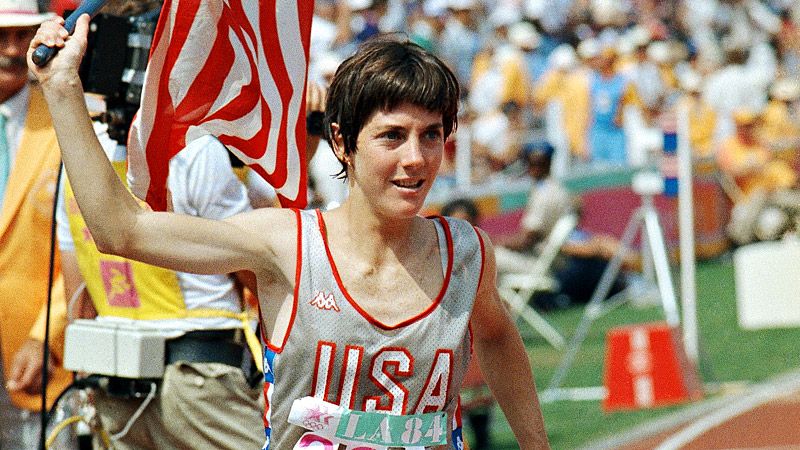
She won the Boston Marathon in 1979 and 1983, each time setting a new course record for women. She won the 1st-ever women's Olympic Marathon, in Los Angeles in 1984. In 1985, she received the James M. Sullivan Award, for the outstanding American amateur athlete of the year.

Sunday, November 2, 2014

November 2, 1914: A New Jersey Baseball Legend Is Born

So far, the latest date on which a baseball game that counts has been played is November 4. So, only 3 more days of this.

Unless you want me to "Remember, remember the 5th of November... "

*

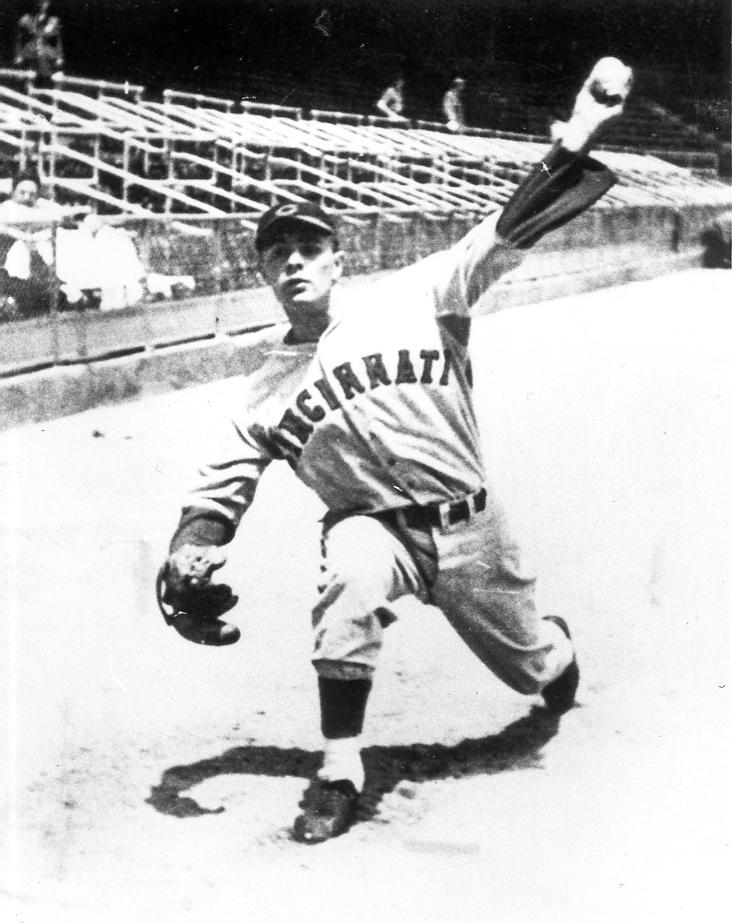
November 2, 1914, 100 years ago today: John Samuel Vander Meer is born in Prospect Park, Passaic, County, New Jersey, and grows up in nearby Midland Park, Bergen County. Among several interesting things about him is that he was a switch-hitter who threw lefthanded. Most switch-hitters are righthanders who try batting lefty to gain a hitting edge.

The Brooklyn Dodgers signed him out of Midland Park High School, and he would make history at Ebbets Field -- but not with the Dodgers. After the 1934 season, he was sold to the Boston Braves, and was not considered good enough to make the roster of the 1935 Braves -- who lost 115 games, giving them the most losses in the National League between 1899 and 1962, and the lowest winning percentage in the NL since 1899. (Yes, worse than the 1962 Mets: At 38-115,  their .248 was worse than the Mets' 40-120 for .250.) Then again, he was only 20. But he would make history involving the Braves -- just not with them.

After the 1935 season, the Cincinnati Reds purchased him from the Braves' system. After a 19-6 season with the Durham Bulls in 1936, the Reds called Johnny up. He made his major league debut on April 22, 1937, and from then until the morning of June 11, 1938, he was just an average young pitcher (just 23). He spent most of that season with the Syracuse Chiefs before being called back up in September.

On June 11, 1938, he took the mount at Crosley Field in Cincinnati against the Braves -- who, trying to remove the infamy of the 1935 disaster, immediately changed their name to the Boston Bees. (The experiment also removed the memory of the 1914 World Champion "Miracle Braves," and the Braves name was restored in 1940. However, the Bees name survives in the fake newspaper headlines made for the movie The Natural, set in 1939.)

That season, Vander Meer wore the Number 57 -- the Reds being one of the few teams in those days to give out such high numbers. On this day, despite it being a warm Saturday afternoon, only 5,214 fans came out. Pitching for the Dodgers was Danny MacFayden -- "bespectacled Deacon Danny MacFayden," as the sportswriters of the era frequently called him. He pitched decently, and deserved better than to have been betrayed by his defense: The Reds scored in the 4th inning when 2nd baseman Tony Cuccinello made an error. In the 6th, Ernie Lombardi, the Reds' Hall of Fame catcher, hit a 2-run homer to make it 3-0.

Vander Meer didn't even need that much: He walked Cuccinello, right fielder Gene Moore and 3rd baseman Gil English, and that was it. He pitched a no-hitter, striking out 4. As the saying goes, he had "achieved baseball immortality."

Or had he? After all, a no-hitter isn't all that rare. There's usually 2 or 3 pitched every season. Here in 2014, there were 5, and I had to look up to see the names of the pitchers who threw them, mere months ago: Josh Beckett, Clayton Kershaw, Tim Lincecum, Jordan Zimmerman, and a combined no-hitter by 4 Phillies, with Cole Hamels pitching 6 innings, and 1 each by Jake Diekman, Ken Giles and Jonathan Papelbon. Certainly, I should have remembered Kershaw, Lincecum, and the former Red Sox Beckett and Papelbon. But I'd forgotten all about their no-hitters. Even Kershaw, probably the best pitcher in baseball today, if you reminded me he'd thrown one, I would've had to say, "Really... oh yeah."

The list of Yankee pitchers who've thrown no-hitters includes legends like Allie Reynolds, Dwight Gooden, David Wells and David Cone -- but also guys who tend to get forgotten, like Tom Hughes and Monte Pearson, as well as the ill-fated Andy Hawkins, who doesn't even get the credit anymore. But such Yankee Legends as Waite Hoyt, Lefty Gomez, Red Ruffing, Whitey Ford, Mel Stottlemyre, Ron Guidry and Andy Pettitte never threw a no-hitter. (Catfish Hunter did, but was with the Oakland Athletics at the time.)

No, pitching a no-hitter doesn't guarantee you "baseball immortality." But 4 days later -- on 3 days' rest, mind you -- Vander Meer took the hill at Ebbets Field, against the team that had originally signed him, the Dodgers. It was a very special day: The 1st night game at any of the 3 New York big-league ballparks. A crowd of 38,748 jammed into the Flatbush ballyard, although with a seating capacity of 31,497, a lot of them must have been standing. No stadium or arena fire laws in those days.

Ironic that, on this occasion, Vander Meer "pitched lights-out." It helped tremendously that the Reds unloaded for 6 runs in the 3rd inning on Dodger starter Max Butcher. Vander Meer took that 6-0 lead into the 9th. It wasn't pretty: Although he struck out 7, he walked 8. But he got it done, becoming the 1st pitcher ever to pitch back-to-back no-hitters. For the rest of his life, he was known as "Double No-Hit Johnny Vander Meer," and, occasionally, "the Dutch Master."

The achievement convinced New York Giants manager Bill Terry, as manager of the defending Pennant winners, to start him in the All-Star Game -- although the fact that Cincinnati was hosting it may also have played a part. He pitched 3 scoreless innings, and the NL won, 4-1. Vander Meer finished the season 15-10.

Many years later, Vander Meer was interviewed by a reporter for the Chicago Daily News for the anthology book My Greatest Day In Baseball. He said, "It would seem natural for me to name the second successive no-hitter I pitched in 1938 as my biggest day in baseball, and I'll have to explain why it isn't. I was still just a novelty, a kid who had done a freakish thing."

He had trouble the next year (he'd been switched to Number 33, which he wore for the rest of his Reds' tenure) -- "I was sick that spring and never did seem to regain my stride. My confidence went, too" -- and, while the Reds won the Pennant, he was not called on to pitch in the 1939 World Series, which the Reds lost to the Yankees. He got sent back to the minors in 1940. "I knew that was what I needed. At the same time it made me realize just how quickly a fellow can fall from the pedestal."

He pitched solidly for the Indianapolis Indians, then the Reds' Triple-A team (and whose ballpark stood in for the long-demolished Crosley Field when the movie Eight Men Out was filmed in 1987), and was called back up. On September 18, 1940, he started what could have been the Pennant-clinching game for the Reds, against the Philadelphia Phillies at Shibe Park. The game went 13 innings, and he pitched 12 innings. He batted in the top of the 13th and doubled, was sacrificed to 3rd, and Ival Goodman hit a sacrifice fly to get him home. He was relieved by Joe Beggs for the bottom of the 13th, and the Reds won, 4-3. The Reds won the Pennant, and Vander Meer had his greatest day in baseball.

This time, he pitched in the World Series, tossing 3 scoreless innings against the Detroit Tigers in Game 5. The Reds won in 7 games, and he had his ring.

On June 6, 1941, he nearly pitched a 3rd no-hitter, as Eddie Joost dropped a grounder and didn't throw to 1st in time, and the batter got credit for a hit. Vander Meer believed he was robbed. He went 16-12 that year. He peaked at 18 wins the next year, and led the NL in strikeouts in 1941, '42 and '43. He was a 4-time All-Star, so he wasn't just a guy who caught lightning in a bottle for 5 days.

He served in the U.S. Navy in World War II. Although he missed the entire seasons of 1944 and '45, at ages 29 and 30, prime years, he said that pitching on a Navy team helped his control, and the statistics do back that up somewhat. He won 17 in 1948, but that was it, and after a stint with the Chicago Cubs, he last pitched in the majors in 1951 with the Cleveland Indians. In 1952, pitching for the Tulsa Oilers of the Texas League, he pitched another no-hitter, at age 37.

Much like a later no-hit hero, Don Larsen, Vander Meer was actually slightly under .500 for his career: In his case, 119-120. Had he allowed so much as 1 hit in each of those 1938 games, he might be remembered today for that feat, but not nearly as well.

Instead, for 76 years, every time a pitcher has thrown a no-hitter, the name of Johnny Vander Meer has come up, with people wondering if the new no-hit hero can match his feat. None ever has -- at least, not in the major leagues. I have heard that 1 pitcher did it in the minors since 1938, but I can find no reference to this achievement.

The closest any major league pitcher has come was another Reds pitcher: In 1947, Ewell Blackwell pitched 1, and was within 2 outs of another, by an amazing twist of fate also against the Dodgers. If you know anything about the 1947 Dodgers, but aren't familiar with Blackwell, you're probably expecting me to say that Jackie Robinson broke it up. Nope: It was Eddie Stanky, who hit a line drive through Blackwell's legs. Blackwell later said that he could handle it because he was so tall and his arms were so long -- giving him a pitching motion that gave him the nickname The Whip -- but that he simply couldn't get his hands down in time. He ended up allowing a 2nd hit before winning the game. This was in the middle of a streak of 16 straight wins for him.

Vander Meer became a minor league manager in the Reds' organization for 10 seasons, before retiring in 1962. He then worked for a brewing company. He was inducted into the Reds Hall of Fame in 1958.
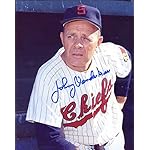
Managing the Syracuse Chiefs in 1962.
This is the latest photo of him I could find.

He retired to Tampa, where the Reds long had their Spring Training complex, threw out ceremonial first balls at 6 World Series for the Reds (1961, 1970, 1972, 1975, 1976 and 1990), sat for an interview for the Reds' 100th Anniversary team video in 1992, and lived until October 6, 1997, suffering an abdominal aneurysm. He was 82.

I can't say he was the greatest pitcher New Jersey has ever produced, and he certainly wasn't a Hall-of-Famer. But Johnny Vander Meer is a baseball legend, who was not only a very good pitcher in his time, but achieved a unique feat in baseball history. It will probably remain so on the 200th Anniversary of his birth.

*

November 2, 1881: The American Association of Professionals is founded, challenging the National League, with the motto "Liberty to All." The members are St. Louis‚ Cincinnati‚ Louisville‚ Allegheny‚ Athletic‚ and Atlantic (Brooklyn). This AA has officially, for many years, been considered by Major League Baseball to be a "major league."
The AA elects H. D. McKnight as its president. It votes to honor the NL blacklist in the case of drunkenness but not to abide by the NL reserve clause. The new league will rely on home gate receipts‚ visiting teams getting just a $65 guarantee on the road‚ as opposed to the NL's policy of giving 15 cents from each admission to the visitors. The AA will allow Sunday games‚ liquor sales‚ and 25-cent tickets (about $6.50 in today's money)‚ all prohibited by the NL (which then charged 50 cents for all games).
November 2, 1889, 125 years ago: North Dakota is admitted to the Union as the 39th State. At the same time, South Dakota is also admitted, as the 40th State. This is the only time 2 States have been admitted on the same day, and it begins a 10-day stretch in which 4 States are added.
Neither State has any major league teams, and very few professional teams at any level, due to being so sparsely populated: Between them, they have only 1.6 million people, and aside from Mount Rushmore, outside Rapid City, South Dakota, they don't have much in the way of tourist attractions. For the most part, the Dakotas are considered part of the Minneapolis-St. Paul sports "market," and most people there are Twins and Vikings fans, though western South Dakota has a noticeable presence of Denver Broncos fans.
November 2, 1913: Former St. Louis Browns manager George Stovall is the 1st major league player to jump to the Federal League‚ signing to manage the Kansas City Packers. With glib salesman Jim Gilmore as its president‚ and backed by several millionaires‚ including oil magnate Harry Sinclair and Brooklyn baker Robert Ward‚ the Feds declare open war 2 weeks later by announcing they will not honor the major leagues' reserve clause. It will prove a long‚ costly struggle‚ similar to the AL's beginnings‚ but with more losers than winners.
On this same day, Burton Stephen Lancaster is born in Manhattan.  One of the most acclaimed actors of the 20th Century, one of his last roles (but not his very last) was as an old doctor who used to be a baseball player in Field of Dreams.
*

November 2, 1950: The Baseball Writers Association of America selects Phillies relief pitcher Jim Konstanty as the NL's Most Valuable Player. This was the 1st time it had been awarded to a relief pitcher, and, presuming you think pitchers should be eligible at all, it was totally justified: Without him, the Phils would have been in the middle of the stadings; with him, they won the Pennant. It would be another 31 years before another reliever won it, Rollie Fingers of the 1981 Milwaukee Brewers.

November 2, 1960: George Weiss‚ recently turned 66‚ resigns as general manager of the Yankees. He had seen the firing of manager Casey Stengel by co-owners Dan Topping and Del Webb, and figured he was next. He said the Yankee farm system was drying up, and no one knew that better than he did: He'd built it, and seen Topping and Webb tell him, year after year, to trade prospects for a player or two who could help them win the Pennant in a given year.
He said, at the time, that he gave the Yankees 5 years before they all fell apart. In the next 4 years, they won the Pennant. In the 5th, 1965, they crashed to 6th place.
Weiss is in the Hall of Fame, for having been GM for 11 Pennants and 8 World Championships, and for having been farm system director for 8 Pennants and 7 World Championships before that. But don't expect to see him ever get a Plaque in Yankee Stadium's Monument Park: He was hated by the players for being so cheap, and was very much a racist. He's one of those "He was great at what he did, but... " figures in sports history.
He should not be confused with George David Weiss, who, in 1961, would write 2 classics of the early Rock and Roll Era: "The Lion Sleeps Tonight" by the Tokens, and "Can't Help Falling In Love" by Elvis Presley.
*
November 2, 1971: The Baltimore Orioles' Pat Dobson pitches a no-hitter against the Yomiuri Giants‚ winning 2-0. It is the 1st no-hitter in Japanese-American exhibition history. The Orioles compile a record of 12-2-4 on the tour.

November 2, 1972: Former Boston Red Sox shortstop Freddy Parent dies at the age of 96. Parent had been the last surviving player from the 1st modern World Series between Boston and Pittsburgh in 1903. He was also the last surviving player from the first Pennant race between the teams now known as the Yankees and the Red Sox, in 1904.

November 2, 1974, 40 years ago: The Braves trade Hank Aaron to the Brewers for outfielder Dave May and a minor league pitcher to be named later. Aaron will finish his major league career in Milwaukee‚ where he started it in 1954.
Later that off-season, Aaron‚ the Home Run King of American baseball‚ and Sadaharu Oh‚ his Japanese counterpart‚ square off for a home run hitting contest at Korakuen Stadium in Tokyo. Aaron wins 10-9. Aaron finishes his major league career with 755 home runs, Oh finishes his Japanese Leagues' career with 868. How many Oh would have hit in the North American majors is a mystery.
November 2, 1995: The Yankees name Joe Torre as their new manager‚ replacing Buck Showalter. The New York Daily News, citing his lackluster managerial record up until then, prints the headline "CLUELESS JOE." They get reminded of that more than they do of "FORD TO CITY: DROP DEAD."

November 2, 1999: The Texas Rangers trade outfielder Juan Gonzalez‚ pitcher Danny Patterson and catcher Gregg Zaun to the Tigers in exchange for pitchers Justin Thompson‚ Alan Webb and Francisco Cordero‚ outfielder Gabe Kapler‚ catcher Bill Haselman‚ and infielder Frank Catalanotto. The trade of "Juan Gone" is the beginning of the breakup of the Rangers' first postseason team, winners of 3 of the last 4 AL West titles.
Meanwhile, the Seattle Mariners announce that superstar Ken Griffey Jr. is requesting a trade closer to his home. The Mariners agree to try to trade him during the off season. They agree to try to trade him during the off season. The superstar outfielder will get his wish in February when Seattle trades him to the Reds for Mike Cameron, Antonio Perez and Brett Tomko, and minor leager Jake Meyer. Of course, Cincinnati, where his father Ken Griffey Sr. once played, isn't all that close to Junior's adopted hometown of Orlando, Florida.
November 2, 2004, 10 years ago: After a groundskeeper finds a grenade in the Wrigley Field turf, police bomb and arson investigators are called to evaluate the right field discovery. The rusty, hollowed-out shell turns out to be harmless and its origins remain a mystery.