Showing posts with label fred merkle. Show all posts

Thursday, October 22, 2015

How Long It's Been: The Chicago Cubs Won a World Series

It's easy to blame "The Curse of the Billy Goat" for the Chicago Cubs' failure to win a Pennant since 1945. Except they haven't won the World Series since 1908. Between 1908 and 1945, they were actually in 7 World Series. Not a bad total at all. That's actually more Pennants in those 37 years than the Mets have won in their entire 54-season history -- including the one they won mere hours ago (their 5th).

But the Cubs lost all 7 of those World Series. And thus, by the time William "Billy Goat" Sianis and his bar-mascot goat were kicked out of Wrigley Field during Game 4 of the 1945 World Series, they had already not won a World Series for 37 years. You can't blame the Curse of the Billy Goat for that.

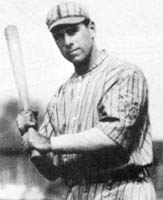
Curse of Fred Merkle, maybe? I would understand it if the guy held up as the, uh, scapegoat for the New York Giants losing the 1908 National League Pennant to the Cubs had cursed the team that had made him so. But Merkle wasn't a mean person. He wouldn't have wished the Cubs to never win another World Series during his lifetime. Even if he had, he died in 1956. It's been 59 years. If he was the reason, why is it still going?

At any rate, the Cubs' failure to even get a single lead on the Mets, let alone win a game, never mind 4 games and the Pennant, in the League Championship Series shouldn't be blamed on a curse, real or imagined. They had Yankee Fans, Philadelphia Phillies fans, Washington Nationals fans, Atlanta Braves fans, Los Angeles Dodgers fans, San Francisco Giants fans... pretty much anybody isn't a hardcore fan of the Mets, Chicago White Sox, Milwaukee Brewers or St. Louis Cardinals rooting for them. And they just didn't show up. They let everybody down.

They are the Chicago Cubs. This is what they do.

And so, through losing the 1910 Series to Connie Mack's Philadelphia Athletics, losing the 1918 Series to Babe Ruth's Boston RedSox, losing the 1929 Series to the A's in part because of blowing an 8-0 7th inning lead in Game 4, getting swept by the Yankees in 1932 (including Ruth's alleged "Called Shot" home run) and again in 1938, losing Game 6 and the Series in 1935 because they couldn't bring home Stan Hack with a leadoff triple in the 9th, the Goat, all those years of Ernie Banks, the black cat running around Ron Santo in 1969, Leon Durham in 1984, Steve Bartman in 2003, and now this...

The Chicago Cubs they still haven't won a World Series since October 14, 1908, beating the Detroit Tigers 2-0, in Game 5 at Bennett Park in Detroit.

That's 107 years and 8 days. How long has that been?

*

Well, for one thing, it's my furthest-back "How Long Has It Been" post yet. The previous record was set by the last Stanley Cup won by a Vancouver team: 1915, now 100 years ago.

Admittedly, the double-play combination of shortstop Joe Tinker, 2nd baseman Johnny Evers and 1st baseman Frank Chance should not have gone into the Hall of Fame together. They were all good players, but none was a clear choice to go in as a player. Chance was a player-manager, and was definitely worthy of the Hall as a manager.

However, all 3, plus Hall of Fame pitcher Mordecai "Three-Finger" Brown, pitchers Jack Pfeister and Ed Reulbach, and catcher Johnny "Noisy" Kling would have been easy choices for the NL All-Star Team, had there been an All-Star Game back then.

The World Series had only been played 5 times. The Cubs had won in 1907 and 1908. The Boston Americans, by 1907 the Red Sox, won in 1903. The Giants won in 1905. And the Cubs had lost to the crosstown Chicago White Sox in 1906.

World Series won since 1908: Yankees 27 (including 1932 and 1938 against the Cubs), Cardinals 11, Athletics 9 (5 in Philadelphia, including 1910 and 1929 against the Cubs, 4 in Oakland), Red Sox 7 (including 1918 against the Cubs), Giants 7 (4 in New York, 3 in San Francisco), Dodgers 6 (1 in Brooklyn, 5 in Los Angeles), Cincinnati Reds 5, Pittsburgh Pirates 5, Tigers 4 (including 1935 and 1945 against the Cubs), Baltimore Orioles 3, Minnesota Twins 3 (1 as the Washington Senators), Braves 3 (1 each in Boston, Milwaukee and Atlanta), White Sox 2, Cleveland Indians 2, Toronto Blue Jays 2, New York Mets 2, Phillies 2, Miami Marlins 2, Kansas City Royals 1, Los Angeles Angels of Anaheim 1, Arizona Diamondbacks 1... Cubs none.

It makes it worse when you realize that the Angels, Mets, Royals, Blue Jays, Marlins and Diamondbacks didn't exist in 1908.

The Cubs then played their games at West Side Park. The Red Sox at the Huntington Avenue Grounds. There are no major league ballparks in use now that were in use then. Indeed, by 1938, when the Phillies moved out of Baker Bowl to groundshare with the A's at Shibe Park, none of the MLB stadiums of 1908 would still be in use. Indeed, in just 7 short years, by 1915, only the Phillies and the Cardinals would still be using the same stadium they were using in 1908.

There was football, basketball and hockey, but very little of any of them that was professional. There was no NFL, no NBA, no NHL. There was a Stanley Cup, and it had been awarded to the Montreal Wanderers. Aside from the 16 MLB teams from 1908 that are still around today, no major league team in place today was in place then. The Montreal Canadiens were a year away from their foundation. The Heavyweight Champion of the World was Tommy Burns, 2 months away from being dethroned by Jack Johnson, who thus became the 1st black Heavyweight Champ.

The 16 teams were confined to 10 cities: Boston, New York, Philadelphia, Washington, Pittsburgh, Cleveland, Detroit, Cincinnati, Chicago and St. Louis. There were no teams south of Washington, Cincinnati and St. Louis. There were no teams more than 2 miles west of the Mississippi River.

There were no concrete and steel stadiums: Shibe Park in Philadelphia and Forbes Field in Pittsburgh would open the next year. There were no lighted stadiums, no artificial fields, no domes (retractable or otherwise), and no nonwhite players.

Half the 10 members of the 1st openly professional baseball team, the 1869-70 Cincinnati Red Stockings, were still alive: Catcher Doug Allison, 1st baseman Charlie Gould, shortstop George Wright, right fielder Cal McVey and utility man Dick Hurley. Honus Wagner, Napoleon Lajoie, Christy Mathewson and Ty Cobb, as well as Tinker, Evers, Chance and Brown, were the biggest stars in baseball. Babe Ruth was 13 years old, Lou Gehrig was 5, and Joe DiMaggio, Ted Williams, Stan Musial, Hank Greenberg, Dizzy Dean and Bob Feller weren't born yet.

The Olympics had just been held in London. There were no Winter Olympics yet. Nor was there a World Cup -- indeed, in most countries, soccer was still in its infancy. Manchester United had won the English Football League for the 1st time, and Wolverhampton Wanderers had won the FA Cup. Since those London Games, the Olympics have been held in America 7 times, France 4 times; 3 each in Germany, Japan, Italy and Canada; twice each in Britain, Switzerland, Austria, Norway, Australia, and Russia; ; and once each in Sweden, Belgium, the Netherlands, Finland, Mexico, Bosnia, Korea, Spain and China.

There were 46 States in the Union. The President of the United States at the time the Chicago Cubs last won the World Series was Roosevelt. Theodore Roosevelt. Between the death of Grover Cleveland on June 24, 1908 and his succession by William Howard Taft on March 4, 1909, TR was the only living President.

Taft was then Secretary of War, the position now known as Secretary of Defense. Woodrow Wilson was President of Princeton University, Warren Harding was running a newspaper, Calvin Coolidge was in the Massachusetts House of Representatives, Herbert Hoover was an independent mining consultant, Franklin Roosevelt was practicing corporate law (making his eventual New Deal stance impossible to imagine at the time), Harry Truman was farming, and Dwight D. Eisenhower was in high school.

Lyndon Johnson was 46 days old. John F. Kennedy, Lyndon Johnson, Richard Nixon, Gerald Ford, Jimmy Carter, Ronald Reagan, both George Bushes, Bill and Hillary Clinton, and Barack Obama weren't born yet.

The Governor of Illinois was Charles S. Deneen, of New York Charles Evans Hughes, and of New Jersey John Franklin Fort. The Mayor of Chicago was Fred A. Busse, and of New York George B. McClellan Jr., son of the infamous Civil War General.

The Pope was Pius X. The Prime Minister of Canada was Wilfrid Laurier, and of Britain Herbert H. Asquith. The monarch of Britain was King Edward VII. Germany was ruled by Kaiser Wilhelm II, and Russia by Czar Nicholas II. (Both "Kaiser" and "Czar" mean "Emperor," and both derive from the Latin name "Caesar.") Both the Kaiser and the Czar were 1st cousins of King Edward's son, the Prince of Wales, who would succeed him in 2 years as King George V. Just 4 years after that, they'd be at war.

Indeed, aside from Switzerland, every country in Europe -- including some then dominated by Russia, such as Poland and Finland, and some by the Austro-Hungarian Empire, such as the 2 nations that would later make up Czechoslovkia and the 7 that would later make up Yugoslavia -- was ruled by a monarch, some of them with more limited powers than others. Just a little over 10 years later, the only European monarchies left would be Britain, Spain, Belgium, the Netherlands, Norway, Sweden, Denmark and Romania -- all heavily limited. No "Off with his head!" decrees from a King or Queen were binding in any of them.

Major novels of 1908 included A Room With a View by E.M. Forster, The Trail of the Lonesome Pine by John Fox Jr., The Wind In the Willows by Kenneth Grahame, Anne of Green Gables by Lucy Maud Montgomery, and The Blue Lagoon by H. De Vere Stacpoole.

Each of these books would eventually be made into at least one major motion picture, but, at this point there wasn't really a "film industry" like we understand that term today. And films that were released were silent, black & white, and tended to be short. But the year did see the production of film versions of William Shakespeares plays Macbeth, Antony and Cleopatra, Romeo and Juliet and The Taming of the Shrew, and of Robert Louis Stevenson's Dr. Jekyll and Mr. Hyde

There wasn't yet music charts to determine the most popular song of a week or a year. Popular songs of 1908 included "Has Anybody Here Seen Kelly?" (Irish songs were big then), "When Highland Mary Danced the Highland Fling" (Scottish songs were also big then), and "I'm a Yiddish Cowboy" (written not by anyone Jewish, but with words by Edgar Leslie and music by Al Piantodosi Halsey K. Mohr).

Perhaps it was revenge for "Dorando"? The song was by a young Jewish songwriter named Irvin Berlin, mocking Dorando Pietri, the Italian runner who collapsed near the end of the Olympic marathon and was illegally helped to his feet and the Gold Medal by officials (including Sherlock Holmes' creator, Sir Arthur Conan Doyle), before being disqualified and having the Gold go instead the runner-up, American Johnny Hayes. In that time when even Irving Berlin could be less than enlightened, he sang, "Dorando, he's-a good-a for not."

Oh, yes, it was also a good year for songwriter Jack Norworth. With his then-wife, Nora Bayes (who would later sing the hit version of George M. Cohan's World War I song "Over There"), he wrote "Shine On Harvest Moon." And with Albert Von Tilzer, he wrote "Good Evening, Caroline," "I'm Glad I'm Married," "Smarty," and "You Will Have to Sing and Irish Song." Aside from "Shine On Harvest Moon,"

None of those songs is well-remembered today. But Norworth and Von Tilzer also wrote another song that would become baseball's anthem: "Take Me Out to the Ball Game." Despite having been inspired to write it by seeing a sign on the new (opened in 1904) New York Subway saying, "BASE BALL TO-DAY POLO GROUNDS," Norworth never attended a Major League Baseball game until 1940. 

Any one of those songs could have been played on a phonograph, or "Gramophone," as it tended to get nicknamed for the leading brand of manufacture at the time, a la "Kleenex" and "Frigidaire." But they wouldn't have been played on the radio. Radio broadcasting wouldn't be possible for another few years. Television? Forget it. The telephone was still considered a luxury. So was the automobile, although this would be the year in which Henry Ford introduced the Model T, though not yet the assembly-line production that would make it quick to build and thus easier to sell. Computers? Forget it, unless you want to count adding machines and early cash registers.

The Wright Brothers, shortly before the Cubs' victory, had made 2 dramatic demonstrations of their current Wright Flyer, at Le Mans, France, thus earning European recognition as the first true pilots and aircraft builders; and at Fort Myer outside Washington. But in the Fort Myer demonstration, Orville Wright piloted with a 26-year-old Army Lieutenant, Thomas Selfridge, and crashed. Orville barely survived. Selfridge didn't, becoming the 1st person to die in a plane crash. So heavier-than-air flight was still in the experimental stage.

In the Autumn of 1908, the Austro-Hungarian Empire annexed Bosnia and Herzegovina from the Ottoman Empire, the 1st domino to fall in what became The Great War (known today as World War I) in 6 years. Bulgaria declared its independence from the Ottomans, declaring Ferdinand I as their Tsar (that's how they spelled "Tsar"). Puyi ascended the throne of China at age 2, and turned out to be that nation's last Emperor. The Christian Science Monitor was first published. Scandinavian peace activists Klas Pontus Arnoldson of Sweden and Fredrik Bajer of Denmark were awarded the Nobel Peace Prize. And Wild West outlaws Robert Parker and Harry Lonagabuagh, a.k.a. Butch Cassidy and the Sundance Kid, are reported killed by the Bolivian Army, although this is disputed.

Dickey Pearce, one of the 1st professional baseball players in the 1860s, apparent inventor of the bunt and perhaps the 1st great shortstop, died. Novelist Richard Wright, and actress Carole Lombard, and All-Star Yankee 3rd baseman Red Rolfe were born.

October 14, 1908: The Chicago Cubs won the World Series. They've had 107 chances to win another. (Well, 106: There was no World Series in 1994.) They haven't.

People have told me that the Cubs are set up very well, with both a strong current team and a deep farm system, and that they'll be contenders for years, and will win a Pennant for sure in that time.

Yeah, that's what we were told in 1969, and 1984, and 2003. It didn't happen then. Will it happen in the late 2010s? Men have grown old and died waiting for it to happen.

Indeed, if you are under the age of 75, you do not remember the Chicago Cubs being in the World Series. I have twin nieces who are 8 years old, and if they live to be 107, the new length of the Cubs' World Series drought, they may not live long enough to see it.

Tuesday, October 16, 2012

Top 5 Reasons You Can't Blame Fred Snodgrass for the Giants Losing the 1912 World Series


October 16, 1912, 100 years ago today: Game 8 of the World Series. Game 2 had been called due to darkness while tied – no lights at ballparks in those days – so this will decide it. Christy Mathewson squares off against Hugh Bedient in quest of his first win of the Series.

Matty takes a 1-0 lead into the 7th‚ but with one out‚ Boston manager Jake Stahl hits a pop-up to short left field. The ball drops among Art Fletcher‚ Josh Devore‚ and Fred Snodgrass. Heinie Wagner walks‚ and with 2 outs‚ pinch hitter Olaf Henriksen doubles home the tying run. Smoky Joe Wood relieves Bedient‚ and the 2 aces match zeroes until Red Murray doubles and Fred Merkle singles in the 10th to give New York a 2-1 lead. It looks like the Giants will win the Series.

But in the last of the 10th‚ pinch hitter Clyde Engle lifts a can of corn to center fielder Snodgrass‚ and, in his own words, "Well, I dropped the darn thing." Engle reaches 2nd base on the error.

In the next at-bat, Snodgrass makes a great catch of a long drive by Harry Hooper.  If only Hooper had made an ordinary catch of Engle's popup, and let Hooper's drive drop for a hit, the final score would have been exactly the same, but the perception of how the teams got there would have been totally different, and Snodgrass wouldn't have gone down in history as having made "The $30,000 Muff," a figure equivalent to the difference between the totals of the winning and losing teams' shares. (About $700,000 in today's money.)

To be fair, though Snodgrass wasn't a bad ballplayer at all, and dealt with it far better than teammate Merkle did with his "boner" that helped to cost the Giants the 1908 Pennant. As it is, Merkle has, for the moment, the RBI that will win the World Series, and stands to have been completely redeemed.
But Mathewson, for a decade the very definition of a control pitcher, walks Steve Yerkes, bringing up Tris Speaker. The all-time leader in victories by a National League pitcher, with 373, faces the all-time leader in doubles, with 792, a true classic confrontation.

"Matty" gets "Spoke" to pop a high foul along the first-base line. Catcher John Meyers -- a member of the Cahuilla Indian tribe and thus nicknamed "Chief" -- chases it‚ but it drops a few feet from Merkle‚ who could have taken it easily. Much more so than the 1908 "boner," this is something for which to fairly criticize Merkle.

Reprieved‚ Speaker didn't need a written invitation to put his .345 lifetime batting average to work. He singles in the tying run and sends Yerkes to third. After Duffy Lewis is walked intentionally‚ third baseman Larry Gardner hits a long sacrifice fly to a retreating Devore that scores Yerkes with the winning run.

Just as in the playoff necessitated by the Merkle's Boner game in 1908, Mathewson, often hailed as the greatest pitcher of all time (especially back then), did not get the job done.

The Red Sox win the World Series in their first season in Fenway Park. By the time Fenway has hosted 7 seasons, the Sox will have won 4 World Championships there, plus the first-ever World Series from when they were playing at the Huntington Avenue Grounds. In their next 85 seasons at Fenway, the Sox will win a grand total of no World Series.

Top 5 Reasons You Can't Blame Fred Snodgrass for the New York Giants Losing the 1912 World Series

5. The Coin Toss. The Series was only supposed to go 7 games. But when Game 2 was called due to darkness and went into the books as tie, and the Series was tied 3-3-1 after 7, Game 8 hadn't been planned.

So to decide home-field advantage, instead of saying, "We're already in Boston, let's just hold it here," a coin was flipped to decide it. The Red Sox won the toss, and chose to stay put at Fenway. Had the Giants won the toss, and chosen to go down to New York and play Game 8 in front of a friendly, deeply passionate New York crowd at the Polo Grounds, who knows?

4. Tris Speaker. The Grey Eagle was now seriously challenging Ty Cobb and Honus Wagner for the title of best player in baseball. He batted .383 for the season -- an OPS+ of a whopping 188 -- and batted .300 for this Series. He was key in the deciding Game 8.

3. Fred Merkle and Chief Meyers. If either of them had caught Speaker's popup, the Giants might have held on to win. In fact, you can make a better case for Merkle being a "bonehead" on October 16, 1912 than you can for him being such on September 23,  1908. Ordinarily, both he and the Chief were very smart players, but they both blew it big-time on this one.

2. Christy Mathewson.  Even 100 years later, it seems like sacrilege to blame "The Christian Gentleman" for this loss, but, just as in the Merkle playoff 4 years earlier, if he had pitched like Christy Mathewson, the Giants would have won both games.

1. The Red Sox were better. True, the Giants won 103 games and were defending NL Champions, but the Sox won 105 -- a record for Boston baseball that has never been matched. And the Sox did win 3 of the 1st 4 decisions in the Series. While the Giants won the Pennant again in 1913 and again in 1917, the Sox would win the World Series again in 1915, 1916 and 1918 -- the Giants wouldn't win another until 1921.

The last survivors of this Series were, for the Red Sox, Wood, who lived on until 1985, at the age of 95; and, for the Giants, Hall of Fame lefthander Richard "Rube" Marquard, who lived on until 1980, at the age of  93.

Snodgrass was a standup guy about it all for the last 62 years of his life, becoming a banker in Oxnard, California, and later being elected the city's Mayor. He died on April 5, 1974, at the age of 86.

*

October 16, 1861: At the Atlantic Grounds on Bedford‚ Long Island (now part of Brooklyn)‚ a crowd of 8‚000 see the host Atlantics score a record 26 runs in the 2nd inning to whip the Manhattan-based Mutuals‚ 52-27 in 6 innings. Because the 3rd game in the series will not be played‚ the Atlantics retain the "whip-pennant" for 1861.

Flying such a flag over your ground the season after winning a championship is the origin of the word "Pennant." It originated a few years earlier. No, baseball (still all-amateur at this point -- at least, officially) did not stop for the American Civil War. On the contrary: Soldiers, North and South, got exposed to the game in the East, and took it home with them, helping to spread the game. It had already been first referred to as "the national pastime" in 1856, but the Civil War made that term a lot more practical.

October 16, 1888: Eugene O'Neill is born in Manhattan.  As far as I know, the great playwright had nothing to do with sports, although many a sporting event has seen like a Long Day's Journey Into Night.  And Yankee Legend Mariano Rivera, Arsenal Legend Dennis Bergkamp, basketball legend George Gervin, pretty much any hockey player, and singer Jerry Butler would be interested in his play titled The Iceman Cometh.

October 16, 1900: Leon Allen Goslin is born in Salem, New Jersey. A .316 lifetime hitter, "Goose" is the only native of South Jersey to be elected to the Baseball Hall of Fame.

He played in the World Series for the Washington Senators in 1933 and for the Detroit Tigers in 1934 and 1935, the last of these being his only World Championship. He and Tiger teammates Hank Greenberg and Charlie Gehringer became known as the "G-Men" in those early days of the FBI. His bottom-of-the-9th single scored Mickey Cochrane to win Game 6 and the Series in '35, for the Tigers' 1st World Championship.

October 16, 1909: Rookie Charles "Babe" Adams comes through with a 6-hit shutout as the Pittsburgh Pirates beat the Detroit Tigers, 8-0. It is his 3rd complete-game World Series victory and gives the Pirates their first World Championship.

He is the only rookie in the 20th Century to win a Game 7 in the World Series. The next to do it will be John Lackey of the Angels in 2002. (Frank "Spec" Shea in 1947 and Mel Stottlemyre in 1964 would be rookies starting Game 7s for the Yankees, but Mel would lose, and while the Yankees did win in '47, Shea would not be the winning pitcher. Billy Martin was planning on using Ron Guidry had the 1977 Series gone to a Game 7.)

The Pirates and Tigers combine for 34 errors‚ with Detroit contributing 19. Both of these figures remain World Series records.  In the battle between the two best players in baseball, Pittsburgh's Honus Wanger excels much more than Detroit's Ty Cobb.  Adams would be the only Pirate player still on the team when they won their next Pennant and Series, in 1925.  By the time the Tigers won another Pennant, in 1934, none would be left.

The last survivors of this World Series? For the Pirates, pitcher Albert "Lefty" Leifield, who lived until 1970; for the Tigers, left fielder Davy Jones, who lived until 1972 -- beating out, by just 2 days, shortstop Owen "Donie" Bush.  Ironically, Bush would be the manager of the next Pirate title team, and the namesake of the ballpark in his hometown of Indianapolis, home of one of the great teams of Triple-A ball, the Indianapolis Indians, whom he would serve as manager for many years.

October 16, 1917: With the U.S. role in World War I well underway, the day after the Chicago White Sox beat the Giants in the World Series, they play an exhibition game for 600 soldiers at Garden City‚ Long Island. The Sox win‚ 6-4.

October 16, 1921: In defiance of a ban on World Series participants playing post-season exhibitions‚ launched by Commissioner Kenesaw Mountain Landis, Yankees Babe Ruth‚ Bob Meusel‚ and pitcher Bill Piercy launch a barnstorming tour in Buffalo. Five days later‚ they cut it short in Scranton.

In the meantime, Ruth openly challenges Landis to act. The Judge does‚ fining the players their World Series shares -- $3‚362.26, or $46,589.85 in today's money -- and suspending them until May 20 of the 1922 season.

*

October 16, 1940: David Albert DeBusschere is born in Detroit. He pitched in 2 seasons for the Chicago White Sox, but he was also a basketball star in his home town, first for the University of Detroit, then for the Pistons, where, briefly, he became the youngest head coach in NBA history, at 24.

For a long time, Madison Square Garden would host NBA doubleheaders, with the Knicks playing the nightcap but not the opener. When the new Garden opened on February 14, 1968, Dave DeBusschere, playing for the Pistons, scored the new building’s first basket.

The Knicks traded Walt Bellamy to the Pistons to get DeBusschere, already with a reputation as one of the league's best defensive players. He led the defense that helped the Knicks win the NBA Championship in 1970 and 1973. He later served as head coach and general manager of the Knicks, and his Number 22 has been retired. He was elected to the Basketball Hall of Fame, and named to the NBA’s 50th Anniversary 50 Greatest Players.

My generation knows DeBusschere best as the Knick GM who won the first pick in the 1st-ever NBA Draft Lottery in 1985, selecting Patrick Ewing. Sadly, the great Double D suffered a heart attack and died in 2003, age 63.

Also on this day, Leonard Barrie Corbin is born in Lamesa, Texas. Better known as Barry Corbin, he's best known for playing Maurice Minnifield, boss of Cicely, Alaska, on the 1990s CBS series Northern Exposure. He also played a basketball coach on the WB drama One Tree Hill, and, like his fellow Northern Exposure stars John Corbett and John Cullum, is also renowned for his commercial voiceover work.

October 16, 1941: James Timothy McCarver is born in Memphis -- but, like James Paul McCartney, born 8 months later, is best known by his middle name. He played from 1959 to 1980, and is the only baseball player to be thrown out of major league games in 4 different decades.

But he was also the catcher on the 1964 and '67 World Champion St. Louis Cardinals, and Steve Carlton's "personal catcher" on the Philadelphia Phillies – he had also caught Carlton on the '67 Cards. Although he did not play in the 1980 postseason, and in fact served as a Phils broadcaster during the NLCS, he received a World Series ring when the Phils won. But he is best known as a broadcaster, for the Mets and several networks. He's also written several books about baseball.

The weird thing about McCarver is that the ballpark in his hometown of Memphis, Tennessee, which served as the home of a series of Memphis teams from 1968 to 1999, was renamed Tim McCarver Stadium while he was not only still alive, but still active in baseball. It has since been replaced by a more modern facility, and was demolished in 2005. Like Helen Hayes with the first Broadway theater named for her, McCarver has outlived the "playhouse" named for him.

No wonder that, when he recorded Tim McCarver Sings Songs from the Great American Songbook in 2009, one of the songs he chose was the one that Joe Raposo wrote about Ebbets Field for Frank Sinatra: "There Used to Be a Ballpark."

October 16, 1946: Suzanne Marie Mahoney is born in San Bruno, California, in the San Francisco Bay Area. We know her as Suzanne Somers. She starred in 2 ABC sitcoms, playing Chrissie Snow on Three’s Company in the 1970s and Carol Lambert on Step By Step in the 1990s.

Despite being 66 years old and having survived breast cancer, she remains in the phenomenal shape that has allowed her to write several fitness books, make her own exercise videos, and serve as the spokeswoman for the Thighmaster.

October 16, 1948: Leo David Mazzone is born in Keyser, West Virginia. He was the longtime pitching coach for the Atlanta Braves, and TV cameras frequently showed him rocking back and forth on the dugout bench, which drove Brave-haters crazy. He was their pitching coach from 1979 to 1990, and they reached the postseason just once. But from 1991 to 2005, they made the postseason every year – except, of course, for 1994, when there was no postseason. In 2006, he was hired as the pitching coach for the Baltimore Orioles, and after 2 years of being unable to repeat his Atlanta magic, he was fired. He now works as a baseball analyst for Fox.

*

October 16, 1950: Branch Rickey's contract as president, and de facto general manager, of the Brooklyn Dodgers expires. He is still owner of one-quarter of the franchise. With the death of quarter-owner John L. Smith, another quarter-owner, Walter O'Malley, buys Smith's share from his heirs, making him the largest owner: O'Malley 50 percent, Rickey 25 percent, and James and Dearie Mulvey 25 percent.

Dearie was the daughter of Steve McKeever, who with his brother Ed ran the construction company that helped former sole owner Charlie Ebbets build Ebbets Field in 1912-13; James was her husband.

O'Malley knew he could dominate the Mulveys, and did so until he finally bought them out in full in 1975. But he and Rickey were both very strong personalities, with little in common except cheapness and the Republican Party. O'Malley hated everything about Rickey, including his favorite player, Jackie Robinson, and his favorite broadcaster, Red Barber, and would force Rickey, Robinson and Barber out of the organization -- all before moving the team, meaning he was a dirty bastard even if the team were still in Brooklyn to this day.

O'Malley offered to buy Rickey's quarter-share of the club. Seeing no reason to hold onto it, Rickey decided to comply. However, in a final act of spite, Rickey instead offered the club percentage to a friend for a million dollars. His chances at complete franchise control at risk, O'Malley was forced to offer more money, and Rickey finally sold his portion for $1,050,000 -- just under $10 million in today's money.

After leaving the Dodgers, Rickey was offered the position of general manager for the Pittsburgh Pirates. Health problems forced him to retire in 1955, but his contributions would help lead to a World Championship for Pittsburgh in 1960. He died in 1965.

In the era of free agency and big TV packages, in spite of its recent financial troubles, basketball legend Magic Johnson bought the Dodger franchise for $1.4 billion earlier this year.

October 16, 1953: Al Sobotka is born. You probably won't recognize his name unless you're from Michigan, or maybe Windsor, Ontario. But he is the building operations manager for 2 Detroit arenas, the Joe Louis Arena and the older, adjacent Cobo Hall.

In this role, he is also the zamboni driver for the hockey team that plays at JLA, the Detroit Red Wings. He's also the guy who picks up any octopus that’s thrown onto the ice, and if the Wings are winning, he'll twirl the octopus around over his head. The Wings have won 4 Stanley Cups while he’s been an employee, and he's gotten a ring for each of them.

October 16, 1956: Jules Rimet dies, 2 days after his 83rd birthday. He was the longtime president of FIFA, the Federation Internationale de Football Association, the world's governing body for soccer. (The name comes from a shortening of "association football" to "assoc.") He was the founder of the World Cup, whose championship trophy is named for him.

October 16, 1957: Hall-of-Fame slugger Hank Greenberg is fired by the owners of the Cleveland Indians. Greenberg‚ one of the architects of the strong Cleveland teams of the early 1950s‚ will be replaced by Frank "Trader" Lane‚ but will continue as a minority shareholder in the team until Bill Veeck, who had hired him for the Indians in 1948, hires him for the front office of the Chicago White Sox when he buys them in 1959. Lane’s hiring will be a disastrous one for the Indians.

October 16, 1958: Timothy Francis Robbins is born in West Covina, California, outside Los Angeles. The actor-director is best known for playing Ebby Calvin "Nuke" LaLoosh in Bull Durham, where he met Susan Sarandon, who became his life-partner for the next 21 years. Unfortunately, like his former better half, he's a hardcore Mets and Rangers fan.

Go ahead, Tim, blow out those 54 candles. Just blow 'em out. Don't think, Meat, just blow.

October 16, 1959: Brian David Harper is born in San Pedro, California. He was the catcher for the Minnesota Twins on their 1991 World Championship team.  He now manages the Chicago Cubs' Class A team, the Daytona Cubs.

*

October 16, 1962, 50 years ago today: Game 7 of the World Series at Candlestick Park in San Francisco. Tony Kubek, who missed much of the season due to military service, grounds into a double play in the 5th inning, but a run scores on the play.

The score remains Yankees 1, Giants 0 in the bottom of the 9th. With 2 outs and Matty Alou on first‚ Willie Mays rips a double to right off Ralph Terry‚ but great fielding by Roger Maris keeps Alou from scoring.

The Yankees now have a choice to make: Have the righthanded Terry, who gave up Bill Mazeroski's Series-winning homer in Game 7 in 1960, pitch to the next batter, the dangerous lefthander Willie McCovey; or walk him to load the bases and set up the Series-clinching out at any base, and pitch to the equally dangerous but righthanded Orlando Cepeda. Between them, they would hit 900 home runs in the major leagues. It’s like choosing between the guillotine and the hangman’s noose.

They decide to pitch to McCovey. "Stretch" hits a screaming liner toward right field‚ but second baseman Bobby Richardson takes one step to his left and snares it. Ballgame over, Yankees win, theeee Yankees win. Barely. It is the 1st World Series Game 7 that ends 1-0. There has since been only 1 more, in 1991, and that one went 10 innings.

It is the Yankees' 20th World Championship, their 2nd in a row. Terry, who had also won 23 regular season games, Game 5 of the Series, and soon the Cy Young Award, is awarded the Series MVP award. He is fully redeemed for having given up the Series-winning home run to Bill Mazeroski of the Pirates 2 years earlier.

However, the Yankees will not win another World Series for 15 years. The Giants? They would have to wait another 27 years just to get into another Series, and won't win one until 2010.

Peanuts cartoonist Charles Schulz, a Giants fan living in nearby Santa Rosa, soon draws a cartoon having Charlie Brown yell to the heavens, "Why couldn't McCovey's drive have been just three feet higher?" McCovey did his job, and the Giants took the Series to the last out of the last game. They just got beat by a team that was a little bit better.

Still alive from this Series, now half a century ago, are Yankees Terry, Richardson, Kubek, Yogi Berra, Whitey Ford, Jim Coates, Bud Daley, and Hector Lopez; and Giants McCovey, Willie Mays, Orlando Cepeda, Juan Marichal, Felipe Alou, Billy Pierce, Gaylord Perry, Bobby Bolin, Ernie Bowman, Jim Davenport, Stu Miller, Billy O'Dell, John Orsino, and, oddly, a man who'd been a Yankee World Series hero, Don Larsen.

Also on this day, Manute Bol is born in Turalei, in what is now the Republic of South Sudan. The son of a Dinka tribal chief, he was 7-foot-6, and until Georghe Mursean, also a Washington Bullet, he was probably the tallest player in NBA history. He is the only player ever to block more shots than he made.

He played for the Bullets, the Golden State Warriors, the Philadelphia 76ers (where, naturally, he wore Number 76) and the Miami Heat. On both the Bullets and, previously, for the minor-league Rhode Island Gulls, his teammate was Tyrone "Muggsy" Bogues, at 5-foot-3 the shortest player in NBA history.

After working in public relations for Ethiopian Airlines, and with African refugee groups, he was badly hurt in a car crash in 2004, and died of kidney failure in 2010. He was just 47.

October 16, 1968: American sprinters Tommie Smith and John Carlos, teammates at San Jose State University and the Gold and Bronze Medal winners, respectively, in the 200 meters, are kicked off the U.S. Olympic track team for their Black Power salute on the medal stand in Mexico City.

Also on this day, former Boston Red Sox pitcher Ellis Kinder dies during open-heart surgery, probably complicated by heavy drinking all through his adult life. Kinder was one of the heroes of Boston's 1948 and 1949 Pennant runs, though both fell short.

Yet despite not becoming a big-league regular until he was 31, he won 102 games and saved 102 others in his career. Had he come along 40 years later, in the era of bullpen specialists and rehab, he might have been one of the best relief pitchers ever. He was only 54.

October 16, 1969: Yes, it happened. Was it actually a "miracle"? Not really: The Mets unquestionably outplayed the Baltimore Orioles in the World Series. That's what happens when you peak in the 1st at-bat of the Series (Don Buford's leadoff home run) and then presume that the Series is going to be a cakewalk.

In Game 5, with the Orioles leading 3-0 in the bottom of the 6th, Cleon Jones‚ the only Met to have hit .300 – in fact, his .340 remained a Met single-season record until John Olerud's .359 in 1998 – is hit on the foot with a pitch, much like the unrelated Nippy Jones of the Milwaukee Braves in the 1957 World Series. And, like Nippy, Cleon proves he was hit by showing the umpire a shoe-polish stain on the ball.

He is awarded 1st base, and then Donn Clendenon hits a home run to make it 3-2 Baltimore. Al Weis ties it up in the 7th, and in the 8th, Ron Swoboda doubles, and the O's uncharacteristically make 2 errors, leading to Mets 5, Orioles 3.

Jerry Koosman goes the distance. Just as the 1999 film Frequency used the '69 World Series as a major plot point, connecting the past with that film's present, so, too, does the final out link the Mets' 2 and, so far, only World Championships. The last Oriole batter is second baseman Dave Johnson. Or, as he was sometimes known, Davey Johnson. And 17 years before he manages the Mets to the 2nd title, he flies to left, where Cleon Jones is under it, and that's the 1st title.

As Curt Gowdy said on NBC, "There's a fly ball to left, waiting is Jones, he's under it, the Mets are the World Champions! Jerry Koosman is being mobbed! Look at this scene!"

Thousands upon thousands of fans ran onto the field and took whatever souvenirs they could find, a repeat of the September 24 Division clincher and the October 6 Pennant clincher, and then some.

Like the New England Patriots against the St. Louis Rams in their first Super Bowl win, or the Giants against the Patriots 7 years later, the '69 Mets acted as if there was no pressure, as if the pressure was all on the other guys. It really wasn't. The Mets had fun. And their fans had fun. It was fun they did not expect to have. And sometimes, that’s the best kind of fun of all.

And that's why the win was not just glorious, but, to use the cliché, Amazin'.

But I still hate the Mets.

*

October 16, 1973: The Oakland Athletics win Game 3 of the World Series, 3-2 in 11 innings over the New York Mets. Bert Campaneris gets the winning RBI. In a private clubhouse meeting‚ Dick Williams tells A's players he will resign after the Series, win or lose. He has had it with the meddling of team owner Charlie Finley.

October 16, 1974: A's pitcher Ken Holtzman‚ who due to the designated hitter hadn't come to bat all season‚ belts a 3rd-inning home run, and gets the win with Rollie Fingers in relief. Oakland scores 4 in the 6th to wrap up Game 4, 5-2 over the Los Angeles Dodgers. It will be 34 years before another pitcher homers in a World Series game.

October 16, 1976: In Game 1 of the World Series against the Yankees, Dan Driessen, batting 5th for the Cincinnati Reds, becomes the 1st National League player to be used as a designated hitter. The DH was not employed prior to this year's Fall Classic, although the concept had been adopted and used in the American League since 1973. The Reds win, and will go on to sweep the Series.

October 16, 1977: The Dodgers stay alive in the World Series with a 10-4 victory in Game 5. Yeager and Reggie Smith homer as Don Sutton pitches a complete game. Reggie Jackson, who homered in Game 4, does so again in Game 5.

October 16, 1978: As the World Series heads west to Los Angeles for Game 6, Dan Dailey dies at age 62. He starred in 2 baseball movies, playing Hall-of-Fame pitcher Dizzy Dean in The Pride of St. Louis, and a peanut vendor turned baseball dad in the original version of The Kid From Left Field.

*

October 16, 1980: Suzanne Brigit Bird is born in Syosset, Long Island, New York.  Sue Bird is one of the premier female basketball players of all time. She led the University of Connecticut to the 2000 and 2002 National Championships, going 114-4 there. She led the Seattle Storm to the 2004 WNBA Championship, and was a member of the 2004 and 2008 U.S. teams that won Olympic Gold Medals.

Her father is originally from Russia -- the family name had been Boorda -- and played professionally there, for the women's basketball team at the multi-sport club Spartak Moscow (better known for its hockey team), before returning to the Storm.

October 16, 1981: Anthony Reyes is born. He won Game 1 of the 2006 World Series for the St. Louis Cardinals, but has been injured for much of his career and hasn't appeared in the major leagues since 2009.  He is now in the San Diego Padres' organization.

October 16, 1983: Eddie Murray slams a pair of home runs and Scott McGregor pitches a 5-hitter, as the Baltimore Orioles beat the Philadelphia Phillies, 5-0 at Veterans Stadium, and win the World Series 4-1. Baltimore catcher Rick Dempsey‚ who hit .385 with 4 doubles and a home run‚ is the Series MVP.

The Orioles win their 3rd World Series, marking a unique double: Edward Bennett Williams, famed trial lawyer, majority owner of the Orioles, and minority owner and former majority owner of the Washington Redskins, becomes the only man ever to be an owner of the current World Series and Super Bowl champions at the same time.

NFL rules prohibit a majority owner from being a majority owner in another sport, so he sold some of his stake in the Redskins to Jack Kent Cooke, former owner Los Angeles Lakers and Kings, builder of the Forum arena outside L.A., and the last owner of the minor-league baseball team that gave its name to an NHL powerhouse, the Toronto Maple Leafs.

This caps a period where they have finished 1st 8 times in 18 years, and have at least been competitive almost continuously since 1960. But, due to their core players getting old and later mismanagement by owner Peter Angelos, they have not played a World Series game since.

October 16, 1985: Baseball gets its 1st intrastate World Series since 1974‚ as the Kansas City Royals and St. Louis Cardinals win their respective Pennants. Kansas City beats the Toronto Blue Jays 6-2 in Game 7, to cap a comeback from a 3-games-to-1 deficit.

While in Los Angeles‚ Jack Clark drills a 3-run home run deep into the left field pavilion, off Tom Niedenfuer with 2 outs in the top of the 9th and 1st base open to give the Cardinals a 7-5 victory over the Dodgers, and a 4-2 series win.

October 16, 1995: The Yankees sign former Met superstar pitcher Dwight Gooden‚ who has been on suspension for violation of his substance abuse program. George Steinbrenner likes comeback stories, redemption stories. This one works out for the Yankees, and, for Doctor K, at least for 1996.

October 16, 1996: Eighty-four people are killed and more than 180 injured as 47,000 soccer fans attempt to squeeze into the 36,000-seat Estadio Mateo Flores in Guatemala City.

October 16, 1999: Jean Shepherd dies at age 78. The author and former late-night talk-show host on New York radio station WOR, best known today as the writer and narrator of the film A Christmas Story, was born in Chicago and grew up in nearby Hammond, Indiana.

He was a tremendous Chicago White Sox fan, and hosted the team’s 1987 video history. He said, "If I was a colonel in some awful war, and there was a pillbox that had to be taken, and it looked like a suicide mission, I'd look out at my men and say, 'Are there any White Sox fans here? Follow me!' And those White Sox fans would join me, and we'd take that pillbox! Because White Sox fans are special."

Well, Met fans are special. In fact, as my sister would say, they're "especially special." But tonight, Game 4 of the NLCS, they have reason to be happy. The Mets trip the Braves‚ 3-2‚ to stay alive. John Olerud drives home all 3 New York runs with a solo homer in the 6th inning‚ and a 2-run single off John Rocker in the 8th. Rick Reed shuts out Atlanta over the first 7 innings on a single hit.

Shortly before this series, Rocker, sticking his nose in the Mets-Braves "rivalry," says, "I hate the Mets. I hate their fans. How many times do you have to beat a team to make their fans shut up?" The lunkheaded redneck had a point, but we still don't know the answer.

After this game, interviewed in the locker room, Rocker flaps his gums again: "I would say the majority of Met fans aren't even humans. They’re more like... Neanderthals." I've said as much, but to John "Off His" Rocker, we can only say that it takes one to know one.

Yankees Fans have considerably less reason to be happy tonight, after what happened in the afternoon. The Red Sox roll over the Yankees‚ 13-1 at Fenway Park‚ behind the pitching of Pedro Martinez. Nomar Garciaparra gets 4 hits for Boston‚ while John Valentin drives home 5 runs. Garciaparra‚ Valentin‚ and Brian Daubach all homer for the Sox. New York now leads the ALCS‚ 2-games-to-1.

Pedro outpitches Roger Clemens, and Sox fans, still thinking of him as a traitor, give him the worst ripping any player has ever received at Fenway Park. One fan holds up a sign: "Roger, thanks for the memories, especially this one." After he leaves the game, a chant goes up: "Where is Roger?" After a few rounds of this, a counter-chant goes up: "In the shower!"

But, as Boston Globe columnist Dan Shaughnessy would write afterwards, the Sox fans who showed up seemed to think the point of coming was to stick it to Clemens, and it wasn't: The point was to beat the Yankees. The Sox beat the Yanks on this day, but that's the only game they win in the series. In fact, it turns out to be the only game the Yankees lose in the entire postseason.

*

October 16, 2000: The Mets defeat the Cardinals‚ 7-0 at Shea Stadium behind Mike Hampton‚ to win their 1st pennant since 1986. Hampton takes NLCS MVP honors with his 16 scoreless innings and 2 victories. Todd Zeile drives home 3 runs with a bases loaded double for New York.

It is the Mets' 4th Pennant, following 1969, 1973 and 1986. They're still waiting for their 5th.

October 16, 2003: Game 7 of the ALCS.  Deserves a separate post.

October 16, 2004: The Yankees maul the Red Sox‚ 19-8 at Fenway Park‚ to take a commanding 3-games-to-0 lead in the ALCS. The 19 runs remain an LCS record, for either League. Hideki Matsui leads the way for New York with 5 hits‚ 5 RBI‚ and 5 runs scored. Alex Rodriguez also score 5 for the Yankees. Gary Sheffield and Bernie Williams each have 4 hits. Matsui hits a pair of HRs‚ and Rodriguez and Sheffield connect once each for the Yanks. Jason Varitek and Trot Nixon homer for Boston.

The Yankees could have wrapped it up the next day with a 4th win in an ALCS. It took them another 5 years to get it.

October 16, 2005: The White Sox clinch their 1st Pennant in 46 years – the 1st Pennant for either Chicago team since the ChiSox clinched that day, September 22, 1959 – as they defeat the Los Angeles Angels of Anaheim‚ 6-3‚ behind Jose Contreras. Joe Crede homers and drives in 3 runs for Chicago, and Paul Konerko is named MVP of the ALCS.

October 16, 2010: The Texas Rangers record the first Playoff win at home in the 50-year history of the franchise, when they take Game 2 of the ALDS, defeating the Yankees, 7-2 . The Rangers Ballpark victory ends a 10-game postseason losing streak against New York, that includes yesterday's heartbreaking loss in which Texas had an early 5-0 lead over the Bronx Bombers.

If only the Yankees had won this Game 2, it might have stopped the Rangers from winning the 2010 and 2011 Pennants. Oh well.

Monday, October 8, 2012

Happy Don Larsen Day! And Other October 8 Anniversaries

October 8, 1956: Don Larsen pitches a perfect game for the New York Yankees over the heavy-hitting Brooklyn Dodgers in Game 5 of the World Series. It is no longer the only no-hitter in postseason history, but it's still the only perfect game, and still the only no-hitter in a game later than the Division Series.

Larsen is still alive, 56 years later.  The only other Yankee who played in the game who still lives is Yogi Berra -- Andy Carey died within the last year. Sadly, none of the Dodgers who played in the game are still alive.

Still living and on the rosters, but not playing in the game, are: Yankees Whitey Ford, Jerry Coleman, Johnny Kucks, Bob Cerv, Norm Siebern and Bob Turley; and Dodgers Don Zimmer, Don Newcombe, Carl Erskine, Roger Craig, Randy Jackson (not the Jackson 5 singer or the American Idol panelist) and Ed Roebuck -- who came from Brownsville... Pennsylvania, not Brownsville, Brooklyn.  (A year ago, I reported that Yankee reserve George Wilson was still alive.  This was an error on my part, as he died in 1974.)

*

October 8, 1871: The Great Chicago Fire burns down about 2/3rds of the city, including the Union Base-Ball Grounds, home of the Chicago White Stockings of the National Association.  The White Stockings are forced to play the rest of the season on the road in borrowed uniforms.  This likely costs them the 1st Pennant of a baseball league that could be (but, in retrospect, is not always) called "major league."

October 8, 1896: The Baltimore Orioles complete a 4-game sweep of the Cleveland Spiders to win the Temple Cup. They have won the last 3 National League Pennants. It will be 70 years before another Baltimore team wins a major league Pennant.

Of those legendary, wild, mischievous, unethical yet brilliant 1890s Orioles, keeping in mind the state of medicine in the late 19th and early 20th centuries, with no antibiotics: Pitcher Bill Hawke only lived until 1902, infielder Frank Bonner died in 1905, catcher Frank Bowerman in 1909, pitchers Charles "Duke" Esper and William "Jack" Horner in 1910, pitcher Arthur Hamilton "Dad" Clarkson in 1911, 2nd baseman Heinie Reitz in 1914, 3rd baseman Jim Donnelly in 1915, 1st baseman George "Scoops" Carey in 1916, right fielder Willie Keeler in 1923, infielder Bill "Wagon Tongue" Keister (no doubt his name made him the butt of a few jokes) in 1924, pitcher-outfielder Kirtley Baker in 1927, shortstop Hughie Jennings in 1928, pitcher Bill Kissinger in 1929, pitchers George Hemming and Erasmus Arlington "Arlie" Pond in 1930, 1st baseman Dan Brouthers in 1932, 2nd baseman William "Kid" Gleason and pitcher Otis Stockdale in 1933, 3rd baseman John McGraw and catcher Wilbert Robinson in 1934, center fielder Steve Brodie in 1935, manager Ned Hanlon and pitcher Jerry Nops in 1937, infielder Joe Quinn in 1940, pitcher Bert Inks in 1941, left fielder Joe Kelley in 1943, pitcher Tony Mullane in 1944, pitcher Joe Corbett in 1945, pitcher Richard "Stub" Brown in 1948, pitcher John Joseph "Sadie" McMahon in 1954, 1st baseman John Joseph "Dirty Jack" Doyle (the only Ireland-born player on a team loaded with Irish-Americans) in 1958, and catcher-1st baseman William Jones "Boileryard" Clarke and pitcher Bill Hoffer lived on until 1959. Hoffer died at age 88 on July 21, and Clarke 8 days later at 90, making him the last survivor.

To show you just how smart this team was: Between them, McGraw (1904-05-11-12-13-17-21-22-23-24 New York Giants), Jennings (1907-08-09 Detroit Tigers), Robinson (1916 & '20 Brooklyn Dodgers) and Gleason (1919 Chicago White Sox) would manage teams to 16 Pennants -- but win only 3 World Series.

October 8, 1908: In a make-up game necessitated by 19-year-old 1st baseman Fred Merkle's baserunning "boner" on September 23, Mordecai "Three-Finger" Brown outduels Christy Mathewson, 4-2, as the Cubs win the National League Pennant by 1 game over the Giants in one of the most dramatic Pennant races of all time.

Officially, the Polo Grounds was full to about 40,000 people. Unofficially, there may have been twice as many outside. This could very well have been the best-attempted-attendance baseball game of all time.

Merkle, as it turned out, outlived every Cub who played in the game, slightly surviving Cub right fielder Jimmy Slagle, both dying in 1956. The last survivor from either the September 23 or the October 8 game was Giant shortstop Al Bridwell, who lasted until 1969, and, as the last survivor, was interviewed about it by Giant fan Lawrence S. Ritter for his 1965 book of baseball interviews The Glory of Their Times.  He got the hit that would have scored the run in the September 23 game, had Merkle actually touched 2nd, and told Ritter he wished he'd never gotten that hit.

October 8, 1922, 90 years ago today: This one worked about a lot better for the Giants. Behind Art Nehf’s complete game 5-hitter, they repeat as World Champions, sweeping the Yankees in five games, including one tie. The comeback 5-3 victory is fueled by George "Highpockets" Kelly’s RBI single during the three-run eighth inning at the Polo Grounds.

October 8, 1927: The 1927 Yankees, considered one of the best teams in baseball history, live up to their reputation as they beat the Pittsburgh Pirates, 4-3, to sweep the World Series in 4 straight. But this Game 4 concludes in an unusual fashion: In the bottom of the 9th, with the score tied, Pirate pitcher Johnny Miljus loads the bases with no out. He begins to work out of it, striking out Lou Gehrig swinging and Bob Meusel looking. Facing Tony Lazzeri with 2 outs and an 0-1 count, Miljus uncorks a wild pitch, and Earle Combs races home with the winning run, to give the Bronx Bombers the sweep and their 2nd World Championship.

This is the only time the winning run of a World Series has scored on a wild pitch. Flip the last 2 digits, and in 1972 the Pirates became the 1st (and still only) team to lose a League Championship Series on a wild pitch, by Bob Moose against the Cincinnati Reds.

October 8, 1929: In front of 50,000 fans at Wrigley Field -- which now holds only about 40,000 -- Philadelphia Athletics owner-manager Connie Mack fools everyone before Game 1 of the World Series, starting neither of his big fireballers, lefthander Robert "Lefty" Grove or righthander George Earnshaw. He gambles that the sidearm slow stuff of former Red Sox star Howard Ehmke (the visiting starter in the 1st game at the original Yankee Stadium) might frustrate the Cubs' big sluggers such as Rogers Hornsby, Hack Wilson and Riggs Stephenson.

Mack's gamble pays off, as Ehmke establishes a new World Series record, striking out 13 Cubs, en route to a 3-1 A's victory in Game 1 of the Fall Classic. The mark will last for 34 years until Dodger hurler Carl Erskine fans 14 Yankees in 1953. The Cubs never recover, and the A's win the Series in 5.

*

October 8, 1930: The A's beat the St. Louis Cardinals, 7-1 in Game 6, George Earnshaw outpitching Bill Hallahan thanks to home runs by Al Simmons and Jimmy Dykes. The A's take their 2nd straight World Series. They have now won 5, all in a span of 21 years. It will be 42 years, and 2 franchise moves, before they win another.

October 8, 1939: In the top of the 10th, Yankee outfielder Joe DiMaggio scores all the way from first base when Reds' catcher Ernie Lombardi lays in a daze at home plate after Charlie "King Kong" Keller crashes into him. The prudish press of the day says that Lombardi "swooned" or "snoozed" at the plate, but, in reality, Keller had inadvertently kneed him in the groin.

The Yankees win, 7-4, to complete the World Series sweep and become the first club to win 4 consecutive Fall Classics. It is their 8th World Championship overall.

October 8, 1940: With the Reds' 2-1 victory over the Detroit Tigers in Game 7 of the Fall Classic, Bill McKechnie becomes the 1st manager to win a World Series with 2 different teams. The Deacon also piloted the Pirates to a World Championship, beating Washington in 7 games in the 1925 Fall Classic.

With Lombardi injured down the stretch, and backup catcher Willard Hershberger becoming (we think) the only big-leaguer ever to commit suicide during the season (slashing his throat in a Boston hotel room during a roadtrip), 40-year-old coach Jimmie Wilson was signed to a playing contract, and was one of the factors in this World Series -- as was an injury to Tiger star Hank Greenberg. The Tigers would win the Series again 5 years later; the Reds would need another 35 years.

October 8, 1959: In Game 6, the Los Angeles Dodgers defeat the "Go-Go White Sox," 9-3 at Comiskey Park, to win the World Series. Chicago's speed and quickness weren't enough to overcome Los Angeles' hitting and pitching. This was the 1st World Championship won by any team playing their home games west of St. Louis. It would also be the last World Series game played in Chicago for 46 years.

Dodger players still alive from this World Series: Sandy Koufax, Maury Willis, Don Zimmer, Roger Craig, Stan Williams, Chuck Essegian, Ron Fairly, Wally Moon, Joe Pignatano, Don Demeter and Chuck Churn.  White Sox still alive are: Luis Aparicio, Billy Pierce, Jim Landis, Jim Rivera, Turk Lown, John Romano, Sammy Esposito and Jim McAnany.

*

October 8, 1961: In Game 4 at Crosley Field, Whitey Ford blanks the Reds for 5 innings to extend his World Series consecutive scoreless inning streak to 32, breaking Red Sox hurler (and future Yankee slugger) Babe Ruth's previous record of 29 2/3rds innings. Hector Lopez and Clete Boyer provide the offense driving in two runs each in the Yankee 6-0 victory.

Before the game, Ford was asked if he was excited about breaking the record. Not only did he say he didn't know he was approaching a record, he said he didn't know Babe Ruth had ever been a pitcher.

October 8, 1966: The 1st World Series game played in the State of Maryland is Game 3 at Memorial Stadium in Baltimore, and the host Orioles continue their shocking upset of the defending World Champion Los Angeles Dodgers, beating them 1-0.

October 8, 1972, 40 years ago today: Game 2 of the American League Championship Series.  Bert Campaneris of the Oakland Athletics leads off the bottom of the 1st at the Oakland Coliseum with a single, steals 2nd and 3rd bases, and scores on a single.  Campaneris would end up getting 3 hits on the day against the Detroit Tigers.

In the 7th, Tiger reliever Lerrin LaGrow purposely hit Campaneris with a pitch, on the ankle.  Campaneris responded by throwing his bat at LaGrow, who just barely ducked in time to avoid getting hit with it.  There was a bench-clearing brawl, and Billy Martin, then managing the Tigers, had to be restrained from going after Campaneris.  Both Campaneris and LaGrow were suspended for the rest of the series. The A's won the game, 5-0, and took a 2-games-to-0 lead in the series.  But the Tigers would fight back in Detroit to force a 5th and deciding game.

Years later, for work, I had to contact a Phoenix-area real estate office.  Turned out, it was run by LaGrow. Now, I don't condone what Campaneris did, but I will say that, 35 years later, LaGrow wasn't any nicer.

October 8, 1973: A year to the day after the LaGrow-Campaneris incident, another Playoff brawl, this time in the National League Championship Series.  The Mets beat the Reds 9-2 in Game 3, in a game remembered for 5-foot-11, 200-pound Pete Rose breaking up a double play by crashing into 5-foot-11, 140-pound Bud Harrelson.

With the fight broken up, Rose returns to his position in left field, where Met fans (understandably, but hardly justified) start throwing things at him. Reds manager Sparky Anderson takes his team off the field. The umpires get a message to the Shea Stadium public address announcer, who announces that if the throwing doesn't stop, the game will be forfeited -- remember, the series is tied 1-1 and the Mets, barring a total (or even, dare I say it, Metlike) collapse, have this game won and need only one more win for the Pennant. Desperate, Met manager Yogi Berra takes Tom Seaver and Willie Mays out there, and the 3 of them plead for peace. Listening to the 3 legends, the fans stop, and the Mets finish off the win.

The next day, with a banner hanging from Shea's upper deck reading, "A ROSE BY ANY OTHER NAME STILL STINKS" -- I guess they weren't willing to say "Sucks" in 1973 -- Rose will make his point by winning the game and tying up the series with an extra-inning home run. But the Mets will win Game 5 and the Pennant.

October 8, 1978: Jim Gilliam, former 2nd baseman and now 1st base coach for the Dodgers, dies of complications of a brain hemorrhage that he suffered on September 15. "Junior" was just short of his 50th Birthday.

He had helped the Brooklyn Dodgers win Pennants in 1953, 1955 and 1956, winning the World Series in 1955. He continued to play for them in Los Angeles, winning the World Series again in 1959, 1963 and 1965, before losing the 1966 World Series. He was then named a coach, following Buck O'Neil of the Cubs as the 2nd black coach in the major leagues.

For the rest of the postseason, the Dodgers will wear Number 19 patches on their sleeves, retire the number, and dedicate the 1978 World Series to his memory.

October 8, 1982, 30 years ago today: The New Jersey Devils get their 1st win, a 3-2 victory over the New York Rangers. It will be a while, though, before the Devils can legitimately claim to again be better than the Rangers.

October 8, 1983: In front of 64,494 fans at Veterans Stadium, the Philadelphia Phillies do something they had only done 3 times before in their first 100 years of play: Win a Pennant. They win the NLCS behind the pitching of Steve Carlton and the power of Gary Matthews' 3-run homer, 7-2.

This win, over the Dodgers, gives them some measure of revenge, having lost to the Dodgers in 1977 (this is the anniversary of that loss, with "Black Friday" happening the day before) and 1978. They will also beat the Dodgers in the NLCS in 2008 and 2009.

October 8, 1986: The Mets' "inevitable" World Championship suddenly becomes quite evitable. Houston Astros' hurler Mike Scott -- a mediocre pitcher when the Mets got rid of him -- throws a five-hitter and ties a Playoff record with 14 strikeouts as Houston beats the Mets, 1-0 in Game 1 of the NLCS at the Astrodome. A Glenn Davis home run off Dwight Gooden accounts for the contest's lone run.

October 8, 1995: If you're a Yankee Fan, as I am, this one still rankles. Thanks to a 2-run double off Jack McDowell by Edgar Martinez, the Mariners become only the 4th team in major league history to overcome a 2-game deficit to win a 5-game series when they dramatically come-from-behind to beat the Yankees in 11 innings, 6-5.

This, of course, will be the last game as Yankee manager for Buck Showalter, and the last game as a major league player for Don Mattingly. George Steinbrenner will hire Joe Torre as manager, and Bob Watson as general manager, who will make the trades to bring Mariners Tino Martinez and Jeff Nelson, and Cub catcher Joe Girardi, to New York. The Last Baseball Dynasty is about to begin.

October 8, 2000: The Mets win a postseason series. Stop laughing.

At Shea Stadium, the Mets blank the Giants, 4-0, to win the NLDS in 4 games. Bobby Jones, who was sent to the minors earlier in the season to work on his mechanics, retires the side in order eight of the nine innings allowing only a 5th-inning double to Jeff Kent. It is only the 6th complete-game 1-hitter in postseason history.

October 8, 2007: And so it came to pass that, 12 years to the day after the Buck Showalter era ended, so did the Joe Torre era. A 6-4 defeat to the Cleveland Indians in Game 4 of the ALDS at The Stadium proves to be Torre's final game with the Yankees. The veteran skipper, who during his 12-year tenure with the Bronx Bombers saw the team win 1,173 games and make the postseason every year, will later reject a $5 million, one-year contract to return as manager, a deal many believe to be structured to oust the popular pilot without upsetting the fans.

This was also the final postseason game at the original Yankee Stadium, ending not with a bang, or with a whimper, but a few grumbles.

Tuesday, September 23, 2008

Absolving Fred Merkle: It's Been 100 Years

September 23, 1908, 100 years ago today: The New York Giants thought they'd beaten the Chicago Cubs, 2-1, in a big game in a dogfight of a 3-way Pennant race that also involved the Pittsburgh Pirates.

Only they hadn't. Al Bridwell had singled home the winning run, but the fans came running onto the field at the Polo Grounds in New York. And the runner on 1st base, a 19-year-old rookie named Fred Merkle, got scared, and ran for the clubhouse that stood behind the center field fence.

He didn't touch 2nd base.

This had happened many times before. The rule stating that a player had to get to the base was usually not enforced under such circumstances. You know: "Everybody does it."

But Cub 2nd baseman Johnny Evers saw this, and yelled for the ball, got it, stepped on 2nd, and got the attention of umpire Hank O'Day, who called the force play at 2nd. This time, the rule was enforced, Merkle was out, and the run didn't count.

Play could not be restored. By all rights, the Giants should have been declared losers by forfeit for an inability to control their home grounds, but instead it went into the books as a 1-1 tie.

I won't bore you with the details of the recriminations that went back and forth between the Giants and the Cubs, and between the Giants and the National League office, other than to say it was ugly, and it looked more like Republicans vs. Democrats than rival sports teams. I'll cut right to the chase: The NL race finished in a tie between those 2 teams, with the Pirates just 1 game back. And the league office ordered the September 23 game replayed on October 8.

Despite having Christy Mathewson, perhaps the greatest pitcher the game has ever known and the most popular athlete of the time, starting that game, the Giants lost, 4-2, with the Cubs bringing in for relief one Mordecai Peter Centennial Brown, known as Three-Finger Brown because of a childhood accident that left him with only 3 usable fingers, and as a result with a nasty curveball.

Merkle was 19, and for the rest of his life, he was known as "Bonehead," and the play became known as "Merkle's Boner." He played on until 1922, and was hardly a bad player.

In 1950, the Giants held an old-timers' day at the Polo Grounds, and invited Merkle. He accepted. When introduced, the fans -- most of them not old enough to have been there 42 years earlier, but nearly all having heard his sad story -- gave him a standing ovation.

Merkle deserved a better fate even than that. Even his manager, John McGraw, said it wasn't his fault. McGraw, along with Connie Mack 1 of the 1st 2 managers elected to the Hall of Fame, said it was the team that let Merkle down, not vice versa. If one of the sorest losers in the game's history could forgive Merkle, and later Giants fans could...

Baseball still thinks of him as the Bonehead. And for a man who has been dead since 1956 and is unable to defend himself, that's just not fair.

In the spirit of ESPN, let me give you...

The Top 5 Reasons You Can't Blame Fred Merkle for the New York Giants Losing the 1908 National League Pennant.

5. Fred Tenney's Injury. Tenney was the Giants' regular 1st baseman, but was hurt, and Merkle was his replacement. If Tenney hadn't gotten hurt, he would've played, and his experience might've won a game that would have canceled out the September 23 game. Which brings us to...

4. Merkle's Teammates. The Giants played 16 games between the September 23 "Merkle Game" and the October 8 "Merkle Playoff." They went 11-5, including winning their last 3, which suggests they had the character to get over it.

But the last of those 5 losses was a 3-2 game against the Philadelphia Phillies on October 3. The Phillies, contrary to their history, weren't a lousy team that year (they were over .500), but they weren't in the same class as the Giants, Cubs and Pirates. The Giants still should have won it, and then there wouldn't have been a Playoff. They also had 7-0 and 7-1 losses that they could have avoided if they, rather than the Cincinnati Reds and the Phils, respectively, had scored early. The Giants tried to step up and bail Merkle out, but they couldn't.

3. John McGraw. Like too many later managers -- in recent times, Tommy Lasorda in 1978, Whitey Herzog in 1985, John McNamara in 1986, Dusty Baker in 2003 and Mike Scioscia in 2005 come to mind -- he lost his cool, and couldn't get his own head back on straight, let alone his players' heads. Some people thought McGraw was the greatest manager ever. Not in 1908, he wasn't.

2. Christy Mathewson. Even 100 years later, it seems sacrilegious to blame "The Christian Gentleman." But the Giants would have won that "playoff" on October 8 if he had just pitched like Christy Mathewson -- instead of like Christie Brinkley.

1. The Cubs Were Better. Okay, maybe Joe Tinker and Johnny Evers weren't really worthy of Hall of Fame induction, but they were among the best shortstops and 2nd basemen, respectively, of their time. Frank Chance was not only one of the best managers but one of the best 1st basemen. And their pitching was superb, led by Three-Finger Brown, who, like Chance (as a manager if not as a player), was a genuine, no-doubt-about-it Hall-of-Famer.

The Cubs had previously won the Pennant in 1906 and the World Series in 1907. They would beat Ty Cobb and the Detroit Tigers again in the 1908 Series, and would win another Pennant in 1910 before age caught up with them. The Giants were in the middle of a "drought" that would extend from 1905 to 1911 before they won another Pennant, and until 1921 before they won another Series. The Cubs were good, they were experienced, and they were tough. The better team won.

*

Though the Cubs won that 1908 World Series, for whatever reason, or collection of reasons, they have never won another. They have even not won a Pennant since 1945. Some speak of the Curse of the Billy Goat. But did the Cubs win that 1908 Pennant unfairly? Is there a Curse of Fred Merkle? After all, the Goat Curse came in 1945. How do you explain the Cubs' 0-6 record in World Series play from 1909 to 1944?

I don't think Merkle was a mean enough person to put a curse on the Giants, even if such a thing were possible. I think the Cubs' century-long drought has been attributable to bad management.

But the weird thing is that, on this 100th Anniversary of the Merkle Game, the Cubs are back in New York, to play the Mets, the team that replaced the Giants (and the Brooklyn Dodgers). And both teams are in postseason contention. The Cubs have already clinched the NL Central Division and home-field advantage through the NL Playoffs. The Mets could win the NL Wild Card, setting up a Division Series matchup with the Cubs.

And both of these teams have a history of bizarre things happening to them, including the Black Cat Game of 1969 that symbolized the Cubs' September Swoon and the Mets' Miracle.

Could one more bizarre moment happen? We already had the Cubs coming from behind last night against the Mets, including a grand slam by the Cub pitcher, Jason Marquis -- a native New Yorker (from Staten Island)!

Who knows.

But we who are baseball fans, instead of blaming Fred Merkle for his "boner," or even forgiving him, should declare that there's nothing to forgive. Let him rest in peace.