October 31, 1915, 100
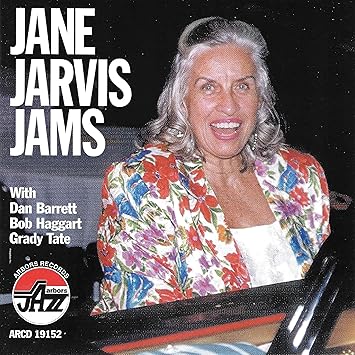
years ago: Luella Jane Nossett is born in Vincennes, Indiana, and grows up in Gary, Indiana. We knew her as
Jane Jarvis.
She played the organ at Braves games at Milwaukee County Stadium,
and was hired by the Mets, playing from Shea Stadium’s opening in 1964 until
1980. She played the team's theme song, "Meet the Mets," as they took the field to start the game. Before "Take Me Out to the Ball Game" and "God Bless America" (and, in the Mets' case, "Lazy Mary" by Lou Monte) became staples of the 7th inning stretch, she played "The Mexican Hat Dance" to get the fans to clap along.
Despite her advanced age, she returned for Shea's finale in 2008, and
died in 2010.
She would, no doubt, be pleased that the Mets, for the 1st time outside her lifetime, have reached the World Series. Last night, in the 1st World Series game ever played at Citi Field -- Shea Stadium hosted 13, and Jane Jarvis played at the 1st 6 -- they closed to within 2 games to 1 of the Kansas City Royals, beating them 9-3.
On the 1st pitch of the game, Noah Syndergaard, known as Thor for his Scandinavian ancestry, threw at the head of the Royals' leadoff hitter, Alcides Escobar. Fans who know their history will remember the Royals' 1st Series appearance, in 1980. The Philadelphia Phillies won the 1st 2 games at Veterans Stadium, but in Kansas City, the Royals won Game 3, and were winning Game 4 big when the Phils brought Dickie Noles in to relieve, and he threw a close-shave pitch to the greatest player in Royals history, George Brett, knocking him flat on his back. The Royals were unnerved at the lack of respect for Brett, and dropped Game 5 at home before the Phils dusted them off at the Vet in Game 6.
This time, the Royals won the 1st 2 games at Kauffman Stadium, but after this pitch, they lost Game 3. How will they react in Game 4? Will they let it bother them, or will they shake it off and give the Mets the beating they deserve? More importantly, will they win the game?
There is history. In the 1986 World Series, the Mets lost Game 1 by 1 run, lost Game 2 by 6 runs, and won Game 3 by 6 runs. This is exactly what has happened in the 2015 World Series thus far.
In WS Game 1, the Mets are now 0-5; in Game 2, 2-3; in Game 3, 5-0.
In Game 4, they are 3-1; in Game 5, 2-2; in Game 6, 1-1; in Game 7, 1-1.
If the pattern holds, the Mets will win Game 4 and tie the Series up -- but that leaves the rest of the Series a toss-up.
The Royals? They're 1-3 in Game 1, 2-2 in Game 2, 3-1 in Game 3, meaning their patterns have not held. They're 1-2 in Game 4, which means the pattern really favors the Mets. They're 1-2 in Game 5, so that also favors the Mets. They're 2-1 in Game 6, so that favors them. They're 1-1 in Game 7, favoring nobody -- but the game would be played, if necessary, in Kansas City. Though that made no difference to last year's San Francisco Giants.
Maybe we should just listen to the advice of baseball legend Charlie Brown, and tell our statistics to shut up.
*
October 31, 1517: According to legend, a German priest, Martin Luther writes "95 Theses," challenging some Roman Catholic Church doctrines as being contradictory to Christian teaching, and nails the paper to the door of the Schlosskirche (Castle Church) of Wittenberg, sparking the Protestant Reformation.
No account from Luther's lifetime quotes him as having admitted this, although hand-written copies were sent to the Archbishop of Mainz and Magdeburg, and to his own boss, the Bishop of Brandenberg, received shortly after this date. The first written account comes from a man writing after Luther's death, and who had not arrived in Wittenberg until the year after the event. (Wittenberg is in the former East Germany, about 70 miles southwest of Berlin.)
Above and beyond the birth certificate of Protestantism, leading to my own Methodist faith, this is an important moment to me for another reason: The 95 Theses are, arguably, the first blog.
*
October 31, 1864: Nevada is admitted to the Union as the 36th State. President Abraham Lincoln wanted its silver revenues to win the American Civil War. Turns out, he didn't need them.
Nevada has been a part of the Union for a century and a half. But, due to gambling and other issues, no Nevada city, including Las Vegas, has ever been granted a team in any major sports league -- not even MLS or the WNBA (if you consider those "major").
October 31, 1887: Édouard Cyrille Lalonde is born in Cornwall, the easternmost city in Ontario, bordering Quebec. “Newsy” (from working in a newspaper plant) was one of early hockey’s greatest stars, winning 7 scoring titles and Captaining the Montreal Canadiens to their first Stanley Cup in 1916.
On December 29, 1917, in the 1st-ever NHL game, he scored a goal on route to the Canadiens’ 7-4 victory over the Ottawa Senators. In 1922, the Canadiens angered him and a lot of their fans by trading him to the Pacific Coast Hockey Association’s Saskatoon Sheiks, but the Habs got future Hall-of-Famer Aurel Joliat in the deal. From his retirement in 1927 until Maurice Richard surpassed him in 1954, his 455 combined goals in all leagues in which he played stood as a pro record.
He was also the best lacrosse player of his era, and in 1950, he was named athlete of the half-century in lacrosse. He was elected to the Hockey Hall of Fame in 1950, the Canadian Lacrosse Hall of Fame in 1965, and the Sports Hall of Fame of Canada. He had lit the torch when the Sports Hall of Fame opened in Toronto in August, 1955. He lived to see all of these achievements, living until 1970.
In 1998, 72 years after he played his last NHL game, he was ranked number 32 on The Hockey News' list of the 100 Greatest Hockey Players, making him the highest-ranking player on the list who had played in a professional league before the founding of the NHL. He was the first Canadiens player to wear Number 4, and Joliat got it after the trade, but it was retired for later star Jean Beliveau.
October 31, 1891: The University of Kansas and the University of Missouri play each other in football for the 1st time, and Kansas wins, 22-10. This becomes the most-played college football rivalry west of the Mississippi River.
Originally called the Border War, and evoking memories of proslavery raids before and during the Civil War, by the 2004 the schools agreed to rename it the Border Showdown in the wake of the 9/11 attacks and the Iraq War. (Colorado State and Wyoming, however, still call their rivalry the Border War. CSU fans would rather beat Wyoming than Colorado.)
In 2007, a T-shirt created by a Missouri alumnus gained national attention. It depicted the 1863 burning of Lawrence, seat of KU ("UK" is correct, but "KU" is preferred) following the raid of Confederate guerrilla William Quantrill and his Bushwhackers, who included Jesse and Frank James. The image of Lawrence burning was paired with the word “Scoreboard” and a Mizzou logo. On the back of the shirts, Quantrill was quoted, saying, "Our cause is just, our enemies many." Some Kansas fans interpreted these shirts as supporting slavery. KU supporters returned fire with a shirt depicting abolitionist John Brown, perpetrator of the anti-slavery Pottawottamie Massacre, with the words, “Kansas: Keeping America Safe From Missouri Since 1854.”
Missouri's move from the Big 12 Conference to the Southeastern Conference (I'm guessing Colonel Quantrill and his latter-day apologists would approve) ended the football edition of the rivalry after the 2011 season. The current all-time results are disputed: Missouri say they lead 57-54-9, while Kansas give themselves 1 more win, thus giving Kansas a lead of 56-55-9.
*
October 31, 1900: Ban Johnson, founder and President of the American League, writes a letter to National League President Nick Young. In it, he offers a deal for peaceful coexistence: Accept the AL as a "major league," and it won't pursue NL players. This was possible because the NL had contracted from 12 to 8 teams for the 1900 season. Johnson was willing to let his 8 teams leave the NL teams alone and respect their contracts.
Young refused the deal. In retaliation, Johnson authorized his teams' owners to raid any NL team for any player they wanted. These ended up including future Hall-of-Famers Cy Young, Jimmy Collins, Napoleon Lajoie, Sam Crawford, Elmer Flick, Clark Griffith, Jack Chesbro and Willie Keeler. The "war" between the Leagues will rage for 2 years, until the NL, with a new President, Harry Pulliam, accepted the AL in 1903. After this deal, Johnson agreed to accept the reserve clause and respect all NL contracts.
October 31, 1915, 100
years ago: Luella Jane Nossett is born in Vincennes, Indiana. We knew her as
Jane Jarvis. She played the organ at Braves games at Milwaukee County Stadium,
and was hired by the Mets, playing from Shea Stadium’s opening in 1964 until
1980. Despite her advanced age, she returned for Shea’s finale in 2008, and
died in 2010.
October 31, 1920: Two legendary soccer players are born. Friedrich Walter (no middle name) is born in Kaiserslautern, Rhineland-Palatinate, Germany. With the coming of Franz Beckenbauer in the 1960s, Fritz Walter was no longer be the greatest German soccer player, but he remains the most important.
The attacking midfielder (sometimes forward) played his entire career, 1937 to 1959, for F.C. Kaiserslautern (currently in Germany's 2nd division), except for 1942 to 1945, when he was in the Wehrmacht. He was captured by the Soviets, but a Hungarian prison guard had seen him play, and lied to his superiors, saying that Fritz was actually from the Saar Territory (given to France after World War I before Germany reclaimed it), and thus not fully German, and so they didn't send him to a gulag in Siberia.
After the war, Fritz captained FCK (I know, but that's their initials) to the German championship in 1951 and 1953. He was the Captain of the West Germany team at the 1954 World Cup in Berne, Switzerland, 1 of 5 FCK players on it. Those 5 -- Walter, his brother Ottmar Walter, Werner Liebrich, Werner Kohlmeyer and Horst Eckel -- are now honored with a statue outside their home ground, which has been renamed the Fritz-Walter-Stadion
. They won the Final, an upset of the Ferenc Puskas-led Hungary team, "the Mighty Magyars," a victory that became known as "The Miracle of Berne." It was said to be the first time since World War II that Germans could be proud of their country.
Fritz also helped West Germany reach the Semifinals of the 1958 World Cup, despite being 37 years
old. When the Hungarian Revolution happened in 1956, their national team was caught out of the country and couldn't return, Walter paid them back for their countryman saving his life, backing them financially and even managing them for 2 years (while still an active player in Germany).
Fritz was disappointed when Kaiserslautern was not selected as one of the German cities to host the 1974 World Cup, but was overjoyed when it was selected as one for 2006. Sadly, he didn't live to see it, dying in 2002.
Kaiserslautern is home to a large U.S. military base (as seen in the James Bond film Octopussy), and FCK has signed several American players and thus has attracted many American servicemen as fans. When the U.S. played Italy at Fritz-Walter-Stadion in the World Cup on the anniversary of his death, June 17, 2006, a moment of silence was held for old Number 16. It had been 61 years since the end of The War, and America was playing one of its wartime enemies, and saluting a player from another, all now allies.
On the same day that Fritz Walter was born, Johan Gunnar Gren is born in Gothenburg, Sweden. A forward, he led hometown club IFK Göteborg to the League title in 1941, and Sweden to the Gold Medal at the 1948 Olympics in London.
That got the attention of Italian giants A.C. Milan, who signed 3 players from that Sweden team: Gren, IFK Norrköping forward Gunnar Nordahl, and Norrköping midfielder Nils Liedholm. Together, the Italian fans called them "Gre-No-Li." They led Milan to the Serie A title in 1951, and also won the Latin Cup, the closest thing then available to a continental club championship, the same year.
Gren and Liedholm would still be playing for Sweden when it hosted the 1958 World Cup, and they reached the Final, but lost. No shame in this loss on home soil: It was Brazil, led by Garrincha and the teenage Pelé, that beat them. (Ironically, both countries prefer to wear yellow shirts, and, as the home team, Sweden chosen yellow, so Brazil had to wear blue.)
Gren died in 1991. When Göteborg's stadium, the Gamla Ullevi, was reopened in 2009 after a complete reconstruction, a statue of Gren was placed outside.
October 31, 1924: A postseason barnstorming tour brings baseball's greatest hitter, Babe Ruth of the New York Yankees, and baseball's greatest pitcher, Walter Johnson of the newly-crowned World Champion Washington Senators, to Brea, Orange County, California.
Also making the trip: Yankees Bob Meusel and Ernie Johnson, St. Louis Browns star Ken Williams, and retired Detroit Tigers' star Sam Crawford, who would join the Babe and the Big Train in the Hall of Fame.
Johnson, born in Kansas but raised in Orange County, pitched for a team of all-stars under the name of the Anaheim Elks. Ruth, who hadn't pitched in a major league game in 3 years, started for a team called, without much imagination, the Babe Ruth All-Stars.
Johnson was the hometown favorite, but the Bambino spoiled the party. Not only did he pitch a complete game, he hit a towering drive off Johnson, said to have gone about 550 feet. Ruth's All-Stars won, 12-1.
In the 91 years since, housing has been built on the site of the field.
October 31, 1928: José de la Caridad Méndez dies in the Cuban capital of Havana, only 41 years old. I cannot find a cause for his death. Known as El Diamante Negro, "the Black Diamond," he was a star pitcher for Havana team Almandares ("Scorpions").
He would pitch for all-black baseball teams in America, including the Brooklyn Royal Giants in 1908 (yes, a team named "Giants" in Brooklyn), the Manhattan-based Cuban Stars from 1909 to 1912, and, his longest tenure on our shores, for the Kansas City Monarchs from 1920 to 1926. In 2006, when a special committee looked for overlooked pre-integration black players who should be in the Baseball Hall of Fame, José Méndez was one of their selections.
*
October 31, 1931: Daniel Irvin Rather Jr. is born in Wharton, Texas, outside Houston. The longtime CBS News reporter, anchor of The CBS Evening News from 1981 to 2004, walked off the set on September 11, 1987, Rather walked off the set in anger just before a remote broadcast from Miami, where Pope John Paul II had begun a rare U.S. tour, when a U.S. Open tennis match was being broadcast into the time scheduled for the newscast. He was upset that the news was being cut into to make room for sports and discussed it with the sports department.
The match, between Steffi Graf and Lori McNeil, then ended sooner than expected at 6:32 PM, but Rather had disappeared. Thus, over 100 affiliates were forced to broadcast 6 minutes of dead air. The next day, Rather apologized for leaving the anchor desk.
The following year, when Rather asked then Vice President George H.W. Bush about his role in the Iran-Contra Affair during a live interview, Bush responded by saying, "Dan, how would you like it if I judged your entire career by those 7 minutes when you walked off the set in New York?"
October 31, 1932: Upon the request of Arsenal Football Club manager Herbert Chapman, the Gillespie Road station, the closest London Underground station to the club's Highbury stadium, is renamed Arsenal. "The Gunners" are the only one of London's 12 clubs whose closest "tube" stop is named for the team.
October 31, 1933: Phillippe Joseph Georges Goyette is born in Lachine, now a part of the city of Montreal. Apparently, Halloween is a good day to be born if you want to become a Canadiens legend. Phil Goyette was a center who won Stanley Cups with Les Habitantes in 1957, ’58, ’59 and ’60.
He was the first coach of the New York Islanders in 1972-73, but was fired due to a poor record midway through the season. He has never coached again, but is still alive.
October 31, 1935, 80 years ago: Dale Duward Brown is born in Minot, North Dakota. From 1972 to 1997, he was the basketball coach at Louisiana State University, succeeding Press Maravich, who'd recently coached his son, Pistol Pete, there. Brown guided LSU to Southeastern Conference Championships in 1979, 1981, 1985 and 1991; and to the Final Four in 1981 and 1986.
The NCAA investigated the program for infractions, finding only minor things that could not be connected to Brown, who called them "The Gestapo" for their intensity, and "hypocrites" for making massive sums off players who weren't allowed to receive a cent in pay. Lester Earl, the player whose 1997 admission that he had been paid $5,000 by an LSU booster led to the investigation that forced Brown (who had nothing to do with it) intro retirement, later publicly apologized to Brown, admitting that he was pressured into participating what Brown had already called "a witch hunt."
Brown has been married to his college girlfriend since 1959, and has a daughter and 3 grandchildren. The basketball court at LSU is named the Dale Brown Court at Pete Maravich Assembly Center.
October 31, 1936: Eugene Maurice Orowitz is born in Forest Hills, Queens, and grows up in the Philadelphia suburb of Collingswood, Camden County, New Jersey. He was a track star at Collingswood High School, with the longest javelin throw by any high schooler in the country in 1954. He won a track scholarship to the University of Southern California.
But he hurt his shoulder, ending his track career. Already in Los Angeles anyway, he became an actor. We tend not to remember who won the Gold Medal in the javelin at the Olympics in 1956 (Egil Danielsen of Norway) or 1960 (Viktor Tsybulenko of the Soviet Union), but we remember "Ugy" Orowitz by the name he adopted by then: Michael Landon. Funny, but Little Joe Cartwright, Charles "Pa" Ingalls and angel John Smith didn't look Jewish!
He was also a frequent panelist on the original Match Game on NBC in the 1960s, and when it was revived on CBS in 1973, he was the first panelist introduced on the first show. It was a bit odd to see his nameplate read "Mike." I'd never heard anyone call him "Mike Landon." Then again, I'd never heard anyone call him "Ugy Orowitz," either!
*
October 31, 1941: Edward Wayne Spiezio is born outside Chicago in Joliet, Illinois. A 3rd baseman, he was a member of the St. Louis Cardinals' World Series winners of 1964 and 1967 and their Pennant winners of 1968. He was left unprotected in the 1969 expansion draft, and hit the 1st home run in San Diego Padres history. He remained with the Padres until 1972, and then finished his career that year with the Chicago White Sox.
His son Scott Spiezio was an infielder who won World Series with the 2002 Anaheim Angels and the 2006 Cardinals.
Also on this day, Ronnie Wickers is born in Chicago. He's been going to Chicago Cubs games since he was a boy, and around 1958 or so, he started his familiar, "Cubs, woo! Cubs, woo!" chant. He has become known as Ronnie Woo Woo, and is a Chicago icon.
October 31, 1942: Maurice Richard makes his NHL debut. Wearing Number 15 for the Montreal Canadiens -- just like Gordie Howe with the Detroit Red Wings 4 years later, each taking on their iconic Number 9 in their 2nd season -- he plays in the Habs' 3-2 win over the Boston Bruins at the Montreal Forum.
The man eventually known as the Rocket would score the 1st of his 544 goals 8 days later, against the New York Rangers. Playing from 1942 to 1960, h held the NHL career scoring record from 1952, when he passed Nels Stewart with 325, until 1963, when Gordie Howe surpassed him, and his 801 was surpassed by Wayne Gretzky in 1994, and he finished with 894. However, it's important to note that Gretzky played in seasons of 80 to 84 games. Richard began playing 50-game seasons, going to 60 in 1946-47, and going to 70 in 1949-50. He died in 2000, age 78.
Also on this day, David Arthur McNally is born in Billings, Montana. Dave McNally pitched a complete game to clinch the 1966 World Series for the Baltimore Orioles, and won another game and hit a grand slam in it to help them win it in 1970. His career won-lost record was a sterling 184-119.
But he’s best known as one of the two pitchers, along with Andy Messersmith, who played the 1975 season without a contract to test the legality of the reserve clause. McNally, by then with the Montreal Expos, had been injured, had a successful ranch in his native Montana, and was ready to retire anyway, so he was an ideal player to make the test, since he didn’t need the money. The clause was overturned.
McNally retired to his ranch and a car dealership, and wrote a memoir, A Whole Different Ball Game. He died of cancer in 2002.
Also on this day, David Ogden Stiers is born in Peoria, Illinois. Best known as Major Charles Emerson Winchester III, the pompous but sometimes surprisingly human surgeon on M*A*S*H, he has spent much of the last few years doing voiceovers for PBS documentaries – in his real voice, not in Charles’ Boston Brahmin accent. I still can't believe "Chahles" wore a Brooklyn Dodger cap in one episode.
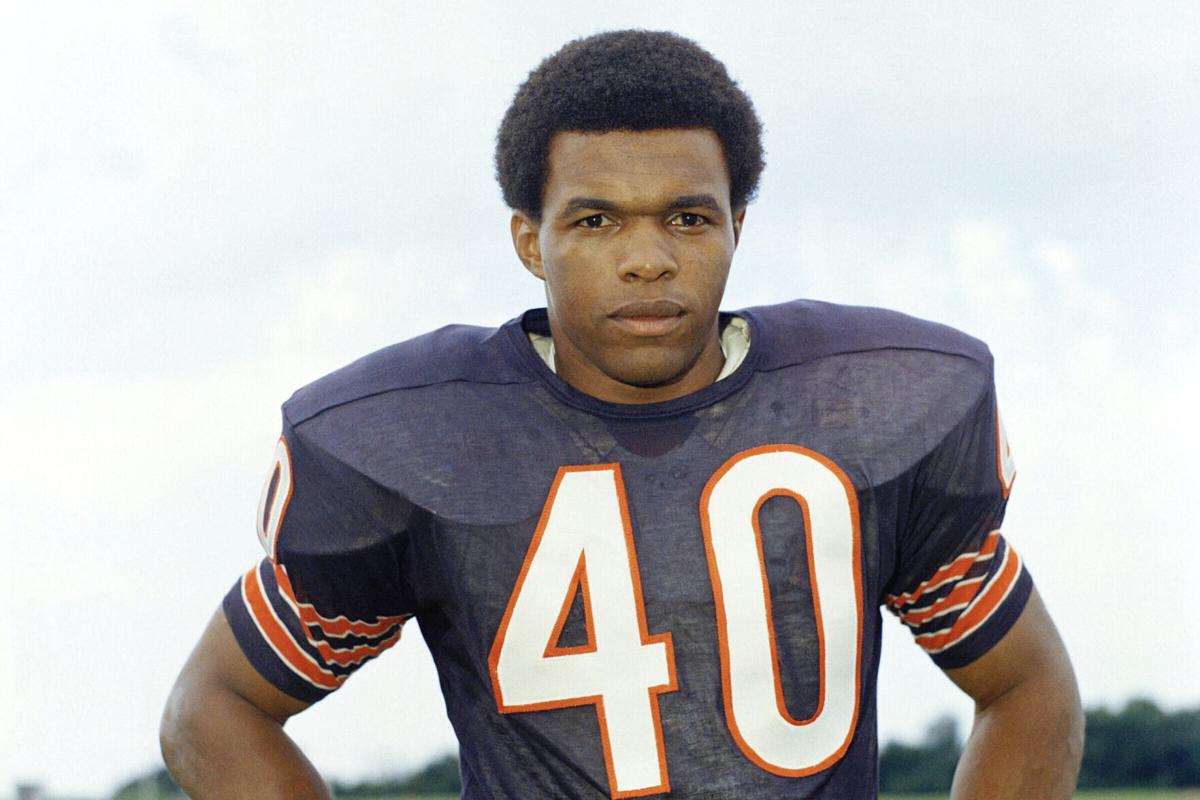
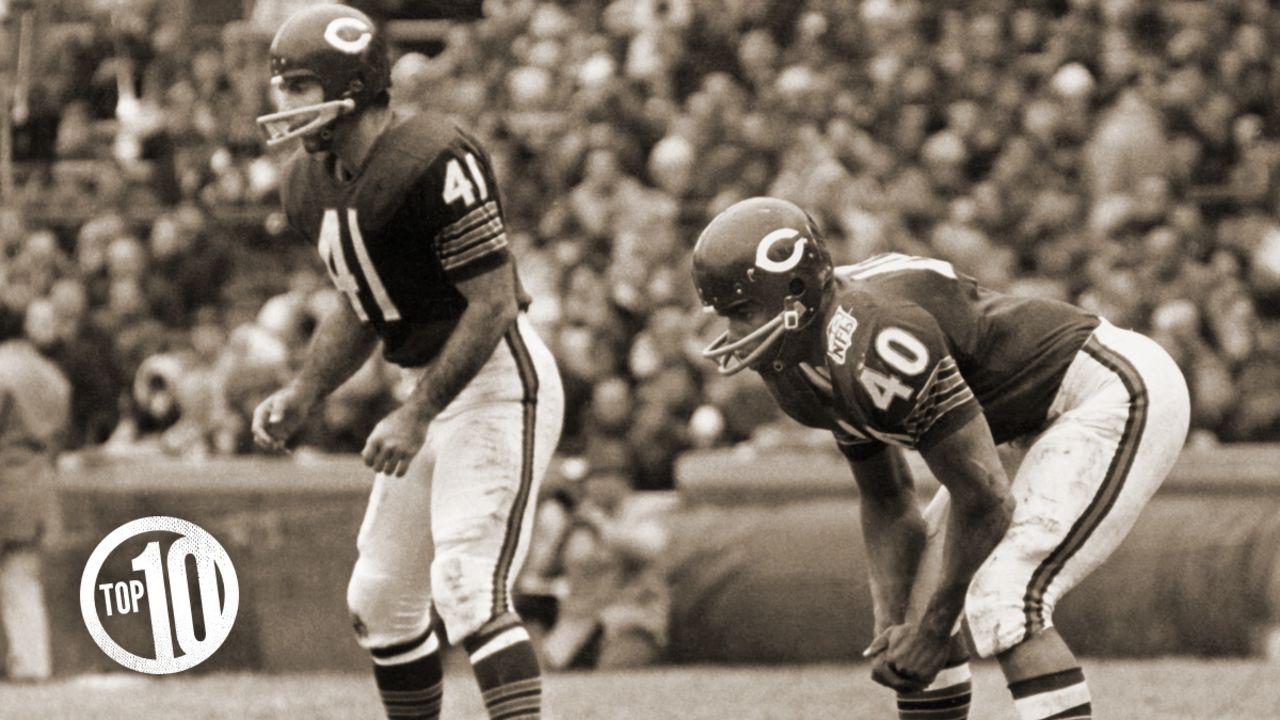
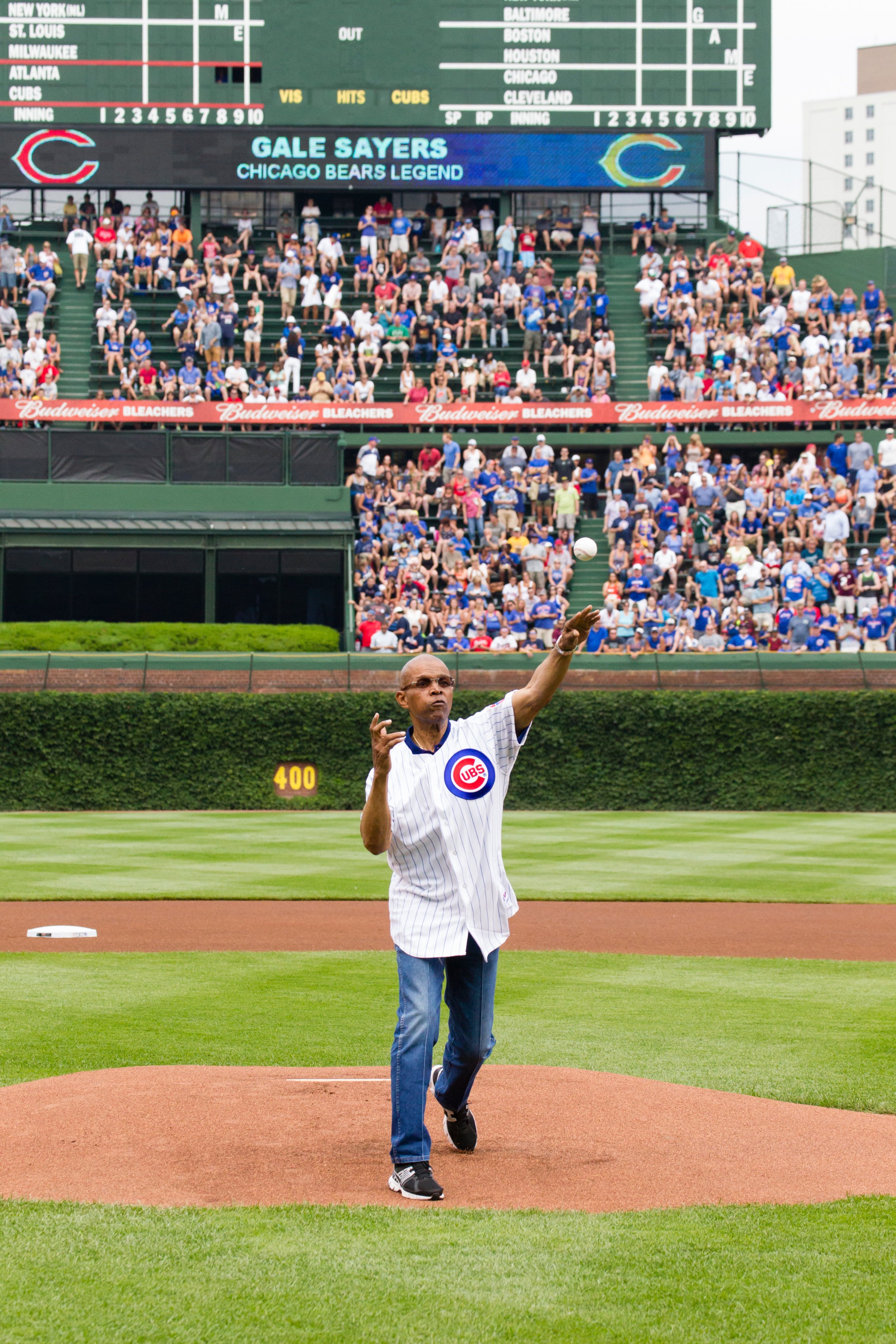
October 31, 1943: Louis Brian Piccolo is born in Pittsfield, Massachusetts. Dropping his first name, the All-American running back from Wake Forest overcame his natural prejudice to help his black Chicago Bears teammate Gale Sayers come back from a devastating knee injury, then developed lung cancer and died at age 26.
Shortly before Piccolo’s death, Sayers was given the NFL’s most courageous man award for winning the 1969 rushing title on a knee with no cartilage in it. At the award ceremony, he said he didn’t deserve the award, because Piccolo was showing more courage. “I love Brian Piccolo,” he said, “and tonight, when you get down on your knees to pray, I want you to ask God to love him, too.”
The Bears retired Piccolo’s Number 41. In the 1971 film Brian’s Song, Piccolo was played by James Caan, and Sayers by Billy Dee Williams, career-making roles for both men.
October 31, 1946: Stephen Rea is born in Belfast, Northern Ireland. He starred in The Crying Game and was nominated for an Oscar for it. He’s best known in the U.S. as Inspector Eric Finch, a good guy who figures out, to his horror, that he’s really working for the bad guys, in V for Vendetta.
It was because of that film that he was the only actor besides Colin Firth that I recognized from the original, British soccer, version of Fever Pitch. He played a school governor who was, as he is in real life, an Arsenal fan.
October 31, 1947: Frank Charles Shorter is born in Munich, Germany, where his father was serving with the U.S. Army. He grew up in Middletown, Orange County, New York, won the Olympic marathon in 1972, and finished 2nd in 1976. Thanks to his ’72 win, the Boston Marathon was reborn as an event the whole country wanted to watch, and the New York City Marathon, which started the year before, took off.
Along with Jim Fixx and his Jim Fixx's Book of Running, Shorter is probably more responsible than anyone for the rise of recreational running in America. I leave it to you to decide whether that’s a good thing.
October 31, 1948: John Milton Rivers is born in Miami. We know him as Mickey Rivers. Roger Kahn, the English major at New York University who became one of the greatest sportswriters of the 2nd half of the 20th Century, and wrote October Men about the 1977 and '78 Yankees, of whom Mick the Quick was such a big part, wrote that Rivers might be the only man named for John Milton who has never heard of Milton's epic poem, Paradise Lost.
Like his coach Yogi Berra, Mickey is something of a wacky philosopher. His best known line is, "Ain't no sense worrying 'bout things you got control over. 'Cause, if you got control, ain't no sense worrying. And ain't no sense worrying 'bout things you got no control over. 'Cause, if you got no control, ain't no sense worrying." I can't argue with that. I wouldn't know how.
At 5-foot-10 and 165 pounds, he was a prototypical 1970s baseball speedster. In the 1978 edition of The Complete Handbook of Baseball, which he produced annually from 1971 to 1997, Zander Hollander wrote that he "walks like an old man, but runs like a scared rabbit." He was right on both counts.
There were 2 MLB amateur drafts in 1968, and Mickey was drafted by the Chicago White Sox in the one in January and the Mets in the one in June. There were 2 in 1969, and he was drafted by the Washington Senators in the one in February and the Atlanta Braves in the one in June. Playing for Miami-Dade College, Mickey finally signed with the Braves, but they traded him to the team then known as the California Angels after the 1969 season, before he could reach the majors.
He debuted for the Angels in 1970. In 1974, he led the American League in triples. In 1975, he led in triples again, and also in stolen bases, swiping 70. That remains the highest total of any player for a California-based baseball team other than Maury Wills and Rickey Henderson. He also led the AL in triples in 1974 and '75.
On December 11, 1975, general manager Gabe Paul pulled off one of the greatest trades in Yankee history, sending unhappy superstar Bobby Bonds to the Angels, and getting Rivers and Ed Figueroa. Instantly, he'd gotten rid of a malcontent and gained a superb leadoff man who would bat .299 with 93 stolen bases in nearly 4 years as a Yankee, and a solid starting pitcher who would win 55 games over the next 3 years. The same day, Paul swung Willie Randolph, Dock Ellis and Ken Brett from the Pittsburgh Pirates for Doc Medich. Good day for the Yankees.
Mick batted .312 with 8 homers and 67 RBIs in 1976, and finished 3rd in the AL Most Valuable Player voting, behind teammate Thurman Munson and the Kansas City Royals' George Brett. He batted .348 in the AL Championship Series against the Royals, sparking the Yankees to their 1st Pennant in 12 years. He hit .326 with 12 home runs and 69 RBIs in 1977. That's an average of 68 ribbies as a leadoff man. He hit .391 in the ALCS, also against the Royals. He tailed off in 1978, but hit .455 in yet another ALCS against Kansas City, making 3 straight Pennants. And this time, unlike in the '76 and '77 Fall Classics, he batted .333 in the '78 World Series, to get the Yankees to back-to-back titles.
If the ESPN miniseries The Bronx Is Burning, about the 1977 Yankees, in which he was played by standup comedian Leonard Robinson, is any indication, Mick had serious money problems, due to lavish spending and gambling. If this had been publicly known at the time, it could have been very bad. He was frequently hitting his teammates up for money, particularly highly-paid star Reggie Jackson. The miniseries mentions one of his pithier quotes about Reggie. He said, "Reginald Martinez Jackson. A white man's first name, a Spanish man's middle name, and a black man's last name. No wonder you don't know who you are." It doesn't mention another: When Reggie claimed he had an IQ of 160, Mickey said, "Out of what, a thousand?"
The Yankees may finally have had enough of "Ol' Gozzlehead," because, on July 30, 1979, in spite of his batting .287 and being only 31 years old, they traded him to the Texas Rangers for lefty slugger Oscar Gamble, who had been with the Yankees in their '76 Pennant season, but was traded right before the '77 season started as part of the Bucky Dent deal. (There were several players to be named later on both sides, none as consequential as Mick the Quick or the Big O.)
Mickey played for the Rangers through the 1984 season, and retired. Since then, he has turned his love of betting on racehorses into training them. He and his wife Mary had a son, Mickey Jr., who played in the Rangers organization, and a daughter, Rhonda, who's a teacher. He still comes back to Yankee Stadium for Old-Timers' Day nearly every season, and remains a fan favorite.
*
October 31, 1950: The Rochester Royals defeat the Washington Capitols, 78-70, at the Edgerton Park Arena in Rochester. (It was demolished in the late 1950s.) Arnie Risen scores 20 for the home team, as they begin a season that will bring their 1st NBA Championship.
(They had previously won the title in the National Basketball League in 1955. They will become the Cincinnati Royals in 1957, the Kansas City Kings in 1972, and the Sacramento Kings in 1985. Their long-term future in Sacramento remains unsettled.)
Earl Lloyd, a forward wearing Number 11, scores 2 baskets and 2 free throws for the Capitols, for a total of 6 points. It doesn't sound like much, but his mere presence in the game makes him the NBA's 1st black player.
Chuck Cooper had been the 1st black player drafted, by the Boston Celtics, but Lloyd beat him to the court by 1 day. He should not be confused with another early black star, Charles "Tarzan" Cooper, who played for the New York Renaissance (the Rens) in the 1930s. Nat "Sweetwater" Clifton, formerly of the Rens and the Harlem Globetrotters, had been the 1st black player actually signed, by the New York Knicks, but Lloyd beat him to the court by 4 days.
Born in 1928 in Alexandria, Virginia, across the Potomac River from Washington, D.C., Lloyd's hometown team, having fired coach Red Auerbach in 1949, was 10-25 on January 9, 1951, and folded, leaving the nation's capital without an NBA team for the next 22 years. Lloyd was then drafted, and served in the Korean War.
Discharged in 1952, "the Big Cat" (also the nickname of Baseball Hall-of-Famer Johnny Mize, then wrapping up his career with the Yankees) played for the Syracuse Nationals until 1958, and the Detroit Pistons from then until his retirement in 1960. He averaged 8.4 points per game in his 9 NBA seasons. The Pistons then hired him as a scout. In 1968, they named him the 1st black assistant coach in the NBA, and the 2nd black head coach (after Bill Russell of the Celtics) and 1st non-playing black head coach in 1972. But the Pistons were awful then, and his career coaching record was just 22-55.
He worked for the Detroit school system, helping students find jobs, then did the same thing for a company run by Pistons Hall-of-Famer Dave Bing. He retired to Tennessee. In 2003, the Basketball Hall of Fame elected him as a "contributor," for his historical prominence. In 2007, T.C. Williams High School, the integrated Alexandria school into which his former all-black school, Parker-Gray, had been consolidated (a tale told in the football-themed film Remember the Titans), named their new gym's court after him. He was also elected to the Virginia Sports Hall of Fame, and died this past February 26, a few weeks short of his 87th birthday.
Also on this day, John Franklin Candy is born in Newmarket, Ontario, outside Toronto. In the closing minutes of Super Bowl XXIII, when the Cincinnati Bengals had just scored to take the lead, the San Francisco 49ers were nervous, when quarterback Joe Montana pointed out of the huddle to the stands and said, “Isn’t that John Candy?” The question relaxed the players, and Montana drove them for the winning touchdown.
Candy played the Cubs’ broadcaster in Rookie of the Year, and I give him a lot of credit for playing someone similar to, but not a total caricature of, Cubs broadcasting legend Harry Caray. On the other side of Chicago, he shot a scene at the old Comiskey Park in its closing days for Only the Lonely. Considering his weight, I’m not surprised that he died young (43), but I’m still sorry about it. He gave us a lot, but he had a lot more to give.
Also on this day, Margaret Jane Pauley is born in Indianapolis. Dropping her first name, she was the longtime co-host of The Today Show on NBC, and is married to Doonesbury cartoonist Garry Trudeau.
October 31, 1951: Nicholas Lou Saban Jr. is born in Fairmont, West Virginia. The son of legendary football coach Lou Saban, Nick hasn’t yet moved around to as many coaching jobs, but he has moved around with considerably less ethics than his father.
He did, however, lead Louisiana State to the 2003 National Championship, and Alabama to the 2009, 2011 and 2012 editions. He's won 5 Southeastern Conference Championships, in 2001 and 2003 at LSU, and in 2009, 2012 an 2014 at Alabama. (Alabama lost, oddly, to LSU in 2011, thus denying them a place in the SEC Championship Game, but because they were Number 2 in the final rankings, they still got into the National Championship Game.) He and Bear Bryant, with Kentucky and Alabama, are the only coaches to win SEC Championships at 2 different schools.
His career record currently stands at 184-60-1. Alabama had this weekend off, and is currently 7-1, losing only to to Mississippi in a squeaker. They are ranked Number 8.
October 31, 1952: Joseph Henry West is born in Asheville, North Carolina, and grows up across the State in Greeneville. "Cowboy Joe" was a quarterback at North Carolina's Elon College, and also played baseball. He started umpiring while still in college, and was hired for the National League staff in 1976, remaining for the combined MLB staff in 2000.
The high points of Joe West's 40-year big-league umpiring career: He was on the field for Willie McCovey's 500th home run in 1978. He was behind the plate for Nolan Ryan's 5th career no-hitter in 1981. He worked the 1987 All-Star Game. He ejected the Dodgers' Jay Howell from a 1988 NLCS game against the Mets, for having pine tar on his glove. He worked the 1992 World Series, throwing Atlanta Braves manager Bobby Cox out of a game for throwing a batting helmet onto the field. He worked Kent Mercker's no-hitter in 1994. He worked the 1997 World Series. He worked both the All-Star Game and the World Series in 2005, as crew chief for the latter. He worked the 2009 World Series. He worked Felix Hernandez' perfect game and the World Series in 2012. He worked the NL Wild Card Game in 2013 and 2014. He has worked 7 Division Series, 9 LCS and 5 World Series, and is now the longest-serving umpire ever, current or otherwise. And he designed the West Vest, the chest protector now approved by MLB for all umpires.
The low points: In 1983, he pushed Atlanta Braves manager Joe Torre during an argument. In 1990, he threw pitcher Dennis Cook to the ground while attempting to break up a fight. In 2010, after a Yankees-Red Sox game, he publicly complained about the slow pace of the game -- something about which he could have directly done something. In 2014, he ejected Jonathan Papelbon, then grabbed Papelbon's jersey, claiming that Papelbon had touched him first, something video replay proved didn't happen, thus earning him a 1-game suspension.
In Game 6 of the 2004 ALCS, with Torre managing the Yankees, West was chief of the crew that initially ruled in the Yankees' favor on the Alex Rodriguez "Slap Play," then correctly enforced the interference rule by calling A-Rod out -- but then screwed up by sending Derek Jeter, who would have reached 2nd base no matter what, back to 1st base, thus helping to kill a Yankee rally that would have tremendously changed the baseball history that we know from the last 11 years.
In a 2011 poll of players, West was named the best umpire by 5 percent of players -- and the worst umpire by 41 percent. Both Yankee Fans and Met fans tend to think he's a lousy umpire. That can't be good.
October 31, 1953: John Harding Lucas II is born in Durham, North Carolina. At the University of Maryland, he was an All-American in both basketball and tennis. He was a member of the Houston Rockets’ 1986 NBA Western Conference Champions. His overcoming of drug addiction led him to become an addiction counselor. He coached the San Antonio Spurs into the 1993 and '94 NBA Playoffs, and has also been head coach of the Philadelphia 76ers and Cleveland Cavaliers.
Like Dunleavy, he has a namesake son who played in the NBA, John Lucas III, who, unlike his father whose 1974 Maryland team was prevented under the rules of the time from playing in the NCAA Tournament due to its loss in the ACC Final, went to the 2004 Final Four with Oklahoma State. John III played in the NBA for several teams, including last season with the Pistons, and was recently waived by the Miami Heat. Another son, Jai Lucas, is now an assistant coach at his alma mater, the University of Texas.
October 31, 1959: Mats Torsten Näslund is born in Timrå, Sweden. The 5-foot-7 left wing was known as Le Petit Viking (the Little Viking) when he played for the Canadiens, a tenure that included the 1985-86 Stanley Cup, in which he became the most recent Canadien to score 100 or more points in a season and helped them win the Stanley Cup.
He was named to 4 NHL All-Star Games, won the 1988 Lady Byng Trophy, and scored 251 goals in NHL play. He helped Sweden win the 1994 Olympic Gold Medal, and as general manager of the team he built their 2006 Gold Medal team.
*
October 31, 1960: Michael Anthony Gallego is born in Whittier, California, outside Los Angeles. Mike Gallego was the starting 2nd baseman on the Oakland Athletics’ 3 straight Pennants of 1988-90. In 1993, he was voted the 2nd baseman on their 25th Anniversary team (25 years since they’d moved to Oakland). He briefly played for the Yankees in the early 1990s, and was recently fired as 3rd base coach for the A's.
Also on this day, Reza Pahlavi is born in Tehran. He was 18 years old and the Crown Prince of Iran when his father, the Emperor, Mohammed Reza Shah, was overthrown in the Islamic Revolution of 1979. Luckily for him, he was already in the U.S., training as a fighter pilot (much as was his cousin and fellow heir to a throne, now King Abdullah II of Jordan).
He now lives in Potomac, Maryland, outside Washington. He is the founder and leader of the Iran National Council, a government-in-exile, having gotten a degree in political science from the University of Southern California. Unlike his father, who ran a brutally repressive, unofficially fascist regime, he has been an outspoken supporter of human rights, saying that in order to bring freedom to his homeland, “Idealism and realism, behavior change and regime change do not require different policies but the same: Empowering the Iranian people.”
On his website, he calls for a separation of religion and state in Iran, and for free and fair elections "for all freedom-loving individuals and political ideologies." A follower of Shia Islam, he has stated that he believes that religion has a humanizing and ethical role in shaping individual character and infusing society with greater purpose.
His supporters have referred to him as “His Imperial Majesty Reza Shah II” since his father’s death on July 27, 1980, but he officially calls himself “the former Crown Prince,” and admits he has no realistic hope of the monarchy being restored, even when the Ayatollahs are finally and rightfully toppled. He has written 3 books about his homeland, and a year ago, he founded OfoghIran, a television and radio network.
Although he has been married for 28 years, his 3 children are all girls, so an older cousin, Patrick Ali Pahlavi, is next in line to the throne.
October 31, 1961: A federal judge rules that laws in the city of Birmingham‚ Alabama against integrated playing fields are illegal‚ eliminating the last barrier against integration in the Class AA Southern Association. Rather than allow black players, the SA team owners vote to be cowardly bastards and shut the league down.
In 1964, the original South Atlantic League (a.k.a. the SAL or "Sally League") filled the void, renaming itself the Southern League, and allowed integration. The Western Carolinas League became the new South Atlantic League.
Charlie Finley, a Birmingham native who, by this point, owned the Kansas City Athletics, put a new team in Birmingham's historic Rickwood Field, and named them the Birmingham A's. Many of the players who became part of the "Swingin' A's" dynasty of the early 1970s played in Birmingham, including Reggie Jackson, who says it was his first exposure to full-scale racism. The A's won the Pennant in 1967, but, by that time, Reggie had been promoted to the big-league club, which moved to Oakland the next season.
In 1976, the A's contract with Birmingham ran out, and baseball did not return to Rickwood Field until 1981, when the Detroit Tigers brought a team in, and brought back the Barons name.
Built in 1910, Rickwood is the oldest standing baseball stadium in the world, and still hosts games, including annual "throwback" games by the Barons and Negro League reenactors. Because of its old-time architecture, the films Cobb, Soul of the Game and 42 have all used it (the last of those using it as the CGI-aided base for all the 1947 National League parks, including Ebbets Field).
The Barons moved into suburban Hoover Metropolitan Stadium in 1988. While it still hosts the SEC baseball tournament, the Barons moved again in 2013, to Regions Field downtown. They have won 13 Pennants: In the old Southern League in 1906, 1912, 1914, 1928, 1929, 1931 and 1958; in the new Southern League as the A's in 1967, and in 1983, 1987, 1993, 2002 and 2013. The Birmingham Black Barons, who also played at Rickwood, won Negro League Pennants in 1942 and 1948, the latter with a 17-year-old kid from the neighboring town of Fairfield, named Willie Mays.
October 31, 1962: William P. Fralic Jr. is born in the Pittsburgh suburb of Penn Hills, Pennsylvania. Bill Fralic was named by the Pennsylvania Football News as an offensive tackle on their All-Century Team of high school football players.
He starred at the University of Pittsburgh, blocking for quarterback Dan Marino, and was converted to a guard by the Atlanta Falcons, making All-Pro 4 times and being named to the NFL's 1980s All-Decade Team. He later broadcast for the Falcons and then Pitt, and runs an insurance company.
October 31, 1963: Fredrick Stanley McGriff is born in Tampa. In 1982, the Yankees traded 1st baseman Fred McGriff, young pitcher Mike Morgan and outfielder Dave Collins to the Toronto Blue Jays for pitcher Dale Murray and 3rd baseman Tom Dodd. Dodd did play 1 year in the majors, but for Baltimore. Murray got hurt and never contributed to the Yankees, either. Collins was pretty much finished.
In contrast, in 2001, 19 years after the trade, Morgan pitched against the Yankees in the World Series for the Arizona Diamondbacks, and McGriff was also still active. By trading him, the Yankees essentially traded 493 home runs for nothing. It was a horrible trade.
Or was it? McGriff was 19 at the time, and did not reach the majors for another 4 years. Had he done so with the Yankees, he would have smacked right into Don Mattingly at his peak. And the Yankees seemed to be loaded with designated hitters and pinch-hitters at that time. They may not have had any place to put him.
McGriff was involved in some other big trades: The Jays traded him to the San Diego Padres in 1990, a trade which brought them Joe Carter and Roberto Alomar, key figures in their 1992 and ’93 World Champions; and the Padres sent him to the Atlanta Braves as part of their 1993 “fire sale,” a pure “salary dump.”
McGriff hit the 1st home run at the Rogers Centre (then called the SkyDome) in 1989. With the Jays that season and the Padres in 1992, McGriff became the 1st player in the post-1920 Lively Ball Era to lead both leagues in home runs. He helped the Braves win the World Series in 1995, and later played for his hometown Tampa Bay Rays. He served as the head baseball coach at Jesuit High School in Tampa, Lou Piniella's alma mater, and now works in the Rays' front office and hosts a sports-themed radio show in Tampa.
He has been eligible for the Baseball Hall of Fame since the election of January 2010. He has not yet made it. He fell just 7 homers short of the magic 500 Club, and has a career OPS+ of 134. He has never been seriously suspected of steroid use. Baseball-Reference.com's Hall of Fame Monitor, on which a score of 100 is a "Likely HOFer," has him at exactly 100, meaning he should make it. Their Hall of Fame Standards, on which a score of 50 matches the "Average HOFer," has him at 48, meaning he falls slightly short.
According to B-R, his 10 Most Similar Batters (weighted toward players of the same position) includes 4 HOFers: Willie McCovey, Willie Stargell, Frank Thomas and Billy Williams; 1 guy who absolutely should be in, Jeff Bagwell; 2 guys not yet eligible who have decent shots, Paul Konerko and Carlos Delgado; and 3 guys who would probably make it if they weren't tainted by steroids: David Ortiz, Jason Giambi and Gary Sheffield. (At this point, Ortiz may make it in even though everybody knows he's a big fat lying cheater.)
He was always popular – ESPN’s Chris Berman took the public-service-announcement character of “McGruff the Crime Dog” and nicknamed McGriff “Crime Dog.” And he was on winning teams. So why hasn't he been elected? His son Erick McGriff played wide receiver at the University of Kansas.
Also on this day, Carlos Caetano Bledorn Verri is born in Ijui, Porto Alegre, Brazil. The soccer player was nicknamed “Dunga” by an uncle, Portuguese for “Dopey,” since he was short and expected to stay that way.
But the midfielder grew to 5-foot-9-1/2, and, being Brazilian by birth but Italian and German by ancestry, could have been expected to star in soccer. He did, for several Brazilian teams, with his longest tenure at Internacional (like the Milan club known as “Inter” for short) of Porto Alegre; for Fiorentina in Italy and Stuttgart in Germany.
Dunga was a member of Brazil’s 1994 World Cup winners, but bombed as manager of the national team at the 2010 World Cup. Then he flopped as manager of Internacional. But when Brazil was slaughtered by Germany in the Semifinal of this year's World Cup, on home soil, the CBF (the Brazilian answer to the USSF or England's FA) hired him back. He is 12-2 since, but washed out of the 2015 Copa America in the Quarterfinal round.
*
October 31, 1964: Marcel van Basten is born in Utrecht, the Netherlands. Better known as Marco van Basten, the striker starred for Ajax Amsterdam, winning League Championships in 1982, ’83 and ’85 and the Dutch Cup in ’83, ’86 and ’87 – meaning they won “The Double” in 1983. He moved on to AC Milan in Italy, winning Serie A in 1988, ’92 and ’93, and back-to-back European Cups (now the Champions League) in 1989 and ’90. He led the Netherlands to the European Championship in 1988.
Despite an ankle injury that essentially ended his career at age 28, 3 times he was named European Player of the Year, and the magazine France Football placed him 8th in a poll of the Football Players of the Century. He has managed both Ajax and the Netherlands national team, for whom he is now the assistant manager.
October 31, 1965, 50 years ago: Denis Joseph Irwin is born in Cork, Ireland. A left back, he was a typically dirty Manchester United player, taking advantage of their foul play (including his own) to win 7 Premier League titles from 1993 to 2001, 3 FA Cups including "Doubles" in 1994 and 1996, the European Cup Winners' Cup in 1991, and the UEFA Champions League in 1999, making England's only European "Treble."
Since 2004, he has been back at Man U, working as a presenter at MUTV, has covered soccer with Irish TV network RTÉ, and writes a column for Ireland's Sunday World newspaper.
October 31, 1966: Michael Edward O’Malley is born in Boston. Mike, a comedian and actor, formerly star of Yes, Dear, is a tremendous Boston Red Sox fan. But he’s funny, so I forgive him.
October 31, 1967: After 11 seasons of the Cy Young Award being given to the most valuable pitcher in both Leagues, each League has a winner. The NL winner is announced as Mike McCormick of the San Francisco Giants. The AL's winner will be Jim Lonborg of the Pennant-winning Red Sox.
October 31, 1968: Antonio Lee Davis is born in Oakland, California. After going undrafted out of the University of Texas at El Paso (UTEP), he played pro basketball in Athens and Milan before signing with the Indiana Pacers. He was an All-Star for the perennial Playoff contenders and Knick nemeses, although they didn’t reach the NBA Finals until after he left. He played for the Knicks in the 2005-06 season. He is now an NBA studio analyst for ESPN.
His daughter Kaela played basketball at Georgia Tech, and his son Antonio Jr. plays at Central Florida.
*
October 31, 1970: Stephen Christopher Trachsel is born in Oxnard, California. In 1996, the Chicago Cubs pitcher was named to the All-Star Team. On September 8, 1998, Steve gave up Mark McGwire’s steroid-aided 62nd home run. But just 20 days later, he was the winning pitcher for the Cubs over the San Francisco Giants in the Playoff for the NL Wild Card berth. Since the Cubs only made the Playoffs 4 times in the 61 seasons between 1946 and 2006, this makes him a Wrigleyville hero for all time.
He also pitched for the Mets, winning the NL East with them in 2006. He now lives outside San Diego.
October 31, 1971: Ian Michael Walker is born in Watford, Hertfordshire, England. The goalkeeper was a mainstay for North London soccer team Tottenham Hotspur, and kept a clean sheet in their win over Leicester City in the 1999 League Cup Final. He is now the goalkeeping coach for a team in China's league.
Only 1 "Spurs" goalie has won a trophy for them since, Paul Robinson in the 2008 League Cup.
October 31, 1972: The Philadelphia Phillies trade 3rd baseman Don Money and 2 others to the Milwaukee Brewers for 4 pitchers‚ including Jim Lonborg and Ken Brett. This was one of those rare baseball trades that works out well for both teams.
Lonborg was a key cog in the Phillies developing a pitching staff that would reach the Playoffs 6 times in 8 years from 1976 to 1983, though Lonborg retired after 1978. Money helped stabilize the Brewers and make them a contender by 1978 and a Pennant winner in 1982, and trading him allowed the Phillies to make room for the best player in the history of Philadelphia baseball, Mike Schmidt.
Also on this day, Gaylord Perry of the Cleveland Indians is named AL Cy Young Award winner. His brother Jim, of the Minnesota Twins, had won it 2 years earlier. The Perrys remain the only brothers to both win the Cy Young.
Also on this day, Bill Durnan dies of diabetes-induced kidney failure. He was only 56. He won 6 Vezina Trophies as the NHL's top goaltender, played in the 1st 3 official NHL All-Star Games starting in 1947, and won the Stanley Cup with the Montreal Canadiens in 1944 and 1946.
He lived long enough to be elected to the Hockey Hall of Fame while still alive. In 1998, The Hockey News named him Number 34 on their list of the 100 Greatest Hockey Players.
October 31, 1973: David Michael Dellucci is born in Baton Rouge, Louisiana. The outfielder was a member of the Arizona Diamondbacks team that beat the Yankees in the 2001 World Series, and of the Yankee team that won the 2003 American League Pennant. He was released by the Toronto Blue Jays in 2009 and retired. He now works as a color commentator on baseball broadcasts, and is married to The Price Is Right model Rachel Reynolds.
Also on this day, Timothy Christopher Byrdak is born in the Chicago suburb of Oak Lawn, Illinois. He pitched for both teams involved in this year's World Series, debuting for the Royals in 1998 and concluding with the Mets in 2013. In between, he pitched for the Baltimore Orioles, Detroit Tigers and Houston Astros. He has now returned to the Chicago suburbs, and teaches at Bo Jackson's baseball school.
October 31, 1976: José María Gutiérrez Hernández is born in Torrejon de Ardoz, Spain. “Guti” was a midfielder who starred for Real Madrid as they won Spain’s La Liga in 1997, 2001, 03, ’07 and ’08; and the Champions League in 1998, 2000 and ’02. He is now seeking to become a coach, and says his dream is to manage Real Madrid's youth team.
*
October 31, 1981: Michael Anthony Napoli is born in the Miami suburb of Hollywood, Florida. Now the 1st baseman is best remembered for his time with the Red Sox, with whom he made the 2012 All-Star Game and won * the 2013 World Series. He also won an AL West title with the 2009 Los Angeles Angels and a Pennant with the Rangers in 2011.
He's 2-for-7 against Yankee pitcher Masahiro Tanaka, both hits being home runs. This past June 29, before being traded back to the Rangers, he hit a 9th inning home run off an ill-chosen fastball by Tanaka to beat the Yankees, 2-1. As he got back to the dugout, the Fox cameras caught him telling his teammates, "What an idiot!" As usual, the Yankees did little to punish the Red Sox for their lack of respect for their team.
October 31, 1983: George Halas dies at age 88. He was the founder of the Chicago Bears, for all intents and purposes the founder of the NFL, formerly the winningest coach in NFL history (324), and no coach in the history of professional football has won as many league championships, 8: 1921, 1932, 1933, 1940, 1941, 1943, 1946 and 1963.
To put it another way: When he was first involved with the NFL, the President was Woodrow Wilson, Chicago was best known as the site of America's most famous fire, most people didn't yet have cars or telephones, there were no objects being launched into space by any nation, radio broadcasting was a few weeks away from being introduced, movies were silent, the Yankees had never won a Pennant, the NHL was new, there was no professional basketball to speak of, and professional football was a small-time thing.
When he was last involved with the NFL, the President was Ronald Reagan, there had been 4 different British monarchs and 7 different Popes, Chicago was known as the home of Al Capone and Mayor Richard J. Daley and his demonstrator-beating cops, pretty much everybody had telephones, pretty much everybody who didn't live in a city where it wasn't necessary had a car, many even had personal computers, space shuttles were being launched and returned, the Yankees had won 33 Pennants, the and NFL was a titan of television and America's favorite pro sports league,
One of his last acts as owner was to hire former Bears star Mike Ditka as head coach, and Ditka would lead them to a 9th World Championship in 1985. When asked by Bob Costas in the locker room after that Super Bowl XX if he thought of “Papa Bear,” he said, “I always think of Coach Halas.”
This was in spite a reputation for being cheap, which led a younger Ditka to say, “George Halas throws nickels around like manhole covers.” It was also Halas’ cheapness that kept the Bears in Wrigley Field, with a football capacity of just 47,000, in spite of Soldier Field having over 65,000 seats and lights, because he didn’t want to pay the rent the City of Chicago was demanding. The Bears didn’t move there until 1971, when the money available to teams on Monday Night Football, which couldn’t be played at then-lightless Wrigley, more than offset the cost of the rent.
In spite of his infamous penuriousness, when the aforementioned Brian Piccolo got sick, Halas paid all his medical expenses and for his funeral.
An NFL Films documentary from 1977 showed Halas walking through the Bears’ practice facility at suburban Lake Forest, Illinois (the main building is now named Halas Hall), and announcer John Facenda said it was “like visiting Mount Vernon and seeing George Washington still surveying the grounds.”
The NFC Championship Trophy is named for him, and, after his death, the Bears put the initials GSH, for George Stanley Halas, on their left sleeves. Unique among NFL teams, they have retained this tribute to their founder on their uniforms. (Even the Pittsburgh Steelers didn't keep Art Rooney's initials on a patch for more than one season.)
He had planned to hand the team over to his son George Jr., but “Muggs” predeceased him in 1979. Upon Papa Bear's death, his daughter Virginia handed control to her husband, Ed McCaskey. Unfortunately, Big Ed handed a lot of control over to his and Virginia’s son, George’s grandson, Mike McCaskey, who ran the franchise into the ground before Big Ed took it back and handed it over to another son, George Halas McCaskey. Big Ed has since died, but Virginia is still alive, and is the sole owner of Da Bears. At 92, she is, as was her father before her, the oldest owner in the NFL. She and son George have entrusted team president Ted Phillips with operational control.
October 31, 1987: Nicholas Foligno is born in Buffalo, New York, where his father Mike was an All-Star right-winger for the Sabres. Nick, a center, is now the Captain of the Columbus Blue Jackets, and was not only named to last season's All-Star Game, but was named one of its Captains. Brother Marcus is now a left wing for the Sabres.
*
October 31, 1992: Rutgers plays Virginia Tech in a Halloween Homecoming thriller, in the next-to-last game at the old Rutgers Stadium. The stars were quarterback Bryan Fortay of East Brunswick, running back Bruce Presley of Highland Park, tight end Jim Guarantano of Lodi, and receiver Chris Brantley of Teaneck. RU won on the final play, 50-49. Yes, that score is in football, not basketball.
Rutgers also played on October 31, 2015, but weren't so lucky, losing 48-10 to Wisconsin. Who's the money-grubber -- or masochist -- who thought that RU joining the Big Ten was a good idea?
October 31, 1997: The Washington basketball team makes its debut under the Wizards name, having dropped "Bullets" because of the District of Columbia's reputation as "the murder capital of America."
Chris Webber and Juwan Howard, formerly of the University of Michigan's "Fab Five," combine for 32 points, but it's not enough, as the Wiz fall to the Detroit Pistons, 92-79 at the Palace of Auburn Hills. Grant Hill leads all scorers with 25 points, and Lindsey Hunter adds 23.
October 31, 1998: Elmer Vasko dies at age 62. “Moose” was an All-Star defenseman for the Chicago Blackhawks, winning the Stanley Cup with them in 1961. Despite playing 13 seasons in an era where hockey team owners wouldn't spring for mouthguards, let alone team dentists, he never lost a tooth in an NHL game.
*
October 31, 2001: Game 4 of the World Series. It's not just Halloween -- the 1st time a Major League Baseball game has been played on the day, due to the 9/11 postponements -- it's also a night of a full moon. During batting practice at Yankee Stadium, Arizona Diamondbacks 1st baseman Mark Grace, who so long played for the Chicago Cubs without winning a Pennant and is enjoying his 1st World Series, can be seen on the official Series highlight film looking up, and saying, "Full moon! You know what that means: Strange things happen!"
The Yankees trail the Diamondbacks 3-1 in the bottom of the 9th, and are about to fall behind in the World Series by the same margin of games. This is due in large part to the fine pitching of Curt Schilling, who was asked about the “mystique” of Yankee Stadium. He said, “Mystique, aura, those are dancers in a nightclub.” (Three years later, pitching for Boston, he would prove he was still not intimidated by Yankee Stadium, saying, “I can't think of anything better than making 55,000 Yankee fans shut up.”) Schilling had outpitched the Yankees' Orlando "El Duque" Hernandez. Grace had homered for the Snakes, Shane Spencer for the Yankees.
Byung-Hyun Kim, a “submarine” style pitcher from Korea, tries to close the Yankees out. But Paul O'Neill singles, and, after Bernie Williams strikes out, Tino Martinez comes to the plate as the Yankees' final hope. Tino electrifies the crowd by slamming a drive toward the right-center-field Bleachers. The home run ties the game, and sends it into extra innings.
On the video, a fan in the front row of the Bleachers tries to catch the ball, but it bounces off his hand. Now, imagine you’re that fan: Are you excited that the Yankees have come back in this World Series game, or are you mad that you were unable to catch this historic homer (and probably hurt your hand in the process)?
As the clock strikes midnight, for the 1st time ever, Major League Baseball game is played in the month of November. It is the bottom of the 10th, and Derek Jeter steps to the plate against Kim. A fan holds up a sign saying, “Mr. November.” Michael Kay, broadcasting this game for the Yankees, has asked, “How did he know to hold up that sign for Jeter?” The answer is easy: He didn’t hold it up specifically for Jeter. Jeter was just the batter when the clock struck 12, making him the first batter for whom it could be held up.
At 12:03 came a typical Jeter hit, an inside-out swing to right-center, and it just... barely... got over the fence for a game-winning home run. Kay yells out, "See ya! See ya! See ya!" Yankees 4, Diamondbacks 3. The Series was tied. The old ballyard was shaking. The “Yankee Mystique” had struck again. It is hits like this that got Jeter the nickname “Captain Clutch.”
The next night, the 1st game to officially be played in the month of November, a fan made up a sign that said, “BASEBALL HISTORY MADE HERE” on what looked like an ancient scroll. Another fan made up a sign that said, “MYSTIQUE AND AURA APPEARING NIGHTLY.” (Two years later, in what became known as the Aaron Boone Game, that same fan made up one that said, “MYSTIQUE DON’T FAIL ME NOW.” It didn’t.)
*
October 31, 2002: The Massachusetts Interscholastic Athletic Association votes 9-6 to prohibit the use of metal bats in the state high school tournament in 2003. Twenty-five of 40 leagues will switch to wood for the regular season. The State is the 1st to outlaw metal bats. In this particular case, Massachusetts is ahead of the curve in baseball.
October 31, 2004: The Minnesota Timberwolves, owned by Glen Taylor, offer Latrell Sprewell a 3-year, $21 million contract extension, substantially less than what his then-current contract paid him. Claiming to feel insulted by the offer, he publicly expressed outrage, declaring, "I have a family to feed ... If Glen Taylor wants to see my family fed, he better cough up some money. Otherwise, you're going to see these kids in one of those Sally Struthers commercials soon."
He declined the extension, and, having once more drawn the ire of fans and sports media, had the worst season of his career in the final year of his contract -- maybe the worst "contract year" in the history of sports.
In the summer of 2005, the Nuggets, Cavs, and Rockets all expressed interest in signing Latrell Sprewell, but no agreements were reached. Spree never played again, and the former All-Star has never been hired in any capacity by any basketball team since. By 2008, through his own stupidity, he had fulfilled his own prophecy: He was bankrupt, his mansions foreclosed on and his yacht repossessed.
Sprewell’s contract rejection was the last notable event of October 2004, a truly futzed-up month in sports, following the Boston Red Sox cheating their way to a World Series win and the delay (and eventual cancellation) of the new NHL season.
Things would soon get worse for the NBA as this new season dawned: The Malice at the Palace was coming, and the Finals would be played by, perhaps, the last 2 teams that Commissioner David Stern wanted in them: The defending champions and Malice participants, the Detroit Pistons; and the San Antonio Spurs, whose Tim Duncan may be the most boring superstar in American sports history. Detroit and San Antonio: 2 “small markets” who did very little to boost TV ratings, although the Finals, won by the Spurs, was very well-played. Gee, maybe Stern didn’t fix as many titles as we thought he did.
October 31, 2008: Louis "Studs" Terkel dies in his Chicago house, a few days after a fall there. He was 96. The legendary lawyer, actor, radio host and writer did not quite live long enough to see fellow Chicagoan Barack Obama elected as the 1st black President, but had spoken with him a few days before, and was sure he would win.
Studs played legendary Chicago sportswriter Hugh Fullerton, one of the men who helped expose the Black Sox Scandal emanating from the 1919 World Series, in the film dramatization of Eliot Asinof's book about it, Eight Men Out. He also did voiceovers for the work of Fullerton and other sportswriters, and sat for an interview, in Ken Burns' 1994 Baseball miniseries, mentioning that, at age 17, he was at Wrigley Field for Game 1 of the 1929 World Series, when Connie Mack surprised everybody by starting Howard Ehmke over Lefty Grove, getting 13 strikeouts from him, to lead the Philadelphia Athletics over the Chicago Cubs. Studs called it "a rueful memory of loss."
October 31, 2009: Game 3 of the World Series, at Citizens Bank Park in Philadelphia. Alex Rodriguez's fly ball in the right-field corner becomes the subject of the 1st instant replay call in World Series history. The Yankee 3rd baseman's hit, originally ruled a double, is correctly changed by the umpires to a home run after the replay clearly shows the ball going over the fence before striking a television camera and bouncing back to the field.
It figures that A-Rod's 1st World Series home run would be controversial. But it does help make the difference, as the Yankees win, 8-5, and take a 2-games-to-1 lead in the Series, retaking home-field advantage after the Phillies won Game 1.
October 31, 2010: Game 4 of the World Series. Southpaw pitcher Madison Bumgarner and catcher Buster Posey of the Giants become the first rookie battery to start a World Series game since Spec Shea and Yogi Berra appeared together for the Yankees in Game 1 in 1947.
The freshmen do not disappoint, as Bumgarner, just 21, becomes the fourth-youngest to post a Fall Classic victory, limiting the Texas Rangers to 3 hits while throwing 8 strong innings, and Posey contributes to the Giants' 4-0 win in Arlington with an 8th-inning home run.
Bumgarner and Posey. Two young men with a lot of promise in baseball. I wonder whatever happened to them...
Also on this day, Maurice Lucas dies of cancer at age 58. The power forward was known as "The Enforcer" to his Portland Trail Blazer teammates, as they won the 1977 NBA Championship. He would walk up to center Bill Walton and said, "Who do you want me to kill tonight?"
It was a joke, of course, but Walton admired him so much, he named his own son Lucas. Like his father, Luke Walton would win 2 NBA titles as a player, and another as an assistant coach with last season's Golden State Warriors. He's now interim head coach as Steve Kerr takes time off for a non-life-threatening medical reason.
A Pittsburgh native, Maurice Lucas had reached the 1974 NCAA Championship game with Marquette University, and after leaving the Blazers, played a season each with the Nets and the Knicks, before returning to the Blazers and retiring in 1988. A 4-time All-Star, the Blazers retired his Number 20. He lived long enough to see that, but has not yet been elected to the Basketball Hall of Fame. He should be.
October 31, 2013: Johnny Kucks dies of cancer at a hospice in Saddle River, Bergen County, New Jersey. He was 80. Born in Hoboken and raised in Jersey City, he pitched 5 seasons for the Yankees, winning 4 Pennants and the 1956 and 1958 World Series, including pitching a shutout against the Brooklyn Dodgers in Game 7 in 1956. In that game, he became the last pitcher to pitch to Jackie Robinson, who retired in the ensuing off-season. He later became a stockbroker, living in Hillsdale, Bergen County.