Tuesday, June 15, 2021

Top 10 Yankee Trades -- Would Cashman Make Them?

From 1923 to 1985, the Major League Baseball trading deadline was June 15. It was Barney Dreyfuss, owner of the Pittsburgh Pirates and now a member of the Baseball Hall of Fame, who suggested it to Commissioner Kenesaw Mountain Landis, based on a late-season trade the Yankees made that had helped them win a Pennant.

Since the 1986 Basic Agreement between the players and the team owners, the deadline has been a bit later, July 31, or August 1 if the preceding date falls on a Sunday. The move was recommended because teams have a better idea of what they'll need for the rest of the season after the All-Star Break than they would before.

We've seen Brian Cashman have the official role of general manager of the New York Yankees since the 1998 season. Since the death of George Steinbrenner in 2010, he has had pretty much full control from George's sons Hal and, until his own death in 2020, Hank. And, since the retirement of Derek Jeter in 2014, he has had to operate without players acquired by his predecessors Gene Michael and Bob Watson.

Which of these trades would Cashman have made, given his known preferences? These are listed in chronological order. And remember: These are trades. In some cases, there may have been cash involved, but each team received at least one player. So the 1920 purchase of Babe Ruth from the Boston Red Sox will not be mentioned. Nor will free agent signings like Reggie Jackson.

Top 10 Yankee Trades

1. July 30, 1919, with the Boston Red Sox.

Yankees get: Pitcher Carl Mays.

Yankees give: Pitchers Bob McGraw and Allen Russell, and $40,000.

Result: Mays wasn't a great teammate, but from 1916 to 1926 -- in Boston, New York and Cincinnati -- he was a great pitcher. In 1921, he went 27-9 to help the Yankees win their 1st Pennant. Had there been a Cy Young Award at the time, he would have won it easily. He was less key for the 1922 Pennant and the 1923 World Series win, and was then traded away -- and then won 20 for the Cincinnati Reds in 1924 and 19 in '26.

People point to the sale of Ruth as where the Red Sox were ruined and the Yankee Dynasty was made. That wasn't it. It was the trading of key pitchers to the Yankees that did it, as you'll see with these next 3. Well, 4, but the last of these was done after Harry Frazee sold the Red Sox in 1923 (and even after he died in 1929).

The consequences of this trade went far beyond the results on the field. This was the trade that split the American League. Every bit as much as the subsequent Black Sox Scandal, this trade helped create the office of the Commissioner of Baseball, and took a lot of power away from the League Presidents, especially AL President and founder Ban Johnson.

Would Cashman make this trade? No. McGraw and Russell were "prospects," and Mays wouldn't have been worth his view of risk.

2. December 15, 1920, with the Boston Red Sox.

Yankees get: Pitchers Waite Hoyt and Harry Harper, catcher Wally Schang and infielder Mike McNally.

Yankees give: 2nd baseman Del Pratt, catcher Herold "Muddy" Ruel, pitcher Hank Thormahlen and right fielder Sammy Vick.

Result: Pratt gave the Sox a .300 season, and Ruel later helped the Washington Senators win their 1st 2 Pennants, including 1924 when they edged the Yankees. But Hoyt became the 1st real Yankee ace since Jack Chesbro in the founding Highlanders era, helping the Yankees win their 1st 6 Pennants. Schang was the catcher on the 1st 3 of those.

McNally was an afterthought. So was Harper, but he went on to have an interesting political career. As a Republican in New Jersey, he ran successfully for Sheriff of Bergen County, and unsuccessfully for the State Assembly and Congress. He also served in the Cabinets of Governors Walter Edge and Alfred E. Driscoll.

Would Cashman make this trade? Yes. Before the trade, Hoyt was a mere 10-12 for his career, with a 3.85 ERA. And I can easily see him giving up on Pratt and Ruel. And Schang was 31 and, by the standards of the time, had some power. But he was a switch-hitter, and Cashman might not have gone for that.

3. December 20, 1921, with the Boston Red Sox.

Yankees get: Pitchers "Bullet" Joe Bush and "Sad" Sam Jones, and shortstop Everett Scott.

Yankees give: Shortstop Roger Peckinpaugh, and pitcher Harry "Rip" Collins, Bill Piercy and Jack Quinn.

Result: Peckinpaugh, like Ruel, helped the Washington Senators win their 1st 2 Pennants. Quinn would pitch until he was 50, helping Connie Mack establish the next Philadelphia Athletics dynasty in the late 1920s. And Collins would be the starting catcher on the St. Louis Cardinals' 1931 World Series winners.

Even with all of that, the Yankees won this trade going away. They got 2 fantastic pitchers to go along with Hoyt and Bob Shawkey, the latter a key purchase from Mack in 1915 rather than a trade acquisition. Bush went 26-7 in 1922, and would have been an easy choice for the Cy Young Award. He went 19-15 in 1923, to help the Yankees win the World Series for the 1st time.

Jones was just 13-13 in 1922, but went 21-8 in 1923, and would have won that year's Cy Young Award. Scott was also key, and should be remembered as a solid fielder and a good contact hitter, not just as the man who held the record for most consecutive games played prior to Lou Gehrig, 1,308.

Would Cashman make this trade? Yes. Bush was 90-94 from 1915 to 1921. Jones was 23-16 in 1921, but 23-36 in the 2 seasons before that. And Scott would have seemed like a throw-in.

4. January 30, 1923, with the Boston Red Sox.

Yankees get: Pitcher Herb Pennock.

Yankees give: Infielder Norm McMillan, pitcher George "Smiler" Murray, outfielder Elisha "Camp" Skinner and $50,000.

Result: The Yankees got 5 Pennants and 4 World Series wins. The Sox probably got more use out of the cash than the players.

Would Cashman make this trade? Yes. He would have given up next to nothing, and he got a lefthanded pitcher who had won a Pennant with Mack's Athletics (where he was a teammate of Schang and Shawkey) and 2 with the Sox, and was 32-21 in 1919 and '20, but was just 23-31 with an ERA over 4 in '21 and '22, and had injuries before. He was comparable then to Corey Kluber and Jameson Taillon now.

5. May 6, 1930, with the Boston Red Sox.

Yankees get: Pitcher Charles "Red" Ruffing.

Yankees give: Outfielder Cedric Durst and $50,000.

Result: Durst was retired by the end of the season. Ruffing won 231 games for the Yankees, still the most of any righthanded pitcher. (Only Whitey Ford has more among lefthanders, with 236.) He and Vernon "Lefty" Gomez helped the Yankees win the 1932, '36, '37, '38, '39 and '41 World Series. Ruffing would have won the Cy Young Award in 1938 and '39.

Would Cashman make this trade? Yes. In losing Durst, he would have given up next to nothing. In Ruffing, he would have gained a pitcher who was 39-96 for Boston, but would have had a chance to do great things for a team with hitters like Babe Ruth and Lou Gehrig behind him.

6. October 11, 1946, with the Cleveland Indians.

Yankees get: Pitcher Allie Reynolds.

Yankees give: 2nd baseman Joe Gordon.

Result: Finally, not one where the Yankees fleeced the Red Sox. This was one of the best trades in baseball history, one that won at least 1 World Series for both teams. Gordon, the 1942 AL Most Valuable Player, secured his (posthumously-elected) Hall of Fame status by helping the Indians win the 1948 World Series. But the Yankees got George "Snuffy" Stirnweiss in a separate trade, and then had Jerry Coleman, Billy Martin and Bobby Richardson at the keystone sack for the next 15 years.

The Indians needed a veteran infield presence like Gordon, and were willing to trade any pitcher except the future Hall-of-Famer Bob Feller. Yankee GM Larry MacPhail asked Joe DiMaggio which one he should take. The Yankee Clipper said, "Take Reynolds. I'm a fastball hitter, but he can buzz his hard one by me any time he has a mind to." In other words, "He's really good, so even if he does nothing for us, at least he won't be doing anything to us."

That fastball, and his Cherokee heritage, got Reynolds a nickname that applied to Native Americans and a famous train of the time: The "Superchief." In a rotation that already included Vic Raschi, the "Sprinfield Rifle," the Yankees won the 1947 World Series. In 1948, the Yankees obtained Eddie Lopat, a lefthander specializing in off-speed pitches, known as "the Junkman."

And with new manager Charles "Casey" Stengel coming in for the 1949 season, and pitching the speedy righthander Reynolds followed by the junkballing lefty Lopat, followed by the speeding righthander Raschi, the Yankees had a very tough combination that won the next 5 World Series: 1949, '50, '51, '52 and '53 -- each time with a different 4th starter. So this trade helped the Yankees get 6 titles.

Reynolds only won 20 games once, in 1952, but that was partly because Stengel also frequently used him as a reliever. Had he come along 30 years later, he might have been a big blazing righthanded closer in the mold of Goose Gossage. He hurt his back in 1954, but still managed to go 13-4 at age 37, then retired: Having invested in oil wells in Oklahoma, he could afford to play for the love of the game, and then walk away.

Would Cashman make this trade? Yes. Trading Gordon would have taken a big salary off the books, and Reynolds was just 51-47 with Cleveland, albeit with a 3.31 ERA. In Cashman's mind, it would have been an easy choice. In MacPhail's mind, and in a baseball historian's mind, it actually was.

7. December 11, 1959, with the Kansas City Athletics.

Yankees get: Right fielder Roger Maris, infielder Joe DeMaestri and 1st baseman Kent Hadley.

Yankees give: Right fielder Hank Bauer, pitcher Don Larsen, outfielder Norm Siebern, and 1st baseman Marv Throneberry. 

Result: This was one of several trades the Yankees made with the A's from their 1955 arrival in Kansas City until 1960, when team owner Arnold Johnson died and the team was bought by Charles O. Finley, who stopped the original Yankee "shuttle." Anytime the A's got a player the Yankees thought was good, the Yankees would send the A's a veteran player they didn't need anymore, and get the prospect. Some players would go back and forth between the teams, including pitcher Ralph Terry and outfielder Bob Cerv.

It got to the point where people, remembering that the Kansas City Blues had been the Yankees' top farm team before the A's left Philadelphia, said that Kansas City was still a Yankee farm team.

Bauer helped the Yankees win 9 Pennants in 11 years, played 2 more years for the A's, and retired. Siebern became an All-Star for the A's, and then again for the Baltimore Orioles, where Bauer was his manager. (Bauer managed the Orioles to their 1st Pennant and World Series win in 1966, but, by then, Siebern was gone.) Larsen, the man who pitched a perfect game in the 1956 World Series got to the San Francisco Giants, and helped them win the 1962 National League Pennant, even pitching against the Yankees in the World Series.

Throneberry was the Yankees' top prospect. But he didn't do much in Kansas City, and then not much in Baltimore. Early in the 1962 season, the Orioles traded him to the New York Mets. While the short right field fence at the Polo Grounds allowed him to hit 17 home runs, showing what used to be known as "oafish clout," his fielding at 1st base was legendarily bad, on the same level (if not as a slugger) with that of Dick "Dr. Strangeglove" Stuart.

Hadley played the 1960 season with the Yankees, got sent down to the minors, and then played a few seasons in Japan. DeMaestri was a decent reserve infielder on the early 1960s Pennant winners. But those 5 Pennants, including the 1961 and '62 World Series, wouldn't have been won without Maris.

He became the AL MVP in 1960. He won the MVP again the next year, setting a new single-season home run record, the famous "61 in '61," despite seemingly everybody hoping that he wouldn't break Ruth's record of 60 in 1927, and that teammate Mickey Mantle would. In addition, Maris might have been the best-fielding right fielder in Yankee history. Perhaps no player in Yankee history was treated worse, by fans, by team management, and by the sportswriters. And few deserved it less. He didn't have Hall of Fame career statistics, but he was a Hall of Fame person.

Would Cashman make this trade? Never in a million years. Maris was a lefty, and Throneberry was the crown jewel of the Yankee farm system, having already made a bit of a contribution to their 1958 World Championship season. Who knew his name would become a byword for baseball ineptitude?

Cashman would have let Throneberry become the successor to Bill "Moose" Skowron at 1st base, and moved Joe Pepitone to the outfield. Or, maybe he would have let Pepitone succeed Skowron, as actually happened, and, seeing how bad Throneberry was at 1st, moved him to the outfield.

8. March 22, 1972, with the Boston Red Sox. Here we go again.

Yankees get: Pitcher Albert "Sparky" Lyle.

Yankees give: 1st baseman Danny Cater and shortstop Mario Guerrero.

Result: Guerrero was a backup, basically a throw-in. The Red Sox' reasoning was that Cater hit well at Fenway Park, so why not let him hit there 81 times a year? They didn't get it: The reason he hit well at Fenway was that the Red Sox had weak pitching. Now, he wasn't facing that pitching. He last played in 1975. Lyle was a rookie on Boston's 1967 "Impossible Dream" Pennant season, but had been inconsistent. He was 27, and it looked to them like he wasn't going to pan out.

In his 1st season with the Yankees, Sparky went 9-5, and set a major league record with 35 saves. (That record was broken by John Hiller of the Detroit Tigers the next season.) Sparky led the AL in saves again in 1976, and in 1977 went 13-5 with 26 saves, becoming the 1st AL reliever to win the Cy Young Award.

Would Cashman make this trade? Not a chance. Giving up Cater, a player who hit well at Fenway, would have been anathema to him.

9. December 11, 1975, with the California Angels.

Yankees get: Center fielder Mickey Rivers and pitcher Ed Figueroa.

Yankees give: Right fielder Bobby Bonds.

Result: The honorable mentions I could give for the early George Steinbrenner years are staggering. On the same day as this trade, the Yankees sent pitcher George "Doc" Medich to the Pittsburgh Pirates for 2nd baseman Willie Randolph and pitchers Ken Brett and Dock Ellis. (Unlike Medich, "Dock" was his actual birth name.)

Early in the 1977 season, the Yankees traded Ellis, outfielder Larry Murray and infielder Marty Perez to the Oakland Athletics for pitcher Mike Torrez. Right before that season, they sent outfielder Oscar Gamble, pitcher LaMarr Hoyt, pitcher Bob Polinsky and $250,000 to the Chicago White Sox for shortstop Russell "Bucky" Dent.

Just before George bought the team, but after he had begun negotiations, so he probably gave his okay to it, the Yankees sent catcher John Ellis, 3rd baseman Jerry Kenney, and outfielders Charlie Spikes and Rusty Torres to Cleveland for 3rd baseman Graig Nettles and catcher Jerry Moses. A year after that, the Yankees sent pitcher Lindy McDaniel to the Kansas City Royals for outfielder Lou Piniella.

While the White Sox got a Cy Young season out of Hoyt, and McDaniel helped make the Royal pitching staff one of the best in baseball (more due to his teaching than to his pitching, as he was near the end of his career), each and every one of these trades was genius for Yankee GM Gabe Paul (especially since he was the Indian GM for the Nettles trade, knowing he was going to the Yankees, in what was clearly a conflict of interest).

Specifically about the Rivers & Figueroa for Bonds trade: With the San Francisco Giants, the team for whom his son Barry would later become a legend, Bobby Bonds was one of the best players in the game, a rare combination of good power and great speed. Steinbrenner couldn't resist, and sent the beloved Bobby Murcer to Candlestick Park to get him. (Murcer would be reacquired in 1979.)

Bonds was a classic Brian Cashman player: Batted righthanded, had a lot of power, struck out too much (at the time, he had seasons of 189 and 187 strikeouts, then MLB records), and took risky chances on the bases that hurt often enough to make people think the times it paid off weren't worth it. He had good stats for the Yankees in 1975, but didn't really fit in. It wasn't a question of should he be traded, but for what.

Figueroa joined a rotation that already had the 1st big free agent signing, Jim "Catfish" Hunter, and Ellis. It would soon have prospect Ron Guidry. Figgy was key for the 1976 Pennant and the 1977 World Series. In 1978, he became the 1st Puerto Rican-born pitcher to win 20 games in a season. He remains the only one.

At the time of the trade, the Yankees were managed by Billy Martin. Rivers was Billy's kind of player: A contact hitter with a little power, great speed, smarter on the bases than Bonds, and a good fielder. He was a little flaky, but he was the ideal leadoff hitter for the late 1970s Yankees.

Would Cashman make this trade? No way! He wouldn't give up a speedy righthanded slugger like Bonds for a lefty contact hitter like Rivers. He might have tried to acquire Figueroa, but not at the cost of Bonds.

10. November 3, 1992, with the Cincinnati Reds.

Yankees get: Right fielder Paul O'Neill.

Yankees give: Center fielder Roberto Kelly.

Result: At first, I thought this was a great trade for both teams. O'Neill had been part of the Reds' 1990 World Series win, managed by former Yankee Piniella. And he reminded me of a lefty version of Sweet Lou: An intense player, good glove, not much speed but a hustler who knew when the extra base could be taken, and had some power. With the short right-field fence at Yankee Stadium, he would hit more home runs. And while he was already 29 years old, the switch from Riverfront Stadium's artificial turf to real grass could only help him.

With the rise of Bernie Williams, the Yankees could afford to give up Kelly, already an All-Star. A righthanded hitter, he would have been better off in the hitting-neutral Riverfront than in Yankee Stadium, with its left and center "Death Valley." And he had good speed, so the turf would help him as both a runner and a fielder.

At first, it looked like my prediction would come true: Kelly was named to the NL All-Star Team in 1993. But injuries struck him, and he was never the same player. Interestingly, he became a coach with the Giants, and, along with former Yankee reliever Dave Righetti, won 3 World Series rings in that capacity.

O'Neill was exactly what the Yankees needed: As Steinbrenner called him, a "warrior."  

Would Cashman make this trade? Fugeddabouddit! Kelly may have been only a year and a half younger than O'Neill, but Cashman would still have seen him as a "prospect," and a strong righthanded-hitting one at that.

There were a few honorable mention trades in the 1990s. During the 1995 season, the Yankees sent pitcher Marty Janzen and 2 minor leaguers who never made it to the Toronto Blue Jays for pitcher David Cone. After the 1995 season, the Yankees sent pitcher Sterling Hitchcock and 3rd baseman Russ Davis to the Seattle Mariners for 1st baseman Tino Martinez and pitchers Jeff Nelson and Jim Mecir.

In 1998, the Yankees sent pitcher Kenny Rogers to the A's for 3rd baseman Scott Brosius. In the middle of the 2000 season, the Yankees sent left fielder Ricky Ledee and pitchers Jake Westbrook and Zach Day to the Indians for outfielder David Justice.

And then, on February 15, 2004, the Yankees sent infielder Alfonso Soriano to the Texas Rangers for shortstop Alex Rodriguez. Turning A-Rod into a 3rd baseman, that trade took until November 4, 2009 to pan out. Clearly, that was not one of the Top 10 trades in Yankee history.

That there hasn't been a trade capable of knocking any of these Top 10 out since 1992 is a black mark on Brian Cashman's record. Indeed, if I made a list of the Top 10 Worst Yankee Trades, at least 2 of his would be on it, maybe more.

Monday, June 14, 2021

A Phutile Phoray in Philadelphia

After a rare Friday off, the Yankees had a 2-game weekend series against the Philadelphia Phillies at Citizens Bank Park. This foray, or should I say "phoray," into Philadelphia was completely phutile, and it looks like the Yankees can now phorget about making the Playoffs. 

Jameson Taillon started the Saturday afternoon game, and he was insanely bad. He pitched to 7 batters, allowing single, single, bases-loading single, 2-RBI single, bases-loading walk, RBI sacrifice fly, RBI single.

It was 4-0 when Aaron Boone put him out of his misery, and replaced him with Nestor Cortes, who allowed another single, but then got 2 strikeouts to stop the bleeding.

The Yankees took 2 runs back in the top of the 2nd, on a home run by Gary Sanchez, a single by Miguel Andujar and a triple by Brett Gardner.

Given that CBP is as much of a homer haven as Yankee Stadium II is, there was now plenty of reason to hope -- if, that is, Cortes could give the Yankees the "start" that Taillon couldn't.

He almost did. He got through the 2nd and the 3rd without allowing a run, and gave up just 1 in the 4th. A 5-2 deficit shouldn't have seemed hard to overcome.

But Boone brought Luis Cessa in to pitch the 5th inning. Never bring Luis Cessa in to pitch the 5th inning. 

Cliché Alert: Walks can kill you, especially the leadoff variety. Cessa allowed walk, single, RBI single, RBI double, and, just like that, it was 7-2 Philadelphia, and it looked like game over.

A homer by Rougned Odor in the top of the 6th seemed like a pointless tease. But an RBI single by Sanchez in the 8th made the game interesting again.

And then, in the top of the 9th, Gardner and Tyler Wade drew walks, and DJ LeMahieu hit one out to tie the ballgame! 7-7!

But Aaron Judge and Gleyber Torres then struck out. This failure to get an 8th run meant that the Yankees would have to hold the Phillies off in the bottom of the 9th, and then go with extra innings and the ridiculous ghost runner rule. Chad Green had kept the Phils from scoring in the 8th, and did so again in the 9th.

The "Aristophanes Rule" (I've named it that because it's ridiculous) almost requires you to start an extra inning by trying to bunt the runner on 2nd over, and Gio Urshela couldn't do that in the top of the 10th, as he was thrown out by the Phillies' catcher, J.T. Realmuto, and Torres couldn't advance.

Then Sanchez struck out. And, since this was an Interleague game in a National League park, there was no designated hitter, and the pitcher's spot in the batting order was up. Boone sent Kyle Higashioka up to bat for Green, and he struck out, too.

Boone brought Aroldis Chapman in. Having been near-perfect over the season's 1st 2 months, he has been awful lately, and this game was no exception: Error on the bunt, foul popup, RBI single.

Phillies 8, Yankees 7. WP: Archie Bradley (2-1). No save. LP: Chapman (4-2).

After the LeMahieu homer, somebody tweeted, asking where were all the Yankee Fans who had turned off their TV sets. Just half an hour later,, I wrote back, "On Twitter," telling you they told you so.

*

There would be no drama in the Sunday afternoon game. Domingo German saw to that, allowing 1 run in the 1st inning and 3 in the 3rd, and set up the allowing of 3 more in the 5th.

And Aaron Nola saw to it as well. He pitched 7 2/3rds innings, allowing only a walk to Clint Frazier in the 3rd, a single by LeMahieu to end the no-hit bid in the 6th, a double by Odor in the 7th, and a fielder's choice by Urshela right afterward (on which Odor violated one of those "unwritten rules of baseball," that you never make the 1st out of an inning at 3rd base). A Torres double in the 9th turned out to be meaningless.

Phillies 7, Yankees 0. WP: Nola (5-4). No save. LP: German (4-4).

Joe Girardi, who managed the Yankees from 2008 to 2017, is now the Phillies' manager. After a loss a few years back, he famously said, "It's not what you want." That's become a catchphrase among Yankee Fans. So has what Boone sometimes says: "It is what it is."

This time, with the Yankees 33-32, on pace to go 82-80, having lost 11 of their 1st 17 and now 11 of their last 15, Boone says he is "very concerned... but we've got to find a way to get better."

Very concerned. Like he's the Susan Collins of baseball. Well, Brian Cashman hasn't learned his lesson.

The Yankees now head to Buffalo, COVID-restrictions-induced temporary home of those pesky Toronto Blue Jays.

Saturday, June 12, 2021

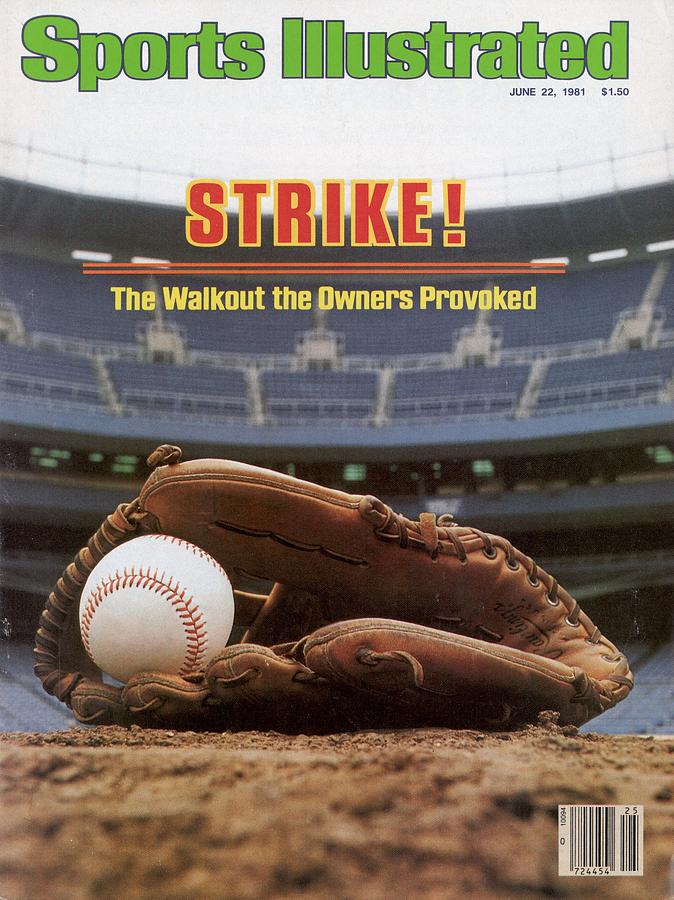
1981: A Summer Without Baseball

June 12, 1981, 40 years ago: The Major League Baseball Players Association goes on strike. They had done so before, in 1972, leading to the cancellation of, depending on the team, 6 to 9 games. This time, there would be more.

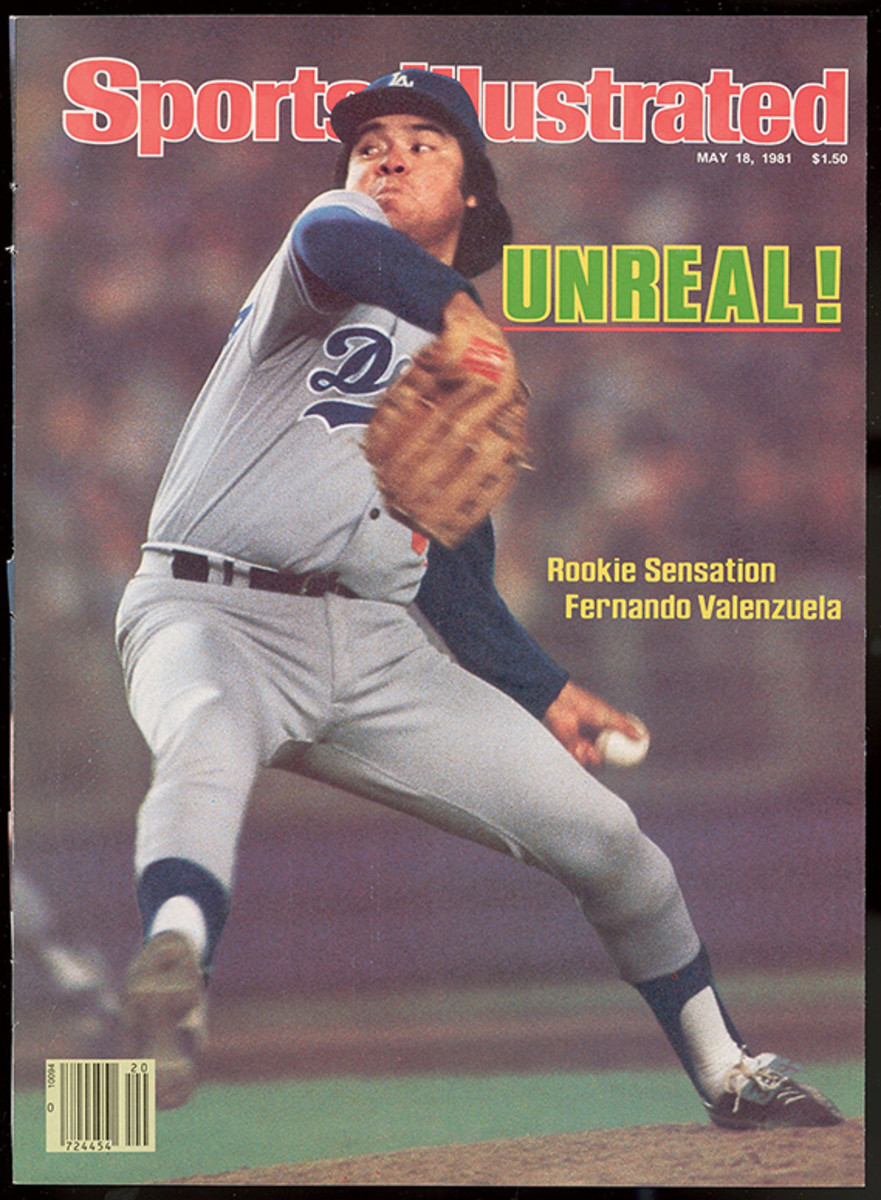
The season to that point had already been very interesting. Fernando Valenzuela, a 20-year-old Mexican pitching for the Los Angeles Dodgers, won his 1st 8 starts, sparking "Fernandomania."
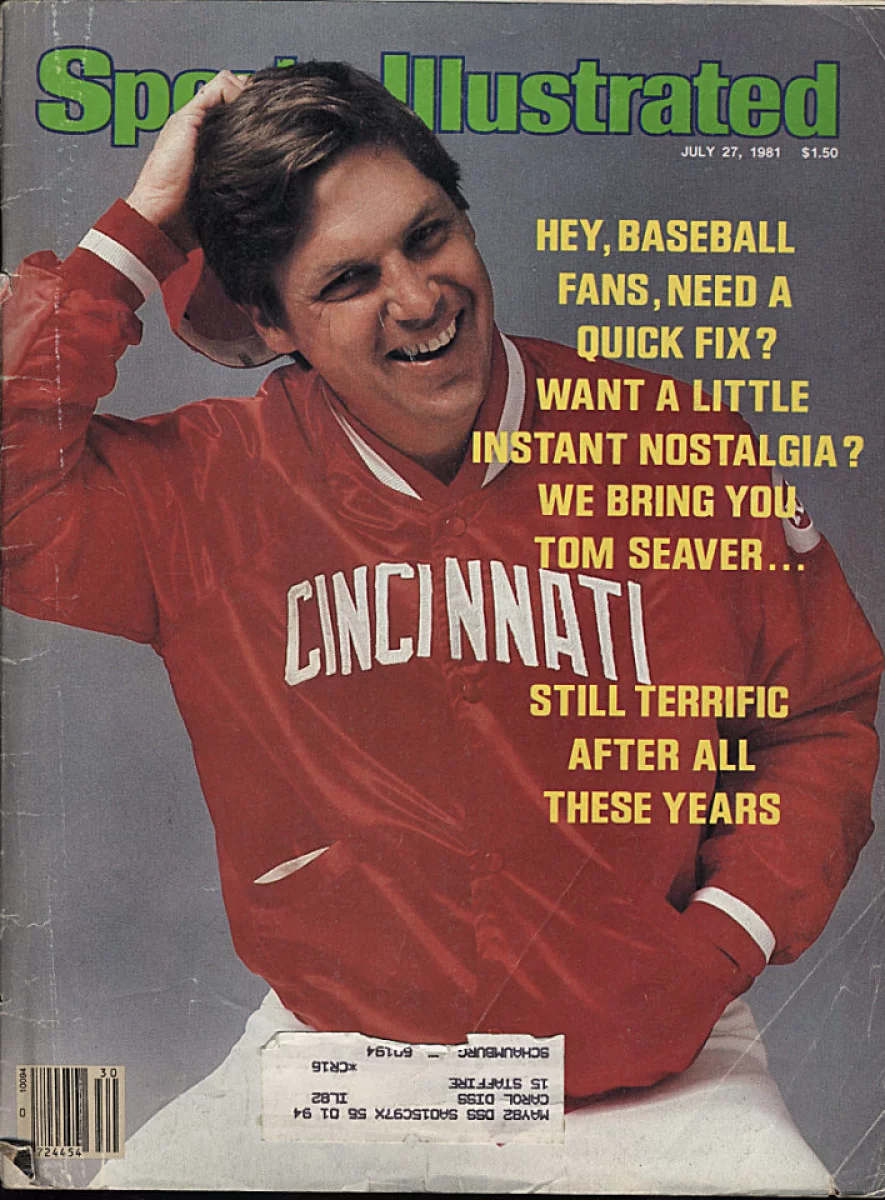
Carlton Fisk, led go by the Boston Red Sox, signed with the Chicago White Sox, and, in his 1st game for his new team, hit a home run against his old team. Tom Seaver, the Met legend now pitching for the Cincinnati Reds, and Steve Carlton of the Philadelphia Phillies each recorded his 3,000th career strikeout. Carlton became the 1st lefthander to do so.
This cover with Seaver was actually released during the Strike.

One of the things Carlton was known for was his refusal to talk to the media, leading to a joke: "The two best lefthanded pitchers in baseball don't speak English: Fernando Valenzuela and Steve Carlton."

Of course, Valenzuela's weight brought on the old lines about Detroit Tigers pitcher Mickey Lolich: He was a "hefty lefty" and a "portly portsider." The joke was that he knew one word in English: "Beer." Hosting The Tonight Show, taped in the Los Angeles suburb of Burbank, Johnny Carson said that Valenzuela had learned a new English word: "Million."

The longest game in professional baseball history was played, at McCoy Stadium in Pawtucket, Rhode Island on April 18. The Pawtucket Red Sox, the top farm team of the Boston Red Sox, hosted the Rochester Red Wings, the top farm team of the Baltimore Orioles, in a game in the Class AAA International League. After 32 innings, the game was finally suspended. On June 23, while the major league players were on strike, the game was resumed, and Pawtucket won, 3-2 in the 33rd inning. Wade Boggs played for the PawSox, Cal Ripken for the Wings.

On May 10, Charlie Lea of the Montreal Expos pitched a no-hitter against the San Francisco Giants. On May 15, Len Barker of the Cleveland Indians pitched the 1st perfect game since 1968 -- making it the 1st of my lifetime -- against the Toronto Blue Jays. A sportswriter joked, "How could it have been perfect? It was played in Cleveland.
Len Barker

On May 27, at the Kingdome in Seattle, Amos Otis of the Kansas City Royals hit a ground ball down the 3rd base line. Lenny Randle of the Seattle Mariners saw that it wasn't going to roll foul, so he dropped to the ground, and used his breath to blow the ball foul. The umpires ruled interference, and Otis was given 1st base. The Royals won 8-5.

Right before the strike began, Nolan Ryan of the Houston Astros was involved in 2 milestones, neither of which helped him. On June 5, he issued the 1,777th walk of his career, making him the all-time leader, surpassing Early Wynn. It would be 2 more years before he surpassed Walter Johnson to become the all-time strikeout leader. And on June 10, he gave up a hit to Pete Rose, the 3,630th hit of Rose's career, tying Stan Musial as the National League's all-time leader.
Nolan Ryan

But on June 12, Marvin Miller, Director of the Players' Association since 1966, announced that negotiations with Commissioner Bowie Kuhn and the 26 team owners had failed: "We have accomplished nothing. The strike is on."

The owners, angry that free agency had been ordered at all in 1975, demanded compensation: A player signed as a free agent by a team should mean that the signing team should give a player not on a protected list to the team losing the preceding player. The MLBPA said no, because that would undermine the value of free agency.
Marvin Miller

So the strike was on. For a while, the owners' only action was to approve, on June 16, the sale of the Chicago Cubs from chewing gum magnate William Wrigley III, whose grandfather had bought the team in part in 1916 and wholly in 1921, for $20 million, to the Tribune Company, publisher of the Chicago Tribune and owner of a broadcast network that included the Cubs' main radio and TV stations, both named WGN. (The radio station was founded in 1924, and its call letters stood for what then-Tribune publisher "Colonel" Robert McCormick called the paper: The "World's Greatest Newspaper.")

This would enable the Company to make WGN the 1st nationwide cable-TV "superstation," giving the Cubs something only the Yankees and maybe the Dodgers had thus far had: A national fan base. Ted Turner, the broadcasting executive who owned the Atlanta Braves, decided to match that, making TBS a national cable network, and letting a national audience see Braves games regularly.

*

A Summer without baseball might have been the worst thing that could have happened to me, age 11. I was more worried during the Strike of '81 that baseball as I knew it would never return than I was during the Strike of '94, which was both longer and nastier.

There wasn't even nearby minor-league ball to fill the void. During the Strike of '94, I had New Jersey's new professional team, the Class AA Eastern League's Trenton Thunder, just a half-hour's drive away. And the New Jersey Cardinals were up in Sussex County. By 2001, there would also be the Somerset Patriots, the Newark Bears, the New Jersey Jackals at Montclair State University, the Lakewood BlueClaws, the Atlantic City Surf and the Camden Riversharks. Eight teams in New Jersey. Plus the Yankees would have the Staten Island Yankees, and the Mets' farm system would include the Brooklyn Cyclones.

(Times have changed, and minor-league baseball has been devastated. The BlueClaws are now the Jersey Shore BlueClaws. The Cardinals are now the Sussex County Miners. The Thunder and the Jackals only exist as "collegiate summer league" teams. Only the Blue Claws, the Miners, the Patriots and the Cyclones remain as full-season teams.)

But in 1981? The nearest minor-league team to the house where I grew up in East Brunswick, New Jersey was the Reading Phillies, 107 miles away. The West Haven Yankees were 114 miles away. And if you think my parents were going to drive me 2 hours into Pennsylvania or Connecticut to see a live minor-league baseball game -- and pay for it -- you'd better think again.

This was the golden age of arcade video games. Along with baseball cards, it was 1 of 2 addictions I had as a kid. And there seemed little point in getting new cards, so I just got as many quarters as I could, walked up the hill to the Brunswick Square Mall, went into the arcade known as Fun-n-Games, and played away.

And waited for baseball to return.

*

And this was what the world was like while I waited for baseball to return:

In spite of the Pennant they would go on to win, the Yankees averaged only 15,804 fans per home game at the original Yankee Stadium. In addition to the strike, this was partly due to the South Bronx having deteriorated into an urban nightmare -- the Paul Newman cop drama Fort Apache, The Bronx was released in February of that year. Nobody wanted to go to The Bronx -- unless that's where your drug dealer wanted to meet and you really, really needed a fix.

It had been an awful regression for New York City, and it could be seen in film: From the style and sophistication of North by Northwest in 1959 and Breakfast at Tiffany's in 1961, to the funky seediness of Midnight Cowboy in 1969, to the desolation of Taxi Driver in 1976, to Fort Apache, The Bronx in 1981.

Baseball legends Satchel Paige, Stan Coveleski, Waite Hoyt, Joe Cronin, Smoky Joe Wood, Red Ruffing, Ted Lyons and Hank Greenberg were still alive. Like me, Mariano Rivera was 11 years old. Jorge Posada was 10, Andy Pettitte was 9, Derek Jeter was 7, Alex Rodriguez was 6, David Ortiz was 5, Jimmy Rollins was 2, Albert Pujols and CC Sabathia were 1; and David Wright, Justin Verlander, Miguel Cabrera, Zack Greinke, Max Scherzer, Buster Posey, Clayton Kershaw, Madison Bumgarner, Giancarlo Stanton, Jose Altuve and Gerrit Cole weren’t born yet.

There had never been a Major League Baseball game in Florida or in the Rocky Mountain States. The San Diego Padres, Seattle Mariners, Texas Rangers and Toronto Blue Jays had never made the Playoffs. The Padres, Rangers, Blue Jays, the aforementioned Brewers and Astros, and the teams then known as the California Angels and the Montreal Expos had never won a Pennant. The Atlanta Braves hadn't won a Pennant since they were still in Milwaukee.

The Blue Jays, the Astros, the Angels, the Expos, the Braves since moving to Atlanta, the Royals, the San Francisco Giants since they were still in New York, the Minnesota Twins since they were the Washington Senators all the way back in 1924, the Boston Red Sox since 1918, and the Chicago White Sox since 1917 had not won the World Series.

All of those facts are no longer true.

Only 6 teams are still using the same ballparks they were using in 1981: The 2 Los Angeles-area teams, the Red Sox, the Royals, the A's and the Chicago Cubs. Only 4 NFL teams (Buffalo, Green Bay, Kansas City and New Orleans), 1 NBA team (the Knicks), and 2 NHL teams (the Rangers and, for a few more days, the Islanders) are using the same venues they were using in the Summer of '81. Yankee Stadium, Shea Stadium, Giants Stadium and the Meadowlands Arena have all been replaced, and the Nassau Coliseum is about to be.

There was an NFL team in Baltimore, but it was the Colts, not the Ravens. There was one in St. Louis, but it was the Cardinals, not the Rams. There was one in Houston, but it was the Oilers, not the Texans. The NFL was still a League where the high-profile teams were the Oakland Raiders, the Pittsburgh Steelers, the Miami Dolphins and the Dallas Cowboys, but the San Francisco 49ers were about to begin their dynasty.

The Philadelphia Phillies were defending World Champions. The Raiders had won the most recent Super Bowl. The Boston Celtics were defending NBA Champions, having beaten the Houston Rockets in the Finals. The Los Angeles Lakers and the Philadelphia 76ers would be back, however. Kareem Abdul-Jabbar, Magic Johnson, Larry Bird and Julius "Dr. J" Erving were the big names. Michael Jordan was about to play his 1st game at the University of North Carolina. The Knicks and the Nets were both nondescript teams.

The New York Islanders were in the middle of their Stanley Cup dynasty (stop laughing), and the Edmonton Oilers of Wayne Gretzky and Mark Messier hadn't won any yet. The Rangers were an aging team in transition, and the Devils were still the NHL version of the Colorado Rockies. The heavyweight champion of the world was Larry Holmes.

Bobby Carpenter of the Boston suburb of Needham, Massachusetts played his 1st NHL game a few days earlier, becoming the 1st U.S. hockey player to go directly from high school to the NHL, and both scored a goal and collected an assist for the Washington Capitals, who lost the game to the Buffalo Sabres anyway.

"The Wave" -- or, as it's known in Europe, since most people there first saw it on TV during the 1986 World Cup in Mexico, "The Mexican Wave" -- wouldn't be noticed nationwide until the Yankees played the Oakland Athletics in Game 3 of that year's ALCS. "Krazy George" Henderson claims to have invented it at an NHL game in Edmonton a year earlier. 

Current Yankee manager Aaron Boone was 8 years old. Lindy Ruff of the Devils was playing for the Buffalo Sabres. Barry Trotz of the Islanders was playing junior hockey for the Regina Pats in Saskatchewan. Knicks coach Tom Thibodeau had just graduated from Salem State University in Salem, Massachusetts. (Yes, the town where the Witch Trials were held.) David Quinn, recently fired but not yet officially replaced as head coach of the Rangers, was at the private Kent School in Cranston, Rhode Island.

Steve Nash of the Nets was 7. Ronny Deila of New York City FC was 5. Gerhard Struber of the Red Bulls was 4. Robert Saleh of the Jets was 2. Mets manager Luis Rojas would be born on September 1, Giants coach Joe Judge on December 31. Walt Hopkins of the Liberty wasn't born until 1985.

The Olympic Games have since been held in America 3 times, in Canada and Korea twice, and once each in Bosnia, France, Spain, Norway, Japan, Australia, Greece, Italy, China, Britain, Russia and Brazil. The World Cup has since been held in America, Spain, Mexico, Italy, France, Japan, Korea, Germany, South Africa, Brazil and Russia.

There were then 26 Amendments to the Constitution of the United States. The President of the United States was Ronald Reagan. George H.W. Bush was his Vice President. Richard Nixon, Gerald Ford, Jimmy Carter, their wives, and the widows of Harry Truman, John F. Kennedy and Lyndon Johnson were all still alive.

Bill Clinton was out of office, having been defeated for re-election as Governor of Arkansas the year before -- but was already planning one of his occasional comebacks. George W. Bush was running Arbusto Energy -- running it into the ground. Barack Obama had just transferred from Occidental College in Los Angeles to Columbia University in New York. Donald Trump was just beginning to screw up Manhattan real estate. Joe Biden was in his 2nd term as a U.S. Senator from Delaware. Kamala Harris was a senior in high school.

The Governor of the State of New York was Hugh Carey, the Mayor of the City of New York was Ed Koch, and the Governor of New Jersey was Brendan Byrne, with Tom Kean and Jim Florio running to replace him. Kean would win the closest election in the office's history. Eight years later, Florio would try again, and win in a landslide. Andrew Cuomo was in law school, and was helping his father, then Lieutenant Governor Mario Cuomo, set up his run for Governor the next year. Bill de Blasio was at New York University. Phil Murphy was at the University of Pennsylvania's Wharton School of Buisness.

The holder of the Nobel Peace Prize Adolfo Pérez Esquivel, for his advocacy for his fellow victims of the military dictatorship in Argentina. The Pope was John Paul II. The current Pope, Francis, then Jorge Mario Bergoglio, an Argentine like Pérez Esquivel, and was the rector of the Philosophical and Theological Faculty of San Miguel. The Prime Minister of Canada was Pierre Trudeau, and of Britain, Margaret Thatcher. The monarch of both nations was Queen Elizabeth II -- that hasn't changed.

There have since been 7 Presidents of the United States, 7 Prime Ministers of Britain and 3 Popes.

There were still living veterans of the Spanish-American War, the Philippine Campaign, the Boxer Rebellion, the Boer War, the Potemkin Mutiny, the Russo-Japanese War and the Mexican Revolution.

Aston Villa of Birmingham, the West Midlands, had won the Football League for the 1st time in 71 years (still their only title in the last 112 years). Liverpool FC had won the European Cup. Tottenham Hotspur were in the middle of back-to-back FA Cup wins; his was a rare period when they were definitively better than the real team in North London, Arsenal.

James Clavell published Noble House, Frank Herbert God Emperor of Dune, John Irving The Hotel New Hampshire, Gabriel Garcia Marquez Chronicle of a Death Foretold, Toni Morrison Tar Baby, Martin Cruz Smith Gorky Park, Paul Theroux The Mosquito Coast, and Joseph Wambaugh The Glitter Dome.

John Gardner restarted the James Bond novels, which had been exhausted following the last unpublished stories of the character's creator Ian Fleming, with Licence Renewed. Thomas Harris published Red Dragon, which introduced the character of Dr. Hannibal Lecter. George R.R. Martin published Windhaven, deftly using science fiction and a restart of technology to meld the future with the past on a distant planet occupied by the descendants of Earthmen. J.K. Rowling was in high school in Tutshill, Gloucestershire, England.

No one had yet heard of Celie Harris, Kinsey Millhone, Jack Ryan, Forrest Gump, John McClane, Alex Cross, Bridget Jones, Robert Langdon, Bella Swan, Lisbeth Salander or Katniss Everdeen.

The day the Strike of '81 began saw the release of the 1st Indiana Jones film, Raiders of the Lost Ark, produced by Star Wars' George Lucas and directed by Jaws' Steven Spielberg. The day also saw the premiere of Mel Brooks' sendup of historical epics and early film musicals, History of the World, Part I. And speaking of historical epics, well, it wasn't true history, but the day also saw the release of the original version of Clash of the Titans, a retelling of the Greek myth of Perseus.

Also released during the Strike were The Cannonball Run, Dragonslayer, The Great Muppet Caper, Bill Murray's Army comedy Stripes, Escape from New York, the original version of Arthur, Endless Love, Blow Out, Eye of the Needle, the werewolf film Wolfen, the ridiculous World War II-set soccer film Escape to Victory, and the 1st R-rated animated film that anybody could remember, Heavy Metal.

There was also Superman II, starring Christopher Reeve; For Your Eyes Only, starring Roger Moore as Bond, James Bond; and Tarzan, the Ape Man, with Miles O'Keeffe, and Bo Derek as Jane, with her real-life husband John Derek directing a film that barely escaped an X rating.

While he's not exactly a superhero, there was a Zorro film released at this time, but an unconventional one: Zorro, The Gay Blade, with George Hamilton playing both Zorro and his gay identical twin brother. As The Mark of Zorro is traditionally the film that Thomas and Martha Wayne took little Bruce to see right before they were killed, this version of Zorro was the one depicted in the 2019 film Joker, set in 1981.

Batman was still in the interregnum between Adam West and Michael Keaton; the best Batfans could do was the comic books and Olan Soule's voiceover in the Saturday morning cartoon Super Friends. Peter Davison had recently become the Fifth Doctor on Doctor Who.

In television, just a few months after Dallas revealed that J.R. Ewing had been shot by his sister-in-law/former mistress/baby mama Kristin Shepard, there was a new cliffhanger: J.R. appears to have pushed a woman over a railing and into the pool at the Southfork Ranch. His arch-enemy, Cliff Barnes, thinks the woman is Pam, Cliff's sister, and the wife of J.R.'s brother Bobby. But Kristin had returned to Dallas, and most fans through J.R. had gotten his revenge on her. The next season's premiere, it was revealed that he didn't push her: She fell because she had a drug overdose.

Luke Spencer and Laura Webber were about to get married on General Hospital. Chuck Woolery was about to leave his post as host of Wheel of Fortune, handing it over to Pat Sajak. And both turned out to be right-wing maniacs, a fact they kept hidden even during the Reagan Revolution.

The original version of Dynasty, Hill Street Blues, the superhero show The Greatest American Hero, and TV versions of Harper Valley PTA, Nero Wolfe, Walking Tall and Private Benjamin had recently premiered on TV. Buck Rogers in the 25th Century, Soap, Eight Is Enough and The Muppet Show had recently been canceled; while Charlie's Angels and The Waltons soon would be.

When the Strike began, the following panelists were on Match Game: Mork & Mindy actor Robert Donner, semi-regular Patty Duke, show regular Charles Nelson Reilly, actress Betty Kennedy, former M*A*S*H star McLean Stevenson, and semi-regular Joyce Bulifant. Show regular Brett Somers was out that week, but came back the next.

Robert Kardashian was working in the music business. He was married to the former Kris Houghton. Their daughter Kim had been born the year before. Bruce Jenner was still an actor, and not winning any medals for it.

The Number 1 song in America for most of the Strike was "Bette Davis Eyes" by Kim Carnes. MTV debuted in the last days of the Strike. Were they actually airing music at the time? Yes. Was it good music? For the most part, no.

Paul Simon & Art Garfunkel had a reunion concert in front of half a million people in Central Park. Prince released his album Controversy, and got booed off the stage at the Los Angeles Memorial Coliseum, as the opening act on the Rolling Stones' tour for their album Tattoo You.

In the course of 1981, The Buzzcocks, Steely Dan and the Bay City Rollers broke up. 10,000 Maniacs, Anthrax, The Bangles, The Blow Monkeys, The Beastie Boys, The Butthole Surfers, Culture Club (these last 2 definitely not to be confused with each other), Katrina and the Waves, Metallica, Ministry, Mötley Crüe, Pet Shop Boys, Queensrÿche, Patti Smyth's band Scandal, Slayer, Sonic Youth and Suicidal Tendencies all formed.

George Harrison released "All Those Years Ago," his tribute to John Lennon, who had been killed near the end of the previous year. Bob Dylan was in his Christian rock phase. Michael Jackson was following Off the Wall up with writing the songs that would go on Thriller. Priscilla Presley had taken over Elvis Presley Enterprises, and made Elvis more money than he ever had while he was alive. Frank Sinatra just kept on touring.

Inflation has been such that what $1.00 would buy then, $2.94 would buy now. A U.S. postage stamp was 18 cents. On July 3, during the Strike, the cost of a New York Subway token went up from 60 to 75 cents. The average price of a gallon of gas was $1.35, a cup of coffee $1.04, a McDonald's meal (Big Mac, fries, shake) $2.00, a movie ticket $2.75, a new car $5,743, and a new house $83,700.

The day the Strike began, Firday, June 12, the Dow Jones Industrial Average closed at 1,006.28. The day baseball resumed, Monday, August 10, it closed at 943.68. So the Strike was bad for the stock market.

The tallest building in the world was the Sears Tower in Chicago. Desktop computers and mobile telephones had been developed, but they were still very bulky and very slow. Nordic Mobile Telephone set up the 1st cellular telephone system, in Sweden. There was not much of an Internet. The 1st space shuttle, Columbia, had been launched earlier in the year. The Atari VCS (later renamed the Atari 2600) and the Mattel Intellivision were battling it out to be the leading home video game system.

There were heart transplants, liver transplants and lung transplants, and artificial kidneys, but the 1st artificial hearts wouldn't be tried until the next year. The birth control pill was long-established, but there was, as yet, no Viagra.

During the Strike of '81, paintball was invented in Henniker, New Hampshire. Los Angeles' drug-dealing Wonderland Gang was massacred. Race riots broke out in the English cities of Liverpool, Birmingham and Leeds. Donkey Kong premiered, launching the Mario empire. A skywalk collapsed at the Hyatt Regency Hotel in Kansas City, killing 114 people. Canadian charity runner Terry Fox died of cancer, and singer and hunger relief fundraiser Harry Chapin was killed in a car crash.

Charles, Prince of Wales, married Lady Diana Spencer in a ceremony watched around the world, but the fairy tale wouldn't be happily ever after. And President Ronald Reagan made the 1st nomination of a woman to the U.S. Supreme Court, Sandra Day O'Connor.

Robert Moses, and Paddy Chayefsky, and Dan Daniel, considered "the dean of American sportswriters," died. Chris Evans, and Meghan Markle, and Roger Federer were born.

*

On July 31, the players and the owners reached a compromise, negotiated in part by Raymond J. Donovan, Secretary of Labor under Reagan. (Donovan, a native of Bayonne, Hudson County, New Jersey, died 10 days ago, at the age of 90.) Teams that lost a "premium" free agent could be compensated by drawing from a pool of players left unprotected from all of the clubs, rather than just the signing club. The players agreed to restricting free agency to players with 6 or more years of major league service, instead of the previous 5.
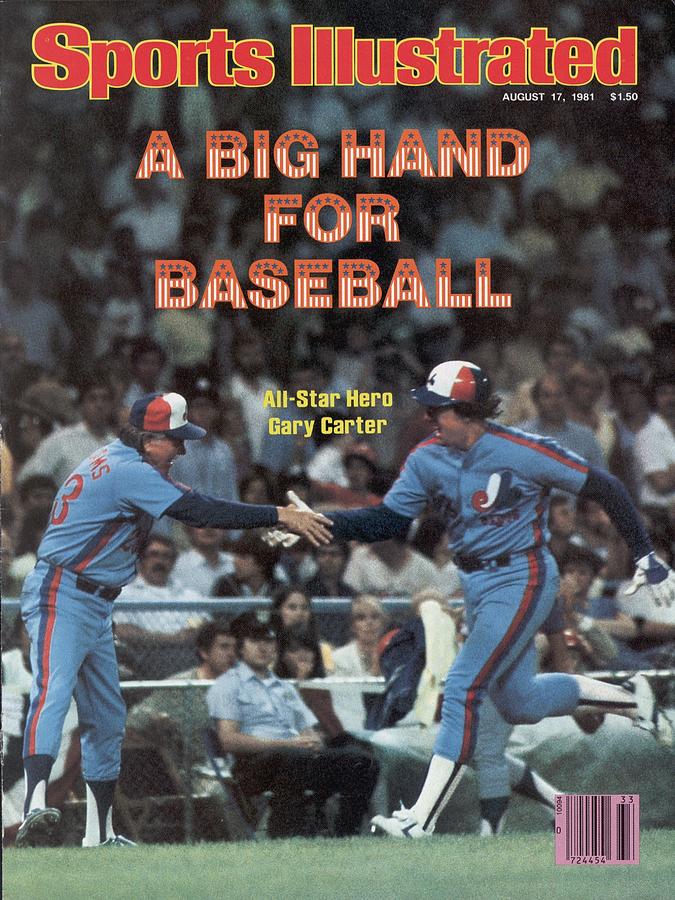
In an unusual move, Sports Illustrated redid a cover.
Jinx? Mike Schmidt won the NL MVP again,
George Brett had another good season,
and both men's teams made the Playoffs again,
but neither would repeat as Pennant winners.

It was a minor victory for the owners, and there would be strikes again in 1985 and 1994. But baseball would resume, with the All-Star Game, originally scheduled for Cleveland Municipal Stadium on Tuesday night, July 14, moved to Sunday night, August 9, with regular-season games starting the next day.

The crowd of 72,086 was, and remains, an All-Star Game record. Valenzuela was a natural selection for the NL's starting pitcher, while Jack Morris of the Detroit Tigers was chosen for the AL.

Yankees on the AL All-Star Team were Reggie Jackson, Willie Randolph, Bucky Dent, Ron Davis, Goose Gossage, and free agent bonanza Dave Winfield. The only Met selected for the NL All-Star Team was outfielder Joel Youngblood, although Randolph, Seaver, Ryan, Eddie Murray and Ken Singleton of the Baltimore Orioles, Gary Carter of the Montreal Expos, and George Foster of the Cincinnati Reds were selected, and each of those would play for the Mets at some point in their careers.

Singleton hit a home run off Seaver in the bottom of the 2nd, but Carter homered in the 5th, and Dave Parker of the Pittsburgh Pirates did so in the 6th to give the NL the lead. The AL took a 4-2 lead in the bottom of the 6th, but Carter went deep again in the 7th, this time off Davis. And Schmidt homered off Rollie Fingers of the Milwaukee Brewers in the 8th, to give the NL a 5-4 win. Vida Blue, then with the San Francisco Giants, was the winning pitcher. Bruce Sutter of the St. Louis Cardinals got the save, and Fingers was the losing pitcher.
One exasperated reader wrote to SI with this killjoy question:
"'A big hand for baseball'? Whatever the hell for?"

As far as the standings were concerned, for only the 2nd time in history (so far; the only other time was in 1892), MLB set up a split season. The teams that were in 1st place in their Divisions when the strike began -- the Yankees, the A's in the AL West, the Phillies in the NL East and the Dodgers in the NL West -- were guaranteed spots in the Playoffs, and thus had nothing to play for when the season resumed.

On the 1st day of resumed play, Rose got his 3,631st hit, to pass Musial. Ahead of him now were only Hank Aaron with 3,771 and Ty Cobb with 4,191. Actually, it was during the Strike that a researcher discovered that one of Cobb's 1910 games was mistakenly counted twice, including 2 hits he'd gotten. So that lowered his career hit total to 4,189, and his record lifetime batting average from .367 to .366. However, Rose would still be celebrated for breaking the record when he got to 4,192, not 4,190.

On September 6, despite having won the 1st half AL East title, Yankee manager Gene Michael was fired by owner George Steinbrenner. Bob Lemon was brought back for his 2nd run as manager. On September 26, Ryan pitched the 5th no-hitter of his career, breaking the record he shared with Sandy Koufax, and against the Dodgers, Koufax's team.

On September 30, the Royals beat the Minnesota Twins, 5-2 at Metropolitan Stadium in the Minneapolis suburb of Bloomington. This was the last baseball game played at The Met. On December 20, the last event there would also be Minnesota vs. Kansas City, as the Chiefs beat the Vikings ,10-6. The next year, both the Twins and the Vikings would move into the Metrodome in downtown Minneapolis.

The Brewers won the AL East's 2nd half title, and the Expos did so in the NL East. Each franchise had begun play in 1969, and each had now notched its 1st Playoff berth. The Royals won the 2nd half title in the AL West, and the Astros in the NL West.

The Reds finished the season with the best overall record in MLB, and the Cardinals did so with the best overall record in the NL East. But neither team won their Division in either half, and thus missed the Playoffs entirely. It didn't seem fair.

Yes, this "pennant" actually exists.

And, as it turned out, none of the teams that won the 1st half Division titles won the 2nd half Division titles. Had any of them done so, then the other Playoff spot for that Division would have gone to the team with the next-best overall record.

What happened in the Playoffs? That's a post for later in the year.

Friday, June 11, 2021

Yanks' Series With Twins Hopeful But Unsatisfying

The Yankees played 3 games against the struggling Minnesota Twins at Target Field in Minneapolis. The series ended hopeful, but unsatisfying.

It bean with Josh Donaldson flapping his gums. The 35-year-old 3rd baseman from Pace, in the Florida Panhandle -- a.k.a. Floribama or the Redneck Riviera -- started out with the Oakland Athletics, was the American League Most Valuable Player with the Toronto Blue Jays in 2015, and the National League Comeback Player of the Year with the Atlanta Braves in 2019. On May 29, he scored Major League Baseball's 2 millionth run, although that was a matter of timing rather than talent. He's been a 3-time All-Star and has 232 home runs, so we're not talking about some scrub.

We are, however, talking about some jerk. Before the series, he accused Yankee ace Gerrit Cole of cheating, by using a substance to give himself a better grip on the ball.

You know how it works: In baseball, it's not going to be punished if it's done to the Yankees, only if it's done by the Yankees. Suddenly, Cole became a "cheater." Nobody accused him of doing it when he was pitching for the Houston Astros, a team proven to have cheated (but not any involvement in such by Cole).

The Astros are known cheats, and got a slap on the wrist. The Boston Red Sox are known cheats, and haven't even gotten that. If MLB handled proven cheats the way the NCAA does, all teams proven to have cheated would have their titles stripped, down to the Divisions, and would be banned from postseason play for a couple of years.

It's not clear whether Donaldson was expressing what he thought was righteous rage, or he was just trying to get into Cole's head.

Another concern going in was that the Yankees, at least as far back as I can remember in the late 1970s, have a habit of making players who once played for them look great against them. And Michael Pineda would be starting for the Twins on Tuesday, and J.A. Happ on Thursday. Oh, boy...

*

Sure enough, 2 batters into the opening game, Donaldson got a hit, and was 1 of 2 runners who scored on a Ryan Jeffers double. But Jordan Montgomery settled down after that, and it was still only 2-0 Minnesota after 4 innings.

The Yankees got to Pineda in the top of the 5th. Cliche Alert: Walks can kill you. With 1 out, Pineda walked Miguel Andujar. The free-swinging 3rd baseman/left fielder has been hurt, but this was his 1st walk of the season. Brett Gardner singled. DJ LeMahieu singled to load the bases. And Pineda walked Aaron Judge to force Andujar home.

Rocco Baldelli, the former Tampa Bay Rays star who is now the Twins' manager, replaced Pineda with Jorge Alcala. In the short term, a big mistake, as he threw a wild pitch to Gleyber Torres, scoring Gardner. But he got the next 2 outs to leave the score tied.

The teams traded runs in the 6th. The Yankees got a single by Gary Sanchez and a double by Rougned Odor. Anduar reached on an error, and Gardner hit a sacrifice fly to score Sanchez. But Montgomery allowed a run, and Jonathan Loaisiga had to come in to keep it 3-3.

The 8th inning began, and Yankee Fans began to worry about extra innings and the ghost runner. But Aaron Boone sent Clint Frazier up to pinch-hit for Odor to lead off, and he got a hit. So did Andujar. Boone sent Tyler Wade in to run for Frazier, and to take Odor's place at 2nd base. Gardner bunted the runners over. LeMahieu grounded into a fielder's choice, scoring Wade.

Judge grounded to 2nd, and was ruled out on a force play. But Boone challenged it, thinking Twins shortstop Andrelton Simmons had dropped the ball before the force could be made. The replay showed Boone was right, and that meant that Andujar had scored as well. 5-3 Yankees. Chad Green pitched a scoreless bottom of the 8th.

In the top of the 9th, Baldelli sent Griffin Jax in to pitch. This made Jax, a 26-year-old native of the Denver suburbs, the 1st graduate of the U.S. Air Force Academy ti appear in an MLB game. He met his wife at the Academy, and she still serves, holding the rank of Captain. He is the son of former Dallas Cowboys and Arizona Cardinals linebacker Garth Jax.

Welcome to the majors, Lieutenant. Here are your 1st 4 batters: Gio Urshela singled, sanchez hit a home run, Wade struck out, and Andujar hit a home run.

Wandy Peralta allowed a run in the bottom of the 9th, but the Twins got no closer. Yankees 8, Twins 4. WP: Loaisiga (5-2). No save. LP: Taylor Rogers (2-3).

The Yankees scored 8 runs. A good sign.

*

Two batters into the Wednesday game, Judge took Randy Dobnak deep. Cole with a 1st inning lead? Good sign.

In the 2nd, Kyle Higashioka singled, and Gardner doubled him home. The 3rd began with a Judge double, a Torres walk, and a long Giancarlo Stanton home run. 5-0 Yankees.

Cole stumbled a little in the 3rd, allowing a home run to Jorge Polanco. He stumbled again in the 5th, allowing one to Miguel Sano. But, in between, in the top of the 5th, well, Cliche Alert: Walks can kill you, especially the leadoff variety. Torres led off with a walk, and Torres hit another home run. Urshela singled, but Odor grounded into a double play. Then Andujar hit a home run. 8-1 Yankees.

Andujar gave the Yankees another run on a sac fly in the 7th. Boone thought he could trust Brooks Kriske with a 7-run lead. He could -- barely. Kriske was wild, and allowed 4 runs, forcing Boone to warm Aroldis Chapman up, before finally ending it.

Yankees 9, Twins 6. WP: Cole (7-3). No save. LP: Dobnak (1-6).

Here is what happened to Donaldson in that game: Cole struck him out swinging in the 1st, Cole struck him out swinging again in the 3rd, Cole got him to fly to right in the 6th, and he reached on an error against Luis Cessa in the 8th. Officially, 0-for-4.

The Yankees had now scored 17 runs in 2 games. A very good sign.

*

Boone started Michael King in the finale, reminding us that there is a big hole in the rotation that could be filled when either Corey Kluber or Luis Severino returns from injury -- and it looks like Severino is far closer to returning. King didn't get out of the 4th inning.

Fortunately, Happ didn't have it, either. In the 1st, the Yankees greeted him with a Judge single, a Torres single, and another Stanton home run. As Earl Weaver, the Hall of Fame manager for the Baltimore Orioles, taught us, the way to win is with pitching, defense, and three-run homers. Home runs with men on base. But the Twins came back with a run of their own in the bottom of the 1st. That would matter.

Urshela led off the top of the 4th with a home run. The Twins took that run back in the bottom of the inning. A LeMahieu single brought a run home in the top of the 6th. The Twins took that run back in the bottom of the 7th.

When the bottom of the 9th began, the Yankees led 5-3, and Boone brought Aroldis Chapman on to close it out. According to Baseball-Reference.com, the Twins had only a 7 percent chance of winning the game.

And then the roof fell in. A weird analogy, given that the Twins no longer play in the stupid Metrodome, but that's what it felt like. Chapman gave up a single to Polanco. Up came Donaldson, who hadn't gotten a hit since his 1st at-bat of the series. Donaldson crushed a drive to left field. Tie ballgame. Of course, it would be Donaldson who did it, even if it wasn't against Cole.

Then Willians Astudillo got a hit. And Nelson Cruz hit one out to give the Twins the game. And all the goodwill Chapman had drummed up over the season's 1st 62 games seemed to vanish, almost in an instant.

Twins 7, Yankees 5. WP: Hansel Robles (2-2). No save. LP: Chapman (4-1).

The Yankees, who have struggled to score runs for most of this season, had scored 22 runs in 3 games. That should have been enough to win all 3. It wasn't. Hopeful, but unsatisfying.

*

The Yankees are now 33-30 on the season, including 2-8 when trying to sweep a series. They are 6 games out of 1st place in the AL Eastern Division, behind the Rays. They are 2 1/2 games out of the last AL Playoff spot. If the current standings hold to the end of the season, they will not make the Playoffs. Their current chances of making the Playoffs are 25.2 percent; of winning the World Series, 0.7 percent.

Brian Cashman still has a job.

At any rate, today is a very rare occasion: A Friday after Opening Day when the Yankees are not scheduled to play. They play the Phillies in Philadelphia tomorrow night and Sunday afternoon, then have Monday off, then play 3 against the Toronto Blue Jays in Buffalo, before coming home to face the A's.

*

And, in case you're interested: The delayed-by-COVID 2020 UEFA European Football Championship, a.k.a. Euro 2020, the championship of European soccer for national teams, gets underway today, with Italy playing Turkey in a Group A match at the Stadio Olimpico in Rome. Portugal are the defending Champions, having beaten France in the Euro 2016 Final. However, France, holders of the World Cup, are considered the favorites.

England are in Group D, with Scotland (the original "international football rivalry," but the Scots have been terrible for the entire 21st Century this far), Croatia (who reached the 2018 World Cup Final and gave France a good game before losing) and Czechia (a.k.a. the Czech Republic, a decent team). England should be able to advance to the Knockout Stage, but their record of choking means you can't presume.

Poland, my ancestral homeland, are in Group E with Spain (not what they were 10 years ago), Sweden (a.k.a. Zlatan Ibrahimovic and the Ten Dwarfs) and Slovakia, so there is a chance to advance to the Knockout Stage.

Tuesday, June 8, 2021

How Old Are You Now? 2021 Music Edition

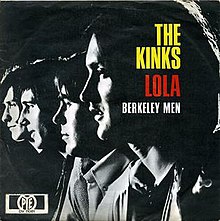
Somebody tweeted last night that both Brandy and Lola are now 75 years old.

Specifically: The title character of The Looking Glass' 1972 Number 1 hit "Brandy (You're a Fine Girl)," who, if the tweeter in question is correct, and if the song in question took place in what was then the present day, would have been 26 at the time; and the title character of The Kinks' 1969 Top 10 hit "Lola," the most famous suspected cross-dresser in the history of music, who, if the tweeter in question is correct, and if the song in question took place in what was then the present day, would have been 23 at the time.

This Lola should not be confused with the temptress from the musical Damn Yankees ("Whatever Lola wants, Lola gets"), or with the ex-showgirl from the Barry Manilow song "Copacabana," both of whom would be much older than that if they're still alive.

This suggested to me that it's time to update this list:

* In The Sound of Music, set in 1938, Liesl von Trapp, the oldest child, is said to be "Sixteen Going On Seventeen." This would make her 100 years old today. (She was based on Agethe von Trapp, who was actually a fully-grown 25 at the time, and lived until 2010, age 97.)

* Andrew Gold's "Lonely Boy" was born on a summer's day in 1951. This would make him 70 today, and his baby sister 68.

* Paul Anka also had a song titled "Lonely Boy," in 1959. Two years earlier, he began his breakout hit "Diana" with "I'm so young and you're so old. This, my darling, I've been told." Apparently, he had a crush on his babysitter (why would he still need a babysitter as a teenager?), but it never got that far; in the song, it did. Paul was 16 in 1957; he's about to turn 80. How old would the babysitter be now, if she's still alive? At least 85.

* In 1955, Boyd Bennett & the Rockets had a hit with "Seventeen." This would make her 83 years old today.

* In 1958, Chuck Berry had a hit with "Sweet Little Sixteen." That same year, Johnny Maestro & the Crests had "Sixteen Candles." This would make both girls now 79.

* In 1959, Sam Cooke sang "Only Sixteen," in which he played a kid who said that he and his then-girlfriend were that age a year ago (1958). This would make both of those characters 79 as well.

* In 1960, Johnny Burnette had a hit with "You're Sixteen." ("You're sixteen, you're beautiful, and you're mine.") This would make her 77. In 1973, Ringo Starr covered the song -- his version's girl would now be 74.

* In 1961, Neil Sedaka sang "Happy Birthday Sweet Sixteen." This would make her now 76.

* In 1963, Chuck Berry wrote "Memphis," in which a man tells a long-distance phone operator to "get in touch with my Marie." At the end of the song, we find out that "Marie is only six years old" and is his daughter, taken away by his estranged wife -- or perhaps his sister, and the singer is a little boy now living with "my uncle"; either way, Marie is not his girlfriend. Johnny Rivers had a much bigger hit with the song the next year. If Marie was 6 in 1963, she's 64 now.

* In 1963, in the Beatles' song "I Saw Her Standing There," Paul McCartney sang, "Well, she was just 17, you know what I mean!" Assuming that this had just happened, she would now be 75

* The Who's rock opera Quadrophenia takes place (according to the film version) in 1965. Presuming that Jimmy Cooper was then 17, making him a few years younger than the bandmembers, he'd be 73 now.

* In 1967, the Beatles recorded "She's Leaving Home," after seeing a newspaper story about a 17-year-old girl that had gone missing. A lot of rock and roll legends, particularly the weirder ones, are made up or at least exaggerated.

Not only is this story true, but it has an amazing backstory that Paul McCartney had completely forgotten. She went on to have quite an interesting life: She's practically a female British version of Forrest Gump (but with intelligence, if not a whole lot of sense). Anyway, she's now 71 -- the same age that, on another Sgt. Pepper song, Paul asks his fictional girlfriend if, at that point, she would still need him and feed him. (Paul himself is 79, Ringo is about to turn 81, and, of course, John Lennon and George Harrison are dead, but, were they still alive, would be 80 and 78, respectively.)

* In 1970, Alice Cooper had a hit with "I'm Eighteen." Which means the character he played in the song is now 69. Alice, real name Vincent Furnier, is 73.

* In 1971, in her song "Gypsies, Tramps and Thieves," Cher sang, "I was 16, he was 21." Assuming that the events in the song had just happened (they probably hadn't), she's now 66, he's 71.

* In 1973, Billy Joel released "Captain Jack," delivered in a second-person narration: "Well, you're 21, and still, your mother makes your bed, and that's too long." Assuming the song takes place in the present day (which is certainly possible, as "you go to the Village in your tie-dyed jeans"), and assuming Captain Jack did not "make you die tonight," "you" are now 69.

* In 1975, Harry Chapin released a song titled "She Is Always Seventeen." The song begins with John F. Kennedy's Inaugural Address in 1961. If she was 17 then, that means she's 77 now.

* In 1976, in his song "Rock and Roll Never Forgets," Bob Seger sang, "Well, now Sweet Sixteen's turning 31." Which means she's now 76. This would match Seger's actual age.

* In 1977, in his song "Running On Empty," Jackson Browne sang, "In '65, I was 17" and, "In '69, I was 21." This matches Browne's actual age: He was born in 1948. Which means he's now 72.

* In 1977, KISS had a hit song titled "Christine Sixteen." Which means she's now 60.

* In 1980, Steely Dan had a hit with "Hey Nineteen." She would also now be 60.

* In 1980, Benny Mardones had a hit with "Into the Night," which opens with the line, "She's just 16 years old." She would now be 57.

* In 1982, Stevie Nicks had a hit song titled "Edge of 17." If the character was about to turn 17 then, she's 56 now, within sight of the edge of 60.

* In 1983, the Stray Cats had a hit song titled "She's Sexy & 17." Which means she's now 55.

* In 1983, Prince released a song titled "Sister": "I was 16, but that's no excuse. My sister was 32, lovely and loose." If you don't know this song, yes, it's about exactly what that line is suggesting it's about. The uses of the word "was" suggests that the relationship in question was not recent. But if it was, then the little brother would now be 54, and the sister 70.

* In 1985, Bryan Adams had a hit with "Summer of '69." That's how it's listed, with the apostrophe. So if the number was actually referring to a particular sex act, and he thought he could sneak it under the censors' radar, then it could have taken place at almost any time. Adams was actually 9 years old in the Summer of 1969, but if the character was actually 16 then, he'd now be 68.

*

Probably the best-known song in which a character's age is mentioned in the lyrics, but not the title, is "It Was a Very Good Year," first recorded by the Kingston Trio in 1961, with the best-known version being the one in 1965 by Frank Sinatra.

In the song, the singer remembers the very good years he had when he was 17, 21 and 35. But the singer does not specifically say how old he is now, only that, "Now, the days are short. I'm in the autumn of the year." (Sinatra titled the album for which he recorded it September of My Years.)

Frank Sinatra was born on December 12, 1915. So if he was playing himself in the song...

* He was 17 for nearly all of 1933. I seriously doubt that Depression year was a good year for an Italian teenage boy in Hoboken, New Jersey.

* He was 21 for nearly all of 1937. It might have been better, but he didn't become famous as a singer until 1940 or so.

* He was 35 for nearly all of 1951. That was actually a horrible year for Sinatra: His 2nd wife, the fabulous (in more ways than one) actress Ava Gardner, left him, and his own career was going badly. He began to lose his voice due to psychosomatic stress.

But the days did not turn out to be short for him, at least not at that point. September of My Years
actually boosted his career, and at 50 he became bigger than ever before. He continued to perform before adoring crowds until 1994, when it became clear to the public that his health had started to fail. He died on May 14, 1998, age 82.

If you were 13 and screaming over Sinatra outside the Paramount Theater in Times Square in 1944, you're now 90.

If you were 13 and screaming over Elvis Presley when he went national in 1956, you're now 78.

If you were 13 when the Beatles arrived in America in early 1964 (if so, surely, you were screaming over them), you're now 70.

And, if, like me, you were 13 in 1983 when Michael Jackson changed from Motown kid to an Elvis-sized phenomenon in his own right, you're now 51.

Monday, June 7, 2021

Signifying Nothing

A portrait of Macbeth, King of Scotland, 1040-1057.
If you only know him from Shakespeare's play,
you might think he reigned only a few weeks.

What a rotten week for the Yankees. Times like these, we are reminded that the team's glorious past doesn't make a glorious future any more likely.

And while Brian Cashman is still the general manager, I am reminded of the words of William Shakespeare, where he stages Macbeth finding out that Lady Macbeth has died, while the enemy troops were advancing on him near the end of "The Scottish Play." (In theater circles, speaking the name of the play is considered to be bad luck, but the character's name can safely be spoken aloud.)

Tomorrow, and tomorrow, and tomorrow
Creeps in this petty pace from day to day
To the last syllable of recorded time.
And all our yesterdays have lighted fools
The way to dusty death. Out, out, brief candle.
Life’s but a walking shadow, a poor player
That struts and frets his hour upon the stage,
And then is heard no more. It is a tale
Told by an idiot, full of sound and fury,
Signifying nothing. 

"Out, out brief candle" has become a common phrase. William Faulkner took this passage, and titled one of his novels The Sound and the Fury. And the writers of the original Star Trek series titled a time-travel episode "All Our Yesterdays."

In the Yankees' case, the idiot who is telling the tale is Cashman. These last 12 years, everything he's done has been a tale told by an idiot, full of sound (the sound of strikeouts, popups and double plays) and fury (the fans'), signifying nothing (no Pennants).

*

The following numbers are dependent on no new COVID restrictions -- and, in some cases, on good weather:

Days until the next game of the U.S. National Soccer Team: 2, this Wednesday night at 7:00 PM Eastern Time, in an international friendly against Costa Rica, at Rio Tinto Stadium in the Salt Lake City suburb of Sandy, Utah. The following Sunday night, they host Jamaica at BBVA Compass Stadium in Houston.

Last night, they beat Mexico in extra time in Denver, to win the CONCACAF Nations League. Which isn't as important as the CONCACAF Gold Cup. Which isn't as important as the World Cup.

On Thursday, the U.S. women's team host Portugal at BBVA Compass Stadium. The following Wednesday, they host Nigeria at the new Q2 Stadium in Austin.

Days until the COVID-delayed Euro 2020 opens: 4, this Friday. Games will be played all over Europe, with the Semifinals and the Final at the new Wembley Stadium in London.

Days until the next New York Red Bulls game: 11, on Friday night, June 18, their 1st game against expansion team Nashville SC, at Red Bull Arena.

Days until the Red Bulls again play a local rival: 15, on Wednesday night, June 23, against the New England Revolution, at Gillette Stadium in Foxborough, Massachusetts.

Days until the next Yankees series against the Boston Red Sox begins: 18, on Friday, June 25, at 7:00 PM, at Fenway Park. Under 3 weeks.

Days until the next Arsenal game: 36, away to Hibernian, at Easter Road, in Edinburgh, Scotland. The opposition is known for its rivalry with neighbors Heart of Midlothian, with the Edinburgh Derby also known as "Hearts vs. Hibs." The following Saturday, still in Scotland, Arsenal will visit Glasgow to play Rangers.

It's been announced that, with the lifting of restrictions, Arsenal are coming to America, to compete in a tournament at the Citrus Bowl (a.k.a. Camping World Stadium) in Orlando, called the Florida Cup. On Sunday, July 25, they will play Internazionale Milano, a.k.a. Inter, in a doubleheader whose other game features Everton of Liverpool against Millonarios of Bogota, Colombia. On the following Wednesday, they will play one of the teams in the other Sunday game.

Days until the COVID-delayed 2020 Olympics open in Tokyo, Japan: 46, on Friday, July 23. Under 7 weeks.

Days until the 2021-22 Premier League season starts: 68, on Saturday, August 14. The fixture list (schedule) has not yet been released, so we don't yet have an opponent, a location, or a kickoff time.

Days until the next North London Derby: Unknown. The new Premier League season usually starts on the 2nd Saturday in August. This year, it would be August 14. That would be in 68 days. But Tottenham Hotspur, a.k.a. Spurs, are rarely an early-season opponent for Arsenal, so the game will more likely be in October or November.

Days until the next Rutgers University football game: 87, on Thursday, September 2, at 6:30 PM, home to Temple University. Under 3 months.

Days until the next East Brunswick High School football game: 88, on Friday, September 3, at 7:00 PM, home to arch-rival Old Bridge. 

Days until the next East Brunswick-Old Bridge football game: See the previous answer.

Days until the New Jersey Devils again play a local rival: Unknown. The regular season is over, and they didn't make the Playoffs. Under normal circumstances, the next regular season would open on the 1st Thursday or the 1st Friday in October, and the Devils 1st game might be against either the New York Rangers, the New York Islanders or the Philadelphia Flyers. But with COVID still being in play, the 2021-22 season could start on time, but cannot yet be presumed to do so. If it does start on the 1st Thursday in October, that's October 7, and that's 122 days. Exactly 4 months.

Days until the next election for Governor of New Jersey and Mayor of New York City: 148, on Tuesday, November 2. Under 4 months.

Days until the next Rutgers-Penn State football game: 166, on the Saturday before Thanksgiving, November 20, at 12:00 noon, at Beaver Stadium in State College, Pennsylvania. Under 6 months.

Days until the 1st Baseball Hall of Fame election for which Alex Rodriguez and David Ortiz will be eligible, and we will know for sure whether steroid use keeps a player out, or if it's only perception that does: 232 on Tuesday, January 25, 2022. Under 8 months.

Days until the next Winter Olympics open in Beijing, China: 242, on Friday, February 4, 2022. Under 8 months.

Days until the next elections for Congress and for Governor of most States, including New York and Pennsylvania: 519, on Tuesday, November 8, 2022. Under a year and a half, or just 17 months.

Days until the next World Cup opens: 532, on Friday, November 21, 2022, in Doha, Qatar. Under a year and a half, or under 18 months.

Days until the next Women's World Cup opens: 763, on Friday, July 10, 2023, jointly held in the neighboring nations of Australia and New Zealand. A little over 2 years, or just over 24 months.

Days until the next Presidential election: 1,247, on Tuesday, November 5, 2024. Under 3 1/2 years, or under 41 months.