Sunday, January 19, 2025

January 19, 1945: Louis Jordan and His Tympany Five Record "Caldonia"

January 19, 1945, 80 years ago: Louis Jordan and His Tympany Five record "Caldonia." It is sometimes called the invention of rhythm & blues, or R&B. Some people even consider it the 1st rock and roll record.

Rock and roll, while World War II was going on? Rock and roll, while FDR was still alive? Not exactly.

Louis Thomas Jordan was born on July 8, 1908 in Brinkley, Arkansas, and took up the saxophone. He joined bands in Philadelphia, and played in the Chick Webb Orchestra in New York, before forming his own band, and recording duets with Bing Crosby, Louis Armstrong and Ella Fitzgerald.

He formed the Tympany Five in 1938, and opened for The Mills Brothers. In the 1940s, they were one of the acts that filmed "soundies," proto-music videos for "video jukeboxes" that were installed in bars. One of these was "Caldonia." The song had a familiar theme: A man loves a woman, his family doesn't like her, but he doesn't care.

In the middle of the song, Jordan starts riffing, talking about how his mother doesn't like Caldonia. This led disc jockey-turned-singer Johnny Otis to say, "Louis Jordan wasn't just the first rock-and-roller, he was the first rapper!"

Was he the first rock-and-roller? Certainly, he was one of the earliest black performers who was popular among white people. And his style -- his rhythms, his lyrics, his vocals -- influenced many early rock performers. His pianist, Bill Doggett, would have an early rock hit with the instrumental "Honky Tonk, Part 2" in 1956. But rock and roll is a guitar-driven medium, and while his songs had a good guitarist in Carl Hogan, they were driven by horns, like jazz and its derivative, "Big Band" -- not by the guitar.

Ironically, rock and roll seemed to pass him by. But he toured Britain in the 1960s, making him popular there. He died on February 4, 1975, of a heart attack, at age 66. He had not benefited from the 1950s nostalgia wave, and there never really has been one for the 1940s, so he got forgotten.

Until 1987, when the Rock and Roll Hall of Fame elected him in its "Early Influence" category. In 1990, the "jukebox musical" Five Guys Named Moe debuted, featuring Jordan's music. In 2008, the U.S. Postal Service honored him with a stamp.

Saturday, January 18, 2025

If J.J. Abrams Directed "The Honeymooners"

So, once again, a rumor is out that J.J. Abrams will finally get to make the 4th film in his "Kelvin Timeline" Star Trek series.

Oy vey. We have Strange New Worlds. We don't need Abrams' "Captain Jerk" crap.

If Abrams had done the Honeymooners reboot, instead of a black cast led by Cedric the Entertainer a few years back, which didn't go over well but was, at the least, in the spirit of the original...

* Ralph Kramden would have been born in 1912, on a lifeboat fleeing the Titanic. It would have made him just 4 years older than Jackie Gleason.

* Adult Ralph would be played by Seth Rogen. Ed Norton would be played by... Edward Norton. Ralph's wife Alice would be played by Karen Gillan. Not a great choice, but she's a redhead with a good body, so they go with her. Ed's wife Trixie, well, it doesn't really matter who plays her.

* In 1955, Mayor Robert Wagner, played by Stanley Tucci, while inspecting the New York sewer system, would have been killed along with 30 others by a bomb planted by a Communist agent. (In real life, Wagner served from 1954 to 1965, and lived until 1991.)

* Ed, eating his lunch with Ralph in a City park at the time, would be traumatized by survivor's guilt, which brings back his Navy PTSD from World War II. Alice figures out that Ed actually is, as Ralph has said many times, a "mental case," and that his apparent stupidity is a defense mechanism, his suppression of his experiences.

* Inspired by the Red-baiting Senator Joe McCarthy, Ralph and Ed come up with a "crazy harebrained scheme" to avenge the Mayor and the sewer workers, involving technology that shouldn't have happened for another 70 years (our time).

* Not only does it work, but they are hailed as heroes. Ralph wins the Mayoralty in a special election, and defeats Nelson Rockefeller for Governor in 1958.

* Free of his repressed memories and his mental block, Ed re-enlists in the Navy, and graduates from Officers' Training and Flight schools.

* In 1969, U.S. Navy Commander Edward Lillywhite Norton says, "That's one small step for a man... one giant leap for mankind!" And President Ralph Kramden makes the phone call from the White House to the astronauts, saying, "Norton, didn't I tell you, long, long ago, that you weren't just 'the man from space,' but that you were actually going to the Moon?"

If you are a Honeymooners fan, and you find this ridiculous, you would be right. Well, that's how true Star Trek fans feel about J.J. Abrams' "Bad Reboot."

Thursday, January 16, 2025

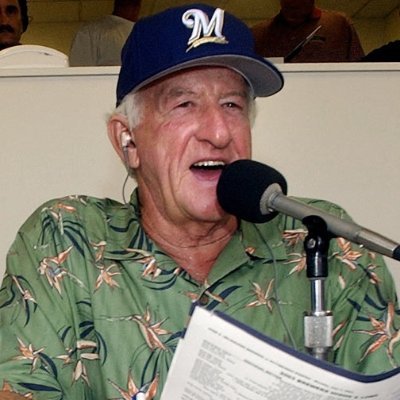
Bob Uecker, 1934-2025

Bob Uecker was living proof that you didn't need to be a great baseball player to be a baseball legend. Sadly, he is living proof no more.

Robert George Uecker was born on January 26, 1934 in Milwaukee. The son of immigrants from the German part of Switzerland, he grew up a fan of the minor-league Milwaukee Brewers. While serving in the U.S. Army, he played on service baseball teams. The Boston Braves had moved to Milwaukee for the 1953 season, and they signed him to a contract.

On April 13, 1962, he became the first Milwaukee native -- indeed, the first Wisconsin native -- to play for the Milwaukee Braves. It was a Friday the 13th, and maybe that was an omen. In the top of the 9th inning, Uecker, wearing Number 8, pinch-hit for pitcher Ron Piché, and grounded out to 2nd base. The Braves lost to the Los Angeles Dodgers, 6-3 at the newly-opened Dodger Stadium in Los Angeles.

Uecker was a catcher, and a decent fielder as one, but not much of a hitter. He would finish his career with a lifetime batting average of exactly .200. He hit 14 home runs, but 1 was off Sandy Koufax of the Dodgers. Just before the 1964 season, the Braves traded him to the St. Louis Cardinals. Now wearing Number 9, he backed up Tim McCarver on the team that won the World Series.
Pictured: A St. Louis Cardinal wearing Number 9
Definitely not Enos Slaughter, Roger Maris,
Joe Torre or Terry Pendleton.

After another year in St. Louis, he was traded to the Philadelphia Phillies. He joked that he got pulled over by a policeman, and was fined $400: "$100 for drunk driving, and $300 for being with the Phillies."

In 1967, they traded him to the Braves, who had moved to Atlanta. He was the only catcher on the roster willing to catch the knuckleball thrown by pitcher Phil Niekro, and so he ended up leading the National League in passed balls. He said, "The best way to catch a knuckleball is to wait until it stops rolling, and pick it up." (Another 1960s catcher, future manager Jeff Torborg, said, "There are two theories about catching the knuckleball. Unfortunately, neither of them work.")

The Braves released him after the season. It was during the World Series, so nobody noticed. He was only 33 years old. It seemed like an ignominious end to an inconsequential baseball career.

*

A funny thing happened on the way to obscurity. Many funny things. Uecker stayed in Atlanta, and, like many other ex-catchers before and since, became a broadcaster, calling the Braves' games. In 1971, a new version of the Milwaukee Brewers, in the American League, hired him as a broadcaster. He became the most popular figure in the team's history, ahead of even such great players as Robin Yount and Paul Molitor. His home run call was, "Get up! Get up! Get outta here! Gone!"

He kept his self-deprecating humor. He said he'd become a household name, but, "The household was in Menomonee Falls, Wisconsin." (A western suburb of Milwaukee, a short drive from County Stadium.) In the 1970s, ABC hired him for national broadcasts on Monday Night Baseball. In the 1980s, he moved over to NBC for the Saturday Game of the Week. The whole country heard how funny he could be.

This led Milwaukee-based Miller Brewing Company to put him in their famous commercials for Lite Beer. In the best-known one, he thinks he's got great complimentary tickets to a game, but the usher says, "You're in the wrong seat, buddy, come on." And when the ad gets back from the tagline ("Lite Beer from Miller: Everything you've always wanted in a beer, and less"), Uecker is shown way up in the upper deck in right field (or, in a variation, behind a support pole), and says to the few people around him, "Great seats, hey, buddy?" Such seats became known as "Uecker seats."

In 1985, he went back to ABC, and starred in the sitcom Mr. Belvedere, as a Pittsburgh-based sportswriter who often clashed with the titular housekeeper. In 1988, because Cleveland Municipal Stadium, the real-life home of the team then known as the Cleveland Indians, wasn't available as a filming location for the film Major League, County Stadium was chosen instead, and Uecker was cast as broadcaster Harry Doyle. He played the role as more like Chicago Cubs announcer Harry Caray, heavy-drinking and sarcastic, than as his usual affable self.

In 2003, the Baseball Hall of Fame gave him its broadcasting honor, the Ford Frick Award. In spite of a .200 lifetime batting average, and never appearing in more than 80 major league games in a season, Bob Uecker was a Hall-of-Famer. (Actually, the Hall goes out of its way to say that the winners of its media awards, both broadcasting and sportswriting, are not members of the Hall of Fame. But everybody treats them as such.)

He was honored both inside and outside County Stadium's successor, now named American Family Field. In 2005, inside, in honor of his 50th season in professional baseball, the Brewers placed a Number 50 with his name on it up in the outfield with their retired numbers, though uniform number 50 remains in circulation for them. In 2009, inside, he was inducted into the Milwaukee Brewers Wall of Honor. In 2012, a statue of him was dedicated outside.
Uecker was married twice. With his 1st wife, Joyce, he had 4 children. Son Steve, from San Joaquin Valley Fever, and daughter Leeann, from Lou Gehrig's disease, predeceased him. He later married Judy, which ended in divorce.

In 2010, Bob missed some broadcasts due to heart surgery and recovery from it. In 2014, like many veteran broadcasters, he cut back to doing home games only. In 2023, he was diagnosed with cancer, but still broadcast through that season and the 2024 season. He died today, January 16, 2025, at his home in Menomonee Falls. He was a few days short of his 91st birthday. He was survived by his 2nd ex-wife, Judy; a daughter, Sue Ann; and a son, Bob Jr.

With his death, there are 10 surviving players from the 1964 World Champion St. Louis Cardinals: Bob Skinner, Julián Javier, Dal Maxvill, Bill White, Carl Warwick, Gordie Richardson, Ray Washburn, Ron Taylor, Charlie James and Bob Humphreys.

Sunday, January 12, 2025

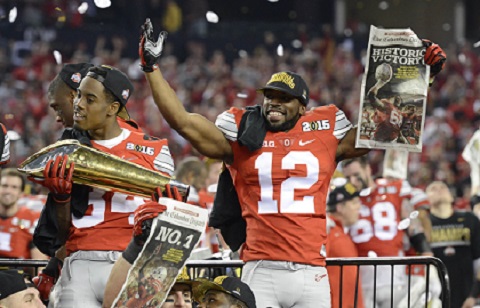
January 12, 2015: The 1st College Football National Championship Playoff

January 12, 2015, 10 years ago: For the 1st time, the College Football National Championship Playoff is concluded, deciding a definitive National Champion.

Under the old system, the Champions of the Big Ten Conference and the league now known as the Pacific-Twelve Conference would have played in the Rose Bowl in Pasadena, California. But now, these are the teams that will play for the National Championship, not in the Rose Bowl game, but in a specifically-designed game.

Nor would it be held in the Rose Bowl stadium. Rather, it was held at AT&T Stadium in the Dallas suburb of Arlington, Texas, home of the Dallas Cowboys, and by this point also the home of the Cotton Bowl Classic, even though the old Cotton Bowl stadium still stood (and still does).

The University of Oregon began the 2014 college football season by clobbering Football Championship Series (FCS, formerly Division I-AA) South Dakota, at home at Autzen Stadium in Eugene, Oregon. But they caught attention the next week by beating then-Number 7 Michigan State, 46-27. They pounded Wyoming, and won a shootout with Washington State. Then, they stumbled, losing 31-24 to Arizona at home.

But they picked themselves up. They did play in the Rose Bowl stadium that season, because that's also UCLA's home field. UCLA were ranked Number 18, but Oregon beat them, 42-30. They beat Washington 45-20, they beat California away 59-41, they beat Stanford 45-16, they beat Number 17 Utah away 51-27, they beat Colorado 44-10, and concluded their regular season by beating their arch-rivals, Oregon State, 47-19 in Corvallis.

That got the Number 2 Ducks into the Pac-12 Championship Game, against Number 8 Arizona. At Levi's Stadium in Santa Clara, home of the San Francisco 49ers, they avenged their only loss, laying a 51-13 licking on the Wildcats.

So Oregon were in the 1st-ever College Football National Championship Playoff. And they were, as it turned out, in the Rose Bowl game, which served as one of the Semifinals. They were the 2nd seed, against Number 2 but 3rd-seeded Florida State. And the Ducks left no doubt as to which of these teams was the better: They beat the Seminoles 59-20. They were in the Final.

This was a team that had games in which they scored 62, 59 twice, 51 twice, 48, 47, 46, 45 twice, 44, 42 and 38. What team could hold this juggernaut back?

The team at the Ohio State University was ready, willing and able to try. They began the season in Baltimore, beating Navy. Then they lost at home at Ohio Stadium, to Virginia Tech, 35-21. That drooped them to Number 22 in the national rankings, and seemed to knock them out of National Championship contention. And home wins over Kent State, the University of Cincinnati and Rutgers, and a win away to Maryland, did little to raise their profile.

Then, in a nationally-televised prime-time game at Beaver Stadium in State College, Pennsylvania, the Buckeyes beat Penn State, 31-24 in 2 overtimes. That inspired them. They were back up to Number 13. They pounded Illinois, 55-14. They went to Michigan State, then ranked Number 7, and beat them, 49-37. Now, they were looking like a title contender again.

They beat Minnesota away, Indiana at home, and won "The Game," beating Michigan, 42-28. That raised them to Number 5, and put them in the Big Ten Championship Game, where they slaughtered Number 11 Wisconsin, 59-0. That put them in the Playoff, as the 4th seed, against 1st seed Alabama. The Semifinal was the Sugar Bowl, at the Superdome in New Orleans, with 2 legendary programs going at it, hammer-and-tongs. And Ohio State emerged victorious, 42-35.

So, while coach Mark Helfrich's Oregon were capable of putting a hellacious number on the scoreboard, so were Urban Meyer's Ohio State: They'd already done 66, 59, 56, 55, 52, 50, 49, and 42 three times. The Final of the 1st NCAA Tournament in basketball, in 1939, featured these same schools, and Oregon won that, 46-33. I don't know if anyone thought it was appropriate that the same schools were playing in this 1st official National Championship Playoff, but it certainly wouldn't have surprised many people if this game were to end with a higher score.

Oregon struck first. Their quarterback, Marcus Mariota, had won the Heisman Trophy. He threw a 7-yard touchdown pass to Keanon Lowe. Ohio State needed to convert a 4th & 3 to keep a drive going, and did. The drive continued, and ended with Ezekiel Elliott running 33 yards for a touchdown. A dumb pass interference penalty by Oregon set the Buckeyes up again, and Cardale Jones threw to Nick Vanett to give them a 14-7 lead at the end of the 1st quarter.

Oregon marched deep into Ohio State territory, but on 4th & goal at the 3, instead of trying a field goal, Helfrich decided to go for 6, and the Ducks were stopped. The Buckeyes took over, and went most of the way down the field, but fumbled at the Oregon 11. The Ducks had to punt on the next possession anyway, and the Buckeyes took advantage, Jones scoring on a quarterback sneak to make it 21-10 Ohio State at the half.

The Buckeyes started the 2nd half by moving into Oregon territory, but Jones threw an interception. On the next play, Mariota threw to Byron Marshall, who took it in 70 yards for a touchdown. The Ducks were back in the ballgame. At 6:39 of the 3rd, Oregon kicked a field goal to make it 21-20.

That was as close as the Ducks would get. Ohio State took the ball back, moved 75 yards, and Elliott ran 9 yards for a touchdown. Early in the 4th quarter, Elliott scored another. With less than 3 minutes to go, he scored a 4th touchdown. Ohio State won, 42-20.

The original system, relying on the bowls, left undefeated teams stuck at Number 2, sometimes even Number 3, claiming to be better than the team that was ranked Number 1 in the final polls. The replacement system, the Bowl Championship Series, was supposed to fix this, but if the Number 3 team looked better than the Number 2, or even the Number 1, and didn't get a chance to prove it, then the system wasn't really better. Now, 4 teams had a chance, and, on this 1st occasion, it was the 4th seed that proved themselves to be the best team in the country.

The Playoff system isn't perfect. As with the BCS and its top 2, there is a chance that 1 of the top 4 teams in the last poll before the Playoff puts in a team that didn't win its Conference, or even its Division.

In 2017, Alabama lost the Southeastern Conference Championship Game to Georgia, but got into the 2018 Playoff, and beat Georgia in the Final. In the 2021 season, this result was reversed: Alabama beat Georgia in the SEC title game, but Georgia got into the Playoff, and beat 'Bama for the National Championship.

So no system is perfect.

January 12, 1975: A Win for Pittsburgh

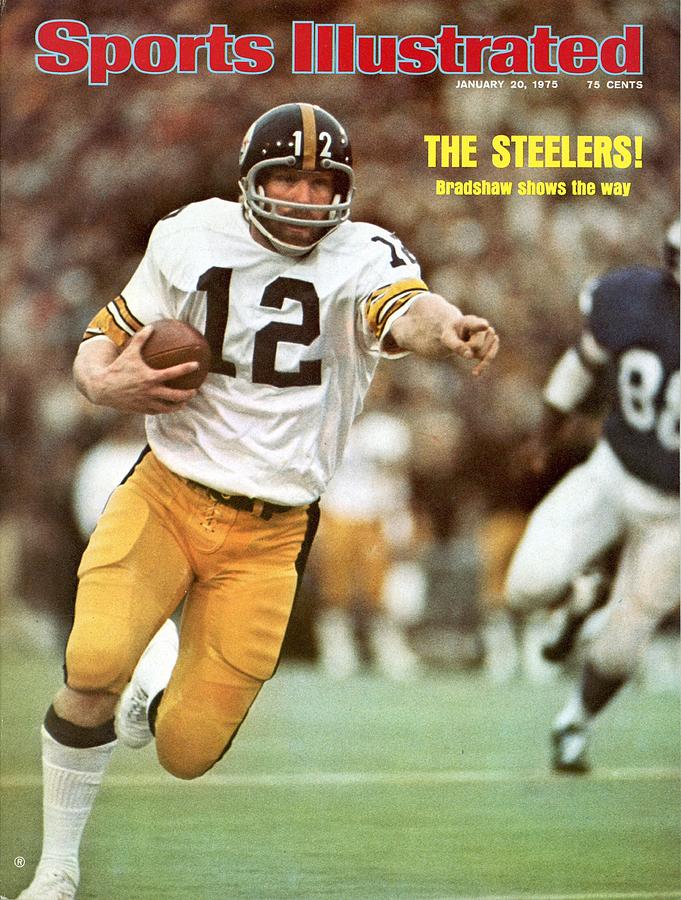
January 12, 1975, 50 years ago: Western Pennsylvania, and Pittsburgh in particular, has long been known as a source of football talent and football fandom. But up to this day, it had never won a professional football championship.

Art Rooney founded the NFL's Pittsburgh Steelers on May 19, 1933. He and his wife, the former Kathleen "Kass" McNulty, lived in the Troy Hill section of the North Side of Pittsburgh, and raised 5 sons. They were Dan, Art Jr., Tim, Patrick and John. They would have 32 grandchildren and 75 great-grandchildren.

Art Jr. said that Art Sr., known to all of Western Pennsylvania as "The Chief," always told his sons, "Treat everybody the way you'd like to be treated. Give them the benefit of the doubt. But never let anyone mistake kindness for weakness." Or, as Art Jr. put it, "He took the Golden Rule, and put a little bit of the North Side in it."

The Steelers were founded when they were because 1933 was the year the Commonwealth of Pennsylvania finally repealed the "blue law" prohibiting professional sports on Sunday. This also enabled the Philadelphia Eagles to be founded on July 8, 1933.

Both teams struggled for years. Indeed, the manpower drain of World War II led them to merge the teams for the 1943 season, and the team was nicknamed the "Steagles." In 1947, at last, the Steelers finished 1st in the NFL's Eastern Division. Well, in a tie for it. With the Eagles. And the Eagles won a Playoff at Pittsburgh's Forbes Field.

That was the closest the Steelers would get to an NFL Championship Game for another quarter of a century. In 1955, Dan and Art Jr. seemed to be the only people at Steeler training camp to notice a young Pittsburgh native who was trying to make the team as a quarterback. But Art Sr. deferred to his head coach, a run-centric old-schooler named Walt Kiesling.

Kiesling is not well-remembered today. The young quarterback is: He was picked up by the Baltimore Colts, and he made that team, and himself, legend. He was Johnny Unitas.

If Art Sr. had died shortly after the Jets won Super Bowl III on January 12, 1969, it would have been said that the best thing he did for his team was to die, so that his son could run the team. Instead, his sons held what we would now call an "intervention," telling him that they should take over the operations of the team. He agreed -- and lived another 20 years, in which the sons turned the Steelers from a joke franchise into an iconic team of American sports.

Pretty much the first thing that Dan Rooney did was offer the Steelers' head coaching job to the head coach at nearby Penn State, Joe Paterno. Paterno turned him down. So Dan offered it to the defensive coordinator of the team the Jets had just beaten in the Super Bowl, who had been on the staff of the San Diego Chargers team that won the 1963 AFL Championship, and a lineman who had won 2 NFL Championships with the Cleveland Browns: Chuck Noll.


Dan put his brother Art Jr. in charge of the team's drafts. His drafts included:

* 1969: Defensive tackle Joe Greene, offensive tackle Jon Kolb and defensive end L.C. Greenwood.

* 1970: Quarterback Terry Bradshaw and cornerback Mel Blount.

* 1971: Linebacker Jack Ham, guard Gerry Mullins, defensive tackles Dwight White and Ernie Holmes, tight end Larry Brown, and safety Mike Wagner.

* 1972: Running back Franco Harris and defensive tackle Steve Furness.

* And in 1974, in perhaps the greatest single draft in NFL history, he selected receivers Lynn Swann and John Stallworth, linebacker Jack Lambert, and center Mike Webster -- 4 Hall-of-Famers in one draft. And that's not counting safety Donnie Shell, who wasn't drafted in 1974, but was signed anyway, and is in the Hall.

Counting Greene, Bradshaw, Blount, Ham and Harris, that was 10 Hall-of-Famers in 6 drafts. Counting Noll, 11 -- all based on the decisions of Dan Rooney and Art Rooney Jr. To put that in perspective: The team had 5 players from 1933 to 1968 who ended up making the Hall.

It took a while to build a winner, especially because Noll and Bradshaw had a contentious relationship. Moving from 1925-built Pitt Stadium into the new Three Rivers Stadium in 1970 helped. In 1972, the Steelers went 11-3, won the AFC Central Division Championship, and reached the AFC Championship Game, thanks to a pass Bradshaw threw that deflected off Oakland Raider safety Jack Tatum and ended up being caught and taken in for a Divisional Playoff-winning touchdown by Harris, known as "the Immaculate Reception." 

They made the Playoffs again in 1973, going 10-4. But they didn't make the Super Bowl either time. In 1974, they went 10-3-1, and won the AFC Central Division again. In the Divisional Playoff, they beat the Buffalo Bills, 32-14 at Three Rivers. This would be the only Playoff game of O.J. Simpson's career: Although he caught a touchdown pass, he couldn't help the Bills win, and he never got to another.

They had to go to the Oakland Coliseum to win the AFC Championship -- this would be the last season that a rotation chose the site of the Conference Championship games, rather than which team had the better record -- and beat the Raiders, 24-13. They would play Super Bowl IX at Tulane Stadium in New Orleans, site of the annual Sugar Bowl, against the Minnesota Vikings.

Both teams had named defenses. Reminiscent of the Iron Curtain across Europe, the Steelers' front seven was known as the Steel Curtain: Tackles Greene and White, ends Greenwood and Holmes, and linebackers Lambert, Ham and the veteran Andy Russell. The Vikings, due to their jersey color reminding people of Sheb Wooley's novelty song that hit Number 1 in 1958, had a defense known as the Purple People Eaters. So it's not surprising that Super Bowl IX was one of the lowest-scoring championship games in NFL history.

Western Pennsylvania had been hit hard over the last 10 years. The coal and steel industries had severely declined. The industries that would replace them and get Pittsburgh, if not the small towns nearby, back on its feet -- computers and health care -- had not yet arrived. Labor unions were losing power.

"White flight" increased the population of the suburbs, but dropped that of the city itself. The city's population peaked at 676,806 in the 1950 Census, but was down to 520,117 in 1970. This decline continues, having reached 302,971 in 2020. The metropolitan area dropped from 2.8 million in 1960 to 2.3 million in 2010, but has gained a little back since then.

The city's sports teams had always been a rallying point, but were also inconsistent. Like the nursery rhyme about the little girl with the curl in the middle of her forehead, when they were good, they were very, very good; but when they were bad, they were horrid.

The city had a team in the NBA during its inaugural season of 1946-47, the Pittsburgh Ironmen, but they failed after that season. The Pittsburgh Condors won the title in the 1st season of the American Basketball Association, 1967-68. But when their biggest star, Connie Hawkins, had his ban from the NBA (due to an overreaction to his role in a point-shaving scandal) lifted in 1969, he went to the Phoenix Suns, and the Pipers were doomed. A rebranding to the Pittsburgh Condors in 1970 didn't help, and they folded in 1972.

The NHL granted the Steel City an expansion team in 1967, the Pittsburgh Penguins. They made the Playoffs in 1970 and '72, and would again in '75, but, at the time, they were nothing special. By far the most successful team in town was the baseball team, the Pirates. They had won the National League Eastern Division title in 1970, '71, '72, '73 and '74, and would again in '75. But aside from 1971, they couldn't win a Pennant. They won the World Series that year, but the death of Roberto Clemente in a plane crash after the 1972 season cast a pall over them that left them unable to return to the Fall Classic.

But football was the sport in Pittsburgh, and in all of Western Pennsylvania. It was especially known for producing great quarterbacks, such as Unitas (from Bloomfield on the city's East Side), Johnny Lujack (Connellsville, 50 miles southeast of downtown), George Blanda (Youngwood, 36 miles southeast), and Joe Namath (Beaver Falls, 30 miles northwest). Later would come Joe Montana (New Eagle, 23 miles south), Dan Marino (South Oakland, on the East Side) and Jim Kelly (East Brady, 57 miles northeast).

Still, the city was looking for its 1st pro football championship. It hadn't happened in the NFL. And the city didn't have teams in any of the AFLs, or the AAFC. Now, it looked to Coach Noll, the Steel Curtain, and Bradshaw, "the Blond Bomber" from Shreveport, Louisiana, to get that 1st title.

A full house of 80,997 fans filed into Tulane Stadium. Despite the Vikings having been to the Super Bowl the year before (losing to the Miami Dolphins), and 4 years before that (losing to the Kansas City Chiefs), the Steelers were favored by 3 points. The weather was bad: 46 degrees, with the artificial turf field a bit slick due to rain the previous day. (The game was supposed to be played indoors at the Superdome, but construction delays forced that stadium's opening to the following August.)

Talk about low-scoring: Not only did the 1st quarter end 0-0 (the Steelers' Roy Gerela missed 2 field goal attempts, and the Vikings only got 20 total yards), but the only score of the 1st half was the 1st safety in Super Bowl history.

Fred Cox missed a field goal for the Vikings. On their next possession, Viking quarterback Fran Tarkenton pitched the ball behind him to Dave Osborn. That may have been his name, and he may have been in the Super Bowl, but unlike the daredevil character created by comedian Bob Einstein, this Dave Osborn was not super: He never had control of the ball, and Tarkenton, known as a "scrambler," ran to the ball and fell on it. White just had to touch him, and it was 2-0 Steelers.

The Steelers got a drive going in the 3rd quarter, and Franco Harris ran the ball in for a touchdown and a 9-0 Pittsburgh lead. And that would be all the scoring in the game's 1st 45 minutes. The Steelers forced a fumble in the 4th quarter, but had the tables turned when the Vikings blocked one of their punts, and Terry Brown recovered the ball in the end zone. But Cox missed the extra point. With 10:33 to go, the Vikings trailed only 9-6. Through the 2023 season, that remains the closest the Vikings have ever come to becoming World Champions.

So often derided as dumb, Bradshaw proved he was a smart quarterback. He launched an 11-play, 66-yard drive, ending with a 4-yard pass to Brown. The touchdown put the Steelers up 16-6 with 3:31 left. Tarkenton threw a pass that was intercepted by Wagner, and the Steelers ran the clock down as much as they could. With 38 seconds left, there was nothing the Vikings could do.

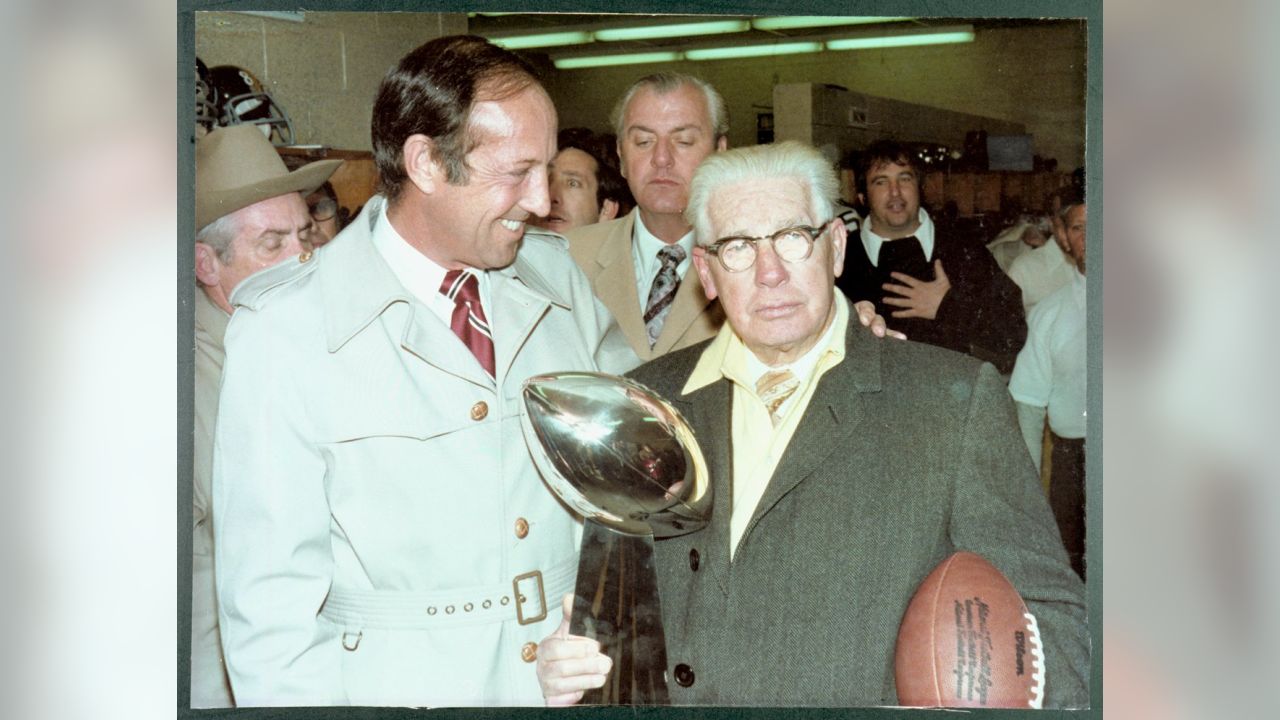
The Pittsburgh Steelers were World Champions. Harris was named the game's Most Valuable Player. At the time, Noll was the youngest man ever to coach a team to victory in the Super Bowl: He had just turned 42. Pete Rozelle said his happiest moment in his 29 seasons as Commissioner of the NFL was handing the Vince Lombardi Trophy to Art Rooney Sr. -- but it was because of the building done by Dan and Art Jr.
Art Sr. wanted it. The organization as a whole, and even Western Pennsylvania as a whole, needed it. The Steelers would reach 4 Super Bowls (IX, X, XIII and XIV), winning all of them, in a span of 6 years.

All tolled, under Dan Rooney's operation, 48 seasons, they reached the Playoffs 29 times, won 22 Division titles (15 in the old AFC Central, 7 in the AFC North following the 2002 realignment), reached 16 AFC Championship Games, won 8 AFC Championships, and won 6 Super Bowls, the most NFL Championships in the Super Bowl era. He also built Heinz Field (now Acrisure Stadium), the Steelers' new home, for the 2001 season, and it is one of the best stadiums in the NFL.

The Steelers became a cultural phenomenon, with their black and gold uniforms, their helmets with the "Steelmark" logo on only the right side with the left side remaining blank, their multi-ethnic working-class fan base, and their bright yellow Terrible Towels being waved in the stands (first at Three Rivers Stadium, then at Heinz Field).

Much like Liverpool Football Club in England, the Steelers had great success in the 1970s, in a city hit hard by industrial decline, where the "football" team meant everything. As with the 1965 Los Angeles Dodgers and the 1968 Detroit Tigers with their World Series wins following race riots, a community in another kind of trouble rallied around a great team, to lift them up, to show a country that had been looking down on them that they were still entitled to some pride.

The fact that the Steelers stood up, usually successfully, to the Dallas Cowboys and the Oakland Raiders, 2 of the most hated NFL teams nationwide, also helped boost their national image. Along with the Cowboys, the Raiders, the Green Bay Packers (due to their similar cultural stamp in the 1960s) and the Chicago Bears (ditto for the 1980s), the Steelers are one of the few NFL teams to have a nationwide fan base. 
In New York and New Jersey, 400 miles from Pittsburgh, you can see Steeler bumper stickers and window stickers on cars every day.

Art Rooney Sr. died in 1988, and Dan became majority owner, replacing Noll with Bill Cowher in 1992. By that point, Art Jr. had reduced his involvement in the team. The Steelers won the 1995 AFC Championship, but history was turned on its head, and the Steelers lost Super Bowl XXX to the Cowboys.

In 2003, Dan followed in his father's footsteps, and handed over day-to-day operations to his son, Art Rooney II (grandson of the founder and nephew of Art Jr.). It was Art II who oversaw the building of the teams that won Super Bowls XL and XLIII and lost Super Bowl XLV, and in 2007 replaced the retiring Cowher with his assistant, Mike Tomlin, the team's 1st black head coach. Dan died in 2017.

Wednesday, January 8, 2025

Top 5 Reasons Why Elvis Might Have Been a MAGA (And 5 Why He Would Have Left)

January 8, 1935, 90 years ago: Elvis Aaron Presley is born in Tupelo, Mississippi, and grows up in Memphis, Tennessee. He became the King of Rock and Roll, and the world was never the same.

Much has done to make him a heroic figure. Much has also been done to make him a figure of ridicule. Much like Donald Trump, whose ego far exceeded Elvis', and who never had any talent besides fraud.

Top 5 Reasons Why Elvis Might Have Been a MAGA (And 5 Why He Would Have Left)

10. Would Have Been: Elvis Supported Richard Nixon. If he supported one criminal Republican President, surely, supporting another wouldn't have been hard.

9. Would Have Left: Elvis Supported Law and Order. The famous meeting between the Memphis Flash and Tricky Dick happened on December 21, 1970, before we knew Nixon was involved in anything criminal, much less had totally, as would Trump all those years later, betrayed his commitment to "law and order." Elvis believed in law and justice. That's why he wanted to see Nixon: He wanted to be made a federal agent, even if it only meant getting a symbolic badge.

8. Would Have Been: Show of Strength. Elvis loved comic book heroes and movie heroes. At first, he would have seen Trump as one.

7. Would Have Left: Reality of Weakness. The reality would have sunk in during COVID. Elvis would have seen that Trump was afraid to do what would have helped people, because it would have made him look weak. Elvis would have hated that: He knew that helping people makes you look stronger. He didn't talk about that, he actually did it. (UPDATE: He absolutely would have loved the 2025 Superman movie: "People were going to die!" "I'm human! That's my greatest strength!")

After seeing Trump mishandle COVID, other things might have sunk in, like how submissive Trump acted before the Russians and the Saudis, and how easily Trump was moved by the flattery of North Korea's dictator Kim Jong Un. Elvis would have realized: This guy is not a strong man. He is weak.

6. Would Have Been: Trump's Macho Appeal. It's easy to imagine Elvis voting for Trump because of the image the right wing created of Hillary Clinton: The privileged Yankee outsider who turned a true poor son of the South into the same kind of left-wing extremist that she is. Elvis would have been pleased to see that "real men" were back in charge.

5. Would Have Left: Trump's Bigotry Appeals. Joe Biden said that the spark of his deciding to run for President in 2020 was the far-right demonstration in Charlottesville, Virginia on August 12, 2017. Elvis would have been disgusted by that.

And other things would have sunk in. He would have seen that Mexicans were not the people Trump was describing. He would have seen that immigrants in general were people who tended to believe in America, and, once here, obeyed the law better than did Trump himself. He would have seen that Trump believes that black lives don't matter. That use of the Army to clear the streets so Trump could do that photo-op with an upside-down Bible? That really would have chafed Elvis' chaps.

Elvis had his flaws -- including one he shared with Trump, liking women a little too young for present-day tastes -- but he was no bigot. He might not have been "woke," but he was definitely inclusive.

4. Would Have Been: Trump's Pandering to the Military. Elvis would have dug that.

3. Would Have Left: Trump's Actual Treatment of the Men and Women In Uniform -- and Veterans. Elvis was a veteran, and would not have put up with Trump calling him, or anyone else who served, "losers" and "suckers."

2. Would Have Been: The Words Themselves. Of course, Elvis would have wanted to "make America great again."

1. Would Have Left: The Words Rendered Meaningless. Elvis would have been sickened by the Insurrection of January 6, 2021. If he had still supported Trump up until that moment, that would have ended it. And no price of gas or eggs would have swayed him. (Why would it? He was rich.) And he certainly wouldn't have been dumb enough to be persuaded by, "They're eating the dogs! They're eating the cats!" That would not have turned him back to Trump.

You see, it's bad enough that Trump did the opposite of what he promised: He made America no longer great, because he rendered America no longer good.
 
But now, he wants to remake America in his image: The image of a bully who does whatever he wants, and gets away with all of it, but is really a coward at heart. And Elvis would not have put up with that.

Elvis was satisfied with being a King in nickname only. Trump wants to be King of America. And, thanks to a Supreme Court hand-picked by the Heritage Foundation and Mitch McConnell, he essentially is. Even though he is on his knees before Vladimir Putin and Mohammed bin Salman.

In many ways -- some beautiful, some excessive, and some not so good -- Elvis Presley was about as American as you can get. He wasn't brilliant, but he was smart enough to have eventually seen that Donald Trump is about as un-American as you can get.

January 8, 2000: The Music City Miracle

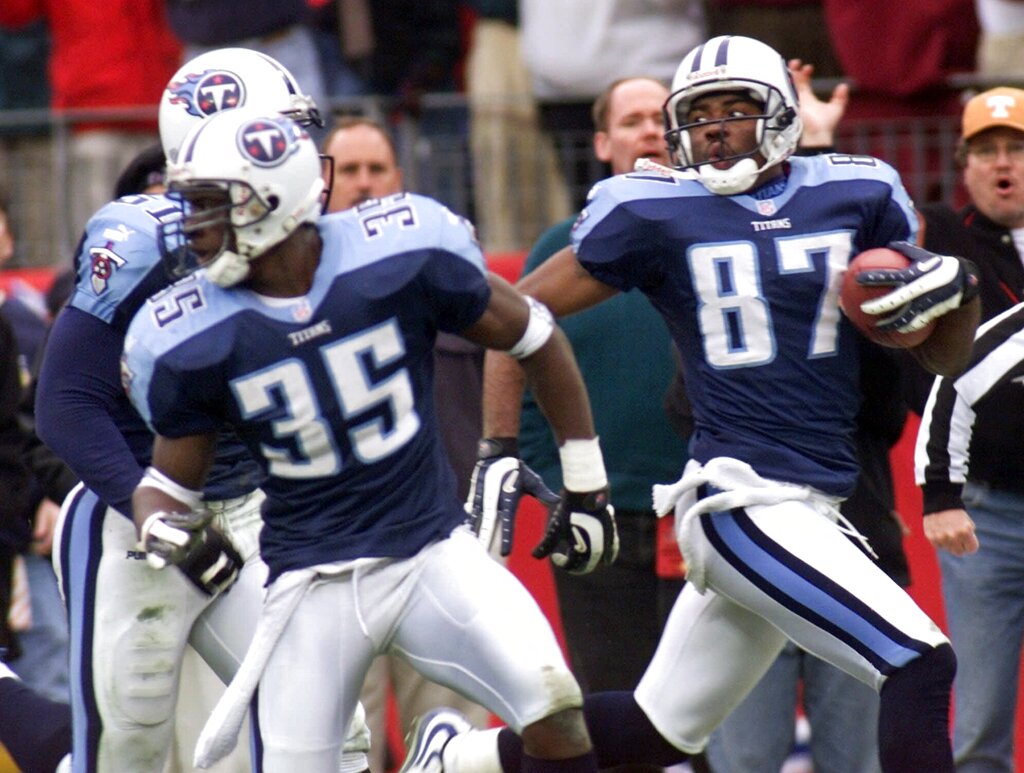
January 8, 2000, 25 years ago: The Music City Miracle takes place, one of the wildest and most controversial plays in NFL history.

The Houston Oilers moved in 1997, becoming the Tennessee Oilers. After 1 season at the Liberty Bowl in Memphis, they realized they weren't going to draw enough fans as a lame-duck team. All previous pro football teams in Tennessee had been based in Memphis, and, since Memphis and Nashville don't like each other, Nashvillians never really adopted the WFL's Memphis Southmen or the USFL's Memphis Showboats; and Memphis fans, knowing the Oilers would be in Nashville in 1999, rejected them.

So they moved to Nashville a year earlier than they'd intended, even though Vanderbilt Stadium seated only 41,000. After all, they weren't getting that much in Memphis.

In 1999, the Adelphia Coliseum -- now named Nissan Stadium -- opened, across the Cumberland River to the east of downtown Nashville. They changed their name again, to the Tennessee Titans, and adopted a new logo and new colors as well. The people of Nashville really took to them, because, for the first time, they had a true Nashville team to root for.

Winning helped: After going 8-8 in each of their 2 seasons as the Tennessee Oilers, head coach Jeff Fisher led the Titans to a record of 13-3, the best in the franchise's 40-season history. Ordinarily, this would be good enough to win the Division. But the Jacksonville Jaguars went 14-2 to win the AFC Central Division. So the Titans got into the Playoffs as a Wild Card.

But they would get the 1st round of the Playoffs at home. The franchise hadn't made the Playoffs in 6 years, since they were still in the Astrodome.

Their opponents were the Buffalo Bills. Although the Bills had won 4 straight AFC Championships from 1990 to 1993, including beating the Oilers in a Playoff game with the biggest comeback in NFL history, they lost 4 straight Super Bowls. A few players from those teams were still with them as they took the field at Adelphia.

The 1st quarter ended scoreless. Early in the 2nd quarter, Jevon Kearse, known as "The Freak" and winner of the NFL's Defensive Rookie of the Year, sacked Bills quarterback Ron Johnson in the end zone. It was 1 of 6 sacks on the day by the Titans, 1 of 2 by Kearse. Quarterback Steve McNair led the Titans down the field, and scored on a 1-yard run. That made it 9-0 Tennessee.

The next time the Titans had the ball, Al Del Greco attempted a 45-yard field goal, and missed. But the Bills committed a defensive penalty on the play, and Del Greco made the re-kick. The 1st half ended 12-0 in the Titans' favor.

Bills fans need to remember this: For much of the half, their team really wasn't in the game. The Titans held them to 64 yards, and they were penalized for almost as many: 44, after being penalized, how many times, Ed Rooney? "Nine times!"

But on the Bills' 1st play of the 2nd half, Antowain Smith ran for 44 yards. Four plays later, he scored from 4 yards out. On their next drive, Kearse made a big mistake with a roughing-the-passer penalty. This led to Smith scoring another touchdown, early in the 4th quarter, giving the Bills a 13-12 lead. But they couldn't make the 2-point conversion.

Del Greco kicked another field goal to put the Titans ahead 15-13 with 1:48 left in regulation. The Bills drove, and, with 20 seconds left, Steve Christie -- who had kicked the overtime winner in that comeback, 7 years and 5 days earlier -- kicked from 41 yards out, and it was 16-15 Buffalo.

The Bills treated the game as already won. Hall-of-Fame defensive end Bruce Smith was caught on film saying, "We got a win on the road, baby!" But the Bills still had to kick off, and hold the Titans off for another 16 seconds.

Perhaps some Tennessee fans were thinking of the ending of the 1982 California vs. Stanford game, which Cal won with a lateral-filled kickoff return known simply as "The Play." But Titans special teams coordinator Alan Lowry was thinking of a different play from the same year.

He was then an assistant coach with the Dallas Cowboys. Also in Dallas is Southern Methodist University -- both teams used the Cotton Bowl as their main home field from 1960 to 1971 -- and SMU used a trick play on a kickoff return to beat Texas Tech. Lowry made the Titans practice the play, which he called "Home Run Throwback," mixing his sports metaphors. They even used it once in the regular season, scoring a touchdown against the Atlanta Falcons.

Christie tried a "pooch kick," to make it harder to run the ball back. Lorenzo Neal picked the ball up. Right behind him was Frank Wycheck, and Neal handed him the ball. This was key: The Bills saw this, and keyed on Wycheck.

Wycheck then threw the ball across the field, to Kevin Dyson. Except for Christie, every Bills player was fooled. Dyson ran down the sideline 75 yards, and had every other Titan available to block every Bill player coming over, and scored a touchdown.

Titans broadcaster Mike Keith had the call:

Do the Titans have a miracle left in them, in what has been a magical season to this point? If they do, they need it now. Christie kicks it high and short. Gonna be fielded by Lorenzo Neal at the 25, pitches it back to Wycheck, he throws it across the field to Dyson, 30, 40, 50, 40, 30, 20, 10, 5, end zone! Touchdown, Titans! There are no flags on the field! It's a miracle! Tennessee has pulled a miracle! A miracle for the Titans!

On TV for ABC, Mike Patrick had a similar call: "Dyson's going to go all the way! And there is no flag!"

Why would there be a penalty flag? Because it looked to many people like Wycheck had thrown a forward pass on a kickoff, which is illegal. The referee agreed to review the play.

The referee was Phil Luckett. Twice, in the previous season, he had been involved in controversy. On Thanksgiving, he had flipped the coin for overtime, and heard the Pittsburgh Steelers' Jerome Bettis call "Heads" then change his mind to "Tails," and went with the initial call of "Heads." The coin landed tails, the Detroit Lions got the ball, and they kicked a field goal to win without the Steelers even getting the ball. The Steelers missed the Playoffs due in part to losing that game.

A few weeks later, Vinny Testaverde fell a foot short of the goal line on a 4th down play, but the ball was ruled to have crossed the plane of the goal line, giving the New York Jets a win they didn't really deserve against the Seattle Seahawks. Luckett wasn't the official who made the call, and it wasn't reviewable under the rules of that season; but as head official for the game, he got blamed. So, for the 1999 season, the NFL team owners voted to bring instant replay back, and this was the biggest reviewed play since that decision.

The rule for instant replay is that, in order for the call on the field to be overturned, it must be conclusively shown to have been wrong. The replay didn't conclusively show that Wycheck's throw was a forward pass. I've seen it many times, and have never had any doubt that it was a lateral, slightly (maybe a foot or two) backward. No one reviewing the play thought the throw was the slightest bit forward. The touchdown was allowed to stand.

There were still 3 seconds left on the clock when Dyson crossed the goal line. So this crazy game wasn't over yet. But the Bills didn't have a "miracle" of their own, and the Titans won, 22-16.

During the off-season, the NFL office hired a computer analyst to check the play. Once again, it was affirmed that the Wycheck throw was a lateral. After 25 years, Bills fans still disagree.

But, through 2 different broadcasters' use of the word "miracle," the play and the game have become known as the Music City Miracle.

The Titans went on to beat the Indianapolis Colts and the Jaguars, to win the franchise's 1st AFC Championship. As the Oilers, they had won the AFL Championship in 1960 and 1961, but had lost the AFL Championship Game in 1962 and 1967, and had lost the AFC Championship Game in 1978 and 1979. So this would be the franchise's 1st trip to the Super Bowl.

The Titans lost Super Bowl XXXIV to the St. Louis Rams, 24-17. On the game's final play, Dyson, who had scored the touchdown on the Music City Miracle, was tackled by Mike Jones, 1 yard short of a touchdown that, with an extra point, would have sent the game to overtime -- or, with a 2-point conversion, would have won Tennessee the World Championship.

The Titans made the Playoffs in 5 of the next 9 years, and lost another AFC Championship Game in 2002. Then they went into a down period. But they have rebuilt. They reached the AFC Championship Game again in 2019, made the Playoffs again in 2020. The Bills missed the Playoffs for the next 17 seasons in a row. But they, too, have built a contender, and reached the AFC Championship Game in 2020. 

Both teams were eliminated from the 2021-22 Playoffs in the Divisional round. The Titans then dropped off, but the Bills have stayed strong.

Frank Wycheck died on December 9, 2023, at the age of 52. He thought he had CTE, and he may have been right, because he died from falling and hitting his head.

The day after, the Bills got hit with a similar play against the Kansas City Chiefs, but it was nullified for offside. Like the Music City Miracle, the officials got the call correct. And the Bills won the game.