Showing posts with label rhythm and blues. Show all posts

Tuesday, December 30, 2025

December 30, 1950: The Dominoes Record "Sixty Minute Man"

Rock and roll is 75 years old? How can that be? Well, it be.

December 30, 1950, 75 years ago: The Dominoes, an all-black vocal group specializing in rhythm & blues songs, record "Sixty Minute Man" on Federal Records, at National Studios, at 460 West 42nd Street in New York City.

At the time, The Dominoes consisted of singer, pianist, manager and songwriter Billy Ward; tenor Clyde McPhatter; baritones Charlie White and Joe Lamont; and bass singer Bill Brown. Ward had teamed up with white songwriter Rose Marks to write "Sixty Minute Man," in which a man brags about how he's a great lover:

Look-a-here, girls, I'm telling you now:
They call me Lovin' Dan.
I rock 'em, roll 'em, all night long.
I'm a sixty-minute man.

If you don't believe I'm all I say
come up and take my hand.
When I let you go, you'll cry, "Oh, yes:
He's a sixty-minute man!"

There'll be fifteen minutes of kissin'.
Then you'll holler, "Please, don't stop!"
There'll be fifteen minutes of teasin'
and fifteen minutes of pleasin'
and fifteen minutes of blowin' my top!

If your man ain't treatin' you right
come up and see ol' Dan.
I rock 'em, roll 'em, all night long.
I'm a sixty-minute man.

The record was released in May 1951, and within a month, it reached Number 1 on Billboard magazine's R&B chart, holding that top spot for 14 weeks, a record at the time. It actually crossed over onto Billboard's Popular Music chart -- in other words, white people's music -- reaching Number 17. Black singers had done better than that, but they were pop singers like Nat King Cole and Billy Eckstine, not R&B groups or soloists.

If you're asking, "How did a line like 'Fifteen minutes of blowin' my top' get past the censors in 1951?" I don't have an answer. 

Unusual for single records, then as now, the bass singer takes the lead, Bill Brown. There is guitar playing from René Hall, and the drumming is on the 2nd and 4th beats. By a certain definition -- and not just because the words "rock" and "roll" are used together -- this is the very first rock and roll record. 

Another candidate, "Rocket 88" by Jackie Brenston & His Delta Cats -- actually Ike Turner and the band he was using at the time -- was recorded in March 1951 (after "Sixty Minute Man"), released in April (before "Sixty Minute Man"), but didn't debut on the charts until June (after "Sixty Minute Man"). It also has the drumming on the 1st and 3rd beats, which tends to disqualify it from the strict definition of "rock and roll." But then, rock and roll has always been about challenging boundaries, and thus strict definitions don't always apply. So either one of these songs could be claimed as the first.

With his own name on the group, Ward took in most of the group's income, despite the fact that McPhatter was the lead singer on most songs. Ward even had Clyde billed as "Clyde Ward," to make it seem like Clyde was his brother. In 1953, Clyde decided he'd had enough, and left to form a new group, The Drifters, arguably inventing "doo-wop."

In 1955, after 2 years of great success on the R&B charts, Clyde was drafted into the U.S. Army. After serving a year, he started a solo career, while The Drifters built an entirely new lineup led by Ben E. King. After years of hard drinking and drug use, Clyde McPhatter died in 1972, not quite 40 years old.

But back in 1953, Ward was ready for Clyde's departure, as he already had a replacement lined up: Jackie Wilson. Eventually, he got sick of Ward, too, and launched a solo career in 1957. He became known as "Mr. Excitement," and had a bunch of hits.

In 1975, performing for a Dick Clark-sponsored oldies show at the Latin Casino in Camden, New Jersey, across the Delaware River from Philadelphia, Jackie suffered a heart attack -- just as he was singing the opening line of his 1st big solo hit, from 1959, "Lonely Teardrops": "My heart is cryin', cryin'... "

Since throwing his body all over the stage was a part of his act, it took about 30 seconds for people to realize that this collapse wasn't, and it cost his brain precious oxygen. It also didn't help that he was already sweating like crazy, as that was part of his act, too, so that didn't seem like a sign that anything was wrong. He was told that women liked that, and that taking salt tablets would make him sweat more. Those tablets are probably the reason he had a heart attack at the age of 41. He spent the rest of his life in and out of hospitals and nursing homes, dying in 1984.

Bill Brown was even unluckier than McPhatter and Wilson: He got sick of Ward's military-style discipline, left in 1952, joined The Clovers in 1953, and didn't even live to see their success, as he died in 1956. (I've looked for a cause, but I can't find one: Not an illness, not drugs, not an accident, not a murder.) He didn't live to see how his lead vocal would affect rock and roll, inspiring such basses as Fred Johnson of The Marcels (who hit Number 1 in 1961 with a doo-wop version of "Blue Moon") and Melvin Franklin of The Temptations.

René Hall died in 1988, Joe Lamont in 1998, Billy Ward in 2002, and Charlie White was the last survivor, living until 2005. I can find no record of when Rose Marks died, but a photograph of her suggests that she was already middle-aged in 1950, so she has likely been dead for a long time.

Fats Domino, one of the founding fathers of rock and roll, did not name himself for the group: His real name was Antoine Dominique Domino Jr. However, later singer Ernest Evans did take the name "Chubby Checker" as a play on the name "Fats Domino." Still later, in 1970, Van Morrison released the song "Domino," and Eric Clapton formed a group named Derek & The Dominos (no E on the end). Both were tributes to Fats, not Billy Ward's group. (Morrison recorded another song with a tenuous connection to the Dominoes, "Jackie Wilson Said.")

The debate over "the first rock and roll record" continues, but I'm satisfied that it's "Sixty Minute Man" by The Dominoes. 

Sunday, January 19, 2025

January 19, 1945: Louis Jordan and His Tympany Five Record "Caldonia"

January 19, 1945, 80 years ago: Louis Jordan and His Tympany Five record "Caldonia." It is sometimes called the invention of rhythm & blues, or R&B. Some people even consider it the 1st rock and roll record.

Rock and roll, while World War II was going on? Rock and roll, while FDR was still alive? Not exactly.

Louis Thomas Jordan was born on July 8, 1908 in Brinkley, Arkansas, and took up the saxophone. He joined bands in Philadelphia, and played in the Chick Webb Orchestra in New York, before forming his own band, and recording duets with Bing Crosby, Louis Armstrong and Ella Fitzgerald.

He formed the Tympany Five in 1938, and opened for The Mills Brothers. In the 1940s, they were one of the acts that filmed "soundies," proto-music videos for "video jukeboxes" that were installed in bars. One of these was "Caldonia." The song had a familiar theme: A man loves a woman, his family doesn't like her, but he doesn't care.

In the middle of the song, Jordan starts riffing, talking about how his mother doesn't like Caldonia. This led disc jockey-turned-singer Johnny Otis to say, "Louis Jordan wasn't just the first rock-and-roller, he was the first rapper!"

Was he the first rock-and-roller? Certainly, he was one of the earliest black performers who was popular among white people. And his style -- his rhythms, his lyrics, his vocals -- influenced many early rock performers. His pianist, Bill Doggett, would have an early rock hit with the instrumental "Honky Tonk, Part 2" in 1956. But rock and roll is a guitar-driven medium, and while his songs had a good guitarist in Carl Hogan, they were driven by horns, like jazz and its derivative, "Big Band" -- not by the guitar.

Ironically, rock and roll seemed to pass him by. But he toured Britain in the 1960s, making him popular there. He died on February 4, 1975, of a heart attack, at age 66. He had not benefited from the 1950s nostalgia wave, and there never really has been one for the 1940s, so he got forgotten.

Until 1987, when the Rock and Roll Hall of Fame elected him in its "Early Influence" category. In 1990, the "jukebox musical" Five Guys Named Moe debuted, featuring Jordan's music. In 2008, the U.S. Postal Service honored him with a stamp.

Wednesday, December 11, 2024

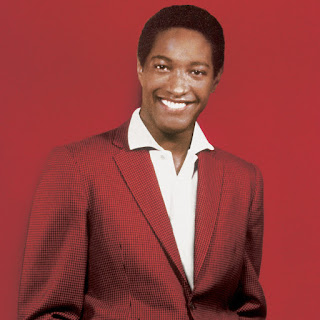
December 11, 1964: The Death of Sam Cooke

December 11, 1964, 60 years ago: Sam Cooke dies under mysterious circumstances in Los Angeles.

Born on January 22, 1931 in Clarksdale, Mississippi, as Samuel Cook (no middle name), he was taken to Chicago by his family at age 2. He attended Wendell Phillips Academy, an all-black high school on the South Side, named for a well-known abolitionist. That school had already produced singers Nat "King" Cole and Dinah Washington, comedian George Kirby, Negro League star Ted "Double Duty" Radcliffe, and Pro Football Hall-of-Famer Buddy Young. Actress Marla Gibbs was a classmate of Sam's. The school would later produce jazz bandleader Herbie Hancock and football players Mike Pruitt and Chris Hinton.

In 1950, only 19 years old, Sam was good enough to be asked to replace R.H. Harris as lead singer of The Soul Stirrers, then the country's most popular black gospel group. He infuriated gospel fans by turning secular in 1957, adding an E to the end of his name, and had a Number 1 hit with "You Send Me."

The hits kept coming: "Only Sixteen" in 1959, "Wonderful World" and "Chain Gang" in 1960, "Cupid" in 1961, "Twistin' the Night Away" in 1962, "Another Saturday Night" in 1963, and "Good News" in 1964. Sam wrote, or co-wrote, all of these, some with his brother Charles Cook, with Robert "Bumps" Blackwell producing them. He also had hits with covers of the blues songs "Frankie and Johnny" and "Little Red Rooster."

His concerts became a sensation, including at the Copacabana in New York. Women threw themselves at him. He was married twice, raised his 1st wife's son, had 3 children with his 2nd wife, and is believed to have had 3 other children.

In 1963, he signed a contract with Allen Klein, who would later manage The Rolling Stones and mismanage The Beatles. Cooke had no problem with him, as he negotiated one of the best record-and-royalty deals any star, regardless of race, had ever gotten to that point.

That year, he heard Bob Dylan's song "Blowin' in the Wind," which had verses reflecting the civil rights and antiwar struggles. It stuck in his mind, and made him want to write a similar song. But he was afraid of losing the white fans he'd gained. So he compromised, recording "Blowin' in the Wind," and singing it at his shows. He didn't lose any fans.

On October 8, 1963, he made reservations for himself, his wife Barbara, his brother Charles, and his backing group at the Holiday Inn North in Shreveport, Louisiana, a segregated city. When they got there, the desk clerk, according to a contemporary report, "glanced nervously," and said there were no vacancies.

Sam had a fit. He demanded to see the manager, and refused to leave until he did. Barbara was scared, telling him, "They'll kill you!" He said, "They ain't gonna kill me, because I'm Sam Cooke." He must have forgotten that his fellow Phillips alumnus, Nat "King" Cole, an even bigger star, had been badly beaten onstage at a concert in Birmingham, Alabama in 1956. And that was with thousands of witnesses.

Finally, Sam was convinced to leave. He found a payphone, and called the all-black Castle Motel, and made a reservation there. The police had been tipped off: When the Cooke party got to the Castle, they were arrested for disturbing the peace. It took until 2019 for the City of Shreveport to offer an official apology to the Cooke family.

On January 30, 1964, Sam recorded a new song he'd written, "A Change Is Gonna Come." It had been 7 months since the assassination of Medgar Evers and the removal of George Wallace from the schoolhouse door, 5 months since the March On Washington that featured Martin Luther King's "I Have a Dream" speech, 4 months since the Birmingham church bombing, 3 months since the Shreveport arrest, 2 months since the assassination of John F. Kennedy, and 17 days since Dylan released his civil rights-heavy album The Times They Are A-Changin'. (It had also been 5 days since The Beatles hit Number 1 in America with "I Want to Hold Your Hand," but that had nothing to do with civil rights.)

Klein loved the song, and booked Sam on The Tonight Show Starring Johnny Carson for February 7. It was the 3rd time he'd appeared on the show. He sang "A Change Is Gonna Come." Johnny did not object. Nor did producer Fred de Cordova. Nor did NBC executives. Nor did NBC censors. Nor did NBC's sponsors. In fact, there was very little attention paid to it, mainly because this was the day The Beatles arrived in America, to perform on The Ed Sullivan Show 2 days later. (Sam had appeared on Sullivan, twice in 1957 after his initial burst of success, but hadn't done so since.)

On March 1, Sam's album Ain't That Good News was released, with "A Change Is Gonna Come" on it. But it wasn't yet released as a single. And he got nervous, not singing it in concert after The Tonight Show. On November 16, Sam recorded "Shake," a great dance number, and it was set to be released on December 22, with "A Change Is Gonna Come" as the B-side.

On December 10, 1964... We may never know the full facts. Sam was in Los Angeles, and had dinner with Al Schmitt and Schmitt's wife at Martoni's, an Italian restaurant popular with music industry people like Schmitt. They drank martinis, apparently to excess. They made plans to go to a nightclub named PJ's. The last time Schmitt saw Sam, he was at the bar at Martoni's, talking to a woman Schmitt didn't recognize.

Interviewed in 2020, Schmitt said that he and his wife went to PJ's, "But Sam never showed up. So I went home. I was told later he got there about 15 minutes later, just before closing time, and they wouldn't let him in. He was with this girl."

"This girl," apparently the same one Schmitt saw Sam talking to at the Martoni's bar, was Elisa Boyer, then 22. Sam took her to his cherry-red Ferrari, and drove her to South Central Los Angeles, to the Hacienda Motel, known to the Los Angeles Police Department as a hangout for men cheating on their wives. They checked in at 2:35 AM on December 11, signing the register as Mr. and Mrs. Sam Cooke.

Boyer told the police that Sam pinned her on the bed and began to tear off her clothes, intending to rape her. Then he went to the bathroom to take off his clothes. She then grabbed her clothes, and his as well. She found a phone booth and called the police, saying she'd been kidnapped.

The hotel's manager, Bertha Franklin, told the police that Sam, wearing the one piece of clothing he still had, a sport coat, came at her in a drunken rage, grabbed her, and asked, "Where's the girl?" She said she pushed Cooke away, grabbed a gun, and fired 3 shots. One missed, another went through Sam's heart, another through his lung. He yelled, "Lady, you shot me!" And he fell, dead, at age 33.

The LAPD, notorious for racism at the time (and for a long time after), ruled his death a justifiable homicide.

Nobody who knew Sam believed that. They knew he was a womanizer and, if not an out-and-out alcoholic, certainly a drinker. But he was not by nature a violent man. He was not known to go to "no-tell motels." His sister, Agnes Cooke-Hoskins, said, "My brother was first class all the way. He would not check into a $3-a-night motel. That wasn't his style."

And not only was the Hacienda a known hooker's hangout, but Franklin herself had a criminal record as a madam. The prevailing theory is that Boyer was a prostitute who decided to take Sam's money, and also his clothes so that he couldn't just run out after her.

What's more, at his funeral, singer Etta James noticed that he'd been beaten: "His hands were broken and crushed... They tried to cover it up with makeup, but I could see massive bruises on his head." These injuries were not mentioned in the autopsy report. Some people suspect that he was killed elsewhere, and dumped at the Hacienda, and that Boyer and Franklin were paid off to tell the story they told.

Sam had met Muhammad Ali, football star Jim Brown, and Nation of Islam spokesman Malcolm X at the Hampton House hotel in Miami after Ali won the Heavyweight Championship of the World 10 months earlier, beating Sonny Liston. Ali said, "If Cooke had been Frank Sinatra, the Beatles or Ricky Nelson, the FBI would be investigating."

His body was flown to his hometown in Chicago for one funeral, then back to Los Angeles for another. He was laid to rest at Forest Lawn Memorial Park Cemetery in the L.A. suburb of Glendale, California.

Bertha Franklin had to quit her job at the Hacienda. She died in 1966, at age 57, of a massive heart attack. The Hacienda still stands, under the name Polaris Motel, at 9137 South Figueroa Street, 4 miles (52 blocks) south of the Los Angeles Coliseum, and 7 miles (80 blocks) south of the Crypto.com Arena (formerly the Staples Center).

Sam's Ferrari from that night would figure in another rock star's death. Dennis Wilson, the drummer for the Beach Boys, bought it, and it was parked nearby when he drowned in Marina Del Rey in 1983, 19 years to the month later. In 2007, a Japanese collector bought the car.

On January 11, 1965, exactly 1 month after the murder, as "Shake" was becoming a Top 10 hit and "A Change Is Gonna Come" was struggling to reach the Top 40, Elisa Boyer was arrested for prostitution. Maybe somebody told her to "lay low," and she misunderstood. In 1979, she murdered her boyfriend, and was found guilty, and sentenced to 25 years to life in prison. As of December 11, 2024, at the age of 82, she is still incarcerated. Al Schmitt died in 2021.

In 1986, Sam Cooke was 1 of 10 charter acts inducted into the Rock and Roll Hall of Fame. Had he lived, he would have been 55. In 1989, The Soul Stirrers were elected to the Rock Hall in the "early influences" category, making Sam only the 2nd double inductee. (Clyde McPhatter had been elected as a soloist in 1987 and as one of The Drifters in 1988.)

Sam was played by Paul Mooney in The Buddy Holly Story in 1978, and Leslie Odom Jr. in One Night In Miami in 2020.