Showing posts with label j.j. abrams. Show all posts

Saturday, January 18, 2025

If J.J. Abrams Directed "The Honeymooners"

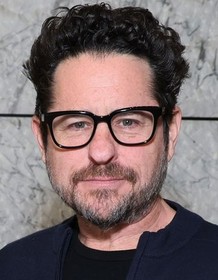
So, once again, a rumor is out that J.J. Abrams will finally get to make the 4th film in his "Kelvin Timeline" Star Trek series.

Oy vey. We have Strange New Worlds. We don't need Abrams' "Captain Jerk" crap.

If Abrams had done the Honeymooners reboot, instead of a black cast led by Cedric the Entertainer a few years back, which didn't go over well but was, at the least, in the spirit of the original...

* Ralph Kramden would have been born in 1912, on a lifeboat fleeing the Titanic. It would have made him just 4 years older than Jackie Gleason.

* Adult Ralph would be played by Seth Rogen. Ed Norton would be played by... Edward Norton. Ralph's wife Alice would be played by Karen Gillan. Not a great choice, but she's a redhead with a good body, so they go with her. Ed's wife Trixie, well, it doesn't really matter who plays her.

* In 1955, Mayor Robert Wagner, played by Stanley Tucci, while inspecting the New York sewer system, would have been killed along with 30 others by a bomb planted by a Communist agent. (In real life, Wagner served from 1954 to 1965, and lived until 1991.)

* Ed, eating his lunch with Ralph in a City park at the time, would be traumatized by survivor's guilt, which brings back his Navy PTSD from World War II. Alice figures out that Ed actually is, as Ralph has said many times, a "mental case," and that his apparent stupidity is a defense mechanism, his suppression of his experiences.

* Inspired by the Red-baiting Senator Joe McCarthy, Ralph and Ed come up with a "crazy harebrained scheme" to avenge the Mayor and the sewer workers, involving technology that shouldn't have happened for another 70 years (our time).

* Not only does it work, but they are hailed as heroes. Ralph wins the Mayoralty in a special election, and defeats Nelson Rockefeller for Governor in 1958.

* Free of his repressed memories and his mental block, Ed re-enlists in the Navy, and graduates from Officers' Training and Flight schools.

* In 1969, U.S. Navy Commander Edward Lillywhite Norton says, "That's one small step for a man... one giant leap for mankind!" And President Ralph Kramden makes the phone call from the White House to the astronauts, saying, "Norton, didn't I tell you, long, long ago, that you weren't just 'the man from space,' but that you were actually going to the Moon?"

If you are a Honeymooners fan, and you find this ridiculous, you would be right. Well, that's how true Star Trek fans feel about J.J. Abrams' "Bad Reboot."

Monday, May 25, 2020

Ranking the Star Wars Films -- and The Empire Strikes Back Is NOT #1

May 25, 1977: Star Wars -- or, as people born after 1990 know it, Star Wars: Episode IV -- A New Hope -- premieres. It changes the movie industry forever.

Note that, while I'm using the date of the premiere for this post, the time of it is 5:04 AM -- or 0504, or May the 4th, which some celebrate as Star Wars Day: "May the 4th be with you."

July 16, 1977: My father took me to see it, at the Menlo Park Twin Cinema on U.S. Route 1 in Edison, New Jersey. It has since been demolished, as has the old Menlo Park Mall. The new Mall has a multiplex.

You hear that 20th Century Fox fanfare, and then that pause, and then that John Williams score, through Dolby stereo speakers, when you're 7 years old, and your previous science fiction experience has been watching Star Trek, the Tom Baker version of Doctor Who, and the old Flash Gordon serials on TV with your father... and you totally get it when, years later, you first hear the expression "the magic of the movies."

The Yankees frequently use Williams' familiar theme song to introduce their players on special days, like Opening Day and postseason games, and Williams' "Imperial March," a.k.a. "Darth Vader's Theme," to introduce the opposing players.

Creator George Lucas envisioned a 9-episode "Skywalker Saga." It's now been done, plus 2 "Star Wars Stories" that were intended to add some background to the 9. How should they be ranked?

Some Lucasians insist that Episode V -- The Empire Strikes Back is the greatest film not just of the series, but in motion picture history. They are wrong, as I will explain in this ranking. Nor is Episode I -- The Phantom Menace the worst one.

11. Solo: A Star Wars Story, 2018. An origin story for Han Solo, played as a young man by Alden Ehrenreich, showing how he met Chewbacca and Lando Calrissian, and how he became the captain of the Millennium Falcon.

It had Donald Glover, a.k.a. Childish Gambino, as the young Lando. It had Emilia Clarke from Game of Thrones. It had Woody Harrelson. It had Thandie Newton. It had Phoebe Waller-Bridge. It had Paul Bettany. It had Ray Park reprising his role as the popular villain Darth Maul, somehow having survived getting cut in half by young Obi-Wan Kenobi in Episode I. It was directed by Ron Howard. What could go wrong?

Lots of things. It grossed a little under $400 million worldwide, or about $100 million less than it needed to break even. Critics thought that the younger version of the "scruffy nerf-herder" so beloved in the original trilogy was held back a little too much, suggesting that, as a younger guy, he should have been rougher, not neater. (Howard said that Harrison Ford talked to him and praised both Ehrenreich and the film in general.)

For the most part, the story was unnecessary. Essentially, it was a chance for people who always wanted to be in a Star Wars film to get their chance, like all those original Trekkies who fought hard to keep the torch burning in the wilderness years of the 1970s, and were rewarded by being the crew/audience for Admiral Kirk's mission briefing in Star Trek: The Motion Picture. That wasn't a very good movie, either.

10. Episode I -- The Phantom Menace, 1999. Three words: Jar Jar Binks. Okay, that's not the only bad part of it. George Lucas ripped off his own early film, American Graffiti, to do the podracing scene. Don't blame Jake Lloyd for being a 9-year-old Anakin Skywalker that just couldn't be taken seriously. Blame Lucas for writing the character that way.

It wasn't just Binks that helped to make this film bad, it was all the Gungans. Watto. The Battle Droids. The Trade Federation didn't make for quality villains. (If they were, Palpatine could not have manipulated them so easily. He had to really work to eventually turn Anakin to the Dark Side.)

Liam Neeson is used to saving people in movies, but he couldn't save this movie. Nor could Ewan McGregor, though he made a fine young Obi-Wan. Nor could Natalie Portman, although she was a believable teenage royal. (She was 17 playing 14, so it wasn't outrageous.) Nor could Ray Park as the nasty Darth Maul. They were all good. But, overall, this film stunk like tauntaun guts.

9. Episode VIII -- The Last Jedi, 2017. Easily the most depressing film in the canon, and that includes Revenge of the Sith, or ROTS, a film in which the Republic falls, Padme dies, and 99 percent of the Jedi are slaughtered.

This movie lasted 2 hours and 32 minutes. For the 1st 2 hours and 15 minutes, it felt like a complete waste. Rey failed to convince Luke to rejoin the fight. The Resistance got clobbered, almost down to the last man. Snoke was killed, but Kylo got no closer to his teased redemption. The entire Canto Bight sequence was pointless. (UPDATE: Maybe not. Based on the last scene, "Broom Boy" might turn out to be shown as a grown-up character that matters.)

Worst of all, once again, J.J. Abrams and his lackey Rian Johnson held to the pattern, and remade the 2nd film of the trilogy, The Empire Strikes Back. Only this time, the last-ditch retreat was on a planet where the snow was actually salt. They're running out of atmospheres and surfaces to try.

My brother-in-law is a huge Star Wars fan. He really, really hated this movie. I told him the only good thing about it was the end, and he didn't even like that.

But as someone who is old enough to have seen the original Star Wars film in the theater (he isn't), I loved the way that Luke went out, holding the First Order off long enough for the Resistance's "Dunkirk" to be completed. It was a noble sacrifice, especially when you considered that he could come back as a Force Ghost in Episode IX, which he did.

8. Episode II -- Attack of the Clones, 2002. Samuel L. Jackson being a badass is nothing new. Nor is Christopher Lee being one. Natalie Portman being one was. But that was about it for the good stuff in this movie.

Like Return of the Jedi, AOTC made Boba Fett look like the overrated schmuck that he really always was. Hayden Christensen did Anakin's character development few favors. C-3PO was rendered truly slapstick. There was another of Lucas' beloved "car chases."

And the fight between Yoda and Count Dooku was not worth it. Imagine, a fight involving Christopher Lee, and it not only isn't worth it, but is outright silly. Congratulations, George Lucas.

7. Rogue One: A Star Wars Story, 2016. Set just before Episode IV, it tells of how the Rebel Alliance got the all-important plans to the 1st Death Star. Critics used words like "lobotomized" and "depersonalized." The critic for The New York Times said:

All the pieces are there, in other words, like Lego figures in a box. The problem is that the filmmakers haven't really bothered to think of anything very interesting to do with them. A couple of 9-year-olds on a screen-free rainy afternoon would come up with better adventures, and probably also better dialogue.

Somebody searched their feelings, and found strong ones.

6. Episode III -- Revenge of the Sith, 2005. Since, at that point, we did not really expect Episodes VII, VIII and IX to get made, many of us thought that this was going to be it. We wanted a satisfying conclusion, even though we knew the ending had to be unhappy.

It was the best of the prequel trilogy, but that's like calling Tiffany the best Trump child. Honestly, the best thing about this movie is seeing a great villain truly revealed, but it's Palpatine, not Vader. We're supposed to believe that Anakin begins the movie as a battle-hardened 22-year-old Jedi, but he still comes off as a petulant child, not as a believable Sith Lord-to-be.

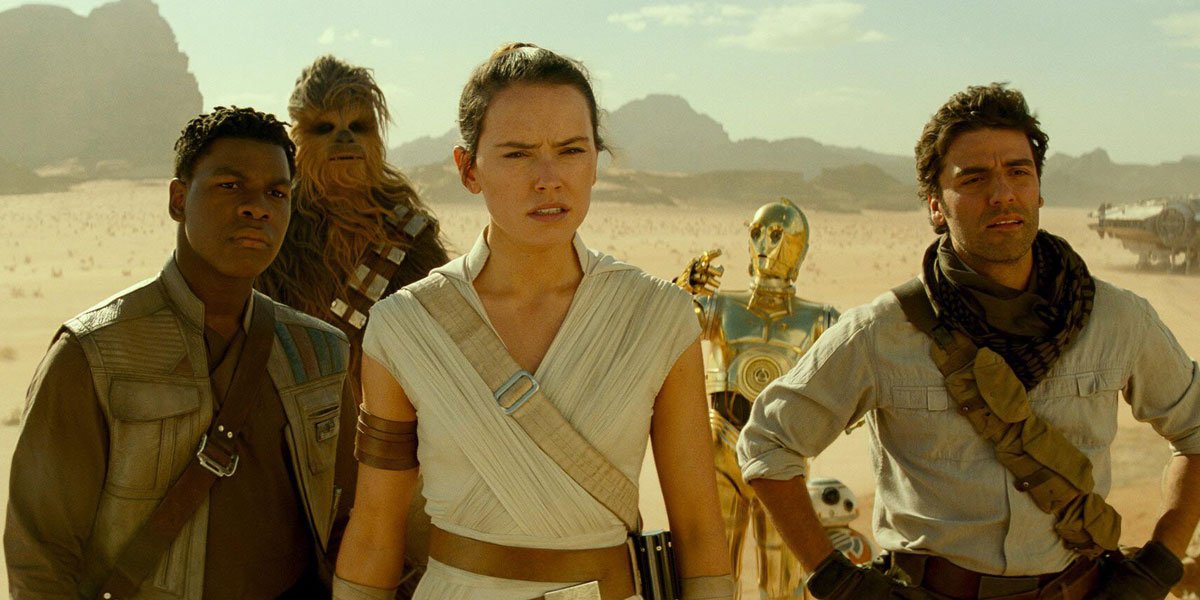
5. Episode VII -- The Force Awakens, 2015. After making Star Trek films that Star Wars fans could like but Star Trek fans couldn't, J.J. Abrams finally got to achieve his dream, and make Star Wars films. And, judged on its own merit alone, TFA is a good movie.

The problem is, Abrams basically made the 1st movie (Episode IV) all over again. Luke becomes Rey. The Young Han part was kind of split between Finn and Poe. R2-D2 becomes BB-8. Darth Vader becomes Kylo Ren. Grand Moff Tarkin becomes General Hux. Emperor Palpatine (for a movie and a half, as it turns out) becomes Supreme Leader Snoke. The Death Star becomes Starkiller Base. The hard part, of course, was that Obi-Wan became Old Han.

The thing we hated the most about Episodes II and III? The big dark villain turned out to be a whiny petulant manchild, hard to take seriously. Kylo seemed less the corrupted son of the Han and Leia that we saw finally, officially, get together at the end of Episode VI, and more the grandson of the Anakin that we saw in Episodes II and III.

So, as a science fiction/fantasy movie, TFA works. As a Star Wars movie, less so.

4. Episode IX -- The Rise of Skywalker, 2019. The final chapter of "The Skywalker Saga," but apparently not the last Star Wars film. (UPDATE: It will remain so at least through 2027.) Knowing that it was an Abrams film, that Episode VII was an underwhelming retread, that Episode VIII was an underwhelming and depressing retread, and that it had already been leaked that ultimate villain Palpatine was returning, I couldn't have been the only Star Wars fan who thought, "I've got a bad feeling about this!" (UPDATE: There are now Star Wars fans who hate Episode IX so much, they say the Saga ended with Episode VIII, with the ending unresolved and ambiguous.)

That feeling was wrong. Abrams finally got it right: He didn't just hold to the pattern and "remake Episode VI," he properly evoked Episodes IV and VI, and provided the happy ending we all needed, the success that the new generation of characters had worked so hard for, and the closure that the previous generation deserved -- from Luke acting more like his old self as a Force Ghost and Leia's peaceful death to Chewie finally getting his medal, even if it was probably Han's medal.
Jude Dry of Yahoo! Entertainment said it "suffered from a frustrating lack of originality and failed to thrill in its efforts to tie everything up with a neat little bow." Did he really expect originality from an Abrams film? And did he really not get thrilled by seeing Old Man Lando lead a massive fleet to save the day in the final assault? (A plot device stolen by CBS/Paramount for Star Trek: Picard, with "Daddy Riker" as the Calrissian stand-in.) If so, then that says more about him than it does about the film.

And let's be honest: "I am all the Sith!" "And I... am all the Jedi!" was a better last exchange than Avengers: Endgame's "I am inevitable!" "And I... am... Iron Man!"

3. Episode V -- The Empire Strikes Back, 1980. Just as it is blasphemy among some James Bond fans to say that Sean Connery is not the best actor to play Bond, and that Goldfinger is not the best Bond film; and that it is blasphemy among some Star Trek fans to say that The Wrath of Khan is not the best Trek movie (and I said each of these in recent posts); I am going to blaspheme the cult of Darth Vader (Rolling Stone magazine called it one in 1999 when TPM was released), and say that this is not the best Star Wars film.
Is the character development better than in Episode IV? Yes. Is the drama better? Yes. Are the special effects better? Slightly. Is the story better?

No. It is a very dark and depressing film, and not just because Dagobah being a swamp planet made it hard to see things. Much of the Bespin scenes had white walls, like Star Trek: The Motion Picture, Space: 1999, the 1979-81 Buck Rogers TV show, and the Tom Baker period that Doctor Who was then in, so it has a 1970s aesthetic. But it was still a dark film. Let's face it, we spent about 90 percent of this film thinking Luke Skywalker was going to die, and about 25 percent of it thinking Han Solo was going to die.

There is no happy ending, only the promise of Episode VI having one. If something had happened to prevent that film from ever getting made, and the saga ended here, it would have been a tremendous letdown -- worse than Spock dying near the end of Star Trek II.

Even at the time, there was no consensus that this film was better than the original. Vincent Canby of The New York Times correctly stated that the sequel wasn't "as fresh and funny and surprising and witty" as Star Wars. It was, he believed, "a big, expensive, time-consuming, essentially mechanical operation." Not unlike the armor that was keeping Vader alive. The Silly Seventies were over, and the Reagan Years had begun, even if ol' Ronnie wasn't elected until November 4.

But it goes beyond even that. In an article for the BBC, Nicholas Barber argues that Episode V actually betrayed the original film (not unlike the way Anakin betrayed the Jedi), and set up all the flaws in not just the Star Wars franchise as a whole, but in most film franchises.

It's worth pointing out that sequels weren't really a thing until 1980. The Godfather and Jaws had each released a second film in their series (in 1974 and 1978, respectively). But they were still outliers. Most film series were basically one single one-off after the other. You didn't need to watch a previous James Bond or Sherlock Holmes or Tarzan film to appreciate the next one.

TESB (or just "Empire") changed that, forever: From this point onward, pretty much every single film in Hollywood has been designed to set up a franchise, or continue one, some successfully, some not. So much is invested now, that producing just one film is considered short-sighted.

This is not the only thing that started in 1980 that got out of control, but it's a big one. And that's not just a potshot at the American conservative movement: Just 2 months before Empire premiered, the TV show Dallas ended its season by having J.R. Ewing get shot, thus inventing the season-ending cliffhanger, something all too common on TV shows ever since.

Also, having a big "twist" is not necessary, and you're not going to have a more effective one than "No. I am your father," either.

Be honest: If you believe TESB is the best Star Wars film, it means you wanted the Empire to win. It means you have given yourself over to the Dark Side. As Yoda put it when Luke asked, midway through this film, "Is the Dark Side stronger?" "No -- but, seductive, it is."

Sometimes, bad guys have appeal. Even James Earl Jones, who voiced Darth Vader while David Prowse wore the armor, has admitted this. But you should never, ever root for them.

It doesn't matter if any of them actually have a point to their arguments. You don't root for the Wicked Witch of the West in The Wizard of Oz. (But you can in Wicked.) You don't root for Emilio Barzini in The Godfather (even though the Corleones are also murdering mobsters). You don't root for the shark in Jaws. You don't root for Doc Hopper in The Muppet Movie. You don't root for Voldemort in the Harry Potter series. You don't root for Thanos in the Avengers movies. You don't root for the Klingons in the original Star Trek series or the Borg or the Dominion in the subsequent series.

In the closest analogy, you do not, under any circumstances, root for the Nazis in Casablanca, or in any other World War II-themed movie (or even in The Blues Brothers). And you do not root for the Empire in the Star Wars saga.

2. Episode VI -- Return of the Jedi, 1983. I know what you're thinking: "What?!? Are you kidding me, Uncle Mike? Jedi, Ahead of Empire? Surely, you can't be serious!" I am serious, and don't call me "Shirley."

One of the things you don't like about this movie is the Ewoks. Well, that's one of the things I like about it. Losing to an alliance that included the Ewoks shows just how incompetent the Empire really was.

One of the things you don't like about this movie is that it made Boba Fett look like a complete joke. Well, that's one of the things I like about it. It shows that neither the Empire nor Jabba the Hutt really had an eye for talent.

I get the fact that Palpatine was truly powerful in The Force, and that he had absolute command over his troops, their total loyalty. So that's how the Empire managed to last as long as it did, despite being a very backward government, as well as an authoritarian and evil one.

But how the hell did the Hutts maintain control of Tatooine for so long? Was it that there was simply no resistance to them? No planetary equivalent of the FBI to crack down on them?

Anyway, ROTJ is a very good action movie, but also a very good psychological thriller. On both of those bases, it is better than TESB. And, of course, it has what everybody except the moral defectives who rooted for the Empire wanted: A happy ending. (Which J.J. Abrams managed to screw up with Episode VII, 32 years later.)

1. Episode IV -- A New Hope, 1977. Or, as those of us in the Class of '77 still call it, simply Star Wars. As Star Trek's Montgomery Scott might say, "No bloody Episode I, II, III, IV, V, VI, VII, VIII, or IX."

For all the silliness, and for all the borrowing from various mythologies to begin a new one, Star Wars remains 1 of my top 5 favorite films of all time. That happens when you're 7 years old, you haven't yet seen a real movie in a real theater with a big screen and Dolby stereo, and you're into comic books and superheroes, and Luke Skywalker is a new Superman. (Remember: At this point, Chris Reeve was still filming his 1st Superman movie.)

The cult of Darth Vader wants us to believe that he's the greatest villain ever, but this film makes it clear that Governor Tarkin is the big villain in this film. Think about it: Who ordered the destruction of Alderaan? Tarkin. Vader certainly did not object, but it wasn't his idea. And, in the next 2 movies, Vader freely calls Palpatine "my master."

Vader is big, black, powerful and foreboding, with a terrifying basso profundo voice and heavy breathing that would seem to contradict each other, but they work well together, and that makes him even scarier. Of course, he's scary. Of course, he's evil. Of course, he will kill you if you don't give him what he wants.

But you don't need to have seen the prequel trilogy -- or to know that he's Luke's father, as we didn't until 3/4 of the way through Episode V -- to realize that he's a symptom, and that the Emperor and his Empire are the disease.

And how many films have so satisfying an ending as the original Star Wars? Well, except for Chewie not getting one of those medals along with Luke and Han.

So, yes: 43 years later, the original is still the best. See ya around, kid.

Wednesday, May 13, 2020

Top 5 Reasons Why Star Trek Is the Better Franchise (And 5 Why It's Star Wars)

Star Trek debuted in 1966. My father was an original Trekkie. I wasn't born until 1969, a few months after "The Original Series" was canceled, but he taught me well, showing me the reruns on New York's WPIX-Channel 11, and taking me to the 1st 7 movies.

Star Wars debuted in 1977. I was an original fan. My father took me to the Original Trilogy.

I was a 2nd-generation Roddenberrian, and an original Lucasian. So you might think that I prefer Star Wars. In fact, I prefer Star Trek. Is that because I was exposed to it first? Maybe.

Here's 5 reasons why Star Trek is better, and 5 why Star Wars is:

10. Star Wars: Better Movies
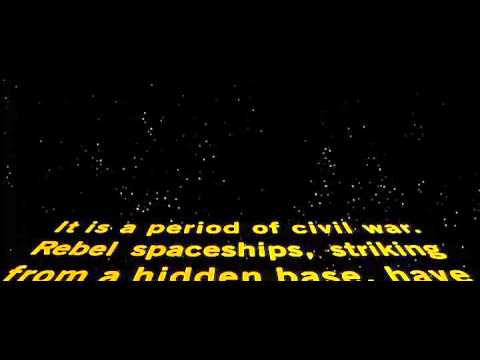
The original film's original crawl
before it was renamed Episode IV: A New Hope

Star Trek fell victim to a curse: While its even-numbered movies were all good (yes, even the 10th one, Nemesis, if you think it's bad, you're wrong), it's odd-numbered movies weren't (although The Search for Spock and Insurrection kind of have bum raps).

Whereas even the bad Star Wars movies have their moments, and it wouldn't have taken much to fix them -- even The Phantom Menace.

9. Star Trek: Better TV Shows
Younger fans will tell me that The Clone Wars and Rebels are awesome. Even if you agree, there have now been 7 Star Trek TV shows, and even Discovery has found its footing. Yes, there's been some garbage on each of them, but so much more has been good.

8. Star Wars: Better Toys
Star Wars seemed to be invented to provide little boys with toys, and, in the late 1970s, I was their target audience. Even though the action figures, made by Hasbro, were small, they were the right size for a child's hands.

Mattel made Star Trek action figures, much bigger, but they left a lot to be desired. The likenesses were good, but the phasers and tricorders were light blue, a color not seen on either. Also, they were easily losable, and the tricorder snaps easily broke. And, for some reason, they got Uhura's hair very wrong: It was a puffy, outward, 1950s style, instead of the 1960s beehive she usually had, at least in her official capacity on the Bridge.

7. Star Trek: Better Catchphrases
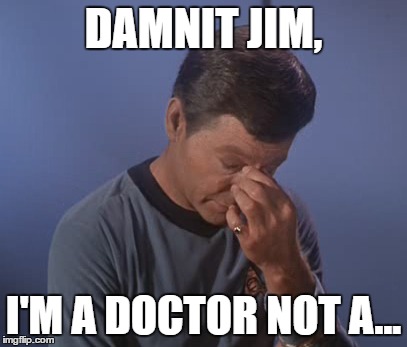
Okay, nobody ever actually said, "Beam me up, Scotty." But the Star Trek catchphrases are many. Warp factor one. Highly illogical. Fascinating. I'm a doctor, not a (fill in the blank). He's dead, Jim. I can't change the laws of physics. Hailing frequencies open. It was inwented in Russia. Engage. Make it so. They are without honor. I can live with it! There's coffee in that nebula.

In this regard, Star Wars just doesn't measure up. I find your lack of faith disturbing. These aren't the droids you're looking for. Your powers are weak, old man. Laugh it up, fuzzball! I... am your father. Good, let the hate flow through you. This is podracing! I hate sand! And, of course, I've got a bad feeling about this!

6. Star Wars: J.J. Abrams Couldn't Screw It Up
When J.J. Abrams was assigned the 2009 Star Trek reboot movie, he made a Star Trek movie for people who loved Star Wars but hated Star Trek. And yet, it had all the things people hated about Star Trek: Overacting, Jim Kirk being a horndog, dopey special effects, impossible technology, technobabble. It was horrible. Abrams' production company is called Bad Robot, but old-school Trekkies called his Trek movies "Bad Reboot."

You could tell that he didn't respect Star Trek, but that he both loved and respected Star Wars -- so much so that the Sequel Trilogy is essentially a remake of the Original Trilogy.

5. Star Trek: It Survived J.J. Abrams
Since Abrams thankfully moved on, we have gotten the 1st season of Star Trek: Discovery, and that dug the hole even deeper. But the 2nd season brought the Enterprise, complete with Captain Pike, a younger Mr. Spock, and Pike's First Officer previously known only as Number One into it, and that saved it.

We have also now had Season 1 of Star Trek: Picard, bringing back much of what we loved about the Next Generation period (2364 to 2379 for them, 1987 to 2002 for us). Yes, it had problems, but, like the Synthetics, it was more than saved at the end, and restored to the Gene Roddenberry vision of "seek out new life and new civilizations, to boldly go where no one has gone before."

And also the David Gerrold vision: "The final frontier is not space. The final frontier is the human soul. Space is merely the place where we are most likely to meet the challenge."

In 2009, and even more so, in 2012, after Star Trek II II: The Re-Wrath Of Not Khan Okay I Lied He's Khan -- excuse me, Star Trek Into Darkness -- it looked like Abrams had managed to do what NBC, Stanley Kubrick, Fred Freiberger, William Shatner's directing, and, yes, Star Wars couldn't do: Kill Star Trek. 

In 2020, Star Trek is back, and with at least as much hope for the future as Star Wars. And isn't that what Star Trek is all about, hope for the future?

4. Star Wars: Better Music
Alexander Courage composed the music for Star Trek: The Original Series, including the iconic opening theme, and the "Captain Kirk Fight Music." Jerry Goldsmith composed the music for Star Trek: The Motion Picture, and its theme became the opening theme of Star Trek: The Next Generation.

But the opening themes of Star Trek: Deep Space Nine and Star Trek: Voyager were not particularly memorable. And "Faith of the Heart," the theme song for Star Trek: Enterprise, written by Diane Warren and sung by Russell Watson... I liked it, a lot, but a lot of Trekkies still despise it.

John Williams composed the music for Star Wars. We remember the opening theme, the Imperial March, and the Cantina Band's number, and we remember them all fondly. And has there ever been a better use of music in a movie, ever, than the muted Imperial March played when Darth Vader told Luke Skywalker the big secret?

3. Star Trek: Better Prequels
Go ahead, make your jokes about Star Trek: Enterprise. But not only did it clear up some mysteries we'd had for decades, it delivered few retroactive plot holes. Discovery, at least in Season 2, has also done a good job. The Star Wars Prequel Trilogy? Holy bantha.

We didn't need to know who built C-3PO. (After all, we still don't know who built R2-D2, and we're very much okay with that.) We didn't need to see young Jabba the Hutt or kid Greedo. We didn't need to know that Jango Fett was as overrated a character as his "son" Boba.

Yoda was a big plot hole. Learned a whole lot more in the 20 or so years between Episodes III and IV than he did in the 1st 900 years of his life, he seems to have, hm? The Jedi as a whole seem to be far less worthy of Luke than he was of them. It almost got to the point where the people who think Darth Vader is the coolest character ever had a point, as he betrayed the Jedi.

And yet, Anakin Skywalker still seems more like a petulant kid who got in over his head than the great warrior old Obi-Wan suggested he was. You know, before we knew that Anakin had become, rather than had been killed by, Darth Vader. Vader, the most iconic thing about the Original Trilogy, becomes the biggest letdown of the Prequel Trilogy.

2. Star Wars: The Villains Are More Fun
And yet, there is an appeal to Darth Vader. Even to Emperor Palpatine. People who like gangster movies can appreciate Jabba the Hutt. Kylo Ren was a compelling figure, even if he was every bit as petulant as Grandpa Anakin. Peter Cushing as Governor Tarkin in the Original Trilogy, and Domhnall Gleeson as General Hux in the Sequel Trilogy, outvillained the intended villains. And, while even he couldn't save the Prequel Trilogy, Christopher Lee is one of the alpha human beings of all time.

Star Trek? There was Khan Noonien Singh, and later Data's "brother" Lore. But the original Klingons and Romulans weren't that interesting, and needed the sequel series to flesh them out. The Borg were hopelessly two-dimensional. V'Ger didn't even think of itself as a villain. Tolian Soran? The Son'a? Roger Moore's version of James Bond faced villains with more depth.

1. Star Trek: Brains
No, this is not a reference to how "Spock's Brain" is better than The Phantom Menace. Besides, "Spock's Brain" isn't even the worst Original Series episode. "The Lights of Zetar" was considerably worse. (Sorry, Shari Lewis.) So was "And the Children Shall Lead." So was "The Way to Eden," Herbert.

Admit it: The Galactic Empire is the dumbest set of villains in movie history. I'm not just talking about how Emperor Palpatine's "foreseeing" never foresees that he's going to lose. Or about how the Stormtroopers do a lot of shooting and missing.

Han Solo practically spells it out in The Force Awakens, during the meeting about how to handle Starkiller Base: "So, it's big... Okay, how do we blow it up? There's always a way to do that." And while they've had shields since at least Return of the Jedi, they're still too easily disable-able, and still nothing like the shields of a starship in Star Trek. As Riker would say, "One photon torpedo ought to do it."

The Empire learned nothing in the 30 or so years from the time a single damaged Rebel ship crashed into the bridge of a Star Destroyer, sending it tumbling into the surface of Death Star II, to the construction of Starkiller Base.

All those Star Wars fans who say a Star Destroyer would wipe Picard's Enterprise out with one shot? They've got it totally backwards: Kirk's Enterprise would destroy the Death Star. Fast-forward 100 years, and Picard's Enterprise would end the Empire in 5 minutes.

Whereas, in Star Trek, you need brains. You have to be able to out-think your opponent. Hell, in "The Best of Both Worlds, Part II," Riker had to out-think a Borg-assimilated Picard, who thought he knew every move Riker could make. And in Star Trek: Nemesis, Picard had to out-think Praetor Shinzon, a clone of himself, who thought he knew every move Picard could make. Think about that: Picard's a very smart guy, and both Picard himself and Riker had to out-think a Picard... and both did, and both won.

How many times did Kirk -- described by former First Officer Gary Mitchell as "a stack of books with legs" -- out-think a computer? Several. All that logic from Spock. All those diseases cured by Dr. McCoy. All those "miracles" worked by Scotty. And that's just on The Original Series. Throw in the moves made by those guys in the movies, and the ones made by Picard, Riker, Data, Sisko and his crew, Janeway and her crew, Archer and his crew...

Sure, some scripts were dumb. But name me another TV franchise, in any genre, that has celebrated brainpower more than Star Trek. Go ahead. I'll wait. NUMB3RS? A good try, but not on the same level. The Big Bang Theory? Don't make me laugh. (It couldn't.)

Hell, I could wait for as long as it takes to watch Star Trek: The Motion Picture. Or The Last Jedi.

True, the Rebels in Star Wars often required great skill. But rarely was that skill analytical. The smartest people in the Rebellion would have been considered average in Starfleet.

Thursday, December 17, 2015

J.J. Abrams' Bad Reboots

In 2009, film director J.J. Abrams' rebooted Star Trek. In it, he sent a Romulan back in time, and had him kill James T. Kirk's father, making Kirk a kid raised by his mother and a rotten uncle, making Kirk a rotten guy who enjoys breaking rules instead of one who does so only when lives are at stake; and that Romulan also destroys Vulcan, killing Spock's mother.

Abrams' production company is called "Bad Robot." The joke became "Bad Reboot."

What he did in his 2nd film in the series, Star Trek Into Darkness, was also bad, even if you don't consider that he spent 2 years saying the villain wasn't Khan Noonien Singh, and then revealed, ha ha, it is Khan.

Now, Disney owns the Star Wars franchise, having bought it from creator George Lucas, and has given Abrams the keys to the kingdom. Cliché Alert: I've got a bad feeling about this.

Just imagine what else Abrams could do:

In his reboot of Harry Potter, Hogwarts gets blown up in the second movie.

In his reboot of The Wizard of Oz, there's no dream: It's all real, Elvira Gulch is secretly a witch, and kills not only Toto, but the rest of the family, and Dorothy pursues her to Oz for revenge. And is caught fooling around with the Scarecrow by the Tin Man and the Cowardly Lion.

In his reboot of The Godfather, both Vito Corleone and his wife are ambushed and die. Sonny loses control, and handles the war badly. Clemenza and Tessio both convince Michael the only way for the family to survive is for him to take over. Fredo doesn't like that, so Michael has to kill him in the 1st movie, too.

In his reboot of Barney Miller, New York City actually does "drop dead" in October 1975, and Barn (this true New York icon played by Boston Ben Affleck) and the boys from The Old One Two have to pick up the pieces. But the best they can do is, with the help of Billy Joel (played by Mark Wahlberg), pick the Yankees up for free.

And in his reboot of Casablanca, Major Strasser kills Ilsa, and Rick joins the Inglorious Basterds.

What I'm trying to say is, If you haven't yet heard the big reveal from Star Wars Episode VII: The Force Awakens, I'm warning you to be shocked at nothing.

Thursday, October 1, 2015

If J.J. Abrams Had Done the "Honeymooners" Reboot

Left to right: Jackie Gleason, Audrey Meadows, Art Carney and Joyce Randolph.

October 1, 1955, 8:30 PM, 60 years ago: A new show premieres on CBS. Well, sort of: The Honeymooners had been a sketch on The Jackie Gleason Show, but now it becomes a standalone half-hour situation comedy, perhaps the greatest "sitcom" in history.

The 1st episode, appropriately enough, discusses television itself: It is titled "TV Or Not TV," and shows what happens when Brooklyn bus driver Ralph Kramden (Gleason) and sewer worker, upstairs neighbor and best friend Ed Norton (Art Carney) go halfsies on a television set, because neither one can afford their own. (Ralph has never had one, because he's cheap. Ed's 1st one just broke down.)

Ralph's wife, Alice Kramden (Audrey Meadows), doesn't think it will work, but she wants a TV set. Interestingly, unless you count Alice's groan over a tricky sink, Ed's wife, Thelma "Trixie" Norton (Joyce Randolph), has the 1st line in the show's history: "Hiya, Alice!"

Ralph was always yelling at Alice. Today, we would call that "verbal abuse." And one of the things he yelled at her was threats. "You are gonna get yours." "You're going to the Moon!" "Hoo-hoo, would I like to... " "Oh-ho... Oh-ho... Bang! Zoom!"

And, just once in the "Classic 39" episodes -- he used this one a lot more when it was just a sketch on his earlier Jackie Gleason Show -- "One of these days, one of these days, POW! Right in the kisser!" As comedian Bill Maher put it, Ralph was always threatening to graduate from verbal to physical abuse, and mainstream America was fine with this and thought it was funny.

You know how many times Ralph actually hit Alice onscreen in those 39 episodes? Zero. Because Alice wouldn't have put up with it. No, she couldn't have beaten Ralph in a genuine fight -- Gleason was 5-foot-10, and was usually around 240 pounds but peaked at 285 -- but if she so much as slapped him just once, he would have been so shocked that the woman he loved had done that to him, that he would have backed down. For all his "king of the castle" bluster, Ralphie Boy was whipped.

Sure, Ralph would get in Alice's face and berate her, but she was just as likely to get into his. Check out this exchange, from the aforementioned 1st episode, after she accused him of being cheap, leading to the lack of amenities in their apartment (and 328 Chauncey Street, which is a real address, was actually in the Bushwick section of Brooklyn, not in Bensonhurst like was so often said onscreen):

Ralph: When we got married, you said, "Ralph, I'd be happy to live in a tent with you!"
Alice: I'm still willing. I think it'd be an improvement.
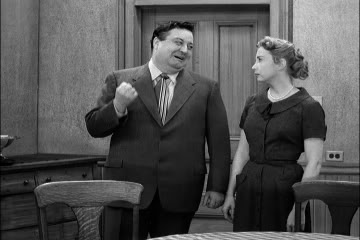
Ralph, shaking his fist in her face: You wanna go to the Moon? Do ya wanna go to the Moon?
Alice: That would be an improvement, too!

Look at this picture. Ralph has his fist balled up. Is Alice intimidated? Hell no: She's standing her ground, ramrod straight, and giving Ralph a death stare.
She was from Brooklyn, too, you know: Alice Gibson Kramden was one tough redhead. She gave as good as she got, and, while Ralph would frequently continue the verbal thrust-and-parry, just as often, he would back down, and make that big sad moon face, and be contrite, and apologize.

And she would forgive him. Because, deep down, she loved him as much as he loved her. And he would acknowledge just how good a fit she was for him, say, "Baby, you're the greatest!" and grab her and bend her over and kiss her like in romantic movies -- a much better "Pow, right in the kisser." For all his big talk, he was a romantic and a sentimentalist.
Lucille Ball may have been the first woman with any power in television production, but Audrey Meadows was TV's first feminist.

The show had the occasional sports reference. In "The Golfer," Ralph tries to learn how to play golf to impress a bus company official. In "Here Comes the Bride," Ralph notes that Alice's sister, finally getting married, has been a bridesmaid so often, she caught her own bouquet. Alice said her foot slipped, and Ralph compares her to Willie Mays, saying, "If my foot could slip like that, I'd be playing center field for the New York Giants!"

In "Young At Heart," Ralph wears a varsity football letter sweater. The letter is V, although the name of his school is never revealed. (There is a Martin Van Buren High School in New York, but it's in Queens, and is unlikely to have been Ralphie Boy's alma mater.) And in the last episode, "A Man's Pride," Ralph runs into a high school nemesis at a boxing card at the old Madison Square Garden.

*

In 2005, a film re-imagining The Honeymooners was released, directed by John Schultz, and set in the present day. Reflecting the current demographics of Brooklyn, it was a mostly-black cast. Ralph was played by Cedric the Entertainer, Alice by Gabrielle Union, Ed by Mike Epps, and Trixie by Regina Hall. Eric Stoltz and John Leguizamo also appear, in a plot based around, as original Alice would have put it, one of Ralph's "crazy harebrained schemes" to get rich quick.

If J.J. Abrams, who ruined Star Trek with his 2009 film, had done the Honeymooners reboot...

* Ralph would have been born on a lifeboat fleeing the Titanic. It would have made him just 4 years older than Jackie Gleason.

* Mayor Robert Wagner, inspecting the New York sewer system in 1955, would have been killed along with 30 others by a bomb planted by a Communist agent.

* Ed, eating his lunch with Ralph in a City park at the time, would be traumatized by survivor's guilt, which brings back his Navy PTSD from World War II. Alice figures out that Ed actually is, as Ralph has often said, a "mental case," and that his apparent stupidity and his usual happy-go-lucky nature are the result of his suppression of his experiences.

* Inspired by Senator Joe McCarthy, Ralph and Ed come up with a "crazy harebrained scheme" to avenge the Mayor and the sewer workers, involving technology that shouldn't have happened for another 60 years (our time).

* Not only does it work, but they are hailed as heroes. Ralph wins the Mayoralty in a special election, and defeats Nelson Rockefeller for Governor in 1958.

* Free of his repressed memories and his mental block, Norton re-enlists in the Navy, and graduates from Officers' Training and Flight schools.

* In 1969, U.S. Navy Commander Edward Lillywhite Norton says, "That's one small step for a man... one giant leap for mankind!" And President Ralph Kramden makes the phone call from the White House to the astronauts, saying, "Norton, didn't I tell you, long, long ago, that you weren't just 'the man from space,' but that you were actually going to the Moon? Well, pal o' mine, who knew it would be like this!"

If you are a Honeymooners fan, and you find this ridiculous, you would be right. Well, that's how true Star Trek fans feel about J.J. Abrams' "Bad Reboot."

It could be worse: If Zack Snyder were directing it, Ralph would have ended up destroying the City in order to save it.