Showing posts with label gene roddenberry. Show all posts

Tuesday, September 8, 2026

September 8, 1966: "Star Trek" Premieres

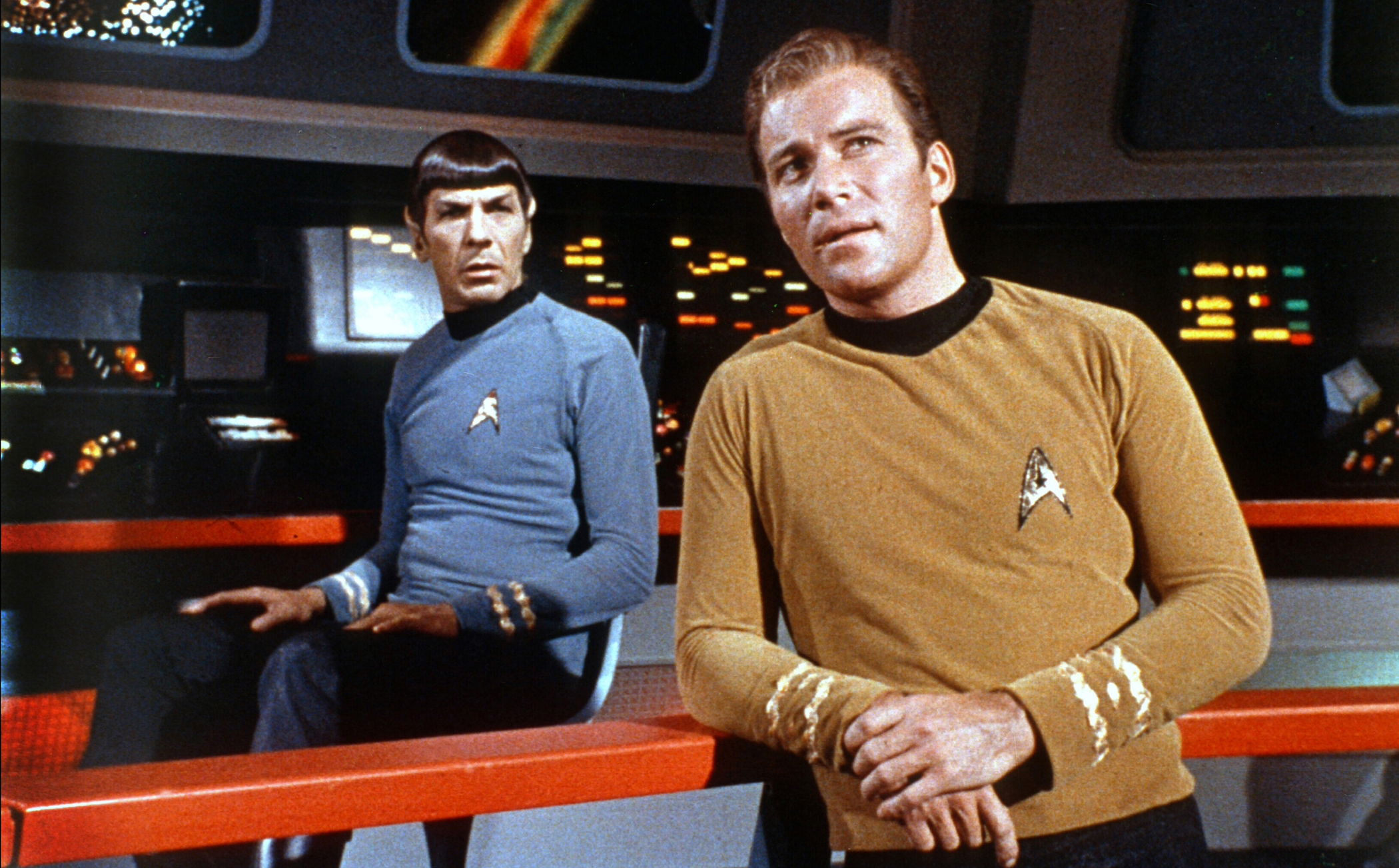
Back row, left to right: James Doohan as Scotty, Walter Koenig as Chekov,
Majel Barrett as Nurse Chapel, Nichelle Nichols as Uhura,
and George Takei as Sulu. Front row: DeForest Kelley as McCoy,
William Shatner as Kirk, and Leonard Nimoy as Spock.

September 8, 1966, 60 years ago: The TV series Star Trek first airs on NBC, with the episode "The Man Trap" -- a.k.a. "The Space Vampire."

NOTE: This is an adaptation of a post I wrote for the 50th Anniversary, in 2016.

The show was created by Gene Roddenberry (1921-1991), who had previously been a combat pilot in World War II and a Los Angeles police officer. He pitched it to the network as "Wagon Train to the stars," in essence a Western in space. But with his ship's Captain, he was inspired by C.S. Forester's novels about Captain Horatio Hornblower, and he liked to call his adventures "Hornblower in space."

The show had a pilot filmed in December 1964, titled "The Cage." NBC passed on the story, but approved the concept, and asked for a 2nd pilot. Except for Leonard Nimoy as Spock, it was a completely new cast that filmed "Where No Man Has Gone Before" in July 1965. The show was picked up, although that 2nd pilot didn't air until September 22, 1966, the 3rd episode to air.

As for the pilot, here's the affiliates you could have watched it on, if you were in what would now be considered a "major league" city (note that not all of these are still NBC affiliates, or operating under the same call letters as there were using in 1966):

* Channel 2: WGRZ, Buffalo; WSB, Atlanta; KPRC, Houston; KUTV, Salt Lake City.

* Channel 3: KYW, Philadelphia; WKYC, Cleveland; KSNV, Las Vegas; KCRA, Sacramento.

* Channel 4: WNBC, New York; WRC, Washington; WBZ, Boston; WDIV, Detroit; WTMJ, Milwaukee; WSMV, Nashville; WDAF, Kansas City, KFOR, Oklahoma City; WOAI, San Antonio; KCNC, Denver; KNBC, Los Angeles; KRON, San Francisco.

* Channel 5: WLTW, Cincinnati; WMC, Memphis; WMAQ, Chicago; KSDK, St. Louis; KXAS, Dallas; KING, Seattle.

* Channel 6: WFBM, Indianapolis; WDSU, New Orleans.

* Channel 7: WSVN, Miami.

* Channel 8: WFLA, Tampa; KGW, Portland, Oregon.

* Channel 9: WSOC, Charlotte.

* Channel 10: KGTV, San Diego.

* Channel 11: WBAL, Baltimore; WIIC, Pittsburgh, WTVD, Raleigh.

* Channel 12: WTLV, Jacksonville; KPNX, Phoenix.

The series depicted the USS Enterprise, a starship with a crew of 430, representing the Starfleet (one word) of the United Federation of Planets, a galactic version of the United Nations, headquartered on Earth, at some unspecified point in the future.
Since they didn't want to be locked into an exact time, they obscured this with the clever use of "Stardates." Despite at least 2 episodes suggesting that the series took place around 200 years later, later series would definitively place it 300 years in the future -- i.e., the 1st episode took place in the year 2266.

The ship's mission, partly invoking the late President John F. Kennedy's "New Frontier," was written by  Roddenberry, and recited near the start of each episode by William Shatner:

Space: The final frontier. These are the voyages of the starship Enterprise. Its five-year mission: To explore strange new worlds, to seek out new life and new civilizations, to boldly go where no man has gone before!

The show ran for 3 years, and led to a brief animated series and 6 movies. It has spun off several connected TV series.

Of the main cast, pictured above:

* DeForest Kelley, who played the Chief Medical Officer, Lieutenant Commander Leonard H. McCoy, a.k.a. "Bones," died on June 11, 1999, at the age of 79.

* James Doohan, who played the Chief Engineer, Lieutenant Commander Montgomery Scott, a.k.a. "Scotty," died on July 20, 2005, at 85.

* Majel Barrett, Roddenberry's wife, who played Nurse Christine Chapel (her rank was never stated on the original series), and also voiced the computers on every starship in every show for as long as she lived, died on December 18, 2008, at 76.

* Leonard Nimoy, who played the ship's half-human and half-Vulcan First Officer and Science Officer, Commander Spock, died on February 27, 2015, at 83.

* Nichelle Nichols, who played the Communications Officer, Lieutenant Nyota Uhura, died on July 30, 2022, at 90.

* George Takei, who played the Chief Helmsman, Lieutenant Hikaru Sulu, is 89.

* Walter Koenig, who played a navigator, Ensign Pavel Chekov, turns 90 next week. His character was created when the Soviet Union objected to the fact that, despite their pioneering status in spaceflight, there were no Russians in the Enterprise crew, and Roddenberry admitted they had a point. Koenig said, "When they thought I was Russian, 22 and single, I got more mail than anybody except Leonard (Nimoy). When they found out I was American, 31 and married, the mail dried up."

* And William Shatner, who played Captain James T. Kirk, is 95, and, by all appearances, still going strong.

(By the end of their movies' run in 1994, Kirk had been promoted to Admiral, and demoted back down to Captain; Spock, Scotty and Sulu had been promoted to Captain; and McCoy, Uhura, Chekov and Chapel to Commander.)

In a 2011 episode of the YouTube series Epic Rap Battles of History, "Epic" Lloyd Ahlquist played Captain Kirk, although his impersonation sounded more like one of Shatner's exaggerated acting. In non-speaking guest roles, Omar Garaibeh played Spock, and Jon Na played Sulu. Both were ERB crew members. Kirk's opponent was Christopher Columbus, played by "Nice" Peter Shukoff.

September 8, 1966 was a Thursday. The next day, the science fiction series The Time Tunnel and the superhero show The Green Hornet debuted.

*

The show had a cult following. Frank Sinatra, Elvis Presley, and Michael Jackson were all known to be fans of what's now come to be known to fans of "The Original Series" or "TOS." (There is no account of any of the individual Beatles being Trek fans. Nor is it known if President Lyndon B. Johnson, despite his strong support of the real-life space program, ever watched the show.) Sinatra later admitted to preferring The Next Generation. His cognitive decline was already underway when James Darren began playing holodeck-inspired Las Vegas lounge singer Vic Fontaine, practically an homage to Sinatra, on Deep Space Nine, so his thoughts on that are unknown.

The most famous story of a celebrity connection with the show came in early 1967, although it wasn't revealed for many years thereafter: Nichelle Nichols didn't like the shooting schedule, or the way she was being treated, and thought she could be treated better and make more money with her nightclub singing act, which was ongoing. At one point, she met Dr. Martin Luther King, and told her she was thinking of quitting the show.

He told her she couldn't quit. He admitted that he and his family were fans of the show, and that her presence, as both a black person and a woman on the command level of such a vessel, was of great symbolic value, and that she should stay because of that. She did.

But the show didn't get past its core support, and the ratings were never good. NBC was ready to cancel it after 2 seasons, but a fans' write-in campaign saved it. For its 3rd season, the show's budget was slashed, and it was put in a bad time slot. The ratings got worse, and nothing could save it to allow it to complete the ship's "five-year mission."

"We all thought it was over," Shatner said. And while Nimoy immediately went to another Paramount Pictures show, Mission: Impossible -- taking the master-of-disguise role played by Martin Landau, who was allegedly the studio's first choice to play Spock, but Roddenberry put his foot down and wanted Nimoy -- the other castmembers weren't so lucky. They were typecast. With his Southern accent, Kelley was often cast in Westerns, but that genre was in decline by 1969. Doohan got roles in 2 1970s Saturday-morning-kid-show sci-fi adventures. Nichols went on singing.

Everybody else got whatever they could get. Shatner, at one point, was so broke, he was homeless, living out of his car. He and Nimoy both played killers caught by the title character on Columbo.

But the fans wouldn't give up. Star Trek fan conventions began in 1972. And the show caught on in syndicated reruns. In 1973, Filmation decided to do an animated Star Trek series. They were going to pay Shatner and Nimoy starring amounts, but not the others. Nimoy put his foot down, and said he wouldn't do it unless the others got the same pay. They did, with the exception of Koenig, although he did write an episode. Star Trek: The Animated Series (TAS) ran on NBC for 22 episodes in 1973 and '74.

Paramount decided there was enough demand to form a 4th major TV network, and they wanted its flagship show to be a sequel series, titled Star Trek: Phase II. But the network fell apart, and they shifted to Star Trek: The Motion Picture. Premiering in 1979, it was directed by Roddenberry himself, and that was a bad choice: All the criticisms leveled at "The Cage" back in 1965 came back: It was long, too cerebral, not enough action.

It became known as "The Motionless Picture." It was compared to another dragged-out 1979 film, and was nicknamed "A Spock-alypse Now." And the story's similarity to the episode "The Changeling" got it nicknamed "Where Nomad Has Gone Before." While it was visually spectacular, it was a very expensive flop. And it almost killed the franchise.

In 1982, Star Trek II: The Wrath of Khan premiered. Nicholas Meyer directed, and it saved the franchise. It was a sequel to the TOS episode "Space Seed," with Ricardo Montalban, returning as Khan Noonien Singh. While Trek has had villainous species, including the Klingons, the Romulans, the Borg, the Dominion, and the Xindi, Khan remains the greatest single villain in its history.

Nimoy was tired of playing Spock, so the character was killed. This was a terrible shock to Trek fans, including myself, 12 years old at the time. And yet, in hindsight, it is one of the greatest sacrifices, one of the greatest death scenes, and is followed by one of the greatest funerals in film history.

What Nimoy really wanted to do was direct, and so, when TWOK was a hit, they let him direct Star Trek III: The Search for Spock. As traumatic as Spock's death was, and as weird as it was to see the opening credits go directly from Shatner to Kelley without mentioning Nimoy (except as director), deep down, we all knew he would be restored to life.

Except... we didn't know that the Enterprise was going to be destroyed. And by Christopher Lloyd? Reverend Jim from Taxi? Are you kidding? Well, Lloyd put on a spectacular performance as Klingon Commander Kruge, and it probably got him the role of Doc Brown in Back to the Future, which is how he's now remembered.

The trilogy was completed with Star Trek IV: The Voyage Home. Nimoy directed again, and the Enterprise Seven (or "The Magnificent Seven") are forced to travel back to the present day, 1986, to save Earth in their time. It's not the best Trek film, but it is the most fun, and the funniest. My grandmother, 62 years old when it was released, was not a science fiction fan, but even she liked "the one with the whales."

After 2 Nimoy-directed films, Shatner, who had done some directing, wanted to direct one. The result was Star Trek V: The Final Frontier, where the crew met Spock's brother, and "God." It tanked, and Shatner never directed within Trek again, although many other Trek actors and Trek-connected people have directed episodes, including Leonard's son, Adam Nimoy.

Star Trek VI: The Undiscovered Country, reflecting the end of the Cold War by showing the beginning of peace with the Klingons, may have been the best overall film in the franchise, and it was a fitting sendoff for the original crew -- or so we thought. Indeed, it was the last Trek film appearance for Kelley, Nichols and Takei.

*

The success of ST IV led to Paramount launching Star Trek: The Next Generation in 1987, taking place 100 years after TOS, in the 24th Century. This would result in the 1994 film Star Trek: Generations, where Shatner, Doohan and Koenig were on hand to "pass the torch" to the TNG crew, although it was only Shatner's Kirk who was transported to the time of the USS Enterprise-D, resulting in a death that should have been more heroic.

TNG ran until 1994, and produced 4 movies from 1994 to 2002; Star Trek: Deep Space Nine from 1993 to 1999; Star Trek: Voyager, 1995 to 2001; the prequel series Star Trek: Enterprise from 2001 to 2005. Then came the 3 horrible J.J. Abrams "Bad Reboot" movies from 2009 to 2016. And "legit Trek" didn't to much better. The prequel series Star Trek: Discovery (2017-24) and its sequel series Star Trek: Starfleet Academy (starting this year and getting cut off next year) were ripped by fans. And it wasn't just because it wasn't "their Trek": They were genuinely bad.

Star Trek: Picard had 2 bad seasons, starting in 2020, though the 3rd, in 2023, gave enough fan service" to make most TNG fans think that the crew of Jean-Luc Picard (Patrick Stewart) had a proper conclusion to their stories.

The franchise won a lot of fans back with the animated series Star Trek: Lower Decks (2020-24) and Star Trek: Prodigy (2021-24), and the prequel series Star Trek: Strange New Worlds (starting in 2022 and set to conclude as planned in 2027, showing the Enterprise under Anson Mount's Captain Christopher Pike as it transitions to Kirk, now played by Paul Wesley).

On its 60th Anniversary, Star Trek remains as popular as ever. As Gene Roddenberry liked to say, "The human adventure is just beginning."

But as David Gerrold, who's written for Star Trek and other science fiction, has said, "The final frontier is not space. The final frontier is the human soul. Space is merely the place where we are most likely to meet the challenge."

Friday, July 4, 2025

Donald, Jackie, Colin, Bill and Me

Donald Trump doesn't really care about the specifics of what he calls "The One Big, Beautiful Bill." He just wanted a win, something he could sign on the 4th of July, as a show.

I'm reminded of the 1st Rocky movie, where Duke Evers (Tony Burton) tells his fighter, Apollo Creed (Carl Weathers), of Rocky Balboa (Sylvester Stallone), "He doesn't know it's a damn show! He thinks it's a damn fight!"

It's all a show to Trump. As long as he can keep the show going, he can stay in power.

He doesn't care about the specifics, but he also doesn't care about how many people in the "United States of America" -- including those who voted for him, but in this case especially in rural areas -- will be hurt, and even die, as a result of the Big Ugly Bill's Medicaid cuts, all so he and his fellow filthy rich guys can have the biggest tax cut of all time.

He never cared about the people who bought his MAGA lies. As James Carville says of Republicans in general, Trump only wanted one thing from them: Their votes, to put him in power, and then to keep him in power.

*

In his autobiography, which he titled I Never Had It Made, and didn't have published until after his death, Jackie Robinson, the 1st black player in modern baseball, brought to the Brooklyn Dodgers by team president Branch Rickey, looked back on what he considered the highlight of his career: Standing on the foul line with his teammates, hearing the National Anthem, "The Star-Spangled Banner," at Yankee Stadium before Game 1 of the 1947 World Series. They had made it, and they had done it together.

But there's a big difference between having made it, and having it made. He compared that moment to his thoughts at his present time, 20 years later, after events showed him that America had not yet become the country his 1947 efforts suggested it could become, and after he had come to accept that the Republican Party, to which he belonged, no longer seemed to want him:

There I was, the black grandson of a slave, the son of a black sharecropper, part of a historic occasion, a symbolic hero to my people. The air was sparkling. The sunlight was warm. The band struck up the National Anthem. The flag billowed in the wind. It should have been a glorious moment for me as the stirring words of the national anthem poured from the stands.

Perhaps, it was, but then again, perhaps, the anthem could be called the theme song for a drama called The Noble Experiment. Today, as I look back on that opening game of my first World Series, I must tell you that it was Mr. Rickey's drama and that I was only a principal actor.

As I write this twenty years later, I cannot stand and sing the Anthem. I cannot salute the flag; I know that I am a black man in a white world. In 1972, in 1947, at my birth in 1919, I know that I never had it made.

After the 2016 backlash against his kneeling during the Anthem before games, San Francisco 49ers quarterback Colin Kaepernick, soon to be blacklisted (though never officially banned) from the NFL,  shared a similar sentiment:

I am not going to stand up to show pride in a flag for a country that oppresses black people and people of color. To me, this is bigger than football, and it would be selfish on my part to look the other way. There are bodies in the street, and people getting paid leave and getting away with murder.
Star Trek creator Gene Roddenberry wrote of a parallel world for the episode "The Omega Glory," one in which a planet developed the same way Earth did, until a nuclear war. According to Spock (Leonard Nimoy), the evidence shows that "the Asiatics won." But, in a world rendered primitive again, these "Koms," descendants of Communists, had finally, perhaps over 1,000 years later, had the tables turned, and the "Yangs," descendants of Americans or "Yankees," had won.

The Yangs had a Stars-and-Stripes, what Johnny Cash would have called a "ragged old flag," and a copy of the Constitution of the United States. But time had dulled their words: "We the People" had become "E pleb nista," and they no longer knew what "the holy words" meant. Captain James T. Kirk, played by William Shatner, a Jewish man from Canada, showed them.
Bill Shatner (left) as Kirk, and Roy Jenson as Cloud William.
Jenson was also Canadian.

On this Independence Day, let us recall that our "best words" were written for everyone, and both their protections and their responsibilities must apply to everyone, or they mean nothing. If Bill Shatner, a Jewish Canadian actor of the 20th Century, playing a 23rd Century starship captain from Iowa, can figure it out, then nearly all of us can.

But can we? Trump has divided us. Indeed, "E pleb nista" doesn't sound like "We the People," but it is reminiscent of "E pluribus unum," one of the nation's mottos. Translated from Latin, it means, "Out of many, one." Trump has turned us into a nation of about 340 million unums (unii?), with precious little pluribus.

For the last few years, the tradition in our family is to go from our hometown of East Brunswick, New Jersey to see the 4th of July Parade in neighboring Milltown in the morning, and then return to Milltown in the evening for the fireworks.

I won't be doing that this time. As of this writing, I have already "missed" the Parade. I will not be attending the fireworks. I cannot stand and sing the Anthem. And I have not recited the Pledge of Allegiance to the Flag since the Summer of 1988, when a previous Republican demagogue, George H.W. Bush, made it a club to use over the head of his Presidential election opponent, Michael Dukakis.

Through his efforts to end birthright citizenship, through his denunciations of anybody who doesn't support him, Donald Trump has divided America into patriots and MAGAs. And you cannot be both. You either love America, or you love Trump.

Three things have kept America free, and Trump has perverted all of them:

* The right to vote. If not for voter suppression in 2016 and 2024 -- and an attempt in 2020, which failed -- Trump would not have come out on top.

* Civilian control of the military: Trump has forced out the Generals who have told him what he cannot do, and he is giving unconstitutional orders.

* Separation of church and state: Trump has seen to it that there is one god, and he is it, and if you worship anyone or anything other than him, then this god will not have mercy on your soul.

News flash, one you won't see in any major American media outlet: Trump is no god. And he is President in name only. He holds the office and its powers, but he does not represent America.

In 2026, the year of the 250th Anniversary of our independence, we must elect a Congress that will hold him accountable. In 2028, we must elect a President and a Congress that will undo the damage he has done.

Until then, I can only echo what Jackie Robinson said. I know that I am a patriot in a MAGA-ruled country. In 2025, in 1988, at my birth in 1969, I know that I never had it made.

Those words in the Constitution: "They must apply to everyone! Or they mean nothing! Do you understand?"

Donald Trump does not understand, and he would not if he could.

Do you?

I can't answer that question for you.

Wednesday, May 13, 2020

Top 5 Reasons Why Star Trek Is the Better Franchise (And 5 Why It's Star Wars)

Star Trek debuted in 1966. My father was an original Trekkie. I wasn't born until 1969, a few months after "The Original Series" was canceled, but he taught me well, showing me the reruns on New York's WPIX-Channel 11, and taking me to the 1st 7 movies.

Star Wars debuted in 1977. I was an original fan. My father took me to the Original Trilogy.

I was a 2nd-generation Roddenberrian, and an original Lucasian. So you might think that I prefer Star Wars. In fact, I prefer Star Trek. Is that because I was exposed to it first? Maybe.

Here's 5 reasons why Star Trek is better, and 5 why Star Wars is:

10. Star Wars: Better Movies
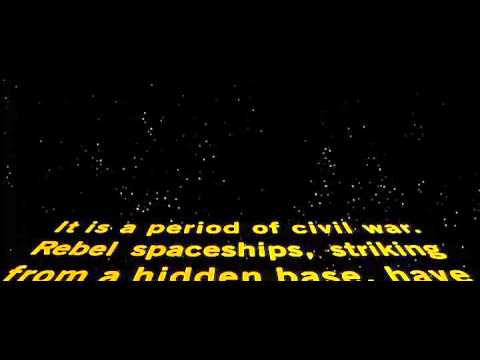
The original film's original crawl
before it was renamed Episode IV: A New Hope

Star Trek fell victim to a curse: While its even-numbered movies were all good (yes, even the 10th one, Nemesis, if you think it's bad, you're wrong), it's odd-numbered movies weren't (although The Search for Spock and Insurrection kind of have bum raps).

Whereas even the bad Star Wars movies have their moments, and it wouldn't have taken much to fix them -- even The Phantom Menace.

9. Star Trek: Better TV Shows
Younger fans will tell me that The Clone Wars and Rebels are awesome. Even if you agree, there have now been 7 Star Trek TV shows, and even Discovery has found its footing. Yes, there's been some garbage on each of them, but so much more has been good.

8. Star Wars: Better Toys
Star Wars seemed to be invented to provide little boys with toys, and, in the late 1970s, I was their target audience. Even though the action figures, made by Hasbro, were small, they were the right size for a child's hands.

Mattel made Star Trek action figures, much bigger, but they left a lot to be desired. The likenesses were good, but the phasers and tricorders were light blue, a color not seen on either. Also, they were easily losable, and the tricorder snaps easily broke. And, for some reason, they got Uhura's hair very wrong: It was a puffy, outward, 1950s style, instead of the 1960s beehive she usually had, at least in her official capacity on the Bridge.

7. Star Trek: Better Catchphrases
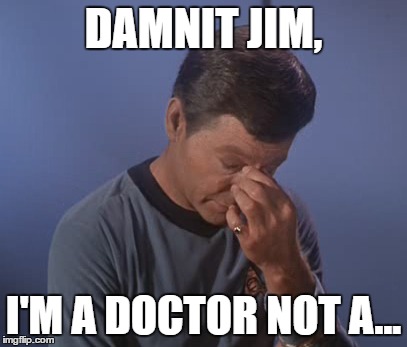
Okay, nobody ever actually said, "Beam me up, Scotty." But the Star Trek catchphrases are many. Warp factor one. Highly illogical. Fascinating. I'm a doctor, not a (fill in the blank). He's dead, Jim. I can't change the laws of physics. Hailing frequencies open. It was inwented in Russia. Engage. Make it so. They are without honor. I can live with it! There's coffee in that nebula.

In this regard, Star Wars just doesn't measure up. I find your lack of faith disturbing. These aren't the droids you're looking for. Your powers are weak, old man. Laugh it up, fuzzball! I... am your father. Good, let the hate flow through you. This is podracing! I hate sand! And, of course, I've got a bad feeling about this!

6. Star Wars: J.J. Abrams Couldn't Screw It Up
When J.J. Abrams was assigned the 2009 Star Trek reboot movie, he made a Star Trek movie for people who loved Star Wars but hated Star Trek. And yet, it had all the things people hated about Star Trek: Overacting, Jim Kirk being a horndog, dopey special effects, impossible technology, technobabble. It was horrible. Abrams' production company is called Bad Robot, but old-school Trekkies called his Trek movies "Bad Reboot."

You could tell that he didn't respect Star Trek, but that he both loved and respected Star Wars -- so much so that the Sequel Trilogy is essentially a remake of the Original Trilogy.

5. Star Trek: It Survived J.J. Abrams
Since Abrams thankfully moved on, we have gotten the 1st season of Star Trek: Discovery, and that dug the hole even deeper. But the 2nd season brought the Enterprise, complete with Captain Pike, a younger Mr. Spock, and Pike's First Officer previously known only as Number One into it, and that saved it.

We have also now had Season 1 of Star Trek: Picard, bringing back much of what we loved about the Next Generation period (2364 to 2379 for them, 1987 to 2002 for us). Yes, it had problems, but, like the Synthetics, it was more than saved at the end, and restored to the Gene Roddenberry vision of "seek out new life and new civilizations, to boldly go where no one has gone before."

And also the David Gerrold vision: "The final frontier is not space. The final frontier is the human soul. Space is merely the place where we are most likely to meet the challenge."

In 2009, and even more so, in 2012, after Star Trek II II: The Re-Wrath Of Not Khan Okay I Lied He's Khan -- excuse me, Star Trek Into Darkness -- it looked like Abrams had managed to do what NBC, Stanley Kubrick, Fred Freiberger, William Shatner's directing, and, yes, Star Wars couldn't do: Kill Star Trek. 

In 2020, Star Trek is back, and with at least as much hope for the future as Star Wars. And isn't that what Star Trek is all about, hope for the future?

4. Star Wars: Better Music
Alexander Courage composed the music for Star Trek: The Original Series, including the iconic opening theme, and the "Captain Kirk Fight Music." Jerry Goldsmith composed the music for Star Trek: The Motion Picture, and its theme became the opening theme of Star Trek: The Next Generation.

But the opening themes of Star Trek: Deep Space Nine and Star Trek: Voyager were not particularly memorable. And "Faith of the Heart," the theme song for Star Trek: Enterprise, written by Diane Warren and sung by Russell Watson... I liked it, a lot, but a lot of Trekkies still despise it.

John Williams composed the music for Star Wars. We remember the opening theme, the Imperial March, and the Cantina Band's number, and we remember them all fondly. And has there ever been a better use of music in a movie, ever, than the muted Imperial March played when Darth Vader told Luke Skywalker the big secret?

3. Star Trek: Better Prequels
Go ahead, make your jokes about Star Trek: Enterprise. But not only did it clear up some mysteries we'd had for decades, it delivered few retroactive plot holes. Discovery, at least in Season 2, has also done a good job. The Star Wars Prequel Trilogy? Holy bantha.

We didn't need to know who built C-3PO. (After all, we still don't know who built R2-D2, and we're very much okay with that.) We didn't need to see young Jabba the Hutt or kid Greedo. We didn't need to know that Jango Fett was as overrated a character as his "son" Boba.

Yoda was a big plot hole. Learned a whole lot more in the 20 or so years between Episodes III and IV than he did in the 1st 900 years of his life, he seems to have, hm? The Jedi as a whole seem to be far less worthy of Luke than he was of them. It almost got to the point where the people who think Darth Vader is the coolest character ever had a point, as he betrayed the Jedi.

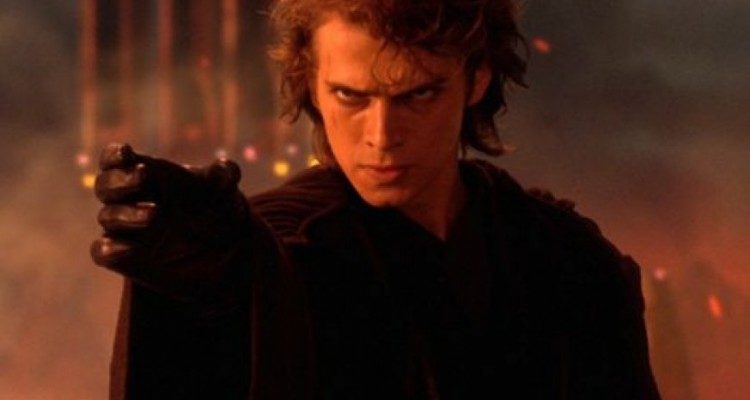
And yet, Anakin Skywalker still seems more like a petulant kid who got in over his head than the great warrior old Obi-Wan suggested he was. You know, before we knew that Anakin had become, rather than had been killed by, Darth Vader. Vader, the most iconic thing about the Original Trilogy, becomes the biggest letdown of the Prequel Trilogy.

2. Star Wars: The Villains Are More Fun
And yet, there is an appeal to Darth Vader. Even to Emperor Palpatine. People who like gangster movies can appreciate Jabba the Hutt. Kylo Ren was a compelling figure, even if he was every bit as petulant as Grandpa Anakin. Peter Cushing as Governor Tarkin in the Original Trilogy, and Domhnall Gleeson as General Hux in the Sequel Trilogy, outvillained the intended villains. And, while even he couldn't save the Prequel Trilogy, Christopher Lee is one of the alpha human beings of all time.

Star Trek? There was Khan Noonien Singh, and later Data's "brother" Lore. But the original Klingons and Romulans weren't that interesting, and needed the sequel series to flesh them out. The Borg were hopelessly two-dimensional. V'Ger didn't even think of itself as a villain. Tolian Soran? The Son'a? Roger Moore's version of James Bond faced villains with more depth.

1. Star Trek: Brains
No, this is not a reference to how "Spock's Brain" is better than The Phantom Menace. Besides, "Spock's Brain" isn't even the worst Original Series episode. "The Lights of Zetar" was considerably worse. (Sorry, Shari Lewis.) So was "And the Children Shall Lead." So was "The Way to Eden," Herbert.

Admit it: The Galactic Empire is the dumbest set of villains in movie history. I'm not just talking about how Emperor Palpatine's "foreseeing" never foresees that he's going to lose. Or about how the Stormtroopers do a lot of shooting and missing.

Han Solo practically spells it out in The Force Awakens, during the meeting about how to handle Starkiller Base: "So, it's big... Okay, how do we blow it up? There's always a way to do that." And while they've had shields since at least Return of the Jedi, they're still too easily disable-able, and still nothing like the shields of a starship in Star Trek. As Riker would say, "One photon torpedo ought to do it."

The Empire learned nothing in the 30 or so years from the time a single damaged Rebel ship crashed into the bridge of a Star Destroyer, sending it tumbling into the surface of Death Star II, to the construction of Starkiller Base.

All those Star Wars fans who say a Star Destroyer would wipe Picard's Enterprise out with one shot? They've got it totally backwards: Kirk's Enterprise would destroy the Death Star. Fast-forward 100 years, and Picard's Enterprise would end the Empire in 5 minutes.

Whereas, in Star Trek, you need brains. You have to be able to out-think your opponent. Hell, in "The Best of Both Worlds, Part II," Riker had to out-think a Borg-assimilated Picard, who thought he knew every move Riker could make. And in Star Trek: Nemesis, Picard had to out-think Praetor Shinzon, a clone of himself, who thought he knew every move Picard could make. Think about that: Picard's a very smart guy, and both Picard himself and Riker had to out-think a Picard... and both did, and both won.

How many times did Kirk -- described by former First Officer Gary Mitchell as "a stack of books with legs" -- out-think a computer? Several. All that logic from Spock. All those diseases cured by Dr. McCoy. All those "miracles" worked by Scotty. And that's just on The Original Series. Throw in the moves made by those guys in the movies, and the ones made by Picard, Riker, Data, Sisko and his crew, Janeway and her crew, Archer and his crew...

Sure, some scripts were dumb. But name me another TV franchise, in any genre, that has celebrated brainpower more than Star Trek. Go ahead. I'll wait. NUMB3RS? A good try, but not on the same level. The Big Bang Theory? Don't make me laugh. (It couldn't.)

Hell, I could wait for as long as it takes to watch Star Trek: The Motion Picture. Or The Last Jedi.

True, the Rebels in Star Wars often required great skill. But rarely was that skill analytical. The smartest people in the Rebellion would have been considered average in Starfleet.

Monday, April 6, 2020

Ranking the Star Trek Movies -- and The Wrath of Khan Is NOT #1

The other day, I ranked the Star Trek TV series. Now, I'm going to rank the movies. All 10 of them.

No. Not 13. The J.J. Abrams movies don't count. They may carry the name, but they are not Star Trek. There are four lights, and there are ten films.

Or, to put it another way: If J.J. Abrams had done the 2005 Honeymooners reboot, instead of a black cast led by Cedric the Entertainer, which didn't go over well but was, at the least, in the spirit of the original...

* Ralph Kramden would have been born on a lifeboat fleeing the Titanic. It would have made him just 4 years older than Jackie Gleason.

* Mayor Robert Wagner, inspecting the New York sewer system in 1956, would have been killed along with 30 others by a bomb planted by a Communist agent.

* Ed Norton, eating his lunch with Ralph in a City park at the time, would be traumatized by survivor's guilt, which brings back his Navy PTSD from World War II. Alice Kramden figures out that Norton actually is, as Ralph has so often said, a "mental case," and that his apparent stupidity is his suppression of his experiences.

* Inspired by Senator Joe McCarthy, Ralph and Ed come up with a "crazy harebrained scheme" to avenge the Mayor and the sewer workers, involving technology that shouldn't have happened for another 60 years (our time).

* Not only does it work, but they are hailed as heroes. Ralph wins the Mayoralty in a special election, and defeats Nelson Rockefeller for Governor in 1958.

* Free of his repressed memories and his mental block, Norton re-enlists in the Navy, and graduates from Officers' Training and Flight schools.

* In 1969, U.S. Navy Commander Edward Lillywhite Norton says, "That's one small step for a man... one giant leap for mankind!" And President Ralph Kramden makes the phone call from the White House to the astronauts, saying, "Norton, didn't I tell you, long, long ago, that you weren't just 'the man from space,' but that I was gonna send you to the Moon?"

(Ralph never threatened to send Ed to the Moon in a line that made it to air. He did do it in a line that was cut, as The Official Honeymooners Treasury showed.)

If you are a Honeymooners fan, and you find this ridiculous, you would be right. Well, that's how true Star Trek fans feel about J.J. Abrams' "Bad Reboot."

Four lights, ten films:

10. Star Trek V: The Final Frontier, 1989. Okay, we got it: In Star Trek, the even-numbered movies are good; the odd-numbered movies are not. This one wasn't helped by the fact that, after Leonard Nimoy directed the 2 previous films, William Shatner wanted to direct one.

He never directed in Trek again. As time, asndthe various Trek TV series, went on, we saw episodes directed by Nimoy, his son Adam, Patrick Stewart, Jonathan Frakes, Gates McFadden, LeVar Burton, Michael Dorn, Avery Brooks, Alexander Siddig, René Auberjonois, Andrew Robinson, Tim Russ, Robert Duncan McNeill, Roxann Dawson and Robert Picardo. Between them, they directed 105 episodes, topped by Burton with 28. Frakes directed 21, and also directed the 8th and 9th movies. But Shatner? Never again.

Was this movie that bad? It didn't have to be. The idea of the Enterprise crew meeting God -- or someone, or something, claiming to be the God of the Bible -- had been kicked around since Trek creator Gene Roddenberry considered the 1st movie in the mid-1970s, with a project he called "The God Thing." But, when finally tried here, it was not well-executed, and, in the end, it was unsatisfying.

Seeing Spock forced to choose between his blood brother (well, half-brother), Sybok (Laurence Luckinbill), and his brother-in-arms, Kirk, was a great idea. But the campfire scene near the beginning was stupid, and so was the idea of pilot Sulu and navigator Chekov getting lost. And did we really have to turn the Enterprise-A into a joke that had yet to "earn her name"? (Of course, given a fair chance, she did earn it.)

The supporting characters? Their situations were mixed. Chekov got to sit in the Captain's chair for the 1st time. Sulu's piloting skills were on display. But Scotty was alternately terrific and silly: That bump on the head (a ripoff of a Stormtrooper scene in Star Wars) should have been beneath him, or so to speak. And Uhura, well, maybe it was exploitative for her to do a nude scene, and at age 56, Nichelle Nichols had to be in shadow. But she made it work, and it was clear she was in control of the situation.

On a scale of 0 to 10, this film had the potential to be a 9. With a bit less silliness, it could have been a 7. Instead, it was a 4. Still, it was better than any of the Abrams films. With that in mind, let's move on.

9. Star Trek: The Motion Picture, 1979. Once people saw the 1968 film 2001: A Space Odyssey, with all its flaws, people saw Star Trek: The Original Series' red skies, papier-mâché boulders and rubber-masked aliens, and realized, "Hey, they could have done a lot better. They just didn't have the budget for it."

So when Paramount Pictures gave Gene Roddenberry the big budget to make a movie around Star Trek, he... copied 2001. The bad parts. The weird parts. The long, wordless, classical-music-backed montages that made the film at least 15 minutes longer than it needed to be. The hard-to-define enemy. The weird new lifeform at the end. And, of course, one thing 2001 didn't have: The new uniforms, described as "space pajamas."

The length, 2 hours and 12 minutes, led to this film being nicknamed Star Trek: The Motionless Picture. The trip into a "heart of darkness," and Francis Ford Coppola's also-long film earlier in the year, led to this film being nicknamed A Spockalypse Now. And V'Ger's similarity to the robotic opponent in the 1967 episode "The Changeling" led to this film being nicknamed Where Nomad Has Gone Before.

If you didn't like this movie, here's a suggestion: Just fast-forward through the montages. You'll save about 20 minutes, and the movie will be a lot better.

8. Star Trek: Insurrection, a.k.a. Star Trek IX, 1998. Yes, it's an odd-numbered movie. But the biggest problem is that it was a movie. When you wait 2 years to see the next movie, you want it to be terrific. Insurrection wasn't. Had it been a 2-part episode of ST:TNG, it would have felt a lot better.

The good parts include continuing the process, begun on Deep Space Nine (the film takes place right after the end of the Dominion War) and "completed" in Star Trek: Picard, of Starfleet drifting away from its ideals, and Jean-Luc Picard reminding them of what those ideals should be. The good parts also include some humor, Riker showing his space combat chops, the restoration of the Riker-Troi romance, and a rare but good love story for Picard.

The bad parts include a genuine threat from an enemy we had never seen before. Had we already known the Son'a, and how dangerous they could be, it would have been different. Instead, this was their introduction, so it was like, "Who the hell are these guys?" And since DS9 was coming to an end, Voyager was still in the Delta Quadrant, and Picard hasn't yet mentioned them, we've never seen them again. So it's like, "How big of a threat can they be?" So this was a very unsatisfying film.

7. Star Trek: Nemesis, a.k.a. Star Trek X, 2002. The last of the TNG crew films (so far) seemed to break the pattern: It was an even-numbered film, and it was horrible. That's the conventional wisdom.

Well, the conventional wisdom is wrong. Just as The Search for Spock, Generations and Insurrection are better than they get credit for, so is Nemesis. The big argument against this film is Data's "death" (a word that, after Picard, we can now put in quotation marks). People hated it. They tend to overlook that it is a sacrifice comparable to Spock's in The Wrath of Khan, completing the arc of the character being TNG's analogue to Spock, even if Spock had spent much of his life rejecting Data's quest to be more human.

The crew of the Enterprise-E is facing a threat that is even worse than that of Khan, the TOS-era Klingons, or the Borg, and more intentional and insidious than the comparable one posed by V'Ger: Total annihilation at the hands of renegade Romulans. And, with a great deal of thought and ingenuity -- including Picard mirroring Riker in "The Best of Both Worlds" by out-thinking a "Picard" who claims to know his every move -- they beat it. I liked this movie, even with Data's "death" giving it something of a downbeat ending.

6. Star Trek: Generations, a.k.a. Star Trek VII, 1994. As the baton was handed off to the Next Generation crew, the Roman numerals were dropped, so this would not be officially known as Star Trek VII.

Seeing that the new Enterprise-B was commanded by Captain John Harriman, and that he was played by Alan Ruck, only 8 years removed from playing Cameron Frye, the neurosis-saddled best friend in Ferris Bueller's Day Off, one could be forgiven for thinking of a catchphrase from Star Wars: "I've got a bad feeling about this!" And we never did see Harriman redeem himself. (I'm choosing to not accept the 2006 fanmade miniseries Star Trek: Of Gods and Men as canon.)

Of the original crew, only Shatner (Kirk), James Doohan (Scotty) and Walter Koenig (Chekov) agreed to return, although Jacqueline Kim played Ensign Demora Sulu, taking her father's place as Helm Officer of the Enterprise. The story leading to what appeared to be Kirk's death was a good one, even if it made Harriman and his crew look weak by comparison. (Certainly, they were, through little fault of their own, grossly under-prepared.)

We jumped 78 years to see... a "tall ship" named Enterprise, sailing on the ocean, manned by Picard and his senior officers, dressed as Napoleonic Era sailors? Holy Holodeck, Batman! Okay, it was cute, now get on with the story.

The movie tries to be TWOK, by making both Picard and Kirk alternately cheat death and face death. And this ends up not working. It makes Dr. Tolian Soran, the villain played by Patrick Stewart's fellow West Yorkshireman Malcolm McDowell, somewhat sympathetic, while reminding us that he is still incredibly evil and must be stopped. But the fact that it takes Kirk and Picard, Starfleet's 2 greatest Captains ever -- we didn't yet know about Jonathan Archer -- to do it is wrecked by how clumsily it was carried out.

And Kirk's death scene was really unworthy of the character, right down to the dumb joke it inspired: "After all the times there was the Captain on the Bridge, we had the bridge on the Captain."

There was a warning in this film, though, even if it took 26 years for us to realize it. Kirk tells Picard never to give up the Captain's chair on the Enterprise: "While you're there, you can make a difference!" As we have now seen in Star Trek: Picard, 14 years after that sequence (from his perspective), he gave up that chair, in order to make a new difference, and it didn't work, and he fell into a depression that lasted another 14 years, before the events of the new show.

Does that retroactive warning carry resonance now? Absolutely. Does it make this film better? Slightly. Enough to make it a good film? Well, it's not a bad film. But it could have been considerably better.

5. Star Trek III: The Search for Spock, 1984. After the box-office and emotional success of TWOK, this was going to be a letdown, no matter what, even if we all knew that Spock was going to be restored to life by the end. Although we didn't expect the destruction of the Constitution-class USS Enterprise, which, if you think about it, was the greatest character in Star Trek, over even Kirk and Spock.

(Unlike the death of Spock, a twist every bit as big as finding out that Darth Vader was actually Luke Skywalker's father 2 years earlier, that gut-punch had not been leaked before the release. Promos said, "Join us, for the final voyage of the Enterprise." But we didn't expect to see the old girl blown up.)

And there were some ridiculous things. The "katra" concept, the deus ex machina idea that went on to restore Spock's life. The alien with whom McCoy tries to negotiate a ride to the Genesis Planet. Killing off Dr. David Marcus (Merritt Buttrick), the brilliant young scientist that Kirk found out in the previous film was his son. Kirk's reaction, "You Klingon bastard, you killed my son!" The fight between Kirk and Klingon Commander Kruge. And the Vulcan priestesses wearing what appear to be negligees. Given the usual modest dress of Vulcans, this was, as the saying goes, highly illogical.

And Christopher Lloyd, as Kruge, trying to out-ham Shatner, which even Ricardo Montalban hadn't been able to do, though God knows he tried. I have to admit, it produced a great exchange: Kirk: "Look around you! This planet is destroying itself!" Kruge: "Yes! Exhilarating, isn't it?" Surely, that role, rather than that of Jim Ignatowski on Taxi, was what got Lloyd cast as Dr. Emmett Brown in Back to the Future.

But this movie gets a bit of a bad rap. While Chekov got to scream in each of the 1st 2 movies, and he had a big role in TWOK, most of the supporting cast had pretty much been little more than that: Supporting. This time, Scotty, Sulu, and even Uhura got to be a part of the heroic process. As Spock's father, Ambassador Sarek, Mark Lenard had great interactions with Kirk and the Vulcan elder T'Lar, played by the legendary Judith Anderson.

And, of course, continuing the theme of TWOK, Kirk is still facing the consequences of his various actions over the years, and facing death as never before. "At what cost?" Sarek asks. "Your ship. Your son." But Kirk understands, illogical though it may be: "If I hadn't, the cost would have been my soul."

TSFS was a letdown, but it is not a bad movie.

4. Star Trek: First Contact, a.k.a. Star Trek VIII, 1996. Not only is this easily the best of the films with the Next Generation crew, it is their Wrath of Khan, because it forces Picard to deal with his experiences with the Borg. They hurt him more deeply than Kirk had been hurt by anything, even his previous experiences with personal defeat and personal loss.

And watching Dr. Lily Sloane (Alfre Woodard) show him that he's turning into Moby-Dick's Captain Ahab, followed by him showing her that Ahab was fighting for personal vengeance and that he's fighting for that and more, showed Patrick Stewart at his finest.

Showing the aftermath of the Star Trek Chronology's World War III -- a nuclear exchange in 2053 resulting in 600 million dead, as opposed to Spock's earlier claim that the war killed 37 million, or roughly half as many as actually died in the real-life World War II -- leading to the 1st Warp 1 flight finally gave Star Trek an "origin story."

That was nice, but at a horrible cost. Would Gene Roddenberry, who had died 5 years before the film's release, have accepted that such a cataclysm was needed to bring humanity together to achieve such a utopia? Only he knew for sure.

Perhaps the most interesting part of the film centered around the Borg Queen's attempt at the psychological seduction of Data. She was willing to give him what he said he always wanted, the chance to be fully human. He saw through that, knowing that anyone who served the Borg could not be human at all, let alone fully human.

But, more than that, he showed that, because he wasn't fully human, he was incorruptible. Maybe he was better off, no matter what he wanted. Certainly, the people of the Federation were better off for him not being fully human.

3. Star Trek II: The Wrath of Khan, 1982. What? Not Number 1? No. I will explain.

The stakes for this film were huge, after the failure of ST:TMP. Director Nicholas Meyer liked the idea of revisiting "Space Seed," an episode of the original series, in which Ricardo Montalban played Khan Noonien Singh, a threat from the late 20th Century. (UPDATE: The later series Star Trek: Strange New Worlds moved Khan's reign up to the mid-21st Century.) (A long story, in more ways than one.) Kirk thought he had ended Khan's threat.

He was wrong, and he has to confront that threat aboard the Enterprise, with mixed results. Part of the dynamic of this film is that, unlike in the 1967 episode, where Kirk and Khan physically fought, Shatner and Montalban were never together, only communicating across reaches of space, including Shatner's iconic "Khaaaan!" yell -- which, as we would soon learn, was a ruse.

Even more iconic is Spock's sacrifice, which becomes one of the greatest death scenes ever filmed, in any genre: "The needs of the many outweigh the needs of the few, or the one." And one of the greatest funeral scenes ever filmed, with Kirk's eulogy for his First Officer and best friend followed by Scotty playing "Amazing Grace" on the bagpipes as a prelude to Spock's body, with a photon torpedo tube serving as his coffin, being fired onto the Genesis Planet.

The theme of the movie is the changing of Kirk's character. All through the 3 seasons of the original series, and the 1st movie, he's a bold, sometimes even reckless, commander, a man who once proudly (in "By Any Other Name") proclaimed, "Risk is our business." And, because Hollywood, especially 1960s TV, trucked in happy endings, he always got away with it.

In this film, it's even mentioned that the Kobayashi Maru scenario, a test of character given to Cadets at Starfleet Academy, an example of which begins the film, had only been beaten once, about 30 years earlier, by Kirk himself. He reveals that he cheated.

He had always cheated death. He had never truly faced death, until losing Spock -- "No, not like this," he admits. He had lost his time-displacement girlfriend Edith Keeler (Joan Collins) in the episode "The City On the Edge of Forever." He had lost his amnesia-induced wife Miramanee (Sabrina Scharf) in the episode "The Paradise Syndrome." But he had only known those women a short time. He had known Spock for at least 20 years by this point, and they had become as close as brothers.

Clearly, if it had been himself making the sacrifice, whatever physical pain he felt, the sense of loss would have been less than it was with Spock. Finally, after 30 or so years in Starfleet, the bill for Kirk's successful gambling with life and death had come due.

That is what makes TWOK, for so many Trekkies, the greatest film of all: Not just the great story, and the great adventure, against the man that Spock, in Abrams' Star Trek Into Darkness, would describe as "the most dangerous enemy the Enterprise ever faced"; but the development of Kirk's character, and Spock's, too. It was a recognition that Spock was truly the more popular character, and also a recognition that Kirk had done so much, and had faced so little hardship, and now had to face it.

Of course, this isn't true. Anyone who saw the 2nd pilot, "Where No Man Has Gone Before," knows that not only did his original First Officer, Lieutenant Commander Gary Mitchell (Gary Lockwood), die, but that Kirk had to kill Mitchell himself. Anyone who saw the episode "Obsession" knows that Kirk bore some guilt over an incident on the USS Farragut 11 years earlier. Anyone who saw the episode "Operation: Annihilate!" saw Kirk find the dead bodies of his brother Sam and his sister-in-law Aurelan, and almost also lose his nephew Peter.

And he lost a lot of crewmen: The fanmade series Star Trek Continues, which pretended to finish the five-year mission, had Kirk, played by series creator and main writer Vic Mignogna, admit that he'd lost 73 people under his command in those 5 years, a number that was about to rise to 75.

So it's not really fair to say that Kirk "never had to face death." In fact, when he had to sacrifice the Enterprise late in TSFS, he asks, "My God, Bones, what have I done?" McCoy tells him, "What you had to do, what you've always done: You've turned death into a fighting chance to live."

Which is what Spock did near the end of TWOK. Half-human and half-Vulcan, he was able to reconcile his human need to save his crewmates with his Vulcan way of figuring out the most logical way to do it. Kirk understood: "Of my friend, I can only say this: Of all the souls I have encountered in my travels, his was the most... human." That line, and the sacrifice that inspired it, were both so great, the guy who runs the YouTube page CinemaSins took "sin points" off for both.

So, yes, TWOK is a great movie, not just a great Star Trek movie or a great science fiction movie. But, I submit to you, that it is not the best Star Trek movie.

2. Star Trek IV: The Voyage Home, 1986. Concluding the trilogy that began with TWOK, Star Trek has an adventure where they travel back in time, to what was then our present. The producers always liked that, because it allowed them to use already-present studio sets and location shots, and save money on set building and special effects. (This had previously been done with "Miri," with Spock saying the parallel world looked like Earth would have in 1960; "Assignment: Earth," set in 1968; and "Tomorrow Is Yesterday," set in 1969.)

It was fun watching the Enterprise's "Magnificent Seven" struggle with our era: The need for money, the struggle with public transportation, the need to solve their 23rd Century problem with 20th Century materials and methods, and Kirk eating pizza (crust-first) and drinking beer, as if those things aren't still around in the late 23rd Century. (Surely, they were.)

The environmental message was a bit preachy, especially in the Reagan Eighties. But, you know what, we needed to be preached to. We'd spent 2 movies watching Kirk deal with the consequences of his actions over 30 years. And even if we hadn't, we deserved to have Kirk, Spock, and marine biologist Dr. Gillian Taylor (Catherine Hicks) lecture us on how to deal with the consequences of our actions over 300 years.

Finally, we got something we didn't get in any of the 1st 3 Trek films: A very satisfying ending. TMP's ending was weird, TWOK's was depressing (if fitting), and TSFS's was half-uplifting and half-depressing. It had been 27 years since Star Trek gave us a definitive, no "Yeah, but... " win for the good guys. And we got it.

How good was this movie? My grandmother, who was already 42 years old when Star Trek debuted in 1966, was not a fan of the show. But even she liked this movie. It may not have been better-made than TWOK in terms of writing, drama or special effects, but it didn't have to be better-made. It was better.

It also established the pattern, which held until 2002: In Star Trek, the even-numbered movies are good; the odd-numbered movies, not so much.

1. Star Trek VI: The Undiscovered Country, 1991. Designed to be the valedictory for the original crew, this is the best Trek film of them all. It was a story worthy of the man quoted throughout its script, William Shakespeare.

Like TWOK, Kirk has to face the consequences of his actions. And, by now, we were into the 5th season of The Next Generation, so we knew that we had to reconcile some things, including the fact that, by the time that show began -- 71 years after the events of this movie -- the Klingon Empire had ceased to be the Federation's marquee enemy. And, being the original series' analogue for the Soviet Union, we had an allegory for that country's collapse and reform into the Russian Federation, and the end of the Cold War.

But, just as some people didn't want the Cold War to end, so, too, were there people -- on at least 3 sides, as it turned out, counting the Romulan Empire, the original series' analogue for Red China -- who had an interest in the Federation-Klingon conflict continuing.

That could have been done in a very hackneyed way. But, with Nicholas Meyer, director of TWOK, returning to direct, and also writing the screenplay with Denny Martin Flinn (and contributions by Nimoy), they avoided the pitfalls, and forged a great story.

This movie had, if not "it all," then, a lot. A detective story. A prison break. Redemption for TSFS's maligned USS Excelsior, now commanded by Captain Hikaru Sulu (finally getting a command and a first name). DeForest Kelley as McCoy and George Takei as Sulu each giving the best performance of his career. Great performances as Klingons by David Warner and Shatner's old friend from Shakespeare productions in their shared hometown of Montreal, Christopher Plummer. A thrilling space battle. A good resolution of the film's underlying conflict. And a fine "commencement address" by Shatner at the end.

The Undiscovered County, not The Wrath of Khan, is the best Star Trek film.

Thursday, March 29, 2018

Fascinating Star Trek Trivia

March 29, 1968, 50 years ago: Star Trek airs the episode "Assignment: Earth." Robert Lansing plays Gary Seven, an interstellar "James Bond" (or, if you prefer, "Jim Phelps" of Mission: Impossible, which would later include Trek's Leonard Nimoy), whose alien superiors have given him technological knowledge far beyond that of a 20th Century human.

Lansing would be the only guest star to be mentioned in the opening credits of a Trek episode, rather than in the closing credits. A young Teri Garr (misspelled "Terri" in the closing credits) plays his unwitting assistant, a young Secretary named Roberta Lincoln.

This was supposed to be the backdoor pilot for a show featuring Gary and Roberta, as Trek creator Gene Roddenberry thought the show was about to be canceled, and he thought he needed a fallback show.

It turned out to be the other way around: Assignment: Earth was not picked up, and, after initially canceling it, NBC acceded to the wishes of the show's ardent fans, and brought Star Trek back for a 3rd season.

In this episode, Nimoy, as Spock, tells Captain James T. Kirk, played by William Shatner, "Current Earth crises would fill a tape bank, Captain. There will be an important assassination today, an equally dangerous government coup in Asia, and, this could be highly critical, the launching of an orbital nuclear warhead platform by the United States, countering a similar launch by other powers."

Just 6 days after the episode aired, on April 4, 1968, Martin Luther King was assassinated, and a malfunction resulted in the failure of the unmanned Apollo 6 mission. Indeed, the footage used for this episode’s fictional missile launch was of a previous unmanned mission, Apollo 4.

So we have a definitive date for this episode, the only one of the 23rd or 24th Century Star Trek series for which this is true. Even "Tomorrow Is Yesterday" – in the past for this crew but the future for the world below – gets no more specific than that "next Wednesday" will be the launch of the 1st mission to land men on the Moon, and the launch of Apollo 11 did take place on a Wednesday, July 16, 1969.

The deviation from the history that we know is on the coup in Asia: The closest parallel was the "17 July Revolution" in Iraq, 3 months later, in which Saddam Hussein ended up second-in-command.

Also on March 29, 1968: Lucille Frances Ryan is born in Auckland, New Zealand. We know her by the stage name she took after her first marriage: Lucy Lawless. The former star of Xena: Warrior Princess, now appearing on Ash vs. Evil Dead, has never appeared in any form of Star Trek, but she did play a Cylon in the rebooted version of Battlestar Galactica.

*

We are now in the process of celebrating the 50th Anniversary of Star Trek -- specifically, what is now usually called Star Trek: The Original Series (or ST:TOS): September 8, 1966 to June 3, 1969.

This trivia is limited to TOS, and doesn't include Star Trek: The Animated Series (1973-74), the movies (1979-94), or appearances by the TOS characters in later series (as very old people or in flashbacks):

* James T. Kirk (William Shatner) defeated a seemingly unbeatable computer in 6 episodes: "What Are Little Girls Made Of?", "The Return of the Archons," "The Changeling," "The Apple," "The Ultimate Computer" and "For the World Is Hollow and I Have Touched the Sky." ("That Which Survives" doesn't count.)

* Kirk got his shirt ripped in 8 episodes: "Where No Man Has Gone Before" (the 2nd pilot), "The Naked Time," "Miri," "Court Martial," "Shore Leave," "Arena," "Amok Time" and "The Gamesters of Triskelion." But only in "The Savage Curtain" was damage done to his pants.

* Spock (Leonard Nimoy) said the word "fascinating" 74 times, plus once more in each of the 1st 2 movies, and once more in the Next Generation episode "Unification, Part II." Zachary Quinto used it once in the despicable J.J. Abrams reboot. Data (Brent Spiner) used it once on Star Trek: The Next Generation, but his early use of "intriguing" didn't catch on. Tuvok (Tim Russ) used "fascination" once on Star Trek: Voyager.

* In contrast, only 35 times did Spock use the word "illogical." And it wasn't until "The Omega Glory" that he used the specific phrase "highly illogical."

* The phrase "Live long and prosper" was used 4 times: By Spock in "Assignment: Earth" and "Is There in Truth No Beauty?"; by T'Pau in "Amok Time"; and by the simulation of Surak in "The Savage Curtain."

* Spock performed the Vulcan salute 7 times, the Vulcan nerve pinch 34 times, and the Vulcan mind meld 7 times -- including in "The Enterprise Incident," when he used it to fool Romulans into thinking he had killed Kirk with a "Vulcan death grip." The alternate (but not evil) Spock used the mind meld on McCoy in "Mirror, Mirror."

* Leonard "Bones" McCoy (DeForest Kelley) made 15 mentions of being a doctor, but only used the specific words, "I'm a doctor, not a... " 5 times: A bricklayer in "The Devil in the Dark," an escalator in "Friday's Child," a mechanic in "The Doomsday Machine," an engineer in "Mirror, Mirror" (to which chief engineer Montgomery Scott, played by James Doohan, responded, "Now, you're an engineer"), and a coal miner in "The Empath."

He never used it in any of the movies, although Karl Urban used it once in each of the 3 films in the Abrams reboot. As a kid, I had a 45 RPM record of a comic-book-style story, titled "Passage to Maouv," in which the actor voicing McCoy said, "I'm a doctor, not an animal trainer!"

McCoy also said, "I'm a surgeon, not a psychiatrist" in "The City On the Edge of Forever," although he was said to be an expert in space psychology in "Court-Martial." He used his status as a doctor to compare himself with a moon shuttle conductor in "The Corbomite Maneuver," an officer of the line in "A Taste of Armageddon," a physicist in "Metamorphosis," a magician in "The Deadly Years," a flesh peddler in "Return to Tomorrow," and a mechanic in "The Empath."

And, in "Amok Time," after McCoy kept answering questions about Spock's condition with, "I don't know," Kirk asked, "You keep saying that. Are you a doctor, or aren't you?"

The phrase was never used on The Next Generation -- not by Beverly Crusher (Gates McFadden), Katherine Pulaski (Diana Muldaur), or anyone else. But it was used once by Phlox on Enterprise (John Billingsley: An engineer), used twice by Julian Bashir on Deep Space Nine (Alexander Siddig: A botanist and an historian) , and was beaten to death by The Doctor on Voyager (Robert Picardo: An engineer twice, a decorator, a performer, a bartender, a voyeur, a counter-insurgent, a database, a Peeping Tom, a battery, a dragonslayer, a zookeeper, and a doorstop -- and another Emergency Medical Hologram, played by Andy Dick, said, "I'm a doctor, not a commando").

But the phrase goes back further than we thought. Like Nimoy and Doohan, Kelley appeared on the Western Bonanza, in his case 4 times. In the 1962 episode "The Decision," he played a doctor, Michael Jons (not "Jones"), in jail but currently the only man who could save the life of an injured Hoss Cartwright (Dan Blocker). Hoss' father, Ben (Lorne Greene), reminds him, "You're a doctor." Jons says, "I'm not a doctor, I'm a condemned murderer!" In a stunning coincidence, John Hoyt, who played Dr. Philip Boyce in "The Cage," played a judge in that episode. In an even bigger coincidence, the name of the newspaper in Virginia City, Nevada -- and this was true in real life, too -- was the Territorial Enterprise.

Before that, in 1955, Kelley appeared in an episode of The Millionaire, titled "The Iris Millar Story." He played a doctor, Michael Wells, the boyfriend of the titular character, an ambitious career woman (Virginia Grey). She wants to use the money to help him build his practice, so he can attract richer clients and become a man of influence. He tells her, "I am a doctor, not a politician."

And in 1933, Etienne Girardot played Dr. Doremus, a medical examiner, in the film The Kennel Murder Case. He tells the film's protagonist, private detective Philo Vance (William Powell), "I'm a doctor, not a magician." Moments later, he tells Vance, "I'm a doctor, not a detective."

* McCoy pronounced 23 people (and Tribbles, "a lot of them") dead, but he only used the specific phrase, "He's dead, Jim" 5 times: For Crewman Darnell in "The Man Trap," the unicorn dog in "The Naked Time," Scotty in "The Changeling" (Nomad had killed him, but then restored him to life), Prefect Hengist of Argelius II in "Wolf In the Fold" (an episode that also featured McCoy saying the only 2 examples of, "She's dead, Jim," of Kara the Argelian dancer and Lieutenant Karen Tracy), and Dr. Larry Marvick in "Is There In Truth No Beauty?"

Of Dr. Tristan Adams in "Dagger of the Mind" and Starnes in "And the Children Shall Lead"), McCoy says, "He's dead, Captain." On 3 occasions, he pronounced someone dead as a ruse: In "Amok Time" and "The Enterprise Incident" with Kirk, and in "I, Mudd" with Scotty. And in "Spectre of the Gun," he thought Chekov was dead, but he turned out to be wrong.

* Bones never said, "Damn it" until the movies; "Dammit, Jim!" and "Dammit, man!" to Spock became a trope later on. The show aired in the late 1960s, and censors had different standards then. The only word even closely fitting the definition of a profanity in the entire series was uttered by Kirk, and the producers had to fight the censors to keep it: At the end of "The City On the Edge of Forever," he said, through his grief and trauma over losing Edith Keeler (Joan Collins) in order to preserve the timeline, "Let's get the hell out of here."

And at the end of "Bread and Circuses," he said of the planet whose parallel development to Earth differed by having the Roman Empire survive into the 20th Century, Kirk says, "Caesar and Christ, they had them both." But he used the title "Christ" as an identifier of the historical figure, not as an exclamation.

* Scotty frequently dropped Scottish words like "lad," "lass," "bonny" and "a wee bit," and called the engines "my poor bairns" in "The Paradise Syndrome." Responding to a troublesome situation in "A Taste of Armageddon," he said, "Aye, the haggis is in the fire for sure." In "The Naked Time," he said, "I can't change the laws of physics!" But he never said, "I'm givin' her all she's got!"

* Hikaru Sulu was absent for several episodes in the 2nd season (1967-68), because George Takei was filming the John Wayne film The Green Berets.

* Pavel Chekov (Walter Koenig) confused things for "Russian inwentions" 6 times: The discovery of Sherman's Planet, the development of quatrotriticale, and Scotch whisky ("It was inwented by a little old lady in Leningrad!"), all in "The Trouble With Tribbles"; the phrase "Fool me once, shame on you; fool me twice, shame on me" in "Friday's Child"; the Cheshire cat for a creature from Minsk (which is actually in Belarus) in "Who Mourns for Adonais?"; and the Garden of Eden with "just outside Moscow" in "The Apple." In Star Trek VI: The Undiscovered Country, he said that Cinderella was an "ancient Russian story." (Variations on it go back to ancient Greece, but the story as we know it goes back to Naples, Italy in 1634.)

* Leningrad, of course, had its name changed back to St. Petersburg in 1991, but no one knew that would happen when the episode aired in 1967, or when Star Trek IV: The Voyage Home (which also mentioned Leningrad) premiered in 1986.

* Nobody, in any version of Star Trek, small or large screen, ever spoke the specific words, "Beam me up, Scotty." Kirk did say, "Beam me up, Mr. Spock" at the end of "The Squire of Gothos," but it was usually, "(number of people) to beam up," or something like that. The closest call was in Star Trek IV, when Kirk said, "Scotty, beam me up" -- not the other way around.

* Time travel was used in 5 episodes: "All Our Yesterdays" (to about 3000 BC and about AD 1700, albeit on a planet other than Earth), "The City On the Edge of Forever" (to 1930), "Assignment: Earth" (to 1968), "Tomorrow Is Yesterday" (to 1969), and "The Naked Time" (back 3 days). It's worth noting that, while "Assignment: Earth" took place after "Tomorrow Is Yesterday" from the Enterprise crew's perspective, the past sequence took place over a year before.

* Not the same thing, but worlds that seemed to be parallels of Earth's past were visited in 8 episodes: "Who Mourns for Adonais?" and "Plato's Stepchildren" (in each case, ancient Greece), "The Return of the Archons" (it looked like the late 19th Century), "Spectre of the Gun" (1881), "A Piece of the Action" (the late 1920s), "Patterns of Force" (the early 1940s), "Bread and Circuses" (it appeared to be the 1950s) and "Miri" (Spock estimated the world to be at around 1960).

So that's 13 episodes, and you can guess why it was done so often: It was cheaper to use mid-20th Century buildings already standing on the Paramount lot as sets. Indeed, Paramount used the same sets they used for Mayberry on The Andy Griffith Show. In "The City On the Edge of Forever," Shatner and Collins can be seen walking past a building with "Floyd's Barber Shop" written on it.

Time travel was also used in Star Trek IV: The Voyage Home. Later crews had their shares of time travel and, with the holodeck, simulations thereof.

* The Klingons appeared 7 times: "Errand of Mercy," "Friday's Child," "The Trouble With Tribbles," "A Private Little War," "Elaan of Troyius," "Day of the Dove" and "The Savage Curtain."

* The Romulans appeared 3 times: "Balance of Terror" (meaning they debuted onscreen before the Klingons did), "The Deadly Years" (in that case, only their ships were shown, not their people) and "The Enterprise Incident."

* The Orions were mentioned in "Journey to Babel," but the only actual male Orion shown was disguised as an Andorian. That episode introduced the blue-skinned, antennae-crowned Andorians, the piglike Tellarites, and Spock's parents, Vulcan Ambassador Sarek and his human wife, Amanda Grayson.

* An "Orion slave girl" appeared in only one episode, "Whom Gods Destroy." Her name was Marta, and she was played by former Batgirl Yvonne Craig. Vina (Susan Oliver) was depicted as one in the original pilot, "The Cage," and the footage was re-used for "The Menagerie," but she wasn't actually one of them.

And, contrary to Eddie Murphy's classic routine, Kirk never actually had sex with Marta, or any other "green bitch," though he did kiss her, and Marta, delusional, called Kirk "my lover" to Captain -- excuse me, Lord Garth (Steve Ihnat).

* So how many times did Kirk get "a piece of the action"? Split into passive and aggressive forms, his aggressive form tried to rape Yeoman Janice Rand (Grace Lee Whitney) in "The Enemy Within." In addition, he kissed former girlfriends in "Dagger of the Mind," "Court Martial" and (sort of) "Shore Leave." He also had a very unromantic reunion with a former girlfriend in "Turnabout Intruder."

He also kissed women in "The City On the Edge of Forever," "Mirror, Mirror," "Catspaw," "A Private Little War," "Return to Tomorrow," "By Any Other Name," "Bread and Circuses," "Plato's Stepchildren" (Shatner and Nichelle Nichols, playing Lieutenant Nyota Uhura, had the 1st interracial lip-lock on U.S. prime-time TV), "Wink of an Eye," "Elaan of Troyius," the aforementioned "Whom Gods Destroy," "The Mark of Gideon" and "Requiem for Methuselah." So that's 17 women he kissed, averaging better than 1 in every 5 episodes.

But only in "Bread and Circuses" (with the Roman slave Drusilla) and "The Paradise Syndrome" (he married Miramanee, who later told him, "I bear your child") was it implied that Kirk had sex during the episode. (This being the 1960s, NBC couldn't actually show such a scene.) Whether Kirk "performed a docking maneuver" in any other episode can be guessed, but not confirmed.

Miramanee (Sabrina Scharf) did not use the word "pregnant." McCoy used the word to describe the Tribbles. But he (or, rather, episode writer David Gerrold -- who later came out as gay, and thus should have known better even then) goofed: He said they were "bisexual," when the word should have been "asexual," meaning reproducing without the use of a partner. That may have been the 1st time the word "bisexual" was used on U.S. prime-time TV. Which leads to this:

* Despite the presence of Takei, Roger C. Carmel (who played Harry Mudd), and other actors later known to be gay, no character on TOS would have been depicted as such. But it has been retroactively suggested as such for Mudd (it would explain the earring, why he didn't seem to be affected by his charges' pheromones in "Mudd's Women," and why he hated his wife Stella in "I, Mudd"), and for Captain R.M. Merik and Proconsul Claudius Marcus in "Bread and Circuses." (The Proconsul said the matters of men would not concern Merik.)

And, in 2008, the fanmade series Star Trek: New Voyages showed Kirk's nephew Peter recovered from his attack by the Denevan Parasite in "Operation: Annihilate!" to become an Enterprise security officer and have a gay relationship -- both made problematic by the character's age.

Craig Huxley was 12 when he originally played the character in 1967; Bobby Rice was 25 when he first played the role in New Voyages, which seemed to be taking place only 2, maybe 3 years later. Even if Peter was 15 at the time we first saw him, and genius enough to get into Starfleet Academy almost immediately, there's no way a military academy would have let him graduate in just 3 years, so he couldn't have been an adult in the New Voyages episode.

* Married during the course of the show's run were an amnesiac Kirk in "The Paradise Syndrome" and McCoy in "For the World Is Hollow and I Have Touched the Sky." Kirk was subsequently widowed, and McCoy's marriage was soon annulled. Spock was supposed to be married in "Amok Time," but T'Pring (Arlene Martel) had other ideas.

And "Balance of Terror" began with Kirk presiding over the wedding of Lieutenant Robert Tomlinson (Stephen Mines) and Ensign Angela Martine (Barbara Baldavin), but the ceremony was interrupted, it was never completed, and Tomlinson died in the battle. Kirk never did get to perform a ship captain's prerogative of presiding over a wedding. In contrast, in The Next Generation, Captain Jean-Luc Picard presided over that of Chief Miles O'Brien (Colm Meaney) and Dr. Keiko Ishikawa (Rosalind Chao).

* Harry Mudd was the only specific antagonist seen twice, in "Mudd's Women" and "I, Mudd." He made a 3rd appearance in the Animated Series episode "Mudd's Passion." Otherwise, every episode was "self-contained": You didn't have to have seen any previous episode to understand the one you were watching at the time.

William Campbell was one of several guest actors who appeared twice, in his case as Squire Trelane in "The Squire of Gothos" and as Klingon Captain Koloth in "The Trouble With Tribbles." Koloth and Kirk certainly acted as though they had dealt with each other before (perhaps as a nod to Campbell's previous appearance), and Koloth was intended as a regular foil for Kirk, but he never appeared on the show again, as any character.

John Colicos was the 1st Klingon commander shown, as Kor in "Errand of Mercy." Michael Ansara, then married to I Dream of Jeannie star Barbara Eden, played Kang in "Day of the Dove." Colicos, Ansara and Campbell reprised their roles, with full ridge-headed makeup, as old Klingons in an episode of Deep Space Nine, "Blood Oath."

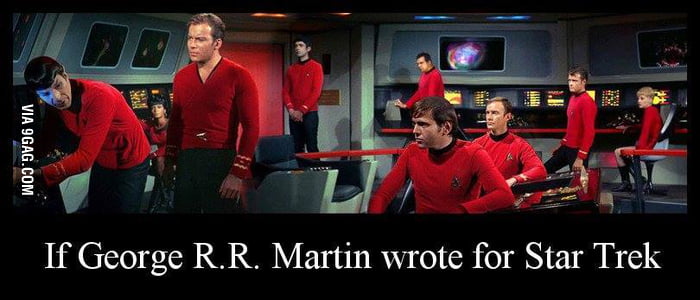
* There were 55 characters who died on the show, including 28 red-shirted officers, 8 in gold, and 7 in blue. Dead or doomed "redshirts" have become an Internet meme. There's the joke about how a Redshirt met a Stormtrooper from Star Wars, and the Stormtrooper fired and missed, and the Redshirt died anyway.

Then there's this one, invoking George R.R. Martin's willingness to kill any character on Game of Thrones:
* Kirk appeared to have been killed and revived in "Amok Time," "The Enterprise Incident" and "The Tholian Web." So did McCoy in "Shore Leave," Scotty in "The Changeling" and Chekov in "Spectre of the Gun."