Showing posts with label game of the week. Show all posts

Thursday, January 16, 2025

Bob Uecker, 1934-2025

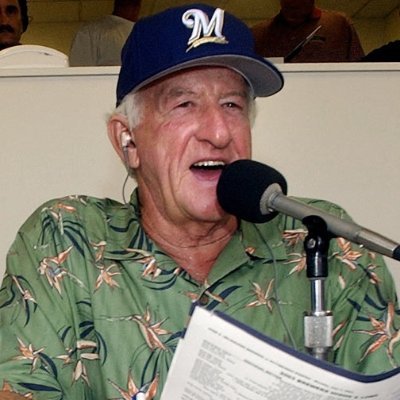
Bob Uecker was living proof that you didn't need to be a great baseball player to be a baseball legend. Sadly, he is living proof no more.

Robert George Uecker was born on January 26, 1934 in Milwaukee. The son of immigrants from the German part of Switzerland, he grew up a fan of the minor-league Milwaukee Brewers. While serving in the U.S. Army, he played on service baseball teams. The Boston Braves had moved to Milwaukee for the 1953 season, and they signed him to a contract.

On April 13, 1962, he became the first Milwaukee native -- indeed, the first Wisconsin native -- to play for the Milwaukee Braves. It was a Friday the 13th, and maybe that was an omen. In the top of the 9th inning, Uecker, wearing Number 8, pinch-hit for pitcher Ron Piché, and grounded out to 2nd base. The Braves lost to the Los Angeles Dodgers, 6-3 at the newly-opened Dodger Stadium in Los Angeles.

Uecker was a catcher, and a decent fielder as one, but not much of a hitter. He would finish his career with a lifetime batting average of exactly .200. He hit 14 home runs, but 1 was off Sandy Koufax of the Dodgers. Just before the 1964 season, the Braves traded him to the St. Louis Cardinals. Now wearing Number 9, he backed up Tim McCarver on the team that won the World Series.
Pictured: A St. Louis Cardinal wearing Number 9
Definitely not Enos Slaughter, Roger Maris,
Joe Torre or Terry Pendleton.

After another year in St. Louis, he was traded to the Philadelphia Phillies. He joked that he got pulled over by a policeman, and was fined $400: "$100 for drunk driving, and $300 for being with the Phillies."

In 1967, they traded him to the Braves, who had moved to Atlanta. He was the only catcher on the roster willing to catch the knuckleball thrown by pitcher Phil Niekro, and so he ended up leading the National League in passed balls. He said, "The best way to catch a knuckleball is to wait until it stops rolling, and pick it up." (Another 1960s catcher, future manager Jeff Torborg, said, "There are two theories about catching the knuckleball. Unfortunately, neither of them work.")

The Braves released him after the season. It was during the World Series, so nobody noticed. He was only 33 years old. It seemed like an ignominious end to an inconsequential baseball career.

*

A funny thing happened on the way to obscurity. Many funny things. Uecker stayed in Atlanta, and, like many other ex-catchers before and since, became a broadcaster, calling the Braves' games. In 1971, a new version of the Milwaukee Brewers, in the American League, hired him as a broadcaster. He became the most popular figure in the team's history, ahead of even such great players as Robin Yount and Paul Molitor. His home run call was, "Get up! Get up! Get outta here! Gone!"

He kept his self-deprecating humor. He said he'd become a household name, but, "The household was in Menomonee Falls, Wisconsin." (A western suburb of Milwaukee, a short drive from County Stadium.) In the 1970s, ABC hired him for national broadcasts on Monday Night Baseball. In the 1980s, he moved over to NBC for the Saturday Game of the Week. The whole country heard how funny he could be.

This led Milwaukee-based Miller Brewing Company to put him in their famous commercials for Lite Beer. In the best-known one, he thinks he's got great complimentary tickets to a game, but the usher says, "You're in the wrong seat, buddy, come on." And when the ad gets back from the tagline ("Lite Beer from Miller: Everything you've always wanted in a beer, and less"), Uecker is shown way up in the upper deck in right field (or, in a variation, behind a support pole), and says to the few people around him, "Great seats, hey, buddy?" Such seats became known as "Uecker seats."

In 1985, he went back to ABC, and starred in the sitcom Mr. Belvedere, as a Pittsburgh-based sportswriter who often clashed with the titular housekeeper. In 1988, because Cleveland Municipal Stadium, the real-life home of the team then known as the Cleveland Indians, wasn't available as a filming location for the film Major League, County Stadium was chosen instead, and Uecker was cast as broadcaster Harry Doyle. He played the role as more like Chicago Cubs announcer Harry Caray, heavy-drinking and sarcastic, than as his usual affable self.

In 2003, the Baseball Hall of Fame gave him its broadcasting honor, the Ford Frick Award. In spite of a .200 lifetime batting average, and never appearing in more than 80 major league games in a season, Bob Uecker was a Hall-of-Famer. (Actually, the Hall goes out of its way to say that the winners of its media awards, both broadcasting and sportswriting, are not members of the Hall of Fame. But everybody treats them as such.)

He was honored both inside and outside County Stadium's successor, now named American Family Field. In 2005, inside, in honor of his 50th season in professional baseball, the Brewers placed a Number 50 with his name on it up in the outfield with their retired numbers, though uniform number 50 remains in circulation for them. In 2009, inside, he was inducted into the Milwaukee Brewers Wall of Honor. In 2012, a statue of him was dedicated outside.
Uecker was married twice. With his 1st wife, Joyce, he had 4 children. Son Steve, from San Joaquin Valley Fever, and daughter Leeann, from Lou Gehrig's disease, predeceased him. He later married Judy, which ended in divorce.

In 2010, Bob missed some broadcasts due to heart surgery and recovery from it. In 2014, like many veteran broadcasters, he cut back to doing home games only. In 2023, he was diagnosed with cancer, but still broadcast through that season and the 2024 season. He died today, January 16, 2025, at his home in Menomonee Falls. He was a few days short of his 91st birthday. He was survived by his 2nd ex-wife, Judy; a daughter, Sue Ann; and a son, Bob Jr.

With his death, there are 10 surviving players from the 1964 World Champion St. Louis Cardinals: Bob Skinner, Julián Javier, Dal Maxvill, Bill White, Carl Warwick, Gordie Richardson, Ray Washburn, Ron Taylor, Charlie James and Bob Humphreys.

Thursday, August 4, 2016

Stupid Things I Used to Think

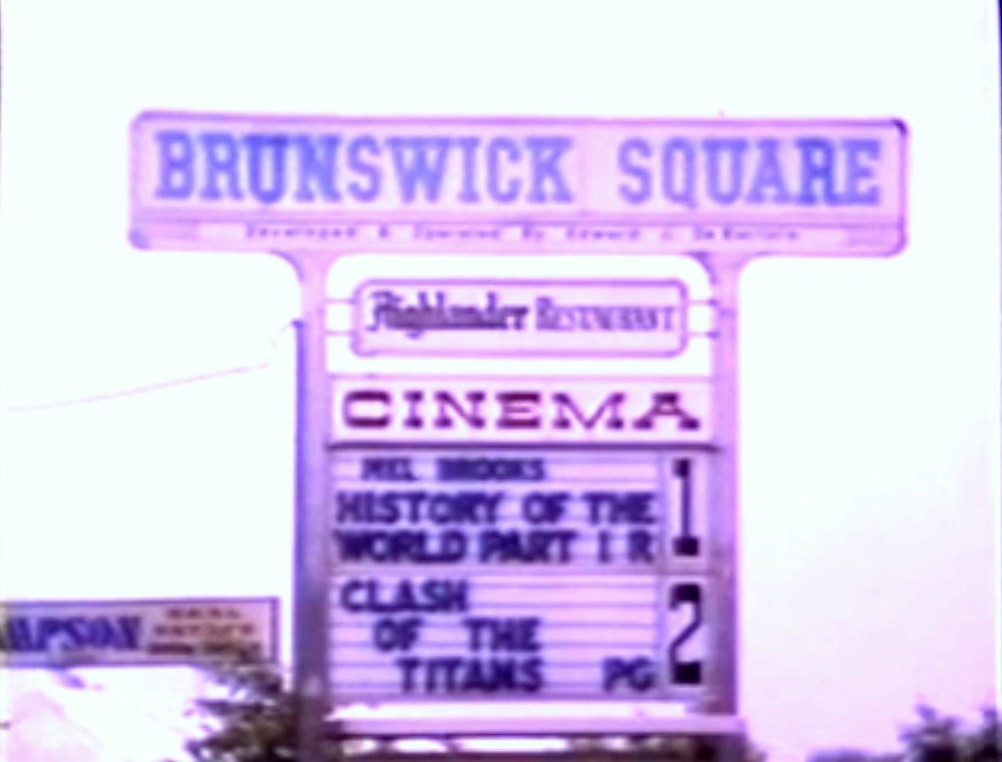
The old marquee for the Brunswick Square Mall
in my hometown of East Brunswick, New Jersey.
From the titles of the films, I know that this photo
was taken in June 1981.
I was 11 1/2 years old, and lived half a mile down the hill.

When I was a kid, I thought some things that seem ridiculous now.

I thought my father's parents lived next-door to each other in Newark. Grandma's house was separated from the house next door by a driveway that led to a parking lot in back of the houses on Woodside Avenue, in the Forest Hill section of the North Ward. Since her house shared a driveway with the house next door, I figured that house next door had to be Grandpa's house. And the man who lived there was certainly old enough to be my grandfather.

So, one time, I must have been about 4 years old, I looked up at him, and I called him "Grandpa." I don't remember his reaction.

Grandpa Mike -- I wasn't actually named for my father's father; my mother just liked the name "Michael," and my father went along with it -- smoked like a chimney, drank like a fish and ate like a pig. He only lived to be 57. My father stopped smoking in his 30s, and rarely drank, but ate bacon and eggs for breakfast pretty much every day that I knew him. He lived to be 71.

Even at the age of 4, I remembered hearing my parents say that Grandpa Mike was dead, and was no longer living with Grandma Dot. Did I get what that meant? Maybe not. Maybe that's what confused me. He had lived with her in that house for 33 years. He had lived there, but he wasn't living there anymore. Maybe knowing that part led me to think that maybe he was living next-door.

I never did learn the name of the man who lived next door. Even if he was only in his 50s then, he's almost certainly dead now. And that neighborhood, mostly-white in the mid-1970s, is now nearly all-Hispanic, mostly Central and South American. So even if he is still alive, he's almost certainly not living there.

*

I thought the camera and operator at the opening of The 4:30 Movie on WABC-Channel 7 was a frog. I thought the reels on top were the eyes, and the back of the chair was the tail.

I thought, "Why are they playing the Channel 9 Million Dollar Movie theme in this promo for Gone with the Wind?" I didn't know that it was the theme from that movie, also known as "Tara's Theme," for the O'Hara family mansion in the film. Max Steiner composed it. Mack David wrote lyrics for it, titled "My Own True Love," and it became a hit for New Jersey-based doo-wop group The Duprees in 1962.

I thought it was crazy for newsmen to switch networks. When Harry Reasoner left ABC for CBS in 1978, I thought that was very, very wrong. I had no idea that he had started on CBS, and so had former ABC anchorman Howard K. Smith. Or that Barbara Walters, very recently, had left NBC for ABC.

I also thought it was crazy for actors to leave successful TV shows. Why did Sally Struthers, Rob Reiner, and then Jean Stapleton leave All in the Family? Why did Gary Burghoff leave M*A*S*H?

I thought it was crazy for there to be a New Dick Van Dyke Show. My parents loved the old Dick Van Dyke Show. Well, if the old one was so great, why was there a new one? And why did Lucille Ball have 3 different shows? (Little did I know that, when first-run, they were on 3 different networks. That would have really confused me!)

Little Uncle Mike was so white! (How white was he?) I was so white, and so suburban, I thought James Brown, the Godfather of Soul, was a character that Eddie Murphy created for Saturday Night Live. It didn't occur to me that a man that over-the-top could actually exist. (Even though I had seen Liberace and Elton John on TV. God only knows what I would have thought of George Clinton... or Sun Ra!) I didn't know that James was a real person until I saw Rocky IV. 

I thought it didn't make sense for the Yankees and Mets to be on other channels. WNBC-Channel 4 would broadcast The Game of the Week on Saturday. WABC-Channel 7 would broadcast Monday Night Baseball on, well, Monday. And the Yankees would frequently be on it -- because, being successful at that point, they were in demand. Lots of people wanted to see the Yankees. Lots of those wanted to see them get beat. The Mets were on each broadcast less often because, at the time, they stunk, and everybody knew it.

But wait! Aren't the Yankees supposed to be on Channel 11? (WPIX.) And aren't the Mets supposed to be on Channel 9? (WOR, now WWOR.) I thought that if a channel showed a TV show, only that channel could show that show. So how could the Yankees be on Channel 4 or Channel 7?

Back then, channels like 9, 11 and WNEW-Channel 5 (now WNYW) would show reruns of old shows, like The Honeymooners, Gilligan's Island, Lost In Space, Star Trek, The Odd Couple, I Dream of Jeannie, the aforementioned original Dick Van Dyke Show, and the aforementioned referred-to shows starring Lucille Ball: I Love Lucy, The Lucy Show and Here's Lucy. Okay, I got that. I figured a show could only be on one channel at a time.

But then, Channel 5, then an "independent station" (now part of Fox), started showing reruns of M*A*S*H, which was still running on WCBS-Channel 2; and Three's Company, which was still on Channel 7. Channel 11 started showing Happy Days, which was still running on Channel 7. And who were these guys on M*A*S*H: Henry, Trapper and Frank? Wait, Henry is McLean Stevenson, the guy on Hello, Larry? Trapper is Wayne Rogers, the guy on House Calls? They can be on more than one show, like Lucy? I was so confused. And why did Stevenson, Rogers and Linville leave M*A*S*H?

And explaining those things to my pre-adolescent mind still didn't clear up for me why the baseball establishment (at the time, I seemed to get that concept, if not the expression "the establishment") would let the big networks show games when the local stations already did.

*

Which allows me to segue into stupid things I used to think about sports.

I thought baseball managers wore uniform numbers based on how they finished. In 1978, Billy Martin, manager of the Yankees, wore Number 1. Tommy Lasorda, manager of the Los Angeles Dodgers, wore Number 2. Martin's Yankees beat Lasorda's Dodgers in the previous year's World Series. So, that's how it worked, right? If the Dodgers had won, Lasorda would have wore 1, and Billy would have worn 2.

Then, when Billy, ahem, was allowed to resign in mid-1978, and Bob Lemon was hired as manager, he didn't take Number 1. He took the number he'd always worn as a major league pitcher, 21. I didn't get it.

I thought Reggie Jackson began his career with the Oakland A's, in 1967. It said so, right there on his baseball card: "1967 A's." And he did begin his career with the Oakland A's -- sort of. That first season, the A's were still in Kansas City. Same team, different city. I didn't know that yet.

I knew that the Los Angeles Dodgers had started out in Brooklyn, and that the San Francisco Giants had started out in New York. And I had a vague idea that there had been, fairly recently, a baseball team called the Washington Senators, but that they no longer existed.

But when I looked in the back of the Yankees' Yearbook, they had the players' statistics, and also the teams they'd played for. Except they listed the cities, not the team names like the cards did. And in his first year, Reggie was listed as with "Kansas City." I presumed that this meant that he had played for the Royals. That wasn't true: They replaced the A's in Kansas City, starting in 1969.

I saw that Lou Piniella had also played with "Kansas City." But that really was the Royals. I also saw that Fred Stanley had played with "Seattle." I presumed that meant the Mariners. Since I began watching baseball games on TV in 1977, I couldn't remember a time when there was no Seattle Mariners, and no Toronto Blue Jays.

But then I got Stanley's baseball card, and it said that he spent the 1969 season with the "Pilots." Huh? The Pilots? Who the heck were the Pilots? I didn't know about this 1969 expansion team that failed after just 1 season and became the Milwaukee Brewers in 1970. I knew about the Brewers, but not the Pilots.

I hadn't yet read Jim Bouton's Ball Four. I only knew Bouton as the sportscaster who used to pitch for the Yankees in the 1960s, and was now making a comeback with the Atlanta Braves at age 39.

Had I known that the Pilots had Piniella on their payroll, before trading him to the Royals, my mind truly would have been blown.

And then when I read a book about Mickey Mantle, and it said he was "sent down to Kansas City" in his rookie year of 1951, I couldn't figure that out. I knew that major league teams had minor league teams in their "farm systems." But how could Kansas City be a minor-league team? They had a major league team! Not in 1951, they didn't. Not until the A's moved from Philadelphia to Kansas City in 1954-55, before moving to Oakland in 1967-68, and were then replaced by the expansion Royals in 1969.

I didn't yet know that, as recently as 1952, the following cities that had major league teams by 1978 were all in the minors: Milwaukee, Baltimore, Kansas City, Los Angeles (2 teams), San Francisco, Oakland, Houston, Atlanta, Seattle, Montreal, San Diego and Toronto. And Minnesota had 2 teams: One in Minneapolis, the other in St. Paul. And Dallas had 2 teams: One in Dallas, the other in Fort Worth.

*

I thought it was silly to name the mall in my hometown of East Brunswick the Brunswick Square Mall. There's no square named Brunswick Square. There wasn't then, and there isn't now. And the plot of land on which the mall was built was not shaped like a square. So why that name? To this day, I have not learned the reason, and I wouldn't know where to go to find out.

What's more, I didn't know why East Brunswick and the adjoining town of North Brunswick were south of New Brunswick. Why wasn't North Brunswick called South Brunswick, and the town to the south of that, which was (and is) called South Brunswick, called something else? Why wasn't Piscataway, which is north of New Brunswick, called North Brunswick? Why wasn't Highland Park, which is east of New Brunswick, called East Brunswick? Why wasn't Franklin, which is west of New Brunswick, called West Brunswick? And why wasn't there a West Brunswick?

Why, back where we used to live in Essex County (Bloomfield, northwest of Newark), was there an Orange, an East Orange, a South Orange, and a West Orange, but not a North Orange? (That would have been Montclair.) And if there's a town named only "Orange" up where we used to live, why isn't there one named only "Brunswick"?

This last sequence still doesn't make sense to me.

Sunday, April 3, 2016

How to "Bring Baseball Back"; Vince Boryla, 1927-2016

So if baseball, as I proved in my last post, is more popular than football, why do so many people say baseball is in trouble?

Because these people are stupid. They prefer football, which appeals to the lowest common denominator. As opposed to baseball, which appeals to thought.

Think of it this way: The Yankees, the Mets (yes, the Mets), the Boston Red Sox, the Chicago Cubs, the St. Louis Cardinals, the Los Angeles Dodgers and the San Francisco Giants have all shown great appeal to literary people, who have written great prose about them.

Which NFL teams have done the same thing? Name one.

You can't.

There are, however, people who prefer baseball to football, but still believe that baseball is in trouble, and needs to be "brought back."

Back to what? A time when it was more popular? It's never been more popular. A time when it was more popular than the NFL? As I showed, it still is. A time when its primacy was unquestioned? That's not necessary.

A time when "it was still a game, not a business"? Men have been charging admission for baseball games since 1862. At that point, 7 years before the Cincinnati Red Stockings were publicly admitting that they were playing their players, it is likely that some men were already being secretly paid to play baseball.

*

But, to humor people who think we need to "bring baseball back," here's how you do it:

1. Get it off Fox. And put it on a real network, one that cares more about the game than about promoting its own shows, including putting its show stars on camera in seats next to the dugout, and letting American Idol singers sing the National Anthem.

Corollary to the preceding: Never, ever let Joe Buck broadcast another baseball game. I don't care that his father was the great Cardinal announcer Jack Buck. You don't see the children of Mel Allen, Red Barber, Jack Brickhouse, Ernie Harwell, Phil Rizzuto or Bob Murphy broadcasting baseball games, do you?

Actually, there have been a lot of father-son sportscasting duos, including a few in baseball. Sometimes, it works, as with Thom Brennaman and Todd Kalas. Sometimes, it doesn't, as with Joe Buck and Skip Caray.

2. Advertise it as "the family sport." Show fathers, sons and grandsons -- and mothers, daughters and granddaughters. Show the people the connections that they're aware of -- and the ones they may not have noticed.

3. Show how the generations connect. Show the first ball ceremonies, and have interviews with the teams' legends, so people see that your team connects to your father's and your grandfather's generations.

4. Advertise it as "the honorable sport." Say that it's "the sport where you're not likely to have your favorite player suffer post-concussion syndrome," and "the sport where you're not likely to have your favorite player beat up his wife and children." Yes, take potshots at the NFL. Which will never happen as long as Fox holds the MLB TV rights, because the NFL is the cash cow that makes it possible for Fox to spew their political garbage.

5. Advertise it as "the sport where anyone can win." The idea that the lack of a salary cap prevents small-market teams from winning has been blown to pieces. Just since the dawn of the 21st Century, we have seen Pennant winners, and thus World Series participants, from Phoenix, St. Louis, Houston, Detroit, Denver, Tampa Bay and Kansas City. Pittsburgh has now made the Playoffs 3 seasons in a row.

As for the 4 markets with 2 teams: Yes, the Mets won the National League Pennant last year; but the Yankees and the Mets have won just 1 Pennant each since 2003. The San Francisco Giants have won 3 of the last 6 World Series, but the Oakland Athletics haven't won a Pennant since 1990. The Los Angeles Dodgers won the NL Western Division last year, and the Los Angeles Angels of Anaheim usually make the American League Playoffs, but, between them, they've won just 1 Pennant since 1988. And Chicago? The White Sox have won 1 Pennant since 1959 and 2 since 1919, and the Cubs no Pennants since 1945.

Baseball is a game that needs its big markets to survive, but doesn't need its big markets to be successful to survive. The smaller markets can do well, and have done well recently.

6. Balance the "national following" angle. Show how some teams have national followings: The Yankees, the Red Sox, the Cubs, the Cardinals, the Dodgers, the Atlanta Braves. But don't actively favor any of them, the way Fox currently does with the Red Sox and used to do with the Yankees, or the NFL's networks do with New England and Dallas.

7. Have more frequent steroid tests, and reveal the results. So that we know who's dirty, but also that the vast majority of players are clean.

Corollary to the preceding? Punish the cheaters severely, and promote the ones who are clean. The reason Barry Bonds took steroids is because he was jealous of the attention that Mark McGwire and Sammy Sosa were getting. If they'd been outed as steroid users before either of them got to 60 home runs in a season, they would have been abandoned by the fans, and Bonds would have been able to put himself forward as a clean star, and he would have not only gotten, but earned, the adulation he craved.

8. Discourage violence. Brushbacks should be allowed: A pitcher has the right to "control the plate." And accidents can happen: Batters are going to get hit with pitches, even when the pitcher doesn't want to do that. A pitcher shouldn't be punished for an accident.

But if a pitcher has a known history of hitting batters, and he clearly doesn't have control issues, put the hammer down. If the plate umpire thinks a pitch was on purpose, he has to throw the pitcher out of the game. And then he has to warn both managers that it ends now, or else there's going to be more ejections -- and suspensions. This will show both sides that he means business, and it will also cut down on batters charging the mound after they get hit.

Which brings us to the MLB office. It needs to suspend the offending pitcher for 5 games, so that he misses 1 start. If he does it again, a month: 6 starts. A 3rd time, a season. A 4th time, for life. And also punish players who charge the mound.

Collisions at home plate? As long as the purpose is clearly to prevent the catcher from making the play, and not to injure him, leave it alone. Likewise, if a slide is meant to break up a double play, it shouldn't be punished, unless the runner goes out of the baseline to do it, in which case the batter running to 1st base should also be called out.

On the other hand (and, remember, I hate the Mets, so this has nothing to do with protecting one of their players), Chase Utley's slide into Ruben Tejada was dirty, and Utley should have been suspended for the rest of the postseason.

9. Tell the players and managers to get on with it. Stoppages of play for injuries are necessary. I'm not talking about those.

But if umpires really believe that games are taking too long, they do have the authority to tell pitchers, catchers and managers to cut the mound conferences short, and to tell batters to quit fidgeting like Mike Hargrove and Carlton Fisk, and get your behind back in the batter's box!

Sidebar: Funny how NFL fans complain that "Baseball is boring" because games take 3 1/2 hours now, but they don't complain about how NFL games last just as long. Here's what's boring: Touchdown, 5 instant replays, extra point, 2 more instant replays of the touchdown, a break that includes 4 commercials (at least 1 of which will be an incredibly stupid one for a beer or a car, and another one of which will be a trailer for an incredibly stupid movie), another instant replay of the touchdown, the ensuing kickoff, the return, and another commercial break.

In other words, you can have 10 minutes between the touchdown and the next play from scrimmage, with nothing but the extra point, the kickoff, instant replays and commercials. And NFL fans say MLB takes too long, and has too much down time between plays? Physicians, heal thyselves.

Also designed to reduce the time of the game, but also because it's idiocy and should be stopped:

10. Stop bringing in a pitcher to pitch to only 1 batter. The MLB office and the umpires can't do anything about this, only the managers can. But you're bringing in a pitcher to pitch only to the next batter, because they're both lefthanded? This is so stupid: If a pitcher can't get batters out simply because they bat with the other hand, then you shouldn't have him on your major league roster at all. I'd call this The Boone Logan Rule.

11. Do "spotlight shows." Bring back the Saturday Game of the Week and Monday Night Baseball, and air a revival of This Week In Baseball, showing it 5 times a week, the way NBC Sports Network does their soccer show Men In Blazers.

In fact, have a Men In Blazers-type show for baseball (but not with Englishmen, obviously). Have three guys: One from the Northeast (but not a Yankee or Red Sox fan), one from the Midwest (but not a Cub or Cardinal fan), and one from the West Coast (but not a Dodger fan), and have them discuss the sport the way real fans who don't have show-hosting jobs do. So, maybe, Philadelphia, Detroit and San Francisco -- 3 teams with long histories, and the fact that it's 2 National League teams and 1 American League team doesn't really matter.

12. Doubleheaders. Every team should have 1 per month. This will cut down on MLB teams' revenue at first. But the goodwill it will generate will cause more people to want to come to games, and they'll get it back: 77 paid admissions, but 81 games' worth of revenue.

The preceding will also allow this:

13. Shorten the season. Right now, it takes 26 weeks to play 162 games. Throw in these doubleheaders, and it will take 25.

Finally:

14. Realignment. Expand to 32 teams, scrap the Leagues entirely (you've already got common baseballs and common umpiring crews, as you didn't have before 2000), and do it geographically like the NBA, the NHL, and (sort of) the NFL does it, with 8 teams in each Division:

Atlantic Division: Baltimore Orioles, Boston Red Sox, a team in Charlotte (which has always done well in attendance in the minor leagues), a restored Montreal Expos, New York Mets, New York Yankees, Philadelphia Phillies, Washington Nationals. 

Midwestern Division: Chicago Cubs, Chicago White Sox, Cincinnati Reds, Cleveland Indians, Detroit Tigers, Milwaukee Brewers, Pittsburgh Pirates, Toronto Blue Jays. 

Central Division: Atlanta Braves, Houston Astros, Kansas City Royals, Miami Marlins, Minnesota Twins, St. Louis Cardinals, Tampa Bay Rays, Texas Rangers.

Pacific Division: Arizona Diamondbacks, Colorado Rockies, Los Angeles Angels (they've dropped the "of Anaheim" for this season), Los Angeles Dodgers, Oakland Athletics, San Diego Padres, San Francisco Giants, Seattle Mariners.

10 games (5 home, 5 away, a 3-game and a 2-game roadtrip every season) against teams in your own Division. That's 70. 4 games (2 home, 2 away, a pair of 2-game roadtrips or a single 4-game roadtrip every season) against teams in the other Divisions. That's 96. That's a total of 166 games -- only 4 more than we have now, and certainly enough to make up for the single-admission doubleheaders.

Then, as from 1969 to 1993, have only the Division winners advance to the MLB Semifinals, seeding them by regular-season wins, and the winners of those will play each other in the World Series. We won't have "Pennants" anymore, but maybe we can make up for it by awarding a cup similar to the NHL's President's Trophy or MLS' Supporters' Shield for the team that had the best regular-season record among the teams that had previously been in the old Leagues.

If this setup were in place this season, we could begin today, April 3, and end on Sunday, September 25. A best-4-out-of-7 Semifinal would be over by October 6, the World Series could begin on Saturday, October 8, and end with Game 7 no later than Sunday, October 16 (barring rainouts). This would put it in line with the dates the season tended to end between 1960 and 1984, and it would also reduce (but certainly not eliminate) the possibility of a Playoff or World Series game in a stadium without a retractable roof being cold.

"Wait, Uncle Mike," you say, "if we eliminate the Leagues, what do we do about the designated hitter? The AL uses the DH, the NL doesn't." The DH becomes universal -- but not mandatory. If a manager wants to, he can forfeit the use of the DH, and let his pitcher hit. That's the way it is in the AL now: The DH is an option, not a rule. If the NL owners don't like it, they can sell their teams to people who accept that any DH can field any position better than 99 percent of pitchers can hit.

Does anybody else have any suggestions? Feel free to tell me in the Comments.

*

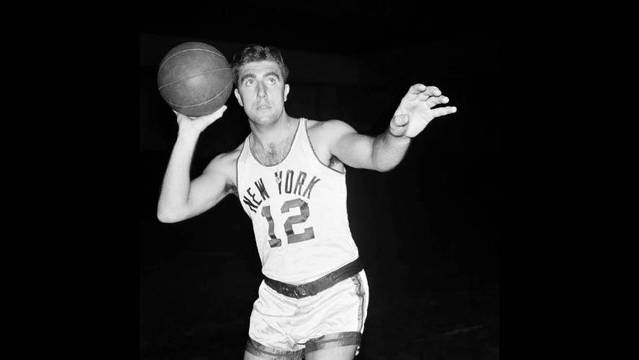
A Knicks legend has died -- but he was so long ago, you may never have heard of him.

Vincent Joseph Boryla was born on March 11, 1927 in East Chicago, Indiana. A son of Polish immigrants, he played forward at Notre Dame, and was a member of the 1948 U.S. basketball team that won the Gold Medal at the Olympics in London.

Despite the potential for a rhyme, Vince Boryla was nicknamed "Moose," not "The Gorilla." He played on the Knicks' 1st 3 NBA Finals teams, in 1950-51, 1951-52 (although he was injured and missed the Playoffs) and 1952-53. They lost the 1st to the Rochester Royals, and the other 2 to the Minneapolis Lakers. He also played in the 1st NBA All-Star Game in 1951.
He played for the Knicks from 1949 to 1954, and was known for his outside shot. Broadcaster Marty Glickman called these shots "Boryla bombs," long before the 3-point field goal became allowed (and before John Sterling began making up taglines for Yankee home run hitters). He coached the Knicks from 1956 to 1958, taking over at age 28 -- but also coaching in the NBA for the last time at age 30.

Retiring to Denver, in 1967 he became the 1st general manager of the American Basketball Association's Denver Rockets, then that of the Utah Stars, before returning to the Denver team, renamed the Nuggets, as it entered the NBA. In 1984, he was named NBA Executive of the Year.


During his tenure as an NBA executive, he was also a major real estate investor in Denver, so he did not have to stay in basketball for the money. He was married twice, and had 4 sons and a daughter. His son Mike Boryla was a quarterback for the Philadelphia Eagles, and preceded Ron Jaworski as their starter.
Vince Boryla died of pneumonia on March 27, 2016. He was 89 years old.

With his death, there is now just 1 surviving player from the 1948 U.S. Olympic basketball team. Jackie Robinson. No, not that one. This one is Robert Jackson Robinson, about to turn 89, from Fort Worth, Texas, a guard at Baylor University. He never played pro ball, instead going into the ministry, and has retired to Augusta, Georgia.

That 1948 team was made up largely of that year's National Champions, the University of Kentucky. Dale Barnstable and Walter Hirsch are now the last survivors of that squad. They and Joe B. Hall, who coached Kentucky's 1978 National Champions, are the only survivors of the school's 1949 National Champions. Hirsch, St. Louis Hawks Hall-of-Famer Cliff Hagan, Boston Celtics Hall-of-Famer Frank Ramsey, former University of Alabama head coach C.M. Newton, Guy Strong and Bobby Watson are the 6 survivors of the school's 1951 National Champions.

UPDATE: Boryla's final resting place is not publicly known.