Showing posts with label overtime. Show all posts

Tuesday, January 6, 2026

January 6, 1951: The NBA's Longest Game

Ralph Beard. No, he didn't have one.

January 6, 1951, 75 years ago: The longest game in National Basketball Association history is played. You might not recognize the name of either team, though. And the building in which it was played is long gone.

The building was the Edgerton Park Arena, in Edgerton Park, in Rochester, New York. It was built in 1892, had an artificial ice surface installed in 1935, and was home to the Rochester Royals from 1945 to 1955. But, at 4,200 seats, it was too small to be a major league sports facility, and the Royals moved to the Community War Memorial Arena.

The Royals had won the Championship of the National Basketball League in 1946, before joining the Basketball Association of America. The BAA and the NBL merged in 1949, to form the NBA, although the NBA now recognizes the BAA's founding in 1946 as its own founding. Their players included former Seton Hall University All-American Bob Davies and a flashy (for the time) point guard from Brooklyn named William "Red" Holzman.

Their opponents were the Indianapolis Olympians. They were so named because they signed up several members of the U.S. team that won the Gold Medal at the 1948 Olympics in London. Three of those were still there, men who had led the University of Kentucky to National Championships in 1948 and 1949: Alex Groza (brother of Cleveland Browns lineman and kicker Lou Groza), Ralph Beard and Cliff Barker.

The Royals came into the game a strong 18-11. The Olympians were shuffling along at 16-15. Apparently, those Kentucky Wildcats weren't used to professional competition. But, at least on this night, they adjusted: At the end of the 1st quarter, the Olympians led, 20-10.

The Royals came back, and it was 38-33 Indianapolis at the half. After 3 quarters, it was 57-53 Indianapolis. A strong 4th quarter resulted in the game being tied at the end of regulation, 65-65.

Unlike the NFL and the NHL, the NBA, then as now, had no provision for ties: Teams have always played until somebody won. But this was the era before the shot clock: In overtime, the idea was to get the ball, and stall until you could make a last-second shot; and, if you lost the ball, foul away.

Each team scored only 2 free throws in overtime, so it went to a 2nd overtime. Nobody scored in it, so the game went on. And on. And on. Each team scored only 2 free throws in the 3rd overtime. Nobody scored in the 4th. Each team scored 4 free throws in the 5th overtime. 

And so, for what remains the only time in professional basketball history -- neither the old ABL, nor the 1967-76 American Basketball Association, nor any women's league including the WNBA has had one go that long -- a 6th overtime was needed.

Finally, with 1 second left in that 6th OT, Beard put up a shot, and it went in. The Olympians had won, 75-73.

The game went 78 minutes, and Holzman, who later coached the Knicks to the 1970 and 1973 NBA Championships, played 76 of them. Harvey Frommer, better known as a travel writer but also the author of a few sports books, wrote Holzman's authorized biography, and quoted him as saying that this was 1 of 2 games in the 1950-51 season that led to the creation of the shot clock. The other was a game in which the Fort Wayne Pistons tried to freeze the ball against George Mikan and the Minneapolis Lakers.

The following season, Groza and Beard were charged with shaving points at Kentucky, and were banned from the NBA for life. Both men went on to work in the ABA, but their NBA bans were never lifted. Nor have they ever been elected to the Basketball Hall of Fame, as they likely would have if not for the scandal. The Olympians survived until the 1953 season, but, without their big stars, they couldn't draw fans, and folded.

The Royals went on to win the NBA Championship in 1951, beating the Knicks in the Finals in 7 games. In 1955, they moved to the Community War Memorial Arena, which still stands, now known as the Blue Cross Arena at the War Memorial, and home to minor-league hockey's Rochester Americans. 

But Rochester, the 3rd-biggest city in the State of New York behind New York City and Buffalo, was, and remains, too small to host a major league team. In 1957, the Royals moved to Cincinnati. They moved to become the Kansas City Kings in 1972, and again in 1985, becoming the Sacramento Kings.

Since 1951, the longest game in the NBA has been a 5-overtime game at the Bradley Center in Milwaukee on November 9, 1989, the day the Berlin Wall came down. The Milwaukee Bucks beat the Seattle SuperSonics, 155-154.

Saturday, December 25, 2021

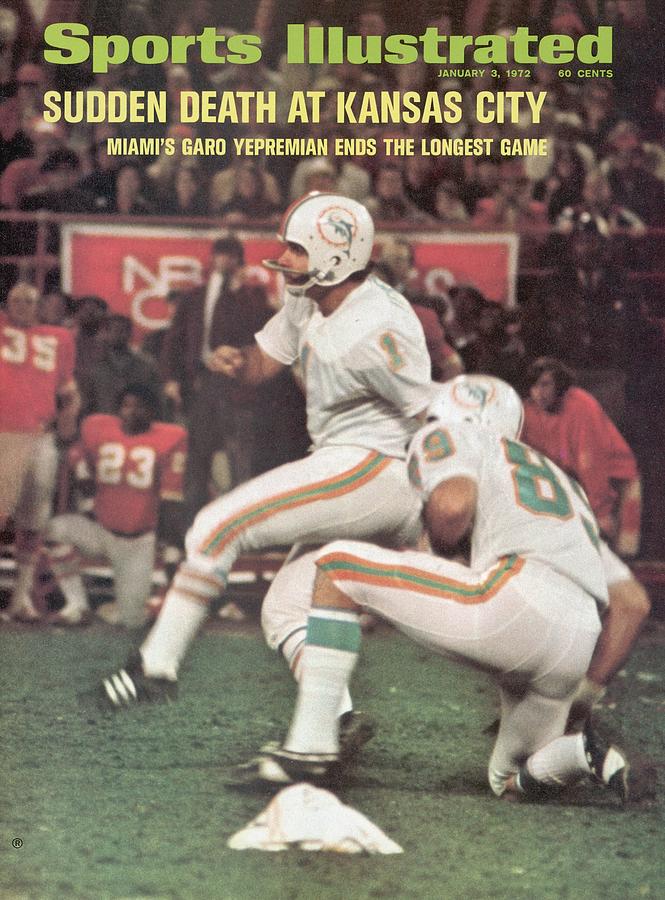
December 25, 1971: The NFL's Longest Game

December 25, 1971, 50 years ago: For the 1st time, the NFL plays a game on Christmas Day. It turned out to be the longest game in the league's history.

The Kansas City Chiefs played the Miami Dolphins at Kansas City Municipal Stadium. The Chiefs had been the defining team of the American Football League, winning the title in 1962, 1966 and 1969. From the AFL's founding in 1960 until the 1962 Championship Game, they were the Dallas Texans. That '62 title game, which they beat the Houston Oilers, went to 2 overtimes, becoming the longest game in pro football history.

The Dolphins had only been founded in 1966, and made the Playoffs for the 1st time in 1970. They were a team on the rise, and this would be their biggest challenge yet. Despite the game being in Kansas City in December, the weather was just fine by Miami standards: 62 degrees and partly cloudy at the 3:00 kickoff (4:00 Eastern Time).

The scoring began with Jan Stenerud kicking a field goal for the Chiefs. They went ahead 10-0 following an interception by Willie Lanier and a touchdown pass from Len Dawson to Ed Podolak. The Dolphins came back, with Larry Csonka running for a touchdown and Garo Yepremian kicking a field goal, making the score 10-10 at the half.

Dawson launched a 75-yard, 10-minute drive that ended with a Jim Otis touchdown, but the Dolphins came back with a Jim Kiick touchdown to make it 17-17. In the 4th quarter, Nick Buoniconti picked up a fumble, but Jim Lynch intercepted Griese to end that threat. Dawson then drove the Chiefs 91 yards, capped by a 3-yard run by Podolak, making it 24-17 Kansas City.

The Dolphins struck back, going 71 yards until Griese threw a 5-yard touchdown pass to Marv Fleming, tying it 24-24 with 1:25 left in regulation. Podolak took the kickoff back 78 yards, but Stenerud missed a 32-yard field goal, and the game went to overtime.

At this point, overtime was still rare. There would not be a provision for it in the regular season until 1974. It had happened in the 1958 NFL Championship Game, with the Baltimore Colts beating the New York Giants. It had happened, as I said, in the 1962 AFL Championship Game. And it had happened in a Playoff for the NFL Western Division Championship in 1965, with the Green Bay Packers beating the Colts. This would be only the 4th time in pro football history that a game went beyond the standard 60 minutes.

Podolak returned the overtime kickoff to the 46-yard line, setting up a 42-yard field goal attempt by Stenerud. But the Dolphins blocked it. Later in the 5th quarter, Yepremian tried a field goal from 52 yards, but this was short. At the end of this 1st overtime period, Jake Scott intercepted a Dawson punt, but this came to nothing, and the teams traded punts.

Finally, Csonka -- on his 25th birthday -- broke off a 29-yard run, setting up a 37-yard field goal attempt by Yepremian, with 7:40 left in the 6th quarter -- 82 minutes and 40 seconds of play. The left-footed Armenian from Cyprus made the kick, it was good, and the Dolphins had won, 24-21.

Chiefs coach Hank Stram said, "I don't think any one player in a big game, a monumental game like that, had a day like Eddie Podolak had." Stram had a point: 17 rushes for 85 yards, 8 catches for 110 yards, 3 kickoff returns for a 154 yards, and 2 punt returns for 2 yards. That's 350 all-purpose yards, still a postseason record, and the 4th-highest total in NFL history. But for all he, and Hall-of-Famers like Len Dawson, Willie Lanier, Buck Buchanan, Bobby Bell, Curley Culp, Johnny Robinson and Jan Stenerud did, it wasn't enough.

This defeat meant that this was the last game the Chiefs would play at Municipal Stadium. They would not host the AFC Championship Game, and the next season, Arrowhead Stadium opened, and it remains the Chiefs' home to this day.

More than this, it was the end of one era, and the beginning of another. The Chiefs had played 8 postseason games in 9 years, winning 3 AFL Championships and Super Bowl IV. They would not play another Playoff game for 15 years, only that 1 for 19 years, and wouldn't win a Playoff game for 20 years.

The Dolphins hosted the Colts, another great team getting old, in the AFC Championship Game, and won, 21-0. They lost Super Bowl VI to the Dallas Cowboys, 24-3. But the following season, they went undefeated, 14-0, and won Super Bowl VII over the Washington Redskins, 14-7. They would win Super Bowl VIII as well.

*

December 25, 1971 was a Saturday. Earlier in the day, the Dallas Cowboys had beaten the Minnesota Vikings, 20-12 at Metropolitan Stadium in the Minneapolis suburb of Bloomington, Minnesota.

The following day, December 26, the Baltimore Colts beat the Cleveland Browns, 20-3 at Cleveland Municipal Stadium; and the San Francisco 49ers beat the Washington Redskins, 24-20 at Candlestick Park in San Francisco.

There were 6 games played in the NHL. Since this day, the League has never played on Christmas Day again. In fact, traditionally, it has not played on December 24, or 25, and usually not on 26, either.

The New York Rangers beat the Minnesota North Stars, 2-1 at the Metropolitan Sports Center in Bloomington. The Boston Bruins beat the Philadelphia Flyers, 5-1 at the Boston Garden. The Toronto Maple Leafs beat the Detroit Red Wings, 5-3 at Maple Leaf Gardens in Toronto. The Pittsburgh Penguins beat the Montreal Canadiens, 4-2 at the Civic Arena in Pittsburgh. 

The St. Louis Blues and the Buffalo Sabres played to a tie, 4-4 at the St. Louis Arena. And the Oakland-based California Golden Seals beat the Los Angeles Kings, 3-1 at The Forum outside Los Angeles, in Inglewood, California.

There were 7 games played in the NBA. The New York Knicks beat the Golden State Warriors, 114-89 at Madison Square Garden. Walt Frazier scored 36 points.

The Boston Celtics beat the Cincinnati Royals, 99-94 at the Cincinnati Gardens. This was the end of a tradition: The last Christmas game in Cincinnati. The following season, the Royals moved, becoming the Kansas City-Omaha Kings.

Also, the Baltimore Bullets beat the Philadelphia 76ers, 117-114 at The Spectrum in Philadelphia. The Atlanta Hawks beat the Buffalo Braves, 140-117 at the Alexander Coliseum in Atlanta. Walt Bellamy scored 40 points. The Detroit Pistons beat the Milwaukee Bucks, 120-118 in overtime at Cobo Hall in Detroit. Kareem Abdul-Jabbar scored 38 points, but it wasn't enough to beat the Pistons.

The Phoenix Suns beat the Seattle SuperSonics, 116-86 at the Arizona Veterans Memorial Coliseum in Phoenix. Connie Hawkins scored 31 for the Suns. And the Chicago Bulls beat the Portland Trail Blazers, 109-88 at the Portland Memorial Coliseum.

There were 3 games played in the ABA. The Virginia Squires beat the Pittsburgh Condors, 133-126 at the Hampton Coliseum. The Memphis Pros beat the Carolina Cougars, 110-102 at the Mid-South Coliseum. And the Utah Stars beat the Indiana Pacers, 150-129 at the Salt Palace in Salt Lake City.

Wednesday, June 19, 2019

Top 5 Reasons You Can't Blame the Referees for the Buffalo Sabres Losing the 1999 Stanley Cup

Puck: In net. Foot: In crease. Rule: In place.

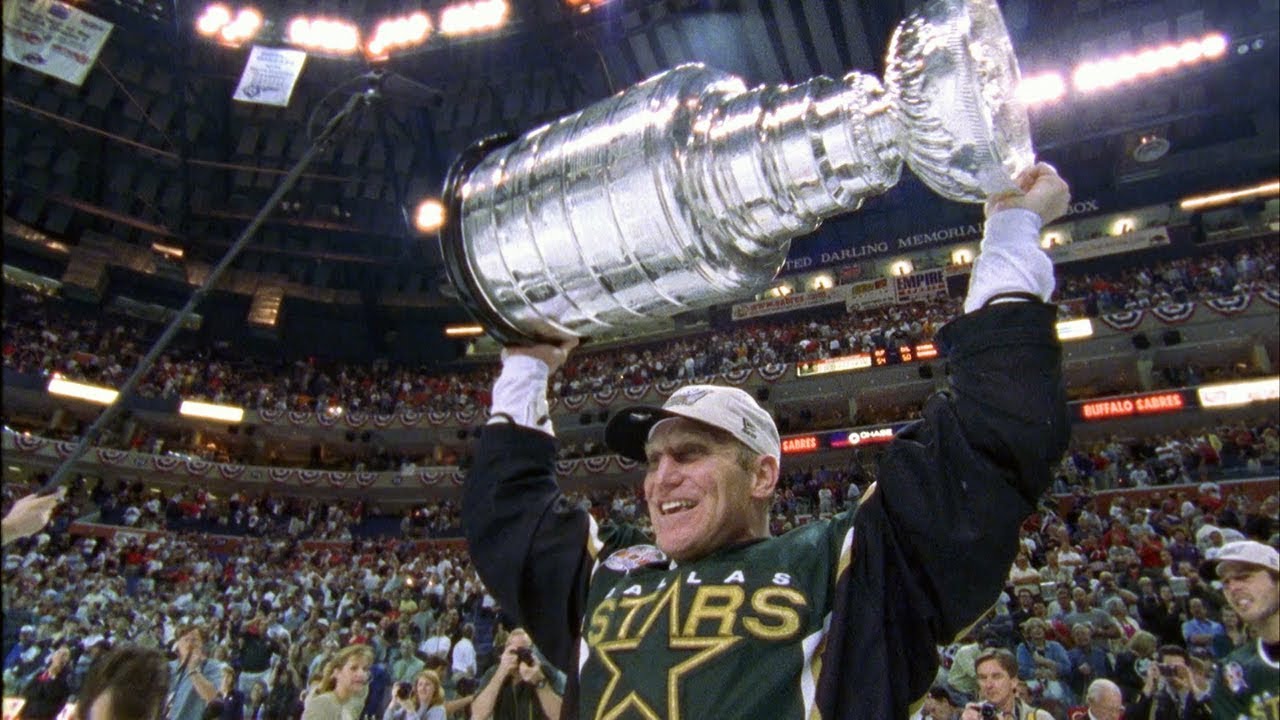
June 19, 1999, 20 years ago: The Dallas Stars win the Stanley Cup, defeating the Buffalo Sabres 2-1, in triple overtime, in Game 6 of the Stanley Cup Finals, at the Marine Midland Arena (now the KeyBank Center) in Buffalo.

At 14:51 over the 3rd overtime, Brett Hull, frustrated through years of not reaching the Finals with the St. Louis Blues, scored off a rebound over a sprawling Dominik Hasek. It ended the longest Cup-clinching game ever. Another 25 seconds, and it would have surpassed Game 1 of 1990 (Edmonton over Boston) as the longest Finals game ever.

The Sabres protested, citing the NHL rule of the time that a player could not be credited with a goal if any part of his body was within the goal crease. The replay showed that Hull's right foot was in the crease.

But the referees ruled that he had possession of the puck prior to entering the crease, making the goal legal and the Stars the World Champions.

Before the next season, the NHL changed the rule, allowing players to score from within the crease freely, as long as they did not interfere with the goaltender.

Sabres fans from Plattsburgh in the north to Binghamton in the south, from Albany in the east to Cleveland in the west, still say they got screwed. And, given that no major league team from Western New York has won a World Championship since the Syracuse Nationals were NBA Champions in 1955, they need all the correct calls they can get.

But did they get screwed?

Top 5 Reasons You Can't Blame the Referees for the Buffalo Sabres Losing the 1999 Stanley Cup

5. The Rule. It was in place. Was it a bad rule? Yes. Was the change made for the next season worse? Yes. But does anybody who wants the Sabres to win have a case? No, not as the rule was written at the time.

Think about it this way. You know what kind of person the typical North Texan is when he talks about politics or the Dallas Cowboys. Now, imagine that the goal had been waved off. And that the Sabres had gone on to win Games 6 and 7 and take the Cup. We'd have spent the last 20 years hearing people from Texas calling the '99 Sabres the greatest cheats in the history of sports, and that the Stars deserved to win the Cup.

4. Dominik Hasek. Despite having one of the best regular seasons that any NHL goaltender has ever had, he wasn't nearly so good in the Finals. He had already allowed 12 goals in 22 periods, nearly 1 every 2. Had he stopped this shot, we wouldn't be talking about it now.
But even if the goal had been waved off...

3. The Stars Still Could Have Won the Game. Had the goal been waved off, the game would have gone on, and would still have been tied, and the Stars could still have won it.

2. Game 7. If the Sabres had won Game 6, then the series would have gone to a Game 7, it would have been played in Dallas, and the odds would still have been against the Sabres.

The Stars got back to the Finals the next year, against the New Jersey Devils, winning Game 5 in triple overtime at the Meadowlands, before the Devils won Game 6 in double overtime in Dallas. Moral of the story: If you want to beat the Dallas Stars in the Stanley Cup Finals, do it before the game gets to triple overtime. (The Sabres did win Game 1 in the 1st overtime.)

1. The Stars Were Better. I don't like Texas, especially Dallas, and I despise their teams. I don't want to say a team from the State of Texas is better than a team from the State of New York, even if they are about 400 miles from both Midtown Manhattan and my Central Jersey nerve center.

But Brett Hull, Ed Belfour, Mike Modano and Joe Nieuwendyk are in the Hockey Hall of Fame. Guy Carbonneau, Jere Lehtinen, Darryl Sydor and Derian Hatcher could be. (UPDATE: Carbonneau has been elected.) Only one '99 Sabre has made it: Dominik Hasek. Granted, the more talented team doesn't always win, and may not even deserve to win. But the Stars were, easily, the more talented team. And they did clinch on the road. There is something to be said for that.
VERDICT: Not Guilty. Before the beginning of the play that ended with Hull's goal, the chances of the Sabres winning the Cup were already remote. Did they get screwed? Maybe. But would it have mattered in the end? Probably not.

There is an unusual postscript to this story. In 2002, Hull and Hasek would be teammates on the Detroit Red Wings, winning the Stanley Cup together.
Hasek would win another Cup with the Wings in 2008, giving him 2, as many as Hull -- and twice as many as Hull's father Bobby, who only won it with the 1961 Chicago Blackhawks.

For all the good any of that did the Sabres.

Monday, January 21, 2019

Top 5 Reasons You Can't Blame the Officials for the New Orleans Saints Losing the 2018 NFC Championship Game

The Los Angeles Rams advanced to the Super Bowl, beating the New Orleans Saints in the NFC Championship Game, 26-23 in overtime at the Superdome in New Orleans.

The result was controversial, possibly even bogus. With the game tied and about 2 minutes left in regulation, Saints quarterback Drew Brees threw a pass near the sideline, inside the Rams' 5-yard line, intended for Tommy Lewis.

But Rams cornerback Nickell Robey-Coleman put a helmet-to-helmet hit on Lewis. By all rights, this should have been a dual penalty: Pass interference, meaning an automatic 1st down at the spot of the foul; and unnecessary roughness, an additional 15 yards, or, since the infraction was already inside the 15-yard line, half the distance to the goal line.

It should have been 1st and goal for the Saints on the 2-yard line. The Saints could have run down the clock and tried a field goal to win it 23-20. Or, they could have gone for the touchdown and made it 27-20, and made it that much harder for the Rams to send the game to overtime or win it in regulation.

Instead, no penalty was called. It was 4th down on the 17, and Saints coach Sean Payton sent Wil Lutz in to kick a 31-yard field goal. He made it. (Had he missed it, let's just say he would have been let off far easier than Cody Parkey of the Chicago Bears was for missing a game-winning field goal against the Philadelphia Eagles 2 weeks earlier.)

But there was 1:41 left on the clock, and the Rams marched down the field, and Greg Zuerlein kicked a 48-yarder to send the game to overtime. But there was 1:41 left on the clock, and the Rams marched down the field, and Greg Zuerlein kicked a 48-yarder to send the game to overtime. "Greg the Leg" then won it with a 57-yard field goal in overtime.

After the game, Robey-Coleman admitted his foul: "Came to the sideline, looked at the football gods, and was like, 'Thank you.' I got away with one tonight." He got away with it because, according to NFL rules, potential pass interference plays are not reviewable.

Saints fans -- essentially, the State of Louisiana, with some spillover into the Gulf Coast parts of Mississippi and Alabama -- are emotional people. People of deep feeling. Passionate people. They celebrate victories hard, and they take defeats hard.

If Robey-Coleman hadn't gotten to Lewis, and Lewis had dropped the pass, like Alshon Jeffery of the Eagles did the weekend before, leading to the interception that led to the Saints' advancement to this game, it would be different. But the Saints didn't blow it. They got robbed.

Or... did they?

Top 5 Reasons You Can't Blame the Officials for the New Orleans Saints Losing the 2018 NFC Championship Game

5. The Replay Rule. Plays on which pass interference is alleged are not reviewable. You can argue that this rule is unfair, even stupid, and should be changed. But unless and until it is, it is on the books, and should be followed.

4. Overtime. In college football, and in most States' high school games, the overtime rule is as follows: Each team starts with the ball at the other team's 25-yard line, gets 4 downs to advance, and tries to score; if it's still tied after 2 overtimes, then you can't try to kick an extra point, you have to try for a 2-point conversion.

That's not how it works in the NFL: It was sudden death, until a few years ago. The rule was changed so that if the team that won the coin toss just marched down the field, got within field goal range, and kicked it, it wouldn't be enough: The other team got a chance. But if the team that won the coin toss just marched down the field and scored a touchdown, that would not be considered a cheap ending, and the game would be over in that team's favor.

Again: Fair or not, the rule is the rule. The Rams did what they had to do. The Saints did not. And the reason for that is...

3. The Saints' Defense. Before this game, the Saints had played 17 times, including the NFC Divisional Playoff with the Eagles. In their opener, they lost a 48-40 shootout with the Tampa Bay Buccaneers. In Week 3, they went to overtime with their arch-rivals, the Atlanta Falcons, and won 43-37.

From that point onward, only 3 times more once did they allow more than 23 points. And their Playoff win over the Eagles was not one of them: They won it 20-14. Two of these times were in their last 2 games, when they already had the NFC South Division wrapped up: A 31-28 win over the Pittsburgh Steelers, and a 33-14 loss to the Carolina Panthers, a virtually meaningless game -- the term used in English soccer is "a dead rubber."

But the one other time was in Week 9, against the Rams. The Saints still won, 45-35. But it should have been a red flag.

2. The Saints' Offense. Drew Brees is one of the most prolific passers that American football has ever known. And the Saints had a great offense for most of the year. They hung 51 points on Cincinnati, 48 on Philadelphia in a regular-season game, 45 on the Rams in the aforementioned regular-season game, 43 on Atlanta and Washington, 40 on Tampa Bay (in a loss), 33 on the Giants, and 30 on Minnesota.

But all that was through Week 12. From that point on, the Saints were surprisingly punchless, losing 13-10 to Dallas, beating Tampa Bay 28-14, beating Carolina 12-9, beating Pittsburgh 31-28, and losing 33-14 to Carolina. And, as I said, their Playoff win over Philadelphia was just 20-14, and they might well have lost if Jeffery had hung onto that pass. In which case, we'd hear grumbling in a Philly accent instead of a N'Awlins accent.

And suppose the officials had properly flagged Robey-Coleman for interference. There's no guarantee that the Saints would have gone on to score a touchdown. They still might have gotten only 3 points out of it. And even if they had scored a touchdown, given that there would have been about a minute and a half left, there's no guarantee that the Rams wouldn't have scored a touchdown anyway. The Saints might still have lost the game.

The point is, given the points the Saints were allowing, and the points they weren't scoring, maybe their fans have no one to blame but their own team. Indeed, this was only the 3rd NFC Championship Game in the Saints' 52-season history. They've only won 1. The Saints not reaching the Super Bowl is the rule, with just the 1 exception.

1. The Rams Were Better. Traditionally -- or maybe it's a cliche -- home-field advantage in American football is supposed to be worth 3 points. So the fact that the Rams sent the game to overtime at all should have been a sign that the Rams were better.

VERDICT: Not Guilty. Yes, the officials should have flagged Robey-Coleman for interference. But that's not why the Saints lost the game. They lost it because the Rams won it.

Friday, May 4, 2012

No Mo Mo?

Last night, Alex Ponikarovsky scored an overtime winner at the Prudential Center, to put the New Jersey Devils up 2 games to 1 over the Philadelphia Flyers, putting the Devils to within 10 wins of the Stanley Cup for the first time since winning the whole thing in 2003.

But it's hard to care about that right now.

An era may have ended last night.

*

March 23, 1985: At the Kemper Arena in Kansas City, the Kings are about to move to Sacramento, and they're beating the New York Knicks, who are plagued by injuries and will end up getting the top pick in the next NBA Draft. (This turns out to be Patrick Ewing, for all the good that did.) Bernard King, their leading scorer and most exciting player, jumped to make a defensive play, an tore his anterior cruciate ligament (ACL).

That 'Nard, an offensive superstar, was hustling so hard on defense is commendable. But his career looked like it was over. It wasn't, but he missed most of the next 2 years, before making a comeback with the Washington Bullets (now the Washington Wizards).

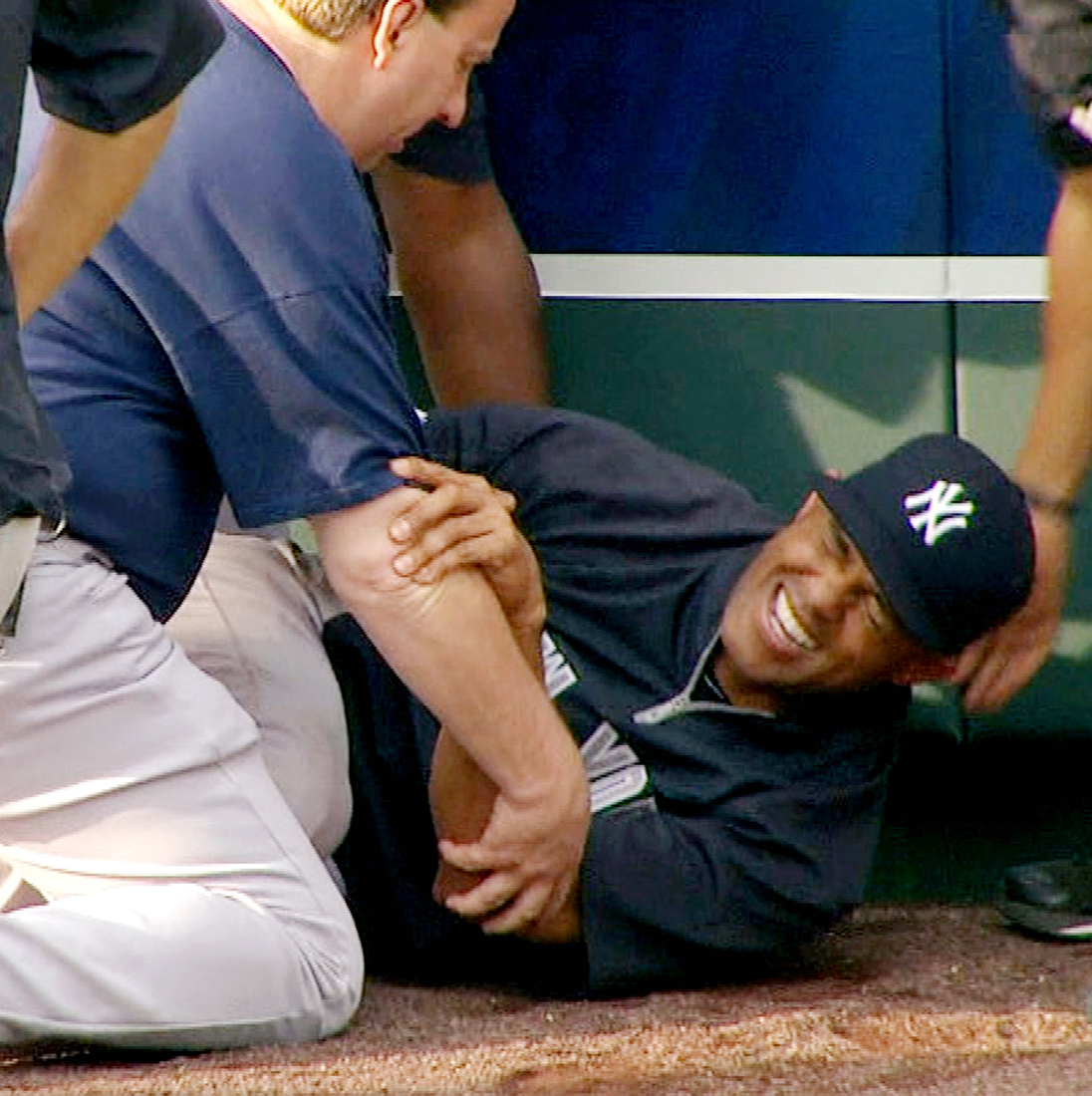
May 3, 2012: At Kauffman Stadium, Mariano Rivera is in the outfield during batting practice, trying to catch one, and he appears to have torn his ACL. He is probably out for the season, and, with his contract running out after this season, he may never pitch again.

Moral of the story? Not, "If you're a New York sports superstar, and you value your ACLs, don't hustle on defense." More like, "If you're a New York sports superstar, and you value your ACLs, stay the hell out of Kansas City."

*

In the wake of the Yankees' devastating loss last night, it seems understandable that they also had a pathetic defeat.

The shocking thing is that, as down as they must have already been, before they knew any kind of diagnosis, they came as close to winning as they did.

David Phelps started, and only pitched 4 innings. A home run by Mike Moustakas (no, I'd never heard of him, either) made the difference, as the Yankees got 13 hits but only scored 3 runs: A double by Mark Teixeira in the 3rd, a sacrifice fly by Eduardo Nunez in the 6th, and a sac fly by Teix in the 7th.

The Yankees stranded 2 runners in the 1st, 1 in the 3rd, 1 in the 4th, 1 in the 6th, 2 in the 7th, and 1 in the 8th (along with a stupid stolen base attempt by Nunez, possibly costing us the game); plus double plays in the 4th and the 9th.

Royals 4, Yankees 3. WP: Danny Duffy (2-2). SV: Jonathan Broxton (5). LP: Phelps (0-1).

I'll have more to say about Mo later in the day. But we're all a little shell-shocked right now.

I do want to remind Yankee Fans of one very important thing: As bad as this appears to be, Mo will recover. Whether he ever pitches again, we don't know; but he will be able to live a normal life.

We have seen worse than this.

Much, much worse.