Showing posts with label olympiastadion. Show all posts

Wednesday, August 12, 2026

August 12, 1936: The Biggest Baseball Crowd -- In Berlin?

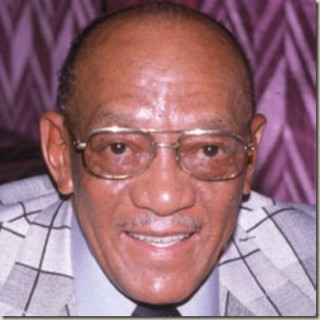
Bill Sayles. The "B" stands for "Brooklyn," not "Berlin."

August 12, 1936, 90 years ago: What was definitely the biggest crowd in baseball history to that point, and may still be, sees a game in... Nazi Germany?

After having been a "demonstration sport," rather than an actual competition, at the Olympic Games in Paris in 1900, and again in Stockholm, Sweden in 1912, baseball returned to Olympic display, though still not yet joining official Olympic competition, in 1936.

There was a single exhibition game, played at the Olympiastadion in Berlin. Since Olympic competitors had to be amateurs until 1992, all of the players in the game were Americans who had not yet played in the minor leagues, let alone in the major leagues. The umpire was Leslie Mann, whose 16-year major league career included playing as an outfielder for the 1914 World Series-winning "Miracle" Boston Braves. He had been among the leading advocates for putting baseball in the Olympics.

The "visiting team," the one batting 1st, was called the "U.S. Olympics." The "home team" was called the "World Champions." The game was set for 7 innings. The game was set for 8:00 PM, and for most of the players, this would be their 1st experience in a night game. (The 1st night game in MLB had been played the season before, at Crosley Field in Cincinnati, but that was still the only major league park with lights.)

Although the Olympiastadion was built for soccer and for track & field events, and didn't have room for a standard baseball field, I can find no reference to whether any accommodation was made for any "short fences."
The Berlin Olympiastadion

A crowd then estimated at 90,000 came out. Officially, the biggest crowd that had ever attended a single Major League Baseball game (rather than a doubleheader) was the 74,217 who were said to have attended the opening game of the original Yankee Stadium in 1923. (And that was almost certainly a lie, exaggerated by around 12,000 or so.)

But the Associated Press reported the crowd as being over 100,000, without getting any more specific than that. If so, then this remained a record for any baseball game until 2008, when 115,300 packed into the Los Angeles Memorial Coliseum for an exhibition game. Regardless of the actual total, neither the Chancellor of Germany at the time, Adolf Hitler, nor any official of the Nazi Party, was said to have attended.

For the U.S. Olympics, 1st baseman Bill Shaw hit a 2-run home run in the 1st inning. At the end of 6 innings, the World Champions led, 5–4. The Olympics scored in the top of the 7th to tie the game, before Les McNeece hit a solo home run, what would now be called a walkoff home run, in the bottom of the 7th, to win the game for the World Champions, 6-5.

Bill Sayles was the starting pitcher for the World Champions. He was the only player in this game who would go on to play in the major leagues: He pitched in 5 games for the Boston Red Sox in 1939, 18 for the New York Giants in 1943, and 5 for the Brooklyn Dodgers in 1943, with a record of 1-3, and an ERA of 5.61. Most likely, he made those 1943 appearances solely because of the manpower drain caused by the war the Nazis started. He lived on until 1996.

Baseball would once again be a demonstration sport at the Olympics in Helsinki, Finland in 1952, and then occasionally, until finally becoming an official competition sport in Barcelona, Spain in 1992. After 2008 in Beijing, it was dropped. It was restored for Tokyo in 2020 (2021), but dropped again for Paris in 2024. It will be restored for Los Angeles in 2028, with a 6-team tournament to be played entirely at Dodger Stadium, during a planned 11-day break in the Major League Baseball season.

Monday, August 3, 2026

August 3, 1936: Jesse Owens Beats Aryan Supremacy

August 3, 1936, 90 years ago: Nazi Germany's myth of racial supremacy is shattered by a black American.

The International Olympic Committee had awarded the 1936 Olympic Games to Germany in 1931, when it was still governed by the Weimar Republic. The Winter Games went to Garmisch-Partenkirchen, in Bavaria, on the nation's southern border, with Austria. The Summer Games went to the national capital, Berlin.

But in 1933, the National Socialist German Workers' Party -- Nationalsozialistische Deutsche Arbeiterpar, or "Nazi" Party -- came to power, and Adolf Hitler became Chancellor. Within another year, he had total control, and instituted the party's ideology, fascism: Nationalism, militarism, bigotry, and letting big business do whatever it wanted.

He also instituted his ideal of an "Aryan" "master race": White, blond hair, blue eyes, tall, physically strong. He, himself, was white, but not the other things.

And he falsely blamed Communists and Jews for Germany's defeat in World War I. Well before most people know what a "holocaust" was (originally, the word was used to mean a large fire), he was cutting Jewish people out of German society.

Like most dictators, he was not especially interested in sports. But, like many of them, someone talked him into using sports as propaganda for his ideals. And so, the 1936 Olympics, especially the Summer Games in Berlin, would be a spectacle celebrating "Aryan supremacy."

But a story which may be apocryphal (I hope it's true) shows that even his power was not absolute. In the Olympic Stadium (Olympiastadion) he had constructed for the Games, the restrooms had signs saying, "Dogs and Jews are not allowed." A representative of the International Olympic Committee told him to take it down.

Hitler: "When you come into a man's house, you don't tell him what he can and cannot put up!"

IOC official: "Excuse me, Mr. Chancellor, but when that five-ringed flag goes up over the stadium, it is no longer Germany. It is Olympia. And we are the masters there."

The signs came down.

*

James Cleveland Owens was born on September 12, 1913 in Oakville, Alabama. One thing Southern white people and Southern black people have in common is frequently addressing boys by their initials, so Owens was usually called "J.C."

When he was 9, the family moved north, as part of the "Great Migration" of African-Americans seeking to leave the segregated South in search of less prejudice and better jobs in the Northeast, the Midwest, and the West Coast. The fact that they moved to Cleveland, both his and his father's middle name (Henry Cleveland Owens), appears to have been a coincidence.

Upon arrival in school in Cleveland, the boy was asked his name. He said, "J.C. Owens." The teacher misheard this, and said, "Your name is Jesse?" Not wanting to contradict her, he said it was. And so he was Jesse Owens from then on.

He became Ohio's biggest high school track star. On May 25, 1935 -- the day after the 1st night game in Major League Baseball -- he competed for Ohio State University at the Big Ten Championships at Ferry Field, the former football facility at the University of Michigan in Ann Arbor.

He ran the 100-yard dash in 9.4 seconds, tying the world record. He set world records in the long jump (26 feet, 8 1/4 inches, a world record that would last for 25 years), the 220-yard sprint (20.3 seconds), and the 220-yard low hurdles (22.6 seconds). These 4 records were all set within a span of 45 minutes.

So when the U.S. Olympic Team set sail -- flying across the Atlantic Ocean was still too risky at that point -- for Germany in July 1936, Owens was considered one of the favorites in the 100 meters, the 200 meters, and the long jump. (Most of the world was now racing using the metric system, although the United States, as yet, was not.)

*

The Games began on August 1, and were the 1st sporting event ever televised, though only a few people in Germany had sets on which to watch it. The Nazis instituted many of the things we now associate with the Opening Ceremony of the Olympics, including the torch relay from Olympia, Greece into the stadium and the lighting of the cauldron; and the release of doves as a symbol of peace, although they used pigeons instead. When a cannon was fired as a salute, it literally scared the shit out of the pigeons, and many of the athletes got pooped on.

Established from the beginning in 1896 was the host country's head of state speaking before the crowd, and declaring the Games open. Hitler did this, in German, rather than French, the official language of the Olympics (he hated the French as much as he hated anyone else), or in English, by this point the semi-official language of the world. (As far as historians have been able to determine, German was the only language he spoke fluently.)

It's not always the head of state that does it. Sometimes, someone else is designated. In 1932, in Los Angeles, President Herbert Hoover sent Vice President Charles Curtis. In 1960, in Squaw Valley for the Winter Games, President Dwight D. Eisenhower sent Vice President Richard Nixon to his native California to do it. In 1980, President Jimmy Carter sent Vice President Walter Mondale. President Ronald Reagan did it himself in his adopted home State in Los Angeles in 1984, President Bill Clinton did it in Atlanta in 1996, and President George W. Bush did it in Salt Lake City in 2002.

When Britain has hosted: King Edward VII did it in 1908, King George VI did it in 1948, and Queen Elizabeth II did it in 2012, despite being 86 years old. When Australia hosted in 1956 and 2000, and when Canada did it in 1976 for the Summer Games, and 1988 and 2010 for the Winter Games, it was the Queen's representative, the Governor-General, who did it, even though the Queen was in attendance in Montreal in 1976, as her daughter, Princess Anne, was competing in the equestrian events.

The Parade of Nations had also been established from the beginning, and many of the countries' delegations followed the tradition of dipping their flag before the host nation's head of state. The American delegation refused to do this with the Stars & Stripes, and it had nothing to do with said head of state being a Fascist maniac. They were criticized for this, but stood their ground.

On August 2, Owens ran in the qualifying heats for the 100 meters. In the 1st, he tied the Olympic and world record. In the 2nd, he broke it. On August 3, the final was held, and Owens won it with a time of 10.3 seconds. Finishing 2nd was another black American, Ralph Metcalfe, who would later serve the South Side of Chicago in Congress from 1971 until his death in 1978.

Owens was now an Olympic Gold Medalist, and, by winning the Olympic 100-meter dash, he became recognized unofficially as "the fastest man in the world."

On August 4, Owens won the long jump, with 26 feet, 5 inches. Finishing 2nd was Luz Long of Germany, who did fit the Aryan profile. Owens was missing the tape and fouling, and, in a great display of sportsmanship, Long advised Owens to jump a bit short of the tape, just to be sure. It worked, and he had a 2nd Gold Medal.

On August 5, he won the 200 meters in 20.7 seconds. Finishing 2nd was a runner from UCLA, Matthew MacKenzie "Mack" Robinson. He had a younger brother, who went on to star in track, and other sports, at UCLA: Jack Roosevelt "Jackie" Robinson. So Owens now had 3 Gold Medals, fulfilling his goal.

On the 1st day, Hitler shook hands with the German victors only, and then left the stadium. International Olympic Committee president Henri de Baillet-Latour told him that he had to greet every medalist or none at all. Hitler opted for none at all, and skipped all further medal presentations.

His refusal to congratulate Owens had nothing to do with hating black people, or hating Americans. Nor was it personal. Owens was not "snubbed by Hitler." Owens responded to these claims at the time:

Hitler had a certain time to come to the stadium and a certain time to leave. It happened he had to leave before the victory ceremony after the 100 meters race began at 5:45 PM. But before he left, I was on my way to a broadcast, and passed near his box. He waved at me, and I waved back. I think it was bad taste to criticize the "man of the hour" in another country.

The final of the 4x100-meter sprint relay was to be held on August 9. The intended American competitors were Frank Wykoff (Des Moines, Iowa and of Dutch descent, having already taken Gold Medals in the event in 1928 and 1932), Foy Draper (from Texas and of English descent, and would be listed as missing in action in World War II), and 2 Jewish runners, Marty Glickman from New York and Sam Stoller from Cincinnati. (Glickman went on to become the 1st great New York sportscaster.)

But the President of the U.S. Olympic Committee was Avery Brundage, a racist and an anti-Semite, who was just fine with the Nazis. He decided that, since Hitler's boys had already been beaten by black men, it would be worse if they were beaten by Jews. So he benched Glickman and Stoller, and told Owens and Metcalfe that they would run in those men's places. Owens objected. Coach Dean Cromwell told him, "You'll do as you're told." With no recourse but to drop out, which would have been much worse, he ran the anchor leg, and the U.S. team won.

Owens had his 4th Gold Medal -- possibly the most unwelcome medal in Olympic history. This feat -- winning the Gold Medals of the 100 meters, the 200 meters, the 4x100-meter relay, and the long jump -- has only been done once since, by Carl Lewis in Los Angeles in 1984.

From a distance, Owens was hailed as a hero upon his return to America. Up close, he was still treated like any other black person in the 1930s. He found it difficult to make a living -- "You can't eat four gold medals," he said -- and took part in demeaning stunts to raise money. During World War II, the U.S. Office of Civilian Defense appointed Owens as director of a national fitness program for African Americans, but he lost this job when peace came. Like his contemporary, Joe Louis, the Heavyweight Champion of the World, he fell into trouble over his taxes. Unlike Louis, he eventually got out of it.
He became what he called "a professional good example." He became an American representative at the Olympics, and was particularly honored the next time a free and democratic Germany hosted, in Munich in 1972. He even did an American Express "Do you know me?" commercial. He died on March 31, 1980, of cancer, at age 66. He is buried at Oak Woods Cemetery in Chicago.

The Olympiastadion still stands, having undergone some renovations. It is the home of the biggest soccer team in the German capital, Hertha Berlin. It hosted 3 games in the 1974 World Cup, and 6 games in the 2006 World Cup, including the Final and a Quarterfinal. It hosted the 2015 UEFA Champions League Final, and the Final of Euro 2024. Having seated over 100,000 upon its opening, renovations and wider seats have brought capacity down to 74,475, but it is still the largest stadium in any German-speaking country.
In fact, the Olympiastadion in Berlin is 1 of 4 stadiums to have hosted an Olympic Games, a World Cup Final and a UEFA European Cup/Champions League Final. The others are the Olympiastadion in Munich, the old Wembley Stadium in London, and the Stade de France outside Paris.

Thursday, July 9, 2026

July 9, 2006: Zinedine Zidane's "Coup de Boule"

July 9, 2006, 20 years ago: The World Cup Final is held at the Olympiastadion in Berlin. ABC broadcasts it in America. France play Italy. Both teams tend to wear blue, thus France are Les Bleus, and Italy are gli Azzurri. On this occasion, Italy wore blue, while France wore white.
The Olympiastadion is 1 of 4 stadiums to have hosted an Olympic Games, a World Cup Final and a UEFA European Cup/Champions League Final. The others are the Olympiastadion in Munich, the old Wembley Stadium in London, and the Stade de France outside Paris.

Italy were loaded with legends: Gianluigi Buffon, Fabio Cannavaro, Andrea Pirlo, Francesco Totti, Luca Toni. This was a team so good, Daniele De Rossi and Alessandro Del Piero did not start and had to come on as substitutes, Alessandro Nesta and Filippo Inzaghi remained on the bench, and Paolo Maldini, still starting for AC Milan at age 38, was not even selected.

But France were equally laden with starpower, many of them holdovers from their 1998 triumph: Fabien Barthez, Lilian Thuram, David Trezeguet, Patrick Vieira, Thierry Henry, and Captain Zinedine Zidane. Others had developed since that win: Claude Makélélé, Florent Malouda, Sylvain Wiltord, Lasanna Diarra, Éric Abidal, Franck Ribéry. 

The key was Zidane: The midfielder, who had starred for Girondins de Bordeaux in his homeland, Juventus in Turin, Italy, and Real Madrid in Spain, had put the team, indeed his entire country, on his back, and led them to victory in 1998.

The son of Kabyle immigrants from France's former colony of Algeria, he was a symbol of reconciliation, as both nations were still dealing with the nasty war that Algeria fought for its independence from 1954 to 1962 -- having ended only 36 years before.

Although light-skinned enough to appear white -- unlike several national side teammates, including Henry, Vieira, Thuram, Trezeguet, and his Real Madrid teammate Makélélé -- he had faced prejudicial gestures large and small, including the insinuation that he was not truly, or not wholly, French.

Yet he went into that 2006 Final once again having led the team to glory. It was to be his last game: At age 34, he had announced his retirement as a player. Win or lose, it would be all over when the final whistle blew for this game.

In the 7th minute, Malouda, then playing his club football for Olympique Lyonnais, was knocked down in the box by Marco Materazzi of Internazionale Milano. If Materazzi were a hockey player, he wouldn't be a "pest": A good player who frequently plays rough; he'd be a "goon": A player whose sole purpose is to play rough, because he can't do anything else.

Horacio Elizondo, the Argentine selected to referee the game (because he was from neither team's continent), correctly awarded a penalty, and Zidane converted it. France led, 1-0.

The lead did not last long. In the 19th minute, Pirlo, the AC Milan legend, sent a hellacious corner kick into the box, and Materazzi, of all people, headed it past Barthez, the famously bald goalkeeper who was back with Olympique de Marseille after starring for them, Toulouse, AS Monaco and Manchester United.

In the 2nd half, Luca Toni, then of Florence-based Fiorentina, hit the crossbar with a shot, and then correctly had a headed goal disallowed as having been offside. Malouda was tackled in the box by Juventus' Gianluca Zambrotta, but was incorrectly not awarded another penalty. Arsenal legend Henry was stopped by Juventus goalie Buffon. Malouda skied a shot over the bar. Pirlo just missed with a free kick.

In extra time, Ribéry, then with Marseille and later to star for Bayern Munich, just missed. Buffon just barely knocked a Zidane header away.

And then, in the 110th minute, Materazzi pulled on Zidane's jersey, they exchanged words, and Zidane head-butted Materazzi right in the chest. In French soccer, this is known as a coup de boule -- literally, "stroke of ball" or "blow of ball," but also meaning "play of head." (The more familiar phrase coup d'état means "blow of state," and refers to the overthrow of a government.)

Elizondo did not see the incident. The 4th official, Luis Medina Cantalejo -- so respected that he not only officiated at 3 games of that World Cup, but was one of the few Spanish referees to officiate at La Liga games between arch-rivals Real Madrid and Barcelona, a rivalry so intense that foreign referees are nearly always assigned to oversee it -- told Elizondo through his headset that it had happened.

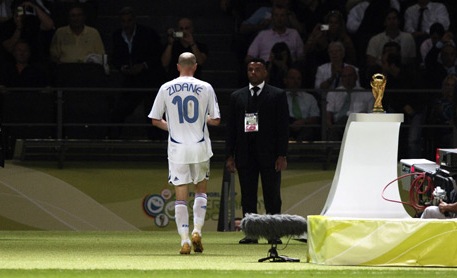
Elizondo properly showed Zidane a straight red card, making him the 4th player to be sent off in a World Cup Final, and the only player ever sent off in games of 2 separate World Cups. The scene of Zidane walking into the locker room, past the World Cup trophy but not even looking at it, is nearly as iconic as the coup de boule itself.
Extra time ended with the game still 1-1, so it went to penalties. Italy kicked first. Pirlo scored his penalty. Sylvain Wiltord, then with Lyon and previously the man whose goal past Barthez secured the League and Cup "Double" for Arsenal in 2002, made his. 1-1.

Materazzi was next for Italy, and made his penalty. Next for France was Trezeguet, facing his Juventus teammate Buffon. In extra time of the Euro 2000 Final, he had beaten Buffon with a shot. Under the rules then in place, it was a "golden goal": Automatic victory. This time, he was not a hero: He clanged his shot off the crossbar. 2-1 Italy.

De Rossi made his penalty. Abidal made his. Del Piero made his. Willy Sagnol made his for France. Finally, Fabio Grosso clinched the win for Italy: 5-3, with France's last shot not taken, seeing as how it would have been meaningless. Italia: Campioni del Mondo.
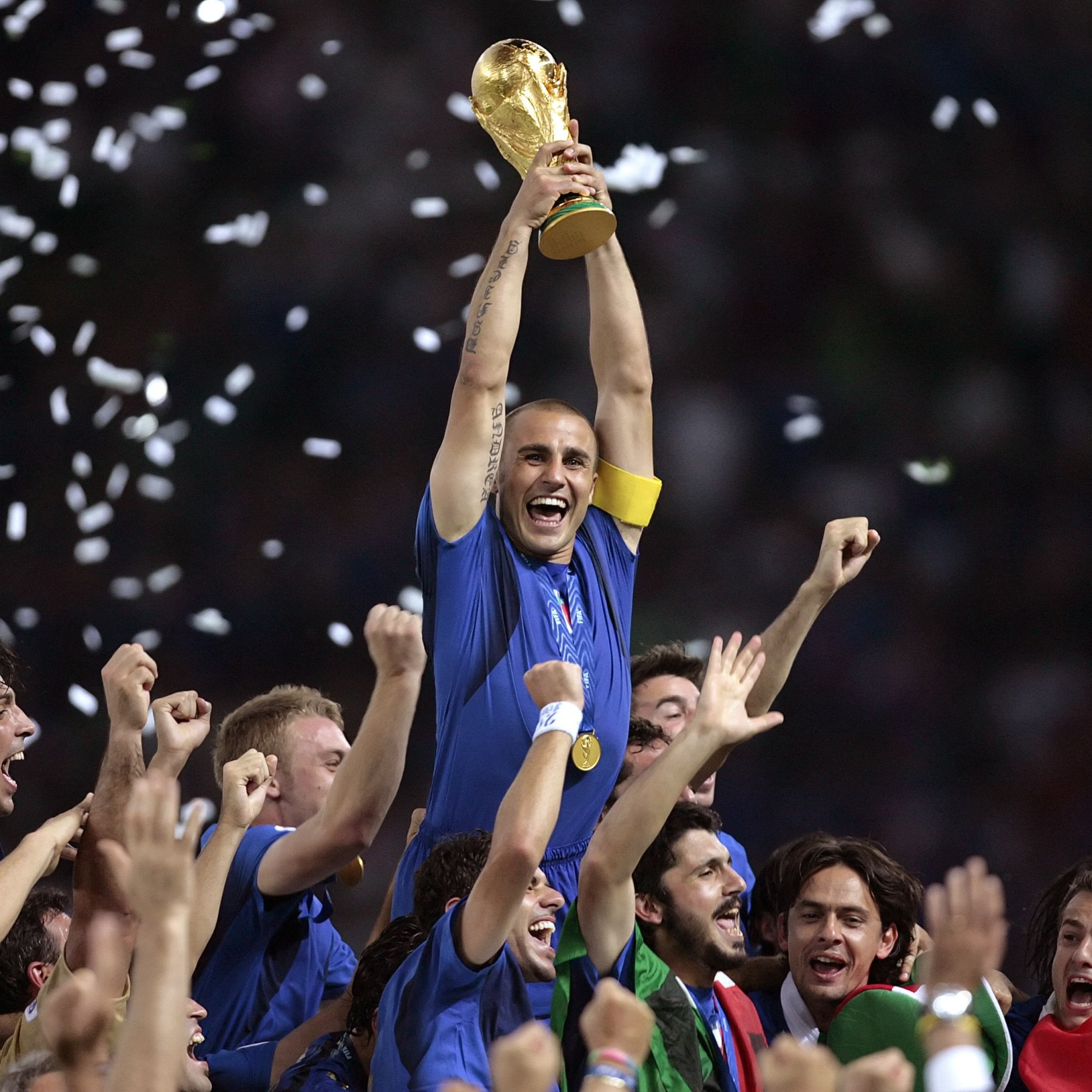
Fabio Cannavaro, as Captain, raising the Jules Rimet Trophy

Zidane, of course, was not available for the penalties.

Why did he do it? Three British newspapers -- The Times, The Sun, and the Daily Star, with varying degrees of reliability -- all hired lip-readers who were fluent in French and Italian to look at the tape, and to see what Materazzi had said to Zidane to provoke it. (Materazzi does not speak French, but Zidane played in Italy long enough to learn the language, and their exchange was entirely in Italian.)

The Times has a reputation for sterling journalism; The Sun and the Daily Star are considered lying right-wing propaganda rags. Yet the lip-readers hired by all 3 reported the exact same thing: They all said that Materazzi had called Zidane a "son of a terrorist whore."

It had been less than 5 years since the 9/11 attacks, and a year to the week after the 7/7 attacks on the London Underground (subway). Apparently, Materazzi was unaware that presuming that all Muslims are terrorists is not only bigoted, but stupid. To make matters worse, Zidane's mother was ill at the time.

Materazzi's version of events was a little different. He said he would never have insulted someone's mother, having lost his own when he was 15 years old. Without question, he had tugged on Zidane's shirt. The exchange of shirts is a postgame tradition that goes back decades, and Materazzi said that Zidane told him, "If you want my shirt, I will give it to you afterwards." Not an unreasonable request of a star of one of the finalists to one of the other finalist, and not an unreasonable response.

Materazzi said that his follow-up was, "I prefer the whore that is your sister." In other words, "Your sister puts out, and I'd like you to set me up with her." In other words, Materazzi admitted that he had gone too far.

But so had Zidane. There were about 10 minutes of play to go. Winning is the best revenge. A man as accomplished as Zidane -- 2 League titles in Italy and 1 in Spain, a Champions League win, a World Cup and a Euro title -- should have accepted this. Win the game, and you look like a champion, and the guy trying to provoke you looks like an idiot. Instead, the great Zizou looked like an easily provoked fool, and Materazzi an undeserved World Champion.

The play swept the world. Dozens of people posted their attempts at recreating it on the Internet. American TV shows parodied it. A song titled "Coup de Boule" hit Number 1 on the French music charts.

One moment can change not just a game, but a reputation, forever. Zidane stood to become the greatest hero in the history of French sport. Maybe he still is, anyway. But the first thing anyone thinks about when they hear his name is the coup de boule.

Sunday, July 7, 2024

July 7, 1974: The Netherlands' Lost Final

Johan Cruyff and Franz Beckenbauer in the Final.
The fact that the Dutch wore a bright color
and the Germans wore black and white
seemed symbolic of each country's soccer style.

July 7, 1974, 50 years ago: Rarely is a sports competition remembered less for the team that won than for the team, or one of the teams, that lost. The 1974 World Cup was one of them.

The tournament was being held in West Germany, and the Dutch team seemed to have the best of all Dutch worlds:

* From AFC Ajax, of Amsterdam (currently or formerly), came forwards Johan Cruyff and Piet Kiezer, midfielder Johan Neeskens, right wing Johnny Rep centerback Arie Haan, right back Wim Suurbier, and left back Ruud Krol.

(Note: Since his name was usually written as "Cruyff" for the English-speaking world, that's how I'm going to spell it in this post, even though it was always written as "Cruijff" in his homeland.)

* From Feyenoord, of Rotterdam, who formed the country's greatest rivalry with Ajax, came goalkeeper Eddy Treijtel; defenders Wim Rijsbergen, Wim Jansen, Rinus Israel and Harry Vos; and midfielders Willem van Hanegem and Theo de Jong.

* From PSV Eindhoven came defender Pleun Strik and twin brother midfielders René and Willy van de Kerkhof.

* From Twente Enschede came goalkeeper Piet Schrijvers and defender Kees van Ierssel.

* From FC Amsterdam came starting goalkeeper Jan Jongbloed.

* From Belgian club Anderlecht came forward Rob Rensenbrink.

* And from Anderlecht's arch-rivals, Club Brugge, came midfielder Ruud Giels. While Belgium is mostly divided among ethnic French (Wallonia) and ethnic Dutch (Flanders), both Anderlecht and Brugge are on the Dutch side of the country.

The Netherlands -- often incorrectly called "Holland," but that name only refers to 2 provinces of the kingdom, albeit those containing Amsterdam and Rotterdam, the 2 largest cities -- defeated Uruguay 2-0, drew 0-0 with Sweden, and demolished Bulgaria 4-1 to advance to the 2nd Group Stage. There, they beat Argentina 4-0, East Germany 2-0, and defending champions Brazil 2-0.

It was beginning to look easy. They had played 6 games, and had an aggregate advantage of 14-1. With their flowing football, flowing hair and bright orange uniforms, they had captivated the entire world -- especially since this was, for many countries, still the early days of color television.

On July 7, 1974, at the Olympiastadion in Munich, the dream seemed to be coming true. The Dutch lined up for the Final against a West Germany side dominated by players from Bundesliga winners Bayern Munich, including defender Franz Beckenbauer, goalie Sepp Meier and forward Gerd Müller. In only the 1st minute of the game, Crujiff advanced into the penalty area, and Bayern's Uli Hoeness brought him down. A penalty was rightly awarded, the 1st ever awarded in a World Cup Final, and Neeskens converted to give the Dutch a lead before 2 minutes had passed.
The Olympiastadion in Munich

But the Dutch may have scored too soon, and rested on their laurels. The Germans fought back, and got a legitimate penalty of their own in the 25th minute. Müller scored in the 43rd to give West Germany the lead. The half soon came, and Cruyff argued with the referee, Englishman Jack Taylor, and was booked for this.

The Dutch came a little unglued, and although they fell no further behind, neither did they get any closer. West Germany won, 2-1. It was not a home soil victory: Indeed, in the 2nd half, they had a goal waved off for offside, and were denied what looked like another legitimate penalty.

Playwright Johan Timmers wrote, "The defeat of 1974 is the biggest trauma that happened to Holland in the 20th Century, apart from the floods of 1953 and World War II." Historian Bastiaan Bommeljé wrote, "It should have been the epiphany of the sixties. Instead it turned out to be its requiem. The team was a product of an age that had put all its money on youth and the promise of youth and the idea that good times will be here when a new generation takes over."

In his book Brilliant Orange: The Neurotic Genius of Dutch Soccer, David Winner wrote, "The most talented group of footballers their country -- almost any country -- ever produced blew it. How? Why? It's a riddle wrapped in a mystery inside an enigma." He cited a 20th Anniversary survey that showed that nearly everyone old enough to watch remembered exactly where they were, and, on that basis, he compared it to the assassination of President John F. Kennedy in 1963.

Despite the defeat in the Final, Cruyff, since 1973 playing his "club football" for FC Barcelona in Spain, was awarded the Ballon d'Or (Golden Ball), as World Player of the Year, for the 3rd time in the last 4 years. There was no doubt that he was now the best player in the world, even if he couldn't quite get his country to the greatest prize of all.

In 1977, Cruyff announced his retirement from international soccer, refusing to play in the 1978 World Cup in Argentina. For 30 years, it was believed that he was protesting the military dictatorship that took over Argentina in 1976, after the country was awarded the tournament. But in 2008, he revealed the truth: There was a threat against his family, and it got into his head, and he didn't think he would be at his best for the tournament.

Again, the Netherlands reached the Final, even without Cruyff. This time, it was a home soil victory, as the Argentines' mere qualification for the Final under the system then in place was dubious, and they scored 2 dubious goals in extra time to win 3-1. There were some Dutch players who were quoted as saying they didn't know if they would leave the stadium alive if they won.

Cruyff has been called the greatest player that Europe has ever produced. However, the lack of a World Cup sticks out on his resume, as it does for players like Puskás, Argentina's Di Stéfano and (so far) Lionel Messi, France's Raymond Kopa, Wales' John Charles, Northern Ireland's George Best, Italy's Paolo Maldini, and Portugal's Eusébio and (so far) Cristiano Ronaldo. (UPDATE: In 2022, Argentina, with Messi, won the World Cup.)

For some of those players (particularly Charles and Best), it's because their countrymen were not up to their level. For Maldini, it was down to luck: He was considered too young to make the national side in 1982 and too old in 2006, despite his 25 years of top-flight football.

But the Netherlands has had so much talent, yet their only major tournament win has been Euro 88. They would lose the World Cup Final again in 2010, to Spain. No other country that's been in at least 3 Finals has failed to win at least 1.

One more note: The Olympiastadion in Munich is 1 of 3 stadiums to have hosted an Olympic Games, a World Cup Final and a UEFA European Cup/Champions League Final. The others are the Olympiastadion in Berlin and the old Wembley Stadium in London. In a few days, the Stade de France outside Paris will make it 4. 

Monday, September 5, 2022

September 5, 1972: The Munich Massacre

September 5, 1972, 50 years ago: The Munich Massacre takes places, bringing terrorism into the modern era.

The Olympic Games were being held in Munich, in the Federal Republic of Germany -- a.k.a. West Germany. It was the 1st time the Games were held on German soil since 1936, when Germany was controlled by the Nazi Party and Chancellor Adolf Hitler.

But all signs pointed toward the host nation, a democratic and capitalist nation, handling things properly. There were no incidents between German officials, or Olympic officials, and the athletes, coaches and support staff from Israel, which had founded itself as a nation in 1948, after the defeat of the Nazis in World War II.

But that founding resulted in great bitterness with the people calling themselves "Palestinians." With the support of Egypt, Jordan and Syria, they launched a war against Israel, but when it became clear that the war was a stalemate, a settlement was reached. Another war was launched in 1967, and, this time, there was a clear result: Israel won it in 6 days.

King Hussein I of Jordan decided that further wars against Israel were not worth it. On September 16, 1970, he responded to an Islamic fundamentalist group called the Fedayeen and its attempt at a coup by declaring martial law. Thousands of Palestinians were expelled from the country, and some were killed.

In response, a new terrorist group was formed, named Black September for this event. They waited for their chance to make a big statement. They decided that the 1972 Olympics were it, as the whole world would be watching.

At 4:30 AM, Central European Time -- 10:30 PM, September 4, U.S. Eastern Time -- eight Black September operatives snuck into the Olympic Village, wearing tracksuits so as to blend in. They found the Israeli team's quarters at Connollystraße 31. They broke in. Yossef Gutfreund, an Israeli but an official, a referee for the wrestling matches rather than an athlete or a coach, tried to distract the operatives so that others could escape. Only one did, weightlifting coach Tuvia Sokolovsky. Gutfreund was knocked out and taken prisoner. Weightlifter Yossef Romano and wrestling coach Moshe Weinberg tried to fight them off, but were killed.

The gunmen took and bound 9 hostages: Gutfreund, wrestlers Eliezer Halfin and Mark Slavin, weightlifters David Berger and Ze'ev Friedman, track and field coach Amituzur Shapira, fencing coach Andre Spitzer, sharpshooting coach Kehat Shorr, and weightlifting judge Yakov Springer.

One Israeli athlete who managed to get away before being seen by the gunmen was racewalker Shaul Ladany, a survivor of the Nazis' concentration camp at Bergen-Belsen. He got word to American officials.

Prime Minister Golda Meir of Israel asked for help from other countries: "If we should give in, then no Israeli anywhere in the world shall feel that his life is safe... It's blackmail of the worst kind." King Hussein called it a "savage crime against civilization, perpetrated by sick minds." But he was the only Arab, and the only Muslim, public figure to denounce the action which had already left 2 men dead. President Richard Nixon did not take any direct action, but asked the United Nations to do so.

Black September demanded the release of 234 Palestinians jailed in Israel, and also those of the founders of the infamous West German terrorist group Red Army Faction, Andreas Baader and Ulrike Meinhof. Meir refused to negotiate.

The hours dragged on. ABC, covering the Olympics for the United States, kept going back and forth between Jim McKay, their Olympic anchor, and Peter Jennings, who headed their international news desk in London, and who was in Munich because, even before the terrorists struck, that was where the news was for the moment. McKay would receive a special Emmy Award for his coverage, and his coverage Munich is often given as a reason why Jennings ended up as the anchor of ABC World News Tonight after the death of Frank Reynolds.

By 4:30 PM (10:30 AM, U.S. Eastern), Munich police had the complex surrounded. At 6:00 PM (12:00 noon, U.S. Eastern), the terrorists demanded transportation to Cairo, the capital of Egypt, a country they believed would be friendly to them.

The West German authorities reached Prime Minister Aziz Sedki of Egypt (not President Anwar Sadat), and he told them that his country did not want to get involved. So the West German authorities lied to the terrorists, saying that the demand had been accepted.

A bus transported the terrorists and their hostages to Fürstenfeldbruck Airport. A Boeing 727 jet was waiting, but the flight crew were actually Munich police. The terrorists tried to board the plane, but realized they had been lured into a trap, and ran back. At 12:04 AM on September 6 (6:04 PM on September 5, U.S. Eastern), the terrorists' leader shot the hostages with an AK-47. The police started firing, and most of the terrorists were killed within minutes. The ones who got away were all captured by sunrise.

At 3:24 AM on the 6th -- 9:24 PM on the 5th, U.S. Eastern -- Jim McKay gave America the tragic news:

You know, when I was a kid, my father used to say, "Our greatest hopes and our worst fears are seldom realized." Our worst fears have been realized tonight. They've now said that there were eleven hostages. Two were killed in their rooms yesterday morning. Nine were killed at the airport tonight. They're all gone.

There were demands that the rest of the Games be canceled. Instead, the International Olympic Committee postponed all events set for September 6, and hosted a memorial service in the Olympiastadion, attended by 80,000 people. The callous reaction of IOC President Avery Brundage, a known anti-Semite from his days as U.S. Olympic Committee President in the 1936 Olympics in Berlin, led to his being fired.

The remaining members of the Israeli team withdrew from the Games and went home. Mark Spitz, the Jewish American swimmer who had already completed his remarkable feat of winning 7 Gold Medals, also left. So did the Egyptian team, fearing reprisals since it was now known that they weren't helping Black September. So did the teams of Algeria and the Philippines.

During the 1972 World Series, pitcher Ken Holtzman and 1st baseman Mike Epstein, Jewish players for the Oakland Athletics, wore black armbands in memory of the 11 Israelis killed at the Olympics. Reggie Jackson, a black man who had grown up in a mostly-Jewish neighborhood, also wore a black armband, although he was injured and unable to play. Major League Baseball officials, so often behind the times when it came to social issues, allowed it.

Thursday, September 12, 2013

September 12, 1913: Jesse Owens Is Born

September 12, 1913, 100 years ago: James Cleveland Owens is born in Oakville, Alabama. One thing Southern white people and Southern black people have in common is frequently addressing boys by their initials, so Owens was usually called "J.C."

When he was 9, the family moved north, as part of the "Great Migration" of African-Americans seeking to leave the segregated South in search of less prejudice and better jobs in the Northeast, the Midwest, and the West Coast. The fact that they moved to Cleveland, both his and his father's middle name (Henry Cleveland Owens), appears to have been a coincidence.

Upon arrival in school in Cleveland, the boy was asked his name. He said, "J.C. Owens." The teacher misheard this, and said, "Your name is Jesse?" Not wanting to contradict her, he said it was. And so he was Jesse Owens from then on.

He became Ohio's biggest high school track star. On May 25, 1935 -- the day after the 1st night game in Major League Baseball -- he competed for Ohio State University at the Big Ten Championships at Ferry Field, the former football facility at the University of Michigan in Ann Arbor.

He ran the 100-yard dash in 9.4 seconds, tying the world record. He set world records in the long jump (26 feet, 8 1/4 inches, a world record that would last for 25 years), the 220-yard sprint (20.3 seconds), and the 220-yard low hurdles (22.6 seconds). These 4 records were all set within a span of 45 minutes.

So when the U.S. Olympic Team set sail -- flying across the Atlantic Ocean was still too risky at that point -- for Germany in July 1936, Owens was considered one of the favorites in the 100 meters, the 200 meters, and the long jump. (Most of the world was now racing using the metric system, although the United States, as yet, was not.)

*

The International Olympic Committee had awarded the 1936 Olympic Games to Germany in 1931, when it was still governed by the Weimar Republic. The Winter Games went to Garmisch-Partenkirchen, in Bavaria, on the nation's southern border, with Austria. The Summer Games went to the national capital, Berlin.

But in 1933, the National Socialist German Workers' Party -- Nationalsozialistische Deutsche Arbeiterpar, or "Nazi" Party -- came to power, and Adolf Hitler became Chancellor. Within another year, he had total control, and instituted the party's ideology, fascism: Nationalism, militarism, bigotry, and letting big business do whatever it wanted.

He also instituted his ideal of an "Aryan" "master race": White, blond hair, blue eyes, tall, physically strong. He, himself, was white, but not the other things.

And he falsely blamed Communists and Jews for Germany's defeat in World War I. Well before most people know what a "holocaust" was (originally, the word was used to mean a large fire), he was cutting Jewish people out of German society.

Like most dictators, he was not especially interested in sports. But, like many of them, someone talked him into using sports as propaganda for his ideals. And so, the 1936 Olympics, especially the Summer Games in Berlin, would be a spectacle celebrating "Aryan supremacy."

But a story which may be apocryphal (I hope it's true) shows that even his power was not absolute. In the Olympic Stadium (Olympiastadion) he had constructed for the Games, the restrooms had signs saying, "Dogs and Jews are not allowed." A representative of the International Olympic Committee told him to take it down.

Hitler: "When you come into a man's house, you don't tell him what he can and cannot put up!"

IOC official: "Excuse me, Mr. Chancellor, but when that five-ringed flag goes up over the stadium, it is no longer Germany. It is Olympia. And we are the masters there."

The signs came down.

The Games began on August 1, and the Nazis instituted many of the things we now associate with the Opening Ceremony of the Olympics, including the torch relay from Olympia, Greece into the stadium and the lighting of the cauldron; and the release of doves as a symbol of peace, although they used pigeons instead. When a cannon was fired as a salute, it literally scared the shit out of the pigeons, and many of the athletes got pooped on.

Established from the beginning in 1896 was the host country's head of state speaking before the crowd, and declaring the Games open. Hitler did this, in German, rather than French, the official language of the Olympics (he hated the French as much as he hated anyone else), or in English, by this point the semi-official language of the world. (As far as historians have been able to determine, German was the only language he spoke.)

The Parade of Nations had also been established from the beginning, and many of the countries' delegations followed the tradition of dipping their flag before the host nation's head of state. The American delegation refused to do this with the Stars & Stripes, and it had nothing to do with said head of state being a fascist maniac. They were criticized for this, and stood their ground.

On August 2, Owens ran in the qualifying heats for the 100 meters. In the 1st, he tied the Olympic and world record. In the 2nd, he broke it. On August 3, the final was held, and Owens won it with a time of 10.3 seconds. Finishing 2nd was another black American, Ralph Metcalfe, who would later serve the South Side of Chicago in Congress from 1971 until his death in 1978. Owens was now an Olympic Gold Medalist.

On August 4, Owens won the long jump, with 26 feet, 5 inches. Finishing 2nd was Luz Long of Germany, who did fit the Aryan profile. Owens was missing the tape and fouling, and, in a great display of sportsmanship, Long advised Owens to jump a bit short of the tape, just to be sure. It worked, and he had a 2nd Gold Medal.

On August 5, he won the 200 meters in 20.7 seconds. Finishing 2nd was a runner from UCLA, Matthew MacKenzie "Mack" Robinson. He had a younger brother, who went on to star in track, and other sports, at UCLA: Jack Roosevelt "Jackie" Robinson. So Owens now had 3 Gold Medals, fulfilling his goal.

On the 1st day, Hitler shook hands with the German victors only, and then left the stadium. International Olympic Committee president Henri de Baillet-Latour told him that he had to greet every medalist or none at all. Hitler opted for none at all, and skipped all further medal presentations.

His refusal to congratulate Owens had nothing to do with hating black people, or hating Americans. Nor was it personal. Owens was not "snubbed by Hitler." Owens responded to these claims at the time:

Hitler had a certain time to come to the stadium and a certain time to leave. It happened he had to leave before the victory ceremony after the 100 meters [race began at 5:45 PM. But before he left, I was on my way to a broadcast, and passed near his box. He waved at me, and I waved back. I think it was bad taste to criticize the "man of the hour" in another country.

The final of the 4x100-meter sprint relay was to be held on August 9. The intended American competitors were Frank Wykoff (Des Moines, Iowa and of Dutch descent, having already taken Gold Medals in the event in 1928 and 1932), Foy Draper (from Texas and of English descent, and would be listed as missing in action in World War II), and 2 Jewish runners, Marty Glickman from New York and Sam Stoller from Cincinnati. (Glickman went on to become the 1st great New York sportscaster.)

But the President of the U.S. Olympic Committee was Avery Brundage, a racist and an anti-Semite, who was just fine with the Nazis. He decided that, since Hitler's boys had already been beaten by black men, it would be worse if they were beaten by Jews. So he benched Glickman and Stoller, and told Owens and Metcalfe that they would run in those men's places. Owens objected. Coach Dean Cromwell told him, "You'll do as you're told." The U.S. team won.

Owens had his 4th Gold Medal -- possibly the most unwelcome medal in Olympic history. This feat -- winning the Gold Medals of the 100 meters, the 200 meters, the 4x100-meter relay, and the long jump -- has only been done once since, by Carl Lewis in Los Angeles in 1984.

From a distance, Owens was hailed as a hero upon his return to America. Up close, he was still treated like any other black person in the 1930s. He found it difficult to make a living -- "You can't eat four gold medals" -- and took part in demeaning stunts to raise money. During World War II, the U.S. Office of Civilian Defense appointed Owens as director of a national fitness program for African Americans, but he lost this job when peace came. Like his contemporary, Joe Louis, the Heavyweight Champion of the World, he fell into trouble over his taxes. Unlike Louis, he eventually got out of it.
He became what he called "a professional good example." He became an American representative at the Olympics, and was particularly honored the next time a free and democratic Germany hosted, in Munich in 1972. He even did an American Express "Do you know me?" commercial. He died on March 31, 1980, of cancer, at age 66. He is buried at Oak Woods Cemetery in Chicago.

The Olympiastadion still stands, having undergone some renovations. It is the home of the biggest soccer team in the German capital, Hertha Berlin. It hosted 3 games in the 1974 World Cup, and 6 games in the 2006 World Cup, including the Final and a Quarterfinal. (UPDATE: It has since hosted the 2015 UEFA Champions League Final, and is scheduled to host the Final of Euro 2024.)
One of the adjacent streets is named Jesse Owens Allee.