Showing posts with label home run derby. Show all posts

Friday, December 13, 2024

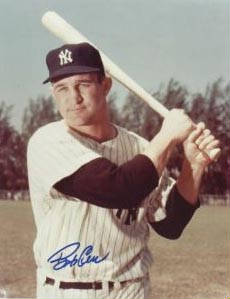
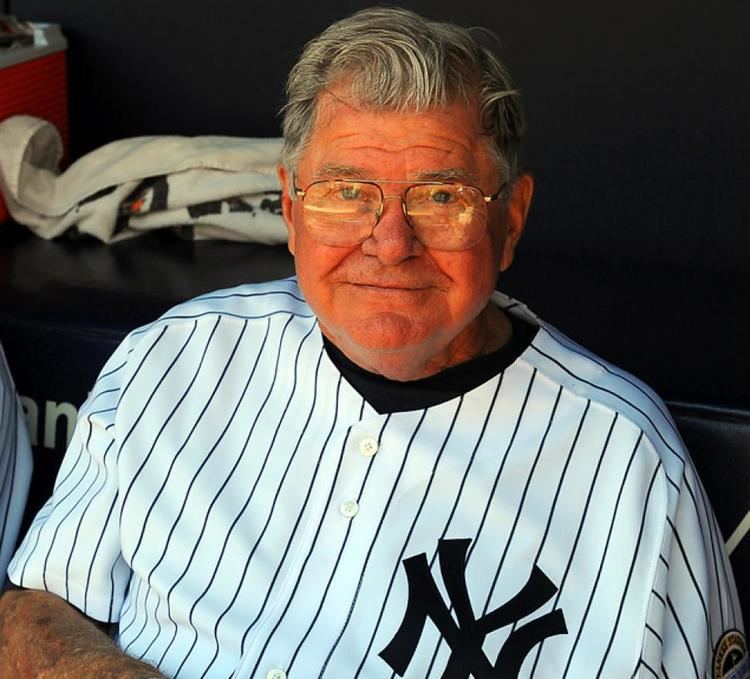
Rocky Colavito, 1933-2024

Athletes become icons in ways both easy and hard to understand. Rocky Colavito became an icon in Cleveland baseball first by his presence, then by his absence.

Rocco Domenico Colavito Jr. was born on August 10, 1933 in The Bronx, New York City. Being Italian-American and from The Bronx, it was easy to become a fan of both the New York Yankees and their best player at the time, Joe DiMaggio.

He attended Theodore Roosevelt High School, on East Fordham Road. Prominent TRHS graduates include baseball player Ben Oglivie; singer Dion DiMucci and all 3 of his backup singers, The Belmonts, named for nearby Belmont Avenue; actors John Garfield, June Allyson and Chazz Palminteri; and rapper French Montana. Not especially prominent, but leading TRHS to the New York City basketball championship in 1924, was George Goldberg, my grandfather. Attending the school, but not graduating, was Kiss guitarist Paul "Ace" Frehley.

Colavito did not graduate, either: He dropped out at age 16, to play semi-pro baseball. But the Yankees weren't interested in him, having Tommy Henrich in right field. Instead, the Cleveland Indians signed him in 1951. He made his major league debut on September 10, 1955. Wearing Number 38, he pinch-ran for Dale Mitchell in the top of the 7th inning, and was singled home by Bob Lemon (a pitcher who started his career as an outfielder, and could still hit), and the Indians beat the Boston Red Sox, 10-7 at Fenway Park in Boston. Ted Williams went 3-for-5 with an RBI. For the Indians, Ralph Kiner hit a home run.

(It was Kiner's 18th home run of the season, and the 369th of his career -- and the last. He retired because of a back injury. Many years later, he and Tim McCarver were broadcasting for the Mets, and a Met player hit his 1st major league home run. McCarver said he didn't remember his first: "You'd think I would, since I didn't hit many!" Kiner said, "I don't remember my last home run, because, at the time, I didn't think it would be my last!")

Colavito became a regular the next season, and finished 2nd in the voting for the American League Rookie of the Year, behind Luis Aparicio of the Chicago White Sox. In 1958, having switched to Number 6, he batted a career-high .303, hit 41 home runs, topped 100 RBIs for the 1st time with 113, and led the AL in slugging percentage with .620. He finished 3rd in the AL Most Valuable Player voting, behind Jackie Jensen of the Boston Red Sox and Bob Turley of the Yankees.

In 1959, Colavito led the AL with 42 home runs, with 111 RBIs, making his 1st All-Star Game. On June 10, he hit a record-tying 4 home runs in a game in an 11-8 Cleveland win over the Baltimore Orioles. The Indians finished 2nd, 5 games behind the White Sox, and finishing 4th in the MVP voting, behind 3 White Sox: Nellie Fox, Aparicio and Early Wynn. It was widely believed that, had the Indians won the Pennant, Colavito would have been named the MVP.

Indians fans loved him. They loved his batting stance, where he seemed to pause his practice swing in such a way that he pointed his bat at the pitcher with both hands. (Decades later, another Cleveland slugger, Jim Thome, would bat lefthanded instead of righthanded like Colavito, and point the bat with one hand.) They loved him for hitting home runs, topping 40 in back-to-back seasons despite Cleveland Municipal Stadium being a pitcher's park. They loved him for having a rifle arm in right field, the best in the AL, at a time when Roberto Clemente had the best in the NL.

"Rocky had tremendous charisma," Herb Score, Cleveland's ill-fated star pitcher, said in an interview many years later. "Fans gravitated to him, not just because he hit home runs. Rocky relished the clutch situations. He didn't always come through, but he wanted to be the guy who took that burden on his back."

Fans began to bring signs reading, "DON'T KNOCK THE ROCK." One man who did knock the rock was Frank Lane, the Indians' general manager. He had been the GM of the White Sox from 1948 to 1955, the St. Louis Cardinals from then until 1957, and the Indians ever since.

He was known as "Trader Lane" and "Frantic Frank" for making so many trades, often for no other purpose than "to shake things up." That is never a good reason to do anything, from trading a baseball player to electing a President. The media loved him, because he was good copy. His players and managers hated him, for breaking up good teams.

On April 17, 1960, just 1 day before the Indians were set to begin a new season, Lane traded Colavito to the Detroit Tigers for Harvey Kuenn. Kuenn had led the AL with a .353 batting average in 1959, and had led it in doubles 2 years in a row. This was the 1st time the defending batting champion and the returning home run leader had been traded for each other, in either League. It remains the last. People wondered why the trade was made at all.

It has been suggested that Lane wanted to get rid of any star on the team, so as to keep salaries down. Kuenn was a good player; no one questioned that. But he wasn't as big a star as Colavito. The effect on the Indians was immediate: After going 89-65 and finishing just 5 games out of 1st place in 1959, they fell to 76-78 in 1960, 21 games behind the Pennant-winning Yankees.

"I loved Cleveland and the Indians," Colavito told The Plain Dealer, Cleveland's leading newspaper, in 2010. "I never wanted to leave."

Lane was fired as Indians GM in 1961. Charlie Finley quickly hired him to be GM of the Kansas City Athletics, and, nearly as quickly, fired him. Apparently, Finley also needed to be the center of attention, and, as the owner, he wasn't going anywhere. (Well, he was, because he wanted to move the team, but he wasn't selling.) Lane would only be a GM once more, with the Milwaukee Brewers in 1971 and 1972, and died in 1981, a baseball pariah. Bobby Bragan, who had managed the Indians in 1958, was the only baseball figure who attended his funeral, and that only because he was personally asked to do so by Commissioner Bowie Kuhn.

Kuenn batted .303 over a major league career that lasted from 1952 to 1966, topping at .353 in his batting title season of 1959. He was AL Rookie of the Year in 1953, led the AL in hits 4 times and doubles 3 times, and 1960 would be his 8th All-Star season. But it would also be his last, at age 29.
Harvey Kuenn

A native of the Milwaukee suburbs, he was with the Milwaukee Braves in 1965, and was the last out, a strikeout, in Sandy Koufax's perfect game for the Dodgers over the Braves. In 1971, Lane hired him as a Brewers coach. He was still on their staff in mid-season in 1982, when George Bamberger was fired as manager, and Kuenn was named manager. The heavy-hitting team had been known as "Bambi's Bombers," and were now "Harvey's Wallbangers." Kuenn led them to their 1st Pennant -- and it remains the franchise's only Pennant -- but they lost the World Series to the St. Louis Cardinals. He died of diabetes in 1988, only 57 years old.

*

The players even switched uniform numbers: With the Indians, Kuenn got Colavito's 6; with the Tigers, whose Number 6 was already worn by future Hall-of-Famer Al Kaline, Colavito got Kuenn's 7. Gabe Paul, then the GM of the Cincinnati Reds, and later the GM of the Indians and the Yankees, said, "The Indians traded a slow guy with power for a slow guy with no power."

At first, the trade worked pretty well for Colavito: Tiger Stadium's short power alleys suited him well, and, in 1961, he had career highs with 45 home runs and 140 RBIs, helping Detroit win 101 games. But that was the year that Roger Maris hit 61 home runs and Mickey Mantle hit 54, leading the Yankees to 109 wins. So not only did his best year as a player, individually and team-wise, not give him the league lead in any major offensive category -- although, in this 1st year of AL expansion, he did become the 1st player to officially play in 163 games, thanks to a rainout and replay -- it didn't even get him as close to the Pennant as he got with the '59 Indians.

The Indians continued to struggle. In 1964, the Tigers traded Colavito to the Kansas City Athletics. The following year, the Indians got him back, in a 3-way deal with the A's and the White Sox that sent Tommie Agee and Tommy John to Chicago.

That season, Colavito had 108 RBIs, good enough to lead the AL. But in 1966, though his home run total went up from 26 to 30, his RBIs dropped to 72, and his batting average fell from .287 to .238. Injuries ended his career 2 years later, with the Yankees, even making a pitching appearance and being credited with the win. He was only 35 years old. He finished with 374 home runs and 9 All-Star berths -- but, oddly, no Gold Gloves. He is one of the best all-around baseball players not in the Hall of Fame.

Terry Pluto, longtime Cleveland newspaper columnist and the man who knows more about the franchise now known as the Cleveland Guardians than anyone, titled his 1994 book about the team's history The Curse of Rocky Colavito, pointing out that, from 1960 to 1993, the Indians never even finished within 10 games of 1st place, except for the strike-split season of 1981. Colavito said he never put a curse on the team: "Frank Lane did."

Pluto has also suggested that the worst trade the franchise has ever made is the one in which they got rid of Colavito. And the 2nd-worst was the one where they got him back. Fans can't blame that one on Frank Lane, who was already gone.

*

Colavito was a broadcaster for the Indians in 1972, 1975 and 1976; and 1st base coach for them in 1973, 1977 and 1978. In 1982 and 1983, he was hitting instructor for the Kansas City Royals. That would be his last job in baseball.

The Indians, now the Cleveland Guardians, named him to their team Hall of Fame. Should he be in the Baseball Hall of Fame? Baseball-Reference.com has a Hall of Fame Monitor, on which a "Likely HOFer" is at 100, the higher, the better. Colavito is at 82. They also have a "Hall of Fame Standards," on which the "Average HOFer" is at 50. Colavito is at 30. Both figures suggest he is well short.

And yet, those figures don't take his defense into account. One thing they did is the fact that Colavito hit 374 home runs. That's more home runs than Yankee Legends Joe DiMaggio, Yogi Berra and Johnny Mize, who are all in; and 4 fewer than Mike Trout currently has, and there are people who believe that Trout, even if he never plays another game, is a sure first-ballot Hall-of-Famer. (He's not. If he never plays another game, he shouldn't get in at all.)

B-R also has "Similarity Scores," in which they list the 10 most statistically similar players, usually weighted by position. But of the 10 players most statistically similar to Colavito, according to them, only 1 is in the Hall, and he only recently got in: Gil Hodges, who also got a boost from being a great fielder. The others: Frank Howard, Roy Sievers, Jermaine Dye, Boog Powell, George Foster, Norm Cash, Greg Luzinski, Jack Clark and Greg Vaughn. Some of those guys are close, but none has a lot of people saying they should be in.
Rocky Colavito married Carmen Perrotti, a professional dancer, in 1954. They had sons Rocky Jr. and Steven, a daughter Marisa, 5 grandchildren and 2 great-grandchildren.

Unfortunately, like Harvey Kueen, he developed diabetes. On August 11, 2015, he had to have his right leg amputated below the knee. He died from complications of diabetes at his home in Bernville, Pennsylvania, outside Reading, this past Tuesday, December 10, 2024, at the age of 91.

He was the last surviving player who had appeared on the TV show Home Run Derby in 1960, appearing in an Indians uniform, since he had not yet been traded to the Tigers. And his death leaves Stan Pawloski as the last surviving teammate of Indians pitching legend Bob Feller.

Monday, April 10, 2017

Bob Cerv, 1925-2017

The number of living Yankees who won World Series at the original, pre-renovation Yankee Stadium is getting smaller and smaller.

Robert Henry Cerv was born on May 5, 1925, just 1 week before Yogi Berra, in Weston, Nebraska, 44 miles west of Omaha. He served in the U.S. Navy during World War II, and played baseball and basketball at the University of Nebraska -- a school much better known for its football program.

He was scouted by the Yankees, and he signed with them in 1950. He made his major league debut on August 1, 1951, wearing Number 7. As the Yankees tried to rally in the bottom of the 9th inning at The Stadium, manager Casey Stengel sent the power-hitting left fielder up to bat for Jerry Coleman, who was filling in at shortstop for Phil Rizzuto that day. It didn't work out, as Dizzy Trout struck Cerv out for the final out. The Yankees lost 9-8 to the Detroit Tigers, despite home runs by Berra and Gene Woodling.

Woodling was not about to give up his spot as the Yankees' starting left fielder. And that Number 7 was given to outfielder Cliff Mapes, and then to a rookie outfielder just called back up from the Kansas City Blues, who had been wearing 6 earlier in the season: Mickey Mantle.

Cerv was briefly back up in 1952, wearing 34; and 1953, wearing 41. He managed to stick around, in Number 41, through the 1956 season, and was on the World Series rosters in 1955 and '56, winning a World Series ring in 1956.

Legend has it that Stengel sat down next to him in the dugout one day, and said, "There's not many people that know this, but one of us has been traded to Kansas City." By that time, the Philadelphia Athletics had moved to Kansas City, taking the place of the former Yankee farm team. Except the story isn't true: The Yankees sold Cerv to the A's, and only got cash in return.

*

The next 4 seasons would be the only 4 full seasons of Cerv's career. In 1958, he suffered a broken jaw, sustained himself on  liquid diet, and still made the American League All-Star Team, beating out Ted Williams for the starting spot in left field. He batted .305, hit 38 home runs, and had 104 RBIs, despite Kansas City Municipal Stadium not being particularly friendly to hitters. He finished 4th in the voting for the AL Most Valuable Player award, behind Jackie Jensen of the Boston Red Sox, Yankee pitcher Bob Turley (who won the Cy Young Award) and Rocky Colavito of the Cleveland Indians. Mantle finished 5th, so Cerv was ahead of him.

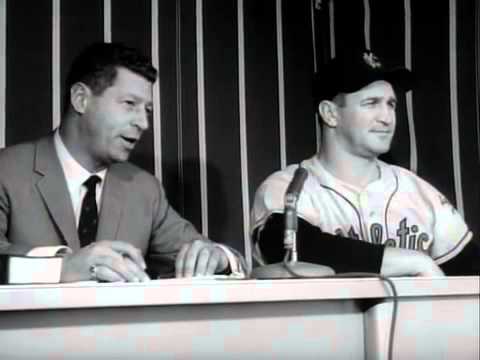
Just before Spring Training began in 1960, Cerv was invited to appear on the syndicated TV program Home Run Derby. He showed up at Wrigley Field -- the former home of the Pacific Coast League's Los Angeles Angels, a farm team of the Chicago Cubs, thus the stadium had the same name and basic design as the Cubs' home -- wearing his A's uniform, Number 33, he was the challenger in the 17th of the series' 26 episodes, and beat Frank Robinson 8-7, before losing to Bob Allison in the next episode. He won $3,000, at a time when the minimum salary in baseball was only twice that. That $3,000 in 1960 would be worth about $25,000 in today's money.
Cerv with the host of Home Run Derby,
Cincinnati Reds broadcaster Mark Scott,
watching either Frank Robinson or Bob Allison bat

Early in the 1960 season, the Yankees reacquired Cerv, sending the A's 3rd baseman Andy Carey in exchange. He played in the World Series, which the Yankees lost to the Pittsburgh Pirates, and then was left unprotected in the expansion draft. The new major league version of the Angels, also playing that 1st season at L.A.'s Wrigley Field, too him, but in May 1961 they sold him back to the Yankees, where he was given Number 17.

Billy Crystal's film 61*, in which Cerv is played by Chris Bauer, got a lot of things right. One thing it got wrong was that it had Cerv with the Yankees at the start of the 1961 season. One thing it got right is that Cerv was rooming with Roger Maris in Forest Hills, Queens, and that Maris invited Mantle to stay with them.
Chris Bauer as Bob Cerv, with Barry Pepper as Roger Maris,
at Tiger Stadium in Detroit, which stood in
for the pre-renovation Yankee Stadium

Another thing it got wrong is that Cerv and Mantle watched Maris hit his 61st home run of the season -- not in the Yankee dugout, but together on a hospital room's TV. While they were both injured, they weren't in the same room. The injury cost Cerv a place on the World Series roster, but he did get another World Series ring (and, more importantly, another World Series share). By the time the movie was filmed in 2000, Cerv was the only 1 of the 3 still alive.

In June 1962, the Yankees sold Cerv to another expansion team, the Houston Colt .45's, who became the Astros in 1965. They released him in August, and that was the end of his playing career. He finished with a .276 batting average and 105 home runs -- the fewest of any of the players who appeared on Home Run Derby.

*

He became a college baseball coach, at Southeast Missouri State College, now Southeast Missouri State University, in Cape Girardeau. He later coached baseball and basketball at John F. Kennedy College in Wahoo, Nebraska, hometown of a Baseball Hall-of-Famer, early 20th Century Detroit Tiger right fielder Sam Crawford, a.k.a. "Wahoo Sam."
Bob Cerv died this past Thursday, April 6, 2017, in Blair, Nebraska. He was 91 years old.

With his death, there are now 3 surviving members of the Yankees' 1956 World Championship team: Whitey Ford, Don Larsen and Charlie Silvera. And there are 10 living players from their 1961 World Championship team: Ford, Bobby Ricahrdson, Tony Kubek, Hector Lopez, Ralph Terry, Rollie Sheldon, Bud Daley, Jim Coates, Billy Gardner and Jack Reed.

And of the 19 men who appeared on Home Run Derby, only 5 are still alive: Hank Aaron, Rocky Colavito, Al Kaline, Willie Mays and Frank Robinson. The others were Bob Allison, Ernie Banks, Ken Boyer, Bob Cerv, Gil Hodges, Jackie Jensen, Harmon Killebrew, Jim Lemon, Mickey Mantle, Eddie Mathews, Wally Post, Duke Snider, Dick Stuart and Gus Triandos.

UPDATE: Bob Cerv was buried at Saint John Nepomucene Cemetery in Weston, Nebraska.

Monday, July 13, 2015

Scrap the Home Run Derby

Today is Monday of the All-Star Break. And that can only mean one thing.

Major League Baseball's official freak show.

Not only is the Home Run Derby totally meaningless, and its history riddled with cheaters, but the winner frequently gets hurt right after it, hurting his team after he participated in a meaningless competition.

Did I say, "riddled with cheaters"? You're damn right I did:

1986 Wally Joyner
1992 Mark McGwire
1993 Juan Gonzalez
1996 Barry Bonds
2000 Sammy Sosa
2001 Luis Gonzalez
2002 Jason Giambi (admittedly, a Yankee at the time)
2004 Miguel Tejada
2010 David Ortiz

The whole point of the home run is its excitement -- much of which is due to its being unexpected. That's why the most famous home runs aren't those hit by Babe Ruth or Mark McGwire, but by less-likely heroes: Bobby Thomson, Dusty Rhodes, Bill Mazeroski, Dave Henderson, Scott Podsednik.

As a Yankee Fan, I can name Chris Chambliss, Bucky Dent, Jim Leyritz, Chad Curtis and Aaron Boone. Met fans can name Al Weis, Lenny Dykstra, Todd Pratt, Robin Ventura and Benny Agbayani.

Kirk Gibson was a good slugger, but his 1988 homer was huge because he was injured and it was a big surprise. In contrast, Reggie Jackson had to hit 3 homers in a single World Series game to get anybody to notice.

Why doesn't Joe Carter get more credit for hitting a Series-winning homer? Less the 396 homers he hit in regular season play, more that it was off Mitch Williams, so you could kind of see it coming. In the Home Run Derby, you expect home runs. So they're no big deal.

Scrap the Home Run Derby. Bring back the Old-Timers Game.

*

Hours until the U.S. national soccer team plays again: 10, tonight, at 9:30 Eastern Time, against Panama, in the Group Stage of the CONCACAF Gold Cup, at Sporting Park in Kansas City, Kansas. The U.S. men haven't exactly followed the amazing path of the U.S. women -- or have they? The U.S. women didn't look great in the Group Stage of the recent Women's World Cup, but they plowed through the knockout rounds like the other teams owed them money. At any rate, regardless of how tonight's game ends, the U.S. is assured of topping their group.

Days until the Red Bulls play again: 5, this Saturday night at 7:30, away to Orlando City, their 1st-ever meeting with this expansion team.

Days until the Red Bulls next play a "derby": 8, next Tuesday afternoon, at 4:00, against the Philadelphia Union, in the Quarterfinal of the U.S. Open Cup, America's version of the FA Cup. The next game against the New England Revolution will be on Saturday night, August 22, at Gillette Stadium in Foxboro, Massachusetts. The next game against D.C. United will be on Sunday night, August 30, at Red Bull Arena.

Days until the next Yankees-Red Sox series begins: 22, on Tuesday, August 4, at 7:00 PM, at Yankee Stadium II. A little over 3 weeks.

Days until Arsenal play again (in a competitive match): 27, on Sunday afternoon (8:30 in the morning our time), home to East London club West Ham United. Under 4 weeks.

Days until East Brunswick High School plays football again: 52, on Thursday night (why?), September 3, away to Woodbridge. A little over 7 weeks.

Days until Rutgers plays football again: 54, on Saturday afternoon, September 5, home to Norfolk State.

Days until the Devils play again: 88, on Friday, October 9, home to the Winnipeg Jets. A little under 3 months.


Days until the Islanders' first home game at the Barclays Center in Brooklyn: 88, also on Friday, October 9, against the defending Stanley Cup Champion Chicago Blackhawks. Or, to put it another way, "88 Sleeps Till Brooklyn." Until then, despite having definitively played their last competitive game in the Nassau Coliseum, even with their 4 straight long-ago Stanley Cups, they're just a Small Club In Hempstead.

Days until the Devils play another local rival: 97, on Sunday, October 18, away to the Rangers.

Days until the next North London Derby between Arsenal and Tottenham: 117, on Saturday, November 7, at the Emirates Stadium.

Days until the next East Brunswick vs. Old Bridge Thanksgiving game: 136, on Thursday morning, November 26, at 10:00 AM, at EB. A little over 4 months.

Days until the Copa América Centenario begins on U.S. soil: 326, on June 3, 2016. A little under 11 months. The tournament will be between teams from the North American, Central American and Caribbean region (CONCACAF) and South America (CONMEBOL, which is celebrating its 100th Anniversary). Although it's a member of CONCACAF rather than CONMEBOL, the U.S. is the host nation, and thus qualifies automatically, as it does for the 2015 CONCACAF Gold Cup.

Days until Euro 2016 begins in France: 333, on Friday, June 10.


Days until the next Summer Olympics in Rio de Janeiro, Brazil: 389, on Friday, August 5, 2016. A little under 13 months.

Days until Alex Rodriguez's Yankee contract runs out: Officially, at the end of the 2017 season. Game 7 of that year's World Series could turn out to be on Halloween, so, for the sake of this entry, let's say October 31, 2017, which would be 1,206 -- a little over 2 years. Of course, the Yankees could release him before then, but I don't think the House of Steinbrenner wants to take the financial hit from buying him out.

Days until the next World Cup begins in Russia: 1,426, on Friday June 8, 2018. A little over 3 years.

Saturday, January 24, 2015

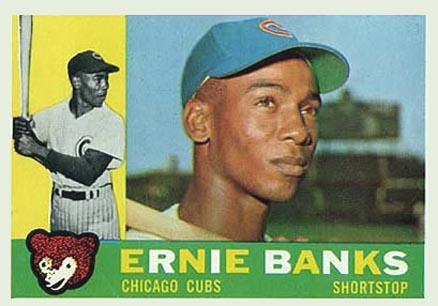
Ernie Banks, 1931-2015

Ernie Banks once ran for Chicago's city council, the Board of Aldermen. It was in 1962, while he was still one of the best players in baseball. He figured the election was non-partisan, so he wouldn't upset either Democrats or Republicans. And he figured that the South Side would be a good district to run from, since it was mostly black. And he was enormously popular in the city. Who doesn't like Ernie Banks?

White Sox fans didn't like him. They hated everything to do with the Cubs. And the South Side is mostly White Sox fans. He came in 4th in a 5-man field.

*

I had hoped to write a post about the FA Cup, the 4th Round of which is underway this weekend. But I'm a baseball fan first, and baseball lost one of its legends yesterday.

Ernest Banks (no middle name) was born on January 31, 1931, in Dallas, Texas. He grew up as a black person in a segregated society, and graduated from the all-black Booker T. Washington High School in Dallas. He lettered in football, basketball and track, but the school didn't have a baseball team. At the same time, a few hundred miles north, in Commerce, Oklahoma, this same problem was happening to future Yankee Legend Mickey Mantle, and both boys had to play on local amateur teams to get noticed.

He was one of the last players to make the jump from the Negro Leagues to the major leagues, playing for the Kansas City Monarchs. This was interrupted by 2 years in the U.S. Army, during the Korean War. He remained stateside, though, seeing no combat.

* 

Ernie was signed by the Chicago Cubs, and became their 1st black player, without ever playing a day in the minor leagues. He made his debut at Wrigley Field on September 17, 1953. The game didn't go well for the Cubs: They got pounded by the Philadelphia Phillies, 16-4. Banks, wearing the Number 14 he would wear throughout his career, played shortstop and batted 7th. He went 0-for-3 against Curt Simmons, but drew a walk and scored a run, for all the good that did the Cubs.

The next season, 1954, he finished 2nd in the National League Rookie of the Year voting, behind Wally Moon of the St. Louis Cardinals -- a black player on a Northern team losing to a white player on a "Southern" team. In 1955, he made the 1st of his 11 NL All-Star teams, and finished 3rd in the NL Most Valuable Player voting, behind Roy Campanella and Duke Snider, both of whom played for the Brooklyn Dodgers. The Dodgers won the Pennant that year, and Campy was also black, so it can hardly be said that Ernie got robbed that time. (Though it's a bit odd that Campy and the Duke didn't take votes away from each other. It's rare for teammates to finish 1st and 2nd in the MVP voting.)

In 1958 and 1959, Ernie won the NL MVP, despite the Cubs finishing 6th. (Only once before, in either League, had a player on a team that finished in the bottom half of its League won the MVP: Another Cub, Hank Sauer, in 1952.)

Did Ernie deserve those MVPs, in spite of the Cubs' poor finishes? No: It's Most Valuable Player, not Most Outstanding Player. In 1958, Willie Mays of the San Francisco Giants finished 2nd, and Hank Aaron of the Pennant-winning Milwaukee Braves finished 3rd. In 1959, Eddie Mathews of the Braves finished 2nd, Aaron was 3rd, and the aforementioned Wally Moon fiished 4th, making him the highest-finishing player on that year's Pennant winners, the now-Los Angeles Dodgers.

That said, he had truly outstanding seasons. In 1958, he batted .313 (which turned out to be his career high), and he led the NL in games, at-bats, home runs with 47 (a record for a player playing mostly at shortstop, which stood for many years thereafter), runs batted in with 129, total bases and slugging percentage. His OPS+ was 155, meaning he was 55 percent better at producing runs than the average player in the NL. In 1959, he batted .304, hit 45 homers (this time, not good enough to lead the NL), and led the NL with a career-high 143 RBIs. In 1960, he finished 4th in the MVP voting, and again led the NL in homers with 41, and had 117 RBIs. 

That's 133 home runs. In 3 seasons. By a shortstop. In the Eisenhower years. In those days, most shortstops didn't hit 113 homers in their entire career -- even if they played over 10 seasons.

True, Wrigley has close power alleys (368 feet to both left-center and right-center), but the foul poles are the longest in the majors (355 to left, 353 to right). Also true, the wind blows out at Wrigley half the time, making it the best hitter's park in the NL on those days (at least, until Atlanta and Colorado came into the League). But the wind also blows in half the time, making it the best pitcher's park in the NL on those days. So if Ernie got a few cheap home runs, he also hit a lot of long outs.

Also in 1960, in the preseason, he appeared on the TV show Home Run Derby, essentially a home-run hitting contest between star sluggers of the time. To take advantage of good weather, the series was filmed in Los Angeles, at the ballpark that used to be the home of the Cubs' top farm team, the Los Angeles Angels of the Pacific Coast League. (In 1961, an American League expansion team would take the name, and play their 1st season, but only that season, in that park.) Cubs owner William Wrigley Jr. had built the stadium in 1925, designing it to look like Cubs Park in Chicago, complete with close power alleys and ivy on the outfield walls. He named it Wrigley Field -- then, the next season, renamed Cubs Park Wrigley Field. So there was a Wrigley Field in Los Angeles before there was one in Chicago, even though the Chicago park was 9 years older.

You would think that, playing in a replica of the Wrigley Field he knew (minus the big green scoreboard in not-quite-straightaway center field), with no wind blowing in, Ernie would have done well on the show. Not really: He lost his first appearance to Mantle, then returned a few weeks later, dethroned Gil Hodges of the Dodgers as show champion, and then lost his first title defense to Jackie Jensen of the Boston Red Sox.

With Ernie's passing, only 6 of the 19 players who appeared on Home Run Derby are still alive: Hank Aaron, Willie Mays, Frank Robinson, Al Kaline, Rocky Colavito and Bob Cerv.

The Gold Gloves were not instituted until 1957, and Ernie won only 1, in 1960. But by 1961, his knee was bothering him to the point where, in those pre-designated hitter days (not that the NL has ever had it anyway), he was moved to left field, and then to 1st base. In 1962, for the first time, he played more games at 1st base than at any other position. Indeed, he played more games at 1st, 1,259, than he did at short, 1,125. Still, when people consider their all-time teams, they usually list Ernie as a shortstop.

Only twice did Ernie bat .300 or higher, although he just missed on 2 other occasions. He had 7 30-homer seasons and 5 40-homer seasons. He had 8 100+ RBI seasons, his first at age 24, and his last at 38.

*

And, along the way, in a city that had known Mike "King" Kelly, Frank Chance, Shoeless Joe Jackson, Eddie Collins, Hack Wilson, Luke Appling, Phi Cavarretta, Hank Sauer and Luis Aparicio in baseball; and Red Grange, Bronko Nagurski, Sid Luckman, Marshall "Biggie" Goldberg, Pat Harder, Mike Ditka, Gale Sayers, Dick Butkus, George Mikan, Johnny Gottselig, Bobby Hull and Stan Mikita, he became the most popular athlete in Chicago history. Maybe Michael Jordan has since surpassed him, but Walter Payton didn't, and Patrick Kane never will.

He became known as Mr. Cub, and even his teammate, 3rd baseman Ron Santo, who became a Cub broadcaster and called himself the world's biggest Cub fan, did not dispute this. Ernie was bright and sunny and optimistic, loved playing at Wrigley, which had no lights until 1988, and developed the tagline, "It's a beautiful day for baseball. Let's play two!"

All this while the Civil Rights Movement was going on, and Chicago was mired in poverty, while Mayor Richard J. Daley was not only not seen as being particularly friendly toward black people, but made no secret of the fact that, as a native South Sider, he was a White Sox fan, and seemed to have no use for the Cubs. Had the Cubs asked the City of Chicago for help in building a new ballpark, Daley would almost certainly have turned them down, despite his love of construction projects. What the era's more militant blacks – inside baseball and out – thought of Ernie, I don't know.

In his post-retirement memoir, Mr. Cub, Ernie wrote:

My philosophy about race relations is that I'm the man and I'll set my own patterns in life. I don't rely on anyone else's opinions. I look at a man as a human being; I don't care about his color. Some people feel that because you are black you will never be treated fairly, and that you should voice your opinions, be militant about them. I don't feel this way. You can't convince a fool against his will... If a man doesn't like me because I'm black, that's fine. I'll just go elsewhere, but I'm not going to let him change my life.

But I know of no one who ever publicly slated Ernie for not taking a stronger stand on civil rights, or who ever publicly called him an "Uncle Tom." He did, however, do a lot of shilling for the ballclub, appearing in commercials on WGN-Channel 9, for the team's sponsors, and for the team itself, including singing the fight song that had been written by the team's broadcasters: "Hey hey, holy mackerel, no doubt about it, the Cubs are on their way!" (Jack Brickhouse's tagline was, "Hey hey!" and Vince Lloyd's was "Holy mackerel!") 

In another commercial for the team's broadcasts, he sang, "My Kind of Town," and mentioned, listed among the things that "Chicago is," the Wrigley Building, the headquarters of the chewing gum company owned by William's son and successor as boss of the company and the Cubs, Phillip K. Wrigley. (To be fair, that building is in the song's real lyrics.) If anyone ever thought that Ernie was selling out, they never made it known during his playing days.

*

What was also not known during most of his playing days was a Pennant race. The Cubs not only didn't win a Pennant for most of Ernie's career, they hadn't even seriously contended for one. As songwriter Steve Goodman, a Cub fan, would later write in "A Dying Cub Fan's Last Request":

You know, the law of averages says
anything will happen that can.
But the last time the Cubs won
a National League Pennant
was the year we dropped the bomb on Japan.

That was 1945. And they hadn't won the World Series since 1908. When Roosevelt was President. Theodore, not Franklin.

But in the late 1960s, under Leo Durocher, who had managed both the Dodgers and their arch-rivals, the Giants, to Pennants, the Cubs steadily got better. In 1969, with divisional play underway for the first time, they won 11 of their first 12 games, and led the NL Eastern Division most of the way. As early as June 15, the Cubs were in 1st place by 9 games. On the 4th of July, by 7½. After sweeping a doubleheader on July 20, they went into the All-Star Break up by 5. Men were walking on the Moon, and the Cubs were in 1st place by 5 games. Anything seemed possible.

On August 16, the Saturday of Woodstock, the Cubs were 9 games ahead of the surprising 2nd-place Mets, with 42 games to go. Nobody really used the term "Magic Number" in those days, but the Cubs' Magic Number to clinch the Division was 34. Groovy, man! Far out! Like, wow!

And Ernie's optimism was on full display: "They play the World Series in the daytime, don't they? This is it: We're going to the World Series!"

The Cubs were 75-44. (One game had been called due to darkness while tied, and would have to be replayed.) If they had just gone .500 the rest of the way, 21-21, they would have had 96 wins, and nobody could have expected the Mets to surpass them.

As late as September 3, they were up by 5 with 24 to go. Magic Number: 20. If they had gone just 1 game over .500, 13-12, they would have had 97 wins, and most people would have figured they'd be in the clear.

In 1969, approaching his 38th birthday, Ernie Banks batted just .253, but hit 23 homers with 106 RBIs. Certainly, it wasn't his fault that this Cubs team, which included eventual Hall-of-Famers himself, Santo, left fielder Billy Williams, pitcher Ferguson Jenkins, and manager Durocher, didn't win the Division.

On September 8, they went into a 2-game series in New York up by 2½ games. Magic Number: Still 20. Going 1 game over .500, 11-10, would have given them 95 wins. They lost both games, the 5th and 6th games of an 8-game losing streak. And while the streak stopped there, their "September Swoon" didn't. The Swoon, combine with the Mets' "Miracle," reached its climax on September 24, with the Mets clinching the Division.

And, still, the Cubs kept losing, and the Mets kept winning. The last 2 games of the season had the Cubs playing the Mets at Wrigley, and should have meant something. Instead, the Mets won Game 161, and the Cubs won Game 162. The Cubs finished 8 games behind the Mets, a 17-game swing in 45 days. The Cubs won 92 games, as many as the Red Sox had won 2 years earlier in their "Impossible Dream" Pennant season -- but also as many as the Phillies had won in 1964, when they had their "Phillie Phlop," and missed the Pennant by 1 game. 


On May 12, 1970, Ernie Banks took Pat Jarvis of the Atlanta Braves deep, and Brickhouse said, "That's it! That's it! Hey hey!" It was the 500th home run of Ernie's career. He was only the 10th player to reach the milestone, after Babe Ruth, Jimmie Foxx, Mel Ott, Ted Williams, Willie Mays, Mickey Mantle, Eddie Mathews, Hank Aaron and Harmon Killebrew. Only Ott, Mays, Mathews and Aaron had preceded him among NL batters; only Foxx, Mays, Aaron and Killebrew had preceded him among righthanded hitters. (Mantle was a switch-hitter, but hit far more lefty than righty.)

What people tend to forget is that the Cubs actually got closer to the NL East title in 1970 than in 1969: 6 games, as opposed to 8. Why is this forgotten? Because there was no dramatic event, such as the September Swoon, the Tommie Agee play at the plate (he was out, but the umpire called him safe), or the Black Cat Game; and because Pittsburgh doesn't have a major media machine, while New York does. So does Chicago, and so do some other cities: The '65 Dodgers, '67 Red Sox (who lost the World Series), '68 Detroit Tigers, '69 Mets and Cubs get remembered; the '65 Twins, '66 and '70 Baltimore Orioles, '67 and ’68 St. Louis Cardinals, and '71 Pirates, not so much.

*

Ernie Banks retired after the 1971 season, with a lifetime batting average of .274, a 122 OPS+, 2,583 hits, and 512 home runs -- 277 of them at shortstop, then a record. The record now belongs to Cal Ripken of the Orioles -- Alex Rodriguez had not surpassed Cal by the time he made the switch from shortstop to 3rd base.

From 1967 to 1971, he was officially a player-coach, making him one of the earliest black coaches in the major leagues. He remained on the Cub coaching staff for a few years. On May 8, 1973, the Cubs were playing the San Diego Padres, and manager Whitey Lockman was thrown out of the game in the 11th inning. Lockman put Ernie in charge for the rest of the game -- technically, if not officially, making him the 1st black manager in the history of Major League Baseball.

"I picked Joe Pepitone to face a left-handed pitcher," he said. "He's a left-handed hitter, and he got the hit to win the game. Then I brought in Bill Bonham, a right-handed pitcher who didn't do very well during the season, and most of the pitching coaches didn't like him, and I did. He came in and saved the game."

The 3-2 win in 12 innings was treated like any other win. Nobody seemed to notice the significance, and on October 3, 1974, a year and a half after Ernie's fill-in, Frank Robinson was named manager of the Cleveland Indians, making him the official 1st black manager in MLB.

He was the 1st Cub to get his uniform number retired, 14. He was elected to the Hall of Fame in 1977, his 1st year on the ballot. In 1990, he threw out the ceremonial first ball before the All-Star Game at Wrigley Field.

He worked for an insurance company, and invested wisely. He and a former Air Force officer named Bob Nelson became the first black owners of a Ford dealership. He married 4 times; with his 2nd wife, he had 2 sons and a daughter; with his 4th, he adopted a daughter. 

In 1999, The Sporting News listed him at Number 38 on their list of the 100 Greatest Baseball Players, the highest-ranking Cub, and only Shoeless Joe Jackson and Eddie Collins ranked ahead of him among players who'd played a significant part of their careers in Chicago. That same year, he, Ripken, and Pittsburgh Pirates legend Honus Wagner were chosen for the Major League Baseball All-Century Team -- Ernie and Cal by fan balloting, and Honus by a special committee to include players the fans might have missed. (Honus last played in 1917, so there were few people alive who'd seen him play, whereas Ernie was iconic to the Baby Boom generation and Cal was still active.)

In 2002, the Yankees honored Reggie Jackson with a Plaque in Yankee Stadium's Monument Park. He requested that the Yankees invite 3 fellow members of the 500 Home Run Club, each of whom had played in the Negro Leagues: Banks, Mays and Aaron. I was there that day, and it was a nice surprised to see them, even though they had nothing to do with the Yankees. (I had previously seen each of them -- including Reggie -- at induction ceremonies at the Baseball Hall of Fame.)

In 2008, a statue of Ernie was dedicated outside Wrigley. In 2013, President Barack Obama -- a Chicago resident, but a White Sox fan -- awarded him the Presidential Medal of Freedom. All the while, he remained the Cubs' greatest ambassador.


Ernie died yesterday, a few days short of his 84th birthday. As of this writing, the cause has not yet been disclosed -- the websites of the Chicago Tribune, the Chicago Sun-Times, WGN and MLB.com don't yet list it -- but I hadn't heard that he was ill. (UPDATE: The cause was revealed to be an unexpected heart attack.)

All that optimism was no pose: With Ernie, what you saw was what you got, and what you got was the real thing. As Cubs owner Tom Ricketts said, "He was the warmest and more sincere person I've ever known. Approachable, ever optimistic and kind-hearted, Ernie Banks is, and always will be, Mr. Cub. My family and I grieve the loss of such a great and good-hearted man, but we look forward to celebrating Ernie's life in the days ahead."

UPDATE: Ernie was buried at Graceland Cemetery in Chicago. It is also the final resting place of Cubs founder and National League President William Hulbert, early Heavyweight Champions Jack Johnson and Bob Fitzsimmons, department store founder Marshall Field, Supreme Court Chief Justice Melville Fuller, detective agency founder Allan Pinkerton, film critic Roger Ebert, several prominent architects including Louis Suillivan and Ludwig Mies van der Rohe, and Richard T. Greener, the 1st black graduate of Harvard University, later the dean of Howard University School of Law.

    Monday, July 14, 2014

    You Are What Your Record Says You Are

    So here we are at the All-Star Break, with 11 weeks left in a 26-week season, and the Yankees are at .500, 47-47.

    Bill Parcells, who coached in New York (well, New Jersey) with the Giants and Jets, likes to say, "You are what your record says you are." And the Yankees' record says they're a .500 team.

    This includes the Yankees' loss in their series finale in Baltimore last night, a game shortened by rain to the minimum amount to count, 5 innings.

    Really, that sums up the Yankees' season: Like the game, the season has effectively been cut short by things beyond their control.

    Brett Gardner led off the game with a home run, his 9th of the season. Think how much money you could have made betting that, at the All-Star Break, Brett Gardner would have more home runs than Robinson Cano.

    But that was it. Chase Whitley, who started off so well for us, allowed 3 runs in the 4th inning, and had to be relieved. David Huff cut off the Oriole attack, but it was too late. The umpires called the game after 4 1/2 innings with the home team ahead. If the visiting team is ahead, or it's tied, the "official game" cutoff is 5 full innings.

    Orioles 3, Yankees 1. WP: Kevin Gausman (4-2). No save (nor would there be in a game where the starter went the distance and the distance turned out to be only 5 innings). LP: Whitley (3-2).

    *

    Here's the American League Eastern Division standings:

    Baltimore Orioles 52-42
    Toronto Blue Jays 49-47, 4 back, 5 in the loss column
    New York Yankees 47-47, 5 back
    Tampa Bay Rays, 44-53, 9 1/2 back, 11 in the loss column
    Boston Red Sox, 43-52, 9 1/2 back, 10 in the loss column

    Elimination numbers: Rays 57, Sox 59, Jays 63, Yanks 64. In other words, any number of O's wins and Yanks losses the rest of the way, adding up to 64, and the Yanks can't win the Division.

    The Yankees trail the Seattle Mariners -- Cano's new team -- by 3 1/2 games, 3 in the loss column, for the 2nd AL Wild Card berth.

    If the current MLB standings hold to the end of the season, this is how the Playoffs will go down:

    Seattle Mariners in one-game Playoff at Los Angeles Angels of Anaheim, winner faces Oakland Athletics, with A's having home-field advantage in Games 1, 2 & 5 of the Division Series.

    Baltimore Orioles vs. Detroit Tigers, with Tigers having HFA.

    Atlanta Braves in one-game Playoff at San Francisco Giants, winner faces Los Angeles Dodgers, with Dodgers having HFA. (This would be the 3rd genuine Giant-Dodger Playoff, following 1951 in New York and 1962 in California, although there have been season-ending series where either team had to win to advance, and had to face the other in the process.)

    Washington Nationals vs. Milwaukee Brewers, with Brewers having HFA.

    *

    "You are what your record says you are." What the Yankees' record says is, "I'm not going to lie to you, it doesn't look good."

    I will watch the All-Star Game opening ceremonies. I may even watch the game, after Derek Jeter takes his leadoff at-bat in his 14th and final ASG.

    However, I will not watch the Home Run Derby tonight. A one-dimensional, made-for-TV thing that advances baseball not at all. It's a bigger joke than the NBA All-Star Weekend Slam-Dunk Contest has ever been.

    Monday, April 1, 2013

    Bob Turley and Gus Triandos, 1930-2013

    Former Yankees, and former Baltimore Orioles, Bob Turley and Gus Triandos have died, both at age 82.

    In a weird coincidence, "Bullet Bob" Turley died just a few days after Virgil Trucks. They were the opposing pitchers in the 1st home game the Orioles ever played, at Memorial Stadium in 1954, with Turley outpitching the Chicago White Sox' Trucks, and the O's winning 3-1.


    After that season, on November 17, 1954, the Yanks and O's made the biggest trade in baseball history, 18 players. Of note were the Yankees sending Darrell Johnson, who would manage the Boston Red Sox to their 1975 Pennant and become the Seattle Mariners' 1st manager in 1977, and getting Billy Hunter, who would become a longtime Oriole coach and the Texas Rangers' manager in 1977.

    The most notable players the Yankees gave up were Triandos, was All-Star left fielder Gene Woodling, and catcher Hal Smith, which would come back to bite them when Smith hit a home run in Game 7 of the 1960 World Series, setting up Bill Mazeroski's more famous homer. The most notable player the Orioles gave up, aside from Turley, was Don Larsen.

    Robert Lee Turley was born on September 19, 1930 in Troy, Illinois, about 20 miles northeast of St. Louis, and reached the majors with his "hometown" St. Louis Browns, shortly after his 21st birthday, on September 29, 1951. He was the losing pitcher in the Browns' 8-3 loss to the White Sox at Sportsman's Park.

    He missed all of the 1952 season and most of 1953 due to serving in the Korean War, and moved with the Browns to Baltimore as they became the Orioles in 1954. As his nickname "Bullet Bob" suggests, he had a blazing fastball, but he required some control: In '54, he led the American League in strikeouts, but also in walks, and in most hits given up per 9 innings pitched.

    After that 1st season in Baltimore, the Orioles hired former big-league catcher Paul Richards, the losing manager for the White Sox in that Memorial Stadium opener, to be both their new manager and their new general manager. Known for his handling of pitchers and his Texas hometown as "the Wizard of Waxahachie," he decided Turley wasn't worth the effort -- and neither was Larsen, who was so wild on and off the field he was known as "Gooney Bird" -- and put them both in the huge trade.

    But Yankee manager Casey Stengel and pitching coach Jim Turner figured out how to handle them, and it paid off big-time. Larsen went from 3-21 in '54 to 9-2 in '55, raising his ERA+ (not that anyone knew that statistic at the time) from a dismal 82 to a strong 123. Turley went from 14-15 and 104 to 17-13 and 123. He would still lead the AL in walks in '55 and '58, but his control improved.

    Turley wore Number 19 with the Yankees, and was a member of their 4 straight Pennant winners in 1955-58, including their World Series winners in 1956 and '58. In 1958, he went 21-7, leading the AL in wins, winning percentage and complete games, and while he led in walks with 128, it was over 50 less than his peak, and he also struck out 168 batters, a high total for the time. The Cy Young Award had been established in 1956, and Turley became the 1st Yankee to win it. That's a good trivia question: The average fan might think it was Whitey Ford who was the 1st in Pinstripes to win it.

    Turley's annus mirabilis continued in the World Series, as the Yankees looked for revenge against the team that had beaten them in the Series the year before, the Milwaukee Braves. Although he was shelled by Hank Aaron, Eddie Mathews and company in the 1st inning of Game 2, and the Yankees fell behind 3 games to 1, Turley pitched a 5-hit shutout in Game 5, pitched the 10th inning to get a save in Game 6, and relieved Larsen in the 3rd inning of Game 7, despite not quite having 2 days' rest, and got the win again, as the Yankees regained the crown. Turley was named Series MVP -- making him the 1st pitcher to win the Babe Ruth Award and the Cy Young Award in the same season.

    He was also a member of the World Championship teams of 1961 and 1962, so that's 4 rings. But by that point, injuries had begun to do him in. And after the 1962 season, the Yankees sold him to the Los Angeles Angels. In the middle of the following season, he was released, and then signed by the Red Sox, but they released him at the end of the season.
    He became a representative of Primerica Financial Services, making more money with them than he did on the Yankees, whose general manager George Weiss was more interested in making money than making Pennants. Turley retired to the Atlanta suburbs, and died of liver cancer there this past Saturday. Until recently, he had been making regular appearances at Yankee Stadium, old and new, on Old-Timers' Day, and was also a guest at the opening of the new Stadium in 2009.

    *

    As for Triandos: He was born on July 30, 1930, 51 days before Turley, in San Francisco -- and Baseball Reference has no name for him other than "Gus Triandos," when, at that time, a son of Greek immigrants might have been nicknamed Gus, but he wouldn't have been born with such a short name.

    The Yankees signed him as a free agent in 1948, thus preventing him from playing college ball, though he still graduated from St. Mary's College outside Oakland. Serving in the Korean War kept him out of most of the 1951 season, all of 1952, and the start of 1953. But upon his discharge, he batted .368 with 19 home runs with the Birmingham Barons of the Double-A Southern Association.

    He made his major league debut on August 3, 1953, at the original Yankee Stadium. Ironically, it was against the Browns, soon to be the Orioles, the team for which he's best known. The Yankees won, 11-3, with Whitey Ford pitching a complete game and going 4-for-5 at bat. Wearing Number 26, Triandos started at 1st base and batted 6th, and went 1-for-5. Mickey Mantle and Hank Bauer each had 3 RBIs. Because it was a Monday afternoon game, attendance was only 7,117.

    He played 18 games that season, but did not make the World Series roster. The Yankees kept him with the Kansas City Blues of the Triple-A American Association -- soon to be replaced by the moved Philadelphia Athletics -- for all but 2 games in 1954.

    The Yankees then had Yogi Berra, and had Elston Howard coming up -- which is also why backup catcher Ralph Houk retired and went into coaching, and a career that would see him manage the Yankees, the Tigers and the Boston Red Sox. And 1st base was manned by veteran Joe Collins and the rookie Bill "Moose" Skowron. There really wasn't a place for Gus in The Bronx.

    Plus, as a right-handed hitter, Triandos was hitting into the "Death Valley" left and center field of the pre-renovation old Stadium: The left field pole was marked as being just 301 feet from home plate, but straightaway left was 402, a sign near the visiting team's bullpen said 415, left-center was 457 and straightaway center was 461. (In contrast, the right field pole was 296 feet, and straightaway right was 344, before the distances began to get ridiculous again, as right-center was 407.)

    Thus, Triandos was expendable, and so he was thrown into that massive trade. From 1955 to 1962, he was the Orioles' regular catcher, and was also the starter for the Detroit Tigers when he was traded there in 1963.
    As with Turley, his best year was 1958: Although he batted just .245, he hit 30 home runs and had 79 RBIs. It's worth noting that Memorial Stadium was a park heavily advantaged toward pitchers at the time, and while this would be reduced in the 1980s, it never really favored hitters. He made 3 American League All-Star teams, and when the All-Star Game was held at Memorial in 1958, he caught Turley for an inning.

    He was a key cog as the Orioles got into their 1st Pennant race in 1960. They won 89 games, and were tied for 1st place as late as September 14. This included a 3-game sweep of the Yankees in Baltimore at the start of September, a series they still talk about in Charm City, capping an 11-1 run of games. But on the 15th, they went into Yankee Stadium and got swept in 4 straight, with 3 of the games behig close, and the Yankees ended up 8 games ahead of them.

    At the time, power-hitting catchers were rare, but Triandos was one. He was the Orioles' representative on the 1960 TV series Home Run Derby. There are now 7 players from that series still alive: Hank Aaron, Ernie Banks, Bob Cerv, Rocky Colavito, Al Kaline, Willie Mays and Frank Robinson.

    He was also regarded as a good defensive catcher. He had to be, as the Orioles then had Hoyt Wilhelm, his generation's master of the trickiest legal pitch in the game, the knuckleball. Triandos used an oversize mitt to catcher Wilhelm's flutter, one that would later be banned.
    The Wilhelm/Triandos mitt, and a standard catcher's mitt

    Although best remembered as a great reliever -- he was the 1st man to pitch in over 1,000 games and the 1st reliever elected to the Hall of Fame, and has the lowest career ERA of any retired pitcher in the post-1920 Lively Ball Era (he's at 2.52, but Mariano Rivera is at 2.21 and will break that "record" when he retires) -- Wilhelm started a few games.

    One was on September 20, 1958, with Triandos as his catcher, pitched a no-hitter against the Yankees. The Orioles only won 1-0, and Wilhelm walked 2 batters to prevent a perfect game, so, especially with the knuckleball, Triandos had to guard against wild pitchers and passed balls to save the win. He did, so while he didn't have to call pitches, due to Wilhelm really only having the one pitch, the achievement is nearly as much Triandos' as Wilhelm's.

    While 6 Houston Astros combined to toss a gem against the Yankees in 2003, Wilhelm remains the last single pitcher to throw a no-hitter against the Yankees.

    Another mark of Triandos' defense was that, in 1961, the biggest base-stealing threat in the American League, Chicago White Sox shortstop Luis Aparicio, rated him as the 2nd-toughest catcher to steal on in the AL, behind only Earl Battey of the Minnesota Twins.

    In 1964, Triandos was traded to the Philadelphia Phillies, and was a member of that star-crossed team that blew a 6 1/2-game lead with only 12 to play and threw away a sure National League Pennant. A major problem for that team is that they never settled on a decent catcher: Triandos played 64 games behind the plate, Clay Dalrymple 127, and they batted .250 and .238, respectively, and between them, at Connie Mack Stadium, which favored pitchers by not as much as Triandos' previous 2 home fields, they hit 14 homers and had 79 RBIs.

    Both were good defensively, but they needed more stick: Johnny Callison hit 31 homers and Dick Allen 29, but the rest of the team combined only hit 70, and the team as a whole only had a .315 on-base percentage.
    Triandos played out the string with the Houston Astros in 1965, and retired at age 35. He returned to the Bay Area, living in San Jose, until he died this past Thursday.

    UPDATE: Both Turley and Triandos were cremated, so there's no gravesite for either.