Showing posts with label harvey kuenn. Show all posts

Tuesday, September 9, 2025

September 9, 1965: Sandy Koufax's Perfect Game

September 9, 1965, 60 years ago: The Los Angeles Dodgers host the Chicago Cubs at Dodger Stadium in Los Angeles. In the 1st 152 seasons of what we now call Major League Baseball, no game has ever had fewer hits, both teams combined.

Sandy Koufax started for the Dodgers. He had pitched a no-hitter in each of the last 3 seasons: 1962, 1963 and 1964. He was pitching as well as anybody ever had in the history of baseball.

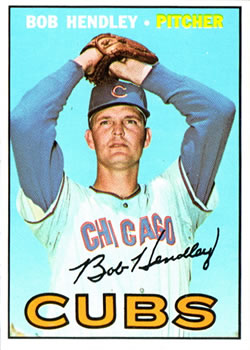
Bob Hendley started for the Cubs. He was not a particularly well-known pitcher. On this night, he pitched the game of his life. Unfortunately for him, it was only the 2nd-best pitched game... in that game.
Neither pitcher allowed a single baserunner until the bottom of the 5th. Cliché Alert: Walks can kill you, especially the leadoff variety. So can errors. Hendley walked Lou Johnson to start the inning. Ron Fairly sacrificed Johnson over to 2nd base. Johnson tried to steal 3rd base. Cub catcher Chris Krug made a bad throw, allowing Johnson to score. Johnson would also get a hit, the Dodgers' only hit: A "Texas Leaguer" double to right field with 2 out in the 7th, but would be stranded.

The Dodgers had 1 run, without a hit contributing to it. That was all Koufax needed: One run. He went to a 3-balls, 2-strikes count on Ernie Banks in the top of the 5th, but struck him out. He went to another full count on Billy Williams in the 7th, but got him to fly out. He struck out the side in the 8th: Ron Santo, Banks, and Byron Browne.

He went into the 9th inning without having allowed a baserunner. Krug led off. He got to a 2-and-2 count, before Koufax struck him out swinging. Joey Amalfitano came up. Koufax struck him out on 3 pitches, the last a swing and a miss.

Cub manager Lou Klein sent Harvey Kuenn up to bad for Hendley, who had pitched 8 innings, allowing 1 run, 1 hit, and 1 walk, striking out 3. Ordinarily, even in that pitching-friendly era of baseball, it would have been enough to win. Not on this night.

Kuenn was 34 years old, and nearing the end of the line. But he was a .303 lifetime hitter, the 1953 American League Rookie of the Year, the 1959 AL batting champion with a .353 average, a 4-time AL leader in hits, a 3-time AL leader in doubles, an All-Star in 8 seasons (including 2 in which there were 2 All-Star Games, so he's sometimes listed as a 10-time All-Star), and, while not really a power hitter, topping off at 12 home runs in 1956, he was certainly capable of driving in runs, topping off at 88 RBIs that same year. He had spent most of his career with the Detroit Tigers, but had helped the San Francisco Giants win the 1962 NL Pennant.

No less than Casey Stengel had said that Kuenn was "one of the most dangerous hitters in baseball. The guy can hurt you a million ways. He has no weakness at the plate that I have ever noticed." However, he was now batting just .217. He had previously made the last out in Koufax's 2nd no-hitter, over the Giants in 1963.

There is no surviving film or videotape of this game, just a recording of Vin Scully's broadcast on radio station KFI, 640 on the AM dial: "It is 9:46 PM. Two and two to Harvey Kuenn. One strike away. Sandy into his windup. Here's the pitch: Swung on and missed, a perfect game!" (Note: That's 9:46 PM Pacific Time, so it was 12:46 AM Eastern Time on September 10.)

The perfect game was also his 4th no-hitter, breaking the record of 3, which had been shared by Larry Corcoran, Cy Young and Bob Feller. Young's 2nd no-hitter was a perfect game.

Koufax threw 113 pitches, 79 of them for strikes. He struck out 14 batters. Home plate umpire Ed Vargo didn't have the chance to make bad calls. His single-game strikeout peak was 18, having done it in 1959 (before he found his control) and 1962. The 14 from this game would be part of a total of 382, a major league record at the time. Nolan Ryan would raise the record to 383 in 1973, a year in which he pitched 2 no-hitters. Koufax's 382 remains a National League record, and a major league record for lefthanded pitchers.

Koufax's 4 no-hitters would be a record until Ryan pitched a 5th in 1981, eventually reaching 7 -- although none of those was a perfect game. In a weird twist of events, Jeff Torborg caught Koufax's last no-hitter, and also caught Ryan's 1st in 1973. That made him the 2nd catcher to catch no-hitters in both leagues, following Gus Triandos. They have since been joined by Darrell Porter, Ron Hassey and Drew Butera.

Torborg also caught Bill Singer's no-hitter for the Dodgers, in 1970, so he was the 1st catcher to catch 3 no-hitters. Jason Varitek now holds the record, with 4.

The Dodgers went on to win the World Series. Koufax would be the story of that Series, in more ways than one.

Harvey Kuenn would go on to manage the Milwaukee Brewers to their 1st Pennant, in 1982. He died in 1988. Ed Vargo died in 2008. Lou Johnson, who got the Dodgers' only hit, died in 2020. Vin Scully died in 2022. Jeff Torborg died early this year. As of September 9, 2025, Sandy Koufax and Bob Hendley are still alive.

*

September 9, 1965 was a Thursday. Future basketball star Dan Majerle was born. This was also the day that both the U.S. Department of Housing and Urban Development and Gatorade made their debuts.

Friday, December 13, 2024

Rocky Colavito, 1933-2024

Athletes become icons in ways both easy and hard to understand. Rocky Colavito became an icon in Cleveland baseball first by his presence, then by his absence.

Rocco Domenico Colavito Jr. was born on August 10, 1933 in The Bronx, New York City. Being Italian-American and from The Bronx, it was easy to become a fan of both the New York Yankees and their best player at the time, Joe DiMaggio.

He attended Theodore Roosevelt High School, on East Fordham Road. Prominent TRHS graduates include baseball player Ben Oglivie; singer Dion DiMucci and all 3 of his backup singers, The Belmonts, named for nearby Belmont Avenue; actors John Garfield, June Allyson and Chazz Palminteri; and rapper French Montana. Not especially prominent, but leading TRHS to the New York City basketball championship in 1924, was George Goldberg, my grandfather. Attending the school, but not graduating, was Kiss guitarist Paul "Ace" Frehley.

Colavito did not graduate, either: He dropped out at age 16, to play semi-pro baseball. But the Yankees weren't interested in him, having Tommy Henrich in right field. Instead, the Cleveland Indians signed him in 1951. He made his major league debut on September 10, 1955. Wearing Number 38, he pinch-ran for Dale Mitchell in the top of the 7th inning, and was singled home by Bob Lemon (a pitcher who started his career as an outfielder, and could still hit), and the Indians beat the Boston Red Sox, 10-7 at Fenway Park in Boston. Ted Williams went 3-for-5 with an RBI. For the Indians, Ralph Kiner hit a home run.

(It was Kiner's 18th home run of the season, and the 369th of his career -- and the last. He retired because of a back injury. Many years later, he and Tim McCarver were broadcasting for the Mets, and a Met player hit his 1st major league home run. McCarver said he didn't remember his first: "You'd think I would, since I didn't hit many!" Kiner said, "I don't remember my last home run, because, at the time, I didn't think it would be my last!")

Colavito became a regular the next season, and finished 2nd in the voting for the American League Rookie of the Year, behind Luis Aparicio of the Chicago White Sox. In 1958, having switched to Number 6, he batted a career-high .303, hit 41 home runs, topped 100 RBIs for the 1st time with 113, and led the AL in slugging percentage with .620. He finished 3rd in the AL Most Valuable Player voting, behind Jackie Jensen of the Boston Red Sox and Bob Turley of the Yankees.

In 1959, Colavito led the AL with 42 home runs, with 111 RBIs, making his 1st All-Star Game. On June 10, he hit a record-tying 4 home runs in a game in an 11-8 Cleveland win over the Baltimore Orioles. The Indians finished 2nd, 5 games behind the White Sox, and finishing 4th in the MVP voting, behind 3 White Sox: Nellie Fox, Aparicio and Early Wynn. It was widely believed that, had the Indians won the Pennant, Colavito would have been named the MVP.

Indians fans loved him. They loved his batting stance, where he seemed to pause his practice swing in such a way that he pointed his bat at the pitcher with both hands. (Decades later, another Cleveland slugger, Jim Thome, would bat lefthanded instead of righthanded like Colavito, and point the bat with one hand.) They loved him for hitting home runs, topping 40 in back-to-back seasons despite Cleveland Municipal Stadium being a pitcher's park. They loved him for having a rifle arm in right field, the best in the AL, at a time when Roberto Clemente had the best in the NL.

"Rocky had tremendous charisma," Herb Score, Cleveland's ill-fated star pitcher, said in an interview many years later. "Fans gravitated to him, not just because he hit home runs. Rocky relished the clutch situations. He didn't always come through, but he wanted to be the guy who took that burden on his back."

Fans began to bring signs reading, "DON'T KNOCK THE ROCK." One man who did knock the rock was Frank Lane, the Indians' general manager. He had been the GM of the White Sox from 1948 to 1955, the St. Louis Cardinals from then until 1957, and the Indians ever since.

He was known as "Trader Lane" and "Frantic Frank" for making so many trades, often for no other purpose than "to shake things up." That is never a good reason to do anything, from trading a baseball player to electing a President. The media loved him, because he was good copy. His players and managers hated him, for breaking up good teams.

On April 17, 1960, just 1 day before the Indians were set to begin a new season, Lane traded Colavito to the Detroit Tigers for Harvey Kuenn. Kuenn had led the AL with a .353 batting average in 1959, and had led it in doubles 2 years in a row. This was the 1st time the defending batting champion and the returning home run leader had been traded for each other, in either League. It remains the last. People wondered why the trade was made at all.

It has been suggested that Lane wanted to get rid of any star on the team, so as to keep salaries down. Kuenn was a good player; no one questioned that. But he wasn't as big a star as Colavito. The effect on the Indians was immediate: After going 89-65 and finishing just 5 games out of 1st place in 1959, they fell to 76-78 in 1960, 21 games behind the Pennant-winning Yankees.

"I loved Cleveland and the Indians," Colavito told The Plain Dealer, Cleveland's leading newspaper, in 2010. "I never wanted to leave."

Lane was fired as Indians GM in 1961. Charlie Finley quickly hired him to be GM of the Kansas City Athletics, and, nearly as quickly, fired him. Apparently, Finley also needed to be the center of attention, and, as the owner, he wasn't going anywhere. (Well, he was, because he wanted to move the team, but he wasn't selling.) Lane would only be a GM once more, with the Milwaukee Brewers in 1971 and 1972, and died in 1981, a baseball pariah. Bobby Bragan, who had managed the Indians in 1958, was the only baseball figure who attended his funeral, and that only because he was personally asked to do so by Commissioner Bowie Kuhn.

Kuenn batted .303 over a major league career that lasted from 1952 to 1966, topping at .353 in his batting title season of 1959. He was AL Rookie of the Year in 1953, led the AL in hits 4 times and doubles 3 times, and 1960 would be his 8th All-Star season. But it would also be his last, at age 29.
Harvey Kuenn

A native of the Milwaukee suburbs, he was with the Milwaukee Braves in 1965, and was the last out, a strikeout, in Sandy Koufax's perfect game for the Dodgers over the Braves. In 1971, Lane hired him as a Brewers coach. He was still on their staff in mid-season in 1982, when George Bamberger was fired as manager, and Kuenn was named manager. The heavy-hitting team had been known as "Bambi's Bombers," and were now "Harvey's Wallbangers." Kuenn led them to their 1st Pennant -- and it remains the franchise's only Pennant -- but they lost the World Series to the St. Louis Cardinals. He died of diabetes in 1988, only 57 years old.

*

The players even switched uniform numbers: With the Indians, Kuenn got Colavito's 6; with the Tigers, whose Number 6 was already worn by future Hall-of-Famer Al Kaline, Colavito got Kuenn's 7. Gabe Paul, then the GM of the Cincinnati Reds, and later the GM of the Indians and the Yankees, said, "The Indians traded a slow guy with power for a slow guy with no power."

At first, the trade worked pretty well for Colavito: Tiger Stadium's short power alleys suited him well, and, in 1961, he had career highs with 45 home runs and 140 RBIs, helping Detroit win 101 games. But that was the year that Roger Maris hit 61 home runs and Mickey Mantle hit 54, leading the Yankees to 109 wins. So not only did his best year as a player, individually and team-wise, not give him the league lead in any major offensive category -- although, in this 1st year of AL expansion, he did become the 1st player to officially play in 163 games, thanks to a rainout and replay -- it didn't even get him as close to the Pennant as he got with the '59 Indians.

The Indians continued to struggle. In 1964, the Tigers traded Colavito to the Kansas City Athletics. The following year, the Indians got him back, in a 3-way deal with the A's and the White Sox that sent Tommie Agee and Tommy John to Chicago.

That season, Colavito had 108 RBIs, good enough to lead the AL. But in 1966, though his home run total went up from 26 to 30, his RBIs dropped to 72, and his batting average fell from .287 to .238. Injuries ended his career 2 years later, with the Yankees, even making a pitching appearance and being credited with the win. He was only 35 years old. He finished with 374 home runs and 9 All-Star berths -- but, oddly, no Gold Gloves. He is one of the best all-around baseball players not in the Hall of Fame.

Terry Pluto, longtime Cleveland newspaper columnist and the man who knows more about the franchise now known as the Cleveland Guardians than anyone, titled his 1994 book about the team's history The Curse of Rocky Colavito, pointing out that, from 1960 to 1993, the Indians never even finished within 10 games of 1st place, except for the strike-split season of 1981. Colavito said he never put a curse on the team: "Frank Lane did."

Pluto has also suggested that the worst trade the franchise has ever made is the one in which they got rid of Colavito. And the 2nd-worst was the one where they got him back. Fans can't blame that one on Frank Lane, who was already gone.

*

Colavito was a broadcaster for the Indians in 1972, 1975 and 1976; and 1st base coach for them in 1973, 1977 and 1978. In 1982 and 1983, he was hitting instructor for the Kansas City Royals. That would be his last job in baseball.

The Indians, now the Cleveland Guardians, named him to their team Hall of Fame. Should he be in the Baseball Hall of Fame? Baseball-Reference.com has a Hall of Fame Monitor, on which a "Likely HOFer" is at 100, the higher, the better. Colavito is at 82. They also have a "Hall of Fame Standards," on which the "Average HOFer" is at 50. Colavito is at 30. Both figures suggest he is well short.

And yet, those figures don't take his defense into account. One thing they did is the fact that Colavito hit 374 home runs. That's more home runs than Yankee Legends Joe DiMaggio, Yogi Berra and Johnny Mize, who are all in; and 4 fewer than Mike Trout currently has, and there are people who believe that Trout, even if he never plays another game, is a sure first-ballot Hall-of-Famer. (He's not. If he never plays another game, he shouldn't get in at all.)

B-R also has "Similarity Scores," in which they list the 10 most statistically similar players, usually weighted by position. But of the 10 players most statistically similar to Colavito, according to them, only 1 is in the Hall, and he only recently got in: Gil Hodges, who also got a boost from being a great fielder. The others: Frank Howard, Roy Sievers, Jermaine Dye, Boog Powell, George Foster, Norm Cash, Greg Luzinski, Jack Clark and Greg Vaughn. Some of those guys are close, but none has a lot of people saying they should be in.
Rocky Colavito married Carmen Perrotti, a professional dancer, in 1954. They had sons Rocky Jr. and Steven, a daughter Marisa, 5 grandchildren and 2 great-grandchildren.

Unfortunately, like Harvey Kueen, he developed diabetes. On August 11, 2015, he had to have his right leg amputated below the knee. He died from complications of diabetes at his home in Bernville, Pennsylvania, outside Reading, this past Tuesday, December 10, 2024, at the age of 91.

He was the last surviving player who had appeared on the TV show Home Run Derby in 1960, appearing in an Indians uniform, since he had not yet been traded to the Tigers. And his death leaves Stan Pawloski as the last surviving teammate of Indians pitching legend Bob Feller.

Monday, March 17, 2014

Milwaukee's All-Time Baseball Team


Milwaukee's baseball history is a bit checkered. The Brewers of the Class AAA American Association won 8 Pennants: 1913, 1914, 1936, 1943, 1944, 1945, 1951, and 1952 -- the last 2 being in their last 2 seasons of existence. Then the Braves arrived from Boston, and they won National League Pennants in 1957 (winning the World Series over the Yankees) and 1958 (losing the Series to the Yankees).

After that, Milwaukee baseball teams have won just 1 Pennant in 55 years. The Braves got close again in 1959 and 1964, but moved to Atlanta after the 1965 season. The Brewers arrived in 1970, but have been to the postseason only 4 times: 1981, when they won the American League Eastern Division in the second half of a strike-forced split-season format and lost the AL Division Series to the Yankees, who had won the first half; 1982, when they won the Pennant but lost the Series to the St. Louis Cardinals; 2008, when, 10 years after switching to the NL, won the Wild Card, but lost the NLDS to the Philadelphia Phillies; and 2011, when they won the NL Central, and beat the Arizona Diamondbacks in the NLDS before losing to the Cardinals in the NLCS.

The Brewers have had some great talents over the years. True, Hank Aaron was at the end of the line, but they had Rollie Fingers at his best, and Robin Yount and Paul Molitor built Hall of Fame careers with them. Prince Fielder began his career with them, and might make the Hall of Fame. But they've never quite been able to put it all together.

Could this team do it?

26. Milwaukee’s All-Time Baseball Team

Players are eligible if they came from anywhere in Wisconsin, except for the westernmost part of the State that's closer to Minneapolis than it is to Milwaukee; and also from Michigan's Upper Peninsula, although I couldn't find any big-league players from there that were good enough.

Sports personalities, yes: Notre Dame football legend George Gipp, former San Francisco 49ers coach Steve Mariucci, Michigan State basketball coach Tom Izzo, and if you count professional wrestling, Lou Thesz; but baseball, no.

Still, this All-Badger State team has a solid infield and a very powerful outfield. And the first 3 starting pitchers are pretty strong. After that... uh...

1B Fred Luderus of Milwaukee. A star for the Phillies in the 1910s, he helped them win their 1st Pennant in 1915. A career OPS+ of 114, he hit 251 doubles despite only having full seasons in the majors between the ages of 25 and 33, although he remained a productive player in the high minors until he was 39.

2B Jim Gantner of Fond du Lac. A graduate of the University of Wisconsin at Oshkosh, he was the starting 2nd baseman for the only Brewer Pennant-winner in 1982, and in that World Series he batted .333 with a .943 OPS. He never batted .300, but batted at least .280 6 times, and hit 262 doubles. He played over 1,400 games at 2B and over 300 at 3B. He pitched an inning for the Brewers in a 1979 game, allowing 2 hits but no walks and no runs.

SS Tony Kubek of Bay View H.S. in Milwaukee. He received the Ford Frick Award, equivalent to election to the Hall of Fame as a broadcaster, for his work with NBC on the Saturday Game of the Week and on World Series broadcasts, most notably the 1975 Cincinnati-Boston epic.

But he was a pretty good player, too. He was the 1957 AL Rookie of the Year, and in both that season and 1958 he returned home to play the Braves in the World Series, losing in '57 but winning in '58. He made 3 All-Star teams, formed a superb double-play combination with Bobby Richardson, and hit 178 doubles and 30 triples despite a back injury ending his career when he was just 29.

Unfortunately, his playing career is probably best known for a ground ball that hit a pebble and hit him in the throat in Game 7 of the 1960 World Series, helping the Pittsburgh Pirates beat the Yankees. But he did help the Yankees win the Series in 1958, 1961 and 1962.

3B Lafayette "Lave" Cross of Milwaukee. This guy goes back a ways, all the way to 1887, the 1st term of President Grover Cleveland. A converted catcher, he starred for 3 Philadelphia teams: The Athletics of the American Association (a major league that ran from 1882 to 1891, not the minor league that would have the current Brewers' predecessors), the Phillies in the NL, and the Athletics in the AL (no connection to the AA Athletics except by name).

A career .292 hitter, he had 2,651 hits, 412 of them doubles in the really dead-ball era, and stole 303 bases. Twice had an OPS+ of 132, and 2 others times over 120. He helped the Brooklyn Dodgers win the NL Pennant in 1900 (technically, the last "World Championship" the franchise would win for 55 years) and the A's win AL Pennants in 1902 and 1905.

Honorable Mention to Ken Keltner of Boy's Technical H.S. in Milwaukee. A 7-time All-Star with the Cleveland Indians, he had an OPS+ of 112, 308 doubles, and 2 100-RBI seasons. But he's best known as a good fielder, who made 2 stirring stops to help the Indians halt Joe DiMaggio’s 56-game hitting streak on July 17, 1941.

He nearly helped the Indians win the Pennant in 1940, and had his best season for their World Champions of 1948, batting .297 with 31 homers and 119 RBI. But injuries made that his last full season, and 3 years later he was retired. He spent much of the rest of his life as a scout, and was inducted into the Indians' team Hall of Fame.

LF Al Simmons of Milwaukee. The State of Wisconsin is loaded at left field, with Davy Jones of Cambria (the 1907-09 Detroit dynasty), Morrie Arnovich of Superior (a 1940s All-Star), Andy Pafko of Boyceville (who won Pennants in the 1950s both with the Dodgers and with his home-State Braves), and even Harvey Kuenn played a lot of left field.

But I’m going with Aloys Harry Szymanski, known as Bucketfoot Al for the way he stepped toward 3rd base when he swung. He swung very well: .334 batting average, 132 OPS+, 2,927 hits – just 73 more and he would have been in the 3,000 Hit Club and would probably be much better-remembered today. Those were the most hits of any righthanded hitter in AL history until surpassed by Al Kaline. Of those 2,927, 539 were doubles and 307 were homers – that total ranked him 5th on the all-time list when he retired, behind Babe Ruth, A’s teammate Jimmie Foxx, Mel Ott and Lou Gehrig. He had 1,827 RBI.

He helped the Philadelphia Athletics return to glory, winning the World Series in 1929 and '30 and 107 games and the Pennant before losing the Series in '31. Here’s his averages for 1925 (age 23) through 1931 (29): .387, .341, .392, .351, .365, .381 and .390 (the last 2 winning the AL batting title). He had at least 100 RBI in each of his 1st 11 seasons, getting 157 to lead the AL in '29, 165 in '30 and 151 in '32. (Incredibly, in '30 he lost the RBI title to Gehrig with 174, and in '32 to Foxx with 169.)

After the 1932 season, needing cash after having lost all his money in the stock market and the A's successes not paying for themselves, Connie Mack sold Simmons to the Chicago White Sox. As a South Sider, beginning with the next season, he started in the 1st 3 All-Star Games. He began to decline and then bounced around a bit, before returning to the A's as a player-coach under Mack. He died of a heart attack shortly after turning 54, in 1956.

He was elected to the Baseball Hall of Fame and the Philadelphia Baseball Wall of Fame. (His plaque there, and those of the other A's honored, were moved from Veterans Stadium to a storefront run by the Philadelphia Athletics Historical Society in nearby Hatboro, and are now housed at Spike's Trophies in Northeast Philadelphia.) However, the A's, out of Philly since 1954, have not retired a number for him. (He wore several, but in '31 when the A's started wearing numbers, he wore 7.)

On August 19, 1996, to highlight an article about the 1929 A's, suggested that they were the greatest baseball team ever, Sports Illustrated put Simmons on the cover, rather than Mack or fellow Hall-of-Famers Foxx, Mickey Cochrane or Lefty Grove. Three years later, The Sporting News named him Number 43 on their list of the 100 Greatest Baseball Players.

CF Clarence "Ginger" Beaumont of Rochester. Another old-old-old-timer, this graduate of Wisconsin's Beloit College helped the Pittsburgh Pirates win the NL Pennant in 1901, '02 and '03. In 1902 he won the NL batting title, and in 1903 he led the League in games played, at-bats, hits, total bases and runs. His career batting average was .311, OPS+ 123. Unfortunately, the Pirates had already traded him by the time they won the 1909 World Series, but in his last season, 1910 (he was only 33), he helped the Cubs win a Pennant.

RF Harvey Kuenn of West Allis. He actually played more shortstop than any other position, but right field was his 2nd-most frequent position, and I needed someone here. He was AL Rookie of the Year in 1953, and made the All-Star team in each of his 1st 8 full seasons. He led the AL in hits in 1953, '54, '56 and '59, and in doubles in '55, '58 and '59.

He won the '59 batting title with a .353 average, but just before the next season, the Detroit Tigers traded him to the Indians for the previous season's home-run leader, Rocky Colavito. The trade worked out much better for the Tigers, as Cleveland fans, loving the Rock, booed Kuenn for no good reason: He didn't hit for much power, but he did bat .308 that season. The Indians traded him to the San Francisco Giants, and he helped them win the 1962 Pennant.

His lifetime batting average was .303, with 2,092 hits, 356 of them doubles, and an OPS+ of 108. He is also the manager of this team, having taken the Brewers – nicknamed "Harvey's Wallbangers" for their power hitting – to that 1982 Pennant, still the only Pennant won by a Milwaukee team since the Ike Age. His son Harvey Kuenn Jr. also played in the Brewers’ system.

C Damian Miller of West Salem. He had a relatively short career, but he did make the NL All-Star Team in 2002. I selected him because of his fielding – and because the next-best choice is Charlie Ganzel, who won 5 NL Pennants from 1887 to 1897, but was not substantially better, stat-wise. Miller helped the Diamondbacks reach 3 postseasons (including the 2001 World Championship) and the Chicago Cubs 1 (2003, nearly winning the Pennant).

SP Charles “Kid” Nichols of Madison. This is a tough choice, geographically speaking, because, while he's listed as having been born in Wisconsin's State Capital, he's mentioned on Wikipedia as having moved to Kansas City as a child, and Baseball-Reference.com lists him as having gone to Queen Elizabeth High School in Surrey, British Columbia, Canada. (Which Queen Elizabeth? He would have graduated in 1887, so not Elizabeth II, nor her mother the wife/widow of King George VI.) Anyway, I can't find a source that shows where he learned to play baseball. But the Kansas City team that you'll eventually see is absolutely loaded, pitching-wise, so I'm keeping Nichols with Milwaukee.

There's no doubting why he's in the Hall of Fame: 361 wins against just 208 losses from 1890 to 1906, including 7 times in 8 years winning at least 30 – both before and after the pitching distance moved from 50 feet in 1892 to 60 feet, 6 inches in 1893, so it didn't affect him. He was the youngest pitcher ever to crack the 300-win plateau, having notched his 300th before his 31st birthday. He won an additional 103 games in the high minors, for 464 – he could have ended up 2nd on the all-time wins list behind Cy Young, his only rival for the title of Pitcher of the Decade for the 1890s.

He had a career ERA of 2.96, an ERA+ of 140, and a WHIP of 1.224. He won Pennants with the Boston Beaneaters in 1891, '92, '93, '97 and '98, and was probably the best pitcher that the franchise eventually known as the Braves had until Warren Spahn, to say nothing of Greg Maddux.

SP Adrian "Addie" Joss of Beaver Dam. From 1902 to 1910, he was 160-97, ERA 1.89 (2nd-lowest ever), WHIP 0.968 (lowest ever). He pitched a perfect game in 1908. He won 51 games in 2 years for the Cleveland Indians in 1907 and '08. Absolutely sensational. After just 9 seasons, he was 31, and he should have been just getting started.

But just before the 1911 season, he died of spinal meningitis. Today's medicine could have saved him. It wasn't until 1978 that the Hall of Fame waived its 10-season requirement for him. After all, it wasn't his fault: If he'd been stricken just 1 week later, he would have pitched at least once in a 10th season and qualified.

SP Burleigh Grimes of Emerald. In 1920, the spitball and other doctorings of the baseball were banned, but 17 pitchers were allowed to continue using it for the rest of their careers. Grimes was the last to use the spitter legally, in 1934. He was also the last survivor of those 17, living until 1985.

He won 270 games and lost 212. He had 5 20-win seasons, and won Pennants with the Brooklyn Dodgers in 1920, the Cardinals in 1931, and the Cubs in 1932 -- making him one of the few players to win Pennants with both the Redbirds and their Chicago arch-rivals. He is in the Hall of Fame.

SP Dick Bosman of Kenosha. He was not up to the level of the 1st 3; in fact, he was just 82-85 for his career. But in 1969, pitching for the Washington Senators, he went 14-5 and led the AL with a 2.19 ERA. He went 16-12 in 1970, but the next season, the Senators' last before moving to become the Texas Rangers, his run support vanished and he was only 12-16.

On September 30, 1971, he started the last game the Senators ever played, against the Yankees at Robert F. Kennedy Stadium, and stood to be the winning pitcher as the Senators led 7-5 with 1 out left in the 9th, before the angry fans stormed the field and the game was forfeited to the Yankees. He also started the team’s first game as the Rangers. He had only 1 more winning season and was done at 32. He has since gone on to become one of baseball’s best pitching coaches.

SP Shane Rawley of Racine. Don't get me started: This one hurts. He was a journeyman for the Seattle Mariners, but in 1982 the Yankees traded for him, and he went 27-28 for the Pinstripes before being traded to the Phillies for Marty Bystrom and Keith Hughes on June 30, 1984. Stupid trade! Why would the Phillies give up a proven reliever like Bystrom, a key cog in their 1980 World Championship, for a .500 pitcher like Rawley?

Guess what: It was the Yankees, not the Phillies, who were stupid. Bystrom made just 15 appearances for the Yankees, was awful and injured, and never pitched after age 26. Rawley went 13-8 in '85, 11-7 in '86, and 17-11 in '87. Think the Yankees couldn't have used his arm in those seasons?

He fell apart in '88, and was done a year later at 33, finishing 111-118 – but at a time when he could have helped the Yankees a lot, he was stuck on a poor Phils team. That trade didn't work out for anybody, but George Steinbrenner and "my baseball people," as George called them, really screwed themselves.

RP Rinold "Ryne" Duren of Cazenovia. He was known for his "coke-bottle glasses" and his wild warm-up tosses. He was one of those guys who could throw hard, but you never knew where it was going to go. He was one of those players the Yankees of the 1950s always seemed to get from the Kansas City Athletics, in his case in 1958. That year, he led the AL with 20 saves and had a 2.02 ERA and a 1.097 WHIP. It was his only good year in a Yankee uniform, but it meant a World Championship.

It was injuries and alcohol that did him in, although, years later, he beat the booze. In 1982, I was watching the Yankees' Old-Timers Game on WPIX-Channel 11, and Joe Pepitone stepped in to bat against Duren. Mel Allen said, "Don't worry, Joe. He won't hit you... hard!" Legend has it that Ryne Sandberg was named after Ryne Duren.

Honorable Mention to Jerry Augustine of Kewaunee and the University of Wisconsin at La Crosse. A lefty complement to the righthanded Duren, Augustine played his entire career for his home-State Brewers. He won 25 games for the Brewers in 1977 and '78 as they became a respectable team, then was converted into a reliever. He didn't help much down the stretch in 1982, and did not appear in the World Series. But he did help a terrible team become a good one.

Finally, add to this team, Honorable Mention to Bob Uecker, of Technical H.S. in Milwaukee, the 1st Badger Stater to play for a Wisconsin MLB team, with the Braves in 1962 and '63, and was the backup catcher on the 1964 World Champion St. Louis Cardinals, and has been the voice of the Brewers almost since their inception. He also starred as family patriarch George Owens on the ABC sitcom Mr. Belvedere, and in a hilarious series of commercials for Miller Lite beer.

With his penchant for comedy, intentional and otherwise, he titled his autobiography Catcher In the Wry. Of course, if you ever saw him hit, you'd probably use his home-run call on him: "Get up! Get up! Get outta here!"

Tuesday, September 28, 2010

Milwaukee's All-Time Baseball Team

The Mets are playing out the string. So are the Milwaukee Brewers.

Neither of these facts is surprising: Since April 1970, when the Brewers made their debut, these 2 teams have made the postseason a grand total of 9 times in those 41 seasons.

The surprising part is that the Brewers are now, since 1998, in the National League. True, the Braves were in both the NL and Milwaukee from 1953 to 1965 (and had a bit of a rivalry with the Brooklyn Dodgers from 1953 to 1957 and the L.A. edition of the Bums thereafter), but it still doesn’t make sense to see the Brewers on the Mets’ schedule.

They've never faced each other in the postseason – although the Yankees and Brewers played each other in the strike-forced 1981 AL East Championship Series. The Yanks took the 1st 2 at Milwaukee County Stadium, then the Brew Crew took the next 2 at the old Yankee Stadium.

George Steinbrenner then went into the Yankee locker room and reamed them out, spewing profanities left and right. Bobby Murcer, trying to play both the veteran leader and the Christian gentleman, said, "Now is not the time, George, now is not the time." George said, "It is the time, goddamnit!" And did another 30 seconds of that before Rick Cerone stood up and said, "Fuck you, George!" and stormed out of the room. That shocked George and everyone else, and the next night, led by back-to-back 4th-inning homers by Reggie Jackson and Oscar Gamble, and another by, appropriately, Cerone, the Yanks won the deciding Game 5, 7-3.

The closest the Mets and Brewers have ever come to meeting in the postseason was in 2008, when a Playoff matchup was possible going into the final day, but the Mets completed yet another collapse for the NL East, and the Brewers edged the Mets for the NL Wild Card. It was also possible in 2007, when the Mets had their previous NL East collapse and the Brewers finished only 2 behind the Chicago Cubs for the NL Central.

In 1987, the Brewers were in the AL East race most of the way, before stalling at 91 wins and finishing 7 games behind the Detroit Tigers, while the Mets just missed in the NL East, 3 behind the St. Louis Cardinals. It was the Cardinals who beat the Brewers in their only World Series to date, a 7-game thriller in 1982.

Milwaukee's All-Time Baseball Team

This is limited to just 1 State, Wisconsin, and not even all of that: Westernmost Wisconsin, the Eau Claire area, is considerably closer to Minneapolis than to Milwaukee. (Eau Claire itself: 92 miles to Minneapolis, 246 miles to Milwaukee.) Theoretically, you could include the Upper Peninsula of Michigan, but no player from that region was good enough to make this team.

Which means that, despite the relatively small region, Milwaukee has a pretty decent all-time baseball team. A solid infield. A very powerful outfield. And the 1st 3 starters are pretty strong. After that, well, I said, "pretty decent," not "great."

1B Fred Luderus of Milwaukee. A star for the Phillies in the 1910s, he helped them win their 1st Pennant in 1915. A career OPS+ of 114, he hit 251 doubles despite only having full seasons in the majors between the ages of 25 and 33, although he remained a productive player in the high minors until he was 39.

2B Jim Gantner of Fond du Lac. A graduate of the University of Wisconsin at Oshkosh, he was the starter for the only Brewer Pennant-winner in 1982, and in that World Series he batted .333 with a .943 OPS. He never batted .300 but batted at least .280 6 times, and hit 262 doubles. He played over 1,400 games at 2B and over 300 at 3B. He pitched an inning for the Brewers in a 1979 game, allowing 2 hits but no walks and no runs.

SS Tony Kubek of Bay View High School in Milwaukee. He recently received the Ford Frick Award, equivalent to election to the Hall of Fame as a broadcaster, for his work with NBC on the Saturday Game of the Week and on World Series broadcasts, most notably the 1975 Cincinnati-Boston epic.

But he was a pretty good player, too. He was the 1957 AL Rookie of the Year, and in both that season and 1958 he returned home to play the Braves in the World Series, losing in '57 but winning in '58. He made 3 All-Star teams, formed a superb double-play combination with Bobby Richardson, and hit 178 doubles and 30 triples despite a back injury ending his career when he was just 29. 

He's probably best known for a ground ball that hit a pebble and hit him in the throat in Game 7 of the 1960 World Series, helping the Pittsburgh Pirates beat the Yankees. But he did help the Yankees win the Series in 1958, 1961 and 1962.

3B Lafayette "Lave" Cross of Milwaukee. This guy goes back a ways, all the way to 1887, the 1st term of President Grover Cleveland. A converted catcher, he starred for 3 Philadelphia teams: The Athletics of the American Association, the Phillies in the NL, and the Athletics in the AL (no connection to the AA team except by name).

A career .292 hitter, he had 2,651 hits, 412 of them doubles in the really dead-ball era, and stole 303 bases. Twice had an OPS+ of 132, and 2 others times over 120. He helped the Brooklyn Dodgers win the NL Pennant in 1900 (technically, the last "World Championship" the franchise would win for 55 years) and the A's win AL Pennants in 1902 and 1905.

Honorable Mention to Ken Keltner of Boy's Technical High School in Milwaukee. A 7-time All-Star with the Cleveland Indians, he had an OPS+ of 112, 308 doubles, and 2 100-RBI seasons. But he's best known as a good fielder, who made 2 stirring stops to help the Indians halt Joe DiMaggio’s 56-game hitting streak on July 17, 1941.

He nearly helped the Indians win the Pennant in 1940, and had his best season for their World Champions of 1948, batting .297 with 31 homers and 119 RBI. But injuries made that his last full season, and 3 years later he was retired. He spent much of the rest of his life as a scout, and was inducted into the Indians' team Hall of Fame.

LF Al Simmons of Milwaukee. The State of Wisconsin is loaded at left field, with Davy Jones of Cambria (the 1907-09 Detroit dynasty), Morrie Arnovich of Superior (a 1940s All-Star), Andy Pafko of Boyceville (won Pennants in the 1950s both with the Dodgers and with his home-State Braves), and even Harvey Kuenn played a lot of left field.

But I'm going with Aloys Harry Szymanski, known as Bucketfoot Al for the way he stepped toward 3rd base when he swung. He swung very well: .334 batting average, 132 OPS+, 2,927 hits – just 73 more, and had he been in the 3,000 Hit Club, he would be much better-remembered today.

Those were the most hits of any righthanded hitter in AL history until surpassed by Al Kaline. Of those 2,927, 539 were doubles and 307 were homers – that total ranked him 5th on the all-time list when he retired, behind Babe Ruth, his A's teammate Jimmie Foxx, Mel Ott and Lou Gehrig. He had 1,827 RBI.

He helped the Philadelphia Athletics return to glory, winning the World Series in 1929 and '30 and 107 games and the Pennant before losing the Series in '31. Here's his averages for 1925 (age 23) through 1931 (29): .387, .341, .392, .351, .365, .381 and .390 (the last 2 winning the AL batting title). He had at least 100 RBI in each of his 1st 11 seasons, getting 157 to lead the AL in '29, 165 in '30 and 151 in '32. (Incredibly, in '30 he lost the RBI title to Gehrig with 174, and in '32 to Foxx with 169.)

After the 1932 season, needing cash after having lost all his money in the stock market and the A's successes not paying for themselves, Connie Mack sold Simmons to the Chicago White Sox. As a South Sider, beginning with the next season, he started in the 1st 3 All-Star Games. He began to decline and then bounced around a bit, before returning to the A's as a player-coach under Mack.

He died of a heart attack shortly after turning 54, in 1956. He is in the Hall of Fame and on the Philadelphia Baseball Wall of Fame (his plaque having been moved from Veterans Stadium to the Philadelphia Athletics Historical Society house in nearby Hatboro). However, the A's, out of Philly since 1954, have not retired a number for him. (He wore several, but in '31 when the A's started wearing numbers, he wore 7.)

On August 19, 1996, to highlight an article about the 1929 A's, suggesting that they, not the 1927 Yankees, were the greatest baseball team ever, Sports Illustrated put Simmons on the cover, rather than Mack or fellow Hall-of-Famers Foxx, Mickey Cochrane or Lefty Grove. Three years later, The Sporting News named him Number 43 on their list of the 100 Greatest Baseball Players.

CF Clarence "Ginger" Beaumont of Rochester. Another old-old-old-timer, this graduate of Wisconsin's Beloit College helped the Pittsburgh Pirates win the NL Pennant in 1901, '02 and '03. In 1902, he won the NL batting title, and in 1903 he led the League in games, at-bats, hits, total bases and runs. His career batting average was .311, OPS+ 123. Unfortunately, the Pirates had already traded him by the time they won the 1909 World Series, but in his last season, 1910 (he was only 33), he helped the Cubs win a Pennant.

RF Harvey Kuenn of West Allis. He actually played more shortstop than any other position, but right field was his 2nd-most frequent position, and I needed someone here. He was AL Rookie of the Year in 1953, and made the All-Star team in his 1st 8 full seasons. He led the AL in hits in 1953, '54, '56 and '59, and in doubles in '55, '58 and '59.

He won the '59 batting title with a .353 average, but just before the next season, the Detroit Tigers traded him to the Indians for the previous season's home-run leader, Rocky Colavito. The trade worked out much better for the Tigers, as Cleveland fans, loving the Rock, booed Kuenn for no good reason. He didn't hit for much power, but he did bat .308 that season. The Indians traded him to the San Francisco Giants, and he helped them win the 1962 Pennant. His lifetime batting average was .303, with 2,092 hits, 356 of them doubles, and an OPS+ of 108.

He is also the manager of this team, having taken the Brewers – nicknamed "Harvey's Wallbangers" for their power hitting – to that 1982 Pennant, still the only Pennant won by a Milwaukee team since the Ike Age. His son Harvey Kuenn Jr. also played in the Brewers' system.

C Damian Miller of West Salem. He had a relatively short career, but he did make the NL All-Star Team in 2002. He is here for his fielding – and because the next-best choice is Charlie Ganzel, who won 5 NL Pennants from 1887 to 1897, but was not substantially better, stat-wise. Miller helped the Arizona Diamondbacks reach 3 postseasons (including the 2001 World Championship) and the Chicago Cubs 1 (2003, nearly winning the Pennant).

SP Charles "Kid" Nichols of Madison. This is a tough choice, geographically speaking, because he's listed as having gone to Queen Elizabeth High School in Surrey, British Columbia, Canada. (Which Queen Elizabeth? He would have graduated in 1887, so not Elizabeth II, nor her mother the wife/widow of King George VI.)

But there's no doubting why he's in the Hall of Fame: 361 wins against just 208 losses from 1890 to 1906, including 7 times in 8 years winning at least 30 – both before and after the pitching distance moved from 50 feet in 1892 to 60 feet, 6 inches in 1893, so that didn't affect him much. He won an additional 103 games in the high minors, for a total of 464 – he could have ended up 2nd on the all-time wins list behind Cy Young, his only rival for the title of Pitcher of the Decade for the 1890s. 

His career ERA was 2.96, ERA+ 140, WHIP 1.224. He won Pennants with the Boston Beaneaters in 1891, '92, '93, '97 and '98. He was probably the best pitcher the franchise now known as the Atlanta Braves had until Warren Spahn, to say nothing of Greg Maddux.

SP Adrian "Addie" Joss of Beaver Dam. From 1902 to 1910, he was 160-97, ERA 1.89 (2nd-lowest ever), WHIP 0.968 (lowest ever). He pitched a perfect game in 1908. He won 51 games in 2 years for the Cleveland Indians in 1907 and '08. He was absolutely sensational. After just 9 seasons, he was 31, and should have been just getting started.

But just before the 1911 season, he died of spinal meningitis. Today's medicine could have saved him. It wasn't until 1978 that the Hall of Fame waived its 10-season requirement for him. After all, it wasn't his fault" If he'd been stricken just 1 week, later he would have pitched at least once in the 10th season, and qualified.

SP Burleigh Grimes of Emerald. In 1920, the spitball and other doctorings of the baseball were banned, but 17 pitchers were allowed to continue using it for the rest of their careers. Grimes was the last to use the spitter legally, in 1934.

Before that, however, he was fantastic, winning 270 games and losing 212. He had 5 20-win seasons, and won Pennants with the Brooklyn Dodgers in 1920, the St. Louis Cardinals in 1931, and the Chicago Cubs in 1932. He is in the Hall of Fame.

SP Dick Bosman of Kenosha. He's not up to the level of the 1st 3; in fact, he was just 82-85 for his career. But in 1969, pitching for the Washington Senators, he went 14-5 and led the AL with a 2.19 ERA. He went 16-12 in 1970, but the next season, the Senators' last before moving to become the Texas Rangers, his run support vanished and he was only 12-16.

On September 30, 1971, he started the last game the Senators ever played, against the Yankees at Robert F. Kennedy Stadium, and stood to be the winning pitcher as the Senators led 7-5 with 1 out left in the 9th, before the angry fans stormed the field and the game was forfeited to the Yankees. He also started the team's 1st game as the Rangers. He had only 1 more winning season and was done at 32. He has since gone on to become one of baseball’s best pitching coaches.

SP Shane Rawley of Racine. He was a journeyman for the Seattle Mariners, but in 1982 the Yankees traded for him, and he went 27-28 for the Pinstripes before being traded to the Phillies for Marty Bystrom and Keith Hughes on June 30, 1984. Stupid trade! Why would you give up a proven reliever like Bystrom for a .500 pitcher like Rawley?

Guess what, it was the Yankees, not the Phillies, who were stupid. Bystrom made 15 appearances for the Yankees, was awful and injured, and never pitched after age 26. Rawley went 13-8 in '85, 11-7 in '86, and 17-11 in '87. Don't get me started: This one hurts. Do you think the Yankees couldn't have used his arm in those seasons? He fell apart in '88, and was done a year later at 33, finishing 111-118 – but at a time when he could have helped the Yankees a lot, he was stuck on a poor Phils team. That trade didn't work out for anybody.

RP Rinold "Ryne" Duren of Cazenovia. He was known for his "coke-bottle glasses" and his wild warm-up tosses. He was one of those guys who could throw hard, but you never knew where it was going to go.

One of those players the Yankees of the 1950s always seemed to get from the Kansas City Athletics right when they needed one, in 1958 he led the AL with 20 saves and had a 2.02 ERA and a 1.097 WHIP. It was his only good year in a Yankee uniform, but it meant a World Championship. It was injury and alcohol that did him in, and years later he beat the booze.

In 1982, I was watching the Yankees' Old-Timers Game on WPIX-Channel 11, and Joe Pepitone stepped in to bat against Duren. Mel Allen was broadcasting from a table behind home plate, piped into the public-address system, and said, "Don't worry, Joe. He won't hit you... hard!" Legend has it that Ryne Sandberg was named after Ryne Duren.

Honorable Mention to Jerry Augustine of Kewaunee and the University of Wisconsin at La Crosse. A lefty complement to the righthanded Duren, Augustine played his entire career for his home-State Brewers. He won 25 games for the Brewers in 1977 and '78 as they became a respectable team, then was converted into a reliever. He didn't help much down the stretch in 1982, and did not appear in the World Series. But he did help a terrible team become a good one.

Finally, add to this team, Honorable Mention to Bob Uecker, of Technical High School in Milwaukee, the 1st Badger Stater to play for a Wisconsin MLB team, with the Braves in 1962 and '63, and was the backup catcher on the 1964 World Champion St. Louis Cardinals, and has been the voice of the Brewers almost since their inception.

He also starred as family patriarch George Owens on the ABC sitcom Mr. Belvedere, and in a hilarious series of commercials for Miller Lite beer. With his penchant for comedy, intentional and otherwise, he titled his autobiography Catcher In the Wry. Of course, if you ever saw him try to hit, you'd probably use his home-run call on him: "Get up! Get up! Get outta here!"