Showing posts with label greasy neale. Show all posts

Tuesday, September 16, 2025

September 16, 1950: The Cleveland Browns Announce Their Presence

Marion Motley carrying the ball -- painted white,
to be more visible in a night game. This did not catch on.

September 16, 1950, 75 years ago: The National Football League features a season-opening game between their defending Champions and those of a newly-defunct rival league.

The game was played at the 105,000-seat Municipal Stadium in South Philadelphia. Usually playing their home games at Shibe Park in North Philadelphia, the Philadelphia Eagles had played home games at Municipal Stadium from 1936 to 1939, and select games thereafter.
Municipal Stadium, by this point named John F. Kennedy Stadium.
Just to the north was The Spectrum; to the north of that, Veterans Stadium.

This game was, as soccer fans would call it, a "Charity Shield" or "Super Cup" game: The 2-time defending NFL Champion Eagles vs. the Cleveland Browns, 4-time titlists in the All-America Football Conference. The Browns were 47-4-3 over the AAFC's 4-season history; the Eagles, 22-3-1 over the last 2 years, thanks to a 5-2 alignment that was the 1st defensive unit to have a memorable nickname: Before San Diego, Detroit and Los Angeles had lines that became known as the Fearsome Foursome, Philly had the Suicide Seven.

Some people then called it "The Game of the Century," and some now think of as an unofficial "first Super Bowl." Such a name is ironic, since it took the Eagles until 2018 to win an NFL Championship in the Super Bowl era, and, through the 2024 season, the Browns haven't even been to a Super Bowl yet.

Playing on a Saturday night -- making it, sort of, not just "the 1st Super Bowl" but "the 1st Monday Night Football game" -- in front of 71,237 fans, still the largest crowd ever to watch a professional football game in Pennsylvania (and nearly double the capacity of Shibe Park, which really limited the Eagles' attendance), the Browns put on a show.

Paul Brown, having mastered his craft at every level below the NFL -- at Massillon High School outside Cleveland, at Ohio State University where he won the 1942 National Championship, and with the Browns in the AAFC -- was the greatest offensive mind the game of football had yet seen. With Otto Graham as his quarterback, passing to Dante Lavelli, Mac Speedie and Dub Jones, and with the acceptance of black players like fullback Marion Motley and guard Bill Willis, he had won those 4 AAFC titles.
Paul Brown

(The Browns were named for Paul Brown. The story that Brown, or the original owner, Arthur B. McBride, wanted to name the team the Cleveland Brown Bombers in honor of Joe Louis, then the Heavyweight Champion of the World, is a myth. McBride had run a fan contest to determine the name, and the winner was "Cleveland Panthers," who played from 1919 to 1933, including in the 1st American Football League in 1926, but Paul Brown called them a failed team that he wanted no part of. So, over Brown's objection, McBride named them the Browns.)

And that Saturday night in South Philly, Brown let his team put on a show. The Eagles took an early lead on a field goal by Cliff Patton. But Graham threw freely, and the Browns scored the next 4 touchdowns: A 59-yard pass from Graham to Jones, a 26-yard pass from Graham to Lavelli, a 13-yard pass from Graham to Speedie (that was his real name: He was born Mac Curtis Speedie), and a 1-yard run by Graham.

It was 7-3 Browns at the end of the 1st quarter, 14-3 Browns at the half, 21-3 Browns after 3 quarters, and 28-3 Browns before Bill Mackrides threw a touchdown pass to Pete Pihos to get the Eagles into double figures. Late in the game, Rex Bumgardner ran for a touchdown, making the final score Browns 35, Eagles 10. To borrow a line from Bull Durham, a movie from another sport, the Browns had announced their presence with authority.

The Eagles actually had more 1st downs, 24-23; more rushing yards, 148-141; and fewer penalties, 3 for 45 yards to the Browns' 12 for 98 yards. And there were plenty of turnovers on both sides: 5 for Philadelphia, 4 for Cleveland.

But Graham completed 21 of 38 passes for 346 yards, a display that NFL fans, even with Sid Luckman of the Chicago Bears and Sammy Baugh of the Washington Redskins still active, simply weren't used to. It forced the Eagles into the air: Between them, Mackrides and Tommy Thompson attempted 32 passes, but only completed 11.
Until 1951, the Browns wore white helmets,
and Otto Graham wore Number 60. After that,
he switched to 14, and the Browns have worn
orange helmets ever since.

The performance stunned football fans all over the nation. Eagle coach Earle "Greasy" Neale was contemptuous of the aerial assault, calling the Browns "a basketball team." When the teams met again on December 3 at Cleveland Municipal Stadium, Brown told Graham not to throw a single pass, just to make a point, and he didn't. And the Browns didn't score a single offensive touchdown. They didn't need to: Warren Lahr intercepted a Thompson pass, and returned it 30 yards for a touchdown, while Lou Groza added 2 field goals, and the Browns won, 13-7. Brown had a great defense, too.

The Eagles never recovered, going 6-6, and didn't reach the NFL Championship Game again for 10 years. The Browns won the NFL title that year, and appeared in 7 title games in 8 years, winning 3: 1950, 1954 and 1955. Brown and 8 of his 1950 Browns would be elected to the Pro Football Hall of Fame: Graham, Motley, Groza, Lavelli, Speedie, Willis, end Len Ford and center Frank Gatski.

Paul Brown would be fired by new team owner Art Modell after the 1962 season. Cleveland fans treated this as the 1st time Modell aggrieved them, and it would be far from the last, or the worst. In 1968, Brown founded a team in the American Football League, the Cincinnati Bengals. He tried to remake the team in the old Browns' image, using the same colors and the same offense. They even had the same initials, although there had been a previous team with the Cincinnati Bengals name, which played in the 2nd (1936-37) and 3rd (1940-41) leagues with the AFL name.

Don McCafferty (1970 NFL Champion Colts) coached under him at Ohio State. Among his coaches with the Browns were Weeb Ewbank (1958 and '59 NFL Champion Baltimore Colts, 1968 World Champion New York Jets), Blanton Collier (his replacement as Brown coach, 1964 NFL Champions), Lou Saban (1964 and '65 AFL Champion Buffalo Bills) and Don Shula (1968 NFL Champion Colts, 1972 and '73 NFL Champion Miami Dolphins). Among his coaches with the Bengals were Bill Walsh and Sam Wyche (who, among their other achievements, opposed each other in Super Bowl XXIII in 1989).

Take it to the next level, and his "3rd generation" coaches include Red Miller (1977 AFC Champion Denver Broncos), Howard Schenllenberger (1983 NCAA Champion Miami), Dick MacPherson (undefeated season with Syracuse in 1987), George Seifert (1990 and '94 NFL Champion San Francisco 49ers), Paul Holmgren (1996 NFL Champion Green Bay Packers, 2005 AFC Champion Seattle Seahawks), Marty Schottenheimer (4 AFC Championship Games, although he lost them all), Tony Dungy (2006 NFL Champion Indianapolis Colts), Doug Pederson (2017 NFL Champion Philadelphia Eagles) and Andy Reid (2019, '22 and '23 NFL Champion Kansas City Chiefs).

Through Schottenheimer, his "coaching tree" also includes Bill Cowher (2005 NFL Champion Pittsburgh Steelers), Lovie Smith (2006 NFC Champion Chicago Bears), Mike Tomlin and Ken Whisehunt (who, among their other achievements, opposed each other in Super Bowl XLIII in 2009), Mike McCarthy (2010 NFL Champion Packers), Gary Kubiak (2015 NFL Champion Broncos) and Bruce Arians (2020 NFL Champion Tampa Bay Buccaneers). So Brown's NFL legacy spans that much: 1950 to 2023, including 24 of the 1st 59 Super Bowls, and 27 of the last 75 NFL Championships.

The Browns won the 1964 NFL Championship under Collier, reached the NFL Championship Game in 1968 and '69, and reached the AFC Championship Game in 1986, '87 and '89. After the 1995 season, Modell moved them, and they became the Baltimore Ravens. Cleveland was granted a replacement team, and the new Browns began in 1999. They have mostly struggled since. As have the Bengals, although they have won AFC Championships in 1981, 1988 and 2021.

Paul Brown died in 1991. When the Bengals moved into a new stadium for the 2000 season, it was named Paul Brown Stadium. It held that name until Paul's son, Mike Brown, often ridiculed as one of the NFL's cheapest owners (hence, their struggles), finally took his father's name off the stadium and sold the naming rights: In 2022, it became Paycor Stadium.

Speaking of stadiums: The Eagles moved to the University of Pennsylvania's Franklin Field in 1958, then returned to the South Philadelphia sports complex in Veterans Stadium in 1971, replacing that with Lincoln Financial Field in 2003. They won the NFL Championship in 1960, the NFC Championship in 1980 and 2004, and finally won a Super Bowl in the 2017 season.

In 1964, Philadelphia Municipal Stadium was renamed John F. Kennedy Stadium. On August 16, 1966, the Beatles played there. On July 13, 1985, it hosted the American end of Live Aid. But that show exposed to the world that it already falling apart. The Rolling Stones, who had packed the place on their 1981 Tattoo You tour, chose the considerably smaller Vet for Steel Wheels in 1989. It was demolished in 1992, and the new arena opened on the site in 1996.

Friday, November 5, 2021

November 5, 1946: Rifleman 1, Backboard 0

November 5, 1946, 75 years ago: The Boston Celtics play their 1st home game at the Boston Garden. Only 4,329 fans attend, and it's delayed for an hour, because a Celtic player damaged a wooden backboard with a dunk during warmups. A new backboard was brought in from the Boston Arena (now Matthews Arena, home court and ice of Northeastern University). The Celtics lose 57-55 to the Chicago Stags.

The Stags, and the original NBA teams of Washington, Toronto, Pittsburgh, Cleveland, Detroit and St. Louis, would quickly fail. The Celtics might have as well, had their owner, Walter Brown, not also owned the Garden, the NHL's Bruins, and the Ice Capades. He was able to keep the team going long enough to hire Red Auerbach as head coach, and the rest is history.

Oh, the player who became the 1st NBA player to break a backboard? A 6-foot-5 25-year-old Brooklynite who played at New Jersey's Seton Hall University. He went on to play 1 game for his hometown Dodgers in 1949, coming to bat once as a pinch-hitter, never playing the field for them. He then got traded to the Chicago Cubs, and played 66 games at 1st base for them in the 1951 season.

The Cubs' top farm team at the time was the Los Angeles Angels of the Pacific Coast League. While playing in L.A., this athlete found off-season work as a stuntman, and, like John Wayne, moved from stunts to acting, mostly in Westerns. His name was Chuck Connors, famed for his portrayal of Lucas McCain, the lead character of The Rifleman; and as Jason McCord, the lead in Branded.

*

November 5, 1605: Guy Fawkes, a Catholic fanatic, is arrested beneath the House of Lords at Britain's Parliament, for plotting to blow it up, taking with it the Protestant King James I, his wife Queen Anne, and his sons Prince Henry and Prince Charles. The idea was to place James' daughter, Princess Elizabeth, on the throne. She was just 9 years old, and would, under their order, be raised as, and be married to, a Catholic.

In hindsight, the plot was doomed to failure. The gunpowder was too damp: Lighting it would have had little effect, and aside from whoever lit it, nobody would have died.

And if it had worked? Instead of the people of England rising up in celebration, the reaction would have been like America's after Pearl Harbor and 9/11, or Britain's after the Brighton bombing of 1985 failed to kill Prime Minister Margaret Thatcher: A moment of fear, followed by righteous rage. The conspirators would not have lived to see Christmas, no matter what they did.

Although all the conspirators were caught and hanged, Fawkes is generally the only one remembered. Today, Britain chooses to "Remember, remember, the 5th of November, the gunpowder treason and plot," and it's known as Guy Fawkes Night, commemorated with fireworks and bonfires -- leading to its other name, Bonfire Night.

There are those, of course, who commemorate the plot, rather than its failure, but these are less Fawkes' fellow Catholic fanatics, and more people who don't like the government, whoever currently holds it: Fawkes is often called "the only man ever to enter Parliament with honest intentions."

The 1982 graphic novel V for Vendetta features an antihero wearing a mask designed to look like Fawkes, and his attempt to take down a tyrannical government in a dystopian future: 1997 in the book, 2038 in the film -- meaning that Norsefire took over in 2018.

The film based on it (with some considerable differences) was supposed to be released on November 5, 2005, the 400th Anniversary, but after the London bombings of July 7 of that year, it was considered to be too soon, and it was pushed back to March 17, 2006 -- St. Patrick's Day.

Except, in both book and film, "V" got one big thing very wrong: The government Fawkes was trying to bring down was actually more tolerant toward his faith than the one that came before (under Queen Elizabeth I), while the one he wanted to impose would have been a faith-based dictatorship that would have brooked no dissent -- much like the one "V" was trying to bring down. Not the only inconsistency in the character.

What does Guy Fawkes or his Night have to do with sports? Not much, I just like the story, and the story that uses it.

*

November 5, 1869: The Cincinnati Red Stockings complete their 1st season as the 1st openly professional baseball team, going 65-0, and playing from coast (Boston) to coast (San Francisco), doing as much to spread the growth of the game than any other team had ever done.

Hail the Champions:

* Pitcher, Asa Brainard, from whose name we supposedly get the word "ace," a native of Albany, New York, 1841-1888.
* Center fielder and manager, Harry Wright, born in Sheffield, England, and grew up in New York, 1835-1895.
* 3rd baseman, Fred Waterman, Manhattan, 1845-1899.
* Left fielder, Andy Leonard, born in Ireland and grew up in Newark, 1846-1903
* 2nd baseman, Charlie Sweasy, Newark, 1847-1908
* Catcher, Doug Allison, Philadelphia, 1846-1916.
* Substitute, but mainly an outfielder, Dick Hurley, Honesdale, Pennsylvania, born in 1847, and history has lost track of him, the last record of him being in 1916.
* 1st baseman, Charlie Gould, the only one actually from Cincinnati, 1847-1917.
* Right fielder, Cal McVey, born in Montrose, Iowa and grew up in Indianapolis, 1849-1926,
* Shortstop, George Wright, Yonkers, brother of Harry, the last survivor, 1847-1937.

So it was a pair of Wright Brothers in southern Ohio who, essentially, invented professional baseball, just as another such air invented the airplane. Harry and George are in the Baseball Hall of Fame, 1 of only 2 pairs of brothers both in. The other is Paul and Lloyd Waner.

November 5, 1872: President Ulysses S. Grant is re-elected, defeating Horace Greeley, with 55 percent of the vote to 43, and 286 Electoral Votes to 66.

This was a weird election. The Republican Party was split over the corruption in the Grant Administration (though Grant himself has never been accused of wrongdoing). A group of "Liberal Republicans" nominated Horace Greeley, publisher of the New York Tribune, formerly one of the nation's leading voices against slavery, briefly a Congressman in 1848-49, and one of the Party's founders in 1854.

Greeley favored Western expansionism, popularizing the slogan, "Go west, young man, and grow up with the country!" But he didn't come up with the words himself: John Babson Lane Soule first used it in the Terre Haute Express in Indiana in 1851.

Greeley had long lambasted the Democratic Party as the party of slavery, but, not wanting to divide the opposition to the Republicans, the Democrats swallowed their pride, and also nominated Greeley. As a result, pretty much every attack that Greeley had hurled at the Democrats for a quarter of a century was hurled back at him, including that he supported racist policies, even the nascent Ku Klux Klan.

In addition, his wife Mary got sick, and on October 12, he effectively stopped campaigning to be by her side. She died 5 days before the election, and he won only 6 States, all formerly slaveholding States: Maryland, Kentucky, Tennessee, Georgia, Missouri and Texas.

All this took a terrible toll on his own health, and he died at age 61 on November 29, before the Electoral Votes could be cast -- thus becoming the only person ever entitled to receive Electoral Votes for President, but unable to receive them.

Did I say the election was weird? Susan B. Anthony and Victoria Woodhull voted -- Anthony for Grant, Woodhull for herself, the 1st woman known to have gotten on any ballot as a candidate for President. Even if the million-to-one shot came in, and she won, she couldn't have served at first, anyway: She didn't reach the minimum age of 35 until September 23, 1873, over 6 months into the term.

Both were arrested on Election Day: Anthony for voting, and Woodhull for obscenity, for printing, in a magazine she and her sister Tennessee Claflin ran (the 1st women in America to do so -- and they were also the 1st women ever to run a Wall Street brokerage firm), the story of the infidelity of the Rev. Henry Ward Beecher, yet another former abolitionist and yet another founder of the Republican Party.

Ironically, Beecher had supported women's right to vote, but, though apparently a practitioner of free love, he denounced it in public, and denounced Woodhull in particular, from his pulpit. That's why Woodhull was charged with obscenity (the story was sexual in nature), not with libel (the story was true), and Beecher's reputation did not improve.

Woodhull was held in jail for a month, and released. She ran for President again in 1884 and 1892, with almost no notice. She moved to England with her 3rd husband, and died there in 1927, and was buried there. Beecher died in 1887. He and Greeley are both buried in Green-Wood Cemetery in Brooklyn, along with several early baseball stars.

November 5, 1891, 130 years ago: Alfred Earle Neale is born in Parkersburg, West Virginia. An outfielder, he played 8 seasons, batting .259, and won the World Series with the 1919 Cincinnati Reds, but it is football for which "Greasy" Neale is remembered.

He played professional football before there was an NFL, including as a player-coach, for some of the teams that would go on to found the League: The Canton Bulldogs in 1917, the Dayton Triangles in 1918, and the Massillon Tigers in 1919. He coached at the University of Virginia and West Virginia University, and in 1941 was named the head coach of the Philadelphia Eagles, leading them to 3 straight NFL Championship Games, winning in 1948 and 1949.

He retired after a disappointing 1950 season, and never coached at any level again. He died in 1973, having lived long enough to see himself elected to the College and Pro Football Halls of Fame.

*

November 5, 1900: Harvey J. Harman is born in Selinsgrove, Pennsylvania. (I can find no record of what the J stands for.) He served as the head football coach at Haverford College in Pennsylvania from 1922 to 1929, Sewanee University in Tennessee in 1930, the University of Pennsylvania from 1931 to 1937, and at Rutgers from 1938 to 1941. After serving in the U.S. Navy during World War II, he returned to the Rutgers job from 1946 to 1955.

His tenure at Rutgers included the opening of Rutgers Stadium in 1938. He went 14-2-2 in 1938 and '39, and 22-5 from 1946 to 1948. He died on December 17, 1969 -- the day before I was born -- and was posthumously elected to the College Football Hall of Fame. A plaque in his memory hangs at the new Rutgers Stadium, now named High Point Solutions Stadium.

November 5, 1911, 110 years ago: Berry Nieuwenhuis is born in Boksburg, South Africa. An outside right, he played for Liverpool from 1933 to 1947, winning the Football League title in his last season. He lived until 1984.

Also on this day, Leonard Franklin Slye is born in Cincinnati. We knew him as Roy Rogers. "The King of the Cowboys" was an entertainment legend from 1933 until his death in 1998, he was my mother's childhood hero due to The Roy Rogers Show, which ran on NBC from 1951 to 1957. Aside from lending his name, and doing some commercials, he had no involvement with Roy Rogers Restaurants.

*

November 5, 1921, 100 years ago: Mike Mitchell Goliat (not "Michael") is born outside Pittsburgh in Yatesboro, Pennsylvania. He only played 4 seasons in the major leagues, but 1 of them was as the starting 2nd baseman on the 1950 Philadelphia Phillies, the "Whiz Kids" who won the National League Pennant. He died in 2004.

November 5, 1931, 90 years ago: Izear Luster Turner Jr. is born in Clarksdale, Mississippi. We knew him as Ike Turner. He was introduced to abuse as a boy by a vengeful alcoholic stepfather, and, instead of rejecting this, adopted it.

He became a disc jockey in Memphis, and a bandleader. In 1951, at Sun Records in Memphis, later to be home base for Elvis Presley, Johnny Cash and other stars, he and his band, The Kings of Rhythm, recorded "Rocket 88," about an Oldsmobile car. It is often called the 1st rock and roll record.

In 1957, he met a teenager named Anna Mae Bullock, and she became his singer and girlfriend, eventually his wife. He renamed her Tina Turner, because Tina rhymed with a TV character he liked, Sheena, Queen of the Jungle. In the 1960s, The Ike & Tina Turner Revue were big among black audiences. By 1970, white audiences had accepted them as well.

But he had been terribly abusive toward Tina, and on July 1, 1976, she left him, and began a solo career. She became bigger than ever in the 1980s, and his reputation was in ruins. In 1991, they were, as a unit, elected to the Rock and Roll Hall of Fame. Tina showed up to claim her award. Ike couldn't: He was in prison following a drug conviction. Accepting for him, and keeping it until he could be released, was a man who had produced records for them... Phil Spector, another man whose artistic genius had long excused his monstrous treatment of women.

When Tina's memoir I, Tina was turned into the 1993 film What's Love Got to Do With It, with Angela Bassett as Tina and Laurence Fishburne as Ike, any reputation Ike still had was utterly destroyed. No one wanted to think of such a horrible person as one of the founding fathers of rock and roll, or as the discoverer and guide of a legend like Tina. He published his own memoir in 1999, but his confessions only dug his hole deeper. He died in 2007, from a cocaine overdose.

November 5, 1941, 80 years ago: Arthur Ira Garfunkel is born in Forest Hills, Queens, New York. In 1954, he was cast in a 6th grade play version of Alice In Wonderland. A classmate in the play was Paul Simon. In 1957, still in high school, they recorded "Hey Schoolgirl" together, under the name Tom & Jerry, after the cartoon cat and mouse. The song was not a hit.

Both men got their college degrees, and in 1964, they recorded their 1st album under the Simon & Garfunkel name, the all-acoustic Wednesday Morning, 3 AM. It went nowhere, and they split up.

But in late 1965, someone at Columbia Records took their recording of Simon's song "The Sound of Silence," and had electric backing tracks recorded over it. It hit Number 1 at the beginning of 1966, and they got back together. Their harmonies and Simon's lyrics produced 5 fantastic albums, but they split up again after Bridge Over Troubled Water in 1970.

Paul launched a very successful solo career. Art's was less successful, but he also got good reviews for some movie roles. The have occasionally reunited since: An early episode of Saturday Night Live in 1975, The Concert In Central Park in 1981 (500,000 people came), their induction into the Rock and Roll Hall of Fame in 1990, tours in 2003 and 2009, and, most recently, a tribute to Mike Nichols in 2010.

*

November 5, 1951, 70 years ago: The 1st section of the New Jersey Turnpike opens, from Exit 1 in Pennsville, Salem County, accessing the newly-opened Delaware Memorial Bridge, to Exit 5 in Westampton, Burlington County. On January 15, 1952, it will be fully open, all the way to Exit 16/18 in Secaucus, Hudson County, accessing the Lincoln Tunnel and the George Washington Bridge. This includes Exit 9 in what would become my hometown, East Brunswick, Middlesex County.

The year 1956 would see the opening of the Newark Bay Extension, including Exits 14A, 14B and 14C, and accessing the Holland Tunnel; and the Pearl Harbor Memorial Turnpike Extension, leaving at Exit 6 and connecting the main road with the Pennsylvania Turnpike.

In 1970, the Western Spur was opened, including Exits 15W, 16W and 18W, with 16W providing access to the Meadowlands Sports Complex that opened in 1976. This forced the renaming of Exits 15, 16 and 18 to 15E, 16E and 18E.

November 5, 1971, 50 years ago: The Los Angeles Lakers beat the Baltimore Bullets, 110-106 at The Forum. Gail Goodrich leads all scorers with 31 points. Jim McMillian, taking over at forward for the retired Elgin Baylor, has 22. Despite their reputations, Jerry West and Wilt Chamberlain are limited to 19 and 12, respectively, although Wilt does grab 25 rebounds.

This begins a 33-game winning streak, which remains the longest in the history of major league sports in North America, and leads them to an NBA record (since broken) of 69 wins and the Championship the following May.

For perspective: The longest winning streak in Major League Baseball is 26, by the 1916 New York Giants (who nonetheless finished 4th); in the National Football League, 23 in regular season play, by the 2008 and '09 Indianapolis Colts, and 21 counting the postseason, by the 2003 and '04 New England Patriots; and in the National Hockey League, 17, by the 1993 Pittsburgh Penguins.

In the 1979-80 season, the Philadelphia Flyers had a 35-game unbeaten streak, but that included 6 ties. When Arsenal set a new record for longest unbeaten streak in English 1st division soccer in 2003 and '04, it was 49 games, but that included 13 draws. 

November 5, 1978: The newspaper strike in New York City, which began on August 10, ends. The fact that there were fewer reporters to bother them, and to complain to (although there were still TV and radio guys), is often credited as being one of the reasons the Yankees made their epic comeback and won the World Series.

*

November 5, 1981, 40 years ago: Luke Hemsworth -- as far as I know, his full name -- is born in Melbourne, Victoria, Australia. The older brother of actors Chris and Liam Hemsworth, he plays Ashley Stubbs on Westworld.

November 5, 1987: Kevin Paul Jonas II is born in Teaneck, Bergen County, New Jersey, and grows up in nearby Wyckoff. He is the oldest of the singing Jonas Brothers.

November 5, 1988: The expansion Miami Heat make their NBA debut, at the now-demolished Miami Arena. They probably thought that picking the Los Angeles Clippers as their 1st opponent would help.

Just as their arch-rivals, the Orlando Magic, will do a year later when they choose the Nets, the Heat chose wrong: The Clips win, 111-91. Dwayne "the Pearl" Washington comes off the bench to lead the Heat with 16 points, but the Clips get 22 from Ken Norman and 21 from Reggie Williams.

Also on this day, Gino Gradkowski (no middle name) is born in Pittsburgh. A center, he was with the Baltimore Ravens when they won Super Bowl XLVII. He is now retired.

*

November 5, 1994: A 45-year-old overweight minister wins the Heavyweight Championship of the World. It doesn't sound possible. It is, when it's George Foreman.

Wearing the same trunks he wore 20 years minus a week earlier, when he lost the title to Muhammad Ali, Big George knocks Michael Moorer out in the 10th round at the MGM Grand Garden in Las Vegas. He thus breaks Jersey Joe Walcott's record as oldest Heavyweight Champion (38).

He doesn't hold the title for long, as organizational shenanigans beyond his control forced him to give it up. But he had made his point. Today, who remembers the guys who made George Foreman give up the title (except for Ali)? Ah, but everybody remembers George, and everybody likes George. Which was not the case the first time around: After retiring from boxing for the 1st time in 1977, he totally changed his life, and became a different and better person. His last fight was a loss to Shannon Briggs in 1997. His final record was 76-5 -- 31-3 after his comeback.

November 5, 1995: The expansion Vancouver Grizzlies make their NBA debut, at the new General Motors Place (now the Rogers Arena). They win their premiere, beating the Minnesota Timberwolves 100-98. Christian Laettner scores 26 for the T-Wolves to lead all scorers, but the Grizz get 18 off the bench from ex-Laker star and future Net head coach Byron Scott, 17 from ex-Knick Greg Anthony, and 16 from James "Blue" Edwards.

The Grizzlies never make the Playoffs in Vancouver, and they move to Memphis in 2001. The NBA has shown no indication that they will give Vancouver a 2nd team.

November 5, 2011, 10 years ago: Louisiana State, ranked Number 1, takes on Number 2 Alabama at Bryant-Denny Stadium in Tuscaloosa, Alabama. Complicating things is the fact that Alabama coach Nick Saban had previously led LSU to a National Championship. It is one of several college football games that, in its leadup, had gotten billed as "The Game of the Century," and it goes to overtime, where Alabama's Cade Foster misses a field goal, while Drew Alleman makes his to give LSU a 9-6 victory.

But, in one of the several scenarios that made people hate the Bowl Championship Series (BCS) and demand a Playoff system (which we now have), 'Bama ended up Number 2 in the national rankings anyway, and got a rematch with LSU, and dominated it, 21-0, to win the National Championship. It made Saban the 1st coach ever to win National Championships at 2 different schools.

Tuesday, June 20, 2017

Top 10 Athletes From West Virginia

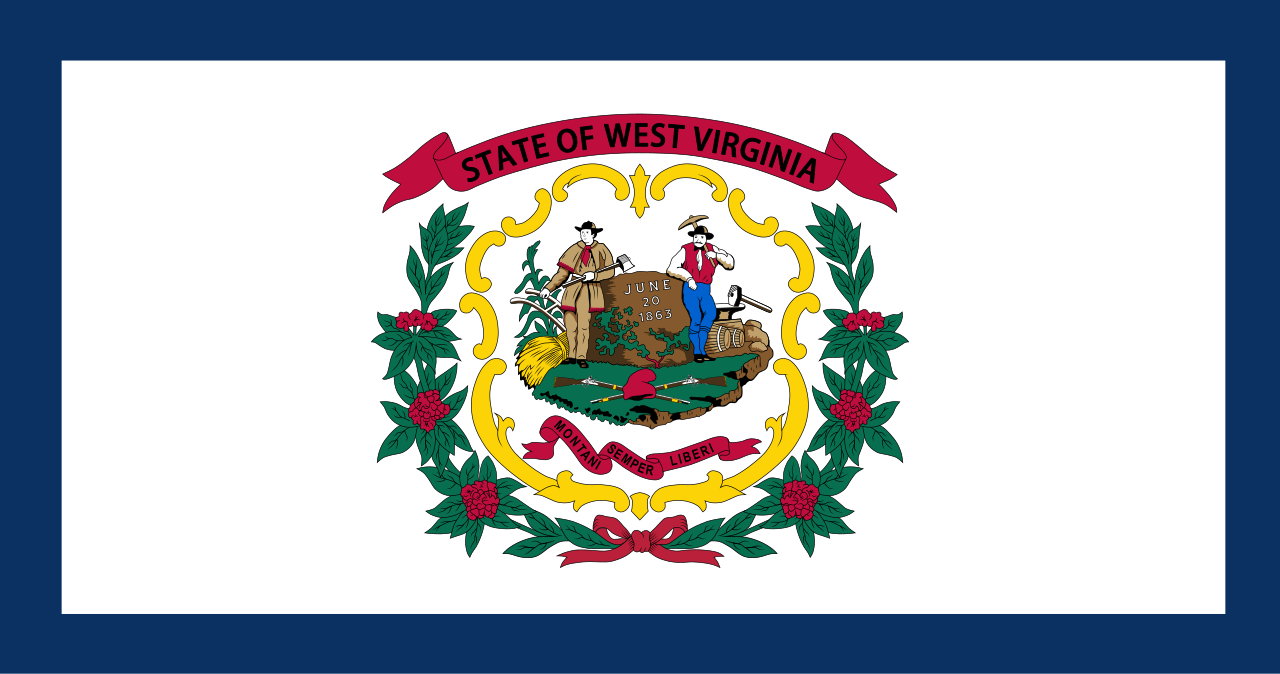
June 20, 1863: 55 Counties from the Confederate State of Virginia, having voted to secede from the State and rejoin the Union, are admitted to the Union as the 35th State, West Virginia. This was the only State to leave the Confederacy and rejoin the Union until the Civil War was over.

Top 10 Athletes from West Virginia

Honorable Mention to Randy Barnes of St. Albans. The current holder of the world records, both outdoor and indoor, for the shot put, over 75 feet, he won the Gold Medal in the event at the 1996 Olympics in Atlanta.

Honorable Mention to Nick Swisher of Parkersburg. He helped the Yankees win the 2009 World Series.

10. Lew Burdette of Nitro. In 1951, the Yankees put him in a trade package to the Boston Braves to get Johnny Sain. This is has been regarded as one of the worst trades in Yankee history, because of what Burdette went on to do to them. In fact, Sain was a key factor on the pitching staff that won the 1951, '52 and '53 World Series for the Yankees.

But Burdette became a really good pitcher after the Braves moved to Milwaukee, winning 203 games, losing just 144. A 2-time All-Star, he led the National League in ERA in 1956 and wins in 1959. He won 3 games against the Yankees in the 1957 World Series, being named the Series' Most Valuable Player. He won 2 more games against the Yankees in the 1958 World Series, before they came back and won Game 7, including lighting him up. He pitched a no-hitter in 1960.

9. Chuck Howley of Wheeling. No West Virginia native has won the Heisman Trophy, but the State has produced several football legends, including Howley. The Dallas Cowboys linebacker was a 6-time Pro Bowler, and reached 5 NFL or NFC Championship Games. In Super Bowl V, he became the 1st and still only player from a losing team to win the game's Most Valuable Player award. The Cowboys won Super Bowl VI.

He is not in the Pro Football Hall of Fame, but he probably should be. He is in the Dallas Cowboys Ring of Honor. The Cowboys do not retire numbers, and, as a result, his Number 54 would be worn by a later legend, Randy White.

8. Glenn Davis of Wellsburg. He won a the Gold Medal in the 400-meter hurdles at the 1956 Olympics in Melbourne, Australia. In 1960, in Rome, he won that event again, and won another Gold Medal with the U.S. 4x400-meter relay team, making him one of the few people to win Gold Medals as both a sprinter and a hurdler. In between, in 1958, he won the Sullivan Award as the nation's top amateur athlete.

Nicknamed "Jeep," in 1960 and '61, he played for the Detroit Lions. His 2 seasons in the NFL matched those of Glenn Davis, the 1946 Heisman Trophy winner from West Point. They were frequently confused for each other, and often received each other's mail, but despite both being famous for nearly 50 years, apparently, they never met. (The Heisman winner died in 2005, the Sullivan winner in 2009.)

7. Frank Gatski of Farmington. A 4-time All-Pro center, he was a member of the Cleveland Browns team that went to 10 straight league championship games: 4 in the All-America Football Conference (winning all 4: 1946, '47, '48 and '49), 6 in the NFL (winning in 1950, '54 and '55, losing in '51, '52 and '53). Those '52, '53 and '54 NFL Championship Games were against the Detroit Lions, and he went to the Lions in 1957, and closed his career going the other way, beating the Browns for his 4th NFL Championship, his 8th league title overall.

He is in the Pro Football Hall of Fame. But he's not even the greatest player ever from his hometown. The man at Number 2 is. But I'm getting ahead of myself.

6. Randy Moss of Rand. The Marshall University star, who was also a great basketball player in high school (playing both basketball and football with NBA star Jason "White Chocolate" Williams), may have been the most talented receiver in football history, even more than Jerry Rice.

Certainly, he got some results: 982 career receptions, over 15,000 receiving yards, 156 receiving touchdowns. He set records for receiving touchdowns by a rookie (17 in 1998) and any player (23 in 2007). He was NFL Offensive Rookie of the Year in 1998, made 6 Pro Bowls, and was named to the NFL's 2000s All-Decade Team.

But he was an egomaniac and a disciplinary problem. And he never won a title. He got to the 1998 NFC Championship Game with the Minnesota Vikings, and Super Bowl XLII with the New England Patriots, and his teams' losses in those games were hardly his fault: Their opponents' good defenses shut more than him down.

He is now a studio analyst for ESPN. Next year, he will become eligible for the Pro Football Hall of Fame. Presuming he doesn't do something stupid, it's a matter of when he gets in, not if. His brother Eric was briefly a Vikings teammate, an offensive tackle. His son Thaddeus is a tight end at North Carolina State University, and his daughter Sydney plays basketball at a Division III school.

5. Hal Greer of Huntington. After starring at his hometown's Marshall University, he went to the NBA's Syracuse Nationals, and moved with them in 1963 to become the Philadelphia 76ers. He was a 10-time NBA All-Star, and a member of the 1967 76ers team that won the NBA Championship and is regarded by some as the greatest team in NBA history.

Unfortunately, he is best remembered for a game the Sixers lost, through little fault of his own: At the end of Game 7 of the 1965 Eastern Conference Finals, he tried to inbound the ball so that the Sixers could score a game-winning basket, but, as Boston Celtics broadcaster Johnny Most said, "Johnny Havlicek stole the ball!"

Nevertheless, Greer was a sensational ballhandler, and scored over 20,000 points at a time when that was something that hadn't been done by very many players. The Sixers retired his Number 15, and he was named to the Basketball Hall of Fame and the NBA's 50th Anniversary 50 Greatest Players.

4. Alfred Earle "Greasy" Neale of Parkersburg. An outfielder, he played 8 seasons in the major leagues, including winning the 1919 World Series with the Cincinnati Reds. But football was his main sport, and the 2-way end won Ohio League titles -- the closest thing professional football had to a "world championship" at the time -- with the Canton Bulldogs, led by Jim Thorpe, in 1917 and 1918.

He is better remembered as a coach. He began his coaching career at his alma mater, West Virginia Wesleyan, coached Marietta College of Ohio to an undefeated season in 1919, nearly did so again in 1920, and coached Pittsburgh-area school Washington & Jefferson to one in 1921, all while still playing Major League Baseball. He coached both Virginia and West Virginia, and led the Philadelphia Eagles to the 1948 and 1949 NFL Championships. He was elected as a coach to the College and Pro Football Halls of Fame.

3. Mary Lou Retton of Fairmont. She's 4-foot-9 and a high school dropout, but she's world-famous. She had a good excuse for dropping out in her sophomore year: She got a lot of money from endorsements after winning the all-around women's gymnastics Gold Medal at the 1984 Olympics in Los Angeles. She also won 2 Silver Medals and 2 Bronze Medals.

Sports Illustrated divided its Sportspeople of the Year for 1984 between her and hurdler Edwin Moses. She became the 1st female athlete ever to be shown on the Wheaties cereal box, is a member of the International Gymnastics Hall of Fame, and became a motivational speaker and an analyst of TV broadcasts of gymnastics. She is married to real estate developer and former University of Texas quarterback Shawn Kelley.

2. Sam Huff of Farmington. As the NFL went to the 2-platoon system in the mid-1950s, meaning that players played on only 1 side of the ball, the West Virginia University star was not only the 1st great linebacker for the New York Giants, before Lawrence Taylor was even born, but the 1st defensive celebrity in football.

He led the Giant defense that steamrolled the NFL, winning the Championship in 1956, and reaching 5 more Championship Games (but losing them all). It was Huff leading the charge that also included Hall-of-Famers Andy Robustelli and Emlen Tunnell that first made fans chant, "De-fense! De-fense!"

In 1960, CBS Reports miked him up for a documentary, hosted by Walter Cronkite (not yet the anchor of The CBS Evening News), titled The Violent World of Sam Huff. Before NFL Films, this was the 1st time that people who never played the sport, even those who had gone to games and had front-row seats, could hear what playing football actually sounded like. How successful was it? A CBS executive wrote a letter, wrote only "Number 70" on it, and dropped it in a mailbox. Two days later, that letter ended up in Huff's locker at Yankee Stadium.

He was a 5-time Pro Bowler, 4 times for the Giants and once for the Washington Redskins. WVU retired his Number 75. Neither of his pro teams has retired his Number 70, but he has been elected to the New York Giants Ring of Honor, the Washington Redskins Ring of Fame, the NFL's 1950s All-Decade Team, the Pro Football Hall of Fame, The Sporting News' 100 Greatest Football Players in 1999, and the NFL Network's 100 Greatest Players in 2010. He went on to a long broadcasting career for the Redskins, partnered with his Washington teammate, Hall of Fame quarterback Sonny Jurgensen.

1. Jerry West of Cheylan, just down the Kanawha River from Charleston, where Cabin Creek flows into it. Hence, he was known as "Zeke from Cabin Creek." But his performance as a guard for the Los Angeles Lakers got him nicknamed "Mr. Clutch."

He got West Virginia University into the NCAA Final Four in 1959, the U.S. team to the Gold Medal at the 1960 Olympics in Rome (that entire team was collectively elected to the Basketball Hall of Fame), and the Lakers into the NBA Finals 9 times, although they only won once, in 1972. He was named Most Valuable Player of the 1969 Finals, even though the Lakers lost. He was a 14-time All-Star, and became known as one of the best shooters, and one of the best passers, in NBA history.

He's not the greatest player in NBA history, and not nicknamed "Mr. NBA" or "Mr. Basketball," but he is nicknamed "The Logo." In 1969, Alan Siegel, following up his design of the Major League Baseball logo that bears a resemblance to Harmon Killebrew, used a photograph by Wen Roberts, of West dribbling with his left hand, to design the NBA logo.
But his legacy was just getting warmed up. He was the Lakers' head coach from 1976 to 1979, chief scout from 1979 to 1982, and general manager from 1982 to 2002. He built the Laker dynasties of 1980-91 and 2002-10. He wanted a new challenge, and moved on to the Memphis Grizzlies. He had no luck there, retiring in 2007, but in 2011 he joined the board of the Golden State Warriors, who've now won 2 titles with him involved. He just returned to Los Angeles, with the Clippers.

After going 1-for-9 in the Finals as a player, he now has 12 rings as an executive -- his 13 titles the most of anybody in NBA history except for longtime Boston Celtics head coach, general manager and team president Red Auerbach, who won 16.

His Number 44 has been retired by both WVU and the Lakers, and statues of him are outside the WVU Coliseum in Morgantown and the Staples Center. He was named to the Basketball Hall of Fame and the NBA's 50th Anniversary 50 Greatest Players.