This is not about sports.
This past Sunday night,
Game of Thrones aired "Red Wedding," in which there was a Total Eclipse of the Starks.
And it wasn't like "the Moldavian Wedding Massacre" on
Dynasty on May 15, 1985, where pretty much everybody got shot, but none of the major characters died. Although a character played by Ali McGraw did, and she was a big name in those days.
(For you younger readers: Confusing
Dynasty with
Duck Dynasty is like comparing Noel Coward to Larry the Cable Guy -- if, that is, Noel Coward had been a mean old bastard whose current and ex-wives kept trying to beat each other up.)
Surely, "Red Wedding" was one of the most shocking moments in TV history. Indeed, one guy on Twitter wrote of the series' creator, "Why doesn't George R.R. Martin use Twitter? Because he killed all 140 characters." (Another Twitterer said, "It's too bad
Entourage didn't end like that.")
But how does the loss of Robb Stark, his wife Talisa, and his mother Catelyn compare to the most devastating TV character deaths ever?
It just happened, so, obviously, it hasn't yet stood the test of time. But the shock value, even for a show that killed off its seemingly most important character (Robb's father Ned) in its Season 1 finale, was huge. How vicious the murders were adds to it.
For this list, I'm only going to include the unexpected. That means that any character killed off by the writers because the actor playing him died can't be included. So you won't be seeing the likes of...
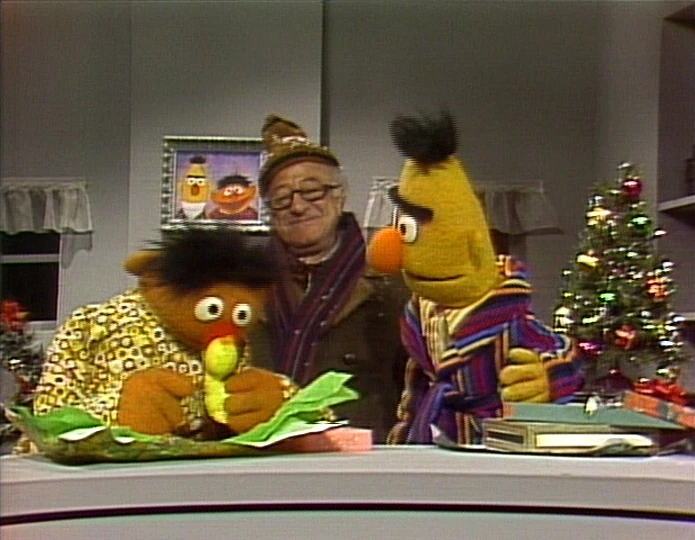
* Harold "Mr." Hooper, played by Will Lee on
Sesame Street, December 7, 1982.
* Sgt. Phil Esterhaus, Michael Conrad on
Hill Street Blues, November 22, 1983.
* Ernie Pantusso, a.k.a. Coach, Nicholas Colasanto on
Cheers, February 12, 1985.
* Selma Hacker, Selma Diamond on
Night Court, May 13, 1985.
* Ike Johnson, John Hancock on Love & War, October 12, 1992.
* Leo McGarry, John Spencer on
The West Wing, December 15, 2005.
* J.R. Ewing, Larry Hagman on
Dallas, November 23, 2012.
Nor will you be seeing Lt. Tasha Yar on
Star Trek: The Next Generation, April 25, 1988. It was already well-known that Denise Crosby wanted to leave the show, so it wasn't really a shock.
And you certainly won't see Chuckles the Clown (who was never shown onscreen) from
The Mary Tyler Moore Show, October 25, 1975. That was played for laughs. Same with the many deaths of Kenny McCormick (cartoon character voiced by Matt Stone) on
South Park.
And forget about Rosalind Shays (Diana Muldaur) on
L.A. Law, 1991. Yes, it was shocking. But devastating? Hell, some of us cheering when that bitch (literally) went down, when she (literally) got the shaft. Shaft. Can you dig it?
The deaths on
ER? Losing Lucy Knight to a knife-wielding maniac was hard, especially since Kellie Martin, then 24 years old, still looked as young as she did on
Life Goes On (she was 14 when it premiered). Losing Dr. Mark Greene (Anthony Edwards) was hard, but this was his second go-around with the brain tumor, so it was hardly unexpected. As for Dr. Robert "Rocket" Romano (Paul McCrane) to a second mishap with a helicopter within a year, well, he didn't deserve death. He did, however, deserve humiliation. But no one of these deaths makes the list.
Nor can I quite put Detective Bobby Simone, Jimmy Smits on
NYPD Blue, on this list. The same goes for
Grey's Anatomy or
Lost, which, unlike
ER, I didn't watch: When you frequently kill characters, or get rid of characters for reasons other than death, it doesn't sting as much.
One final disclaimer: This list is mainly affected by shows I've actually seen. In some cases, I didn't watch the shows, but I'm aware of their impact, and so I've made an allowance for that.
Top 10 Most Devastating TV Character Deaths
Honorable Mention: Matthew Crawley, Dan Stevens on
Downtown Abbey, December 25, 2012 (episode taking place in 1921). He survived World War I and the Spanish influenza epidemic that followed it. His wife Mary was about to have a baby, and show viewers were afraid that, for the second time, a female character would die in childbirth. (Lady Sybil Branson was the first, 2 months earlier). Wrong: Matthew is driving his convertible, in high spirits, when he is hit by a truck.
Honorable Mention: Gary Shepherd, Peter Horton on
thirtysomething, February 12, 1991. I never watched the show, but people who did had to watch as Nancy (Patricia Wettig) battled cancer, and while she's in the hospital, having just heard that the results of her latest test have come back negative for a relapse, she's told that Gary is dead in a car crash.
Honorable Mention: Omar Little, Michael K. Williams on
The Wire, February 24, 2008. Omar was a thief who robbed drug dealers in Baltimore. In the tradition of "honor among thieves," he did have a kind of moral code. And he ended up killing 5 men over the course of the show's first 5 seasons.
With that kind of rep, clearly, he was going to get taken down. Who killed him? A drug lord, sick of Omar muscling in on his territory? A hitman, working on behalf of such a drug lord? A victim's loved one, taking the law into his own hands, to get revenge? A cop, angry that Omar had, himself, taken the law into his own hands? Someone objecting to the fact that Omar was openly gay? An ex-boyfriend?
Actually, it was a kid named Kenard (Thuliso Dingwall). True, he was involved with the Fayette Street Mafia. But he was only about 12 years old, and he took Omar down simply for the sake of gaining some street cred, being able to say he took him down, like in the Wild West.
Honorable Mention: Adriana La Cerva, Drea de Matteo on
The Sopranos, May 23, 2004. Another one of those shows that always seems to have somebody dying, and in this one's case, violently. So when the death of a single character stands out to the show's fans, attention must be paid.
To me, the shocking thing was not that she'd been whacked, bumped off, rubbed out, taken out, taken down, whichever killing metaphor you want to use; or even that it happened when (she thought) she and boyfriend Christopher Moltisanti (Michael Imperioli) were going to go off together in the Witness Protection Program. It was that her killer turned out to be Silvio Dante (Steven Van Zandt).
Silvio? In a "life" of bad guys, he seemed like one of the more moral ones. Maybe he saw how Tony Soprano's (James Gandolfini) men, including Chris-tuh-fuh himself, had botched jobs before, he thought, "If you want something done right, ya gotta do it yourself."
Now, the Top 10:
10. Dan Conner, John Goodman on Roseanne, May 7, 1996. In the Season 8 finale, Darlene Conner (Sara Gilbert) and David Healy (Johnny Galecki) have gotten married, but Darlene's morbidly obese father Dan has a heart attack. As Season 9 begins, we find out he's going to be okay. Then he and wife Roseanne (Roseanne Barr) win $108 million in the lottery. Then things get crazy.
Then comes the series finale, and we find out that Roseanne made the whole thing up, writing it as a novel after Dan's heart attack turned out to be fatal. Dan wasn't perfect, but he was a good guy, and he didn't deserve to go out like that.
UPDATE: In 2018, Roseanne was revived, and it was revealed that the made-up part was the fact that Dan had died. He discovered the novel that Roseanne had written but never gotten published, and said the book would have been a success if she hadn't killed off "the most interesting character." Then, in a weird twist, Barr made some unacceptable comments, and the producers fired her, and the writers killed her character off, leaving Dan a widower.
9. Susan Ross, Heidi Swedberg on Seinfeld, May 16, 1996. The circumstances of the death of George Costanza's fiancee in the Season 7 finale are too stupid to repeat here.
That none of the characters, least of all George (Jason Alexander), seem particularly troubled, made this one tough to take. I mean, yeah, Susan wasn't especially likeable, but she wasn't a rotten person. Certainly, she wasn't as callous as George, Jerry Seinfeld (Jerry Seinfeld), Elaine Benes (Julia Louis-Dreyfus) and Cosmo Kramer (Michael Richards) were when they found out. Damn it, show some respect for the dead.
8. Captain Roy Montgomery, Ruben Santiago-Hudson on Castle, May 16, 2011. It was known that RSH was leaving the show, and in the next-to-last episode of Season 3, Montgomery said he was retiring. You know how that works: As soon as the old man, especially if he's a cop, says he's gonna retire, and live the good life with his wife, get the condo in Florida, travel the world, buy the boat -- or, as Montgomery said when Richard Castle (Nathan Fillion) asked him what he would do if he won $100 million in the lottery, "Buy me a big-ass boat" -- he's toast.
Montgomery was killed trying to protect Detective Kate Beckett (Stana Katic) from the men in the plot to kill her mother, crusading lawyer Johanna Beckett, in 1999. And before he died, he managed to get off a shot that killed one of the plotters, the man who had shot him. You know how it goes: "If I'm goin' down, I'm takin' a bunch o' them bastards with me!"
The shocking part was not that Montgomery was going to die, and violently, but that he had been in on the plot as a younger cop. Not that he had anything to do with Mrs. Beckett's death, but that he was one of 3 cops involved in the kidnapping of Mafia hitmen, and that Mrs. Beckett found out about the kidnappings (if not about Montgomery's involvement), and the cops had to get rid of her.
That brought Kate's "Batman moment," abandoning her plan to go into her mother's line of work, and becoming a homicide cop. And she ended up coming under Montgomery's command (meaning that somebody in the trail between Kate and the killers slipped up), and so he kept her under his command to watch over her. He did, until he no longer could, and it was either her life to forfeit, or his.
Kate was right when she told Castle and her homicide squad partners Javier Esposito (Jon Huertas) and Kevin Ryan (Seamus Dever), "As far as anybody outside this room knows, Roy Montgomery died a hero." Yes, he blew it as a younger man. But when he had to come through, he was a hero.
RSH had previously died in the 2nd-ever episode of The West Wing, as President Bartlet's Air Force officer doctor, aboard a Middle East trade mission plane shot down by Syria -- something I had totally forgotten until after he'd died on Castle.
7. Joyce Summers, Kristine Sutherland on Buffy the Vampire Slayer, February 27, 2001. Unlike most of these, this episode was neither a season finale nor a season premiere. Buffy Summers (Sarah Michelle Gellar) battled all kinds of supernatural bad guys and bad girls. Characters dying on that show was not unheard of. But Buffy's mother died from a brain aneurysm.
No vampire draining her blood. No werewolf mauling. No evil spirit scaring her into a heart attack. No Jason axe, or Freddy blade-glove, or Leatherface chainsaw, or even a Norman Bates kitchen knife. No violence. She's betrayed by her own body. Buffy loses her mom to something that could have happened even if she'd never heard of the supernatural world in which she battled. And it's not like she could pick up a weapon and pursue the killer and gain her revenge. There was nothing that could be done.
6. Special Agent Caitlin Todd, Sasha Alexander on NCIS, May 24, 2005. Alexander, wife of film director Eduardo Ponti (and thus daughter-in-law of Sophia Loren) wanted to leave the show and start a family. (They now have a 7-year-old daughter and a 2-year-old son, and she has returned to TV on Rizzoli & Isles.) There were no hard feelings between Alexander and the show's producers, or between Alexander and CBS. She wanted out, and had the best possible excuse. And, unlike some of these other, she had no problem with her character going out in a blaze of glory.
By this point, a major TV show character dying, even violently, was no longer unheard of. But this was nasty. Kate Todd, who previously had 2 chances to kill Israeli doctor turned Palestinian terrorist Ari Haswari (Rudolf Martin), is shot by him from a sniper's nest shortly after she, Leroy Jethro Gibbs (Mark Harmon) and Anthony DiNozzo (Michael Weatherly) busted up a terrorist plan in Washington, D.C. This, just a moment after she dove in front of Gibbs to save him from a different sniper, saved by her bulletproof vest, so it looked like she would be okay.
This was about 58 1/2 minutes into the episode, so there was no time for either viewers or characters to process the moment before the credits rolled.
Sadistic bastard thought he was, Ari liked Kate, and, on a deep level that she painfully admitted, the feeling was mutual. But he killed her anyway, as the beginning of a plan to get Gibbs: First to break him down by killing people around him, and then killing him. This was in the Season 2 finale, seen from the agents' perspective.
The Season 3 premiere begins with the same scene shown from Ari's perspective, and after pulling the trigger, he says, "Sorry, Kate" -- probably the least sincere apology in the history of television. To make his point to Gibbs (if not to Kate), the rifle he used is nicknamed a "Kate" -- a nickname Gibbs knows, having used it himself in combat.
5. Edith Bunker, Jean Stapleton on Archie Bunker's Place (previously All in the Family), October 1980. The death this week of Stapleton reminded us of this one. It won't escape your notice that Numbers 2 and 5 on this list were on shows created and produced by Norman Lear. Unlike with James Evans, Lear and the performer in question were not at odds; Stapleton had simply decided that she'd had enough of playing Edith.
So, when the 11th season of the combined Bunker family sitcom premiered on November 2, 1980, it is revealed that Edith died a month earlier. To see Archie Bunker (Carroll O'Connor), TV's biggest blowhard, reduced to a grieving widower was hard to take: "It wasn't supposed to be like this. I was supposed to be the first one to go... You had no right to leave me that way... without giving me just one more chance to say I love you... "
4. Alice Harper Cartwright, Bonnie Bedelia on Bonanza, September 12, 1972. (Taking place in 1873. Various Civil War references, and a tombstone date, in earlier episodes proved that the show always took place 99 years in the past.) One of the running gags of pop culture was that all the women romanced by the Cartwright men die.
Ben, a.k.a. Pa (Lorne Greene) married 3 women. The 1st 2 died shortly after childbirth. The 3rd, Marie, was originally believed to have died in a fall from a horse, when her son with Ben, Joseph, a.k.a. Little Joe (Michael Landon as an adult) was very young. Decades later, in the prequel series Ponderosa, there is a retcon: Her name is Felicia, and she is murdered.
The fact of the Cartwright men's lady loves dying was even referenced on an episode of Happy Days, when Marion Cunningham (Marion Ross) watches Bonanza, says that Little Joe is getting married again, and that he hopes his wife doesn't die this time.
Actually, the "fact" is a bit of a stretch: Only once did Little Joe get married on the show. By 1972, 13 seasons into the iconic NBC drama's run, Westerns were long out as a popular form, although CBS' Gunsmoke hung on until 1975.
And, to make matters worse, Dan Blocker, who played 6-foot-3, 300-pound middle son Eric "Hoss" Cartwright, had died, from a pulmonary embolism during what should have been routine gall bladder surgery. (He was only 43 years and 5 months old -- exactly the same age I am now. My grandfather had his gall bladder taken out when he was 76 and wracked with emphysema, and he lived.) With Pernell Roberts, who played eldest son Adam, already having left the show a few years earlier, it was time to wrap it up.
The Season 14 premiere, "Forever," had originally been written by Landon as a Hoss episode. He was the one supposed to get married. But when Blocker died, it was rewritten for Joe, and Landon directed it, as he would later direct, produce and star in Little House On the Prairie and Highway to Heaven.
Joe meets Alice Harper, who'd been brought to Virginia City, Nevada by her brother. But, deeply in debt, the brother skipped town. She needs money. Joe needs a wife. They get married. Time passes, and the couple discover they're going to become parents. But the brother's creditors send thugs out to find him. Unable to do so, they go after his sister, the new Mrs. Cartwright.
Standing at her grave at the end of the episode, Joe simply says, "I love you" -- which was Landon's way of saying those words to Blocker, who had been his brother on film and dear friend in real life.
This may have been the 1st time in TV history, or at least on a major series, where "Bad things happen to good people," and that's what made it so difficult, as Bonanza was, and remains, 40 years after it rode off into the sunset, one of the most beloved TV shows ever.
So much of it is iconic: Pa's admonishments about right and wrong, telling the boys (well, mostly Little Joe) to, "Take your feet off the table," yet always letting them know that he was a loving father; Adam's moody brooding; Hoss' signature ten-gallon hat and Jackie Gleason-esque moon-faced smile; Little Joe becoming TV's first truly angsty teenager, even if he was already 22 when the show debuted; Victor Sen Yung being forced to speak broken English as Ponderosa Ranch cook Hop Sing but still standing up for himself, becoming an early role model for Asian Americans; and, of course, that epic opening, with the burning map of Virginia City and the 4 men riding their horses into the camera.
Today, Bonnie Bedelia is better known as Holly Gennaro McClane in Die Hard. Her full name is Bonnie Bedelia Culkin, and she is the sister of Kit and thus the aunt of Macaulay, Kieran and Rory Culkin.
A sequel series revealed that Little Joe married again, and had a son (played by Michael Landon Jr.) and a daughter; that Adam moved to Australia and had a son there; and that Hoss had a son he never knew, and that these cousins ran the Ponderosa early in the 20th Century.
3. Dolores Landingham, Kathryn Joosten on The West Wing, May 9, 2001. Joosten has since died, but was still very much active after this. Mrs. Landingham had known Jed Bartlet (Martin Sheen) since he was in a preppy New Hampshire private high school, becoming secretary first to Jed's headmaster father and then to Jed himself as Congressman, Governor and President.
Everyone felt betrayed that he had kept his sleeping-giant illness a secret from them, let alone from the country. There was going to be a Congressional investigation, possibly even impeachment. And, oh yeah, he had to decide, right now, whether he was going to run for re-election -- this, after he'd made a deal with his wife, Abbey (Stockard Channing), that, because of his condition, he would serve only one term.
With the cloud of scandal hovering over him, it seemed like the White House was caving in on the most popular POTUS in TV history. And then, in one of those episodes where the network concludes the preview by saying, "Whatever you do, don't miss the last 5 (or 2) minutes," we find out that she'd just been killed in a car crash -- having just bought the first new car of her 70-or-so-year life. This, after her husband had been dead for years. This, after they had both been predeceased by both of their twin sons, Army doctors in a firefight in Vietnam.
Her death was announced in the next-to-last episode of Season 2, and in the finale, the President had a little chat with God after her funeral at the National Cathedral. And yet, she comes back to him as a ghost, telling him that if he's too scared to run again just because he thinks people won't vote for him because of his refusal to disclose, "Then, gosh, Jed, I'm not sure I even want to know you."
So at his press conference after announcing it, he's asked if he's going to run for re-election. And he says, "Yeah. And I'm gonna win." And he does. And he makes it through the second term alive. Unlike Mrs. Landingham, Admiral Fitzwallace, and, most heartbreakingly of all, his best friend Leo.
Speaking of Fitz (sort of)...
2. James Evans, John Amos on Good Times, September 22, 1976. Like a later sitcom with a mostly-black cast set in Chicago, Family Matters, Good Times was supposed to be about a black couple trying to be role models for their children. Fans latched onto a "breakout character," and it almost ruined the show.
Jimmy Walker's J.J. Evans (James Jr.) was a very different character to Jaleel White's Steve Urkel on Family Matters, but his too-eager embrace of his sudden fame ticked off his castmates, in particular the actors playing his parents, Amos and Esther Rolle as Florida Evans. Rolle: "He's 18, and he doesn't work. He can't read or write. He doesn't think. The show didn't start out to be that... They have made J.J. more stupid, and enlarged the role." Amos: "The writers would prefer to put a chicken hat on J.J., and have him prance around, saying, 'Dy-no-mite!' And, that way, they could waste a few minutes, and not have to write meaningful dialogue."
Finally, Amos had enough, and let Norman Lear know how he felt. Lear essentially fired him: As with McLean Stevenson a year and a half earlier, CBS decided after Season 3, "You ain't stayin', you ain't leavin' alive."
The 2-part episode was titled "The Big Move." James is from Mississippi, and moved to Chicago after returning from the U.S. Army during the Korean War. (Another sort-of connection with Henry Blake.) The family was poor, but never lost hope. But good news comes: James has an offer of a better job back in his home State. He goes down there to prepare for it -- Amos is never actually seen in this episode -- and is killed in a car crash.
At first, the reaction is not one of overwhelming sadness, which bothers son Michael (Ralph Carter). Even Florida doesn't seem all that affected. Eventually, though, she realizes she is alone, not just in the room but in life, and loses it, smashing a punchbowl and saying, "Damn, damn, damn!"
This was the first time an Amos character would be killed off on a TV show, but not the last: Retired Admiral Percy Fitzwallace, former Chairman of the Joint Chiefs of Staff, would be killed on The West Wing episode "Gaza," airing on May 12, 2004. At this writing, in real life, Amos, born in Newark and growing up in neighboring East Orange, is still alive, 73 years old.
1. Lieutenant Colonel Henry Blake, M.D., McLean Stevenson on M*A*S*H, March 18, 1975. The episode was titled, "Abyssinia, Henry." "Abyssinia," the former name for Ethiopia, was a slang term for farewell, sounding like, "I'll be seein' ya," and Blake had used the term on the show before.
The commanding officer of the 4077th Mobile Army Surgical Hospital in the Korean War, Henry was a drunk and a womanizer, and totally unsuited to the role of commanding a military unit. But he was a good doctor, and, like his successor, Col. Sherman T. Potter (Harry Morgan), understood that the people under his command were human beings first, their jobs second, and soldiers third; and that, sometimes, "going by the book" meant there would be some unfairness.
As the episode starts, the company clerk, Corporal Walter "Radar" O'Reilly (Gary Burghoff), tells Henry, whom he sees almost as a father figure (as his own dad died when he was very young), that a message has come in from I-Corps: He's got all his rotation points. He's being discharged, going home to Bloomington, Illinois. (Stevenson's real-life hometown -- he was a cousin of that town's favorite son, 2-time Democratic Presidential candidate Adlai Stevenson.)
Some time after Henry leaves, probably a few days, there is an operating session, which appeared in the script as just an empty page -- in other words, the actors didn't even know what was going to happen, except for Burghoff. Radar walks in, and says that Henry's plane was shot down by an enemy plane, and, "There weren't no survivors."
There is silence, except for the dropping of a surgical instrument clanging on the floor, and the tears of head nurse Major Margaret Houlihan, as her portrayer, Loretta Swit, seemed genuinely moved by the death of a fictional character, one with whom she was so often at odds. Even Larry Linville, playing nasty gung-ho hypocrite Major Frank Burns, seemed saddened. Operating on the same patient, Captains Ben "Hawkeye" Pierce and "Trapper John" McIntyre (Alan Alda and Wayne Rogers) looked like they were doing whaver they could to not cry, for fear that their tears would infect the patient.
Stevenson was still on the set to see the filming of this scene, and was deeply hurt. Producers Larry Gelbart and Gene Reynolds got over 1,000 letters, some understanding, many not. Gelbart later regretted the way it was handled. The first time the episode was repeated, the last scene was cut out of the broadcast, although it was included in syndication and on VHS & DVD.
Why did the writers and producers do it? They knew Stevenson wanted to move on, but did they have to kill Henry off? Why not just send him home alive? Or, if they had to have him die, let him pass away quietly in his bed, before he had a chance to leave? Why such a violent and terrifying death as a plane crash? Simple: The show was about war, and war is hell.
(Father Francis Mulcahy, played by William Christopher, used that line on the show during an OR session, and Hawkeye contradicted him: "I think war is worse than hell. There are no innocent bystanders in hell.")
If "Red Wedding" was a slug in the gut, even for generations used to shocks on TV, "Abyssinia, Henry" was not: It was a slug in the gut for generations not used to this sort of thing. Sure, they were used to the Vietnam War (for which M*A*S*H was an allegory), and had seen the assassinations of the Kennedy brothers and Martin Luther King, riots in the inner cities and at the Democratic Convention, a massacre on a college campus, and a President go too far and commit an unintentional long-term suicide for his Administration -- all within the last 12 years.
But TV wasn't like that: It was escapism. Sure, there were serious TV shows before M*A*S*H, but even on shows like that, you knew the major characters were going to be okay in the end. "Abyssinia, Henry" meant that you could never take that for granted again.
It seems self-serving, even obnoxious, for me to point out the crap people had to live through in the 12 years before "Abyssinia, Henry," and to then say that the years of my childhood were "a more innocent time." But for TV viewing, other than for the news, it really was. When Henry Blake died, so did a certain way of looking at television. And not for the better.