Today is Election Day. I don't know about you, but I am Jacked up to vote.
You wanna get Jacked up to vote?
Listen to Jack. JFK wants you to vote on Tuesday, November 6!
Not bad for a guy who's 101 years old, huh?
In New Jersey, polls are open until 8:00 PM. This is also true for the neighboring States of Pennsylvania, Delaware, Maryland and Connecticut. In New York, in the entire State, including the City, they're open until 9:00.
If you are still in line at the time the poll closes, the poll workers are legally required to allow you in to vote. So if you're in the building, stay in the building. If you're on line, stay on line. Don't let them cheat you out of your duty and your right.
VOTE!
*
November 6, 1528: Shipwrecked Spanish conquistador Álvar Núñez Cabeza de Vaca -- "Cabeza de Vaca" means "Head of Cow" -- becomes the 1st known European to set foot in the area that would become Texas.
This will eventually make possible the major league cities of Dallas, Houston and San Antonio, and lots of great college football memories. But it will also make the American Civil War possible, and leave America saddled with a lot of right-wing nuts.
And remember: The good guys won at the Alamo. The guys defending it were slaveholders. And illegal immigrants. Literally. The 2 things conservative Texans claim to hate the most: Criminals and illegal immigrants.
November 6, 1650: William II, Prince of Orange and thus ruler of the Netherlands, dies of smallpox at The Hague. He was only 24. His son had been born only 2 days earlier, making him one of the youngest monarchs in European history. A grandson of King Charles I of England through his mother, in 1688 he was invited by the Protestants who overthrew the Catholic King James II to become King William III. He was King of England and Stadtholder of the Netherlands until his death in 1702.
November 6, 1756: Richard Dale is born in Portsmouth, Virginia. He served in the War of the American Revolution, in the Continental Navy under its 2 best-remembered commanders, John Barry and John Paul Jones. He was named 1 of the 1st 6 Commodores of the permanent U.S. Navy, and commanded the Blockade of Tripoli in 1801, during the First Barbary War. He died in 1826.
November 6, 1816: James Monroe is elected President. Secretary of State to outgoing President James Madison, also formerly Secretary of War, Governor of Virginia, U.S. Ambassador to Britain and France, and Colonel in the Continental Army -- he's the young man seen holding the flag in the famous, if erroneous, painting Washington Crossing the Delaware -- the nominee of the Democratic-Republican Party wins 68 percent of the popular vote, and 183 Electoral Votes.
The Federalist Party disintegrated during the War of 1812, due to its having agitated the country into the war, and its feckless peace offerings during it. They had nominated Senator Rufus King of New York, who won just 31 percent of the vote, and 34 Electoral Votes. He turned out to be the last Federalist nominee for President. Soon, the Democratic-Republicans would split into the Democratic Party and the National Republican Party, later to become the Whig Party.
But it is not all good news for the founding generation of American leaders. Gouverneur Morris dies at his mansion in New York, following a bizarre medical procedure that he'd performed on himself. He was 64.
He was a member of the New York Provincial Congress at the time of independence, and then the New York State Assembly, before being elected to the Continental Congress in 1778. Having visited George Washington's troops at Valley Forge, Pennsylvania, he was appalled by the conditions. He returned to Philadelphia, and cast the deciding vote that literally saved Washington's job as commander-in-chief. He then persuaded the Congress to give Washington the supplies he needed.
He lost a leg in a carriage accident in 1780, but that didn't stop him. He was a delegate to the Constitutional Convention in 1787, and, as much as anybody else -- including James Madison, who is called "The Father of the Constitution" -- Morris did the actual composition of the document's text, including the Preamble: "We, the People of the United States... "
He later served as Minister to France, and a U.S. Senator from New York. The Bronx neighborhood that was built around his mansion would bear the mansion's name: Morrisania.
November 6, 1817: Princess Charlotte Augustus of Wales dies in childbirth at Claremont House in Surrey, at age 21. A daughter of George the Prince Regent, later to be King George IV of Great Britain, had she survived him, she would have been a reigning Queen. Her child, a son, was stillborn, and would not become King, either.
This opened the path to the throne for the brother of George IV, William IV, and later the daughter of their brother, Edward: Queen Victoria, and her descendants: Her son Edward VII, his son George V, his son Edward VIII, his brother George VI, his daughter Elizabeth II, and her descendants, including the people who currently stand to become Charles III, William V and George VII.
November 6, 1854: John Philip Sousa is born in Washington, D.C. Perhaps the most famous American of Portuguese descent, he conducted the U.S. Marine Band, playing for Presidents, then formed his own band. The Sousa Band toured from 1892 until 1931, and he died the next year.
"The March King" composed and conducted songs that are still remembered today, most notably "The Stars and Stripes Forever" (1897). In 1923, his band played "The Star-Spangled Banner" before the 1st game at Yankee Stadium.
November 6, 1860: Abraham Lincoln is elected President. He is the 1st nominee of the Republican Party to win the Presidency, making the Republicans the 1st, and to this day only, "third party" to elect a President. Thanks to a split in the Democratic Party and the Whig Party (to which he once belonged) totally dissolving, he wins with 39 percent of the vote, the lowest percentage of any winner in the election's history.
But the former Congressman from Illinois did win a majority of the Electoral Votes: 180. Vice President John C. Breckinridge of Kentucky won 72, Senator John Bell of Tennessee won 39, and Senator Stephen A. Douglas of Illinois -- who had beaten Lincoln for that office just 2 years earlier -- won 12. Douglas finished 2nd in the popular vote, with 29 percent, Breckinridge had 18 and Bell 12.
In spite of the fact that Lincoln said, at the time, that he didn't want to abolish slavery entirely, only stop it from spreading to new States and Territories, the Southern States began to secede the next month. Outgoing President James Buchanan, a moral coward who thought the Constitution didn't allow him to do anything to stop it, did nothing to stop it. The American Civil War began on April 12, 1861. It would take Lincoln 4 years to win it.
*
November 6, 1861: James Naismith (no middle name) is born in Almonte (now part of Mississippi Mills), Ontario, outside the Canadian capital of Ottawa. He graduated from Montreal's McGill University, where he lettered in lacrosse, gymnastics, soccer, rugby, and the Canadian version of gridiron football. He was hired as McGill's athletic director in 1890, but just a year later, he was hired by the YMCA International Training School in Springfield, Massachusetts, what is now Springfield, College.
He was asked to invent a game that could be played indoors in the Winter, when baseball and football couldn't be played. He knew he should start with a ball, but a large, soft one, like a soccer ball, not a small, hard one like a baseball, which would be dangerous in the confined space of a gymnasium. He noted that most of the rough action took place around the goal: The goal in soccer, hockey or lacrosse, the end zone in football or rugby, or home plate in baseball. So he thought he could reduce the danger by raising the goal.
He asked the custodian to get him a box, because he had invented boxball. The custodian could only find a peach basket. So Dr. Naismith had invented basketball instead. The date was December 21, 1891.
Through the influence of the YMCA's worldwide organization, the word was spread. Naismith became the head coach at the University of Kansas, which became one of the great college basketball programs. He died in 1939, at the age of 78, at their Lawrence campus. Within the last 4 years of his life, he had seen the debut of sold-out doubleheaders involving national powers at Madison Square Garden, the debut of basketball as an official medal sport at the Olympic Games, and the foundation of the NIT and NCAA Tournament.
Also on this day, Jefferson Davis, former U.S. Senator from Mississippi, and Secretary of War under President Franklin Pierce, is elected the 1st President of the Confederate States of America. He was inaugurated at the Alabama State House in Montgomery, serving as the Confederacy's provisional Capitol building, on February 22, 1862. The spot on which he stood to take the oath of office was marked with a star, and Alabama's Governors have been sworn in on that spot ever since.
He left office on May 5, 1865, at the William T. Sutherlin Mansion in Danville, Virginia, to which the Confederate government had fled after the Battle of Richmond. He left office by telling his Cabinet that the government was officially dissolved. It had been 26 days since General Robert E. Lee surrendered at Appomattox Court House, Virginia; and 9 days since General Joseph E. Johnston surrendered the last remaining large Confederate unit. He was arrested by the Union Army 5 days later, and served 2 years in federal prison before being released.
November 6, 1865: The last grand match of the season takes place at the Capitoline Grounds in Brooklyn, before 15‚000. The Atlantics lead all the way to defeat fellow Brooklynites the Eckfords, 27-24‚ and claim the 1865 championship with a record of 17-0.
Henry Chadwick, America's 1st real sportswriter: "Is there another sport attractive enough to draw such attendance under such circumstances? In the summer it is not surprising as the weather is pleasant... but on a cold November day‚ in the busiest time of the year‚ it must be indeed an attractive sport to collect such an assemblage that is present on this occasion."
Named for a famed hill in Rome, the Capitoline Grounds, a 5,000-seat wooden stadium opened in 1864, was meant to rival and surpass the Union Grounds. The Atlantics made it their home, and, like the Union Grounds, it became a skating rink in the winter.
But it was demolished in 1880. It was on a plot of land bounded by what's now Halsey Street, Marcy Street, Putnam Avenue and Nostrand Avenue, in Bedford-Stuyvesant. To visit, take the A or C train to Nostrand Avenue. While this neighborhood, notorious for crime not that long ago, should be safe during the day, definitely do not visit at night.
November 6, 1869: What is generally recognized as the 1st college football game is played. Rutgers College plays the College of New Jersey, on Rutgers' campus in New Brunswick.
The game is essentially a very large soccer game, with a round leather ball, and 25 men on a side. The Rutgers men, finding the color inexpensive to obtain, wrap scarlet red cloth around their heads like turbans, so that they can tell each other apart on the field. Thus did they invent school colors and the football helmet.
The men of Old Queens must have had less trouble telling team from team than did the men of Old Nassau, as Rutgers won, 6-4 -- that's 6 goals to 4, or 42-28 under today's scoring system.
The next week, the CNJ men returned the favor in Princeton, and won, 8-0. There was supposed to be a 3rd game, but the college presidents got together and decided that too much emphasis was being placed on athletics, and forbade it.
The field where "the first football game" was played is now the parking lot for Rutgers' College Avenue Gym. George Large of Rutgers was the last surviving player from this game, living until August 15, 1939, age 88. The native of Readington, Hunterdon County played on the Rutgers side, and in 1888 served as President of the State Senate, making him the Acting Governor on a few occasions.
In 1874, Harvard University would accept a challenge from McGill University in Montreal, and discover on their arrival that by "football," McGill meant "rugby," not "soccer." Adjustments were made, Harvard liked the results, and convinced the other "football"-playing schools to join them in this adaptation of "football." In 1906, the forward pass was legalized and hashmarks prevented dangerous scrimmages close to the sideline. "Football" as America knows it now was on its way.
In 1896, the College of New Jersey changed its name to Princeton University, while a nearby school would later be founded as Trenton State College, and change its name to The College of New Jersey. Rutgers College would become, and remains, the centerpiece of the larger system of Rutgers, The State University of New Jersey.
November 6, 1872: General George Meade dies of pneumonia in Philadelphia. The victor of the Battle of Gettysburg was only 56 years old, and still on active duty.
November 6, 1887: The Celtic Football Club is founded by Andrew Kerins, known by the ecumenical name Brother Walfrid, at St. Mary's Church in Glasgow, Scotland, as a way for raising money for the poor in the city's East End.
Celtic would become identified with the Catholic Church, and particularly with Irish people, to the point where the tricolor of the Republic of Ireland became as familiar a sight at Celtic Park as the Scottish Saltire, and much more so than the British Union Jack. They are not, to English-speaking (and Gaelic-speaking) soccer fans around the world what Notre Dame is to American football fans. They are far more than that.
Their rivalry with Rangers, the Protestant club in Glasgow, is known as the Old Firm, and is so nasty it makes Yankees vs. Red Sox, Duke vs. North Carolina, and even Alabama vs. Auburn look like playful joshing. When you throw organized religion into it, bad things happen.
But the success of "The Bhoys" is undeniable. They have won the top division of Scottish football 49 times, including the last 7 titles (helped by the financial collapse and restart of Rangers in 2012); 38 Scottish Cups, including the last 2; and 17 League Cups, including the last 2. This includes 18 League and Cup "Doubles"; adding the League Cup for a "Treble" 5 times, in 1967, 1969, 2001, 2017 and 2018; and, in 1967, adding the European Cup for the only "Quadruple" in the history of European club soccer.
That 1967 Quadruple is special for another reason: They were the 1st British side ever to win the tournament now known as the UEFA Champions League. (A year later, Manchester United became the 1st English team to win it.) The Final was played at the National Stadium in Lisbon, Portugal, defeating Internazionale of Milan, Italy, who had won it in 1964 and '65. For this reason, the 1967 Celtic team is known as the Lisbon Lions, and ever since, Celtic have worn a star above their club badge.
Rangers claim 54 League titles (all before their 2012 liquidation, meaning the current team is not the same team and thus has no right to claim them), so they wear 5 stars, 1 for every 10 League titles. But Celtic remain the only Scottish club ever to win the European Cup (also reaching the Final but losing in 1970, although they haven't made the Final since, and have badly flopped in the Champions League in recent years). For this reason, Celtic fans say, "One star means more."
Also on this day, Walter Perry Johnson is born in Humbolt, Kansas. He grows up there, but by the time he got to high school, the family had moved to Olinda, Orange County, California. The Big Train pitched 21 years for the Washington Senators, 1907 to 1927, winning an American League record 417 games, including a major league record 113 shutouts, and struck out 3,508 batters, a major league record until 1983.
He finally won a World Series in 1924, pitching the 9th through 12 innings of Game 7, and another Pennant in 1925. In 1936, he was 1 of the 1st 5 players elected to the Baseball Hall of Fame. He died in 1946. In 1999, The Sporting News named him 4th, the highest-ranking pitcher, on their 100 Greatest Baseball Players, and, though he hadn't thrown a pitch in 72 years, fans voted him onto the Major League Baseball All-Century Team.
November 6, 1888, 130 years ago: Benjamin Harrison is elected the 23rd President of the United States. The former U.S. Senator from Indiana, and grandson of 9th President William Henry Harrison, wins 233 Electoral Votes, defeating incumbent President Grover Cleveland, who had 168.
But Cleveland won the popular vote, 48.6 percent to 47.8. Matthew Quay, Republican boss of Pennsylvania, practically came out and admitted that he had the State's 30 Electoral Votes stolen for Harrison. If true (and it probably is), then the vote should have been 203-198 in Harrison's favor. Meaning that, if 1 more State was "stolen," then Cleveland should have been re-elected.
Indeed, 4 years later, after a hard Presidency with recession and labor strife, Harrison lost his bid for re-election, and Cleveland became the only former President ever to regain the office.
Also on this day, John George Taylor Spink is born in St. Louis. Upon his father's death in 1914, he inherited ownership of The Sporting News, already known as "The Bible of Baseball," and made it bigger than ever. When he died in 1962, the Baseball Hall of Fame established an annual award for sportswriters, tantamount to a sportswriter's wing of the Hall of Fame, named it the J.G. Taylor Spink Award, and made him the 1st honoree.
November 6, 1889: Gabriel Hanot is born in Arras, Pas-de-Calais, France. A fullback, he played for a few soccer teams in France in the 1910s, including during World War I, and captained the national team in a 1919 game. He survived a plane crash, but his injuries ended his career.
He turned to journalism, and was editor at what was, then as now, France's leading sports newspaper, L'Equipe. He was the driving force behind French soccer allowing professionalism in 1932, and in establishing the European Cup (the tournament now known as the UEFA Champions League) in 1955. He lived until 1968.
November 6, 1890: Giuseppe Ida is born in Calabria, Italy. Joe Ida was the boss of the Philadelphia Mob from 1946 until 1959, a period which included the founding of the Philadelphia Warriors and their 2 NBA Championships, the 1st 2 NFL Championships won by the Eagles, the end of Connie Mack's reign over the Athletics, the Phillies' Whiz Kids Pennant, and La Salle's National Championship.
He returned to Italy in 1959, handing leadership of the organization over to Angelo Bruno, and the "family" continues to bear the name Bruno to this day, long after Ida and Bruno have died.
November 6, 1893, 125 years ago: Dana Fillingim (no middle name) is born in Columbus, Georgia. A pitcher, he was one of the 17 allowed to continue to throw the spitball after it was outlawed starting with the 1921 season. That would be his best season, going 15-10 for the Boston Braves. In a career that lasted from 1915 to 1925, he went 47-73. He died in 1961.
Also on this day, Pytor Ilyich Tchiakovsky dies in St. Petersburg, Russia, 9 days after conducting the premiere of his 6th Symphony there. He was 53, and the cause is in dispute. There was a cholera outbreak, and he may have drunk tainted water. Whether this was an accident or suicide is also unsure. He was also a prodigious consumer of tobacco and alcohol.
He is best remembered for his Piano Concerto No. 1, composed in 1875; and the 1812 Overture, which premiered in 1882, commemorating Russia's defense against Emperor Napoleon of France.
November 6, 1894: The biggest landslide in the history of American Congressional elections takes place. With President Grover Cleveland, a Democrat, being blamed for the Panic of 1893 and the ensuing depression, the worst the country has ever seen to this point, and for the labor unrest that included the Pullman Strike in early Summer, voters turn the U.S. House of Representatives from a 220-143 majority for the Democrats to a 253-93 majority for the Republicans. Given that there were smaller parties of some substance at the time, the Republicans gain 110 seats, and the Democrats lose 127.
The elections for the U.S. Senate are not nearly as drastic: The Republicans had a net gain of 3 seats, but the Democrats still held a narrow plurality, 40-39, with 9 seats held by other parties. The Republicans will regain the Presidency with William McKinley, and the Senate, in 1896, and the Democrats won't retake the Congress until 1910 or the Presidency until 1912.
*
November 6, 1900: President William McKinley is re-elected. As in 1896, he defeats Nebraska Congressman William Jennings Bryan, 51.6 percent of the popular vote to 45.5, and 292 Electoral votes to 156.
Garret Hobart, McKinley's 1st Vice President, had died in office in 1899, so he needed a new one. He chose Governor Theodore Roosevelt of New York, because his svengali, Ohio Republican boss Mark Hanna, though TR was making too much noise as Governor, thinking he'd be silenced as Vice President. He told McKinley he had to live, to keep "that damned cowboy" out of the White House.
On September 6, 1901, at a World's Fair in Buffalo, McKinley was shot. He died 8 days later, and Theodore Roosevelt was President of the United States. In 1904, Hanna died, and TR won a term of his own.
November 6, 1906: James Dougan Norris is born in Chicago. The son of James E. Norris, owner of the Detroit Red Wings, he worked in their front office, and got his name on the Stanley Cup in 1936, 1937, 1943, 1950 and 1952.
After the 1952 Cup, he made a big mistake. He left the Wings to become the operating owner of their arch-rivals, the Chicago Blackhawks. A few months later, his father died. Had James D. hung on a little longer, he, not his half-brother Bruce Norris, would have run the Wings, and won the Cup in 1954 and 1955. And he might have run the Wings, who reached 5 more Finals in the next 11 seasons, and they might have won more Cups, before Bruce's idiocy, stubbornness and authoritarianism turned them into "The Dead Things" in the 1970s.
James D. did build the Hawks into a Cup winner in 1961, and they reached 4 more Finals over the next 12 years. But he died in 1966, and they didn't win another Cup until 2010.
He is also responsible for the existence of the St. Louis Blues, arranging for the team to be placed in the St. Louis Arena, which he owned, along with the Olympia Stadium in Detroit and Chicago Stadium. James E., James D. and Bruce are all in the Hockey Hall of Fame.
November 6, 1915: The University of Georgia defeats the University of Florida, 37-0 in Jacksonville. Georgia leads the series 51-43-2. It is held every last Saturday in October, on supposedly neutral ground in Jacksonville. Georgia won this year's game 36-17.
November 6, 1919: Louis Joseph Rymkus is born in Royalton, Illinois, in the southern part of the State even further south than St. Louis, known as "Little Egypt." But he grew up far to the north, in Chicago, and played as a 2-way tackle on Notre Dame's undefeated team in 1941, then served in the U.S. Marine Corps during World War II.
He helped the Cleveland Browns win all 4 All-America Football Conference Championships, from 1946 to 1949, and was named All-Pro all 4 years. He lasted long enough to help the Browns win the 1950 NFL Championship. The team's 1st coach, Paul Brown, called him "the best pass protector I've ever seen."
His days in "rebel leagues" weren't over. After serving as an assistant coach with the Green Bay Packers and the Los Angeles Rams, he went to the American Football League in 1960, and coached the Houston Oilers to the 1st AFL Championship. But the team got off to a slow start in 1961, and Rymkus was fired. They won the title again anyway, and he and founding owner Bud Adams must have patched things up, because he was brought back as an assistant coach in 1965.
In 1970, he was on Don McCafferty's staff with the Baltimore Colts, and they won Super Bowl V. That made 7 league championships for Lou: 4 in the AAFC, 2 in the NFL, and 1 in the AFL. Or, to put it another way: 4 in the 1940s, and one each in the 1950s, the 1960s and the 1970s. He's been named a finalist for the Pro Football Hall of Fame, but he's never been elected. He lived until 1998.
*
November 6, 1922: Morgan Bulkeley dies in Hartford, Connecticut at age 84. He had been Governor of Connecticut from 1889 to 1893, and a U.S. Senator from 1905 to 1911. That's forgotten now, and his role in baseball might also be forgotten, if not for the most technical of technicalities.
In 1874, while on the Common Council of Hartford, he formed a professional baseball team, the Hartford Dark Blues. (Dark blue is the color of the State Flag, and is the dominant color of the 2 largest universities in the State, the University of Connecticut and Yale University. In their last years, the NHL's Hartford Whalers also tended to wear dark blue jerseys.) In 1876, he took the team out of the National Association and into the National League. They only lasted 2 more seasons.
The NL was founded by William Hulbert, owner of the Chicago White Stockings, and needed a President. Since Hulbert didn't want it to look like he, or the Western wing of the League, would have too much power, he nominated Bulkeley, an Easterner.
Bulkeley was a strong President, targeting illegal gambling, drinking, and fan rowdiness. But he did not enjoy the job, and left it to Hulbert after 1 season. But this 1 season, with only the briefest of influence, got him elected to the Baseball Hall of Fame in 1937.
He was also one of the members of the 1905-07 Mills Commission, appointed to determine baseball's origin, and gave credit for the sport's invention to his fellow Civil War hero, Abner Doubleday, who was conveniently dead and unable to tell the truth and deny it.
I'd suggest that serving on this Commission also helped Bulkeley's later election to the Hall, in Cooperstown, New York where the Commission said Doubleday invented the game, except that only 1 of the other 6 members is also in the Hall, George Wright, of the 1869-70 Cincinnati Red Stockings. He would be in the Hall on merit as a player if he hadn't gotten in for his pioneering role.
Also on this day, John Joseph Kerr is born in Astoria, Queens, New York City. A shortstop, Buddy Kerr was an All-Star for the New York Giants in 1948, but in 1950 was traded, along with Sid Gordon and Willard Marshall, to the Boston Braves for the double-play combination Eddie Stanky and Alvin Dark, which turned out to be crucial for the 1951 and 1954 Pennants. Kerr later scouted for the Mets, died in 2006.
Also on this day, Joseph Francis Klukay is born in Sault Ste. Marie, Ontario. A left wing, he played in the 1st 3 official NHL All-Star Games, in 1947, 1948 and 1949; and won the 1947, 1948, 1949 and 1951 Stanley Cups with the Toronto Maple Leafs. He also died in 2006.
November 6, 1927: Martin Nicholas Pavelich is born in Sault Sainte Marie, Ontario. A left wing, he played for the Detroit Red Wings, and was assigned as a "shadow," to shut down opposing teams' best attackers, particularly Maurice "The Rocket" Richard of the Montreal Canadiens.
He won 4 Stanley Cups with the Wings, and is 1 of 5 surviving players from the 1950 Cup team, 1 of 6 from 1952, 1 of 6 from 1954, and 1 of 8 from 1955.
He appears not to be related to Mark Pavelich, who won the Olympic Gold Medal with the 1980 U.S. hockey team, and later played for the Rangers and Minnesota North Stars, and was an original 1991-92 San Jose Shark.
November 6, 1928, 90 years ago: Secretary of Commerce Herbert Hoover is elected President, with a whopping 58 percent of the vote, and 444 Electoral Votes. The Democrats had nominated Governor Alfred E. Smith of New York, the 1st Catholic ever nominated by a major party. He won just 40.8 percent, a figure exceeded by all but 2 Democratic nominees since (George McGovern in 1972 and Walter Mondale in 1984), and took just 8 States, worth 87 Electoral Votes.
In his nationally-syndicated newspaper column, humorist Will Rogers wrote that Smith's supporters "are going to be shocked at how much of the country lives west of the Hudson River." He was right, and Smith was too New Yorky for the rest of the country, including most of New York State.
Indeed, New York was not 1 of the 8 States he won. He won the 2 most Catholic States in the nation, Massachusetts and Rhode Island; and 7 "Solid South" States that, at the time, would never go for a Republican, still thought of as "the Party of Lincoln": South Carolina, Georgia, Alabama, Mississippi, Arkansas and Louisiana. Smith didn't even get the entire South: Hoover won Virginia, North Carolina, Florida, Kentucky, Tennessee, Oklahoma and Texas.
Had Smith been a Protestant, from a small town rather than the biggest city, with a pleasant voice instead of a Noo Yawk accent, in favor of keeping Prohibition rather than repealing it, and not connected to the corrupt Tammany Hall political machine that dominated New York State and especially New York City, he still would have lost, as Hoover rode the Republican prosperity of the Roaring Twenties.
Despite the Hoover landslide, Franklin D. Roosevelt, former Assistant Secretary of the Navy, 1920 Democratic nominee for Vice President, and cousin of the late former President Theodore Roosevelt, is narrowly elected to succeed Smith as Governor. Someone asked Smith if FDR, one of his biggest backers, was going to be a rival that would prevent him from getting the Democratic nomination again in 1932. Smith, noting that Roosevelt had been dealing with the effects of polio since 1921, said, "No, he will be dead within a year."
Within a year of the 1928 election, the stock market had crashed, and, barring a major scandal, the Democratic nominee was going to win in 1932. Smith tried for that nomination. He lost it. To FDR. FDR became President. Smith became one of his fiercest critics. And, in the end, in spite of FDR's health difficulties, Smith died 6 months before he did.
Also on this day, William Donald Wilson is born in Central City, Nebraska. A center fielder, Bill Wilson started with the Chicago White Sox, and was with the Philadelphia Athletics when they moved, hitting the 1st home run in Kansas City Athletics history on April 12, 1955. But that was to be his last season in the major leagues. He is 1 of 13 living former Philadelphia Athletics.
November 6, 1929: With the field at the Cycledrome -- a 10,000-seat bicycle racing track with a football field
almost fully squeezed into it -- so waterlogged that the referees will not permit play, the Providence Steam Roller, defending NFL Champions, move their scheduled game with the Chicago Cardinals to their former home, Kinsley Park. This 6,000-seat stadium has floodlights, and so, this becomes the 1st night game in NFL history.
The Cardinals win, 16-0, but the gate receipts from the sellout crowd count the same. And, with the stock market having crashed a few days ago, the Steam Roller need all the help they can get. As it turns out, it's not enough: The team gets through the 1930 and '31 NFL seasons, and folds, a victim of the Great Depression.
*
November 6, 1930: Edward John Murphy is born in Inchinnan, Scotland, and grows up in Chicago. A forward, he played for several Chicago pro soccer teams, closing his career in the old North American Soccer League with the 1968 Chicago Mustangs.
He played for the U.S. national team from 1955 to 1969, including scoring the only goal in an 8-1 loss to England in 1959, and being probably the best player on the teams that came close to qualifying for the 1966 and 1970 World Cups. He was elected to the National Soccer Hall of Fame, and is still alive.
November 6, 1931: Jack Chesbro dies of a heart attack at his poultry farm in Conway, in the Bekrshire Mountain region of western Massachusetts, at age 57. Winner of 198 games, including a 20th Century record 41 in 1904 for the New York Highlanders, he was the 1st great pitcher for the team that became the Yankees, although some people think he's in the Hall of Fame solely for that one season. Let the record show he was also the ace of the Pittsburgh Pirates when they won the Pennant in 1901 and 1902.
Also on this day, Peter John Collins is born in Kidderminster, Worcestershire, England. In 1958, he won the British Grand Prix, but a few weeks later was killed in a crash at the German Grand Prix. He was only 26.
Also on this day, Mikhail Igor Peschkowsky is born in Berlin, Germany, the son of Russian Jewish immigrants. They would soon have to immigrate again, because of the Nazis. His father, Pavel Nikolaevich Peschkowsky, changed the family name, and so the boy became Mike Nichols.
From 1953 to 1961, he formed a comedy duo with Elaine May, and their records were among the top-selling comedy albums of the Eisenhower era, including winning a Grammy Award in 1961. They occasionally reunited after that.
Nichols went on to direct the original Broadway productions of, among others, Barefoot in the Park, The Odd Couple, The Prisoner of Second Avenue, The Gin Game, Whoopi Goldberg's starmaking 1984 one-woman show, and the musical adaptation of Monty Python and the Holy Grail, Spamalot. He also produced the original production of Annie. He would win 8 Tony Awards.
He also directed the films
Who's Afraid of Virginia Woolf? The Graduate, Catch-22, Carnal Knowledge, Silkwood, Heartburn, Biloxi Blues, Working Girl, Postcards from the Edge, Regarding Henry, The Birdcage, Primary Colors, Closer and
Charlie Wilson's War. In 2001, for directing the TV-movie
Wit, he became an "EGOT," a winner of all 4 major U.S. entertainment awards: The Emmy for television, the Grammy for recordings, the Academy Award or Oscar for films, and the Antoinette Perry or Tony for live performances.
He married 4 times, including to newscaster Diane Sawyer, which lasted for the last 26 years of his life. His son Max married Rachel Alexander, better known as ESPN correspondent Rachel Nichols. Mike lived until 2014, at the age of 83. Elaine May is still alive, age 86. She married 3 times, including to Broadway composer Sheldon Harnick, and since 1999 has been in a domestic partnership with legendary film director Stanley Donen. Her daughter Jeannie Berlin is an actress and screenwriter.
November 6, 1932: Ronald Saunders (no middle name) is born in Birkenhead, Cheshire, England. A striker for Portsmouth and a few other teams, he managed Norfolk club Norwich City to promotion to Division One in 1972. He moved on to Birmingham club Aston Villa, and won them the League Cup in 1975 and 1977, before winning the League in 1981. It remains Villa's only League title since 1910.
But a contract dispute led him to quit in the middle of the next season, and it was left to Tony Barton to finish the job of leading Villa to win the 1982 European Cup. Ron Saunders then committed what might have been an unpardonable sin: He moved to Villa's crosstown arch-rivals, Birmingham City. They were relegated in 1984, but he got them back up the next year. Then he full into dispute with their board, and left for yet another West Midlands side, West Bromwich Albion, got relegated in 1987, was fired, and has never managed again.
Barton died in 1994, and Villa held a testimonial for him. Saunders was invited back to manage the 1981 and '82 Villa players against an all-star team made up of retired players from the other West Midlands clubs. Back in the club's good graces, he is still alive, and a member of the club's Hall of Fame.
November 6, 1934: Joseph Albert Oliver Langlois is born in Magog, Quebec, not far from the U.S. border at Derby Line, Vermont. A defenseman, Al Langlois is 1 of 8 surviving members of the 1959 Stanley Cup Champion Montreal Canadiens, and 1 of 7 surviving members of the 1960 Stanley Cup Champion Canadiens. He also played for the New York Rangers from 1961 to 1963.
November 6, 1938, 80 years ago: Mack F. Jones (I can find no record of what the F. stands for) is born in Atlanta. The outfielder played in the major leagues from 1961 to 1971, including moving with the Braves from Milwaukee to his hometown of Atlanta, and as an original 1969 Montreal Expo. He died in 2004.
November 6, 1939: Patrick Fain Dye is born in Blythe, Georgia. An All-American linebacker at the University of Georgia, Pat Dye wasn't quite good enough to play in the NFL, or even the AFL, but he played the 1961 and '62 seasons with the Edmonton Eskimos of the Canadian Football League.
He then went into coaching. In a retroactive irony, his 1st coaching job would be coaching the linebackers under Paul "Bear" Bryant at the University of Alabama. In 1974, he was named head coach at East Carolina University in Greenville, North Carolina, winning the Southern Conference Championship in 1976. He was named head coach at the University of Wyoming in 1980, but left the next year when he was named head coach and athletic director at Alabama's arch-rivals, Auburn University.
He led the Tigers to the Southeastern Conference Championship in 1983, 1987, 1988 and 1989, and should have been awarded the National Championship in 1983: He led Number 3 Auburn to an 11-1 season and a win in the Sugar Bowl, while Number 1 Nebraska lost the Orange Bowl, Number 2 Texas lost the Cotton Bowl, and Number 4 Illinois lost the Orange Bowl. But Number 5 Miami, having beaten Nebraska, leapfrogged them in the final polls.
A scandal in 1992 led to Dye's firing, his last game being an Iron Bowl defeat to Alabama on Thanksgiving Day at Legion Field in Birmingham. It also led to Auburn being put on probation, prohibited from playing on TV, and declared ineligible for the SEC and National Championships. This became notable when Dye's replacement, Terry Bowden, went 11-0 with (essentially) Dye's players (who had gone 5-5-1 the year before), and saw his father, Bobby Bowden, lead 12-1 Florida State to the National Championship.
Dye is still alive, and has been honored with election to the College Football Hall of Fame and the naming of the playing surface at Auburn's Jordan-Hare Stadium being named Pat Dye Field. A statue at the Alabama Sports Hall of Fame in Birmingham shows Dye and Bryant with a generic football player. Auburn fans like to imagine that Dye, whose career record was 153-62-5 (including 99-39-4 at Auburn), was the equal of the Bear, who went 323-85-17 (including 232-46-9 at 'Bama). He wasn't.
*
November 6, 1940: Jimmy Gardner dies in Montreal at age 59. A left wing, he won the Stanley Cup for the Montreal Hockey Club (who had won the 1st Cup in 1893) in 1902 and 1903. He was just 5-foot-9, and yet this made him one of the taller players on the team, earning it the nickname "The Little Men of Iron."
In 1903, he left the MHC to form a professional team, the Montreal Wanderers, later leaving them but returning in 1908, winning the Cup that year and in 1910. He helped found the National Hockey Association, along with Ambrose O'Brien, and felt that a team for the city's Francophones would be a natural rival to his team, for the city's Anglophones. Thus were the team now known as the Montreal Canadiens born. Gardner would later coach the Canadiens. The Hockey Hall of Fame wasn't founded until 1945, after his death, but he was elected to it in 1963.
Also on this day, Michael John Giles is born in Dublin, Ireland. The midfielder helped Manchester United win the 1963 FA Cup, but there wasn't really room for him. Don Revie bought him for Leeds United, and the rest was history: The 1969 and 1974 League titles, the 1968 League Cup, the 1968 and 1971 Inter-Cities Fairs Cups, and the 1972 FA Cup.
When Revie was hired to be the England manager in 1974, Johnny Giles was already so respected, he had been named manager for the national side of the Republic of Ireland while only 32 years old and still playing. Nearly everyone thought he would be named to replace Revie as Leeds manager.
Instead, the job was given to Brian Clough, who had taken Derby County to the 1972 League title, but had called Leeds a dirty team. Clough lasted just 44 days, and Giles' resistance to him was a major reason why. About 40 years later, in an interview, Giles said that if he and Clough could have straightened things out, it might have worked. Instead, Clough was out, and Jimmy Armfield was hired, and Leeds reached the 1975 European Cup Final, controversially losing to Bayern Munich.
In 1978, Giles was player-manager of Dublin club Shamrock Rovers, and won the FAI Cup, Ireland's equivalent to the FA Cup. He also managed West Bromwich Albion and the original version of the Vancouver Whitecaps. In 2004, UEFA named him the Republic of Ireland's greatest player ever. He is now an analyst for Ireland's leading sports network, RTÉ Sport.
November 6, 1942: James Charles Gosger is born in Port Huron, Michigan. An outfielder, his luck varied. He debuted with the Boston Red Sox in 1963, but was traded to the Kansas City Athletics in 1966, before the Sox' 1967 "Impossible Dream" Pennant. He was with the A's when they moved to Oakland in 1968, and could have played on their 1970s dynasty.
But that was not to be. He was left unprotected in the expansion draft, and was taken by the Seattle Pilots. The Pilots were one of the most mismanaged teams in baseball history, as detailed by pitcher Jim Bouton in his diary of the 1969 season, Ball Four. Bankrupt, they became the Milwaukee Brewers at the dawn of the 1970 season.
But Jim Gosger's luck turned: On July 14, 1969, the Pilots traded him to the Mets, and he was a member of their "Miracle" World Champions. Then the Mets traded him to the Montreal Expos, but in 1973, they traded him back to the Mets, and they won another Pennant. But he wasn't on the World Series roster either time. He last played in the major leagues for the Mets in 1974.
Gosger's fame rests with Bouton including in
Ball Four a story that Gosger told. His minor-league roommate talked a girl into coming back to their road-trip motel, and Gosger decided to watch the proceedings from the closet. "Local talent," as he called her, said to the other player, "Oh, baby, I've never done it
that way before." Jim was unable to resist any further: He opened the closet door, and said, "Yeah, surrre!" (It was printed with 3 R's in the book.) The Pilots liked the story so much, it became a catchphrase:
"I only had three beers last night."
"Yeah, surrre!"
November 6, 1946: Edward John DeBartolo Jr. is born in Youngstown, Ohio. He and his father Edward Sr. developed the Edward J. DeBartolo Group, which, under Eddie's leadership, became the Simon Property Group. It built in 1972, and still maintains, the Brunswick Square Mall in my native East Brunswick, New Jersey.
Also in New Jersey, it runs the Menlo Park Mall in Edison, Newport Centre in Jersey City, The Mills at Jersey Gardens in Elizabeth, the Ocean County Mall in Toms River, the Quaker Bridge Mall in Lawrence, Jersey Shore Premium Outlets in Tinton Falls and Jackson Premium Oulets near Great Adventure. On Long Island, it runs Roosevelt Field in Garden City, and the Walt Whitman Mall in Huntington. In the Hudson Valley, it runs The Westchester in White Plains, The Shops at Nanuet, and Woodbury Common Premium Outlets.
But the DeBartolos are better known for their sports teams. Edward Sr. owned the NHL's Pittsburgh Penguins, and let his daughter Denise DeBartolo York run them, winning their 1st 2 Stanley Cups. Eddie owned the San Francisco 49ers, seeing them win 5 Super Bowls. A 1998 controversy led him to sell the team to his sister, her husband John York, and their son Jed York. (NFL rules required her to sell the Penguins to become a team owner.)
Despite the troubles he got into, "Mr. D" is still one of the few NFL owners who was truly beloved by his players, and was recently elected to the Pro Football Hall of Fame.
Also on this day, Sally Margaret Field is born in the Los Angeles suburb of Pasadena, California. We like her. We really, really like her.
November 6, 1947: Meet the Press debuts on NBC. It is still on the air after 71 years, making it the longest-running program in television history, anywhere in the world.
Oddly for its era, the 1st moderator was a woman, Martha Rountree. She was succeeded in 1953 by Ned Brooks, who held the post until 1965, Lawrence Spivak until 1975, Bill Monroe (not the country singer) until 1984, Marvin Kalb until 1987, Chris Wallace until 1989, Garrick Utley until 1991, and then its longest-running host, Tim Russert, until his death in 2008. He was succeeded by David Gregory, and then Chuck Todd was named host in 2014.
Herbert Hoover appeared on the show as an old man in 1955. Franklin Roosevelt, Harry Truman and Dwight D. Eisenhower never did. But every President since John F. Kennedy has, although as the incumbent President, only Jimmy Carter, Bill Clinton, George W. Bush and Barack Obama have. So far, Donald Trump has not, and I suspect it will stay that way, although he made 5 appearances before taking office, including in 1999, before he began to worm his way into politics.
Athletes do not usually appear on the show, often mocked as Meet the Depressed and Press the Meat.
But Russert, a Buffalo native, loved to interview them. During Autumn, he would conclude the show's usual tagline with a reference to his hometown team: "If it's Sunday, it's Meet the Press. Go Bills."
Russert liked to challenge Democrats and Republicans alike, and, with a graphic or a clip ready to go, made, "Senator, let me show you... " the 5 scariest words in Washington. Today, Todd shows an obvious favoritism toward conservatives, which has earned him the nickname "Chuck Toad."
Also on this day, George Lawrence James is born in Mount Pleasant, Westchester County, New York. One of the many great runners from the track & field program at Philadelphia's Villanova University, Larry James won a Gold Medal as part of the U.S. 4x400-meter relay team at the 1968 Olympics in Mexico City, setting a world record that stood for 24 years. He won a Silver Medal in the 400 meters, but teammate Lee Evans set a world record that lasted 20 years.
He got degrees from Villanova and Rutgers, and became the Dean of Athletics at Richard Stockton College of New Jersey, now Stockton University, in Galloway, Atlantic County. Their sports complex, home to semi-pro soccer team Atlantic City F.C., is named for him. He was elected to the National Track and Field Hall of Fame in 2003, and died from cancer at his home in Galloway, on his 61st birthday, November 6, 2008.
November 6, 1948, 70 years ago: Glenn Lewis Frey is born in Detroit. The rhythm guitarist and occasionally pianist for The Eagles (the rock band, not the Philadelphia football team), he co-wrote most of their hits with drummer Don Henley.
The songs on which Frey sang lead included "Take It Easy," "Tequila Sunrise," "Already Gone,"
"Lyin' Eyes" (a song I've suggested is about the Boston Red Sox, although the Detroit native Frey was a big Tigers fan), "New Kid In Town" and "Heartache Tonight."
His solo hits included "The Heat Is On" (the theme to the film Beverly Hills Cop), "You Belong to the City" and "Smuggler's Blues" (both used on the TV show
Miami Vice). He died in 2016.
November 6, 1949: Joseph Charles Wilson IV is born in Bridgeport, Fairfield County, on the New York side of Connecticut. He served as an American diplomat from 1976 to 1998. In 1992, President George H.W. Bush appointed him to be America's Ambassador to 2 separate African nations: Gabon, and São Tomé and Príncipe. He was good enough that President Bill Clinton crossed party lines and asked him to stay on. He did, until 1995, when he was transferred to an advisory post in Stuttgart, Germany.
In February 2002, the CIA asked him to go to the African nation of Niger, to find out of Iraq dictator Saddam Hussein had bought enriched "yellowcake" uranium there, to use in nuclear weapons. It seems that President George W. Bush, the son of one of his former bosses, wanted an excuse to attack Iraq. Joe Wilson wouldn't give him one: "It was highly doubtful that any such transaction had ever taken place."
On July 6, 2003, 4 months into the war, The New York Times published his op-ed column, "What I Didn't Find In Africa," essentially calling Bush a liar. Eight days later, in his Washington Post column, conservative columnist Bob Novak revealed that Wilson's wife, Valerie Plame, was an active CIA Agent. He got this information from State Department official Richard Armitage. This "blew her cover," and forced the end of her career. It was a despicable act, punishing Wilson by punishing his wife, who had nothing to do with Wilson's exposure of Bush as a man who lied America into war.
Wilson and Plame are both still alive, but divorced in 2017, after 19 years of marriage.
*
November 6, 1951: Louise Williams (no middle name) is born in Scranton, Pennsylvania. The actress, known professionally as Liberty Williams, got her start as Debbie Morgenstern, Rhoda's sister, on a 1973 episode of The Mary Tyler Moore Show. She was a regular on the short-lived series Bustin' Loose, 13 Queens Boulevard and Baby Makes Five. She appeared in 2 different episodes of Three's Company, in 2 different roles, 3 years apart.
She is best known as the voice of Jayna, the Wonder Twin who could take the form of any animal, on the Super Friends cartoons. Although she has had no acting credits since 1990, she is still alive.
November 6, 1955: Maria Owings Shriver is born in Chicago. The daughter of Baltimore businessman R. Sargent Shriver and Eunice Kennedy Shriver, she grew up in the Washington suburb of Bethesda, Maryland, as her father served in the Administrations of her uncle John F. Kennedy and Lyndon Johnson.
She went into journalism, working with CBS from 1985 to 1986, and with NBC from then until 2004, stepping back after her husband, actor Arnold Schwarzenegger -- NBC anchor Tom Brokaw introduced them -- was elected Governor of California. She returned to NBC in 2013, has written 7 books, and is a 4th cousin of tennis star Pam Shriver.
November 6, 1956: President Dwight D. Eisenhower is re-elected. Despite concerns over his health (he'd had a heart attack in September 1955, and had been hospitalized again in June, possibly for another heart attack that the White House didn't want to talk about), the fitness for office of Vice President Richard Nixon, and how he'd handled the recent crises in Hungary and Egypt, he wins 57 percent of the popular vote, and 457 Electoral Votes.
Former Governor Adlai E. Stevenson of Illinois fares no better in the rematch than he did in 1952, winning just 42 percent, and 73 Electoral Votes. Stevenson won only 7 States: North Carolina, South Carolina, Georgia, Alabama, Mississippi, Arkansas and Missouri. In the other 41 States, he comes close only in Tennessee.
*
November 6, 1960: Gerald Antonio Riggs is born in Tullos, Louisiana. He starred for the Atlanta Falcons and the Washington Redskins, reaching 3 Pro Bowls and rushing for 8,188 career yards. He is a member of the Falcons Ring of Honor. He closed his career by helping the 'Skins win Super Bowl XXVI, having rushed for a then-record 6 postseason touchdowns.
His son Gerald Riggs Jr. was a running back for the CFL's Toronto Argonauts. Another son, Cody Riggs, played cornerback for the Tennessee Titans, and is now under contract with the Orlando Apollos of the Alliance of American Football (AAF).
November 6, 1964: Stewart Ian Robson is born in Billericay, Essex, England. The midfielder was named Player of the Year at 3 different English soccer teams: North London's Arsenal in 1984-85, East London's West Ham United in 1987-88, and the West Midlands' Coventry City in 1991-92.
But he's now best known as a commentator, on TalkSPORT and British Telecom's BT Sport. Ever since manager George Graham sold him away just before Arsenal's 1987-95 run of success began, he has been one of the team's harshest media critics. He's one of the reasons Arsenal fans call TalkSPORT "TalkSHITE."
When I found out that NBC had made him color commentator for Martin Tyler for the 2015 FA Cup Final between Arsenal and Birmingham team Aston Villa, I immediately said, "Aw, shit!" loud enough for the entire bar to hear. I was immediately joined by boos -- for Robson, not for my reaction to him. Arsenal won 4-0, and Robson was forced to admit that they had played well.
November 6, 1967: Dennis Trammel Brown is born in Los Angeles. A defensive end, he was with the San Francisco 49ers when they won Super Bowl XXIX.
November 6, 1968, 50 years ago: Alfred Hamilton Williams is born in Houston. Also a defensive end, "Big Al" Williams was an All-Pro in 1996, and played with the Denver Broncos when they won Super Bowls XXXII and XXXIII. He now hosts a radio sports-talk show.
*
November 6, 1970: Maa Tanuvasa (no middle name) is born in Nu'uuli, American Samoa. Yet another defensive end, he was a teammate of Al Williams on those Bronco Super Bowl teams.
November 6, 1972: Deivi Cruz Garcia is born in Nizao, Dominican Republic. A shortstop, Deivi Cruz played in he major leagues from 1997 to 2005, mostly with the Detroit Tigers. His son, known professionally as Yeyson Yrizarri, is now an infielder in the Chicago White Sox' system. He should not be confused with current Yankee prospect Deivi Garcia.
Also on this day, Rebecca Alie Romijn is born in the San Francisco suburb of Berkeley, California. She was the cover model on the 1999 Sports Illustrated Swimsuit Issue. She was also the 1st actress to play Mystique in the X-Men movies, replaced by Jennifer Lawrence.
Also on this day, Melanie Thandiwe Newton is born in Westminster, Central London. Known professionally as Thandie Newton, she's starred in Beloved, Mission: Impossible 2, Crash, and as Condoleeza Rice in W., Oliver Stone's film about George W. Bush. She now plays Maeve Millay on Westworld.
November 6, 1973: Taje LaQuane Allen is born in Lubbock, Texas. A cornerback, he was with the St. Louis Rams when they won Super Bowl XXXIV.
November 6, 1974: West London soccer team Chelsea hold a testimonial for midfielder John Hollins at their home ground, Stamford Bridge. The opponent is Arsenal, and the game ends in a 1-1 draw. As is usually the case in testimonials, the honoree is set up to score a goal, and he does. John Radford scores Arsenal's goal.
Hollins hd won the 1965 League Cup, the 1970 FA Cup, and the 1971 European Cup Winners' Cup with Chelsea. In 1975, he was sold to another West London team, Queens Park Rangers, and nearly helped them win the 1976 League title. Oddly, he later played for Arsenal, and helped them reach the Cup Winners' Cup Final in 1980. (They also reached the FA Cup Final that year, but he did not play in it. They didn't win either final.) He was named their Player of the Year in 1982.
He returned to Chelsea, and helped them win the Second Division in 1984. He made 714 appearances in England's First Division, 2nd only to longtime goalkeeper Peter Shilton, best known for Nottingham Forest. He managed Chelsea to the 1986 Full Members Cup, and Swansea City of Wales to the 4th division title in 2000. He is now, as they say, "out of football." His son Chris Hollins briefly played as a midfielder for Hampshire team Aldershot Town, and is now a presenter on the BBC.
Also on this day, Zoe McClellan (no middle name) is born in the San Diego suburb of La Jolla, California. She appeared in 2 series in David Bellisario's military TV juggernaut: As Petty Officer Jennifer Coates on JAG, and as Special Agent Meredith Brody on NCIS: New Orleans. She now plays Kendra Daynes on Designated Survivor.
November 6, 1976: The University of Florida lead their rivals, the University of Georgia, 27-13 at halftime. Georgia close to 27-20. With 4th-and-1 on their own 29-yard line, Florida coach Doug Dickey went for it instead of punting, and was stopped short. Georgia then scored 3 unanswered touchdowns, and won 41-27.
Dickey admitted, "We were not outplayed. We were outcoached. I made some dumb calls." Ever since, Georgia fans and sportswriters have called it "Fourth and Dumb" ever since.
Also on this day, Patrick Daniel Tillman is born in Fremont, California, in the San Francisco Bay Area. A safety at Arizona State, he played in the NFL for the Arizona Cardinals from 1998 to 2001. Quarterback Jake "the Snake" Plummer was his teammate in both college and pro ball.
On May 31, 2002, his contract with the Cardinals having run out, he enlisted in the U.S. Army, in response to the previous year's 9/11 attacks. His brother Kevin Tillman, in the Cleveland Indians' minor-league system, also left his sport to enlist that day. Specialist Pat Tillman passed the test to become an Army Ranger, and was deployed to combat in the War On Terror.
On April 22, 2004, he was killed in action in Spera, Afghanistan. At first, the Army said his death was the result of an enemy ambush. It soon got out that his death was a mistake, from his own side: What's known as "friendly fire."
Arizona State retired his Number 42, the Cardinals his Number 40. When a new bridge was built over the Colorado River, connecting Arizona and Nevada, rerouting traffic on U.S. Route 93 to make the Hoover Dam more secure, it was named the Pat Tillman Memorial Bridge.
Conservatives like to compare the patriotism of pro football players Pat Tillman and Colin Kaepernick. What these assholes forget is that Tillman fought for Kaepernick's right to do exactly what he's done, and that opposing Kaepernick is endorsing what he's protesting: The cold-blooded murder of unarmed black people by racist white cops, and juries letting them get away with it. Somehow, I don't think Tillman would endorse that.
Also on this day, Cameron Spikes is born in Madisonville, Texas, about halfway between Dallas and Houston. A guard, he was a teammate of Taje Allen on the St. Louis Rams' Super Bowl XXXIV winners.
Also on this day, the ABC series Wonder Woman airs the episode "The Feminum Mystique." A young Debra Winger guest stars as Princess Diana's sister, Princess Drusilla, and wears a costume similar to that of Donna Troy, known in comics as Wonder Girl.
Unfortunately, in this 1st season of the series, set during World War II, Drusilla's naivete leads to the Nazis learning the location of Paradise Island, and invading, to mine feminum, the mineral from which Wonder Woman's bulletproof bracelets are made, thus giving them an unfair advantage in The War. The Princesses sneak in, and lead their fellow Amazons to turn the tide of the battle.
November 6, 1977: All In the Family airs the episode "Archie's Bitter Pill." Archie Bunker's Place isn't off to a good start, and Archie (Carroll O'Connor) turns to prescription pills. That's right: The most famous conservative in sitcom history became a drug addict.
November 6, 1978, 40 years ago: Erik Thomas Cole is born in Oswego, New York, on Lake Ontario. The left wing was a member of the 2006 Stanley Cup-winning Carolina Hurricanes. A back injury with the Detroit Red Wings in 2015 ended his career.
November 6, 1979: David Adam LaRoche is born in Anaheim, California, where his father, Dave LaRoche, was then pitching for the California Angels. Dropping his first name, he grew up in Fort Scott, Kansas, and became a 1st baseman, reaching the postseason with the Atlanta Braves in 2004 and '05, and the Washington Nationals in 2012 and '14. His brother Andy LaRoche has also played in the major leagues.
On March 15, 2016, while at Spring Training with the Chicago White Sox, Adam LaRoche said that he intended to "step away from baseball." The next day, it was revealed that his reason was that the White Sox had placed a restriction on his 14-year-old son Drake entering the team's clubhouse every day. By retiring, LaRoche walked away from a $13 million contract.
Also on this day, Lamar Joseph Odom is born in South Jamaica, Queens, the same neighborhood that produced rapper Curtis "50 Cent" Jackson, Governor Mario Cuomo, and my grandmother. The forward played in the NBA from 1999 to 2013, beginning and ending with the Los Angeles Clippers. In 2009 and 2010, he won titles with the Los Angeles Lakers, and was named NBA Sixth Man of the Year in 2011.
But he is best known for his drug problems, and for his on-again, off-again marriage to businesswoman and reality-TV star Khloe Kardashian, which is now off again, as their divorce is final. He has 2 children, plus 1 who died as a baby. Today, he owns Rich Soil Entertainment, a film and music production company.
Also on this day, Bradley Stuart (no middle name) is born in Rocky Mountain House, Alberta. The defenseman was a member of the 2008 Stanley Cup-winning Detroit Red Wings. Brad Stuart is now retired.
*
November 6, 1980: Lionel Smith dies in London at age 60. The Yorkshireman was a left back for Arsenal, playing on their 1950 FA Cup winners, although he didn't play in the Final; and on their 1953 League title winners.
November 6, 1981: Larry Holmes defends the Heavyweight Championship of the World at the Civic Arena in Pittsburgh, against Renaldo Snipes. Snipes knocks Holmes down in the 7th round, but Holmes gets up at the count of 4, and knocks Snipes out in the 11th.
Snipes was 22-0 going into the fight, with his last 2 fights being wins over former WBA Light Heavyweight Champion Eddie Mustafa Muhammad and eventual WBA Heavyweight Champion Gerrie Coetzee.
But from here on out, he went just 17-8-1, fighting 3 future partial Heavyweight Champions, beating Trevor Berbick (WBC), but losing to Tim Witherspoon (WBC and WBA, though not at the same time, and who would, in 1983, come closer to beating Holmes) and Greg Page (WBA). He was supposed to fight Mike Tyson in 1990, but broke his hand, and it never happened.
Snipes is now 62, and a charity fundraiser. He says, "I had a good career. I made good friends. I keep in contact with my friends, and I'm healthy." That's more than a lot of ex-boxers can say.
Also on this day, after losing to neighboring rival Madison Central the last 2 seasons, including their only regular-season loss in 1980, costing them the Middlesex County Athletic Conference title, East Brunswick High School's football team beats them 19-17 at Vince Lombardi Field in Old Bridge.
I had just started the 7th grade, so I wasn't there, and didn't know about it at the time. (Maybe I saw the article about it in The Home News, but, if so, it didn't catch my attention.) But I've seen a lot of games between the schools since, with Madison now known as Old Bridge High School. As the great ABC college football broadcaster Keith Jackson would say, "These two teams just don't like each other."
Also on this day, Terzell Vonta Leach is born in Lumberton, North Carolina. A running back who dropped his first name, Vonta Leach has made 3 Pro Bowls, 1 with the Kansas City Chiefs and 2 with the Baltimore Ravens. He was with the Ravens when they won Super Bowl XLVII.
November 6, 1983: This is the date on which the sci-fi/fantasy series Stranger Things begins, with an attack from the dimension known as "The Upside Down" on the lab in Hawkins, Indiana that opened a portal to it.
November 6, 1984: President Ronald Reagan is overwhelmingly re-elected, defeating Walter Mondale, who had been Jimmy Carter's Vice President. Reagan nearly becomes the 1st candidate to pull off the 50-State sweep, coming closer than Richard Nixon did in 1972, as Mondale wins his home State of Minnesota by just 2,996 votes.
Reagan thus breaks Franklin Delano Roosevelt's 1936 record of 523 Electoral Votes, with 525, although it's not quite a higher percentage: FDR got 523 of 531 for 98.5 percent of the EVs, while Reagan got 525 of 538 for 97.6.
Mondale also won the mostly-black District of Columbia, for 3 EVs, but until about midnight Eastern Time, Minnesota still couldn't be called for him. Or, as comedian Jay Leno put it, "When I went to bed, I only had 3 more Electoral Votes than Mondale, and I wasn't even running!"
Mondale also got at least 48 percent of the vote in Massachusetts and Rhode Island; 47 percent in Maryland; and 45 percent in Pennsylvania, Iowa, New York and Wisconsin. Had he won those, instead of losing 525 Electoral Votes to 13, he would have lost 398 to 140, and it wouldn't have looked so bad. But the popular vote was still bad: Reagan won 58.7 percent, Mondale 40.6.
Unemployment was 7.5 percent, higher than the 7.1 percent that it was 4 years earlier when Reagan knocked Carter out of the White House. And there was the Beirut barracks debacle just a year before this election, killing 241 U.S. Marines -- to put it into recent context, 60 "Benghazis" all at once.
And, less than 4 months earlier, Reagan had joked about starting World War III: "We begin bombing in 5 minutes." As a 14-year-old boy, let me tell you: That was terrifying. And, especially in the 2nd debate, Reagan looked like he was already affected by Alzheimer's disease.
So how did Reagan win? By lying: By saying that it was "Morning Again In America," by saying that America was stronger than ever thanks to his defense building, by saying that the Communists were in retreat (they weren't), and that he wasn't going to raise taxes but Mondale was. (As Mondale pointed out, Reagan had already raised taxes 3 times.)
Or, to put it another way...
Top 5 Reasons You Can't Blame Walter Mondale for Losing 49 States in the 1984 Presidential Election
5. Geraldine Ferraro. I understand the desire for Mondale to choose the 1st female Vice Presidential nominee. But the Congresswoman from Queens was the wrong woman for the job. The traditional running-mate role, that of the "attack dog" who says things the Presidential nominee shouldn't, worked against her, especially with her Noo Yawk accent. The fact that her husband, Brooklyn real-estate developer John Zaccaro, was ethically compromised (even if she, herself, was not) didn't help.
4. The Olympics. Granted, the hockey Gold Medal, including the upset of the vastly more talented Soviet team, at the 1980 Winter Olympics didn't help Carter (or Mondale, who was actually at the game with the Soviets and the Gold Medal game with Finland, as several players were from Minnesota). But the boycott of the Summer Olympics, in Moscow, sure hurt Carter – even though it did more to expose the Soviets as "an evil empire" than anything Reagan ever did.
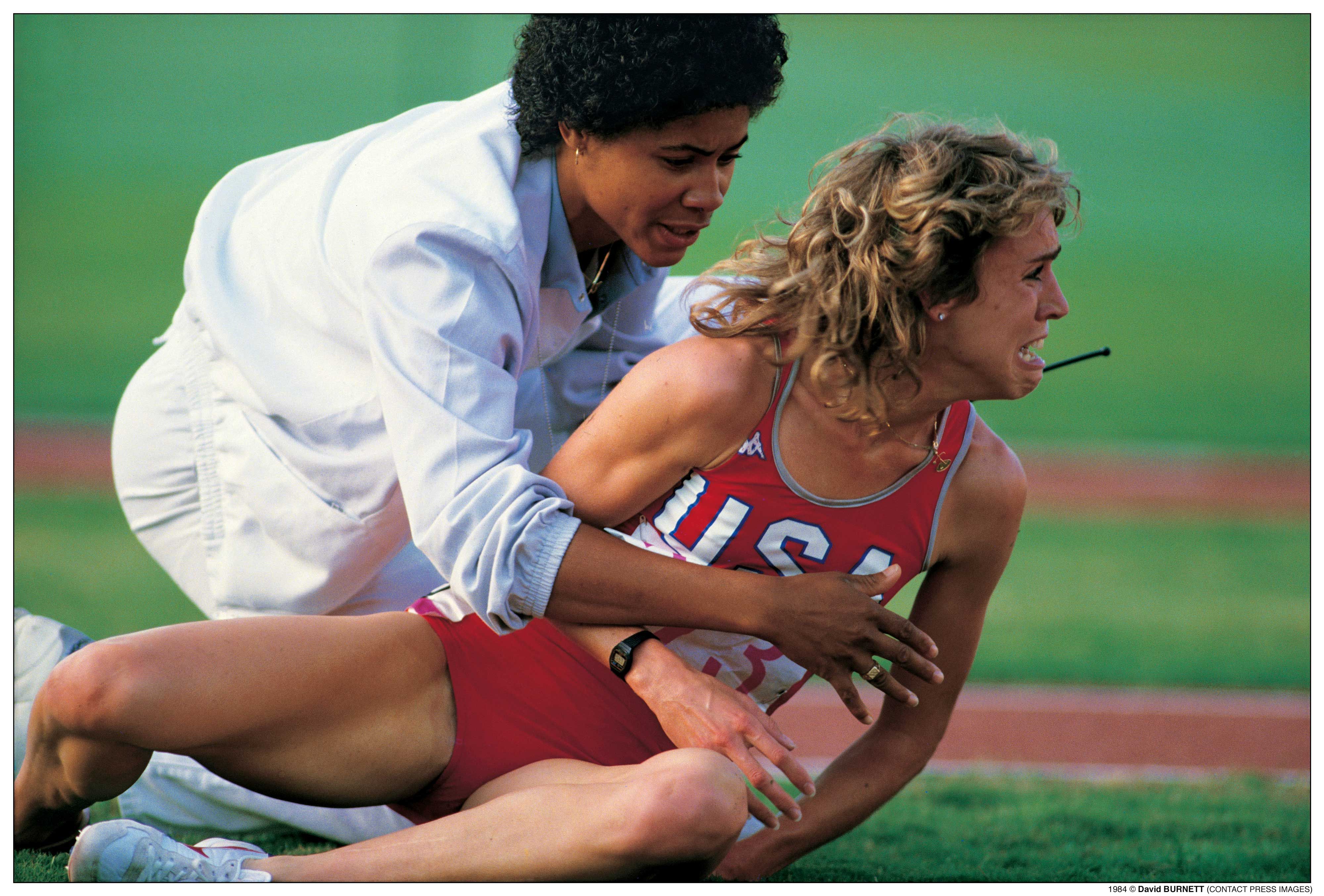
When the Soviets and the East Germans boycotted the 1984 Summer Olympics in Los Angeles, it left the American team almost free rein to win as many medals as it wanted. It became 16 days of unbridled, safe patriotism, a call of, "You're all welcome to visit our country, but our country is the greatest!" It was right up Reagan's alley, and right in his Southern California backyard. As the host nation's head of state, he even got to officially declare the Games open. He was great at ceremonial stuff like that, and he reveled in it.
3. The Curse of Jimmy Carter. Reagan was able to run against "The Carter-Mondale Administration," even though Carter was better at nearly everything than Reagan – including, as it turned out, creating jobs, avoiding tax increases and getting hostages out of Iran. Nearly everything... except explaining why he was good at those things. Carter was a good statesman, but he was a lousy politician. Reagan was a great politician, and knew how to look like a good statesman, even when he wasn't.
2. The Cold War. In spite of the sunny image he projected for both himself and America, Reagan was able to make Americans so frightened of the Soviet Union that they'd rather have a senile, lying Republican as President than an honest Democrat of sound mind.
1. "Morning In America." Quotation marks intentional. It was something that Americans, besieged by a quarter of a century of Cold War, civil rights struggles, race riots, assassinations, war, recession and terrorism desperately wanted to believe. And Reagan and his packagers were able to make them believe it. This was all part of the Actor's show. He never played any part as well as he played "President Reagan."
In short: Ronald Reagan wasn't a great President, but he played one on TV. The truth is, he was a disaster, one after which we are still cleaning up – and, with Donald Trump as his (un)natural successor, there is a new mess. People wanted to believe Trump could "make America great again." The Reagan years are almost certainly what he meant, because it was a time when he and his way of life were riding high, and unquestioned by liberals.
Also on this day, Ricardo Romero Jr. is born in East Los Angeles, California. Ricky Romero pitched for the Toronto Blue Jays from 2009 to 2013, but injuries have kept him out of the major leagues since. He made a comeback in the Mexican League, but that, too, has been ended by injury. He is married to retired soccer player Kara Lang, who played for Canada in the 2003 and 2007 Women's World Cups.
November 6, 1987: Ana Ivanovic is born in Belgrade, Serbia. She recently retired from tennis, having won only 1 major, the 2008 French Open, and reached only 2 other Finals. And we can't say the Williams sisters have gotten in her way, because she didn't face either Serena or Venus in any of those Finals.
She is married to German soccer star Bastian Schweinsteiger, and had their 1st child this year, a son. The United Nations named her Serbia's UNICEF Ambassador.
November 6, 1988, 30 years ago: James Alston Paxton is born in the Vancouver suburb of Delta, British Columbia. On May 8 of this year, the Seattle Mariners pitcher threw a no-hitter in a 5-0 win over the Toronto Blue Jays. His career record stands at 41-26.
Also on this day, Emily Jean Stone is born in the Phoenix suburb of Scottsdale, Arizona. Known professionally as Emma Stone, she won an Oscar for La La Land, and played Billie Jean King in the 2017 film Battle of the Sexes, with Steve Carell as Bobby Riggs. (This was the 2nd film about the event. In the 1st, When Billie Beat Bobby, in 2001, they were played by Holly Hunter and Ron Silver, respectively.)
November 6, 1989: Josmer Volmy Altidore is born at the same hospital I was: St. Barnabas Medical Center in Livingston, Essex County, New Jersey -- albeit 20 years later. And Jozy Altidore did not grow up in New Jersey like I did, instead growing up in Boca Raton, Florida.
He's played for several teams, starting with the New York Red Bulls from 2006 to 2008, helping them reach, so far, their one and only MLS Cup Final in 2008. He's played for Hull City and Sunderland in England, Villareal and Xerez in Spain, Burasapor in Turkey and AZ Alkmaar in the Netherlands.
He currently plays for Toronto FC, and and helped them win the 2017 MLS Cup, and the Canadian Championship (their "FA Cup") the last 3 years. He has represented the U.S. at the 2010 and 2014 World Cups, and helped win the 2017 CONCACAF Gold Cup. But his poor performances for the national team since then are a big reason why the team failed to qualify for the 2018 World Cup.
Also on this day, Aaron Josef Hernandez is born in Bristol, Connecticut -- also the hometown of ESPN, which certainly gave him lots of coverage. To paraphrase Mickey Rivers, he had a Hebrew first name, a German middle name, and a Spanish last name, no wonder he was all mixed up.
An All-American tight end at the University of Florida, he helped them win the 2009 National Championship. He became one of the few New England natives to play well for the New England Patriots. In 3 seasons, he caught 175 passes for 1,956 yards and 18 touchdowns, and scored a touchdown in Super Bowl XLVI, although the Giants beat the Patriots. He also helped the Pats reach the 2012 AFC Championship Game. As far as anyone knew, he seemed like he was on his way to a really good career.
He never played another game. What few people knew was, he already had a criminal history. Both of his parents had run-ins with the law. He had already gotten into a bar fight at Florida. On June 17, 2013, he shot and killed his friend Odin Lloyd in North Attleboro, Massachusetts, the town about halfway between Foxboro and Providence where they both lived. Hernandez was arrested, and immediately cut by the Patriots.
He was convicted 2 years later. He was then charged with another murder, but was acquitted with all charges from that case except a gun charge. This happened with a 3rd shooting, although this time the victim survived.
On April 19, 2017, Hernandez hanged himself in his cell. An autopsy showed his brain to have injuries consistent with CTE, stage 3 out of 4, "associated with aggressiveness, explosiveness, impulsivity, depression, memory loss and other cognitive changes." All of this matched what others had observed about him, including "keen insight and observational skills," but "gaps in memory that were highly unusual for a young person." He was said to have the kind of CTE symptoms one would expect to find in a former football player in his 60s. Aaron Hernandez was 27 years old.
*
November 6, 1990: André Horst Schürrle is born in Ludwigshafen, Germany. The soccer winger played enough games for West London club Chelsea in the 2014-15 season to receive medals for winning the Premier League and the League Cup, before being sold in midseason to German club Wolfsburg, whom he helped win the DFB-Pokal (German Cup). So he had what is probably a unique domestic Treble: A League title, a national cup win and a league cup win, but in 2 different countries.
He now plays for Borussia Dortmund, helping them win the 2017 DFB-Pokal, and was a member of the Germany team that won the 2014 World Cup. He is currently on loan to West London team Fulham.
November 6, 1991: Arsenal host Benfica at Highbury in North London, in the 2nd leg of the 2nd round of what turns out to be the last European Cup tournament under that name. The following season, 1992-93, it was rebranded as the UEFA Champions League. Since the Heysel Ban kept defending Football League Champions Arsenal from playing in the 1989-90 edition, this was only their 2nd time in it, following a run to the Quarterfinal in 1971-72.
Two weeks earlier, Arsenal had gone to Lisbon, Portugal, and held Benfica, that country's most storied sports team, to a 1-1 draw (with Kevin Campbell scoring) in front of 120,000 people in their Estádio da Luz. That stadium was demolished and rebuilt on the same site in 2003, and its current capacity is 64,642. The English translation of the name, "Stadium of Light," was applied to North-East club Sunderland's new stadium built in 1997. The new Benfica stadium's design would eventually inspire the design of Arsenal's new Emirates Stadium, which opened in 2006.
With the tie level, and with an away goal, and this being a Benfica squad far beneath their European Cup winners of 1961 and 1962, Arsenal fans were confident of victory and advancement. But after a 1-1 halftime score (2-2 on aggregate, 1-1 on away goals), Arsenal's defense leaked twice, and Benfica won 3-1, to advance 4-2.
This was one of the most humiliating defeats in Arsenal's history, in literally the biggest game George Graham ever managed. (Any European Cup/Champions League match is bigger than a European Cup Winners' Cup Final.) Ironically, the only Arsenal goal on this night was scored by Colin Pates, taking the Number 4 place in midfield vacated by Graham's foolish sale of Michael Thomas (to Liverpool, of all teams to send the 1989 title-clinching goalscorer to) the preceding off-season.
Fans who came of age in the Graham years (1986-95) loved to compare his record in European play with that of Arsène Wenger (1996-2018), who consistently kept the team in the Champions League, reaching the Final in 2006 and the Semifinal in 2009, but never won a European trophy, while Graham won the Cup Winners' Cup in 1994 -- a tournament so insignificant that UEFA folded it into the UEFA Cup (now the Europa League) in 1999.
But this game had everything they loved to hate about Wenger: An Arsenal side weakened due to selling off one of the team's best players, a poor defense, "shit tactics," and a spectacular failure in European competition, which could be called a loss to "farmers."
Just 9 weeks later came the 3rd Round of the FA Cup, a trip to North Wales that became known as "The Wrexham Disaster." That game has often been cited as Graham's most disgraceful defeat. Yes, it was bad. But it wasn't as bad as blowing a 2nd-leg home tie in a European Cup knockout round.
November 6, 1995: Art Modell announces that he's moving the Cleveland Browns to Baltimore, where they will become the Ravens. He does so because the City of Cleveland, the County of Cuyahoga and the State of Ohio refused to listen to his pleas to either build him a new stadium, or at least give him a better lease at the existing Cleveland Municipal Stadium.
Modell said he had no choice. He lied. He could have sold the Browns to a local buyer, and bought the rights to one of the 1995 expansion teams, and put that in Baltimore. Instead, he screwed Cleveland over.
November 6, 1997: Seinfeld airs the episode "The Merv Griffin Show." Cosmo Kramer (Michael Richards) finds the remains of the set of the famed talk show that ran from 1962 to 1986, and rebuilds it in his apartment. Wildlife expert and frequent talk-show guest Jim Fowler plays himself.
The cringey part is Jerry drugging his girlfriend Celia (Julia Pennington) to play with her toys. That's not a metaphor: She has a spectacular collection of vintage toys, but she won't let Jerry play with them, for fear of reducing their value. But it comes damn close to being date rape.
And, as George Costanza (Jason Alexander) points out, we have no deal with the squirrels.
The real Merv was still alive at the time, although his opinion of the episode remains unknown.
November 6, 1998, 20 years ago: The Waterboy premieres, starring Adam Sandler as a 31-year-old socially stunted waterboy for a college football team in Louisiana, who unexpectedly becomes a star player for them. Their head coach is played by Henry Winkler, a.k.a. The Fonz from Happy Days. And that is cool.
November 6, 1999: Bankers Life Fieldhouse opens in Indianapolis, replacing the Market Square Arena. The Indiana Pacers beat the Boston Celtics, 115-108, and go on to win the NBA Eastern Conference title for the 1st time. But they will lose the NBA Finals to the Los Angeles Lakers.
*
November 6, 2002: North London soccer team Arsenal lose to North-East club Sunderland 3-2, knocking them out of the League Cup. Attendance at Arsenal Stadium, a.k.a. Highbury: 19,059.
This remains the last time that Arsenal have played in front of a crowd that would not have sold out the 38,419 seats Highbury had from 1993 until its closing in 2006. That is not the case for their North London arch-rivals, Tottenham Hotspur: Having to play their 2017-18 home games at the 90,000-seat new Wembley Stadium in West London while a new stadium is built on the site of White Hart Lane, they got a crowd of just 23,926 for their September 19 League Cup win over Barnsley.
Also on this day, The West Wing airs the episode "Election Night." President Jed Bartlet (Martin Sheen) is re-elected, but shows signs that his multiple sclerosis will be an issue in his 2nd term. Also, Deputy White House Communications Director Sam Seaborn (Rob Lowe) discovers that he will have to keep a promise he made to the widow of the Democrat running for Congress in his home district in Southern California. This episode debuts Joshua Malina as Will Bailey, and Danica McKellar as his half-sister and campaign assistant Elsie Snuffin.
This episode should not be confused with the episode "Election Day," which resolves the storyline from this next entry:
November 6, 2005: The West Wing airs the episode "The Debate." It is a live episode, and the only episode of the show that is broadcast on videotape instead of film. Running to replace Bartlet are Republican Senator Arnold Vinick of California (M*A*S*H's Alan Alda) and Democratic Congressman Matthew Santos of Texas (L.A. Law's Jimmy Smits).
This occurs only 3 years after the episode showing Bartlet's re-election, because in the 2003-04 TV season, the show jumped from the middle of Year 5 of his Administration to the middle of Year 6, due to the fact that the actors' contracts all ran out after the show's 7th season.
November 6, 2008, 10 years ago: Dick Johnston dies in Boston at age 89. He wrote for The Buffalo News from 1939 to 1984, covered the Buffalo Sabres from their 1970 inception until his retirement, and was given the Elmer Ferguson Memorial Award, the Hockey Hall of Fame's equivalent for journalists.
November 6, 2009: The Yankees get a ticker-tape parade for winning the World Series. Only 1 other New York team has gotten one since: The Giants in February 2012.
Also on this day, the football team at my alma mater, East Brunswick High School, loses 37-34 to Brick Memorial -- by a weird coincidence, the high school closest to my late grandmother's residence. It represents the most points EB has ever scored in a game and still lost.
But the fact that Da Bears hung 34 points on the defending Central Jersey Group IV Champions -- a result of redistricting, since Ocean County had until recently been placed in South Jersey for Playoff purposes -- gave them a boost of confidence. They got to the Central Jersey Group IV Final, to be played at Lions Stadium at the College of New Jersey in Ewing, formerly Trenton State College. As it turned out, it was a rematch with Brick Memorial.
For the 1st time in EB's 49-season football history, snow fell during a game. And the Mustangs slipped all over the slick artificial turf. In contrast, EB ran the wishbone offense well enough to score a touchdown (but miss the extra point), and get into range to kick a field goal that somehow got through both the flakes and the uprights, and emerged with a 9-0 victory and its 4th State Championship, its 2nd in the 1974-present Playoff Era.
The 1st of those was in 2004, at Rutgers Stadium. Weird coincidence Number 1: To win that one, EB had to beat the other Brick high school, Brick Township, in the Quarterfinal. Weird coincidence Number 2: The 2004 Final was also against a defending champion from northern Ocean County with "Memorial" in its name, Jackson Memorial.
EB had also won in the pre-playoff era, having the best overall record in Central Jersey Group IV in 1966 and 1972, with the 1972-2004 drought including some moments worthy of the pre-2004 Red Sox, the pre-2016 Cubs, the Cleveland Browns, etc., including shocking defeats in the Final in 1984 and '85; the Semifinal in 1980, '87, '90 and '94; in the regular season in 1977, '78, '81 and '86; and a major downturn after 1990, making the Playoffs only twice between then and 2004.
*
November 6, 2012: President Barack Obama is re-elected, defeating former Governor Mitt Romney of Massachusetts. Romney had run the most dishonest Presidential campaign of all time -- a record that didn't even survive a full election cycle. But Obama won the popular vote, 51.1 percent to 47.2; and the Electoral Vote, 332 to 206.
Going into Election Day, Republicans were sure that Romney was going to win Pennsylvania, Ohio and Florida. If he had, it would have been a shift of 67 Electoral Votes, making Romney the winner, 273 to 265. But Obama won Florida by 45,000 votes, and both Ohio and Pennsylvania by 50,000. The "Swingiest of Swing States" did not trust the economy, which Obama had rescued after being crashed 4 years earlier by conservative businessmen, to another conservative businessman.
The Top 5 Reasons You Can't Blame Mitt Romney for Losing the 2012 Presidential Election
Here's some reasons that didn't make the cut: The Best of the Rest.
George W. Bush. He will hang over the GOP like Jacob Marley's ghost for a long time to come -- like Jimmy Carter did over the Democratic Party from 1980 to 1992 (but not afterward, thanks to Bill Clinton, no matter how hard Republicans have since tried), like Herbert Hoover did over the Republican Party from 1932 to 1980, when Ronald Reagan finally liberated them), like Woodrow Wilson did over the Democrats from 1920 to 1932 (when Franklin Roosevelt exorcised the ghost), like the Civil War did over the Democrats from 1864 to 1912 (when Wilson moved them into the 20th Century).
Voters may believe that Obama hasn't done enough to restore the economy, but they know damn well that he didn't cause the crash and the recession. Bush did. Conservative businessmen did. And Romney, as he kept telling us, was a conservative businessman.
Bill Clinton. His Convention speech gave Obama a huge boost, and his campaign appearances in States like Ohio and Florida helped a lot. If Al Gore had swallowed his pride and asked Clinton, then still President, to make so much as 1 joint appearance with him in Miami in the 1st week of November 2000, Gore would have won Florida by such a margin that Jeb Bush couldn't have stolen it, and Gore would have been unquestionably victorious overall.
Seal Team Six. Upon Obama's orders, they killed Osama bin Laden. If they had failed, it would have been for Obama what "Desert One," the failed attempt to rescue the hostages from Iran on April 25, 1980, was to Jimmy Carter. It would have made the Carter-Obama comparisons a lot more honest.
Instead, Obama got a victory that, no matter what Romney and his surrogates said about Benghazi, essentially took foreign policy off the table, because they had no chance to beat Obama on the issue.
Hurricane Sandy. True, every State affected by it was going to go for Obama anyway. But Obama's response, a polar opposite from Bush's on Hurricane Katrina in New Orleans in 2005 (and, as we have now seen, from Donald Trump's on Hurricane Maria in Puerto Rico in 2017), and his bipartisan work with Governor Chris Christie of New Jersey, made him look like a man who cared enough to help, was flexible enough to reach across the aisle, and competent enough to get things done.
Is Romney flexible? Certainly. Is he competent enough? Possibly. Does he care enough? Don't make me laugh, and if you think he does, recall "the 47 Percent Video." Obama's response to Sandy didn't turn a single State affected by it -- that was unnecessary -- but it helped him nationally.
The Wives. No, this is not a joke about Romney's religion, which used to allow polygamy. Nor did it make evangelical Protestants abandon him for Obama: I guess they'd rather vote for a Mormon than a black liberationist/Muslim/Communist-therefore-atheist. (I wish they'd pick one lie and go with it.)
This is a reference to Michelle Obama and Ann Romney. Ann may have helped "humanize" Mitt with her Convention speech, but thereafter, she acted like a petulant rich chick who thought everyone not rich was beneath her. In contrast, Michelle Obama acted like a fun person who wants you to have fun, too -- and all she asks in return is that you eat right and exercise. She won't force you, as was suggested. Michelle acted like her life would have been complete if Barack loses, or if he'd lost in 2008, or even if he'd never entered politics. Whereas Ann acted like she had to be First Lady.
We want our First Ladies to appear like living in the White House is nice, but they don't need it. Mamie Eisenhower, Lady Bird Johnson, Pat Nixon, Betty Ford, Rosalynn Carter, Barbara Bush, Laura Bush, they all seemed to be regular people. Even Jacqueline Kennedy, who most certainly was not "regular people," didn't act like living in the White House was some divine right of hers.
Nancy Reagan, on the other hand, acted as though it was her divine right. Hillary Clinton often came off as someone who thought so, and her softening of her own image was a big reason why Bill won in 1996, and why she was elected to the Senate in 2000 and came close to the Democratic nomination in 2008. The far right tried to paint Michelle as an entitled woman, which turned out to be ridiculous. Ann really is like that, and that only fed into Mitt's image as an out-of-touch rich guy.
Before I get down to the Top 5, let me take one potential reason off the table: Vice Presidential nominee Paul Ryan. True, the Congressman from Wisconsin didn't help bring his home State into the Romney column. But that's because, despite a lot of Republicans' hopes, and a few pundits bold predictions, Wisconsin was never going to vote for Romney. Governor Scott Walker's survival of his recall was more of a backlash against the movement to recall him, for not wanting to wait until the next election in November 2014.
(Face it, the only reason Gray Davis was recalled as Governor of California is because of the celebrity of Arnold Schwarzenegger. If Ahnold had never appeared in a movie, the idea of getting rid of Davis would have had some appeal, but once actual names were put up as potential replacements, he could have survived to serve out his 2nd term.)
Ryan is a far-right extremist. He's a liar. He's a top-level douchebag. But he's not a reason Romney lost. It was suggested that another "finalist" for the slot, Senator Rob Portman of Ohio, might have made the difference. No: Romney would still have lost the Electoral Vote if he'd won Ohio. Same with Senator Marco Rubio of Florida. In fact, Romney could have won Ohio and Florida, and he still would have lost, in both the popular vote and the Electoral Vote.
And even if you think Ryan did hurt Romney, remember: Romney chose him. He could have chosen someone else. So if you blame Ryan, you should blame Romney, too.
Now, the Top 5 Reasons:
5. It's the Economy, Stupid. James Carville's 1992 line for Bill Clinton still works. As I said, people still blame Bush and other "conservative businessmen" for causing the bad economy, much more than they blame Obama for not getting back to where it was in mid-2007, let alone where it was in 2000 before the tech bubble burst.
And it was getting better, in spite of all the GOP's obstructionism: Unemployment, which Obama did not cause to go to 10 percent, was now down below 8 percent. 750,000 jobs lost per month became job growth for 32 months in a row. The Dow Jones was down to 6,500 after the crash; it was double that, 13,000, on Election Day.
And people got it: "The massive debt" wasn't Obama's fault, not by a long shot. They accepted the truth that it was due to the tax cuts and the wars that Bush didn't pay for; and the debt that Obama did add on was necessary to clean up the mess Bush left. Blaming Obama for the deficit was like blaming the Yankees' pitching for their 2012 Playoff loss: It wasn't perfect, but it wasn't the problem.
4. The Republican Base. They're the ones who pushed Romney into disavowing his greatest (if not, as I've suggested, "only") accomplishment in his only political job. They're the ones who pushed him into abandoning his pro-choice -- or, as Ted Kennedy called it in their 1994 Senate battle, his "multiple-choice" -- stance on abortion. They're the ones who made him sound like Dick Cheney on foreign policy. They're the ones who pushed him to the hard right on immigration and gay rights, when he'd previously been a moderate on the former and at least willing to discuss the latter.
Primary opponents Rick Perry, then Newt Gingrich, and finally Rick Santorum worked so hard to pain Romney as "Massachusetts Moderate Mitt" -- trying to make him sound like John Kerry or, God forbid, Michael Dukakis, and even invoking the State as the only won one in 1972 by the late George McGovern -- that Romney had to come out and not only act like, but actually come out and say he was, someone who was "severely conservative."
"Severely." That one word, more than "I like being able to fire people," or "47 percent," or "Ten thousand bucks?" or even "Let Detroit go bankrupt," may have doomed him. You may not hear any other observer of the election say it. But "severe" has connotations of "bad," "harsh," "harmful." You hear of a man in a hospital being "severely injured," a soldier being "severely wounded."
The lunatics who use religion as a justification for their greed, or as an excuse for bigotry, pushed Romney away from the center-right man he'd been, more or less continuously, from 1994 to 2008. But since it became clear that McCain was not going to win in November 2008, he became "severely conservative" -- until that stopped working, because (as I'll return to later), Obama's campaign machine basically said, "Yeah, he is, and here's what that means."
The last time Romney looked like he had a real chance to win was after the first debate, when Obama looked tentative and underprepared, and Romney sounded like a prepared, reasonable, competent moderate. If he'd been that from the moment he clinched the nomination onward, he would have had a very good chance of winning. But if he'd been that during the Republican Primaries, he wouldn't have gotten out of New Hampshire with his candidacy intact.
Thinking he needed to appease the hard right may also have been a reason why Romney chose Ryan as the Vice Presidential nominee, instead of a more moderate conservative, such as Portman, or Governor Kelly Ayotte of New Hampshire.
3. The So-Called "Liberal Media." In 2000, they let the Bush team paint their man as honest and Gore as a liar. The voices stepping forward to defend Gore and to expose Bush as the real liar, as an intellectual lightweight, as a man monumentally underprepared for the Presidency, were too timid, or courageous enough but without enough power to spread their message.
In 2004, the same thing: The media let Bush lie through his teeth about himself and Kerry, to the point where Kerry (rather than Bush) looked like the elitist who was unfit to command our troops, and Bush looked like an average guy with the strength to lead our nation (both bull).
In 2008, the economic crash made the media's job easier: The facts showed the GOP couldn't be trusted, and McCain's efforts to lie about Obama were halfhearted; he's just not that kind of guy, although the kind of guy he is, isn't someone I could ever vote for.
This time, Romney and his surrogates told lie after lie after lie, and the Obama campaign struck back, saying, "Here's the truth," and showing the truth... and the media told the story. Would that they had done so in 2016 as well, but they didn't. Romney didn't boost their ratings, Trump did.
For half a century, since Nixon blamed the media for his 1962 loss, when a Republican loses, or thinks he's going to lose, he and his supporters blame "the liberal media." Usually for "taking him out of context." Even in 1964, a Barry Goldwater supporter was filmed yelling at a newspaper reporter, "Don't quote what he says, say what he means!" It never occurs to these candidates to not say things that they know are untrue, or represent their true feelings but could be taken out of context. Instead of blaming the media for telling the story, try blaming yourself for making the story available.
Which leads directly to...
2. James Carter IV. For 32 years, the GOP have been painting his grandfather, Jimmy Carter, as a political, military and moral weakling. Yes, Sunday school teacher Jimmy Carter is, in their words, a moral weakling, for letting the excesses of the 1970s be the excesses of the 1970s. Never mind that these things began under Nixon, often as a backlash against his policies, and steamrolled under Gerald Ford. Never mind that Carter could no more control what went on inside the doors at Studio 54 and Plato's Retreat than he could control what went on inside the doors at OPEC meetings.
That's been the line since 1980: Carter is a Democrat, and he's weak, therefore Democrats are weak, they're soft on immorality, soft on crime, soft on drugs, soft on defense, soft on Communism, soft on terrorism. Reagan is a Republican, and he's strong, therefore Republicans are strong. It was easy to compare Walter Mondale to Carter in 1984: He was Carter's Vice President. The Carter years were fresh enough in 1988 to make Michael Dukakis "another Jimmy Carter" and have it work.
But after 8 years of a highly (though hardly completely) successful liberal Democratic President, Bill Clinton, the comparison of Obama to Carter, endlessly repeated in conservative opinion pieces, was stupid. Especially since Carter's attempt to rescue the hostages in Iran failed, while Obama's similar attempt to kill Osama bin Laden succeeded.
If either 2012 candidate was "Ronald Reagan" when it came to defending this nation, it was Obama. (Never mind that Reagan's arms sales made Osama bin Laden's rise possible.) No, Romney was no Reagan: Reagan was likeable, Romney is not. And, as Seinfeld's George Costanza taught us, "It's not a lie if you believe it." Reagan said a lot of bull, but he seemed to believe it; Romney couldn't convince people to believe his lies. So Romney was no Reagan, and Obama was no Carter.
So it was appropriate that James Carter, a freelance filmmaker, was the one who filmed that banquet at which Romney denounced "47 percent of Americans" as moochers who the Republican couldn't reach, and thus didn't have to care about.
It became the Internet equivalent of the late-in-the-campaign banquet in 1884, attended by James G. Blaine, finally winning the Republican nomination on his 3rd try, after being branded as corrupt as hell (which he was). A speaker at that banquet was the Rev. Samuel Burchard, who denounced the Democrats as "the party of rum, Romanism and rebellion." Meaning they would not stand for prohibition, they were led by Catholics, and most of the Confederates in the Civil War were Democrats. That word got out, and it cost Blaine New York, which that State's Governor, Democratic nominee Grover Cleveland, might not have won after a sex scandal had damaged his campaign. It made all the difference, and Cleveland won.
James Carter, standing in for his then 88-year-old grandpa, like Banquo's ghost at Macbeth's royal feast, captured the moment, and spread it, and Romney looked like a different Massachusetts man: Charles Emerson Winchester III (played by David Ogden Stiers on M*A*S*H), who once told an investigator for a McCarthyist Congressman, "Sir, I am so conservative, I make you look like a New Dealer." "Cholls" was rich, elitist, bigoted (he openly detested the Irish and the Italians), and thought the slightest hardship was beneath him. And he had the ego to match.
As the series wore on, he became a bit more human and less of a caricature. (Which was Larry Linville's reason for leaving his role as Winchester's predecessor, Frank Burns: He didn't want to be an unlikeable sanctimonious far-right hypocrite forever. As with Stiers, the other castmembers have said Linville was a great guy offscreen.) Romney isn't a very intelligent man, but he has enough brains to realize he didn't want to sound like Charles -- or like another rich guy to whom he was often compared, Thurston Howell III (played by Jim Backus on Gilligan's Island -- and at least he would occasionally loan nice things to the other castaways and rewrote his will to include them).
It deeply offends Romney when people attack him for having gobs of money, or question whether he got it fairly. But he figured out that he couldn't look like the guy who writes off 47 percent of the country: "I care about 100 percent of Americans." He had to say it. Even though he didn't believe it, and the vast majority of that near-majority didn't believe it.
But if James Carter hadn't been there to film that moment, we never would have known that Romney said it. It would have been as if Nixon's Oval Office tapes had never been revealed until after he completed his 2nd term in January 1977. Instead, the tapes were revealed in July 1973, Nixon was forced to hand them over in August 1974, and he had to resign almost immediately thereafter. And, unlike Nixon, Romney didn't have the option to "burn the tapes." He never had possession, let alone ownership, of the clip. But now, he will have it stuck to him for the rest of his life.
So that's 2 ghosts: George W. Bush, as that of Jacob Marley; and Jimmy Carter, as that of Banquo. You could add a third, that of George Romney, the late former Governor of Michigan, whose 1968 run for President short-circuited, but who really was a moderate Republican -- and released his tax returns in full, unlike his son. We may never find out what Mitt was hiding -- but now, it doesn't matter, because he's lost. Now, it only matters to the historians, if they're curious enough.
Of course, none of the above factors would have made a damn bit of difference if it wasn't for Reason Number 1.
1. Barack Obama. Whatever you think of him, personally or politically, he ran a great campaign. He defined Romney before Romney could define him. He demolished Romney's attempts to define him as socialist, as weak on foreign policy, as someone who "doesn't believe in America," as somehow is "not really one of us."
Moreover, it's very hard to beat an incumbent President, even with an economy that is still growing slowly. The Rose Garden strategy" didn't work for Ford in 1976, or the elder Bush in 1992; but it did work for Reagan in 1984, Clinton in 1996, and the younger Bush in 2004. It worked for Obama in 2012.
Obama not only campaigned to keep his job, he continued to do his job. Whether it was on keeping the government running, or keeping the auto industry afloat, or passing health care reform, or ending the Iraq War, or killing bin Laden, or biding his time instead of diving right into the Arab Spring, people saw him do what Presidents do. Individual observers didn't have to agree with what he was doing, but they still saw him do it, still saw him "be President."
Romney looked like a President, for sure; but he didn't act like a President. Obama was able to show what Michael Douglas (whose wife I still love) said in The American President, after Richard Dreyfus (a liberal in real life) spent most of the movie playing a stand-in for Bob Dole, and closing every speech with, "My name is Bob Rumson, and I'm running for President!" Near the end of the film, Douglas defended his actions and those of his girlfriend, Sydney Ellen Wade, played by Annette Bening, closing with, "This is a time for serious people, Bob, and your 15 minutes are up. My name is Andrew Shepherd, and I am the President."
If Obama hadn't defended himself, and gone on offense, like Clinton -- if he'd rolled over like Kerry, Gore, Dukakis, Mondale, McGovern and Hubert Humphrey -- he'd have been a one-term President, a footnote, "the first black President," and little more. And the gains of his 2nd term wouldn't have happened.
*
November 6, 2009: The Yankees get a ticker-tape parade for winning their 27th World Series. Yankee Fans are still waiting for a 28th.
November 6, 2013: Clarence "Ace" Parker dies in Portsmouth, Virginia, at the age of 101. He had been the oldest living former Major League Baseball player, the oldest living former National Football League player, and, as best as we can determine, the 1st former NFL player to live to see a 100th birthday.
A two-way back, he starred for Duke University and the NFL team named the Brooklyn Dodgers, and was the 1940 NFL Most Valuable Player. He was elected to the Pro Football Hall of Fame in 1972. He was also a shortstop for the Philadelphia Athletics in 1937 and 1938.
November 6, 2014: The Cleveland Browns win "the Battle of Ohio," beating the Cincinnati Bengals 24-3 at Paul Brown Stadium in Cincinnati. It remains the Browns' last win over the Bengals.
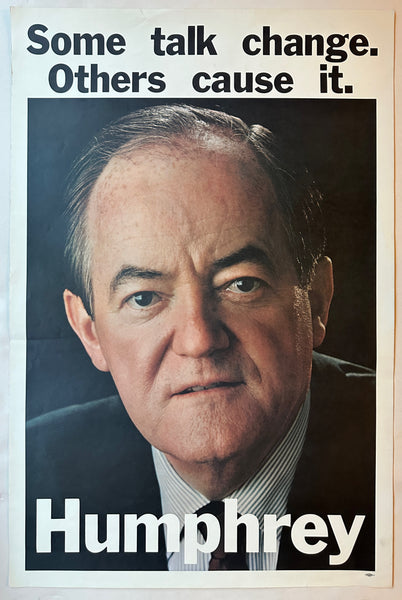


.jpg/330px-President_Ronald_Reagan_during_a_radio_address_to_the_nation_from_Rancho_del_Cielo_(cropped).jpg)