Showing posts with label u.s. senate. Show all posts

Friday, March 14, 2025

March 14, 1950: A Senator Denounces Ingrid Bergman

March 14, 1950, 70 years ago: Swedish actress Ingrid Bergman is denounced on the floor of the U.S. Senate, for her "immorality."

Bergman had starred in Casablanca; the film version of Ernest Hemingway's For Whom the Bell Tolls; Alfred Hitchcock's films Gaslight (winning an Academy Award for Best Actress), Spellbound and Notorious; and had played a nun in The Bells of St. Mary's, and a saint in Joan of Arc. She was not only beloved around the world, but was viewed as worthy of those nun and saint roles. She was Catholic, but she was married, to neurosurgeon Petter Lindström, with a daughter, Pia.

In 1949, she wrote a letter to Italian director Roberto Rossellini, saying she admired his films and wanted to work with him. He invited her to star in his film Stromboli. They began filming, and they began an affair. As a result, she became pregnant.

On February 2, 1950, Renato Roberto Ranaldo Giusto Giuseppe Rossellini, nicknamed "Robin," was born. On February 9, Bergman obtained a "quickie" Mexican divorce from Lindström. On February 12, Stromboli was released in America. It did well in Europe, where their affair wasn't considered as big a deal. In spite of Italy being, historically, a very conservative country, the film was awarded the Rome Prize for Cinema as the best film of the year.

But in America, it was a box-office bomb. RKO Pictures, the American distributor, lost $200,000 on it. Most reviews suggested that the film was weak, but fell short of being nasty: American critics seemed willing to dislike it on merit.

On March 14, Senator Edwin C. Johnson, Democrat of Colorado, a baseball executive who built the original version of what became Mile High Stadium in Denver, denounced Bergman on the floor of the U.S. Senate. He said that she had once been his favorite actress. But now:

Now that the stupid film about a pregnant woman and a volcano has exploited America with the usual finesse, to the mutual delight of RKO and the debased Rossellini, are we merely to yawn wearily, greatly relieved that this hideous thing is finished, and then forget it? I hope not. A way must be found to protect the people in the future against that sort of gyp.
At this point, the Hays Code was still in effect, and cuts to Rossellini's film had been made to make it fit for American release. But Senator Johnson wanted to go further: He proposed a bill wherein movies would be approved for licenses based on the moral compasses of those behind the picture, insisting that Bergman "had perpetrated an assault upon the institution of marriage," and going so far as to call her "a powerful influence for evil."

There was a double standard at work: Male actors were able to work their way through the bedrooms of Southern California without being shamed into stopping. Her co-star in For Whom the Bell Tolls, Gary Cooper, slept with pretty much all of his female co-stars. So did her co-star in The Bells of St. Mary's, Bing Crosby -- who, in that film and its prequel, Going My Way, had played a priest, and was known as a Catholic moralist. The affairs of male actors may have been poorly-kept secrets in Hollywood, but the legitimate news outlets kept them quiet.

(Both Cooper and Crosby had co-starred with Grace Kelly, who fooled around with them, and with pretty much every male co-star she had. It's been suggested that the reason she was allowed to marry Prince Rainier III of Monaco was to cover up a coming revelation about her character.)

Bergman allowed nationally-syndicated columnist Art Buchwald to read her mail during the scandal. In an interview years later, he said, "Oh, that mail was bad: Ten, twelve, fourteen huge mail bags. 'Dirty whore.' 'Bitch.' 'Son of a bitch.' And they were all 'Christians' who wrote it." (Buchwald was Jewish.) Bergman later said, "People saw me in Joan of Arc, and declared me a saint. I'm not. I'm just a woman, another human being."

On May 24, she married Roberto Rossellini. On June 18, 1952, she gave birth to twin daughters, Isotta and Isabella. She could not return to America, but made the film Anastasia in 1956. It had been 6 years, and Ed Sullivan was willing to believe that America would welcome her back. He flew to Europe and filmed an interview with her, intending to air it on The Ed Sullivan Show. But when he got back to New York, CBS, which normally gave him a lot of leeway due to his show being the most popular one on the network, put its foot down, and said no, she could not appear, not even on film. Ed had wasted a lot of money, time and effort in a good cause.

But on March 27, 1957, she was announced as the winner of her 2nd Academy Award for the film, and the audience in the NBC Century Theatre in New York gave the announcement a rousing round of applause. Former co-star Cary Grant, one of the few celebrities to stick up for her all that time, accepted the award on her behalf, and brought it to her in London. She, Grant, Sullivan, and everyone else who had stood up for her were vindicated.

Later that year, she and Rossellini were divorced, following his affair with another actress; and she was reunited with her daughter Pia, in Rome. Petter Lindström, however, remained bitter towards Bergman. In 1958, Ingrid married Swedish theatrical producer Lars Schmidt. That marriage ended in divorce in 1975, the year she won a 3rd Oscar, for Best Supporting Actress for her role in Murder On the Orient Express.

She died in 1982, of cancer, on her 67th birthday. Rossellini had died in 1977. Lindström lived until 2000; Schmidt, until 2009. Pia Lindström became a journalist, Robin Rossellini a director like his father, Isabella Rossellini a model and an actress like her mother, and Isotta Rossellini became a literature professor. All 4 of Ingrid Bergman's children are still alive.

And Edwin C. Johnson? After serving 3 terms in the Senate, he did not run for a 4th in 1954, seeking to return to an office he had previously held, that of Governor of Colorado. He won, but did not run again in 1956, and never ran for office again. He died in 1970. In 1972, Senator Charles Percy, Republican of Illinois, officially entered an apology for Johnson's denunciation of Bergman into the Congressional Record.

Wednesday, March 5, 2025

March 5, 1875: The Brief Return of Andrew Johnson

March 5, 1875, 150 years ago: Andrew Johnson is sworn in as a member of the U.S. Senate. Just 7 years earlier, the Senate had tried to ensure that he never held public office in America again.

Andrew Johnson (no middle name) was born on December 29, 1808 in Raleigh, North Carolina. His father died when he was 3 years old, casting the family into dire poverty. He apprenticed as a tailor, moved to Greenville, Tennessee, and, at age 18, married 16-year-old Eliza McCardle, in a ceremony performed by Justice of the Peace Mordecai Lincoln -- a 1st cousin of Abraham Lincoln. They had 5 children, none of whom ever ran for public office. All 3 sons died young, from alcoholism, and 2 of them predeceased Andrew.

He had as many as 10 slaves, but freed them shortly after the Emancipation Proclamation, keeping them as paid servants. He was elected an Alderman in Greenville in 1829, and became a delegate to a convention writing a new Constitution for Tennessee. He was elected Mayor in 1834, to the State House of Representatives in 1835, to the U.S. House of Representatives in 1843, Governor in 1853, and U.S. Senator in 1857.

Johnson was the only Senator from a State that seceded from the Union in 1860-61 who did not resign his seat. He remained loyal to the Union. President Lincoln rewarded him for this by appointing him Military Governor of Tennessee in 1862. In 1864, seeking to widen his support, the Republican Lincoln asked his Vice President, former Maine Senator Hannibal Hamlin, to step aside from the ticket, and he formed a "National Union" ticket with the Democratic Johnson.

Lincoln and Johnson won, and were inaugurated on March 4, 1865. But while Lincoln's Inaugural Address was one of the greatest ever -- with its request, "With malice toward none, with charity for all" -- Johnson was hungover from celebrating the night before, was given more drinks, and was drunk when he delivered his Inaugural Address. He was still so out of it when Lincoln spoke that, knowing there were photographers, Hamlin blocked Johnson's face with his top hat.

Lincoln was shot by John Wilkes Booth on April 14, 1865, and died the next morning, April 15, at 7:22 AM. At 11:00 AM, Johnson was sworn in by the Chief Justice of the United States, Salmon P. Chase, a former Senator from Ohio. The ceremony was held at the Kirkwood House, a boarding house, at 1111 Pennsylvania Avenue NW, 4 blocks east of the White House. (It was demolished in 1874. The site is now occupied by an office building, with ground-floor retail, including The West Wing Cafe.)

Johnson continued Lincoln's lenient "Reconstruction" policy toward the South, which was considered too lenient by the "Radical Republicans" who then controlled Congress. It's important to note that, at this point in the nation's history, the Republicans were liberal, including being pro-civil rights, and, while they were based in what's now considered the Midwest, they also dominated the Northeast; while the Democrats were conservative, with a base in the "Solid South," and stood up for white supremacy.

And so, the Republicans, led by such men as Representative Thaddeus Stevens of Pennsylvania and Senator Benjamin Franklin Wade of Ohio, and Johnson fought like cats and dogs. Congress passed the Tenure of Office Act, preventing the President from firing any member of the Cabinet without the consent of the Senate. After all, the Senate had to give consent to appoint someone to the Cabinet, so why shouldn't their consent be needed to remove someone from it?

But the consent of the Senate for Cabinet appointments was written into the Constitution of the United States. The Constitution did not prevent the President from firing a Cabinet member without the Senate's consent. Eventually, well after Johnson was dead, the U.S. Supreme Court would rule that Johnson was right, and struck the Act down.

Johnson fired the Secretary of War, Edwin Stanton, who had been appointed by Lincoln. On February 24, 1868, the House impeached Johnson, the 1st impeachment of a President. His trial began in the Senate on March 5, with a conflict of interest: Under the law in effect at the time, since the Vice Presidency was vacant following Johnson's rise to the Presidency, if he were to be convicted, the next President would be the President Pro Tempore of the U.S. Senate -- Ben Wade. He should have recused himself from the trial. He did not.

On May 16, the Senate voted on the 11th Article of Impeachment, accusing Johnson of firing Stanton in violation of the Tenure of Office of Act once the Senate had overturned his suspension. The vote was 35 Guilty, 19 Not Guilty. With a 2/3rds majority required to convict Johnson and remove him from the Presidency, he thus stayed in office by 1 vote. One vote. In the days to come, 2 other Articles of Impeachment also went down to 35-19 votes, and the others were dropped, with the presumption that the results would be roughly the same.

There were 10 Republicans who broke from their party to acquit him. One, James Grimes of Iowa, said, "I cannot agree to destroy the harmonious working of the Constitution for the sake of getting rid of an unacceptable president." Another, Edmund G. Ross of Kansas, would later be one of the Senators cited in John F. Kennedy's book Profiles in Courage.

It was just as well: Johnson was done as President within a year, anyway. The Republicans, no longer needing votes from the South, were never going to re-elect him. And the Democrats viewed him as having abandoned them. In the 1868 election, the Republican nominee, General Ulysses S. Grant, easily defeated the Democratic nominee, Governor Horatio Seymour of New York.

On March 4, 1869, Johnson did not attend Grant's Inauguration. They already did not get along, and Johnson refused the traditional carriage ride of the outgoing and the incoming Presidents from the White House to the Capitol. He stayed at his desk, literally working until the last minute of the last day of his Administration. While some of those carriage rides, which became an automobile ride in 1921, were tense, no outgoing President would refuse to attend the incoming President's Inauguration again until Donald Trump for Joe Biden in 2021.

Seeking vindication for himself, and revenge against his political enemies, he launched a Senate bid soon after returning home. At the time, Senators were still elected by State legislatures, and he lost his 1869 race. He lost a House race in 1872. On January 26, 1875, he won a Senate seat. He remains the only former President to be elected to the Senate, although John Quincy Adams was elected to the House after his failed bid for re-election.

When Andrew Johnson walked into the Senate chamber for his swearing-in on March 5, 1875, he was greeted with a standing ovation, and given a bouquet of flowers. John Sherman of Ohio, brother of General William Tecumseh Sherman, and one of the leaders of the move to convict him, shook his hand. With some irony, Johnson's predecessor as Vice President, Hannibal Hamlin, had also been returned to the Senate, and they were sworn in together by the current Vice President, Henry Wilson.

Johnson returned to Tennessee after the special session of Congress ended, and died of a stroke as his daughter Mary's farm near Elizabethton on July 30, 1875, at the age of 66, less than 5 months after his return to the Senate. When he was buried in Greenville, a copy of the Constitution was put in his coffin, in place of a pillow.

Because of his pro-South policies and racism, much more than for the circumstances that led to his impeachment, he has consistently been rated one of the worst Presidents. Nevertheless, he did produce one of the greatest comebacks in the history of American politics.

Only one film has been made about him: Tennessee Johnson, in 1942, starring Van Heflin -- not to be confused with Van Johnson (no relation to Andrew) or Van Williams. A Presidential Library was set up for him on the campus of Tusculum University in Greenville, Tennessee. U.S. Route 11E in northeastern Tennessee, including Greenville, is named the Andrew Johnson Highway. No U.S. Navy ship has been named for him.

A note about Chief Justice Chase, who swore Johnson in as President: In 1934, his portrait appeared on a one-time issue of a gold certificate with a face value of $10,000. The U.S. government has not issued a bill larger than $100 since.

Friday, November 8, 2024

November 8, 1994: The Gingrich Revolution

November 8, 1994, 30 years ago: Election Day is a repudiation of the Democratic Party, in particular of President Bill Clinton, his now-withdrawn health care reform plan, and his Assault Weapons Ban. The Republican Party gains 52 seats in the U.S. House of Representatives, giving them control of that body for the 1st time in 40 years, and making Newt Gingrich of Georgia the Speaker. It also gains 9 seats in the U.S. Senate, giving them control of that body for the 1st time in 8 years, returning Bob Dole of Kansas to the office of Senate Majority Leader.

In New York State, Mario Cuomo is defeated for a 4th term as Governor by Peekskill Mayor George Pataki. In Texas, George W. Bush, son of the most recent Republican President, is elected Governor, defeating the State's 1st female Governor, Ann Richards. Bush's brother, John Ellis "Jeb" Bush, narrowly loses to Governor Lawton Chiles of Florida. I suspect that, had it not been for the Savings & Loan Scandal, another brother, Neil Bush, would have run for Governor of Colorado.

In addition, Senators Richard Shelby of Alabama and Ben Nighthorse Campbell of Colorado switched parties to become Republicans. Shelby had previously called himself "the most conservative member of the Senate"; and Campbell, then the only Native American in either house of Congress (still alive as of November 8, 2022, he is a member of the Cheyenne tribe), was more of a Western libertarian than a traditional conservative, but favored gun rights. So neither switch was a big surprise, although they didn't exactly show courage by jumping ship after the election.

Gingrich knew that it wasn't enough to be against Clinton, or against Democrats in general: You had to give the voters something to vote for. He had a 10-point "Contract With America," which includes some reforms of Congress itself, including some items that Democrats were willing to work with them to pass, if with some minor adjustments. But some were drastic, and opposed by most Americans.
The backlash that hit him even before he could take office as Speaker led to him, with Christmas coming up, to being compared with two of the villains of pop-culture Christmas: Time compared him to Ebenezer Scrooge of Charles Dickens' A Christmas Carol, while Newsweek compared him to the title character of How the Grinch Stole Christmas.
As promised, all 10 items passed the House in the 1st 100 days of Republican control. And 9 of them passed the Senate. But some of these, including a radical reform of the nation's welfare laws, and a significant tax cut for the wealthiest 1 percent of Americans, were vetoed by Clinton.

The 1 item that passed the Senate, but not by enough, was an Amendment to the Constitution requiring that the federal budget be balanced. On its face, this seemed like a good idea. The devil was in the details: Because Republican Presidents Ronald Reagan and George H.W. Bush had run the federal budget deficit so high in their 12 consecutive years in the White House, balancing the budget would have required significant spending cuts to Social Security, Medicare, Medicaid, educational spending, and environmental spending. The Republicans were fine with all of that. But they weren't willing to cut spending on new military projects, and Clinton and the Democrats called them out on that.

In the end, requiring a 2/3rds "supermajority" of both houses on Congress -- 290 votes in the House, and 67 in the Senate, instead of a simple majority of 218 and 51, respectively -- the Amendment fell 1 vote short in the Senate.

One Republican voted against it: Mark Hatfield of Oregon. As a former Governor of a State whose budget was already constitutionally required to be balanced -- a lot easier, since States have far lesser, and lesser-ranging, expenses than the country at large, but by no means easy -- Hatfield understood that the Amendment would have been dangerous. It would have cast millions of people into poverty, made things worse for those already poor, and might even have killed people.

And so, the battle was on: Gingrich would lead a Congressional campaign for 1996 on a revised Contract with America, while Senate Majority Leader Bob Dole of Kansas would be the Republican nominee for President, supporting it; and Clinton would run for re-election, calling the Republican proposal "the Contract On America," and making the increasingly unpopular Gingrich "Dole's running mate," no matter who Dole ultimately selected to be his Vice Presidential nominee. Gingrich's successes in early 1995 led Time magazine to name him its Man of the Year.
(Dole chose Jack Kemp, former pro quarterback, an 18-year Congressman where he became one of the champions of tax-cutters, an unsuccessful Presidential candidate in 1988, and President Bush's Secretary of Housing and Urban Development.)

In the end, Clinton was re-elected solidly over Dole, but the Democrats were unable to take back either house of Congress. Over the course of his 2nd term, even as the Republicans tried to impeach Clinton over things that were none of their, or the American people's, concern, failing to get conviction and removal, they were forced to work with him. In 1997, the federal budget was balanced. Clinton, Gingrich, Dole, and Dole's successor as Senate Majority Leader, Trent Lott of Mississippi, could all legitimately claim some credit for that.

But the Republicans' effort to remove Clinton from office angered many Americans, and, incredibly unusual for a party in its 6th straight year of holding the White House, the Democrats actually gained seats in the 1998 Congressional election. Gingrich resigned later that week, pressured into it not because of his own personal and legal failings, in each case worse than Clinton's, but because he had failed as a leader. The conservative movement will accept anything except failure.

The evangelical takeover of the Republican Party became complete with the election of George W. Bush, son of the former President, in 2000. Like Richard Nixon before him, Gingrich bided his time, mended some fences, supported Republican candidates wherever he could, and built a new constituency. In 2008, Barack Obama was elected President, and Gingrich ran for the Republican nomination to beat him for re-election in 2012. He won some Primaries, but his personal scandals came back to haunt him, and he lost too many Primaries to continue.

At the age of 81, he is now seen as an elder statesman in the Party, but, as long as Donald Trump is its emotional leader, the last true "ideas man" in the Republican Party has no place in directing its course.

Sunday, June 9, 2024

June 9, 1954: The Fall of Senator Joe McCarthy

Senator Joseph R. McCarthy (left) and Roy Cohn

June 9, 1954, 70 years ago: Senator Joseph McCarthy, Republican of Wisconsin, goes too far, and the country sees it, and sees him for what he really is: A liar and a bully.

McCarthy was a Marine tail-gunner in World War II, although stories of his heroism appear to have been exaggerated, including by himself. In 1946, he was elected to the U.S. Senate, and the 1st 3 years of his term (1947, 1948 and 1949) were unremarkable.

But at a "Lincoln Day" speech in Wheeling, West Virginia early in 1950, he held up a piece of paper he claimed was a list of employees of the U.S. Department of State who were active members of the Communist Party. He would repeat this charge many times, but the number would change: Sometimes, it was 205; others, it would be 57; sometimes, another number.

It made McCarthy a national celebrity, at a time when most U.S. Senators were not well-known outside their respective home States. This was before 24-hour news networks, before C-SPAN, before social media.

Conservatives jumped to his support. Liberals said he was wrong, even lying. Washington Post cartoonist Herbert Block, who signed his cartoons "Herblock," created the term "McCarthyism," in his "tower of tarbuckets" drawing.
But that was in The Washington Post, a liberal newspaper in those days. Most of the media of the time, dominated by newspapers, was overwhelmingly conservative, pro-business and anti-Communist. McCarthy was exactly what they were looking for. The new "Red Scare," following the earlier one of 1919 and 1920, was on.

The Republicans made big gains in both houses of Congress in 1950, and won control of both houses in 1952, as General Dwight D. Eisenhower was elected President in a landslide. But even Eisenhower had to take a back seat during the '52 campaign: He had heard McCarthy make a false charge against General George C. Marshall, and ripped McCarthy for it face-to-face.

But a Republican official told "Ike" not to defend Marshall in his speech in Milwaukee, because it would make McCarthy look bad in his bid for a 2nd term. Ike dropped the mention of Marshall, McCarthy was re-elected, and Wisconsin, not really in doubt for the Republicans that year, was won by Ike.

After his Inauguration, though, Ike was determined to keep an eye on McCarthy. And when McCarthy convinced Karl Mundt of South Dakota, another "Red-baiter" and the Chairman of the Senate's Subcommittee on Investigations, to hold hearings on Communist influence in the U.S. Army, the Army's greatest living ex-officer, Eisenhower, was furious, and invoked executive privilege when McCarthy demanded documents from the U.S. Department of Defense. But, as it turned out, Ike would not be directly involved in McCarthy's downfall.

On March 9, 1954, CBS News broadcast See It Now, hosted by Edward R. Murrow, who decided to expose McCarthy by broadcasting film footage of him telling bald-faced lies, and then exposing said lies. It was devastating, and it began McCarthy's fall.
In 2005, the film Good Night, and Good Luck (titled after Murrow's signoff) dramatized the broadcast and the events leading up to it. After an early screening, some people said the actor playing Senator McCarthy seemed too mean, like too much of a bully. There was no actor: They used actual footage of McCarthy, to better make the point of how bad McCarthy was -- just as Murrow did.

One week later, on March 16, 1954, what became known as "the Army-McCarthy Hearings" convened. Starting on April 22, 2 American TV networks began broadcasting gavel-to-gavel coverage. One, the DuMont Network, was already in financial trouble. The other, ABC, the American Broadcasting Company, had begun as a radio subsidiary of NBC, and broadcasting these hearings made them a major network for the first time. DuMont was probably doomed anyway, and ABC took their place in the "Big Three" alongside NBC and CBS.

Throughout the hearings, McCarthy issued charge after charge, and so did the man hired as legal counsel for the Committee, Roy Cohn. A whiz kid with a keen mind and a nasty disposition, he had graduated from law school at Columbia University when he was only 20 years old, and had to wait until his 21st birthday to be admitted to the New York State bar. He was appointed to the U.S. Attorney's office in New York, and served as the main prosecutor for atomic spies Julius and Ethel Rosenberg.

That got the attention of FBI Director J. Edgar Hoover, who recommended him to McCarthy. Now, only 27 years old, Cohn was the most famous lawyer in the country, and could have had a big career ahead of him had he not been Jewish. (Jacob Javits was in the House of Representatives for New York at the time, and was elected a U.S. Senator in 1956, but was never seriously considered for the Presidency.) But, unknown to the general public, Cohn was gay, and had this been exposed at the time, it would have destroyed him.

Things came to a head on June 9. Joseph N. Welch, a prominent attorney from Boston (and, it should be noted, a Republican), was senior counsel for the Army. McCarthy claimed to have a list of 130 "subversives" working in defense plants. Welch challenged McCarthy to give that list to the Defense Department and the FBI "before the Sun goes down."

McCarthy knew that his list was bullshit. And Welch knew it. And McCarthy knew that Welch knew it. So McCarthy went on the attack, saying that Welch should check on Fred Fisher, a young lawyer in Welch's firm. Fisher had once belonged to the National Lawyers Guild, a group that Attorney General Herbert Brownell had called "the legal bulwark of the Communist Party" in America.

Welch had wanted Fisher on his team for these hearings, but asked him if there was anything in his background that McCarthy could exploit. Fisher admitted that he had once belonged to the NLG. Welch knew this would be bad, and kept Fisher in Boston.

Welch responded to McCarthy's invocation of Fisher:

Little did I dream you could be so reckless and so cruel as to do an injury to that lad. It is true he is still with Hale and Dorr. It is true that he will continue to be with Hale and Dorr. It is, I regret to say, equally true that I fear he shall always bear a scar needlessly inflicted by you. If it were in my power to forgive you for your reckless cruelty I would do so. I like to think I am a gentleman, but your forgiveness will have to come from someone other than me.

McCarthy kept up the attack, but Welch shut him down: 

Let us not assassinate this lad further, Senator. You've done enough. Have you no sense of decency, sir? At long last, have you left no sense of decency?

Welch decided that he had had enough, and told Mundt, "Mr. Chairman, you may, if you wish, call the next witness," got up, and left the Senate Caucus Room, which burst into applause.

McCarthy was damaged, perhaps beyond repair. But it wasn't over. Another member of the Committee was Stuart Symington, Democrat of Missouri. He knew the Pentagon, because he had been Assistant Secretary of the Army during World War II, and was named the 1st Secretary of the Air Force when it was split off from the Army in 1947.

Elected to the Senate in 1952, he already had ambitions. His name was placed in nomination for President at the Democratic Conventions in 1956 and 1960, but he didn't get very far either time. As a sports note, despite being from St. Louis, he was a vocal proponent for getting a new baseball team for Kansas City, the Royals, after the Athletics moved in 1967.
Symington suggested that maybe some members of McCarthy's staff might be subversive. McCarthy called him "Sanctimonious Stu," and said, "You're not fooling anyone!"

Symington came back, and said, "Senator, the American people have had a look at you now for six weeks. You're not fooling anyone, either."

Symington was right: In January 1954, the Gallup polling organization had McCarthy with a 50 percent approval rating, with 29 percent disapproving. When the hearings concluded on June 17, it was 45 to 34 disapproving. And the hearings didn't expose one single Communist or other subversive. On December 2, 1954, the Senate voted 67-22 to censure McCarthy.

For those of you who are Yankee Fans: A man named Joe McCarthy managed the Yankees from 1931 to 1946, winning 8 American League Pennants and 7 World Series. However, he and the Senator appear not to have been related.

Aside from the name, the only thing that manager Joseph Vincent McCarthy and Senator Joseph Raymond McCarthy seem to have had in common is heavy drinking. And even that didn't affect them the same way: The Senator died from cirrhosis on May 2, 1957, less than 3 years after this confrontation, at the age of 48; while the manager lived to be 90, long enough to see the Reggie Jackson Game.

Monday, February 12, 2024

February 12, 1999: President Bill Clinton Is Acquitted

February 12, 1999, 25 years ago: President Bill Clinton is acquitted by the U.S. Senate in an Impeachment trial.

There were 4 Articles of Impeachment drawn up by the House's Committee on the Judiciary, and 2 of them passed the full House, with a 2/3rds' majority, of the Senate, 67 out of 100, required to vote "Guilty" in order to remove him from office:

* Perjury before a grand jury: 55 Nay, 45 Yea. All Democrats voted Nay. Republicans voting Nay: Ted Stevens of Alaska, Richard Shelby of Alabama, Olympia Snowe and Susan Collins of Maine, Arlen Specter of Pennsylvania, John Chafee of Rhode Island, Fred Thompson of Tennessee, Jim Jeffords of Vermont, John Warner of Virginia, and Slade Gorton of Washington. 

Specter had been a Democrat until switching parties as a young prosecutor in 1965, and would switch back in 2009. Shelby had been a Democrat until 1994, when the Republicans won the Congressional majority, and he cowardly joined them. Chafee died later in the year, and was succeeded by his son, Lincoln Chafee, who later switched parties. Jeffords switched parties in 2001.

* Obstruction of Justice: 50 Yea, 50 Nay. All Democrats voted Nay. This time, Stevens, Shelby, Thompson, Warner and Gorton voted to convict, while the other Republicans stayed consistent.

The case was based on Clinton's attempt to hide the fact that he had an extramarital relationship with Monica Lewinsky, a former White House intern. It had nothing to do with using the power of his office to commit election fraud, as was the case with Richard Nixon, who resigned in 1974 before the full House could vote on Articles of Impeachment; and with Donald Trump, who was impeached in 2019 and acquitted early the next year.

The evidence against Clinton was so ridiculous, the Republicans, who held the majority, could not get a majority, 51 votes, to say that he had done it. Surely, there were some Senators who knew he was innocent, but voted "Guilty" anyway, because, like the leaders of the impeachment movement in the House, they hated him so much.

And yet, with Speaker Newt Gingrich having resigned before the impeachment, once the trial was over, things calmed down considerably. Over the last 2 years of Clinton's Administration, the White House and the Congress worked together much better, got some things done, and kept the good economy going. It can be argued that, by the end of the year, decade, century and millennium, America had never been in better shape. Maybe, it still hasn't.

Of the 50 Republican Senators who voted "Guilty" on at least 1 Article of Impeachment, 3 are still serving in the Senate, 25 years later:

* Chuck Grassley of Iowa, elected with the "Reagan Robots" Class of 1980, now the last remaining member of that class, and the longest-serving active Senator.

* Mitch McConnell of Kentucky, elected in 1984, the 2nd-longest-serving active Senator, and the Republicans' longest-serving Senate Leader, in that post 2007.

* And Mike Crapo of Idaho, who had been elected to the Senate just before the Impeachment vote, and thus voted to both successfully impeach Clinton in the House and unsuccessfully convict him in the Senate. (And that's pronounced KRAY-poh, not CRAP-o, although confusion would be understandable.)

Sunday, May 28, 2017

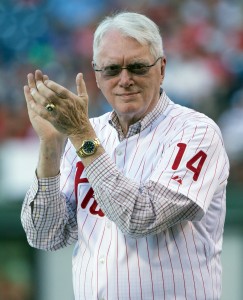
Jim Bunning, 1931-2017

Jim Bunning was a Hall-of-Famer as a pitcher. As a politician, well, let's just say we were not often in agreement. For this post, I'm going to stick to the facts.

James Paul David Bunning was born on October 23, 1931 in Southgate, Kentucky, about 3 miles across the Ohio River from downtown Cincinnati. He was born the same week as Mickey Mantle, but took much better care of himself, and, as a result, lived 22 years longer.

He attended Cincy's St. Xavier High School and Xavier University, getting a degree in economics while pitching minor-league baseball. In 1950, he signed with the Detroit Tigers, and remained in their minor-league system until his promotion in 1955. In between, he married Mary Catherine Theis.

He made his major league debut on July 20, 1955. Wearing Number 15, he started for the Tigers at Briggs Stadium (renamed Tiger Stadium in 1961), and lost to the Baltimore Orioles 6-3. Eventually, he switched to Number 14, and developed a hard slider, and a pitching motion that made his 6-foot-3, 190-pound frame look like it was jumping out at the batter, much as did that of fellow future Hall-of-Famer Bob Gibson. That slider enabled him to pitch a no-hitter against the Boston Red Sox on July 20, 1958, a 3-0 win at Fenway Park.

Sox star Ted Williams was not impressed. Jim Pagliaroni, a rookie catcher on the Sox in Ted's last season, 1960, recalled hearing Ted psych himself up in batting practice, saying things like, "My name is Ted Fucking Williams!" (He would swing the bat, and hit the ball, and produce a Crack! sound.) "And I'm the greatest hitter in baseball!" (Crack!) "Jesus H. Christ himself couldn't strike me out!" (Crack!) "Here comes Jim Bunning!" (Crack!) "Jim Bunning, with that little shit slider of his!" (Crack!) "He can't get me out, I'm Ted Fucking Williams!" (Crack!)

After the 1963 season, the Tigers traded Bunning and his slider -- Williams' opinion to the contrary, a really good one -- to the Philadelphia Phillies. The Phils raced out to 1st place in the National League, and Bunning was a big reason why. On June 21, 1964, he pitched a perfect game against the Mets at brand-new Shea Stadium.

It was the 1st regular-season perfect game in 42 years (Don Larsen, of course, pitched one in the World Series 8 years earlier), the 1st by a National League pitcher in 84 years, and the 1st no-hitter by a Phillies pitcher in 58 years. It made him only the 2nd pitcher to have pitched no-hitters in both Leagues, after Cy Young. (They have since been joined by 2 others: Nolan Ryan and Hideo Nomo.) He even doubled home 2 runs in the 6th inning, as the Phils won 6-0. It was the 1st game of a doubleheader, and the Phils also won the 2nd game, 8-2, as Rick Wise got his 1st major league win.

It was Father's Day, and Bunning was already the father of 7 children. Eventually, he would have 9, including David Bunning, now a federal judge. He had 35 grandchildren, including Patrick Towles, now the starting quarterback at the University of Kentucky; and 14 great-grandchildren.

But that 1964 season would end in embarrassment for the Phillies, as they had a 6 1/2-game lead with 12 games to play, lost 10 straight games, and blew it. for over half a century, manager Gene Mauch has been criticized for overpitching righthander Bunning and lefthander Chris Short during the slide. Fair or not, the St. Louis Cardinals won the Pennant, and then the World Series.

The Phils traded Bunning to the Pittsburgh Pirates in 1968, they traded him to the Los Angeles Dodgers in 1969, and they traded him back to the Phillies in 1970. That year, the Phils closed out their tenure at Connie Mack Stadium. On April 10, 1971, Bunning started and won the 1st game at Veterans Stadium, beating the Montreal Expos 4-1.

He retired at the end of that season, with a record of 224-184, becoming only the 2nd pitcher, after Cy Young, to have won at least 100 games in each League: 118-87 in the American, and 106-97 in the National. His career ERA was 3.27, his ERA+ 115, and his WHIP 1.179. He had 2,855 strikeouts, then 2nd on the all-time list behind Walter Johnson. He was a 9-time All-Star, was elected to the Philadelphia Baseball Wall of Fame in 1984, was elected to the Baseball Hall of Fame in 1996, and had his Number 14 retired by the Phillies in 2001.

*

In 1977, he was elected to the City Council in Fort Thomas, Kentucky. In 1979, he was elected to the State Senate. In 1983, he was the Republican nominee for Governor, but lost. In 1986, he ran for the U.S. House of Representatives, for the District that included the Kentucky suburbs of Cincinnati, including Cincinnati/Northern Kentucky International Airport. It is considered the State's most conservative District, and he won it 6 times.

When longtime Democratic Senator Wendell Ford retired, Bunning won his seat. Winning this seat in November 1998 and being sworn into it in January 1999 made him 1 of 2 Republicans who voted to impeach President Bill Clinton in the House, and then vote to convict him in his impeachment trial in the Senate. The other was Mike Crapo of Indiana. Of course, Clinton was acquitted, because the Republicans had no admissible evidence.

In 2004, knowing that his District depended on the Ohio River flowing well, and not flooding he sponsored a bill that became the Bunning-Bereuter-Blumenauer Flood Insurance Reform Act of 2004. (Apparently, to sponsor it, you had to have a German last name that started with a B.)

But that year, as he approached his 73rd birthday, people began criticizing him for "bizarre" behavior, especially concerning allegations he made against his Democratic opponent as he ran for re-election. His race was a lot closer than it was expected to be.

In April 2006, Time magazine did a profile on "America's Five Worst Senators." Fairly or not, it named Bunning to that list, saying he treated his staff badly and "shows little interest in policy unless it involves baseball." He had been part of the investigation into steroid use in the game. (I said I would stick to the facts. Saying that he was one of the worst Senators would be an opinion, and Time held it; saying that Time called him that is a fact.)

In 2009, as the Bush Recession hit rock bottom, he refused to vote for a bill boosting unemployment insurance until he was mollified with some amendments. His approval rating dropped to 28 percent, and he announced he wouldn't run again in 2010.
Jim Bunning continued to attend induction ceremonies for both the Baseball Hall of Fame and the Philadelphia Baseball Wall of Fame until last year, when he suffered a stroke. He died in a hospital in Southgate on May 26, 2017, at the age of 85.

UPDATE: He was buried at St. Stephen Cemetery in Fort Thomas, Kentucky.

Thursday, September 3, 2009

Senator Schilling? Don't Make Me Laugh

Yankees 10, Toronto Blue Jays 5. That's 7 in a row, still with the best record in baseball, and the Magic Number to clinch the Division is down to 22. But the Red Sox won again, so a Yanks-Sox ALCS showdown is still possible.

Alex Rodriguez hit his 577th career home run tonight, a screaming line drive down the left-field line at the Rogers Centre, formerly known as the SkyDome. It was much like the one Joe Carter hit to win the 1993 World Series for the Jays against the Philadelphia Phillies.

Remember? Mitch Williams has totally lost his control, and in the Phils' dugout, there's a pitcher hiding his eyes because he doesn't trust his teammate. His name? Curt Schilling.

"Curt is a horse every fifth day," said Ed Wade, then general manager of the Phils. "The other four days, he's a horse's ass."

Curt has thrown many a teammate -- or even Manny, a teammate -- overboard. (Or "under the bus," as you kids are saying these days.) It's always about Curt Schilling, and if the team didn't win, it was the other players, or the manager, or management, never his fault.

Few great players in sports history have alienated their own organizations as much as he has.

Now, he says he wants to run for the vacant U.S. Senate seat in Massachusetts, held for 47 years by a guy named Ted something.

Kennedy. Yeah, that's it.

Ted Kennedy was a big Red Sox fan. Well, everybody's got their flaws...

Maybe Ted was talking about the Red Sox when he said, "The work goes on, the cause endures, the hope still lives, and the dream shall never die!"

Well, due to the steroid use of David Ortiz and Manny Ramirez -- and somebody test the blood on Schilling's sock! -- we now know that the work was fraudulent, the cause was false, the hope was shattered, and the dream remains unfulfilled since 1918.

Being a Red Sox fan made Ted Kennedy drink, Doris Kearns Goodwin write about tragic historical figures, the Farrelly Brothers make gross-out movies, and Stephen King write horror stories. It made Ben Franklin leave Boston to seek greener pastures... in Philadelphia!

Okay, the Red Sox haven't been around that long, but why do you think Bobby Kennedy moved to New York after leaving the Attorney General's post instead of back to Massachusetts?

Okay, to be fair, being Red Sox fans also made the Kennedys aware of the plight of the underdog. We should thank the Sox for that.

But Schilling wants Ted's Senate seat? If he thinks he can win it, then he's had more to drink than Ted ever did!

Schilling is a Republican. A serious hard-core conservative. And he wants to run in Massachusetts.

We all know he's self-absorbed. But I didn't think he was a masochist!

We should remind Crybaby Curt that, in 2006, the Republican Party of Pennsylvania nominated Lynn Swann for Governor. Yes, that Lynn Swann, the Hall of Fame receiver for the Pittsburgh Steelers. (By a weird coincidence, his middle name is Curtis.)

Swann was 54 at the time, which should have put him in his political prime. He is beloved. He has never thrown a teammate under the bus (Jerome Bettis or otherwise), and as far as anyone can tell he's completely clean. (He's also a graduate of Junipero Serra High School in San Mateo, California, which is also the alma mater of Barry Bonds and Tom Brady -- though as I said, Swann is believed to be completely clean, unlike those two. Also ex-Mets Jim Fregosi and Gregg Jeffries, and Swann's coach at USC, John Robinson.)

He's good-looking, he has a fine voice, he comes across like gangbusters on television. He sounds like a conservative, but he doesn't sound like a right-wing maniac -- more honey-tinged Mike Huckabee than fire-and-brimstone Rudy Giuliani. He's smart (Serra isn't just a sports factory, it's a very serious academic institution).

He's personable. His resume is as varied as Monday Night Football (playing and broadcasting) and Mister Rogers' Neighborhood. He's been a successful businessman -- conservatives love that. He stayed in the Pittsburgh area after his playing career was over -- Western Pennsylvanians love that. He'd never served in public office (which pleases the term-limits idiots and people who hate "Warshington Politicians"), unless you count chairing the President's Council on Physical Fitness. He had no apparent baggage of any kind, unless you count the fact that he was appointed to said Council by George W. Bush.

He should have been a superb candidate. Even people who don't like Republicans like Lynn Swann.

He lost, 60 percent to 40. Why? Was his Democratic opponent, incumbent Governor Ed Rendell, particularly beloved? Maybe from the Susquehanna River on east, but that's not why Swannie lost. No, he lost because the people of Pennsylvania didn't trust Republicans. Even Steeler fans who loved him as a football player and admired him as a businessman did not want a Republican Governor.

(The Penn GOP owes Swannie big-time. They should nominate him for Arlen Specter's Senate seat, but they won't. Though I do hear he's planning on another campaign for Governor next year.)

Schilling should keep in mind another example: Ernie Banks. He once ran for Board of Aldermen (City Council) in Chicago. Everybody loves Ernie (or so it was thought). He's Mr. Cub. He's had no scandal attached to his name. He ran as an independent, so that both Democratic Cub fans and Republican Cub fans could vote for him without dismissing him as a candidate for either party. Smart, right? He was a cinch to win, right?

Wrong, he finished 4th out of 5. Why? Because, being black, he thought he should run on the South Side. Smart? Not smart enough: The South Side is White Sox territory, and Pale Hose fans hate the Cubs and everyone associated with them, even Ernie Banks! How can anybody hate Ernie Banks? By being a White Sox fan, that's how -- or do you think Cub fans would've dumped Richard Daley as Mayor for Nellie Fox?

So, with the memories of Governors Bill Weld, Paul Cellucci, Jane (None Too) Swift and NittWitt Mitt Romney in mind, does anybody really think Massachusetts is going to trust a Republican -- especially for the seat of Ted Kennedy?

Crybaby Curt should keep this in mind: In Massachusetts, they love the Red Sox, but they may not love this particular Red Sock (even with his red sock), and they certainly don't love Republicans. Especially if it's Joe Kennedy, Bobby's son and Ted's nephew who once served in the House, who goes for it: It's probably his to say, "Yes, I want it" until he says, "No, I don't want it." (Ultimately, I think he'll turn it down, and Congressman Ed Markey, believed to be the favorite for John Kerry's seat had the nation wised up and thrown Bush overboard in 2004, will run for it and win it.)

Maybe the fans who used to honor Carl Yastrzemski with "YAZ FOR MAYOR" signs meant it, and maybe Bobby Orr could've been elected to serve in the Senate alongside Ted Kennedy, and maybe Larry Bird could've been elected Governor.

But Curt Schilling? If he wins Ted's seat, I'll wear a Red Sox cap for the rest of the 2010 season!

I'd have to wash my hair about four times a day... and take Pepto-Bismol for wanting to throw up 12 times a day...

I think I'm safe. And so is Ted's Senate seat. As his brother Jack said when he received figures saying that more people went to the opera than to Major League Baseball games in 1960, "I think both baseball and the country will endure."