Showing posts with label u.s. house of representatives. Show all posts

Sunday, November 16, 2025

November 16, 1995: The Gingrich Tantrum

November 16, 1995, 30 years ago: President Bill Clinton's victory in the federal government shutdown is sealed when the New York Daily News prints a front-page cartoon, showing the Speaker of the House, and the leader of the Republican Party's move to make drastic cuts in the federal budget, as a "cry baby."

After the failure of his health care initiative in 1994, Clinton saw his Democratic Party battered in the midterm elections, with the Republicans taking both houses of Congress. Bob Dole, from Russell, Kansas, regained the office of Senate Majority Leader that he had held in 1985 and 1986, having been the Minority Leader from 1987 to 1994.

And Gingrich, a Pennsylvania native who moved to the Atlanta suburb of Marietta, Georgia to teach at a college, and was first elected to Congress in 1978 and used fiery rhetoric to get into the Republican Party's leadership in the U.S. House of Representatives in 1989, became the Speaker of the House.
Dole was considered mean, a reputation he got in his 1976 Vice Presidential debate with Walter Mondale, and deepened in his 1988 Presidential run. But, politically speaking, he was still a center-right candidate, willing to compromise for the greater good of the country. Gingrich was not: He was frequently called a "firebrand" and a "bombthrower."

Like most politicians, especially Republicans, he wanted to balance the federal budget. But his plan severely cut social services -- and also seriously cut taxes, especially on the wealthy. This didn't work when Ronald Reagan was President in the 1980s, and actually created the harsh economic conditions that led to Clinton's election in 1992. As we have since seen, it didn't work in 2001, and it didn't work in 2017. It would not have worked in 1995.

Every year, the federal budget takes effect on October 1. To put it another way: "Fiscal Year 1996" ran from October 1, 1995 to September 30, 1996. If no deal between Congress and the President is in place by October 1, they can pass a "continuing resolution," or "CR": For the length of the resolution, the proportions of the previous fiscal year continue.

But Clinton and the Republicans controlling Congress couldn't reach a deal by September 30. So they passed a CR that ran until November 13. But the Republicans refused to pass a new budget or a new CR by November 14. So, at 12:00 Midnight on November 13, the federal government shut down, because it was not legally permitted to spend any more money. People were still working for it, but without pay.

And the Republicans went before the media and said it was Clinton's fault. Except Clinton also went before the media, and pointed out that he was still willing to make a deal, and the Republicans weren't. Finally, he called Dole and Gingrich into the Oval Office. So often willing to compromise on things, seemingly desperate to get re-elected, not wanting to be a one-term President like 3 of the last 4 (Gerald Ford, Jimmy Carter, and George H.W. Bush), but angering many in his own party, Clinton stiffened his spine, and told them, "I don't care if I go down to 5 percent in the polls. If you want that budget signed into law, you're going to have to get somebody else behind this desk."

For once, Clinton held his ground. And polls showed that more people supported his stance than the Republicans' stance. Once the Daily News printed that front page, and blow-ups of it were displayed on the floor of the very House of which Gingrich was Speaker, their approval rating plummeted. It has never again reached its 1995 height.

Clinton had invited Dole and Gingrich to go with him to the funeral of the assassinated Prime Minister of Israel, Yitzhak Rabin -- certainly, a gesture of respect, if not reconciliation. But the article accompanying the cartoon alleged that, on the flight back, Gingrich wanted to talk about the budget impasse, Clinton didn't, and Clinton made Gingrich get off Air Force One at the back entrance, and Gingrich got upset about these developments.

Was it true? Only Clinton and Gingrich know for sure. The problem was, given Gingrich's own actions over the 17 years he'd served in Congress to that point, the story was completely believable. He had lived by the persona of a guy who tapped into people's emotions, and now, politically, he was dying by them. His tantrums had worked pretty well when he was in the opposition to House Democrats like his predecessors as Speaker, Jim Wright of Texas and Tom Foley of Washington State. They did not work when he had a position of power, and they certainly didn't work against a political talent like Clinton.
That front page became the Daily News' 2nd-best-known ever, trailing only the October 30, 1975 front page concerning another budget mess, that of New York City, when President Ford refused to use federal money to bail the City out. The News' front page read, "FORD TO CITY: DROP DEAD." That headline probably cost Ford the State of New York in the 1976 election, and thus the election itself. Having brought down a President, now, 20 years later, the News was bringing down a Speaker.

Finally, on November 19, the Republicans caved. And when the general election campaign got underway, the Democrats aired commercials showing Dole and Gingrich together so many times, it began to look like Gingrich was Dole's running mate, instead of his actual choice, Jack Kemp, former pro quarterback and Congressman from New York.

Once the Democrats had their convention, Clinton and his running mate, Vice President Al Gore, solidified their lead, and Dole and Kemp never really challenged them. Dole didn't run a bad campaign, but once Clinton won the battle over the budget, Dole never had a chance.

What no one yet knew was that the government shutdown, at the same time that it was securing Clinton's win, was also setting the stage for the biggest crisis of his Presidency: Among the volunteers working in the White House during the government shutdown was a young woman named Monica Lewinsky.

But the public's backlash against the Republicans' effort to impeach Clinton led to the Democrats gaining seats in the 1998 Congressional elections. Gingrich's marital infidelities had been at least as notorious as Clinton's, and the Republicans didn't care. But now, they cared: To the conservative movement, everything is acceptable except losing, and Gingrich was forced to step down, not just from the Speakership but from Congress.

Sunday, February 9, 2025

February 9, 1825: The Corrupt Bargain

Left to right: Henry Clay, John Quincy Adams, Andrew Jackson

October 26, 1824: Andrew Jackson finishes 1st in the Presidential election, both in the popular vote and in the Electoral Vote. But he doesn't get a majority of either: The Electoral Vote goes 99 for Jackson, America's greatest living military hero and a servant of Tennessee in both houses of Congress; 84 for John Quincy Adams, the Secretary of State to outgoing President James Monroe and the son of President John Adams; 41 for William H. Crawford, then Secretary of War; and 37 for Henry Clay, then the Speaker of the House of Representatives.

According to the Constitution of the United States, this throws the election into said House. This had happened only once before, in 1800, when John Adams lost, but it wasn't clear as to whom: Thomas Jefferson and Aaron Burr finished in a tie, and the House chose Jefferson.

February 9, 1825, 200 years ago today: The election is held. Crawford dropped out due to ill health, but didn't throw his support to anyone. Clay knew he didn't have a chance, and that he didn't like either remaining man. But he at least trusted Adams, and despised Jackson. So he threw his support to Adams, who won, 87-74, making him the 6th President of the United States.

Adams then appointed Clay to be his Secretary of State. At the time, this, rather than the Vice Presidency, was tantamount to being chosen as heir apparent. Adams had served as Secretary of State under Monroe, Monroe had so served James Madison, Madison had so served Jefferson, and Jefferson had so served George Washington, though was not his immediate successor.

Jackson and his supporters cried foul: The term "corrupt bargain" entered the American lexicon.

But despite his anger, Jackson did the right thing: Instead of acting like an ass, like Donald Trump did, he went home, and said little, and let his supporters paint him as the wronged man. This allowed him to remake the Democratic-Republican Party, whose members had usually called themselves "Republicans" to this point, as the Democratic Party, and to paint himself as the reasonable alternative, provided that Adams' Presidency did not go well.

It didn't. By most standards, Adams' Presidency was a disaster. He called for an ambitious agenda that included federally funded infrastructure projects, the establishment of a national university, and engagement with the countries of Latin America, but Congress refused to pass many of his initiatives. With other countries, he may have been the greatest diplomat America has ever had; with Congress, diplomacy did him no good. Sadly, both traits were inherited from his father.

Jackson rode a wave of popular frenzy, and won the rematch in 1828. This was despite a very dirty campaign, in which both he and his wife were libeled. Rachel Jackson died between the election and the Inauguration, and "Old Hickory" swore revenge against his enemies, thinking them responsible.

His 1st term was dominated by "The Petticoat Affair." Led by Floride Calhoun, wife of Vice President John C. Calhoun, the wives of Jackson's Cabinet members socially ostracized Secretary of War John Eaton and his wife, Peggy Eaton. Their private history, to put it politely, resembled that of Andrew and Rachel Jackson.

Thinking of Rachel, Jackson took the Eatons' side. Hoping to quell the controversy, Secretary Eaton resigned in 1831, and Jackson ended up firing and replacing every other member of his Cabinet -- except for his Secretary of State, who was a widower, and had stood up for the Eatons. His name was Martin Van Buren. In 1832, running for re-election, Jackson dumped Calhoun from the ticket, and got Van Buren nominated for Vice President. They overwhelmingly beat Clay in the election. Jackson later appointed Eaton to be Military Governor of Florida and U.S. Minister to Spain. Clay would run for President again in 1844, losing for a 3rd time, to James K. Polk.

One unintended consequence of all this: Jackson's 2nd Attorney General, and later his 4th Secretary of the Treasury, was Roger Taney. In 1836, Jackson appointed him Chief Justice of the U.S. Supreme Court. In 1857, in Dred Scott v. Sandford, Taney ruled that black people were not American citizens, even if born free. Taney died before the abolition of slavery.

But the Taney appointment might not be Jackson's worst decision. In 1830, he signed the Indian Removal Act, which displaced tens of thousands of Native Americans from their ancestral homelands east of the Mississippi, and resulted in thousands of deaths. It was a horrible thing to do, and Native Americans have hated him ever since. Some won't take a $20 bill, because his picture is on it. They'll take two tens, or four fives, or a ten and two fives, or even twenty singles, but not a twenty.

It's worth mentioning, though, that, at the time, while the Indian Removal Act was opposed by such Congressional figures as Clay and Jackson's Tennessee rival, David Crockett (despite his status as a folk hero thanks to a 1950s TV show, he was never called "Davy" in his lifetime), nobody came up with a better idea. And Jackson's justification was that, had the Natives stayed, they would have been wiped out by white men, anyway. There was no good answer, including doing nothing.

Jackson faced a challenge to the integrity of the federal union when South Carolina threatened to nullify a high protective tariff set by the federal government. Jackson threatened the use of military force to enforce the tariff, but the crisis was defused when the tariff was amended.

In 1832, he vetoed a bill by Congress to reauthorize the Second Bank of the United States, correctly arguing that it was a corrupt institution. In 1835, Jackson became the only President to pay off the national debt, and the 1st to survive an assassination attempt. When he left office after 2 terms on March 4, 1837, he was still immensely popular, but also widely hated. And he still was both when he died on June 8, 1845.

Four different men who held the Presidency have called Jackson their favorite President: Franklin Roosevelt, Harry Truman, Lyndon Johnson and Donald Trump. Trump put a portrait of Jackson in the Oval Office. It was suggested that he did so because Jackson was a fellow racist.

What would Jackson have thought of Trump? A big businessman? A dealer with big banks? A draft dodger? A man who treated his wives badly? A crook? A traitor? When he left office, Jackson was asked if he had any regrets. He said, "I regret I was unable to shoot Henry Clay or to hang John C. Calhoun." The distinction being that he considered Clay a common criminal, worthy of being shot; and Calhoun a traitor, where the traditional penalty is hanging.

Many locations in America have been named for Jackson, including the capital of Mississippi; Jacksonville, the largest city (but not the seat of the largest metropolitan area) in Florida; a city in Tennessee, whose name became the title of a hit song by country music legends June Carter & Johnny Cash; the town in Ocean County, New Jersey, where Six Flags Great Adventure, one of the country's leading theme parks, is located, including a frontier theme that Jackson himself might have appreciated; and Jackson Heights, a neighborhood in Queens, New York City. Counties in 21 States have been named for him, including in Missouri, which also has a Hickory County, named for his nickname.

New York City has a high school and an elementary school named for Jackson. Oddly, neither is in Jackson Heights: The high school is in Cambria Heights, and the public school is in Flushing. There are also Andrew Jackson High Schools in Miami and, as you might expect, in Jacksonville, Florida; and in his home State of South Carolina, in Kershaw, in the Waxhaws from whence he came.

The USS President Jackson was an attack transport that served the U.S. Navy from 1941 to 1955. The USS Andrew Jackson was a submarine, in service from 1963 to 1989. A Jackson Highway ran from Chicago to New Orleans, although it has mostly been phased out.

Among the actors who have played Jackson: Lionel Barrymore twice, in The Gorgeous Hussy in 1936, with Joan Crawford as Peggy Eaton, and Lone Star in 1952; Hugh Sothern in The Buccaneer, a film about the Battle of New Orleans and the pirate Jean Lafitte, in 1938; Brian Donlevy in The Remarkable Andrew in 1942; Charlton Heston twice, in The President's Lady in 1953, with Susan Hayward as Mrs. Eaton, and in a 1958 remake of The Buccaneer; Basil Ruysdael in Davy Crockett, King of the Wild Frontier in 1955; Wesley Addy in The Adams Chronicles in 1976; and Kris Kristofferson in Texas Rising in 2015.

In 2008, Michael Friedman created the musical Bloody Bloody Andrew Jackson, a comedic look at the man and the myth. It reached Broadway in 2010, starring Benjamin Walker, who would double down in 2012, taking the title role in the film Abraham Lincoln: Vampire Hunter.

Jackson's portrait has appeared on the $20 bill since 1928. Since 2016, there has been a plan to replace him on the bill with abolitionist Harriet Tubman. It hasn't happened yet.

Friday, November 8, 2024

November 8, 1994: The Gingrich Revolution

November 8, 1994, 30 years ago: Election Day is a repudiation of the Democratic Party, in particular of President Bill Clinton, his now-withdrawn health care reform plan, and his Assault Weapons Ban. The Republican Party gains 52 seats in the U.S. House of Representatives, giving them control of that body for the 1st time in 40 years, and making Newt Gingrich of Georgia the Speaker. It also gains 9 seats in the U.S. Senate, giving them control of that body for the 1st time in 8 years, returning Bob Dole of Kansas to the office of Senate Majority Leader.

In New York State, Mario Cuomo is defeated for a 4th term as Governor by Peekskill Mayor George Pataki. In Texas, George W. Bush, son of the most recent Republican President, is elected Governor, defeating the State's 1st female Governor, Ann Richards. Bush's brother, John Ellis "Jeb" Bush, narrowly loses to Governor Lawton Chiles of Florida. I suspect that, had it not been for the Savings & Loan Scandal, another brother, Neil Bush, would have run for Governor of Colorado.

In addition, Senators Richard Shelby of Alabama and Ben Nighthorse Campbell of Colorado switched parties to become Republicans. Shelby had previously called himself "the most conservative member of the Senate"; and Campbell, then the only Native American in either house of Congress (still alive as of November 8, 2022, he is a member of the Cheyenne tribe), was more of a Western libertarian than a traditional conservative, but favored gun rights. So neither switch was a big surprise, although they didn't exactly show courage by jumping ship after the election.

Gingrich knew that it wasn't enough to be against Clinton, or against Democrats in general: You had to give the voters something to vote for. He had a 10-point "Contract With America," which includes some reforms of Congress itself, including some items that Democrats were willing to work with them to pass, if with some minor adjustments. But some were drastic, and opposed by most Americans.
The backlash that hit him even before he could take office as Speaker led to him, with Christmas coming up, to being compared with two of the villains of pop-culture Christmas: Time compared him to Ebenezer Scrooge of Charles Dickens' A Christmas Carol, while Newsweek compared him to the title character of How the Grinch Stole Christmas.
As promised, all 10 items passed the House in the 1st 100 days of Republican control. And 9 of them passed the Senate. But some of these, including a radical reform of the nation's welfare laws, and a significant tax cut for the wealthiest 1 percent of Americans, were vetoed by Clinton.

The 1 item that passed the Senate, but not by enough, was an Amendment to the Constitution requiring that the federal budget be balanced. On its face, this seemed like a good idea. The devil was in the details: Because Republican Presidents Ronald Reagan and George H.W. Bush had run the federal budget deficit so high in their 12 consecutive years in the White House, balancing the budget would have required significant spending cuts to Social Security, Medicare, Medicaid, educational spending, and environmental spending. The Republicans were fine with all of that. But they weren't willing to cut spending on new military projects, and Clinton and the Democrats called them out on that.

In the end, requiring a 2/3rds "supermajority" of both houses on Congress -- 290 votes in the House, and 67 in the Senate, instead of a simple majority of 218 and 51, respectively -- the Amendment fell 1 vote short in the Senate.

One Republican voted against it: Mark Hatfield of Oregon. As a former Governor of a State whose budget was already constitutionally required to be balanced -- a lot easier, since States have far lesser, and lesser-ranging, expenses than the country at large, but by no means easy -- Hatfield understood that the Amendment would have been dangerous. It would have cast millions of people into poverty, made things worse for those already poor, and might even have killed people.

And so, the battle was on: Gingrich would lead a Congressional campaign for 1996 on a revised Contract with America, while Senate Majority Leader Bob Dole of Kansas would be the Republican nominee for President, supporting it; and Clinton would run for re-election, calling the Republican proposal "the Contract On America," and making the increasingly unpopular Gingrich "Dole's running mate," no matter who Dole ultimately selected to be his Vice Presidential nominee. Gingrich's successes in early 1995 led Time magazine to name him its Man of the Year.
(Dole chose Jack Kemp, former pro quarterback, an 18-year Congressman where he became one of the champions of tax-cutters, an unsuccessful Presidential candidate in 1988, and President Bush's Secretary of Housing and Urban Development.)

In the end, Clinton was re-elected solidly over Dole, but the Democrats were unable to take back either house of Congress. Over the course of his 2nd term, even as the Republicans tried to impeach Clinton over things that were none of their, or the American people's, concern, failing to get conviction and removal, they were forced to work with him. In 1997, the federal budget was balanced. Clinton, Gingrich, Dole, and Dole's successor as Senate Majority Leader, Trent Lott of Mississippi, could all legitimately claim some credit for that.

But the Republicans' effort to remove Clinton from office angered many Americans, and, incredibly unusual for a party in its 6th straight year of holding the White House, the Democrats actually gained seats in the 1998 Congressional election. Gingrich resigned later that week, pressured into it not because of his own personal and legal failings, in each case worse than Clinton's, but because he had failed as a leader. The conservative movement will accept anything except failure.

The evangelical takeover of the Republican Party became complete with the election of George W. Bush, son of the former President, in 2000. Like Richard Nixon before him, Gingrich bided his time, mended some fences, supported Republican candidates wherever he could, and built a new constituency. In 2008, Barack Obama was elected President, and Gingrich ran for the Republican nomination to beat him for re-election in 2012. He won some Primaries, but his personal scandals came back to haunt him, and he lost too many Primaries to continue.

At the age of 81, he is now seen as an elder statesman in the Party, but, as long as Donald Trump is its emotional leader, the last true "ideas man" in the Republican Party has no place in directing its course.

Sunday, May 28, 2017

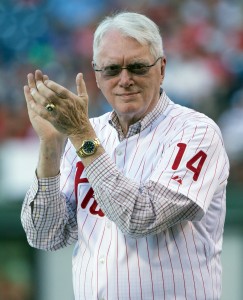
Jim Bunning, 1931-2017

Jim Bunning was a Hall-of-Famer as a pitcher. As a politician, well, let's just say we were not often in agreement. For this post, I'm going to stick to the facts.

James Paul David Bunning was born on October 23, 1931 in Southgate, Kentucky, about 3 miles across the Ohio River from downtown Cincinnati. He was born the same week as Mickey Mantle, but took much better care of himself, and, as a result, lived 22 years longer.

He attended Cincy's St. Xavier High School and Xavier University, getting a degree in economics while pitching minor-league baseball. In 1950, he signed with the Detroit Tigers, and remained in their minor-league system until his promotion in 1955. In between, he married Mary Catherine Theis.

He made his major league debut on July 20, 1955. Wearing Number 15, he started for the Tigers at Briggs Stadium (renamed Tiger Stadium in 1961), and lost to the Baltimore Orioles 6-3. Eventually, he switched to Number 14, and developed a hard slider, and a pitching motion that made his 6-foot-3, 190-pound frame look like it was jumping out at the batter, much as did that of fellow future Hall-of-Famer Bob Gibson. That slider enabled him to pitch a no-hitter against the Boston Red Sox on July 20, 1958, a 3-0 win at Fenway Park.

Sox star Ted Williams was not impressed. Jim Pagliaroni, a rookie catcher on the Sox in Ted's last season, 1960, recalled hearing Ted psych himself up in batting practice, saying things like, "My name is Ted Fucking Williams!" (He would swing the bat, and hit the ball, and produce a Crack! sound.) "And I'm the greatest hitter in baseball!" (Crack!) "Jesus H. Christ himself couldn't strike me out!" (Crack!) "Here comes Jim Bunning!" (Crack!) "Jim Bunning, with that little shit slider of his!" (Crack!) "He can't get me out, I'm Ted Fucking Williams!" (Crack!)

After the 1963 season, the Tigers traded Bunning and his slider -- Williams' opinion to the contrary, a really good one -- to the Philadelphia Phillies. The Phils raced out to 1st place in the National League, and Bunning was a big reason why. On June 21, 1964, he pitched a perfect game against the Mets at brand-new Shea Stadium.

It was the 1st regular-season perfect game in 42 years (Don Larsen, of course, pitched one in the World Series 8 years earlier), the 1st by a National League pitcher in 84 years, and the 1st no-hitter by a Phillies pitcher in 58 years. It made him only the 2nd pitcher to have pitched no-hitters in both Leagues, after Cy Young. (They have since been joined by 2 others: Nolan Ryan and Hideo Nomo.) He even doubled home 2 runs in the 6th inning, as the Phils won 6-0. It was the 1st game of a doubleheader, and the Phils also won the 2nd game, 8-2, as Rick Wise got his 1st major league win.

It was Father's Day, and Bunning was already the father of 7 children. Eventually, he would have 9, including David Bunning, now a federal judge. He had 35 grandchildren, including Patrick Towles, now the starting quarterback at the University of Kentucky; and 14 great-grandchildren.

But that 1964 season would end in embarrassment for the Phillies, as they had a 6 1/2-game lead with 12 games to play, lost 10 straight games, and blew it. for over half a century, manager Gene Mauch has been criticized for overpitching righthander Bunning and lefthander Chris Short during the slide. Fair or not, the St. Louis Cardinals won the Pennant, and then the World Series.

The Phils traded Bunning to the Pittsburgh Pirates in 1968, they traded him to the Los Angeles Dodgers in 1969, and they traded him back to the Phillies in 1970. That year, the Phils closed out their tenure at Connie Mack Stadium. On April 10, 1971, Bunning started and won the 1st game at Veterans Stadium, beating the Montreal Expos 4-1.

He retired at the end of that season, with a record of 224-184, becoming only the 2nd pitcher, after Cy Young, to have won at least 100 games in each League: 118-87 in the American, and 106-97 in the National. His career ERA was 3.27, his ERA+ 115, and his WHIP 1.179. He had 2,855 strikeouts, then 2nd on the all-time list behind Walter Johnson. He was a 9-time All-Star, was elected to the Philadelphia Baseball Wall of Fame in 1984, was elected to the Baseball Hall of Fame in 1996, and had his Number 14 retired by the Phillies in 2001.

*

In 1977, he was elected to the City Council in Fort Thomas, Kentucky. In 1979, he was elected to the State Senate. In 1983, he was the Republican nominee for Governor, but lost. In 1986, he ran for the U.S. House of Representatives, for the District that included the Kentucky suburbs of Cincinnati, including Cincinnati/Northern Kentucky International Airport. It is considered the State's most conservative District, and he won it 6 times.

When longtime Democratic Senator Wendell Ford retired, Bunning won his seat. Winning this seat in November 1998 and being sworn into it in January 1999 made him 1 of 2 Republicans who voted to impeach President Bill Clinton in the House, and then vote to convict him in his impeachment trial in the Senate. The other was Mike Crapo of Indiana. Of course, Clinton was acquitted, because the Republicans had no admissible evidence.

In 2004, knowing that his District depended on the Ohio River flowing well, and not flooding he sponsored a bill that became the Bunning-Bereuter-Blumenauer Flood Insurance Reform Act of 2004. (Apparently, to sponsor it, you had to have a German last name that started with a B.)

But that year, as he approached his 73rd birthday, people began criticizing him for "bizarre" behavior, especially concerning allegations he made against his Democratic opponent as he ran for re-election. His race was a lot closer than it was expected to be.

In April 2006, Time magazine did a profile on "America's Five Worst Senators." Fairly or not, it named Bunning to that list, saying he treated his staff badly and "shows little interest in policy unless it involves baseball." He had been part of the investigation into steroid use in the game. (I said I would stick to the facts. Saying that he was one of the worst Senators would be an opinion, and Time held it; saying that Time called him that is a fact.)

In 2009, as the Bush Recession hit rock bottom, he refused to vote for a bill boosting unemployment insurance until he was mollified with some amendments. His approval rating dropped to 28 percent, and he announced he wouldn't run again in 2010.
Jim Bunning continued to attend induction ceremonies for both the Baseball Hall of Fame and the Philadelphia Baseball Wall of Fame until last year, when he suffered a stroke. He died in a hospital in Southgate on May 26, 2017, at the age of 85.

UPDATE: He was buried at St. Stephen Cemetery in Fort Thomas, Kentucky.