Showing posts with label fifa. Show all posts

Thursday, June 11, 2026

Preview for the World Cup We Deserved -- But Not the One We Wanted

In 1966, during the World Cup in England, FIFA, Fédération Internationale de Football Association, the governing body for world soccer, having already chosen Mexico as the host for the 1970 World Cup, chose the host nations for the World Cups of 1974, 1978 and 1982. For 1974, they chose West Germany. For 1978, they chose Argentina. For 1982, they chose Spain.

This was not especially unusual: They seemed to alternate between Europe and South America, occasionally mixing it up, and would continue to do so until Asia and Africa began to be more represented:

The Americas: 1930 in Uruguay, 1950 in Brazil, 1962 in Chile, 1970 in Mexico, 1978 in Argentina, 1986 in Mexico, 1994 in the United States, 2014 in Brazil; and now, 2026 in a joint effort between the United States, Canada and Mexico.

Europe: 1934 in Italy (then run by the Fascist dictatorship of Benito Mussolini), 1938 in France, 1954 in Switzerland, 1958 in Sweden (two straight in Europe), 1966 in England, 1974 in West Germany, 1982 in Spain, 1990 in Italy, 1998 in France, 2006 in a united Germany, 2018 in Russia.

Asia: 2002 was a joint effort between Japan and South Korea; and 2022 in Qatar.

Africa: 2010 in South Africa.

The 1942 edition was canceled due to World War II, and the 1946 edition was canceled due to The War's aftermath, in each case before a host nation could be chosen.

In 1966, out of West Germany, Argentina and Spain, Spain seemed to be the most controversial choice, since it was then run by a Fascist government. By 1982, it would be a thriving democracy.

But in 1976, Argentina fell to a Fascist military dictatorship, and the 1978 World Cup was a morass of corruption. The host nation could have won honestly. It won, but did not do so honestly. Fans, and even players, feared for their safety. Everything that was feared for Italy 1934 and Spain '82, but which those tournaments avoided, came too close to happening at Argentina '78.

In 1974, the South American nation of Colombia was selected for 1986. But, between financial concerns and the country's ongoing drug conflicts, its government bowed out in 1982, the only time a country has withdrawn from hosting a World Cup. Since it was the Americas' turn, and Mexico had the infrastructure in place, it was held there again.

In 1994, America hosted. With so many big cities with big stadiums, it was the highest-attended World Cup ever, with several legends putting on great performances. It was a great tournament -- until the Final, when Brazil and Italy, 2 teams that should have put on a great show, put on a 0-0 snoozefest that Brazil won on penalties. But that put the U.S. in the running to host again.

Gaps between a first and second hosting: Mexico, 16 years; the U.S., 32 years; Germany, 32 years; Italy, 56 years; France, 60 years; Brazil, 64 years.

During the 2018 World Cup, with Asian and Europe having hosted the last 2, FIFA was going to choose an Americas bid or an African bid. The joint U.S.-Canada-Mexico bid was chosen. The only other country to bid was Morocco, and they regrouped, setting up their own joint bid, accepted for 2030: Morocco, Spain and Portugal. It will be the 1st World Cup spread over 2 different continents, giving Africa a 2nd tournament, 20 years after its 1st, but also keeping with the usual Europe/Americas alternation.

But 2026 was thought to be the right year for America to host, in conjunction with celebrations for the 250th Anniversary of American independence. It was going to be a great Summer.

Then Donald Trump got back into the White House. And he had hijacked the America 250 celebrations. Don't even get me started on a UFC stage on the White House grounds that's taller than the White House itself.

Iran qualified for the World Cup. Then Trump started a war with them. He brought back his travel bans, which have affected Iran and some other qualifying countries, mostly-black ones: Haiti, Senegal, Côte d'Ivoire (Ivory Coast). The proclamation includes an exemption for any athlete or member of an athletic team, including coaches, persons performing a necessary support role, and immediate relatives, traveling for the World Cup, the Olympics, or other major sporting events -- but not for the traveling fans of said national teams.

Then there's the transit issues. I thought the rail spur that New Jersey Transit built from Secaucus Junction to the Meadowlands Sports Complex would ease arrivals and departures at MetLife Stadium, and (ha, ha) reduce car traffic. But NJT jacked up the price of a ticket from Penn Station to the Meadowlands from $13 to $150!

After work by Governors Mikie Sherrill of New Jersey and Kathy Hochul of New York, it's down to $98. I'm reminded of something Malcolm X said, over issues far more important: "If you stick a knife nine inches into my back, and pull it out six inches, that's not progress." (Not that I'm blaming the Governors.)

And too many of the stadiums are suburban islands in a sea of parking, with inadequate or nonexistent public transit access: MetLife, Gillette Stadium outside Boston, Hard Rock Stadium outside Miami, Arrowhead Stadium on the outskirts of Kansas City, AT&T Stadium outside Dallas, SoFi Stadium outside Los Angeles, Levi's Stadium in the San Francisco Bay Area. (And we're expected to give FIFA credit for temporarily replacing the corporate names on these venues with their cities' names? Uh-uh!)

The whole thing is a mess, before a single ball is kicked. It wasn't like this in 1994. But then, in 1994, our President was Bill Clinton. In 2026, it's Donald Trump.

To paraphrase The Dark Knight, maybe this is the World Cup that November 2024 America deserved, but it sure as hell isn't the one that American soccer fans wanted.

*

Anyway, here's predictions:

* Group A: Mexico 1st, South Korea 2nd, Czechia one of the 3rd-place advancers, South Africa out.

* Group B: Switzerland 1st, Bosnia and Herzegovina 2nd, Canada one of the 3rd-place advancers, Qatar out.

* Group C: Brazil 1st, Morocco 2nd, Scotland and Haiti out.

* Group D: Turkey 1st, USA 2nd, Paraguay one of the 3rd-place advancers, Australia out.

* Group E: Germany 1st, Côte d'Ivoire 2nd, Ecuador one of the 3rd-place advancers, Curaçao out.

* Group F: Netherlands 1st, Sweden 2nd, Japan one of the 3rd-place advancers, Tunisia out.

* Group G: Belgium 1st, Egypt 2nd, Iran and New Zealand out.

* Group H: Spain 1st, Uruguay 2nd, Cape Verde and Saudi Arabia out.

* Group I: France 1st, Senegal 2nd, Norway one of the 3rd-place advancers, Iraq out.

* Group J: Argentina 1st, Austria 2nd, Algeria one of the 3rd-place advancers, Jordan out.

* Group K: Colombia 1st, Portugal 2nd, Democratic Republic of the Congo and Uzbekistan out.

* Group L: Croatia 1st, Ghana 2nd, England one of the 3rd-place advancers, Panama out. This may be the closest thing this World Cup has to a "Group of Death."

* Round of 32: South Korea over Bosnia and Herzegovina, Brazil over Sweden, Germany over Paraguay, Morocco in an upset over the Netherlands (although, given Morocco's run to the Semifinal last time, it's not that big of an upset), Côte d'Ivoire over Senegal, France over Japan, Mexico over Norway, Croatia over Ecuador, Belgium over Czechia, Turkey over Canada, Spain over Austria, Ghana over Portugal to end Cristiano Ronaldo's World Cup play, Switzerland over Algeria, USA over Egypt, Argentina over Uruguay in the best rivalry of the Round, Colombia over England.

* Round of 16: Morocco over South Korea, France over Germany, Brazil over Côte d'Ivoire, Croatia over Mexico, Spain over Ghana, Belgium over Turkey, Argentina over USA (who's kidding who), Colombia over Switzerland.

* Quarterfinals: France over Morocco, Spain over Belgium, Brazil over Croatia, Argentina over Colombia.

* Semifinals: Spain over France, Argentina over  Brazil in a big rivalry.

* Final: Spain over Argentina.

Who do I really want to win? I'm not sure I want a country that voted for Trump twice, and came close a 3rd time, to win. So, France.

It all gets underway today, at 3:00 PM, U.S. Eastern Time, at Estadio Banorte in Mexico City, as Mexico takes on South Africa.

*

It's a good day to do a countdown:

* Days until the next World Cup: 0. Today.

* Days until the next U.S. soccer team game: 1, tomorrow night at 9:00 PM, Eastern Time, vs. the South American nation of Paraguay, at SoFi Stadium, outside Los Angeles in Inglewood, California.

* Days until the next Yankees-Red Sox series: 26, on Thursday, June 25, at 7:10 PM, at Fenway Park. Just 2 weeks.

* Days until the World Cup Final: 38, on Sunday, July 19, at MetLife Stadium at the Meadowlands.

* Days until the next New York Red Bulls game: 41, on Wednesday, July 22, at 7:30 PM, away to the Philadelphia Union, at Subaru Park in Chester, Pennsylvania. It's that far off because of the World Cup. Under 6 weeks.

* Days until the next Red Bulls "derby" game: See the previous answer.

* Days until the next Arsenal match: 55, on Wednesday, August 5, at 2:30 PM U.S. Eastern Time, against Spanish team Real Betis, in a preseason friendly, at Aviva Stadium in Dublin, Ireland. Under 8 weeks.

* Days until the New Jersey Devils open their 2026-27 regular season: Unknown, as the schedule has not been released yet. The season usually begins on the 1st Thursday in October, which, this year, is October 1. If so, that's 112 days. Under 4 months.

* Days until the next New Jersey Devils rivalry game: See the previous answer.

* Days until the new Premier League season opens: 73, on August 23. Arsenal's opponent is as yet unknown. And, of course, given the British TV networks, the game could be moved up a day or two.

* Days until the next North London Derby: Unknown. The teams never open the season against each other, so it will probably be longer than that. They have played each other in August, but it's usually once in October or November in N5, then once in February or March in N17, and the occasional cup tie.

* Days until the next East Brunswick High School football game: 78, on Friday night, August 22, at 6:00 PM, home to John F. Kennedy Memorial High School, of the Iselin section of Woodbridge. A little over 11 weeks.

* Days until the next Rutgers football game: 84, on Thursday, September 3, at 6:00 PM, home to the University of Massachusetts. Just 12 weeks.

* Days until the next East Brunswick-Old Bridge football game: 127, on Friday, October 16, at Vince Lombardi Field in Old Bridge. A little over 4 months.

* Days until the next election for the U.S. Congress and for the Governor of New York: 145, on Tuesday, November 3. Under 5 months. In New Jersey, polls are open from 6:00 AM to 8:00 PM. In New York, they're open from 6:00 AM to 9:00 PM. If Trump is to be held accountable for anything, the voters must give the Democratic Party control of each house of Congress.

* Days until the next Rutgers-Penn State game: 163, on Saturday, November 21, at a time TBA, at Beaver Stadium in State College, Pennsylvania. Under 6 months.

* Days until the next Summer Olympics: 764, on July 14, 2028, in Los Angeles. A little over 2 years. If Trump is still hanging on by that point, perhaps there will be another boycott.

* Days until the next election for the President of the United States: 880, on Tuesday, November 7, 2028. Under 2 1/2 years, or a little under 29 months. Time to end the Trump Era for once and for all, and to make America good again.

* Days until the next Inauguration for the President of the United States: 954, on Saturday, January 20, 2029, at 12:00 Noon. Under 3 years, or a little over 31 months. And stay out, you fat Fascist son of a bitch.

* Days until the next elections for the Governor of New Jersey and the Mayor of New York City: 1,244, on Tuesday, November 6, 2029. I am fully confident that Governor Mikie Sherrill can govern the State well enough to convince voters to re-elect her. I am not at all confident that Kid Mayor, Zohran Mamdani, who has already screwed up two blizzards, can keep himself popular enough to avoid a primary challenge. He might even open the door for a competent, though probably evil, Republican to win.

* Days until the next Winter Olympics: 1,331, on February 1, 2030. The next ones will be held at various locations in the French Alps, a region that has included the sites of the Winter Olympics in 1924, the 1st one, in Chamonix; 1968, Grenoble; and 1992, Albertville.

In fact, a lot of the Winter Olympics have been held in the Alps: 1928 and 1948 in St. Moritz, Switzerland; 1936 in Garmisch-Partenkirchen, Germany; 1956 and 2026 in Milan and Cortina, Italy; 1964 and 1976 in Innsbruck, Austria; and 2006 in Turin, Italy. Indeed, from Grenoble in the west to Milan in the east, it's only 230 miles, or roughly the distance between Midtown Manhattan and downtown Washington, D.C.

* Days until the next World Cup after this one: 1,458, on June 8, 2030, in Spain, Portugal and Morocco.

Monday, December 19, 2022

World Cup Roundup

Top 10 observations about the 2022 World Cup -- from the obvious. to the hottest of all hot takes:

1. The tournament never should have been given to Qatar. We all know that this country -- bigoted toward women, Jews and gays -- never should have been considered, let alone given the tournament. But the country's royal family guaranteed FIFA, the governing body of world soccer, its most profitable World Cup ever, and got it. As with Russia 2018, it was a bribe.

Throw in the moving of the tournament from late Spring and early Summer to late Autumn, due to the intense Middle East heat, the fact that the construction of these stadiums was a reminder of the plight of migrant labor, and even a reminder that there are places in this world where slavery still exists, and it was, clearly, the worst World Cup ever, from an administrative standpoint, surpassing the ones hosted by fascist governments in Italy in 1934, Argentina in 1978, and Russia.

The time zone differences were a minor issues. Certainly, it was more workable than in 2002, when Japan and South Korea teamed to hold it. If Australia -- with or without New Zealand stepping in -- want to host it in 2030 or beyond, that will have to be dealt with. The tournament has to be convenient for the hosts, but the rest of the world's needs also need to be taken into consideration. (At least Australia would have the infrastructure already in place.)

2. A World Cup for which Italy does not qualify is not a true World Cup. At least it was better than in 2018, when Italy, the Netherlands, and the U.S. did not qualify.

Let's face it: Given that, in 2026, there will be an expansion from 32 to 48 teams, there's going to be some teams that don't really belong. So let's lessen that issue by guaranteeing "legacy teams," teams that have won World Cups before. That total now stands at: Brazil 5, Italy 4, Germany 4, Argentina 3, Uruguay 2, France 2, England 1, Spain 1.

3. A Group Stage defeat doesn't necessarily mean disaster. So Argentina were upset by Saudi Arabia. It ended up not mattering, any more than did the most embarrassing Group Stage loss ever, West Germany falling to political (if not footballing) arch-rival East German on West German soil in 1974.

4. The U.S.-England match. With the decline of high school football on Thanksgiving, and the NFL having mostly bumped the college game off of Turkey Day, having the American team's most-hypable game of the Group Stage on the day after was reminiscent of old college football rivalries often played on Thanksgiving Weekend, and sometimes on the Day itself: Alabama vs. Auburn, Texas vs. Texas A&M, Nebraska vs. Oklahoma, Michigan vs. Ohio State, Notre Dame vs. USC. (That order of listing them was a choice: The 1st 3 of those have been played on T-Day in recent years, but the latter 2 are almost always on the Saturday after.)

The English love to remind the Americans of certain things. "It's called 'football,' not 'soccer'": There was even a commercial for Doritos chips (not "crisps") where David Beckham (his hair is still ridiculous, but at least he still ha it) and Peyton Manning discuss the difference, with assistance from U.S. soccer legends, most of them women like Mia Hamm and Carli Lloyd.

The English love to remind us that they invented the sport. They did not. They invented its organization, but even that was a co-invention with the Scots. They love to remind us that they've won the World Cup, and we haven't. Well, we've won 4 World Cups. When they hear that, They say the women's game doesn't count. Then that means that their women's team, which has been more successful recently than their men's team, gets insulted.

Let's be honest: England claiming superiority because they've won 1 of the 17 World Cups, and that 1 being 56 years ago, is like Toronto Maple Leafs fans claiming 13 Stanley Cups, when they haven't even made the Finals since 1967. At least the New York Yankees have won 7 of their 27 World Series since England '66 and Toronto '67, and that's still the most since then, as well as overall.

And when the game was played, the U.S. did not play well, and England controlled the game most of the way. And still, it ended 0-0. It had all the markings of a Premier League game where Arsenal dominate but still can't find a win. England were better, but couldn't prove it on the scoreboard.

It was better for England than the 2010 match in South Africa, which became a 1-1 draw thanks to Rob Green's "Hand of Clod" mishandling of a Clint Dempsey shot. That was reminiscent of an Arsenal failure to win because of a fluke goal that never should have happened. For the vast majority of English fans, who like to mock Arsenal, the shoe seems to go on the other foot every 4 years.

Throw in the biggest upset in World Cup history, America's 1950 win over England in Brazil, and the record is as follows: American wins 1, draws 2, England wins exactly none. For all their braggadocio, England have never beaten America at the World Cup.

5. The American performance. The draw with England was encouraging, but it followed a draw with England's neighbors, Wales. That was depressing: We led 1-0 after 80 minutes, but indiscipline took over, and we gave away a stupid penalty.

This put us in a position where we had to beat Iran, which had the world supporting them as their people finally seem to have taken the initiative in challenging their evil religious-fanatic government. We won, but it was a very sluggish 1-0, and we felt like the least deserving team in the last 16.

6. The big difference. And then we had to play the Netherlands, one of the teams that always seems to grab the world's attention at the World Cup. Haji Wright's goal to pull us within 2-1 was quickly canceled out, and the Dutch won, 3-1.

After not making the tournament at all last time, making the knockout stage this time is a success. But the Dutch showed us that the difference between Top 16 and Top 8 is big. Manager Gregg Berhalter earned the right to be the man to bridge that difference, but, bridge it, he must, if we are to go any further than this.

To go with superstar midfielder Christian Pulisic, we need an out-and-out scorer, and we need stronger defenders. And it's not like "club football," where we can just go out and buy them. They have to be trained. Maybe Berhalter can bring Arsène Wenger in as a consultant, to help them develop "the quality" and "the mental strength." Because, for now, as to either one, we can truthfully say, "I did not see it."

One person who will never get to see is Grant Wahl, a journalist who did as much as anyone in the MLS era to spread knowledge of soccer through America. The 49-year-old native of the Kansas side of the Kansas City area, a Princeton graduate, wrote the 2002 Sports Illustrated cover story that introduced the world to a high school basketball star named LeBron James, and continued to write for SI on the subject of soccer, for which Fox Sports hired him as a studio analyst.
He was in the press box watching the Quarterfinal between Argentina and the Netherlands, which Argentina won on penalties (of course: When it comes to penalties, the Dutch are famously as useless as the English), when he collapsed in his seat. Despite his detainment by Qatari authorities after flouting their rules against political statements, and subsequent death threats, it was quickly determined that his claims of feeling unwell were due to an aortic aneurysm, which ruptured.

7. England choked again. After showing Senegal the difference between Teams 1 through 8 and Teams 9 through 16, the Three Lions had to face France, and were lucky to be level going into the 78th minute, when former Arsenal star Olivier Giroud scored for France.

In the 84th minute, England were awarded a penalty, and, of course it would be Harry Kane, golden boy for England and Tottenham Hotspur, who took it. But his former Tottenham teammate, Hugo Lloris, stopped him. After his giveaway performance in Russia 2018, and now this, any discussion of whether Kane, a known diver for penalties, is "world class" needs to end.

Of course, Kane wasn't the only choker. England haven't had a good defense in 30 years, and, once again, their attack tightened up after falling behind. For England, at least historically, the difference between Teams 1 through 4 and Teams 5 through 8 might be bigger than the U.S.'s difference between Teams 1 through 8 and Teams 9 through 16.

8. The Magic of Morocco. No team from the African continent, and no team from an Arab country, had ever reached the World Cup Semifinal. The only Muslim-majority country to have done so was Turkey in 2002. But Morocco won Group F. Then, avenging their geopolitical defeat of the Middle Ages, they beat Spain on penalties after a 0-0 draw, with goalkeeper Yassine Bounou stopping 3 penalties. "Bono" plays his club soccer in Spain, for Sevilla.

They faced Portugal in the Quarterfinal. Portugal were expected to play hard in what was to be the last World Cup for Cristiano Ronaldo. But Morocco held them, and Bounou's Sevilla teammate Youssef En-Nesyri scored in the 42nd minute, and Morocco were through to the Semifinal.

Which meant that they would face their former colonial overlords, France, the defending Champions. The dream ended quickly, as France scored in the 5th minute, and Morocco never looked like scoring. France added a goal to make the final 2-0. As Croatia had done in the previous tournament by reaching the Final and holding their own in it, Morocco had won the world's hearts, but someone else would win the World Cup.

9. The Mbappé hat trick. Only once before had a player scored 3 goals -- known among hockey fans as a "hat trick," and the term has drifted to soccer -- in a World Cup Final. That was Geoff Hurst of England in 1966, and the 2nd of those goals remains controversial.

Kylian Mbappé was a big reason why France won in 2018. He stood to be an even bigger reason why France won in 2022, had they done so. For the 1st 80 minutes of the game, France did practically nothing in attack. They couldn't: Argentina just controlled the ball the whole way. There was no doubt in my mind that Argentina were the better team.

That said, it was a very rough game. Argentina have been accused of dirty tactics by the world's English-language media since their performance in England in 1966, and this game was no exception. Eventually, the French began replying with their own roughhousing.

I watched the game at a bar in Midtown Manhattan, supporting France but surrounded by Argentina fans. A few of them had been in America long enough to get the joke, adapted from comedian Rodney Dangerfield's line about going to a prizefight: "I went to the World Cup, and a hockey game broke out!"

Argentina's 1st goal was a penalty given after an obvious dive by Ángel Di María. (No surprise there: He's spent most of his career at teams where cheating is the norm: Real Madrid, Manchester United, and he's now with Juventus.) Of course, the penalty was taken by their premier player, Lionel Messi.

It would have been hard to say Argentina cheated their way to victory, though, had the subsequent score of 2-0 held up: In the 36th minute, they had a strong setup, leading to a very nice goal by Di María, totally legit. "That's ballgame," I said at the time. "No way France come back from that."

And, until the 80th minute, it looked like I was right. But Randal Kolo Mouani was brought down in the box. That gave France a penalty and a lifeline. Mbappé took it and scored, and France had a chance. Just 1 minute later, Mbappé scored brilliantly from open play. It was 2-2. Argentina had blown a game they had controlled for it 1st 87 percent. As the old English soccer saying goes, "Two-nil, and they fucked it up!"

The last 10 minutes were nervy. And, as usual, given the heat and the injury stoppages, there were 8 minutes of stoppage time, but neither team could find a 3rd goal. In the 108th minute, Messi fired. The ball crossed the goal line, but was kicked out by a France player before it could reach the back of the next. VAR (Video-Aided Refereeing) showed that the goal was complete, and it was properly awarded. Argentina, again, had it won.

Except, again, they didn't. A handball in the box by Gonzalo Montiel meant another penalty for France. Mbappé took it, and it was 3-3. After 123 minutes, referee Szymon Marciniak of Poland blew his whistle, and the game went to penalties.
France won the toss, and elected to kick first, against Argentina goalkeeper Emiliano Martínez, of Aston Villa and, formerly, of Arsenal. There was no question that Mbappé was going to take the 1st one for them, even if it wouldn't be credited as a record-breaking 4th goal in a Final. He made it. Likewise, there was no question that the 1st Argentine to shoot toward France's goalie and Captain, Lloris, would be Messi. He made it.

But in the 2nd Round, Martínez stopped Kingsley Coman. Paulo Dybala made it 2-1 Argentina. And then, after having a great tournament for France, Real Madrid's Aurélien Tchouaméni missed the net completely, shooting wide left. Leandro Parades made it 3-1.Kolo Muani converted to keep France going, but Montiel, a right back for Sevilla in the club game, converted to give Argentina the 4-2 win, and their 3rd World Cup.

And to give Lionel Messi the World Cup that had been denied him, as he'd been with Argentina as they lost to Germany in penalties at the 2006 Quarterfinals; were knocked out by Germany in regular time at the 2010 Quarterfinals; lost to German yet again, in extra time, in the 2014 Final; and were knocked out by France in the Round of 16 in 2018. Finally, the "GOAT" (Greatest Of All Time) had removed the only doubt as to that title, by winning the biggest trophy of all, the one that had, until now, eluded him.

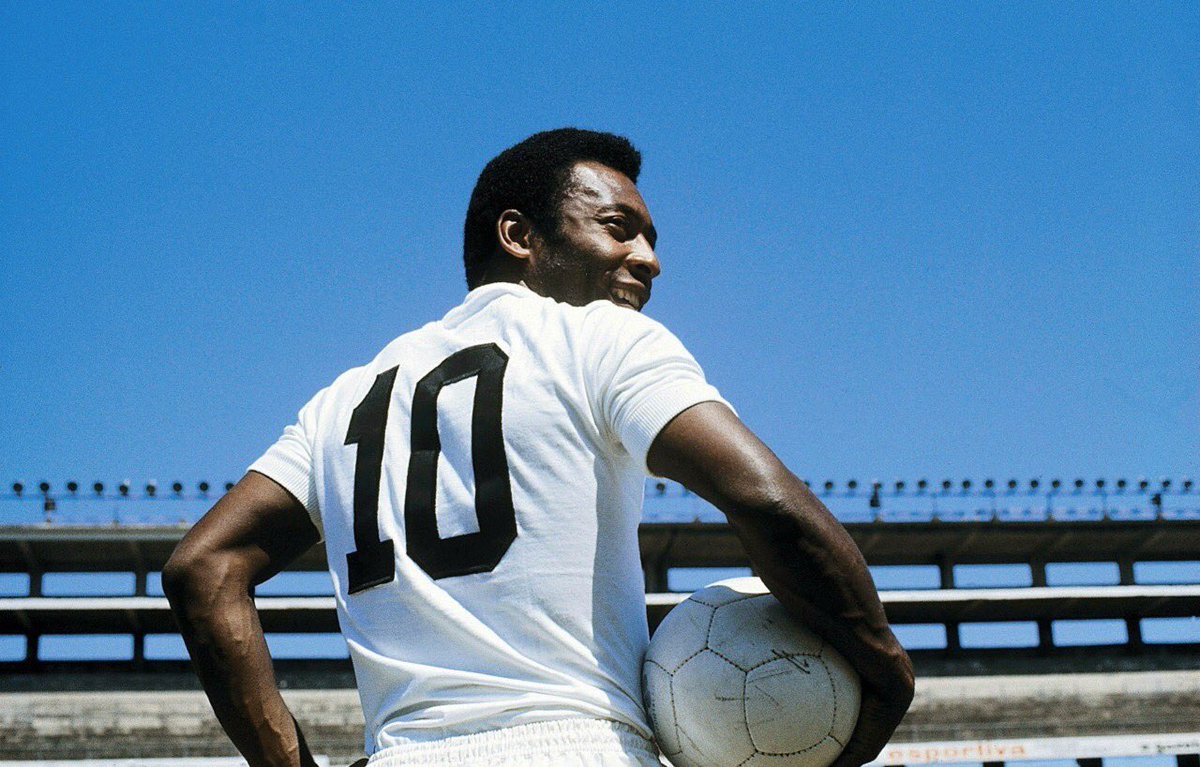
10. Lionel Messi Is NOT the Greatest Of All Time. Pelé -- whose illness prevented his attendance at the World Cup for the 1st time since 1954 -- won 3 World Cups, was definitively the best player in the world longer than the debate between Messi and Cristiano Ronaldo has raged, and, unlike Messi and Cristiano, never had to cheat, or to benefit from his teammates' cheating.

The Messi or "Ronaldo" debate -- as a far of the earlier Brazilian player named Ronaldo, I refuse to call Cristiano that -- is over. The debate as to whether Messi has succeeded Diego Maradona as Argentina's greatest icon -- sports or otherwise -- is well on. But there is no debate about the greatest soccer player ever. It's Pelé. O Rei is still The King.

Thursday, February 26, 2015

Best Soccer Players By Uniform Number

Part 5 of a series. I will conclude it by doing the greatest performers in all of sport to wear the number.

In this case, I am making an exception to the rule of club over country, and finding out, as best I can -- we're talking, literally, about a whole world of players, going back to 1928 when numbers first appeared on English football shirts -- who was the best player ever to wear the number.

Especially in the era before squad numbers were set (1993 in England), players would be shifted in position, and would wear the number assigned to that position. So many great players, even since 1993, have worn more than one number. Nevertheless, it's one number to a player here. So Cristiano Ronaldo doesn't get to wear 7 and 17. In fact, he doesn't get to wear either.

0 Alex Stepney of England. The Manchester United goalkeeping legend wore it with the Dallas Tornado in 1979 and '80.

00 Steve Zerhusen of America (Baltimore). Wore it for the Fort Lauderdale Strikers in 1979 and '80.

1 Lev Yashin of Russia. The traditional goalkeeper's number goes to the man more often than any other called the best of all time. Starred in goal for Dynamo Moscow in both soccer and hockey for 20 years.

2 Cafu of Brazil. Starred at Right Back for São Paulo in Brazil, Real Zaragoza in Spain, and AS Roma and AC Milan in Italy, as well as Captaining Brazil to the 2002 World Cup.

3 Paolo Maldini of Italy. Wore it for AC Milan for 25 years.

4 Patrick Vieira of France. In 1998, won the League and the FA Cup -- The Double -- for Arsenal, and the World Cup for France. Won another Double in 2002. Was Captain of Arsenal's "Invincibles" in 2004. Nearly won another World Cup in 2006.

5 Franz Beckenbauer of Germany. Wore it in victorious Finals for 3 European Cups for Bayern Munich and a World Cup Final for West Germany.

6 Bobby Moore of England. Wore it in Finals in Wembley Stadium 3 straight years: The 1964 FA Cup and the 1965 European Cup Winners' Cup for West Ham United, and the 1966 World Cup for England.

7 Kenny Dalglish of Scotland. Those of you who are Manchester United fans will consider this blasphemy, but then, you also consider your Ferguson-era trophies to be fairly won. "King Kenny" is arguably the greatest player ever for 2 legendary British clubs: Glasgow's Celtic, and Liverpool.

8 Giuseppe Meazza of Italy. Starred for Internazionale Milano, and the stadium that "Inter" shares with AC Milan is named for him. Led Italy to victory in the 1934 and 1938 World Cups.

Yes, Liverpool fans, Steven Gerrard was considered for this list. No, he was never going to be chosen for this number.

9 Bobby Charlton of England. Unlike such previous English legends wearing the number, like Dixie Dean of Everton and Jackie Milburn of Newcastle United, the Manchester United legend wore it in the television era, including the 1966 World Cup win, and thus is more familiar with it.

Don't even think of putting Alan Shearer here. You may think of putting Alfredo Di Stéfano, Gianni Rivera, Marco van Basten or the Brazilian Ronaldo here, and Ronaldo will show up later on this list. 

10 Pelé of Brazil. Starred for Santos in his homeland in the 1960s, and in the mid-1970s dragged America kicking and screaming (for joy) into the soccer world with the New York Cosmos. The only man to play on 3 World Cup winners.

There are, of course, people who would have preferred that I select Ferenc Puskás, Denis Law, Diego Maradona, Dennis Bergkamp, Zinedine Zidane or Lionel Messi. Puskás, Zidane and Messi will show up on this list.

If you still doubt that Pelé is the greatest player ever, or at least the greatest ever to wear Number 10, take a look at the photo above. It was taken at his farewell match at the Meadowlands in 1977. And the other man in that picture, Muhammad Ali, still Heavyweight Champion of the World at the time, and a man who liked to call himself "the Greatest of All Time," said after seeing the spectacle, "Now I understand: He is greater than me."

11 Garrincha of Brazil. The legend of Rio de Janeiro club Botafogo wore it while starring in the 1958 World Cup. Was even more amazing in the 1962 World Cup, wearing 7.

12 Júlio César of Brazil. Now wrapping up his career with Portuguese giants Benfica, the goalie starred for Rio de Janeiro's Flamengo and Milan's Inter, wearing 12 with the latter, and in the last World Cup for Brazil.

13 Eusébio of Portugal. The Benfica star wore it in the 1966 World Cup. Usually wore 10.

14 Thierry Henry of France. Wore it for his club teams, but wore 12 for his national team and in his brief 2012 loan return to Arsenal. No doubt, some of you think I've forgotten somebody. Rest assured, the man you're thinking of is on this list.

15 Lilian Thuram of France. Starred for AS Monaco (Monaco is an independent nation, but so small of one that its club team competes in France's Ligue 1), Parma and Juventus. World Cup winner 1998.

16 Martin Peters of England. At a time when England didn't allow numbers past 11 (and then 12, once substitutions were legalized in 1966), he wasn't intended to be a starter for England's World Cup team in 1966. He ended up not only playing in the Final, but scoring. Usually wore 10 for West Ham United, Tottenham Hotspur and Norwich City.

17 Steven Gerrard of England. Wore it for Liverpool before switching to the more familiar 8. Usually wears 4 for England.

18 Lionel Messi of Argentina. The Barcelona star has long since switched to 10 for both club and country. Honorable mention to Doctor Sócrates, the Brazilian legend of the 1980s.

19 Ferenc Puskás of Hungary. "The Galloping Major" wore it while captaining his country to the Gold Medal at the 1952 Olympics. He usually wore 10 for his national team thereafter, having usually worn it for Budapest Honvéd, and later for Real Madrid.

20 Vavá of Brazil. Starred for Rio de Janeiro club Vasco da Gama and Spanish side Atlético Madrid. Scored the biggest goals in Brazil's 1958 World Cup win, and also played on the 1962 World Cup winners (having switched to 19). 

21 Zinedine Zidane of France. Wore it at Juventus, 5 at Real Madrid, 10 for his country. A tough call over AC Milan and Juventus legend Andrea Pirlo.

22 Kaká of Brazil. Wore 8 at São Paulo and Real Madrid, 22 at AC Milan. He has worn 8 and 10 for Brazil, and now wears 10 for MLS expansion team Orlando City.

23 Sol Campbell of England. Famously made the switch across North London from Tottenham Hotspur (switching from 23 to the more common centreback number of 5 by the end of his tenure there) to Arsenal (taking 31 on his brief return to the club after playing at Portsmouth, where he also wore 23). If you expected to see Manchester United legend David Beckham, who wore 23 for the Los Angeles Galaxy and AC Milan, he will show up later.

24 Tim Howard of America (North Brunswick, New Jersey). Always wears 1 for the national team, wore 14 at Manchester United, and has worn 24 for Liverpool-based Everton since 2006.

25 Gianfranco Zola of Italy. Starred for Napoli, Parma and Chelsea. Wore 21 for his country.

26 John Terry of England. Yes, he represents so much of what's wrong with the modern game (and wears 6 for his national team), but show me anyone else whose done more with 26 than Captain Cuckold has with Chelsea.

27 Nwankwo Kanu of Nigeria. Wore it at Portsmouth after wearing 14 at Ajax, 19 at Inter and 25 at Arsenal. Always wore 4 for his country.

28 Cristiano Ronaldo of Portugal. Wore it at Sporting Lisbon, but was given 7 upon his arrival at Manchester United, because manager Alex Ferguson wanted him to become the kind of legend who had worn it for the Salford club: George Best, Bryan Robson, Eric Cantona, David Beckham.

29 Rio Ferdinand of England. Wore it at Leeds United before getting poached by Manchester United and switching to 5.

30 Johan Cruijff of the Netherlands. Aside from Pelé and Maradona with 10, no footballer is more identified with a single number than Cruijff (whose name is frequently, but incorrectly, spelled "Cruyff") is with the 14 he wore in his best years at Ajax, in the NASL with the Los Angeles Aztecs and the Washington Diplomats, and with the Dutch national team. But he wore 9 at Barcelona, and wore 30 in a friendly with the New York Cosmos in 1978. He played in only 1 other game for the Cosmos, another friendly that year, and wore 16.

True, he never played a competitive match wearing 30. But who else are you going to pick for the number -- Obafemi Martins?

31 George Weah of Liberia. Normally a 9, wore 31 for Chelsea.

32 David Beckham of England. The Manchester United and Real Madrid legend wore it with AC Milan.

33 Alex (Rodrigo Dias da Costa) of Brazil. Wears it for AC Milan, after also wearing it for Chelsea.

34 Nigel de Jong of the Netherlands. Wears it at AC Milan, after also wearing it at Manchester City. Usually wears 8 for his country, but has also worn 6 and 17 in international tournaments.

35 Viktor Genev of Bulgaria. Was a star by his home country's standards. Now plays in Scotland for St. Mirren.

36 Matteo Darmian of Italy. Wore it for Sicilian side Palermo.

37 Jari Litmanen of Finland. Wore it at Liverpool, after usually wearing 10 with clubs like Ajax and Barcelona.

38 Sinan Bolat of Turkey. Wears it for Istanbul giants Galatasaray.

39 Nicolas Anelka of France. Wore 9 at Arsenal, but whenever he wears out his welcome at a club (which is usually soon to happen), "Le Sulk" goes to one where 9 is occupied, so he takes 39. Has worn 8, 9 and 21 for France.

40 Henrique Hilário of Portugal. Wore it with Chelsea.

41 Jérôme Agyenim Boateng of Germany. Wore it at the start of his career, for hometown club Hertha Berlin. Now better known for wearing 17.

42 Yaya Toure of the Ivory Coast.

43 Julian Dicks of England.

44 Massimo Oddo of Italy. Wore it for AC Milan, although switched to 17 -- which is usually considered a bad-luck number in Italy.

45 Mario Balotelli of Italy. Has worn it for both Milan clubs, Manchester City, and now Liverpool, but usually wears 9 for his country.

46 Salvator Sirigu of Italy. Wore it for Palermo.

47 Andrea Consigli of Italy. Wears it for Sassuolo.

48 Salih Uçan of Turkey. Wears it for Istanbul giants Fenerbahçe, and also in his current loan spell at AS Roma.

49 Muhammed Demirci of Turkey. Wears it for Istanbul side Beşiktaş.

50 Michele Somma of Italy. Wears it for Empoli, on loan from AS Roma.

51 Mauricio Pinilla of Chile. Has worn in for several Italian clubs, currently Genoa (but on loan to Atalanta).

52 Emre Çolak of Turkey. Wears it for Istanbul giants Galatasaray.

53 Serdar Kesimal of Turkey. Wears it for Fenerbahçe.

54 Isaac Donkor of Ghana. Wears it for Inter.

55 Yuto Nagatomo of Japan. Wears it for Inter. Wears 5 for his country.

56 Nico Pulzetti of Italy. Plays for Bologna.

57 Cesc Fabregas of Spain. Wore it in his 1st season for Arsenal, 2003-04, before switching to 15 the next season and 4 in 2006-07. Kept 4 when he betrayed the club and went to Barcelona, and now Chelsea.

58 Gedion Zelalem of America (born in Germany of Ethiopian parents, but grew up in the Washington, D.C. area and will play for the U.S. team). Wore it once for Arsenal, and has now switched to 35. (UPDATE: In 2020, he wears 23 for New York City FC.)

59 Couldn't find one worth posting.

60 Jeff Parke of America (the Philadelphia area). Wore it with the New York Red Bulls in 2008.

61 Konstantinos Kotsaris of Greece. Wears it for Athens giants Panathinaikos.

62 Couldn't find one worth posting. (UPDATE: Michael Amir Murillo of Panama began wearing it for the Red Bulls in 2017. He wears 2 for his national team.)

63 Couldn't find one worth posting.

64 Couldn't find one worth posting. (UPDATE: Sergi Canos made 1 appearance for Liverpool, in 2016, wearing 64.)

65 Couldn't find one worth posting. (UPDATE: Michael Baldisimo, a midfielder born in 2000, began wearing it in 2018, for his hometown team, the Vancouver Whitecaps.)

66 Giampiero Pinzi of Italy. Wears it for Udinese.

67 Eray İşcan of Turkey. Wears it for Galatasaray.

68 Andrea Fulignati of Italy. Wears it for Palermo.

69 Bixente Lizarazu of France. Wore it at Bayern Munich in 2005. No, it doesn't refer to anything naughty: He was born in 1969, stood 169 centimeters tall, and weighed 69 kilograms, so he considered it his lucky number.

70 Ainsley Maitland-Niles of England. Hasn't yet done much, for Arsenal or any other club, but he's played (and worn the number) in a UEFA Champions League match, which is more than I can say for the only other Number 70 I could find, Stefano Sorrentino of Italy, a backup goalie who wears it for Palermo. (UPDATE: In 2018, AMN began wearing 15 for Arsenal.)

71 Diego Serna of Colombia. Wore it with the New York/New Jersey MetroStars (now the New York Red Bulls) in 2002.

72 Josip Iličić of Slovenia. Wore it for Palermo, and now wears it for Fiorentina.

73 Stefan O'Connor of England. Hasn't yet done much, for Arsenal or any other club, but he's played (and worn the number) in a UEFA Champions League match, which is more than I can say for any other Number 73 I could find.

74 Mohamed Salah of Egypt. Signed to Chelsea, but on loan to Fiorentina, with whom he wears it.

75 Couldn't find one worth posting. (UPDATE: In 2018, Wan Kuzain of Carbondale, Illinois wore began wearing it for Sporting Kansas City.)

76 Andriy Shevchenko of Ukraine. Wore the last 2 digits of his birth year at AC Milan because his usual 10 wasn't available. Wearing your birth year as a uniform number is going to become less common once we have players born in 2000 or later, and it won't be long now.

77 Gianluigi Buffon of Italy. One of the greatest goalies ever, wore it at Juventus in the 1999-2000 season.

78 Aurélien Collin of France. The MLS All-Star wore it for Sporting Kansas City, and will now wear it for expansion Orlando City.

79 Gianluca Pegolo of Italy. Wears it for Sassuolo.

80 Ronaldinho of Brazil. Wore his birth year at AC Milan because his usual 10 wasn't available. 

81 Cristian Zaccardo of Italy. The AC Milan player wears his birth year, but wore 2 for his country.

82 Alexandre Geijo of Spain. Wears his birth year for Udinese.

83 Antonio Miranti of Italy. Wears his birth year for Parma.

84 Clint Mathis of America (the Atlanta area). Wore it with the Los Angeles Galaxy from 1998 to 2000, and again in 2010. Usually wore 13, including with the Red Bulls.

85 Diego Novaretti of Italy. Wears his birth year for Rome club SS Lazio.

86 Fabrizio Cacciatore of Italy. Wears his birth year for Genoa side Sampdoria.

87 Ervin Zukanović of Bosnia and Herzegovina. Plays for Chievo Verona, on loan from Belgian club KAA Gent. Wears his birth year. 

88 Hernanes of Brazil. Wore 8 at São Paulo and Rome club Lazio, but wears 88 at Inter.

89 Guido Marilung of Italy. Plays for Cesena, on loan from Atalanta. Wears his birth year. 

90 Duje Čop of Croatia. On loan from Dinamo Zagreb to Cagliari, where he wears his birth year. 

91 Xherdan Shaqiri of Switzerland. Wears 11 for his country, and also wore it for Bayern. Now wears 91 for Inter.

92 Stephan El Shaarawy of Italy. The Egyptian-descended "Il Faraone" (The Pharoah) of AC Milan wears his birth year. Wears 14 for Italy.

93 Octávio of Brazil. The Botafogo prospect is on loan to Fiorentina this season, and wears his birth year.

94 Jimmy Medranda of Colombia. Wears his birth year for Sporting Kansas City.

95 Alberto Grassi of Italy. Wears his birth year for Atalanta.

96 Andrea Palazzi of Italy. The Inter starlet wears his birth year.

97 Federico Bonazzoli of Italy. The Sampdoria player, currently on loan with Inter, also wears his birth year.

98 Hachim Mastour of Italy. The AC Milan starlet wears his birth year.

99 Ronaldo of Brazil (a.k.a. "The Real Ronaldo" or "Fat Ronaldo" since Cristiano became a star). Wore it at AC Milan because his usual 9 wasn't available.

There have been players who've worn triple-digit numbers, usually as a one-time-only publicity stunt. Mexico, in particular, has seen a few of these worn regularly, as they have no numerical restrictions.

Of these 96 players, 78 are still alive. (UPDATE: Through the start of the 2020-21 season, 76 are.)

Tuesday, July 26, 2011

Top 10 Reasons Why Soccer Is Better Than Football

Note: This is NOT the most-frequently cited list, which cites soccer as having "the most attractive athletes" (clearly, the author never saw Manchester United's Gary Neville and Wayne Rooney) and Vinnie Jones' acting career. This is my own list.

So, the National Football League lockout has been settled. The team owners can go back to doing what they do best: Cover their asses and make gobs of money.

And the players can go back to doing what they do best: Make gobs of money, and spend it on their posses, their mistresses, and their firearms.

Who's going to win Super Bowl XLVI, this coming February? In the words of the new James Bond, and co-star with Harrison Ford in the upcoming movie Cowboys & Aliens, Daniel Craig: "Do I look like I give a damn?"

Craig is from Chester, in the northwest of England, and is a fan of Liverpool Football Club. That's football as in association football, or soccer.

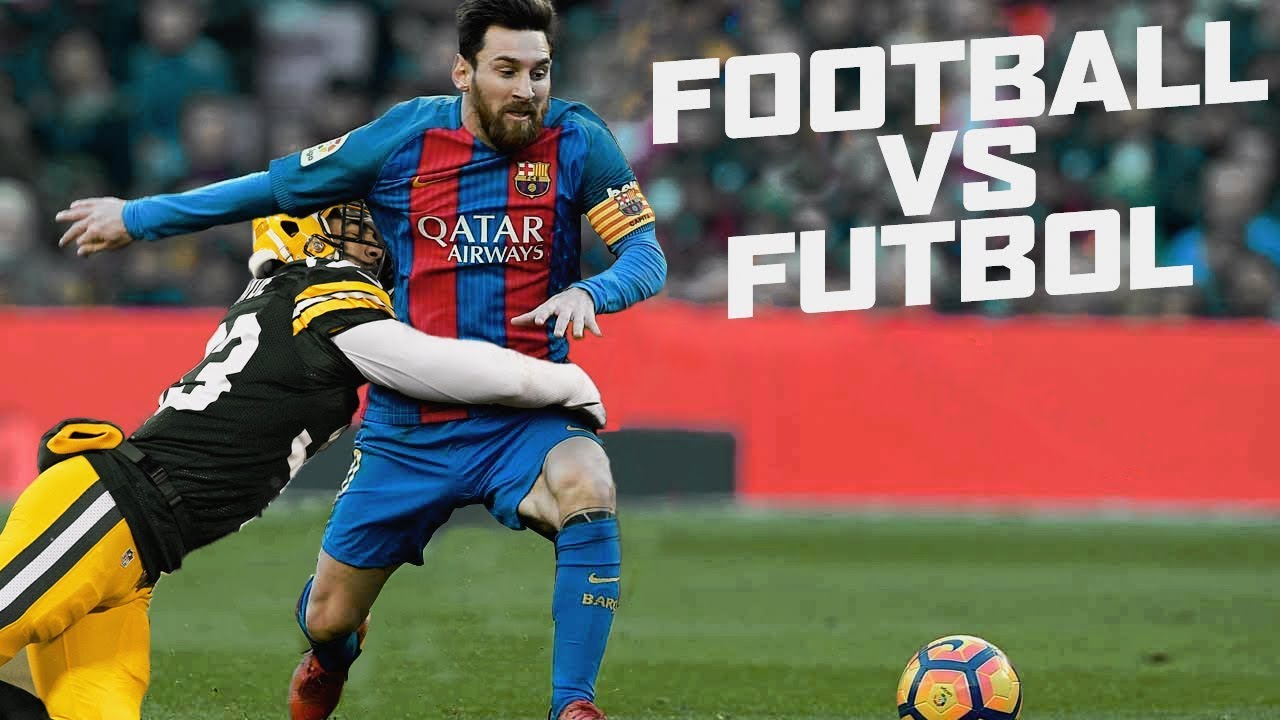
It seems un-American to say this, but their football – or futbol, or fussball, or voetbal, or calico, or, as the majority of the English-speaking world (including the U.S., Canada, South Africa and Australia) call it, "soccer" – is better than our football.

As recently as 2006, I would never have made that statement. That's the year my Grandma died -- and she was a big NFL fan. I wonder if her no longer being around to watch and talk about the NFL with has anything to do with it.

I grew up with the typical pre-MLS American attitude toward soccer:

* It's too boring.

* It's too foreign.

* There's not enough offense.

Even though I had the New York Cosmos playing just 35 miles away at Giants Stadium, with Pele, Carlos Alberto, Franz Beckenbauer, Johan Neeskens and Giorgio Chinaglia, and opponents like Eusebio, George Best and Johan Cruyff coming in, I wasn't hooked on it. I would watch it on television, but I wouldn't go to a game.

The 2006 World Cup hooked me -- exactly how, is a story for another time. Slowly, but surely, I began to realize what a great game soccer is. And my exposure to London's Arsenal, Spain's Barcelona (before I started hating them -- with good reason), the Netherlands' Ajax Amsterdam, Italy's AC Milan and Portugal's Sporting Lisbon, finally brought me over to the side of the world's football.

Which, yes, is better than American football.

Here's my top 10 reasons why:

10. Size doesn't matter nearly as much. And I’m not just talking about hugeness causing injuries. True, being tall does help, especially with aerials. But you can be 5-foot-5 like Argentina star Diego Maradona, 5-foot-5½ like Italian legend Gianfranco Zola, 5-foot-6 like Brazilian star Roberto Carlos, 5-foot-6½ like Argentina's Lionel Messi, or 5-foot-7½ like Russia's Andrey Arshavin, and still be considered one of the best players in the world.

All this talk about English players having height to go with their courage? England hasn't won a major tournament since 1966, when 2 of their starters, Nobby Stiles and Alan Ball, were 5-foot-6. Shorter than Messi – though taller than Maradona and Zola.

Contrast that with American football: Doug Flutie was 5-foot-9¾, and won the Heisman Trophy as the best player in college football in 1984; yet went undrafted because he was "short." He went on to become the greatest quarterback in the history of the Canadian Football League. And he did help 4 different teams make the NFL Playoffs.

Famously growing up in Natick, Massachusetts, outside Boston, a lot of people don’t realize he was born just outside Baltimore, in Catonsville, Maryland. That's 36 miles from his country's capital. If, instead, he'd been born the same distance from London – say, in Stevenage, hometown of 5-foot-8 Arsenal star Jack Wilshere – soccer fans would've said, "One-point-seven-seven metres is too short? Sod off, the Flutie lad can play!"

These days, even baseball and hockey players are huge, to the point where the legendary Reggie Jackson stands alongside Derek Jeter, a shortstop, and asks, "When did I get so short?" Reggie is 6 feet even, Jeter is 6-foot-3.

But soccer is still a human-sized sport.

9. Fewer commercials. The running clock means no TV time-outs. Commercials before the game, after it, and in halftime, but not during the game.

True, they wear "commercials" on their uniforms, but do you really want to see an ad for yeast-infection cream after a touchdown? Or, at the other end, Viagra after your team has fumbled the ball away? (In such an event, I don't think Viagra is going to help – and your team's players may already be a bunch of stiffs, and not in a good way.)

8. Overtime is not messed-up. Except for cup ties, there's no overtime at all. Is that a good thing? (I'll get to that in a moment.) In cup ties, there isn't sudden-death overtime (although, under some conditions, there has been a "golden goal"). If you allow a goal in extra time, you can still tie (or "equalise"), or even win. This happened to Arsenal in the 1971 FA Cup Final, against Liverpool: It was 0-0 at the end of the regulation 90 minutes plus injury time (a.k.a. stoppage time), then Liverpool scored first, from Steve Heighway in the 92nd minute. But Eddie Kelly tied it up for Arsenal in the 101st, and then, in the 111th, Charlie George drilled one into the net, and Arsenal had won the Cup – and, having already won the League, won "The Double."

True, penalty kicks often seem like an unfair way to settle a cup tie -- especially if you're from either England or the Netherlands. But it's better than the NFL's version, which is based on a coin toss. (Which is done by the referee. If you watch English soccer, you know where I'm going with this: In England, many of the referees are tossers.) The team that wins the coin toss wins 60 percent of the time -- in contrast, home field advantage has little effect in overtime, just 51 percent of home teams winning.

(I was going to say home field advantage has little effect in "OT," but that could be interpreted as "Old Trafford," and, if you know anything about soccer, you know that Old Trafford is the biggest home field advantage in any sport in the English-speaking world.)

7. Proper punishment. Granted, soccer has futzed-up officiating as much as any other sport, and not even the Dallas Cowboys have gotten as many dubiously favorable calls as England's Manchester United, Spain's Real Madrid and Barcelona, Germany's Bayern Munich and Italy's Juventus. But you do something egregious in soccer, and not just you, but your team gets seriously punished.

A penalty in American football? Except for some pass interference calls, you hardly ever see more than a 15-yard penalty; the soccer equivalent would be a free kick. In hockey, a penalty puts your team down a man for 2 minutes. But an infraction worthy of a game misconduct is rare in hockey, and even then, someone gets sent into the penalty box to serve the penalty of the player who's been thrown out of the game, and then, when the penalty is over, that player can return to the ice to make it 5-on-5 agian.

In contrast, in soccer, if you get 2 yellow cards, equaling a red card, or even a straight red, your team is down a man for the entire rest of the game.

In other words, if you pull the kind of shit the Oakland Raiders and the Philadelphia Flyers pulled regularly in the 1970s and 1980s, then, assuming the ref is not paid off in your team's favor, it's 10 vs. 11 for the rest of the game. And if that happens early, try being a man down for over an hour. Hell, except for baseball, North American sports don't even last an hour unless they go to overtime.

6. A tie is not meaningless. In league play, or in group stage play in international tournaments, a win gets you 3 points, but a tie (or a "draw," as they would say) gets you 1 point. So if you work hard, but don't win, you can still get ahead.

If the old football coach (his name seems to vary, depending on who's telling the story) was right, and "A tie is like kissing your sister," in soccer, there are some draws that are like kissing your sister's really hot best friend. Of course, there are also some draws that are like kissing your mother's canasta partner with the dentures...

5. Relegation and promotion. The bottom 3 teams in a national soccer league get "relegated," dropped down to the next highest division. The top 2 teams in the next highest division, and the winner of a playoff between teams 3 through 6, get promoted to the spots of the former higher teams.

In other words, if you're the owner, and you don't spend enough money to improve your team, you get punished for it; if you do spend enough money to improve your team, and it works (it might not), you get rewarded for it.

Think about it: In Major League Baseball, if the last-place teams in each division got relegated, and had their places taken by teams that won their division in the minors, then, following the 2010 season, the Baltimore Orioles would have been replaced in the AL East by the Columbus Clippers (Ohio); the Kansas City Royals in the AL Central by the Oklahoma City RedHawks; the Seattle Mariners in the AL West by their neighbors, the Tacoma Rainiers; the Washington Nationals in the AL East by the Durham Bulls; the Arizona Diamondbacks in the NL West by the Sacramento River Cats; and, in the NL Central, the Pittsburgh Pirates by the Iowa Cubs. True, that would deprive us of the Pirates' 2011 renaissance, but then, the Pirates could have had that much sooner if they’d just taken a chance and spent like they were actually glad to be in the major leagues.

(In reality, relegation and promotion wouldn't work in the U.S., in any sport. The distances involved would make realignment and schedulemaking a pain in the centreback. Besides, the NFL doesn't have farm teams like the other 3 sports, relying almost solely on the collegiate draft.)

UPDATE: The lack of relegation and promotion is a major problem that many American fans have with MLS. And MLS' excuse has nothing to do with logistics. I think they're afraid that one of the big markets -- New York, L.A., Chicago, Boston -- might get relegated, and they'll lose that top-flight moneymaker.

4. Lesser injuries. True, you have to be tougher to play football than soccer, but that's because there are 300-pound men coming at you. That's 300-pound men who can run. And they come at you all the time.

Whereas, in soccer, there are no 300-pound men (except in the stands, and often in the director's box – yes, I'm talking about you, Mike Ashley of Newcastle United); and the only ones who come at you, rather than the ball, are those "Dirty Northern Bastards" at teams like Stoke City and Sunderland and Wolverhampton Wanderers, and they never win anything anyway.

Furthermore, the rapid increase in the size of the American football player has resulted in some repeated awful collisions that have led to brain damage, including dementia that resembles Alzheimer's disease. This in men not yet 50 years old.

Recently, we've seen a few really good players die from this -- and a few even committing suicide because they can't live like that. One, Dave Duerson of the Super Bowl XX Champion Chicago Bears, killed himself and donated his brain to science, so the doctors could see just what it does to a man. And he played 25 years ago, when there were a few 300-pound men in the game, but it wasn't that common; that's why his 320-pound teammate William "the Refrigator" Perry was so celebrated. Today, seeing a 340-pound lineman, offensive or defensive, wouldn't make anyone blink.

Then there's the other injuries. I had a girlfriend whose grandfather played for the Green Bay Packers during World War II. This was before facemasks, even before plastic helmets – at the time, they were still using the leather "glove" kind. When I last saw him before he died, he was in his early 80s, and his mind was still sharp – sharp enough to have been an assistant coach at an Ivy League university. But I never saw the man stand up, let alone walk.

Before Joe Montana came along, Johnny Unitas was often called the greatest quarterback who ever lived. He didn’t make it to 60, due to a bad heart. And for a few years before that, Unitas, known as The Man With the Golden Arm, could no longer even grip a football with his throwing hand.

Show me a "footballer" of that caliber who, at age 55, can no longer even kick a ball – and I don't mean through a tragic accident (a la the comics' Roy Race). You see broken legs in soccer, but not like in American football. Some of what those men have gone through is horrific.

UPDATE: I have since learned of the sad fate of West Bromwich Albion star Jeff Astle, and the "Justice for Jeff" campaign, which raises awareness of concussions in soccer and other sports. Astle, and some of England's 1966 World Cup heroes, developed dementia as a result of frequent headings of the much-heavier ball of their era.

3. Multiple competitions. You can fail to win your league, and still have a chance to win something. There is your country's national league (not to be confused with baseball's National League), the national cup tournament (think NCAA "March Madness," except it runs all season long), the national "league cup" tournament (in terms of importance, think the Preseason NIT), and then there's continental play.

The UEFA Champions League (formerly known as the European Cup), Asia's AFC Champions League, Africa's CAF Champions League, South America's Copa Libertadores, and the North America, Central America and Caribbean CONCACAF Champions League, are true major championships in ways that the NFL, the World Series, the NBA Playoffs and the Stanley Cup simply can't be – because, with the possible exception of the Japanese baseball champions and the hockey champions of Scandinavia and the former Warsaw Pact nations, there just isn't any chance.

So the championships (if not, in terms of appearance, the trophies themselves) aren't just more, they're better.

2. It's a world game. Usually, the only NFL players born and raised in other countries are the placekickers – who weren't good enough to make it as soccer players. But on a soccer team, you can get players from around the world – for the better ones, players from the club's country of origin tend to be few and far between.

The first club in English football to play an entirely non-English lineup? No, not Arsenal. Chelsea. Ironic, isn't it? The club most identified with the racist British National Party, the far-right National Front, and the hooligans that tend to show up for the England national team... and they were the first all-foreign team in the country.

1. Fan reactions and interactions. At a North American sporting event, you might hear variations on the bias or blindness of the officials. Other than that, the imagination of the sports fan is generally limited to "You suck, asshole!"

But in soccer, regardless of country, songs are made up. Yes, songs – some current hits, some classics. These get turned into braggadocio for your squad, or for individual players thereof, and swipes at the opposition.

Some are good-natured, known in England as "taking the piss." Some are not. References to a player's pecadillos, such as arrests, substance abuse, business troubles, and sexual practices (real or imagined), and the same for his family, get turned into musical numbers. Sometimes vile. Sometimes hilarious. Sometimes both.

My favorite example concerns Andy Goram, a goalkeeper from Scotland, who played for the Glasgow-based team Rangers. Goram was diagnosed with schizophrenia. This is often incorrectly confused with multiple-personality disorder. And so, Rangers' Glasgow arch-rivals, Celtic, did a variation on the song of praise, to the folk song "Guantanamera." Instead of "One (Name of Player), there's only one (Name of Player)!" they sang, "Two Andy Gorams! There's only two Andy Gorams!"

"You can't make this shit up," you say? They did. And fans keep this up for the full 90 minutes. Think of Duke basketball fans. Now imagine that they're not Ivyesque pussies who would tremble in fear if you actually tried to shove their words back down their throats.

Welcome to the world of the Ultras.

Yes, soccer is better than football. And if you disagree, piss off, wanker.