Showing posts with label ace parker. Show all posts

Sunday, June 25, 2017

Top 10 Athletes from Virginia

June 25, 1788: Virginia becomes the 10th State to ratify the Constitution of the United States, thus joining the Union.

Top 10 Athletes from Virginia

You know how we sometimes say about a great athlete, "He's not human!" Well, the greatest athlete from Virginia might not have been human. It might have been a horse: Secretariat, born at The Meadow, a horse farm outside Bowling Green, Caroline County, Virginia. Genuine Risk, who in 1980 became only the 2nd filly to win the Kentucky Derby (and only 1 other has done it since), was born at Catoctin Stud in the Washington suburb of Waterford.

At any rate, in spite of Virginia being a Southern State, basketball dominates this list, not football. And the Norfolk-Virginia Beach-Hampton Roads area dominates, not the suburbs of Washington, D.C., or the State capital of Richmond.

Honorable Mention to Ken Clay of Lynchburg. He was a relief pitcher who helped the Yankees win the 1977 and 1978 World Series.

Honorable Mention to Wendy Gebauer of Reston, and Kim Maslin-Kammerdeiner of Fairfax, both suburbs of Washington, D.C. They were members of the U.S. team that won the 1st Women's World Cup in soccer, in 1991.

Honorable Mention to Ali Krieger of Dumfries, also a D.C. suburb. She was a member of the U.S. team that won the 2015 Women's World Cup.

Honorable Mention to Jonathan Clay Redick of Roanoke -- his parents called him "J" for short, but one of his baby sisters turned it into "J.J." -- who won the James E. Sullivan Memorial Award as the outstanding amateur athlete in America in 2005, as a basketball player at Duke University. While still Duke's all-time leading scorer, and they retired his Number 4, his pro career has been a letdown, although he did reach the 2009 NBA Finals with the Orlando Magic. He will play the 2017-18 season with the Philadelphia 76ers.

Honorable Mention to Andrew Rodriguez of Alexndria. The linebacker for the Army football team overcame a severe back injury to not only play again, but win the 2011 Sullivan Award. He has remained in the U.S. Army, and is unlikely ever to play pro ball, especially since his father, David M. Rodriguez, is a retired 4-star General (and also a former West Point football and baseball player), and all the branches of the armed forces the Army like to train the sons of "flag officers" to be flag officers as well.

Honorable Mention to Pernell Whitaker of Norfolk. "Sweet Pea" boxed his way to a Gold Medal at the 1984 Olympics in Los Angeles. He 1st held a championship, the IBF Lightweight title, in 1989; and last did so, the WBA Super Welterweight title, in 1995.

Honorable Mention to Dwight Stephenson of Hampton. The center helped the University of Alabama win back-to-back National Championships at the University of Alabama. A 5-time Pro Bowler, he helped the Miami Dolphins win the 1982 and 1984 AFC Championships, though they lost the Super Bowl each time. He was named to the Pro Football Hall of Fame, the NFL's 1980 All-Decade Team, and the Miami Dolphin Honor Roll.

Honorable Mention to Ralph Sampson of Harrisonburg. The center led the University of Virginia to the 1980 NIT title and the 1981 NCAA Final Four, winning 3 National Player of the Year awards. They retired his Number 50.

A 4-time All-Star, he was the 1984 NBA Rookie of the Year, MVP of the 1985 All-Star Game, and helped the Houston Rockets win the 1986 Western Conference Final, losing in the Finals. Injuries cut his career short, but he still had enough, college and pro combined (basketball does it that way, even though football doesn't), to be elected to the Basketball Hall of Fame.

Honorable Mention to Dell Curry of Grottoes. A 16-year NBA veteran who got his Number 30 retired by Virginia Tech, and was also a renowned high school baseball player, he will probably be best remembered for being the father of Steph Curry -- Wardell Stephen Curry II. Another son, Seth Curry, also plays in the NBA.

Somewhat Honorable Mention to Burress of Norfolk. He caught 553 passes for 8,499 yards and 64 touchdowns in regular-season play. And that doesn't count the greatest service he could have provided to football: Catching a last-minute touchdown pass from Eli Manning to win Super Bowl XLII for the Giants, and end the New England Cheatriots' bid for 19-0.

What happened to him after that is the stuff of both tragedy and farce. But he's cleaned up his life, and is now an assistant coach with, appropriately enough, the team that plays its home games in the stadium where he wrote his name into history, the Arizona Cardinals.

10. Allen Iverson of Hampton. At 6-foot-1, he is one of the shortest great basketball players ever. A star at Georgetown University in Washington, he became an 11-time NBA All-Star, including winning 2 All-Star Game Most Valuable Player awards. He was a 4-time scoring champion, a 3-time steals leader, and league MVP in 2001, when he led the Philadelphia 76ers to their only Finals appearance since the man at Number 5 on this list led them to their last title.

His Number 3 has been retired by the 76ers, and has been elected to the Basketball Hall of Fame. Clearly, some practice paid off for him.

But he's not the highest-ranking former Georgetown University basketball player on this list. The man at Number 8 on this list is.

9. Grant Hill of Reston. Although born in Dallas while his father Calvin Hill was a running back for the Dallas Cowboys, he great up in the D.C. suburbs, because his father finished his career with the Washington Redskins, and the family stayed there. A member of Duke University's National Championship basketball teams in 1991 and 1992, he got them back into the National Final in 1994. Duke retired his Number 33.

Like his father in his sport, Grant was Rookie of the Year in his, in the NBA in 1995. He was a 7-time All-Star, but injuries and bad luck with his teams' management decisions -- the Detroit Pistons, the Orlando Magic and the Phoenix Suns -- meant that he never got that elusive NBA title. He did, however, win an Olympic Gold Medal in 1996.

He is married to R&B singer Tamia, has done some acting, and is now a minority owner of the Atlanta Hawks. He is eligible for the Basketball Hall of Fame, and, considering that it includes collegiate achievements, he should be in it.

But he is not the highest-ranking Duke University athlete, or even basketball player, on this list. The man at Number 7 is.

8. Alonzo Mourning of Chesapeake. The successor to Patrick Ewing as the great center on the Georgetown University basketball team, he was Big East Conference Player of the Year in 1992. When he was drafted by the Charlotte Hornets, a Reebok commercial imagined all the honors he would receive, including the retirement of his Number 33.

Well, that did happen -- but it was the Miami Heat that retired it, after a career in which the center was a 7-time NBA All-Star, a 2-time Defensive Player of the Year, and a 2006 NBA Champion. He is in the Basketball Hall of Fame.

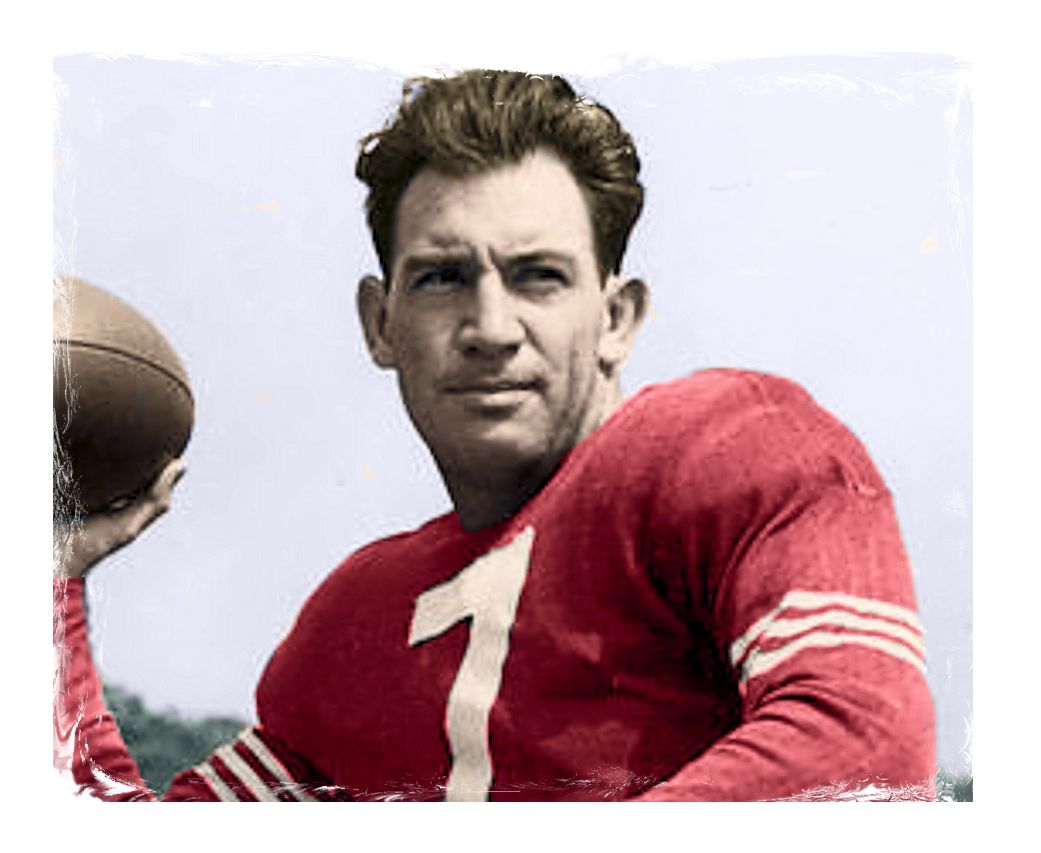
7. Clarence "Ace" Parker of Portsmouth. When he died in 2013, at the age of 101, he was the oldest living former Major League Baseball player, having played shortstop for Connie Mack's Philadelphia Athletics in 1937 and '38. But baseball wasn't his best sport: Football was. Ironically, in football, he played for teams named the Brooklyn Dodgers and the New York Yankees.

He was a star athlete at Duke University in Durham, North Carolina, half a century before Mike Krzyzewski's basketball team made that cool. He played baseball, football and basketball there. He finished 6th in the 1936 Heisman Trophy balloting, as a quarterback and safety, and Sammy Baugh was the only quarterback taken ahead of him in the 1937 NFL Draft.

He was a 2-time All-Pro, led the NFL in passing yards in 1938, and in 1940 led it in interceptions -- made, not thrown. He was also named NFL Most Valuable Player in 1940. He was named to the All-AAFC Team in 1946, and probably would have had more honors had his career not been interrupted by World War II, in which he was an officer in the U.S. Navy, well before the man at Number 2 on this list was born. Alas, no team for which he played survived the 1940s, so there is no team around to have retired his Number 7.

He later returned to Durham, managing the Durham Bulls minor-league baseball team, and serving as head baseball coach and assistant football coach at Duke. He was elected to the Pro Football Hall of Fame, the 1st member of any of the 4 major pro sports' Halls of Fame to live to be at least 100 years old. (Amos Alonzo Stagg lived to be 102, but he was in the College Football Hall of Fame, never having worked in pro ball.) He was also elected to the Sports Halls of Fame of both Virginia and North Carolina, and was a charter inductee into the Duke University Sports Hall of Fame in 1975.

6. Willie Lanier of Richmond. One of several players from HBCUs (Historically Black Colleges and Universities) to play for the AFL's Kansas City Chiefs (Morgan State University in Baltimore -- Buck Buchanan of Grambling State in Louisiana was another), Willie was the greatest linebacker in AFL history, and one of the top NFL linebackers in his era.

A 2-time All-AFL player and a 6-time NFL Pro Bowler (that's 8 All-Star Teams), he arrived too late to play for the Chiefs team that won the 1966 AFL Championship and lost Super Bowl I, but he led the defense that won the 1969 AFL Championship and won Super Bowl IV. He was named to the College and Pro Football Halls of Fame, the NFL's 75th Anniversary All-Time Team, and the Kansas City Chiefs Hall of Fame. The Chiefs retired his Number 63.

5. Moses Malone of Petersburg. In 1974, he became the 1st high school basketball player to jump directly to the pros, signing with the ABA's Utah Stars. He played the ABA's last 2 seasons, then 19 more in the NBA, proving remarkably durable.

He was an ABA All-Star in his rookie season, 1974-75, then an NBA All-Star 12 straight times. He was a 6-time rebounding leader and a 3-time Most Valuable Player: 1979, 1982 and 1983. He got the Houston Rockets into their 1st NBA Finals in 1981.

The Philadelphia 76ers, desperate for a title after some agonizing close calls, made the trade that brought Big Mo in, and he joined with Julius "Dr. J" Erving, Bobby Jones and Andrew Toney to build one of the greatest teams ever. In his Hampton Roads accent, Malone predict a sweep of all 3 Playoff series: "Fo', fo', fo'." It didn't quite work out, as they went 12-1. (The 2002 Los Angeles Lakers went 15-1, and this year's Golden State Warriors topped that with 16-1. Going undefeated has never been done, not even by the old Boston Celtics in the 2-round era.) But they did win the title, with Malone winning the Finals MVP, and the Sixers haven't done it since.

His Number 24 is retired by the Rockets, and his Number 2 (Jones wore 24) by the 76ers. He was named to the Basketball Hall of Fame, and is 1 of 5 players named to both the ABA All-Time Team and the NBA's 50th Anniversary 50 Greatest Players.

4. Bruce Smith of Norfolk. No Virginia native has ever won the Heisman Trophy. A man named Bruce Smith won it in 1941, but he was a running back at the University of Minnesota. This Bruce Smith might have been better. You know what he did as a defensive end for 19 years in the NFL? As Dennis Hopper said in a Nike commercial, "Bad things, man! I mean bad things!"

He -- not Michael Vick -- is the greatest athlete in Virginia Tech history, winning the 1984 Outland Trophy as the best interior lineman in college football. Playing professionally, mostly with the Buffalo Bills, and toward the end for the Washington Redskins, he was an 11-time Pro Bowler. He starred on the Bills' 4 consecutive AFC Championship teams (but, of course, losing all 4 Super Bowls. And, while the statistic of sacks was not kept by the NFL until 1982 -- it is believed that Deacon Jones is the real all-time leader -- officially, Bruce Smith had more sacks than any player in the League's history: An even 200.

He was named to the College and Pro Football Halls of Fame, the NFL's 1980s and 1990s All-Decade Teams, and the Buffalo Bills Wall of Fame. Virginia Tech does not retire numbers, but the Bills retired his Number 78.

3. Arthur Ashe of Richmond. If we were going by importance, rather than by achievement, he would easily be at Number 1. It was considerable appropriateness that he went to UCLA, the school that also produced the 1st black player in modern baseball, Jackie Robinson; and the 1st 2 players to break the color line in the NFL, Kenny Washington and Woody Strode. He also received coaching from the 1st great Hispanic tennis player, who lived in Los Angeles: Ricardo "Pancho" Gonzales.

He was the 1st black male tennis player to be ranked Number 1 in the world, in 1968. That year, he became the 1st to win the U.S. Open. In 1970, he became the 1st to win the Australian Open. In 1975, he became the 1st to win Wimbledon. (He didn't quite get the "career Grand Slam," getting only as far as the Quarterfinals in the French Open, in 1970 and 1971.)

Althea Gibson was the 1st black person to win the French (in 1956), Wimbledon (1957 and '58) and the U.S. (1957 and '58). And the Williams sisters have won so many titles, it's hard to keep track. But Ashe remains the only black man to win the Australian, the U.S., and Wimbledon. The only one to win any of those, and he won all of them. I checked: Yannick Noah won the French, but none of the others.

Ashe's importance goes beyond what he did to raise the profile and acceptance of black athletes at home. He also helped break down the barriers of apartheid in South Africa. And, due to his own misfortune, he became an advocate for AIDS research.

For this reason, as he was dying in 1992, Sports Illustrated named him its Sportsman of the Year. Early in 1993, after his death, they put him on the cover again -- but it was hardly "The Dreaded SI Cover Jinx," as he was doomed anyway. Nevertheless, ESPN named its annual Award for Courage after him. President Bill Clinton posthumously awarded him the nation's highest civilian honor, the Presidential Medal of Freedom.

2. David Robinson of Manassas. Like his father before him, he entered the U.S. Navy (he was born in Key West, Florida, while his father was stationed there), after growing up in and around D.C. He graduated from the U.S. Naval Academy, and became the greatest basketball ever to play at one of the service academies, sweeping the player of the year awards in 1987. He wanted to serve on a submarine, but at 7 feet even, was way too tall. After serving his 2-year commitment, he was discharged so that he could play pro ball.

A center for the San Antonio Spurs, "The Admiral" (he actually left the Navy with the rank of Lieutenant Junior Grade) was a 10-time NBA All-Star, Rookie of the Year in 1990, rebounding leader in 1991, blocked shots leader and Defensive Player of the Year in 1992, scoring leader in 1994, Most Valuable Player in 1995, and, finally having another great player alongside him in Tim Duncan, an NBA Champion in 1999, and retired as an NBA Champion in 2003. That year, Sports Illustrated named him and teammate Tim Duncan as their Sportspeople of the Year. He won Olympic Gold Medals in 1992 (the Dream Team) and 1996.

He was named to the Basketball Hall of Fame, and, while still active and not yet an NBA Champion, to the NBA's 50th Anniversary 50 Greatest Players. 50 was also his uniform number, which the Spurs retired.

1. Lawrence Taylor of Williamsburg. The town is famous for its roles in the American Revolution and the American Civil War, but L.T. got medieval on a few asses.

The linebacker was an All-American at the University of North Carolina, and they retired his Number 98. He was a 10-time Pro Bowler, the NFL Most Valuable Player in 1986 (a rare feat for a defensive player), and a 2-time Super Bowl winner with the New York Giants. More than that, he was a symbol for defensive players in the 1980s, an era of reckless abandon, which included his runaway cocaine use, and his career-ending leg break of Washington Redskins quarterback Joe Theismann.
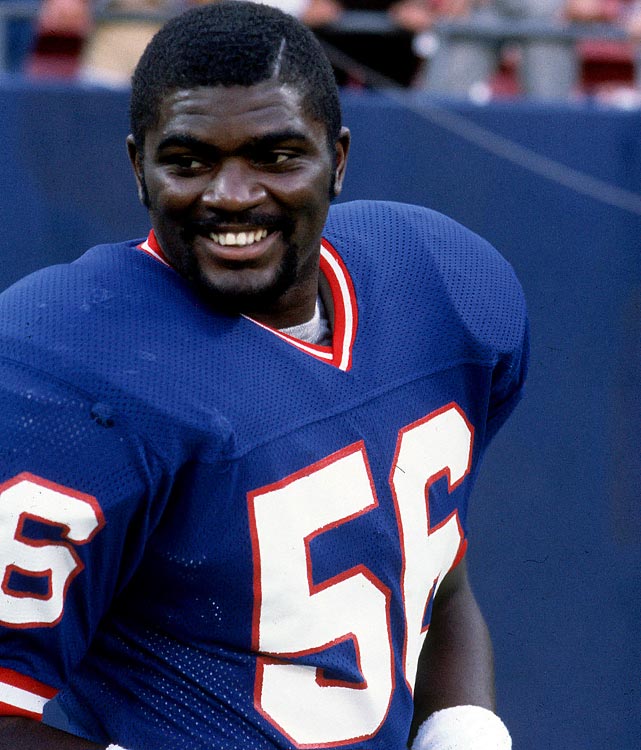
He was named to the Pro Football Hall of Fame, the NFL's 75th Anniversary All-Time Team and its 1980s All-Decade Team, and the New York Giants Ring of Honor, with his Number 56 retired. In 1999, The Sporting News named its 100 Greatest Football Players. He came in at Number 4. In 2010, the NFL Network named its 100 Greatest Players. He came in at Number 3. In each case, he was the highest-ranking defensive player.

Thursday, November 7, 2013

Clarence "Ace" Parker, 1912-2013

The trouble with being an athlete who lives to be 100 or more years old is that even the number of people who saw you play gets very small.

Yesterday, the oldest living member of any sport's Hall of Fame -- any of the four major North American sports, that is -- passed away.

Clarence McKay Parker was born on May 17, 1912, in Portsmouth, Virginia, outside Norfolk. He starred in 5 sports at Woodrow Wilson High School in his hometown, and went to Duke University in Durham, North Carolina on a scholarship. This was at a time when Duke was much better known for football than for basketball. It's been the other way around since the 1960s, and especially since the 1980s.

Parker, by this point nicknamed "Ace," was an All-American in 1935 and 1936, playing tailback in the dominant offensive formation of the time, the single wing. Although his position was not called "quarterback," in effect, that's what he was: He took the snap from the center, as if he were in the shotgun (a formation that didn't come along until the 1950s and didn't become especially popular until the 1970s), and directed the offense. Sometimes he'd run with the ball, sometimes he'd hand it off, sometimes he'd pass it, sometimes he'd hand off and then run out for a pass.

The trouble with the single wing is that passing didn't happen often. It was boring. But Parker, along with Sammy Baugh of Texas Christian University, was one of the few college players who showed both the willingness to, and the proficiency at, throwing the football. (While Sid Luckman, along with Baugh, was the pioneer of the passing game in the NFL, he was a single-wing tailback at Columbia University, and hardly ever threw the ball on Morningside Heights.)

At the time, throwing the football was considered anathema and sacrilegious -- the kind of words that, at the time, you needed a degree from a fine school like Duke to know how to properly use. Parker led Duke to a 9-1 record and a Southern Conference title. (In 1933, several members of that league founded the Southeastern Conference, the SEC. The Atlantic Coast Conference, the ACC, wouldn't be founded until 1953, and it would soon include 8 former Southern Conference teams, including Duke and North Carolina.)

Parker and Baugh reached the NFL in 1937. With the Washington Redskins, "Slingin' Sammy" practically invented the position of quarterback as we understand it today, and became football's 1st truly great passer.

Parker was drafted by the Brooklyn Dodgers. Yes, there was a football team with that name, and, like the baseball team for whom they were named, they played their home games at Ebbets Field. In fact, a lot of teams in other sports were named, or originally named, after baseball teams in their city.

The New York Giants are the most obvious example. The Pittsburgh Steelers were originally named the Pirates. There were early NFL teams called the Cincinnati Reds, the Cleveland Indians and the Washington Senators. The Chicago Bears were sort-of named after the Cubs, and the Redskins, who started out in Boston, were sort-of named after the Boston Braves. Even the Toronto Maple Leafs were named after their city's minor-league baseball team, which went out of business in 1968.

The football Dodgers weren't very good -- hence, their high draft pick -- and the NFL was not a glamour league at the time. Parker wanted to play baseball instead, and was signed by Connie Mack's Philadelphia Athletics.

On April 24, 1937, he made his major league debut at Griffith Stadium in Washington, pinch-hitting for A's catcher Earle Brucker, off Washington Senators pitcher Bobo Newsom. Oddly, the box score shows that he scored a run, but was not charged with an official at-bat. There's no explanation: No out, no hit, no walk, no hit-by-pitch. He reached on a fielder's choice, perhaps? Anyway, the A's won, 6-4.

On April 30, he had his 1st official at-bat, against the Boston Red Sox at Fenway Park. The A's got clobbered, 15-5, but, pinch-hitting for pitcher Lynn Nelson against Wes Ferrell, a very good pitcher, Ace Parker hit a home run in his 1st official major league at-bat.

Interestingly enough, one of his teammates who played in both games, 3rd baseman Billy Werber -- who turned out to be the last surviving teammate of Babe Ruth -- also lived to be 100 years old.

On May 9, Parker became a regular in the A's lineup, playing shortstop, 2nd base and 3rd base. But he couldn't seem to hit. After the home run, he went into such a slump that he was trusted with only 100 plate appearances all season, collecting just 11 hits in 94 at-bats. That's a .117 batting average.

So when, in September, Parker asked Mack to allow him to head off to Brooklyn, which owned his NFL rights, to play football, the Grand Old Man of Baseball had no problem with it. Parker did play 1 more year for the A's, 1938, and improved his hitting: He batted .230. Let's be charitable and say that he got further in baseball that most of us ever will, and then found his true calling.

Parker was listed at 5-foot-10 and 170 pounds. Today, a man that size, trying to play in the NFL, wouldn't even get a look from scouts. He'd be told, "You'd get killed." Sadly, that may not be an exaggeration.

Players who were 300 pounds, with hardly an ounce of fat, and fast? They didn't exist in those days, so a man like Parker could not only play, but excel. He played for the Dodgers from 1937 to 1941. In 1938, he led the NFL in total yards -- with 865 yards passing and 253 yards running. That's the kind of game it was then. In 1940, he was named the league's Most Valuable Player.

Jock Sutherland, the Scottish-born dentist who coached the Dodgers in the 1940s, and previously coached the powerful University of Pittsburgh teams of the 1930s, and saw many great players in his time (including his best player at Pitt, later Chicago Cardinals star Marshall "Biggie" Goldberg), called Ace Parker the greatest competitor he had ever seen.  The aforementioned Slingin' Sammy Baugh called Parker "the best I ever saw."

Parker enlisted in the U.S. Navy in World War II, missing the 1942, '43 and '44 seasons. Discharged in time to play in 1945, he signed with the Boston Yanks. Yes, "Boston Yanks" -- not "Yankees," "Yanks." In 1946, he moved over to the All-America Football Conference, and played for a team called the New York Yankees, leading them to the Eastern Division title. But that league was so dominated by the Cleveland Browns that they won all 4 titles before the league folded, and the Browns, San Francisco 49ers and Baltimore Colts joined the NFL.

After 1946, Parker returned to Duke, and coached the baseball team and was an assistant coach on the football team. He also managed the minor-league Durham Bulls for a time. He continued to coach until 1966.

So in order to have seen Ace Parker play Major League Baseball, and remember it, you would have to be over 80 years old. To have seen him play in the National Football League, you'd have to be over 70.

In 1972, he was elected to the Pro Football Hall of Fame. He was already 60 years old, and said, "I never expected to be selected for this, but since I have been selected, I'm sure glad it happened when I'm still around." He had no idea that he had over 40 more years of life. He was also a member of the College Football, Virginia Sports, North Carolina Sports, and Duke University Sports Halls of Fame.
Parker died yesterday, age 101 years and 6 months. He was the first member of any of the four major sports' Halls of Fame to live to age 100. (Amos Alonzo Stagg, a football pioneer and one of three men in the College Football Hall of Fame as both a player and a coach, lived to be 103, but never worked in pro ball.)

UPDATE: Ace was buried in Olive Branch Cemetery, in his hometown of Portsmouth, Virginia.

*

Parker wasn't quite the oldest living former MLB player. That remains Connie Marrero, a pitcher who played in the Negro Leagues before being brought up to the Washington Senators, playing from 1950 to 1954, and is now 102. Bobby Doerr, the Red Sox 2nd baseman of the 1940s, is the oldest living Baseball Hall-of-Famer, age 95. The oldest living ex-Yankee is Rugger Ardizoia, a pitcher who appeared in one game in 1947, about to turn 94.

Bill Glassford, who played for the original Cincinnati Bengals in 1937, a team in one of those earlier American Football Leagues, is now the oldest living former pro football player. If he makes it to next year's March 8, he will be 100. Don Looney of the 1940s Philadelphia Eagles, 97, is the oldest living former NFL player.

NFL Films founder Ed Sabol is the oldest living Pro Football Hall-of-Famer, also 97. Nick Drahos, who played for Cornell University and the New York Americans in the 1940-41 version of the AFL, is the oldest living former player for a New York pro football team, 94. He is also the oldest living member of the College Football Hall of Fame. Ed Lechner, 93, is the oldest living ex-New York Giant. And Charlie Trippi, the 1940s Chicago Cardinals star who's about to turn 91, is the oldest living player in the Pro Football Hall of Fame.

Al Suomi, who played briefly for the Chicago Blackhawks in 1937, just became (we think) the first former NHL player to live to be 100. Edgar Laparade, a former Ranger who recently turned 94, is the oldest living member of the Hockey Hall of Fame.

Wednesday, February 8, 2012

Top 10 New York Quarterbacks

The Giants' Super Bowl win, their 2nd with Eli Manning as their quarterback, leads to the question of who are New York's best quarterbacks.

Honorable Mention: Ed Danowski, Giants, 1934-41. The position of quarterback was not yet what it would become during the course of his career, largely thanks to Sammy Baugh of the Washington Redskins and Sid Luckman of the Chicago Bears. But with Danowski (1911-1997) as quarterback, the Giants reached 5 NFL Championship Games, winning 2, in 1934 and 1938.

He was the 1st New York quarterback to start in, and the 1st New York quarterback to win, 2 NFL Championship Games. Phil Simms could have been the second, had he not gotten hurt; Eli Manning now is.

Ed's son John Danowski was a successful lacrosse coach at Hofstra University, and has been even more successful at Duke. John's son Matt Danowski is the all time Division I career leader in total points in NCAA lacrosse history.

Honorable Mention: Clarence "Ace" Parker, of the football version of the Brooklyn Dodgers, 1937-41. A great all-around athlete out of Duke University before anyone ever heard of Dick Groat, never mind Mike Gminski or Christian Laettner, he was another pre-Baugh quarterback who nonetheless became an offensive and defensive star.

He also played for the Philadelphia Athletics in 1936 and 1937. This coming May 17, if he makes it, will be his 100th birthday, making him both the oldest living pro football player, the 2nd-oldest living Major League Baseball player, and the oldest living member of any of the 4 major league sports' halls of fame.

10. Jeff Hostetler, Giants, 1984-92. A star at West Virginia University, he married the daughter of his coach, Don Nehlen. He was mainly Simms' backup at the Meadowlands, and only made 25 regular-season starts, nearly all of them in his last 2 seasons with the club. But when Simms was hurt late in the 1990 regular season, it was Hoss who got the Giants all the way through to victory in Super Bowl XXV. In 1993, he went to the Los Angeles Raiders, and got them into the Playoffs.

He is now 50 years old, and has returned to Morgantown, where he runs a construction company.

9. Richard Todd, Jets, 1976-84. Somebody had to succeed Broadway Joe as the Jets' starting quarterback, and, like Joe, he had the University of Alabama pedigree. And while he was mercilessly ripped in the media for not being Broadway Joe, he did get the Jets into the Playoffs twice (same number of times as Joe) and into the 1982 AFC Championship Game.

He is now 58, and works in the finance industry in his native Alabama.

8. Ken O'Brien, Jets, 1983-92. That great "Quarterback Class of '83" included Hall-of-Famers John Elway, Dan Marino and Jim Kelly, All-Pro Todd Blackledge, and Tony Eason whose career wasn't great but he did get the New England Patriots to their first AFL or AFC Championship.

O'Brien wasn't as good as Elway, Marino or Kelly, but he did make a Pro Bowl like Blackledge, passed for over 25,000 yards, and led the NFL with the lowest rate of interceptions in 1985, 1987, and 1988. In 1986 he battled Marino in one of the best-remembered Jet games ever, the 51-46 win over the Dolphins at the Meadowlands.

On a Monday Night Football broadcast, Frank Gifford, who's seen every quarterback since the early Fifties, said of O'Brien, "When he gets the time to throw the football, no one throws it any better than he does."

O'Brien is now 51, and has been a college assistant coach, having coached a Heisman Trophy winner, USC's Carson Palmer, and runs quarterbacking clinics.

7. Vinny Testaverde, Jets, 1998-2003 & 2005. Speaking of Heisman Trophy-winning quarterbacks, Vinny was one at the University of Miami, after being born in Brooklyn and raised just outside New York City in Elmont, Long Island, location of the Belmont Park horse racing track.

His pro career, like that of too many other Heisman winners, looked like it was going to be a bust, until he reached the Jets at age 34. The 1998 season was, and remains, the Jets' best season since the 1968-69 Super Bowl season, as Vinny led Bill Parcells' J-E-T-S-Jets-Jets-Jets to within half an hour of a Super Bowl appearance.

A severed Achilles tendon in the 1st game of the next season ruined things for that group of Jets, but he bounced back, remaining the Jets' starter until 2002, when he was replaced by Chad Pennington (who does not make this list -- nor does current Jets starter Mark Sanchez). Still, he remained in the NFL until 2007, age 44. Think about that: When Barack Obama was beginning his 1st campaign for President, there was a man taking snaps in the NFL who had been born when John F. Kennedy was in the White House.

Vinny is now 48, and will be eligible for the Pro Football Hall of Fame next year. Will he make it? Maybe: He passed for over 46,000 yards, threw 275 touchdown passes (but also 267 interceptions), and holds records for most seasons with at least one touchdown pass (21) and touchdown passes to the most different players (70).

6. Fran Tarkenton, Giants, 1967-71. He's best remembered as the 1st, and then the best, quarterback for the Minnesota Vikings, whom he led to 3 NFC Championships -- but lost the Super Bowl all 3 times. Still, he became the 1st NFL quarterback known for running to avoid a sack and keep a play alive, which became known as "scrambling." This allowed him to set all kinds of NFL records (most since broken), including most completions, passing yards and touchdowns, and reach the Pro Football Hall of Fame.

During his tenure at Yankee Stadium, the Giants weren't a very good team, but it was hardly his fault: A faulty defense meant that the best record the team would have in those years was 9-5 in 1970 -- not unlike the Yankees, whose best finish between 1964 and 1976 was their 93-win season in 1970, but 15 games behind the Pennant-winning Baltimore Orioles. At a time when Broadway Joe was leading the Jets to glory and glamour, Fran the Scrambler was keeping the Giants relevant.

Fran just turned 72, and became a gazillionaire by getting in on the ground floor of the computer industry. He's hosted and co-hosted TV shows, including ABC's That's Incredible!, been a commentator on Monday Night Football, written a self-help book: What Losing Taught Me About Winning, and co-authored a mystery novel, Murder at the Super Bowl.

5. Y.A. Tittle, Giants, 1961-64. Formerly the signal-caller for the Baltimore Colts and the San Francisco 49ers, Yelberton Abraham became, sort of, the Vinny Testaverde of his day. He debuted for the Giants just before turning 35, and got them into the next 3 NFL Championship Games, and it was hardly his fault that they lost them all.

Unfortunately, he is probably best remembered for one of his last games, in 1964, in which he got clobbered by the Pittsburgh Steelers as the great Giants teams of 1956 to 1963 suddenly seemed to get old all at once, a prelude to what would happen to the Yankees the following spring. The photo by Morris Berman of the Pittsburgh Post-Gazette has become a symbol of the price that football players pay for putting their bodies on the line for money.

Tittle is now 85, and retired from the insurance industry. In the film Any Given Sunday, he played the head coach of the Chicago team. He was the 1st quarterback to be elected to the Pro Football Hall of Fame without having led his team to an NFL Championship -- and that's including Ace Parker, who was elected a year after Tittle.

4. Charlie Conerly, Giants, 1948-61. Since Danowski was a pre-Baugh, pre-Luckman quarterback, Charlie (1921-1996) was the 1st "real quarterback" to lead the Giants to a title, in 1956. He was also the first great quarterback out of the University of Mississippi, predating Jake Gibbs, and Archie and Eli Manning.

After the arrival of Tittle led him to retire, he owned a string of shoe stores and appeared as the Marlboro Man in cigarette commercials -- before cigarette advertising was rightly banned from television. Although a member of the College Football Hall of Fame, he has never been elected to the Pro Hall.

3. Joe Namath, Jets, 1965-76. True, he only reached the Playoffs twice. Statistically speaking, Joe's credentials for the Hall of Fame are actually kind of skimpy -- he had far more interceptions (220) than touchdown passes (173), and his career completion percentage was barely over half (50.1). And due to injuries, he had his last good season at age 29, and was done at 34.

But how many New York quarterbacks have won Super Bowls? Four. And how many quarterbacks, for all teams, have won iconic championships? Very few. Joe's Super Bowl III win was one – along with Johnny Unitas and the 1958 NFL Championship Game, one of the top 2 of all time.

Joe is now 68 years old. Since retiring, and being elected to the Hall, he's been an actor and a sportscaster, and has had his personal difficulties. But he's still beloved by fans for his achievement and his personality, and respected by football people for his talent and his determination to succeed despite injuries. And, while he may have been drunk at the time of the interview, I don't blame him for wanting to kiss Suzy Kolber.

2. Phil Simms, Giants, 1979-93. Okay, Phil wasn't the Giants' starting quarterback in Super Bowl XXV, due to injury, but they wouldn't have gotten there without him. And he did complete 22 out of 25 passes in Super Bowl XXI, giving the G-Men their first World Championship of the modern era. Considering how many injuries -- and how many boos -- he got at the beginning of his career, it's amazing how loved he now is.

Now 57, Phil has been CBS' top NFL color commentator for the last few years, although CBS having the AFC package has led him to call a lot more Jet games than Giant games. His son Chris Simms has also been an NFL quarterback, although the less said about Chris' off-field activities, the better.

1. Eli Manning, Giants, 2004–present. Phil Simms led the Giants to 2 Super Bowl seasons and was Super Bowl MVP in 1 of them. Eli has now been named MVP of 2 Super Bowls, and both were better games than the ones Simms and Namath played in. And let's not forget: Much like the Jets were in Super Bowl III, the Giants were underdogs in both of their Supes with the Patriots.

Indeed, being the younger brother of Peyton Manning, having played his college ball at the University of Mississippi rather than a more storied football school, having been greeted with skepticism by Giant fans upon their acquisition of him following the 2004 NFL Draft, and playing in the NFC East with the Philadelphia Eagles' Donovan McNabb and Michael Vick and the Dallas Cowboys' Tony Romo, it can be argued that Eli was an underdog for the first 31 years of his life.

No more. At the beginning of this season, he was asked if he was "an elite quarterback." He said he was. He has now proven it. It will take a mistake of O.J. Simpson or Pete Rose proportions to keep him out of Canton now -- and he and Peyton will probably become the 1st brother combination to both be in the Hall, unless Clay Matthews (father of the Packer linebacker of the same name) joins his brother Bruce (and he should).

Eli at his best still isn't as good as Peyton was at his best, but he's won 2 NFL Championships. Here's a list of the NFL quarterbacks who've done that since Baugh and Luckman rewrote the rules for the passing game:

1. Sid Luckman, 1940, '41, '43 and '46 Chicago Bears
2. Sammy Baugh, 1937 & '42 Washington Redskins
3. Tommy Thompson, 1948 & '49 Philadelphia Eagles
4. Bob Waterfield, 1945 Cleveland & '51 Los Angeles Rams
5. Bobby Layne, 1952 & '53 Detroit Lions (hurt for '57 Championship Game)
6. Otto Graham, 1950, '54 & '55 Cleveland Browns
7. Johnny Unitas, 1958, '59 & '70 Baltimore Colts
8. Bart Starr, 1961, '62, '65, '66 & '67 Green Bay Packers
9. Bob Griese, 1972 & '73 Miami Dolphins
10. Terry Bradshaw, 1974, '75, '78 & '79 Pittsburgh Steelers
11. Roger Staubach, 1971 & '77 Dallas Cowboys
12. Jim Plunkett, 1980 Oakland & '83 Los Angeles Raiders
13. Joe Montana, 1981, '84, '88 & '89 San Francisco 49ers
(Not quite - Phil Simms, 1986 & '90 New York Giants)
14. Troy Aikman, 1992, '93 & '95 Dallas Cowboys
15. John Elway, 1997 & '98 Denver Broncos
16. Tom Brady, 2001, '03 & '04 New England Patriots *
17. Eli Manning, 2007 & '11 New York Giants

And of those, how many have been Super Bowl MVP twice? Just 5: Starr, Bradshaw, Montana, Brady (*) and Elway.

Pretty good company, Eli. He didn't walk off the field either time holding up the "We're Number 1" finger like Namath. But he could have. On the list of the greatest quarterbacks in the history of New York Tri-State Area football, Eli Manning is Number 1. And, hopefully, he's got a few more years to go.