Showing posts with label steph curry. Show all posts

Friday, December 27, 2019

Top 10 Athletes of 2010-19

Note: No cheaters allowed. Therefore, no David Ortiz, no Tom Brady, no Sidney Crosby, no Cristiano Ronaldo, no Lionel Messi.

Also, no golfers. Golf is not a sport.

10. Alex Ovechkin. He now has 658 career goals, 3 Hart Trophies (1 this decade), a Stanley Cup and a Conn Smythe Trophy.

9. Madison Bumgarner. A 4-time All-Star and a 3-time World Champion, his World Series ERA is 0.25. That's even better than Mariano Rivera.

8. Carli Lloyd. 2 World Cups and 1 lost Final, including 9 goals, including 3 in the 2015 Final. 2 Olympic Gold Medals (1 this decade).

7. Patrick Kane. He's knocking on the door of 1,000 career points, will almost certainly finish with 400 career goals and has a shot at 500. He's made 8 All-Star Games (7 this decade), and won a Hart Trophy, a Ross Trophy, and 3 Stanley Cups.

6. Usain Bolt. He's won 8 Olympic Medals, all of them Gold, 6 of them in this decade, including 3 straight 100 meter finals, making him the unofficial "World's Fastest Man" 3 times.

5. Novak Djokovic. Roger Federer and Rafael Nadal battled it out for the honor of the greatest male tennis player of the last decade, but Joker is the best in this one: 6 Australian Opens, 5 Wimbledons, 3 U.S. and 1 French.

4. LeBron James. In this decade alone, an All-Star every year, 4 MVP awards, 3 Finals MVP awards, 3 World Championships -- but also 5 Finals defeats, which prevents him from getting any higher on this list.

3. Steph Curry. 6 All-Star Games, 2 MVPs, 3 titles, and, more than any other person, turned the Golden State Warriors from an afterthought franchise into a historical NBA powerhouse.

2. Serena Williams. In this decade alone, 4 Wimbledons, 3 U.S. Opens, 3 Australian, 2 French, for a total of 12 majors. Overall: 7 Wimbledons, 7 Australian, 6 U.S. 3 French, for 23. Think of it this way: Venus has won 7 majors, which is great for almost anybody, and she's not even close to having the most in her own generation of her own family.

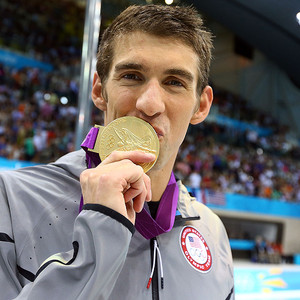
1. Michael Phelps. In this decade alone, the greatest swimmer ever has won 9 Olympic Gold Medals and 3 Silvers. Overall, 23 Golds, 3 Silvers and 2 Bronzes.

Tuesday, August 21, 2018

The San Francisco Bay Area's 10 Greatest Athletes

Jerry Rice (left) and Joe Montana

This week, the Mets are visiting the San Francisco Giants.

The San Francisco Bay Area's 10 Greatest Athletes

As is the case everywhere else, but it seems especially so here, I'm only counting what the athlete did in the metro area in question. What Willie Mays, Reggie Jackson, Catfish Hunter and Rickey Henderson did in New York, what Orlando Cepeda did in St. Louis, what Joe Montana did in Kansas City, and so on, does not matter here.

Honorable Mention to San Francisco Giants in the Baseball Hall of Fame
, who did not otherwise make the Top 10: Orlando Cepeda and Gaylord Perry. Buster Posey may join them someday.

Honorable Mention to Oakland Athletics in the Baseball Hall of Fame, who did not otherwise make the Top 10: Jim "Catfish" Hunter, Reggie Jackson, Rollie Fingers and Dennis Eckersley.

The A's are particularly hurt by the splitting of careers between teams and cities, as Catfish, Reggie and Rickey Henderson did big things with the Yankees; Fingers with San Diego and Milwaukee; Eck with Cleveland, Boston and the Chicago Cubs; and later A's stars Mark McGwire with St. Louis and Jason Giambi with the Yankees. (This was also true of their Philadelphia years, and for the same reason: Money. Only, while Charlie Finley was merely cheap, Connie Mack was actually skint, and needed to sell great players off.)

Honorable Mention to San Francisco 49ers in the Pro Football Hall of Fame, who did not otherwise make the Top 10: Joe Perry, Leo Nomellini, Y.A. Tittle, Hugh McElhenny, Bob St. Clair, John Henry Johnson, Jimmy Johnson, Dave Wilcox, Fred Dean, Charles Haley, Steve Young and Terrell Owens. Roger Craig should be in the Hall of Fame, and good cases can be made for John Taylor, Randy Cross, Guy McIntyre and Harris Barton.

When The Sporting News named its 100 Greatest Football Players in 1999, Young was ranked 63rd. When the NFL Network named its 100 Greatest Players in 2010, he was ranked 81st.

Honorable Mention to Oakland Raiders in the Pro Football Hall of Fame, who did not otherwise make this Top 10: Jim Otto, Fred Biletnikoff, George Blanda, Willie Brown, Art Shell, Ken Stabler, Ray Guy, Dave Casper, Ted Hendricks, Tim Brown, Jerry Rice and Warren Sapp. (Rice and Sapp each played 4 seasons for the Raiders late in their careers, therefore, they qualify here.) Charles Woodson becomes eligible in 2021, and will surely join them. Jack Tatum never will. Chances are, neither will Lester Hayes.

Somebody from the Raiders had to be in my Top 10, but picking the greatest Raider wasn't easy. Al Davis believed nobody should outshine anybody else... especially not outshine him. He never retired a uniform number, not even 00 for Jim Otto (a play on his name: "Aught-Oh"), a number used only that once in NFL history. So it's not like we can say, "He's the only/first Raider to get his number retired."

Complicating things further is the fact that 3 legitimate contenders for the title of "Greatest Raider Ever" played for them all or mostly in Los Angeles: Marcus Allen, Howie Long and Mike Haynes.

When The Sporting News named its 100 Greatest Football Players in 1999, Brown was ranked 50th, Shell 55th, Hendricks 64th, Otto 78th, Biletnikoff 94th, and Blanda 98th. When the NFL Network named its 100 Greatest Players in 2010, Otto was ranked 63rd, Brown 66th, Shell 76th, Hendricks 82nd, and Biletnikoff and Blanda had dropped off the list.

Honorable Mention to San Francisco/Golden State Warriors in the Basketball Hall of Fame, who didn't otherwise make this Top 10: Guy Rodgers, Nate Thurmond, Robert Parish, Chris Mullin and Šarūnas Marčiulionis. Kevin Durant will likely join them. ("San Francisco," 1962 to 1971; "Golden State" since moving to Oakland. Their new arena in San Francisco opens next year, but they've chosen to keep the "Golden State" name.)

Very Honorable Mention to Wilt Chamberlain, center, San Francisco Warriors, 1962-65. The absolutely indisputable greatest basketball player who ever lived, he played 3 seasons for the Warriors in Philadelphia, and then 3 in the City By the Bay, before being traded to Philadelphia's replacement team, the 76ers. So I can't put him in the Bay Area's Top 10. But he did get the Warriors to the 1964 NBA Finals. Ironically, when Wilt finally won a title in 1967, it was the Warriors that his Sixers beat in the Finals.

Honorable Mention to San Jose Sharks stars Patrick Marleau and Joe Thornton. There are 5 former Sharks players in the Hockey Hall of Fame, but, between them, they played just 9 seasons for the team, and none is thought of mainly as a Shark: Igor Larionov, Sergei Makarov, Ed Belfour, Teemu Selanne and Rob Blake.

Honorable Mention to the San Jose Earthquakes' greatest player to play for them, Landon Donovan; and the greatest player for the franchise, Chris Wondolowski. (Donovan played a lot longer for their arch-rivals, the L.A. Galaxy.

10. Rick Barry, forward, San Francisco Warriors 1965-67, Oakland Oaks 1968-69, Golden State Warriors 1972-78. The details of where he played, when, and didn't play, and why, aren't relevant here. Here's what's relevant:

He led the NBA in scoring and was named All-Star Game MVP in 1967, having been named Rookie of the Year the season before. He helped the Warriors win the 1967 NBA Western Division title, but lost the Finals. He became the 1st NBA star to bolt for the ABA, crossing the Bay and winning the 1969 ABA Championship with the Oakland Oaks, and the 1972 Eastern Division title with the New York Nets.

He then returned to his former team, now in Oakland and calling themselves the Golden State Warriors. He was a 12-time All-Star, 8 times in the NBA and 4 in the ABA. In 1975, he led the NBA in steals, and helped the Warriors win their 1st title since moving from Philadelphia in 1962, and won the Finals MVP.

He closed his career in 1980 with the Houston Rockets. The year before, he set an NBA record with a .947 free throw percentage. One of the last players to make free throws underhanded, he retired with a career percentage of .900, then the all-time leader. (Both records have since been broken.)

The Warriors retired his Number 24. He was elected to the Basketball Hall of Fame, and named to the ABA All-Time Team and the NBA's 50th Anniversary 50 Greatest Players, 1 of 5 players so honored. His sons Brent and Jon also played in the NBA.

9. Gene Upshaw, guard, Oakland Raiders, 1967-81. You might have expected the greatest Raider ever to be a defensive back, a position Al Davis liked to have great players in: Willie Brown, Jack Tatum, Lester Hayes, Mike Haynes, Charles Woodson. Or a maniac defensive lineman, such as Ben Davidson, Otis Sistrunk, John Matuszak or Lyle Alzado.

But there's something weirdly poetic about it being an offensive lineman. A whole side of the Raider line made the Pro Football Hall of Fame: Center Jim Otto, guard Gene Upshaw, and tackle Art Shell. Known as Highway 63 for his uniform number and the "road" he cleared for Raiders to run on, Upshaw made the 1968 AFL All-Star Game, and then 6 NFL Pro Bowls, for a total of 7 such games. He was a rookie on the 1967 AFL Champions, losing Super Bowl II, and won Super Bowls XI and XV with the Raiders. He is the only man to make the Super Bowl in 3 different decades with the same team (1967-68, 1976-77, 1980-81).

From 1983 until his death in 2008, he served as executive director of the players' union, the National Football League Players Association. Ironically, it was right after he was inducted into the Hall of Fame in 1987 that he led the last players' strike.

In addition to the Hall, he was named to the NFL's 75th Anniversary Team and its 1970s All-Decade Team. When The Sporting News named its 100 Greatest Football Players in 1999, Upshaw was ranked 62nd. When the NFL Network named its 100 Greatest Players in 2010, Upshaw had actually gained in appreciation, ranked 56th.

8. Willie McCovey, 1st base, San Francisco Giants, 1959-73 and 1977-80, plus Oakland Athletics 1976. A 6-time All-Star, he was NL Rookie of the Year in 1959, and MVP in 1969. His lifetime batting average was only .270, but his OPS+ was a mighty 147. He hit 521 home runs, and hit line drives that could have taken an infielder's head off.

Unfortunately for him, his only trip to the World Series, with the 1962 Giants, ended with him hitting a line drive that could have gotten the tying and winning runs in Game 7 home, but Bobby Richardson of the Yankees caught it. The Giants also came close to the Pennant in 1964, 1965 and 1966, and won the NL Western Division in 1971.

The Giants retired his Number 44, dedicated a statue to him outside AT&T Park, named the part of San Francisco Bay right outside the park "McCovey Cove," and since his 1980 retirement, have annually presented the Willie Mac Award to their "most inspirational player." In 1999, The Sporting News ranked him 56th on their 100 Greatest Baseball Players. He was elected to the Baseball Hall of Fame in 1986, and I was at the induction ceremony.

7. Steph Curry, guard, Golden State Warriors, 2009-present. Since he is still with the team, he could rise higher. Already a 5-time NBA All-Star, he is 1 win away from being a 4-time NBA Champion. Still, 3 is more than most guys get: 2015, 2017 and 2018. Indeed, it's as many as LeBron James has, and as many as Wilt Chamberlain and Rick Barry, the previous 2 contenders for the title of the Warriors' greatest player ever, combined.

In his 1st title season, 2015, he won the NBA All-Star Game Three-Point Contest. In 2016, the 1 year since 2014 that he didn't win the NBA title, he led the NBA in scoring and steals, guiding the Warriors to a single-season record 73 regular-season wins. He has surpassed not only his father, Dell Curry, who was a pretty good player in his time, but every player the Bay Area version of the Dubs has ever had -- though not Wilt for an entire career.

6. Juan Marichal, pitcher, San Francisco Giants, 1960-73. He's no longer the winningest Hispanic pitcher in major league history, having been surpassed by Dennis Martinez and now (with pharmaceutical help) Bartolo Colon. But he's begun to get the recognition he was frequently denied in the 1960s, a decade in which the high-kicking Dominican won more games than any other pitcher, including Whitey Ford, Sandy Koufax, Don Drysdale and Bob Gibson.

A 10-time All-Star, he helped the Giants to the 1962 National League Pennant and the 1971 NL Western Division title, although they fell just short a few other times while he was there. He finished with a career record of 243-142. They have retired his Number 27, and dedicated a statue to him outside AT&T Park. He was the 1st Dominican player, and the 1st Hispanic pitcher (aside from Negro League star Martin DiHigo, who was not strictly a pitcher), elected to the Hall of Fame.

5. Rickey Henderson, left field, Oakland Athletics, on and off from 1979 to 1998. I'm not sure if he's the greatest player to have played for the Oakland A's, but he's the greatest player in the franchise's 1st half-century in Oakland, where he grew up after having been born in Chicago.

He had a career OPS+ of 127. He set records, unlikely to ever be broken, for stolen bases in a season, 130 in 1982, and in a career, 1,405 -- no one else is even over 1,000. He had 6 .300 seasons. He hit 297 home runs, including the most leadoff homers. An 11-time All-Star, he only won 1 Gold Glove, but he was also named the 1990 American League Most Valuable Player. He is the all-time leader in runs scored with 2,295. Briefly, before being surpassed by Barry Bonds, he was also the all-time leader in walks with 2,190. He is a member of the 3,000 Hit Club.

He reached the postseason with the A's in 1981, '89, '90 and '92, the Toronto Blue Jays in '93, the San Diego Padres in '96 and the Mets in '99 (infamously playing poker in the dugout during the clinching Game 6). He won the World Series with the '89 A's and the '93 Jays.

He was elected to the Baseball Hall of Fame. The A's not only retired his Number 24, but named the playing surface at the Oakland Coliseum after him, Rickey Henderson Field, making him the only person so honored in any of the "big four" North American major league sports. (This has happened many times with football fields and basketball courts in college, but not in the majors.) When The Sporting News named its 100 Greatest Baseball Players in 1999, Rickey, still active, was ranked 51st.

He is perhaps the most egotistical ballplayer of all time. Yet as Bill James, King of the Statheads, says, "If you could split him in two, you'd have two Hall-of-Famers."

4. Ronnie Lott, safety, San Francisco 49ers, 1981-90. It says something about the dynasty that Bill Walsh built that the 49ers not only have the Numbers 1, 2 and 4 players on this list, but that these men could be, respectively, the greatest receiver, quarterback and defensive back who ever lived.

A 10-time Pro Bowler, Lott made 63 interceptions, returning them for 730 yards. He forced 16 fumbles in his career, and scored 5 touchdowns -- as a defensive player.

He helped the 49ers win Super Bowls XVI, XIX, XXIII and XXIV. He was named to the College and Pro Football Halls of Fame, and the NFL's 75th Anniversary, 1980s and 1990s All-Decade Teams. The 49ers retired his Number 42. When The Sporting News named its 100 Greatest Football Players in 1999, Lott was ranked 23rd. When the NFL Network named its 100 Greatest Players in 2010, he rose significantly, to 11th.

3. Willie Mays, center field, San Francisco Giants, 1958-72. Remember: What he did in New York doesn't matter -- and even if it did, he might not be ahead of the 2 guys in front of him. But...

Say, hey, do you know of any other athlete who's enough of a cultural icon that his name has been worked into The Honeymooners, Peanuts and Star Trek? Nope, not even Babe Ruth, the one and only player selected ahead of Mays in The Sporting News' 1999 list of the 100 Greatest Baseball Players.

Willie, Hank, and Stan Musial share the record of appearing in the most All-Star Games, 24. He was named NL Rookie of the Year in 1951, and the MVP twice, in 1954 and 1965, and probably should have won at least 1 more. He won 12 Gold Gloves, and would have won more had the award been established earlier than 1957. He led the League in batting average once, home runs 4 times and stolen bases 4 times.

From 1954 to 1965, he was 1 of the top 3 players in baseball every year, and was still one of the top 10 as late as 1971, when he was 40 years old. He batted at least .300 and had at least 100 RBIs 10 times each. His lifetime batting average was .302, he had a 156 OPS+, his 3,283 hits included 523 doubles, 140 triples and 660 home runs, and he had 1,903 RBIs. He also had 338 stolen bases, making him the only guy with 500 homers and 300 steals until Barry Bonds came along.

He was less lucky in the team achievement department. In his 1st 2 full seasons -- he missed most of 1952 and all of 1953 serving in the U.S. Army in the Korean War -- he helped the New York Giants win the 1951 Pennant and the 1954 World Series, including making the most famous defensive play in the history of sports, "The Catch," in Game 1. After that, there was a Pennant with the San Francisco version of the Giants in 1962, a Division title in 1971, and he closed his career with the Pennant-winning 1973 Mets, looking like he should have retired at least a year earlier.

The Giants retired his Number 24, filed the street address for their new AT&T Park as 24 Willie Mays Plaza, and dedicated a statue of him outside it. He was elected to the Baseball Hall of Fame and the Major League Baseball All-Century Team. In 2015, Barack Obama awarded him the nation's highest civilian honor, the Presidential Medal of Freedom.

2. Joe Montana, quarterback, San Francisco 49ers, 1979-92. Is he the greatest quarterback who ever lived? For me, it's a tough call deciding between Joe and Johnny Unitas. The difference between them is a hair -- and not one of Joe's long blond hairs, but one of Johnny's short black crewcut hairs.

He led the San Francisco 49ers into Super Bowls XVI, XIX, XXIII and XXIV, winning them all, making them NFL Champions for 1981, 1984, 1988 and 1989. He was named MVP of Super Bowls XVI, XIX and XXIV, and Sports Illustrated Sportsman of the Year for 1990. (An SI cover at the end of 1989 seemed to unofficially award their Sportsman of the Decade to Montana, Magic Johnson and Wayne Gretzky.)

An 8-time Pro Bowler, he was named NFL MVP in 1989 and 1990. An injury led the 49ers to think of his age and his health, and they released him in favor of Steve Young. The Kansas City Chiefs signed him, and he got them to the 1993 AFC Championship Game, still their best performance since Super Bowl IV after the 1969 season.

The 49ers retired his Number 16. He was named to the Pro Football Hall of Fame (but not the College Football Hall), and the NFL's 1980s All-Decade and 75th Anniversary Teams. And while Mauch Chunk, Pennsylvania changed its name to Jim Thorpe, Pennsylvania, the town of Ismay, Montana changed its name to Joe, Montana.

1. Jerry Rice, receiver, San Francisco 49ers, 1985-2000. The Sporting News named him Number 2 among all players, behind Brown. And he still had several good years left. When the NFL Network did its 100 Greatest Players 11 years later, they listed Rice as Number 1.

In 1989, the year he was named MVP of Super Bowl XXIII, Don Hutson, then on the short list for the title of greatest receiver ever, said Rice was better than he was -- and this was after Rice had just 4 full seasons in the NFL.

Herewith the evidence, and the numbers are staggering. He made 13 Pro Bowls, the 1st at age 23, and the last at age 39. A receiver making the Pro Bowl at thirty-nine years old! He was named NFL Offensive Player of the Year in 1987 and 1993. He won Super Bowls XXIII, XXIV and XXIX with the San Francisco 49ers, being named MVP in XXIII.

Career receptions: 1,549 -- he was the 1st man with 1,000, and the next-best is Tony Gonzalez with 1,325. Receiving yards: 22,895 -- next-best is Terrell Owens with 15,934, nearly 6,000 less! All-purpose yards: 23,546 -- slightly ahead of Brian Mitchell with 23,330. Receiving touchdowns: 197 -- next-best is Randy Moss with 156. Overall touchdowns: 208 -- next-best is Emmitt Smith with 175. In other words, he was not only great, but the numbers suggest he was insanely great.

The 49ers retired his Number 80. He was elected to the College and Pro Football Halls of Fame, and to the NFL's 1980s and 1990s All-Decade Teams and its 75th Anniversary Team.

Tuesday, June 13, 2017

Fix THIS!

Since this past February, the titleholders in 3 of the 4 major sports have been evil:

* The New England Patriots of Bill Belichick and Tom Brady.
* The Pittsburgh Penguins of Sidney Crosby.
* The Cleveland Cavaliers of LeBron James.

In the cases of the Pens and the Cavs, it's more the fanboys, and the league Commissioners who seem to be fixing the titles, than the individuals. However, Belichick and Brady are cheating scum. The difference being that Belichick was man enough to admit it.

Anyway, the Penguins just got re-fixed. But the Golden State Warriors put an end to the LeBrons' run by eliminating them in 5 games.

All that talk about how the Warriors blew a 3-games-to-1 lead can now be stopped. In 3 Finals, the Warriors have won 11 games, the Cavs 7; the Warriors 2 titles, the Cavs 1.

Thank you, Steve Kerr, Steph Curry, Kevin Durant, et al.

Hey, NBA Commissioner Adam Silver: Fix this!

*

Days until the Red Bulls play again: 1, tomorrow night, at 8:00, in the 4th Round of the U.S. Open Cup, against New York City FC, a Hudson River Derby at Red Bull Arena in Harrison, New Jersey. Although the Red Bulls have played the new version of the New York Cosmos in the Open Cup, the American version of England's FA Cup, this will be the 1st time they've played Manchester City NYC in anything other than an MLS game. This past Saturday night, the Red Bulls lost 1-0 away to the Montreal Impact.

Days until the Red Bulls next play a "derby": See the previous answer. They will next play the Philadelphia Union on Sunday, June 18, at Talen Energy Stadium in Chester, Pennsylvania. They will next play a League edition of the Hudson River Derby against New York City FC on Saturday, June 24, at Red Bull Arena. They will next play the New England Revolution on Wednesday, July 5, at Gillette Stadium in Foxboro, Massachusetts. And they will next play the D.C. Scum on Saturday, September 27, at Red Bull Arena in Harrison, New Jersey.


Days until the U.S. national soccer team plays again: 18, on Saturday, July 1, a friendly against Ghana, at Rentschler Field in East Hartford, Connecticut. They played 2 qualifying matches for the 2018 World Cup last week. They badly needed to beat Trinidad & Tobago, and did. So a draw away to arch-rival Mexico was not only acceptable, but welcome, and they got that, too. Qualification is not yet assured, but it's much more likely now, under manager Bruce Arena, than it was under the idiot Jurgen Klinsmann.

Days until The Arsenal play again: That depends. If you mean any game, the Gunners will next play on Thursday, July 13, when they begin their preseason tour of Australia and Asia, with a game against A-League winners Sydney FC at Stadium Australia in Sydney. That's 30 days. If you mean a game that means anything, well, FIFA counts the FA Community Shield (formerly known as the Charity Shield), the annual season kickoff between the holders of the League title and the FA Cup at Wembley Stadium in London, that's on Saturday, August 5, and that's 53 days. If you mean a Premier League game, a game that actually counts for something, the season begins the following Saturday, August 12, and that's 60 days, or 2 months. There is a chance, of course, that the TV networks could have Arsenal's match moved to the following Sunday or Monday.

Days until the next Yankees-Red Sox series: 31, on Friday, July 14, at Fenway Park. Just 1 month.

Days until the next North London Derby: Unknown, since the schedule for the 2017-18 season won't be released until tomorrow. But, regardless of the teams involved, derbies are rarely played in August.

Days until Rutgers University plays football again: 80, on Friday, September 1, home to the University of Washington. Under 3 months.

Days until East Brunswick High School plays football again: Unknown, as the 2017 schedule hasn't been released yet. I now know that high school football games have been scheduled in Middlesex County, New Jersey for Friday night, September 8. That's 87 days from now.

Days until the New Jersey Devils play again: We don't know, as the 2017-18 NHL schedule has yet to be released. The NHL season usually begins on the 2nd Friday in October, which, in 2017, would be... ugh... Friday the 13th. that's 122 days. Exactly 4 months.

Days until the New Jersey Devils next play a local rival: See the previous answer, although the 1st game isn't likely to be against either the New York Rangers, the New York Islanders or the Philadelphia Flyers.

Days until the Alex Rodriguez Contract From Hell officially runs out, and the Yankees can spend his salary on new players: 140, on October 31.

Days until the next election for Governor of New Jersey: 147, on Tuesday, November 7. Under 5 months.

Days until the next Rutgers-Penn State football game: 151, on Saturday, November 11, at Beaver Stadium in State College, Pennsylvania.

Days until the next East Brunswick-Old Bridge Thanksgiving high school football game: 163, on Thursday, November 23, at 10:00 AM. Under 6 months, and thank God it's at home, at Jay Doyle's Green Grove, rather than at that purple shit pit on Route 9. A little over 5 months.

Days until the next Winter Olympics begins in Pyeongchang, Korea: 247, on February 9, 2018. A little under 8 months.

Days until the next World Cup kicks off in Russia: 366, on June 14, 2018. Almost exactly 1 year, or 12 months. Has Bruce Arena turned our chances around? Maybe. Or maybe, with the tournament on his soil, Vladimir Putin will tell his bitch Donald Trump to tell Bruce Arena to tank the games. Maybe not. Or maybe only if we end up playing Russia. I don't think Arena will listen. If he doesn't, I hope his life insurance is paid up, because Putin has had people killed for defying him.

Days until September 2018 roster call-ups, when we can finally start to expect seeing some of these wonderful "prospects" for whom Yankee general manager Brian Cashman threw away a chance at the 2016 Playoffs: 445. Under a year and a half, or under 15 months. Of course, we could end up seeing one of more of them sooner than that, but since most of them are at Double-A Trenton now, if that, who's kidding who?

Days until the next Congressional election: 511, on November 6, 2018. Under a year and a half, or just 17 months.

Days until the Baseball Hall of Fame vote is announced, electing Mariano Rivera: 575, on January 9, 2019. A little over a year and a half, or a little under 19 months.

Days until the Baseball Hall of Fame vote is announced, electing Derek Jeter: 940, on January 8, 2020. A little over 2 1/2 years, or a little under 31 months.

Days until the next Summer Olympics begins in Tokyo, Japan: 1,145, on July 24, 2020. A little over 3 years, or a little over 37 months.

Days until the next Presidential election: 1,607, on November 3, 2020. Under 3 1/2 years, or a under 41 months.

Days until Liberation Day: 1,685, at noon on January 20, 2021. Under 4 years, or a little over 43 months. Note that this is liberation from the Republican Party, not just from Donald Trump. Having Mike Pence as President wouldn't be better, just differently bad, mixing theocracy with plutocracy, rather than mixing kleptocracy with plutocracy.

Wednesday, October 28, 2015

NBA's 70th Anniversary 70 Greatest Players

Tonight, the National Basketball Association opened its 70th season. It played its 1st game on November 1, 1946, at Maple Leaf Gardens in Toronto. The New York Knickerbockers (Knicks) beat the Toronto Huskies, 68-66.

The Huskies didn't make it to the 2nd season. The Knicks have made it to the 70th. Indeed, the only teams from the 1st NBA season still playing in the same city in which they started are the Knicks and the Boston Celtics.

In 1971, the NBA celebrated its 25th Anniversary Team. The only rules were that a player had to be no longer active (thus excluding Wilt Chamberlain, Oscar Robertson and Jerry West, among other greats), and have been named to the postseason All-NBA Team at least once.

The players selected: Guards Bob Cousy, Bill Sharman, Bob Davies and Sam Jones; forwards Bob Pettit, Dolph Schayes, Paul Arizin and Joe Fulks; and centers Bill Russell (the only unanimous selection) and George Mikan. (All were still alive at the time. Davies, Arizin, Fulks and Mikan have died. The rest are still alive.)

In 1980, a little early, a 35th Anniversary Team was chosen. This one allowed still-active players.

In addition to 25th Anniversary holdovers Cousy, Pettit, Mikan and Russell, the honorees were: Guards Robertson and West, forwards Elgin Baylor, John Havlicek and Julius Erving, and centers Chamberlain and Kareem Abdul-Jabbar. (All were still alive at the time. Mikan and Chamberlain have died. The rest are still alive.)

In late 1996, the NBA celebrated its 50th Anniversary -- not its 50th season, like the NFL did in 1969 -- by naming its 50 Greatest Players.

Only one of the selections was truly controversial: Shaquille O'Neal. In hindsight, this wasn't a bad selection, just a rather premature one.

All of the players on the 35th Anniversary Team were selected again. All of the players on the 25th Anniversary Team were selected except Davis and Fulks: As Bob Ryan, the basketball maven of The Boston Globe, described the NBA's 1st scoring champion, "I'm not going to kid you: I don't think Jumpin' Joe Fulks makes it in today's NBA, except maybe as the 12th man."

The other honorees on the 50th Anniversary Team were:

* Guards: Nate Archibald, Dave Bing, Clyde Drexler, Walt Frazier, George Gervin, Hal Greer, Magic Johnson, Michael Jordan, Pete Maravich, Earl Monroe, John Stockton, Isiah Thomas and Lenny Wilkens.
* Forwards: Charles Barkley, Rick Barry, Larry Bird, Billy Cunningham, Dave DeBusschere, Elvin Hayes, Jerry Lucas, Karl Malone, Kevin McHale, Scottie Pippen and James Worthy.
* Centers: O'Neal, Dave Cowens, Patrick Ewing, Moses Malone, Hakeem Olajuwon, Robert Parish, Willis Reed, David Robinson, Nate Thurmond, Wes Unseld and Bill Walton.

Only Maravich was already dead. He has been followed into the Great Gym In the Sky by Sharman, Arizin, DeBusschere, Mikan, Chamberlain and Moses Malone.

If we were to select the 70th Anniversary 70 Greatest Players -- admittedly, a season early, but, what the hell, I feel like it -- who would be added? Only more recently-arrived players? Or players who should have been originally included after the 50th, but weren't? And who, if any, of the original 50 should be dropped off?

In hindsight, Wilkens -- a very good player who became a great coach -- is the only one I would even consider leaving off.

Would I restore Fulks and Davies? No, I wouldn't. It's not just that they might not have been able to adjust to a world of a 24-second shot clock, let alone the international game of fantastically fit, strong and quick men that the NBA has become; it's that I've seen precious little footage of them, and couldn't begin to tell you how good they were based on using my eyes.

So let's look at the seasons since. Let's use 1998 as the cutoff date, since that was the last season of the Jordan Era.

First, let's look at the NBA Champions:

* 1999, 2003, 2005, 2007 and 2014 San Antonio Spurs. David Robinson is already in. Tim Duncan is not. Duncan is an easy choice. Manu Ginobili is a tougher call. Tony Parker is out.

* 2000, 2001, 2002, 2009 and 2010 Los Angeles Lakers. Shaq is already in. Kobe Bryant is not, and, regardless of what you might think of him personally, he's in. So is Pau Gasol. But no other 21st Century Laker is.

* 2004 Detroit Pistons. A very balanced team, but no single superstar. Was Ben Wallace a superstar? How about Rasheed Wallace? Lindsey Hunter? Chauncey Billups? Richard Hamilton? Mehmet Okur? Tayshaun Prince? All very good players, but is any of them even a Hall-of-Famer? I'm not sure. If you can't say for sure that they belong in the Hall of Fame, you can't say they belong in the 70th Anniversary 70 Greatest Players.

* 2006, 2012 and 2013 Miami Heat. Shaq is already in. Dwyane Wade, Alonzo Mourning, Gary Payton, LeBron James and Chris Bosh are not. Wade and James are easy choices; Mourning, Payton and Bosh less so.

* 2008 Boston Celtics. Kevin Garnett and Paul Pierce are great choices. Ray Allen and Sam Cassell, I don't know.

* 2011 Dallas Mavericks. Honestly, I can't take any of them other than Dirk Nowitzki.

* 2015 Golden State Warriors. Stephen Curry makes it. Any of the others, we'll have to wait and see for the 75th Anniversary 75 Greatest Players.

So, if I leave the 50 Greatest Players intact, and add Duncan, Bryant, Gasol, Wade, Mourning, Payton, James, Garnett, Pierce, Nowitzki and Curry, that's 61. That leaves 9 slots available.

Who was overlooked at the 50th Anniversary? Fulks? Another early Philadelphia Warrior, Neil Johnston? Any of Mikan's Minneapolis Laker teammates, such as Jim Pollard, a dribbler so fine that he, not Cousy, was the first to get the nickname "The Houdini of the Hardwood"? Early Knicks like Nat "Sweetwater" Clifton or Dick McGuire or the late Harry Gallatin?

Of the 1st 50 NBA Championship teams, the only ones not represented by at least 1 of the 50 Greatest Players were the 1947 Warriors (who had Fulks), the 1948 Baltimore Bullets (led by player-coach Buddy Jeannette), the 1951 Rochester Royals (led by Davies and future Knick coach Red Holzman), and the 1979 Seattle SuperSonics (Wilkens was their coach, but their best player was probably Dennis Johnson).

I think we can cross off the '47 Dubs, the '48 Bullets and the '51 Royals (forerunners of the Sacramento Kings). But Dennis Johnson also starred on the 1984 and '86 title-winning Celtics. So that's 62.

Anybody overlooked on the great Celtic teams? From the 1957-69 dynasty, should we add Tommy Heinsohn or K.C. Jones? No, their greatest contributions actually came as coaches. From the 1974 and '76 Celtics? No, Jo Jo White was a nice player, but not one of the 70 best ever. From the 1981, '84 and '86 Celtics? Aside from Danny Ainge, we have their entire starting lineup, plus 6th man Walton. Ainge's greatest contribution has been as an executive, building the 2008 Champions.

Great Lakers? Gail Goodrich from the 1972 titlists? No, in all honesty, I can't add him. From the 1980s teams, winning in '80, '82, '85, '87 and '88? Aha! Bob McAdoo was on the '82 and '85 titlists, and was even better on the mid-1970s Buffalo Braves. That's 63. Anybody else? Jamaal Wilkes? Michael Cooper? No.

The 1970 and '73 Knicks? We already have Reed, Frazier, DeBusschere, Monroe and Lucas. Add Bill Bradley? Tough call: He is in the Hall, but he wasn't chosen for the 50. Later Knicks? Bernard King might have been one of the last cuts from the 50, so that's 64. Charles Oakley, Allen Houston, Larry Johnson? Carmelo Anthony? No, no, no, and no. John Starks? This is not the time to be funny.

The 1989 and '90 Detroit Pistons, the Motor City Bad Boys? Isiah was rightly chosen, but not Dennis Rodman, who also starred with the 1996, '97 and '98 title-winning Bulls. So that's 65. Anybody else from those Bulls? No, not Luc Longley, not Toni Kukoc. How about he earlier three-peat, of 1991, '92 and '93? Bill Cartwright, Horace Grant, B.J. Armstrong? All terrific players, but none is in the Hall of Fame, and if they're eligible for the Hall but not in, I can't rightly put them on this list.

Anybody else? Gus Johnson, Connie Hawkins, Dominique Wilkins, Vince Carter? Great dunk artists, but not among the 70 greatest NBA players ever.

What about ABA guys? The red, white & blue ball league was represented in the 50 by Erving, Barry, Cunningham, Gervin and Moses Malone. But all of those guys also proved it in the NBA. Dan Issel? Possibly. Artis Gilmore, David Thompson? I think they fall a bit short.

What about players who were great, Hall-of-Famers or probable HOFers, but didn't win a title? Reggie Miller makes 66. Allen Iverson makes 67. Jason Kidd makes 68. Two more slots. (And, oh yeah, Kidd did win a title, with the '11 Mavs.)

Kevin Durant has played for 8 seasons. He's put up big numbers, but only been to 1 Finals, and lost it. If he retired right now, would he go to the Hall? I don't think so. So he doesn't make the 70.

Chris Paul? 10 seasons. 8-time All-Star. Never been to a Finals. No.

Derrick Rose? 7 seasons. 3-time All-Star. Never been to a Finals. No.

I gave Ginobili and Bosh each an additional look. Ginobili is a 4-time champ, but only a 2-time All-Star. No. Bosh was the Toronto Raptors' all-time leading scorer before he was a 2-time NBA Champion with the Heat. He's a 10-time All-Star. Yes. That's 69. 1 more.

I gave Allen an additional look. 2 rings, 10 ASGs. Okay, that's 70.

*

Herewith, then, the National Basketball Association's 70th Anniversary 70 Greatest Players, in the order in which they arrived in the League, plus whether they're already in the Hall of Fame (HOF), and if they made a previous anniversary team (25, 35, 50):

1. George Mikan, center, 1946-47 Chicago American Gears, 1947-56 Minneapolis Lakers. NBL Champion 1947, 1948. NBA Champion 1949, 1950, 1952, 1953, 1954. HOF, 25, 35, 50. Number 99 not retired by the now-Los Angeles Lakers, which is ridiculous: What are the chances of another new Laker choosing 99? The Lakers do hang a banner honoring their HOFers from the Minneapolis years.

2. Dolph Schayes, forward, 1949-63 Syracuse Nationals, 1963-64 Philadelphia 76ers. NBA Champion 1955. HOF, 25, 50. Number 4 not retired by Nats/Sixers.

3. Bill Sharman, guard, 1950-51 Washington Capitols, 1951-61 Boston Celtics. NBA Champion 1957, 1959, 1960, 1961. HOF, 25, 50. Number 21 retired by Celtics.

4. Paul Arizin, forward, 1950-62 Philadelphia Warriors. NBA Champion 1956. HOF, 25, 35, 50. Number 11 not retired.

5. Bob Cousy, guard, 1950-63 Boston Celtics, 1969-70 Cincinnati Royals. NBA Champion 1957, 1959, 1960, 1961, 1962, 1963. HOF, 25, 35, 50. Number 14 retired by Celtics.

6. Bob Pettit, forward, 1954-55 Milwaukee Hawks, 1955-65 St. Louis Hawks. NBA Champion 1958. HOF, 25, 35, 50. Number 9 retired.

7. Bill Russell, center, 1956-69 Boston Celtics. NBA Champion 1957, 1959, 1960, 1961, 1962, 1963, 1964, 1965, 1966, 1968, 1969. HOF, 25, 35, 50. Number 6 retired.

8. Sam Jones, guard, 1957-69 Boston Celtics. NBA Champion 1959, 1960, 1961, 1962, 1963, 1964, 1965, 1966, 1968, 1969. HOF, 25, 50. Number 24 retired.

9. Hal Greer, guard, 1958-63 Syracuse Nationals, 1963-73 Philadelphia 76ers. NBA Champion 1967. HOF, 50. Number 15 retired by 76ers.

10. Elgin Baylor, forward, 1958-60 Minneapolis Lakers, 1960-71 Los Angeles Lakers. NBA Finals 1959, 1962, 1963, 1965, 1966, 1968, 1969, 1970. HOF, 35, 50. Number 22 retired.

11. Wilt Chamberlain, center, 1959-62 Philadelphia Warriors, 1962-65 San Francisco Warriors, 1965-68 Philadelphia 76ers, 1968-73 Los Angeles Lakers. HOF, 35, 50. NBA Champion 1967, 1972. Number 13 retired by Warriors, 76ers and Lakers.

12. Oscar Robertson, "The Big O," guard, 1960-70 Cincinnati Royals, 1970-74 Milwaukee Bucks. NBA Champion 1971. HOF, 35, 50. Number 14 retired by Royals (now the Sacramento Kings), Number 1 retired by Bucks.

13. Jerry West, "Mr. Clutch," guard, 1960-74 Los Angeles Lakers. NBA Champion 1972. HOF, 35, 50. Number 44 retired.

14. Lenny Wilkens, guard, 1960-68 St. Louis Hawks, 1968-72 Seattle SuperSonics, 1972-74 Cleveland Cavaliers, 1974-75 Portland Trail Blazers. NBA Finals 1961. HOF, 50. Number 19 retired by Sonics.

15. Jerry Lucas, forward, 1963-69 Cincinnati Royals, 1969-71 San Francisco Warriors, 1971-74 New York Knicks. NBA Champion 1973. HOF, 50. No number retired, not 16 by the Royals/Kings, not 32 by the Knicks.

16. Dave DeBusschere, forward, 1962-68 Detroit Pistons, 1968-74 New York Knicks. NBA Champion 1970, 1973. HOF, 50. Number 22 retired by Knicks.

17. John Havlicek, forward, 1962-78 Boston Celtics. NBA Champion 1963, 1964, 1965, 1966, 1968, 1969, 1974, 1976. HOF, 35, 50. Number 17 retired.

18. Nate Thurmond, center, 1963-71 San Francisco Warriors, 1971-74 Golden State Warriors, 1974-75 Chicago Bulls, 1975-77 Cleveland Cavaliers. NBA Finals 1964, 1967. HOF, 50. Number 42 retired by Warriors.

19. Willis Reed, center, 1964-74 New York Knicks. NBA Champion 1970, 1973. HOF, 50. Number 19 retired.

20. Rick Barry, forward, 1965-67 San Francisco Warriors, 1967-69 Oakland Oaks, 1969-70 Washington Caps, 1970-72 New York Nets, 1972-78 Golden State Warriors, 1978-80 Houston Rockets. NBA Champion 1975. HOF, 50. Number 24 retired by Warriors.

21. Billy Cunningham, forward, 1965-72 and 1974-76 Philadelphia 76ers, 1972-74 Carolina Cougars. NBA Champion 1967. HOF, 50. Number 32 retired by 76ers.

22. Dave Bing, guard, 1966-75 Detroit Pistons, 1975-77 Washington Bullets, 1977-78 Boston Celtics. Never reached NBA Finals. HOF, 50. Number 21 retired by Pistons.

23. Walt "Clyde" Frazier, guard, 1967-77 New York Knicks, 1977-80 Cleveland Cavaliers. HOF, 50. Number 10 retired by Knicks.

24. Earl "the Pearl" Monroe, guard, 1967-71 Baltimore Bullets, 1971-80 New York Knicks. NBA Champion 1973. HOF, 50. Number 10 retired by Bullets (now the Washington Wizards), Number 15 retired by Knicks.

25. Wes Unseld, center, 1968-73 Baltimore Bullets, 1973-74 Capital Bullets, 1974-81 Washington Bullets. NBA Champion 1978. HOF, 50. Number 41 retired by Bullets (now the Washington Wizards).

26. Elvin Hayes, "The Big E," forward, 1968-71 San Diego Rockets, 1971-72 and 1981-84 Houston Rockets, 1972-73 Baltimore Bullets, 1973-74 Capital Bullets, 1974-81 Washington Bullets. NBA Champion 1978. HOF, 50. Number 11 retired by Bullets.

27. Kareem Abdul-Jabbar (came into the league named Lew Alcindor), center, 1969-75 Milwaukee Bucks, 1975-89 Los Angeles Lakers, NBA Champion 1971, 1980, 1982, 1985, 1987, 1988. HOF, 35, 50. Number 33 retired by both Bucks and Lakers.

28. "Pistol" Pete Maravich, guard, 1970-74 Atlanta Hawks, 1974-79 New Orleans Jazz, 1979-80 Utah Jazz, 1980 Boston Celtics. Never reached NBA Finals. HOF, Number 7 retired by Jazz, and by the New Orleans Pelicans even though he never played for them.

29. Nate "Tiny" Archibald, guard, 1970-72 Cincinnati Royals, 1972-76 Kansas City Kings, 1976-77 New York Nets, 1977-83 Boston Celtics, 1983-84 Milwaukee Bucks. NBA Champion 1981. HOF, 50. Number 10 retired by Kings.

30. Dave Cowens, center, 1970-80 Boston Celtics, 1982-83 Milwaukee Bucks. NBA Champion 1974, 1976. HOF, 50. Number 18 retired by Celtics.

31. Julius "Doctor J" Erving, forward, 1971-73 Virginia Squires, 1973-76 New York Nets, 1976-87 Philadelphia 76ers. ABA Champion 1974, 1976. NBA Champion 1983. HOF, 35, 50. Number 32 retired by Nets, Number 6 retired by 76ers.

32. George Gervin, "The Iceman," forward, 1972-74 Virginia Squires, 1974-85 San Antonio Spurs, 1985-86 Chicago Bulls. Never reached ABA or NBA Finals. HOF, 50. Number 44 retired by Spurs.

33. Bob McAdoo, forward, 1972-76 Buffalo Braves, 1976-79 New York Knicks, 1979 Boston Celtics, 1979-81 Detroit Pistons, 1981 New Jersey Nets, 1981-85 Los Angeles Lakers, 1986 Philadelphia 76ers. NBA Champion 1982, 1985. HOF. Usually wore Number 11, but it is not retired for him anywhere, though it might have been had the Braves, now the Los Angeles Clippers, stayed in Buffalo.

34. Bill Walton, center, 1974-79 Portland Trail Blazers, 1979-84 San Diego Clippers, 1984-85 Los Angeles Clippers, 1985-87 Boston Celtics. NBA Champion 1977, 1986. HOF, 50. Number 32 retired by Blazers.

35. Moses Malone, center, 1974-75 Utah Stars, 1975-76 Spirits of St. Louis, 1976 Buffalo Braves, 1976-82 Houston Rockets, 1982-86 and 1993-94 Philadelphia 76ers, 1986-88 Washington Bullets, 1988-91 Atlanta Hawks, 1991-93 Milwaukee Bucks, 1994-95 San Antonio Spurs. NBA Champion 1983. HOF, 50. Number 24 retired by Rockets, Number 2 unofficially retired by 76ers.

36. Dennis Johnson, guard, 1976-80 Seattle SuperSonics, 1980-83 Phoenix Suns, 1983-90 Boston Celtics. NBA Champion 1979, 1984, 1986. HOF. Number 3 retired by Celtics.

37. Robert Parish, center, 1976-80 Golden State Warriors, 1980-94 Boston Celtics, 1994-96 Charlotte Hornets, 1996-97 Chicago Bulls. NBA Champion 1981, 1984, 1986, 1997. HOF, 50. Number 00 retired by Celtics.

38. Bernard King, forward, 1977-79 and 1993 New Jersey Nets, 1979-80 Utah Jazz, 1980-82 Golden State Warriors, 1982-87 New York Knicks, 1987-91 Washington Bullets. Never reached NBA Finals. HOF. Number 30 not retired by any team.

39. Larry Bird, forward, 1979-92 Boston Celtics. NBA Champion 1981, 1984, 1986. HOF, 50. Number 33 retired.

40. Earvin "Magic" Johnson, guard, 1979-91 and 1996 Los Angeles Lakers. NBA Champion 1980, 1982, 1985, 1987, 1988. HOF, 50. Number 32 retired.

41. Kevin McHale, forward, 1980-93 Boston Celtics. NBA Champion 1981, 1984, 1986. HOF, 50. Number 32 retired.

42. Isiah Thomas, guard, 1981-94 Detroit Pistons. NBA Champion 1989, 1990. HOF, 50. Number 11 retired.

43. James Worthy, "Big Game James," forward, 1982-94 Los Angeles Lakers. NBA Champion 1985, 1987, 1988. HOF, 50. Number 42 retired.

44. Clyde "the Glide" Drexler, guard, 1983-95 Portland Trail Blazers, 1995-98 Houston Rockets. NBA Champion 1995. HOF, 50. Number 22 retired by Blazers.

45. "Sir" Charles Barkley, forward, 1984-92 Philadelphia 76ers, 1992-96 Phoenix Suns, 1996-2000 Houston Rockets. NBA Finals 1993. HOF, 50. Number 34 retired by 76ers and Suns.

46. Michael "Air" Jordan, guard, 1984-98 Chicago Bulls, 2001-03 Washington Wizards. NBA Champion 1991, 1992, 1993, 1996, 1997, 1998. HOF, 50. Number 23 retired by Bulls.

47. Hakeem "the Dream" Olajuwon (came into the league named Akeem Olajuwon), center, 1984-2001 Houston Rockets, 2001-02 Toronto Raptors. NBA Champion 1994, 1995. HOF, 50. Number 34 retired by Rockets.

48. John Stockton, guard, 1984-2003 Utah Jazz. NBA Finals 1997, 1998. HOF, 50. Number 32 retired.

49. Patrick Ewing, center, 1985-2000 New York Knicks, 2000-01 Seattle SuperSonics, 2001-02 Orlando Magic. NBA Finals 1994, 1999. HOF, 50. Number 33 retired by Knicks.

50. Karl Malone, "the Mailman," forward, 1985-2003 Utah Jazz, 2003-04 Los Angeles Lakers. NBA Finals 1997, 1998. HOF, 50. Number 32 retired by Jazz.

51. Dennis Rodman, forward, 1986-93 Detroit Pistons, 1993-95 San Antonio Spurs, 1995-98 Chicago Bulls, 1999 Los Angeles Lakers, 2000 Dallas Mavericks. NBA Champion 1989, 1990, 1996, 1997, 1998. HOF. Number 10 retired by Pistons. Number 91 not retired by Bulls, but who else would wear 91? Besides Ron Artest/Metta World Peace.

52. Scottie Pippen, forward, 1987-98 and 2003-04 Chicago Bulls, 1998-99 Houston Rockets, 1999-2003 Portland Trail Blazers. NBA Champion 1991, 1992, 1993, 1996, 1997, 1998. HOF, 50. Number 33 retired by Bulls.

53. Reggie Miller, guard, 1987-2005 Indiana Pacers. NBA Finals 2000. HOF. Number 31 retired.

54. David Robinson, "The Admiral," 1989-2003 San Antonio Spurs. NBA Champion 1999, 2003. HOF, 50. Number 50 retired.

55. Gary Payton, "the Glove," guard, 1990-2003 Seattle SuperSonics, 2003 Milwaukee Bucks, 2003-04 Los Angeles Lakers, 2004-05 Boston Celtics, 2005-07 Miami Heat. NBA Champion 2006. HOF. Number 20 not yet retired by any team, probably not helped by the fact that the Sonics moved to become the Oklahoma City Thunder.

56. Alonzo Mourning, center, 1992-95 Charlotte Hornets, 1995-2002 and 2005-08 Miami Heat, 2003-04 New Jersey Nets. NBA Champion 2006. HOF. Number 33 retired by Heat.

57. Shaquille O'Neal, center, 1992-96 Orlando Magic, 1996-2004 Los Angeles Lakers, 2004-08 Miami Heat, 2008-09 Phoenix Suns, 2009-10 Cleveland Cavaliers, 2010-11 Boston Celtics. Eligible for HOF, but not yet in. Number 34 retired by Lakers.

58. Jason Kidd, guard, 1994-96 and 2008-12 Dallas Mavericks, 1996-2001 Phoenix Suns, 2001-08 New Jersey Nets, 2012-13 New York Knicks. NBA Champion 2011. Not yet eligible for HOF. Number 5 retired by Nets.

59. Kevin Garnett, forward, 1995-2007 and 2015-present Minnesota Timberwolves, 2007-13 Boston Celtics, 2013-15 Brooklyn Nets. NBA Champion 2008. Active, thus ineligible for HOF. Number 21 likely to be retired by T-Wolves. Whether the Celtics retire his Number 5 remains to be seen.

60. Allen Iverson, "the Answer," guard, 1996-2006 and 2009-10 Philadelphia 76ers, 2006-08 Denver Nuggets, 2008-09 Detroit Pistons, 2009 Memphis Grizzlies. NBA Finals 2001. Eligible for HOF, not yet in. Number 3 retired by 76ers.

61. Ray Allen, guard, 1996-2003 Milwaukee Bucks, 2003-07 Seattle SuperSonics, 2007-12 Boston Celtics, 2012-14 Miami Heat. NBA Champion 2008, 2013. Not yet eligible for HOF. Number 34 not yet retired by Bucks, Sonics/Thunder or Heat, nor 20 by Celtics.

62. Kobe Bryant, guard, 1996-present Los Angeles Lakers. NBA Champion 2000, 2001, 2002, 2009, 2010. Active, thus ineligible for HOF. Will the Lakers retire Number 8 for him, or Number 24?

63. Tim Duncan, forward, 1997-present San Antonio Spurs. NBA Champion 1999, 2003, 2005, 2007, 2014. Active, thus ineligible for HOF. Number 21 likely to be retired.

64. Paul Pierce, forward, 1998-2013 Boston Celtics, 2013-14 Brooklyn Nets, 2014-15 Washington Wizards, 2015-present Los Angeles Clippers. NBA Champion 2008. Active, thus ineligible for HOF. Number 34 will probably be retired by Celtics.

65. Dirk Nowitzki, forward, 1998-present Dallas Mavericks. NBA Champion 2011. Active, thus ineligible for HOF. Number 41 will be retired by Mavericks.

66. Pau Gasol, forward, 2001-08 Memphis Grizzlies, 2008-14 Los Angeles Lakers, 2014-present Chicago Bulls. NBA Champion 2009, 2010. Active, thus ineligible for HOF. Number 16 might be retired by Lakers.

67. Dwyane Wade, guard, 2003-present Miami Heat. NBA Champion 2006, 2012, 2013. Active, thus ineligible for HOF. Number 3 will be retired.

68. LeBron James, "the King," forward, 2003-10 and 2014-present Cleveland Cavaliers, 2010-14 Miami Heat. NBA Champion 2012, 2013. Active, thus ineligible for HOF. Number 6 will be retired by the Heat. Whether his Number 23 will be retired by the Cavs remains a major question mark -- but then, he did come back.

69. Chris Bosh, forward, 2003-10 Toronto Raptors, 2010-present Miami Heat. NBA Champion 2012, 2013. Active, thus ineligible for HOF. Number 1 will probably be retired by the Heat.

70. Stephen Curry, guard, 2009-present Golden State Warriors. NBA Champion 2015. Active, thus ineligible for HOF. Number 30 will be retired by the Dubs.