Showing posts with label phil esposito. Show all posts

Friday, November 7, 2025

November 7, 1975: "The Trade" Between the Rangers and the Bruins

Phil Esposito

November 7, 1975, 50 years ago: The New York Rangers and the Boston Bruins make what quickly became known, and is still known in hockey, as "The Trade."

"The New Madison Square Garden Center" opened in 1968, on top of Penn Station, between 31st and 33rd Streets, and 7th and 8th Avenues. What became known as "the old Garden" was demolished right afterward, and a parking lot was put on the site until construction began on Worldwide Plaza, a skyscraper which opened in 1989.

The Rangers rose back to contention largely thanks to goalie Eddie Giacomin, defenseman Brad Park, and the "GAG Line," which stood for "Goal A Game": Jean Ratelle centering Vic Hadfield and Rod Gilbert. All are still alive; all but Hadfield are in the Hall of Fame, and Hadfield probably should be.

This was a bit of a golden age for New York sports: Between 1968 and 1973, although the Yankees and Giants were mediocre at best, World Championships were won by the Mets, the Jets, and the Knicks twice, with the Mets winning an additional Pennant and the Knicks reaching an additional NBA Finals.

The Rangers were a part of this, reaching the Finals in 1972, before losing in 6 games to the Boston Bruins of Bobby Orr and Phil Esposito.

This was in the NHL's big era of expansion, and the next season, the Islanders debuted, at the Nassau Coliseum in Hempstead. (The mailing address is Uniondale, but it's within the town of Hempstead.) For 2 years, they were terrible, but in 1975, just their 3rd season, they beat the Rangers in the Playoffs.

This was a stunning blow, and it was a transition period in New York sports: The Yankees were playing in Shea Stadium while the original Yankee Stadium was being renovated, the Mets began to decline, the Giants played first at the Yale Bowl in Connecticut and then at Shea while waiting for Giants Stadium to be finished, the Jets fell apart as did Namath's knees, and the Knicks got old and fell apart while watching the Nets win 2 ABA titles.

The hockey shift was the most noticeable of all. The Islanders began a dominant stretch that would eventually see them reach 5 straight Finals, winning 4 straight Cups.

But calendar year 1975 was the Rangers' annus horribilis. Ranger management, having already traded Hadfield, fired Emile Francis as head coach after the Playoff loss to the Isles, ending his tenure in that role after 11 years. He remained general manager a little longer, being relieved of duty the following January.

But before that, he made a few deals, including one in June with the St. Louis Blues that brought in young goalie John Davidson. That left the veteran Gilles Villemure as the odd man out in the net, and he asked to be traded, and was, to Chicago on October 28. Then, on Halloween, October 31, just 4 games into the new season, the Rangers waived the still-popular Giacomin, and he was picked up by the Detroit Red Wings.

As fate would have it, the Wings were the opponents in the Rangers' next home game, and on November 2, Ranger fans, showing that they knew more about hockey than their team's management, chanted, "Ed-die! Ed-die! Ed-die!" The Rangers lost, 6-4. It was probably the only time Ranger fans ever left The Garden happy about a defeat.

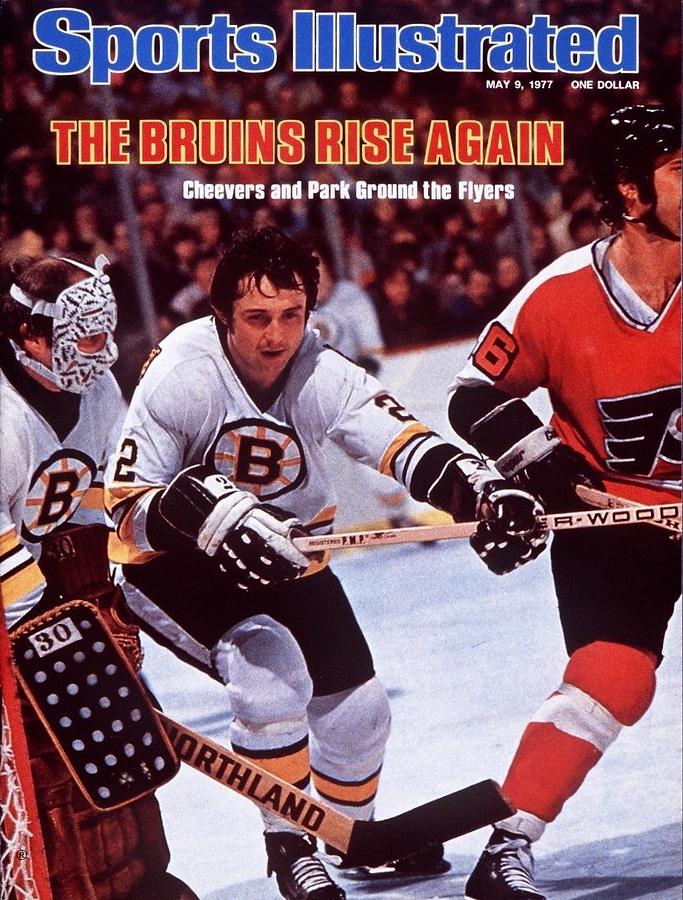
Five days later, on November 7, the Broadway Blueshirts made what became known in hockey as The Trade: Sending Park, by then the team Captain, Ratelle, and defenseman Joe Zanussi for Esposito and defenseman Carol Vadnais. None of those players had wanted to be traded. Asked in 2008 how long it took him to get over his anger at the Rangers, Park said, "I'm still ticked!"
To make matters worse, Espo demanded the Number 7 he'd worn in Boston, but Gilbert, who'd worn it for the Rangers since 1962 (like Bobby Hull, he started his career wearing 16), didn't want to give it up. Gilbert was already (and, to this day, remains) the Rangers' all-time leading scorer, and it didn't matter if you were a 2-time Stanley Cup winner; holder (at the time) of the single-season records for goals, assists and points; and a national hero in your homeland: You do not ask a club icon to give up his uniform number.

Gilbert held firm, and the team backed him up, so Espo took Number 77. In the next few years, as age caught up with Gilbert and he retired, Espo would win the fans over, big-time. But he got off to a very rocky start, and, yes, part of it was his fault.

The Rangers missed the Playoffs in that 1975-76 season, and the next. Fans got restless. The top level, the 400 sections, of The Garden had blue seats, and in those cheapest of seats, the passion began to boil over. The seats were blue, the jerseys were blue (although, at this point, home teams wore white in the NHL), the air was blue (smoking was still allowed in sports arenas at the time), and the language was getting bluer than ever.

The Rangers made the Playoffs in 1978, and then in 1979, they regained their local icon status, including a thrilling Stanley Cup Semifinal win over the Islanders, delaying the Nassau County club's rise to the top for one more year. Esposito won the fans over, and remains beloved in both New York and Boston. Park and Ratelle won Bruin fans over, helping them reach the Stanley Cup Finals in 1977 and '78, but did not win either time, so they remain respected there, but not loved.

November 7, 1975 was a Friday. This was also the day The New Original Wonder Woman, starring Lynda Carter, premiered on ABC.  

Wednesday, September 28, 2022

September 28, 1972: Canada Wins the Summit Series

"Henderson has scored for Canada!"
Number 12 is Yvan Cournoyer.

September 28, 1972, 50 years ago: The "Summit Series" between Canada and the Soviet Union comes to a close with Game 8 at the Luzhniki Palace of Sports in Moscow.
Team Canada had made a big mistake in only letting NHL players play for them, meaning that Bobby Hull, who had signed a contract with the Winnipeg Jets of the new World Hockey Association, wasn't eligible. Also, Bobby Orr of the Boston Bruins was injured. If either of the Bobbys was able to play, it would have been a very different series.

But the Soviets, led by goaltender Vladislav Tretiak and left wing Valery Kharlamov, shocked the Canadians, who had to win the last 3 games of the series to win it. With 34 seconds left, Paul Henderson of the Toronto Maple Leafs scores to give Canada a 6-5 win and the series. It is the most famous goal in the sport's history.

Bill Goldsworthy of the Minnesota North Stars died in 1996. Gary Bergman of the Detroit Red Wings died in 2000. Jean-Paul Parise of the North Stars died in 2015. Bill White of the Chicago Black Hawks died in 2017. Stan Mikita of the Black Hawks died in 2018. Pat Stapleton of the Black Hawks died in 2020. Tony Esposito of the Black Hawks and Rod Gilbert of the New York Rangers died in 2021.

The remaining 20 Canadian players are still alive, 50 years later: Frank Mahovlich of the Montreal Canadiens (a legend in Toronto) is 84; Red Berenson of the Red Wings is 82; Jean Ratelle and Vic Hadfield, both of the New York Rangers, are about to turn 82; Phil Esposito of the Boston Bruins is 80; Paul Henderson of the Toronto Maple Leafs and Don Awrey of the Bruins are 79; Yvon Cournoyer of the Montreal Canadiens is 78; Wayne Cashman of the Bruins, Dennis Hull of the Black Hawks (Bobby's brother), Rod Seiling of the Rangers and Ron Ellis of the Toronto Maple Leafs are 77; Serge Savard of the Canadiens is 76; Pete Mahovlich of the Canadiens (Frank's brother) is about to turn 76; Ken Dryden of the Canadiens is 75; Brad Park of the Rangers, Guy Lapointe of the Canadiens and Mickey Redmond of the Red Wings are 74; Bobby Clarke of the Philadelphia Flyers is 73; and Gilbert Perreault of the Buffalo Sabres is 71.

Of the Soviet players, most of them came from Moscow and environs, and all were from Russia proper, except for Evgeni Paladiev, from Kazakhstan.

Viacheslav Solodukhin was a suicide in 1979, Valeri Kharlamov was killed in a car crash in 1981, Alexander Ragulin died in 2004, Gennadiy Tsygankov in 2006, Yevgeni Mishakov in 2007, Viktor Kuzkin in 2008, Evgeni Paladiev in 2010, Valeri Vasiliev in 2012, Vladimir Vikulov in 2013, Vladimir Petrov and Alexander Bodunov in 2017, Yuri Shatalov and Yevgeni Zimin in 2018, Alexander Gusev in 2020, and Vladimir Shadrin in 2021.

Still alive: Vyacheslav Starshinov is 82, Boris Mikhailov is about to turn 78, Yuri Lyapkin and Alexander Martynyuk are 77, Alexander Yakushev is 75; Vladimir Lutchenko, Yuri Blinov and Alexander Maltsev are 73; Yuri Lebedev and Vyacheslav Anisin are 71, and Vladislav Tretiak and Alexander Volchkov are 70.

UPDATE: Alexander Martynyuk died later in 2022. Ron Ellis died in 2024. Ken Dryden died in 2025.

Wednesday, February 23, 2022

Emile Francis, 1926-2022

We just lost another New York sports legend.

Emile Percival Francis was born on September 13, 1926 in North Battleford, Saskatchewan, Canada. Singer Joni Mitchell lived there during her childhood. In 1945-46, he was playing as a goaltender for a Saskatchewan team, the Moose Jaw Canucks, and a sportswriter described him as "quick as a cat." He was "Emile 'the Cat' Francis" from then on.

In 1947, he made his NHL debut, with the Chicago Black Hawks. They weren't very good at the time, and in the 1947-48 season, he led the NHL in losses and goals against. But his experience as a baseball player led him to adapt a first baseman's mitt to be his catching glove. Once the NHL approved its use, it became the most common goalie glove of the era.

After that season, the Hawks traded him to the New York Rangers. From that point until 1952, he would bounce back and forth between the old Madison Square Garden and the Rangers' top farm team, first the New Haven Ramblers, then the Cincinnati Mohawks. He would end up playing just 22 games for the Rangers, and 95 in the NHL. Though he helped the American Hockey League's Cleveland Barons win the 1954 Calder Cup, most of his career was spent in the Western Hockey League, until he retired as a player in 1960.

He was invited to return to the Rangers' organization, and coached the Guelph Royals of the Ontario Hockey Association. In 1964, he became the Rangers' general manager; and in 1965, took over as both GM and head coach.

The Rangers had won the Stanley Cup in 1928, 1933 and 1940; and reached the Finals in 1929, 1932, 1937 and 1950. But over the next 16 seasons, they made the Playoffs only 4 times, winning a grand total of 6 games.

Francis rebuilt the team, featuring the GAG Line, or "Goal-A-Game": Center Jean Ratelle, right wing Rod Gilbert and left wing Vic Hadfield. Brad Park and Rod Seiling were 2 of the top defensemen in the NHL. And Eddie Giacomin was a Hall of Fame goaltender.

From 1966-67 to 1974-75, a 9-season stretch that included the move from the old Madison Square Garden to the new one in 1968, the Rangers made the Playoffs every year, reached the Stanley Cup Semifinals 4 times, and reached the Stanley Cup Finals in 1972, losing to the Boston Bruins in 6 games. With the growth of television, the Rangers became more popular than ever.

But in 1975, in only their 3rd season of play, the Long Island-based New York Islanders stunned the Rangers in the Playoffs. And the Ranger roster was aging. The 2 most controversial transactions in team history were about to occur.

On October 31, 1975, having handed the head coaching reins over to Ron Stewart but kept the GM's job, Francis waived Giacomin, and he was claimed by the Detroit Red Wings. As fate would have it, the Wings were the opponents in the Rangers' next home game, on November 2. All game long, the fans chanted, "Ed-DIE! Ed-DIE! Ed-DIE!" stopping only to cheer one of his saves, cheer a Wings goal, boo a Ranger goal, or to chant, "Kill the Cat!" at Francis. The Wings won, and it's been called the only time fans have left The Garden happy that the home team lost.

And then, on November 7, came "The Trade": Ratelle, Park and Joe Zanussi to the Bruins for Phil Esposito and Carol Vadnais. Both teams' fans hated this trade. Park really hated it: A few years ago, he was asked when he got over it, he said he still hadn't. But Esposito was getting his playing time reduced by head coach Don Cherry (later the loud-suited bigoted analyst on CBC's Hockey Night In Canada), and demanded a trade. This was it.

Espo made things worse: He had always worn Number 7, and wanted it with the Rangers. Gilbert had been wearing it most of his career, and, while Espo had more career goals and assists, Gilbert was already the Rangers' all-time leading scorer (and still is), so he had every right to keep it. Espo switched to 77.

But now, Ranger fans were furious with Francis, with Stewart, and with Esposito. In January 1976, Garden management fired Francis, and the new regime built the Rangers around Esposito, creating the team that reached the Stanley Cup Finals in 1979.

Francis was hired as general manager of the St. Louis Blues, and got a 10 percent ownership stake. He briefly coached the team in 2 separate stints, and when it looked like the team might move -- ironically, to Saskatoon, only 80 miles or so from his hometown of North Battleford -- he found a buyer that kept the team in St. Louis. He then served as GM of the Hartford Whalers from 1983 to 1988, and as team president from then until 1993. Alas, he couldn't keep new ownership from moving them to North Carolina in 1997. 

In 1982, Francis was elected to the Hockey Hall of Fame in the "Builder" category. That same year, the NHL gave him the Lester Patrick Award, named for a previous Ranger head coach and general manager, for service to hockey in America.

He and his wife Emma were married for 68 years, and had 2 sons, Bobby and Rick. Bobby Francis never played in the NHL, but coached the Phoenix Coyotes from 1999 to 2004, winning the Jack Adams Award as NHL coach of the year in 2002, an award his father never won.

Emile Francis died this past Saturday, February 19, 2022, at the age of 95. At the time, he was, by far, the earliest living former coach of any New York Tri-State Area major league sports team. With his death, those titles are held by:

* Earliest living New York/New Jersey/Brooklyn Nets head coach: 1970, Lou Carnesecca, age 97.
* Earliest living New York Islanders head coach: 1972, Earl Ingarfield, 87.
* Earliest living New York Jets head coach: 1974, Charley Winner, 97.
* Earliest living New York Giants head coach: 1976, John McVay, 91.
* Earliest living New York Mets manager: 1977, Joe Torre, 81.
* Earliest living New York Rangers head coach: 1977, Jean-Guy Talbot, 89.
* Earliest living New York Knicks head coach: 1977, Willis Reed, 79.
* Earliest living New Jersey Devils head coach: 1982, Billy MacMillan, 78.
* Earliest living New York Yankees manager: 1986, Lou Piniella, 78.

Sunday, May 10, 2020

May 10, 1970: The Flying Goal

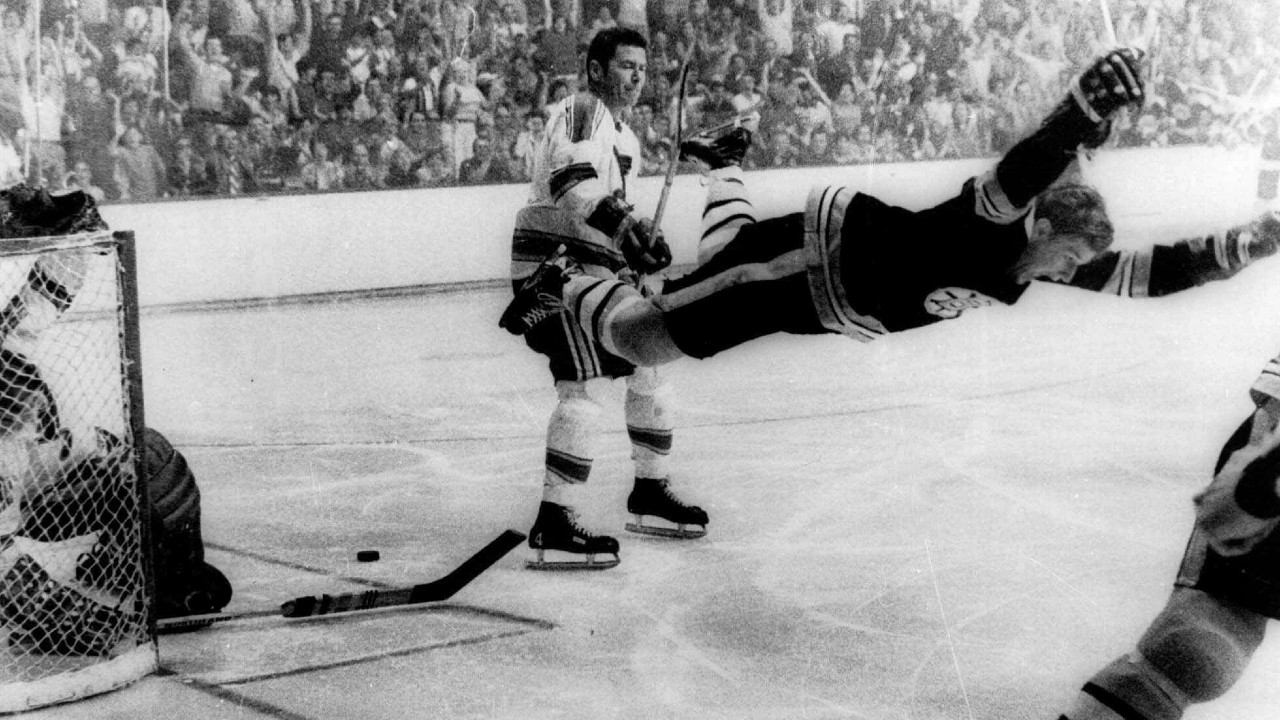
May 10, 1970, 50 years ago: The Boston Garden experiences what eventually becomes known as "The Miracle of the Fours." It is Game 4 of the Stanley Cup Finals between the Boston Bruins, who have not won the Cup in 29 years, and the St. Louis Blues, who have only been playing since 1967. The game went to overtime, thus to the 4th period. The game was tied 3-3, so whoever could score a 4th goal would win it.

It took only 40 seconds of overtime for the winning goal to be scored, by Bobby Orr, the 22-year-old Bruin defenseman who had become the most exciting player in the game. As he shot, he was tripped up by Blues defender Noel Picard, and the resulting photograph made it look as though Orr were flying. Both Orr and Picard wore Number 4.
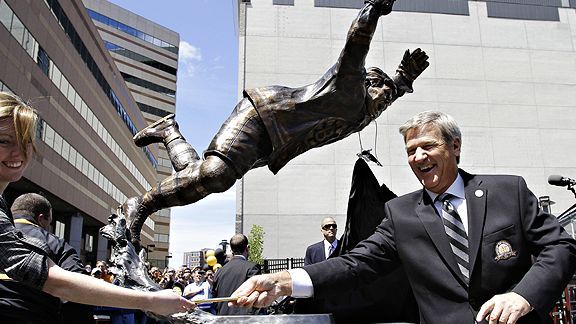
In honor of this event, the best-known bar near the Garden and its 1995 replacement, the TD Garden, is known as The Fours, at 166 Canal Street. Also, a statue of Orr flying was commissioned. It says something about the event that professional sports have been played at the site for 92 years, and the only 2 statues there are of this Orr goal and of Celtics legend Bill Russell.
Orr in bronze, Orr in the flesh

Dan Kelly, the Blues' broadcaster from their inception until his death in 1989, called the game nationally for CBS. His call: "Bobby Orr, behind the net to Sanderson to -- Score! Bobby Orr scores! And the Boston Bruins have won the Stanley Cup!"

This goal, John Havlicek's steal to seal the 1965 NBA Eastern Conference Championship for the Celtics, and the final game of the Boston Red Sox' 1967 "Impossible Dream" Pennant, are New England's equivalent to the contemporary epic triumverate for the New York Tri-State Area of the Jets' upset in Super Bowl III, the Mets' upset in the 1969 World Series, and the Knicks taking an improbable NBA Championship 2 days before this goal.

At the end of 1970, Sports Illustrated magazine named Orr its Sportsman of the Year, the 1st hockey player so honored.

Bruins owner Weston Adams, son of team founder Charles F. Adams, died in 1973, at age 68. Bill Speer was killed in a snowmobile accident in 1989, at 46. Broadcaster Don Earle died in 1993, at 64. Garnet "Ace" Bailey was a scout for the Los Angeles Kings when he was killed in the 9/11 attacks in 2001, at 53. Assistant coach and assistant general manager Tom Johnson, a Hall of Fame defenseman with the 1950s Montreal Canadiens, would coach the Bruins to the Cup in 1972, and died in 2007, at 79. Hall of Fame broadcaster Fred Cusick died in 2009, at 90.

Ron Murphy died in 2014, at 80. Gary Doak and Danny Schock died in 2017, the former at 71, the latter at 68. John McKenzie died in 2018, at 80. And Ted Green, injured in a nasty preseason fight and missing the entire preseason, but voted a full winner's share, died last year, at 79.

But, 50 years later, most of the 1970 Bruins are still alive. Team President Weston Adams Jr. is still alive, although I can find no record as to his age. Broadcaster Johnny Peirson is 94. Hall of Fame head coach and general manager Harry Sinden is 87. Bill Cleary, a member of the Gold Medal-winning U.S. team at the 1960 Olympics, who broadcast for the Bruins in addition to coaching at Harvard, is 85. Hall-of-Famer and team Captain Johnny Bucyk turns 85 in 2 days, and backup goalie Eddie Johnston is 84.

Hall of Fame goalie Gerry Cheevers and Ed Westfall, who became the 1st Captain of the New York Islanders, are 79, Hall-of-Famer Phil Esposito and Dallas Smith are 78. Don Awrey is 76, Fred Stanfield just turned 76, and Ken Hodge is about to turn 76.

Wayne Cashman, who retired in 1983 as the last remaining active player from the "Original Six Era," 1942 to 1967, is about to turn 75. Star-turned-broadcaster Derek Sanderson is about to turn 74. Bill Lesuk, Wayne Carleton, Don Marcotte and spare goalie John Adams are 73, and Jim Lorentz just turned 73. Orr is 72. Rick Smith is about to turn 72. And Ivan Boldirev, an immigrant from Yugoslavia as a child, is 70.

Monday, October 15, 2012

They're Trying

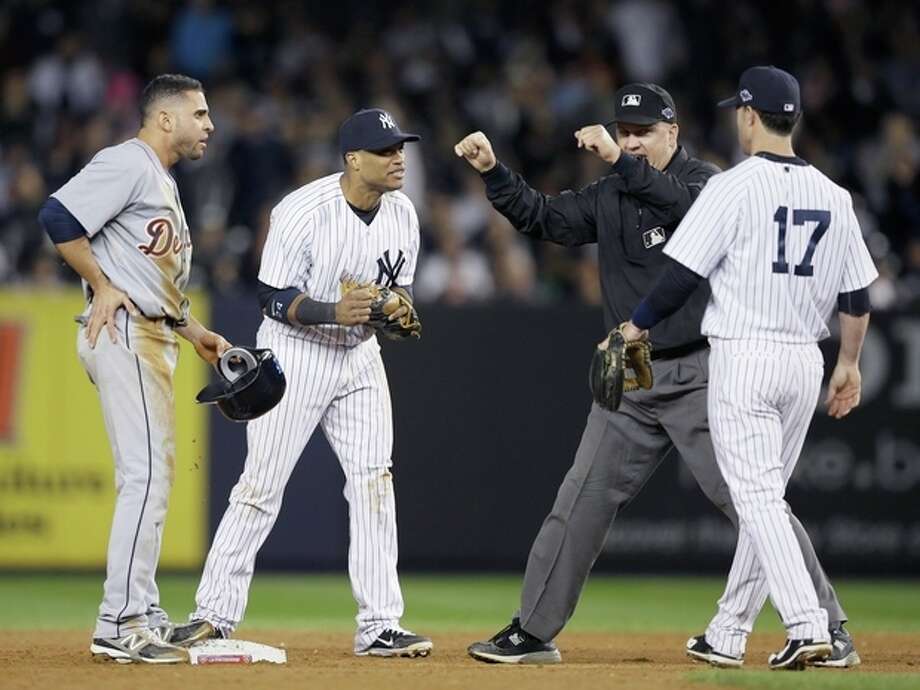
Yesterday, the Yankees lost Game 2 of the American League Championship Series to the Detroit Tigers, 4-0.  Hiroki Kuroda seemed to turn into Harvey Haddix: He took a perfect game into the 6th, but the Yankees couldn't score off Anibal Sanchez. The Yankees got just 7 baserunners, and none of them scored.

And the boos came out. Long and hard.

Let's get something straight: I don't think the Yankee Fans are booing individual players -- except for Alex Rodriguez, who, whether he or we like it or not, is the easiest target, because of how much money he makes, and how many times he's failed in postseason play for us.

I think they're booing the failure in general. Nick Swisher is simply the one who's reacted to it. He's got a point: It isn't completely fair. But the fans also have a point: It is partly fair.

It reminds me of Phil Esposito's interview after Game 4 of the 1972 "Summit Series," after the Soviets had embarrassed Team Canada on Canadian soil:

For the people across Canada, we tried. We gave it our best. For the people who booed us, jeez, all of us guys are really disheartened and we're disillusioned, and we're disappointed in some of the people. We cannot believe the bad press we've got, the booing we've gotten in our own buildings.

If the Russian fans boo their players like some of the Canadian fans - I'm not saying all of them - some of them booed us, then I'll come back and apologize to each and every Canadian. But I don't think they will.

I'm really, really, I'm really disappointed. I am completely disappointed. I cannot believe it. Some of our guys are really, really down in the dumps. We know - we're trying. What the hell, we're doing the best we can. They've got a good team, and let's face facts. But it doesn't mean that we're not give it our 150 per cent, because we certainly are.

Every one one of us guys, 35 guys who came out to play for Team Canada, we did it because we love our country, and not for any other reason. They can throw the money for the pension fund out the window, they can throw anything they want out the window. We came because we love Canada. And even though we play in the United States and we earn money in the United States, Canada is still our home, and that's the only reason we come. And I don't think its fair that we should be booed.

Granted, playing for your country is far different from playing for a club -- as Wayne Rooney finds out when he plays international soccer and doesn't have officials who are inclined to give his team the benefit of the doubt simply the team is Manchester United and officials who don't fix matches for Man U have seen their jobs suffer.

But Espo's analogy applies. The Yankees aren't trying to fail. They're just in an awful slump, at the worst possible time. These things happen.

And while Yankee Fans pay an inordinate price for their fandom -- high ticket prices, high food prices, high souvenir prices, and the MTA is about to announce a Subway fare hike -- and they have the right to express their displeasure when the highest-paid team in North American sports doesn't get the job done, certain things have to be realized:

1. Success is not guaranteed, no matter how much money is spent. Ask the Mets. Ask the Boston Red Sox these last 2 years. Ask the Philadelphia Phillies this year. Ask the Los Angeles teams, as both the Dodgers and the Angels have spent a lot of money over the last 10 seasons (2003 to 2012), and have no Pennants between them to show for it.

2. The Yankees aren't trying to fail. A-Rod, Swish, Robinson Cano, Curtis Granderson, yeah, these guys are highly paid professionals and should win -- but they are trying. You think their failures don't bother them? To borrow an analogy from another sport, they're not throwing in the towel. They keep fighting. They don't seem to know where to punch at the moment, but they're getting off the deck and continuing to fight.

3. There are no bad teams in the Playoffs. The Baltimore Orioles nearly won the AL East. The Tigers did win the AL Central, and beat the AL West Champion Oakland Athletics in a tough 5-game series.

These are good teams, and they deserve some credit for the way they've driven the Yankees nuts. The Tigers did eliminate the Yankees from the Playoffs last year, and some of the players they've got are holdovers from the 2006 Tigers who did the same.

If the Yankees do somehow come from behind and win this Pennant, they'll have to face either the defending World Champion St. Louis Cardinals, 5th seed though they were, or the NL West Champion and previous World Champion San Francisco Giants. Should we be shocked if either of them wins the World Series, completely shutting down the Yankees or Tigers? Certainly not.

4. As bad as things look for the Yankees right now, remember what Yogi Berra said: "It ain't over 'til it's over."

No Jeter. A-Rod not hitting. Robbie not hitting. Grandy not hitting. Swish not hitting. Good pitching performances by Andy Pettitte and Hiroki Kuroda getting wasted. (Not that kind of "getting wasted.") No Mariano Rivera to rely on, if we somehow get a lead and hold it into the 9th inning. Lost the 1st 2 games of this ALCS at home. And now we have to go to Detroit. And face Justin Verlander in Game 3.

But you know what? The Yankees have faced situations like this before, and won: 1996 World Series, 1998 ALCS, 2000 and 2001 ALDS. Even in the 2009 World Series, we lost Game 1 at home before taking 4 of the next 5.

Paul Sullivan, author of the blog Sully Baseball and a huge Red Sox fan, is really enjoying the Yankees' failure -- as if he wouldn't give a tooth to see the Sox failing in the Playoffs, because that would mean they made the Playoffs. Like Jim Mora Sr. would say, don't talk to him about playoffs, his team has to worry about just winning a game!

But Sully rightly points out that a comeback is incredibly unlikely, and cites the fact that the 2012 Yankees are not the 2004 Red Sox.

He's got a point. The Yankees can't count on their steroid cycles kicking in. The Yankees can't purposely throw at opponents and expect to get away with it every single time. And if this series does somehow get to a Game 6 at Yankee Stadium, Derek Jeter is not coming to bat with blood coming out of his ankle and through his sock.

To boo these Yankees in understandable. All that money, and, undeniably, they have spectacularly failed.

But maybe we need to accept the truth: These are not the 1927, 1936, 1941, 1949, 1961, 1977, 1996 or 2009 Yankees -- but remember, those teams all had something to prove, and until they did win the World Series, they hadn't proven it.

Every great Yankee has gotten booed. Babe Ruth. Lou Gehrig. Bill Dickey. Joe DiMaggio. Yogi Berra. Whitey Ford. Mickey Mantle. Roger Maris. Thurman Munson. Reggie Jackson. Dave Winfield. Yes, even Jeter. Even Mariano, mainly early in his career, but it happened. Especially A-Rod.

It seems that the only great Yankee who didn't get booed was Don Mattingly -- even though he pulled off the unique feat of playing 14 seasons in a Yankee uniform and never winning a postseason series.

Thursday, March 11, 2010

Top 10 Reasons the Rangers Suck

As they would say in English "football," 6-3! We beat The Scum 6-3! We beat The Scum 6-3! We beat The Scum 6-3!

They might also say, to the tune of "The First Noel"...

Brodeur, Brodeur, Brodeur, Brodeur! Born is the King of Prudential Center!

The Devils actually blew leads of 1-0, 2-1 and 3-2 last night at the Prudential, but so what. They blew it open, and chased Queen Henrietta out of the Broadway Boozehounds' goal.

Six different Mulberry Street Marauders scored: Rob Niedermayer (Scotty's little brother has grown up nicely), Bryce Salvador (who is having a sensational season by his standards), Zach Parise (soooo close to being an Olympic hero), Jamie Langenbrunner (O Captain, My Captain), Brian Rolston (partying like it's 1995) and Travis Zajac (maybe we should start calling him "Zorro").

Ten different Devils had either a goal or an assist: The preceding, Mike Mottau (assisting on Niedermayer, as did Rolston), Andy Greene (assisting on Salvador, as did Langenbrunner, and on Langenbrunner, as did Mottau), Dainius Zubrus (assisting on Parise, as did Zajac, and on Zajac, as did Parise) and David Clarkson (assisting on Rolston, as did Niedermayer). And it was 5-3 Devils on even-strength, with only Parise's goal coming on a power play.

The Devils hadn't done too well lately, winning only 6 of their last 20, including the Olympic break and bad losses in Alberta (to both the Calgary Flames and the suddenly-woeful Edmonton Oilers) in their last 2. This was the first home game since the break, and what a break-out.

*

As we all know, the Rangers suck. I'm presuming you do know, because, as the song goes...

If you know the Rangers suck, then clap your hands.
If you know the Rangers suck, and they'll never win the Cup
If you know the Rangers suck, then clap your hands.

Yeah, I know, it's Islanders fans, but they know that much.

Top 10 Reasons the New York Rangers Suck

I'm not going to rank these... though the Rangers themselves are quite rank, if ya know what I mean. I'm just gonna put them down in the order I think of them. The hard part is going to be stopping at 10.

1. They think 1994 makes up for 1941 to 1993 all by itself. Does it, really? Even if it does, then, does it, all by itself, make up for both 1941 to 1993 and 1995 to 2010? Seriously, I'd rather have 3 Stanley Cups since Oklahoma City than 1 Cup since Pearl Harbor.

In fact, since the Rangers last won the Cup, here's the tally: Detroit Red Wings 4, New Jersey Devils 3, the Colorado Avalanche (who didn't even exist until 1995) 2, and 1 each for the Dallas Stars (who didn't even exist until 1993), the Tampa Bay Lightning (not until 1992), the Carolina Hurricanes (not until 1997), the Anaheim Ducks (not until 1993) and the Pittsburgh Penguins (at least they were an established team).

It gets worse: Since 1940... over the course of 70 years...

Montreal Canadiens 20, Toronto Maple Leafs 10, Wings 9, Edmonton Oilers 5, Islanders 4, Devils 3, Boston Bruins 3, Penguins 3, Philadelphia Flyers 2, Avs 2, Chicago Blackhawks 1, Calgary Flames 1, Stars 1, Lightning 1, Canes 1, Ducks 1... Rangers 1.

Pathetic, isn't it? (That's 68 Cups awarded: None was awarded in 2005, and the 2010 Cup remains to be awarded.)

Howie Rose said it best: "This one will last a lifetime!" It will have to. 16 years down, 38 to go... if they're lucky... again. What are the odds of Ranger fans getting lucky twice in a lifetime?

2. They think they have better fans. Oh really? You think it takes courage to ride the Subway to The Garden? Try spending years walking across a barren parking lot in frigid winter, like Devils fans had to do (and Isles fans still have to do).

3. They put up with Sean Avery. The man is a supreme cunt, the most hated player in the game. He makes Claude Lemieux look respectable. (But then, I loved Claudie. No Devil ever hated the Rangers more. Except maybe Stephane Richer.)

4. They taunt Martin Brodeur, the greatest goaltender on the planet. When have Ranger fans ever seen a better goalie in their own net? Let's see, the Rangers have won 4 Cups in their 84-year history, and when they did, those goalies were... don't help me, don't help me... Lorne Chabot (good, but not in the Hall of Fame), Andy Aitkenhead (not even as good as Chabot), Dave Kerr (also good, but hardly great) and Mike Richter (he might have been as good as Brodeur during the 1996 World Cup, but that's about it).

There are 3 Ranger goalies in the Hall of Fame: Richter, Chuck Rayner (who got them to overtime of Game 7 of the 1950 Finals, but didn't win the Cup) and Eddie Giacomin (who got them to the 1972 Finals, and their cheering for him on his return in 1975 may have been the last time Ranger fans showed any class). And Henrik Lundqvist is not better than Brodeur, either.

Sure, under the First Amendment, the have the right to chant, "Marrrr-teeee!" But what did Jesus say about the mote in your neighbor's eye... (Then again, if Jesus were to watch hockey, that would be the least of his concerns.)

5. The Olympics. When the U.S. won the Gold Medal in Squaw Valley in 1960, their uniforms -- as we saw when the U.S. wore "throwback" uniforms for their 2010 group-stage game against Canada, 50 years later -- were almost a perfect copy of the Rangers' uniforms, right down to the drop-shadow lettering.

But how have the Rangers done in the Olympics? I'm not counting how Olympians-turned-Rangers (including 1960 goalie Jack McCartan and 1980 "Miracle Men" Rob McClanahan and Mark Pavelich) did, I'm talking about since 1998, when players already in the NHL have gone from their club to their country.

Richter and Brian Leetch helped the U.S. win the 1996 World Cup (prior to that, that tournament was known as the Canada Cup), but in the Olympics of 1998, they were busts, and in 2002, they failed in the 3rd period and let Canada beat them for the Gold.

And now, in 2010, current Ranger Captain Chris Drury was awful for the U.S. Whereas the Devils' Jamie Langenbrunner made a fine national Captain and Zach Parise nearly saved our bacon in the Gold Medal game. And don't get me started on Gold Medal-winning Devils vs. Rangers for other countries, such as Brodeur and Patrik Elias. (Yes, Jaromir Jagr was on a Czech team that won Gold, but he wasn't a Ranger at the time. He sucked, anyway.)

The New York Rangers are not just a metropolitan disgrace, they're a national embarrassment. Indeed, they are an international joke.

6. The Dumbest Chant in Sports History. Islander defenseman and Captain Denis Potvin's February 25, 1979 hit on Ranger center Ulf Nilsson was totally clean -- Nilsson himself said so. No penalty was called, because, yes, it was a clean hit. And the Rangers did, in fact, beat the Isles in the 1979 Stanley Cup Semifinals without Nilsson, who did, as it turned out, return in time for the Finals against Montreal. Devils broadcaster Glenn "Chico" Resch, who was the Isles' backup goalie in 1979, tells the story.

You would think that Ranger fans' lust for revenge would have been fully satisfied after only 2 months. Besides, that Montreal team was so good, a fully-healthy Ranger team would never have beaten them anyway.

But, no, 31 years later -- 5 Presidents, 3 Popes and 7 Stanley Cups won by area teams other than the Rangers later -- these bozos still chant, "Potvin sucks!" Oh, what the heck, he's only the most successful defenseman in New York Tri-State Area hockey history -- and the most successful Captain, too: Stanley Cups won as Captain: Denis Potvin 4, Scott Stevens 3, Frank Boucher 2, Bryan Hextall 1, Mark Messier 1. (The one Ol' Lex Luthor won in Edmonton doesn't count for this issue.)

I didn't like the guy, either, but, 16 years later (about half the time), how many Devils fans curse out Stephane Matteau? None. Maybe, every now and then, I'll yell out, "And remember: Messier's not just the Hair Club Team Captain, he's also a client!" Or someone will make a reference to Avery and some other Ranger (it used to be Jagr) as "2 Girls, No Cup!" (And if you don't know what that refers to, aside from Avery and Rangers in general being effeminate, hell, I ain't gonna be the one to tell you.)

But are we going to go on and on about something that happened long ago? Hell, no. (We've only had a team since 1982: It's taken us this long to even, really, have a "long ago.")

Essentially, when we want to insult the most insultable team in hockey (with the possible exception of the Toronto Maple Leafs, I'll leave it to Canadians to decide that), we just go for the simple, all-encompassing line that Islander fans handed down to us when we arrived in 1982: "RANGERS SUCK!" (And some of us, in an NC-17 way, add, "Flyers swallow!")

7. The Dumbest TV Commercial in Sports History. Interestingly, it came along the same year (calendar year, if not season), as "Potvin Sucks!" Oy yi yi, 1979. Somebody wanted to capitalize on the Rangers' stunning (yet incomplete) success by making as many TV commercials as possible. Some worked. Some didn't.

These bozos -- and I include the highly intelligent Phil Esposito in there -- didn't even know that "Sassoon" is a line of hair care products (with all that Seventies hair, they needed 'em), while the brand of jeans was "Sasson," pronounced "Sah-SAHN." You'd think these Canadians, who knew French, could pronounce it right. (Maybe they should have worn Jordache instead.)

But that wasn't the worst of it. They had their jerseys tucked into their jeans. Really, really tight jeans. (Paging Michael Wilbon of The Washington Post, ESPN's Pardon the Interruption, and Chicago Cub fandom.) But that wasn't the worst of it.

The worst of it... I'm sorry, I do support gay rights (what right do I have to tell anyone else whether or not they can get married?), but... judge for yourself...

Espo, you did a lot for this great game of hockey, around here, in New England, and in 1972 for your country. But that commercial overshadows everything.

They even made a sequel ad! At least this time, they pronounced "Sasson" right. But those girls... I apologize to everyone born in 1980, but if New York women were really impressed with that in 1979, then there must have been some seriously bad genetic mixes born 9 months later!

8. They Eat Their Own. No, I'm not talking about the season after the Sasson ads ran, when the Rangers fell from grace and their fans would chant, "Ooh, la la, you suck!" (Which... they did.) And, no, I'm not talking about Ranger fans being cannibals, either. I don't think they actually eat each other. As far as I know. Would I really put anything past these animals? Not really, considering the following:

The last time I was in Madison Square Garden for a hockey game, I had a fantastic seat, at the back of the 200 Level (cost me a bundle from a scalper), but the view was great. (Aside from the escalator towers and the narrow corridors, minor complaints, I have no problem with The Garden itself. It's the regulars I can't stand.)

Sitting in front of me were these four guys, all from the Czech Republic, each wearing the jersey of a Czech player on the Rangers: Jagr, Martin Straka, Petr Prucha and Michal Rozsival. No harm in showing a little national pride, right? Except these guys were already three sheets to the wind when I got in, and they were cursing out everybody on the ice except the Czech Rangers. Including the Devils' Captain at the time, the Czech-born Patrik Elias. In Czech, so most of the players they were yelling at couldn't understand a word they said anyway!

If that had been the worst of it, I would mark it down as typical Ranger fan stupidity. But no. These guys got so rowdy that a couple across the aisle from them told them repeatedly to stop. And what did they do? Their leader, the first in their row, got up, and shoved the wife of the couple across from them. He shoved a woman. Who was also wearing a Ranger jersey! He shoved a woman rooting for the same team!

Fortunately, the husband, also wearing a Ranger jersey, showed that some Ranger fans have brains: He chose not to take on four big, agitated drunks at once. He called an usher, and the four drunk Czechs were deported from The Garden. Fair play to that couple, and to the Garden ushers.

I'm not saying all Ranger fans are like that. But enough are. The top level of The Garden wasn't just called "the Blue Seats" because, from its 1968 opening until a 1992 renovation, they were painted blue, or because all the cigarette smoke (then allowed) made the air turn blue. It's because of the "blue language" that still rains down from there. And from most other sections of The Garden.

9. They have the same name as the most bigoted team in professional sports on this planet, Rangers Football Club of Glasgow, Scotland. And those Rangers also wear blue shirts. Come to think of it, so do baseball's Texas Rangers (Dallas... good reason to dislike a team), and one of the London soccer teams, Queens Park Rangers. Seriously, the only blue-shirted Ranger who doesn't suck is the Lone Ranger.

I know the New York hockey team has nothing to do with those Catholic-hating, Irish-hating bastards who root for the team from Ibrox, but the connection is there. (Then again, the Yankees used to show Manchester United games on the YES Network, so maybe this point is a weak one.)

10. Most Ranger fans are also... Yankee Fans. This one bugs me the most. While the arrival of the Devils in 1982, the move of the Jets from Shea to the Meadowlands in 1984, and the nearly-continuous pathos of the Nets has complicated things, most fans of one older team root for the others: Yankees, Giants, Knicks, Rangers; and most fans of one newer team root for the others: Mets, Jets, Nets, Islanders.

I am willing to make a minor allowance for geography: A native New Yorker now living in New Jersey is not obligated to switch from the Rangers to the Devils. (Yes, I'm including you, "Tio.") And a New Jersey native who rooted for the Rangers up until 1994 can be accepted, because he had to ride it out, stay with his team until they reached the, uh, promised land. Fine. But that was the time to put an end to it and start to root, root, root for the home team -- and that's got nothing to do with the fact that the Devils won the Cup the very next year and have been one of the top two franchises in the league since then (along with Detroit). You're from New Jersey, you root for the Devils. (Unless you grew up south of Interstate 195, in which case it would be ridiculous, but understandable, if you rooted for the Flyers.)

Yankee Fans who are also Ranger fans? I swear, I am not making this up: I was at an early-season game at the old Yankee Stadium, and the Rangers and Devils were both playing in the Playoffs that same night. The Devils' score was never put up on the DiamondVision board. (They won.) The Rangers' score was, and they were winning (and held on to win), and 50,000 Yankee Fans chanted, "Let's Go Rangers!"

Take a wild guess as to who the Yankees were playing that night, right in front of these same fans. You got it: The Texas Rangers. If then-Texas Governor George W. Bush had traveled to New York to watch the baseball team he had once owned, he was not the dumbest person in The Stadium that night. (At least the Yankees won, too.)

Most of these people are actually kind, generous, intelligent, and even thoughtful from April through October. But from October through April...

Of course, by the time baseball season gets going, the Rangers are usually eliminated from the Playoffs anyway, so these people can go back to being Doctor Jekylls for 6 months.

I hate the fucking Rangers. Fortunately, they not only suck... they stink! 6-3! We beat The Scum 6-3! We beat The Scum 6-3! We beat The Scum 6-3!

Thursday, August 27, 2009

Top 10 False Saviors in New York Sports

Wow, that Johan Santana has really made a difference for the Mets, hasn't he?

I saw a picture of him wearing a leather jacket that looks like it was ripped off of "Life On Mars."

"My name is Sam Tyler. I was in an accident, and I woke up in 1973. The Mets are winning the Pennant, which makes me feel like I'm on a different planet."

Met fans were so sure that Santana was going to make the difference between the September 2007 disaster and the World Series. In 2 seasons, the Mets have had another September collapse leading to a regular-season finale humiliation, and a train wreck of a season with all kinds of injuries, including bone chips that have now ended the season of The Great Johan Santana.

Then there's Francisco Rodriguez, a.k.a. Frankie, a.k.a. K-Rod. The author of the blog "The Musings and Prophecies of Metstradamus" -- good title and usually well-written, though being a Met fan is clearly a sign of, to put it politely, compromised faculties -- has written:

I'm starting to get the feeling that Frankie Rodriguez is the Jamie Lee Curtis of the group ... the last one standing after Michael Myers has killed everyone else, while Billy Wagner is the guy who you thought died in the first half hour of the film, only to be that guy who finally drives a stake into the psychopath's heart when he's just about to kill Frankie, then tear both of his hamstrings.

He's referring to Michael Myers, the lead of the Halloween horror films -- not the comedian who starred in the Wayne's World segments of Saturday Night Live and the Austin Powers films. Nor the "submarine" lefthander who helped the Red Sox win a title * and then didn't help the Yankees much.

Shows what you know, Metstradamus: Jamie Lee Curtis is someone I wouldn't mind seeing in any clothes, or none at all -- and she's 50! By contrast, Francisco Rodriguez doesn't look good no matter what he wears!

You'd have to be a psycho to put up with the Mets -- and speaking of Psycho, it starred Jamie Lee's mother, the late great Janet Leigh, and she was something, too. Check her out in full blazing color in Scaramouche: Let's just say that French Revolution-era gowns were made for women like her. (Jamie Lee's father, and Janet's ex-husband, was actor Tony Curtis.)

The Mets, of course, have Susan Sarandon, who still looks great at 63... but the way we know she's a great actress is that anyone who watches the Mets as long as she has, and still "believes in the Church of Baseball" has got to be lying!

However, neither Johan Santana nor Francisco Rodriguez makes the following list. Nor do David Wright, Jose Reyes, Carlos Beltran or Alex Rodriguez -- for the simple reason that they are still active, and their stories are not yet complete, therefore they have not yet fully failed.

But there are always "false saviors" in sports, and the New York Tri-State Area has had a few of them. And the effect can be devastating.

If you doubt this, imagine if the Vancouver Canucks had won Game 7 of the 1994 Stanley Cup Finals, and Mark Messier eventually left the Rangers without winning a Stanley Cup. Instead of being the most beloved Ranger of all time, he would be the most hated.

There are no Giants, Islanders or Devils on this list. The Giants have never really had a guy who was given big hype when he arrived and failed to deliver. The Devils have been similarly lucky in this particular regard. And the Islanders haven't really tried to open the vault to get a big star capable of turning the franchise around, regardless of success or failure.

UPDATE: By 2013, Ilya Kovalchuk became the 1st such player for the Devils; and Santana, Wright and Reyes all made themselves fully eligible for this list.

Top 10 False Saviors in New York Sports

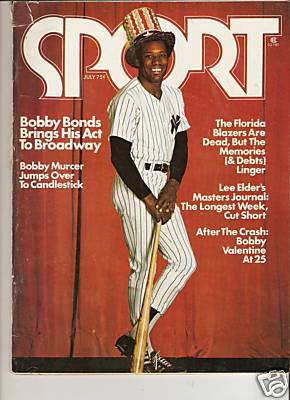
10. Bobby Bonds. George Steinbrenner actually traded Bobby Murcer, already one of the most popular Yankees ever, to get him from the San Francisco Giants. Now, in late 1974, being traded even-up for Bobby Bonds was not an insult.

Far from it: He was a great combination of power and speed, hitting 331 career home runs and stealing 461 bases. One season, he missed becoming the 1st player ever to have 40 homers and 40 steals in a single season by just 1 one homer. And when you consider he played the 1st half of his career in windswept Candlestick Park, and was continually injured for much of the 2nd half of his career, you're looking at a player who could have made the Hall of Fame if things had broken right for him.
But his 1975 season was a bit of a disappointment. He didn't really fit in with New York, the pressure on him to be "the next Yankee superstar" was immense, and his lefty swing, while ideal for the short right-field porch at Yankee Stadium, was less effective in the symmetrical, windy Shea Stadium the Yanks had to use for 1 more season while The Stadium was being renovated.

On December 11, 1975, the Yanks sent Bonds to the California Angels for outfielder Mickey Rivers and pitcher Ed Figueroa -- and, on the same day, also sent pitcher Doc Medich to the Pittsburgh Pirates for pitcher Dock Ellis and a rookie second baseman named Willie Randolph. It may have been the greatest day of trading in Yankee history. Bonds would go on to excel while healthy, but be hurt so much that he became one of the most-traded players ever.

Today, the late Bobby Bonds is best remembered as the father of Barry Bonds. Which is a shame, and not because of anything Barry has done, good or bad: Bobby was a really good player who didn't get an even break. Which is why I put him at Number 10: He doesn't really deserve it. But the hype that went along with him means he has to be on this list.

9. Marvin Webster. Known as "the Human Eraser" for his ability to block shots ("erasing" points from the board), he helped get the Denver Nuggets to the 1976 ABA Finals and the Seattle SuperSonics to the 1978 NBA Finals. Then the Knicks got him. On the cover of their October 16, 1978 issue, Sports Illustrated asked a big question.
That the answer turned out to be "No, not by a long shot" is hardly his fault. But that cover made quite an impression. Maybe he got hit by The Dreaded SI Cover Jinx. Sadly, both Marvin and his son, Marvin Jr., who briefly played at Temple, died of heart problems.

8. Phil Esposito. "The Trade" meant bringing one of the greatest scorers and team leaders in hockey history to the Rangers, but it also meant sending 2 other Hall-of-Famers, Jean Ratelle and Brad Park, to the Boston Bruins, at the time still considered the Rangers' arch-rivals -- although the Islanders had just embarrassed the Rangers in the 1975 Playoffs, and the Bruins haven't really been a Ranger rival since.

Espo certainly had quite a bit left, and his talent and presence helped to make the Rangers marketable again, which was particularly important after the disasters (plural) of calendar year 1975, including the rise of the Islanders which eventually led to 4 straight Stanley Cups.
As the Rangers' Sasson ad campaign proved,
being marketable and knowing how to market yourself
are 2 very different skills.

Espo led the Rangers to the 1979 Cup Finals, beating the Isles in the Semis, before losing the Finals to the Montreal Canadiens. This was a very big deal, as the Rangers had been to just 2 Finals in the preceding 29 years.

Ultimately, though, Espo couldn't get the Rangers over the hump, either as a player, a head coach or a general manager. He was an honorable failure in New York, but the fact remains that he failed. And that Sasson jeans commercial... All he did for the Bruins, all he did to make the Rangers relevant again, saving Team Canada in the 1972 Summit Series... Sorry, Phil, but that commercial will live forever.

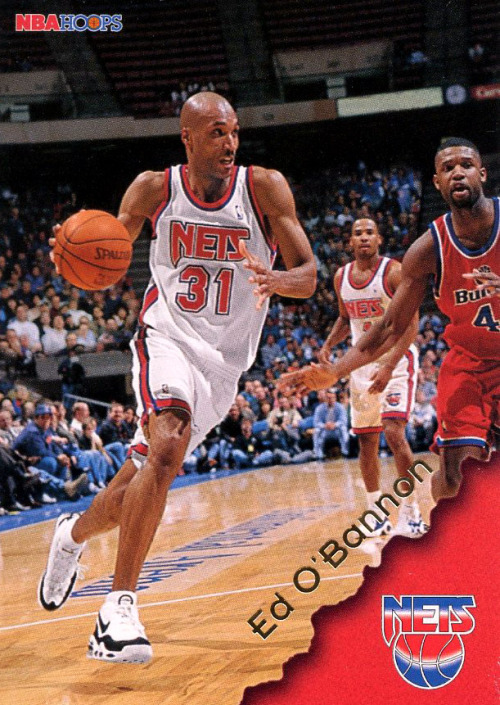
7. Ed O'Bannon. He led UCLA to the 1995 National Championship, their only title without John Wooden as coach. The Nets drafted him, needing something big after collapsing from a team that had been pretty good in '92, '93 and '94 but was now ridden with dissension and injuries. How much of a risk could it be?
Let's just say that, of all the Nets' blown draft picks, this was the biggest bust when you consider performance divided by hype. Even the late Yinka Dare, a.k.a. the Three-Minute Egg, wasn't as bad from that perspective.

6. Rickey Henderson. The Yankees picked him up for the 1985 season, and he shattered team stolen base records, hit a few big home runs, and solidified his reputation as the greatest leadoff hitter of all time. Unfortunately, he also failed to hit in several key situations, his "snatch catch" was bad enough when it worked and didn't work often enough to notice, and was, quite possibly, the biggest egomaniac in the history of sports.
The Yankees got rid of him in 1989, and when you rattle off the names of the Hall-of-Famers who played for the Yankees, it's easy to forget that Rickey was one of them. In fact, I recommend forgetting it. Essentially, Rickey did nothing for the Yankees, and, despite some impressive stats, the Rickey-in-Pinstripes experience was a total waste. If he'd cared more about the Yankees than about Rickey, 2 games out in '85, 5 1/2 out in '86, 9 out in '87, and 3 1/2 out in '88, might've been a very different story.

5. Jaromir Jagr. If I were making this list for Washington, D.C. -- or even the Baltimore-Washington corridor combined -- "Dude Looks Like a Lady" might top the list. I think the reason he stayed so thin is that the only thing he ate as a Ranger was the Dolan family's money. He may have set a Ranger team record with 54 goals in 2006, but his Cup seasons with the Pittsburgh Penguins seemed like a lifetime ago.
He's scored 646 goals in his NHL career -- and, at 37, it might not be over yet -- but is there any other player in the 500 Goals Club, let alone with as many or more than Jagr, who is more lightly regarded?

UPDATE: Jagr played his last NHL game on New Year's Eve, December 31, 2017, for the Calgary Flames. He scored 766 goals in NHL regular-season play, at the time more than any player except Wayne Gretzky and Gordie Howe. He played for 9 different teams, including the Rangers and the Devils, meaning he flopped for 2 local teams, which is rare. After back-to-back Cups with the Pittsburgh Penguins in 1991 and 1992, he reached the Stanley Cup Finals once, with the 2013 Boston Bruins. That 19-year gap between Finals appearances is a record.

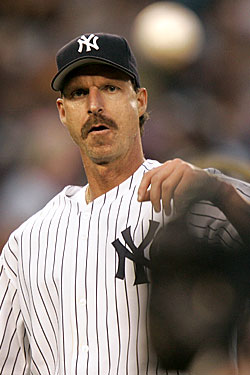
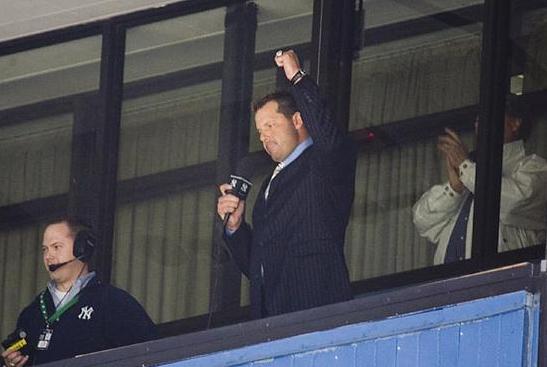
4. Randy Johnson and Roger Clemens. I lump these 2 together -- I really wish I could lump them together -- because of the hype they brought to my team, and the results thereof.

When Johnson pitched for Seattle in the 1995 Division Series, he made the difference for the Mariners, every bit as much as Ken Griffey, Edgar Martinez or Tino Martinez. When he pitched for Arizona in the 2001 World Series, he saved the Diamondbacks' skins and beat the Yankees. Getting him seemed like a great idea, the old idea of, "Even if he does nothing for us, he won't be doing anything to us."
But the Big Unit was a big flop here. He put together the 2 most useless 17-win seasons any Yankee pitcher has ever had. He was moody at best, nasty at worst, and his injuries and his collapses in Game 3 of the Division Series of both 2005 and 2006 were unacceptable.

That he has gone on to pitch elsewhere, and well, and join the 300 Wins Clubs, and surpass Clemens to be 2nd on the all-time strikeout list makes it even sicker.

As for Clemens, it seems like an odd thing to say, calling him a "false savior" after what he did for the Yankees from 1999 to 2003. Ah, but I think you've guessed what I'm really talking about here. This list is not just about failure, it's about performance divided by hype. Remember the hype when he returned to the Yankees in 2007? Making the announcement at the 7th-inning stretch? Suzyn Waldman reacting to it as if it was the Summer of '64 and she'd just been kissed by a Beatle?
And the results? Well, let's just say that Tom Glavine wasn't the only 300-game winner to end his New York days on an incredibly sour note that season. As Yogi Berra might say, the good news is that Roger's meltdown happened in the Playoffs... but the bad news is that Roger's meltdown happened in the Playoffs. And he's never pitched in the major leagues again. Nor should he.

If I never saw either the Big Unit or the Rocket again, I could live with it.

3. Pedro Martinez. If you believe Met fans, signing the Fenway Punk was the message that was sent to the rest of baseball that the Mets were serious about trying to win again, so come on and sign with the Mets!
It didn't work out, largely because Pedro kept getting hurt. And now, the Punk is doing a good job with the Philadelphia Phillies, who have become the Mets' rivals in ways the Atlanta Braves could never truly be.

Isn't that just like a player, to be great both before and after being a Met, but not during? Then again, the 1993 Mets should have taught you that: Eddie Murray, Bobby Bonilla, Vince Coleman, Jeff Kent, Tony Fernandez, Jeromy Burnitz. I almost made them a collective entry on this list.

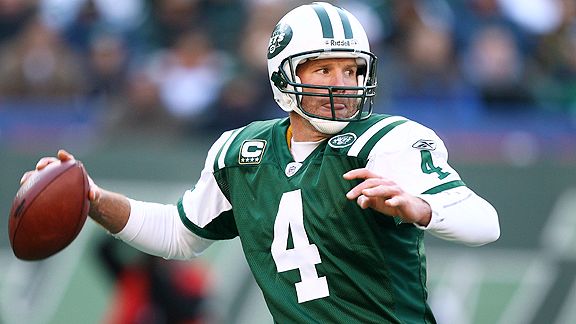
2. Brett Favre. The Jets have been unlucky in many areas, but they'd never really had a false savior until Brett Favre came along last year, at age 38. Brett Favre got them to 8-3 in 2008, and it looked like they might win the AFC East and play a January game or two "at home" at the Meadowlands. Final record, 9-7, and Brett Favre was largely responsible.

Brett Favre got hurt. Brett Favre was totally useless. Brett Favre threw a season away. Make no mistake, Brett Favre should have retired after the previous season when he had the chance.
Brett Favre is no longer the Jets' problem. And getting Brett Favre might not turn out to be such a disaster: After all, if Mark Sanchez turns out to be a great pro quarterback, then it would be a direct result of the spectacularly failed Brett Favre experiment: It would make Brett Favre the Jets' Ken Phelps, and Sanchez the Jets' Paul O'Neill.

UPDATE: Sanchez did not turn out to be a great quarterback. And, in 2023, the Jets repeated their mistake, signing Brett Favre's replacement in Green Bay, Aaron Rodgers, then 39. That didn't work out, either.

Who's the biggest false savior in New York sports history? It's not Brett Favre, he whose name always seems to be used in full. No, there can be only one.

1. Patrick Ewing. When NBA Commissioner David Stern rigged the 1st-ever NBA Draft Lottery in 1985 to ensure that New York got the 1st pick -- excuse me, when Mr. Stern announced that the Knicks had won the 1st pick -- everyone knew the Knicks were going to take the most celebrated college basketball player of the first half of the 1980s, Patrick Ewing.

Ewing was the 7-foot center who had taken Georgetown University of Washington, D.C. to 3 National Championship Games -- but, in some unfortunate foreshadowing, had won only 1, losing the other 2 by 2 points each.

The question that Knick fans, desperate for a winner after a season that made the 2009 Mets look like the picture of health by comparison (in particular the spectacular knee injury to the great hope that had been Bernard King, as well as the difficulties of the aforementioned Marvin Webster), were asking at the time was not, "Will Patrick Ewing lead the Knicks to an NBA Title?" It was "How many NBA Titles will Patrick Ewing lead the Knicks to?"
Looking at this cover now, there are 2 questions:
1. "How could they have been so gullible?" And
2. "Wait, you mean, back then, shorts were actually short?"

At that moment, Michael Jordan, whose jumper had provided the winning margin over Ewing's Hoyas in the 1982 title game, had completed a not-especially-interesting rookie year for the Chicago Bulls. And Hakeem Olajuwon, who had lost 3 Final Four appearances with the University of Houston, including being the one team the Hoyas could beat in the Final, in 1984, had just finished his rookie year with the Houston Rockets. Isiah Thomas, who ended up as no friend of Knick fans, had finished his 3rd year with the Detroit Pistons, and was impressive, but the team results just weren't there yet.

No one yet knew that the player for a big-market team that would lift the NBA to new heights was going to be Jordan of Chicago -- although Earvin "Magic" Johnson of Los Angeles was already that guy, but Stern didn't grasp that. He thought it was going to be Ewing, and that it had to be in New York.

If I had told you at that moment that Jordan, Olajuwon and Thomas would, between them, play on 10 NBA Championship teams, and that Ewing would play on exactly none of them, you'd ask me what I was smoking. But I would have been right.

And it's not just that the Knicks as a team, and that Ewing as an individual, frequently choked. It's that Ewing tended to make predictions about the Knicks winning it all. It worked for Joe Namath and the Jets in January 1969. It worked for Mark Messier and the Rangers in May 1994. It never worked for Ewing and the Knickleheads. And, perhaps most damning of all, the Knicks reached their 2nd NBA Finals appearance of the Ewing era (in 1999, following 1994) with Ewing injured and unable to contribute.

You can say that the Knicks kept running into Jordan and the Bulls. That's a fair argument. But before those Bulls, nearly every great team had a center capable of dominating a game. The Bulls of 1991, '92 and '93 had at center... Bill Cartwright. The same Bill Cartwright who Ewing replaced as Knick center, because Cartwright wasn't good enough. The Knicks thought they could get rid of Cartwright once they brought in their big Hoss, but it was the Bulls who ended up with the bonanza.

The Bulls of '96, '97 and '98 had at center... Luc Longley. Like Cartwright, the big Australian was a good center, a solid team player and a decent man. But was anyone really intimidated by Cartwright or Longley? Yeah, apparently, one guy was: Patrick Ewing. The 1990s Bulls proved you could win an NBA Title without having a dominating center, even if your opponents did have a hyped-up center.

There are many reasons that the New York Knickerbockers have fallen short every season since 1973. (The Curse of Sam Tyler, maybe?) But for nearly half of that time, they put their eggs in the basket with the Number 33 on it. The hype was immeasurable. The results were miniscule. Patrick Ewing is the biggest, falsest false savior in New York sports history.

That doesn't make him a bad person -- I leave it to the dancers at Scores who knew how much he tipped to decide that -- but it does make him, as far as his professional basketball career is concerned, a failure. An expensive one, and not just in terms of the Dolan family's money.