Showing posts with label montreal canadiens. Show all posts

Monday, June 15, 2026

Stanley Cups Won by Current NHL Teams, as of 2026

Note that this counts all titles won by moved teams. Ties broken by Finals appearances, then by Conference Finals appearances:

1. 24 Cups, Montreal Canadiens: 1916, 1924, 1930, 1931, 1944, 1946, 1953, 1956, 1957, 1958, 1959, 1960, 1965, 1966, 1968, 1969, 1971, 1973, 1976, 1977, 1978, 1979, 1986, 1993; lost 10 Finals: 1917, 1925, 1947, 1951, 1952, 1954, 1955, 1967, 1989, 2021; 1919 Finals never completed

2. 13 Cups, Toronto Maple Leafs: 1918, 1922, 1932, 1942, 1945, 1947, 1948, 1949, 1951, 1962, 1963, 1964, 1967; lost 8 Finals: 1933, 1935, 1936, 1938, 1939, 1940, 1959, 1960

3. 11 Cups, Detroit Red Wings: 1936, 1937, 1943, 1950, 1952, 1954, 1955, 1997, 1998, 2002, 2008; lost 13 Finals: 1934, 1941, 1942, 1945, 1948, 1949, 1956, 1961, 1963, 1964, 1966, 1995, 2009 

4. 6 Cups, Boston Bruins: 1929, 1939, 1941, 1970, 1972, 2011; lost 14 Finals: 1927, 1930, 1943, 1946, 1953, 1957, 1958, 1974, 1977, 1978, 1988, 1990, 2013, 2019 

5. 6 Cups, Chicago Blackhawks: 1934, 1938, 1961, 2010, 2013, 2015; lost 7 Finals: 1931, 1944, 1962, 1965, 1971, 1973, 1992

6. 5 Cups, Edmonton Oilers: 1984, 1985, 1987, 1988, 1990; lost 4 Finals: 1983, 2006, 2024, 2025

7. 5 Cups, Pittsburgh Penguins: 1991, 1992, 2009, 2016, 2017; lost 1 Finals: 2008

8. 4 Cups, New York Rangers: 1928, 1932, 1940, 1994; lost 7 Finals: 1929, 1932, 1937, 1950, 1972, 1979, 2014 

9. 4 Cups, New York Islanders: 1980, 1981, 1982, 1983; lost 1 Finals: 1984

10. 3 Cups, New Jersey Devils: 1995, 2000, 2003; lost 2 Finals: 2001, 2012 

11. 3 Cups, Tampa Bay Lightning: 2004, 2020, 2021; lost 1 Finals: 2015

12. 3 Cups, Colorado Avalanche: 1996, 2001, 2022; never lost a Finals

13. 2 Cups, Philadelphia Flyers: 1974, 1975; lost 6 Finals: 1976, 1980, 1985, 1987, 1997, 2010

14. 2 Cups, Carolina Hurricanes: 2006, 2026; lost 1 Finals: 2002; lost 3 Conference Finals: 2009, 2019, 2023

15. 2 Cups, Los Angeles Kings: 2012, 2014; lost 1 Finals: 1993; lost 1 Conference Finals: 2013

16. 2 Cups, Florida Panthers: 2024, 2025; lost 1 Finals: 1996; never lost a Conference Finals

17. 1 Cup, Dallas Stars: 1999; lost 4 Finals: 1981, 1991 (both of those as Minnesota North Stars), 2000, 2020

18. 1 Cup, St. Louis Blues: 2019; lost 3 Finals: 1968, 1969, 1970

19. 1 Cup, Vegas Golden Knights: 2023; lost 2 Finals: 2018, 2025; lost 2 Conference Finals: 2020, 2021

20. 1 Cup, Calgary Flames: 1989; lost 2 Finals: 1986, 2004; never lost a Conference Finals

21. 1 Cup, Anaheim Ducks: 2007; lost 1 Finals: 2003; lost 3 Conference Finals: 2006, 2015, 2017

22. 1 Cup, Washington Capitals: 2018; lost 1 Finals: 1998; lost 1 Conference Finals: 1990

23. No Cups, but 3 WHA Championships, Utah Mammoth: 1976, 1978, 1979 as (original) Winnipeg Jets

24. No Cups, but 3 Finals, Vancouver Canucks: 1982, 1994, 2011

25. 2 Finals, Buffalo Sabres: 1975, 1999

26. 1 Finals, Nashville Predators: 2017

27. 1 Finals, San Jose Sharks: 2016

28. 1 Finals, Ottawa Senators: 2007

29. 1 Conference Finals, Winnipeg Jets (new version): 2018

30. 1 Conference Finals, Minnesota Wild: 2003

31. 1 Conference Semifinals, Seattle Kraken: 2023

32. 1 Conference Semifinals, Columbus Blue Jackets: 2020 

Stanley Cup Droughts, as of the 2026 Finals

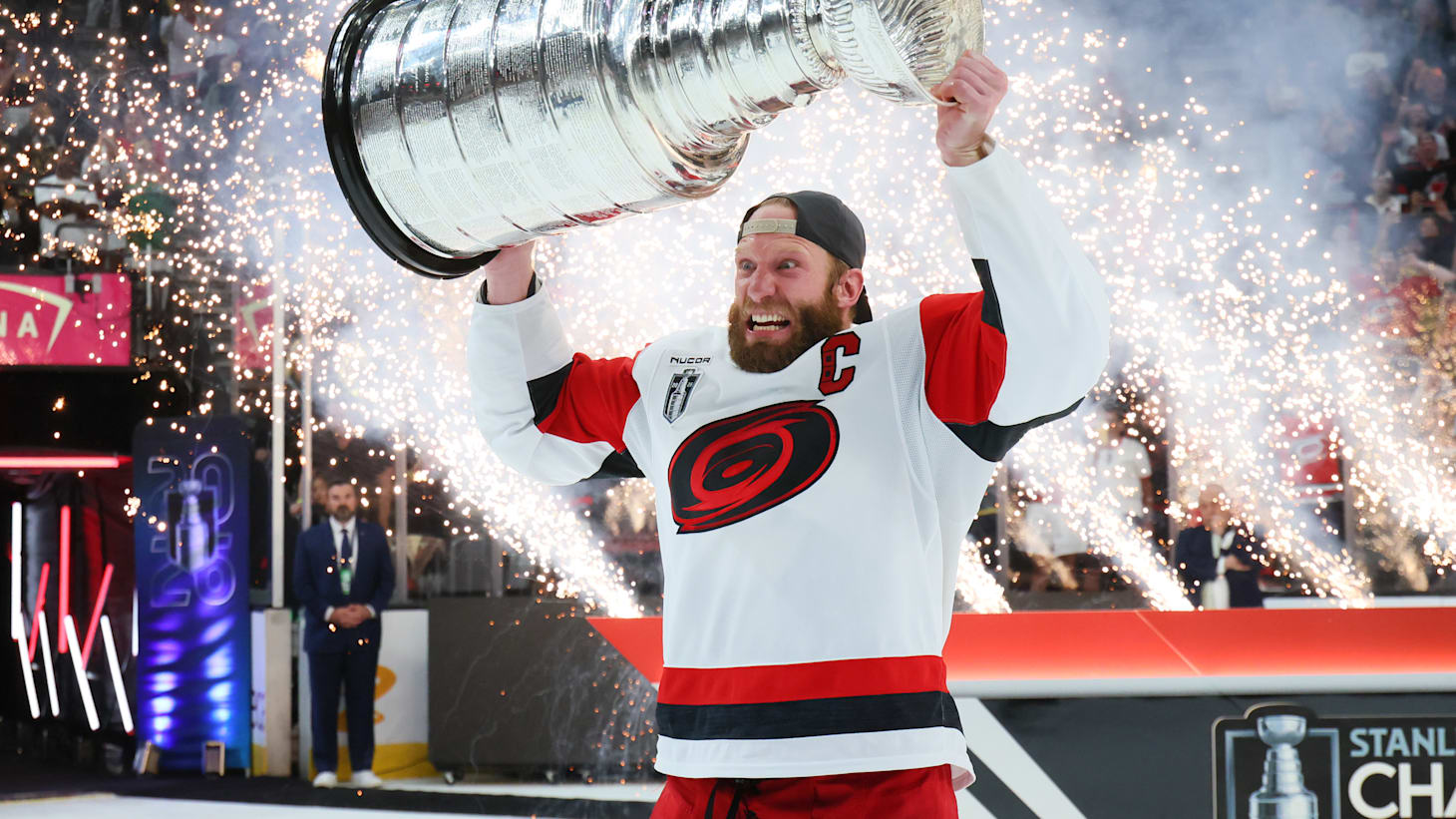
Congratulations to the Carolina Hurricanes, who won the Stanley Cup last night, defeating the Vegas Golden Knights in Game 6 of the Finals.

Teams ranked by their most recent title; then, for teams that have not won the title, fewest seasons without one:

1. Current Champions, Carolina Hurricanes, 2026
2. 1 year, Florida Panthers, 2025
3. 3 years, Vegas Golden Knights, 2023
4. 4 years, Colorado Avalanche, 2022
5. 5 years, Tampa Bay Lightning, 2021
6. 7 years, St. Louis Blues, 2019
7. 8 years, Washington Capitals, 2018
8. 9 years, Pittsburgh Penguins, 2017
9. 11 years, Chicago Blackhawks, 2015
10. 12 years, Los Angeles Kings, 2014
11. 15 years, Boston Bruins, 2011
12. 18 years, Detroit Red Wings, 2008
13. 19 years, Anaheim Ducks, 2007
14. 23 years, New Jersey Devils, 2003 
15. 27 years, Dallas Stars, 1999
16. 32 years, New York Rangers, 1994 
17. 33 years, Montreal Canadiens, 1993
18. 36 years, Edmonton Oilers, 1990
19. 37 years, Calgary Flames, 1989
20. 43 years, New York Islanders, 1983
21. 51 years, Philadelphia Flyers, 1975
22. 59 years, Toronto Maple Leafs, 1967
23. Never in 5 years, Seattle Kraken, joined NHL in 2021
24. Never in 26 years, Minnesota Wild, joined NHL in 2000
25. Never in 26 years, Columbus Blue Jackets, joined NHL in 2000
26. Never in 27 years, Winnipeg Jets, founded as Atlanta Thrashers in 1999; their city last won the Stanley Cup in 1902
27. Never in 28 years, Nashville Predators, joined NHL in 1998
28. Never in 34 years, Ottawa Senators, joined NHL in 1992; the original Senators last won the Stanley Cup in 1927
29. Never in 35 years, San Jose Sharks, joined NHL in 1991
30. Never in 47 years, Utah Mammoth, founded in WHA in 1972 as Winnipeg Jets, joined NHL in 1979
31. Never in 56 years, Vancouver Canucks, joined NHL in 1970; their city won the Stanley Cup in 1915
32. Never in 56 years, Buffalo Sabres, joined NHL in 1970

If I were ranking the teams that have not yet won titles by how close they have come:

23. Utah Mammoth, last won WHA Championship in 1979 as (original) Winnipeg Jets
24. Nashville Predators, last reached Finals in 2017
25. San Jose Sharks, last reached Finals in 2016
26. Vancouver Canucks, last reached Finals in 2011
27. Ottawa Senators, last reached Finals in 2007
28. Buffalo Sabres, last reached Finals in 1999
29. Winnipeg Jets (new version), best finish is in Conference Finals in 2018
30. Minnesota Wild, best finish is in Conference Finals in 2003
31. Seattle Kraken, best finish is in Conference Semifinals in 2023
32. Columbus Blue Jackets, best finish is in Conference Semifinals, last in 2020

Thursday, May 28, 2026

Claude Lemieux, 1965-2026

For the first time, a member of one of the New Jersey Devils' Stanley Cup-winning teams has died. And he was my favorite hockey player of all time.

Claude Percy Lemieux -- sure doesn't sound like the name of a tough guy, but he was one -- was born on July 16, 1965 in Buckingham, Quebec, a city that has since been amalgamated into the larger city of Gatineau, across the Ottawa River from Ottawa, Ontario, the capital of Canada. He grew up in Mont-Laurier, Quebec, about 110 miles north of Ottawa, and 140 miles northeast of Montreal.

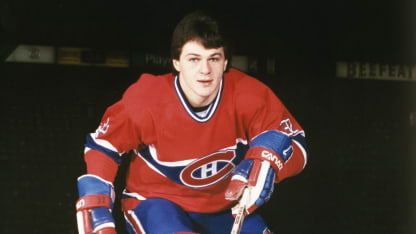
A right wing, he was drafted by his home-Province Montreal Canadiens in 1983, and made his NHL debut on October 13 of that year, wearing uniform Number 32 in a 4-2 loss to the Boston Bruins at the Boston Garden. In the 1985-86 season, he played only 10 regular-season games for the Canadiens, but starred in their run to the Stanley Cup, scoring 10 goals with 6 assists.
That convinced the organization to give him a better chance, and he scored 27, 31 and 29 goals in the next 3 seasons, helping Les Habitantes reach the Stanley Cup Finals again in 1989. He was also a member of the victorious Team Canada at the 1987 Canada Cup.

He tailed off a bit in 1989-90, and the Habs traded him to the Devils for Sylvain Turgeon. This turned out to be a bad trade for Montreal, as Turgeon did nothing for them, and they left him unprotected in the 1992 expansion draft. He was chosen by the Ottawa Senators, and the Canadiens won the Cup again in 1993, without him.

The Devils were a team on the rise, and soon had a strong Canadiens connection. In addition to Lemieux, they had another 1986 Cup-winner, scoring right wing Stéphane Richer; a tough left wing, Tom Chorske; goaltender Martin Brodeur, son of Denis Brodeur, team photographer for the Canadiens and the Montreal Expos; head coach Jacques Lemaire, who'd won 8 Cups as a Canadiens center; and assistant coach Larry Robinson, who'd won 6 Cups as a Canadiens defenseman.

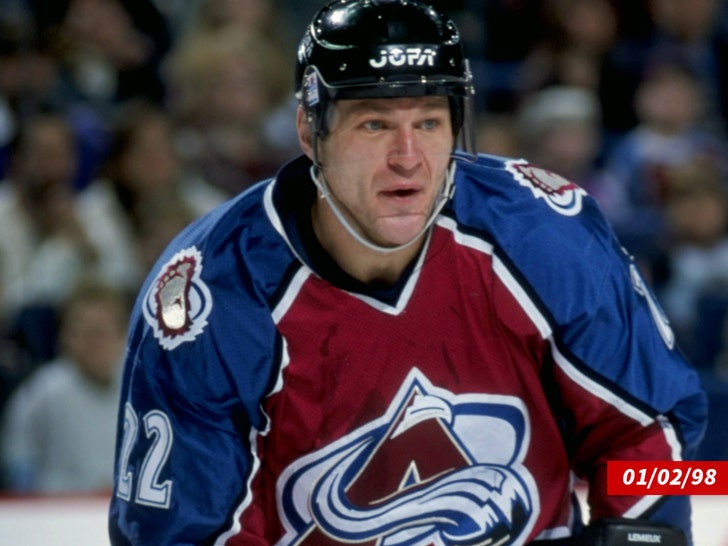
Having switched to Number 22, Claude scored 30 goals in 1990-91, 41 in 1991-92, and 30 plus 51 assists in 1992-93. He slumped again in 1993-94, but helped the Devils reach the Eastern Conference Finals. In 1992 and 1994, they lost to their geographic rivals, the New York Rangers.

Lemieux was a fighter. He was never afraid to face an opponent, and earned the nickname "Le Pest." But he wasn't exactly the most courageous of men. The one and only time an event was held at the Boston Garden with me as a paying customer came on March 2, 1995. Bruin star Cam Neely had recently returned from an awful knee injury, and Claudie crashed him into the boards. The home crowd lost their minds, and booed vociferously. Neely started throwing punches, and Lemieux "turtled": He dropped to his knees and covered his head. The booing got worse. The referee threw Neely out of the game, and gave Claudie no penalty. The Bruin fans went from angry to frothing-at-the-mouth rage. The game was a disaster: The Bruins won, 7-2.

But Lemieux always seemed to play better against the Rangers, and against the Devils' other rivals-by-geography, the Philadelphia Flyers. Indicative of this was the strike shortened 1994-95 season. In 45 regular-season games, he scored only 6 goals. But something happened once the Playoffs began.

In the Conference Quarterfinals against the Bruins, Lemieux scored 2 goals in Game 1, and the Devils won in 5 games. In the Conference Semifinals against the Pittsburgh Penguins, he scored a goal in Game 1, but the Devils lost; but they won the next 4 games, with Lemieux scoring twice in Game 2, once in Game 3, and 2 in the clinching Game 5. It was 8 goals in 10 games.

In the Conference Finals against the Flyers, he scored in Game 3, which the Devils lost. But in Game 5 at The Spectrum in Philadelphia, with 44 seconds left and the game tied, he fired a wobbly 65-foot shot that got past Flyer goaltender Ron Hextall, and the Devils won, 3-2. He scored again in Game 6, and the Devils clinched, and reached the Stanley Cup Finals for the 1st time. It was 11 goals in 16 games.

In Game 1 of the Finals, against the Detroit Red Wings at the Joe Louis Arena in Detroit, he scored the go-ahead goal, what turned out to be the winning goal, early in the 3rd period. He scored again in Game 3, and the Devils swept the Wings in 4 straight. It was 13 goals in 20 games, and he was awarded the Conn Smythe Trophy as the Most Valuable Player of the Playoffs.

The Devils were only a 13-year-old franchise, but they had won their 1st title, and had begun to develop their own legends. And Claude Lemieux was one of them.

And yet, just before the start of the 1995-96 season, he was traded -- twice. The Devils traded him to the New York Islanders for Steve Thomas. This was a bad trade for the Devils, as Thomas did little for them. And then, before the ink was dry on the deal, the Isles traded him to the Colorado Avalanche for Wendel Clark. This was 2 bad trades for the Isles, as Lemieux literally did nothing for them, and Clark didn't do much more.

Lemieux did something for the Avs, who had been the Quebec Nordiques since 1972, but couldn't get a state-of-the-art arena, something Denver promised their owners, and got for them in 1999. He scored 39 goals with 32 assists in 1995-96, helping them to reach the Western Conference Finals against the Wings.
In Game 6, Lemieux checked Kris Draper into the boards. Draper suffered a concussion, and his nose, cheekbone and jaw were broken, leading to him having reconstructive surgery on his face and his jaw wired shut for several weeks. This incident sparked a bitter rivalry between the two teams. The NHL suspended Lemieux for 2 games, and most observers thought it wasn't enough.

The Avs won, to clinch a place in the Finals, and there was a postgame handshake. Dino Ciccarelli, a future Hall-of-Famer who was making what turned out to be his last serious run at the Cup, said, "I can't believe I shook this guy's friggin' hand after the game. That pisses me right off."

The Avs won the Cup. This made Lemieux only the 8th player to win the Cup with at least 3 different teams, following Jack Marshall, Hap Holmes, Frank Foyston, Jack Walker, Gord Pettinger, Al Arbour (yes, the Islander coach) and Larry Hillman. He has since been followed by Mike Keane, Joe Nieuwendyk and Mark Recchi, making 11. Holmes is the only player to have done it with 4 different teams.

So if you're a Red Wings fan reading this, and you still hate Claudie for what he did to Draper, I understand, and I won't tell you to get over it. But I still love the guy. Interestingly, when Budd Lynch introduced Claudie before Game 1 of the 1995 Finals, nearly a year before the unwarranted hit on Draper, Claudie still got the hell booed out of him, since he was already known as a dirty player.

Early in the 1999-2000 season, the Avs traded him, along with 2 draft picks, to the Devils for Brian Rolston and a draft pick. He played another 70 games for the Devils, scoring 17 goals, played in all 23 Playoff games, and scored 4 goals with 6 assists, to help them win another Cup.

This made him only the 5th player to win Cups in 3 different decades, following Dit Clapper, Maurice and Henri Richard, and Jean Béliveau. He has been followed by Patrick Roy, Nieuwendyk and Recchi, making 8.

For the next season, he signed with the team then known as the Phoenix Coyotes. He remained with them until the middle of the 2003 season, when he was traded to the Dallas Stars. He was released after that season, and it looked like his career was over. But he signed with Zug of Switzerland's league, and finished the season with them.

In 2005, he was named president of the minor-league Phoenix RoadRunners. In 2007, he left, and played on the Spike TV show Pros vs. Joes. His competitiveness was re-sparked, and he signed with the China Sharks of Asia League Ice Hockey. After 2 games, the Worcester Sharks of the American Hockey League signed him. After 23 games, he was promoted to the San Jose Sharks, and 6 years after his last previous NHL game, he played 18 more, at age 43, and hung up his skates.

He scored 379 goals with 407 assists, for 786 points. After his retirement, he became an NHLPA-certified player agent. He was not related to Penguins legend Mario Lemieux, but he was the brother of Jocelyn Lemieux, briefly a teammate in Montreal, who played 12 seasons in the NHL. He was married twice, with 3 sons and a daughter. One of his sons, Brendan Lemieux, played 7 seasons in the NHL, with the Rangers, the Flyers, the Winnipeg Jets, the Los Angeles Kings and the Carolina Hurricanes.

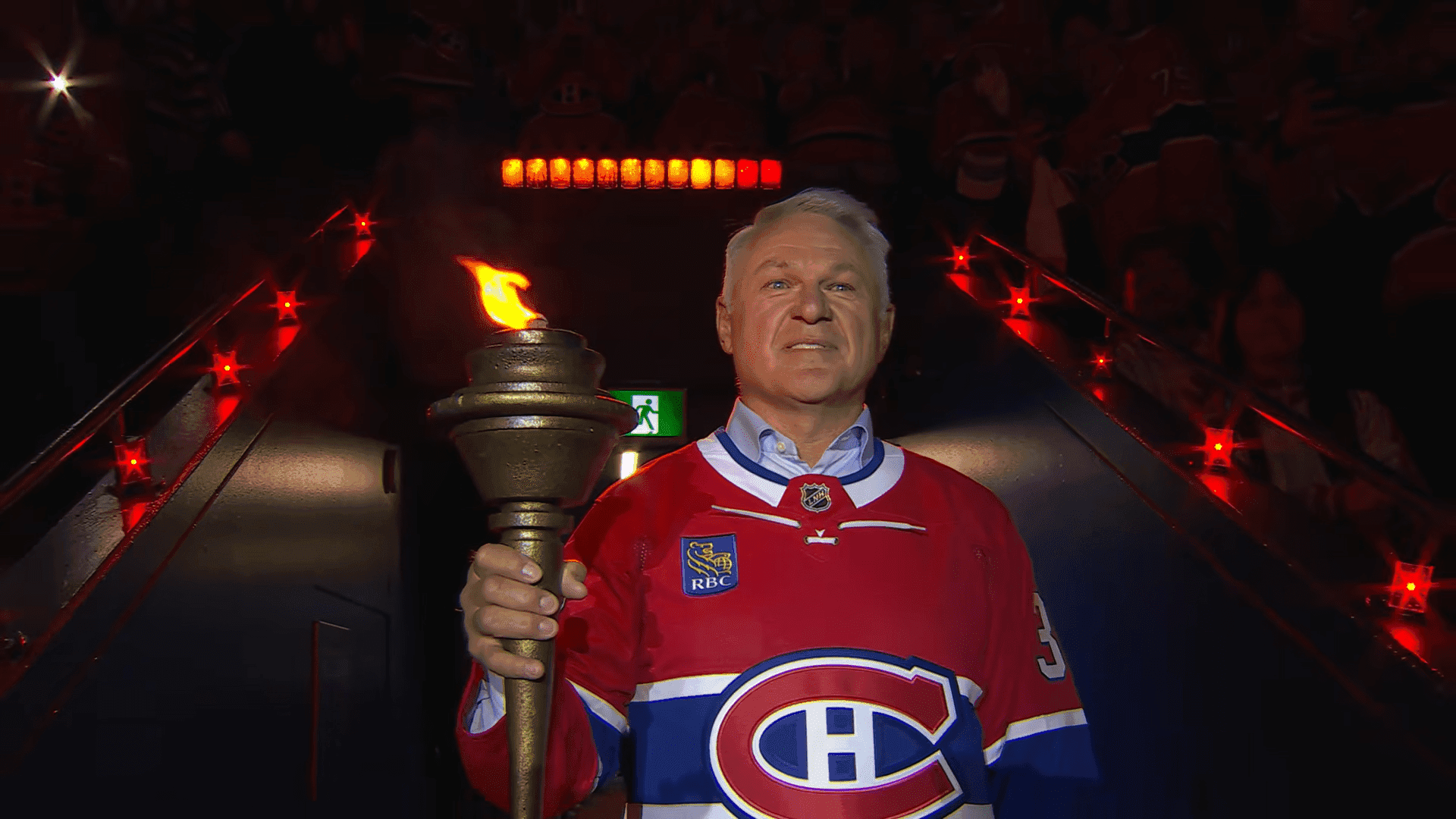
Since he was still an active player in March 1996, when the Montreal Forum closed and the Bell Centre opened, he was not among the former Canadiens stars who participated in the ceremonies. But 3 nights ago, he participated in a ceremony that has become one of the Canadiens' traditions: Before a home Playoff game, a former star will carry a lit torch to center ice. Wearing his former Number 32 jersey, Lemieux carried the torch before Game 3 of the Eastern Conference Finals at the Bell Centre. But they lost, 3-2 in overtime to the Carolina Hurricanes.
Today, May 28, 2026, Claude Lemieux was found dead by one of his sons, in the rear warehouse of a furniture store he owned in the Miami suburb of Lake Park, Florida. He was 60 years old. Local authorities determined that he died by suicide, though they have not released the method.

Given his aggressiveness, it is possible that he had been to suffer from chronic traumatic encephalopathy (CTE). Like the NFL, and soccer with its many headings of the ball, hockey has begun to face serious allegations of repeated head trauma leading players to experience memory loss, other loss of cognitive function, or other physical difficulty, including from one of Lemieux's 1995 Devils teammates, Mike Peluso.

The families of Chicago Blackhawks Hall-of-Famers Bobby Hull and Stan Mikita have also alleged that they suffered from CTE. It's also been alleged for Canadiens legend Henri Richard.

Claude Lemieux was a hero to some, a villain to others. He is now a tragedy to all.

Saturday, May 16, 2026

May 16, 1976: Montreal Produces Hockey's Triumph of Skill Over Violence

Left to right: Serge Savard (18), Larry Robinson (19),
Yvan Cournoyer (12), Guy Lapointe (5), Jacques Lemaire (25).
This looks more like the Boston Garden than The Spectrum,
So it could be the 1977 or the 1978 clincher, instead of 1976.

May 16, 1976, 50 years ago: The Montreal Canadiens beat the Philadelphia Flyers, 5-3 at The Spectrum, and clinch a 4-game sweep for the Stanley Cup, defeating the 2-time defending Champions. The slogan "Hat Trick in '76" did not come true for the "Broad Street Bullies."

Coached by Scotty Bowman, the Canadiens had gone 12-1 during the Playoffs. That remains the best postseason record since the 1967 expansion. (The 1960 Canadiens and the 1952 Detroit Red Wings went 8-0 -- in the Wings' case, the 8 wins needed inspiring the creation of the throwing of the 8-legged octopus onto the ice.)

The Canadiens had 9 Hall-of-Famers on their roster: Goaltender Ken Dryden; defensemen Guy Lapointe, Serge Savard and Larry Robinson; center Jacques Lemaire; left wings Steve Shutt and Bob Gainey; and right wings Yvan Cournoyer (their Captain) and the man who would go on to become the franchise's all-time leading scorer, Guy Lafleur. Arguably, they should be joined by centers Doug Risebrough and Doug Jarvis (who would eventually hold the NHL's record for consecutive games played, since broken). 

They would make this the 1st of 4 straight Stanley Cups for Les Habitantes, and help the NHL move away from the era epitomized by the Flyers and Boston's "Big Bad Bruins" into one of style and flair, later exemplified in the 1980s by the Edmonton Oilers. In between those 2 dynasties, the New York Islanders would combine the formats.

*

May 16, 1976 was a Sunday. The World Hockey Association Playoffs were a little behind the NHL. The Houston Aeros, 2-time defending WHA Champions, beat the New England Whalers, 2-0 at The Summit in Houston, to reach the Finals for the 3rd straight season. But they were swept in 4 straight by the Winnipeg Jets. (The Summit is now the Central Campus of televangelist Joel Osteen's Lakewood Church.)

Tuesday, April 21, 2026

April 21, 1951: The Bill Barilko Game and the Rochester Royals' Title

April 21, 1951, 75 years ago: Bill Barilko becomes hockey's version of Bobby Thomson -- nearly 6 months before Thomson becomes baseball's version of Barilko.

Barilko was a 24-year-old defenseman of Ukrainian descent, from the mining town of Timmins, Ontario. He had already helped the Toronto Maple Leafs win the Stanley Cup in 1947, 1948 and 1949. The 1951 Stanley Cup Finals against the Montreal Canadiens was unusual in that every game went to overtime.

Game 1, at Maple Leaf Gardens in Toronto, was won 5 minutes and 51 seconds in, on a goal by Sid Smith. Game 2 in Toronto was won after 2:55 by the Canadiens' Maurice Richard, a.k.a. "The Rocket," the greatest and most popular player in the sport at the time. The action shifted to the Montreal Forum, but the Leafs won Game 3 4:47 into overtime on a goal by Ted Kennedy. Then they won Game 4 5:15 into overtime on a goal by Harry Watson.

(Unlike the longtime U.S. Senator from Massachusetts and brother of President John F. Kennedy, who was one of many men named Edward who ended up being nicknamed "Ted" or "Teddy," the man who scored the Game 3 winner was born Theodore Samuel Kennedy, was nicknamed "Teeder," and was the Leafs' Captain at the time.)

The series returned to Toronto for Game 5. There was no scoring in the 1st period. Richard scored midway through the 2nd period, but Tod Sloan tied it back up. Paul Meger gave the Canadiens a 2-1 lead less than 5 minutes into the 3rd period, but Sloan equalized with just 32 seconds left in regulation.

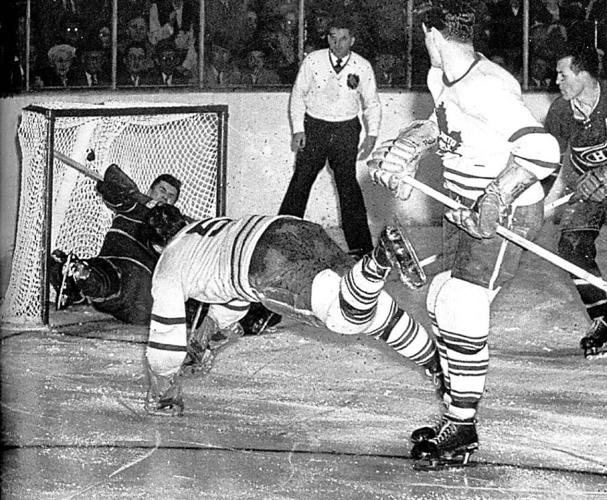
At the 2:53 mark of overtime, Barilko, much like Bobby Orr would be in overtime of Game 4 of the 1970 Finals, was tripped up, but still managed to get a shot off. It went past Canadien goalie Gerry McNeil, and the Leafs won the game 3-2, and the series 4-1.

"It was as clean as a hound's tooth," Toronto Daily Star writer Red Burnett said. "McNeil never had a chance." Hockey fans tend to blame goaltenders who give up big goals considerably less than baseball fans blame pitchers who give up big home runs. And so, McNeill, who would be the starting goalie when the Habs won the Cup in 1953, before giving way to Jacques Plante, would not live in infamy. He lived until 2004.
The most familiar photo of the goal, taken by Nat Turofsky

It was the Leafs' 4th Cup in the last 5 years, and their 10th overall. At the time, no other team had more: The Canadiens had 6.
Another angle, showing Barilko's face,
and that of Maurice Richard, who clearly knows it's over.

The Leafs were a great team, with 4 players who went on to be elected to the Hockey Hall of Fame: Centers Kennedy and Max Bentley, defenseman Fern Flaman, and goaltender Walter "Turk" Broda. Barilko could have become another of them: He was a classic "defensive defenseman," a hard checker who enjoyed rough play. He wasn't regarded as dirty, so no one begrudged him his status as a national hero across Canada -- at a time when there were only 6 teams in the National Hockey League, and just 2 of them in Canada, the Leafs and the Canadiens.

A little over 4 months after his epic goal, Barilko went on a fishing trip with his dentist, Henry Hudson. Hudson was a licensed pilot, and he took Barilko on a Fairchild 24 floatplane, from Timmins to Waskaganish, Quebec, on James Bay.

There was some irony in this. James Bay is an extension of Hudson Bay, where an earlier Henry Hudson, the discoverer of the river in New York that would be named for him, disappeared in June 1611, on a voyage to find the Northwest Passage.

Barilko and Hudson caught a few fish, and, the weekend over, on August 26, 1951, they boarded the Fairchild. Hudson headed it back for Timmins, about 400 miles away.

They never arrived. Plane disappearances in the northern reaches of North America were nothing new. The last attempt at the 1st nonstop flight between the European and North American continents before Charles Lindbergh successfully did it took off from France, and was believed to have been crashed in the woods of northern Maine, or the Canadian Province of New Brunswick, and has still never been found. But this was different: Bill Barilko, the man who had won the most recent Stanley Cup, a new national hero, was missing.

Barilko did not live long enough to build a Hall of Fame career. But the Leafs did retire his Number 5. Or, at least, they thought they had: In 1992, someone working in the front office discovered that, while no player had worn the uniform number in 41 years, there had never been an official retirement ceremony for it. One was held on October 17, 1992.

The Leafs stopped winning. Over the next 7 seasons, of the 14 available places in the Stanley Cup Finals, 7 were won by the Canadiens (in other words, they made it every year), 4 by the Detroit Red Wings, and 3 by the Boston Bruins. The Leafs rebuilt, and got back to the Finals in 1959 and 1960, but lost to the Canadiens both times.

On April 22, 1962, the Leafs won the Cup again, dethroning the Chicago Black Hawks in the Finals. Had Barilko not died, he would have been 35 years old, and could still have been playing. Certainly, Leafs head coach and general manager George "Punch" Imlach was known to favor veterans.

Just 45 days after that Cup win, on June 6, helicopter pilot Ron Boyd was flying about 60 miles north of Cochrane, Ontario, when he spotted the wreckage of a plane. He reported it, and it was discovered to be Dr. Henry Hudson's Fairchild 24. His body, and Barilko's, were remarkably well preserved in the cold after 11 years. The wreck and the records were examined, and it was determined that Hudson's inexperience as a pilot, too much cargo (too many fish?), and bad weather doomed the plane.

There was something poetic about Barilko being found only after the Leafs won the Cup again, beginning a run of 3 straight, and 4 in 7 years -- at which point Barilko would have been 40 and, knowing Imlach, could still have been getting game time.

But since the last of those Cups, in 1967, they have never even reached the Stanley Cup Finals again. This time, there was no harbinger of trouble, like a plane crash. It was just bad management.

*

April 21, 1951 was a Saturday. The NBA Championship was also decided that day, and also in overtime, but in a Game 7. The Rochester Royals defeated the New York Knicks, 79-75 at the Edgerton Park Arena in Rochester, New York.
Left to right: Bill Calhoun, Bob Davies, Paul Noel, Joe McNamee,
Arnie Risen, Jack Coleman, Arnie Johnson and Bobby Wanzer

For the Knicks: Max Zaslofsky and Vince Boryla each scored 16 points, Harry Gallatin 12, Nat "Sweetwater" Clifton (the 1st black player signed to an NBA contract) and Connie Simmons 11, Ernie Vandeweghe (father of future NBA player Kiki) 5, Dick McGuire (brother of Hall of Fame college coach and announcer Al) 4, and Ray Lumpp none.

It wasn't enough, as Arnie Risen scored 24, and former Seton Hall star Bob Davies scored 20. Scoring 2 points for the Royals in this game was William "Red" Holzman. Ed Mikan, brother of Minneapolis Lakers star George, was on the Royals' roster at the start of the season, but was traded.

The Knicks would win 3 straight NBA Eastern Division Championships, but lose the Finals all 3 times: This one to the Royals, and 1952 and '53 to the Lakers. It would take them until 1970 to win their 1st title, with Holzman as their coach. They won again in 1973. But haven't won one since, also losing in the Finals in 1972, 1994 and 1999.

At least the Knicks still exist. The Royals don't, at least not under that name. Rochester proved too small a market for a growing sports league. In 1957, they moved, becoming the Cincinnati Royals. In 1972, they moved again. Since Kansas City already had a baseball team called the Royals, they became the Kansas City Kings. And in 1985, they became the Sacramento Kings. In the early 2010s, they came close to moving yet again, to Anaheim and to Seattle, before the building of their new arena was negotiated. Come to think of it, Minneapolis lost the Lakers to Los Angeles in 1960.

Nevertheless, at their arena, the Golden 1 Center, the Kings still hang a banner proclaiming themselves to be the 1951 NBA Champions.
Davies, Wanzer, Risen, and Holzman as a coach have been elected to the Basketball Hall of Fame. The Kings retired Davies' Number 11. Nevertheless, when the NBA named its 50th Anniversary 50 Greatest Players in 1996, the '51 Royals were 1 of 4 teams with no representatives, the others being the 1947 Philadelphia Warriors, the 1948 Baltimore Bullets, and the 1979 Seattle SuperSonics.

Also on that day, actor Tony Danza was born.

Friday, April 10, 2026

April 10, 1956: Nat King Cole Is Assaulted Onstage In Birmingham

April 10, 1956, 70 years ago: Nat King Cole, one of the most popular singers in America, is assaulted in mid-concert.

America's favorite black singer -- white adults weren't ready to accept Chuck Berry, Fats Domino and Little Richard yet -- was playing piano and singing with the Ted Heath Orchestra at the Municipal Auditorium in Birmingham, Alabama.

Cole sat at his piano before 4,000 people -- all white, as State law required separate concerts for white and black audiences. Three songs in, three white men rushed the stage and attacked him. He fell backward. His suit was torn, and his body was bruised. The audience screamed as police flooded the stage in chaos. Behind the curtain, the orchestra played "God Save the Queen," a desperate attempt to restore order while one of the greatest voices in America lay shaken backstage.

When Cole finally returned to the microphone, the crowd rose as one. They applauded for 10 straight minutes. Many were crying. Quietly, calmly, he said, "I just came here to entertain you. That was what I thought you wanted. I was born in Alabama."

He couldn't finish the show. But later that night -- injured, shaken, and still sore -- Nat King Cole kept his promise: He returned to the theater, and performed for the black audience waiting for their edition of the segregated concert.

The next day, reporters asked how he felt. "I didn’t think I had an enemy in Alabama," he said. "I''m not mad at a soul."

That grace unsettled people. Some civil rights leaders wanted anger. They wanted fire. They wanted confrontation. Cole chose something else.

Six months later, he made history: On November 5, 1956, The Nat King Cole Show premiered on NBC. It was the first national television program hosted by a Black American. He performed alongside legends like Ella Fitzgerald and Harry Belafonte. He sang. He played. He smiled with dignity in living rooms that had never imagined a Black man at their center. The ratings were strong. The reviews were glowing.

And still, not one major advertiser would sponsor the show. Corporations feared backlash. Executives worried about Southern customers. So for 13 months, NBC paid for the program alone, hoping sponsors would eventually step forward. They never did.

When the show ended in December 1957, Cole finally named the truth: "Madison Avenue is afraid of the dark."

In 1965, Nat King Cole died of lung cancer, at only 45 years old. He had lived long enough to see the March On Washington and the Civil Rights Act of 1964, but not the Voting Rights Act of 1965.

He understood exactly what he had done: "For thirteen months, I was the Jackie Robinson of television."

The Municipal Auditorium, built in 1924, still stands, at 1930 Reverend Abraham Woods Jr. Boulevard, formerly 8th Avenue, facing Linn Park, and across Interstate 20/59 from the city's main arena, the Birmingham-Jefferson Civic Center.
It was renamed the Boutwell Auditorium, in memory of Albert Boutwell, elected Mayor in 1963 as a rejection of racist Police Commissioner Eugene "Bull" Connor. He had previously been Lieutenant Governor and a State Senator. He was defeated for re-election in 1967, and died in 1978.

*

That same night, April 10, 1956, the Montreal Canadiens won the Stanley Cup, beating the team that had beaten them in the last 2 Stanley Cup Finals, the Detroit Red Wings. The Habs won, 3-1 at the Montreal Forum, to win Game 5 and take the 1st of what turned out to be 5 straight Stanley Cups.

Three days earlier, on April 7, the Philadelphia Warriors won Game 5 of the NBA Finals, beating the Fort Wayne Pistons, to win the NBA Championship.

Friday, March 27, 2026

March 27, 1926: The Death of Georges Vézina

March 27, 1926, 100 years ago: Georges Vézina dies of tuberculosis in his hometown of Chicoutimi, Quebec, Canada. The greatest goaltender the sport of hockey had yet seen, he was only 39 years old.

Joseph Georges Gonzague Vézina was born on January 21, 1887 in Chicoutimi, since absorbed into the city of Saguenay, in the Saguenay–Lac-Saint-Jean region of Quebec, 125 miles north of Quebec City and nearly 300 miles northeast of Montreal. He dropped out of school at age 14 to work in his father's bakery.

In 1908, he married Marie-Adélaïde-Stella Morin. A story spread by his later boss, Montreal Canadiens part-owner Leo Dandurand, said that the couple had 22 children, and that Georges spoke no English. Although both parts were plausible -- the Catholic Church in Quebec heavily encouraged big families, to overcome the Anglophone dominance of their Province through "the revenge of the cradles," and rural Quebec was almost entirely Francophone -- neither part was true: They had just 2 children, and Georges did speak some English.

At the time, transportation and media links being what they were, Chicoutimi was so remote that there was only one way for a player for the Chicoutimi Hockey Club, nicknamed the Saguenéens, could get noticed by those larger cities, and that was to tour the Province of Quebec, playing exhibition games.

The Montreal Canadiens were founded in 1909, and, in their 1st season, on February 17, 1910, they played the Chicoutimi Hockey Club. They lost, and their goaltender, Joseph Cattarinich (later to be a part-owner with Dandurand) suggested that they offer Vézina a tryout. Vézina refused. Later in the year, the teams played each other again, and Chicoutimi won again. Again, the Canadiens offered Vézina a tryout. He accepted on the condition that they also try out his brother Pierre. They did, although Pierre didn't make the team. Georges did, and made his professional debut on December 31, 1910, a 5-3 loss to the Ottawa Silver Seven (the original Ottawa Senators).

It took a while for the Canadiens to get good. In 1914, they finished tied for 1st in the National Hockey Association, with the Toronto Blueshirts, and lost a Playoff for the title and the right to play the Pacific Coast Hockey Association Champions for the Stanley Cup. The Blueshirts ended up beating the Victoria Aristocrats.

In 1916, the Canadiens won the NHA title outright, and beat the PCHA Champion Portland Rosebuds for their 1st Stanley Cup. This was also the 1st time an American-based team had played for the Cup. In 1917, the Canadiens were NHA Champions again, but lost the Stanley Cup Finals to the Seattle Metropolitans, the 1st U.S. team to win the Cup.

The Canadiens joined the new National Hockey League for the 1917-18 season. On February 18, 1918, the Canadiens beat the Toronto Arenas, 9-0, and Vézina became the 1st NHL goalie to record a shutout. On December 28, 1918, again against Toronto, he became the 1st NHL goalie to be credited with an assist, when Édouard "Newsy" Lalonde, the Canadiens' best attacking player, took a rebound from one of his saves, took the puck up the ice, and scored. The Canadiens won the NHL title, but the worldwide influenza epidemic rebounded in the Spring of 1919, killing Canadiens defenseman Joe Hall, and forcing the abandonment of the Finals between the Canadiens and the Metropolitans.

The Canadiens won the NHL Championship again in 1924, and beat the Vancouver Millionaires for their 2nd Cup. They won the NHL Championship again in 1925, but lost the Finals to the Victoria Cougars, Champions of what was now known as the Western Hockey League. The Cougars became the last team from outside the NHL to win the Cup, as the WHL collapsed after 1 more season, making the Cup an all-NHL affair.

From 1917 to 1925, in NHL play, Vézina won 103 games, lost 81, and had a goals-against average of 3.28. At the time, that was the lowest in the League's young history. What's more, he had played every minute of every game. The attempt to do so was not rare, but actually doing it was. In fact, the Canadiens hadn't played a league (NHA or NHL) game without him since December 1910 -- almost 15 full seasons. He was seen as unflappable on the ice, "cool as a cucumber," and was nicknamed "the Chicoutimi Cucumber."

But when he reported to training camp for the 1925-26 season, he was noticeably ill. He made no mention of it. The season opened on November 28, against an expansion team, the Pittsburgh Pirates. (Named for the city's baseball team, they only lasted through the 1930 season, and have no connection to the Pittsburgh Penguins.) In the intervening 6 weeks, he had lost 35 pounds. When he reported for the opening game, he had a fever of 102 degrees. He insisted upon playing.

He got through the 1st period without allowing a goal. But upon his return to the locker room, he began to vomit blood, a sure sign of tuberculosis. Today, it is curable with antibiotics; but, then, the treatments were not very effective. For the rest of the game, he was replaced by Alphonse Lacroix. Despite his French name, he was an American, and had played for the U.S. in the 1st Winter Olympics in Chamonix, France the year before. The Canadiens lost, 1-0.

Vézina never played again, and the Canadiens finished last in the NHL for 1925-26. Nevertheless, knowing that he was dying and the family couldn't afford his medical expenses otherwise, the team paid his full salary of $6,000 (Canadian). He died on March 27, 1926, just 39.

*

At the start of the 1926-27 season, the Canadiens donated the Vezina Trophy to the NHL, to be awarded to the goaltender of the team that allowed the fewest goals during the regular season. (Note that the Trophy's name does not have the accent over the E in "Vézina.") George Hainsworth, whom the Canadiens signed from the Saskatoon Crescents, one of the teams that went out of business with the Western Hockey League the season before, won the Trophy the 1st 2 times it was awarded.
In 1981, the NHL changed the format: The Vezina Trophy went to the winner of a poll for the best goalie of the year, while the Jennings Trophy was instituted, to go to the goalie with the fewest goals allowed.
Jacques Plante holds the record for most Vezina Trophies won: 7, 6 with the Canadiens and 1 with the St. Louis Blues. Although the Canadiens have retired some uniform numbers for more than one player, they have retired Number 1, the traditional number for a goalie, only for Plante, not for fellow Vezina Trophy winners Hainsworth, Bill Durnan, Charlie Hodge or Gump Worsley; nor for Vézina himself, who became the 1st NHL player to wear Number 1. (Later Canadiens' Vezina Trophy winners have not worn 1: Ken Dryden wore 29, Patrick Roy wore 33, José Théodore wore 60, and Carey Price wore 31.)

In 1945, Vézina and Charlie Gardiner of the Chicago Black Hawks, who also died while still an active player, became the 1st 2 goalies elected to the Hockey Hall of Fame. In 1965, his hometown of Chicoutimi recognized Vézina, as the 1st professional athlete to come from there, by renaming their arena the Centre Georges-Vézina.

In 1998, The Hockey News ranked Vézina 75th on their list of the 100 Greatest Players. In 2017, the NHL named its 100th Anniversary 100 Greatest Players. Vézina was the earliest player selected.

Wednesday, March 11, 2026

March 11, 1996: The Montreal Forum Closes

Five Montreal Canadiens legends. Left to right:
Guy Carbonneau, Guy Lafleur, Jean Béliveau,
Maurice Richard and Pierre Turgeon.

March 11, 1996, 30 years ago: The last hockey game is played at the Montreal Forum, the greatest of all hockey arenas.

It had opened on November 29, 1924. The Montreal Canadiens defeated the Toronto St. Patricks, the team that would become the Toronto Maple Leafs, 7-1. Billy Boucher scored the arena's 1st goal. He was 1 of 4 brothers in the NHL. Frank was the original star of the New York Rangers. Georges "Buck" Boucher starred for the Ottawa Senators. Frank and Buck both made the Hockey Hall of Fame. Billy was known for his rough play with the Canadiens, and Bobby Boucher (not to be confused with Adam Sandler's character in The Waterboy) barely played in the NHL, also for the Canadiens.
Originally, the Forum wasn't meant to be the Canadiens' home. It was meant to be the home of the Montreal Maroons, a newly-founded team, while the Canadiens continued to play home games at the Mount-Royal Arena. The Maroons' 1st game at the Forum came on December 3, but they lost to the Hamilton Tigers, 2-0.

The Maroons won the Stanley Cup in 1926. For the next season, the Canadiens moved in, and the Forum was busier than ever: Its 9,300 seats played host to the Canadiens or the Maroons every Thursday and Saturday, the Quebec Senior Hockey League on Wednesdays and Saturdays, the Quebec Junior Hockey League on Mondays, the Bank League on Tuesdays, and the Railways and Telephone League on Fridays.

The Canadiens' famed "CH" logo has confused people for over a century. It is short for the team's official name, le Club de hockey Canadien. Madison Square Garden president George "Tex" Rickard, boxing promoter and founder of the Rangers, probably without knowing the truth, told a reporter that the "H" stood for "Habitant," a term used to describe farmers in early Quebec. Ever since, the Canadiens have been known as Les Habitants, or the Habs for short. The chant became, "Go, Habs, go!"

The Canadiens won the Stanley Cup in 1916 and 1924, before the Forum opened. They won it in 1930 and 1931, led by Howie Morenz, the man eventually known as "the Babe Ruth of Hockey." In 1937, Morenz broke his leg during a game, was hospitalized, and died of a heart attack in the hospital. A benefit game was played at the Forum, between a combined team of Canadiens and Maroons against a team made up of players from the rest of the League. A few months later, at the end of the 1937-38 season, the Maroons went out of business, due to the Great Depression.

In 1942, Maurice Richard arrived on the Canadiens' roster. "The Rocket" led them to 8 Stanley Cups. In 1953, along came Jean Béliveau, and he led them to 10. Richard's last 5 and Béliveau's 1st 5, from 1956 to 1960, were the only instance ever of 5 straight Cup wins.

They followed the 1955 season, in which an incident in Boston led to Richard's suspension for the Playoffs, which led to a riot inside the Forum that spilled out into the streets. French-Canadians, for whom the Canadiens, and Richard in particular, were a point of pride were angry at Clarence Campbell, the NHL's Anglophone President, suspending him, thinking he was trying to fix the Cup for an Anglophone team. Richard went on radio and told the fans to stop, that he would take his punishment, support the team to win the Cup this time, and play to win it in the future.

They lost the Finals to the Detroit Red Wings, but with Richard joined by his brother Henri, Béliveau, defenseman Doug Harvey and goalie Jacques Plante, won those next 5 Cups. Henri actually topped his brother, and Béliveau, by being a member of 11 Cup-winning teams. In all of North American sports, only Bill Russell of the NBA's Boston Celtics matched Henri Richard's 11 World Championships.

In 1968, the Forum was seriously renovated, and expanded, to a seating capacity of 16,259, plus 1,700 in standing room, for a total of 17,959. The support poles were removed. One thing that was retained: Whereas most arenas used a horn to signal the end of a period, the Forum used a high-pitched siren, which was kept after the move to the Bell Centre.
In 1972, the Forum hosted the 1st game of the 8-game "Summit Series" between Canada and the Soviet Union, which the Soviets won in a 7-3 shocker. Canada would win the series with dramatic wins in Moscow in Games 6, 7 and 8.

From 1976 to 1979, the Canadiens had a run of 4 straight Cups, led by a slew of Hall-of-Famers: Forwards Guy Lafleur, Yvan Cournoyer, Steve Shutt and Jacques Lemaire; defensemen Larry Robinson, Serge Savard and Guy Lapointe; and goaltender Ken Dryden.

Between them, Morenz, Maurice Richard, Béliveau and Lafleur were, effectively, the Mount Rushmore of hockey. They were a foursome that could only be matched in North American sports by the Yankees' Babe Ruth, Lou Gehrig, Joe DiMaggio and Mickey Mantle. (The Celtics? Bill Russell and Larry Bird, but who are the other two? Bob Cousy and John Havlicek? Not the same. No football team can match it, either.)

From 1956 to 1979, the Canadiens won 15 of the 24 available Stanley Cups. Their 1979 Cup was their 22nd, matching the Yankees for the most World Championships in North American sports. They won a 23rd in 1986 and a 24th in 1993. The Yankees didn't win their 24th World Series until 1998, surpassing them with a 25th in 1999.

In the 1976 Olympics, the Forum hosted basketball, boxing, volleyball, handball, and gymnastics, including Nadia Comaneci registering the 1st perfect 10 in Olympic history -- 7 of them.

The Beatles played the Forum on September 8, 1964. Other notable concerts there included Bob Dylan's Rolling Thunder Revue in 1975, Bob Marley in 1978, and, all in separate shows in 1981, Rush, Queen, and the Jacksons.

But there was only so much that could be done with a 1924-built arena. So construction began on a new arena. And on March 11, 1996, the Forum's final game was played, against the Dallas Stars. They were chosen as the opponent because their Captain was a former Canadiens' Captain, Guy Carbonneau. Maurice Richard, Béliveau and Lafleur participated in a ceremonial puck-drop with Carbonneau and Canadiens Captain Pierre Turgeon.

Turgeon opened the scoring, Mark Recchi made it 2-0, Derian Hatcher got the Stars on the board, Saku Koivu scored, and the last goal at the shrine of hockey was scored by... Andrei Kovalenko, a Russian right wing of Ukrainian descent, at the 13:56 mark of the 3rd period. Final score: Canadiens 4, Stars 1.

In the Canadiens' locker room, replicated at the new arena, the lockers were topped by the faces of the team's members of the Hockey Hall of Fame. On each side, one in English and one in French, are words from Canadian Army doctor John McCrae's World War I poem In Flanders Fields: "To you from failing hands we throw the torch; be yours to hold it high." (En Francais: Nos bras meurtris vous tendent le flambeau; a vous toujours de la porter bien haut.)

After the last game at the Forum, a symbolic torch was passed from the earliest living Canadiens Captain, Butch Bouchard, to each succeeding Captain: Bouchard, Maurice Richard, Jean Béliveau, Henri Richard, Yvan Cournoyer, Serge Savard, Bob Gainey, Carbonneau, up to Turgeon. (Kirk Muller and Mike Keane, each serving as Captain between Carbonneau and Turgeon, were playing with other teams, and thus unavailable.)

When Rocket Richard, the most popular player in Canadien history, was introduced, he got a standing ovation that brought him to tears. Given the uniform number he made famous, it was appropriate that it lasted for 9 minutes.

The Canadiens played an away game on March 13, a 1-1 draw with the New Jersey Devils at the Meadowlands, before going back to Montreal to play the 1st game at the Molson Centre, since renamed the Bell Centre, about a mile to the east, in Centre-Ville (downtown). In a special pregame ceremony, Turgeon took the torch from the last game, and lit a new one inside the arena. With Vincent Damphousse scoring the 1st and 3rd goals in the new arena, the Canadiens beat the New York Rangers, 4-2.

Over the next 4 years, a construction company owned by 1950s Canadien Hall-of-Famer Dickie Moore converted the Forum into retail space, including a shopping mall and a movie theater. A small bleacher section, and a bench with a statue of Maurice Richard, are roughly where center ice was. 

The repurposing of the Forum helped to inspire a similar construction job at Maple Leaf Gardens in Toronto, after it closed in 1999. Those arenas still stand, unlike the other "Original Six" arenas: The old Madison Square Garden was torn down in 1968, the Olympia Stadium in Detroit in 1986, the Chicago Stadium in 1995, and the Boston Garden in 1998.

Wednesday, December 31, 2025

December 31, 1975: Hockey's "Game of the Century"

Left to right: Peter Mahovlich,
Vladislav Tretiak, Yvan Cournoyer

December 31, 1975, 50 years ago: A hockey game is played at the Montreal Forum. It not only ends up getting labeled "The Game of the Century," but it is often credited with "saving the sport."

Super Series '76 was scheduled, with 2 Soviet club teams taking on NHL teams. One was the reigning Soviet Champions, CSKA Moscow. Translated into English, "CSKA" (pronounced "CHESS-kah") became "Central Sports Club of the Army." It was a team sponsored by the country's Red Army, and that's what they were called in the American media: "The Red Army." The other was Krylya Sovetov, translated as "Soviet Wings." This suggests they were sponsored by the country's Air Force. Not quite: They were sponsored by the country's aircraft builders.

The Super Series began on December 28, 1975, at Madison Square Garden, and the Red Army pounded the New York Rangers, 7-3. This was understandable: Despite celebrating their 50th Season, the Broadway Blueshirts were in total disarray, having recently fired their head coach and general manager, Emile Francis; and traded away several key players, including goaltender Eddie Giacomin, defenseman Brad Park and center Jean Ratelle. On December 29, the Soviet Wings beat the Pittsburgh Penguins, 7-4. Also not a surprise: The Pens were not a good team at the time.

The next game got people's attention, though: On New Year's Eve, at the Montreal Forum, the Red Army took on the Montreal Canadiens, a team loaded with future Hall-of-Famers, and one of the favorites to win the Stanley Cup.

Les Habitantes got on the board first, as Steve Shutt scored 3:10 into the game. At 7:25, Yvon Lambert made it 2-0. Boris Mikhailov scored for the Soviets, 3:54 into the 2nd period. At 9:39, Canadien Captain Yvan Cournoyer scored, to make it 3-1. So, of the Habs' 1st 3 goals, 2 were scored by men with the French variation on the Russian name "Ivan," meaning "John."

At 16:21, Valery Kharlamov scored, to make it 3-2. At 4:04 into the 3rd period, Boris Aleksandrov scored to tie the game. It ended in a 3-3 tie, and the entire game only saw 8 penalties called. Montreal goalie Ken Dryden saved 10 of 13 shots, while the Soviets' Vladislav Tretiak saved 35 of 38. Each man was reprising a fine performance in the 1972 "Summit Series." It has been called one of the greatest games in the sport's history.

"We outshot them 38 to 13, and that was pretty indicative of the way the game went," the Canadiens' Doug Risebrough said. "Vladislav Tretiak stole the game. He was just great. But the final score didn’t matter. Whether we won, lost or tied the game, we knew we had something special."

On January 4, 1976, an NHL team finally got a win. The Buffalo Sabres, who had advanced to the previous season's Stanley Cup Finals, beat the Wings, 12-6 at the Buffalo Memorial Auditorium. But the Russians re-established their dominance: On January 7, the Wings went into the Chicago Stadium, and beat the Chicago Black Hawks, 4-2.

On January 8, the Red Army went into the Boston Garden and, playing a Boston Bruins team with Bobby Orr injured, Phil Esposito traded to the Rangers for Park and Ratelle, and Park and Ratelle not really settled in yet, dominated the Beantown Brats, 5-2. And on January 10, the Wings went out to Long Island, and beat the rising New York Islanders, 2-1.

There was one game left to play. On January 11, the Red Army went into The Spectrum in Philadelphia, to play the Philadelphia Flyers, 2-time defending Stanley Cup Champions. And the Flyers, in the process of standing up for America, undid a lot of the undoing of the damage.

They had a well-balanced team led by Captain Bobby Clarke and goaltender Bernie Parent. But they were also the most violent team hockey had ever seen, known as "The Broad Street Bullies." Philadelphia fans, enjoying their image as a city for tough people, loved it. 

In the 1st period, Ed Van Impe was sent to the penalty box for hooking. When his penalty ended, with the score still 0-0, he went right at Kharlamov, and elbowed him in the head. The referee, Lloyd Gilmour, did not call a penalty. Red Army coach Konstantin Loktev decided that his players were not going to be treated fairly, and, with the clock reading 11:21 of the 1st period (in other words, 9:39 to go), pulled his team off the ice. Bob Cole, calling the game for CBC (the Canadian Broadcasting Corporation), yelled, "They're going home! They're going home!"

With the threat of losing their share of the gate receipts, the Russians were talked back into going back onto the ice, and the Flyers beat them, 4-1. Tretiak said the Flyers won by playing "rude hockey." Loktev called them "a bunch of animals." They were both right. But the Flyers had won, and came away believing the Russians were skilled but soft. They were right, too.

The Flyers made it 3 straight trips to the Stanley Cup Finals, and printed up memorabilia reading, "HAT TRICK IN '76." But the Canadiens put a stop to that, sweeping them in 4 straight, for the 1st of 4 straight Stanley Cups. They credited the New Year's Eve tie with the Soviets for sparking them into that dynasty. Dryden, Cournoyer, Shutt, Guy Lafleur, Jacques Lemaire, Bob Gainey, Serge Savard, Guy Lapointe and Larry Robinson would all be elected to the Hockey Hall of Fame.

Tuesday, December 2, 2025

December 2, 1995: The Curse of St. Patrick

December 2, 1995, 30 years ago: In an NHL "Original Six" matchup, the Detroit Red Wings beat the Montreal Canadiens, 11-1 at the Montreal Forum. Vyacheslav Kozlov scored 4 of those Detroit goals. Mark Recchi had the lone tally for the Habs.

This was the game in which Canadiens' goalie Patrick Roy was infamously hung out to dry by Canadiens management. General manager Réjean Houle told head coach Mario Tremblay to leave Roy in the net. He left Roy there until 11:57 of the 2nd period, after the Canadiens' defense, strong enough to win the Stanley Cup 2 1/2 years earlier, had collapsed to the point where he'd allowed 9 goals in that time.

Roy skated over to where team president Ronald Corey was sitting, and said, "It's my last game in Montreal." Roy was suspended, and, 4 days later, came "Le Trade": Roy and team Captain Mike Keane, a right wing who had also been feuding with Tremblay, were traded to the Colorado Avalanche for goaltender Jocelyn Thibault, left wing Martin Ručinský and right wing Andrei Kovalenko.

Ironically, until the season before, the Avalanche had been the Quebec Nordiques. Roy was from Quebec City, and had grown up loving the Nords and hating the Habs, before winning 3 Vezina Trophies and helping them win 3 Stanley Cups. 

He helped the Avs win the Cup that season, and again in 2001. In addition to the '96 Cup with the Avs, Keane would win the Cup again with the Dallas Stars in 1999. What did the Habs get? Not much, although Kovalenko did score the last goal at the Forum, as the team was preparing to move into the new Molson Centre (now the Bell Centre).

Canadien fans took Roy's side in the dispute. They let their displeasure be known all season long, including into the move, with the new arena having room for an additional 3,300 fans. It took until 2008 for Roy and the team to reconcile enough to get him to come for the retirement of his Number 33.

The winningest team in hockey history took until 2021 to return to the Stanley Cup Finals, losing it to the Tampa Bay Lightning. It is known as "The Curse of St. Patrick," even if, as he has proven in his subsequent coaching and management career, Roy is no saint. He had helped them win their 23rd and 24th Stanley Cups. They are still looking for their 25th.

Tuesday, November 4, 2025

Major League Sports Team Rankings (If You Count Moves)

Note: This includes Major League Baseball, the National Football League, the National Basketball Association, and the National Hockey League. If a team currently in one of those leagues won a title in a previous league, that gets counted as a trip to the Finals, but not as a World Championship. It does not include the Women's National Basketball Association, Major League Soccer, or the National Women's Soccer League.

But it counts all titles won by a franchise, even if it moved. Ties broken by titles won in another league (if any), then by whether a move was involved, then by most Finals appearances, then by Semifinals appearances, then by most recent World Championship.

1. New York Yankees, 27 World Series
2. Montreal Canadiens, 24 Stanley Cups
3. Boston Celtics, 18 NBA Championships
4. Los Angeles Lakers, 17 NBA Championships, including 5 as Minneapolis Lakers
5. Atlanta Braves, 16 MLB Championships including 13 as Boston Braves and 1 as Milwaukee Braves, including 4 World Series, 6 Finals, 13 Semifinals
6. Sacramento Athletics, 9 World Series including 5 as Philadelphia Athletics and 4 as Oakland Athletics, 15 Finals
7. St. Louis Cardinals, 13 MLB Championships including 11 World Series, 23 Finals
8. Toronto Maple Leafs, 13 Stanley Cups, 21 Finals
9. Green Bay Packers, 13 NFL Championships including 4 Super Bowls, 16 Finals
10. Los Angeles Dodgers, 12 MLB Championships including 4 as Brooklyn Dodgers, including 9 World Series
11. Detroit Red Wings, 11 Stanley Cups
12. Boston Red Sox, 10 World Series
13. San Francisco Giants, 10 MLB Championships including 7 as New York Giants, 8 World Series, 16 Finals, 18 Semifinals
14. Chicago Bears, 9 NFL Championships including 1 Super Bowl
15. New York Giants, 8 NFL Championships including 4 Super Bowls, 20 Finals
16. Chicago Cubs, 7 MLB Championships including 3 World Series, 17 Finals
17. Golden State Warriors, 7 NBA Championships including 2 as Philadelphia Warriors
18. Pittsburgh Pirates, 7 MLB Championships including 5 World Series, 9 Finals
19. Boston Bruins, 6 Stanley Cups, 20 Finals
20. Chicago Blackhawks, 6 Stanley Cups, 12 Finals
21. New England Patriots, 6 Super Bowls, 11 Finals
22. Pittsburgh Steelers, 6 Super Bowls, 8 Finals
23. Chicago Bulls, 6 NBA Championships, 6 Finals
24. Detroit Pistons, 5 World Championships including 3 NBA Championships and 2 NBL Championships as Fort Wayne Pistons, 11 Finals
25. Cincinnati Reds, 5 World Series, 10 Finals, 13 Semifinals
26. Washington Commanders, 5 NFL Championships including 3 Super Bowls as Washington Redskins, 11 Finals including 1 as Boston Redskins, 12 Semifinals, only the 12th as Washington Commanders 
27. Philadelphia Eagles, 5 NFL Championships including 2 Super Bowls, 9 Finals
28. Edmonton Oilers, 5 Stanley Cups, 9 Finals, 13 Semifinals
29. Dallas Cowboys, 5 Super Bowls, 8 Finals
30. San Francisco 49ers, 5 Super Bowls, 7 Finals
31. San Antonio Spurs, 5 NBA Championships, 6 Finals, 14 Semifinals
32. Pittsburgh Penguins, 5 Stanley Cups, 6 Finals, 10 Semifinals
33. Cleveland Browns, 4 NFL Championships, none of them Super Bowls, 12 Finals
34. New York Rangers, 4 Stanley Cups, 11 Finals
35. Kansas City Chiefs, 4 Super Bowls, 8 Finals including 1 AFL Championship as Dallas Texans
36. Detroit Tigers, 4 World Series, 7 Finals
37. Indianapolis Colts, 4 NFL Championships including 3 as Baltimore Colts, 2 Super Bowls, 6 Finals, 9 Semifinals
38. Detroit Lions, 4 NFL Championships, none of them Super Bowls, 5 Finals, 8 Semifinals including 1 as Portsmouth Spartans
39. New York Islanders, 4 Stanley Cups, 5 Finals, 7 Semifinals
40. Los Angeles Rams, 4 NFL Championships including 1 as Cleveland Rams and 1 as St. Louis Rams, including 2 Super Bowls, 10 Finals
41. Denver Broncos, 3 Super Bowls, 8 Finals
42. Baltimore Orioles, 3 World Series, 7 Finals including 1 as St. Louis Browns
43. Minnesota Twins, 3 World Series including 1 as Washington Senators, 6 Finals, 9 Semifinals
44. Miami Heat, 3 NBA Championships, 6 Finals, 8 Semifinals
45. Chicago White Sox, 3 World Series, 5 Finals, 7 Semifinals
46. New Jersey Devils, 3 Stanley Cups, 5 Finals, 7 Semifinals
47. Las Vegas Raiders, 3 NFL Championships, all as Super Bowls, 2 as Oakland Raiders and 1 as Los Angeles Raiders, 5 Finals
48. Tampa Bay Lightning, 3 Stanley Cups, 4 Finals
49. Colorado Avalanche, 3 Stanley Cups, 4 Finals including 1 WHA Championship at Quebec Nordiques
50. Philadelphia 76ers, 3 NBA Championships including 1 as Syracuse Nationals, 9 Finals, 12 Semifinals
51. Philadelphia Flyers, 2 Stanley Cups, 8 Finals
52. Philadelphia Phillies, 2 World Series, 7 Finals, 12 Semifinals
53. New York Knicks, 2 NBA Championships, 6 Finals, 15 Semifinals
54. Cleveland Guardians, 2 World Series, 6 Finals, 9 Semifinals, all but the 9th Semifinal as Cleveland Indians
55. Houston Astros, 2 World Series, 5 Finals, 11 Semifinals
56. New York Mets, 2 World Series, 5 Finals, 9 Semifinals
57. Oklahoma City Thunder, 2 NBA Championships including 1 as Seattle SuperSonics, 5 Finals, 8 Semifinals
58. Miami Dolphins, 2 Super Bowls, 5 Finals, 7 Semifinals
59. Kansas City Royals, 2 World Series, 4 Finals, 8 Semifinals
60. Houston Rockets, 2 NBA Championships, 4 Finals, 8 Semifinals
61. Milwaukee Bucks, 2 NBA Championships, 3 Finals, 9 Semifinals
62. Toronto Blue Jays, 2 World Series, 3 Finals, 8 Semifinals
63. Los Angeles Kings, 2 Stanley Cups, 3 Finals, 5 Semifinals
64. Arizona Cardinals, 2 NFL Championships as Chicago Cardinals, 3 Finals, 4 Semifinals
65. Baltimore Ravens, 2 Super Bowls, 2 Finals, 5 Semifinals
66. Tampa Bay Buccaneers, 2 Super Bowls, 2 Finals, 4 Semifinals
67. Florida Panthers, 2 Stanley Cups, 3 Finals, 3 Semifinals
68. Miami Marlins, 2 World Series, 2 Finals, 2 Semifinals
69. Dallas Stars, 1 Stanley Cup, 5 Finals including 2 as Minnesota North Stars
70. Atlanta Hawks, 1 NBA Championship, 4 Finals, all as St. Louis Hawks, 14 Semifinals
71. St. Louis Blues, 1 Stanley Cup, 4 Finals, 8 Semifinals
72. Washington Wizards, 1 NBA Championship as Washington Bullets, 4 Finals including 1 as Baltimore Bullets, 5 Semifinals
73. Cleveland Cavaliers, 1 NBA Championship, 4 Finals, 4 Semifinals
74. Carolina Hurricanes, 1 Stanley Cup, 3 Finals including 1 WHA Championship as New England Whalers, 8 Semifinals
75. Portland Trail Blazers, 1 NBA Championship, 3 Finals, 7 Semifinals
76. Seattle Seahawks, 1 Super Bowl, 3 Finals, 4 Semifinals
77. Calgary Flames, 1 Stanley Cup, 3 Finals, 4 Semifinals
78. Texas Rangers, 1 World Series, 3 Finals, 3 Semifinals
79. Sacramento Kings, 1 NBA Championship as Rochester Royals, 2 Finals, 10 Semifinals including 4 as Rochester Royals, 4 as Cincinnati Royals, 1 as Kansas City Kings
80. Dallas Mavericks, 1 Super Bowl, 2 Finals, 5 Semifinals
81. Anaheim Ducks, 1 Stanley Cup, 2 Finals, 5 Semifinals
82. Vegas Golden Knights, 1 Stanley Cup, 2 Finals, 4 Semifinals
83. Arizona Diamondbacks, 1 World Series, 2 Finals, 3 Semifinals
84. Washington Capitals, 1 Stanley Cup, 2 Finals, 2 Semifinals
85. Denver Nuggets, 1 NBA Championship, 1 Final, 6 Semifinals
86. Los Angeles Angels, 1 World Series, 1 Final, 6 Semifinals
87. New York Jets, 1 Super Bowl, 1 Final, 6 Semifinals
88. New Orleans Saints, 1 Super Bowl, 1 Final, 3 Semifinals
89. Washington Nationals, 1 World Series, 1 Final, 2 Semifinals including 1 as Montreal Expos
90. Toronto Raptors, 1 NBA Championship, 1 Final, 1 Semifinal
91. Buffalo Bills, 6 Finals including 2 AFL Championships
92. Indiana Pacers, 5 Finals including 3 ABA Championships
93. Brooklyn Nets, 4 Finals including 2 ABA Championships
94. Minnesota Vikings, 4 Finals
95. Winnipeg Jets, 3 Finals including 3 WHA Championships
96. Phoenix Suns, 3 Finals, 10 Semifinals
97. Tennessee Titans, 3 Finals including 2 AFL Championships as Houston Oilers, 7 Semifinals
98. Cincinnati Bengals, 3 Finals, 4 Semifinals
99. Vancouver Canucks, 3 Finals, 3 Semifinals
100. Los Angeles Chargers, 2 Finals as San Diego Chargers including 1 AFL Championship, 7 Semifinals
101. Utah Jazz, 2 Finals, 6 Semifinals, 17 Quarterfinals
102. Buffalo Sabres, 2 Finals, 6 Semifinals, 15 Quarterfinals
103. Carolina Panthers, 2 Finals, 4 Semifinals, 7 Quarterfinals
104. Atlanta Falcons, 2 Finals, 4 Semifinals, 6 Quarterfinals
105. Orlando Magic, 2 Finals, 4 Semifinals, 5 Quarterfinals
106. San Diego Padres, 2 Finals, 3 Semifinals
107. Tampa Bay Rays, 2 Finals, 2 Semifinals
108. San Jose Sharks, 1 Final, 4 Semifinals
109. Milwaukee Brewers, 1 Final, 3 Semifinals, 8 Quarterfinals, 11 Playoff Berths
110. Ottawa Senators, 1 Final, 3 Semifinals, 7 Quarterfinals
111. Nashville Predators, 1 Final, 1 Semifinal, 5 Quarterfinals
112. Colorado Rockies, 1 Final, 1 Semifinal, 4 Quarterfinals
113. Seattle Mariners, 4 Semifinals
114. Jacksonville Jaguars, 3 Semifinals, 6 Quarterfinals
115. Minnesota Timberwolves, 3 Semifinals, 3 Quarterfinals
116. Los Angeles Clippers, 1 Semifinal, 9 Quarterfinals including 3 as Buffalo Braves
117. Memphis Grizzlies, 1 Semifinal, 4 Quarterfinals
118. Utah Mammoth, 1 Semifinal as Phoenix Coyotes
119. Houston Texans, 6 Quarterfinals
120. Charlotte Hornets, 3 Quarterfinals
121. New Orleans Pelicans, 2 Quarterfinals
122. Minnesota Wild, 1 Quarterfinal, 14 rounds of 16
123. Columbus Blue Jackets, 1 Quarterfinal, 6 rounds of 16
124. Seattle Kraken, 1 Quarterfinal, 1 round of 16