Showing posts with label colorado avalanche. Show all posts

Saturday, August 1, 2026

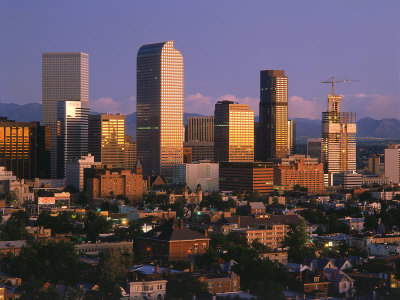
August 1, 1876: Colorado Is Admitted As the 38th State

The State Flag

August 1, 1876, 150 years ago: Colorado is admitted to the Union as the 38th State.

Colorado is in the Rocky Mountains, which include the State's most famous physical feature, the 14,115-foot-high Pikes Peak. The Colorado Territory had been separated from the Kansas Territory, which was obtained as part of the Louisiana Purchase. It has become known for gold mining (a gold rush in 1859 helped start the movement for Statehood) and skiing (Aspen and Vail are world-famous ski resorts).

In politics, it was traditionally Republican until 1992, when a large influx of Hispanic voters switched it to being usually Democratic. Still, there is a bit of a divide: Denver and Boulder, the latter having a Hippie image, make for "The People's Republic of Boulder." The rest of the State is so conservative, it might as well be called "West Nebraska" or "East Utah."

No Colorado native has ever become President. Its highest-ranking politician has been Federico Peña, who served as Mayor of Denver (1983-91), and, in the Administration of President Bill Clinton, served as Secretary of Transportation (1993–1997) and Secretary of Energy (1997–1998). Senator John Kerry of Massachusetts, was born in Denver, and was the Democratic nominee for President in 2004, but lost. Mamie Eisenhower, wife of President Dwight D. Eisenhower, grew up in Denver.

It is home to the University of Colorado in Boulder, Colorado State University in Fort Collins, the University of Denver (multi-time National Champions in hockey), and the U.S. Air Force Academy in Colorado Springs.

Its capital, Denver, is also its largest city. Denver is home to MLB's Colorado Rockies, the NFL's Denver Broncos, the NBA's Denver Nuggets, the NHL's Colorado Avalanche, MLS' Colorado Rapids, and, having started this year, the NWSL's Denver Summit began play in 2026.

Denver has never hosted a Super Bowl, although the Broncos have been in 8; and was not selected as a host city for the World Cup in either 1994 or 2026. The Broncos have won the Super Bowl in 1998, 1999 and 2015; and the Avalanche have won the Stanley Cup in 1996, 2001 and 2022. The Rockies have won the National League Pennant in 2007, but never the World Series. The Nuggets won the 2023 NBA Championship. And the Rapids won the 2010 MLS Cup.

Thursday, May 28, 2026

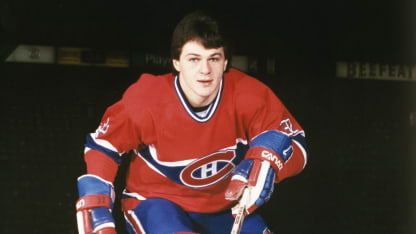
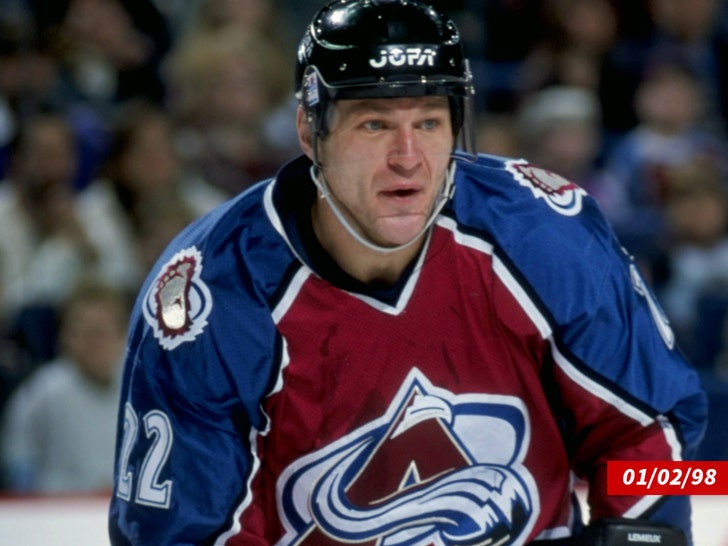
Claude Lemieux, 1965-2026

For the first time, a member of one of the New Jersey Devils' Stanley Cup-winning teams has died. And he was my favorite hockey player of all time.

Claude Percy Lemieux -- sure doesn't sound like the name of a tough guy, but he was one -- was born on July 16, 1965 in Buckingham, Quebec, a city that has since been amalgamated into the larger city of Gatineau, across the Ottawa River from Ottawa, Ontario, the capital of Canada. He grew up in Mont-Laurier, Quebec, about 110 miles north of Ottawa, and 140 miles northeast of Montreal.

A right wing, he was drafted by his home-Province Montreal Canadiens in 1983, and made his NHL debut on October 13 of that year, wearing uniform Number 32 in a 4-2 loss to the Boston Bruins at the Boston Garden. In the 1985-86 season, he played only 10 regular-season games for the Canadiens, but starred in their run to the Stanley Cup, scoring 10 goals with 6 assists.
That convinced the organization to give him a better chance, and he scored 27, 31 and 29 goals in the next 3 seasons, helping Les Habitantes reach the Stanley Cup Finals again in 1989. He was also a member of the victorious Team Canada at the 1987 Canada Cup.

He tailed off a bit in 1989-90, and the Habs traded him to the Devils for Sylvain Turgeon. This turned out to be a bad trade for Montreal, as Turgeon did nothing for them, and they left him unprotected in the 1992 expansion draft. He was chosen by the Ottawa Senators, and the Canadiens won the Cup again in 1993, without him.

The Devils were a team on the rise, and soon had a strong Canadiens connection. In addition to Lemieux, they had another 1986 Cup-winner, scoring right wing Stéphane Richer; a tough left wing, Tom Chorske; goaltender Martin Brodeur, son of Denis Brodeur, team photographer for the Canadiens and the Montreal Expos; head coach Jacques Lemaire, who'd won 8 Cups as a Canadiens center; and assistant coach Larry Robinson, who'd won 6 Cups as a Canadiens defenseman.

Having switched to Number 22, Claude scored 30 goals in 1990-91, 41 in 1991-92, and 30 plus 51 assists in 1992-93. He slumped again in 1993-94, but helped the Devils reach the Eastern Conference Finals. In 1992 and 1994, they lost to their geographic rivals, the New York Rangers.

Lemieux was a fighter. He was never afraid to face an opponent, and earned the nickname "Le Pest." But he wasn't exactly the most courageous of men. The one and only time an event was held at the Boston Garden with me as a paying customer came on March 2, 1995. Bruin star Cam Neely had recently returned from an awful knee injury, and Claudie crashed him into the boards. The home crowd lost their minds, and booed vociferously. Neely started throwing punches, and Lemieux "turtled": He dropped to his knees and covered his head. The booing got worse. The referee threw Neely out of the game, and gave Claudie no penalty. The Bruin fans went from angry to frothing-at-the-mouth rage. The game was a disaster: The Bruins won, 7-2.

But Lemieux always seemed to play better against the Rangers, and against the Devils' other rivals-by-geography, the Philadelphia Flyers. Indicative of this was the strike shortened 1994-95 season. In 45 regular-season games, he scored only 6 goals. But something happened once the Playoffs began.

In the Conference Quarterfinals against the Bruins, Lemieux scored 2 goals in Game 1, and the Devils won in 5 games. In the Conference Semifinals against the Pittsburgh Penguins, he scored a goal in Game 1, but the Devils lost; but they won the next 4 games, with Lemieux scoring twice in Game 2, once in Game 3, and 2 in the clinching Game 5. It was 8 goals in 10 games.

In the Conference Finals against the Flyers, he scored in Game 3, which the Devils lost. But in Game 5 at The Spectrum in Philadelphia, with 44 seconds left and the game tied, he fired a wobbly 65-foot shot that got past Flyer goaltender Ron Hextall, and the Devils won, 3-2. He scored again in Game 6, and the Devils clinched, and reached the Stanley Cup Finals for the 1st time. It was 11 goals in 16 games.

In Game 1 of the Finals, against the Detroit Red Wings at the Joe Louis Arena in Detroit, he scored the go-ahead goal, what turned out to be the winning goal, early in the 3rd period. He scored again in Game 3, and the Devils swept the Wings in 4 straight. It was 13 goals in 20 games, and he was awarded the Conn Smythe Trophy as the Most Valuable Player of the Playoffs.

The Devils were only a 13-year-old franchise, but they had won their 1st title, and had begun to develop their own legends. And Claude Lemieux was one of them.

And yet, just before the start of the 1995-96 season, he was traded -- twice. The Devils traded him to the New York Islanders for Steve Thomas. This was a bad trade for the Devils, as Thomas did little for them. And then, before the ink was dry on the deal, the Isles traded him to the Colorado Avalanche for Wendel Clark. This was 2 bad trades for the Isles, as Lemieux literally did nothing for them, and Clark didn't do much more.

Lemieux did something for the Avs, who had been the Quebec Nordiques since 1972, but couldn't get a state-of-the-art arena, something Denver promised their owners, and got for them in 1999. He scored 39 goals with 32 assists in 1995-96, helping them to reach the Western Conference Finals against the Wings.
In Game 6, Lemieux checked Kris Draper into the boards. Draper suffered a concussion, and his nose, cheekbone and jaw were broken, leading to him having reconstructive surgery on his face and his jaw wired shut for several weeks. This incident sparked a bitter rivalry between the two teams. The NHL suspended Lemieux for 2 games, and most observers thought it wasn't enough.

The Avs won, to clinch a place in the Finals, and there was a postgame handshake. Dino Ciccarelli, a future Hall-of-Famer who was making what turned out to be his last serious run at the Cup, said, "I can't believe I shook this guy's friggin' hand after the game. That pisses me right off."

The Avs won the Cup. This made Lemieux only the 8th player to win the Cup with at least 3 different teams, following Jack Marshall, Hap Holmes, Frank Foyston, Jack Walker, Gord Pettinger, Al Arbour (yes, the Islander coach) and Larry Hillman. He has since been followed by Mike Keane, Joe Nieuwendyk and Mark Recchi, making 11. Holmes is the only player to have done it with 4 different teams.

So if you're a Red Wings fan reading this, and you still hate Claudie for what he did to Draper, I understand, and I won't tell you to get over it. But I still love the guy. Interestingly, when Budd Lynch introduced Claudie before Game 1 of the 1995 Finals, nearly a year before the unwarranted hit on Draper, Claudie still got the hell booed out of him, since he was already known as a dirty player.

Early in the 1999-2000 season, the Avs traded him, along with 2 draft picks, to the Devils for Brian Rolston and a draft pick. He played another 70 games for the Devils, scoring 17 goals, played in all 23 Playoff games, and scored 4 goals with 6 assists, to help them win another Cup.

This made him only the 5th player to win Cups in 3 different decades, following Dit Clapper, Maurice and Henri Richard, and Jean Béliveau. He has been followed by Patrick Roy, Nieuwendyk and Recchi, making 8.

For the next season, he signed with the team then known as the Phoenix Coyotes. He remained with them until the middle of the 2003 season, when he was traded to the Dallas Stars. He was released after that season, and it looked like his career was over. But he signed with Zug of Switzerland's league, and finished the season with them.

In 2005, he was named president of the minor-league Phoenix RoadRunners. In 2007, he left, and played on the Spike TV show Pros vs. Joes. His competitiveness was re-sparked, and he signed with the China Sharks of Asia League Ice Hockey. After 2 games, the Worcester Sharks of the American Hockey League signed him. After 23 games, he was promoted to the San Jose Sharks, and 6 years after his last previous NHL game, he played 18 more, at age 43, and hung up his skates.

He scored 379 goals with 407 assists, for 786 points. After his retirement, he became an NHLPA-certified player agent. He was not related to Penguins legend Mario Lemieux, but he was the brother of Jocelyn Lemieux, briefly a teammate in Montreal, who played 12 seasons in the NHL. He was married twice, with 3 sons and a daughter. One of his sons, Brendan Lemieux, played 7 seasons in the NHL, with the Rangers, the Flyers, the Winnipeg Jets, the Los Angeles Kings and the Carolina Hurricanes.

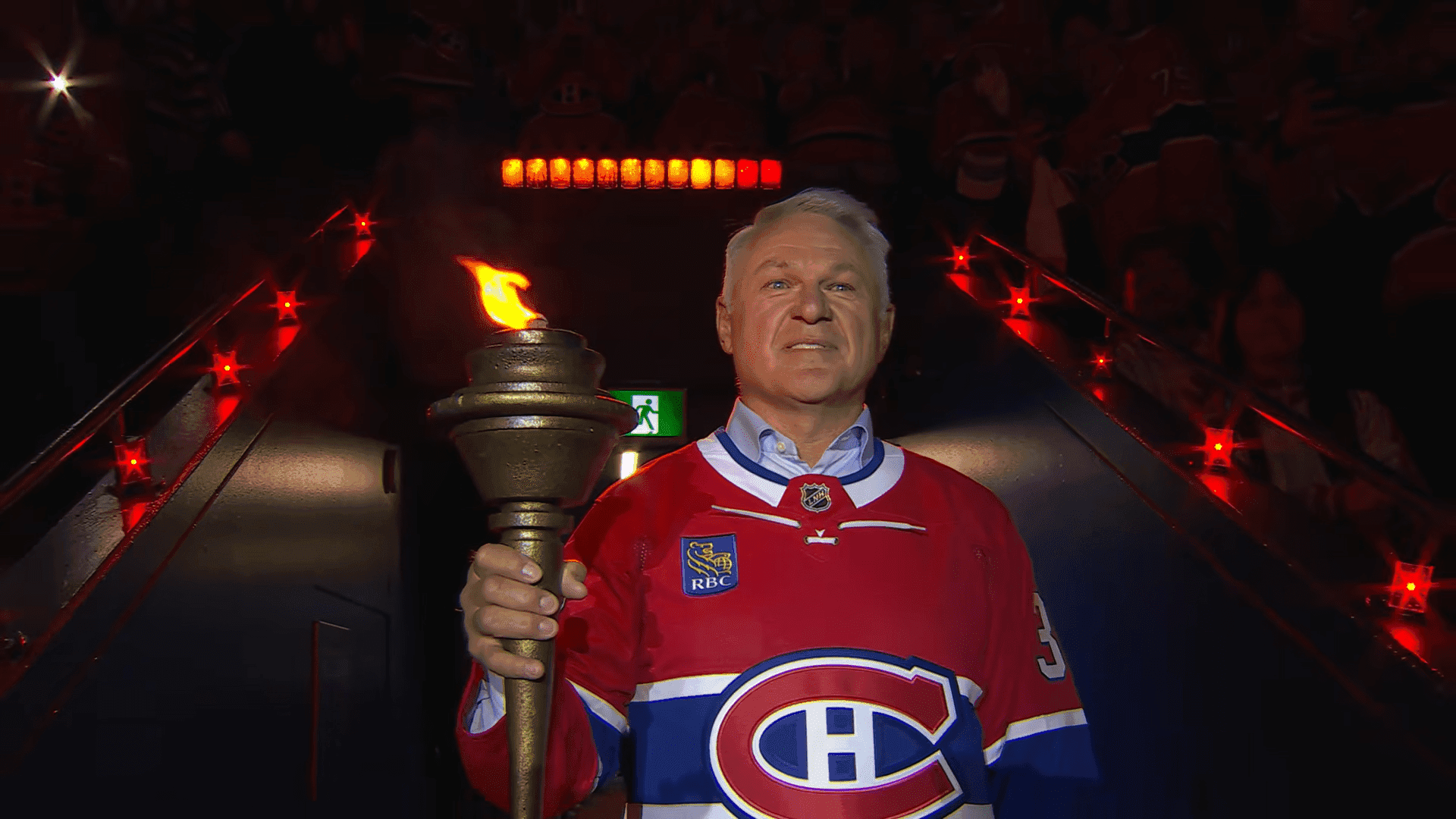
Since he was still an active player in March 1996, when the Montreal Forum closed and the Bell Centre opened, he was not among the former Canadiens stars who participated in the ceremonies. But 3 nights ago, he participated in a ceremony that has become one of the Canadiens' traditions: Before a home Playoff game, a former star will carry a lit torch to center ice. Wearing his former Number 32 jersey, Lemieux carried the torch before Game 3 of the Eastern Conference Finals at the Bell Centre. But they lost, 3-2 in overtime to the Carolina Hurricanes.
Today, May 28, 2026, Claude Lemieux was found dead by one of his sons, in the rear warehouse of a furniture store he owned in the Miami suburb of Lake Park, Florida. He was 60 years old. Local authorities determined that he died by suicide, though they have not released the method.

Given his aggressiveness, it is possible that he had been to suffer from chronic traumatic encephalopathy (CTE). Like the NFL, and soccer with its many headings of the ball, hockey has begun to face serious allegations of repeated head trauma leading players to experience memory loss, other loss of cognitive function, or other physical difficulty, including from one of Lemieux's 1995 Devils teammates, Mike Peluso.

The families of Chicago Blackhawks Hall-of-Famers Bobby Hull and Stan Mikita have also alleged that they suffered from CTE. It's also been alleged for Canadiens legend Henri Richard.

Claude Lemieux was a hero to some, a villain to others. He is now a tragedy to all.

Sunday, April 10, 2022

How to Be a Devils Fan in Colorado -- 2022 Edition

This Thursday night, April 14, the New Jersey Devils visit Denver to play the Colorado Avalanche.

Before You Go. The Denver Post is predicting low 40s for Thursday afternoon, and low 20s for the evening. Although the mountain air leads to a lot of snow, no precipitation of any kind is forecast for the weekend. Still, bundle up, keep the thin air in mind, and don't exert yourself too much.

Denver is in the Mountain Time Zone, so you'll be 2 hours behind New York time. And there's a reason it's called the Mile High City: The elevation means the air will be thinner. Although the Rocky Mountain region is renowned for outdoor recreation, if you're not used to it, try not to exert yourself too much. Cheering at a sporting event shouldn't bother you too much, but even if the weather is good, don't go rock-climbing or any other such activity unless you've done it before and know what you're doing.

Tickets. When the Avs arrived in 1995, and immediately won the Stanley Cup, the Rocky Mountain region went nuts, having never before won a World Championship in any sport. They stayed good for 10 years, and attendance remained great.

Then they fell apart, and people saw how well Colorado fans supported a non-winner: Not well, dropping under 15,000. However, the team and the attendance have both gotten better. In 2019-20, before COVID shut everything down, they averaged 17,902 per game, just short of a sellout.

Tickets in the lower level are $144 between the goals and $94 behind them. In the upper level, they're $53 between and $45 behind.

Getting There. It's 1,779 miles from Times Square in New York to the Denver plaza that contains the State House and the City-County complex, and 1,767 miles from Prudential Center to the Ball Arena. You're probably thinking that you should be flying.

As was its predecessor, Stapleton International Airport (named for 1923-47 Mayor Benjamin F. Stapleton), the new Denver International Airport is a major change-planes-here spot for going to the West Coast and Las Vegas, meaning lots of nonstop flights from New York to Denver are possible. And it'll be relatively cheap this time: A round-trip nonstop ticket can be had on United Airlines for only $573, cheaper than the train, and possibly than the bus.

Amtrak's Lake Shore Limited leaves Penn Station at 3:40 PM Tuesday, arrives at Union Station in Chicago at 10:12 AM Wednesday (that's Central Time). The California Zephyr leaves Chicago at 2:00 PM Wednesday and arrives at Denver's Union Station at 7:15 AM (Mountain Time) Thursday. The return trip would leave Denver at 7:10 PM Friday, arrive in Chicago at 2:50 PM Saturday, leave Chicago at 9:30 PM Saturday, and get back to New York at 6:42 PM Sunday. The round-trip fare is $643.

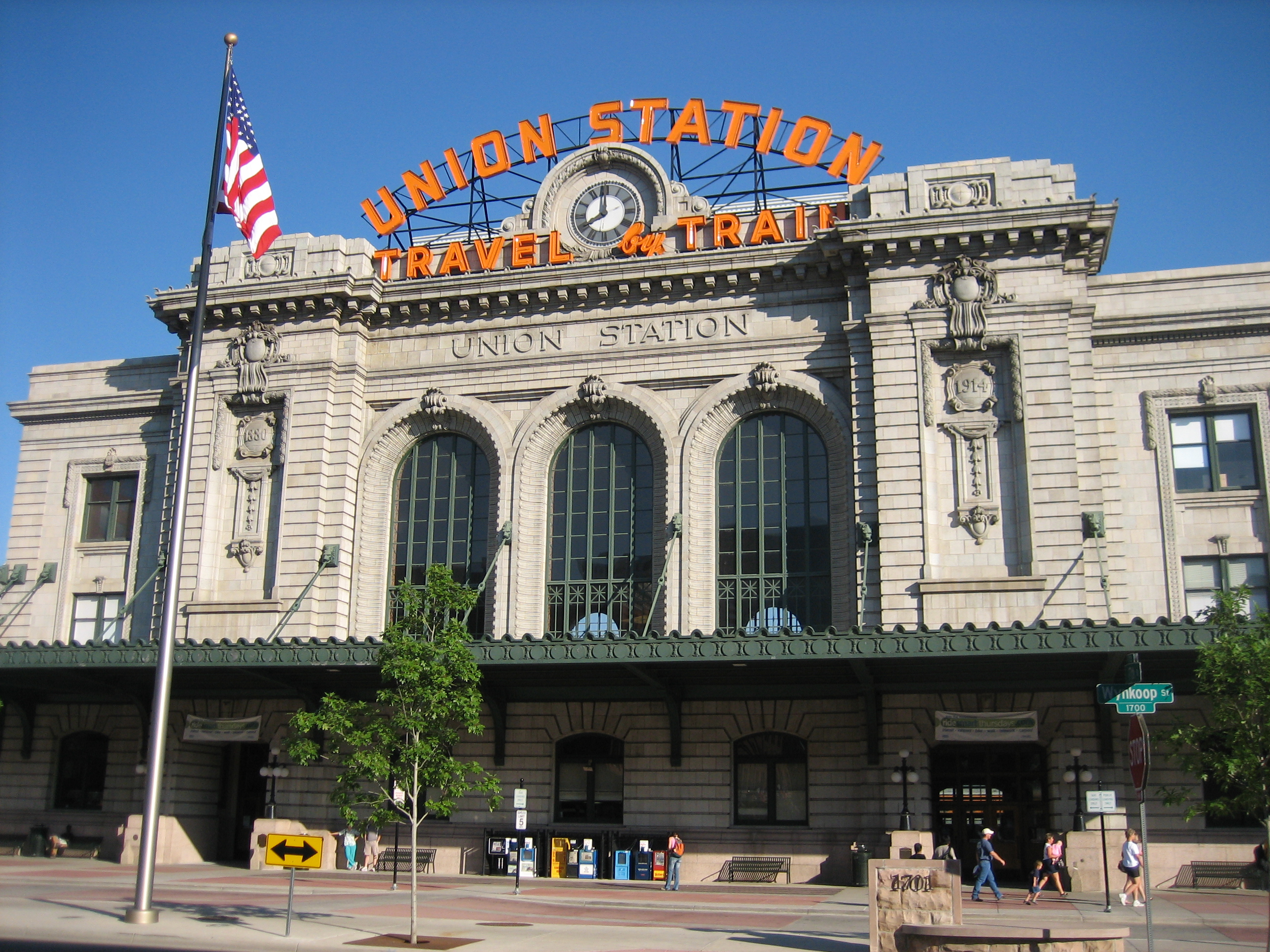
Conveniently, Union Station is at 1700 Wynkoop Street at 17th Street, just 3 blocks from Coors Field. The front of the building is topped by a clock, framed by an old sign saying UNION STATION on top and TRAVEL by TRAIN on the bottom.
Greyhound allows you to leave Port Authority Bus Terminal at 4:00 PM Tuesday, and arrive at Denver at 10:50 AM on Thursday, a trip of just under 45 hours, without having to change buses. That 44:50 does, however, include layovers of 40 minutes in Philadelphia, an hour and a half in Pittsburgh, an hour in Columbus, an hour in Indianapolis, 2 hours in St. Louis, and half an hour in Salina, Kansas; plus half-hour meal stops in Pennsylvania, Illinois and Kansas.

Round-trip fare is $656, but you can get it for $433 on advanced-purchase. You can get a bus back at 7:20 PM Friday and be back in New York at 3:00 PM Sunsday. The Denver Bus Center is at 1055 19th Street.

If you actually think it's worth it to drive, get someone to go with you, so you'll have someone to talk to, and one of you can drive while the other sleeps. You'll be taking Interstate 80 most of the way, through New Jersey, Pennsylvania, Ohio, Indiana, Illinois, Iowa and Nebraska, before taking Interstate 76 from Nebraska to Colorado, and then Interstate 25 into Denver.

(An alternate route: Take the New Jersey and Pennsylvania Turnpikes to Interstate 70 and then I-70 through Pennsylvania, Ohio, Indiana, Illinois, Missouri, Kansas and Colorado into downtown Denver. It won't save you an appreciable amount of time over the I-80 route, though.)

If you do it right, you should spend about an hour and a half in New Jersey, 5 hours and 15 minutes in Pennsylvania, 4 hours in Ohio, 2 hours and 30 minutes in Indiana, 2 hours and 45 minutes in Illinois, 5 hours and 15 minutes in Iowa, 6 hours in Nebraska, and 3 hours and 15 minutes in Colorado. Including rest stops, and accounting for traffic (you'll be bypassing Cleveland and Chicago, unless that's where you want to make rest stops), we're talking about a 40-hour trip.

Even if you're only going for one game, no matter how you got there, get a hotel and spend a night. You'll be exhausted otherwise. Trust me, I know: Trains and buses are not good ways to get sleep.

Once In the City. Founded in 1858 as a gold rush city, and named for James W. Denver, then Governor of the Kansas Territory, from which Colorado was separated, Denver is a State capital and city of 716,000 people, in a metro area of 3.4 million -- roughly the population of Brooklyn and Staten Island combined. It's easily the biggest city in, and thus the unofficial cultural capital of, the Rocky Mountain region.
The State House

Broadway is the main north-south drag, separating East addresses from West. But the northwestern quadrant of the street grid is at roughly a 45-degree angle from the rest of the city, and this area includes the central business district, Union Station and the ballpark.

The sales tax in the State of Colorado is 2.9 percent, however, the City of Denver adds a 3.62 percent sales tax, for a total of 6.52 percent. ZIP Codes in Colorado start with the digits 80 and 81, with the Denver area running from 800 to 810. The Area Code for Denver is 303, with 720 overlaid. Xcel Energy runs the electricity for the Denver area. The city is about 52 percent white, 32 percent Hispanic, 10 percent black, and 3 percent Asian.

Colorado is basically two States: "The People's Republic of Boulder," and the far more conservative "East Utah." With the State's Western libertarianism now leaning more toward civil rights and pot activism than gun nuttery and "Get off my land" action, Bronco fans were rated 2.9 percent more liberal than conservative. 

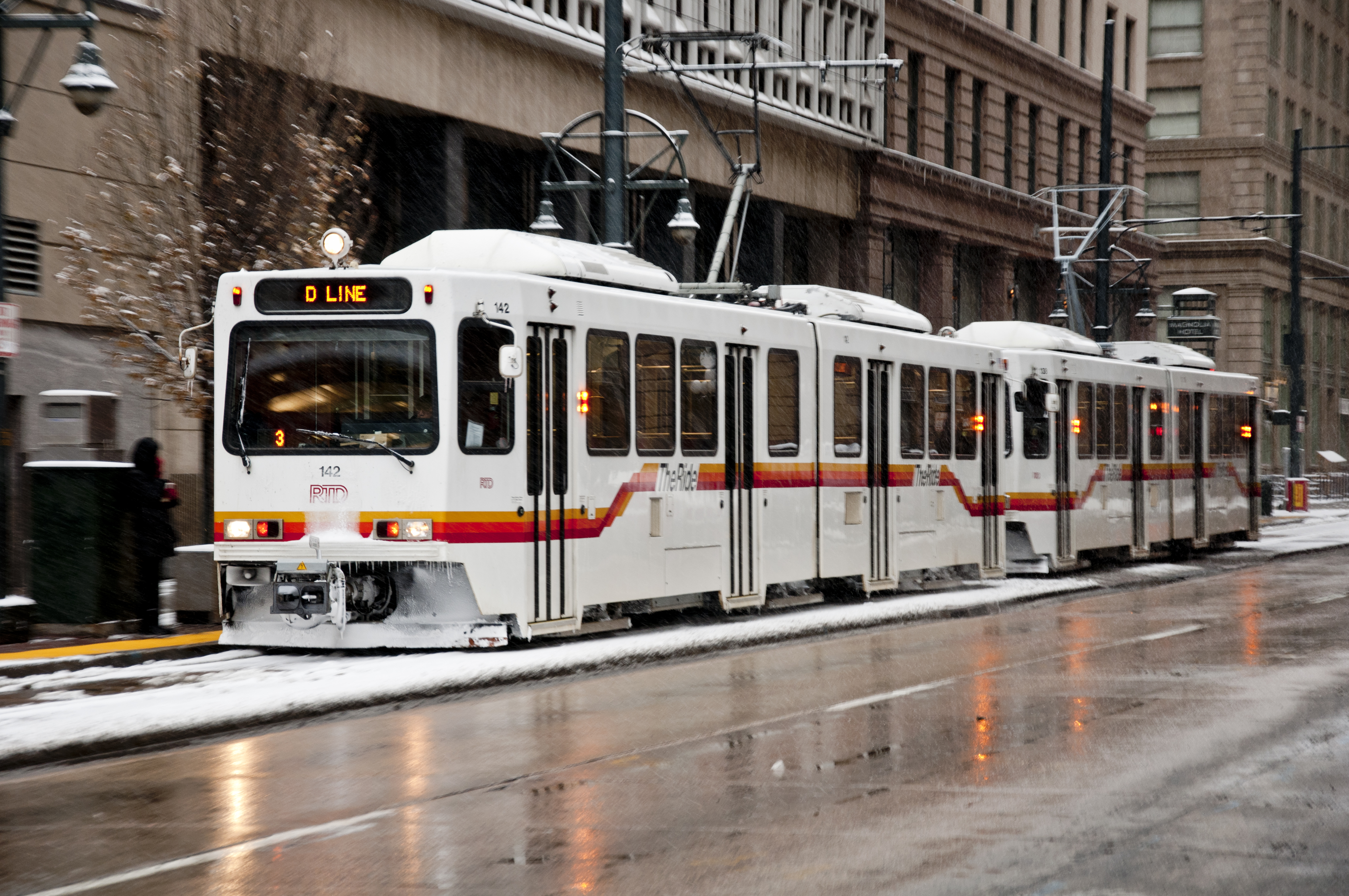
The Denver Post is a good paper, but don't bother looking for the Rocky Mountain News: It went out of business in 2009. State Route 470 serves as Denver's "beltway." Bus and light rail service in Denver is run by the Regional Transportation District (RTD), and goes for $2.25 for a single ride, and $6.75 for a DayPass. Denver switched from tokens to farecards in 2013.
Don't worry, the weather isn't forecast to look like this during your visit.
I chose this picture for the look of the train, not for the snow and wet streets.

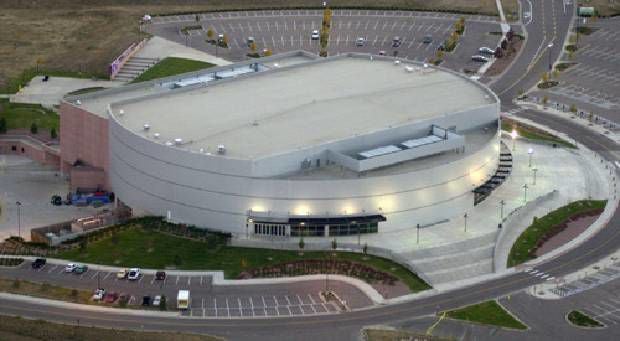
Going In. From its opening in 1999 until 2020, the Nuggets/Avalanche arena was known as the Pepsi Center. It is now known as the Ball Arena -- good name for a basketball venue, but not so much for hockey -- for Ball Corporation, based in the Denver suburbs, maker of food and beverage containers.

It is across Cherry Creek from downtown, about 2 miles northwest of City Hall. The intersection is 11th Street & Auraria Parkway, but the mailing address is 1000 Chopper Circle, in honor of Robert "Chopper" Travaglini, the beloved former trainer (and amateur sports psychologist) of the NBA's Nuggets, who share the arena. It is 1 of 10 current arenas that is home to both an NBA team and an NHL team. Chopper was actually a Jersey Boy, albeit from Woodbury on the Philly side. He died in 1999, age 77, right before the new arena opened. Chopper Circle is an extension of Wewatta Street.
Ball Arena/Elitch Gardens station on the RTD light rail. If you're coming in that way, you'll probably enter from the west gate, the Grand Atrium. If you're driving, parking starts at just $5.00. The rink is laid out east-to-west, and the Avs attack twice toward the east end.
In addition to hosting the Avs and the Nugs, the Pepsi Center has also hosted NCAA Tournament basketball games, the 2008 edition of NCAA's hockey "Frozen Four," and the 2008 Democratic National Convention.

Food. Being a "Wild West" city, you might expect Denver to have Western-themed stands with "real American food" at its arena. Being in a State with a Spanish name, in a land that used to belong to Mexico, you might also expect to have Mexican food. And you would be right on both counts.

Unfortunately, the team and arena websites don't include charts showing where the concession stands are. The arena website does mention specialty restaurants:

The Shock Top Lodge is a restaurant that seats 325 guests, 250 in the restaurant and 75 at the bar, and is open to all ticketholders.

The Land Rover Denver Club has seating for 125 and can accommodate over 300 in a lounge-like environment. Guests can enjoy a Colorado craft beer or specialty drink coupled with a chef-inspired dish without missing any of the action in the arena while watching on one of the 20 HD TVs positioned throughout the space. 
The Peak Pub House seats 236 patrons, and is available to suite holders, KeyBank Club Level ticket holders, the first row of rinkside, all courtside seat holders, and all patrons with 5 minutes remaining in the game.
Team History Displays. The Nuggets' banners are at the east end of the arena, and the Avalanche's banners at the west end. There are also banners for the Arena Football League's Colorado Mammoths -- which, like the Avs, the Nugs, MLS' Colorado Rapids, the NFL's St. Louis (for the moment) Rams, and English soccer's Arsenal Football Club, is owned by Walton of Walmart infamy in-law Stan Kroenke.

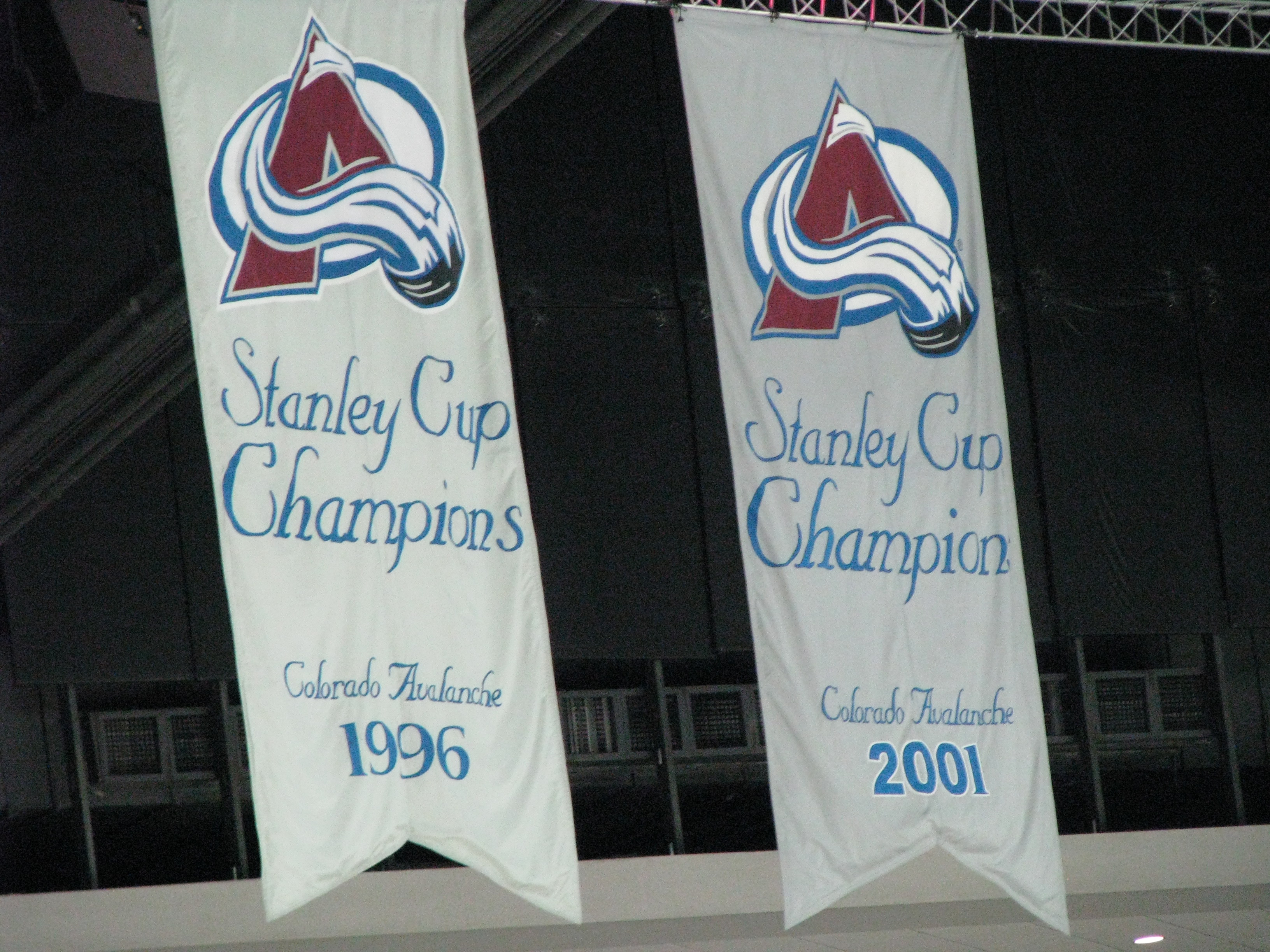
Despite the Avs' brief history, they have plenty of banners: 10 for Division titles in 1996, 1997, 1998, 1999, 2000, 2001, 2002, 2003, 2014 and 2021; 2 for President's Trophies in 1997 and 2001; 2 for Western Conference Championships in 1996 and 2001; and 2 for Stanley Cups in 1996 and 2001.
There is no notation for what the franchise won as the Quebec Nordiques, and, since the original, hockey version of the Colorado Rockies made the Playoffs just once in 6 seasons before moving to become the Devils, there is nothing to hang for them anyway.

They've also retired 6 uniform numbers. From the 1996 Stanley Cup winners, they've retired 19 for center Joe Sakic, 21 for center Peter Forsberg, 33 for goaltender Patrick Roy (now the team's head coach) and 52 for defenseman Adam Foote.

All of these players were still there for the 2001 Stanley Cup win (although Forsberg was injured for the Playoffs). By that point, they'd brought in Number 23, right wing Milan Hejduk. And, in case the 2,001 times that Gary Thorne and ABC Sports mentioned it wasn't enough to jam it into your memory for all time, the Avs had added Number 77, defenseman Ray Bourque. (Interestingly enough, both times the Avs won the Cup, the Devils won it the season before. Too bad for the Avs that this pattern did not hold in 2003-04.)
Prior to the team's move to become the Avalanche, the Quebec Nordiques had retired 3 for defenseman Jean-Claude Tremblay, 8 for left wing Marc Tardif, 16 for left wing Michel Goulet, and 26 for center Peter Stastny (who, of course, also played for the Devils). Each of these numbers was returned to circulation, and Peter's son Paul Stastny, now with the Vegas Golden Knights, wore his father's Number 26 with the Avs.

In 2015, the Avs named a 20th Anniversary Team. From the 1996 Cup team, they chose Roy, Sakic, Forsberg, Foote, defenseman Sandis Ozolinsh, left wing Valeri Kamensky, right wings Adam Deadmarsh and our old friend Claude Lemieux, and center Stephane Yelle.

From the 2001 Cup team, they chose Roy, Sakic, Forsberg, Foote, Bourque, Hejduk, Yelle, defenseman Rob Blake, left wing Alex Tanguay, and centers Stephen Reinprecht and Chris Drury.

From after, but not including, 2001, they've chosen goalie Semyon Varlamov, defensemen John-Michael Liles and Erik Johnson, left wing Gabriel Landeskog, and centers Paul Stastny and Matt Duchene.
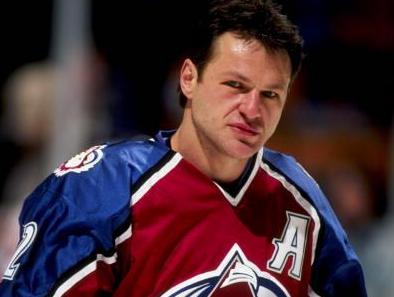
Yay, Claudie!

Roy, Sakic, Forsberg and Bourque are in the Hockey Hall of Fame. So are Rob Blake, who played 4 seasons with them including the 2001 Cup win; Jari Kurri, who played 70 games for the Avs in 1997-98; Dave Andreychuk, who played just 14 games for them in 2000; Paul Kariya, who played 51 for them in 2003-04; Teemu Selanne, who played 78 for them in 2003-04; and Jarome Iginla, who played 3 seasons for them near the end of his career.

Foote, Forsberg, Roy, Sakic, Hejduk and former team president and general manager Pierre Lacroix have been elected to the Colorado Sports Hall of Fame, which is located at the new Broncos' stadium. Bourque and Claudie have not.

Stastny and Sundin from the Quebec years, and Forsberg and Kamensky from both cities, have been elected to the International Ice Hockey Federation (IIHF) Hall of Fame. Bourque has received the Lester Patrick Trophy for contributions to hockey in America.

Sakic, Roy and Bourque -- the latter, still with the Boston Bruins at the time -- were named to The Hockey News' 100 Greatest Players in 1998. From the Nordiques, Tremblay, Tardif, Goulet, Christian Bordeleau, Rich LeDuc, Serge Bernie, and Richard Brodeur (no relation to Marty) were named to the WHA All-Time Team. Bill Baker and Steve Janaszak of the 1980 U.S. Olympic team played for the Rockies before they became the Devils. Earlier this year, Sakic, Roy, Forsberg and Bourque were named to the NHL's 100th Anniversary 100 Greatest Players.

Stuff. Altitude Athletics is located in the Grand Atrium at the arena's west end. It sells Avs, Nugs, Rapids and Mammoths merchandise -- but not the Rams or The Arsenal, as these teams are located nowhere near Denver. They may sell cowboy hats with team logos on them, to tie in with the State's Western heritage.

There are books available about the team, but, being Devils fans, you won't want to be reminded of how they plowed into the Meadowlands, off Exit 16W (as in 16 wins to get through the Playoffs), and took the Cup away from us. That story is told in the Denver Post's official retrospective, Mission 16W: Colorado Avalanche: 2000-'01 Stanley Cup Champions. Of course, Bourque is in the center of the cover, holding up the Cup, flanked by photos of Sakic and Roy.

From Claude Lemieux's unacceptable hit on Kris Draper in Game 6 of the 1996 Western Conference Finals, Detroit Red Wings fans have hated the Avs in general and Claudie in particular. They met in 5 Playoff series in 7 seasons from 1996 to 2002, and mixed in there was a regular-season nasty brawl in Detroit on March 26, 1997, in which Claudie was targeted by the Wings. Denver Post hockey writer Adrian Dater and then-Wings coach Scotty Bowman have collaborated on Blood Feud: Detroit Red Wings v. Colorado Avalanche: The Inside Story of Pro Sports' Nastiest and Best Rivalry. 

Of course, the Wings' real arch-rivals are the Chicago Blackhawks, as the Hawks' 2010s renaissance has reminded everyone. Wings-Avs was like Mets-Braves, Knicks-Heat and 49ers-Cowboys, in that it was only a rivalry for a brief time, and no longer really matters, especially now that the Wings have been moved to the Eastern Conference. It's also worth noting that Claudie had a nasty reputation even before 1996. Indeed, when he was introduced before Game 1 of the 1995 Stanley Cup Finals in Detroit, no Devils player was booed harder.

The Avs didn't release a 20th or a 25th Anniversary DVD, but highlight packages for the 1996 and 2001 Cup wins are be available. The '96 version is titled The Colorado Avalanche Landslide; the '01, Mission Accomplished (again, playing on the theme of Bourque's 22-year quest for the Cup, failing 20 times with the Boston Bruins and once for the Avs before finally doing it).

During the Game. A November 19, 2014 article on The Hockey News' website ranked the NHL teams' fan bases, and listed the Avalanche's fans 27th, ahead of only Columbus, Dallas and Arizona: "Long way from 1990s heyday. Avs 3rd in standings, 23rd in attendance last year." Meaning the 2013-14 season. But in 2015-16, they were 19th, with their arena averaging 97 percent full. Maybe they should rethink their "metrics" for deciding these things.

Coloradans love their sports, but they're not known as antagonistic. Although the Jets came within a half of derailing a Bronco Super Bowl in 1999 (1998 season), and the Devils came within a game of short-circuiting their Stanley Cup run in 2001, the people of the Centennial State don't have an ingrained hatred of New Yorkers. As long as you don't wear Kansas City Chiefs or Oakland Raiders gear, you'll probably be completely safe. (But, as always, watch out for obnoxious drunks, who know no State Lines.)

Jake Schroeder is the Avs' regular National Anthem singer. The Avs take the ice to "Scalped," an old surf-rock instrumental by Dick Dale. (Shouldn't the L.A. Kings use a surf-rock song? I guess nobody ever thought to invent "ski-rock.") Their goal song is "Born to Rage" by the Swedish DJ duo Dada Life. (From Blue Swede and ABBA in the '70s to Ace of Base in the '90s, to Robyn to Dada Life today, Sweden has never learned how to make good music.) If the Avs win, they'll play "Takin' Care of Business" by Bachman-Turner Overdrive.
Jake Schroeder

Sometimes, the Avs will wear jerseys with "COLORADO" in descending diagonal block letters, much like the hated Rangers. This is an attempt to show how they might have dressed had they existed in the old days, not a "throwback" uniform, but a "fauxback." And since this game is on St. Patrick's Day, there will be holiday-themed promotions.

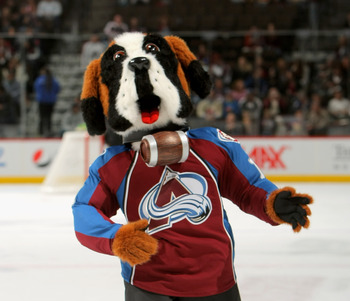
Despite sometimes featuring a shoulder patch of a Sasquatch/Bigfoot footprint, the Avs' mascot is Bernie the St. Bernard, emblematic of rescuing people trapped in alpine avalanches. He even has a keg around his neck, although from a distance, Avs fans, trained on Broncomania, could easily mistake it for a football. His theme song is "Atomic Dog," by Plainfield, New Jersey native George Clinton and his "P-Funk Empire." His uniform number is a bone, although it could, from a distance, appear to be a Number 1.
After the Game. Denver has had crime issues, and just 3 blocks from Coors Field is Larimer Street, immortalized as a dingy, bohemian-tinged, hobo-strewn street in Jack Kerouac's novel On the Road. But that scene was written in 1947. The Ball Arena is, essentially, an island in a sea of parking. LoDo (Lower Downtown) has become, with the building of Coors Field and the revitalization of Union Station, a sort of mountain Wrigleyville, and thus the go-to area for Denver nightlife. So you'll probably be safe.

Across Chopper Circle from the arena is Brooklyn's at the Ball Arena, a typical sports bar. LoDo is loaded with bars that will be open after the game, including Scruffy Murphy's at Larimer & 20th. Behind home plate at Coors Field, at 1930 Blake Street, is The Sports Column, hailed by a recent Thrillist article as the best sports bar in the State of Colorado.

Perhaps the most famous sports-themed restaurant in Denver is Elway's Downtown, a steakhouse at 1881 Curtis Street. Several downtown buses will place you within a block of it. It's owned by the same guy who owns John Elway Chevrolet in the southern suburb of Englewood.

Tap & Burger Sloan's Lake is said to be a Yankee Fan bar. 1515 N. Raleigh Street, about 2 miles west of downtown. Bus 20. Occidental is the home of the local New York Giants fan club. 1950 W. 32nd Avenue, about a mile north of Ball Arena and Coors Field. Bus 44. Jet fans gather at Chopper's Sports Grill, possibly named for Chopper Travaglini, at 80 S. Madison Street at Bayaud Avenue, 3 miles southeast of downtown, in the Pulaski Park neighborhood. Bus 83, then a mile's walk.

If your visit to Denver is during the European soccer season (which is now in progress), your best bet for watching your favorite club is at The British Bulldog, 2052 Stout Street, just north of Downtown. The previous best choice, The Three Lions at 2239 E. Colfax Avenue, recently closed.

Sidelights. Denver is a fantastic city, and a good sports city, with much to look for. On February 3, 2017, Thrillist made a list ranking the 30 NFL cities (New York and Los Angeles each having 2 teams), and Denver came in 8th, in the top 1/3rd. They said:

Ah, Denver! Breathe in that fresh mountain air with just a hint of cannabis and green chile. Drink in the hoppy splendor of a craft beer scene that was bustling back when everyone still called them "microbreweries." Tolerate the alarmingly in-shape bro who stuck around after four years at Boulder to work as a part-time ski instructor and won't stop talking to you about fourteeners. Denver often gets championed for all the fantastic stuff to do right outside the city, what with the skiing and the hiking and the Red Rocks, but that does a disservice to all the good times to be had in Denver proper. The fact that said times can be had with herbal enhancement with nary a legal concern is just a bonus. 

On November 30, 2018, Thrillist published a list of "America's 25 Most Fun Cities," and Denver came in 13th. On February 12, 2019, they published an article calling Denver "America's Must-Visit City for 2019."

Empower Field at Mile High, formerly Invesco Field at Mile High and Sports Authority Field at Mile High, has been the home of the NFL's Denver Broncos since 2001. Everyone just gives it the same name as the old facility: "Mile High Stadium." It includes the Colorado Sports Hall of Fame, and the Broncos' Ring of Fame.

It was built on the site of the McNichols Sports Arena, home to the NBA's Denver Nuggets from 1975 to 1999, the NHL's Colorado Avalanche from 1995 to 1999, and the 1st major league team called the Colorado Rockies, the NHL team that became the Devils, from 1976 to 1982. It hosted the NCAA Final Four in 1990, with UNLV (the University of Nevada at Las Vegas) clobbering Duke. (The University of Colorado, in Boulder, made the Final Four in 1942 and 1955, although it wasn't yet called the Final Four.  No other Colorado-based school has made it, and none has won a National Championship -- not in basketball, anyway.)
The Rockies they're wishing good luck are the baseball team,
not the hockey team that used to play there and became the Devils.

When the time came to play the final concert at McNichols, the act that played the first concert there was brought back: ZZ Top. This fact was mentioned on an ABC Monday Night Football broadcast, leading Dan Dierdorf to note the alphabetic distinction of the long red-bearded men, and say, "The first one should have been ABBA." Which would have been possible, as they were nearly big in the U.S. at the time. However, the fact that the arena only lasted 24 years, making it not that hard for the act that played the first concert there to also play the last, says something about America's disposable culture.

The old stadium was just to the north of the new stadium/old arena. The current address is Mile High Stadium Circle, but the old intersection was W. 20th Avenue & Bryant St. (2755 W. 17th Avenue was the mailing address.) It was built in 1948 as Bears Stadium, an 18,000-seat ballpark.

When the American Football League was founded in 1960, it was expanded to 34,000 seats with the addition of outfield seating. The name was changed to Mile High Stadium in 1966, and by 1968 much of the stadium was triple-decked and seated 51,706. In 1977 – just in time for the Broncos to make their first Super Bowl run and start "Broncomania" – the former baseball park was transformed into a 76,273-seat horseshoe, whose east stands could be moved in to conform to the shape of a football field, or out to allow enough room for a regulation baseball field. The old-time ballpark had become, by the standards of the time, a modern football stadium.

The biggest complaint when the Rockies arrived in 1993 wasn't the thin air, or the condition of the stadium (despite its age, it was not falling apart), but the positioning of the lights: Great for football fans, but terrible for outfielders tracking fly balls. But it was only meant to be a temporary ballpark for the Rockies, as a condition for Denver getting a team was a baseball-only stadium. What really led to the replacement of Mile High Stadium, and its demolition in 2002, was greed: The Broncos' desire for luxury-box revenue.

At Bears/Mile High Stadium, the Broncos won AFC Championships in 1977, 1986, 1987, 1989, 1997 and 1998, winning the Super Bowl in the last 2 years after losing the first 4 in blowouts.  (They've now won an AFC title at the new stadium, but not a Super Bowl.) The Denver Bears won Pennants while playing there in 1957 (as a Yankee farm team), 1971, 1976, 1977, 1981, 1983 and 1991 (winning the last one under the Denver Zephyrs name).

The U.S. national soccer team played a pair of games at Mile High Stadium in the 1990s, and beat Mexico at the new stadium in 2002 (the only game they've played there so far). While the 2008 Democratic Convention was held at the Pepsi Center, Senator Barack Obama gave his nomination acceptance speech outdoors in front of 80,000 people at New Mile High Stadium.

The old stadium also hosted the Denver Gold of the United States Football League, the 1983 USFL Championship Game, the Colorado Caribous of the original North American Soccer League, and the Rapids from their 1996 inception until 2001 -- in fact, they played the stadium's last event, before playing at the new stadium from 2002 to 2006.

The U.S. national soccer team played a pair of games at Mile High Stadium in the 1990s, and beat Mexico at the new stadium in 2002 (the only game they've played there so far). It has been selected by the U.S. Soccer Federation as a finalist to be one of the host venues for the 2026 World Cup.

While the 2008 Democratic Convention was held at the Pepsi Center, Senator Barack Obama gave his nomination acceptance speech outdoors in front of 80,000 people at New Mile High Stadium.

The Red Lion Hotel Denver and the Skybox Grill & Sports Bar are now on the site of the old stadium. At McNichols, the Nuggets reached the ABA Finals in 1976, and the Avalanche won the 1996 Stanley Cup (albeit clinching in Miami). The Denver Dynamite won the 1st ArenaBowl in 1987, and again in 1989, 1990 and 1991, before finances forced them to fold anyway. Elvis Presley sang at McNichols on April 23, 1976.

The complex that included Mile High Stadium and the McNichols Arena was supposed to be the centerpiece of the 1976 Winter Olympics. But in a 1972 referendum, Colorado voters rejected funding that would have built more facilities, and, in what remains the only example of this ever happening, Winter or Summer, a city withdrew as host for an Olympic Games. They were awarded, instead, to Innsbruck, Austria, which already had the facilities in place from hosting them in 1964.

The new stadium, and the site of the old stadium and arena, are at Mile High Station on the light rail C-Line and E-Line.

Coors Field has been home to the Rockies since it opened in 1995. In February 2016, it hosted 2 hockey games. The University of Denver beat arch-rival Colorado College 4-1 in a game billed as the Battle On Blake. And as part of the NHL Stadium Series, the Colorado Avalanche hosted the Detroit Red Wings, perhaps perversely celebrating the 20th Anniversary of the birth of their brief but nasty rivalry. The Wings won 5-3.

2001 Blake Street (hence the team's nickname, the Blake Street Bombers) at 20th Street, 3 blocks from Union Station, accessible by light rail.

The Nuggets, known as the Denver Rockets until 1974, played at the Denver Auditorium Arena, at 13th & Champa Streets, from their 1967 inception until McNichols opened in 1975. It was also the home of the original Nuggets, who played in various leagues from 1935 to 1948, and then in the NBA until 1950.

It opened in 1908, and its seating capacity of 12,500 made it the 2nd-largest in the country at the time, behind the version of Madison Square Garden then standing. It almost immediately hosted the Democratic National Convention that nominated William Jennings Bryan for President for the 3rd time – although it's probably just a coincidence that the Democrats waited exactly 100 years (give or take a few weeks) to go back (it's not like Obama didn't want to get it right the 1st time, as opposed the 0-for-3 Bryan).

The Auditorium Arena hosted Led Zeppelin's 1st American concert on December 26, 1968. It was demolished in 1990 to make way for the Denver Performing Arts Complex, a.k.a. the Denver Center. Theatre District/Convention Center Station on the light rail's D-Line, F-Line and H-Line.

The Denver area's Major League Soccer team, the Colorado Rapids, plays at Dick's Sporting Goods Park in Commerce City, about 8 miles northeast of downtown. They'e won the MLS Cup since moving there, in 2010.

The U.S. national team has played there 3 times: A 2-0 win over Guatemala in a World Cup Qualifier on November 19, 2008; a 1-0 win over Costa Rica in a World Cup Qualifier on March 22, 2013 (the famous Snow Classico); and a 2-0 win over Trinidad & Tobago in a World Cup Qualifier this past June 8. The women's team has played there twice: A 2008 win over Brazil, and a 2012 win over Australia. It's also hosted football, rugby, lacrosse and concerts.

6000 Victory Way. If you're going in by public transportation from downtown Denver, Number 48 bus to 60th Avenue & Dahlia Street, then Number 88 bus to 60th & Monaco. Then they make you walk 10 blocks on 60th to get to the stadium.

The Beatles played Red Rocks Amphitheatre in suburban Morrison on August 26, 1964. It is still in business, and a Colorado Music Hall of Fame is a short walk away. 18300 W. Alameda Parkway, 10 miles west of downtown. Sorry, no public transportation.

Elvis played 2 shows at the Denver Coliseum on April 8, 1956, and 1 each on November 17, 1970 and April 30, 1973. Built in 1951, it still stands, seating 10,500, and is best known for concerts and the National Western Stock Rodeo. 4600 Humbolt Street at E. 46th Avenue, off Interstate 70, 3 miles northeast of downtown. Apparently, no public transportation to there, either.

On June 5, 1897, the Heavyweight Championship of the World was contested in Colorado. The British-born Champion, Bob Fitzsimmons – supposedly, in response to being told he was too small to fight heavyweights, the originator of the saying, "The bigger they are, the harder they fall" – knocked Lew Joslin out in the 2nd round. The fight happened in Leadville, 100 miles southwest of Denver.


Theoretically, it is possible to get there via public transportation. You'd have to take Greyhound from Denver to Vail, and then a local bus for over an hour to Leadville. And I can't find a source that lists the name of the fight's venue, or its address. So, unless you're a fanatic about boxing history and have to see the sites of every heavyweight title fight, I'd say skip this one.

Denver has some renowned museums, including the Denver Museum of Nature & Science (their version of the Museum of Natural History) at 2001 Colorado Blvd. at Montview Blvd. (in City Park, Number 20 bus), and the Denver Art Museum (their version of the Metropolitan Museum of Natural History), at 100 W. 14th Avenue Parkway at Colfax Avenue (across I-25 from Mile High Stadium, Auraria West station on the C-Line and E-Line).

Denver's history only goes back to a gold rush in 1859 – not to be confused with the 1849 one that turned San Francisco from a Spanish Catholic mission into the first modern city in the American West. The city isn't exactly loaded with history.

There's no Presidential Library – although Mamie Doud, the eventual Mrs. Dwight D. Eisenhower, grew up there, and her house is now a historic site. Mamie and "Ike" were married there, their son John (a future General, Ambassador and military historian) was born there, and the Eisenhowers were staying there when Ike had his heart attack in 1955. The house is still in private ownership, and is not open to the public. However, if you're a history buff, or if you just like Ike, and want to see it, it's at 750 Lafayette Street, at 8th Avenue. The Number 6 bus will get you to 6th & Lafayette.

After his heart attack, Ike was treated at Fitzsimmons Army Medical Center in nearby Aurora, 12 years after Senator John Kerry, nearly elected President in 2004 and now Secretary of State, was born there. It's not a Presidential Birthplace, because Kerry narrowly lost. It is now the University of Colorado Hospital. The Fitzsimmons Golf Course is across Montview Boulevard – it figures that Ike would be hospitalized next to a golf course! 16th Avenue & Quentin Street. Number 20 bus from downtown.

The University of Denver's Newman Center for the Performing Arts hosted a 2012 Presidential Debate between Barack Obama and Mitt Romney. 2344 East Iliff Avenue, about 5 miles south of downtown. The University's Magness Arena hosted the Frozen Four in 1961, 1964 and 1976. 2250 E. Jewell Avenue. Both can be reached via H Line light rail to University of Denver Station.
Magness Arena, part of the Daniel L. Ritche Center.

Byron "Whizzer" White was a star football and basketball player at the University of Colorado in the late 1930s, a Rhodes scholar, a running back for the Pittsburgh Steelers and the Detroit Lions, a Bronze Star-winning Navy officer in World War II, one of Colorado's finest lawyers, the chairman of John F. Kennedy's Presidential campaign in the State, and one of the longest-serving Justices on the U.S. Supreme Court. He is buried at the Cathedral of St. John in the Wilderness, 1350 N. Washington Street at 14th Avenue. Bus 6.

Denver doesn't have as many tall buildings as the nation's bigger cities, nor are they as interesting, architecturally. The tallest building in the State of Colorado is Republic Plaza, 714 feet high, at 17th Street & Tremont Place downtown. A 1,000-foot, 90-story residential/hotel tower, currently named Six Fifty 17 for its address (650 17th Street), has been proposed by Uruguay-born, New York-based architect Carlos Ott and local real estate firm Greenwich Realty Capital. They hope to break ground on it in Summer of 2018.

The University of Colorado is in Boulder, 30 miles to the northwest. At Market Street Station, 16th & Market, take the BV Bus to the Boulder Transit Center, which is on campus. The ride should take about an hour and 20 minutes. Colorado State University is in Fort Collins, 65 miles up Interstate 25 north, and forget about reaching it by public transportation.

The U.S. Air Force Academy is outside Colorado Springs, 60 miles down I-25. As with Fort Collins, you'd need Greyhound. Unlike CSU, you might not be able to just go there: Some of the area is restricted. It is, after all, a military base.

Their football facility, Falcon Stadium, hosted an NHL Stadium Series game on February 15, 2020, before COVID shut everything down. The Avalanche hosted, but lost to the Los Angeles Kings, 3-1.

Colorado Springs was also home to the Broadmoor Ice Palace, which hosted what's now called the Frozen Four every year from its inception in 1948 until 1957, and again in 1969. The 3,000-seat arena at The Broadmoor Resort & Spa was home ice to Colorado College from 1938 to 1994. 1 Lake Avenue, across Cheyenne Lake from the main hotel.
Its 7,750-seat 1998 replacement, the Broadmoor World Arena, is 4 miles to the east, at 3185 Venetucci Blvd.
Colorado College has won hockey's National Championship in 1950 and 1957. The University of Denver has won it in 1958, 1960, 1961, 1968, 1969, 2004 and 2005. None of the other Colorado schools has yet won it.

A few TV shows have been set in Denver, but you won't find their filming locations there. The old-time Western Whispering Smith and the more recent one Dr. Quinn, Medicine Woman were set in old Colorado (Colorado Springs), but filmed in Southern California. And Greendale, the setting of
Community, is fictional.

Probably the most famous show set in Colorado is South Park, and that's a cartoon, so forget seeing anything from that. Not quite as cartoonish was Mork & Mindy, set in Boulder. The McConnell house actually is in Boulder, at 1619 Pine Street. But don't try to copy the opening-sequence scene with Robin Williams and Pam Dawber on the goalposts at the University of Colorado's Folsom Field. You could fall, and end up saying, "Shazbot!"

The most famous show ever set in Colorado was Dynasty, ABC's Excessive Eighties counterpart to CBS' Dallas, starring John Forsythe as Blake Carrington, an oilman and a thinly-veiled version of Marvin Davis, who nearly bought the Oakland Athletics from Charlie Finley in 1978 with the idea of moving them to Mile High Stadium, but the deal fell through. Right, you don't care about Blake, all you care about is the catfights between the 2nd and 1st Mrs. Carrington's: Krystle (Linda Evans) and Alexis (Joan Collins). The Carrington mansion seen in the opening credits is in Beverly Hills, but the building that stood in for the headquarters of Denver Carrington is at 621 17th Street, while the one that stood in for Colbyco is at 1801 California Street.

Movies set in Denver or its suburbs include The Unsinkable Molly Brown, the original Red Dawn, and, of course, Things to Do In Denver When You're Dead. Films involving skiing often take place in Colorado towns such as Aspen or Vail. City Slickers, a film with loads of baseball references, has a cattle drive that ends in Colorado, but there's no indication of how close it is to Denver. Flashback
takes place on the Pacific Coast, but Denver's Union Station stands in for a train station in San Francisco.

*

The Colorado Avalanche arrived in Denver 25 seasons ago, ready to challenge for the Stanley Cup, and, with a couple of roster tweaks, won it. They stayed strong, won another Cup, fell, and have risen again. Their history isn't long, but it's already deep. Not unlike the Devils. 

Wednesday, July 1, 2020

Top 5 Reasons You Can't Blame Marcel Aubut for the Quebec Nordiques Moving to Denver

July 1, 1995, 25 years ago: The deal to move the Québec Nordiques to Denver is made official, approved by the National Hockey League. They become the Colorado Avalanche.

Previously, Denver had been home to the Denver Spurs of the World Hockey Association in the 1975-76 season, then the Colorado Rockies of the NHL from 1976 to 1982. The Spurs failed after 1 season, the Rockies after 6. The Rockies moved to the Meadowlands, becoming the New Jersey Devils.

Starting in the WHA in 1972, the Nordiques reached the Finals in 1975, losing to the Houston Aeros. They made the Finals again in 1977, and beat the Winnipeg Jets. They made the Playoffs in their last 5 seasons in the WHA, and were 1 of the 4 teams that were absorbed into the NHL in 1979.

They didn't do so well. They only won 2 regular-season Division titles, in the Adams Division in 1985 and the Northeast Division in 1995. They got to the Conference Finals in 1982 and 1985, but fell apart by 1987.

They went 12-61-7 in 1989-90, by which time Marcel Aubut had gone from team president under their ownership group to majority owner; 16-50-14 in 1990-91, and 20-48-12 in 1991-92. They got back to the Playoffs in 1993 and 1995. But even though they were once again finding success on the ice, they were losing money, and ended up moving.

The Avalanche have been considerably more successful than their predecessors, either the Nordiques or the previous Denver teams. In just their 1st season, 1995-96, they did something they never came all that close to doing in Québec City: They won the Stanley Cup. The players did the right thing: They took the Cup back to Québec City, where it hadn't been won by a native team ever, except for the 1912 and 1913 Quebec Bulldogs.

The Avs won another Cup in 2001, beating, with some irony, the former Denver NHL team, the Devils. They've also reached the Conference Finals in 1997, 1999, 2000 and 2002. After a down period, they won a Playoff round last season, and got to Game 7 of the Conference Semifinals.

Québec City, meanwhile, has done their best to get a new team. They've built a new arena, the Videotron Centre. They've got a fan movement going. And they've seen several NHL teams have pathetically low attendance, including, in recent times, the Avalanche. But also the Carolina Hurricanes (who used to be a WHA-NHL team, the New England/Hartford Whalers), the Arizona Coyotes (who used to be a WHA-NHL team, the original version of the Winnipeg Jets), the Atlanta Thrashers (who moved to become the new Winnipeg Jets), the Florida Panthers, the New York Islanders, and, alas, the Devils.

But NHL Commissioner Gary Bettman hates Canada, and knows that a team in Québec City won't generate as much revenue as, say, a Sun Belt team. He's been proven right with the Tampa Bay Lightning, the Dallas Stars, the Anaheim Ducks and, ugh, the Vegas Golden Knights. But he's also been proven wrong with Miami (the Panthers), Atlanta and Arizona.

As for Québec City hockey, they have the Québec Remparts of the Québec Major Junior Hockey League, reaching that league's Finals in 2006 and 2015, although they lost both times. They've reached the Playoffs every season of their existence, since their establishment in 1997. And, by QMJHL standards, they're very well-supported.

Maybe it's time to move a team to Québec. The NHL overlooked Bettman's love of the Sun Belt and his hatred of Canada, and righted a wrong, and allowed the Atlanta-to-Winnipeg move of 2011. And, while Minnesota isn't in Canada (no matter how cold it gets there), they allowed an expansion team to replace the North Stars, who had moved to Dallas, righting a wrong there. Maybe they can do it again, for Québec City.

The move of the Nordiques was wrong, wasn't it? Sure, the Avs have done well at times, but shouldn't Denver have waited for the expansions of the end of the 20th Century? It was just 3 more seasons for the Nashville Predators, 4 more for the Thrashers, and 5 more for the Columbus Blue Jackets and the Minnesota Wild.

It was wrong for Aubut to sell the Nordiques to someone who would move the team out of Québec City, right? T-shirts reading "Marcel Aubut: Wanted Dead or Alive" were often seen in Québec in the late 1990s. And he walked away with $15 million from the sale (about $25 million in today's money). All Nordiques fans got was... those lousy T-shirts?

Top 5 Reasons You Can't Blame Marcel Aubut for the Québec Nordiques Moving to Denver

First, some reasons that didn't make the final cut: The Best of the Rest.

Marcel Aubut. He had already kept them afloat once, and gotten them what should have been their biggest break: Surviving the WHA and entering the NHL.

Not every good WHA team survived. The Houston Aeros made the Playoffs in each of the league's 1st 6 seasons, making the Finals 3 times, winning 2 titles, but they didn't even make it to the last season of 1978-79, much less to the merger.

The Cleveland Crusaders, the Minnesota Fighting Saints and the San Diego Mariners each made the Playoffs 3 times. So did the franchise that began as the Ottawa Nationals, and became the Toronto Toros and the Birmingham Bulls, once in each city. But none of these teams got to the final WHA season.

The Cincinnati Stingers, the Indianapolis Racers, and the Philadelphia Blazers/Calgary Cowboys franchise each made the Playoffs twice. The Chicago Cougars, the Los Angeles Sharks and the Phoenix Roadrunners each made it once, but none was still in business for the final WHA season.

The Nordiques were defending champions in 1977-78, but were still on the verge of folding when they were bought by the Carling-O'Keefe Brewery. They appointed Aubut, then a noted Québec City lawyer, as their new president.

To his credit, since 1995, he has tried to get a new team for the city. He was instrumental in helping get the Videotron Centre built. He does seem to be sorry for what he did, unlike most team owners who cause their team to move, due to either their greed, their mismanagement, or factors beyond their control. Keep that in mind as we go on: Sometimes, there are factors beyond the team owner's control.

He was respected enough to have been elected President of the Canadian Olympic Committee -- the 1st Francophone ever so honored. He was re-elected in 2014.  He resigned in 2015, after allegations of sexual harassment. He has apologized for his behavior, and has never been criminally charged, nor sued.

Gary Bettman. If he wants an NHL team to move, it moves, as we have seen.

However, for once, an NHL team moved from a cold weather city, especially in Canada, to a city in America's South or West, and Bettman was not the person most responsible. No question about it, he didn't want the Nordiques to stay in Québec City. But even if he had, I'm not sure there's much he could have done about it. There were other factors at work, as you will soon see.

The Montréal Canadiens. The rivalry between the Habs and the Nords was vicious at times, peaking in a long, nasty fight in a Playoff game at the Montreal Forum on April 20, 1984, known as the Good Friday Massacre.
In French, it is known as La Bataille du Vendredi Saint.

The Nords beat the Habs in the Playoffs in 1982 and 1985; but lost to them in 1984, 1987 and 1993. And they just couldn't compete with them for the hearts and minds of the Province of Québec. All those Stanley Cups the Canadiens won before the Nordiques were even founded. All those legends, including Georges Vezina, Howie Morenz, Maurice and Henri Richard, Doug Harvey, Jacques Plante, and Jean Beliveau, who grew up near Québec City. He and Plante both played for the Quebec Aces of the old Quebec Senior Hockey League.

And even when the Nords were succeeding in the WHA, the Habs won 6 Cups in the 1970s. Yvan Cournoyer, Ken Dryden, Guy Lafleur, Larry Robinson. Finally, Québec City native Patrick Roy starred for them in goal -- and then, to rub it in, Roy joined the team after the move to Colorado, and helped them win 2 Cups. (Lafleur ended his career with the Nords, but it was hardly the same thing.)

No matter how much the media tried to make the Nords the team of French speakers and Québec
nationalists, and the Habs the team of English speakers and Canadian nationalists, it just didn't work in the Nords' favor. The Canadiens would always be the Province's favorite team. Or, being that it's Canada, its favourite team.

It was pretty much the same thing as New England: The Whalers would never be as popular as the Boston Bruins, not even in Connecticut. Even in North and Central Jersey, the Devils still haven't eliminated fandom for the New York Rangers. The Anaheim Ducks have the same problem, with many people in Orange County not yet giving up on the Los Angeles Kings.

Eric Lindros. If he had signed with the Nords, would they have stayed? Maybe not: Eventually, he would have demanded a salary that Aubut probably could not have paid. Or, maybe his presence would have driven up revenues enough to pay his salary and save the team.

But it was never going to happen. Whether it was his decision, or that of his parents, Carl and Bonnie, who would later drive the Philadelphia Flyers' management nuts (and Ed Snider and Bob Clarke didn't need the help), Lindros wasn't going to play for the Nordiques. Upon his election to the Hockey Hall of Fame in 2016, he told ESPN he didn't have a problem with the city, or with its fans, or with having to learn French. It was all about Aubut: "I was not going to play for that individual, period."
Eric Lindros, making peace with Québec City, 2017

Now, the Top 5:

5. Le Colisée de Québec. It had been built in 1949, for the Quebec Aces of the Quebec Senior Hockey League, with 10,034 seats. When the Nordiques arrived in 1972, capacity was roughly the same.

A condition for them entering the NHL was a larger arena. An expansion got capacity up to 15,750, but it remained an old-time arena. By the time the Nords left in 1995, only the Montreal Forum, Maple Leaf Gardens in Toronto, and the Buffalo Memorial Auditorium were older; the Gardens was the only one of those left at the start of the 1996-97 season, and in the 1998-99 season, even that was closed.
The arena in its last years, known as Colisée Pepsi

A new arena was necessary, and it was not soon in coming. Denver had that part of the answer:

4. Denver. If an NHL team was going to move in 1995, Denver was a great place to go. It was a city of about 600,000 people with a metropolitan area of about 3 million. It had the McNichols Sports Arena, built in 1975, and by 1995 having a capacity of 17,171; and a plan to build a new arena, which became the Pepsi Center (ironically, having the same sponsor that the Colisée would have in its last years), which opened in 1999 and seated 18,007 for hockey. (UPDATE: In 2020, it was renamed the Ball Arena. Good name for an NBA venue, not so much for the NHL.)
Pepsi Center

True, both the NHL and the WHA had failed in Denver in the 1970s. But the 1990s had seen the city embrace baseball, with the Colorado Rockies name revived; and keep its interest in football with the Broncos and basketball with the Nuggets. Colorado was ready to try hockey again.

3. The Québec Major Junior Hockey League. It's not just the Remparts. It has teams from all over the Province, from Gatineau on the Québec side of the Ottawa River across from the national capital to Rimouski in the Gaspé Peninsula, a span of 456 miles. Because of the QMJHL, the people of Québec don't really miss the Nordiques.

LHJMQ (Ligue de hockey junior majeur du Québec) also includes teams in the Provinces of New Brunswick, Nova Scotia and Prince Edward Island. That nearly doubles the span, to 835 miles. 

2. Demographics. Québec City is home to 532,000 people. There are cities in North America with fewer people and at least one major league sports team. But, as is the case with pretty much every major Canadian city except Montreal, Toronto and Vancouver, the metropolitan area doesn't have much in the way of suburbs. What suburbs it does have makes the overall population rise to only about 800,000.
Québec City

It simply isn't big enough of a metropolitan area to support a major league team, in any sport. Certainly not in the NHL, with 41 home games a year to sell to fans, in the cold Winter months.

But the big culprit is politics. And I don't mean NHL politics, led by dictator Gary Bettman. I mean actual politics. A very nasty form, which is tinged by national pride (for both a real country and a proposed country), language, and even religion, all of it carrying accusations of discrimination:

1. The Parti Québecois. First, they won the Provincial election in 1976, and launched a sovereignty referendum in 1980. It failed by a vote of 60 percent to 40. Then they lost the 1985 election. But they regained power in 1994, partly due to the federal government's alleged slights to the Province and its culture.

Behind party leader and Premier (like the Governor of one of our States) Jacques Parizeau, the PQ (or "Pequistes") launched a new referendum in 1995, and both sides campaigned very hard for it, including with competing rallies in downtown Montreal, the city where it was always going to be decided, and with ugly charges on both sides. In the end, on October 30, 1995, the vote was nearly an even 50-50 split.
Jacques Parizeau, Premier of Québec 1994-96,
very nearly the 1st President of the Republic of Québec

It just barely failed. With a turnout of 93.5 percent of registered voters, here was the result: Non, 2,362,648 votes, or 50.58 percent; Oui, 2,308,360 votes, or 49.42 percent. The number of spoiled ballots, ballots that could not be accepted for whatever reason, was larger than the Non side's margin of victory, 54,288 votes -- shades of what would happen in Florida 5 years later.

That was 4 months after the Nordiques moved. That was the PQ's only concern in 1995: Separating from Anglophone Canada. Prior to the move, or to the rumors of a move, the PQ were not the least bit interested in building a new arena to keep the Nordiques, or modernizing the old one. They just wanted to stick it to the federal government in Ottawa, to "protect the French language," and to promote Québec's status from that of a "distinct society" within Canada to an independent nation of its own.

Anything else was simply pas notre département. This would also include building a new ballpark for the Montreal Expos: They weren't willing to do that, either, any more than the City of Montreal was.

The PQ was more interested in stepping to Ottawa than in stepping up for its own people. Said people finally accepted this in 2003, and restored the Liberal Party to power in the Provincial election. By then, restoring the Provincial capital to the NHL had ceased to be a priority.

VERDICT: Not Guilty. Marcel Aubut is no saint, but he's also not a major reason why the Québec Nordiques moved. And he still has a chance, and apparently still has the desire, to get the city restored to the NHL.

Saturday, December 7, 2019

How to Be a Devils Fan in Colorado -- 2019-20 Edition

Next Friday night, the New Jersey Devils visit Denver to play the Colorado Avalanche.

Before You Go. The Denver Post is predicting high 40s for Friday afternoon, and low 30s for the evening. Although the mountain air leads to a lot of snow, no precipitation of any kind is forecast for the weekend. Still, keep the thin air in mind, and don't exert yourself too much.

Denver is in the Mountain Time Zone, so you'll be 2 hours behind New York time. And there's a reason it's called the Mile High City: The elevation means the air will be thinner. Although the Rocky Mountain region is renowned for outdoor recreation, if you're not used to it, try not to exert yourself too much. Cheering at a sporting event shouldn't bother you too much, but even if the weather is good, don't go rock-climbing or any other such activity unless you've done it before and know what you're doing.

Tickets. When the Avs arrived in 1995, and immediately won the Stanley Cup, the Rocky Mountain region went nuts, having never before won a World Championship in any sport. They stayed good for 10 years, and attendance remained great.

Then they fell apart, and people saw how well Colorado fans supported a non-winner: Not well, dropping under 15,000. However, the team and the attendance have both gotten better. Last season, they averaged 17,132 per game -- not terrible, but only 95 percent of capacity. So tickets will almost certainly be available.

Tickets in the lower level are $155 between the goals and $116 behind them. In the upper level, they're $58 between and $39 behind.

Getting There. It's 1,779 miles from Times Square in New York to the Denver plaza that contains the State House and the City-County complex, and 1,767 miles from Prudential Center to the Pepsi Center. You're probably thinking that you should be flying.

The good news: As was its predecessor, Stapleton International Airport (named for 1923-47 Mayor Benjamin F. Stapleton), the new Denver International Airport is a major change-planes-here spot for going to the West Coast and Las Vegas, meaning lots of nonstop flights from New York to Denver are possible.

The bad news: The game is a 1:00 (local time) start, so getting a morning flight might not help. You might have to fly out the night before, and spend 2 nights in a hotel. But at least it'll be cheap this time: A round-trip nonstop ticket can be had on United Airlines for only $321 -- cheaper than the bus or the train.

Amtrak's Lake Shore Limited leaves Penn Station at 3:40 PM Wednesday, arrives at Union Station in Chicago at 9:50 AM Thursday (that's Central Time). The California Zephyr leaves Chicago at 2:00 PM Saturday and arrives at Denver's Union Station at 7:15 AM (Mountain Time) Friday. The return trip would leave Denver at 7:10 PM Saturday, arrive in Chicago at 2:50 PM Sunday, leave Chicago at 9:30 PM Sunday, and get back to New York at 6:23 PM Monday. The round-trip fare is $508.

Conveniently, Union Station is at 1700 Wynkoop Street at 17th Street, just 3 blocks from Coors Field. The front of the building is topped by a clock, framed by an old sign saying UNION STATION on top and TRAVEL by TRAIN on the bottom.
Greyhound allows you to leave Port Authority Bus Terminal at 4:00 PM Tuesday, and arrive at Denver at 10:50 AM on Thursday, a trip of just under 45 hours, without having to change buses. That 44:50 does, however, include layovers of 40 minutes in Philadelphia, an hour and a half in Pittsburgh, an hour in Columbus, an hour in Indianapolis, 2 hours in St. Louis, and half an hour in Salina, Kansas; plus half-hour meal stops in Pennsylvania, Illinois and Kansas.

Round-trip fare is $575, but you can get it for $356 on advanced-purchase. You can get a bus back at 7:20 PM Friday and be back in New York at 3:00 PM Sunsday. The Denver Bus Center is at 1055 19th Street.

If you actually think it's worth it to drive, get someone to go with you, so you'll have someone to talk to, and one of you can drive while the other sleeps. You'll be taking Interstate 80 most of the way, through New Jersey, Pennsylvania, Ohio, Indiana, Illinois, Iowa and Nebraska, before taking Interstate 76 from Nebraska to Colorado, and then Interstate 25 into Denver.

(An alternate route: Take the New Jersey and Pennsylvania Turnpikes to Interstate 70 and then I-70 through Pennsylvania, Ohio, Indiana, Illinois, Missouri, Kansas and Colorado into downtown Denver. It won't save you an appreciable amount of time over the I-80 route, though.)

If you do it right, you should spend about an hour and a half in New Jersey, 5 hours and 15 minutes in Pennsylvania, 4 hours in Ohio, 2 hours and 30 minutes in Indiana, 2 hours and 45 minutes in Illinois, 5 hours and 15 minutes in Iowa, 6 hours in Nebraska, and 3 hours and 15 minutes in Colorado. Including rest stops, and accounting for traffic (you'll be bypassing Cleveland and Chicago, unless that's where you want to make rest stops), we're talking about a 40-hour trip.

Even if you're only going for one game, no matter how you got there, get a hotel and spend a night. You'll be exhausted otherwise. Trust me, I know: Trains and buses are not good ways to get sleep.

Once In the City. Founded in 1858 as a gold rush city, and named for James W. Denver, then Governor of the Kansas Territory, from which Colorado was separated, Denver is a State capital and city of 700,000 people, in a metro area of 3.4 million -- roughly the population of Brooklyn and Staten Island combined. It's easily the biggest city in, and thus the unofficial cultural capital of, the Rocky Mountain region.
The State House

Broadway is the main north-south drag, separating East addresses from West. But the northwestern quadrant of the street grid is at roughly a 45-degree angle from the rest of the city, and this area includes the central business district, Union Station and the ballpark.

The sales tax in the State of Colorado is 2.9 percent, however, the City of Denver adds a 3.62 percent sales tax, for a total of 6.52 percent. ZIP Codes in Colorado start with the digits 80 and 81, with the Denver area running from 800 to 810. The Area Code for Denver is 303, with 720 overlaid. Xcel Energy runs the electricity for the Denver area. The city is about 52 percent white, 32 percent Hispanic, 10 percent black, and 3 percent Asian.

Colorado is basically two States: "The People's Republic of Boudler," and the far more conservative "East Utah." With the State's Western libertarianism now leaning more toward civil rights and pot activism than gun nuttery and "Get off my land" action, Bronco fans were rated 2.9 percent more liberal than conservative. 

The Denver Post is a good paper, but don't bother looking for the Rocky Mountain News: It went out of business in 2009. State Route 470 serves as Denver's "beltway." Bus and light rail service in Denver is run by the Regional Transportation District (RTD), and goes for $2.25 for a single ride, and $6.75 for a DayPass. Denver switched from tokens to farecards in 2013.
Don't worry, the weather isn't forecast to look like this during your visit.
I chose this picture for the look of the train, not for the snow and wet streets.

Going In. The Pepsi Center -- the soda company has always had naming rights on the arena since it opened -- is across Cherry Creek from downtown, about 2 miles northwest of City Hall. The intersection is 11th Street & Auraria Parkway, but the mailing address is 1000 Chopper Circle, in honor of Robert "Chopper" Travaglini, the beloved former trainer (and amateur sports psychologist) of the NBA's Nuggets, who share the arena. It is 1 of 10 current arenas that is home to both an NBA team and an NHL team.

Chopper was actually a Jersey Boy, albeit from Woodbury on the Philly side. He died in 1999, age 77, right before the new arena opened. Chopper Circle is an extension of Wewatta Street.
Pepsi Center/Elitch Gardens station on the RTD light rail. If you're coming in that way, you'll probably enter from the west gate, the Grand Atrium. If you're driving, parking starts at just $5.00. The rink is laid out east-to-west, and the Avs attack twice toward the east end.
In addition to hosting the Avs and the Nugs, the Pepsi Center has also hosted NCAA Tournament basketball games, the 2008 edition of NCAA's hockey "Frozen Four," and the 2008 Democratic National Convention.

Food. Being a "Wild West" city, you might expect Denver to have Western-themed stands with "real American food" at its arena. Being in a State with a Spanish name, in a land that used to belong to Mexico, you might also expect to have Mexican food. And you would be right on both counts.

Unfortunately, the team and arena websites don't include charts showing where the concession stands are. The arena website does mention specialty restaurants:

The Shock Top Lodge is a restaurant that seats 325 guests, 250 in the restaurant and 75 at the bar, and is open to all ticketholders.


The Land Rover Denver Club has seating for 125 and can accommodate over 300 in a lounge-like environment. Guests can enjoy a Colorado craft beer or specialty drink coupled with a chef-inspired dish without missing any of the action in the arena while watching on one of the 20 HD TVs positioned throughout the space. 
The Peak Pub House seats 236 patrons, and is available to suite holders, KeyBank Club Level ticket holders, the first row of rinkside, all courtside seat holders, and all patrons with 5 minutes remaining in the game.
Team History Displays. The Nuggets' banners are at the east end of the arena, and the Avalanche's banners at the west end. There are also banners for the Arena Football League's Colorado Mammoths -- which, like the Avs, the Nugs, MLS' Colorado Rapids, the NFL's St. Louis (for the moment) Rams, and English soccer's Arsenal Football Club, is owned by Walton of Walmart infamy in-law Stan Kroenke.

Despite the Avs' brief history, they have plenty of banners: 9 for Division titles in 1996, 1997, 1998, 1999, 2000, 2001, 2002, 2003 and 2014; 2 for President's Trophies in 1997 and 2001; 2 for Western Conference Championships in 1996 and 2001; and 2 for Stanley Cups in 1996 and 2001.
There is no notation for what the franchise won as the Quebec Nordiques, and, since the original, hockey version of the Colorado Rockies made the Playoffs just once in 6 seasons before moving to become the Devils, there is nothing to hang for them anyway.
They've also retired 6 uniform numbers. From the 1996 Stanley Cup winners, they've retired 19 for center Joe Sakic, 21 for center Peter Forsberg, 33 for goaltender Patrick Roy (now the team's head coach) and 52 for defenseman Adam Foote.

All of these players were still there for the 2001 Stanley Cup win (although Forsberg was injured for the Playoffs). By that point, they'd brought in Number 23, right wing Milan Hejduk. And, in case the 2,001 times that Gary Thorne and ABC Sports mentioned it wasn't enough to jam it into your memory for all time, the Avs had added Number 77, defenseman Ray Bourque. (Interestingly enough, both times the Avs won the Cup, the Devils won it the season before. Too bad for the Avs that this pattern did not hold in 2003-04.)
Prior to the team's move to become the Avalanche, the Quebec Nordiques had retired 3 for defenseman Jean-Claude Tremblay, 8 for left wing Marc Tardif, 16 for left wing Michel Goulet, and 26 for center Peter Stastny (who, of course, also played for the Devils). Each of these numbers was returned to circulation, and Peter's son Paul Stastny, now with the Vegas Golden Knights, wore his father's Number 26 with the Avs.

In 2015, the Avs named a 20th Anniversary Team. From the 1996 Cup team, they chose Roy, Sakic, Forsberg, Foote, defenseman Sandis Ozolinsh, left wing Valeri Kamensky, right wings Adam Deadmarsh and our old friend Claude Lemieux, and center Stephane Yelle.

From the 2001 Cup team, they chose Roy, Sakic, Forsberg, Foote, Bourque, Hejduk, Yelle, defenseman Rob Blake, left wing Alex Tanguay, and centers Stephen Reinprecht and Chris Drury.

From after, but not including, 2001, they've chosen goalie Semyon Varlamov, defensemen John-Michael Liles and Erik Johnson, left wing Gabriel Landeskog, and centers Paul Stastny and Matt Duchene.
Yay, Claudie!

Roy, Sakic, Forsberg and Bourque are in the Hockey Hall of Fame. So are Jari Kurri, who played 70 games for the Avs in 1997-98; Dave Andreychuk, who played just 14 games for them in 2000; Paul Kariya, who played 51 for them in 2003-04; and Teemu Selanne, who played 78 for them in 2003-04.

Foote, Forsberg, Roy, Sakic, Hejduk and former team president and general manager Pierre Lacroix have been elected to the Colorado Sports Hall of Fame, which is located at the new Broncos' stadium. Bourque and Claudie have not.

Stastny and Sundin from the Quebec years, and Forsberg and Kamensky from both cities, have been elected to the International Ice Hockey Federation (IIHF) Hall of Fame. Bourque has received the Lester Patrick Trophy for contributions to hockey in America.

Sakic, Roy and Bourque -- the latter, still with the Boston Bruins at the time -- were named to The Hockey News' 100 Greatest Players in 1998. From the Nordiques, Tremblay, Tardif, Goulet, Christian Bordeleau, Rich LeDuc, Serge Bernie, and Richard Brodeur (no relation to Marty) were named to the WHA All-Time Team. Bill Baker and Steve Janaszak of the 1980 U.S. Olympic team played for the Rockies before they became the Devils. Earlier this year, Sakic, Roy, Forsberg and Bourque were named to the NHL's 100th Anniversary 100 Greatest Players.

Stuff. Altitude Athletics is located in the Grand Atrium at the arena's west end. It sells Avs, Nugs, Rapids and Mammoths merchandise -- but not the Rams or The Arsenal, as these teams are located nowhere near Denver. They may sell cowboy hats with team logos on them, to tie in with the State's Western heritage.

There are books available about the team, but, being Devils fans, you won't want to be reminded of how they plowed into the Meadowlands, off Exit 16W (as in 16 wins to get through the Playoffs), and took the Cup away from us. That story is told in the Denver Post's official retrospective, Mission 16W: Colorado Avalanche: 2000-'01 Stanley Cup Champions. Of course, Bourque is in the center of the cover, holding up the Cup, flanked by photos of Sakic and Roy.

From Claude Lemieux's unacceptable hit on Kris Draper in Game 6 of the 1996 Western Conference Finals, Detroit Red Wings fans have hated the Avs in general and Claudie in particular. They met in 5 Playoff series in 7 seasons from 1996 to 2002, and mixed in there was a regular-season nasty brawl in Detroit on March 26, 1997, in which Claudie was targeted by the Wings. Denver Post hockey writer Adrian Dater and then-Wings coach Scotty Bowman have collaborated on Blood Feud: Detroit Red Wings v. Colorado Avalanche: The Inside Story of Pro Sports' Nastiest and Best Rivalry. 

Of course, the Wings' real arch-rivals are the Chicago Blackhawks, as the Hawks' 2010s renaissance has reminded everyone. Wings-Avs was like Mets-Braves, Knicks-Heat and 49ers-Cowboys, in that it was only a rivalry for a brief time, and no longer really matters, especially now that the Wings have been moved to the Eastern Conference. It's also worth noting that Claudie had a nasty reputation even before 1996. Indeed, when he was introduced before Game 1 of the 1995 Stanley Cup Finals in Detroit, no Devils player was booed harder.

The Avs didn't release a 20th Anniversary DVD, but highlight packages for the 1996 and 2001 Cup wins are be available. The '96 version is titled The Colorado Avalanche Landslide; the '01, Mission Accomplished (again, playing on the theme of Bourque's 22-year quest for the Cup, failing 20 times with the Boston Bruins and once for the Avs before finally doing it).

During the Game. A November 19, 2014 article on The Hockey News' website ranked the NHL teams' fan bases, and listed the Avalanche's fans 27th, ahead of only Columbus, Dallas and Arizona: "Long way from 1990s heyday. Avs 3rd in standings, 23rd in attendance last year." Meaning the 2013-14 season. But in 2015-16, they were 19th, with their arena averaging 97 percent full. Maybe they should rethink their "metrics" for deciding these things.

Coloradans love their sports, but they're not known as antagonistic. Although the Jets came within a half of derailing a Bronco Super Bowl in 1999 (1998 season), and the Devils came within a game of short-circuiting their Stanley Cup run in 2001, the people of the Centennial State don't have an ingrained hatred of New Yorkers. As long as you don't wear Kansas City Chiefs or Oakland Raiders gear, you'll probably be completely safe. (But, as always, watch out for obnoxious drunks, who know no State Lines.)

Jake Schroeder is the Avs' regular National Anthem singer. The Avs take the ice to "Scalped," an old surf-rock instrumental by Dick Dale. (Shouldn't the L.A. Kings use a surf-rock song? I guess nobody ever thought to invent "ski-rock.") Their goal song is "Born to Rage" by the Swedish DJ duo Dada Life. (From Blue Swede and ABBA in the '70s to Ace of Base in the '90s, to Robyn to Dada Life today, Sweden has never learned how to make good music.) If the Avs win, they'll play "Takin' Care of Business" by Bachman-Turner Overdrive.
Jake Schroeder

Sometimes, the Avs will wear jerseys with "COLORADO" in descending diagonal block letters, much like the hated Rangers. This is an attempt to show how they might have dressed had they existed in the old days, not a "throwback" uniform, but a "fauxback." And since this game is on St. Patrick's Day, there will be holiday-themed promotions.

Despite sometimes featuring a shoulder patch of a Sasquatch/Bigfoot footprint, the Avs' mascot is Bernie the St. Bernard, emblematic of rescuing people trapped in alpine avalanches. He even has a keg around his neck, although from a distance, Avs fans, trained on Broncomania, could easily mistake it for a football. His theme song is "Atomic Dog," by Plainfield, New Jersey native George Clinton and his "P-Funk Empire." His uniform number is a bone, although it could, from a distance, appear to be a Number 1.
After the Game. Denver has had crime issues, and just 3 blocks from Coors Field is Larimer Street, immortalized as a dingy, bohemian-tinged, hobo-strewn street in Jack Kerouac's novel On the Road. But that scene was written in 1947. The Pepsi Center is, essentially, an island in a sea of parking. LoDo (Lower Downtown) has become, with the building of Coors Field and the revitalization of Union Station, a sort of mountain Wrigleyville, and thus the go-to area for Denver nightlife. So you'll probably be safe.

Across Chopper Circle from the arena is Brooklyn's at the Pepsi Center, a typical sports bar. If you want something a little more substantial, a Panda Express is on the other side of the arena, across Elitch Circle.

LoDo is loaded with bars that will be open after the game, including Scruffy Murphy's at Larimer & 20th, and an outlet of the Fado Irish Pub chain at Wynkoop & 19th. But the only baseball-named place I can find anywhere near Coors is Sandlot Brewery, at 22nd & Blake, outside the park's right-field corner. Behind home plate, at 1930 Blake Street, is The Sports Column, hailed by a recent Thrillist article as the best sports bar in the State of Colorado.

Perhaps the most famous sports-themed restaurant near Denver is Elway's Cherry Creek, a steakhouse at 2500 E. 1st Avenue in the southern suburb of Cherry Creek. Bus 83L. It's owned by the same guy who owns John Elway Chevrolet in another southern suburb, Englewood.

About a mile southeast of Coors Field, at 538 E. 17th Avenue in the Uptown neighborhood (not sure why a southern, rather than northern, neighborhood is called "Uptown"), is The Tavern, home of the local New York Giants fan club. Jet fans gather at Chopper's Sports Grill, possibly named for Chopper Travaglini, at 80 S. Madison Street at Bayaud Avenue, 3 miles southeast of downtown, in the Pulaski Park neighborhood. Bus 83, then a mile's walk.

If your visit to Denver is during the European soccer season (which is now in progress), your best bet for watching your favorite club is at The British Bulldog, 2052 Stout Street, just north of Downtown. The previous best choice, The Three Lions at 2239 E. Colfax Avenue, recently closed.

Sidelights. Denver is a fantastic city, and a good sports city, with much to look for. On February 3, 2017, Thrillist made a list ranking the 30 NFL cities (New York and Los Angeles each having 2 teams), and Denver came in 8th, in the top 1/3rd. They said:

Ah, Denver! Breathe in that fresh mountain air with just a hint of cannabis and green chile. Drink in the hoppy splendor of a craft beer scene that was bustling back when everyone still called them "microbreweries." Tolerate the alarmingly in-shape bro who stuck around after four years at Boulder to work as a part-time ski instructor and won't stop talking to you about fourteeners. Denver often gets championed for all the fantastic stuff to do right outside the city, what with the skiing and the hiking and the Red Rocks, but that does a disservice to all the good times to be had in Denver proper. The fact that said times can be had with herbal enhancement with nary a legal concern is just a bonus. 

On November 30, 2018, Thrillist published a list of "America's 25 Most Fun Cities," and Denver came in 13th. On February 12, 2019, they published an article calling Denver "America's Must-Visit City for 2019."

Empower Field at Mile High, formerly Invesco Field at Mile High and Sports Authority Field at Mile High, has been the home of the NFL's Denver Broncos since 2001. Everyone just gives it the same name as the old facility: "Mile High Stadium." It includes the Colorado Sports Hall of Fame, and the Broncos' Ring of Fame.

It was built on the site of the McNichols Sports Arena, home to the NBA's Denver Nuggets from 1975 to 1999, the NHL's Colorado Avalanche from 1995 to 1999, and the 1st major league team called the Colorado Rockies, the NHL team that became the Devils, from 1976 to 1982. It hosted the NCAA Final Four in 1990, with UNLV (the University of Nevada at Las Vegas) clobbering Duke. (The University of Colorado, in Boulder, made the Final Four in 1942 and 1955, although it wasn't yet called the Final Four.  No other Colorado-based school has made it, and none has won a National Championship -- not in basketball, anyway.)
The Rockies they're wishing good luck are the baseball team,
not the hockey team that used to play there and became the Devils.

When the time came to play the final concert at McNichols, the act that played the first concert there was brought back: ZZ Top. This fact was mentioned on an ABC Monday Night Football broadcast, leading Dan Dierdorf to note the alphabetic distinction of the long red-bearded men, and say, "The first one should have been ABBA." Which would have been possible, as they were nearly big in the U.S. at the time. However, the fact that the arena only lasted 24 years, making it not that hard for the act that played the first concert there to also play the last, says something about America's disposable culture.

The old stadium was just to the north of the new stadium/old arena. The current address is Mile High Stadium Circle, but the old intersection was W. 20th Avenue & Bryant St. (2755 W. 17th Avenue was the mailing address.) It was built in 1948 as Bears Stadium, an 18,000-seat ballpark.

When the American Football League was founded in 1960, it was expanded to 34,000 seats with the addition of outfield seating. The name was changed to Mile High Stadium in 1966, and by 1968 much of the stadium was triple-decked and seated 51,706. In 1977 – just in time for the Broncos to make their first Super Bowl run and start "Broncomania" – the former baseball park was transformed into a 76,273-seat horseshoe, whose east stands could be moved in to conform to the shape of a football field, or out to allow enough room for a regulation baseball field. The old-time ballpark had become, by the standards of the time, a modern football stadium.

The biggest complaint when the Rockies arrived in 1993 wasn't the thin air, or the condition of the stadium (despite its age, it was not falling apart), but the positioning of the lights: Great for football fans, but terrible for outfielders tracking fly balls. But it was only meant to be a temporary ballpark for the Rockies, as a condition for Denver getting a team was a baseball-only stadium. What really led to the replacement of Mile High Stadium, and its demolition in 2002, was greed: The Broncos' desire for luxury-box revenue.

At Bears/Mile High Stadium, the Broncos won AFC Championships in 1977, 1986, 1987, 1989, 1997 and 1998, winning the Super Bowl in the last 2 years after losing the first 4 in blowouts.  (They've now won an AFC title at the new stadium, but not a Super Bowl.) The Denver Bears won Pennants while playing there in 1957 (as a Yankee farm team), 1971, 1976, 1977, 1981, 1983 and 1991 (winning the last one under the Denver Zephyrs name).

The U.S. national soccer team played a pair of games at Mile High Stadium in the 1990s, and beat Mexico at the new stadium in 2002 (the only game they've played there so far). While the 2008 Democratic Convention was held at the Pepsi Center, Senator Barack Obama gave his nomination acceptance speech outdoors in front of 80,000 people at New Mile High Stadium.

The old stadium also hosted the Denver Gold of the United States Football League, the 1983 USFL Championship Game, the Colorado Caribous of the original North American Soccer League, and the Rapids from their 1996 inception until 2001 -- in fact, they played the stadium's last event, before playing at the new stadium from 2002 to 2006.

The U.S. national soccer team played a pair of games at Mile High Stadium in the 1990s, and beat Mexico at the new stadium in 2002 (the only game they've played there so far). It has been selected by the U.S. Soccer Federation as a finalist to be one of the host venues for the 2026 World Cup.

While the 2008 Democratic Convention was held at the Pepsi Center, Senator Barack Obama gave his nomination acceptance speech outdoors in front of 80,000 people at New Mile High Stadium.

The Red Lion Hotel Denver and the Skybox Grill & Sports Bar are now on the site of the old stadium. At McNichols, the Nuggets reached the ABA Finals in 1976, and the Avalanche won the 1996 Stanley Cup (albeit clinching in Miami). The Denver Dynamite won the 1st ArenaBowl in 1987, and again in 1989, 1990 and 1991, before finances forced them to fold anyway. Elvis Presley sang at McNichols on April 23, 1976.

The complex that included Mile High Stadium and the McNichols Arena was supposed to be the centerpiece of the 1976 Winter Olympics. But in a 1972 referendum, Colorado voters rejected funding that would have built more facilities, and, in what remains the only example of this ever happening, Winter or Summer, a city withdrew as host for an Olympic Games. They were awarded, instead, to Innsbruck, Austria, which already had the facilities in place from hosting them in 1964.

The new stadium, and the site of the old stadium and arena, are at Mile High Station on the light rail C-Line and E-Line.

Coors Field has been home to the Rockies since it opened in 1995. In February 2016, it hosted 2 hockey games. The University of Denver beat arch-rival Colorado College 4-1 in a game billed as the Battle On Blake. And as part of the NHL Stadium Series, the Colorado Avalanche hosted the Detroit Red Wings, perhaps perversely celebrating the 20th Anniversary of the birth of their brief but nasty rivalry. The Wings won 5-3.

2001 Blake Street (hence the team's nickname, the Blake Street Bombers) at 20th Street, 3 blocks from Union Station, accessible by light rail.

The Nuggets, known as the Denver Rockets until 1974, played at the Denver Auditorium Arena, at 13th & Champa Streets, from their 1967 inception until McNichols opened in 1975. It was also the home of the original Nuggets, who played in various leagues from 1935 to 1948, and then in the NBA until 1950.

It opened in 1908, and its seating capacity of 12,500 made it the 2nd-largest in the country at the time, behind the version of Madison Square Garden then standing. It almost immediately hosted the Democratic National Convention that nominated William Jennings Bryan for President for the 3rd time – although it's probably just a coincidence that the Democrats waited exactly 100 years (give or take a few weeks) to go back (it's not like Obama didn't want to get it right the 1st time, as opposed the 0-for-3 Bryan).

The Auditorium Arena hosted Led Zeppelin's 1st American concert on December 26, 1968. It was demolished in 1990 to make way for the Denver Performing Arts Complex, a.k.a. the Denver Center. Theatre District/Convention Center Station on the light rail's D-Line, F-Line and H-Line.

The Denver area's Major League Soccer team, the Colorado Rapids, plays at Dick's Sporting Goods Park in Commerce City, about 8 miles northeast of downtown. They'e won the MLS Cup since moving there, in 2010.

The U.S. national team has played there 3 times: A 2-0 win over Guatemala in a World Cup Qualifier on November 19, 2008; a 1-0 win over Costa Rica in a World Cup Qualifier on March 22, 2013 (the famous Snow Classico); and a 2-0 win over Trinidad & Tobago in a World Cup Qualifier this past June 8. The women's team has played there twice: A 2008 win over Brazil, and a 2012 win over Australia. It's also hosted football, rugby, lacrosse and concerts.

6000 Victory Way. If you're going in by public transportation from downtown Denver, Number 48 bus to 60th Avenue & Dahlia Street, then Number 88 bus to 60th & Monaco. Then they make you walk 10 blocks on 60th to get to the stadium.

The Beatles played Red Rocks Amphitheatre in suburban Morrison on August 26, 1964. It is still in business, and a Colorado Music Hall of Fame is a short walk away. 18300 W. Alameda Parkway, 10 miles west of downtown. Sorry, no public transportation.

Elvis played 2 shows at the Denver Coliseum on April 8, 1956, and 1 each on November 17, 1970 and April 30, 1973. Built in 1951, it still stands, seating 10,500, and is best known for concerts and the National Western Stock Rodeo. 4600 Humbolt Street at E. 46th Avenue, off Interstate 70, 3 miles northeast of downtown. Apparently, no public transportation to there, either.

On June 5, 1897, the Heavyweight Championship of the World was contested in Colorado. The British-born Champion, Bob Fitzsimmons – supposedly, in response to being told he was too small to fight heavyweights, the originator of the saying, "The bigger they are, the harder they fall" – knocked Lew Joslin out in the 2nd round. The fight happened in Leadville, 100 miles southwest of Denver.


Theoretically, it is possible to get there via public transportation. You'd have to take Greyhound from Denver to Vail, and then a local bus for over an hour to Leadville. And I can't find a source that lists the name of the fight's venue, or its address. So, unless you're a fanatic about boxing history and have to see the sites of every heavyweight title fight, I'd say skip this one.

Denver has some renowned museums, including the Denver Museum of Nature & Science (their version of the Museum of Natural History) at 2001 Colorado Blvd. at Montview Blvd. (in City Park, Number 20 bus), and the Denver Art Museum (their version of the Metropolitan Museum of Natural History), at 100 W. 14th Avenue Parkway at Colfax Avenue (across I-25 from Mile High Stadium, Auraria West station on the C-Line and E-Line).

Denver's history only goes back to a gold rush in 1859 – not to be confused with the 1849 one that turned San Francisco from a Spanish Catholic mission into the first modern city in the American West. The city isn't exactly loaded with history.

There's no Presidential Library – although Mamie Doud, the eventual Mrs. Dwight D. Eisenhower, grew up there, and her house is now a historic site. Mamie and "Ike" were married there, their son John (a future General, Ambassador and military historian) was born there, and the Eisenhowers were staying there when Ike had his heart attack in 1955. The house is still in private ownership, and is not open to the public. However, if you're a history buff, or if you just like Ike, and want to see it, it's at 750 Lafayette Street, at 8th Avenue. The Number 6 bus will get you to 6th & Lafayette.

After his heart attack, Ike was treated at Fitzsimmons Army Medical Center in nearby Aurora, 12 years after Senator John Kerry, nearly elected President in 2004 and now Secretary of State, was born there. It's not a Presidential Birthplace, because Kerry narrowly lost. It is now the University of Colorado Hospital. The Fitzsimmons Golf Course is across Montview Boulevard – it figures that Ike would be hospitalized next to a golf course! 16th Avenue & Quentin Street. Number 20 bus from downtown.

The University of Denver's Newman Center for the Performing Arts hosted a 2012 Presidential Debate between Barack Obama and Mitt Romney. 2344 East Iliff Avenue, about 5 miles south of downtown. The University's Magness Arena hosted the Frozen Four in 1961, 1964 and 1976. 2250 E. Jewell Avenue. Both can be reached via H Line light rail to University of Denver Station.
Magness Arena, part of the Daniel L. Ritche Center.

Byron "Whizzer" White was a star football and basketball player at the University of Colorado in the late 1930s, a Rhodes scholar, a running back for the Pittsburgh Steelers and the Detroit Lions, a Bronze Star-winning Navy officer in World War II, one of Colorado's finest lawyers, the chairman of John F. Kennedy's Presidential campaign in the State, and one of the longest-serving Justices on the U.S. Supreme Court. He is buried at the Cathedral of St. John in the Wilderness, 1350 N. Washington Street at 14th Avenue. Bus 6.

Denver doesn't have as many tall buildings as the nation's bigger cities, nor are they as interesting, architecturally. The tallest building in the State of Colorado is Republic Plaza, 714 feet high, at 17th Street & Tremont Place downtown. A 1,000-foot, 90-story residential/hotel tower, currently named Six Fifty 17 for its address (650 17th Street), has been proposed by Uruguay-born, New York-based architect Carlos Ott and local real estate firm Greenwich Realty Capital. They hope to break ground on it in Summer of 2018.

The University of Colorado is in Boulder, 30 miles to the northwest. At Market Street Station, 16th & Market, take the BV Bus to the Boulder Transit Center, which is on campus. The ride should take about an hour and 20 minutes. Colorado State University is in Fort Collins, 65 miles up Interstate 25 north, and forget about reaching it by public transportation.

The U.S. Air Force Academy is outside Colorado Springs, 60 miles down I-25. As with Fort Collins, you'd need Greyhound. Unlike CSU, you might not be able to just go there: Some of the area is restricted. It is, after all, a military base.

Their football facility, Falcon Stadium, hosted an NHL Stadium Series game on February 15, 2020, before COVID shut everything down. The Avalanche hosted, but lost to the Los Angeles Kings, 3-1.

Colorado Springs was also home to the Broadmoor Ice Palace, which hosted what's now called the Frozen Four every year from its inception in 1948 until 1957, and again in 1969. The 3,000-seat arena at The Broadmoor Resort & Spa was home ice to Colorado College from 1938 to 1994. 1 Lake Avenue, across Cheyenne Lake from the main hotel.

Its 7,750-seat 1998 replacement, the Broadmoor World Arena, is 4 miles to the east, at 3185 Venetucci Blvd.
Colorado College has won hockey's National Championship in 1950 and 1957. The University of Denver has won it in 1958, 1960, 1961, 1968, 1969, 2004 and 2005. None of the other Colorado schools has yet won it.

A few TV shows have been set in Denver, but you won't find their filming locations there. The old-time Western Whispering Smith and the more recent one Dr. Quinn, Medicine Woman were set in old Colorado (Colorado Springs), but filmed in Southern California. And Greendale, the setting of
Community, is fictional.

Probably the most famous show set in Colorado is South Park, and that's a cartoon, so forget seeing anything from that. Not quite as cartoonish was Mork & Mindy, set in Boulder. The McConnell house actually is in Boulder, at 1619 Pine Street. But don't try to copy the opening-sequence scene with Robin Williams and Pam Dawber on the goalposts at the University of Colorado's Folsom Field. You could fall, and end up saying, "Shazbot!"

The most famous show ever set in Colorado was Dynasty, ABC's Excessive Eighties counterpart to CBS' Dallas, starring John Forsythe as Blake Carrington, an oilman and a thinly-veiled version of Marvin Davis, who nearly bought the Oakland Athletics from Charlie Finley in 1978 with the idea of moving them to Mile High Stadium, but the deal fell through. Right, you don't care about Blake, all you care about is the catfights between the 2nd and 1st Mrs. Carrington's: Krystle (Linda Evans) and Alexis (Joan Collins). The Carrington mansion seen in the opening credits is in Beverly Hills, but the building that stood in for the headquarters of Denver Carrington is at 621 17th Street, while the one that stood in for Colbyco is at 1801 California Street.

Movies set in Denver or its suburbs include The Unsinkable Molly Brown, the original Red Dawn, and, of course, Things to Do In Denver When You're Dead. Films involving skiing often take place in Colorado towns such as Aspen or Vail. City Slickers, a film with loads of baseball references, has a cattle drive that ends in Colorado, but there's no indication of how close it is to Denver. Flashback
takes place on the Pacific Coast, but Denver's Union Station stands in for a train station in San Francisco.

*

The Colorado Avalanche arrived in Denver 25 seasons ago, ready to challenge for the Stanley Cup, and, with a couple of roster tweaks, won it. They stayed strong, won another Cup, fell, and have risen again. Their history isn't long, but it's already deep. Not unlike the Devils.