Showing posts with label lou brock. Show all posts

Tuesday, October 15, 2024

October 15, 1964: The Last Day of the Old Yankee Dynasty

Bob Gibson pitching to Mickey Mantle, Sportsman's Park

October 15, 1964, 60 years ago: Game 7 of the World Series is played at Sportsman's Park – or, as Cardinals owner and Anheuser-Busch beer baron August Anheuser Busch Jr., a.k.a. "Gussie" Busch, has renamed it, Busch Stadium. The Cardinals start Bob Gibson, loser of Game 2 but winner of Game 5, on 2 days' rest. The Yankees start rookie Mel Stottlemyre, who had defeated Gibson in Game 2.

Lou Brock's 5th-inning home run triggers a 3-run frame and a 6-0 lead for Gibson. Mickey Mantle‚ Clete Boyer‚ and Phil Linz homer for New York – for Mantle, the record 18th and final Series homer of his career – and the Yanks close to within 7-5 in the 9th. But it's not enough, as an exhausted Gibson finds enough gas in his tank to finish the job, and the Cards are the World Champions.

Both Boyers‚ Ken for the Cards and Clete for the Yankees‚ homer in their last Series appearance. While they had homered in back-to-back games, Clete in Game 3 and Ken a grand slam in Game 4, this remains the only time in Series history that 2 brothers have both homered in the same game.

The three games at Yankee Stadium had attendances of 67,101, 66,312 and 65,633. In contrast, of the four games at Busch Stadium, built in 1909, three had an official attendance of 30,805, while Game 7 had one of 30,346. Never again has a World Series been played in front of a crowd so low, or in a stadium with a seating capacity so low -- or in a stadium built before 1912. One of many turning points that this World Series represented: On May 8, 1966, the Cardinals left their old neighborhood ballpark, and moved into Busch Memorial Stadium, a concrete circle built downtown for as many events as possible. They would play the 1967, 1968, 1982, 1985, 1987 and 2004 World Series there, before moving next-door to a new Busch Stadium (no "Memorial").

Although the Yankees (27) and the Cardinals (11) have each won more World Series than any other team in their respective Leagues, they have never met in another, despite both making the Playoffs in 1996, 2000, 2002, 2004, 2005, 2006, 2011, 2012 and 2015. (Both teams came close to making the Playoffs in 1974, the Cards just missed in 1981, and the Yanks just missed in 1985.)

For each manager, it is his last game at the helm. Johnny Keane had nearly been fired by Cardinal management in mid-season, and their come-from-behind run to top the Philadelphia Phillies had saved his job. But he had had enough, and he resigns.

Yogi Berra, after helping the Yankees to 14 World Series as a player and now 1 as their manager, also coming from behind, to top the Chicago White Sox, thinks he's done a good job, and expects to be offered a new contract. Instead, he gets fired, and Yankee management hires… Johnny Keane.

This will turn out to be a massive mistake. While the Cardinals will hire their former star 2nd baseman Red Schoendienst, who will lead them to the 1967 World Championship and the 1968 Pennant, Keane, already in ill health, will be a terrible fit for the Yankees, getting fired early in 1966, and he dies in 1967.

Del Webb and Dan Topping, who had owned the Yankees since 1945, had just sold the Yankees to CBS – yes, the broadcast network – and had cared little for keeping the farm system stocked. As a result, there was very little talent left to call up to the majors when the Yanks' current stars got hurt or old, and it seemed like they all got hurt or old at once.

In the 44 seasons from 1921 to 1964, the Yanks won 29 Pennants and 20 World Series, but fell to 6th place in 1965, 10th and last in '66. Despite a 2nd-place finish in '70, they were well behind the World Series-winning Orioles. They didn't get into a race where they were still in it in August until '72, to the last weekend still in the race until '74 (by which time George Steinbrenner had bought the team from CBS), to the postseason until '76 and the World Championship until '77.

In 2008, Buster Olney published The Last Night of the Yankee Dynasty, about the one that began in 1996, and ended at what's now called Chase Field in Phoenix on November 4, 2001. But no baseball dynasty, indeed no sports dynasty, was as, well, dynastic as the 1949-64 Yankees. Peter Golenbock's Dynasty: The New York Yankees 1949-64 tells of how it was built, and how it began to fall apart; David Halberstam's October 1964 tells of how both the Yankees and the Cardinals got to this Game 7, and what happened thereafter; both books put the teams in the context of their times, at home and abroad.

There are 11 surviving players from the 1964 Cardinals, 60 years later: Catcher and future Hall of Fame broadcaster Bob Uecker, shortstop Dal Maxvill, 2nd baseman Julián Javier, 1st baseman (and future Yankee broadcaster and NL President) Bill White; outfielders Carl Warwick, Bob Skinner and Charlie James; and pitchers Bob Humphreys, Gordie Richardson, Ray Washburn and Ron Taylor. Taylor was thus the only 1969 Met who had previously won a World Series.

There are 5 surviving players from the 1964 Yankees: Pitchers Rollie Sheldon, Al Downing and Pedro Ramos; shortstop and future broadcaster Tony Kubek, and 2nd baseman Bobby Richardson. (In each case, this only counts players who were on the World Series rosters.) 

None of the players on either side, those now living or those now dead, had any inkling that this was anything other than the last day of a great season, that it was The Last Day of the Yankee Dynasty.

Tuesday, September 20, 2022

Maury Wills, 1932-2022

When Jackie Robinson re-integrated baseball with the Brooklyn Dodgers in 1947, he changed how the game was played, not just by whom: He brought the stolen base back as a weapon. But it would be a Los Angeles Dodger who raised the bar on that: Maury Wills.

Maurice Morning Wills was born on October 2, 1932 in Washington, D.C. He attended Cardozo High School there, to be followed a few years later by singer Marvin Gaye. In 1948, he quarterbacked their football team to an undefeated, untied, and un-scored-upon season. In 1950, he pitched a one-hitter and struck out 17 batters in the same game. He was named All-City in baseball, football and basketball.

After graduating, he signed with the Dodgers, but it took until 1959, by which point they had moved to Los Angeles, for him to make the major leagues. The key was learning how to switch-hit: A natural righthander, Wills was reminded that, with his speed, having one less step to 1st base as a lefthanded hitter would make him a better hitter.

His debut came on June 3, 1959, at Milwaukee County Stadium. He batted 8th, played shortstop, and wore the Number 30 he would wear throughout his career. He went 0-for-4 against Bob Rush of the Milwaukee Braves. Sandy Koufax pitched for the Dodgers, and he hadn't yet become a star, either, and the Braves won, 3-2.

Wills played 82 games in the 1959 season, and was on the roster when the Dodgers won the World Series. In 1960, he became the Dodgers' starting shortstop, and led the National League in stolen bases with 50. In 1961, he won the 1st of back-to-back Gold Gloves.

But nothing prepared anyone for the performance Wills put on in 1962. At age 29, he put together one of the most spectacular seasons baseball had ever seen. He batted .299, hit 6 home runs, and had 48 RBIs, typical for a leadoff hitter at the time. What was not typical is that he stole 104 bases, a new major league record, and was caught stealing only 13 times.

As with Luis Aparicio and Nellie Fox on the Chicago White Sox in their Pennant-winning season of 1959, before losing the World Series to the Dodgers, fans would chant, "Go! Go! Go!" when Wills was on base, expecting him to steal. Danny Kaye, the entertainment legend who moved from Brooklyn to Los Angeles (or, more accurately, from Broadway to Hollywood) years before the Dodgers did, recorded a novelty song about the Dodgers, a reworking of "Ragg Mopp" in which Wills featured -- but was, perhaps incorrectly, called out.

At 5-foot-10 and 165 pounds, he was built not only like most middle infielders of the era, but seemingly just the right way for stealing bases. "Stealing is a matter of confidence, even conceit," he told The New York Times that September. "It's more than getting a good jump, a big lead. It's being in the right frame of mind. I run with the thought that the pitcher will make a perfect throw, and the catcher will make a perfect throw, and I'll still beat them. I don't have a doubt."
Wills posing with 97 bases, symbolic of the new record

The previous major league record had been 96, by Ty Cobb in 1915. Wills broke that record on September 23, in a 12-2 Dodger loss to the St. Louis Cardinals at Busch Stadium (formerly Sportsman's Park) in St. Louis.

It was the Dodgers' 156th game of the season, the 1st with the expanded National League, and thus going from 154 games to 162, so, as with Roger Maris and his 61 home runs the year before, there would be 2 records in the book, Wills' 104 and Cobb's 96, until Lou Brock got his 97th in his 126th game, his 104th and 105th in his 134th, and his 118th and last in his 152nd. In 1982, Rickey Henderson would break all records, stealing 130.

Because the Dodgers finished in a tie for 1st place with the San Francisco Giants, a 3-game Playoff was required under the rules of the time. This enabled Wills to play in 165 regular-season games, a record that has never been broken. Due to being traded to a team that had played fewer games, there are 4 players who have since played in 164 in a regular season, but never again has a player played in 165.

Being the Dodgers' leadoff hitter allowed Wills to lead the NL in plate appearances with 795, and at-bats with 695. He also led in triples with 10. Wills was named the NL's Most Valuable Player, despite his teammate Tommy Davis having a better season, Willie Mays of the Pennant-winning Giants having a better season, and Frank Robinson of the Cincinnati Reds, the previous season's MVP, having an even better season statistically than he had the year before.

How popular was Wills with Dodger fans? California was electing a Governor, the choices being the Democratic incumbent, Edmund G. "Pat" Brown and the Republican former Vice President Richard Nixon. James Reston, Washington columnist for The New York Times, wrote, "If, after the season, Maury Wills were to run for governor, neither Brown nor Nixon would have a chance."

(Brown won in a landslide, leading Nixon to blame the media for his loss, saying, "Just think how much fun you'll be missing. You won't have Nixon to kick around anymore. Because, gentlemen, this is my last press conference." It wasn't the first promise Nixon broke, and it wouldn't be the last.)

Wills stole "only" 40 bases in 1963, but he batted .302, his 1st time over .300, and, this time, the Dodgers went all the way, and so he got his 2nd World Series ring. He got a 3rd in 1965, in which he stole 94, at that point 2nd in NL history behind his own 104 in '62. It would be the 6th straight season in which he led the NL in stolen bases.

It would also be the last time he led the NL, despite stealing 52 in 1968 and 40 in 1969. The Dodgers won the Pennant again in 1966, with Wills making the All-Star Game for the 5th and last time, but lost the World Series.

After the 1966 season, the Dodgers traded him to the Pittsburgh Pirates for Bob Bailey and Gene Michael. (Yes, Yankee Fans, the Stick himself.) After 2 years with the Bucs, he was taken by the Montreal Expos in the expansion draft, but was traded back to the Dodgers the following June, with Manny Mota, for Ron Fairly and Paul Popovich. He batted .281 as late as 1971, turning 39 by the end of the season. But he struggled in 1972, was replaced as the starting shortstop by Bill Russell, and was released on October 24 -- the day Jackie Robinson died.

He finished his career with a .281 batting average, 2,134 hits, and 586 stolen bases. At the time, the total ranked 10th in baseball history, 5th among players who had played all or most of their career in the 20th Century, and far and away the most of anyone whose career began after 1910. He now ranks 20th all-time.

For the next 5 seasons, he was a broadcaster for NBC. But he really wanted to be a manager. He had won a Pennant in the Mexican Pacific League in the Winter of 1970-71. When Frank Robinson was named manager of the Cleveland Indians for the 1975 season, making him the 1st black manager in the major leagues, Wills thought he had a chance, and wrote a book touting himself as manager, titled How to Steal a Pennant. He wrote, "Give me a last-place club, and after three years we would be strongly in contention, and by the fourth year we'd go all the way."

After Larry Doby became the 2nd black manager in MLB, with the 1978 Chicago White Sox, Wills was named the 3rd, by the Seattle Mariners, on August 4, 1980. They were an expansion team in their 4th year, and they were terrible, going 20-38 under his tutelage. In mid-September, they had a 6-game winning streak, but this was immediately followed by an 8-game losing streak.

Things would get worse in 1981. Wills hired ex-teammate Tommy Davis as hitting instructor. He also told the media that he had great hopes for his new center fielder, Leon Roberts. He had forgotten that Roberts had been traded a few days earlier. He once made out a lineup card that had 2 3rd basemen and no center fielder. He once signaled to the bullpen for a relief pitcher, without having ordered one to get warmed up. He once held a game up for 10 minutes while looking for a pinch-hitter.

On April 25, the Oakland Athletics had come to the Kingdome, and their manager, Billy Martin, noticed that the batter's box looked too long. He talked to home plate umpire Bill Kunkel, who had it measured. Sure enough, it was one foot longer than the rules allowed. Kunkel talked to the head groundskeeper, who admitted it, saying that Wills had ordered it, because the A's had several pitchers who specialized in curveballs and sliders, and that this would give them an advantage. Kunkel ordered the box relined to specifications, and Wills was suspended for 2 games and fined $500.

On May 6, with the Mariners are 6-18, Wills was fired. In his 1992 memoir On the Run: The Never Dull and Often Shocking Life of Maury Wills, he admitted, "Contrary to what I thought, I really needed managing experience below the major league level, to learn how to organize, how to delegate responsibility, and how to deal with the press." He also admitted that he then had a crazy girlfriend, who was demanding attention that he might have been able to give to baseball. He also admitted that he had developed serious addictions to alcohol and cocaine.

It was another Dodger legend, Don Newcombe, whose experience with recovery from alcohol led him to point Wills in the same direction. Wills said, "He was a channel for God's love for me, because he chased me all over Los Angeles trying to help me, and I just couldn't understand that. But he persevered, he wouldn't give in and my life is wonderful today because of Don Newcombe."

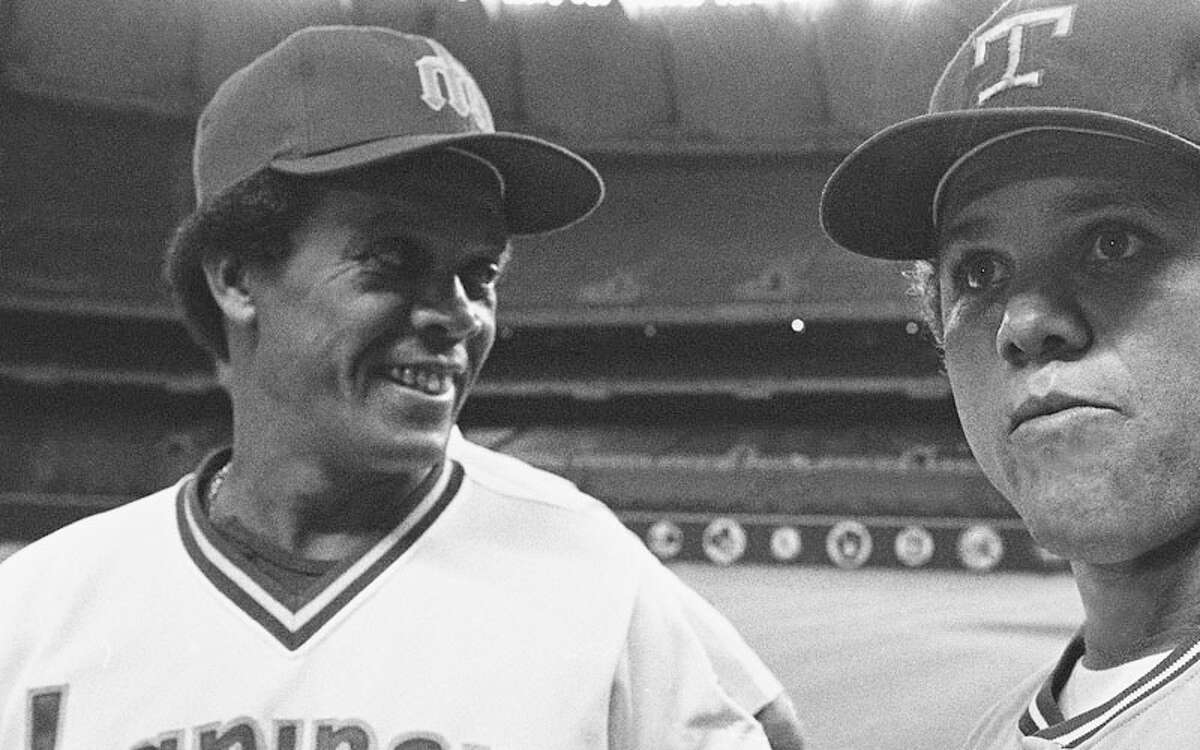
Maury's son, Elliott Taylor "Bump" Wills, was also a switch-hitter who reached the major leagues, a 2nd baseman with the Texas Rangers from 1977 to 1981, the Chicago Cubs in 1982, and the Hankyu Braves of Nishinomiya, Japan in 1983 and '84. In the American majors, he batted .266, and stole 196 bases.
Maury and Bump at the Kingdome, 1980

Bump was 1 of 6 children Maury had, all from his 1st marriage, to Gertrude Elliott, the others being son Barry, and daughters Mauricia, Anita, Wendi and Susan. He lived to see 7 grandchildren and 8 great-grandchildren. Between getting clean and writing his lurid memoir, he married a woman named Carla, who survives him.

In 1993, Wills played himself as the Dodger 3rd base coach in the "present" section of the film The Sandlot, most of which takes place in 1962, the year of his 104 steals. He also served as a member of the Dodgers Legends Bureau, a team ambassador role.
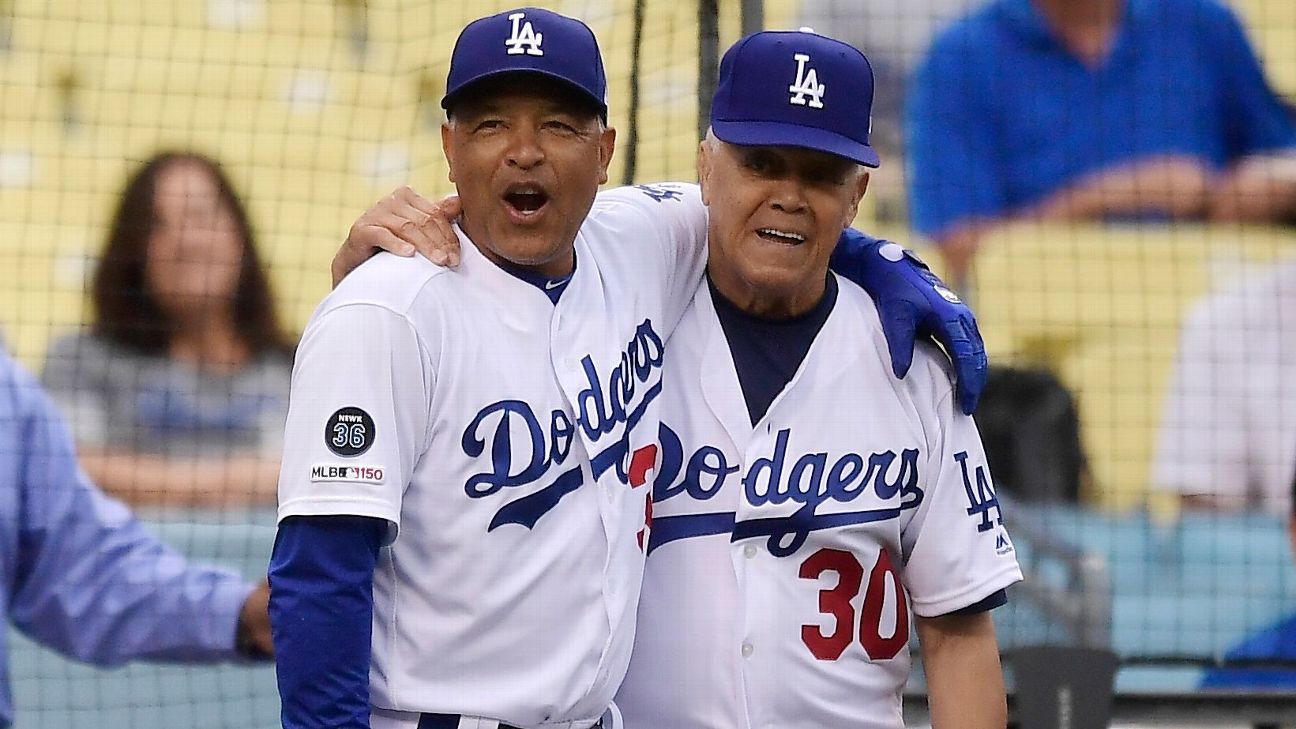
Current Dodger manager Dave Roberts
and Maury Wills, both wearing Number 30

In 1996 and 1997, Maury was a coach for the Fargo-Moorhead RedHawks, who have operated in various independent leagues. From 1998 to 2017, he was a broadcaster for them. Over that stretch, their ballpark, Newman Outdoor Field in Fargo, North Dakota, housed the Maury Wills Museum. When Wills retired as a broadcaster, the museum was closed down, and he took his memorabilia back to his home in Sedona, Arizona. Roger Maris had grown up in Fargo, and a museum honoring him is still there, in the West Acres Mall.

Maury Wills died yesterday, September 19, 2022, at his home in Sedona. He was 13 days short of his 90th birthday. He has never been elected to the Baseball Hall of Fame, despite his achievements and influence in baserunning. He has his supporters, but not enough of them on the voting committees. Perhaps now, at the next available meeting, they will reconsider his role in the game's history. 

Sunday, September 6, 2020

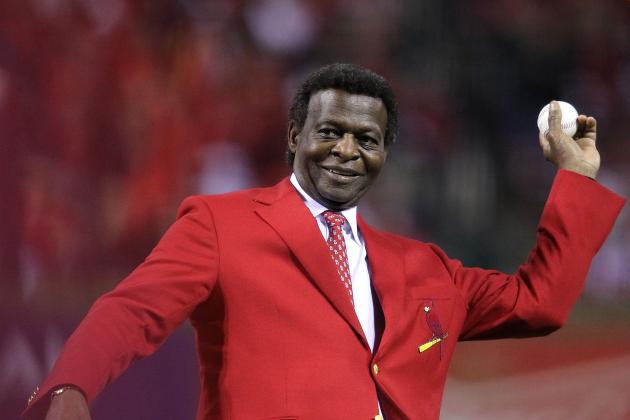
Lou Brock, 1939-2020

Lou Brock and his wife Jackie were both ordained ministers. Surely, at some point, they must have preached about the Eighth Commandment -- or the Seventh, if you're Catholic: "Thou shalt not steal."

Which would have been a tad ironic in Lou's case. But, also in his case, his thefts were not only legal, but encouraged, and made him a legend. Baseball presents a different kind of immortality than the one Christianity teaches.

Now, Lou is a part of both.

Louis Carl Brock was born on June 18, 1939 in El Dorado, in southern Arkansas. He grew up a few miles over the State Line, in Collinston, Louisiana. Being black in the 1940s and '50s, he loved baseball and became a fan of the Brooklyn Dodgers, who had reintegrated the game with Jackie Robinson.

He didn't start playing baseball in any organized way until his junior year at Union High School in Monroe, Louisiana, but he got a scholarship to play the sport at Southern University in the State capital of Baton Rouge, considered the black counterpart to the then-all-white Louisiana State University (LSU).

In 1959, he led Southern to the NAIA Championship, and was selected for the U.S. team at the 1959 Pan American Games, a Western Hemisphere "mini-Olympics," held that year in Chicago. Playing at the Cubs' Wrigley Field and the White Sox' Comiskey Park, the U.S. team only won the Bronze Medal, with Venezuela taking the Gold.

The 3rd baseman on that team would win an Olympic Gold Medal, but in hockey: He was Jack McCartan, the goaltender on the 1st U.S. team to win Gold at the Winter Olympics, in Squaw Valley, California in 1960.

In spite of being a Dodger fan, the team best able to reach Brock was the St. Louis Cardinals, thanks to their powerful radio network, including stations all through the South and West. Until the Kansas City Athletics in 1955, they were Major League Baseball's westernmost team; and, until the Houston Colt .45's (Astros) in 1962, they, the Cincinnati Reds and the Washington Senators were the southernmost teams.

So when a Cardinal scout recommended him to the club in 1960, Brock went to St. Louis to try out. But the scout in question was in Seattle, where he ended up signing pitcher Ray Washburn, who would also be a notable contributor to the Cardinals' Pennant teams of the 1960s. Brock then went to Wrigley Field to try out for the Chicago Cubs, and was signed as an amateur free agent. In 1961, with the Minnesota-based St. Cloud Rox, he won the Northern League batting championship with a .361 average.

That earned him a major league callup at the end of the season. On September 10, 1961, he made his major league debut at Wrigley. Wearing Number 24, he played center field and led off, against a future Hall-of-Famer, Robin Roberts of the Philadelphia Phillies. He singled off Roberts in his 1st at-bat, but that would be his only hit. In one of the few highlights in a disastrous season for the Phillies, they beat the Cubs 14-6.

In 1962, with future Hall-of-Famer Billy Williams entrenched in left field, Brock became the Cubs' regular center fielder. On June 17, in the 1st game of a doubleheader against the expansion Mets, he became only the 2nd player ever to hit a ball into the faraway center field bleachers at the Polo Grounds. (The Cubs swept the doubleheader, 8-7 and 4-3.)
But this was an anomaly for him: He only hit 9 home runs on the season. That the wind blows out at Wrigley Field is well-known, and this, combined with relatively close power alleys, makes it a good hitter's park. Lesser-known is the fact that the wind blows in half the time, and this, combined with relatively faraway foul poles, makes it a good pitcher's park on those occasions.

Brock was never going to be a Wrigley Field type of player, displaying the kind of slugging ability that led to one-dimensional players like Hack Wilson, Hank Sauer, Bill Nicholson, Jim Hickman and Dave Kingman being said to have "oafish clout."

Only 4 players ever hit a ball into the center field bleachers at the Polo Grounds, and Brock was easily the least likely to have done it. Luke Easter was 1st, in a Negro League game, for the Homestead Grays in 1948. Joe Adcock of the Milwaukee Braves was the 1st major leaguer to do it, against the New York Giants in 1953. The day after Brock's feat, the Braves came in, and Hank Aaron did it. Once in major league competition in the stand's 1st 39 seasons (this was part of a 1923 expansion of the 1911 ballpark), then twice in 2 games. That's how life went for the early Mets.

*

But Brock simply didn't impress Cub management, either at the plate or in the field. And so, needing pitching, on June 15, 1964, just 3 days before his 25th birthday, they traded Brock and pitchers Paul Toth and Jack Spring to the Cardinals, for pitchers Ernie Broglio and Bobby Shantz, and outfielder Doug Clemens.

No one knew it at the time, but Toth had already made his last major league appearance, and Spring would make his last the following season. Clemens was a career backup, and last played in 1968. Shantz was the 1952 American League Most Valuable Player, winning 24 games for the Philadelphia Athletics, and had helped the Yankees win the 1956 and 1958 World Series, but was winding down, and retired after the season.

For the Cubs, the key to the trade was Broglio. At the time of the trade, he was 27 years old, almost 28, and had already won 70 games in the major leagues, against just 55 losses, all for the Cardinals. He led the NL with 21 wins against just 9 losses for a rather ordinary Card team in 1960, finishing 3rd in the voting for the Cy Young Award behind Vernon Law of the World Champion Pittsburgh Pirates and future Hall-of-Famer Warren Spahn of the Milwaukee Braves -- and remember, that was an award for the most valuable pitcher in both leagues at the time. The year before the trade, 1963, he went 18-8 for an improving Cardinal team.

Ernie Broglio, RIP | Power Line
Ernie Broglio

True, he was just 3-5 at the time of the trade in 1964, but trading for him made sense: The Cubs needed to improve their pitching, and Broglio was a proven major league winner. The problem was, he didn't tell anyone at the time, but he was suffering from an injured elbow since the 2nd half of the 1963 season. He had to have his ulnar nerve reset after the 1964 season. If the Cubs had known about his injury, chances are, they wouldn't have traded for him.

This trade has gone down as one of the most lopsided ever. But, as I said, the Cubs didn't know Broglio was injured, and Brock simply wasn't a good fit for the Cubs.

The Cardinals, on the other hand, had Gold Glove winner Curt Flood in center field, and moved Brock to left field, where his defensive improved.

More than that, for most of the last 100 years, the Cardinals have been built around pitching, defense, contact hitting and baserunning. Speed, speed and more speed was a Redbird hallmark at Sportsman's Park and Busch Memorial Stadium, long before Whitey Herzog came along.

True, the Cards have had some big boomers, such as Rogers Hornsby, Joe Medwick, Johnny Mize, Stan Musial, Roger Maris at the end of his career, Jack Clark, Albert Pujols, Matt Holliday and Paul Goldschmidt.

But when you think of offensive players for the St. Louis Cardinals, you think of "Gashouse Gang" players like Pepper Martin, the scrappy, hard-charging "Wild Hoss of the Osage"; and guys who followed in that tradition. Guys like Enos Slaughter and Marty Marion.

At the time Brock arrived, they had Flood, Julian Javier, and the veteran former MVP winner Dick Groat. As Groat faded, Bobby Tolan took his place on the basepaths (if not in his exact position). Later on, there were Herzog-style players such as Ozzie Smith, Willie McGee and Vince Coleman.

An exception to this was their 1997-2001 interlude with Mark McGwire, and they paid for it by being a very mediocre ballclub, although they did reach the NL Championship Series in 2000, though this proves my point because McGwire was hurt a lot that season.

This is what Brock's career statistics looked like on June 15, 1964, at which point he was 3 days away from turning 25, a point at which most guys who end up becoming baseball stars have already begun to show that they will do so:

BA .257
OBP .306
SLG .383
OPS+ 88
Hits 310
2B 52
3B 20
HR 20
RBI 86
Runs 183
SB 50
All-Star appearances 0
Postseason appearances 0

Do those numbers say "Future Hall-of-Famer" to you? Because they sure don't say that to me. But check out his numbers for his entire career: 

BA .297
OBP .347
SLG .414
OPS+ 109
Hits 3,023
2B 434
3B 121
HR 149
RBI 814
Runs 1,610
SB 938
All-Star appearances 6
Postseason appearances 3

Would Brock have had career stats like those if he'd stayed with the Cubs? There's no way to know. But then, there was no way to know that an additional 2,700 hits and nearly 900 stolen bases were coming after June 15, 1964.

After batting just .251 with the Cubs through that date, Brock batted .348 the rest of the way for the Cardinals, batting a career-high .315 overall. He finished with 14 home runs 58 RBIs and 43 stolen bases. Led by Brock, pitcher Bob Gibson, and 3rd baseman and Captain Ken Boyer, that season's National League Most Valuable Player, the Cards surged in September, and took advantage of the Phillies' epic 10-game losing streak, and won the Pennant on the last day of the season.

In the World Series against the Yankees, Brock batted .300 with a homer and 5 RBIs. Oddly, he didn't attempt a single steal of any base. The Cardinals won the Series in 7 games, their 1st title in 18 years.

*

In 1965, Brock really took off -- not quite literally, but close, stealing 63 bases. In 1966, as the Cardinals moved from Sportsman's Park on the North Side of St. Louis to the new Busch Memorial Stadium downtown, he stole 74, leading the NL. This began a string of leading the NL in steals in 8 of the next 9 seasons.

He had his best overall season in 1967, batting .299, with career highs in hits with 206, home runs with 21, and RBIs with 76. He stole 52 bases, and led both leagues with 113 runs scored. The Cardinals, having added former Yankee slugger Roger Maris and former San Francisco Giants star Orlando Cepeda, won the Pennant going away. Brock collected 12 hits in the World Series, including a home run, with 3 RBIs, and set a Series record with 7 stolen bases. The Cardinals beat the Boston Red Sox in 7 games.

In 1968, Brock led both leagues with 46 doubles, 14 triples and 62 stolen bases. The Cards ran away with the Pennant again (yet again, figurative, but not quite literal), and faced the Detroit Tigers in the World Series. Brock tied the Series records with 13 hits (which Bobby Richardson of the Yankees had gotten against the Cards in the losing cause of 1964) and 7 steals (which Brock himself had done the year before), and batted .464 with 2 home runs and 5 RBIs.

Robin Yount of the Milwaukee Brewers tied the record of 13 hits in 1982, and Marty Barrett of the Red Sox did it 1986, but, like Richardson and Brock, did so in a losing cause. No one has yet done 13 on the winning side, and no one has yet done 14.

But for all he did in the Series, Brock turned out to be its goat. In Game 5, with the Cardinals leading 3-2 in the 5th inning, and needing only to hold that lead to win the title, he tried to score from 2nd base on a Javier single. He failed to slide, and a great throw from Willie Horton nailed him at the plate. The Tigers won, and sent the Series to a Game 7. In it, Mickey Lolich picked him off 1st base, and he lost his footing in center field at Tiger Stadium, allowing a Jim Northrup drive to drop in for a triple, leading to the Tigers' winning rally.

*

Brock's .391 batting average in World Series play is the highest for anyone with at least 20 games, and his 14 stolen bases is also a Series record -- which is especially amazing when you consider that he attempted none in 1964.

But he would never play in another postseason game. Although he was still one of the top players in the game, age was catching up to the Cardinals, and some bad traded doomed them in the 1970s, as they fell a little short of winning the National League Eastern Division in 1973 and 1974.

But that 1974 season would be Brock's masterpiece. He batted .306, and on September 10, at Busch Stadium, 13 years to the day after his major league debut, he broke Maury Wills' 1962 major league record of 104 stolen bases. He ended up raising the record to 118, and finished 2nd to Steve Garvey of the Pennant-winning Los Angeles Dodgers in the NL MVP balloting.
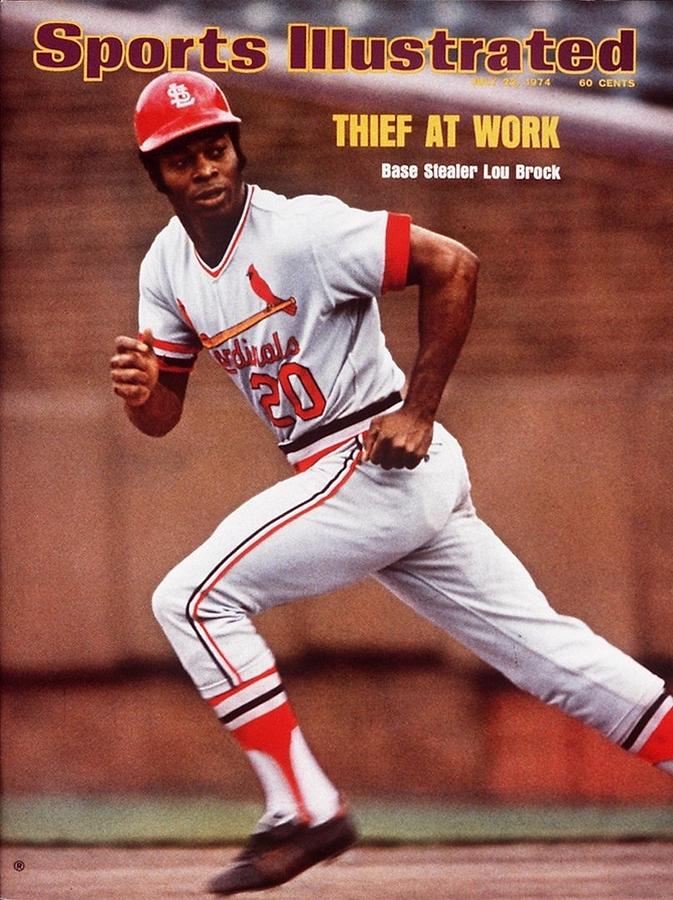
Perhaps "The Dreaded SI Cover Jinx" cost the Cards the NL East title,
as karma for taunting the Cubs on the 10th Anniversary of the trade
but making the cover Brock running at Wrigley Field.

Asked about the art of stealing bases, he said, "The only sure way to stop me is, don't let me reach first base." He also said, "First base is useless, and, most of the time, it is useless to stay there. On the other hand, second base is really the safest place on the field. When I steal second, I practically eliminate the double play. And I can score on any ball hit past the infield."

In words that would have been appreciated by his hero, the oft-distracting Jackie Robinson, "The most important thing about base stealing is not the steal of the base, but distracting the pitcher's concentration. If I can do that, then the hitter will have a better pitch to swing at, and I will get a better chance to steal."

The 1974 season would be the last in which Brock led the NL in steals, although he stole 56 bases in each of the next 2 seasons, and 35 in 1977. On August 29, 1977, against the San Diego Padres, at what was then named San Diego Stadium, he stole the 893rd base of his career, surpassing Ty Cobb, and, as far as MLB officially said, becoming the all-time leader.    
Number 893. Ugh, powder blue road uniforms.
For once, the Padres were the better-dressed team.

On August 13, 1979, Brock bedeviled the Cubs one more time. At Busch Stadium, he hit a ball up the middle off Dennis Lamp -- literally: Lamp tried to field it with his bare hand, his pitching hand, and couldn't. Brock reached 1st base, and was credited with a hit. It was the 3,000th hit of his career, making him the 14th member of the 3,000 Hit Club. (Carl Yastrzemski of the Red Sox would achieve the milestone a month later.)

He retired at the end of that season, with a .297 lifetime batting average, 3,023 hits, including 434 doubles, 121 triples, and 149 RBIs. Oddly, he only played in 6 All-Star Games, and never won a Gold Glove. Later, someone determined that the real all-time leader in stolen bases was a star at the end of the 19th Century, Billy Hamilton, with 937. So, no one realized it, but Brock became the all-time leader with the last steal of his career, his 938th.

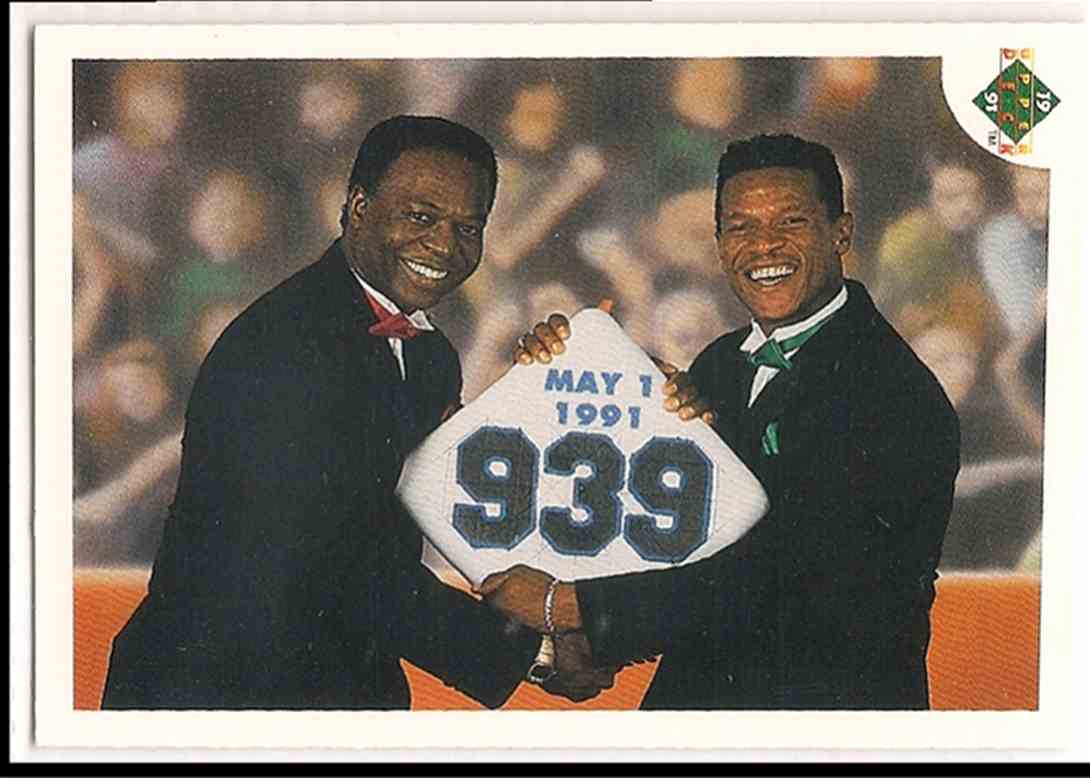
He still holds the NL records for most steals in a season, and in a career. But the major league records were taken from him by Rickey Henderson: 130 in a season, 1982; and a whopping 1,406 in a career.
A commemorative baseball card
celebrating Henderson surpassing Brock

*

Brock was elected to the Baseball Hall of Fame in 1985. The Cardinals retired his Number 20, elected him to their team Hall of Fame, and erected a statue of him outside the new Busch Stadium that opened in 2006, adjacent to the site of the old one. He was also elected to the Sports Halls of Fame of Arkansas, Louisiana and Missouri, and to the St. Louis Walk of Fame, which honors local heroes, native and adopted, from all walks of life. In 1999, The Sporting News ranked him 58th on their list of the 100 Greatest Baseball Players, and he was named as a finalist for the Major League Baseball All-Century Team.

He tried broadcasting, with ABC on Monday Night Baseball in 1980, and with the Chicago White Sox the next year. 

From 1960 to 1974, he was married to Katie Hay. They had a daughter, Wanda, and a son, Lou Brock Jr., who was born shortly before the big trade from Chicago to St. Louis. Lou Jr.'s sport was football, and he played cornerback at the University of Southern California, and in the NFL with the San Diego Chargers in 1987, and with the Detroit Lions and the Seattle Seahawks in 1988. He later worked with phone company Sprint.

From 1976 to 1995, Lou Sr. was married to Virginia Daniels, and they had a son. In 1996, Lou married Jacqueline Layne, a special education teacher. They both became ministers, serving at Abundant Life Fellowship Church in St. Louis.

Lou would be on hand in St. Louis for several special occasions: Mark McGwire's 62nd home run of the 1998 season, the last game at the old Busch Stadium in 2005, the 1st game at the new Busch Stadium the next year, nearly every other Opening Day, the memorial service for Stan Musial in 2013, and the World Series of 1982, 1985, 1987, 2004, 2006, 2011 and 2013.
But he developed diabetes, and in 2015, his left leg was amputated below the knee. In 2017, he was diagnosed with multiple myeloma. His various maladies caught up with him, and he died this afternoon, September 6, 2020, at the age of 81.

The Cardinals' Twitter feed posted, "Our hearts are broken. Lou Brock was an amazing player and outstanding person. He loved the game and all of Cardinal Nation. Rest in peace, Lou."

Ozzie Smith, Cardinals Hall-of-Famer: "Lou Brock the Base Burglar was a class act on and off the field. Made Cardinal baseball what it is. Had the ability to change the momentum of a game with his legs and his bat. May he Rest In Peace. One of the greatest Cardinals of all time."

Albert Pujols, Cardinals superstar now running out the string with the Los Angeles Angels: "Lou Brock was one of the finest men I have ever known. Coming into this league as a 21-year-old kid, Lou Brock was one of the first Hall-of-Fame players I had the privilege to meet. He told me I belonged here in the big-leagues."

Bernie Miklasz, longtime sports columnist for the St. Louis Post-Dispatch: "There was a light inside of Lou Brock that brightened every place and space he entered. A light that warmed every person he encountered. Grace. Dignity. Class. Joy. His generosity of spirit touched so many. I’ve never known a finer man. #RIPLou ... Long may you run."

As fate would have it, Lou Brock died on a day when the Chicago Cubs were playing the St. Louis Cardinals at Wrigley Field. And, of course, the Cardinals won, 7-3.

He once said, "They will look at my career as the guy who gave it all, but, at the same time, did it with integrity. That's what we all aim for, the respect of the game, as well as the honesty that's played a part of that game."

He stole more bases than anybody before him, but he was honest. That is the legacy of Lou Brock.

Thursday, March 29, 2018

St. Louis' 10 Greatest Athletes

Left to right: Bruce Sutter, Bob Gibson, Red Schoendienst,
Stan Musial, Whitey Herzog, Lou Brock and Ozzie Smith.

Today, the Mets opened the 2018 baseball season at home to the St. Louis Cardinals, winning 9-4.

St. Louis' 10 Greatest Athletes

My metro areas lists won't be like my lists for the States: While it is possible for someone to qualify on both lists, this is about players who played for local teams, not necessarily athletes who grew up there. In other words, great players in individual sports like boxing or tennis or track are out.

Honorable Mention to members of the Baseball Hall of Fame not otherwise in the Top 10: From the Cardinals, 1st basemen Charles Comiskey, Jake Beckley, Jim Bottomley, Johnny Mize and Orlando Cepeda; 2nd basemen Frankie Frisch and Red Schoendienst shortstop Ozzie Smith; left fielders Chick Hafey and Joe Medwick; and pitchers Grover Cleveland Alexander, Jessie Haines, Burleigh Grimes, Dizzy Dean, Steve Carlton and Bruce Sutter. (Ol' Diz was an all-time great, but an injury kept him from being great long enough to make the Top 10.

And from the Browns, shortstop Bobby Wallace, left fielder Goose Goslin, catcher Rick Ferrell, and pitcher Satchel Paige.

Honorable Mention to members of the Pro Football Hall of Fame not otherwise in the Top 10: From the Cardinals, tight end Jackie Smith, cornerback Roger Wehrli, and offensive tackle Dan Dierdorf; and from the Rams, offensive tackle Orlando Pace.

Honorable Mention, in particular, to Kurt Warner, quarterback, St. Louis Rams, 1998-2003 -- who is, after all, the only quarterback to lead a St. Louis team to an NFL Championship. The Rams' "Greatest Show On Turf" didn't last long, pretty much from Warner's assumption of the quarterbacking duties in the 1999 preseason following Trent Green's injury, until a finger injury Warner suffered early in the 2003 season -- barely 4 full seasons.

But those seasons, with Warner, running backs Marshall Faulk and Dre Bly, and receivers Isaac Bruce, Torry Holt, Az-Zahir Hakim and Ricky Proehl, with Orlando Pace blocking for them, was one of the most spectacular offensive shows in NFL history, winning Super Bowl XXXIV -- the 1st NFL Championship in St. Louis history, and the 1st for the Rams franchise in 48 years. Warner was named Most Valuable Player of that game, and would be named NFL MVP in 1999 and 2001.

A 4-time Pro Bowler, he got the Rams into Super Bowl XXXVI, but they lost. He was later be signed by the Arizona Cardinals, the former St. Louis football team, and got them into Super Bowl XLIII, their 1st NFC Championship, and their 1st NFL Championship Game under any name in 60 years. But they lost, too.

He was elected to the Pro Football Hall of Fame earlier this year. He was elected to the St. Louis Football Ring of Fame and the Arizona Cardinals Ring of Honor. In 2010, the NFL Network ranked him 90th on their list of the 100 Greatest Football Players. If the Rams institute a new team hall of fame once their permanent Los Angeles (Inglewood) stadium opens, he might be named to it, even though he never played a professional game in the L.A. metropolitan area.

Honorable Mention to members of the Basketball Hall of Fame not otherwise in the Top 10: From the Hawks, centers Ed Macauley and Clyde Lovellette; forwards Cliff Hagan and Lenny Wilkens; and guard Slater Martin, Richie Gerin and Zelmo Beaty; and from the Spirits, forward Maurice Lucas.

Honorable Mention to Blues who are members of the Basketball Hall of Fame not otherwise in the Top 10: Goaltenders Glenn Hall and Grant Fuhr, defensemen Al MacInnis and Chris Pronger, left wing Brendan Shanahan, right wing Joe Mullen, and centers Bernie Federko, Doug Gilmour and Adam Oates.

Honorable Mention to the St. Louis Boys of 1950. Of the 11 players of the U.S. team that upset England at the 1950 World Cup, 5 were from St. Louis. Goalkeeper Frank Borghi and center-half Charlie Colombo, outside right Frank "Pee Wee" Wallace and inside right Gino Parianiplayed for St. Louis Simpkins-Ford. Right back Harry Keough played for St. Louis McMahon, St. Louis Raiders and St. Louis Kutis.

Left back Joe Maca played for Brooklyn Hispano. Center forward Joe Gaetjens played for Brookhattan. Left half Walter Bahr, the last survivor, and midfielder Ed McIlvenny were playing for Philadelphia Nationals. Inside left John Souza and outside left Ed Souza played for Fall River Delponta Delgada in Massachusetts.

10. Larry Wilson, safety, St. Louis Cardinals (football), 1960-72. Like 1920s football star George Wilson, to whom he appears not to have been related, he was nicknamed Wildcat, but the earlier Wilson is not the reason. When he was drafted by the Chicago Cardinals in 1960 -- they moved to St. Louis between the draft and the next season -- their defensive coordinator, Chuck Drulis, created a play he code-named "Wildcat," inventing the safety blitz. The Cards drafted Larry specifically to take advantage of this, as his play at the University of Utah showed him to be both really fast and hard-hitting.

Larry Wilson was so tough! (How tough was he?) He was so tough, he once played a game with both hands taped over, including his fingers, because he had broken both wrists -- and still intercepted a pass. It was 1 of 52 he picked off in his career, for 800 yards, including 5 touchdowns.

The aforementioned Jerry Kramer called him "the finest football player in the NFL." It seems a crime that he never appeared in a Playoff game in his 13 seasons, but Kramer's Packers dominated the NFL Western Division at the time, so the closest the Cardinals came was finishing 2nd in 1964, making the subsequent Bert Bell Benefit Bowl (a.k.a. the Playoff Bowl).

It's not that they weren't good: They were 9-5 in 1963, 9-3-2 in 1964, 8-5-1 in 1966, 9-4-1 in 1968, and 8-5-1 in 1970. We're not talking about a one-man team here. Had he hung on just a little longer, he could have been a part of the Cardinals' 1974 and '75 NFC Eastern Division Champions.

He made 8 Pro Bowls, and was named to the Pro Football Hall of Fame, the NFL 1960s and 1970s All-Decade Teams (even though he retired in 1972, and the only other man named to both teams was Dick Butkus), and the NFL 75th Anniversary All-Time Team.

In 1999, The Sporting News ranked him 43rd on their list of the 100 Greatest Football Players. It is a crime that he was not named to the NFL Network's 100 Greatest Players in 2010, especially since he was still alive and available for an interview (and still is now). No player from the 1999 TSN 100 had a bigger dropoff. Along with Ronnie Lott, Paul Krause, Ken Houston and Emlen Tunnell, he is probably still 1 of the top 5 safeties in football history.

The Cardinals retired his Number 8 well before they moved to Arizona. Even though he never played for Arizona (though he was a Cardinals executive both before and after the move, serving as scouting director, personnel director, general manager and vice president, retiring from an active role in 2002), he is in their Ring of Honor at University of Phoenix Stadium. Although he never played for the Rams, they (before moving back to Los Angeles) named him to the St. Louis Football Ring of Fame at the Edwards Jones Dome.

9. Marshall Faulk, running back, St. Louis Rams, 1999-2005. A star at San Diego State University, he made 7 Pro Bowls, and was named the NFL's Rookie of the Year in 1994 and Most Valuable Player in 2000. At the turn of the 21st Century, he was probably the NFL's best all-around player, helping the Rams reach Super Bowls XXXIV (won) and XXXVI (lost).

He finished his career with 12,280 rushing yards and an even 100 rushing touchdowns; and 767 catches for 6,875 yards and 36 touchdowns. The Indianapolis Colts, with whom he started, named him to their Ring of Honor. San Diego State and the Rams both retired Number 28 for him. He was elected to both the College and the Pro Football Hall of Fame. In 2010, the NFL Network listed him 70th on their list of the NFL's 100 Greatest Players.

His cousin Kevin Faulk was also a star running back, and helped the Patriots win 3 Super Bowls, including beating the Rams in Super Bowl XXXVI.

8. Rogers Hornsby, 2nd base, St. Louis Cardinals, 1915-26 and 1933; and St. Louis Browns, 1933-37. He would rank a bit higher on this list had he stayed in St. Louis for his entire career, but he was traded away from the Cardinals -- despite being their best hitter and their manager of their 1st World Series-winning team -- because he was a rotten guy. This included being a racist and a compulsive gambler.

He also might have been the greatest righthanded pure hitter who ever lived. His .358 lifetime batting average is a record for righthanders. He batted .402 over a 5-year stretch from 1922 to 1926, including .424 in 1924, the highest in Major League Baseball since 1894.

He won 7 National League batting titles, 2 home run titles, 4 RBI titles, and all 3, the Triple Crown, in 1922 and 1925. He was named NL Most Valuable Player in 1925 and 1929. He collected 2,930 hits, and had 301 home runs. That doesn't sound like much now, but when he played his last game in 1937, only Babe Ruth, Lou Gehrig and Jimmie Foxx had more. In addition to his 1926 World Championship with the Cardinals, he also won Pennants with the Chicago Cubs in 1929 and 1932.

But he went on to make 2 troubling discoveries: He was respected, but hated, and teams couldn't wait to get rid of him, his ego, and his private troubles; and he was a far better manager with himself as a player than without, frequently frustrated when his players weren't very good, let alone as good as he was.

He was named to the Baseball Hall of Fame and the Major League Baseball All-Century Team. When The Sporting News named its 100 Greatest Baseball Players in 1999, Hornsby came in 9th, the highest-ranked 2nd baseman.

The Cardinals named him to their team Hall of Fame, and dedicated a statue to him outside Busch Stadium. While uniform numbers began to be used during his career, he never wore the same number long enough to be identified with it, so a Cardinal "STL" logo stands in for a retired number along with their other honorees.

7. Brett Hull, right wing, St. Louis Blues, 1988-98. Picking a player for the Blues is difficult, because most of their better players also spent significant time with other teams, including Hull, Al MacInnis, Chris Pronger and Keith Tkachuk. But Hull is the only one with a statue outside their arena. He scored 741 goals in his NHL career, 527 of them with the Blues.

6. Bob Pettit, forward, St. Louis Hawks, 1955-65. He was an 11-time NBA All-Star, a 2-time NBA MVP, and the 1st NBA player to score 20,000 points. (This wouldn't be a big deal today. It was a huge deal then, in 1965.) He won the 1958 NBA Championship with the Hawks. After they moved to Atlanta, they retired his Number 9. He was named to the Basketball Hall of Fame and the NBA's 50th Anniversary 50 Greatest Players.

5. George Sisler, 1st base, St. Louis Browns, 1915-27. He started out as a pitcher, and in his rookie year, 1915, he outpitched his hero, Walter Johnson of the Washington Senators, twice. But, like another lefthanded pitcher who had his 1st full season in 1915, Babe Ruth, he turned out to be a much better hitter.

"Gorgeous George" -- or "the Sizzler" -- had a .340 lifetime batting average, including American League batting titles in 1920 and 1922. In 1922, he nearly led the Browns to the Pennant, falling 1 game short of the Yankees. He collected 257 hits, a major league record that stood until Ichiro Suzuki got 262 in 2004. For his career, he had 2,812 hits, and he might be much better remembered had he gotten the remaining 188 to get to 3,000.

He also led the AL in stolen bases 4 times, and for decades was regarded as the best-fielding 1st baseman in the game's history. When the Baseball Hall of Fame opened in 1939, there were 25 inductees, 12 of whom were still alive, and 11 of them attended the opening ceremony -- all but Ty Cobb, who got held up getting there and just missed it. Sisler was the last survivor of those 12, living until 1973.

Many people forgot him, but The Sporting News didn't, ranking him 33rd on their list of the 100 Greatest Baseball Players in 1999. When the current Busch Stadium opened in 2006, a statue of Sisler was placed outside, even though he never played for the Cardinals.

(The Browns became the Baltimore Orioles in 1954, but they have not honored him in any way. And since his last season in the majors was 1930, the last year before every team adopted uniform numbers, there is no number to retire for him, which is another reason why he's not as well remembered as, say, Cobb or Ruth.)

He had 3 sons involved with professional baseball, including Dick Sisler, whose home run on the last day of the 1950 regular season gave the Philadelphia Phillies the National League Pennant over the Brooklyn Dodgers -- whose team president, fellow University of Michigan graduate Branch Rickey, had signed him as a scout. George said, "I felt awful and terrific at the same time."

4. Albert Pujols, 1st base, St. Louis Cardinals, 2001-11. In 11 seasons with the Cards, Phat Albert made 10 All-Star teams. He also drove in at least 100 runs every season until 2011, when he had 99. He batted .328 with the Cardinals, with a 170 OPS+, 455 doubles, and 445 home runs. With all of that, and his being a 1st baseman, he was frequently compared with Stan Musial, a.k.a. Stan the Man, even getting the same nickname, "El Hombre."

His subsequent tenure with the Los Angeles Angels of Anaheim hasn't been as successful, but he goes into the 2018 season with 614 home runs, more than any player has ever hit honestly except Hank Aaron, Babe Ruth, Willie Mays and Ken Griffey Jr. (Jim Thome finished with 612.) By the year 2027, expect to see him in the Hall and to see his Number 5 retired at Busch Stadium.

3. Lou Brock, left field, St. Louis Cardinals, 1964-79. He led Southern University of Baton Rouge, Louisiana to the 1959 NAIA Championship (national championship for small schools). Based on this, and on his major league achievements, he was elected to the College Baseball Hall of Fame.

An 8-time MLB All-Star, he collected over 3,000 hits, and set records (which still stand, at least within the National League) for stolen bases in a season and a career. He led the St. Louis Cardinals to the 1964 (won), 1967 (won) and 1968 (lost) World Series. In 1967, he won the Babe Ruth Award, 1 of the 2 awards given to the Most Valuable Player of the World Series. (Bob Gibson got the better-known award, the Sport Magazine Award.)

The Cardinals retired his Number 20. He was named to the Baseball Hall of Fame and The Sporting News' 100 Greatest Baseball Players, ranked 58th.

2. Bob Gibson, pitcher, St. Louis Cardinals, 1959-75. Like Wilt Chamberlain, he played college basketball, in his case for Omaha's Creighton University. Also like Wilt, he played for the Harlem Globetrotters. Unlike Wilt, he couldn't stand the clowning, and wanted to play serious sports only. And since baseball paid more than basketball at that point, he chose baseball. And when Bob Gibson played baseball, it was a serious sport.

He didn't regret his choice of sports, but many men did. More so than even Don Drysdale, he was considered the meanest pitcher of his generation. He once said, "I didn't throw at a lot of guys, but when I did, I made sure I hit them." He also presaged Charles Barkley with this remark: "Why do I have to be a role model for your kid? You be a role model for your kid."

Along with Brock and Ken Boyer, he helped the St. Louis Cardinals win the 1964 and (with the additions of Orlando Cepeda and Roger Maris) 1967 World Series, and was named the Series MVP both times. In Game 1 in 1968, he set a Series record with 17 strikeouts. He seemed unbeatable, having already won Game 7 in both 1964 and 1967, but the Detroit Tigers got to him in Game 7 in 1968.

That 1968 season saw him put together the lowest earned-run average of the post-1920 Lively Ball Era, 1.12. For his career, he was 251-714, with 3,117 strikeouts, making him the 1st National League pitcher to fan 3,000. He made 9 All-Star Games, won 2 Cy Young Awards (1968 and 1970), and won 9 Gold Gloves. He also pitched a no-hitter in 1971.

He was named to the Baseball Hall of Fame, The Sporting News' 100 Greatest Baseball Players, and the Major League Baseball All-Century Team. The Cardinals elected him to their team Hall of Fame, retired his Number 45, and erected a statue of him outside Busch Stadium.

Do you want to tell Gibson he's not the greatest athlete ever to play for a St. Louis sports team? Neither do I. But he respects the history of the game, and of the Cardinals in particular, to accept that, in St. Louis, only Stan was truly The Man.

1. Stan Musial, left field, St. Louis Cardinals, 1941-63. Like Sisler and Babe Ruth, he was a lefthander who started as a pitcher. Like Ruth, but also played the outfield. Unlike Sisler and Ruth, his pitching career ended when he landed on his shoulder while making a great catch in the minor leagues. So he became a full-time outfielder -- and, along with Hornsby and Hank Aaron, a candidate for the title of greatest hitter in National League History.
Ted Williams, Stan's contemporary, always said he wanted people to think of him as the greatest hitter who ever lived. If there's one thing Ted liked more than hitting, it was talking about hitting. Once, he went on and on about Stan, until his son, John Henry Williams, asked if he thought Stan was as good a hitter as he was, and Ted said, "Yes, I do." That says it all; the rest is details.

Here's some of the details. He shares with Aaron and Willie Mays the record of 24 All-Star Game appearances. (There were 2 ASGs every year from 1958 to 1962, so he appeared in them in the last 20 of his 22 MLB seasons.) He had a career batting average of .331. Someone once asked him why he was always smiling, and he said, "If you had a lifetime batting average of .331, you'd be smiling, too!" He won 7 batting titles. His OPS+ was a whopping 159, meaning he was 59 percent better at producing runs than the average player of his time.

He was the 1st man to collect his 3,000th career hit on television, in 1958. He finished with 3,630 hits -- exactly 1,815 at home and 1,815 on the road. He hit 725 doubles, 3rd all-time behind Tris Speaker and Pete Rose -- and Stan's last hit, in 1963, went under the glove of Rose, then a rookie 2nd baseman for the Cincinnati Reds.

He hit 475 home runs, more than any National Leaguer before him except Mel Ott. He had 1,951 RBIs, more than any NLer before him and still 7th all-time, including 10 100+ seasons. He finished with more extra-base hits (1,377) and more total bases (6,134) than any other player (with both records having been broken by Aaron).

He won 4 Pennants with the Cardinals, winning the World Series in 1942, 1944 and 1946, and losing it in 1943. He won 3 NL MVP awards, in 1943, 1946 and 1948 -- in this last, missing the Triple Crown by 1 home run -- and finished 2nd 4 other times, including 1957, when he won his last batting title, and Sports Illustrated named him Sportsman of the Year.

He was elected to the Baseball Hall of Fame in his 1st year of eligibility. In 1999, The Sporting News listed him 10th on their list of the 100 Greatest Baseball Players, and fan balloting put him on the Major League Baseball All-Century Team.

In 2011, Barack Obama awarded him the nation's highest civilian honor, the Presidential Medal of Freedom. Reflecting his service to his adopted hometown, and to his country, serving in the U.S. Navy in World War II in 1945 -- the only year between 1942 and 1946 that the Cardinals didn't win the Pennant -- a new bridge for Interstate 70 over the Mississippi River, which opened just after his death in 2013, was named the Stan Musial Veterans Memorial Bridge, and is nicknamed the Stan Span.

The Cardinals retired his Number 6, and dedicated a statue to him outside Busch Stadium, having since moved it to the new ballpark with that name. On its base is a quote from the Commissioner at the time, Ford Frick: "Here stands baseball's perfect warrior. Here stands baseball's perfect knight."

Sunday, April 30, 2017

Top 10 Athletes From Louisiana

April 30, 1812: Louisiana is admitted to the Union as the 18th State.

Top 10 Athletes from Louisiana

We think of Louisiana as a football State, but, so far, they've only produced 2 Heisman Trophy winners, and 1 Pro Football Hall-of-Famer -- and it wasn't either of the Heisman winners.

In contrast, they've got 4, nearly 5, of the NBA's official 50 Greatest Players. And that's not counting Bill Russell, who was born there, but not raised there; or Pete Maravich, who went to Louisiana State University, but didn't grow up in Louisiana.

They've also produced 2 Baseball Hall-of-Famers, and that's not counting Bill Dickey, who was born there but lived most of his life in neighboring Arkansas.

Honorable Mention to Karl Malone of Summerfield. He was a 14-time NBA All-Star, a 2-time NBA Most Valuable Player, and a 2-time Olympic Gold Medalist: On perhaps the greatest amateur team ever assembled, the 1984 U.S. team; and perhaps the greatest team ever assembled in any sport, the 1992 U.S. "Dream Team."

His Number 32 was retired by Louisiana Tech and the Utah Jazz. Basketball Hall of Fame. He was named to the NBA's 50th Anniversary 50 Greatest Players. He has a statue outside the EnergySolutions Arena in Salt Lake City.

Honorable Mention to Ron Guidry of Lafayette, who helped the Yankees win the 1977 World Series, and without whose incredible season the Yankees would not have won it again in 1978.

Honorable Mention to Chad Gaudin of the New Orleans suburb of Metairie, who helped the Yankees win the 2009 World Series.

Honorable Mention to Doug Williams of Zachary. I don't know what's more miraculous: Getting the Tampa Bay Buccaneers to within 9 points of a Super Bowl berth, losing the 1979 NFC Championship Game; or turning a 10-0 deficit into a 42-10 victory, with 5 touchdowns, including 4 touchdown passes, in a span of only 13 minutes, leading the Washington Redskins to victory in Super Bowl XXII in 1988. He was the 1st black quarterback to win an NFL Championship.

Honorable Mention to Joe Dumars of Natichitoches. The franchise now known as the Detroit Pistons hasn't won a championship, in any league, without him being involved since 1945. He was the defensive leader of their 1989 and 1990 NBA Champions, winning the Finals MVP in 1989, and the general manager of their 2004 NBA Champions.

Honorable Mention to Joe Brown of Baton Rouge. The Lightweight Champion of the World from 1956 to 1962, he was named The Ring magazine Fighter of the Year in 1961.

Honorable Mention to John David Crow of Springhill. The running back led Texas A&M to the 1956 Southwest Conference Championship. In 1957, he became the 1st player from the school to be awarded the Heisman Trophy, the only Heisman winner ever coached by Bear Bryant.

He played for the Cardinals, including during their 1960 move from Chicago to St. Louis. He was a 4-time Pro Bowler, and was named to the NFL's 1960s All-Decade Team. He later returned to Texas A&M as their athletic director. He is in the College Football Hall of Fame.

Honorable Mention to Billy Cannon of Baton Rouge. The running back led Louisiana State University to the 1958 National Championship, and won the 1959 Heisman Trophy. He was the 1st-ever pick in the 1st-ever American Football League Draft. He justified that by helping the Houston Oilers win the 1960 and 1961 AFL Championships -- still the only time the Oilers/Titans franchise has gone as far as the rules of the time have allowed them to go.

He won another AFL Championship with the 1967 Oakland Raiders. His Number 20 was retired by LSU, and he is a member of the College Football Hall of Fame. Like another 1960s sports hero, 1967 American League Cy Young Award winner Jim Lonborg of the Boston Red Sox, he became a dentist.

Unfortunately, like yet another 1960s sports hero, 1968 AL Most Valuable Player Denny McLain, he got involved in something he shouldn't have, and went to prison. Based on those 2 facts, upon his release, he was given a job as the head dentist for the State penal system, a job he still holds.

Honorable Mention to Marshall Faulk of New Orleans. A star at San Diego State University, he made 7 Pro Bowls, and was named the NFL's Rookie of the Year in 1994 and Most Valuable Player in 2000. At the turn of the 21st Century, he was probably the NFL's best all-around player, helping the St. Louis Rams reach Super Bowls XXXIV (won) and XXXVI (lost).

He finished his career with 12,280 rushing yards and an even 100 rushing touchdowns; and 767 catches for 6,875 yards and 36 touchdowns. The Indianapolis Colts, with whom he started, named him to their Ring of Honor. San Diego State and the Rams both retired Number 28 for him. He was elected to both the College and the Pro Football Hall of Fame. In 2010, the NFL Network listed him 70th on their list of the NFL's 100 Greatest Players.

Honorable Mention to Kevin Faulk of New Orleans. Marshall's cousin played at LSU, and rushed for a relatively modest 3,607 in his career, for the New England Patriots, but beat Marshall's Rams in Super Bowl XXXVI. He also was with them when they won Super Bowls XXXVIII and XXXIX. The Patriots named him to their team Hall of Fame and their 50th Anniversary Team, as a kick return specialist.

But neither Crow, nor Cannon, nor either of the Faulks is the greatest running back from Louisiana.

10. Bob Pettit of Baton Rouge. He was an 11-time NBA All-Star, a 2-time NBA MVP, and the 1st NBA player to score 20,000 points. (This wouldn't be a big deal today. It was a huge deal then, in 1965.) He won the 1958 NBA Championship with the St. Louis Hawks. After they moved to Atlanta, they retired his Number 9. He was named to the Basketball Hall of Fame and the NBA's 50th Anniversary 50 Greatest Players.

9. Robert Parish of Shreveport. He was a 9-time NBA All-Star, and while he never won an MVP, the Boston Celtics would not have won the 1981, 1984 and 1986 NBA Championships without him. He won another title as a backup on the 1997 Chicago Bulls -- making him the only man to win the NBA with both Boston and Chicago.

He played in more games than anyone in NBA history, and was long believed to be the league's oldest player ever before someone rediscovered an older one in the league's early days. The Celtics retired his Number 00, and he was named to the Basketball Hall of Fame and the NBA's 50th Anniversary 50 Greatest Players.

8. Steve Van Buren of New Orleans. He was born in the Central American nation of Honduras, to an American father and a native mother, but was orphaned at age 10, and sent to live with his father's family in New Orleans.

Bernie Moore, the coach who brought him to LSU, said, "He was probably the greatest running back in Southeastern Conference history." The SEC has since seen Cannon, Herschel Walker, Bo Jackson, Emmitt Smith, Mark Ingram and Derrick Henry. But Van Buren may have been the best through the 1944 Orange Bowl, in which he led LSU to a 19-14 win over Texas A&M, responsible for all the Tigers' points: He ran for 2 touchdowns, threw for 1, and kicked an extra point.

"Moving Van" then starred for the Philadelphia Eagles, making 6 Pro Bowls, and getting them to 3 straight NFL Championship Games, as the best running back in the NFL, and as a deadly tackler as a defensive back.

They lost to the Chicago Cardinals in 1947. Then "Supersonic Steve" braved the elements. The day of the 1948 Championship Game, 10 inches of snow fell on Philadelphia, and he almost didn't get to Shibe Park. Somehow, he got through the snow outside, and the snow inside, scoring the game's only touchdown to get the Eagles their 1st World Championship. In 1949, the weather struck again. A rare Southern California rainstorm hit the Los Angeles Coliseum, but he led the Eagles to victory over the Rams. To put it another way: In those 2 seasons, the Eagles won 2 titles; it would take them another 69 years to win another 2.

Injuries forced him to retire after playing his last game in 1951, with 5,860 rushing yards and 69 rushing touchdowns, both records at the time. He was the 1st Eagles player elected to the Pro Football Hall of Fame, in 1965 -- making him the 1st Hispanic player elected to any of the "big four" sports' Halls. He was named to the NFL's 1940s All-Decade and 75th Anniversary Team. The Eagles retired his Number 15, and named him to their Hall of Fame and their 75th Anniversary Team.

In 1999, he came in 77th on The Sporting News' 100 Greatest Football Players. Somehow, by 2010, he had grown in the estimation of football historians, because the NFL Network raised his ranking to 58th.

7. Elvin Hayes of Rayville. The Big E reached the 1968 NCAA Final Four with the University of Houston. He was a 12-time NBA All-Star, and helped the Washington Bullets, the team now known as the Washington Wizards, reach the NBA Finals 3 times, winning the 1978 NBA Championship.

His Number 44 was retired by UH, and his Number 11 retired by the Wizards. He was named to the Basketball Hall of Fame. and the NBA's 50th Anniversary 50 Greatest Players.

6. Eli Manning of New Orleans. Since he immediately followed his brother Peyton, the comparison to their father Archie wasn't nearly as prominent, so he could go to Archie's alma mater, the University of Mississippi, and just play ball.

He did all right there, and was named Southeastern Conference Offensive Player of the Year in 2003. With the New York Giants, he's a 4-time Pro Bowler, and not only led them to 2 Super Bowl wins, both upsets of the cheating New England Patriots, but was named the MVP of both games. He is the greatest quarterback New York City has ever had. Don't tell me that Phil Simms was better. Don't tell me that Joe Namath's 1 Super Bowl was more important; even if that's true, that doesn't make him better.

Eli will easily get his Number 10 retired by the Giants, and, barring doing something massively stupid, will be elected to the Pro Football Hall of Fame. And yet, he still doesn't make the Top 5. He's not even Number 1 within his own family.

5. Mel Ott of the New Orleans suburb of Gretna. The 1st great slugger in the National League in the post-1920 Lively Ball Era, he was the NL's all-time home run leader from 1937 until 1966, finishing his career with 511. Until 2001, he was the NL's all-time leader among lefthanded hitters. Due to the short right-field fence at the Polo Grounds, he hit 323, or 63 percent of his total, at home. This also means that he has more home runs hit in New York City than any other player – ahead of Mickey Mantle with 270 and Babe Ruth with 266.

He missed the 1st All-Star Game in 1933, but then making every one through 1944, for a total of 11. His lifetime batting average was .304, and he had 9 100-RBI seasons. He helped the New York Giants win 3 Pennants, and his home run won the clinching game of the 1933 World Series. The Giants retired his Number 4, he was elected to the Baseball Hall of Fame, and in 1999 was named to The Sporting News' 100 Greatest Baseball Players.

4. Lou Brock of Collinston, which isn't far from Hayes' hometown of Rayville. He led Southern University to the 1959 NAIA Championship (national championship for small schools). Based on this, and on his major league achievements, he was elected to the College Baseball Hall of Fame.

An 8-time MLB All-Star, he collected over 3,000 hits, and set records (which still stand, at least within the National League) for stolen bases in a season and a career. He led the St. Louis Cardinals to the 1964 (won), 1967 (won) and 1968 (lost) World Series. In 1967, he won the Babe Ruth Award, 1 of the 2 awards given to the Most Valuable Player of the World Series. (Bob Gibson got the better-known award, the Sport Magazine Award.)

The Cardinals retired his Number 20. He was named to the Baseball Hall of Fame and The Sporting News' 100 Greatest Baseball Players, ranked 58th.

3. Peyton Manning of New Orleans. Putting aside the return of an allegation made against him in college, which, if true, would make him even less moral than his rival Tom Brady... So much has been made of the games Peyton has lost that we forget just what he has won.

He starred at the University of Tennessee, not winning the Heisman Trophy or the National Championship, but winning the 1997 Sullivan Award as the nation's top amateur athlete. He is a 14-time Pro Bowler, a 5-time NFL MVP, and the 2013 Sports Illustrated Sportsman of the Year.

No quarterback has won more games, or thrown for more yards in a season or in a career, or has thrown more touchdown passes in a season or in a career. He went to 4 Super Bowls, and is 1 of only 2 quarterbacks to lead 2 different teams to an NFL Championship: The 2006 Indianapolis Colts (and he was named the Super Bowl XLI MVP) and the 2015 Denver Broncos. (The other is Norm Van Brocklin of the 1951 Los Angeles Rams and the 1960 Philadelphia Eagles.)

His Number 18 has been retired by the Colts. He was only in his 2nd season when The Sporting News named their 100 Greatest Football Players in 1999, but was named to the NFL's 2000s All-Decade Team. Barring an epic calamity, he will be elected to the Pro Football Hall of Fame in 2021. He was ranked 8th on the NFL Network's 100 Greatest Players in 2010.

And yet, he still doesn't make the top 2. Maybe if Brady hadn't been a part of so much cheating...

2. Willis Reed of Bernice, which isn't far from Malone's hometown of Summerfield. May 8, 1970. That alone made him a legend. But that wasn't all he did. He was a 7-time NBA All-Star, captained the Knicks to the 1970 and 1973 NBA Championships, was named the Finals MVP both times, and remains the team's all-time greatest center. (Do I have to remind you that, while Patrick Ewing predicted titles, Willis actually won them?)

His Number 19 was the 1st retired by a New York basketball team, and he was named to the Basketball Hall of Fame and the NBA's 50th Anniversary 50 Greatest Players.

1. Terry Bradshaw of Shreveport. The "dummy" put up a very smart legacy. He was named to 3 Pro Bowls, and was NFL MVP in 1978. He shared Sports Illustrated's 1979 Sportsman of the Year award with another Pittsburgh icon who won a World Championship that year, Willie Stargell.
He got the Pittsburgh Steelers into 4 Super Bowls, won them all, and was named MVP in 2 of them. The Steelers don't retire numbers, but his Number 12 has never been given back out. He was named to the Pro Football Hall of Fame, The Sporting News' 100 Greatest Football Players (44th), and the NFL Network's 100 Greatest Players (50th).