Wednesday, September 23, 2026
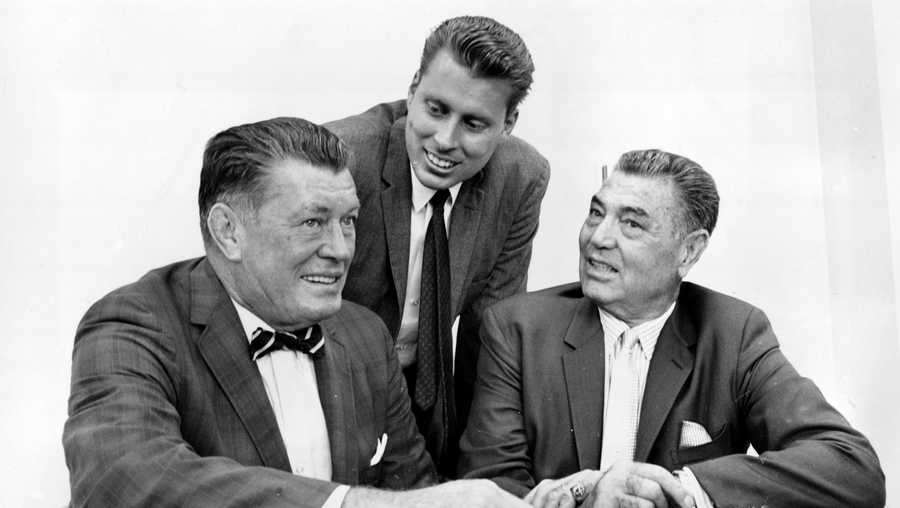
September 23, 1926: Tunney Defeats Dempsey
Thursday, September 14, 2023
September 14, 1923: Jack Dempsey vs. Luis Firpo
Friday, July 2, 2021
July 2, 1921: Boxing's 1st Million-Dollar Gate
Friday, September 22, 2017
Top 5 Reasons You Can't Blame Referee Dave Barry for the Long Count
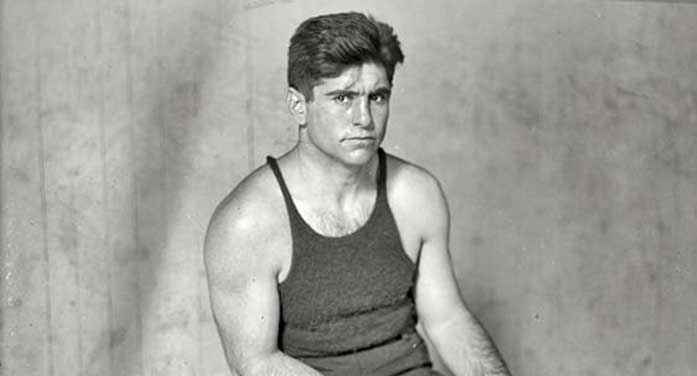
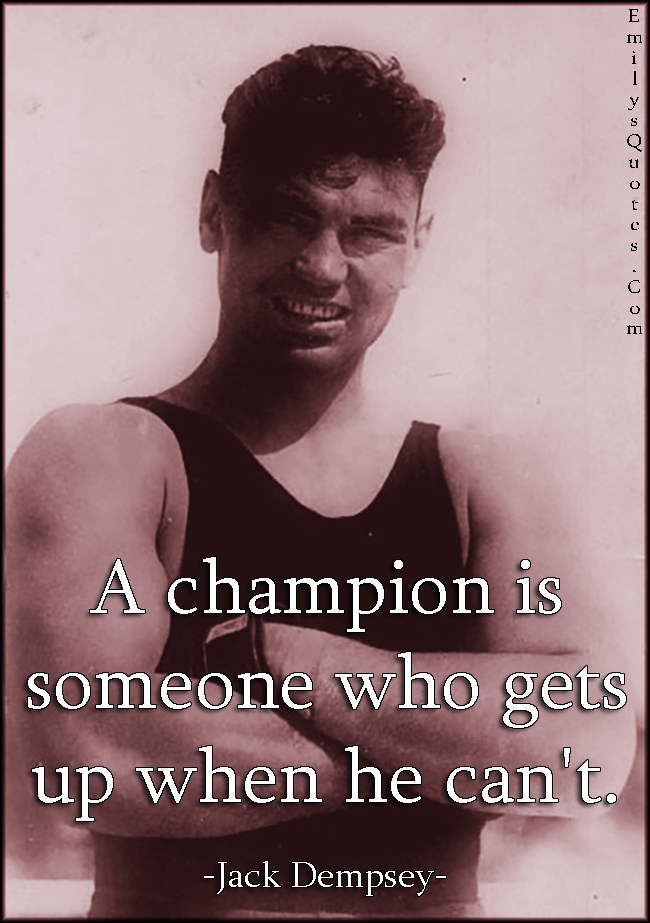
William Harrison Dempsey, a.k.a. Jack Dempsey after an earlier Middleweight Champion, a.k.a. the Manassa Mauler after his Colorado hometown, was a poor kid who lived in hobo camps and learned to box in barroom brawls. He became Heavyweight Champion of the World on July 4, 1919, right after World War I.
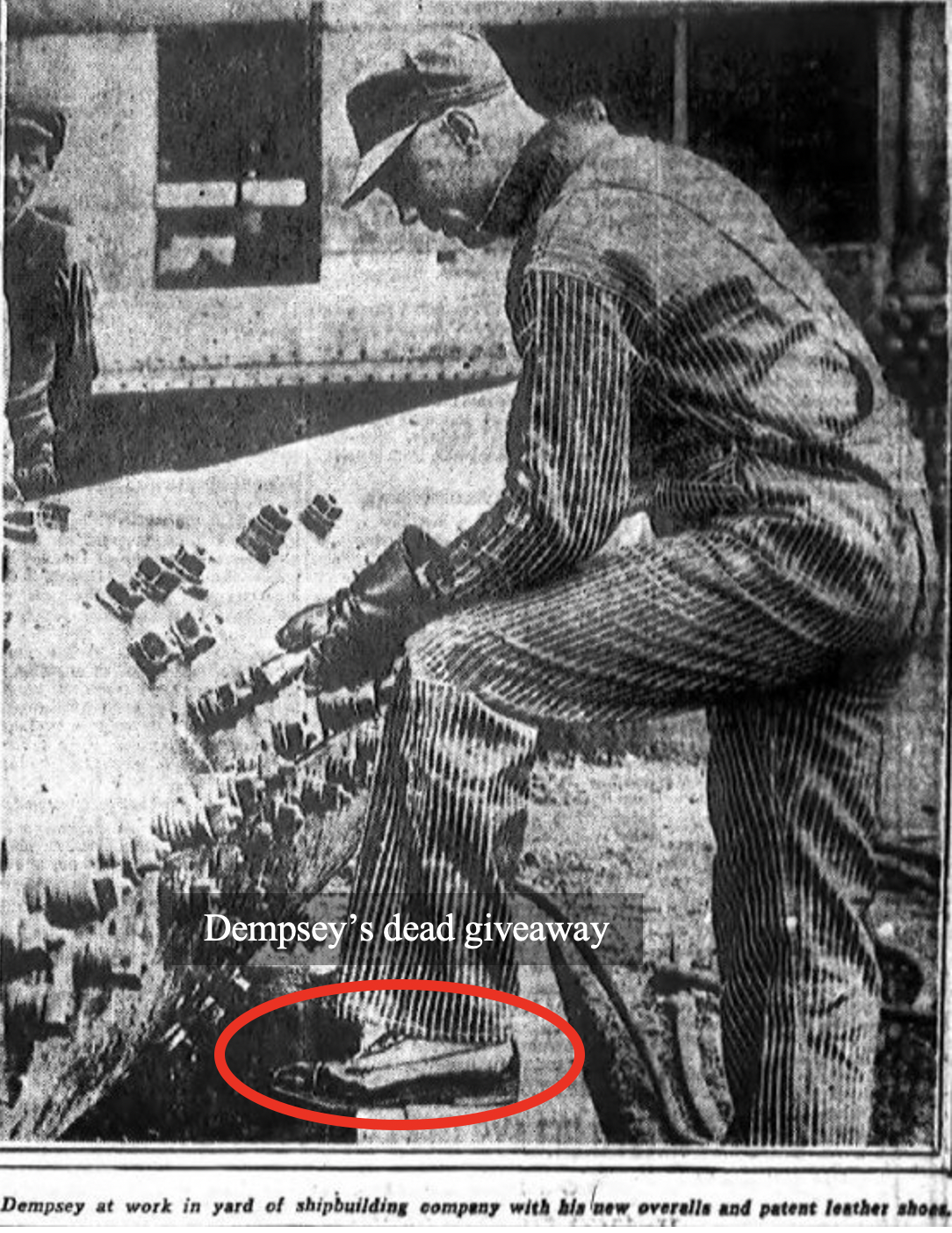
He was a polarizing figure, a devastating puncher known for his early knockouts, but also for being called a "slacker," because he had worked in a shipyard and continued to box during the war. Evidence was produced showing that he had tried to enlist, but had been classified 4-F. Still, it was held against him, just as it would for another seemingly super-strong athlete, Mickey Mantle, during the Korean War in the early 1950s.
James Joseph Tunney, a.k.a. Gene Tunney, grew up a poor Irish-American kid as well. That aside, he couldn't have been much more different from Dempsey: Instead of a rural area, he grew up in Manhattan, and was a highly intelligent, very cultured, well-read man. He enlisted in the U.S. Marine Corps, and that's where he learned to box, earning him the rather redundant nickname "The Fighting Marine."
He was no stereotypical gruff "leatherneck" (an old term for Marines). He decided to treat boxing as a science. The term "the sweet science" had not yet been used, but Tunney treated it as such. He even preferred to call it "pugilism" rather than "boxing" or even "prizefighting."
In 1923, Dempsey knocked Luis Firpo out at the Polo Grounds, then spent the next 3 years essentially partying in the culture of what became known as the Roaring Twenties. At the time, he was the most popular sports figure in America, even more so than Babe Ruth, but was also the most hated. The 1920s became known as "the Golden Age of Sports," dominated by Ruth on the diamond, Dempsey in the ring, Red Grange on the gridiron, Bill Tilden on the tennis court, and Bobby Jones on the golf course (if you consider golf a sport, which I don't).
Part of the reason Dempsey didn't fight for 3 years was that he had fired his manager, Jack "Doc" Kearns, for denying him his fair share of the "million-dollar gates" his fights, and Kearns' publicity, had generated.
Another reason is the controversy over whether he was willing to fight the top black heavyweight fighter of the time, Harry Wills. After winning the title in 1919, keeping in mind the fuss made over 1908-15 Champion Jack Johnson, Dempsey said he would never fight a black boxer. But in 1924, he changed his mind, and said he was willing to fight Wills. It never happened, for reasons beyond his control.
Dempsey had been beaten before he became Champion. So had Tunney, but only once, by Light Heavyweight Champion Harry Greb. They fought 4 times, with Greb winning 1, 1 being a draw, and Tunney winning the other 2, although neither man had yet won a title.
On September 23, 1926, Dempsey finally got back into the ring, with Tunney at the gigantic horseshoe that had just opened in South Philadelphia, part of the World's Fair celebrating the 150th Anniversary of the Declaration of Independence being signed in Philly. The crowd was listed at 120,557, which is still the highest official total for a prizefight, ever, anywhere in the world.
At the time, the facility was known as Sesquicentennial Stadium. That was hard to say, and in 1931, the city changed the name to Municipal Stadium. In 1964, it was renamed John F. Kennedy Stadium. It hosted mostly football games and prizefights until the Beatles played it in 1966, then it was mostly concerts, including Live Aid in 1985, until it was condemned as unsafe in 1991. The following year, it was demolished, and the arena now known as the Wells Fargo Center was built on the site.
Dempsey was not in shape, and was incredibly rusty. Tunney sensed this before the fight, and saw his suspicions confirmed during it. He managed to stay away from most of Dempsey's big blows, which were considerably slower than they were earlier in the decade. It started to rain in the 7th round, and it was pouring in the 9th. The fight went on, through the 10th, and, for the 1st time ever, the Heavyweight Championship of the World changed hands on a decision.
Ordinarily, this would have been unsatisfying. But no one doubted that Tunney had dominated the fight, not even Dempsey, who embraced Tunney at the end. When his wife, actress Estelle Taylor, asked Jack what happened, he said, "Honey, I forgot to duck." (This would be used by President Ronald Reagan to his wife Nancy after he was shot in 1981.)
A rematch was in order. Dempsey tuned up once, knocking out eventual Heavyweight Champion Jack Sharkey at Yankee Stadium. Then, thinking he was ready, he negotiated with Tunney for a rematch, and it was set.
The tallest building in the world was the Woolworth Buildingin Lower Manhattan. Less than half of all American homes had telephones. Most American homes did not yet have air conditioning. Most of the places that did were either bars or movie theaters. There were no photocopiers. Nor were there computers. Alan Turing was in high school. There were no credit cards or automatic teller machines.
Artificial organs were not yet possible. Transplantation of organs was not possible. The distribution of antibiotics was not possible: If you got any kind of infection, you could easily die. There was no polio vaccine. There was no birth control pill, but there was no Viagra, either. Robert Goddard had begun to experiment with rockets, but space vehicles were still the product of imagination.
In the weeks leading up to the Long Count Fight, Adolf Hitler held the 1st Nazi Party National Congress in front of 80,000 people in Nuremberg, Germany. Heinrich Himmler founded the Schutzstaffel (SS). And Sparta Praha of Czechoslovakia defeated Rapid Wien of Austria to win the Mitropa Cup, the 1st attempt at a large-scale European soccer tournament.
In Asia, the Chinese government put down Mao Zedong's Autumn Harvest Uprising. A collision of 2 Japanese Navy ships killed 119 sailors. The Nagpur Riots killed 22 people outside Bombay (Mumbai), India. A Korean ferry capsized, killing 280 people. And a tsunami killed over 1,300 people in Japan.
In North America, the Peace Bridge opened between Buffalo, New York and Fort Erie, Ontario. Work began on carving the Presidential faces on Mount Rushmore. The Terminal Tower opened in Cleveland. Nicola Sacco and Bartolomeo Vanzetti were executed for murder, despite massive demonstrations affirming their innocence. A hurricane hit Canada's Maritime Provinces, killing 56 people.
In Youngstown, Ohio, Tony De Capua shot and killed his wife, his 4 daughters, his 2 grandchildren, and a neighbor. He also shot and wounded his daughter-in-law, a passerby, and a policeman, who still managed to arrest him.
Charles Lindbergh continued touring America in the wake of his pioneering Atlantic crossing flight. The company that would become United Airlines was founded. Babe Ruth hit the 400th home run of his career, and inched closer and closer to breaking his own single-season home run record, which he would raise to 60. The Columbia Broadcasting System (CBS) was founded, following the National Broadcasting Company (NBC) the year before. And Philo Farnsworth built the 1st fully electronic television set.
Leonard Wood, and Marcus Loew, and Isadora Duncan died. Rosalynn Carter, and Peter Falk, and Althea Gibson were born.
That's what the world was like in the days leading up to what became known as the Long Count Fight.
*
Most media outlets favored Dempsey -- apparently, not having seen film of the previous fight. That fight had been scheduled for Chicago, but was moved to Philadelphia because of rumors that Chicago crime boss Al Capone would try to fix it. This time, Capone bet $50,000 on Dempsey for the rematch -- about $728,000 in today's money. The crowd of 104,943 produced a gate of $2,658,660, a new record -- nearly $39 million today, far and away a record. (Tickets for big prizefights have always been more expensive than those for other sports.)
This was the 1st title fight broadcast coast to coast on radio, as NBC (the National Broadcasting Company), America's 1st radio network, had been founded in between the 2 Dempsey-Tunney fights. It is believed that 15 million people listened. In Boston and Washington, D.C., amplifiers in major public spaces carried the radio broadcast.
According to Michael Horsley in an anniversary article for the Chicago Tribune, more than 25,000 people called the new Tribune Tower for updates on the fight. The paper also chartered a speedboat, so reporters and photographers could bypass the massive crowd out of the stadium, and walk over to Lake Michigan, and get to the Tribune Tower and file their stories within a few minutes.
It was a heady time for Chicago: Not only did Capone flout tax and Prohibition laws, but, in a span of a little over a year, 1924-25, Soldier Field, the Tribune Tower, the Wrigley Building and Union Station were all built. The Chicago Blackhawks were founded in 1926, and Chicago Stadium opened in 1929, becoming their home, and, eventually, that of the NBA's Chicago Bulls.
Two things to keep in mind, one favored by either fighter. Dempsey preferred a 16-foot ring, which offered opponents less space to maneuver. Tunney insisted on a 20-foot ring, which would tend to favor the fighter with the superior footwork. The range of 16 to 20 feet became standard.
The other factor is a new rule, one which Dempsey himself had recommended, in the interest of safety. Dempsey had been known to stand over a fighter he'd knocked down, wait for him to get up, and then start pounding away at him again. Boxers dying as a result of injuries sustained during fights has never been common, but it had already happened a few times, and older boxers and retired boxers becoming "punch-drunk" -- later called dementia pugilistica, or chronic traumatic encephalopathy (CTE) -- was already known.
So a rule was set: When a fighter was knocked down, the referee would order the standing fighter to retreat to a neutral corner. Only when the standing fighter did so would the referee begin the count. The State of Illinois had already adopted this rule by 1927. The State of New York, including the new Madison Square Garden (opened in 1925, and eventually known as "the old Garden"), the Polo Grounds and Yankee Stadium, did not yet have it.
The referee was Dave Barry, then 44 years old. Like Dempsey and Tunney, he was of Irish descent. Like Tunney, he had New York roots. But he was born in Montreal, and his family moved to Chicago when he was 12. He played football at Northwestern University, became a lightweight boxer, and in 1910 moved to become "the third man in the ring." By the time of Dempsey-Tunney II, he had officiated about 600 fights.
Now, suppose for a minute, Dempsey had immediately gone to his corner, and Barry had immediately started the count, and Tunney had not made it up before the count of 10. Or, suppose that he had, but whatever difference it would have made meant that Dempsey could go in for the kill, and win by knockout. What would have changed?
Probably not much. Dempsey was 32 years old, Tunney 30. There would likely have been a 3rd fight, probably in front of as many people as could cram their way into Yankee Stadium in September 1928, during a Yankee roadtrip. Knowing what we know about Tunney, he would have intensely studied the film of the 2nd fight, to see where he went wrong, and he could have known what to do, and won the 3rd fight. Perhaps Dempsey would be held in higher historical esteem, but nothing else really would have changed.
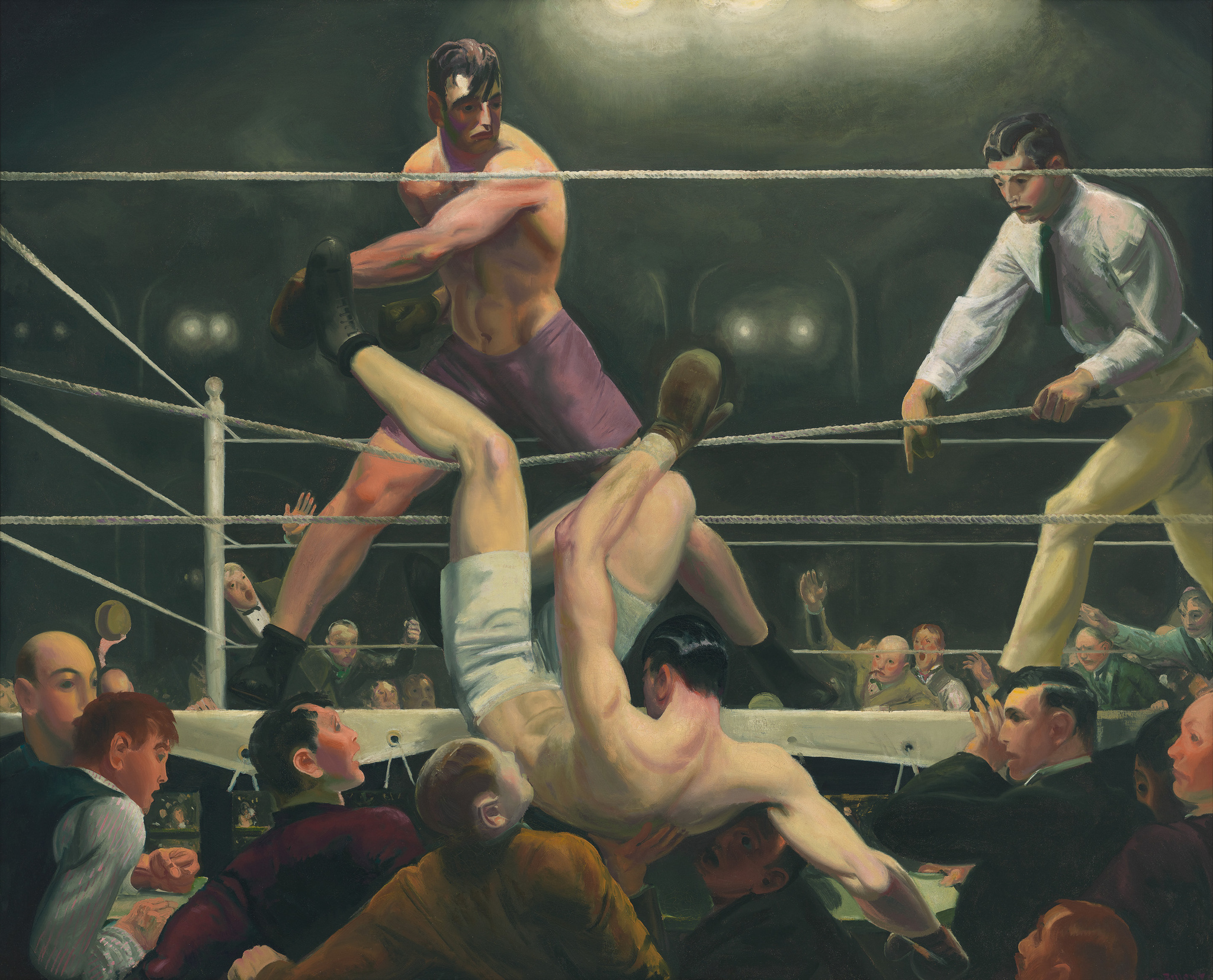
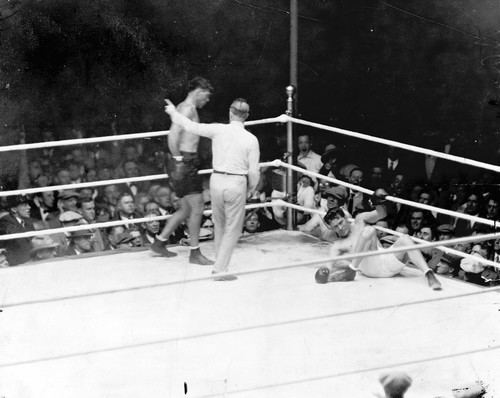
Except Dempsey did not immediately go to his corner when Tunney went down. As he had usually done in his previous fights, he just stood there. Barry remembered the rule, and told Dempsey to get to a neutral corner. Dempsey still didn't do so: He just stood there, watching Tunney, waiting for him to get up.
Finally, Barry seemed to give Dempsey a little push, and point, and Dempsey got the hint. Only then did Barry turn back to Tunney, and swing his arm down, with his index finger pointed, and yell, "One!"
The fight was filmed, and, at some point, an early expert in film graphics put a graphic of a stopwatch in the corner of the screen. From the moment Tunney's knee hit the floor until Barry counted, "One!" it was a full 5 seconds. In other words, Tunney got 4 seconds more than he should have.
On the film, at the count of, "Four!" Tunney can be seen looking closely at Barry's hand. And through, "Five!" and onward, his head bobs up and down with Barry's arm. This was not an example of that classic phrase for a knocked-down fighter, "He doesn't know where he is!" Tunney was clear-headed and clear-eyed, and he was going to stay down until the count of, "Nine!" so that he could get all the rest to which he was legally entitled.
Having done exactly that, Tunney got up before Barry could bring his arm back down and yell, "Ten!" He had spent a total of 14 seconds down, 4 more than the usual limit.
Dempsey came right back at him, to, as they would say in the video game Mortal Kombat, "Finish him!" Knowing Dempsey would do this, Tunney "got on his bike," and danced away from Dempsey's big blows, and saw the round out, thus giving himself a little more time to recuperate without a big-gloved Colorado fist plunging into his head.
In the 8th round, Tunney managed to knock Dempsey down. Interestingly, Barry began counting without checking that Tunney had reached a neutral corner -- and he hadn't gotten there yet. Dempsey got up, and finished the round and the fight, but it was no contest.
When the bell rang to end the 10th and final round, Dempsey knew he'd lost. He lifted Tunney's arm, and said, "You were best. You fought a smart fight, kid." ("Kid"? Tunney was just 2 years younger, although all of Dempsey's bar, camp and mine fighting before he turned fully professional, plus his hard-living 3-year layoff, had left him an old man in fighting terms.)
Dempsey's fans, and people who may not have liked him much but bet money on him, were furious. It became known as "The Long Count Fight." At the time, there was a federal law prohibiting the transportation of boxing movies across State Lines, meaning that most people never actually saw the fight until years later. People who heard the legend of the Long Count presumed it was true, based solely on hearsay, not on seeing the film.
And people who didn't previously like Dempsey began to sympathize with him. The sense that he may have been treated unfairly actually helped him: He had lost the fight, but won over a lot of fans, many of whom began appreciating him more in hindsight than they did when he was knocking out Jess Willard, Georges Carpentier and Luis Firpo.
Shirley Povich of The Washington Post, better known for his baseball writing, wrote, "In defeat, he gained more stature. He was the loser in the battle of the long count, yet the hero."
When the law was repealed, people could see the version with the stopwatch graphic. Dempsey is in the dark trunks, Tunney in the light trunks. And the number of people saying Dempsey was robbed began to decline.
Yet his popularity remained. When the Great Depression came, and the 1930s cranked out less exciting fighters like Max Schmeling, Jack Sharkey, Primo Carnera, Max Baer and Jim Braddock (until Joe Louis came along), the 1920s became a target for nostalgia considerably sooner than most decades do, and Dempsey became a beloved figure, even though he hadn't officially fought since 1927.
He opened a restaurant in 1934, on Broadway at 50th Street, a block away from Madison Square Garden (a.k.a. "the Mecca of Boxing") and at the northern edge of Times Square, and it was quite popular, until the old Garden closed and was replaced by the new Garden in 1968, several blocks downtown.
Jack Dempsey's closed on October 31, 1974, the day after Muhammad Ali regained the Heavyweight Championship by knocking George Foreman out. At the time, people still held Dempsey in high regard, putting him in the conversation with Joe Louis, Rocky Marciano and Ali for the title of the greatest Heavyweight Champion ever.
A lot of Dempsey's popularity did stem from the fact that he was "robbed." But was he? Did referee Barry really unfairly deny him a regaining of the title?
Top 5 Reasons You Can't Blame Referee Dave Barry for "the Long Count"
This was an episode that the 2005-07 ESPN series The Top 5 Reasons You Can't Blame... advertised in its opening montage, but never got around to doing. So, on this anniversary, I've decided to do it.
Before I get to the top 5 reasons, here are a couple that didn't make the cut: The Best of the Rest.
Doc Kearns. Dempsey fired him as his manager and trainer in 1923. Kearns was unquestionably a con man. But he knew boxing as much as any man of his time. He would go on to manage 6 World Champions: Dempsey, 1920s Lightweight Champion Benny Leonard, 1920s Welterweight and Middleweight Champion Mickey Walker, early 1930s Welterweight Champion Jackie Fields, and, much later, the 2 men who held the Light Heavyweight Championship in the 1950s, Joey Maxim and Archie Moore.
Kearns would have found a way to keep Dempsey fighting and fresh, And there's no way he would have let Dempsey forget about the neutral corner rule.
Dempsey's layoff. Dempsey may not have gotten fat like Babe Ruth, or like earlier Heavyweight Champion John L. Sullivan, when those men got bored between their competitions. But, like both of them, he enjoyed the good life, and too much. He simply wasn't ready to take on a fighter as good as Tunney.
Now, the Top 5:
5. Illinois. Dempsey himself, the greatest beneficiary of the old rule, had enough sportsmanship to insist on the new one. That's why the fight was held in Chicago: Because the State of Illinois had accepted the rule, while the State of New York and the Commonwealth of Pennsylvania, the locations of Dempsey's 2 previous fights (against Sharkey and Tunney, respectively), had not.
4. Tunney worked the count. He said after the fight that he was ready to get up at the official count of 2. On the film, he can be seen clearly following Barry's hand from the official count of 4 onward, so I believe him. Yet he stayed down until Barry counted 9, and then got right up with no trouble.
If the official count of 4 was the real count of 9, Tunney could have gotten up. Whether Tunney would have been able to hold Dempsey off had he gotten up at the count of 4-but-it-should-have-been-9, we will never know.
3. Dempsey blew it. On top of firing Kearns, on top of his 3-year layoff, on top of not being in good enough shape, and on top of having apparently learned nothing from his previous fight with Tunney, Dempsey simply forgot about the rule for which he had advocated.
In a memoir, he said, "It's hard to stop what you're doing, standing over a guy and waiting for him to get up." He simply did what he had done 100 times before, instead of doing what he should have done. If you want to blame anyone for Dempsey losing the fight, blame Dempsey himself.
2. The roar of the crowd. People listening on the radio told reporters that, once Tunney went down, all they could hear was the 100,000+ people in Soldier Field yelling. They couldn't hear the announcer. It's entirely possible that Dempsey didn't hear Barry's order to go to a neutral corner.
The roar of the crowd has also been blamed for the 2 gaffes at the Superdome in New Orleans that gave Dean Smith his only National Championships at North Carolina: The bad pass by Georgetown's Fred Brown to James Worthy in 1982, and Michigan's Chris Webber not hearing coach Steve Fisher tell him they were now out of timeouts in 1993. It has also been blamed for Robin van Persie not hearing the referee's whistle, thus kicking the ball out of bounds after the whistle, thus getting sent off, in Arsenal's loss to Barcelona at the Camp Nou in the 2011 UEFA Champions League.
1. Tunney was better. He dominated both fights, winning 19 of the 20 rounds, all but the 7th round of the rematch, when Dempsey knocked him down. It's worth pointing out that Tunney knocked Dempsey down in the 8th.
Jack Dempsey was one of the greatest punchers in boxing history, maybe the greatest. But Gene Tunney was a better boxer. There is a difference, which Tunney appreciated, and Dempsey, at least at the time, did not.
VERDICT: Not Guilty. Barry did his job, which was to enforce the rules. Tunney did his job, which was to follow the rules and outbox Dempsey. Dempsey did not do his job: He made a mistake which meant he didn't follow a particular rule, and he did not outbox Tunney.
Dempsey never fought another officially sanctioned bout, although he did fight some exhibitions. Tunney defended his title once more, a TKO 11th round win over New Zealand fighter Tom Heeney at Yankee Stadium on July 26, 1928, and retired.
This is not unusual among great boxers. Joe Louis and Max Schmeling remained friends until death came between them. So did 1940s Middleweight Champions Rocky Graziano and Tony Zale, who fought 3 times, with Zale winning 2. So did 1940s Featherweight Champions Willie Pep and Sandy Saddler, who fought 4 times, with Saddler winning 3. So did 1950s Middleweight Champions Sugar Ray Robinson and Jake LaMotta, who fought 6 times, with Robinson winning 5.
Jack Dempsey and Gene Tunney lived to be old men, and much-admired. Dave Barry wasn't so lucky: He only lived until 1936, dying of liver failure. He was only 53. And, today, he is remembered for only one thing, a mistake -- which he didn't even make. That's a shame.
Tuesday, August 1, 2017
Top 10 Athletes From Colorado
Oddly, considering the distance between Colorado and Michigan, there are 4 former Detroit Lions on this list. One of whom was better known for playing a different sport, and another of whom became better known for something other than sports.
Hale Irwin is from Boulder, but golf is not a sport. The brothers Al and Bobby Unser are from Colorado Springs, but auto racing is not a sport, either.
And the U.S. Olympic Training Center is in Colorado Springs, so many great athletes have gone to Colorado -- but that doesn't make them "athletes from Colorado," any more than it does California's John Elway, North Carolina's David Thompson, or British Columbia, Canada's Larry Walker and Joe Sakic.
Honorable Mention to Pat Day of Eagle. He won the 1992 Kentucky Derby on Lil E. Tee. He won 5 Preakness States, 3 Belmont Stakes, and 4 Breeders' Cup Classics. All told, he's won 8,803 races.
Honorable Mention to Roy Halladay of Denver. He won 203 games as a major league pitcher, against only 105 losses, 2,117 strikeouts, 8 All-Star berths, and the Cy Young Award in both Leagues: 2003 with the American League's Toronto Blue Jays, and 2010 with the National League's Philadelphia Phillies.
In 2010, he became the 1st pitcher to have a no-hitter in both the regular season and the postseason, and only the 2nd pitcher ever to have a postseason no-hitter, in Game 1 of the NL Division Series against the Cincinnati Reds.
His only postseason appearances were with the 2010 and '11 Phillies, and he threw his last pitch at age 36. The injury that cut his career short may end up preventing him from reaching the Baseball Hall of Fame. He becomes eligible in 2019.
UPDATE: Three months after I posted this, on November 7, 2017, Halladay was killed in a plane crash off the coast of Florida. He had taken drugs, and piloted the plane himself.
Honorable Mention to Joe Kleine of Colorado Springs. A star center at the University of Arkansas, he was a member of perhaps the greatest amateur basketball team ever assembled, the U.S. team that won the Gold Medal at the 1984 Olympics in Los Angeles. He played 15 NBA seasons, winning a Championship with the 1998 Chicago Bulls.
Honorable Mention to April Heinrichs of Denver. She was a member of the U.S. team that won the 1st Women's World Cup in 1991.
Honorable Mention to Mikaela Shiffrin of Vail. Not only is she the current overall women's champion in skiing's World Cup, but she won a Gold Medal in the slalom at the 2014 Winter Olympics in Sochi, Russia. Only 22, she should (barring injury) be considered a favorite at the 2018 Winter Olympics in Pyeongchang, Korea. In other words, she could rise well up this list.
10. Chauncey Billups of Denver. He was named Colorado's high school "Mr. Basketball" 3 times. The University of Colorado retired his Number 4. He was a 5-time NBA All-Star, leading the Detroit Pistons to the 2004 NBA Championship, winning the Finals' Most Valuable Player. The Pistons have retired his Number 1.
His brother Rodney Billups is now the head coach at the University of Denver, his alma mater, after playing professionally in Europe. Former Tennessee Titans running back LenDale White is their 1st cousin.
9. Missy Franklin of Centennial. The University of California swimmer won the Sullivan Award in 2012, and the Honda-Broderick Cup as the nation's top female collegiate athlete in 2014-15. She won 4 Gold Medals at the 2012 Olympics in London, and added a 5th Gold Medal at the 2016 Olympics in Rio de Janeiro.
8. Earl "Dutch" Clark of Pueblo. A star in baseball, football and basketball at Colorado College (not to be confused with UC or CSU), he was the 1st native of his State to be named an All-American. A 6-time All-Pro, he was an original Detroit Lion in 1934, and helped them win the 1935 NFL Championship. He later served as head coach of the Lions and the University of Detroit.
His Number 7 was the 1st retired by the Lions. He was named to the NFL's 1930s All-Decade Team, and he was a charter inductee into both the College Football Hall of Fame in 1951, and the Pro Football Hall of Fame in 1963.
7. Jack Christiansen of Canon City. (It has since been renamed Cañon City). A 5-time Pro Bowler, the graduate of Colorado State was one of the earliest players to become a great defensive back, and not also a great running back or receiver, when the NFL went to the 2-platoon system. He helped the Detroit Lions win the NFL Championship in 1952, '53 and '57.
He was named to the NFL's 1950s All-Decade Team and the Pro Football Hall of Fame. In 1999, The Sporting News ranked him Number 86 on their 100 Greatest Football Players. He later served as an assistant coach with several teams, and as head coach of the San Francisco 49ers in the 1960s and Stanford in the 1970s.
6. Glenn Morris of Simla. A track star at Colorado Agricultural College (it became Colorado A&M in 1935 and Colorado State University in 1957), he broke his own world record by winning the decathlon at the 1936 Olympics in Berlin.
All the time he competed, Adolf Hitler never left his seat, and the Nazi government offered him $50,000 -- about $875,000 in today's money -- to stay in Germany and appear in sports documentaries. He refused. (Documentarian Leni Riefenstahl, there to make the Games' official film, the iconic Olympia, claimed in her memoirs that they had an affair, but the available facts suggest that she lied about this. It was, however, Hitler's girlfriend Eva Braun who presented Morris with his Gold Medal.)
He got a ticker-tape parade in New York, and the 1936 Sullivan Award as the top amateur athlete in the U.S. In 1938, he starred in Tarzan's Revenge, making him the 4th Olympian to play the Ape Man. He played 4 games as an end with the Detroit Lions in 1940, but injuries cut short his football career. He served in the U.S. Navy in World War II, was wounded, and was treated for what was then called battle fatigue, now PTSD (post-traumatic stress disorder). He never fully recovered, and died in 1974.
5. Rich "Goose" Gossage of Colorado Springs. He debuted in the major leagues in 1972, a season that began with a brief players' strike. He ended in 1994, a season that was cut off by the longest strike in the sport's history. This means that he was involved in every work stoppage in Major League Baseball history.
That's some distinction, but he was one of the greatest relief pitchers ever, and was perhaps the prototype for the big hulking reliever with the 100-mile-an-hour fastball. (The intimidating mustache, which he developed in 1980, also helped build the image.) A 9-time All-Star, he had 310 saves, and he reached the postseason 5 times: With the 1978, '80 and '81 Yankees, the 1984 San Diego Padres, and the 1992 Oakland Athletics -- just missing with the 1972 Chicago White Sox and the 1977 Pittsburgh Pirates.
In 1978, he did something that had never been done before, and I don't think it's been done since: He got the last outs of a Division title clincher (the American League East Playoff against the Boston Red Sox), a Pennant clincher (Game 4 of the AL Championship Series against the Kansas City Royals), and a World Series clincher (Game 6 against the Los Angeles Dodgers), all in the same season.
He is the only Colorado native in the Baseball Hall of Fame, and will likely remain so unless and until Roy Halladay gets in. The Yankees have honored him with a Plaque in Monument Park. They have not, however, retired his Number 54: Perhaps appropriately, it is now worn by the current closer, Aroldis Chapman.
4. Amy Van Dyken of Englewood. She was advised to take up swimming to strengthen her lungs against her childhood asthma. In 1996, she won 4 Gold Medals at the Olympics in Atlanta, becoming the 1st American woman to do that at a single Games, Summer or Winter. She won 2 more at Sydney in 2000.
She is a member of the International Swimming Hall of Fame. She married Tom Rouen, the punter on the Denver Broncos' Super Bowl XXII and XXIII winners. A 2014 ATV accident left her paralyzed from the waist down, but she has recovered enough to walk with an exoskeleton, take a few steps without it, and has taken up the Paralympics' version of downhill skiing.
3. Eddie Eagan of Denver. He is the only person, living or dead, regardless of era, gender, race, religion or nation, ever to win Gold Medals at both the Summer and Winter Olympics. In 1920, in Antwerp, Belgium, he won in boxing. In 1932, in Lake Placid, New York, he was won as part of a bobsled team.
He also had degrees from Oxford, Harvard and Yale, married Margaret "Peggy" Colgate of the founding family of Colgate-Palmolive, sparred with both Jack Dempsey (more on him later) and Gene Tunney, hunted big game in Africa, was a U.S. Army officer in both World Wars, won several decorations and rose to the rank of Colonel in the Army Air Corps during World War II, and served as an Assistant U.S. Attorney and as Chairman of the New York State Athletic Commission and the sports program at the 1964-65 New York World's Fair.
He only lived to be 69, but he lived the lives of several men. He said he was trying to copy Frank Merriwell, the fictional Yale sports hero of the turn of the 20th Century. It now looks more like he was trying to copy Theodore Roosevelt, and damn near succeeded, although he never ran for political office.
And yet, just as his active sports career was wrapping up, there was soon to be a Coloradan scholar-athlete who seemed ready, willing and able to see Eagan's bet, and raise him.
2. Byron White of Wellington. Colorado has never produced a Heisman Trophy winner. The late Rashaan Salaam, the only one produced by a Colorado school, was from San Diego. In 1937, Byron White came the closest, finishing 2nd to Clint Frank of Yale, and he may well have been robbed.
Like his brother Sam, he was valedictorian of his high school class -- to be fair, it was a small school, with a class of 6 -- but all Colorado valedictorians were then entitled to an academic scholarship at the University of Colorado. He led them to an undefeated regular season before losing to Rice in the 1938 Cotton Bowl, earning the nickname "Whizzer," which embarrassed him for the next 65 years. He also led their basketball team to the Final of the 1st NIT that March, losing to Temple. He also played baseball in college. He also married the University President's daughter.
He had options, perhaps more options than any other great athlete American had yet had. Within days, he was drafted by the NFL's Pittsburgh Pirates (they changed their name to the Steelers in 1940) and named a Rhodes Scholar by Oxford University. (So was Sam, who became a renowned doctor.) Oxford allowed him to delay his entry by a year, and he played in Pittsburgh in 1938, leading the NFL in rushing as a 21-year-old rookie.
"Of all the athletes I have known in my lifetime," Steeler founder-owner Art Rooney said, "I'd have to say Whizzer White came as close to anyone to giving 100 percent of himself when he was in competition."
He left for Oxford in early 1939, but the outbreak of World War II in September caused him to return to America, and, like another 1930s All-American, Gerald Ford, use Yale Law School as a stepping-stone to politics. In 1940, his rights were bought by the Detroit Lions, making him a teammate of Glenn Morris, and he led the NFL in rushing again -- despite having missed a year. Eat your heart out, Adrian Peterson.
He played for the Lions again in 1941, then the U.S. entered The War, and White entered the Navy, serving in Naval Intelligence, rising to the rank of Lieutenant Commander, and earning 2 Bronze Stars. Then he went back to Yale Law, and graduated magna cum laude (a Latin phrase meaning "with great honor"). He was still in his 20s, but the guy had achieved more than most men do in a lifetime.
And he was just getting warmed up. He clerked for Fred Vinson, Chief Justice of the U.S. Supreme Court. He became one of the top transactional attorneys in Colorado. In 1960, he went into politics, and chaired the Colorado division of the Presidential campaign of Senator John F. Kennedy, whom he'd met in 1939 when White was at Oxford and JFK was the son of the U.S. Ambassador to Britain. (Although Colorado, and therefore White, was essential to getting JFK the nomination, Richard Nixon won the State in the general election, but JFK won the whole thing.)
JFK rewarded him by naming him Deputy Attorney General under his brother Robert F. Kennedy, and he negotiated with Governor John Patterson of Alabama to protect the Freedom Riders. In 1962, JFK appointed him to the Supreme Court, saying, "He has excelled at everything, and I know that he will excel on the highest court in the land." JFK was right: White served for 31 years, retiring in 1993, and was the last serving member of the Warren Court. He died in 2002.
The University of Colorado retired his Number 24. He was elected to the College Football Hall of Fame and the NFL's 1940s All-Decade Team. I have no doubt that, had he stuck with football, he would be in the Pro Football Hall of Fame as well. As Chief Justice William Rehnquist, with whom he served for 21 years, said, "He came as close as anyone I have known to merited Matthew Arnold's description of Sophocles: 'He saw life steadily, and he saw it whole.'"
His daughter Nancy White was a field hockey star at Stanford University, although the 1980 U.S. boycott cost her the chance to compete in the Olympics.
Byron White may have been the most impressive person ever to come from Colorado. But if we're talking just about athletic performance, there is one person who tops him:
1. Jack Dempsey of Manassa. His birth name was William Harrison Dempsey, but he took the name of an earlier boxer, born John Edward Kelly but billed as Jack "Nonpareil" Dempsey, Middleweight Champion of the World from 1884 to 1891, but died of tuberculosis at age 32 in 1895, the year this Jack Dempsey was born. "The Nonpareil" is all but forgotten today. "The Manassa Mauler" is remembered.
He learned to fight in saloons in mining towns throughout the American West. He became a contender for the Heavyweight Championship of the World in the World War I years, and, as boxing historian Bert Sugar put it, before he got his title shot, "He won his last 2 fights in 18 and 27 seconds. Not rounds." On July 4, 1919, under a brutal sun in Bayfront Park in Toledo, he faced the Champion, the far larger Jess Willard, and knocked him down 7 times in the 1st round.
He knocked out Light Heavyweight Champion Georges Carpentier before 90,000 people on a temporary wooden stadium in Jersey City, the 1st $1 million gate in boxing history. His fight with South American champion Luis Firpo at the Polo Grounds in 1923 is absolute legend, with no 3-knockdown rule or neutral corner rule in place as there is today: Firpo almost immediately knocked Dempsey down, then Dempsey knocking Firpo down 7 times, then Firpo knocking Dempsey out of the ring, getting back in at the count of 4 -- all within the 1st round! Dempsey knocked Firpo out in the 2nd.
Dempsey became the most popular fighter, and the most popular athlete, who had yet lived, a symbol of "The Roaring Twenties," helping to make it "The Golden Age of Sport." But the Firpo fight was his last successful defense. Indeed, for various reasons (few justifiable), he didn't have another official fight for 3 years, and then he lost the title to Gene Tunney in 1926, and lost to him again in 1927 in the famous "Long Count" Fight.
Many have called Jack Dempsey the greatest heavyweight boxer ever. He was not one of them: After seeing Joe Louis annihilate Max Schmeling in 1938, he said he was glad he never had to face Louis. He lived long enough to see Rocky Marciano, Muhammad Ali and Larry Holmes take the title, but not Mike Tyson, who, having been told lots of old boxing stories by his trainer Cus D'Amato, became fascinated by Dempsey, and copied his style, walking into the ring with no robe on, and wearing black boots but no socks -- and having lots of 1st-round knockouts.
He opened a restaurant at the Brill Building at 1619 Broadway and 49th Street, at the northern end of Times Square and a block east of Madison Square Garden. He was there nearly every night, greeting old friends, and children who could never have known him as anything other than legend, with a big smile, a meaty handshake, and a hearty, "Hiya, pal!" The closing of the old Garden and the opening of the new Garden in 1968 meant doom for Jack Dempsey's Broadway Restaurant, which closed in 1974. The old champ died in 1983.
Sunday, April 2, 2017
How World War I Affected Sports
April 2, 1917, 100 years ago: After successfully campaigning for re-election on the slogan "He kept us out of war," President Woodrow Wilson realizes that pacifism is no longer an option, and goes before Congress, and asks them to declare war on Imperial Germany:
We are glad, now that we see the facts with no veil of false pretense about them, to fight thus for the ultimate peace of the world and for the liberation of its peoples, the German peoples included; for the rights of nations great and small and the privilege of men everywhere to choose their way of life and of obedience.
The world must be made safe for democracy. Its peace must be planted upon the tested foundations of political liberty.
We have no selfish ends to serve. We desire no conquest, no dominion. We seek no indemnities for ourselves, no material compensation for the sacrifices we shall freely make. We are but one of the champions of the rights of mankind. We shall be satisfied when those rights have been made as secure as the faith and the freedom of nations can make them.
The world -- Europe and its colonies in Africa and Asia -- had been at war since August 4, 1914 (some countries having already declared within the preceding days), and would remain so until, with American reinforcements assisting Britain and France, who were close to defeat earlier in the year, Germany surrendered on November 11, 1918.
The best-known aspect of sports in what had been known as The Great War was the Christmas Truce. Traditionally, Christmas Day has been a day for troops to leave each other alone. On December 25, 1914, upon hearing German soldiers sing Christmas carols in their trench on the Western Front, the British soldiers start to do so in theirs. Soon, the men on both sides come out of their trenches, and stop treating each other as enemies for a few hours, exchanging food, drinks, and trinkets.
Legend has it that there was even a soccer game. Sorry, forgot to "speak English" there: A football match. It's not clear which side produced the ball, but according to most accounts that discuss the match, the Germans beat the English, 3-2. No word on whether it actually ended 2-2 and it went to penalties. (Those of you who are British or German, or at least familiar with European football, will get the joke.)
This was the first time, but not the last, that Englishmen would be defeated by Germans at their national game. But, as Sir Alf Ramsey pointed out before the 1966 World Cup Final, twice in the 20th Century, the English (well, the British, and their allies) would beat the Germans at their national game (war), and on their soil no less.
Military historian Andrew Robertshaw (a technical advisor for the film version of the World War I story War Horse) says such a truce would have been unthinkable a year later: "This was before the poison gas, before aerial bombardment. By the end of 1915, both sides were far too bitter for this to happen again."
The belligerent nations did seem to agree on one thing: The war would be over by Christmas 1914. As a result, England did not suspend operations of The Football League or the FA Cup until the conclusion of the 1914-15 season. After that, it was all over. And since the Armistice was not signed until what would have been early in the 1918-19 season, that season was not played, either. It would be August 30, 1919 before top-flight football (soccer) was played again.
South Africa and Australia suspended their cricket seasons for 1914-15. Only in India would the sport be played again until the end of calendar year 1918. The Tour de France, the World Figure Skating Championships, the British Open golf tournament, tennis tournaments such as the Davis Cup, Wimbledon and the Australian and French Opens, Grand Prix races, and rugby competitions such as the Five Nations Championship (now the Six Nations) were all canceled for the duration.
So were the 1916 Olympic Games, which had been set for, oddly enough, the capital of the aggressor nation: Berlin. Legend has it that, in ancient Greece, the original Olympics meant a military truce. Not in the modern era.
Indeed, they'd be suspended for World War II as well -- and those Games were set for the enemy, too. In 1940, Japan was scheduled to host the Winter Games in Sapporo (which would host in 1972) and the Summer Games in Tokyo (which hosted in 1964, and will again in 2020). In 1944, the Winter Games were also set for an Axis nation, for Cortina d'Ampezzo, Italy (which hosted in 1956), while the Summer Games were set for London (which hosted in 1948, and again in 2012).
There was also an influenza epidemic. It became known as the Spanish Flu because countries involved in the war censored news about it, but Spain wasn't involved, and their King Alfonso XIII caught it, and it was reported. He survived, although he would be overthrown in a coup in 1931.
The site of the very first confirmed outbreak was at Fort Riley, in Kansas, USA at a military training facility preparing American troops for involvement in the war. The first victim was diagnosed on March 11, 1918. Investigative work in 1999 by a British team led by a virologist identified the major troop staging and hospital camp in Étaples, France, as being the epicenter of the pandemic.
It peaked in late October 1918, with Philadelphia reporting 4,600 deaths in one week. That's a "9/11" and a half, at a time when our country had about 1/3rd the population it has now. There was a 2nd wave in late February 1919, after the Armistice. Among those killed by this 2nd wave was Joe Hall, a defenseman for the Montreal Canadiens. "Bad Joe" was one of the dirtiest players of his time, but was mourned as if he was already beloved.
Most of the Canadiens players, including player-head coach Edouard "Newsy" Lalonde, caught the flu during the 1919 Stanley Cup Finals, and general manager George Kennedy (no relation to the actor of the same name) never fully recovered from it. After 5 games, with the Canadiens and the Seattle Metropolitans each having won 2, with 1 tie, the Finals were suspended. Kennedy said he was forfeiting, but, to his credit, Metros coach-GM Pete Muldoon refused to accept the victory.
It is the only time the Stanley Cup Playoffs have been played without reaching a conclusion, and, aside from the canceled season of 2004-05, the only time since the Cup's establishment for the 1893 season that it hasn't been awarded.
We may never know how many people it killed: Estimates range from 50 to 100 million, possibly as much as 5 percent of the world's population. That's right: This disease may have killed 1 out of every 20 people in the world at the time. And the war was one of the causes. And not everybody died: About 500 million got sick from it, which could be 1 out of every 4 people. One out of four.
There were 70 million people serving in the armed forces of one country or another in World War I. About 10 million people died in service, and another 7 million civilians' deaths can be attributed it -- not counting the flu epidemic. So, about 17 million people died as a result of the war. The flu killed at least 3 times as many.
Of the 9 million service deaths, there were 62 men who had played professional baseball. Four of these were Australian, two Canadian. Of the 62, eight had played at least one game in the major leagues. I'll list their names in a moment. Since soccer was already the world's most popular sport, it stands to reason that they lost the most. There's no record of how many professional players died in the war, but Yorkshire team Bradford City lost 9 players. Edinburgh team Heart of Midlothian (a.k.a. "Hearts") lost 7.
The 8 MLB players who died in the service in World War I:
* Seaman Newton S. Halliday, U.S. Navy. Newt Halliday was a 1st baseman from Chicago, who played 1 game in the major leagues, an unsuccessful pinch-hitting appearance for the Pittsburgh Pirates on August 19, 1916. He died of tuberculosis at Great Lakes Naval Training Center in Chicago on April 6, 1918, before he could be deployed. He was 21.
* Corporal Ralph E. Sharman, U.S. Army. Ralph Sharman was an outfielder from Cleveland, a September callup for the Philadelphia Athletics in 1917, getting into 13 games. He might have stuck in the majors had he not enlisted. He drowned in the Alabama River during a break in training at Camp Sheridan, Alabama on May 24, 1918. He was 23.
* Captain Edward L. Grant, U.S. Army. Eddie Grant was easily the best player of the 8, the oldest, and the highest-ranking. A 3rd baseman from the Boston suburb of Franklin, Massachusetts, he graduated from Harvard University, and because of his education, "Harvard Eddie" wouldn't yell, "I got it!" Instead, he would yell, "I have it!"
He played from 1905 to 1915, with the team now known as the Cleveland Indians, the Philadelphia Phillies, the Cincinnati Reds and the New York Giants, winning the National League Pennant with them in 1913.
As a college graduate, he was made an officer, 1 of only 2 of the 8 who was. He was killed by an exploding shell in the Argonne Forest on October 5, 1918. He was 35, and the 1st MLB player to die in combat. (Private Bill Stearns was the only MLB player to die in service before World War I, from illness in the Spanish-American War.)
A monument to him was placed in center field at the Polo Grounds, but the plaque on it was lost after the Giants left following the 1957 season. The San Francisco Giants have replicated it at AT&T Park.
* Sergeant Robert G. Troy, U.S. Army. "Bun" Troy fought against Imperial Germany even though he was born in Germany. His family moved to the Pittsburgh area, and he grew up in McDonald, Pennsylvania. (Save your "Hamburg" joke.) A pitcher, he made 1 appearance, for the Detroit Tigers on September 15, 1912, and got the loss. He was shot in the chest at Petit Majouym, France on October 7, 1918. He was 30.
* Private Harry M. Glenn, U.S. Army Signal Corps. A catcher from Shelburn, Indiana, he played 6 games for the St. Louis Cardinals early in the 1915 season. He was training as an aviation mechanic at St. Paul, Minnesota, when he developed pneumonia and died on October 12, 1918. It may have been as a result of the flu epidemic. He was 28.
* Lieutenant Alexander Thomson Burr, U.S. Army Air Service. Known to his friends as Tom but listed in baseball reference books and websites as Alex, he, like Eddie Grant, was a rich kid. From Chicago, he went East to the Choate School in Connecticut and Williams College in Western Massachusetts.
A pitcher by trade, he played just 1 game in the majors, and that as a center fielder, for the Yankees on April 21, 1914. He played only in the field, and never came to bat -- what we would now call a "Moonlight Graham."
He was killed on October 12, 1918, but not in combat: On a training flight in Cazaux, France, he collided with another pilot. He was 24. He is the only former Yankee ever to die in the service of his country, yet there has never been a mention of him at Yankee Stadium, despite George Steinbrenner's obsession with all things military and also having been a graduate of Williams College.
* Private Harry E. Chapman, U.S. Army. A catcher from Severance, Kansas, he played from 1912 to 1914, including winning the 1914 Federal League Pennant with the St. Louis Terriers. He also played with the Chicago Cubs, the Cincinnati Reds and the St. Louis Browns. He was injured in a camp accident at Nevada, Missouri, and died on October 21, 1918. He was 30.
* Private LaVerne A. Chappell, U.S. Army Medical Corps. An outfielder from the St. Louis suburb of McClusky, Illinois, Larry Chappell played for the Chicago White Sox from 1913 to 1915, then was part of the package sent to the Cleveland Indians to get Shoeless Joe Jackson, played 3 games with the Indians, and then was traded to the Boston Braves, playing with them through April 25, 1917.
He was tending to the flu victims at an Army base in San Francisco when he caught the disease himself, and died on November 8, 1918, just 3 days before the Armistice. He was 28.
Other casualties were not as apparent. The great pitcher Grover Cleveland Alexander was already a heavy drinker, and the heavy shelling damaged his hearing, instigated the epilepsy that would plague him for the rest of his life, and accelerated his alcoholism.
Christy Mathewson, Ty Cobb and George Sisler were made officers -- Captain, Captain and Lieutenant, respectively -- and assigned to the Army's Chemical Warfare Service (now the Chemical Corps), under the command of Major Branch Rickey, not yet the man who invented the farm system and reintegrated the game, but already having served as a major league catcher, head coach at the University of Michigan, and the general manager of both St. Louis teams.
Big Six, the Georgia Peach and Gorgeous George were training soldiers in preparation for the war's notorious chemical attacks by exposing them to gas chambers in a controlled environment. But it wasn't "controlled" well enough: Mathewson got a lungful of gas, and it damaged his lungs. Strike one. Then he got hit with the Spanish Flu. Strike two.
His lungs already weakened twice over, in an age before antibiotics, he contracted tuberculosis. He was treated at the famed Adirondack Cottage Sanitarium at Saranac Lake in upper New York State, tried to return to baseball as a coach with the Giants and an executive with the Braves, but had to go back. After years of "fouling pitches off," it was strike three. He died in 1925, just 45 years old.
Other "casualties" of the war were those who opposed it. A few people who publicly spoke out and said that the U.S. shouldn't have gotten into the war were jailed, including labor leader and frequent Presidential candidate Eugene Debs.
Failure to join up, or resisting the draft, made you a "slacker," and that was worse, at the time, than being called a Communist. Bernie Morris, who had helped the aforementioned Seattle Metropolitans become the 1st U.S.-based Stanley Cup winners in 1917, was arrested on the eve of the 1919 Finals for draft dodging. He was convicted, and sentenced to 2 years in prison. He appealed, and got the charges dropped in time for him to be allowed to play for the Metropolitans in the 1920 Playoffs.
The Provost Marshal of the U.S., General Enoch Crowder, issued what became known as the Work Or Fight Order. If you were a man between 18 and 35, physically able to fight, and you didn't either enlist or get a job in a war-related industry or some other "necessary" service (such as a law-enforcement or medical job), you went to jail.
This led to Crowder saying that baseball had to be suspended for the duration of the war as of September 1, 1918. American League President Ban Johnson and National League President John Heydler talked him into allowing the World Series to be played, and, for the only time, the Series was played entirely in the month of September, with the Boston Red Sox clinching over the Chicago Cubs in Game 6 on September 11, 1918.
(Because he spent much of his career, in the 1920s and '30s, pitching in Washington, Alvin Crowder, no relation, was nicknamed "General Crowder." He did serve in the Army, but did not make officer.)
No one yet knew that the war would end 2 months later: It was believed in September 1918 that there would be no baseball in 1919. But there was, and the fans flocked back to the game in droves.
Jack Dempsey won the Heavyweight Championship in 1919, but he hadn't served in World War I. In 1920, a photo was produced showing Dempsey working in a shipyard, which should have ended the controversy right there. But someone noticed that he was wearing patent leather shoes in the photo, making some people think the photo was staged to take the curse off him.
Soon, evidence came to light that he had tried to enlist, but, despite being a very strong man for his size (he'd be classified as a cruiserweight today), the Army had classified him "4-F": "Registrant not acceptable for military service." This classification is nearly always applied to a person who fails either the physical or the psychological examination upon enlistment or reporting for the draft.
But some people still weren't satisfied. This became especially controversial in 1921, when he defended his title against the Light Heavyweight Champion, Georges Carpentier, a French pilot who had been awarded the Croix de Guerre and the Médaille Militaire. The contrast between the much-decorated Carpentier and the "slacker" Dempsey was staggering. Dempsey knocked Carpentier out in the 2nd round. It wasn't until Dempsey was "robbed" in the "Long Count" fight of 1927 that he became a near-universal hero.
What about Babe Ruth? He played for the Red Sox all the way through that 1918 World Series. Indeed, the war has been credited with moving him from the position of pitcher to right field, because the manpower drain had taken Sox pitchers. This made him an everyday player and an everyday hitter, setting him up to become the greatest baseball player who ever lived. (Don't you "Say Hey" me: Willie Mays wasn't also a great pitcher.)
But what about Work Or Fight? When the season ended in September 1918, Ruth got a job in a Pennsylvania steel mill, getting him the exemption he needed. And nobody ever called him a slacker. And he was still a Red Sock: The New York media would later protect him against various accusations relating to wine, women and song, but it had no reason to do so then. The Boston media didn't seem to think it necessary, either.
All over the world, there are commemorations of the Centennial of World War I. It was pointless, and it led to suffering previously unimagined. One man I know from a history website summed it up as follows: "What an abortion of a war!"
The last living combat veteran of any nation was Lance Corporal Harry Patch of Bath, Somerset, England, who served in the British Army, and lived until July 25, 2009, age 111. The last surviving U.S. veteran was Corporal Frank Buckles of Bethany, Missouri. He also served in World War II, and was taken as a prisoner of war. He survived that ordeal, and lived until February 27, 2011, age 110.
The last remaining veteran in any way was Florence Green, who, under her birth name of Florence Patterson, served as an officers' mess steward at Royal Air Force Marham in Norfolk, England. She was just short of her 111th birthday when, as the old barracks ballad would say, she "just faded away" on February 4, 2012.
In 1993, on the 75th Anniversary of the Armistice, ABC News did a report from a French military cemetery. An a surviving veteran looked into the camera, raised his index finger, and said something in French. It was translated as, "All should remember to never do this again."