Showing posts with label gay rights. Show all posts

Wednesday, August 19, 2026

August 19, 1936: The Assassination of Federico García Lorca

August 19, 1936, 90 years ago: Federico García Lorca, the Spanish poet, playwright and theater director, is assassinated near Alfacar, Granada, in the southern region of Spain, known as Andalusia. He was 38 years old.

Born on on June 5, 1898 in Fuente Vaqueros, outside Granada, García Lorca gained fame as a member of "The Generation of '27," a group of Spanish poets that tapped into the European literary movements of symbolism, futurism and surrealism. In 1928, he published Romancero Gitano (which was translated into English with what would now be considered a slur, Gypsy Ballads). He published the plays Blood Wedding in 1932, Yerma in 1934, and The House of Bernarda Alba in 1936.

But success did not fulfill him. He was gay, and suffered from depression after the end of a relationship with a sculptor. The coming of the Spanish Civil War in 1936 weighed heavily on him. He was a Socialist, like the prevailing government, the Second Republic that first won election in 1931. But the Nationalists, fascists, led by Generalissimo Francisco Franco, were unfavorable to socialism due to its criticism of religion, and, with its strong Catholic base, unfavorable to homosexuals.

His hometown of Granada had gone without a Mayor for several months, because all possible candidates feared for their lives. García Lorca's brother-in-law, Manuel Fernández-Montesinos, agreed to accept the position, but he was assassinated within a week. On the same day he was shot, August 18, García Lorca was arrested.

The circumstances of his death are in dispute, partly because his remains have never been found. In his book The Assassination of García Lorca, author Ian Gibson wrote that he was shot -- with 3 others: Joaquín Arcollas Cabezas, Francisco Galadí Melgar and Dióscoro Galindo González -- by Nationalist militia at the Fuente Grande (the Great Spring), on the road between Viznar and Alfacar.

Police reports released by radio station Cadena SER in April 2015, concluded that he was executed by fascist forces. A Franco-era report, dated July 9, 1965, describes the writer as a "socialist" and "freemason belonging to the Alhambra lodge," who engaged in "homosexual and abnormal practices."

Most biographers seem to agree that his death had political overtones. But Leslie Stainton, who wrote the 1999 biography Lorca: A Dream of Life, suggested that he was killed specifically because he was gay -- a murder, and a hate crime, but not an assassination.

He has been honored with statues in his hometown of Granada, and the national capital of Madrid; with a garden on the River Seine in Paris; in a hotel room where he once stayed in Buenos Aires, Argentina, kept as a museum; and on the Rainbow Honor Walk, in the gay-friendly Castro District of San Francisco.

He once said, "I will always be on the side of those who have nothing, and who are not even allowed to enjoy the nothing they have in peace." Sounds like my kind of guy. 

Thursday, June 26, 2025

June 26, 2015: Obergefell v. Hodges

June 26, 2015, 10 years ago: The U.S. Supreme Court rules in Obergefell v. Hodges that the fundamental right to marry is guaranteed to same-sex couples, by both the Due Process Clause and the Equal Protection Clause of the 14th Amendment to the Constitution of the United States.

Jim Obergefell was a high school German teacher in Sandusky, Ohio, who met IT director John Arthur in the early 1990s. Arthur developed ALS, a.k.a. Lou Gehrig's disease. Knowing he was dying, and wanting to make it legal and get the legal protections that came with it, the two men flew to Maryland, where same-sex marriage was legal, and were married on July 11, 2013. Arthur died on October 22, only 3 months later.
Jim Obergefell (left) and John Arthur, on the plane to Maryland

Due to Ohio's law banning same-sex marriage, Obergefell could not be listed as the legal spouse on Arthur's death certificate. So he sued Richard Hodges, who held the office denying Obergefell his rights, that of the Director of the Ohio Department of Health.

The Supreme Court's ruling struck down all State laws that barred same-sex marriage, most of which had been passed in the 2000s, during the Administration of evangelical "Christian" George W. Bush, as a backlash against the gains of the gay rights movement in the 1990s, during the Administration of President Bill Clinton.

It was a 5-4 vote. It was known from the beginning that Antonin Scalia, Clarence Thomas and Samuel Alito, all militantly conservative Catholics appointed by Republican Presidents, would vote to uphold their religious belief, and not the 14th Amendment.

It was known from the beginning that the 4 Justices who had been appointed by Democratic Presidents -- Sonia Sotomayor, a Catholic; and Ruth Bader Ginsburg, Stephen Breyer and Elena Kagan, all Jewish -- would recognize that the 14th Amendment took precedence over any State's law, and over anyone's prejudices, whether inspired by religion or not.

The question was over the remaining 2 Justices, both appointed by Republican Presidents: Chief Justice John Roberts and Anthony Kennedy. Kennedy had long been a "swing Justice," deciding cases that were otherwise split 4-4; and Roberts had sometimes surprised people who expected him to vote the conservative way, but ended up finding ways to reconcile the more liberal position with the Constitution.

Not only did both men side with Obergefell, but Kennedy wrote the majority opinion. He cited not merely "equal protection," but "equal dignity in the eyes of the law."

In the wake of the current Court's ruling in Dobbs v. Jackson Women's Health Organization in 2022, striking down the national right to an abortion, Justice Thomas has said that he wants the Court to re-examine certain decisions he called "wrong," including Obergefell v. Hodges. In other words, with the Court now having a 6-3 archconservative supermajority, the greatest victory in the history of the gay rights movement may not be final.

In 2022, Obergefell ran for the Ohio House of Representatives. Hodges served in that House from 1993 to 1999, albeit in a different district. Running as a Democrat against a Republican incumbent seeking a 3rd term, Obergefell lost the election.

Wednesday, August 7, 2024

Billy Bean, 1964-2024

Most baseball fans, when they hear the name "Billy Beane," they think of William Lamar Beane III, a weak-hitting outfielder in the major leagues from 1984 to 1989, who served as the general manager of the Oakland Athletics from 1997 to 2015, and achieved success through a philosophy that became known as "Moneyball." This became the title of a book and a movie about the team, and Beane became hailed as a genius.

A "senior adviser" to the A's franchise since 2015, Billy Beane was not a genius. A genius would have won at least one Pennant in those 19 seasons. He didn't. The argument that he didn't have the payroll to do so is stupid, because other teams that didn't spend much have won Pennants. If Beane was the man his fans think he is, he would have quit on his cheapskate bosses, and offered his services to the highest bidder.

He never has. Because then, he would have been expected to deliver. Instead, he keeps his cushy post with the A's. Billy Beane is a coward.

The same could be said of a man with almost the same name, and roughly the same talent level, and even the same position as a player, at the same time. But his cowardice had a very different cause, one forced on him, and on far too many others, by American society. And, eventually, he overcame it, and became something more important than a genius: A hero.

William Daro Bean was born on May 11, 1964 outside Los Angeles in Santa Ana, California. An outfielder, he led Santa Ana High School to a State Championship. He went to nearby Loyola Marymount University, and after his junior year, he was drafted by the Yankees. He turned them down, and helped LMU to the College World Series.

The Yankees' draft rights ran out, and the Detroit Tigers drafted him. He signed with them, and made his major league debut on April 25, 1987. It couldn't have gone much better: Leading off, playing left field, and wearing Number 4, he went 4-for-6 with an RBI, helping the Tigers beat the Kansas City Royals, 13-2 at Tiger Stadium in Detroit.

But it never got any better than that. The Tigers won the American League Eastern Division that season but he didn't make the postseason roster. He spent most of the 1988 season in the minor leagues. In 1989, he was traded to the Los Angeles Dodgers, but was stuck in their farm system, too. He played in Japan in 1992, and was signed by the San Diego Padres in 1993. He played half a season's worth of games in 1993, and again in 1994, but only 4 games in 1995, spending most of the season with the Padres' top farm team, the Las Vegas Stars of the Pacific Coast League. After that season, he retired. He was only 31 years old.

That's what the public knew at the time. Billy Bean was keeping a secret: He was gay. He had married a woman, but, by his own admission, "I wasn't fulfilled. I had a fear of not being understood, not being totally accepted. I was looking for a soul mate, someone I could let my guard down with. I only found that with men.''

He found it after being traded to San Diego, with an immigrant who had left his homeland due to being gay. Billy was worried others would find out about their relationship. Years later, he told an interviewer, “I lived 20 miles from the stadium to keep people from that casual drop-by. My partner had faith that everyone would be fine with it, but I didn't. The double life was exhausting.”

His partner was HIV-positive, and just before the 1995 season began, Billy found him unconscious in their home. Billy rushed him to the closest hospital, but remembered he had recently appeared there as a member of the Padres. Fearing that he would be outed, Bean drove an extra half-hour to a different hospital. Whether it made a difference is unclear, as his partner may have died anyway, but it was a cowardly act. So was not showing up for his partner's funeral, for fear of being exposed.

His moral failing -- not his homosexuality, but his cowardice about it -- weighed on him, and it affected his playing. He finally accepted that he could not be both a professional baseball player and a gay man, and he retired -- although, given the way he was stuck in Class AAA for most of the 1995 season, and didn't seem likely to be acquired by another team, the choice might have been less in his hands than he believed.

*

Bean came out to his family that November. He came out publicly in 1999, in an article in the Miami Herald. To this point, only 1 former player had come out, former Angeles and Oakland outfielder Glenn Burke. He had been out to his teammates, but came out publicly only after leaving baseball, in 1982, and had died in May 1995, shortly before Bean retired. Bean reached out to the Burke family, and advocated for MLB and the Dodgers to embrace him in a larger way.

He met Judy Shepard, whose son Matthew had been murdered for being gay in 1998. "She said, 'Matthew would've loved you, and he loved baseball.' I realized there's a responsibility. Sports can help people to become more accepting. I feel I've been a part of that, and I'm proud of it."

In 2014, he published a memoir, Going the Other Way. He was subsequently hired by MLB Commissioner Bud Selig as MLB’s first-ever Ambassador for Inclusion. As a senior advisor to Manfred, Bean’s role focused on player education, LGBTQ inclusion, and social justice initiatives.

MLB promoted Bean to Vice President and Special Assistant to the Commissioner in March 2017, adding anti-bullying efforts to his plate. Five years later, Bean was promoted to Senior Vice President of Diversity, Equity and Inclusion.

"Nowadays, there's so much more information," Bean said in 2018. "Self-identification happens a lot earlier, and open-hearted families and parents teach their children about everything in the world. It allows for an earlier evolution. I was living in a very stone-age space."

He wasn't kidding. I went to East Brunswick High School, then as now one of the largest in New Jersey. Doing the math, I discovered that, over my 3 years there -- East Brunswick keeps its 9th graders at a lower school -- there were 3,000 separate students there. To this day, 40 years (minus a few weeks) after I first attended EBHS, out of those 3,000, the number I now know to have been gay is 2.

Two, out of three thousand. There were more teachers suspected of being gay than students. And neither could be open about it. Because it was a terrifying time for gay people. Actor Rock Hudson died from AIDS early in my junior year, and the jokes were cruel. Students, especially boys, who were suspected of being gay were tormented. Although I had no personal stake in gay rights, I had been bullied for my disability, so I knew what it was like to be mistreated for something that wasn't my fault, and it made me a sympathizer on the issue.

And they had no heroes to look up to. Elton John, David Bowie and Freddie Mercury? Now, they are icons of a movement, as well as superstars on merit. But at the time, it was as if their talent and their achievements didn't matter: They weren't just "homos," they were "drug fiends" -- and the fact that they weren't even American was a factor in their unacceptability as heroes for teenage American boys. But all those "hair metal" bands, with their long hair and makeup? Somehow, that was "macho." Not like what today's conservatives say about drag shows. God DAMN, the Eighties was a stupid decade.)

Actors? None that were both alive and out. Athletes? Not male ones, and the establishment was still treating the top openly lesbian athlete of the time, Martina Navratilova, as practically an alien. (Coming from Czechoslovakia, a Communist country that is now two free countries, didn't help, never mind that she chose to escape from it.)

No, gay kids weren't allowed to have heroes. They weren't allowed to accept themselves as themselves, let alone be accepted by others. Someone once joked that, for gay people, the Seventies were their "Sixties." If that's true, then the Eighties were another "Fifties." And that would have been true even if AIDS had never happened. I was there, and I know what the bigots said. It was the bigotry against it that was the "ugly," "deviant," "unnatural," "abnormal," "aberrant," "repulsive" lifestyle.

And so, boys like Billy Bean, Glenn Burke, Jerry Smith, Greg Louganis, Jason Collins and Robbie Rogers couldn't have the heroes they needed. They had to become the heroes their successors would need. For Burke and Smith, who died from the effects of AIDS, it was too late. The others, including Bean, have made the most of their time.

Late last year, Bean was diagnosed with leukemia. He died yesterday, August 6, 2024, at the age of 60. He had more to do. But he can rest with the knowledge that his work will be continued, and that it has not only made up for what he could have done earlier, but didn't, but that he may end up having a more lasting impact upon baseball and American life than players who did far more on the field.

Friday, February 23, 2024

February 23, 2014: Jason Collins Becomes the 1st Out U.S. Athlete

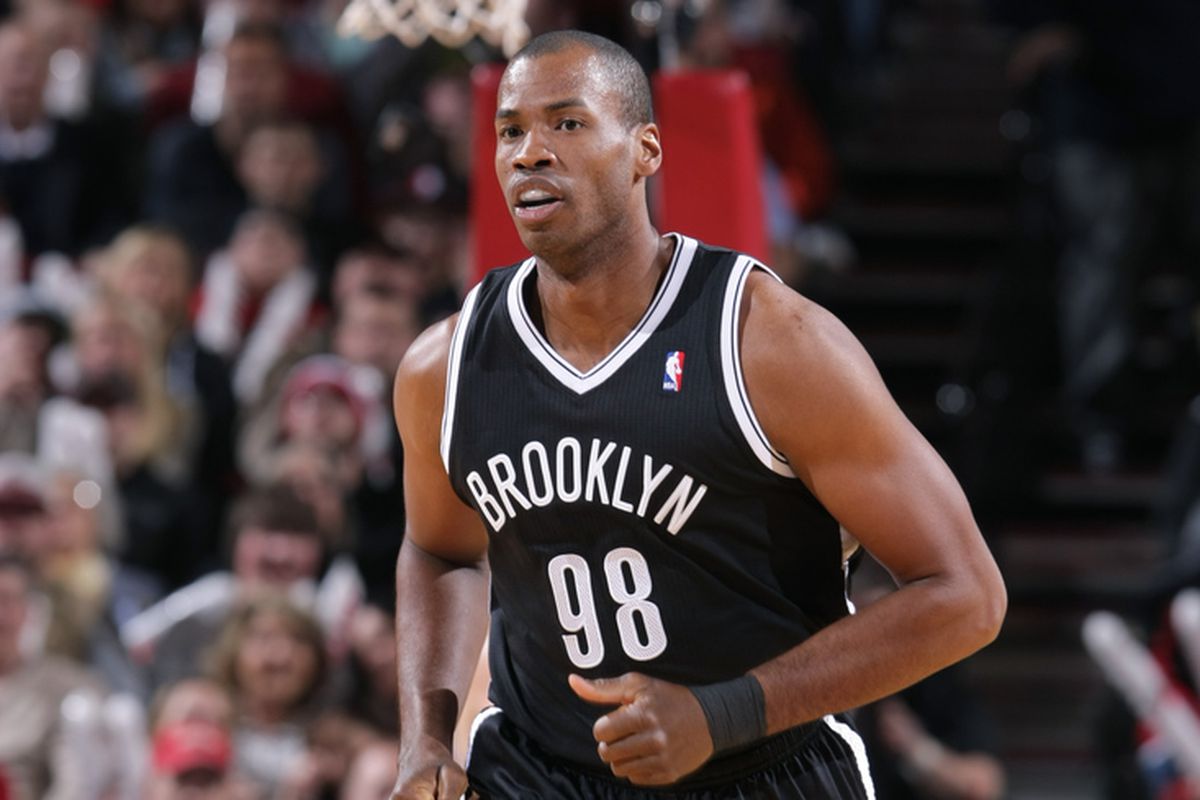
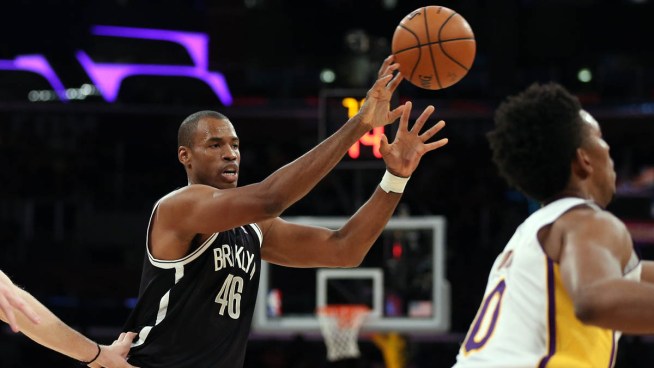
February 23, 2014, 10 years ago: The Brooklyn Nets beat the Los Angeles Lakers, 108-102 at the Staples Center (now the Crypto.com Arena) in Los Angeles. Jason Collins played 10 minutes and 37 seconds for the Nets, and he didn't score any points. He did, however, have an offensive rebound, a defensive rebound, and a steal.

This appearance made Collins, who, in the off-season, publicly revealed that he is gay -- also known as "coming out of the closet," or "outing yourself," and was not, at the time, signed to any team -- the first openly gay athlete in major league sports in North America.

Presuming, of course, that you do not include MLS, Major League Soccer, as "major league." Robbie Rogers had already played for the Los Angeles Galaxy since coming out. So far, the reaction to him has been positive. But in the traditional "Big Four" North American sports, Collins was the first. And it appeared that, on that night, the L.A. fans -- presumably, many of whom have cheered Rogers -- treated Collins no worse than they treated any other opposing player.

A few other athletes have come out after retirement. Collins, knowing that he could still have a shot at signing with a new team, but also that teams might shy away from signing him if they knew, chose to be honest, and let them know. The Nets decided that it didn't matter, that it wasn't an indication of bad character, and that he might still be able to help them win, and they signed him.

Born on December 2, 1978 in Los Angeles, Collins was an All-American center at Stanford University. He had previously played with the New Jersey Nets from 2001 to 2008, before their 2012 move to Brooklyn. He played the 2nd half of the 2007-08 season with the Memphis Grizzlies, 2008-09 with the Minnesota Timberwolves, 2009-12 with the Atlanta Hawks, most of 2012-13 with the Boston Celtics, and the end of that season with the Washington Wizards. He ended up playing 22 games for the Nets, starting only 1, and never played again.

In that 1st game for the Nets, he wore Number 46. For his remaining games with the Nets, he wore 98, as he had with the Celtics and the Wizards. He wore it in memory of Matthew Shepard, a University of Wyoming student who was murdered for being gay in 1998. Having proven his point, he announced his retirement on November 19, 2014.

Glenn Burke, who played baseball in the 1970s, didn't "come out" while he was playing, because, in his own mind, he was never "in." Baseball fans at large didn't know he was gay, but his teammates knew, and most of them didn't care. Unfortunately, he played for 2 bigoted managers, Tommy Lasorda and Billy Martin. Lasorda ordered him traded away from the Los Angeles Dodgers; and Billy Martin, with the Oakland Athletics, had him sent down to the minors, burying him and prematurely ending his career.

One day, people who are gay will not have to face the choice of announcing it, or keeping themselves in the closet because they're afraid of repercussions. One day, we will hear that someone is gay, and we'll say, "So what? It doesn't make a difference. It's his (or her) business, not ours."

Until then, anyone facing the choice that Jason Collins and Robbie Rogers have made -- not being gay, but revealing it -- will need more Collinses and Rogerses, to move people's hearts and minds forward. Such people will advance our society in the same way that Jackie Robinson did on race, to the point where the only thing that matters is, "Can he play?"

If a player is a good player and a good teammate, then I don't care if he's a purple Buddhist from Mars in a ménage-a-trois with a college kid and a teddy bear: His personal life doesn't matter, and he can play on my team. If a player is exactly like I was as a young man, except with talent, but not enough to make it at the major league level, then I'd cut him.

I'd rather have a gay player on my team than an anti-gay player. 

Friday, June 28, 2019

June 28, 1969: The Stonewall Uprising

June 28, 1969, 50 years ago: New York City policemen raid the Stonewall Inn at 51 Christopher Street, off Sheridan Square in Greenwich Village, Manhattan. It starts out as a typical raid of a bar for permitting homosexual activity.

It doesn't end that way. The "paddy wagons" take too long to get there, preventing a mass arrest. This allowed a crowd to gather outside, angry that what would eventually be called "the gay community," which had long had a major presence in "The Village," was being picked on again. They had long been an easy target, since mainstream America had no desire to support them, viewing homosexual activity as sinful. Finally, as one newspaper put it, "This time, the fairies fought back."

For years, the pro-police New York media called it "The Stonewall Riot." Eventually, it became better known as "The Stonewall Uprising," and is often considered the birth of the modern gay rights movement. This is a bit unfair to the people who had already been in that movement, so it's better to say that it was the event that moved the movement into the mainstream of American life, much as the Montgomery Bus Boycott of 1955 took the Civil Rights Movement for African-Americans into the mainstream.

The original Stonewall Inn opened in 1930, at 91 7th Avenue South, as a speakeasy during Prohibition, so it had been regularly raided from the beginning. In 1934, with Prohibition ended, it moved to its more familiar location. A fire ended this establishment in 1964.

In 1966, 3 organized crime figures (The Village had previously been known as an Italian neighborhood, and Mafia activity was rampant there) bought the property, and turned it into a gay bar, thinking they could blackmail closeted wealthy patrons. It probably wouldn't be remembered today if it wasn't raided 3 years later, but it also hosted drug sales, and that was really what got the vice squad sent in.

The owners never reopened the bar after the Uprising. The space was used over the next few years by a deli, a Chinese restaurant, and a shoe store. In 1991, new owners opened a gay bar, and named it "Stonewall." The name had not only survived the original bar, but had surpassed it in importance.

The bar was listed on the National Register of Historic Places in 1999, and declared a National Historic Landmark in 2000. It closed again in 2006, due to mismanagement. New owners renovated it and reopened it in 2007, and they embrace its historic significance.

On June 28, 1970, the 1st Gay Pride parade marched from the Stonewall site to Sheep Meadow in Central Park. As a result, the parade is annually held on the last Saturday in June, and gay Americans now celebrate June as Pride Month. This was aided by the U.S. Supreme Court's decision in Obergefell v. Hodges, striking down all State bans on same-sex marriage, announced on June 26, 2015, right before the anniversary.

Monday, February 24, 2014

Jason Collins, the Nets, and the Heat

Jason Collins played for the Brooklyn Nets last night, against the Los Angeles Lakers, at the Staples Center in Los Angeles. He previously played for the New Jersey edition of the Nets from 2001 to 2008.

It was hard enough for me to care about the Nets when they were representing my home State. But now that they've completely embraced their new identity in Brooklyn, to me, they are just another basketball team. And not a very good one.

How good was Collins last night? Well, he played 11 minutes, and he didn't score any points. He did, however, have an offensive rebound, a defensive rebound, and a steal. He had a plus-8 rating. That means that, while he was on the court, the Nets scored 8 points more than the Lakers did. And the Nets beat the Lakers, on the road, 108-102. That's 6 points, meaning the Nets were 2 points better with Collins than they were without him. (Deron Williams had the most impact, scoring 30 points.)

So, at least for 1 game, he helped.

This appearance made Collins, who came out in the off-season, while not currently signed to any team, the first openly gay athlete in major league sports in North America.

Presuming, of course, that you do not include MLS, Major League Soccer, as "major league." If you don't, well, that's a choice, and it is a repulsive lifestyle. But in the traditional "Big Four" North American sports, Collins is the first.

Robbie Rogers has played for the Los Angeles Galaxy since coming out. So far, the reaction to him has been positive. And it appears that, last night, the L.A. fans -- presumably, many of whom have cheered Rogers -- treated Collins no worse than they'd treat any other opposing player.

A few other athletes have come out after retirement. Collins, knowing that he could still have a shot at signing with a new team, but also that teams might shy away from signing him if they knew, chose to be honest, and let them know. The Nets decided that it didn't matter, that it wasn't an indication of bad character, and that he might still be able to help them win, and they signed him.

In today's New York Daily News, Mike Lupica quotes NBA legend, now ESPN analyst, Charles Barkley making an interesting point:

Everybody knows the Miami Heat need a big man to help them go up against the Indiana Pacers, who've got guys like Roy Hibbert and David West. If Jason can still play, how come the Miami Heat didn't make a call? How come he didn't end up with a contender instead of with the Nets?

Interesting question. After all, there are cities in this country that are known for having a prominent gay community, and Miami is one of them.

Granted, for the moment, the Heat are good enough to not have to pander to any community within their metropolitan area by signing anyone like them. Not that there's too many 70-year-old Jews originally from New York, or Cuban exiles even older than that, who can still play basketball.

But if talent is the only thing that should matter, then why didn't the Heat go after Collins? Did they think he wasn't good enough?

It seems to me that, if Collins is as good as he was last night -- and no better, which would be understandable, given that he was never really a star, and that he's now 35, not exactly a young guy by NBA standards -- he could still be "the last piece of the puzzle," the guy who can put a contending team over the top. And before you tell me the Heat have won the last 2 titles and the last 3 conference titles, let me remind you that every new season is a new story, and the Heat reaching the NBA Finals for a 4th straight season is by no means a given.

Right now, the Pacers lead the Heat by 1 game in the loss column for the top Playoff seed in the Eastern Conference. If the current standings hold, the Nets will have the 6th seed -- but they're only 3 games in the loss column behind the Toronto Raptors for the 3rd (and 1st place in the Atlantic Division), and 2 behind the Chicago Bulls for the 4th -- and getting either of those would mean home-court advantage in the 1st Round.

If the Heat end up losing a series because they won 3 home games but lost 4 on the road -- or, through any combination, getting to a Game 7 on the road and losing it -- while we'll never be able to prove it, it could be because they had a chance to sign Jason Collins and chose not to.

Which, unlike being gay, is a choice.

One day, people who are gay will not have to face the choice of announcing it, or keeping themselves in the closet because they're afraid of repercussions. One day, we will hear that someone is gay, and we'll say, "So what? It doesn't make a difference. It's his (or her) business, not ours."

Until then, anyone facing the choice that Jason Collins and Robbie Rogers have made -- not being gay, but revealing it -- will need more Collinses and Rogerses, to move people's hearts and minds forward. Such people will advance our society in the same way that Jackie Robinson did on race, to the point where the only thing that matters is, "Can he play?"

If a player is a good player and a good teammate, then I don't care if he's a purple Buddhist from Mars in a ménage-a-trois with a college kid and a teddy bear: His personal life doesn't matter and he can play on my team.

If a player is my exact duplicate... well, if we're talking exact, then he wouldn't have the talent to play anyway. Especially at my (our) age.

I have no stake in whether Jason Collins succeeds in the NBA from this day forward. I am not gay, nor am I (any longer) a Nets fan, so he does nothing to represent me.

But I love a good story. And a team failing because it refused to sign the NBA's 1st openly gay player is every bit as good a story as a team succeeding because they signed a player without caring that he was openly gay.