January 1, 1994, 30 years ago: The Orange Bowl is played, at the stadium of the same name in Miami. The University of Nebraska hasn't won the National Championship since the 1971 season, 32 years earlier. Florida State University has never won it. Both teams have had some agonizing close calls the last few years. Something's got to give.
Bobby Bowden had been an assistant coach at Florida State before becoming the offensive coordinator, and then the head coach, at West Virginia. After taking the Mountaineers to victory in the 1975 Peach Bowl, FSU asked him to come back.
He inherited a mess. As he said at the time, "At West Virginia, the bumper stickers say, 'BEAT PITT.' At Florida State, they say, 'BEAT ANYBODY.'" It took him just 2 years to turn them into a 10-2 team and winners of the Tangerine Bowl.
The Seminoles were not in a league until joining the Atlantic Coast Conference in 1992. But they put together some great teams. In 1979, they had an undefeated regular season, 11-0. In 1980, they went 10-1. But, both seasons, they lost a chance at the National Championship by losing the Orange Bowl.
In 1987, they went 11-1 and won the Fiesta Bowl. In 1988, they went 11-1 and won the Sugar Bowl. But, both times, they lost a regular season game to the University of Miami, one of their main rivals, costing them a shot at the National Championship. In 1989 and 1990, they went 10-2.
The 1991 season seemed like the year. They began the season ranked Number 1, and won their 1st 10 games. And then it all fell apart. In back-to-back games -- though with a bye week in between -- they faced Number 2 Miami at home at Doak Campbell Stadium in Tallahassee, and lost 17-16; and then faced their other main rivals, Number 5 University of Florida, away, and lost 14-9. A win over Texas A&M in the Cotton Bowl did little to console them, as Miami won the National Championship for the 4th time in the last 9 seasons.
Could 1992 be the year? They won their 1st 5 games, then had to go to the Orange Bowl stadium to play Miami: The Hurricanes were Number 2, the Seminoles Number 3, so it was a big game, if not the big game of the regular season, as it was the year before. Miami won, 19-16. Florida State won the rest of their games, including a return to the Orange Bowl where they beat Nebraska, but finished Number 3. Miami lost the Sugar Bowl to Alabama, costing them another National Championship.
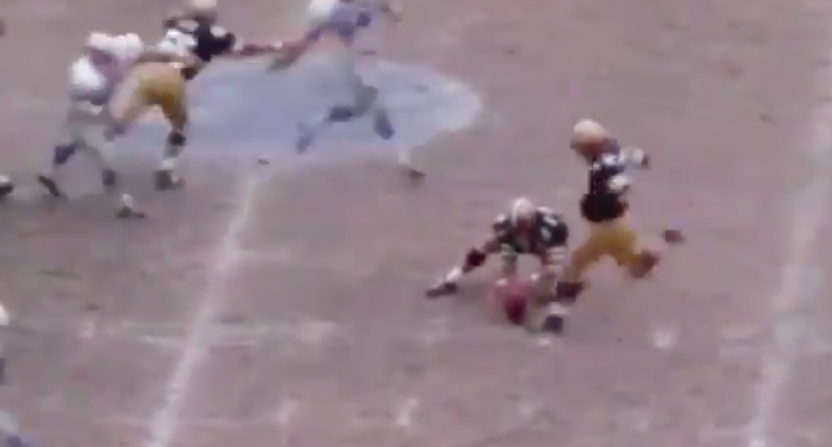
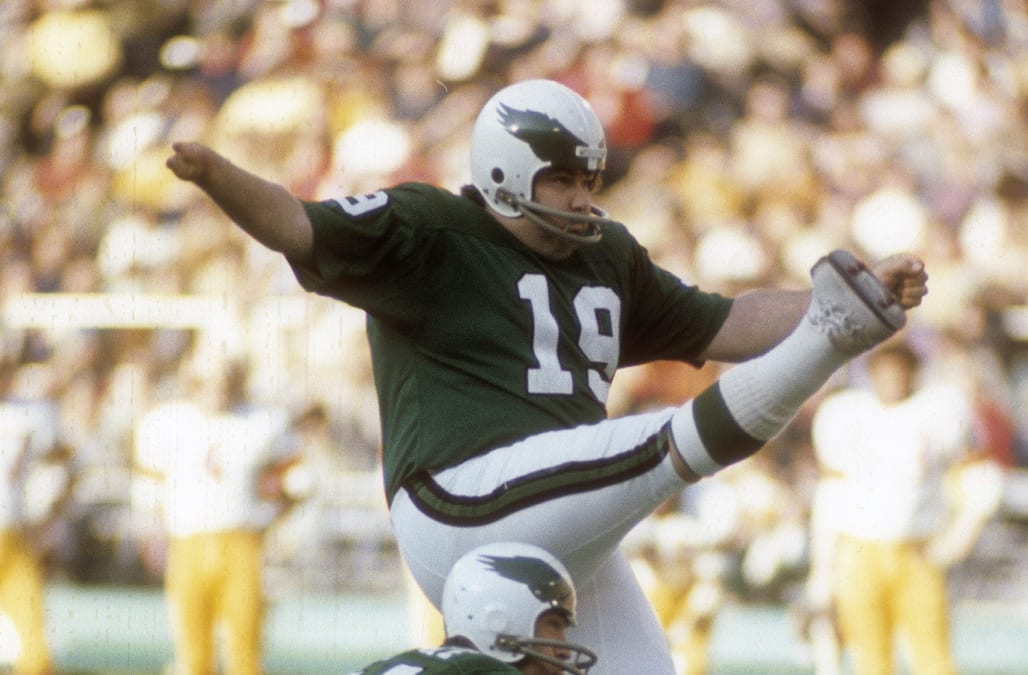
In both 1991 and 1992, Miami won because Florida State missed a last-play field goal: The 1st time, by Gerry Thomas from 34 yards; the 2nd time, by Dan Mowrey from 39. Both were wide and to the right. These games are now known as Wide Right I and Wide Right II.
Seminole fans could only console themselves by calling on Miami's "thug" image, saying, "You can't spell SCUM without UM." In time, a free sneakers scandal would lead to Miami (and Florida) fans saying, "FSU" stood for "Free Shoes University."
Again in 1993, Florida State opened the season at Number 1. And they tempted fate by recruiting Scott Bentley, a native of the Denver suburbs and the country's highest-ranked high school kicker, and letting him be put on the cover of Sports Illustrated's 1993 College Football Preview Issue. It was as if they were telling "The Dreaded SI Cover Jinx," "Come on, then!"
As it turned out, Bentley missed 7 extra points in the team's 1st 5 games. Not 7 field goals. Seven extra point attempts. The Jinx was punishing Bentley for his team's defiance.
As it turned out, it didn't matter: It was only Bentley, not the team as a whole, that was getting punished. They won those 1st 5 games: 42-0 over Kansas in the Kickoff Classic at the Meadowlands, 45-7 away to Duke, 57-0 home to Number 17 Clemson, 33-7 away to Number 13 North Carolina, and 51-0 home to Georgia Tech.
This time, with Miami coming into Doak Campbell with the Number 3 ranking, the Seminoles left no doubt, winning 28-10. No last-play, or even last-minute, heroics necessary. They followed this with a 40-14 win home to Number 15 Virginia, a 54-0 home win over Clemson, and a 49-20 win away to Maryland.
That set up a showdown with Number 2 Notre Dame in South Bend, Indiana. NBC tried billing it as "The Game of the Century," and it lived up to the hype, being in doubt until a last-gasp FSU pass was broken up in the end zone. Notre Dame won, 24-17, and rose to Number 1.
It looked like the Seminoles' dreams had been shattered again. But the very next week, Notre Dame were upset by Boston College on a last-play field goal. Meanwhile, Florida State beat North Carolina State 62-3 to clinch the ACC title, and won 33-21 away to Number 7 Florida to regain the Number 1 ranking.
Since winning back-to-back National Championships in 1970 and 1971, Nebraska had won 11 Big Eight Conference Championships, 3 Sugar Bowls, 2 Orange Bowls and a Cotton Bowl. But they hadn't won another National Championship. They only lost 1 game in 1982, by 3 points, away to Penn State. They put up one of the most stunning seasons in college football history in 1983, but lost the Orange Bowl to Miami on a missed 2-point conversion, starting Miami's quasi-dynasty.
Expectations for 1993 were not especially high, as the Cornhuskers started out ranked Number 9. Putting up 76 points on North Texas, 50 on Texas Tech, 49 on Missouri, 49 on Iowa State, 48 on Colorado State, and 45 on Kansas State were not unusual for The 'Huskers under head coach Tom Osborne.
What did get people's attention was a nationally-televised 14-13 win over UCLA at the Rose Bowl stadium; a 21-17 win away to Colorado, which had been the top team in the Big 8 the last few years; and a 21-7 day-after-Thanksgiving win over their arch-rivals, Number 16 Oklahoma.
It pushed Nebraska up to Number 2, and set up a New Year's Day prime-time matchup between Osborne's 'Huskers and Bowden's 'Noles. One of these teams was going to end their years of heartbreak, while the other was going to extend it. It was college football's equivalent of having a World Series between the pre-2004 Boston Red Sox and the pre-2016 Chicago Cubs.
Nebraska were undefeated. Florida State were not. And yet, Florida State were favored by 17 1/2 points. Was it because they had the Heisman Trophy winner, quarterback Charlie Ward? It shouldn't have been: Nebraska had the country's best defense. Was it because Nebraska had a history of choking? It shouldn't have been: So did Florida State.
Was it because Florida State were used to playing on this field? Not really: So were Nebraska. And being in the same State didn't make any difference: It was 482 miles from Doak Campbell Stadium to the Orange Bowl, so this was no "home game" for the Seminoles and their fans.
The 1st quarter ended scoreless, but it shouldn't have been: Nebraska returned a punt for a touchdown, but it was called back due to an illegal block, which the instant replay showed didn't happen. Bentley opened the scoring with a field goal midway through the 2nd quarter. Nebraska scored a touchdown, but with time running out in the half, Bentley kicked another field goal. It was Nebraska 7, Florida State 6.
Nebraska got robbed again early in the 3rd quarter. William Floyd appeared to have scored a touchdown for FSU, but the replay showed that he fumbled before crossing the goal line. The 2-point conversion attempt failed, and the Seminoles led 12-7. Bentley kicked another field goal, and it was 15-7 Seminoles at the end of the quarter. By all rights, it should have been 14-9 Cornhuskers.
At the beginning of the 4th quarter, Lawrence Phillips scored a touchdown for Nebraska. Just as it had on the same field 10 years earlier, the 2-point conversion attempt did not go Nebraska's way, and it was still 15-13 Seminoles. Time began to run out. But quarterback Tommie Frazier drove the 'Huskers down, and with 1:16 left, Byron Bennett kicked a 27-yard field goal. Nebraska led, 16-15.
But it wasn't over yet. The 'Noles still had Heisman winner Ward. He got them down to a 1st & goal on the Nebraska 3-yard line. The 'Husker defense held, and, with 21 seconds left, Scott Bentley finally had his date with destiny. It was an attempt from 22 yards out. Basically, an extra point attempt. If he makes it, he's a Seminole hero for all time. If he misses it, he's the biggest flop in team history. He nailed it, and his teammates piled onto him.
But the game still wasn't over. The Seminoles were penalized for excessive celebration. That, and a bad kickoff -- by Bentley, mind you -- gave the 'Huskers the ball at their own 43. They only needed about 25 yards for a game-winning field goal.
Frazier got Nebraska to the Seminole 28, with a pass to Trumane Bell. That would make a field goal attempt 45 yards. Not easy on natural grass, but with hardly any wind, certainly possible. But the clock seemed to run out when Bell went down. Thinking their coach had finally won his National Championship, some Florida State players dumped the Gatorade on Bowden.
But referee John Soffey ruled that Bell was down with 1 second left. By NCAA rules, the clock must stop to move the first down marker. This gave Nebraska time to get their field goal unit on in time. If Bennett made his attempt, it would have been the cruelest loss yet for Florida State: Losing on a last-play field goal when you thought you already had the National Championship won.
Bennett missed. Not wide right, but wide left.
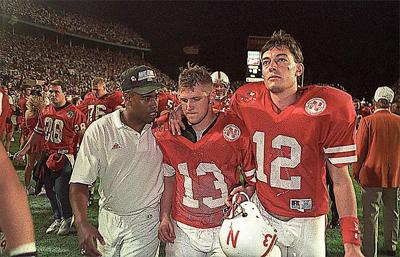
Like Ralph Branca, a victim of big-game fate
in baseball in 1951, he wore Number 13.
Now, Florida State were the National Champions -- clinching it with the other team missing a field goal attempt. No one cared about the irony, or that they hadn't played especially well: They were Champions at last.
It was another crushing defeat for Nebraska. Finally, the next season, they went all the way -- and in the perfect way, beating Miami on their own field in the Orange Bowl game. This started a run of 3 National Championships in 4 seasons.
Byron Bennett would not be a part of it. The man who thought he'd made the field goal to get Tom Osborne his 1st National Championship as a head coach -- he'd been an assistant to Bob Devaney in 1970 and '71 -- and then missed the one that would have really done it, became a parole officer in Dallas, and then a high school football coach. He's done rather well at it.
Bobby Bowden would lead Florida State to another National Championship in 1999. His successor, Jimbo Fisher, did so in 2013.
Scott Bentley remained with Florida State through the 1996 season, and graduated. In 1997, the Atlanta Falcons signed him as a kickoff specialist, but released him after 2 games. The Denver Broncos picked him up, as a backup to Jason Elam, and he played 1 game, kicking 2 field goals in 3 attempts and going 4-for-4 on extra points. He remained a kickoff specialist, playing 2 games in 1999 for the Kansas City Chiefs; and, in 2000, 1 more for the Broncos and 6 for the Washington Redskins, making 1 field goal, for 50 yards. He is now an operations manager for Amazon.com.
One other note: This game was broadcast on NBC, with Dick Enberg and former Cincinnati Bengals star Bob Trumpy in the booth, and legendary USC and Buffalo Bills running back O.J. Simpson as the sideline reporter. If what happened between Florida State and Nebraska on January 1, 1994 was shocking, what Simpson did in the week of June 12 to 17, 1994 was even more so.
In the other New Year's Day bowl games:
* Rose Bowl, Pasadena, California: Number 9 Wisconsin beat Number 14 UCLA, 21-16.
* Sugar Bowl, Superdome, New Orleans: Number 8 Florida beat Number 3 and previously undefeated West Virginia, 41-7. West Virginia fans were hoping that the Orange Bowl, being played at the same time, would be a dull, or mistake-filled, game, giving them hope for the National Championship. But Florida, who'd lost only to Florida State and Auburn, put a quick stop to that.
* Cotton Bowl, Dallas: Number 4 Notre Dame beat Number 7 Texas A&M.
* Fiesta Bowl, Sun Devil Stadium, Tempe, Arizona: Number 16 Arizona beat Number 10 Miami, 29-0. Arizona did this despite playing on the home field of their arch-rivals, Arizona State.
* Hall of Fame Bowl, Tampa Stadium: Number 23 Michigan beat unranked North Carolina State, 42-7.
* Florida Citrus Bowl, Orlando, Florida: Number 13 Penn State beat Number 6 Tennessee, 31-13.
* Carquest Bowl, Joe Robbie Stadium, Miami Gardens, Florida: Number 15 Boston College beat unranked Virginia, 31-13. This game debuted in 1990 as the Blockbuster Bowl, and has gone through many names. It moved to Orlando in 2001, and took up the former name of the Florida Citrus Bowl, the Tangerine Bowl. Still in Orlando, it is now known as the Cheez-It Bowl.