Showing posts with label cuba. Show all posts

Wednesday, October 9, 2024

Luis Tiant, 1940-2024

You know the old saying: "When they made that guy, they broke the mold." Well, when they made Luis Tiant, they didn't break the mold. The mold just faded away.

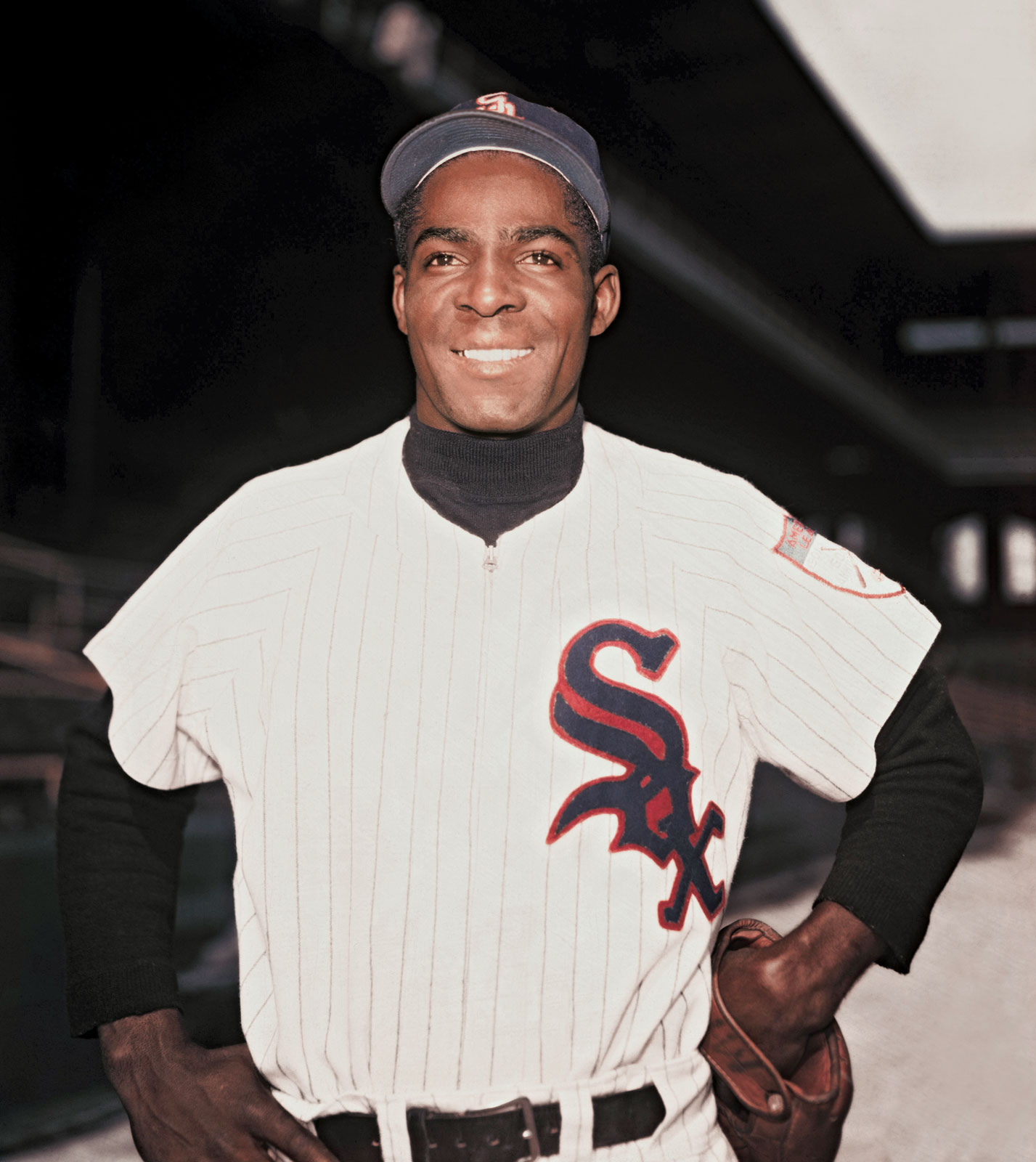
Luis Clemente Tiant Vega was born in Marianao, Cuba on November 23, 1940. Like an earlier great pitcher who would pitch in Cuba, Satchel Paige, he liked to joke that he was older. Unlike a later great Cuban pitcher, Orlando "El Duque" Hernández, he wasn't older than he said he was.

His father, Luis Eleuterio Tiant Bravo, later known as Luis Tiant Sr., pitched in America's Negro Leagues from 1928 to 1947. In his last season, he helped the New York Cubans, win the Negro World Series. Early in the 20th Century, "Cuban" was often code for "black," but they did have some Cuban players, including the elder Tiant, a lefthander.

American baseball was integrated in 1947, too late for the elder Tiant. The younger Tiant was "discovered" by former Cleveland Indians star Bobby Ávila, and in 1959, Tiant was pitching for the Mexico City Tigers in the Mexican League. In 1961, the Indians purchased his contract. But that meant he was stuck in America: He could never return home, as travel restrictions between the U.S. and a Cuba now ruled by Fidel Castro made it impossible.

He made his major league debut on July 19, 1964. Against the defending American League Champion New York Yankees. At Yankee Stadium. Opposing the Yankees' ace, Whitey Ford. Wearing Number 33, Tiant went the distance. He allowed 4 hits: All singles, to Roger Maris, Bobby Richardson, Phil Linz, and Tom Tresh (who was playing center field in place of Mickey Mantle). He struck out 11. Backed by a home run from Leon Wagner, Tiant won, 3-0.

Despite going 10-4 with a 2.83 ERA (and even 1 save), Tiant was not the American League's Rookie of the Year in 1964. But the winner was another Cuba, Tony Oliva of the Minnesota Twins, who led the AL in batting average. Afterward, it looked like AL batters had caught up with Tiant, as he went 11-11, 12-11 and 12-9 over the next 3 seasons.

But in 1968, he went 21-9, and had an earned run average (ERA) of 1.60. He pitched 9 shutouts. To put that in perspective: In the National League, Bob Gibson set a modern-era record with a 1.12 ERA, and also had 9 shutouts. Tiant's ERA+ was 186, so he wasn't just benefiting from "the Year of the Pitcher": He was having a great season on top of that. He also made the 1st of 3 All-Star Games.
To counteract that season, the pitcher's mound was lowered from 15 to 10 inches for 1969, and while it didn't affect all pitchers, it affected Tiant, as he dropped to 9-20. But he also battled injury, including a fractured shoulder blade. Just before the start of the 1971 regular season, the Twins released him. They had won the last 2 AL Western Division titles. They would not win another for 17 seasons.

*

The Atlanta Braves signed him, but after 5 games at Class AAA Richmond, they decided he was done, and released him. The Boston Red Sox took a chance, and he went 1-7 for them in 1971. But they stuck with him, and, over the next 5 seasons, he went 15-6 (with a League-leading 1.91 ERA), 20-13, 22-13, 18-14, and 21-12.

That 18-14 record in 1975 was actually his least effective over that stretch. But it was the one time between 1967 and 1986 that the Red Sox won the American League Pennant. As they outpaced the Yankees and the Baltimore Orioles for the Eastern Division title, and dethroned the Oakland Athletics in the AL Championship Series, Tiant became a bigger star than ever.

How big a star? Big enough that, in August, Castro gave Tiant's parents a special visa so that they could see their son pitch. Knowing that Luis Sr. had been a Negro League pitcher, and knowing the good publicity that would result from having an anti-Castro Cuban do so -- especially in a heavily-Catholic, and thus anti-Communist, city like Boston -- Sox management even had Luis Sr. throw out a ceremonial first ball.
How big a star? In 1971, in trying to come back from injury, Tiant developed a new windup, twisting and turning, looking back at 2nd base before delivering the ball. Every kid in America, even kids like me who hated the Red Sox, imitated this windup.

His parents were in the stands at Fenway Park for Game 1 of the World Series against the Cincinnati Reds. The Reds hadn't won the World Series in 35 years; the Red Sox, 57. Something had to give. Due to their postseason experience -- although they were 0-2 in World Series play -- "The Big Red Machine" were favored to win the Series. Not only did Tiant pitch a 5-hit shutout, but, with the designated hitter meaning he had come to bat only once all season (but getting a hit), he led off the bottom of the 7th win a single, leading to a 6-run Boston inning, and a 6-0 victory.

He also went the distance in Game 4, winning, 5-4. Had the Sox won the Series, Tiant would have been an easy choice for Series MVP. Even the rain that delayed Game 6 for 3 days seemed to work in his favor, He was now rested enough to make a 3rd Series start, and held the Reds scoreless for the 1st 4 innings.

But they scored 3 in the 5th, and in the top of the 7th, Tiant gave up a home run to César Gerónimo. He was relieved, and the Reds took a 6-3 lead, before the Red Sox tied in it in the 8th, and won the game, 7-6, on Carlton Fisk's home run in the 12th inning. It's been called the greatest game ever played. But the Reds won Game 7, and won the Series.

Tiant was 35, not really a late bloomer in terms of talent, but definitely in terms of attention. He gained attention the next season as his two father figures, Luis Sr. and Sox owner Tom Yawkey, both died. He gained attention for his unusual windup. He gained attention for his status as a Cuban exile.

And he gained attention for his personality. While he understood English, he spoke it with a very heavy accent that made him hard to understand. He loved cigars, something Cuba is known for. He would even smoke a cigar in the shower. How he kept it lit, only he knew. He glued a mirror to the shower wall. With his receding hairline, his biker-style mustache, and his pudgy frame, he sure didn't look like an athlete. But he was once caught lathering up, looking at that mirror, and saying, to no one in particular, in his accent, "Damn! I am a gooooooood-looooooooking son of a beeeeeeeech!"
Pictured: One goofy-looking Boston cop,
and one good-looking son of a bitch.
(His words, not mine.)

And yet, he never threw another postseason pitch. The Sox finished a distant 3rd place in 1976. They led the AL East most of the way in 1977, but the Yankees came back to win. Then came 1978, a year which lives in infamy in New England. At age 37, Tiant went 13-8 with a 3.31 ERA.

But the Boston tailspin and accompanying New York surge became legendary. Tiant shut the Orioles out on September 6. The next day began the 4-game series known as the Boston Massacre. Allegedly, team Captain Carl Yastrzemski urged manager Don Zimmer to start Tiant on 3 days' rest in the series finale, to avoid the sweep, and Zimmer refused. Tiant pitched the next day, and beat the Orioles again. Zimmer did pitch him on 3rd days' rest for the regular-season finale against the Toronto Blue Jays, and he pitched a shutout, to force a Playoff. But that meant he was unavailable for the Playoff, and, well, Bucky Blessed Dent.

That regular-season finale also turned out to be Tiant's last game for the Red Sox, as his contract ran out. Having just turned 38, they didn't re-sign him. The Yankees did. Seeing him in a Yankee uniform was blasphemy to Sox fans, and weird to Yankee Fans. But he had something left: Over 2 seasons, he went 13-8 and 9-9. He pitched 2 more seasons, 1981 for the Pittsburgh Pirates, and 1982 for the California Angels. 
Does Luis Tiant belong in the Baseball Hall of Fame? He retired with a record of 229-172, an ERA of 3.30, 2,416 strikeouts, and a WHIP of 1.199. In the post-1920 Lively Ball Era, only 8 pitchers are ahead of him in all 4 categories: Warren Spahn, Greg Maddux, Roger Clemens, Don Sutton, Gaylord Perry, Tom Seaver, Randy Johnson and Bob Gibson.

Throw in Tiant's .571 winning percentage, and the number of those ahead of him in all categories drops to 6: Spahn, Maddux, Clemens, Seaver, Johnson and Gibson. Throw in Tiant's 2.18 strikeout-to-walk ratio, and the number drops to 5, eliminating only Spahn. Is that enough?

Baseball-Reference.com has a Hall of Fame Monitor, on which a "Likely HOFer" is at 100. Tiant is at 97, suggesting that he just misses. They also have a Hall of Fame Standards, on which the "Average HOFer" is at 50. Tiant is at 41, suggesting that he's a bit short. 

They also have Similarity Scores, showing the 10 most statistically similar players, weighted toward players of the same position. Of Tiant's 10 most similar, Catfish Hunter, Jim Bunning (the top 2) and Don Drysdale are in the Hall of Fame; George "Hooks" Dauss once missed election through the Veterans Committee by one vote; and the rest are Billy Pierce, Vida Blue, Mickey Lolich, Jim Perry, Kevin Brown and Orel Hershiser. Aside from Perry, whose brother Gaylord is in, each of those pitchers has some support for the Hall, but none is ever likely to get in.

If winning matters, then Tiant doesn't get much help: He reached the postseason 4 times, but only won 1 Pennant, and no World Series. If character counts, then he is helped, as he was beloved by his teammates, and was never involved in any kind of scandal. Overall, I can see why some people believe he should be in, but the case is far from tight.

*

Although Tiant's Yankee teammates liked him, and he has occasionally returned to New York for Old-Timers' Day, and had some of his best years in Cleveland, it's easy to forget now that he played for anyone other than the Red Sox. He remains, one of the most popular players in Sox history. He is their "barbecue stand guy," the way Boog Powell is in Baltimore, Greg Luzinski is in Philadelphia, Gorman Thomas is in Milwaukee and Randy Jones is in San Diego. One notable difference is that El Tiante's Cuban Barbecue is on the outside of Fenway Park, open on Jersey Street for pregame, as that street is blocked off, with a game ticket required for entry.

He served as a pitching coach in the farm systems of the Los Angeles Dodgers and the Chicago White Sox, and for Nicaragua in the 1996 Olympics. He was head coach for the Savannah College of Art and Design, an NCAA Division III program in Georgia, from 1998 to 2001, without success. He served as a "special assignment instructor" for the Red Sox, including helping out at Spring Training in Fort Myers, Florida.
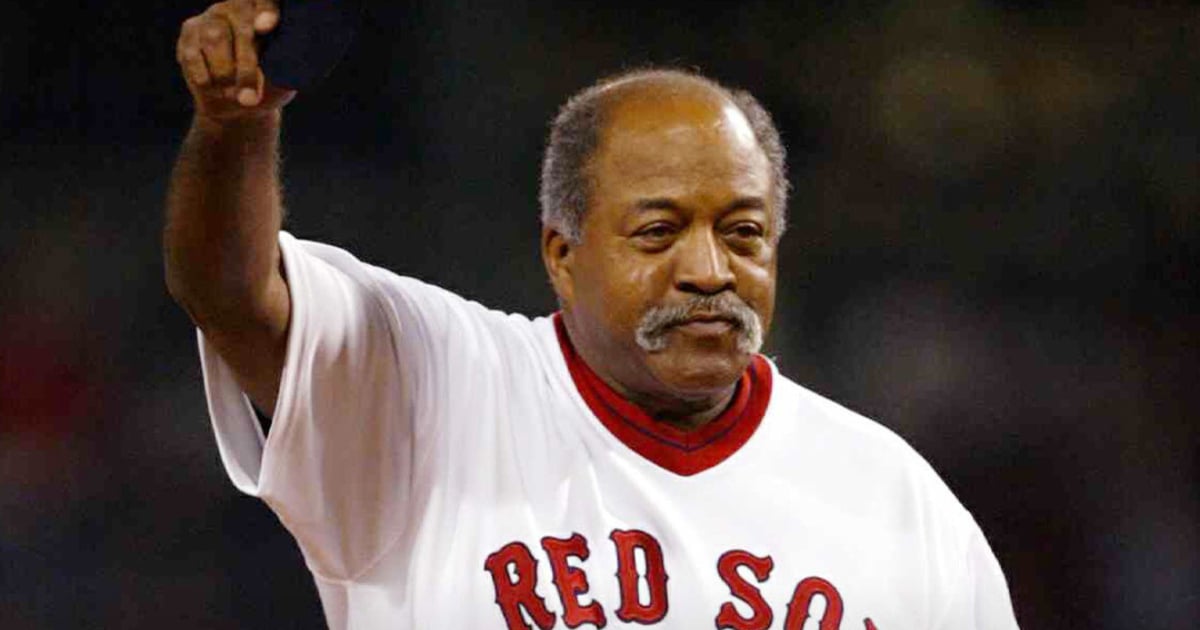
He and his wife Maria had 3 children: Luis, Isabel and Daniel. They had homes in Southborough, Massachusetts and Wells, Maine. It was at this latter home that Luis Tiant died yesterday, October 8, 2024, at the age of 83. It was the end of one of baseball's grandest and most entertaining stories. 

Sunday, September 8, 2024

September 8, 1934: The Morro Castle Fire

September 8, 1934, 90 years ago: The cruiseliner SS Morro Castle burns and sinks, killing 135 people, off the coast of Asbury Park, Monmouth County, New Jersey.

Launched in 1930, the ship was run by Agwi Navigation Lines, and regularly sailed between New York City and Havana. Before 1959 and the revolution of Fidel Castro, Cuba, especially its capital city of Havana, was considered a resort for America's rich. And in the days before air travel was considered safe, cruise ships were the way to go to islands that couldn't be reached by train or automobile. The ship was named for a castle built in Havana by their former colonial overlords, the Spanish Empire.

On September 5, the Morro Castle set out from Havana to New York. On September 7, a storm began brewing, and when the rain started, many crewmembers retired early to their berths. Among them was the Captain, Robert Rennison Willmott. He had his dinner delivered to his quarters, rather than dining with his officers.

Shortly thereafter, he complained of stomach pain. Shortly after that, he died. Chief Officer William Warms was forced to assume command. As Midnight and September 8 came, the winds increased past 30 miles per hour.

At around 2:50 AM, the ship was 8 nautical miles -- the limit of a country's jurisdiction being 3 miles, until a 1982 United Nations agreement made it 12 miles -- off the coast of New Jersey's Long Beach Island. That's when a fire was detected in a storage locker on B Deck. Within 20 minutes, the fire had burned through the ship's main cables. This ended all electrical power, including the radio. The hydraulic lines were also severed by the fire, costing everyone the ability to steer the ship.

Of the ship's 12 lifeboats, only 6 could be launched. The sea was still rough, but the passengers pretty much had the choice to jump or burn. Some people tossed deck chairs and life rings overboard, to act as makeshift flotation devices. Several boats came to the rescue, but the rough sea made that difficult. Out of 549 people on board, 135 died.

There is a theory that the ship had been used to smuggle things between New York and Havana and back, and that the fire was purposely set to disguise this, and that the Captain was killed to silence him. Of course, Prohibition had ended 9 months earlier, so if they were transporting liquor, that wouldn't have been very profitable. And, of course, this was long before the embargo on Cuban products such as cigars. So this theory might not be accurate.

Less than 3 years later, less than 30 miles to the southwest, at Lakehurst Naval Air Station in Ocean County, the zeppelin LZ 129 Hindenburg caught fire and crashed, killing 36 people. 

Friday, October 28, 2022

October 28, 1962: The Cuban Missile Crisis Is Resolved

Herbert Block (Herblock) cartoon in The Washington Post,
November 1, 1962: JFK says, "Let's get a lock for this thing."

October 28, 1962: The Cuban Missile Crisis is resolved, as Soviet Premier Nikita Khrushchev
announces that he has ordered the removal of Soviet missile bases in Cuba, as demanded by President John F. Kennedy.

In a secret deal between them, JFK agrees to the withdrawal of U.S. missiles from Turkey. The fact that the Turkey part of the deal is not made public makes it look like the Soviets have backed down, rather than that the deal was a true compromise.

Much of the world thought that this was it, that World War III was assured, that the NFL and AFL games of this day might be the last sporting events that they'd ever see, or even that they would be prevented. They weren't, and the world moved on.

One event the world moved on to was the Nuclear Test Ban Treaty, signed on July 26, 1963 by JFK, Khrushchev, and British Prime Minister Harold Macmillan, banning nuclear testing in the atmosphere -- including above the Arctic Circle.

*

October 28, 1962 was a Sunday. The baseball season ended on October 16, as the New York Yankees beat the San Francisco Giants 1-0 in Game 7 of the World Series, the 1st Series to be between a team on the Atlantic Coast and a team on the Pacific Coast. (The Dodgers had already been in a World Series since their move from Brooklyn to Los Angeles, in 1959, but their opponent was the Chicago White Sox, not a coastal team. The Dodgers won it.)

There was 1 NBA game played that day. The Cincinnati Royals beat the San Francisco Warriors, 131-130 at the Cincinnati Gardens. The Warriors were in their 1st season on the Coast, after playing in Philadelphia. They changed their name to the Golden State Warriors in 1971.

Wilt Chamberlain scored 53 points and grabbed 27 rebounds. Just another day at the office for the greatest basketball player who ever lived. But Oscar Robertson, himself a serious contender for that title, scored 36 to lead the team now named the Sacramento Kings to victory.

For the NHL, this was the "Original Six" era, and 4 of the 6 played. The New York Rangers lost to the Chicago Black Hawks, 5-3 at the old Madison Square Garden. And the Detroit Red Wings beat the Toronto Maple Leafs, 2-0 at the Olympia Stadium in Detroit. The Montreal Canadiens and the Boston Bruins did not play.

And there was football. In the NFL, at the original Yankee Stadium. Y.A. Tittle tied an NFL record with 7 touchdown passes, and the New York Giants beat the Washington Redskins 49-34.

Tittle is 1 of 8 NFL quarterbacks to have thrown 7 touchdown passes in a single game. Sid Luckman of the Chicago Bears did it against the Giants in 1943. Adrian Burk of the Philadelphia Eagles did it against the Redskins in 1954. Although it was in the AFL, the NFL counts George Blanda of the Houston Oilers doing it against the New York Titans (the Jets) in 1961. Joe Kapp of the Minnesota Vikings did it against the Baltimore Colts in 1969.

It was done twice in 2013, by Peyton Manning of the Denver Broncos against the Baltimore Ravens, and by Nick Foles of the Philadelphia Eagles against the Oakland Raiders. In 2015, the Giants were victimized again, by Drew Brees of the New Orleans Saints.

Also on October 28, 1962:

* The Green Bay Packers beat the Baltimore Colts, 17-6 at Memorial Stadium in Baltimore. Johnny Unitas was the greatest quarterback of the era, but Vince Lombardi was the best coach and the best general manager, and had built the best team. From September 24, 1961 to September 13, 1964, the Packers went 38-5-1, including winning the 1961 and 1962 NFL Championship Games.

* The Cleveland Browns beat their arch-rivals, the Pittsburgh Steelers, 41-14 at Forbes Field in Pittsburgh.

* The St. Louis Cardinals beat the Dallas Cowboys, 28-24 at the Cotton Bowl in Dallas.

* The Detroit Lions beat the Chicago Bears, 11-3 at Tiger Stadium in Detroit.

* The Philadelphia Eagles beat the Minnesota Vikings, 31-21 at Metropolitan Stadium in the Minneapolis suburb of Bloomington, Minnesota.

* And the Los Angeles Rams beat their arch-rivals, the San Francisco 49ers, 28-14 at Kezar Stadium in San Francisco.

In the upstart American Football League:

* The New York Titans beat the San Diego Chargers, 23-3 at the Polo Grounds in New York. The Titans changed their name to the New York Jets the next year.

* The Boston Patriots beat the Oakland Raiders, 26-16 at Boston University Field. The stadium would be renamed Nickerson Field in 1964, and the team would be renamed the New England Patriots upon their move to suburban Foxborough, Massachusetts in 1971.

* The Dallas Texans beat the Houston Oilers, 31-7 at Jeppesen Stadium in Houston. The teams would meet again in the AFL Championship Game, and the Texans won. The next year, though, tired of trying to compete for attention with the NFL's Cowboys, they moved, becoming the Kansas City Chiefs.

* The Buffalo Bills beat the Denver Broncos, 45-38 at Bears Field in Denver. Bears Field would be expanded and turned into the original Mile High Stadium.

Wednesday, August 23, 2017

Felo Ramírez, 1923-2017

Felo Ramírez and Jaime Jarrín at Marlins Park

There have been 3 voices of Spanish-language baseball in America: Eloy "Buck" Canel and Felo Ramírez on the East Coast, and Jaime Jarrín on the West Coast.

Canel died in 1980. Now, Jarrin is the only one left. And he is 81 years old.

Rafael Ramírez Arias was born on June 22, 1923 in Bayamo, Cuba -- not to be confused with Bayamón, Puerto Rico. He was known as El Orgullo de Bayamo, the Pride of his hometown.

He played 2nd base as a teenager, but admitted he wasn't good enough to play professionally. One day, using a friend's microphone and amplifier, he began describing the game as if he were a professional broadcaster.

"Calling baseball games was my passion since I was a child," he said in 2001. He began his career at Radio Salas in the Cuban capital of Havana in 1945. Even before the Castro revolution took over the island in 1959, he left to seek his fortune elsewhere in the Caribbean, in Puerto Rico and Venezuela. He maintained a home in the former to the end of his life, and remains enormously popular in the latter.

Raul Striker Jr., the Miami Marlins' Spanish TV play-by-play man, said, "You have broadcasters who are Cuban, and they have their Cuban following. And you have Puerto Ricans, who have their Puerto Rican followings. Felo's following was across all countries."

He called games for the 2 most popular teams in Puerto Rico, the Senadores de San Juan and the Cangrejeros de Santurce -- the Senators and the Crabbers, the latter of which produced Roberto Clemente.

The aforementioned Buck Canel was his idol, as pretty much the only man on the radio talking about the American major leagues in Spanish, including on the Spanish version of The Gillette Cavalcade of Sports, the English version of which ran on radio from 1942, and on television from 1946, both until 1960. Ramírez would eventually join Canel on the program.

He was the voice of the Caribbean World Series, and the Spanish voice to Spanish ears who wanted to listen to American baseball, including 32 World Series. His highlights include Don Larsen's perfect game in the 1956 World Series, Clemente's 3,000th hit in 1972, and Hank Aaron's 715th home run in 1974.

Along the way, he made it a point to get to the ballpark 3 hours early, and talk to the players, to get a feel for what they were thinking and going through, so he could accurately represent them on the air.

"Felo gave me a great piece of advice at the beginning of my career, when we worked together in Venezuela," said Mike Flores, a journalist and a longtime friend. "He said, 'You will learn more if you arrive early to the games.'"

When the Florida Marlins were founded in 1991, and based in the metropolitan area of Miami, which is America's most familiar Spanish-speaking city (along with Los Angeles, and even more so than New York or any city in Texas), they marketed themselves to the area's huge Caribbean-descended population, and to the Caribbean itself.

Hiring Felo, even though he was approaching age 70, was a natural. And so, when they first took the field at what was then named Joe Robbie Stadium (last I checked, its current name was Hard Rock Stadium) in Miami Gardens on April 5, 1993, Felo Ramírez was the play-by-play voice on Radio Mambi, 710 on the AM dial.

In 1997, and again in 2003, he broadcast postseason runs for the team now known as the Miami Marlins, both of which ended with winning the World Series. While the endings were painful for fans of the Cleveland Indians and the Yankees, respectively, Felo finally got to call an American, rather than Caribbean, World Series win by a team he could call his own.

He never married or had children -- the life of a traveling baseball employee has been hard on many who have, and many families have broken up because it was handled poorly -- but he left a legacy for all radiodifusores to follow.

"He's a master at what he dies," said Luis "Yiky" Quintana, who spent 16 years as his last broadcast partner. "There's never been anybody in Spanish broadcasting who has called as many games as he has. He's dedicated his life to baseball. When the season ended here in the United States, he would go call games in Venezuela, Puerto Rico. He would call winter league games, even juvenile games. His life is baseball, and there isn't a broadcaster in Spanish radio today who isn't influenced by Felo."

In 2001, he followed Canel as only the 2nd Spanish-speaking, and only the 2nd Hispanic, broadcaster awarded the Ford Frick Award by the Baseball Hall of Fame. In 2012, when Marlins Park opened on the site of the Orange Bowl, the street to the north, NW 6th Street, was renamed Felo Ramirez Drive. In 2016, a ballfield at Tropical Park in Miami was named Rafael "Felo" Ramírez Field.

On a 2011 roadtrip to San Francisco, he called a group of sportswriters over to the broadcast booth. He had a blackboard with his name, and that of former San Francisco Giants' slugger Barry Bonds. On it, he had written, "Bonds 762 homers, Felo 0." Then he pointed to himself, and said, "Hall of Fame." Then he pointed to Bonds' name, and shrugged his shoulders. Bonds was not yet eligible. Through the elections of 2017, Bonds is still not in.

He announced last year that, like many aging broadcasters before him, he would cut back. But while most of those decided to do only home games, Felo wouldn't even limit himself to that: He said he would limit his travel to East Coast games, thus permitting himself to fly to the Caribbean.

"I think about it sometimes," he said of retirement, "but I adore what I do so much. It's really my life, not just a job."

But this past April 26, as he was getting off the team bus in Philadelphia, he fell, and hit his head on the ground. He was taken to a nearby hospital, and later transferred to one in nearby Wilmington, Delaware that specialized in head injuries. When it became clear that recovery was unlikely, he was released, and allowed to return home to Miami.

Felo Ramírez died on August 21, 2017, at his home in Miami, at age 94. Descansa en Paz.

UPDATE: His final resting place is not publicly known.

Wednesday, January 4, 2017

MLB Players by State of Birth

Includes all players from the National Association in 1871 through the 2016 Major League Baseball season.

1. California, 2,183
2. Pennsylvania, 1,409
3. New York, 1,191
4. Illinois, 1,043
5. Ohio, 1,026
6. Texas, 898
7. Massachusetts, 660
8. Missouri, 602
9. Florida, 515
10. Michigan, 428
11. New Jersey, 423
12. North Carolina, 400
13. Indiana, 372
14. Georgia, 350
15. Alabama, 326
16. Maryland, 305
17. Tennessee, 300
18. Virginia, 285
19. Kentucky, 281
20. Oklahoma, 262
21. Louisiana, 250
22. Wisconsin, 242
23. Iowa, 220
24. Kansas, 212
25. Mississippi, 203
26. Connecticut, 201
27. Washington, 197
28. South Carolina, 188
29. Minnesota, 166
30. Arkansas, 152
31. Oregon, 127
32. West Virginia, 119
33. Nebraska, 113
34. Arizona, 101
--. District of Columbia, 100
35. Colorado, 91
36. Maine, 77
37. Rhode Island, 76
38. Delaware, 55
39. New Hampshire, 51
40. Hawaii, 41
41. Nevada, 39
42. Utah, 39
43. South Dakota, 39
44. Vermont, 38
45. Idaho, 30
46. New Mexico, 29
47. Montana, 23
48. North Dakota, 17
49. Wyoming, 16
50. Alaska, 12

America, 16,523. Dominican Republic, 669. Venezuela, 358. Puerto Rico, 257. Canada, 246. Cuba, 199. Japan, 63. Republic of Ireland, 47. Britain, 47 (England 36, Scotland 7, Wales 3, Northern Ireland 1). Germany, 44. Australia, 30. Colombia, 20. Curacao, 14. Nicaragua, 14. U.S. Virgin Islands, 14. Netherlands, 12. Bahamas, 6. Aruba, 5. Austria, 4. Jamaica, 4. Poland, 4. Spain, 4. Sweden, 4. Brazil, 3. Norway, 3. Saudi Arabia, 2. 1 each: Afghanistan, American Samoa, Belize, Denmark, Finland, Greece, Guam, Hong Kong, Indonesia, Lithuania, Philippines, Singapore, Slovakia, Switzerland.

Sunday, September 25, 2016

José Fernández, 1992-2016

Baseball was the victim of a tragedy this morning, as José Fernández of the Miami Marlins died in a boating accident.

José Delfín Fernández was born on July 31, 1992, in Santa Clara, Cuba. He grew up there, as a neighbor and friend of Aledmys Díaz, now the All-Star shortstop of the St. Louis Cardinals. In 2005, his stepfather defected to America.

Only 13 years old on the 1st try, José made 3 attempts to defect, but was caught and jailed each time. In 2008, just 15, he made a 4th attempt, with his mother and sister. His mother fell overboard when the boat hit turbulent waters, and he had to dive into the water to save his mother's life. They all made it.

They joined his stepfather in Tampa, where he became a high school pitching star. He had to sue to regain his eligibility for his senior year, as he had attended the 9th grade in Cuba, but he won his case. He did this despite getting a free-agent offer from the Cincinnati Reds, essentially turning down a bonus of $1.3 million -- proving that he wasn't in baseball just for the money.

He was drafted by the Miami Marlins (then in their last year under the Florida Marlins name) in the 1st round in 2011, and accepted a signing bonus of $2 million. A Cuban defector playing ball in Miami? Aside from playing in a liberated Cuba (which still hasn't happened), this was as good as it could get for him.

Before the 2013 season, Baseball America, the definitive source for baseball prospects, rated him the 5th-best in all of organized baseball. He made his debut against the Mets at Citi Field on April 7. "I've been in jail," he told the Miami Herald before the game. "I've been shot at. I've been in the water. I'm not scared to face David Wright. What can he do?"

Wearing the Number 16 that he would keep, he started and pitched 5 innings, allowing 1 run on 3 hits, with 8 strikeouts. But Marlins manager Mike Redmond pulled him after 5, and the bullpen blew it, and the Mets won it in the bottom of the 9th, 4-3. What could Wright do? He hit a home run off one of the Marlin relievers, making the Mets' win possible. But that did not diminish the impact of Fernández's arrival in the major leagues.

He was the National League Rookie of the Year in 2013, going 12-6 with a 2.19 ERA, and a sizzling WHIP of just 0.979. He finished 3rd in the NL Cy Young Award voting. He pitched a perfect 6th inning in the All-Star Game at Citi Field.

He even hit a home run against the Atlanta Braves on September 11 of that year. But he flipped his bat and took his time trotting around the bases. Braves catcher Brian McCann, now with the Yankees, didn't like that, and started shouting at him, and a bench-clearing brawl erupted. But Fernández was not intimidated. I guess when you've been in a Cuban jail, a loudmouthed Atlanta Brave isn't going to faze you. They later made peace with each other.

He had a rare bad start in an Interleague game with the Tampa Bay Rays on May 27, but their manager, Joe Maddon (now the manager of the Chicago Cubs), said, "José Fernández might be the best young pitcher I've ever seen, at that age. I believe he will go far."

He battled injuries in 2014 and 2015, going just 4-2 and 6-1 respectively, on the either side of Tommy John surgery. But when he could pitch, his ERAs were still low: 2.44 and 2.92. He was back in form this season. He was 16-8, his ERA was a strong 2.86, and his WHIP 1.119, making him an All-Star for the 2nd time.

His pitches included a 4-seam fastball, a changeup, a sinker and a slurve. (I used to think "slurve" was a portmanteau of "slow curve," but it's actually one of "slider" and "curve," because it's a curveball thrown with the grip used for a slider.)

His last game was on September 20. He pitched 8 shutout innings in a 1–0 win over the Washington Nationals at Marlins Park. He should have started today, and had 1 more start this season afterward.

His career statistics were 38-17, 2.58, 1.054. According to Baseball-Reference.com, the pitcher in baseball's entire history whose performance at age 20 most statistically resembled his was Fernando Valenzuela. The 20th Century pitcher whose stats through his current age most resembled his was Mark Fidrych. Valenzuela got hurt at age 26, Fidrych at 22, so neither got to build a Hall of Fame career.

Fernández had just turned 24. He was on a rising team in a city that doesn't always show it at the box office, but loves baseball. Today's Miami Herald called him "an electric fan favorite." What's more, he had a gorgeous girlfriend, Maria Arias, and was about to become a father for the first time.

He could have been told in sincerity what an infamous fictional Cuban-turned-Miamian, Tony Montana (played by Al Pacino in the 1983 remake of the 1932 gangster classic Scarface), was told in jest: "The world is yours."

*

In the middle of the night last night, José Fernández was killed in a boating accident off Miami Beach that also killed 2 other men: Eduardo Rivero and Emilio Jesus Macias. The Coast Guard found the boat, which Fernández had named Kaught Looking (a play on "strikeout," with a K) at about 3:15 AM, overturned on a jetty near Government Cut and South Pointe Park, and found 3 victims, 2 on top of the water, and 1 underneath the boat.

The cause of the crash is still under investigation, but the Coast Guard has said that none of the victims were wearing their life vests, suggesting that they didn't realize that they were in danger. The Coast Guard also said that they'd stopped the boat, belonging to a friend of several Marlins players, several times for safety inspections, and never found any infractions. They also said that there's no evidence that alcohol or drugs played a role in the crash.

It appears from reports that they crashed into a jetty, similar to the boating accident on a Florida lake during 1993 Spring Training that killed Cleveland Indians pitchers Steve Olin and Tim Crews, and badly injured Bob Ojeda, one of the stars of the 1986 World Champion Mets who was trying to revive his career in Cleveland.

Read more here: http://www.miamiherald.com/sports/mlb/miami-marlins/article104073926.html#storylink=cpy

The Marlins canceled their game for today with the Braves. At the press conference announcing this, the Marlins' manager, former Yankee Don Mattingly, said, "When I think about José, I see such a little boy. The way he played, there was just joy with him." We can probably expect them to retire his Number 16. (UPDATE: Team owner Jeffrey Loria announced that the number was retired. Most likely, an official on-field ceremony will occur at their home opener.)

Read more here: http://www.miamiherald.com/sports/mlb/miami-marlins/article104073926.html#storylink=cpy

"His death is a huge loss for our community," Miami Mayor Tomás Regalado said in a statement.

Fellow Cuban superstar Yoenis Céspedes had a Number 16 Mets jersey with "FERNANDEZ" made up, and hung it in the Mets' dugout before today's game with the Philadelphia Phillies. Another exciting young Cuban star, Yasiel Puig of the Los Angeles Dodgers, tweeted, "Hermano (brother), wherever you are, you know how much I loved you. Sin palabras. (Without words.) My heart is with the families."

Read more here: http://www.miamiherald.com/sports/mlb/miami-marlins/article104073926.html#storylink=cpy

Met manager Terry Collins said, "This is not only one of the greatest pitchers in the modern game, but one of the finest young men you'd ever meet. He played the game with passion and fun, and enjoyed being out there."

Met pitcher Jacob deGrom, now having to consider Tommy John surgery himself, added, "You never know how long you get to play this game. You don't want to take this for granted. And I don't think he did. Every day, he went out there and gave 100 percent, and he put it all out on the field."

His former antagonist McCann said, "It's sickening. One of those competitors you loved competing against, because you knew he was going to bring his best. He was one of the best pitchers in the game. What he did in a short amount of time was incredible."

Yankee manager Joe Girardi, who managed the Marlins for a year, but well before Fernández got there, never met him, but said, "I don't know how you ever get over it. It's going to be difficult around baseball today. Your thoughts are always going to go back to José, and the Marlins, and the community."

José Fernández's last tweet was on September 19, showing a picture of pregnant Maria Arias on the beach, saying, "I'm so glad you came into my life. I'm ready for where this journey is gonna take us together. #familyfirst"

The journey had just gone into high gear. Now, it has stopped, in a shocking way. A woman has lost the love of her life, a child will never know his or her father, many people lost a friend, a team lost a very talented, much-admired teammate, and baseball has lost a star who seemed destined to shine very bright.

Now, we simply will never know.

UPDATE: On October 28, 2016, ESPN obtained the autopsy and toxicology reports, which determined that Fernández had cocaine in his system, and was legally drunk at the time of the crash. As a result, while the Marlins haven't given Number 16 back out, they have not retired it, and have no display honoring it at Marlins Park.

With considerable irony, given how he entered America and how he left life, he was cremated, and his ashes were scattered in the Atlantic Ocean. There is no gravesite.

The baby, a girl, was born in February 2017. She was named Penélope Fernández Arias.

Friday, April 29, 2016

The Red Sox Are the REAL "Evil Empire"

As Christmas approached in 2002, the Yankees signed 2 big foreign stars: Japanese outfielder Hideki Matsui, and Cuban pitcher Jose Contreras.

The Red Sox wanted Contreras badly, but owner George Steinbrenner told Brian Cashman to get him or else, and Cashman got him.

Red Sox team president Larry Lucchino did not take this lying down. When the New York Times
reached him for comment on the signing, he said, "The evil empire extends its tentacles even into Latin America." 

People have called the Yankees "the Evil Empire" ever since.

This is stupid.

The most obvious reason that it's stupid is that most of us first heard the expression "evil empire" on March 8, 1983, when President Ronald Reagan delivered a speech at a hotel on the grounds of Walt Disney World outside Orlando, Florida, to a bunch of evangelicals whose Jesus was the one who said to smite single mothers and gays, not the one who said to love thy neighbor as thyself and to give your possessions to the poor:

In your discussions of the nuclear freeze proposals, I urge you to beware the temptation of pride, the temptation of blithely, uh, declaring yourselves above it all, and label both sides equally at fault, to ignore the facts of history, and the aggressive impulses of an evil empire, to simply call the arms race a giant misunderstanding, and thereby remove yourself from the struggle between right and wrong, and good and evil.

Reagan was calling the Soviet Union an evil empire. The Soviet Union was opposed to capitalism, opposed to obscene wealth, opposed to private property.

The New York Yankees, at least since Jacob Ruppert began to build the team that would dominate baseball in the 1920s, have been the most capitalist of all teams, have been obscenely wealthy, and own the greatest private property in all of sports on this planet, Yankee Stadium. (If you're a soccer fan, don't tell me Real Madrid's Bernabeu, Barcelona's Camp Nou, or Manchester United's Old Trafford is greater. What do they host besides their home teams?)

So comparing the Yankees to the Soviet Union, "the evil empire," really is stupid. If Reagan had never made that speech, maybe it would make sense.

*

But it goes beyond that. The comparison is also made to the Galactic Empire, the antagonists in the Star Wars films. Some Yankee Fans get a kick out of this, making it backfire on Sox fans, by showing Darth Vader as a representation of the Yankees, turning, "May the Force be with you" into, "May the Curse be with you" prior to the Sox cheating the Curse of the Bambino to death in 2004.

And, just before the Sox did that, Pedro Martinez made his "call the Yankees my Daddy" remark, and a banner at Yankee Stadium showed Vader saying, "Pedro: I am your father!"

But the media, particularly ESPN and Fox, the duopoly of baseball coverage on national TV, have fed the myth that the Red Sox are the Light Side of the Force, and the Yankees are the Dark Side.

Bullshit. We are the Light Side, while the Red Sox are the Dark Side.

You want to use Star Wars as the template? Okay, let's take the 1st 6 films into context. From 1921 to 2003 was the Republic, then came its downfall.

The 1999 American League Championship Series was Episode I: The Phantom Menace: The Yankees were challenged by a resurgent enemy that we thought was no longer a threat, but we got the message: Take them seriously.

The 2003 season was Episode II: Attack of the Clones: They were really gunning for us now, and we knew we had a war on our hands, but it still looked like we would prevail in the end.

2004 was Episode III: Revenge of the Sith. No explanation necessary.

Time passed. The 2009 season, when it was revealed that the Sox were steroid cheats, and we lost to them for most of the season but began pounding them in early August, and clinched the Division against them in late September, on the way to winning the World Series again, was Episode IV: A New Hope.

2013, when we missed Derek Jeter for most of the season, we said goodbye to Mariano Rivera, and the Sox won the Series for the 1st time since they were outed as cheaters, and nobody seemed to give a damn that they had cheated, was Episode V: The Empire Strikes Back. The movie that many Star Wars fans say is the best one, but these people need to be slapped: How can it be the best, if it ends with the bad guys winning? These people are ESPN and Fox, celebrating the Sox and David Ortiz, when they know goddamned well how evil they are.

Hopefully, 2016 will be Episode VI: Return of the Jedi.

If you still doubt that it's the Red Sox who are the Dark Side, remember that their pitchers have consistently tried to injure our players with pitched balls.

Bronson Arroyo drilled Alex Rodriguez in the back, A-Rod cursed him out, and Jason Varitek, leaving his mask on like the bitch that he is, shoved his mitt in A-Rod's face. This was a far cry from 1976, when Bill Lee, after a brawl that led to his shoulder injury, "The Yankees fought like hookers swinging their purses." How would he know? And what did it say about his team that they lost the fight anyway?

Want more proof? Pedro tried to "execute Order 66" on Don Zimmer. For the last few years of his life, Zim's uniform number as a coach was the number of years he'd been in professional baseball. When he died, still on the staff of the Tampa Bay Rays, the Rays retired the last number that he wore. It was 66.

You want to say that you hate the Yankees? Go ahead. I like to use the line from ancient Rome: Oderint dum metuant. Meaning, "Let them hate, as long as they fear."

But don't insult the evidence by saying that the Yankees are evil. When the Red Sox have been war criminals at least since Pedro the Punk arrived in 1998, and still are long after he's been gone.

Sunday, March 1, 2015

Minnie Miñoso, 1925-2015

Who is the greatest player not in the Baseball Hall of Fame? If you said Pete Rose, you need to get smacked: While he was one of the great team players in baseball history, his career OPS+ was just 118, he never topped 82 RBIs in a season, and the reason he is the only player to play at least 500 games at 5 different positions -- 1st base, 2nd base, 3rd base, left field and right field -- is because he wasn't very good at fielding any of them. (He won Gold Gloves in 1969 and '70, but those were rather dubious.)

It may be that the best all-around baseball player not in the Hall of Fame is an outfielder who played the bulk of his career for the Cleveland Indians and the Chicago White Sox. And, no, I don't mean Shoeless Joe Jackson. Come to think of it, Rocky Colavito would also qualify for that description (if you threw in the Detroit Tigers), but I don't mean him, either.

The best all-around baseball player not in the Hall of Fame may well be Minnie Miñoso. But now, he won't live to see his rightful election.

UPDATE: Minnie was finally elected in 2021.

*

Saturnino Orestes Armas Arrieta was born on November 29, 1925 in Perico, Cuba, near the capital of Havana. (Like a lot of Hispanic players, there is some dispute as to the year; 1922 has also been cited, but Baseball-Reference.com says 1925, so that's what I'm going with.) His father was his mother's 2nd husband; her 1st had been named Miñoso, and he later assumed the name so that he would have the same last name as his older half-brothers. He would later, in an American court, have his name legally changed to Orestes Miñoso.

He worked in Cuba's oppressively hot sugar cane fields like his father did. When he found out that, unlike some other sugar plantations, the one he was on didn't have a baseball team, he organized it himself. A righthanded hitter and thrower, he patterned himself after the greatest player Cuba had yet produced (and perhaps still has), Negro League star Martin DiHigo: He learned to play multiple positions, and to hit to the opposite field. Settling on mainly playing 3rd base, in 1946 he made his North American professional debut with the New York Cubans, a Negro League team that sometimes played home games at the Polo Grounds. One of their pitchers was a crafty lefty named Luis Tiant -- father of the twisty, mustachioed Boston Red Sox pitching legend.

The owner, a gangster from Cuba named Alex Pompez, had a working relationship with the New York Giants: The Cubans were the only Negro League team that was officially a farm team of a major league team; as a result, they were the only Negro League team that got compensated when a major league team raided its roster. The Kansas City Monarchs, the Newark Eagles, the Baltimore Elite Giants, and so on? They got nothing in exchange for Satchel Paige, Monte Irvin, Roy Campanella, et al.

Prior to Miñoso, there had been a few Cubans, Puerto Ricans and Mexicans playing in Major League Baseball -- one of the 1st Cubans was Armando Marsans, who became Minnie's 1st professional manager in Cuba -- but they had all been obviously white, primarily of Spanish heritage rather than native Carib "Indians" or descendants of African slaves. (Southern politicians, especially after they seceded and formed the Confederate States of America, wanted to purchase Cuba from Spain, because of the slave labor and the vast sums of money to be made from Cuban sugar and fruit.) The saying was that they were "pure bars of Castilian soap."

Harlem Globetrotters founder-owner Abe Saperstein, a big baseball fan, is said to have recommended Miñoso to Indians owner Bill Veeck, who had integrated the American League with Larry Doby, and by this point had also signed Paige. 

On April 19, 1949, "Minnie" Miñoso -- I can find no reference as to where the nickname came from -- made his major league debut, with the Indians, against the St. Louis Browns, at Sportsman's Park in St. Louis, becoming the 1st black Hispanic player in major league history. Wearing Number 18, he made one plate appearance, drawing a walk as a pinch-hitter in the 7th inning. The Browns lost, 5-1. He didn't play again until May 4, when he got his 1st hit off Alex Kellner of the Philadelphia Athletics, and the Indians won, 4-3. The next day, against the Boston Red Sox, he hit his 1st home run off Jack Kramer. (The pitcher, not the tennis player.)

But the Indians were loaded in the late Forties and all through the Fifties, and with All-Star Al Rosen entrenched at 3rd base, the Tribe really didn't have a place for Minnie. On April 30, 1951, they sent him to the White Sox in a 3-way trade involving some other interesting names. The ChiSox got Miñoso and Paul Lehner. The Indians got Lou Brissie, who reached the majors as a lefthanded pitcher despite a war wound that nearly cost him his right leg, and required that he wear a metal plate over the constantly-operated-on shin.  The A's got slugger Gus Zernial, pinch-hit expert Dave Philley (who would now be playing in "Philly," and would eventually play for the Phillies), Ray Murray and Sam Zoldak. (Have you ever seen another trade involving 2 players whose last name began with a Z -- in any sport?)

On May 1, 1951, Miñoso became the 1st black player in the history of Major League Baseball in Chicago. (The late Ernie Banks would become the Cubs' 1st black player 2 years later.) In his 1st at-bat for the South Siders, he hit a home run of Yankee pitcher Vic Raschi, driving in Lehner, with whom he was traded. Also hitting a home run in that game was a 19-year-old kid from Oklahoma, playing right field for the Yankees. It was his 1st in the majors. His name was Mickey Mantle. The Yankees won the game, 8-3, as Yogi Berra also homered.

Both Mantle and Miñoso were on their way to what should have been Hall of Fame careers. While Mantle's had the occasional sidetrack, he did get elected in his 1st year of eligibility. In that regard, Miñoso wasn't so lucky.

From then on, "the Cuban Comet" wore Number 9, and was mainly an outfielder, playing 1,509 of his 1,665 major league games (90.6 percent) in left field. The Gold Gloves weren't established until 1957, but he won them in 3 of the 1st 4 seasons in which they were presented -- the last one shortly before he turned 35.

From 1919 to 2005, the White Sox won just 1 Pennant -- and Minnie wasn't with them when they did. Indeed, they'd traded him back to the Indians on December 4, 1957, so not only did he miss that Pennant, he was on the team that finished 2nd! But, while he put up good numbers for the Indians, the ChiSox might not have won the Pennant if they hadn't made the trade: They sent Minnie and Fred Hatford for Al Smith (replacing Minnie in left field) and Early Wynn (who won 24 games at age 39, and won the Cy Young Award).

The White Sox traded to get him back in 1960, and in that season he became the last player to play in every game in a 154-game season. Before the 1962 season, they sent him to the St. Louis Cardinals, where he wore the same Number 9 that had been worn by Enos Slaughter, and would later be worn by Roger Maris, Joe Torre and Terry Pendleton before being retired for Slaughter. But he crashed into an outfield wall, fracturing his skull and his wrist, and ending his time as a productive player.

He spent 1963 with the Washington Senators, and returned to the White Sox in 1964, making 38 plate apperances, mainly as a pinch-hitter, at age 38, as the Sox finished just 1 game behind the Yankees.

Miñoso was a 7-time All-Star, His lifetime batting average was .298, with 8 seasons of .300 or better, topping out at .326 in 1951 his rookie season, when he finished 2nd in the American League Rookie of the Year voting to the Yankees' Gil McDougald. (Mantle didn't come close.) His OPS+ was 130 -- meaning he was 30 percent better at producing runs than the average batter of his time. Despite playing most of his career in Comiskey Park and Cleveland Municipal Stadium, great pitcher's parks, he hit 186 home runs, topping 20 4 times, peaking at 24 in 1958. Until 1974, his 135 home runs in a White Sox uniform were a team record. He had 4 100+ RBI seasons, peaking at 116 in 1954.

He led the AL in stolen bases in 1951, '52 and '53; in triples in 1951, '54 and '56; in total bases in 1954; in doubles in 1957; in hits in 1960; in sacrifice flies in 1960 and '61; and in hit-by-pitches 10 times. He was hit by 188 pitches, an AL record until it was broken by Don Baylor in 1985.

*

The Miñoso legend was just getting warmed up. He went to Mexico, both managing and playing 1st base. batting .360 in 1965 and .348 in 1966. The Mexican League, today, is classified as Triple-A, and was probably of the same quality then, so Minnie may well have still been able to hit in the majors. Alas, there was no designated hitter in those days. He continued to play in Mexico until 1973, when he was nearly 48 (or 51, depending on whose records you believe). Mexican fans called him El Charro Negro -- "The Black Cowboy."

Bill Veeck, who'd been the owner of the Indians who'd signed Miñoso and of the White Sox who traded to get him back in 1960, was owner of the White Sox again, and hired him as a base coach. Veeck even activated him, and on September 12, 1976, Miñoso got a hit off California Angels pitcher Sid Monge. He was advertised as the oldest player ever to get a hit in a big-league game: 53 years old. In fact, he was 50, and the 3rd-oldest.


(Don't worry: While he did wear the awful Pale Hose uniforms of the Second Veeck Era, he didn't actually play in the shorts, which were only worn for 3 games, before September call-ups made his place on the roster justifiable.)

In 1980, Veeck had him activated one more time, at age 54. This made him the 3rd-oldest player in major league history, behind Paige (59) and Nick Altrock (also an occasionally-reactivated coach, 57) -- and the only player besides Altrock ever to appear in major league games in 5 different decades. He made his last appearance on October 5, 1980, at Comiskey Park, in a game in which the White Sox beat the Angels, 5-3. As with his big-league debut, 41 years earlier, he pinch-hit in the 7th inning. He grounded to 3rd off Dave Schuler.

On September 30, 1990, the last game was played at Comiskey Park, and Miñoso -- by this point known as "Mr. White Sox," just as Ernie Banks was "Mr. Cub" -- presented the White Sox lineup card. In 1993 and again in 2003, Mike Veeck, Bill's son and the owner of the revived St. Paul Saints of the independent Northern League, signed him to make 1-day appearances, so that he could play professional baseball in a 6th and a 7th decade -- in the latter, drawing a walk and reaching base at age 77.

*

Minnie married twice, and had 4 children. In 1983, the White Sox retired his Number 9. In 2004, a statue in his honor was dedicated at U.S. Cellular Field (formerly named the new Comiskey Park). 

He first appeared on the Baseball Writers Association of America (BBWAA) Hall of Fame ballot in 1970, and didn't get enough support to stay on it. Last playing in 1980, he was restored to the ballot in 1986 (getting in the official waiting period of 5 full years), but never made it, and in 2000 his BBWAA eligibility expired. He was eligible in the Veterans Committee votes of 2011 and 2014, but didn't not get enough votes either time.

Baseball-Reference has a Hall of Fame Monitor, on which a score of 100 indicates a "Likely HOFer." Miñoso is at 87, which means he falls short. They also have a Hall of Fame Standards, on which a score of 50 represents the "Average HOFer." Miñoso is at 35, which means he falls well short. And they have Similar Batters, showing the 10 players most statistically similar to a player, weighted toward players who played the same position. The 10 players most similar to Minnie: Carl Furillo, Cy Williams, Ken Griffey Sr., Amos Otis, Gary Matthews Sr., Ben Chapman, Dixie Walker, Bob Watson, Gee Walker and Tony Oliva. None of those are in the Hall of Fame, although many people (including myself) think Oliva should be in. It's also worth pointing out that these stats are for hitting and running only, and do not take defense into account.

One of the arguments in Miñoso's favor is that he got a late start, due to the color line. Except that might not be true. For so long, it was presumed that he was born in 1922, making him 26 when he first stepped to the plate in a major league game, and that's much too late for a player of his talent. But if he really was born in 1925, as Baseball-Reference says, then he made his big-league debut at age 23, and that's hardly early by the standards of that era, especially since it was a lot harder for a major league team to find a worthy player, white or black, in Cuba or elsewhere in the Caribbean than it would have been to find one in the continental U.S. And while he was certainly good in the Negro Leagues, he didn't have the long record of being spectacular in them, as did Irvin and Doby, who got into the Hall based on a combination of performances from all-black and mostly-white baseball.

But considering what kind of performance Minnie Miñoso put up, playing just about every home game in a park that favored pitchers (or, in the case of his brief time in St. Louis' Sportsman's Park, favored lefthanded hitters rather than righthanded ones like himself), adding in his defense, adding in his Negro League tenure, and topping it off with his pioneer status, as the 1st black Hispanic in the major leagues, I think he belongs in the Hall of Fame.

Minnie Miñoso died today, having been found unresponsive in his car while he was getting gas. He was 89, and, like Star Trek actor Leonard Nimoy, who died on Friday, the cause appears to have been the lung ailment COPD.

The players who were stars in the 1950s are going fast. There aren't a whole lot left. A few of the Brooklyn Dodgers are still around, like Don Newcombe and Carl Erskine. The New York Giants are still represented by Irvin and Willie Mays. The Yankees still have Yogi Berra, but he has looked very frail the last couple of years. We need to treasure these people while we can.

Chicago had just lost Ernie Banks, and now they've lost Minnie Miñoso. They were treasures of their city. It is sad that, now, they will be buried treasures.

"Minnie may have been passed over by the Baseball Hall of Fame during his lifetime," said the world's leading White Sox fan, President Barack Obama, a permanent resident of Chicago's South Side, "but, for me, and for generations of black and Latino young people, Minnie's quintessentially American story embodies far more than a plaque ever could."

The Prez has a way with words, just as Minnie Miñoso had a way with baseball.

UPDATE: Minnie was cremated, so there is no gravesite.

Wednesday, June 13, 2012

Iron Rod Leads Yankees to Burn Atlanta; Teófilo Stevenson, 1952-2012

The Yankees went down to Georgia.  They were looking for a series to steal.

Mission accomplished: We've taken the 1st 2 games of this Interleague series with the Atlanta Braves.


On Monday night, Ivan Nova was Supernova again, tossing 7 shutout innings, allowing just 5 hits and 1 walk (8-2).


Joe Girardi then used 4 pitchers to get the last 6 outs: Cody Eppley, Clay Rapada, Cory Wade and Boone Logan. (Rafael Soriano was unavailable, due to a blister on his hand.)

This reminds me of what Dos Equis' beer's "The Most Interesting Man in the World" said about wingmen: "It doesn't take more than one man to talk to one woman." And it doesn't take more than one man to pitch two innings of relief.  I've come to settle for and 8th inning man and a 9th inning man -- but 4 in 2? Joe, throw out the damn binder!

At any rate, the big blow was, yet again, by Raul Ibanez, his 10th of the season, off Randall Delgado (4-6). Yankees 3, Braves 0.


Last night, the Braves took a 4-0 lead and held it into the top of the 8th. Then the Yankees loaded the bases with one out. Lately, that's been a problem. Actually, hitting with any runners in scoring position (RISP) has been a problem.


Alex Rodriguez stepped to the plate. BOOM. Grand slam. Tie game.

Robinson Cano came up next, and singled. And then Nick Swisher hit one out to forge the final score of 6-4.


WP: CC Sabathia (8-3).  SV: Soriano (10, his blister clearly no longer a factor).  LP: Jonny Venters (3-3).


The series concludes tonight at 7.  Hiroki Kuroda starts for the Yankees, and Tim Hudson, formerly of the Oakland Athletics' underachieving "Big Three," starts for the Braves.


Oddly, Hudson is the only one of the Big Three who doesn't yet have a World Series ring. The other two have them, but not with the A's: Mark Mulder got his with the 2006 St. Louis Cardinals, and Barry Zito with the 2010 San Francisco Giants -- although it could be said that he was just along for the ride.


(UPDATE: Hudson would get one with the 2014 Giants.)

*


For both A-Rod and Swish, it was the 10th home run of the season.  For Swish, it was the 195th home run of his career.  For A-Rod, it was the 639th.


But more than that, it was A-Rod's 23rd career home run with the bases loaded. His 23rd career grand slam.


That ties the all-time record held by one of the Yankee-est Yankees of them all, Lou Gehrig.


The Iron Horse himself. Now, giving A-Rod the Gehrig nickname "The Pride of the Yankees" would not be a good idea. And calling him "Iron Rod" might have some sketchy connotations.


But when you tie, and put yourself in a position to break, a record set by Lou Gehrig, as Gehrig himself would say (he said it a couple of times in his farewell address), "That's something." After all, as Michael Kay would say, "These are not just great names, these are iconic names, not just in Yankee history, but in baseball history."


Gehrig is the greatest player ever to play the position of 1st base.  How long before we accept the fact that A-Rod has now played 9 seasons at 3rd base, and start to consider him ahead of Mike Schmidt as the greatest player ever to play that position? Because, let's face it, it's hard to think of him as a shortstop anymore.


No, Lisa Swan of the blog Subway Squawkers didn't pay me anything to write this. Why do you ask?

Next-best on the all-time grand slam list is Eddie Murray, who hit 20, spread across both leagues. Willie McCovey holds the National League record, with 18.


It's easy to forget that A-Rod now has some serious career numbers. He has 2,837 hits, making him the player most likely to become the next to join the 3,000 Hit Club. Derek Jeter is the active hit leader, with 3,169. Among active players, Omar Vizquel is next, with 2,851, but he's 45 and he's not going to make it to 3,000. Johnny Damon has 2,742, and has an outside shot at it.


A-Rod has 1,922 career runs batted in. He tied Jimmie Foxx for 8th on the all-time list. Ahead of him: 1. Hank Aaron, 2,297; 2. Babe Ruth, 2,213; 3. Cap Anson, 2,075; 4. Barry Bonds, 1,996; 5. Gehrig, 1,995, missed 2,000 RBIs and 500 homers because of his fatal illness; 6. Stan Musial, 1,951; and 7. Ty Cobb, 1,938.


We've been focusing so much on whether A-Rod could become the all-time home run leader -- he now trails only Bonds (762), Aaron (755), Ruth (714) and Willie Mays (660) -- that we haven't even noticed his climb up the RBI leaders ladder.


Indeed, how many of us even knew who the all-time RBI leader was? How many of us have even considered who it might be? When Hank broke that record of the Babe, nobody noticed. It was on May 1, 1975, by which point he was back "home" in Milwaukee with the Brewers. They hosted the Detroit Tigers at Milwaukee County Stadium, where Aaron had once starred with the Braves, and won 17-3. Aaron was the designated hitter and batted 5th, and went 4-for-4 that night, getting the record-breaker in the 3rd, singling home Sixto Lezcano, off Vern Ruhle. He also doubled home Robin Yount in the 5th.


When Aaron hit his 715th homer the year before at Atlanta, there was a paid attendance of 53,775, the biggest baseball crowd Atlanta has ever had. When he collected his 2,214th RBI, only 8,395 were on hand on a Thursday night in Milwaukee.

A-Rod will turn 37 next month. He needs 163 hits to get to 3,000. He should get it early next season.

He needs 129 home runs to become the all-time leader. To break it before his current contract runs out in 2017, he would need to average about 23 home runs per season.


He needs 376 RBIs to become the all-time leader. To break it before his contract runs out, he would need to average about 67 RBIs per season.


3,000 hits shouldn't be too much trouble. 2,298 RBIs might be "easier" than 763 homers.


If he does get close to Aaron at 2,297, I hope the Yankees hype it. RBIs have never really gotten the credit they deserve, despite such advocates as Branch Rickey, Hank Greenberg, Ted Williams and Frank Robinson.


And Alex Rodriguez could end up with more of them than anybody. Ever.

*

Teófilo Stevenson died 2 days ago. Because he was Cuban, he never got to fight for the Heavyweight Championship of the World. He could have won it.

He was born Teófilo Stevenson on March 29, 1952 in Puerto Padre, Cuba. His father was an immigrant from the Caribbean island of St. Vincent. The father was big, and took boxing lessons, but got sick of it. The son was boxing by age 9, and was a 6-foot-5 national champion in Cuba by 1969.

He won Gold Medals in the heavyweight division at the Olympics in 1972 in Munich, in 1976 in Montreal, and in 1980 in Moscow. He also won them at the Pan American Games in 1975 in Mexico City and in 1979 in San Juan, Puerto Rico.

All 3 times he won the Olympic gold, he was named a Merited Master of Sport of the USSR, one of the few non-Soviet athletes ever to receive it. Being a sports hero of a Communist country had its privileges.
El Campeón y El Caballo

But because Fidel Castro didn't believe in professional sport, Teófilo was never permitted to try his hand at pro boxing. He was 36 in 1980, and competing against men little more than half his age. We'll never know how he would have done against 1970s Heavyweight Champions Muhammad Ali, Joe Frazier, George Foreman, Leon Spinks and Larry Holmes, or even against contenders like Jimmy Ellis, Jerry Quarry, Oscar Bonavena, Ken Norton, Ron Lyle and Earnie Shavers. Or against the fictional Rocky Balboa and Apollo Creed.

He suffered a heart attack 2 days ago. He was 60, and was survived by 2 children.

UPDATE: Stevenson was buried at Cementerio de Cristobal Colon (Christopher Columbus) in Havana.