November 8, 2016: I told you to vote for Hillary. Some of you listened.
Some of you didn't, and are feeling fooled -- as you damn well should feel. I forgive you.
Some of you didn't listen, and still support Trump. I do
not forgive you.
Some of you didn't listen, but still say Hillary was not a better choice.
You are the problem, not those others.
You made the difference, not the people who supported Trump then and still support him now.
Top 5 Reasons You Can't Blame Hillary Clinton for Losing the Presidential Election
5. Donald Trump. Say what you want about the guy -- while you still can -- and I have. But, however despicable, his campaign was very effective.
4. RusskiLeaks. Vladimir Putin and the Russian government, and Julian Assange and his WikiLeaks, fabricated statements that spoke to the "Crooked Hillary" lie, and a bunch of gullible people believed it.
3. James Comey. The Director of the FBI, in effect, turned the election with 2 weeks to go by revealing... nothing at all, but raising suspicions. And yet, if Trump does fall (by means other than a re-election defeat in 2020), Comey might end up being one of the heroes, through his testimony, secured by Special Counsel Robert Mueller.
2. The Media. They were absolutely terrified of being called "liberal" and the charge that the election was "rigged." So they weren't willing to call Trump out on his crimes and lies, as they had been against John McCain in 2008 and Mitt Romney in 2012.
Then there were those media outlets that actually
promoted Trump, because they either had a financial interest in a close election, or actually wanted a conservative to be President, or wanted the "entertainment" of a Trump Presidency. You know, like when the entertainer Ronald Reagan was in office. In each of these cases, you people know who you are. And we will not forget.
1. The Progressive Purists. The people who wanted Bernie Sanders, but didn't go along with him when he endorsed Hillary. The people who voted for Jill Stein instead. The people who voted for Gary Johnson instead. The people who actually considered Trump to be more progressive. And the people who stayed home, and didn't vote at all.
As we celebrate yesterday's great victories in New Jersey and Virginia, each in its own way a repudiation of Trump, and of the Republican party in general, think about this:
A person now 18 years old, born in 1999, the last year of the 20th Century, and voting for the 1st time yesterday, would have been 5 when George W. Bush was re-elected as a "strong leader" who stood up for "real Americans," and 6 when Hurricane Katrina happened.
I was 6 during the 1976 election. I was aware of it happening, but I didn't know the issues that were being discussed. By 1980, age 10, I was old enough to know, if not yet to fully appreciate.
Therefore, the generation coming into voting age in what currently stands to be the Trump term, 2017 to 2020, remembers only Democrats being honest, competent and solid leaders, remembering Republicans only as liars, fools and bigots.
If conservatives aren't afraid yet, they should be.
*
November 8, 1572: The States General of the Netherlands (
Staaten-Generaal) openly rebels against the Empire of Spain. In 1581, it will proclaim the Dutch Republic. In 1648, the Peace of Westphalia guaranteed, among other things, that Spain would accept the sovereignty of the Dutch Republic.
The Republic was replaced in 1795 by the Batavian Republic, in 1806 by the Kingdom of Holland (as a client state of Napoleon Bonaparte's Empire of France), and in 1815 by the United Kingdom of the Netherlands. In 1830, Belgium broke away. In 1839, so did Luxembourg.
But the Netherlands became a great nation, renowned for art, culture and tolerance. And, in the 1970s, soccer, though it would lose 2 World Cup Finals -- in each case, to the host nation: West Germany in 1974 and Argentina in 1978. In 2010, in South Africa, a nation with a heavy Dutch influence, Spain would gain a small measure of revenge for losing the Dutch, by beating the Netherlands team in a nasty World Cup Final.
November 8, 1732: John Dickinson is born in Trappe, Maryland. In 1774, as a member of the Continental Congress, he wrote
Petition to the King, to try to get King George III of Britain to stop oppressing the people of what was then known as British America. In 1775, he wrote the
Olive Branch Petition. Both of these went unheeded.
Oddly, he opposed independence, and did not sign the Declaration of Independence when given the chance to do so. Nevertheless, he joined the Pennsylvania militia, rising to the rank of Brigadier General.
He later drafted the Articles of Confederation that governed the new nation, until 1787, when he was a delegate to the Constitutional Convention, and did approve and sign the Constitution of the United States. In between, he served as President of Delaware, then of Pennsylvania (as the office of chief executive of those States was then known). He died in 1808. Dickinson College in Carlisle Pennsylvania is named for him, as is Penn State's law school.
November 8, 1838: Rufus Wheeler Peckham is born in Albany, New York. He was District Attorney for Albany County, and was elected to New York State's Supreme Court. That got the attention of the Governor, Grover Cleveland, himself a lawyer.
In 1895, by then President, Cleveland appointed him to the U.S. Supreme Court, and he served until his death in 1909. Unfortunately, this included siding with legal segregation in
Plessy v. Ferguson in 1896.
November 8, 1861: The USS
San Jacinto intercepts the British ship RMS
Trent, and captures 2 Confederate diplomats who were sailing to Europe to try to enlist Britain and France into allying with the Confederate States of America in the American Civil War.
The British government demanded an apology over what became known as The Trent Affair. President Abraham Lincoln walked a fine line, releasing the diplomats, and disavowing the
San Jacinto's actions, but not apologizing. The diplomats did reach Britain and France, but failed.
Had they succeeded, the entry of Britain and France into the conflict would have led to the Union's defeat, and slavery might have survived in North America for years to come.
November 8, 1864: After looking like he would lose just 2 months earlier, President Abraham Lincoln is re-elected. General William Tecumseh Sherman won the Battle of Atlanta, and after that, Lincoln's challenger, his former General-in-Chief, George McClellan, didn't have a chance. Lincoln won 55 percent of the popular vote to McClellan's 45, and took 22 States to McClellan's 3 -- New Jersey, Delaware and Kentucky -- for a 212-21 Electoral Vote win.
McClellan had run as a "peace candidate," willing to give the Confederacy its independence in exchange for an end to the war. Now, victory was in sight, and Lincoln was a far easier winner than anyone had anticipated.
As part of a "National Union" ticket, Lincoln had asked his Vice President, Hannibal Hamlin, to step aside, and had the only Southern Senator who didn't resign his seat when his State seceded from the Union nominated for Vice President. This would prove to be a terrible mistake. It was Andrew Johnson of Tennessee.
November 8, 1879: Margaret O'Neill Eaton dies in poverty in Washington, D.C. shortly before her 80th birthday, her 3rd husband having run off with her fortune and another woman. It was her 2nd marriage, to John Eaton, that shook the country in the early 1830s.
Eaton was a U.S. Senator from Virginia, and an ally of General Andrew Jackson. When Jackson was elected President in 1828, he appointed Eaton his Secretary of War (the position we now call Secretary of Defense). But the wives of the other Cabinet members refused to accept his wife, better known as Peggy Eaton, because she had married Eaton rather soon after her 1st husband was lost at sea -- and, for all anybody knew, still alive.
Jackson blew his stack at this, because it reminded him not only of how his own marriage to Rachel Donelson began (it turned out that her divorce from her abusive prick of a 1st husband wasn't yet final), but also of how the Washington establishment had abused her into the grave, making her the only woman to die between her husband's election and his Inauguration. In Eaton, "Old Hickory" saw himself; in Peggy, he saw Rachel.
Peggy was probably her own worst enemy, and her behavior did not help her cause. It became known as "The Petticoat Affair," and Jackson found it hard to get anything done. The one Cabinet member who seemed to accept Peggy was the Secretary of State, who was a widower and thus didn't have a wife to snub her. That was Martin Van Buren, who had used his power as Governor of New York to become a big reason why Jackson did so well in the North.
On June 18, 1831, Jackson realized that the Eatons were more a liability than friendship could allow, and John Eaton "resigned." But Jackson ended up firing most of the Cabinet, and prevented Vice President John C. Calhoun from running with him for a 2nd term in 1832. Van Buren became the Vice Presidential nominee. In 1834, Jackson appointed Eaton Governor of the Florida Territory (it didn't become a State until 1845), and in 1836 U.S. Minister to Spain. When Jackson decided to accept the traditional (not yet Constitutional) 2-term limit in 1836, it was Van Buren that he got nominated for President, and he won.
November 8, 1887, 130 years ago: Doc Holliday dies of tuberculosis at a sanatarium in Glenwood Springs, Colorado, becoming one of many TB patients to go to Colorado thinking that the mountain air would help his afflicted lungs. He was just 36. He was seen to utter his last words, looking at his bare feet, and dying in bed, and say, "This is funny."
It was funny to him because he was one of the Wild West's best-known gunmen, and he fully expected to "die with his boots on" in a gunfight. The nickname was not just a nickname: John Henry Holliday was a dentist, but he was also highly skilled with both pistol and shotgun. It was a shotgun that he took with him to the OK Corral in Tombstone, Arizona on October 26, 1881, with the Earp brothers. He appears to have been the man who killed the outlaw Johnny Ringo the next year.
The late baseball pitcher Roy Halladay was nicknamed "Doc" in his honor. He's been played in films by, among others, Cesar Romero, Walter Huston, Victor Mature, Kirk Douglas, Arthur Kennedy, Jason Robards, Stacy Keah, Dennis Hopper, Val Kilmer, both Dennis and Randy Quaid, and, in an upcoming film bio, Jeremy Renner.
He's been played on TV by Adam West (the future Batman played him 3 times), Myron Healey (on
The Life and Legend of Wyatt Earp), Martin Landau (on
Tales of Wells Fargo), Christopher Dark (on
Bonanza) and Sam Gilman (on the
Star Trek episode "Spectre of the Gun"). The fantasy Western
Wynonna Earp imagines him to have survived to the present day, and he joins forces with Wyatt's great-great-granddaughter to battle supernatural creatures -- and produce a child. He's played by Tim Rozon.
Also on this day, Frederick Brent Rentschler is born outside Cincinnati in Hamilton, Ohio. He was one of the earliest aircraft designers, founding the companies that would become Pratt & Whitney Aircraft and United Technologies.
He died in 1956. Rentschler Field, an airport in East Hartford, Connecticut, would be named for him. When a 40,000-seat football stadium was built on the site for the University of Connecticut football team, it was named Pratt & Whitney Stadium at Rentschler Field.
November 8, 1889: Montana enters the Union as the 41st State.
November 8, 1892, 125 years ago: For the 1st time, a former President is returned to the office. Grover Cleveland, the 22nd President of the United States, becomes the 24th President (a ruling by the State Department has decided that he is designated as the 22nd and the 24th), defeating the man who, under dubious circumstances, defeated him 4 years earlier, the 23rd President, Benjamin Harrison.
It was a 3-way race, and, as a result, for the 3rd time, Cleveland finished 1st in the popular vote without getting a majority: He had 46 percent, Harrison 43 percent, and James P. Weaver of the Populist Party 8.5 percent. Cleveland won 277 Electoral Votes, Harrison 145, and Weaver 22.
November 8, 1894: Michael Joseph Kelly, sometimes (erroneously) called baseball's 1st true superstar, dies in Boston, where he had been scheduled to appear in vaudeville. He had taken a ferry up from New York, and caught pneumonia. Had today's medicine been available then, he would have been fine. Instead, the pneumonia, and the toll of years of alcoholism, killed him at age 36.
The catcher for the Chicago White Stockings (Cubs), the 1st player sold for $10,000 (after the 1886 season, to the Boston Beaneaters, forerunners of the Braves), definitely the subject of the song "Slide, Kelly, Slide," and possibly the inspiration for the poem "Casey at the Bat," Kelly had played his last major league game only 14 months earlier, and his last professional game 3 months previously. He might not have been finished, and if he'd taken care of himself, he certainly wouldn't have been. As great a player as he was, he wasn't very smart when it came to handling himself. He was thus a precursor to many players, including Mickey Mantle and Manny Ramirez.
He was married, but his only child had died shortly after birth, earlier in 1894. The Baseball Hall of Fame was not established until 1936. When it elected him in 1945, there was no one available to accept his plaque. Had he taken better care of himself, he would then have been 87.
November 8, 1896: Stanley Raymond Harris is born in Port Jervis, Rockland County, New York, and grows up in nearby Pittston, Pennsylvania. In 1919, Bucky Harris debuted as the 2nd baseman for the Washington Senators. In a 1920 game, there was an incident on the field, and he stood up to Ty Cobb. His status as a respected player, including by Cobb himself, was immediate.
Ind in 1924, only 27 years old, he was named the Senators' permanent manager -- the youngest in baseball history to that point. (Roger Peckinpaugh had been 23 when he finished out the 1914 season as interim manager of the Yankees.) It worked: While still excelling as a player, Harris led the Senators to back-to-back Pennants, and to their only World Championship in 1924.
He was fired after the 1928 season, and bounced around, managing the Senators a total of 3 times. He managed the Yankees to a World Championship in 1947, but after a 3rd place finish in 1948, he was fired for Casey Stengel.
He last managed with the Detroit Tigers in 1956, still ranks 7th on the all-time list of managerial wins (although he lost more games, managing mostly weak teams), was elected to the Baseball Hall of Fame in 1975, and died on his 81st birthday, November 8, 1977.
*
November 8, 1903: Luigi Allemandi is born in San Damiano Macri, Piedmont, Italy. In 1926, the left back for Turin's Juventus was offered 50,000 lira to throw the season-ending Turin derby with Torino, which had already clinched the Serie A (Italian league) title. He got the promised 25,000 before the game, and Torino won. But when he went to collect the rest after the game, he was refused, and this was overheard by a reporter. As a result, Torino was stripped of the title, and 2nd place Juventus was awarded it. But Allemandi was stripped of his right to a winner's medal, and banned for life.
He was pardoned in 1928, and he joined Milan side Internazionale, known as Ambrosiana during the Mussolini regime, and won the title in 1930. He was with the Italy team that won the 1934 World Cup on home soil, and later served as Italy's Captain, his rehabilitation complete. He later managed Rome club SS Lazio, and died in 1978.
November 8, 1904: Theodore Roosevelt, who became President when William McKinley was assassinated 3 years earlier, is elected in his own right, the 1st "accidental President" to achieve the honor. John Tyler in 1844, Millard Fillmore in 1852, Andrew Johnson in 1866 were so unpopular that they knew they wouldn't be nominated. Chester Arthur decided in 1884 that he was too ill to try.
It was an easy choice: The massively charismatic and widely-experienced TR was opposed by the incredibly boring Alton B. Parker, whose highest office was as a federal judge. That's how strapped for talent the Democratic Party was at the time.
TR got 56 percent of the popular vote, Parker not even 38 percent. TR got 336 Electoral Votes, Parker only 140, all in the "Solid South," which wouldn't have voted for Jesus if he were nominated by the Party of Lincoln. (It was only 40 years since the Civil War, after all.) TR did get 47 percent in Kentucky and 43 percent in Tennessee.
That night, TR makes a big mistake: He tells the press he won't run for what would amount to a 3rd term in 1908. He keeps his promise, but he tries again in 1912, and it splits the Republican Party. In a way, that split between well-meaning progressives and selfish conservatives has never been healed.
November 8, 1909: William Drought Cox is born in Manhattan. A Yale graduate and a lumber broker, in 1941 he was President of the 3rd American Football League and the owner of its New York Americans -- under the rules of that league, legal. But the manpower drain of World War II killed the league.
In 1943, he bought the bankrupt Philadelphia Phillies. At age 33, he was the youngest owner in Major League Baseball. He was a hands-on owner, invested in the team's farm system, brought in a Yale classmate who was a conditioning coach, and by July 27, they had won just 4 fewer games than they had won all through 1942.
But manager Bucky Harris (who, as you can see, shared his birthday, but the former Boy Wonder was a little older) chafed against his methods, and on July 27, Cox fired Harris. On July 28, Harris dropped a bomb: He revealed that Cox had placed bets on the Phillies. To win. That didn't matter. On November 23, having completed his investigation, Commissioner Kenesaw Mountain Landis banned Cox for life -- the only owner ever to receive this penalty.
Indeed, since Cox, only 2 men have been banned for life: George Steinbrenner, who applied for reinstatement and got it; and Pete Rose, who applied for reinstatement and has never had his appeal heard.
The Phillies were bought by Bob Carpenter, who continued the Cox innovations but not the Cox gambling -- as a member of the wealthy Carpenter and du Pont families, he didn't need to. The Phillies won the Pennant in 1950, but fell apart. In 1972, Carpenter would turn the operation of the Phillies over to his son Ruly, who thus followed in Cox' footsteps as the youngest operator of an MLB team and as a rebuilder, winning the World Series in 1980.
Cox lived long enough to see these events. In 1960, he created the International Soccer League. In 1967, he founded the National Professional Soccer League. The next year, it was merged to become the North American Soccer League. Cox then left sports for other business interests, and lived until 1909.
*
November 8, 1913: Frank Joseph McGuire is born in Manhattan. Although he played basketball at St. John's University in Queens, and also in an early pro league, he is better known as a coach. He was St. John's head coach from 1947 to 1952, reaching the 1952 NCAA Final, losing to the University of Kansas.
Among his players were the brothers Al and Dick McGuire, no relation to him. Dick became a great player for the Knicks. While Al was a marginal player for the Knicks, he became the head coach at Marquette University in Milwaukee, leading them to the 1977 National Championship, and becoming a great sportscaster.
After the 1952 NCAA Tournament, Frank McGuire was hired by the University of North Carolina. He brought down New Yorkers, Irish Catholics like Tommy Kearns and Jews like Lennie Rosenbluth. It became known as the Underground Railroad -- almost the opposite of the original version, although his players were hardly slaves. In 1957, he led the Tar Heels to an undefeated season, beating Kansas and Wilt Chamberlain in the Final.
In 1961, a point-shaving scandal forced him to leave Chapel Hill, and hand the reins to his assistant -- ironically, given his 2 Final appearances, a Kansas man, Dean Smith. McGuire became the head coach of the Philadelphia Warriors, with Chamberlain, who had the greatest individual season any basketball player has ever had, averaging 50.4 points per game, including a 100-point game against the Knicks on March 2, 1962.
But when the Warriors were sold to Frank Mieuli, he moved them to San Francisco, and McGuire didn't want to go west. He spent 2 years working in public relations in New York, and then from 1964 to 1980 coached the University of South Carolina, leading them to the 1971 Atlantic Coast Conference Championship. He went 549-237 in his career, was elected to the Basketball Hall of Fame, and lived until 1994.
November 8, 1918: For the 8th and last time, and just 3 days before the Armistice ending it, a Major League Baseball player dies as a result of serving in World War I.
La Verne Ashford "Larry" Chappell was an outfielder, and played for the Chicago White Sox in 1913, '14 and '15; the Cleveland Indians in 1916; and the Boston Braves in 1916 and '17. He never made it overseas, dying in the Spanish Flu epidemic at a U.S. Army camp in San Francisco. He was 28 years old.
November 8, 1920: Waldon Thomas Westlake is born in Gridley, California, and grows up in nearby Sacramento. A right fielder, he played for the Pittsburgh Pirates when they were partly owned by Bing Crosby, and the Cleveland Indians when they were partly owned by Crosby's musical film partner, Bob Hope.
He also played for the St. Louis Cardinals and the Philadelphia Phillies, meaning his teammates included Hank Greenberg and Ralph Kiner in Pittsburgh, then Stan Musial in St. Loius, then Bob Feller in Cleveland, and then Richie Ashburn and Robin Roberts in Philadelphia.
He was an All-Star with the 1951 Pirates, and helped the Indians win the 1954 American League Pennant. For his career, he batted .272 with 127 home runs, not a bad total considering he played most of his home games at Pittsburgh's Forbes Field and Cleveland Municipal Stadium, which were very favorable to pitchers. At 97, he is now the 7th oldest living former MLB player.
November 8, 1922: Tommy Walker is born. No, not the character from The Who's rock opera
Tommy. But this one also has a musical legacy, connected to sports.
Also on this day, Ademir Marques de Menezes is born in Recife, Brazil. Better known by just his first name, Ademir was one of the leading figures in Brazilian football, starring for hometown club Sport Recife and Rio de Janeiro club Vasco da Gama.
He led the Brazilian national team to the Final of the 1950 World Cup on home soil, but specatcularly lost. He did, however, take them to victory in the 1952 Panamerican Championship. He died in 1996.
Also on this day, Christiaan Neethling Barnard is born in Beaufort West, South Africa. In 1967, he performed the 1st human-to-human heart transplant. The patient, Louis Washkansky, lived 18 days, but his immune system had been weakened by the drugs he was given to prevent rejection of the donor heart, and he died of pneumonia.
Barnard would continue to perform heart transplants, one of his patients living 32 years thereafter. He eventually retired from surgery due to arthritis. An Afrikaner (South Africa native of Dutch ancestry), he opposed his homeland's governmental policy of apartheid, and lived long enough to see it overturned, dying in 2001.
November 8, 1924: War Memorial Stadium opens on the campus of the University of Texas in Austin. Surprisingly, the Longhorns lose to Baylor University, 28-10.
It is renamed simply Memorial Stadium in 1948, Texas Memorial Stadium in 1977, and Darrell K. Royal-Texas Memorial Stadium in 1995, after the coach who led the Longhorns to the 1963, 1969 and 1970 National Championships. This past September 4, for Texas' 50-47 double-overtime win over Notre Dame, it attracted a record crowd of 102,315.
Also on this day, John William Kiszkan is born in Prince Albert, Saskatchewan. We know him as Johnny Bower. He served in the Canadian Army during World War II, but was discharged due to rheumatoid arthritis. But it didn't stop him from becoming one of the top hockey goaltenders of all time.
Having only 6 teams in the NHL at his peak meant that he toiled for one of the top minor-league teams, the Cleveland Barons, from 1945 to 1958, with occasional callups to the New York Rangers from 1954 to 1957. He helped the Barons win 3 Calder Cups.
In 1958, he was acquired by the Toronto Maple Leafs, finally a regular starter at age 34. He helped them reach the Stanley Cup Finals 6 times, including winning the Cup in 1962, 1963, 1964 and 1967, the last of these at age 42. He retired in 1969.
He was elected to the Hockey Hall of Fame in 1976 and
The Hockey News' 100 Greatest Players in 1998. The Cleveland Monsters retired his Number 1 in honor of his work with the Barons, and, while the Leafs don't retire numbers, they do have "Honoured Numbers," and they honored his Number 1 along with his predecessor, Turk Broda. Bower is still alive, and was part of the Leafs' on-ice celebrations for the 50th Anniversary of their 1962, '63 and '64 Cups. Hopefully, he'll still be there later this season, when they honor the '67 Champions.
November 8, 1927, 90 years ago: Leonard Edward Willis is born in Hackney, North London. A right back, Len Wills was with local side Arsenal when they won the 1950 FA Cup and the 1953 League title, but didn't make his senior debut with them until the following season, playing 9 seasons. He left soccer completely, and now, at age 90, is retired from retail carpentry.
November 8, 1929: Robert Clekler Bowden is born in Birmingham, Alabama. A quarterback at Samford University in his home State, he never played pro ball. He went into coaching, and in 1970, he became the head coach at West Virginia University. There was no conference title for him to win at the time, but he got them into the Peach Bowl twice, losing in the 1972 season, and winning in 1975.
Florida State University, for whom he had once coached receivers, hired him for the 1976 season. It was a tough job. Their 2nd-best-known player ever was a receiver he'd coached, Oakland Raiders superstar Fred Biletnikoff. First? Actor Burt Reynolds. How tough was it? As Bobby himself explained, "At West Virginia, the bumper stickers say BEAT PITT. Here, they say BEAT ANYBODY."
He did. In just 2 years, he went from 5-6 to 10-2. From 1987 to 2000, he went 152-19-1, for a winning percentage of .887. Losing to the University of Miami on last-play field goals cost him shots at the National Championship, in 1991 and 1992, but they finally won it in 1993, and won it again in 1999. When the Seminoles entered the Atlantic Coast Conference in 1992, they won 12 of their 1st 14 shots at the title. He won 4 Sugar Bowls, 3 Orange Bowls and a Cotton Bowl. His last game was the 2010 Gator Bowl, a win over, appropriately enough, West Virginia.
His total career record, in 44 seasons as a head coach, was 377-129-4. For a time, he and Penn State's Joe Paterno went back and forth for the record of most career coaching wins. Paterno lasted longer, but then, while Bowden's career was hardly unblemished, the crimes on his watch were considerably lesser.
His son Terry coached at Auburn, where he was named 1993 Coach of the Year -- ahead of his father, who won the National Championship that season. His son Tommy was the head coach at Clemson, and his son Jeff was his offensive coordinator at FSU. Terry and Jeff now coach at the University of Akron, while Bobby, now 87, enjoys his retirement.
*
November 8, 1930: Florida Field opens on the campus of the University of Florida in Gainesville. The opener does not go well for the Gators, who lose 20-0 to Alabama.
As the years pass, and as UF grew in prominence, the 21,769-seat facility grows to its present 88,548. The field is now named for "the Ol' Ball Coach" who was also their 1st Heisman Trophy winner, and the stadium is named for a citrus magnate and politician, also a UF graduate: Steve Spurrier-Florida Field at Ben Hill Griffin Stadium.
November 8, 1932: Governor Franklin D. Roosevelt is elected President of the United States, defeating the incumbent Republican, President Herbert Hoover. Due to the Great Depression, in just 4 years, Hoover went from winning 40 States for 444 Electoral Votes vs. 87, and winning 58.2 percent of the popular vote, to losing 42 States for 472 Electoral Votes vs. 59, and losing the popular vote 57.4 to 39.7.
This was not so much a hiring of FDR as it was a firing of Hoover. And, yes, he can be blamed for how he handled the Depression: He didn't think he could do much, and the things that he did do, that worked a little, he should have done harder, and didn't. Indeed, much of FDR's New Deal was based not just on what he, and before him Al Smith, had done as Governor of New York, but on some things Hoover did, like the Reconstruction Finance Corporation (RFC).
But Hoover shouldn't be blamed for the Depression itself.
Top 5 Reasons You Can't Blame Herbert Hoover for the Great Depression
5. No Oversight. There was a Federal Reserve Board, but there wasn't yet a Securities & Exchange Commission (SEC) to keep stock traders honest, or a Federal Deposit Insurance Corporation (FDIC) to protect banks. Those would come with FDR's New Deal the next year.
4. The Farm Belt. It had already been in a depression since the end of World War I, 11 years earlier.
3. Calvin Coolidge. Hoover's predecessor, possibly seeing the Crash of 1929 coming, left Hoover holding the bag. No one blames the man who got a full term in 1924 on "Coolidge Prosperity" for the Crash that came less than 8 months after he left office. But they should.
2. Wall Street Speculators. As we've seen, Greed is not good.
1. Andrew Mellon. Appointed Secretary of the Treasury by Warren Harding, and kept all through the Coolidge years and most of Hoover's term, America's 3rd-richest man (behind John D. Rockefeller and Henry Ford) was a Pittsburgh-based banking titan, whose name lives on after a merger with the Bank of New York: BNY Mellon. But he basically let big business do whatever it wanted.
As a poem of the time went, "Hoover blew the whistle, Mellon rang the bell, Wall Street gave the signal, and we all went to hell!"
*
November 8, 1937, 80 years ago: Peter Brabrook (no middle name) is born in Greenwich, East London. A right wing, he was a member of local club West Ham United's team that won the 1964 FA Cup and the 1965 European Cup Winners' Cup. He played for England in the 1958 World Cup. He died in 2016.
November 8, 1938: Thomas Ernest Sanders is born in Manhattan. A forward, "Satch" Sanders played for New York University, and won 8 NBA Championships with the Boston Celtics from 1961 to 1969. But that's not why he's in the Basketball Hall of Fame.
He was elected as a "Contributor," because he coached at Harvard in 1977-78, making him the 1st black head coach in the Ivy League; and for running the Rookie Transition Program, which has helped many new players adjust to NBA life. He is still alive.
November 8, 1940: According to DC Comics, Billy Batson first says, "Shazam!" and turns himself into Captain Marvel on a November 8. The characters debuted in
Whiz Comics #2, dated February 1940.
Due to copyright issues, Marvel Comics holds the trademark on the name "Captain Marvel," and has used it for a succession of superheroes. So, for legal reasons, DC can use the name Captain Marvel for its character, but can't use that name as the title of any publication or video production based on him.
As a result, their comics, cartoons, and a 1974-77 live-action Saturday-morning CBS show have had to use the title
Shazam, which was the name of the ancient wizard who gave Billy his powers and identity, and also the magic word that Billy says to transform (and spoken by Cap to change back). This has led to confusion, with some people thinking that the caped hero in the red costume with the yellow lightning bolt on his chest is, in fact, named Shazam.
This was not the case in 1941, when
The Adventures of Captain Marvel made him the 1st superhero ever to appear in a movie. (Superman appeared in a cartoon later in the year, but not in a live-action film until 1948, with Batman debuting on screen in 1943.) Frank Coughlan Jr., a former child actor already too old to play the part, played Billy Batson, and Tom Tyler played Captain Marvel.
November 8, 1942, 75 years ago: Angel Thomas Cordero Jr. is born in Santurce, Puerto Rico, the same hometown as Roberto Clemente. The 1st Puerto Rican elected to the United States Racing Hall of Fame, the son of renowned jockey and horse trainer Angel Cordero Sr. won 7,057 races, including the Kentucky Derby in 1974, 1976 and 1985; the Preakness Stakes in 1980 and 1984; the Belmont Stakes in 1976; 4 Breeders' Cup races, 3 Jockey Club Gold Cups, and an Arlington Million. He is still alive.
He came into controversy at the 1980 Preakness. He was riding Codex, and came upon Genuine Risk, who, 2 weeks earlier, had become the 1st filly in 65 years to win the Kentucky Derby. Jacinto Vásquez, Genuine Risk's Panamanian jockey and, as a fellow Hispanic, something of a rival to Cordero, got a little too close. Cordero nudged Codex over and bumped Genuine Risk, affecting the outcome of the race. Don't judge Cordero too harshly: Vásquez later got involved in some shady things, while this was the one blot on Cordero's career.
Also on this day, Alessandro Mazzola is born in Turin, Italy, where his father, Valentino Mazzola, was a star with soccer team Torino, but died with most of his teammates in a plane crash in 1949, known as the Superga Disaster.
Sandro and his brother, Ferruccio Mazzola, overcame the loss of their father, and both played top-flight calcio (what the Italians call soccer). Ferruccio (1945-2013) was a midfielder for several teams, helping Rome club Lazio win its 1st Serie A (national league) title in 1974, alongside future New York Cosmos star Giorgio Chinaglia.
Sandro Mazzola was an attacking midfielder who played 17 seasons for Internazionale Milano, leading
La Grande Inter to league titles in 1963, 1965, 1966 and 1971, and the European Cup in 1964 and 1965. He and Ferruccio were briefly teammates in 1967, when Inter again reached the European Cup Final, losing to Celtic.
He helped Italy win Euro 1968, but they lost the Final of the 1970 World Cup, because the manager, Ferruccio Valcareggi, could never find a way to put together the 2 great Milan-based stars of the era, Sandro Mazzola of Inter and Gianni Rivera of AC Milan. Sandro also played in the 1966 and 1974 World Cups. He became a commentator for Italian network RAI, including for Italy's wins in the 1982 and 2006 World Cups, and is still active in that role.
November 8, 1943: Martin Stanford Peters is born in Plaistow, East London. The midfielder starred for his local club, West Ham United, and while he wasn't yet a regular when they won the 1964 FA Cup, he blossomed for them as they won the 1965 European Cup Winners' Cup.
That got him noticed by Alf Ramsey, manager of the England national team, and Peters was selected for the 1966 World Cup, which England won on home soil, with Peters starting in the Final. He later played in the 1970 World Cup, and for North London's Tottenham Hotspur, and won the League Cup in 1971 and 1973 and the UEFA Cup in 1972.
He later managed Sheffield United. Although he lived to see the 50th Anniversary of the World Cup win, 2016 was also the year he was diagnosed with Alzheimer's disease, along with several other members of that England team.
November 8, 1944: Edward Emil Kranepool is born in Manhattan, and grows up in The Bronx. A star at James Monroe High School, the school's biggest since Hank Greenberg, and not MLB Draft then being in place, Ed Kranepool was fair game. The Bronx-based Yankees decided they didn't need him, so the Mets snapped him up.
He made his major league debut, still 17 years old, on September 22, 1962. He became my mother's favorite player, as he was the 1st of her generation to make the majors, and with a local team, no less. He played mostly right field, and some 1st base, in 1963, but he'd been brought up too soon. He was sent down to Triple-A. He still couldn't hit, and was sent all the way back down to Class D (what we would now call the Rookie League.) A banner appeared at the Polo Grounds, mocking the not-yet-19-year-old: "IS KRANEPOOL OVER THE HILL?"
On May 30, 1964, he played all 18 innings of a doubleheader with the Buffalo Bisons, when the Mets called him back up. At brand-new Shea Stadium, they played a doubleheader against the San Francisco Giants, and the nightcap went 23 innings. Ed Kranepool played 50 innings in 2 days. But he was up for good: He made the National League All-Star Team in 1965 (only 20 years old), and was a member of the Mets' 1969 "Miracle" World Championship, and their 1973 National League Pennant.
Later in his career, he did commercials for Gillette Foamy shaving cream. One ad began with him repeatedly striking out on black-and-white film, and the announcer, possibly Met broadcaster Bob Murphy (the ad isn't on YouTube, and I'm working on memory here), said, "From 1962 to 1970, Ed Kranepool batted .227."
The ad then shows him lathering up with Foamy, then, with some symbolism, switches the film to color, and shows him slicing a line drive down the right field line for a double: "Since 1971, Ed's batted .283! What do you think of that, Ed?"
The ad plays on ballplayers' tendency toward superstition, and shows Ed, in the dugout, in full uniform but lathered up, holding a can of Foamy, saying, "I don't know, but now, I shave every other inning." (God only knows why he really started hitting better at age 26, but the stats were correct.)
He played his last game on September 30, 1979, shortly before turning 35, with a .261 lifetime batting average, and 1,418 career hits, a club record until surpassed by David Wright. He was elected to the Mets Hall of Fame, became a stockbroker, making enough money to live in tony Old Westbury, Long Island. But he developed diabetes, and earlier this year had a toe amputated. At age 73, he is now on the waiting list for a kidney transplant.
November 8, 1946: The Gillette Cavalcade of Sports, which had debuted on radio in 1942, makes its television debut on NBC. For all intents and purposes, it is America's 1st sports TV show, and runs until 1960.
Also on this day, the Buffalo Bisons of the National Basketball League play their 1st game, at the Buffalo Memorial Auditorium. They include William "Pop" Gates and William "Dolly" King, who thus become the 1st black players in a formerly all-white professional basketball league, after the debuts of Kenny Washington and Woody Strode with the Los Angeles Rams in the NFL, and after the debuts of Marion Motley and Bill Willis with the Cleveland Browns in the AAFC, but 5 months before Jackie Robinson in baseball. The Bisons beat their geographic rivals, the Syracuse Nationals, 50-39.
But this would be the high point of the Bisons. On Christmas Day, noting that they needed 3,600 fans per game to break even and weren't even getting 1,000, general manager Leo Ferris announced that they were moving to Moline, Illinois. That region has been called the Tri-Cities, along with Rock Island, Illinois and Davenport, Iowa; and the Quad Cities, with Bettendorf, Iowa added. The team became the Tri-Cities Blackhawks.
They didn't make it there, either, and kept moving. In 1951, they became the Milwaukee Hawks. In 1955, they became the St. Louis Hawks. In 1968, despite on-court success (including the NBA title in 1958 and a Division title in 1968), they weren't drawing well, and they moved again. The 2017-18 season is their 50th as the Atlanta Hawks.
Also on this day, Guus Hiddink is born in Varsseveld, the Netherlands. An ordinary player as a soccer midfielder, he became a great manager. With PSV Eindhoven, he won the Eredivisie (national league) in 1987, 1988, 1989, 2003, 2005 and 2006; the KNVB-Beker (Dutch Cup) in 1988 (a Double), 1989 (a Double), 1990 and 2005 (a Double); and the 1988 European Cup (a European Treble, and the 1972 Ajax Amsterdam team is the only other Dutch squad to achieve this).
With Chelsea, he won the 2009 FA Cup. In the World Cup, he managed the Netherlands to 4th place in 1998, host South Korea to 4th in 2002, and Australia to the Round of 16 in 2006. He managed Russia to the Semifinal of Euro 2008. After a brief return to Chelsea in 2016, possibly saving them from relegation and setting them up for their 2017 Premier League title, he is currently out of the game.
*
November 8, 1952: Gerald Peter Remy is born in the Boston suburb of Fall River, Massachusetts. In 1978, the 2nd baseman was an All-Star for his hometown Red Sox, but they couldn't beat the Yankees. By the time they won the Pennant in 1986, he was retired due to injuries.
In 1988, "RemDawg" became a Red Sox broadcaster. He is to New England what Phil Rizzuto was to the New York Tri-State Area, Richie Ashburn to the Delaware Valley, Herb Score to Northern Ohio, Joe Nuxhall to the Ohio Valley, Ron Santo to Chicagoland: The local player who became the beloved storytelling announcer.
He also owns RemDawg's, a concession stand on Yawkey Way across from Fenway Park; and Jerry Remy's Sports Bar & Grill, on Boylston Street behind Fenway. The Red Sox have elected him to their team Hall of Fame.
Also on this day, John Allen Denny is born in Prescott, Arizona. In 1976, the St. Louis Cardinals pitcher led the NL in earned run average. In 1983, he won the NL Cy Young Award, and helped the Philadelphia Phillies win the Pennant. He finished his career with 123 wins. He later coached with the Arizona Diamondbacks.
November 8, 1960: Senator John F. Kennedy of Massachusetts is elected the 35th President of the United States. At 43, he is the youngest man ever elected to the office, although Theodore Roosevelt was 42 when he was first sworn in. He is also the 1st Catholic to achieve the office, and remains the only one.
He beats the Republican nominee, incumbent Vice President Richard Nixon. It is incredibly close: JFK wins 49.72 percent of the popular vote, Nixon 49.55, a margin of 118,000 votes. The Electoral Vote goes 303 to 219 for Kennedy (with 15 votes from Southern electors going elsewhere), making it look like it wasn't so close.
Kennedy won Illinois by about 4,500 votes. To this day, Republicans say JFK's friend, Mayor Richard J. Daley of Chicago, "stole" the State's vote for him.
Top 5 Reasons You Can’t Blame Richard J. Daley for Richard Nixon Losing the 1960 Presidential Election
5. The Curse of Herbert Hoover. While Americans still said, "I like Ike," in reference to the outgoing Republican, President Dwight D. Eisenhower, they viewed him as more of a nonpartisan leader. The last truly conservative, truly Republican President had been Hoover, who presided over the Crash of 1929 and the 1st 3 years of the subsequent Great Depression, and was still alive and speaking on behalf of his Party.
Would Nixon have brought another Depression? Probably not, but who knows? When he finally won in 1968, he presided over the mild recession of 1970-71, and the nastier recession of 1973-76 began on his watch. Certainly, imagining him as President during the Cuban Missile Crisis of October 1962 is scary, although that has little to do with conservatism in the economic sense.
4. Richard Nixon. He ran a lousy campaign. With 2 new States making 50, he was determined to campaign in all 50 States. He kept that promise, but as a result, he was exhausted, and even got sick with the flu. When he debated JFK on television, he looked awful. Moreover, he didn't argue his own case well.
3. John F. Kennedy. He ran a great campaign, both face-to-face and on TV. Although Presidents had been appearing on TV since FDR in 1939, and regularly since Harry Truman in 1947, JFK was the 1st candidate for President to really master the still-new medium -- and none would again until Ronald Reagan, 20 years later.
2. Dwight D. Eisenhower. He didn't come out strongly enough for Nixon. Late in the campaign, a reporter asked Ike what policies Nixon's advice had aided, and he said, "If you give me a week, I might think of one." Ouch. Say what you want about how other Presidents treated their Vice Presidents in private, but none ever undercut them in public this badly.
We've since had 4 Presidents serve a full 2 terms. In 1988, Ronald Reagan campaigned with George H.W. Bush, and won. In 2000, Al Gore told Bill Clinton to stay away; had they made one joint appearance together in Florida, it would literally have made all the difference in the world. In 2008, John McCain told George W. Bush to stay away; this one time, it may have helped. And in 2016, Barack Obama campaigned with Hillary Clinton, and she won the popular vote; her loss of the Electoral Vote had nothing to do with Obama.
1. It Didn't Matter. Winning Illinois wouldn't have given Nixon the Electoral Vote, or even denied Kennedy a majority of them. Plus, there are stories that the real reason Nixon didn't contest the Illinois vote is that he knew that Southern Illinois had seen vote-tampering in his favor. Indeed, only 1 State had a vote so close that, as with Florida in 2000, a legally-mandated recount kicked in. It was the newest State, Hawaii. And it did switch... from Nixon to Kennedy.
*
November 8, 1963: Hugo Ernesto Pérez Granados is born in Morazán, El Salvador, and moved to the San Francisco Bay Area at age 11, gaining U.S. citizenship. A midfielder, Hugo Pérez had the misfortune to be an American soccer star at a crisis moment for the sport in America.
He played for the Tampa Bay Rowdies and the San Diego Sockers, and on the U.S. Olympic team in 1984, but when the original North American Soccer League (NASL) folded in 1984, the Sockers stayed together, moved indoors to the San Diego Sports Arena, and dominated the Major Indoor Soccer League (MISL), the league that played on artificial turf on a pitch that fit into a hockey rink, with the boards preventing most balls from going out of bounds, resulting in higher scores.
He helped the Sockers win the MISL title in 1985, 1986, 1988, 1989 and 1990. In 1990, he was a member of the 1st U.S. Men's National Team to qualify for the World Cup in 40 years, but did not play due to injury. He also played on the U.S. team that won the 1991 CONCACAF Gold Cup, the USMNT's 1st international tournament title. He moved on to Örgryte IS of Gothenburg, Sweden, and was named the U.S. Soccer Player of the Year in 1991.
He played for the U.S. in the 1994 World Cup, then went to his homeland, and led Club Deportivo Futbolistas Asociados Santanecos, a.k.a. C.D. FAS (pronounced "Fahss"), for whom his father and grandfather had both played, to the El Salvadoran league title in 1995 and 1996, at which point he retired as a player.
He then went into management, including managing the U.S. Under-14 and Under-15 teams, and is now an assistant with the El Salvador national team. He is a member of our National Soccer Hall of Fame.
November 8, 1965: Jeffrey Michael Blauser is born in the San Francisco suburb of Los Gatos, California. The shortstop was a 2-time All-Star, and a member of 6 postseason teams with the Atlanta Braves, including 4 Pennant winners and the 1995 World Champions; and the Chicago Cubs' Wild Card winners of 1998. He later managed in the Braves' minor-league system.
November 8, 1966: President Lyndon B. Johnson signs into law an antitrust exemption that makes the planned merger of the National Football League and the American Football League into a single NFL possible.
Also on this day, Gordon James Ramsay Jr. is born in Johnstone, Renfrewshire, Scotland. Probably the most noted (or most notorious) TV chef today, his genius for food preparation and business is matched only by his abuse of those who don't follow his model. It is possible that, like Jack Benny with cheapness and Don Rickles with meanness, this is a public persona and that his real personality is the opposite, but who wants to find out for sure?
Ramsay is a fan of Glasgow soccer team Rangers, and had a trial with them in 1984, but wrecked his knee in training, and ended up playing only in 2 non-league matches. Perhaps soccer's loss was food's (and reality TV's) gain, but he still calls their home ground, Ibrox Stadium, "Home, sweet home." His restaurants in America, including the one at Caesar's Atlantic City, show European soccer matches on their TVs.
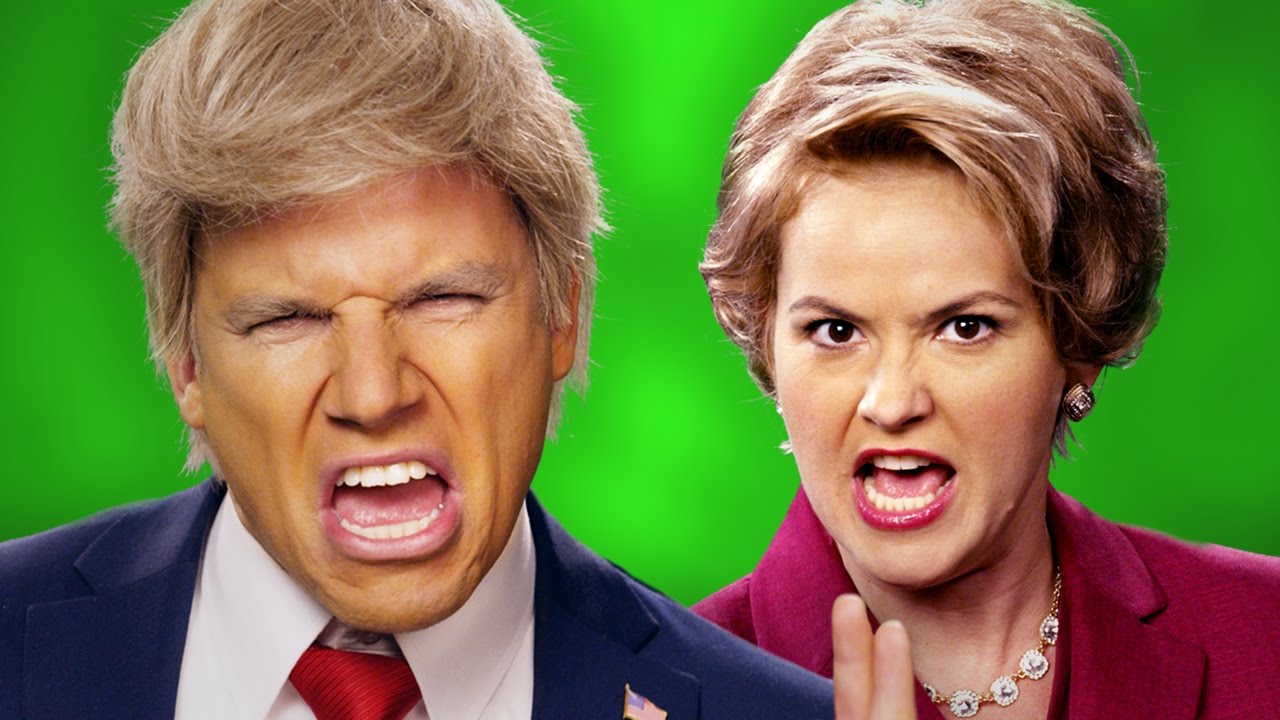
In 2016,
an episode of Epic Rap Battles of History showed "Epic Lloyd" Ahlquist playing him, against Julia Child, played by Mamrie Hart, star of the YouTube series
You Deserve a Drink. This is one of their few cross-gender battles, and it's one of their best.
November 8, 1967, 50 years ago: Henry Anderson Rodríguez Lorenzo is born in Santo Domingo, Dominican Republic. The outfielder, known professionally as Henry Rodríguez, reached the postseason with the Los Angeles Dodgers in 1995, was an All-Star with the Montreal Expos in 1996, and reached the postseason with the Cubs in 1998 and the Yankees in 2001.
November 8, 1968: José Antonio Offerman Dono is born in San Pedro de Macorís, Dominican Republic. The shortstop reached the postseason with the Dodgers in 1995, the Boston Red Sox in 1999, and the Minnesota Twins in 2004. He was an All-Star in 1995 and 1999. He now manages the Veracruz Red Eagles in the Mexican League. His daughter JoJo Offerman is a former pro wrestler turned ring announcer.
Also on this day,
Star Trek airs its episode with the longest title: "For the World Is Hollow, and I have Touched the Sky." You may think, given the year of its airing, and the space setting of the show, that this episode was about drugs, a la Jimi Hendrix' line in "Purple Haze": "'Scuse me, while I kiss the sky."
But no, it was about a people inside a hollow asteroid, a "generation ship," on their way to a new world when their old one became uninhabitable, but it had been so long since they left, they forgot that they were on a ship. An old man found out the truth, and told the
Enterprise officers, who had come because the asteroid was headed for a star and certain destruction.
*
November 8, 1970: The New Orleans Saints beat the Detroit Lions 19-17 at Tulane Stadium, on a last-play field goal by Tom Dempsey. Born with a club foot, Dempsey wears a special shoe, and his field goal is 63 yards. The previous record in the NFL was 56 yards.
There have since been 3 other 63-yard field goals, and a 64-yarder. But the 64-yarder and 2 of the 63-yarders were done in the thin air of Denver. Dempsey kicked his in New Orleans, below sea level.
November 8, 1971: The National Hockey League grants a franchise to Long Island, and the New York Islanders are born.
Also on this day, the PBS children's show
Sesame Street debuts the character of Aloysius Snuffleupagus -- or, as his best friend Big Bird calls him, Mr. Snuffleupagus or Snuffy. He was portrayed by Jerry Nelson until 1978, then Michael Earl until 1981, and by Martin P. Robinson ever since.
He was meant to represent kids' "imaginary friends." As a result, until 1988, only Big Bird and the kids ever saw him, and the grownups thought he didn't exist, and they said, "Big Bird, you sure have some imagination."
I was born a few weeks after
Sesame Street's debut in 1969, and grew up with it and watching it. At the start of every episode, a graphic of a number appeared on the screen. It took me years to figure out what this number meant: It was the number of episodes that had aired. I had hoped that they would celebrate the 2,000th episode of the show by finally letting the grownups see Snuffy, and realize that Big Bird had been telling the truth all along. No such luck. I pinned my hopes on the 2,500th episode, but that one also came and went without the revelation. So I figured they were never going to do it, and gave up hope for the 3,000th.
The show's writers realized that, by seeing that the grownups didn't believe Big Bird, kids might start thinking that grownups might not believe them about more important things. So they wrote an episode in which the grownups saw Snuffy. It aired on November 18, 1985. This was also the debut appearance of Elmo, who turns out to be instrumental in Snuffy's revelation.
That was what I call the "hinge episode" of
Sesame Street. Before it, it was just the Street, with occasional ventures outside, and the original (or sort-of original) cast. After that, there were adjacent streets, new characters, old ones were phased out (due to the actors' retirements or, in a couple of cases, deaths), and Elmo became, metaphorically, the 800-pound gorilla that dominated the show.
November 8, 1975: The Summit opens in Houston. The arena becomes the home of the Houston Rockets, who win their 1st game there on this night, 116-112 over the Cleveland Cavaliers. It will be their home until the Toyota Center opens in 2003, including back-to-back NBA Championships in 1994 and 1995.
It is also the home of the World Hockey Association's Houston Aeros from 1975 to 1978. It is now the Lakewood Church Central Campus, the seat of Dr. Joel Osteen's "megachurch." It probably pisses him off to no end that the cheers he gets there are less than those gotten there by Hakeem Olajuwon, a black Muslim.
It didn't help that, during the recent Hurricane Harvey, he refused to open it as a shelter for those fleeing the floods until shamed into doing so on social media. People like him are why people believe the quote that is often incorrectly attributed to Gandhi: "Your Christians are so unlike your Christ."
Also on this day,
Saturday Night Live is hosted by Candice Bergen, who does a great parody of Catherine Deneuve's Chanel No. 5 commercials. The musical guest is Esther Phillips. This episode also features the debuts of 2 legendary characters: Chevy Chase's Land Shark, a parody of the year's biggest film,
Jaws; and Andy Kaufman's Foreign Man, who would later become the
Taxi character Latka Gravas.
November 8, 1977, 40 years ago: Nicholas Paul Punto is born in San Diego. The shortstop reached the postseason with the Minnesota Twins in 2004, 2006, 2009 and 2010; won the World Series with the St. Louis Cardinals in 2011; and reached the postseason with the Los Angeles Dodgers in 2013 and the Oakland Athletics in 2014.
Also on this day,
M*A*S*H airs the episode "Change Day." During the Korean War, the U.S. Army is trying to foil local counterfeiters and black marketeers, by exchanging "scrip," the substitute for regular U.S. money, and Major Charles Winchester (David Ogden Stiers) has a plan to make a lot of money off of this. Captains Ben "Hawkeye" Pierce (Alan Alda) and B.J. Hunnicutt (Mike Farrell) have a plan to stop and humiliate him. Clearly, this is a plot that would have been given to Major Frank Burns had Larry Linville not quit the show after the previous season ended, with his replacement by Stiers.
A crazier plan still is the latest one to get out of the Army by Corporal Max Klinger (Jamie Farr): Through his uncle's political connections in Ohio, he got an appointment to the U.S. Military Academy at West Point, New York. If he's accepted, he'll be out of Korea and back in the States. And if he flunks out there, well, then he's discharged, and home.
There's 2 flaws in this plan. One is that his discharge would be dishonorable, and that means no veterans' benefits. The other is that, in order to be accepted, he has to pass an entrance exam, which would make the rest of his plan impossible if he fails. Take a wild guess as to whether he passes.
November 8, 1977 is also an Election Day in America. Congressman Ed Koch, having already gone through a bruising Democratic Primary, and a runoff against Mario Cuomo, then the Secretary of State for the State of New York, is finally elected Mayor. He would win 3 terms, and help bring the City back from economic ruin. But, despite his bold promises, crime would continue to be out of control -- including, as it turned out, in the City government, which ended up dooming his chances for a 4th term in 1989.
Governor Brendan Byrne of New Jersey is re-elected. He had won his 1st term with 66 percent of the vote, but his signing of the State's 1st sales tax infuriated people, dropping him to 17 percent in the polls, and earning him the nickname "One-Term Byrne." The anger faded, and he won 56 percent of the vote against State Senator Ray Bateman.
In his 2nd term, he got the Meadowlands Arena built in 1981, just before he was term-limited out of office, and his name was placed on it. In 1996, the naming rights expired, and, still angry over his tax hike, a vengeful Republican legislators sold the name to Continental Airlines. "I was immortal for 15 years," Byrne said.
He is now 93, the 10th-oldest living former Governor in the U.S., and the oldest from a Northeastern State. The oldest and earliest living former Governor is John Patterson, 96, elected in Alabama in 1958 -- by running a segregationist campaign when his Primary opponent refused to, inspiring him to become the most segregationist politician in America when he ran 4 years later: George Wallace.
In San Francisco, where the city council is known as the Board of Supervisors, Harvey Milk is elected to a seat that includes the Castro district, along with New York's Greenwich Village then the most famous "gay neigbhorhood" in America. The 47-year-old Long Island native and camera store owner becomes the 1st openly gay public official to win elective office anywhere in America.
Milk thus becomes a gay icon, and many people hope he'll become their "Martin Luther Queen." Unfortunately, within a year, he will face the same end as Martin Luther King: Assassination and martyrdom.
*
November 8, 1980: Madison Central High School of Old Bridge, Middlesex County, New Jersey beats East Brunswick, 32-7, and clinches the Middlesex County Athletic Conference title. The school eventually known as Old Bridge goes on to reach the Central Jersey Group III Final at Giants Stadium, but loses to Hillsborough of Somerset County.
For East Brunswick, later to be my high school, this is the only game they lose in the regular season. They will gain the top seed in the Central Jersey Group IV Playoffs, their 1st Playoff berth, but lose the Semifinal to Raritan of Hazlet.
November 8, 1981: Joseph John Cole is born in Paddington, West London. The left winger won the Intertoto Cup with East London's West Ham United in 1999. With West London's Chelsea, he won the Premier League in 2005, 2006 and 2010; the FA Cup in 2007, 2009 and 2010 (a Double); and the League Cup in 2005 and 2007 (a Cup Double). He now plays for the new version of the Tampa Bay Rowdies in the United Soccer League, North American soccer's 2nd division.
In 2010, Goal.com announced 2 "done deals": Joe Cole was being signed by North London's Arsenal, and Marouane Chamakh of French club Girondins de Bordeaux was being signed by Liverpool. It turned out to be the other way around. "Reporting" things like this are why that website is called Fail.com. To be fair, though, both Arsenal and Liverpool might have been better off had Goal.com been right.
Also on this day, Bradley Joseph Davis is born in the St. Louis suburb of St. Charles, Missouri. A winger, Brad Davis made his Major League Soccer debut in 2002 for the New York/New Jersey MetroStars, now the New York Red Bulls.
A 6-time All-Star, he helped the San Jose Earthquakes win the Supporters' Shield (the regular-season overall league title) in 2005. That team then moved to become the Houston Dynamo (a new team named the San Jose Earthquakes began play in 2008), and he helped them win the MLS Cup in 2006 and 2007. He spent 10 years with the Dynamo, and is now retired. He was a member of the U.S. team that won the 2005 CONCACAF Gold Cup, and played in the 2014 World Cup.
Also on this day,
The Brooklyn Bridge premieres on PBS. It is the 1st documentary film produced by Florentine Films and its head, Ken Burns. Burns and PBS have worked together ever since.
November 8, 1986: Manchester United play their 1st game under new manager Alex Ferguson. It is a Football League Division One match, away to Oxford United, and they lose, 2-0. Not an auspicious beginning.
Also on this day, Jamie Huw Roberts is born in Newport, Wales. A star for legendary Welsh rugby club Cardiff Blues, he now plays for London club Harlequins. He helped Wales win the Six Nations Championship in 2012 and 2013.
Also on this day, Vyacheslav Molotov dies of heart trouble in Moscow at age 96. A major player in Soviet politics from 1930 until 1957, he had been forced out by Nikita Khrushchev, but the leaders after him had rehabilitated his reputation. The former Foreign Minister was the last survivor of the Soviets' World War II command, and with his death, the book on the USSR's founding era was closed.
November 8, 1987, 30 years ago: Samuel Jacob Bradford is born in Oklahoma City. The quarterback won the Heisman Trophy with the University of Oklahoma in 2008. He was NFL Offensive Rookie of the Year with the St. Louis Rams in 2010. He now plays for the Minnesota Vikings.
November 8, 1988: The 2nd ARCO Arena opens in Sacramento, and the Sacramento Kings lose to the Seattle SuperSonics, 97-75. The Kings called the building, renamed Sleep Train Arena after a bedding company in 2012, home until 2016, when the Golden 1 Center opened. The old arena's future is uncertain. The 1st ARCO Arena, home of the Kings from 1985 to 1988, has been converted into an office building.
This was also the day of my 1st election. At Hammarskjold Middle School in East Brunswick, New Jersey, which I had attended (as Hammarskjold Junior High School) from September 1981 to June 1984, I cast a vote for the straight Democratic ticket, including for the Presidential nominee, Governor Michael S. Dukakis of Massachusetts.
Dukakis lost to Vice President George H.W. Bush, 426 Electoral Votes to 111, 53.4 percent to 45.6. He had blown it by inadequately responding to some truly filthy and (mostly) false attacks. Indeed, everybody that I voted for lost, with one exception.
The next day, I was in New Brunswick, job-hunting. I saw the Middlesex County Democratic Campaign Headquarters, and realized I'd never gotten a Dukakis button. I wanted one. So I went in, and there was the Mayor of New Brunswick at the time, John Lynch, talking to Senator Frank Lautenberg, the one person I voted for who won. Not wanting to interrupt, I waited for them to finish talking. When Lautenberg came my way, I offered him my hand and congratulated him on his re-election. He walked right past me.
I met Lynch a few years later, after he'd resigned as Mayor because he'd become President of the State Senate, making him effectively (we didn't have the office at the time) the Lieutenant Governor. He was a much nicer guy. Unfortunately, he later went to prison for corruption. But I'm still proud to have voted for Dukakis. I still don't have one of his buttons, though.
November 8, 1989: The NBA's expansion Minnesota Timberwolves play their 1st home game, at the Target Center in Minneapolis. But they really chose the wrong opponent: The Chicago Bulls, who win, 96-84. Michael Jordan blitzes his way to 45 points, while Tony Campbell nets 31 for the shellshocked hosts. At least the inaugural fans got their money's worth from Jordan.
Also on this day, Giancarlo Cruz Michael Stanton is born in Los Angeles. Growing up, most people called him "Mike Stanton," but, not wanting to be confused with the relief pitcher for several teams, including the Yankee Dynasty, he began going by "Giancarlo Stanton."
The right fielder for the Miami Marlins has hit 267 career home runs, including some of the longest in the major leagues since his 2010 debut. He is a 4-time All-Star, led the National League in homers in 2014, and led it in home runs and RBIs this season.
His contract runs out after the 2019 season. Maybe the Yankees can make the Marlins an offer they can't refuse. Or maybe not: The Marlins' part-owner who does the actual operating of the franchise is now Derek Jeter.
Also on this day, Morgan Schneiderlin is born in Zellwiller, France. The midfielder starred for English soccer team Southampton until his acquisition by Manchester United, with whom he won the 2016 FA Cup. But he got frozen out by new manager Jose Mourinho, and was sold to Liverpool-based Everton. He played for France in the 2014 World Cup, and helped them reach the Final of Euro 2016.
November 8, 1990: The Los Angeles Kings retire the Number 16 of Marcel Dionne. They beat the Detroit Red Wings, 5-1 at the Forum in Inglewood.
November 8, 2003: Tennis star Andy Roddick hosts Saturday Night Live. Long-retired star John McEnroe, now a commentator on tennis matches, also appears.
November 8, 2005: NCIS airs the episode "Under Covers." Special Agents Tony DiNozzo (Michael Weatherly) and Ziva David (Cote de Pablo) have to go undercover as assassins who were married to each other but killed on the job.
The cover has to be so deep that, knowing they're being spied on by people who don't known that the real asssassins are dead (NCIS wants to keep up the illusion that the attempt was unsuccssful, to lure the killers out), they have to simulate sex.
Tony wants the real thing, but Ziva, correctly thinking that he's a boorish, overgrown frat boy (though a great cop), doesn't. Things get complicated when medical examiner Dr. Donald "Ducky" Mallard (David McCallum) examines the actual bodies, and discovers that the wife was pregnant, thus giving them a reason to want out of the business, thus giving NCIS a motive and thus a suspect.
Eventually, Tony will grow up, and Ziva will leave the agency, thus exempting their relationship from "Never date a co-worker," Rule Number 12 of their boss, Special Agent Leroy Jethro Gibbs (Mark Harmon), and the subset of show fans who was rooting for the relationship they called "Tiva" to happen finally get their wish - 9 years later.
November 8, 2011: Ed Macauley dies in St. Louis at age 83. After starring for the Boston Celtics, who retired his Number 22, he led his hometown St. Louis Hawks to the 1958 NBA Championship. He is in the Basketball Hall of Fame.
November 8, 2014: The Montreal Canadiens retire the Number 5 of Guy Lapointe. They beat the Minnesota Wild, 4-1 at the Bell Centre.