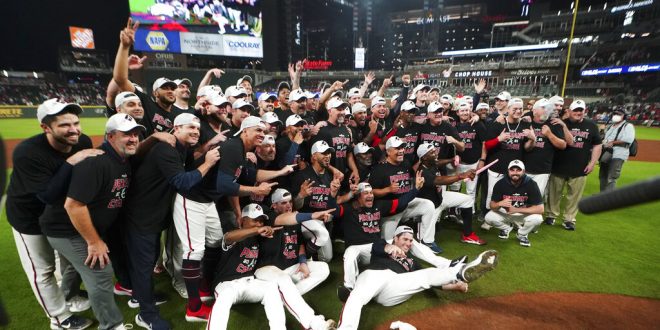
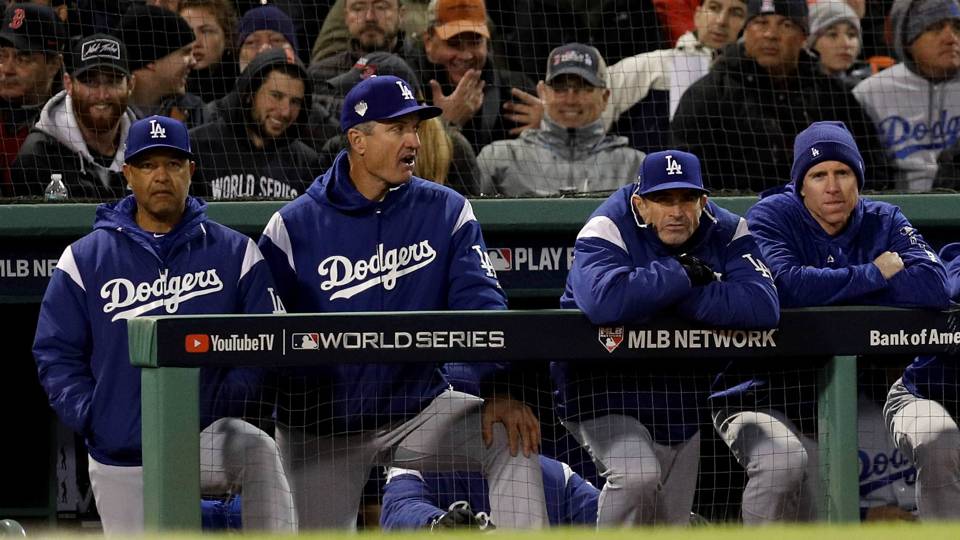
Instead of baseball cards, the Los Angeles Dodgers should be on milk cartons. Have you seen them? Because they haven't shown up at the World Series yet.
In Game 1, Clayton Kershaw couldn't get out of the 5th inning, continuing his record as the Alex Rodriguez of pitchers, a great postseason underchiever, and still hasn't had his "2009" yet. Dave Roberts, a hero for the Boston Red Sox in the 2004 American League Championship Series, but now the Dodger manager, saw his bullpen fail him every bit as much as Kershaw did.
In Game 2, the Dodgers led 2-1 going to the bottom of the 5th, but the Sox tagged Hyun-jin Ryu for 3 runs, allowing a win for David Price and a save for Craig Kimbrel, both unusual in postseason play until this year.
The Dodgers are batting .175 as a team, with an OPS of .462. David Freese and Justin Turner each have 3 hits, Manny Machado 2, and Matt Kemp, Yasiel Puig and Max Muncy 1 each. Between them, Cody Bellinger, Enrique Hernandez, Chris Taylor, Austin Barnes, Brian Dozier and Joc Pederson are a combined 0-for-25 with 3 walks.
The pitching isn't much better. Their team ERA isn't so bad, especially having played 2 games at Fenway Park: 3.37. But their WHIP is 1.625. I don't care who you're playing, that's an atrocious figure.
You may know how the Dodgers got their name: It was short for "Trolley Dodgers," because, at the dawn of the 20th Century, so many trolleys criss-crossed Brooklyn.
But, in the 1930s, when things were not so good for them -- they didn't make a real run at the National League Pennant between a 2nd-place finish in 1924 and a 3rd-place in 1938, and didn't win a Pennant between 1920 and 1941 -- they became known as "Dem Bums."
There was a guy who sat behind home plate at Ebbets Field, known as Abie the Truck Driver or Abie the Ice Man, depending on who was telling the story, who would yell, "Come on, you bums!" at the team. It wasn't affectionate or supportive, either, the way modern New York baseball fans yell, "Let's go, Yankees!" or, "Let's go, Mets!"
Or like English soccer fans: Liverpool fans yelling, "Come on you Reds!"; Arsenal fans yelling, "Come on you Gunners!"; Tottenham Hotspur fans yelling, "Come on you Spurs!" This has been adopted by Red Bulls fans here, yelling, "Come on you boys in white!"; this may be a result of people in neighboring Kearny, yelling at their beloved Republic of Ireland team, "Come on you boys in green!"
Inspired by this, in 1939, just as the Dodgers were getting good again, Willard Mullin of the New York World-Telegram 1st drew a bum as a symbol of the team. His inspiration was Weary Willie, the character created by famed circus clown Emmett Kelly.
After this, in Brooklynese, the team became known as "Dem Bums," and were occasionally called "BUMS" in tabloid headlines, just as "Yankees" was shortened to "Yanks" and Giants to "Jints." And it became affectionate. The line became, "They may be bums, but they're our bums!" As in, "We can call them that, but you can't!" Like a person using a slur on his own ethnicity. As in, "But what do I know, I'm just a Polack... "
When the Dodgers finally won the World Series in 1955, Mullin drew the front page of the Daily News, showing his Bum smiling (with just one tooth), with the headline, "WHO'S A BUM!" (Along with the October 30, 1975 "FORD TO CITY: DROP DEAD," still the most famous headline in the paper's nearly 100-year history.)
When the Dodgers moved to Los Angeles after the 1957 season, the Bum character became less common. Something tells me team owner Walter O'Malley wasn't happy about the character. But it took a while to fade away completely. In 1962, during one of the many Pennant races that came down to the Dodgers and their fellow New York-to-California transplants, the San Francisco Giants, comedian Danny Kaye, who moved from Brooklyn to Los Angeles long before the Dodgers did, recorded "The D-O-D-G-E-R-S Song," imagining a game between the teams, with a 9th inning L.A. comeback. It includes the words, "Well, they may be Bums, but they're my bums!"
Even as late as 1975, the Houston Astros' yearbook showed the various representations of the NL teams, and the Dodgers, starting their 18th season in Los Angeles, were represented by a bum.
Since their move to Los Angeles, in 61 seasons, they've made the Playoffs in 20 seasons, finishing 1st in either the single-division NL (1958-68) or the NL Western Division (1969-2018) 16 times, reaching the NL Championship Series 13 times, winning 11 Pennants and 5 World Series: 1959, 1963, 1965, 1981 and 1988, not counting the 1955 title in Brooklyn.
But in this World Series, they've gone back to playing like the 1930s Bums.
The last team to lose back-to-back World Series was the 2010-11 Texas Rangers. From the National League, it was the 1991-92 Atlanta Braves.
The Dodgers are now 3/4 of the way there: 6 out of 8.
They may be Bums, but the Red Sox must lose. COME ON YOU BUMS!
*
October 25, 1147: The Siege of Lisbon finally ends after 4 months, and the Moors surrender the capital of Portugal. King Afonso I (not "Alfonso"), considered the founder of the modern nation of Portugal (
O Fundador), ends up reigning for 46 years. He is also known as Afonso the Conqueror (
O Conquistador) and Afonso the Great (
O Grande).
October 25, 1154: Stephen of Blois dies of a stomach disorder in Dover at age 56. He had been King of England for 19 years, succeeding his uncle, King Henry I, usurping the throne from its rightful recipient, Henry's daughter, Matilda. (Some countries permitted female monarchs, but England had never had one, and wouldn't until Mary I, 400 years later.)
A civil war known as "The Anarchy" had resulted, and it was only settled when Stephen recognized his nephew, Matilda's son, as heir. That nephew became King Henry II, and while the throne of England was settled, the already-long disputes between England and France were not.
Henry ruled for 33 years, alienating almost every other royal in Europe, including his own family, which included his wife, Eleanor of Aquitaine, and his sons, future Kings Richard I and John, as seen in the film
The Lion In Winter.
October 25, 1415: The Battle of Agincourt is fought in what is now Azincourt, Pas-de-Calais, France, about 140 miles north of Paris. Outnumbered 2-1, King Henry V of England -- personally leading his troops -- leads English and Welsh longbowmen to a stunning victory over the French army on French soil.
The English lost 112 men, including the sitting Duke of York and the sitting Earl of Suffolk; the French, possibly 10,000, including the Dukes of Alençon, Brabant and Lorraine and the Counts of Dreux and Nevers. Say what you want about those noblemen, but they were noble enough to fight and risk death alongside the men they commanded.
This battle turns the tide for England, as King Charles VI of France, in order to mollify the Lancastrian invader, allows him to marry his daughter, Catherine of Valois. Together, they have a son. But when Henry V dies of illness in 1522, his son is just 9 months old, and King Henry VI -- first under his greedy, incompetent regents, then by his mentally ill self -- ends up losing all the gains of his father and his ancestors during the Hundred Years War.
What does this battle have to do with sports? Well, archery is a sport, and it made an archer the greatest thing to which most Englishmen and Welshmen could aspire. Legend has it that King Henry VIII, 100 or so years later, banned tennis from English and Welsh soil because it was distracting men from practicing archery.
It also led to a ridiculous urban legend. Supposedly, the French would cut the index fingers off English prisoners before releasing them. But when they got back to their own side, they could still use their middle fingers to pull back their bowstrings. And the bows were made from yew trees, so, when they captured French prisoners, they would show them their middle fingers, and say, "See? We can still pluck yew! Pluck yew!" Thus was born both the middle-finger gesture and the profane expression, "Fuck you."
Well, none of it is true: The middle-finger gesture has been traced as far back as ancient Greece, about 2,000 years before Agincourt, and it was rather popular in Roman times, where it was known as "El Dedo Medio": The Middle Digit. As for the other expression, that's probably as old as language itself.
October 25, 1754: Richard Howell is born in Newark, Delaware. A veteran of the Continental Army in the War of the American Revolution, from 1793 to 1801 he served as Governor of New Jersey. He was already ill when he left office in 1802.
Howell Township in Monmouth County is named for him. Howell High School's teams are called the Rebels. This makes sense, given their namesake's Revolutionary background. But the mascot is usually shown as a Confederate soldier. This is a nod to the school's original name, Southern Freehold, even though it opened in 1964 and the town had been named Howell while Richard Howell was still Governor. The name of the school was changed in 1968.
October 25, 1760: King George II of Britain dies at Kensington Palace in London, at age 77, after 43 years on the throne.
He had outlived his son, Frederick, Prince of Wales. Had Frederick not died (apparently of a pulmonary embolism) in 1751, he would now have been King. Had he still been on the throne in 1776 -- he would have been 69, so it's hardly impossible -- the history of the world could have been incredibly different.
Instead, Frederick's son, King George's grandson, takes the throne, as King George III, at age 22. It's not clear what he would have done in the 1770s had porphyria not already begun to drive him mad. It's also worth wondering what would have happened had said madness led him to a fatal accident before the American Revolution got going -- say, before the Boston Tea Party of 1773 -- leaving his son, still a child, as King George IV, instead of waiting until 1811 to sub for his father as Prince Regent and 1820 to finally become King.
Either way, it's possible America would still favor cricket (which Frederick had helped to popularize) and football (soccer), rather than baseball and American football.
October 25, 1774: The Continental Congress in Philadelphia ratifies a "Petition to the King." It is a list of grievances to King George III, asking for a repeal of the measures that British America had come to call "the Intolerable Acts," including the canceling of the colonial government of Massachusetts, the closing of the Port of Boston, and the forcing the quartering of British soldiers in private homes (which would later inspire the 3rd Amendment to the Constitution of the United States).
Of note is the signatories' affirmation of their allegiance to the British Crown -- not the British Parliament. But they wanted to remain within the British Empire, not to declare independence. But this would change over the next 2 years.
John Dickinson, a Delegate from Pennsylvania is credited with writing the Petition. The following year, he would try again, with the Olive Branch Petition. George III answered neither. He ended up refusing to sign the Declaration of Independence in 1776, but, the following year, wrote the first draft of the Articles of Confederation, the nation's first governing charter. He later served as President of the State of Delaware, and then of the State of Pennsylvania (effectively, Governor of each), participated in the Constitutional Convention of 1787, and signed the Constitution of the United States.
Only 2 men signed the Petition to the King of 1774, the Declaration of Independence in 1776, and the Constitution of the United States in 1787: George Reed of Delaware, and Roger Sherman of Connecticut, who also signed the Continental Association in 1774 and the Articles of Confederation in 1781, and was part of the committee to draft the Declaration, along with Benjamin Franklin, Philip Livingston, John Adams, and the man who actually wrote it, Thomas Jefferson.
October 25, 1781: The Battle of Johnstown is fought in Johnstown, Fulton County, New York, outside Albany. It was an American victory, 6 days after the Battle of Yorktown in Virginia, although the news of that battle hadn't reached them yet.
*
October 25, 1806: Henry Knox dies when he chokes to death during dinner in Thomaston, Massachusetts, now in Maine. The Boston native was 56. He had fought alongside George Washington during the American Revolution, succeeded him as the 1st Senior Officer of the U.S. Army, and was chosen by him to serve as the 1st U.S. Secretary of War.
Fort Knox in Kentucky, site of the famous gold reserve, and Knoxville, home of the University of Tennessee, are named for him.
October 25, 1812: The USS
United States, commanded by Captain Stephen Decatur, defeats the HMS
Macedonian, near the Madeira islands off the coast of Portugal during the War of 1812. The British ship lost 104 men, the American ship just 12. It remains one of the most lopsided victories in the history of the U.S. Navy.
The
Macedonian was sailed alongside the
United States back to New York, the 1st enemy ship ever taken back to America as a prize. Had there been ticker-tape parades in New York in those days, Decatur and his men surely would have gotten one.
The
Macedonian was then sailed to the U.S. base at New London, Connecticut, repaired, rechristened USS
Macedonian, and served until decommissioned and dismantled in 1828. The
United States was at the base in Norfolk when the American Civil War began in 1861, and was taken and rechristened CSS
United States (ironically), but was sunk to provide part of a blockade of the harbor against Union vessels a year later, an ignominious end to a ship that had served America so well since its launch in 1797.
October 25, 1854: The Battle of Balaclava is fought in the Crimean War, in what is now part of the city of Sevastopol, currently disputed by Russia and Ukraine. At the time, it was part of the Russian Empire, which was opposed by Britain, France and the Ottoman Empire (present-day Turkey and its Middle Eastern holdings). Both sides lost about 600 men, so the battle was inconclusive.
But that's not how it's remembered. Major General James Thomas Brudenell, 7th Earl of Cardigan, commanded the 4th and 13th Light Dragoons, the 17th Lancers, and the 8th and 11th Hussars. These units were "light cavalry," lightly armed and lightly armored troops on horseback, designed for speed, and thus for brief skirmishes and raids, but more for reconnaissance and communications -- not for major battles.
Lord Cardigan sent this "light brigade" to recover guns left behind by the dead Turkish troops, a task for which they would have been well-suited. But (ironically, given the nature of their work) a miscommunication by Captain Louis Nolan sent them on a frontal assault against Russian artillery, and they got clobbered. Nolan himself was one of the first to die -- meaning no one was willing to blame him, so the public blamed Lord Cardigan.
In response, Alfred Tennyson, then Britain's Poet Laureate, published a poem, "The Charge of the Light Brigade," designed to show that the men who fought, not the men who ordered them "but to do and die," should be the ones remembered. It worked: Not only did the British public rally around their Army, but it went on to win the war a year and a half later.
And today? No one remembers Nolan. If we remember Cardigan, it's as the namesake of a sweater. (Yes, it was named for him.) But while we may not remember any individuals in the Light Brigade, we remember the "noble six hundred."
October 25, 1863: William Joseph Shettsline is born in Philadelphia. Bill Shettsline was not a baseball player, but he was club secretary of the Philadelphia Phillies until 1898, when he was named manager. He served until 1902, and bought the team in 1905, selling it in 1909, and remaining as business manager (today, we would say "general manager") until he died in 1933. Only in 1915 did he win a National League Pennant.
October 25, 1867: Local clubs the Uniques and the Monitors meet in a contest for the "championship of colored clubs" at the Satellite Grounds, at Broadway & Rutledge Street in the Williamsburg section of Brooklyn -- where the NYPD's 90th Precinct house is today. The Monitors defeat the defending champion Uniques, and it isn't even close: 49-17.
October 25, 1868, 150 years ago: Daniel L. Burke is born in Abington, Massachusetts. An outfielder, Dan Burke briefly played in the early 1890s, although he did win a Pennant with the 1892 Boston Beaneaters (forerunners of the Atlanta Braves).
October 25, 1871: Martin Bergen (no middle name) is born in North Brookfield, Massachusetts. This town, outside Worcester, was also home to his brother Bill, catcher turned longtime manager Connie Mack, and legendary entertainer George M. Cohan.
A catcher, Marty Bergen played for the Boston Beaneaters, forerunners of the Atlanta Braves, helping them win the National League Pennant in 1897 and 1898. Unlike Bill, statistically the worst hitter in Major League Baseball history, Marty batted .265, but was much better known for his fielding, as he was regarded as having a great arm and good footwork.
But he was mentally ill. By 1899, only his 4th season in the major leagues, he was experiencing hallucinations, and had to be removed from a game due to his odd behavior. On a train trip, he slapped Hall of Fame pitcher Vic Willis. One of his sons died, and that worsened his condition. He began to see his pitchers' deliveries as knives coming toward him, and he would jump out of the way.
On January 19, 1900, at his home in North Brookfield, he took an axe, and killed his wife Hattie and their 2 remaining children. Then he took a straight razor, and cut his throat, killing himself. He was only 28 years old. This shocking crime, by a person already considerably more famous, was less than 8 years after the axe murders in nearby Fall River, Massachusetts, attributed to Lizzie Borden (who was acquitted).
Following the murder-suicide, Jesse Burkett, in the middle of a Hall of Fame career as an outfielder, said, "As a catcher, Martin Bergen was the best the world ever produced. No man acted with more natural grace as a ballplayer." He said this at a time when Buck Ewing had only been retired for 3 years and Mike "King" Kelly for 6. Alas, Kelly's career ended in 1894 with his death due to the effects of alcoholism, just short of turning 37; and Ewing died in 1906 from diabetes, at 47.
October 25, 1881: Pablo Picasso is born in Málaga, Andalusia, southern Spain. Or, as "Epic Lloyd" Ahlquist said, playing him opposite "Nice Peter" Shukoff as Bob Ross in an episode of Epic Rap Battles of History, "My name is Pablo Diego José Francisco de Paula Juan Nepomuceno María de los Remedios Cipriano de la Santísima Trinidad Ruiz y Picasso! Back to you, Bob!"
Bob Ross might not have believed in mistakes, but just try getting all that right in icing on a birthday cake!
Picasso lived to be 91, until 1973, making him the longest-lived authenticated real-person character in ERB history. In between, as Lloyd-as-Picasso said, "I am the greatest: The modern art Muhammad Ali!"
October 25, 1884: Charley "Old Hoss" Radbourn of the National League Champion Providence Grays wins his 3rd straight game over the American Association Champion New York Metropolitans – the 1st team to be known as the New York Mets, predating the Amazin's by 80 years – concluding the 3-game series and making the Grays the World Champions of baseball, which they had also become in 1879 by winning the NL Pennant.
Only 500 diehard fans show up in the cold‚ since Providence had already clinched by winning the 1st 2 games.
October 25? Cold weather? And they were still playing baseball at that time of year in the 1880s? Hey, Bud Selig's moronic scheduling was just trying to get baseball back to its roots!
On this same day, Lafayette College defeats Lehigh University in football, 56-0. The Lehigh Valley rivals, separated by 17 miles along U.S. Route 22 (the Lafayette Leopards in Easton, the Lehigh Engineers in Bethlehem), will go on to produce the most-played rivalry in college football.
In 2014, their meeting was their 150th, due to having played twice and even, during World War II with travel restrictions, 3 times in some seasons. That 150th "Double L Game" was the 1st one played outside Northeastern Pennsylania, at Yankee Stadium. Lafayette won it, 27-7. Lehigh won last year, but Lafayette leads the rivalry, 78-70-5. This year's game will be played at Lafayette's Fisher Stadium on November 17.
October 25, 1888: The Giants clinch New York's 1st true World Championship in any professional sport, 6 games to 2, by trouncing the St. Louis Browns (forerunners of the Cardinals), 11-3. Tim Keefe gets his 4th win of the series.
Of course, this doesn't count amateur championships won from 1845 to 1870 by teams like the Knickerbockers, the New York Club, the Mutuals, and Brooklyn teams like the Atlantics, the Excelsiors and the Eckfords.
The last survivor of the 1888 Giants was Ledell "Cannonball" Titcomb, a pitcher from Maine, who pitched a no-hitter in 1890, and lived until 1950.
October 25, 1889: Howard Ellsworth Wood is born in Kansas City, and grows up in Ouray, Colorado. Because of his blazing fastball, his Boston Red Sox teammates nicknamed him Smoky Joe. In 1911, he pitched a no-hitter. In 1912, he went 34-5 for the Red Sox, including 16 straight wins. Since 1912, there have been 2 seasons of 31 wins, 1 of 30, 1 of 28 and 2 of 27, but 34 is not going to happen again unless rules or ballpark conditions are radically changed.
Shortly before a heavily hyped game against the Washington Senators on September 6, 1912, between Wood and the man generally agreed to be the best pitcher of the day, Walter Johnson, Johnson said, "Can I throw harder than Joe Wood? Listen, my friend: There's no man alive can throw harder than Smoky Joe Wood!"
Reminded of Johnson's assessment 60 years later, Wood said, "Oh, I don't think there was ever anybody faster than Walter." Wood and the Sox won, 1-0. He went on to help them win the World Series by coming in to relieve the clinching Game 8. Counting the Series, he was 37-6 on the year.
Unfortunately, Wood injured his thumb in spring training in 1913, and he was never the same pitcher. The Red Sox traded him to the Cleveland Indians, where he was reunited with his former Boston teammate Tris Speaker and converted into an outfielder. He still pitched well enough to go 15-5 and lead the AL in ERA with 1.49 in 1915, giving him a career record of 117-56 at age 25. But he never won another game as a pitcher.
Still, his hitting and fielding helped the Indians win the 1920 World Series, and he finished his career with a lifetime batting average of .283 and an OPS+ of 110. No other pitcher with at least 95 wins can top that. (Babe Ruth won 94.)
In 1965, Lawrence S. Ritter interviewed Wood for his book
The Glory of Their Times. In 1981, Ritter and Donald Honig included him in their book
The 100 Greatest Baseball Players of All Time. They explained what they called "the Smoky Joe Wood Syndrome," where a player of truly exceptional talent but a career curtailed by injury should still, in spite of not having had career statistics that would quantitatively rank him with the all-time greats, be included on their list of the 100 greatest players.
In addition to Wood himself, the players they included in this category were Dizzy Dean, Pete Reiser (see the 1981 entry) and Herb Score. But not Tony Conigliaro. Nor Mark Fidrych. Nor Lyman Bostock. And, of course, they could not yet have known about Kirk Gibson, Dwight Gooden, Kerry Wood or Stephen Strasburg.
Wood later became the baseball coach at Yale University, and died in 1985, age 95, the last survivor of the 1912 World Series. His son, actually named Joe Wood, pitched 3 games for the Red Sox in 1944, due to wartime-stretched rosters, but never really made it even at the Triple-A level, and retired at age 31 in 1947. At least, like his dad, he lived to a ripe old age, making it to 86 in 2002.
October 25, 1891: Charles Edward Coughlin is born in Hamilton, Ontario, became a priest in Toronto, and settled in Detroit. In 1926, he began his career as "The Radio Priest" on WJR in Detroit, the station that would later become famous for broadcasting the Tigers' games.
At first, he seemed like a liberal. At the time, the Ku Klux Klan, at least in the North, was more interested in discriminating against Catholics than against black people. Father Coughlin took a stand against them. While denouncing Communism, as any good Catholic of the time would, he also denounced the predatory capitalists who had made Communism so attractive.
In 1932, he supported the Presidential campaign of Franklin D. Roosevelt. In 1933, as FDR put his New Deal into place, he made a short film of one of his radio broadcasts, saying, "The New Deal is Christ's deal," and, "It is either Roosevelt or ruin." In January 1934, he testified before Congress saying, "If Congress fails to back up the President in his monetary program, I predict a revolution in this country which will make the French Revolution look silly!"
But he began to turn. Because they were opposed to Communism, he supported the Fascist governments of Adolf Hitler in Germany and Benito Mussolini in Italy. At the time, Communism was widely seen to be a Jewish movement, and his broadcasts became more anti-Semitic in nature. But he also believed that unregulated capitalism was a Jewish plot. And he came to believe that FDR's policies didn't regulate capitalism enough -- which would seem to fly in the face of his attacks on Communism. He began to call the President "Franklin Double-Crossing Roosevelt."
He was unable to help defeat Roosevelt in 1936. By 1938, he was frequently denying that he was anti-Semitic, because he was frequently being called that. By 1939, and the dawn of World War II in Europe, Coughlin was no longer being taken seriously. In 1942, the Archbishop of Detroit ordered Coughlin to stop making political statements. By the time he retired from active preaching in 1966, he was a relic. He died in 1979, at age 88.
October 25, 1892: Caroline Harrison, wife of President Benjamin Harrison, dies of tuberculosis at age 60. She, Letitia Tyler, and Ellen Wilson are the only First Ladies to die "in office." Most likely, the President would have lost the election anyway, and he does not get a sympathy vote.
Also on this day, Gerald Paul Nugent is born in Philadelphia. A leather goods and shoe merchant, in 1925 he married Mae Mallen, secretary to Phillies owner William Baker. Baker died in 1930, leaving control of the team to his widow and Nugent. When Mrs. Baker died in 1932, Gerry Nugent had full control.
But it was the Great Depression, and while he wanted to spend money to improve the team (something Baker wouldn't do), he didn't have it to spend. By 1943, he was forced to sell the team back to Major League Baseball, who eventually sold it to the very rich Carpenter family, which saved it. Nugent died in 1970, living long enough to see the team to be financially secure, win the 1950 Pennant, and get out of Shibe Park/Connie Mack Stadium, if not quite move into Veterans Stadium.
October 25, 1895: Levi Yitzhak Shkolnik is born in Orativ, Ukraine. We knew him as Levi Eshkol. One of the founding fathers of the State of Israel, he served as Minister of Finance for 11 years until being named Prime Minister on June 26, 1963.
His tenure included the country's finest hour, the Six-Day War of June 5-10, 1967. But he died in office, of a heart attack at age 73, on February 26, 1969.
*
October 25, 1902: Alfred Eastlack Driscoll is born in Pittsburgh, and grows up in the Philadelphia suburb of Haddonfield, Camden County, New Jersey. In 1946, the Republican was elected Governor of New Jersey, and presided over the Constitutional Convention that wrote the current State Constitution in 1947, at the College Avenue Gym at Rutgers University in New Brunswick, home of Rutgers' basketball team from 1931 to 1977, and adjacent to the site of the 1st college football game in 1869.
Elected to the 1st 4-year term for Governor of the State in 1949, he had already gotten the New Jersey Turnpike approved, and would do the game for the Garden State Parkway in his 2nd term. He was, if not the greatest, then certainly the most consequential Governor in New Jersey's history, at least as far as the State is concerned. (Woodrow Wilson was a Governor of New Jersey who became President, but he only served 2 years in Trenton, and didn't exactly remake the State.)
The Parkway's bridge over the Raritan River, connecting Woodbridge and Sayreville in Middlesex County, was named for Driscoll in 1974, a year before his death. It opened in 1954, with a 2nd span opening in 1972, and the original span was replaced in 2006.
October 25, 1906: For the 1st time, a legal forward pass is thrown in a professional football game. George Watson "Peggy" Parratt, a 23-year-old quarterback from the Cleveland school now known as Case Western Reserve University, throws it to Bullet Riley, for the Massillon Tigers in an Ohio League game against the Bendwood-Moundsville team.
Ironically, it would be by intercepting 2 passes in the championship game, against the Canton Bulldogs, that Parratt would be best remembered in his own time. He would help Massillon win the Ohio League title in 1906, 1911, 1913 and 1914. He later served on the NFL Rules Committee, and lived until 1959.
October 25, 1911: Game 5 of the World Series at the Polo Grounds. Giants 2nd baseman Larry Doyle scores on a sacrifice fly to give the New York Giants a 4-3 victory over the Philadelphia Athletics. According to home plate umpire Bill Klem, commenting after the game, Doyle, in his jubilation about scoring the winning run, really never touched home plate. But the A's failed to notice the gaffe, and did not appeal.
Nobody seemed to remember this, even though it evoked the mistake Doyle's teammate, 1st baseman Fred Merkle, made 3 years earlier in a game that effectively cost the Giants the Pennant. But then, it wasn't caught on film or television, and it ended up not mattering, because the A's ended up winning the World Series the next day anyway.
October 25, 1912: Jack Kent Cooke is born in Hamilton, Ontario, and grows up in Toronto. A radio magnate, he bought the Toronto Maple Leafs of the International League, the baseball team that gave its name to the city's hockey team.
He negotiated with St. Louis Browns owner Bill Veeck to make the Leafs a Browns farm team, and followed Veeck's lead in both integrating the team and instituting wacky promotions, keeping it going even after Veeck was no longer the owner and the team had become the Baltimore Orioles. In 1952,
The Sporting News named him Minor League Executive of the Year. They won Pennants in 1954, 1956, 1957 and 1960. He sold the team in 1964.
Cooke moved to the U.S., to Los Angeles, and continued his communications empire, making KRLA a big Top 40 station, and built one of the first cable television empires, which he sold in the late 1970s for $646 million. He also bought the
Los Angeles Daily News and New York's Chrysler Building.
In 1961, after a stroke left founding owner George Preston Marshall an invalid, his family began to sell off the team, and sold Cooke a 25 percent share. In 1965, he bought the Los Angeles Lakers, and built an arena for them adjacent to Hollywood Park racetrack in suburban Inglewood, The Forum. He was also responsible for turning the team's colors from blue & white to purple & gold.
Actually, the real reason he built The Forum was because he had outbid Los Angeles Rams owner Dan Reeves (no relation to the later football coach of the same name) for the right to get L.A.'s expansion team in the NHL, and Reeves used his influence over the Los Angeles Memorial Coliseum Commission, which also owned the Los Angeles Sports Arena, to ensure that Cooke's teams would no longer be able to use it. So they left the Sports Arena, and played at the Long Beach Sports Arena until "the Fabulous Forum" could open on December 30, 1967.
The Kings were the least successful of Cooke's teams. He was told that 300,000 former Canadians lived within a 3-hour drive of Los Angeles, but the Kings struggled at the box office, leading Cooke to say, "Now I know why they left Canada: They hate hockey!"
And he had balloons suspended from the Forum ceiling prior to Game 7 of the 1969 NBA Finals, but the Boston Celtics spoiled the party. Indeed, the Lakers lost the Finals to the Celtics in 1962, 1963, and, after Cooke bought them, 1965, 1966, 1968 and 1969, and to the Knicks in 1970. They finally won in 1972. He sold the Lakers to Jerry Buss in 1979 -- and then they won 5 of the next 9 NBA titles.
But it is as Redskins owner by which Cooke will be most remembered. By 1974, he and Washington-based "superlawyer" Edward Bennett Williams had become the sole owners, with Cooke as majority owner, as Williams bought the Baltimore Orioles, and NFL rules prohibit a majority owner from being a majority owner of a team in another sport.
In 1972, the Redskins won the NFC Championship, reaching Super Bowl VII, their 1st NFL Championship Game, under any name, since 1945. They lost to the Miami Dolphins. In 1983, they beat the Dolphins to win Super Bowl XVII, their 1st World Championship in 40 years. Later in the year, the Baltimore Orioles won the World Series, making Williams the only person ever to have ownership shares in the World Series and Super Bowl titleholders at the same time. He sold out in 1985, making Cooke sole Redskins owner. The Redskins won a 2nd Super Bowl in 1988 (XXII, over the Denver Broncos), and a 3rd in 1992 (XXVI, over the Buffalo Bills).
But Cooke was tired of having the smallest stadium in the NFL, the 56,692-seat Robert F. Kennedy Stadium. After failing to get funding for a new stadium from the District of Columbia government, he built his own in the suburb of Landover, Maryland, across the Beltway from the Capital Centre arena.
This stadium has been fraught with problems from day one. First, Cooke died at age 85 in 1997, a few months before it could be completed. Then, right before it opened, my local newspaper, the
Home News Tribune, printed a picture of it, with the caption "Jack Kent Cookie Stadium." For crying out loud, the man just died! Then, with a capacity of 80,116, the Redskins went from having the smallest stadium but the best home-field advantage in the NFL to the largest stadium and the worst game-day atmosphere.
Cooke's heirs sold the team and the stadium to Daniel Snyder, and he sold naming rights to the stadium, and now it's FedEx Field. The Redskins have reached the Playoffs just 5 times in the stadium's 1st 21 seasons.
Cooke has been called the best owner in sports history. Certainly, he made the Redskins an nationally iconic franchise, as opposed to the regionally iconic one they were under the racist Marshall. And he was definitely successful, winning 3 titles in the NFL and 1 in the NBA, and building 2 tremendous sports facilities. But his teams could have been so much more, and, in his declining years, his building of the stadium that no longer bears his name may have doomed the team to a generation of mediocrity.
Also on this day, Les McDowall (I can find no listing for his full name) is born in Gunga Pur, India, the son of a Scottish officer in the British Army. A wing-half, he played for Scottish team Glentyan Thistle before moving to Sunderland in the North-East of England. They won England's Football League in 1936, but he did not make enough appearances for a winner's medal.
He played for Manchester City from 1937 to 1949, and managed them from 1950 to 1963, winning the 1956 FA Cup. He died in 1991.
Also on this day, Abdalkader Ben Bouali is born in Sendjas, Algeria, then a colony of France. A defender, he was one of the earliest North Africans to play for the French national team, including being selected for the 1938 World Cup, although he did not play in the tournament.
Among the teams he played for were Montpellier, Olympique de Marseille, Racing Club Paris, and Toulouse. He lived until 1997.
Also on this day, Sarah Ophelia Colley is born in Centerville, Tennessee. Unlike a lot of girls in that place and time, she went to college, graduating from what's now Belmont University in Nashville. She became a community theater organizer, and in 1939 debuted her character of Minnie Pearl. In her act, which began with her yelling, "How-
dee! I'm jest so proud to be here," Centerville became "Grinders Switch," and her relatives became laugh subjects.
She was a regular on the television shows
Ozark Jubliee, The Ford Show Starring Tennessee Ernie Ford (named not for the country-singing host, but for its carmaking sponsor),
Hee Haw and
Hollywood Squares. She played herself in the film about country singer Loretta Lynn,
Coal Miner's Daughter.
She became such an institution in American culture that the Smithsonian Institution asked for her famous straw hat, with its $1.98 price tag. She agreed, and it joined Archie Bunker's chair from
All In the Family, Fonzie's leather jacket from
Happy Days, and the "Swamp" tent from
M*A*S*H.
She died in 1996. After the renovation of the Ryman Auditorium, original home of
The Grand Ole Opry, a statue of her sitting next to country legend Roy Acuff was placed in the lobby.
October 25, 1914: Annis Paul Stukus is born in Toronto. The quarterback led the Toronto Argonauts to Grey Cup wins, in 1937 and 1938, in the latter season playing in the same backfield as his brothers Bill and Frank. He later served as head coach of the Edmonton Eskimos and the BC Lions.
He also worked in basketball for the Toronto Huskies, hockey for the Vancouver Canucks and Winnipeg Jets, and soccer for the Vancouver Whitecaps. He was elected to the Canadian Football and Canadian Sports Halls of Fame. The CFL's Coach of the Year award is named for him. He spent his retirement in Canmore, Alberta, and died there in 2006, age 91.
October 25, 1916: Stanley Cullis (no middle name) is born in Ellesmere Port, Cheshire, England. A centreback, he was selected for the England team that was to play Germany at the Olympiastadion in Berlin on May 14, 1938.
But when Sir Neville Henderson, the British Ambassador to Germany, out of respect for their hosts and the betterment of international relations with one of the world's major powers at the time, demanded that all England players give the Nazi salute on the pitch before the game, and was backed up by the Football Association (the FA), Cullis refused. He was the only England player selected for this game to do so. England won the game, 6-3, thanks to 2 goals by... Jackie Robinson. No, not that Jackie Robinson: This one was a white forward for Sheffield Wednesday.
Contrary to popular belief, Cullis was not punished by the FA, but his England appearances were limited to 12 due to World War II interrupting international play.
He captained West Midlands club Wolverhampton Wanderers into the 1939 FA Cup Final, but they lost to Portsmouth. They also finished 2nd in the Football League -- "the Dubious Double," runners-up in both League and Cup. They finished 2nd in 1938 as well.
He would have more luck as manager of "Wolves." He got them to win the League in 1954, '58 and '59, and the Cup in 1949 and '60. In a weird twist, the 1954 title was won by edging Wolves' local "Black Country" arch-rivals, West Bromwich Albion, who featured a Wolverhampton boy that Cullis refused to sign, Don Howe, who would later be a star coach -- and West Brom then beat Wolves to win the FA Cup. Thus, each rival denied the other the Double.
In 1954, Cullis led Wolves to a win over Honved, the Budapest side that featured several of the Hungary players that had embarrassed England at Wembley and in Budapest the year before. This was one of the catalysts in the establishment of the European Cup, the tournament now known as the UEFA Champions League.
Stan Cullis died in 2001. A statue of him now stands outside Wolves' Molineux Stadium, one of whose stands is named for him. Legendary Liverpool manager Bill Shankly said of him, "All round, as a player, as a manager, and for general intelligence, it would be difficult to name anyone since the game began who could qualify to be in the same class as Stan Cullis."
October 25, 1917: Leland Stanford MacPhail Jr. is born in Nashville. The son of pioneering baseball executive Larry McPhail, Lee MacPhail was general manager of the Yankees and the Baltimore Orioles, and from 1974 to 1983 was President of the American League.
Unfortunately, Yankee Fans remember him best for overruling the correct ruling of the umpires in the Pine Tar Game of July 24, 1983, and giving George Brett a home run and the Kansas City Royals a win they did not deserve.
Larry and Lee are the only father-son combination in the Baseball Hall of Fame. Lee was the oldest living Hall-of-Famer when he died in 2012, at age 95. The Most Valuable Player award for the AL Championship Series is named for him.
His son Andy was general manager of the Minnesota Twins, and later president of the Chicago Cubs and the Baltimore Orioles, and is now President of the Philadelphia Phillies. Another son, Lee MacPhail III, was working in the Philadelphia Phillies' minor-league system when he was killed in a car crash in 1969. His son, Lee MacPhail IV, works in the front office of the Seattle Mariners.
October 25, 1918, 100 years ago: The Canadian passenger liner SS
Princess Sophia runs aground on Vanderbilt Reef outside Juneau, Alaska, and sinks, killing all 364 people on board. This being the waning days of World War I, sabotage was suspected, but never proven.
*
October 25, 1921: William Barclay Masterson dies of a heart attack at his desk, where he had just written a column for the
New York Morning Telegraph. "Bat" Masterson was 67.
He was born Bartholomew Masterson in the Eastern Townships of Quebec, and "Bat" was short for "Bartholomew." (So why not "Bart"?) It had nothing to do with swinging a baseball bat. But he was a more effective crimefighter than Batman: He was said to be so quick on the draw, eventually men stopped being willing to face him.
He left the gunslinging life to become one of the 1st sportswriters, covering boxing and horse racing. He covered the April 5, 1915, heavyweight championship fight in Havana, Cuba, where Jack Johnson finally lost the title to Jess Willard.
October 25, 1923: Robert Brown Thomson is born in Glasgow, Scotland, and grows up in Staten Island, New York. If you don't know what Bobby Thomson is famous for, you either have a lot to learn, or you've never seen ESPN Classic.
He batted .270 lifetime, and hit 264 home runs, including the one on October 3, 1951 that meant, "The Giants win the Pennant!" So even if his home run was a fluke, he was still a pretty good player. He played in the majors from 1946 to 1960, and lived until 2010.
October 25, 1924: Arsenal defeat their North London arch-rivals Tottenham Hotspur 1-0. Jimmy
Brain makes his Arsenal first-team debut, and scores the only goal. He would score 125 goals in 7 seasons for Arsenal, helping them to win their 1st FA Cup in 1930, and their 1st Football League title in 1931.
Early in the 1931-32 season, Arsenal sold him -- to Tottenham, of all teams. But, at that point, he was 31 years old. Especially in those days, that was considered old for a forward. When Dennis Bergkamp, a later Arsenal legend, retired shortly before turning 37, it was considered a rare thing to be playing that position at such a high level at that age. Defenders frequently last that long, but forwards usually don't. Arsenal legend Thierry Henry retired at age 37, but hadn't played in a top European league since he was 33.
Brain played 3 seasons for Tottenham, and, amazingly -- or, perhaps not so amazingly, considering that the 1930s was the decade of the Great Depression -- kept playing until he was 40. He later managed a couple of clubs, and died in 1971, admired on both sides of the North London Derby.
Also on this day, Robert William Brown is born in Seattle, and grows up in San Francisco. A 3rd baseman, he was signed by the Yankees, and manager Casey Stengel said, "Brown looks like a feller who's been hitting for 12 years and fielding for 1." Nevertheless, he helped the Yankees win 4 World Series: 1947, 1949, 1950 and 1951. Then he was drafted into the Korean War, and by the time he returned in 1954, he'd lost his stuff.
That didn't matter, though, since he had another calling. He attended medical school during the off-season. On roadtrips, he roomed with Yogi Berra, a high school dropout, who, when asked how he liked school, said, "Closed." Legend has it that, one night, he finished his copy of
Boyd's Pathology at the same time that Yogi finished one of the comic books he loved, and Yogi said, "Mine was good. How did yours turn out?"
It must have turned out well, because he moved to the Dallas area, and developed a cardiology practice. He gave it up in 1984, when he was elected President of the American League. He came to Old-Timers' Day at Yankee Stadium every year, but, since he was representing the entire AL, he always wore a suit, never a uniform. He served in the post until 1994, and, ever since, has worn a uniform with his old Number 6 on it for Old-Timers' Day, even though it's now been retired for Joe Torre.
At 94, he is not quite the oldest living Yankee -- 1954-56 1st baseman Aaron Robinson is, just short of turning 98, and 1951-55 pitcher Art Schallock is 6 months older than Brown -- but he is the last surviving member of the Yankees' 1947 and 1949 World Champions. Yogi was the next-to-last in each case. With the death this year of Red Schoendienst, of the 1946 St. Louis Cardinals, Bobby is now the earliest surviving World Series winner.
Also on this day, Earl Cyril Palmer is born in New Orleans. The top drummer in that city in the 1950s, he played on Lloyd Price's "Lawdy Miss Clawdy," Smiley Lewis' "I Hear You Knockin'," Shirley & Lee's "Let the Good Times Roll," Fats Domino's "Blue Monday" and "I'm Walkin'," Thurston Harris' "Little Bitty Pretty One"; Larry Williams' "Slow Down," "Dizzy Miss Lizzy" (both later recorded by The Beatles) and "Bony Moronie"; and, perhaps most notably, Little Richard's "Long Tall Sally" and a few others -- but not, as I previously believed, his drum-leading "Keep A-Knockin'." (That was Charles Connor.)
His reputation preceding him, he was requested by others, and played on Sam Cooke's "You Send Me," Eddie Cochran's "Summertime Blues," Johnny Otis' "Willie and the Hand Jive," and both hits that Ritchie Valens lived to see: "Donna" and "La Bamba."
Along with Hal Blaine, he became 1 of the 2 big drummers in Los Angeles in the 1960s, playing on the instrumentals "Percolator Twist" by Billy Joe & The Checkmates and "The Lonely Bull" by Herb Alpert & His Tijuana Brass. He also played on Jan and Dean's "The Little Old Lady from Pasadena" and "Dead Man's Curve," The Righteous Brothers' "You've Lost That Lovin' Feelin'," Mel Carter's "Hold Me, Thrill Me, Kiss Me," and Ike & Tina Turner's "River Deep -- Mountain High." The last of these is testament to the regard in which he was held: It was produced by Phil Spector, who usually used Blaine. Earl Palmer died in 2008,
October 25, 1928, 90 years ago: Marian Ross (no middle name) is born in the Minneapolis suburb of Watertown, Minnesota, but grows up in San Diego, where she graduated from Point Loma High School. A year later, Don Larsen would graduate from there, and go on to pitch a perfect game for the Yankees. So would another Point Loma graduate, David Wells.
She made a slight change to her name, thinking "Marion Ross" would look better on a theater marquee. Well, she did do some stage acting, but is best known for playing Marion Cunningham on
Happy Days. She is still acting, appearing in the film
Angels On Tap this year.
*
October 25, 1931: James McIlroy (no middle name) is born in Lambeg, Northern Ireland. A forward, he starred for Lancashire soccer team Burnley, leading them to the 1960 Football League title (finishing just 1 point ahead of Stan Cullis' Wolves, denying them a 3rd straight title) and the 1962 FA Cup Final.
He also played for Northern Ireland in the 1958 World Cup. The East Stand at Burnley's stadium, Turf Moor, is named the Jimmy McIlroy Stand. He later managed Oldham Athletic and Bolton Wanderers, and died this past Augsut 20.
October 25, 1932: Robert Michael Mischak is born in Newark, and grows up in nearby Union, Union County, New Jersey. A guard, he played football at the U.S. Military Academy under Army coach Earl "Red" Blaik.
When Blaik's assistant coach, Vince Lombardi, became what we would now call the offensive coordinator for the New York Giants, he recommended Bob Mischak to head coach Jim Lee Howell. Mischak lasted only 1 season for his "hometown" team, but did play in the 1958 NFL Championship Game, "The Greatest Game Ever Played," which the Giants lost to the Baltimore Colts.
He wasn't quite good enough for the NFL, but that made him fodder for the AFL when it was founded in 1960, and he again signed with a "hometown team," the Titans, making him an original New York Jet. He lasted 3 seasons with them, and 3 more with the Oakland Raiders, and was named an AFL All-Star 3 times.
He went into coaching, initially back at West Point, and then with the Raiders, on the staff of all 3 of their Super Bowl-winning teams. He coached teams in NFL Europe in the 1990s, and died in 2014.
October 25, 1935: John Stewart MacMillan is born in Lethbridge, Alberta. A right wing, he won National Championships with the University of Denver in 1958 and 1960. He is also 1 of 10 surviving members of both the 1962 and the 1963 Stanley Cup Champion Toronto Maple Leafs.
October 25, 1936: Nazi Germany and Fascist Italy sign a treaty of alliance. A week later, on November 1, Italy's Premier, Benito Mussolini, declared that all other European countries would, from then on, rotate on the Rome-Berlin axis, thus creating the term "Axis" for this alliance.
A month later, on November 25, Germany and the Empire of Japan signed the Anti-Comintern Pact, and anti-Communist treaty, which Italy would sign on to the following year. Thus did Japan join the Axis.
October 25, 1937: Charles Thomas Schilling is born in Brooklyn. This C. Schilling played for the Boston Red Sox, but in a down period for them. Chuck was a 2nd baseman, and played for them from 1961 to 1965. He is still alive.
October 25, 1939: Peter James Mikkelsen is born in Staten Island. Like Mel Stottlemyre, he grew up in Mabton, Washington, outside Yakima, and debuted with the Yankees in 1964, helping them to win a Pennant. Unlike Mel, that was his only good season for the Yankees, losing the World Series to the St. Louis Cardinals. He remained in the major leagues as a reliever until 1972, including losing another World Series in 1968, ironically with the Cardinals, to the Detroit Tigers. He died in 2006.
Also on this day, Zelmo Beaty (no middle name) is born in Hillister, Texas. A forward, he was an All-Star twice in the NBA with the St. Louis Hawks, and 3 times in the ABA with the Utah Stars, winning the 1971 ABA Championship and reaching the 1974 ABA Finals with them. He later became a teacher, and died in 2013.
*
October 25, 1940: Robert Montgomery Knight is born in Massillon, Ohio. He always seemed to be listed as "Bobby Knight" until well into his Indiana tenure, but he seems to always be listed as "Bob Knight" now.
He was the 6th man on the Ohio State basketball team that won the 1960 National Championship, led by Jerry Lucas and John Havlicek. Like Vince Lombardi and Bill Parcells, he was an assistant coach at the U.S. Military Academy at West Point, New York. Unlike them, Bob Knight became head coach at "Army."
He moved on to Indiana University, and led them to 11 Big Ten Conference Championships, 5 NCAA Final Fours, and 3 National Championships, in 1976 (still the last undefeated season in men's college basketball history), 1981 and 1987. Among his players were Kent Benson, Scott May, Quinn Buckner, Isiah Thomas and Steve Alford, now the head coach at UCLA.
He also coached the U.S. team to the Gold Medal at the 1984 Olympics in Los Angeles. This may have been the best basketball team ever assembled to that point, including Alford, Patrick Ewing, Chris Mullin, and North Carolina stars Michael Jordan and Sam Perkins. (As I said: The best ever assembled to that point.)
But controversy followed him, ranging from assaulting a police officer at a preseason tournament in Puerto Rico, to sexist comments, to profanity-laden press conferences, to the infamous chair toss to protest the officiating in a 1985 loss to in-State arch-rival Purdue, to assaulting his own players, including his own son, Pat Knight. IU finally had no choice but to fire him in 2000, but he resurfaced at Texas Tech, and brought them more NCAA Tournament success than they'd ever had before.
With 902 wins, he became the winningest coach in men's college basketball history, although he has been surpassed by his former assistant at West Point, Duke University coach Mike Krzyzewski. And not once in 41 seasons of head coaching (1965-71 with Army, 1971-2000 with Indiana, 2001-08 with Texas Tech) was he ever accused of breaking NCAA or conference rules. And his players graduated. And, like Joe Paterno, who left under a more horrible controversy than anything that's been thrown at Knight, Knight has been a heavy donor to his schools' libraries. Top that, Rick Pitino and John Calipari.
As the man in the red sweater himself -- adopting those after ditching his former plaid jackets -- said, "When my time on Earth is gone, and my activities here are passed, I want they bury me upside-down, so my critics can kiss my ass." As he's shown as a college basketball pundit on ESPN, he's not done yet.
October 25, 1944: Chester James Carville Jr. is born in... Carville, Louisiana. The town was named for his grandfather, who'd been a postmaster nearby. A Marine veteran of the Vietnam War (he likes to call himself "Corporal Cueball") and a political campaign genius, James Carville (never "Jim" or "Jimmy," and definitely not "Chester" or "Chet") played football at Louisiana State University, and remains a big fan of LSU and the New Orleans Saints.
Carville and Paul Begala managed Bill Clinton's 1992 Presidential campaign. Ironically, he married Mary Matalin, who worked on the other side, having been on the senior staff of the George H.W. Bush campaigns of 1988 and 1992. They have 2 daughters, and now live in New Orleans, where James teaches political science at Tulane University.
October 25, 1945: Donald Rogers (no middle name) is born in Paulton, Somerset, England. A left winger, Don Rogers scored 2 goals in extra time for Wiltshire team Swindon Town, to win them the 1969 League Cup, defeating Arsenal in one of the most stunning upsets in the history of English soccer.
He played professionally from 1961 to 1977, and is now retired from running a sporting goods store in Swindon. The South Stand at Swindon's County Ground has been renamed the Don Rogers Stand. He is still alive.
October 25, 1946: Donald Eugene Eddy is born in Mason City, Iowa. Mason City has 2 musical connections: It was the hometown of Meredith Willson, composer of the musical The Music Man, and known as "The River City," which Willson worked into the song "Ya Got Trouble"; and it was the location of the airport where Buddy Holly, Ritchie Valens and the Big Bopper took off from following their concert at nearby Clear Lake, and subsequently crashed in 1959.
Don Eddy was not a musician, as far as I can tell. He pitched in 22 games for the Chicago White Sox in 1970 and 1971. On the last day of the 1971 season, he hit a double off Bill Parsons of the Milwaukee Brewers. It was his only major league at-bat. His career totals: 0-2, but with a 2.36 ERA, and a batting average of 1.000. He died this past October 10, from cancer, in Rockwell, Iowa, a few days short of turning 72.
Also on this day, Kōji Yamamoto is born in Hiroshima, Japan, just 14 months after the atomic bomb was dropped on the city. A center fielder, he played for his hometown Hiroshima Toyo Carp from 1969 to 1986, and managed them from 1989 to 1993, and again from 2001 to 2005.
Known as Mr. Red Helmet (For the Carp's distinctive headgear, equivalent to Ernie Banks being known as Mr. Cub), in 1975, he was Central League batting champion and Most Valuable Player. He was named MVP again in 1980. He won 4 home run titles, 3 RBI titles, and 10 Gold Gloves. He led the Carp to Pennants in 1975, 1979, 1980, 1984 and 1986 as a player, and in 1991 as manager. (They also won the Central League Pennant this year, although he was not directly involved.) His 536 home runs are the 4th-most in Japanese history. They've retired his Number 8, and he is a member of the Japanese Baseball Hall of Fame.
Also on this day,
Elías Ricardo Figueroa Brander is born in Valparaíso, Chile. Known as Elías Figueroa, the centreback is often called Chile's greatest footballer ever. (Alexis Sanchez, you blew it.)
With Peñarol of Montevideo, he won Uruguay's league in 1967 and 1968. With Internacional of Porto Alegre, he won Brazil's league in 1975 and 1976. With Palestino of Santiago, he won Chile's national cup in 1977 and its league in 1978. He was later named "best foreign player of the century" in both Uruguay and Brazil.
He played for Chile in the 1966, 1974 and 1982 World Cups -- in World Cups 16 years apart, despite the team not qualifying in 1970 and 1978. He later managed Palestino, and is now a TV studio pundit in the sport.
October 25, 1947: Columbia University upsets the U.S. Military Academy, a.k.a. "Army," 21-20. It is Army's 1st defeat in 4 years, after winning the National Championship in 1944 and '45, and being denied another due to a tie with Notre Dame at Yankee Stadium in '46.
Although Columbia's home ground, Baker Field (since rebuilt, and now Robert Kraft Field at Lawrence A. Wien Stadium), is at 218th Street and Broadway, at the northern tip of Manhattan, in a neighborhood called Inwood, the game is nicknamed for Columbia's location, 100 blocks south: The Miracle of Morningside Heights. No Ivy League team, not even the undefeated Dartmouth squad of 1970, has had such a memorable victory since.
Also on this day, Baseball Commissioner Happy Chandler suspends the Chicago White Sox from the American League, in a dust-up that started when the Sox inked 17-year-old star pitcher George Zoeterman, in violation of a ban on signing high school players.
Sox general manager Leslie O'Connor argued that Zoeterman was a private school student (at Chicago Christian High School, now defunct), and therefore not covered under the ban. This position earned O'Connor a $500 fine. O'Connor refused to pay, resulting in the suspension.
Ironically, O'Connor had been the chief assistant to the previous Commissioner, Kenesaw Mountain Landis, and was even Acting Commissioner between Landis' November 25, 1944 death and Chandler's April 24, 1945 election. On November 4‚ White Sox owner Lou Comiskey paid the fine, and the AL was once again comprised of 8 teams.
What would have happened if Comiskey had backed his GM up? It could have meant a lawsuit. Chances are, before that case could reach court, the owners would have fired Chandler, and replaced him with a Commissioner more amenable to the Pale Hose's case.
It's highly unlikely that the AL would have played the 1948 season with a different ownership group getting the rights to play in Chicago (they'd have had to share Wrigley Field with the Cubs, as the aggrieved Sox surely wouldn't have let them use Comiskey Park), very unlikely that a different team would have been invited to replace the White Sox (an early promotion to the AL for Baltimore or Kansas City, perhaps?), and even less likely that they would have gone with just 7 teams.
And what, you might ask, happened to the principals? O'Connor left the White Sox after the 1948 season, and later served 8 years as the president of the Pacific Coast League, including the difficult 1957-58 off-season in which the Dodgers and Giants came to California, and he had to replace the original Los Angeles Angels (with, as it turned out, the Spokane Indians), the Hollywood Stars (with the Salt Lake Bees) and the San Francisco Seals (with the Phoenix Giants). He died in 1966, at age 76.
Zoeterman? A year later, he was signed -- by the crosstown Cubs. But he never got past Triple-A ball, and was released after the 1951 season, washed-up at 21. He died in 2001, age 71, and I can find no record of what he did in the last 50 years of his life.
October 25, 1948, 70 years ago: It is a good day for an NBA center to be born. David William Cowens is born in Newport, Kentucky. Despite having the universities of Kentucky and Louisville in his home State, he went to Florida State. He starred for the Boston Celtics, and led them to NBA Championships in 1974 and 1976.
Cowens was one of the best centers of the 1970s, competing against guys like Wilt Chamberlain, Willis Reed and Nate Thrumond at the start of the decade; and Bill Walton at the end, and Kareem Abdul-Jabbar all the way through it. His Number 18 was retired, and he was elected to the Basketball Hall of Fame and the NBA’s 50th Anniversary 50 Greatest Players.
But it did bother me that, after years of not exactly packing the Boston Garden when the title-winning center was the outspoken black man Bill Russell, when the white Cowens came in, suddenly, Bostonians started packing the place and putting his poster up on their walls. Well into the 1980s, there was a giant mural of Cowens on the side of a building near the Garden. It wasn't until recently that Russell finally got the statue he had long deserved.
Also on this day, Daniel Paul Issel is born in Batavia, Illinois. Unlike Kentucky native Cowens, he did play at the University of Kentucky. He led the Louisville-based Kentucky Colonels to the 1975 ABA Championship, and starred for the Denver Nuggets after the NBA-ABA merger in 1976. At his retirement, he was the NBA’s 4th-leading all-time point-scorer, trailing only Kareem, Wilt and Julius Erving.
UK and the Nugs both retired his Number 44 (surely, if the Colonels had been taken into the NBA, they would have done so as well), and he is a member of the Hall of Fame. He wasn't named to the 50 Greatest Players, but perhaps he should have been.
Also on this day, Danny Mack Gable is born in Waterloo, Iowa. He is the greatest wrestler in American history, and I ain't talking about that crap that C.M. Punk does. Through high school and college, at Iowa State University, he lost only 1 match, his last, at the 1972 NCAA Championships. He won a Gold Medal at the 1972 Olympics in Munich, Germany, not allowing a single point against the best wrestlers in the world at his weight class (150 pounds).
And he was just getting warmed up. He began coaching Iowa State's biggest rival, the University of Iowa, in 1976, and from 1978 to 1986 they won 9 straight National Championships, eventually winning 15 National Championships and the Big 10 Championship all 21 years he was at Iowa, making him arguably, as hard as it would have been to believe in 1972, a greater success as a coach than as a performer in his sport.
As a player, he was his sport's Lew Alcindor/Kareem Abdul-Jabbar. As a coach, he was his sport's John Wooden. He coached the U.S. Olympic wrestling team in 1980 (not competing due to the Soviet boycott), 1984 and 2000. He is now retired from an active role at Iowa.
October 25, 1949: Réjean Houle (no middle name) is born in Rouyn-Noranda, Quebec. a right wing, he won Stanley Cups with the Montreal Canadiens in 1971, 1973, 1977, 1978 and 1979 -- but not 1976, as he was then playing with the Quebec Nordiques of the World Hockey Association.
But he's best-remembered as the Canadiens' general manager from 1995 to 2000, and by "best-remembered," I don't mean "most fondly remembered." It was Houle who traded Patrick Roy to the Colorado Avalanche, initiating "The Curse of Saint Patrick" that has kept the Habs from winning the Cup since (their last coming in 1993). Houle was also a notoriously poor drafter, which probably hurt the team more than the Roy trade. He is now a club ambassador.
*
October 25, 1950: John Daniel Matuszak is born in Milwaukee, and grows up in nearby Oak Creek, Wisconsin. He got a scholarship to play tight end at the University of Missouri, but when Dan Devine left to take the Notre Dame job, the new coach, Al Onofrio, revoked it. He was allowed to transfer to the University of Tampa, a Division II school, without losing eligibility.
His size (6-foot-8 and 280 pounds) and speed got him noticed, and the Houston Oilers made him the 1st pick in the 1973 NFL Draft. But legal issues between the NFL and the World Football League meant that he bounced around, until joining the Oakland Raiders, winning Super Bowls XI and XV with them.
He became an actor, playing O.W. Shaddock in the football-themed film
North Dallas Forty, yelling at his coach, played by Charles Durning, "Every time I call it a game, you call it a business. And every time I call it a business, you call it a game!"
After that, he mainly played guys who were big on size but not on brains: A dissatisfied Corporal on
M*A*S*H, a caveman in
Caveman, and the deformed but kind-hearted Sloth Fratelli in
The Goonies.
But his years of prescription drug use caught up with him, and he died in 1989, only 38 years old. I suspect that he was the inspiration for 2 football players played by Donald Gibb: Frederick Aloysius Palowaski, a.k.a. "The Ogre," in the
Revenge of the Nerds movies, and Leslie "Dr. Death" Krunchner on
1st & Ten.
Also on this day, Roger Davies is born in Wolverhampton, West Midlands, England. He had no middle name, and, like most people with the name in Britain, the E is silent: It's "DAY-viss," not "DAY-veez." A forward, he was a reserve at East Midlands club Derby County when they won the Football League in 1972, but a starter when they did it again in 1975.
He later played in the original North American Soccer League, for the Tulsa Roughnecks, the Seattle Sounders, and the Fort Lauderdale Strikers. He is now a radio broadcaster for Derby County matches.
October 25, 1954: Michael Eruzione (no middle name) is born in Winthrop, Massachusetts, just outside Boston. He starred for the storied hockey team at Boston University, and was named Captain of the U.S. team at the 1980 Winter Olympics. It was his goal that gave the U.S. the 4-3 lead and ultimately the victory over the Soviet Union. Two days later, they beat Finland for the Gold Medal.
As the Captain, it was Mike Eruzione who stood on the medal stand to receive the flag-raising and the National Anthem. Afterward, he invited all his teammates onto the stand with him, and they all raised their fingers in the "We're Number 1 salute.
Despite offers, Eruzione decided not to play pro hockey, becoming a broadcaster. He now works for Boston University, and tours the nation as a motivational speaker. Wouldn't you be motivated by the guy who captained the team that beat the Russians?
At the 2002 Winter Olympics, Eruzione and his 1980 teammates were invited to be the torchbearers for the lighting of the Olympic Flame. Wearing their 1980 jerseys (or perhaps replicas of them), they recreated the We're Number 1 pose, 22 years later.
In the 1981 made-for-TV movie
Miracle on Ice, Eruzione was portrayed by Andrew Stevens. In the 2004 Disney film
Miracle, he was portrayed by Patrick O'Brien Demsey, who had also played collegiate hockey in Massachusetts, at Fitchburg State College -- and is not to be confused with Patrick "Dr. McDreamy" Dempsey.
October 25, 1955: Daniel Wayne Darwin is born in Bonham, Texas, outside Dallas. He pitched for his "hometown" Texas Rangers, and later appeared in the postseason with the 1986 Houston Astros and the 1997 San Francisco Giants. His career record was 171-182, mostly for bad teams, with a 3.84 ERA and 1,942 career strikeouts. With the 1990 Astros, he led the National League in ERA. He is now the pitching coach for the Pensacola Blue Wahoos, the Class AA farm team of the Cincinnati Reds.
Also on this day, Dennis Winston (no middle name) is born in Forrest City, Arkansas. The linebacker nicknamed "Dirt" was a backup on the Pittsburgh Steelers' 1978 and 1979 NFL Champions, starting Super Bowl XIV in place of the injured Jack Ham. He has since gone into coaching, including a stint as interim head coach at Grambling State University in 2013.
October 25, 1957: Albert Anastasia, the founder of what became New York's Gambino crime family, is whacked. He entered the barbershop of the Park Sheraton Hotel (in whose ballroom Jackie Gleason staged and filmed
The Honeymooners, and it's now the Park Central Hotel), on 56th Street & 7th Avenue in New York. His bodyguard parked the car in an underground garage and then, most conveniently, perhaps with a little financial incentive from one of Anastasia's enemies, decided to take a little stroll.
As Anastasia relaxed in the barber chair, 2 men – scarves covering their faces – rushed in, shoved the barber out of the way, and fired at Anastasia. After the 1st volley of bullets, Anastasia allegedly attempted to lunge at his killers. However, the stunned Anastasia had actually attacked the gunmen's reflections in the wall mirror of the barber shop. The gunmen resumed firing, and Anastasia finally fell to the floor, dead. He was 55 years old.
His murder remains officially unsolved, although it's easy to imagine that the NYPD wasn't exactly exerting itself to find the killers. It is widely believed that the contract was given to Joe Profaci, who passed it on to "Crazy Joe" Gallo from Brooklyn, who then performed the hit with one of his brothers. Gallo, himself later the victim of an infamously unsolved rubout, was the subject of Bob Dylan's song "Joey."
Anastasia was one of the most powerful mob bosses ever, known as
Il Capo di Tutti Capi -- The Boss of All Bosses. But, today, he is best known for the way he died, which was fictionally portrayed near the end of the film
The Godfather.
In an episode of
M*A*S*H, temporarily blinded, a blindfolded Hawkeye Pierce feels around an empty chair by the door and jokingly says, "Ah, Albert Anastasia's bodyguard." This is an anachronistic error, as the Korean War ended in 1953, 4 years before the Anastasia murder. (A moment later, finding an empty bed, Hawkeye cites the actor who starred in
The Invisible Man: "Ah, Claude Rains." This is a different kind of mistake, as the Invisible Man could not be seen, but could be felt.)
In an episode of
The West Wing, the question of when Anastasia was killed comes up, and White House Communications Director Toby Ziegler asks his visiting father, former Murder, Incorporated officer Julius (a.k.a. Julie), when it happened. Julie says, "October, 1957." He later tells Toby he should know things like that, and Toby tells him he
does know, that he knows all about Julie's Mob activities back then. Julie's attempt to admonish is ironic, since he gave the year and the month, but not the day.
In an episode of
The Sopranos, Uncle Junior says that he wishes the Mob were like they were in the Fifties, "when it was peaceful." Tony says he remembers seeing the picture of Anastasia in a pool of blood on the barbershop floor. I guess even nostalgia ain't what it used to be.
Also on this day, Donna Lauria is born in Queens. But she, too, will be murdered in New York City. On July 29, 1976, she becomes the 1st victim of the Son of Sam.
October 25, 1958, 60 years ago: Estadio Cibao opens in Santiago, the Dominican Republic. Seating 18,077, making it the largest stadium in the country, it is home to Águilas Cibaeñas, the Cibao Eagles, of the Dominican Winter Baseball League. They have won 20 Pennants and 5 Caribbean Series, all but the 1st Pennant since Estadio Cibao opened.
Also on this day, Kornelia Ender is born in Plauen, Saxony, Germany. She won 4 Gold Medals in swimming for East Germany at the 1976 Olympics in Montreal, all in world-record times. She had help, as did many of East Germany's Olympic athletes, and it rhymed with "spheroids."
*
October 25, 1960: Daniel Leroy Baldwin is born in Massapequa, Long Island, New York. Brother of Alec, William and Stephen, he is best remembered for playing Detective Beau Felton on
Homicide: Life On the Street. He now hosts a radio show in Syracuse.
October 25, 1961: Brian Keith Kelly is born in the Boston suburb of Everett, Massachusetts, and grows up in nearby Chelsea. After playing football as a linebacker at NCAA Division II school Assumption College in Worcester, he served as one of their assistant coaches, before moving on to another Division II school, Grand Valley State in Michigan.
He became their head coach in 1991, and won Division II National Championships in 2002 and 2003. That got him hired at Central Michigan in 2004, winning the Mid-American Conference in 2006. That got him hired at the University of Cincinnati in 2007, winning the Big East Conference in 2008 and 2009.
That got him hired at Notre Dame in 2010. In 2012, it looked like he would follow the pattern set by Knute Rockne (1924), Frank Leahy (1943), Ara Parseghian (1966), Dan Devine (1977) and Lou Holtz (1988): Winning the National Championship in his 3rd season in South Bend. They beat Number 10 Michigan State, Number 18 Michigan, Number 17 Stanford and Number 8 Oklahoma, and finished the regular season 12-0. Then they went to the National Chamionship Game ranked Number 1, and got clobbered by Alabama.
They went 9-4 in 2013. Then they had to forfeit all their 2012 and 2013 wins due to academic violations. They sandwiched a 4-8 2016 season with 10-3 seasons in 2015 and 2017. They are 7-0 and ranked Number 3 going into this Saturday's game against Navy in San Diego, having already beaten Number 14 Michigan, Number 7 Stanford and Number 24 Virginia Tech. Kelly's record is 56-33 at Notre Dame, and 227-90-2 overall.
Also on this day, David Jeffrey Jones is born in Taipei, the capital of Taiwan, where his father was stationed as a diplomat. A 6-foot-9 offensive lineman, in 1987 he played for both teams that ended up playing in Super Bowl XXII at the end of the season, first the Denver Broncos, then the Washington Redskins. Although he got a ring with the 'Skins, he never played another NFL game.
October 25, 1962: John Michael Stollmeyer is born in Pittsburgh. A centreback, he helped Indiana University win the NCAA soccer championship in 1982 and 1983, and was a member of the U.S. team at the 1990 World Cup. He was already coaching by the time Major League Soccer began play in 1996. He is now an executive with. Raymond James in Indianapolis.
Also on this day, Stephen Brian Hodge is born in Nottingham, England. A midfielder, he starred with his hometown team, Brian Clough's Nottingham Forest, in the early 1980s, then was signed by North London club Tottenham Hotspur.
He was a member of the 1986-87 "Spurs" squad that looked set to complete a never-before-done domestic Treble: Winning the Football League, the FA Cup and the League Cup in the same season. Except they tailed off late in the season and finished 3rd in the League, lost a tumultuous League Cup Semifinal to North London arch-rivals Arsenal, and then lost the FA Cup Final to Coventry City on an own goal. (The feat has still never been accomplished.)
He returned to Forest, and won the Full Members Cup with them in 1989, and the League Cup in 1989 and 1990. In 1991, he got to the FA Cup Final again, but again lost due to a teammate's own goal -- this time to Tottenham! Hodge moved on to Leeds United, and finally won the League, in 1992. (Neither Forest nor Spurs nor Leeds have won a major trophy since, unless you count Spurs' League Cup wins of 1999 and 2008 -- and you shouldn't.)
He played for England in the 1986 and 1990 World Cups. He is now the reserve manager for the other Nottingham team, Notts County, and briefly served as caretaker manager in 2013.
October 25, 1963: The Twilight Zone airs the episode "The Last Night of a Jockey." Series creator Rod Serling was only 5-foot-4 and sensitive about it, so he wrote an episode about Michael Grady, a disgraced jockey, who loses his job, in one of the few professions where it helps to be small.
So the jockey wishes to be "big." He gets his wish: He grows to be well over 6 feet tall. Then he gets a phone call: In a classic Serling twist, the jockey is told that he's been legally cleared, and can race again tomorrow. Except he can't, because now, he's too big.
Serling wrote it with the 5-foot-2 Mickey Rooney in mind, and Rooney shows that he's more than just a song-a-dance man.
Also on this day, Tracy Kristine Nelson is born in the Los Angeles suburb of Santa Monica, California. The daughter of singer-actor Ricky Nelson (and thus granddaughter of Ozzie & Harriet) and actress Kristin Harmon (and thus a niece of Mark Harmon and grandniece of Heisman Trophy winner Tommy Harmon), she played Jennifer DiNuccio on
Square Pegs, Sister Steve Oskowski on
The Father Dowling Mysteries, Everlyn Gardner in the brief TV version of the baseball film
A League of Their Own, and Meredith Parker on
Melrose Place.
October 25, 1965: The Cubs end their "It seemed like a good idea at the time" College of Coaches experiment with the hiring of Leo Durocher. Having coached with the Dodgers since their 1957-58 move to Los Angeles, and not having managed since the 1955 Giants, he signs a 3-year deal, and is given complete authority on the field.
Leo the Lip takes over a team that finished 8th in the 10-team NL, and says, "Chicago is not an eighth-place ball club." He was right: In 1966, they finished 10th. But in 1967, he turned them around, leading them to a winning season, and did it again in 1968. In 1969, they were in 1st place in the newly-created NL Eastern Division in early September. And then...
He actually got them closer to winning the Division in 1970, but it wasn't as dramatic, and they lost out to Pittsburgh, not New York, so it wasn't covered as much. He was fired by the Cubs in 1972, and was quickly picked up by the Houston Astros, but was fired only a year later, ending a 48-year run as a player and a manager in the major leagues. He won 2,009 games as a manager, 2nd in NL play only to John McGraw. He died in 1991, and was elected to the Hall of Fame in 1994.
Also on this day, Amy Allman (no middle name) is born is born in Seattle, and grows up in the neighboring suburb of Federal Way, Washington. A goalkeeper, she played on the U.S. team that won the 1st Women's World Cup in 1991. She now uses her married name, Amy Griffin, and coaches at the University of Washington and for the U.S. Under-20 Women's team.
October 25, 1966: Wendel Clark is born in Kelvington, Saskatchewan. The All-Star left wing played for several teams, but is best known for his three tenures with the Toronto Maple Leafs. He scored 330 goals in his 15-year career. He was a 2-time NHL All-Star, and was Captain of the Leafs as they reached the Conference Finals in 1993 and 1994.
In 2016, the Leafs retired his Number 17. He is now a club ambassador. He is a cousin of former NHL player Joey Kocur and ESPN commentator and former NHL coach Barry Melrose.
October 25, 1967: The film version of the musical Camelot premieres, starring Richard Harris as King Arthur. Live imitates art: Vanessa Redgrave, who played Queen Guinevere, later married Franco Nero, who played Sir Lancelot.
October 25, 1968, 50 years ago: Star Trek airs the episode "Spectre of the Gun." Five USS
Enterprise crewmembers are captured by aliens, and forced to be on the losing side of the Gunfight at the OK Corral -- which occurred in Tombstone, Arizona exactly 87 years, minus 1 day, before the episode aired: October 26, 1881.
Ensign Pavel Chekov (Walter Koenig) is killed by Morgan Earp. This provides Commander Spock (Leonard Nimoy, forced to play the part of Frank McLaury) with the key: Chekov's character, Billy Claiborne, survived the gunfight. Therefore, history
can be changed.
So Spock performs a mind-meld on Captain James T. Kirk (William Shatner, Ike Clanton), Dr. Leonard McCoy (DeForest Kelley, Tom McLaury), and Lieutenant Commander Montgomery Scott (James Doohan, Billy Clanton), to give them what they need to survive: The 100 percent assurance that the bullets are not real. At one point, he calls the bullets "spectres," hence the title of the episode.
When the crewmen survive the battle, and Kirk kicks Wyatt's ass in a real fight, and then refuses to kill him, the aliens are convinced that the Federation men are worthy of their diplomacy, and returns them to the ship, including restoring Chekov to life.
This was the 3rd time De Kelley had re-enacted the Gunfight at the OK Corral. In a 1955 episode of the historical re-enactment series
You Are There, he played Ike Clanton. And in the 1957 film
Gunfight at the OK Corral, he was on the other side, playing Morgan Earp.
The real Wyatt Earp was the last survivor of the gunfight, living in Los Angeles and advising writers and directors of Western films (silent at the time), until his death in 1929.
Of the Earp team in this episode: Sam Gilman (Doc Holliday) died in 1985, Charles Maxwell (Virgil) died in 1993, Ron Soble (Wyatt) died in 2002, and Rex Holman (Morgan) is 89. It's ironic that he would be the last survivor, as, in real life, Morgan was the 1st to die, in a revenge killing in 1882.
Also on this day, David Burrows (no middle name) is born in the Birmingham suburb of Dudley, England. A left back, he won the Football league title in 1990 and the League Cup in 1992, both with Liverpool FC. Injuries forced him to retire in 2003.
October 25, 1969: Corey Lamont Harris is born in Indianapolis. A safety, he was with the Baltimore Ravens when they won Super Bowl XXXV.
*
October 25, 1970: Joshua Ade Adande is born in Los Angeles. The ESPN commentator, whose former work writing sports columns for the
Los Angeles Times got him a Pulitzer Prize, was a mainstay on ESPN's
Around the Horn, although he is no longer a regular on the show.
When he won, and he's won 309 times in the show's 16 years, he takes viewers to "The J.A. Adande Lounge," where some celebrities, sports and otherwise, are present, and delivers his "30 seconds of face time." He's just as good funny as he is serious.
October 25, 1971: Pedro Martinez emerges from Emperor Palpatine's laboratory, deep within the Dominican Republic, ready to do the Emperor's bidding and cause great mayhem throughout the galaxy's baseball parks.
Also on this day, Basil O'Meara dies of a stroke in Montreal, at age 79. A columnist for the Montreal Star, he was elected into the media section of the Hockey and Canadian Football Halls of Fame.
October 25, 1972: Persia White is born in Miami. She played Lynn Searcy on
Girlfriends, and worked her real-life activism for veganism and animal rights, and her unconventional spiritual and sexual beliefs, into the character. All by herself, she was the biggest difference between that show and the earlier sitcom
Living Single.
She has released 2 albums, first with the industrial rock band XEO3 and now solo, and appeared as Abby Bennett on
The Vampire Diaries. She married Joseph Morgan, her co-star on that show.
What does she have to do with sports? Well, her 1st film role was in the college basketball-themed movie
Blue Chips. Bob Knight was also in that one. That, and a shared birthday, may be the only thing they have in common.
October 25, 1973: Abebe Bikila dies. The 1st black African to win a Gold Medal in the Olympics, the Ethiopian won the marathon in 1960 and 1964 – running the ’60 marathon barefoot. But a car accident in 1969 left him a paraplegic, and he never recovered from his injuries. He was only 41 when he died.
Also on this day, the Chicago Cubs trade 6-time 20-game winner Ferguson Jenkins to the Texas Rangers for 3rd baseman Bill Madlock and utility man Vic Harris. Fergie has led the Cubs in wins in each of the past 7 seasons‚ the only pitcher ever to do so for a club and then be traded.
Although Madlock will win 2 batting titles with the Cubs, they will be out of contention while he is with them. By contrast, Jenkins will pitch the Rangers to a 2nd-place finish in 1974, their best-ever finishes until 1994. He would also pitch for the Red Sox, finishing 2nd with them as one of the "Buffalo Heads" in 1977. He will, however, return to the Cubs and help them win the 1984 Division Title.
Meanwhile‚ the San Francisco Giants trade 3-time home run champion Willie McCovey‚ a Giant since 1959‚ together with a minor leaguer named Bernie Williams (no relation to the Yankee Legend of the same name)‚ to the San Diego Padres for pitcher Mike Caldwell. This was a bad trade, as Caldwell did nothing for the Giants, but developed one of the best curveballs in the game in helping the Milwaukee Brewers mature into a Pennant winner. As Jenkins did with the Cubs, McCovey later rejoined the Giants, a second act that would include winning NL Comeback Player of the Year in 1977, and his 500th career home run in 1978. He finished with 521 homers.
Also on this day, the Yom Kippur War is settled, thanks to the "shuttle diplomacy" of U.S. Secretary of State Henry Kissinger, but also due to the fact that, as in 1967, Israel had pretty much won the war in less than 3 weeks, and the Arabs didn't want to lose any further.
This shocked President Anwar el-Sadat of Egypt into making strides toward peace with Israel. Five years later, it was achieved.
October 25, 1975: Elton John plays the 1st of 2 sold-out shows at Dodger Stadium in Los Angeles. The gates open at 1:00 PM, and the warmup acts are Emmylou Harris, and the James Gang, featuring future Eagle Joe Walsh on guitar.
Elton takes the stage at 4:30, wearing a sequin-encrusted Dodger uniform designed by Bob Mackie, the costume designer for CBS, famed for his designs for
The Carol Burnett Show and
The Sonny & Cher Comedy Hour. He starts with his 1st big hit, "Your Song." He usually closes with "Saturday Night's Alright for Fighting," but, this time, with his role in the recent film version of The Who's
Tommy in mind, he follows that with "Pinball Wizard."
Joining him on backing vocals was Billie Jean King. Elton was a big tennis fan, and, in Billie Jean, also then closeted despite being the biggest star in her field of endeavor, he found a kindred spirit.
Also on this day,
The Mary Tyler Moore show airs the episode "Chuckles Bites the Dust." Chuckles the Clown, the never-seen kids-show host on WJM-Channel 12 in Minneapolis, meets a sad end. As his rival for attention, newscaster Ted Baxter (Ted Knight), says, "He died a broken man."
Mary Richards (Mary Tyler Moore) can't believe that nobody is sad about his death. Everybody is laughing. Finally, at his funeral, the minister recites Chuckles' "A Clown's Credo": "A little song, a little dance, a little seltzer down your pants." And Mary cracks up. And the minister tells her that this is exactly what Chuckles would have wanted, and encourages her to laugh some more. And she bursts into tears. It's often called the show's best episode.
Later that night, on
Saturday Night Live, John Belushi debuts his uncanny impression of British soul singer Joe Cocker. In 1978, Cocker was be the musical guest, and in the middle of singing "Feelin' Alright," Belushi sidled up to him and mimicked him perfectly. This ticked Cocker off, and he never appeared on the show again.
October 25, 1976: Brett Kirk (no middle name) is born in Albury, New South Wales, Australia. One of the top Australian Rules footballers of the 2000s, he is now an assistant coach for his former team, Sydney Swans. They won an Australian Football League (AFL) title in 2005. One of the current Swans is Luke Parker, born October 25, 1992 in the Melbourne suburb of Langwarrin, Victoria.
October 25, 1977: Birgit Prinz (no middle name) is born in Frankfurt, Germany. One of the greatest players in women's soccer history, the striker starred for hometown clubs FSV Frankfurt and FFC Frankfurt, and in the U.S. for the Carolina Courage.
She played for Germany in the 1995, 1999, 2003, 2007 and 2011 Women's World Cups, winning in 2003 and 2007. She is now the sport psychologist for Germany club TSG 1899 Hoffenheim -- both their men's and women's teams.
Also on this day,
M*A*S*H airs the episode "The Light That Failed." A shortage of supplies, including light bulbs, leads to Charles (David Ogden Stiers) making a reading mistake on a bottle that nearly kills a patient.
In addition, B.J. (Mike Farrell) receives a book in the mail,
The Rooster Crowed at Midnight by Abigail Porterfield, obviously meant as a parody of the murder mysteries of Agatha Christie. As he finishes each chapter, he tears it out of the book, and passes it to Hawkeye (Alan Alda), who then passes it around after he's done, and so on. But the last page is torn out, and B.J.'s attempts to figure out whodunit are laughable: "I'll admit, a few of my deduces were wild."
Also on this day,
Happy Days airs the episode "Fonsillectomy." Arthur Fonzarelli (Henry Winkler) has to have his tonsils out. And that is not cool.
October 25, 1978, 40 years ago: Gaylord Perry of the San Diego Padres becomes the 1st pitcher to win the Cy Young Award in each league. Perry copped the NL honors with a 21-6 record and a 2.72 ERA. He also won it with the AL's Cleveland Indians in 1972. This also makes him, at 39, the oldest man to win the Award. This is the 13th straight season that Perry has won 15 or more games‚ second only to Cy Young's 15 straight 15+ seasons.
Perry's achievement of Cy Youngs in both Leagues has been matched by Roger Clemens and Pedro Martinez, but he remains the oldest winner, slightly outpacing Clemens' last award.
October 25, 1979: Anthony Dale Torcato is born in Woodland, California. An outfielder, Tony Torcato was with the San Francisco Giants when they won the 2002 NL Pennant. He last played in the majors with the Giants in 2005.
*
October 25, 1981: The Los Angeles Dodgers win Game 5 of the World Series, as back-to-back homers by Pedro Guerrero and Steve Yeager off Yankee ace Ron Guidry give the Dodgers their 3rd consecutive win, 2-1.
This turns out to be Reggie Jackson's last game as a Yankee. Reggie went 1-for-4 with a 2nd-inning double. But he had been battling an injury, and manager Bob Lemon -- acting on Yankee owner George Steinbrenner's orders, it has been alleged -- kept "Mr. October" out of Game 6, and the Dodgers won it to clinch the Series. George did not try to re-sign Reggie, which he later said was the biggest mistake he made as Yankee owner. Reggie signed with the Angels.
After this game, George says he'd scuffled with 2 Dodger fans in a hotel elevator, and emerges with a fat lip and a broken hand.
Also on this day, Pete Reiser (pronounced REEZ-er, not RIZE-er like actor Paul, no relation) dies at the age of 62. His relatively early death may have been hastened by the various injuries, including head injuries, he sustained as an outfielder for the Brooklyn Dodgers. Like Lenny Dykstra in the 1980s and '90s, he was a center fielder who frequently crashed into the outfield wall trying to make catches. Unlike Dykstra, he played in the 1940s, when outfield walls had no padding.
Branch Rickey, the general manager of the Cardinals, claimed he began scouting Reiser when he was just 12 years old, and while Reiser signed with the Dodgers instead, they were brought together when Rickey was hired as Dodger president in 1942. As a rookie in 1941, he won the NL batting title while the Dodgers took home the Pennant.
There was no Rookie of the Year award in those days; if there was, that year's awards would surely have gone to Reiser in the NL and Phil Rizzuto of the Yankees in the American League.
The following year, he was hitting .380 until he ran into a concrete outfield wall while running at full speed. That incident robbed him of any more effective play that year, and led to Brooklyn's painful drop in the NL standings. He led the NL in stolen bases in 1942 and '46, but a broken ankle in '47 robbed him of his great speed and hastened the end of his career. The Dodgers traded him after the '48 season, and he was done after '52, just 33 years old.
My Grandma used to tell the story of listening to the Dodgers on the radio in the Forties, and hearing that a player had crashed into the wall. She could never remember which player it was, but, considering his tendencies, it has to have been Reiser. As Reiser was being carried off the field on a stretcher, the public-address annoucer at Ebbets Field, Tex Rickards (nicknamed after Tex Rickard, the boxing promoter who built the old Madison Square Garden and the old Boston Garden), asked why Reiser was being taken out of the game. Some less-than-fully-educated
Brooklyn guy must’'e told him, "He don't feel good."
And Grandma could hear the announcement over the radio: "Ladies and gentlemen, Reiser has to leave the game, because he don't feel good!" Grandma said she knew that Dodger broadcaster Red Barber, a Southerner but a cultured gentleman, would have a fit over this poor grammar from the PA announcer. Sure enough, he did.
Reiser's first big-league manager, Leo Durocher, always said that Willie Mays was the greatest player he ever saw, let alone managed, but thought nearly as highly of Reiser: "Willie Mays had everything. Pete Reiser had everything but luck." (An ironic statement, since he was born on March 17, 1919, St. Patrick’s Day – although he was of German descent, not Irish.)
Durocher later hired Reiser as one of his coaches, and he was named Minor League Manager of the Year by
The Sporting News in 1959. But in 1965, while managing the Spokane Indians of the Pacific Coast League, he suffered a heart attack and resigned. His replacement there was the same man who had replaced him as center fielder in Brooklyn in 1947, Duke Snider, a considerably luckier man who made the Hall of Fame and lived until 2011.
Also on this day, Shaun Wright-Phillips is born in the Greenwich section of London. The midfielder is the adopted son of Arsenal legend and TV soccer pundit Ian Wright (and has often worn his father’s Number 8), and the half-brother of Bradley Wright-Phillips. They were teammates at Manchester City, and for a while, they were teammates with the New York Red Bulls.
Together, they won the 2015 MLS Supporters' Shield, for finishing 1st overall in the league's regular season. This year, they finished 1st in the Eastern Conference regular season, and are determined to help the Red Bulls finally win that elusive 1st MLS Cup. Previously, Shaun won 2 Premier League titles with West London club Chelsea. He last played for Phoenix Rising FC in the United Soccer League, but has not played this season.
October 25, 1983: U.S. Marines invade the Caribbean island nation of Grenada, in what is known as Operation Urgent Fury. The purpose is to overthrow the leftist government that had been endangering American citizens living there. In 1986, Clint Eastwood would direct and star in a film about it,
Heartbreak Ridge.
In his memoir
Man of the House, retired House Speaker Thomas "Tip" O'Neill of Massachusetts said he believed it was designed to obscure the Beirut bombing 2 days earlier, because Reagan would be running for re-election in a little over a year. I believed this for many years: At the very least, knowing what I knew about Reagan, it was plausible.
But in 2011, in the debate over President Barack Obama's alleged tendency toward taking vacations -- alleged by Donald Trump, who has since rendered the idea insane -- I knew that Obama had approved the plan to kill Osama bin Laden while on vacation, that President Bill Clinton had approved a previous plan to attack bin Laden's forces on vacation in 1998, and that President Eisenhower had ordered the 101st Airborne to Little Rock while on vacation in 1957. I also knew that President George W. Bush had ignored a warning about bin Laden while on vacation in 2001; and that, presuming he was telling the truth, President Richard Nixon was first told about the Watergate break-in while on vacation in 1972.
So I sent an e-mail to the Reagan Library, asking if Reagan, whose tendency to go on vacation led
Tonight Show host Johnny Carson to say, "Ronald Reagan spends more time in California than I do," had approved any major policy initiatives while at his ranch outside Santa Barbara, not including famously signing his 1981 tax cut there (which I already knew). I was told that he approved the Grenada invasion while he was there -- before the Beirut bombing, thus debunking Tip's theory.
Also on this day,
Bay City Blues premieres on NBC, about a minor-league baseball team. Unfortunately, the TV season and the baseball season do not match up well, and this is one of many TV shows about a baseball team that failed. It is possible that news of the invasion helped distract people from the premiere, thus killing any of its momentum.
The series was created by Stephen Bochco, and featured many performers who had previously acted for him, and would again on shows like
Hill Street Blues and
L.A. Law: Dennis Franz, Ken Olin and Michele Greene. The one who would become the biggest star did not, however, do so through a Bochco vehicle: Sharon Stone. Michael Nouri played aging veteran Joe Rohner, and would later play Joe DiMaggio in Billy Crystal's film about the 1961 Yankees,
61*.
Also on this day,
Happy Days airs the episode "Welcome Home." Richie Cunningham (Ron Howard) and Ralph Malph (Don Most) make their 1st appearances in 3 years, having been discharged from the U.S. Army.
Richie wants to move to California, to switch from journalism to screenwriting. His parents don't like it. In the 2nd half of the 2-parter, airing on November 1, he goes to Arnold's, and drinks too much. Up until now, most of us hadn't realized that Arnold's even served beer and booze. When Fonzie tries to get Richie to come home, Richie decks him. Not that surprising: The Fonz may have been street tough, but Richie was now a trained soldier.
They make up, and Richie writes a letter telling the Fonz how he feels about him, saying he writes better than he talks, and goes on about how he doesn't know how to tell Fonzie how he feels. Fonzie says, "I think you just did," and tells him that he loves him.
The series ends that season, on May 8, 1984, with the wedding of Richie's sister Joanie (Erin Moran) and Fonzie's cousin Chachi (Scott Baio), uniting the families, and Richie, of course, attends.
Also on this day, Adrian Awasom (no middle name) is born in Yaounde, Cameroon, and grows up in the Houston suburb of Stafford, Texas. A defensive end, he was with the Giants when they won Super Bowl XLII.
October 25, 1984: Katheryn Elizabeth Hudson is born in Santa Barbara, California. She wanted to sing, but couldn't use her real name, Katy Hudson, because people would confuse her with actress Kate Hudson. So she became Katy Perry. She performed the halftime show at Super Bowl XLIX in 2015.
October 25, 1985: Sayreville War Memorial High School in Central Jersey moves its scheduled football game with neighboring East Brunswick back a day, so it can be the 1st night game at the school.
The Bombers were talking a lot of trash, saying that they were going to beat EB -- something they'd previously done only once in 22 tries. They didn't. Da Bears came from 13-0 down to win, 14-13.
As late as 1990, EB would be 27-1 all-time vs. Sayreville. Then a new coach was hired, and it turned the tide. Since then, Sayreville has a 23-7 record against EB, for a total of EB 34, Sayreville 29.
Also on this day, Colt Anderson (no middle name) is born in Butte, Montana. The safety played at the University of Montana, and was All-Big Sky Conference 3 times, before playing 2 seasons with the Philadelphia Eagles, 2 with (appropriately) the Indianapolis Colts, and 2 with the Buffalo Bills. He is currently a free agent.
Also on this day, Ciara Princess Harris is born in Austin, Texas. The R&B singer married Seattle Seahawks quarterback Russell Wilson in 2016.
*
October 25, 1986: Dave Henderson steps to the plate at 11:59 PM, and hits a home run off Rick Aguilera, to give the Boston Red Sox a 4-3 lead over the New York Mets in the top of the 10th inning of Game 6 of the World Series.
By the time he crosses the plate, it's 12:00 midnight, October 26. The Red Sox will extend their lead to 5-3 before their half of the inning is over. All they need now is 3 more outs in the bottom of the 10th.
They get the 1st 2. You know the rest. But do you
really remember? Red Sox pitcher Calvin Schiraldi, an ex-Met, allows a single to Gary Carter. Then he allows a single to Kevin Mitchell. Carter to 2nd. Then he allows a single to Ray Knight. Carter scores, Mitchell to 2nd, 5-4 Red Sox. Then Sox manager John McNamara pulls Schiraldi, and calls on Bob Stanley, once a very good reliever, but by this point in his career a lost cause.
Stanley faces William Hayward "Mookie" Wilson, and gets to 2 strikes. There were
13 separate pitches that could have ended this game in victory and a 1st World Championship in 68 years for the Red Sox. The 13th almost hit Mookie. He jumps out of the way, and it rolls to the backstop. Wild pitch. Mitchell scores, Knight to 2nd, 5-5 tie.
For the Mets and their fans, Christmas had come 2 months early: The Red Sox had given them the game. They had royally blown it. According Dan Shaughnessy, the
Boston Globe columnist, in his book
The Curse of the Bambino, somebody later calculated that the odds of the Red Sox blowing a 2-run, 2-out, 2-strike lead at that point were 320-1.
Three hundred and twenty to one. Think about that for a moment: A baseball regular season lasts 162 games. So if you had those conditions every single game -- 2 outs, 2 strikes on the batter, and you're up by 2 runs -- the odds are that you would win every single game in a season, and nearly every single game in a 2nd season, up to Game 158 of that 2nd season, before you would lose one.
Some teams have meltdowns that last 2 months, like the 1978 Red Sox, the 1969 Cubs, and the 1995 California Angels. Some teams have meltdowns that last 1 month, like the 2011 Red Sox, the 2007 Mets and the 1951 Dodgers. Some teams have meltdowns that last 2 weeks, like the 1964 Philadelphia Phillies. Some teams have meltdowns that last 1 week, like the 1987 Toronto Blue Jays. Some teams have meltdowns that last less than a week, like the 2004 and 2012 Yankees. The 1986 Red Sox had a meltdown that lasted 10 minutes.
You'll notice that there's a name I haven't mentioned yet: That of Red Sox 1st baseman Bill Buckner. The Red Sox had already blown a lead that is the closest any team, in any of the 4 major league sports, had ever been to winning a World Championship without actually getting it. Even the 1999 Bayern Munich soccer team that allowed goals in the 91st minute to Teddy Sheringham and in the 93rd to Ole Gunnar Solskjaer to blow the UEFA Champions League Final didn't come that close.
The Sox had blown what should have been an insurmountable lead, and
Bill Buckner had absolutely nothing to do with it.
Then Stanley threw Mookie another pitch. It was, as Los Angeles Dodger broadcaster Vin Scully, leading the broadcast team for NBC, described, a "little roller up along first." It remains the most famous defensive miscue in the history of sports, over Fred Snodgrass' 1912 "$30,000 Muff," over Mickey Owen's 1941 passed ball, over any missed tackle in football, over any goalie's mistake in hockey or soccer, over any hockey or soccer player's own goal.
Buckner had injuries on both legs, and, as Yogi Berra might have said, even when he
could run, he couldn't run. He was not going to beat Mookie to the bag, and Stanley hadn't run over to 1st to cover the base and take a throw. Mookie would have made it to 1st, and the bases would have been loaded. Granted, the next batter was light-hitting shortstop Rafael Santana, but, at that point, no one would have bet against the Mets. Scully was right: "If one picture is worth a thousand words, we have seen about a million words tonight!"
There will be time to tease the Mets about their 30 years of failure since October 1986. This is about how the Red Sox are cursed. So cursed they needed to cheat to interrupt the curse. And, as we now know, the curse still lives. It's been 98 years since they won a World Series fair and square.
In spite of how much many Yankee Fans already hated them, it would take the Nomar/Pedro/Papi Era, 1998 to the present, for the Red Sox to truly become The Scum. But, retroactively, they deserved The Buckner Game.
In 1975, the Red Sox won a World Series Game 6 that was a game for the ages. But for 32 years now, you can say the words "Game Six" in New England, or to a New Englander wherever he might be, and, instead of bringing a smile to his face, you would bring him to say, "Which one?"
Also on the day of the Mets-Red Sox Game 6, the East Brunswick football team isn't so lucky. They lose 20-17 to Perth Amboy, in a game riddled with atrocious officiating, and this costs them a spot in the Central Jersey Group IV Playoffs. They will, however, win their last 3 games and take the Greater Middlesex Conference Red Division title.
Also on this day, Edward Gaven (no middle name) is born in Hamilton, Mercer County, New Jersey, outside Trenton. Eddie Gaven went to Steinert High School (sometimes listed as "Hamilton East"), and played the 2003, '04 and '05 with his home-State New York/New Jersey MetroStars, the last seasons before the rebranding as Red Bull New York.
From 2006 to 2013, the midfielder played for the Columbus Crew, winning the MLS Cup in 2008 (beating the Red Bulls in the Final) and the Supporters' Shield in 2008 and 2009. He now coaches the soccer team at Ave Maria University in South Florida.
*
October 25, 1987: The Minnesota Twins defeat the St. Louis Cardinals, 4-2 at the Metrodome in Minneapolis, in Game 7, and win the World Series. It is the 1st-ever World Championship for a Minnesota baseball team, the first for the franchise since they were the Washington Senators in 1924 (63 years), and the first for any Minnesota team since the Lakers won the 1954 NBA Championship (33 years). Game 7 starter Frank Viola is named Series MVP.
The Twins won Games 1, 2, 6 and 7 at the Metrodome. The Cards won Games 3, 4 and 5 at Busch Memorial Stadium in St. Louis. This is the 1st time every game of a World Series has been won by the home team. It has happened since in 1991 (again the Twins, over the Braves) and 2001 (Diamondbacks over Yankees).
Also on this day, in the 1st game back after the NFL strike was settled, Philadelphia Eagles head coach Buddy Ryan calls for a fake spike in the final seconds of a game with the Dallas Cowboys at Veterans Stadium, as payback for Cowboy coach Tom Landry using strikebreaking starting players at Texas Stadium 2 weeks earlier. Already up by 10 points, the Eagles score a touchdown to win 37-20.
Games like this, the later "Bounty Bowls" vs. the Cowboys, and the "Body Bag Game" against the Washington Redskins are why Eagles fans still love Buddy Ryan. Maybe they'd love him a lot more if he remembered that he had Randall Cunningham, the quarterback known as "The Ultimate Weapon." But, like his son Rex Ryan, Buddy was a defensive genius but clueless when it came to offense.
Also on this day, Darron Thomas Daniel Gibson is born in Derry, Northern Ireland. The midfielder was a typically dirty Manchester United player, helping them win the League Cup in 2009 and 2010, and the Premier League in 2011. He now plays for Manchester-area club club Wigan Athletic.
October 25, 1990: Evander Holyfield knocks out James "Buster" Douglas in the 3rd round, and wins the Heavyweight Championship of the World. It was Douglas' 1st defense, after his shocking February knockout of Mike Tyson. It was supposed to be Tyson-Holyfield, or at least Tyson-Holyfield I.
But Tyson had committed a shocking crime, and would serve time in prison. Eventually, he and Holyfield would fight. Twice. But we remember those fights not as "Tyson-Holyfield," but as "Holyfield-Tyson."
October 25, 1991: George Brunet dies of a heart attack in Poza Rica, Mexico. The native of Calumet, in Michigan's Upper Peninsula, was only 56 years old. He pitched in the major leagues from 1956 to 1971, for 9 different teams, 6 of which are no longer using the names they were using them: The Kansas City Athletics (Oakland), the Milwaukee Braves (Atlanta), the Houston Colt .45's (Astros), the Los Angeles Angels who became the California Angels while he was there (and are now the Los Angeles Angels of Anaheim), the Seattle Pilots (Milwaukee Brewers) and Washington Senators (Texas Rangers).
He also played for the Baltimore Orioles, the Pittsburgh Pirates (with whom he made his only postseason appearance, in the 1970 National League Championship Series) and the St. Louis Cardinals.
In his diary of the 1969 season with the Pilots,
Ball Four, former Yankee pitcher Jim Bouton mentions the team's acquistion of Brunet from the Angels, and said, "He'll fit right in on this ballclub. He's crazy." (He was a lefthanded pitcher, and crazy was their stereotype even then.)
One time, after a game, Bouton -- prefacing his observation with his being the last guy who should be referencing anyone else's strange behavior -- asked Brunet, "Did you forget to put on your undershorts?" Brunet said, "No, I never wear them. This way, I don't have to worry about losing them. The only time you ever need them is when you're in an accident."
He was 69-93 in the major leagues. He went to the Mexican League, and kept on pitching. And pitching. And pitching. They called him
El Viejo: The Old One. In 1978, at age 42, he pitched a no-hitter. He kept going until 1989, at age 54, giving him 36 seasons of playing in professional baseball, which is believed to be a record.
October 25, 1994: Had the 1994 baseball season been allowed to reach a conclusion, this was the day that Game 3 of the World Series would have been played, at the home park of the American League Champion.
Also on this day, at the White House in Washington, overseen by President Bill Clinton, Prime Minister Yitzhak Rabin of Israel and King Hussin I of Jordan sign a peace treaty, ending the official state of war between their countries, which had existed since Israel's declaration of independence in 1948.
October 25, 1995: August Anheuser Busch III, a.k.a. Augie Busch, announces that he's selling the Cardinals, whom his father, August Anheuser Bush Jr., a.k.a. Gussie Busch, had bought 42 years earlier, not because he liked baseball, but because he wanted to use it as a vehicle to sell Budweiser. Mission accomplished: Bud was not especially popular in 1953, but by the time Busch Memorial Stadium opened in 1966, it was the most popular beer in the country. And, oh yeah, on the Busch family's watch, the Cards had won 6 Pennants and 3 World Series.
Bill DeWitt Jr., whose father had been an executive with the St. Louis Browns, is the eventual buyer, and still owns the team.
On this same day, Bobby Riggs dies at age 77. He really was a great tennis player once, winning both Wimbledon and the U.S. Open. But that was all the way back in 1939. By 1973, he was a 55-year-old hustler, countering the era's trend of "women's liberation" by being -- or, at least, acting the part of, only he knew for sure -- a proud male chauvinist pig. He challenged one of the era's top women's tennis players, Margaret Smith Court, and he beat her. Next, he challenged the top woman in the game at the time, Billie Jean King.
On September 20, 1973, "the Battle of the Sexes" was held at the Astrodome in Houston. Billie Jean, who had already done so much to advance the causes of both tennis and women's sports, took no chances and showed no mercy: She beat Riggs 6-3, 6-2, 6-2, a genuine wipeout. While Riggs remained unrepentant in his chauvinism, he admitted that Billie Jean was better, and he never challenged another high-profile female player.
It has since been alleged that Bobby's hustling was the result of a gambling addiction, which is easy enough to believe; and that he threw the match to pay off his Mob-held gambling debts, which is harder to believe. After all, he would have made a lot more money having won the match, and taking the appearances and endorsements that followed, than betting on himself and losing.
A few weeks later, on November 16, the 2 of them guest-starred on
The Odd Couple, in the episode "The Pig Who Came to Dinner." The episode lampooned Riggs' hustler image: Oscar bet Felix that "Bobby Riggs" would kiss him and he'd like it, sending a gorgeous woman named Roberta Riggs to do it. But Bobby hustles Oscar so much, that Oscar has lost everything he owns.
The only thing he has left to bet is Felix. Bobby bets Oscar that he, a sportswriter, cannot type his own name in 10 seconds. If Oscar wins, he gets everything back. If he loses, Felix becomes his servant. Felix ends up saying, "In 1776, Thomas Jefferson wrote that all men are created equal. In 1863, Abraham Lincoln wrote the Emancipation Proclamation! But in 1973, history was rewritten by 'Oscar Madisoy'!"
Felix wins his freedom back by betting Bobby he can hold a note longer than he can. Finally, he challenges Bobby to a table tennis match, and brings in a ringer: Billie Jean. Bobby loses again, but since it wasn't him vs. Oscar, Oscar still owes him. So Oscar bets him that Jack Kramer (the name of another famous tennis player of his generation) would kiss him and he'd like it. Of course, it's a woman named Jacqueline Kramer, and he admits defeat.
This would be parodied on
Cheers, when Sam Malone (Ted Danson) is informed of a bet he doesn't remember, because he was drunk: By midnight that night, he had to marry Jacqueline Bisset, or he'd lose the bar. So he finds a woman named Jacqueline Bisset ("And she's got the ID to prove it!"), and she agrees to marry him. The opposing bettor, played by future
Seinfeld actor Michael Richards, admits Sam has won, and he doesn't have to marry her.
In 2000, ABC, which had televised that
Odd Couple episode and the original "Battle," aired the TV-movie
When Billie Beat Bobby, with Holly Hunter as King and Ron Silver, in a rare mustache-less role for him, as Riggs. Last year, a new feature film version,
Battle of the Sexes, starred Emma Stone as Billie Jean and Steve Carell as Bobby.
October 25, 1998, 20 years ago: The Chicago Fire defeat 2-time defending Champion D.C. United 2-0 at the Rose Bowl in Pasadena, to win the MLS Cup. It is only the Fire's 1st season.
Despite DC having such talents as John Harkes, Jeff Agoos, Eddie Pope, Roy Lassiter, Marco Etcheverry and Jamie Moreno, it is the Fire who emerge victorious. Polish striker Jerzy Podbrożny
scores in the 29th minute, Colombian midfielder Diego Gutiérrez adds another just before the half, and another Pole, Chicago's Captain Piotr Nowak, is named Man of the Match, much to the delight of the large Polish rooting section among the Fire's ultra support, known as Section 8.
Zach Thornton keeps a clean sheet in goal. Manager Bob Bradley can also
count among his starting lineup Jesse Marsch, later to manage the New York Red
Bulls to 2 Supporters' Shields.
Also on this day, Juan José Soto Pacheco is born in Santo Domingo, Dominican Republic. The outfielder for the Washington Nationals was the youngest player in the major leagues in the 2018 season. Despite not being called up until May 20, he batted .292 with 22 home runs and 70 RBIs.
On June 18, he hit a home run against the Yankees. This was a game that had begun on May 15, and been suspended due to rain with a tie score in the 5th inning. Technically, he hit a home run before his major league debut.
October 25, 1999: Golfer Payne Stewart and 5 friends die in the crash of a Learjet. The plane was flying from Orlando to Dallas, and suffered a loss of cabin pressure, meaning that everyone on board was dead well before the plane finally ran out of gas and went down, far off course, in Mina, South Dakota.
Best known for wearing old-time golf clothing, including ivy caps and plus-fours for pants, Stewart had recently participated in the U.S.' win in the Ryder Cup, and had also won the year's U.S. Open. He previously won it in 1991 and won the PGA Championship in 1989.
Stewart was 42. The section of Interstate 44 that goes through his hometown of Springfield, Missouri has been named the Payne Stewart Memorial Highway.
*
October 25, 2000: Game 4 of the World Series at Shea Stadium. The Mets won Game 3 last night, to close within 2 games to 1.
Now, Bobby Jones is the Game 4 starter, and he's not especially good. However, the Yankees will have to choose between an aging and struggling David Cone, a struggling Denny Neagle, and Andy Pettitte on 3 days rest. This bodes well for the Mets, and if they win this one, then the Series is tied, and they've really got momentum. In Game 5, also at Shea, Al Leiter can outpitch Pettitte as he did in Game 1, and maybe this time the bullpen won't blow it; after all, after blowing the save in Game 1, Armando Benitez got it in Game 3.
Then the Mets only have to win 1 of 2 at Yankee Stadium to win the Subway Series, and reclaim New York from the Yankees. The Yanks will start Roger Clemens in Game 6, and after the bat-throwing incident in Game 2, the Mets will be loaded for bear, and Mike Hampton can't possibly have as bad a start in Game 6 as he had in Game 2, right? And if it still goes to Game 7, it'll be Rick Reed against Orlando Hernandez again, and Reed showed in Game 3 he could outpitch "El Duque."
So, at this point, if you're a Met fan, you don't have a lot of reason to be confident of ultimate victory; but your position is quite defensible, your team is hardly in deep trouble following the Game 3 win, and, as the one man who has ever managed both these teams to Pennants, Yogi Berra, has said, "It ain't over 'til it's over." This World Series is far from over, and if you're a Met fan, at this point, you
do have some reason to be optimistic.
Game 4 begins, and that reason lasts all of one pitch. The 1st pitch of the game is from Jones to Derek Jeter, who knocks it over the left-field fence for a home run.
Neagle struggles in the 5th, and manager Joe Torre plays a huge hunch, bringing Cone, once a superb Met starter, out of the bullpen to face the dangerous Mike Piazza with the bases loaded. I have to admit, I was sure he was going to either walk home a run, or serve up a gopher ball for a grand slam. Instead, Cone gets Piazza to pop up, ending the threat. Cone never throws another postseason pitch, and he never throws another pitch for the Yankees. But he got the job done.
The Yankees hang on to win the game, 3-2, and take a 3 games to 1 lead in the Series. They can wrap it up tomorrow night. Met fans, who began the day feeling like it was still possible, are no longer using Tug McGraw’s old rallying cry of "Ya Gotta Believe!" Now, they'e using another familiar rallying cry, that of "Yankees Suck!"
But all is not good news in Yankeeland. Darryl Strawberry, who was introduced to stardom and drug as a Met, and has been one of George Steinbrenner's reclamation projects, is arrested and jailed, after leaving a treatment center following a weekend drug binge.
*
October 25, 2003: The Florida Marlins win their 2nd World Championship, as World Series MVP Josh Beckett hurls a 5-hit shutout in defeating the Yankees‚ 2-0‚ in Game 6. Luis Castillo's 5th-inning single brings home Florida's 1st run‚ the only one Beckett needs as he outduels Andy Pettitte. Thus the Marlins conclude their 2nd winning season in the past 11 years in the same manner they concluded their 1st winning season.
This was a particularly frustrating loss for this Yankee Fan, as we were just 1 run away from being up 3 games to 1, until Jeff Fucking Weaver gave up a walkoff home run to "the other Alex Gonzalez." And we go out meekly on our field, to this crummy squad that still looks like an expansion team (and now appears to be a fraud, as catcher Ivan Rodriguez is a suspected steroid user). And the last play of the game was a pathetic one, Jorge Posada hitting a meek grounder back to Beckett.
At this point, I didn't like Beckett, solely for what he did to the Yankees in this Series. After 2 more seasons in the Miami suburbs, he would be traded to the Red Sox, and I would dislike him just for belonging to that team. But after observing him a few times in a Boston uniform, I realized there was a perfectly legitimate reason to hate his guts: His personality.
This turns out to be the 99th and last World Series game played at the original Yankee Stadium. The
Yankees went 63-36 in these games. Thankfully, we later got the ABC TV series Castle, with a much better Beckett, a Detective loyal to New York, and played by the magnificent Stana Katic. Her character, while not explicitly a Yankee Fan, did get a thrill in the 2010 episode "The Suicide Squeeze," from meeting, as she called him, "Joe Freakin' Torre," who played himself.
Also on this day, Estádio Sport do Lisboa e Benfica, a.k.a. Estádio da Luz, opens in the Portuguese capital of Lisbon. The 64,642-seat Stadium of Light replaced the previous stadium, of the same name, which stood on the same site from 1954 to 2002. Seating 120,000 at its peak, its conversion to all-seater dropped it to 78,000.
S.L. Benfica, Portugal's greatest sports team, played the interim season, 2002-03, at the nearby Estadio Nacional, famed for hosting the 1967 European Cup Final, won by Glasgow's Celtic over Milan's Internazionale.
The new stadium inspired other new stadiums, including the Emirates Stadium, which opened for London's Arsenal in 2006. Since moving in, The Eagles (also known as
O Glorioso) have won Portugal's Primeira Liga 6 times.
October 25, 2005: Game 3 of the World Series at Minute Maid Park in Houston. This is the 1st World Series game ever played in the State of Texas. Geoff Blum's 14th inning homer off Ezequiel Astacio leads the Chicago White Sox to a 7-5 victory over the Astros.
Houston led‚ 4-0‚ before Chicago scored 5 runs in the 5th inning off Roy Oswalt to take the lead. Joe Crede also homers for the Sox‚ while Jason Lane connects for the Astros. Damaso Marte gets the win in relief.
At 5 hours, 41 minutes‚ the contest is the longest in Series history in terms of time. It also ties the mark for longest game in terms of innings played.
Also on this day, Wellington Mara dies of lymphoma at age 88. He had been involved with the New York Giants since their founding in 1925 by his father, Tim Mara, who made his son the bellboy. The NFL's TV-revenue-sharing plan was his idea, bringing the irony of the biggest market in the League, New York, saving the smallest market, Green Bay.
Well Mara was buried in Gate of Heaven Cemetery in Hawthorne, Westchester County, New York, the same cemetery as Babe Ruth.
His son John Mara now runs the Giants, another son Chris is the Giants' chief scout, and Chris' daughters Kate Mara and Rooney Mara are actresses. Chris' wife and Kate's mother is Katherine Rooney, daughter of Pittsburgh Steelers owner Dan Rooney and granddaughter of Steelers founder Art Rooney, which makes Kate and Rooney the great-granddaughters of the founders of 2 of the NFL's greatest franchises.
At the Giants' 1st home game after her grandfather's death – the first one the franchise ever played without Wellington Mara being on hand, after 80 years – Kate sang the National Anthem.
October 25, 2007: The Prudential Center opens, at 165 Mulberry Street in Newark (the official address has since been changed to 25 Lafayette Street, around the corner), with a concert by Jon Bon Jovi. It has been home to the NHL's New Jersey Devils and Seton Hall University's basketball team ever since. It was also a temporary home to the NBA's New Jersey Nets from 2010 to 2012, and the WNBA's New York Liberty in 2011 and 2012.
Also on this day, Hideki Okajima becomes the 1st Japanese-born player to pitch in the World Series. The former Nippon Ham Fighters hurler comes out of the bullpen in relief of Curt Schilling and retires 7 straight Colorado Rockies, including Kazuo Matsui, making it the 1st time Japanese natives have faced one another in the Fall Classic. The Red Sox hang on to win, 2-1, and lead the Series 2 games to none. Due to injury, it turns out to be Schilling's last major league game.
October 25, 2008, 10 years ago: Game 3 of the World Series, the 1st Series game played at Citizens Bank Park. Carlos Ruiz, Chase Utley and Ryan Howard hit home runs, but the Philadelphia Phillies and the Tampa Bay Rays are tied 4-4 going to the bottom of the 9th.
The winning run scores as a result of bizarre circumstances -- but then, it wouldn't be a true Phillies game without something bizarre happening, right? Eric Bruntlett leads off, and J.P. Howell hits him with a pitch -- unintentionally, we can safely presume. With Shane Victorino up, Howell throws a wild pitch, and the Rays' catcher, former Yankee prospect Dioner Navarro, throws the ball away trying to stop Bruntlett from reaching 2nd base, letting him get to 3rd.
Desperate for any out, Rays manager Joe Maddon orders both Victorino and Greg Dobbs walked intentionally to load the bases with nobody out, to create a force play at home plate, brings the infield in, and brings right fielder Ben Zobrist in as a 5th infielder. But Ruiz grounds to 3rd, and Evan Longoria has no play at any base. The Phils win, 5-4, and take a 2-1 lead in the Series, which is, essentially, decided in that inning.
Also on this day, Archie Arnett is born in Manhattan, the son of
Saturday Night Live actress Amy Poehler and
Arrested Development actor Will Arnett. (They also had son Abel in 2010, and divorced in 2016.) Since it was a Saturday, the birth was announced on that night's show.
The previous week, Archie sort-of become the youngest performer in the show's history, a record it would be pretty hard to break. Amy played a woman dancing at a bar, her baby bump knocking things over, thus making Archie a "character" in the sketch. At one point, she danced with a man who asked her, "So, when is your baby due?" And she says, "Yesterday."
October 25, 2009: With a 5-2 victory over the Angels at the new Yankee Stadium, the Yankees win their 40th American League Pennant. The Bronx Bombers, after a 6-year absence from the Fall Classic and 2 previous Playoff defeats against the Anaheim club, will play the Phillies in quest of their 27th World Championship.
Has it really been 9 years since the Yankees won a Pennant? Here is every player on the Yankees' 2009 postseason roster who is, officially, still on the 40-man roster going into the 2018-19 off-season: Brett Gardner, David Robertson and CC Sabathia. That's it: Just 3 guys, all of whom are now question marks for 2019.
*
October 25, 2012: Game 2 of the World Series. Madison Bumgarner's legend is underway. He takes a 2-hit shutout into the 8th inning, and the San Francisco Giants beat the Detroit Tigers 2-0 at AT&T Park. The Giants lead the Series by the same margin.
Also on this day, the Swedbank Arena opens in Solna, just outside the Swedish capital of Stockholm. Now known as the Friends Arena, the 54,000-seat stadium is home to the Sweden national team and to AIK Fotboll (Allmänna Idrottsklubben), 11-time Swedish league champions and 8-time winners of the Svenska Cupan (Sweden's version of the FA Cup).
It replaces the nearby36,000-seat Råsundastadion, built in 1937 and the site of the 1958 World Cup Final.
Also on this day, Jacques Barzun dies at his home in San Antonio. He was 104. He was born and raised in France, but attended Columbia University in New York and stayed in America, teaching and writing history books. He published From Dawn to Decadence: 500 Years of Western Cultural Life, 1500 to the Present at age 93, and, just before turning 104, he wrote a book review for The Wall Street Journal. So he was working at an age at which the average person has been dead for 25 years.
He wasn't some stuffy, tweedy professor in a ivy tower. He loved crime fiction, and in 1961 he edited and wrote the introduction for the anthology The Delights of Detection. He loved supernatural fiction, and in 1986 he wrote the introduction for the anthology The Penguin Encyclopedia of Horror and the Supernatural. And he loved baseball. He once said, "Whoever wants to know the heart and mind of America had better learn baseball." He was right.
Also on this day, John Connelly dies in Barrowford, Lancashire, England. He was 74. A right winger in soccer, he starred for Lancashire club Burnley, and helped them win the Football League title in 1960. They came close to the League and FA Cup "Double" in 1962, but finished 2nd in both, losing the title to Ipswich Town and the Cup Final to Middlesex club Tottenham Hotspur. (The boundaries of the city of London were redrawn in 1965, and "Spurs" officially became what they had always pretended to be: A club in North London.)
In 1965, he helped Manchester United win the League. He played for England in the 1962 and 1966 World Cups, but in the latter he only played in the opening game. He continued to play until 1973, and later ran a fish & chips shop -- the British equivalent of a burger joint or a pizzeria.
At first, only the 11 men who played for England in the Final got winner's medals for the 1966 World Cup. After a long campaign, in 2009, FIFA, the governing body for world soccer, relented, and Connelly and the other 10 men who had been denied until then received their medals, given to them by Prime Minister Gordon Brown at 10 Downing Street. (Brown, however, is a Scotsman, so this probably wasn't his favorite duty as PM.)
October 25, 2013: Bill Sharman dies from the effects of a stroke at his home in Redondo Beach, California. He was 87. In 1951, he was called up to the Brooklyn Dodgers, but wasn't put into a game. On September 27, an umpire threw the entire Dodger bench out of a game for bench-jockeying. Therefore, Bill Sharman is the only playing ever to be thrown out of a major league game without having played in one.
He had better luck in basketball. The guard won 4 NBA Championships in 5 years with the Boston Celtics: 1957, 1959, 1960 and 1961. He was considered the best shooter of his time. He was named to the NBA's 25th Anniversary All-Star Team and its 50th Anniversary 50 Greatest Players. The Celtics retired his Number 21.
He may have had more impact as a coach, winning the ABA title with the Utah Stars in 1971, and then guiding the Los Angeles Lakers to their 1st NBA title the next year, including a major league sports record 33-game winning streak. He may be the only man who is a sports hero for both Boston and Los Angeles. He, John Wooden, Lenny Wilkens and his former Celtic teammate Tommy Heinsohn are the only people to be elected to the Basketball Hall of Fame as both players and coaches.
October 25, 2014: Game 4 of the World Series. The Giants hit no home runs, but score 2 runs in the 5th inning, 3 in the 6th and 4 in the 7th, and beat the Kansas City Royals 11-4. The Series is now tied at 2 games apiece.
Also on this day, Leslie Jones makes her Saturday Night Live debut. At 47, she breaks Michael McKean's 1994 record of 46 as the oldest 1st-time castmember in the show's history.
October 25, 2015: Philip "Flip" Saunders, on sabbatical as head coach of the Minnesota Timberwolves, dies of Hodgkin's lymphoma. He was 60 years old. He played at the University of Minnesota with future Knick and Net Ray Williams, Kevin McHale and Mychal Thompson, but was better known as a coach. He coached the Timberwolves to their only NBA Western Conference Finals berth to date, in 2004, and also coached the Detroit Pistons and Washington Wizards before returning to the T-Wolves.
Also on this day, Cecil Lolo, a defender for South African soccer team Ajax Cape Town, is killed in a car crash in Khayelisha. He is only 27, and the team retires his Number 21.
October 25, 2016: Game 1 of the World Series is played at Progressive Field in Cleveland. It was the 1st World Series game played by the Chicago Cubs since October 10, 1945 -- 71 years and 15 days. Since that was before Major League Baseball was reintegrated, leadoff hitter Dexter Fowler becomes the 1st black player to appear for the Cubs in a World Series game.
It doesn't go so well for them: Corey Kluber pitches a shutout, Roberto Perez hits 2 home runs, and the Cleveland Indians win 6-0. Cub fans around the world must have been thinking, "Oh well, it was nice to finally be in a World Series, but I guess it was just too much to ask to be allowed to win one." Little do they know...
Also on this day, Carlos Alberto dies of a heart attack in his hometown of Rio de Janeiro. He was 72. One of the greatest right backs in soccer history, he starred for Brazilian clubs Fluminense and Santos, and captained the Brazil team to victory at the 1970 World Cup, scoring the tournament's final goal. He later won 4 Soccer Bowls with the original New York Cosmos, alongside former Brazil and Santos teammate Pelé, and served as a manager and a TV analyst in the sport.
October 25, 2017: For the 1st time in their history, the Houston Astros win a World Series game. It takes 11 innings, but, when you've waited 56 seasons, what's 2 extra innings?
The Astros trailed the Los Angeles Dodgers 3-1 going into the top of the 8th inning, but scored in the 8th and the 9th, including a home run by Marwin Gonzalez, to send it to bonus cantos. The Astros scored 2 runs in the top of the 10th, on home runs by Jose Altuve and Carols Correa, but the Dodgers answered with 2 runs of their own.
In the top of the 11th, George Springer hit a home run off Brandon McCarthy to give the Astros a 7-5 lead. But the Dodgers still weren't done, as Charlie Culberson hit a solo homer off Chris Devenski. But Devenski struck out Yasiel Puig, who had homered earlier, to end the game 7-6 in the Astros' favor.
In winning a World Series game for the 1st time, the Astros became the 1st team in the Series' 114-year history to hit home runs in the 9th, 10th and 11th innings of the same game. The Series leaves Dodger Stadium tied 1-1, and heads to Houston.
October 25, 2266: If we presume that the last 3 digits, plus the decimal points, of the Stardates on Star Trek represented a percentage of the year, then, at Stardate 2817.6, the episode "The Conscience of the King" begins on this date.
Captain James T. Kirk (William Shatner) is alerted by an old friend, a scientist named Dr. Thomas Leighton (William Sargent), that Anton Karidian (Arnold Moss), the leader of a troupe of Shakespearean actors, may be Kodos, who, 20 years earlier, was the Governor of the colony on Federation planet Tarsus IV.
Kirk, then 13 years old, was on that planet -- and, as he soon discovers, so was one of his officers, Lieutenant Kevin Riley (Bruce Hyde), then just 4 -- when a fungus destroyed most of the food supply. The government was told that relief ships were coming, but it looked like they would arrive too late to prevent mass starvation. So Kodos led a revolution that overthrew the colony's government, installed himself as Governor, and, in order to save half the population, 4,000 people, killed the other 4,000 -- "based on his own theory of eugenics," as the historical record is quoted by Commander Spock (Leonard Nimoy) -- and Riley's parents were among those chosen for execution.
Except the relief ships arrived just 2 days after the execution. The official story was that, overcome with remorse, Kodos killed himself, and all that was found was a burned body. This episode, written by Barry Trivers, aired long before the creation of DNA testing, which would have made it clear that the body was not that of Kodos. Later Star Trek novels, all non-canon, have tried to explain this by Kodos burning the body of one of his victims, and forging the DNA records to make it look like the body was his, and Federation investigators bought the ruse.
Supposedly, only 9 people witnessed the actual execution and could identify Kodos by sight -- and 7 of them have been murdered, including, later on the night that Leighton told Kirk that Karidian was Kodos, Leighton himself. Now, Kirk and Riley are the last 2, and attempts are made to kill them both.
The episode has a resolution that Shakespeare himself would have appreciated.