Showing posts with label 1775. Show all posts

Tuesday, December 16, 2025

December 16, 1775: Jane Austen Is Born

Men have Casablanca, women have Gone with the Wind.

Men have The Godfather, women have The Way We Were.

Men have Cheers, women have The Golden Girls.

Men have Seinfeld, women have Sex and the City.

And men have George Gordon Byron, 6th Baron Byron, while women have his contemporary, Jane Austen. And while Lord Byron was a great writer, and genuinely heroic in battle, in private life, as a mistress, Lady Caroline Lamb, put it, he was "mad, bad and dangerous to know." Austen was beyond reproach.

She was born on December 16, 1775 in Steventon, Hampshire, near the South Coast of England. Her relatives built a legend of "good quiet Aunt Jane," portraying her as a woman in a happy domestic situation, whose family was the mainstay of her life.

Modern biographers include details excised from the letters and family biographies, but the biographer Jan Fergus writes that the challenge is to keep the view balanced, not to present her languishing in periods of deep unhappiness as "an embittered, disappointed woman trapped in a thoroughly unpleasant family."

In 1783, when Jane was 7, she and her sister Cassandra bought caught typhus, and, in those pre-antibiotic days, Jane nearly died from it. After a brief stay at a boarding school in 1785, as a biographer put it, she "never again lived anywhere beyond the bounds of her immediate family environment."

As young as 7, she joined her siblings in local theatrical productions, inspiring her to start writing plays at 12. From 1787 to 1793, she wrote various works that have become known as her Juvenalia. These include a short novel titled Love and Friendship: At age 14, she was already mocking popular works that had come to be known as "novels of sensibility." The next year, she wrote 34 pages titled "The History of England." Though only high school age by modern American standards, Jane Austen already knew her stuff.

During the Christmas season of 1795, shortly after she turned 20, she met Thomas Langlois Lefroy, who was a few days younger. In letters, she referred to him as "my friend," and it is widely believed that he was the basis for the character of Fitzwilliam Darcy in Pride and Prejudice. They parted after only a few weeks, after which she had already written in a letter, "The day will come on which I flirt my last with Tom Lefroy and when you receive this it will be all over. My tears flow as I write at this melancholy idea."

She last mentioned him in a letter -- a surviving one, anyway -- in 1798, and never married. Not that she didn't try, and was engaged once, but it seemed no man ever measured up to her first love. He went on to be elected to the British Parliament, and from 1852 to 1866, served as Lord Chief Justice of Ireland.

Even if you've never read Jane Austen, you're probably familiar with her work, written in Chawton, also in Hampshire, and mainly set in her own place and time: Regency England, in the period from the 1811 declaration that King George III was now mentally incompetent to reign, giving his son, the dissolute Prince of Wales, the responsibility of a monarch but not the respect of one, until 1820, when George III finally died after 60 years on the throne that included the loss of America but the defeat of Napoleon, and the Prince's accession as King George IV.

Her 1811 novel Sense and Sensibility has been adapted for a 1971 TV-movie, miniseries in 1981 and 2008, a 1995 Emma Thompson film, and a 2024 Hallmark Channel film with a mainly-black cast. The 2006 film Material Girls and the 2011 film From Prada to Nada set the story in present-day Los Angeles, the latter centered around Mexican-Americans.

Her best-known work, the 1813 novel Pride and Prejudice, has been adapted for a 1938 movie for the BBC, a 1940 film with Greer Garson as Elizabeth Bennet and Laurence Olivier as "Mr. Darcy," a 1949 TV-movie, a 1952 miniseries, a 1957 Italian miniseries starring Virna Lisi, a 1958 miniseries (yet another that's believed to be lost), a 1967 miniseries, a 1980 miniseries, a 1995 miniseries with Jennifer Ehle that helped launch Colin Firth to stardom, and a 2005 film with Keira Knightley and Matthew Macfadyen. Oddly, the 1938 British, 1949 British, 1952 British, 1958 British and 1966 Spanish versions are all considered to be lost.

The 2001 film Bridget Jones' Diary is considered to be a present-day version, with Renée Zellweger, and Firth again playing the Darcy equivalent. The 2003 film Pride and Prejudice: A Latter-Day Comedy was set among present-day Mormons in Utah. The 2004 film Bride and Prejudice moved the action to present-day India. The 2019 film Pride and Prejudice: Atlanta gave the story a present-day, mainly-black cast. The 2022 film Fire Island was another up-to-date adaptation, but this time, the characters were gay men at the famous "gay resort" island off the coast of New York's Long Island.

Mansfield Park was published in 1814. It has been filmed for TV miniseries in 1983 and 2007, and as a feature film in 1999. The early 20th Century Jewish-American comedienne Fania Borach may have named herself Fanny Brice in honor of Mansfield Park's heroine, Fanny Price. The 1990 film Metropolitan took the action to present-day New York.

Emma was published in 1815. It has been filmed in 1948 (lost), as a miniseries in 1960 and 1967, for TV in Spain in 1967 and Spain in 1972, a miniseries in 2009, and a feature film in 2020.

In 1995, Clueless, starring Alicia Silverstone and set in a Beverly Hills high school, was a present-day version of Emma. Its success inspired a one-season ABC sitcom, with Rachel Blanchard taking over as Emma Woodhouse, and some supporting characters reprising their roles.

Also in 1996, there were competing versions: A feature film with Gwyneth Paltrow as Emma and Jeremy Northam as George Knightley, premiering on August 2; and a TV-movie first broadcast on Britain's ITV on November 24, and on America's A&E on February 16, 1997, with Kate Beckinsale and Mark Strong. Both were well-received. In 2010, it was adapted in India as Aisha.

In 1799, Austen wrote Northanger Abbey, but it was not published during her lifetime. It has been adapted for Spanish TV in 1968, and British TV in 1997 and 2007 with Felicity Jones as Catherine Morland. The 1993 film Ruby in Paradise, starring Ashley Judd, is considered an adaptation.

In 2009, with Austen's work having long fallen into the public domain, and thus ripe for legal use, Seth Grahame-Smith parodied both Austen and the rise of apocalyptic fiction by publishing Pride and Prejudice and Zombies, alternating the original text with new writing about the presence of zombies in Regency England. The absurdity of it all proved so popular, it inspired a film version in 2016, and a quickie companion novel, Sense and Sensibility and Sea Monsters. In 1998, a spoof film was released, titled Jane Austen's Mafia! But the modern controllers of the Austen estate sued, and the film was retitled simply Mafia!

In early 1816, Austen began feeling ill. Speculation as to the nature of her illness include cancer, including Hodgkin's disease, and the adrenal deficiency Addison's disease. She wrote that it was rheumatism, and paid more attention to her work than to her health, but it might not have made a difference.

She finished The Elliots, and began a novel she had titled The Brothers. In this novel, she mocked hypochondriacs, but on March 18, 1817, she made a note in her diary that she could no longer write. On March 23, she wrote that she was turning "every wrong colour" and living "chiefly on the sofa."

In May, her sister Cassandra and her brother Henry, themselves renowned as an artist and a clergyman, respectively, brought her to their home in Winchester, also in Hampshire. She was in great pain, and her siblings later reported that she wished for death. It came on July 18, 1817, at the age of 41. Although her sibling had provided her with nieces and nephews, allowing the Austen genetic line to continue, Jane never married, and had no children. Her legacy is as an icon of authorship, perhaps the most beloved female novelist of all time.

In 1818, Northanger Abbey and Persuasion were published. In 1871, Lady Susan and the never-finished The Watsons were published. In 1925, The Brothers was finally published, under the title Sanditon.

In addition to the films mentioned above, Austen herself has been played by Anne Hathaway in the film Becoming Jane in 2007, and by Patsy Ferran in the miniseries Sanditon in 2023.

Monday, November 10, 2025

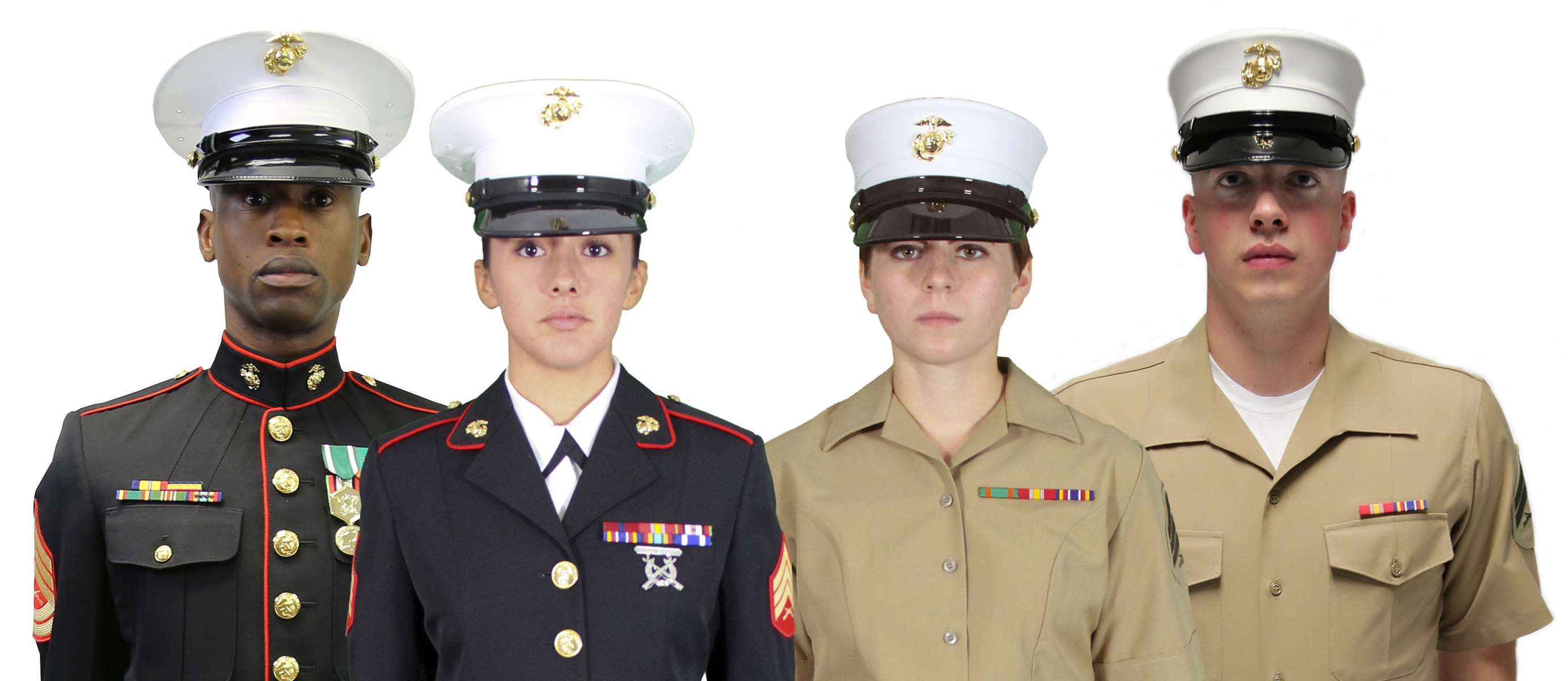
November 10, 1775: The Birth of the United States Marine Corps

November 10, 1775, 250 years ago: The Continental Marines are founded at a meeting at the Tun Tavern in Philadelphia. The place burned down a few years later, and Interstate 95 now goes over the spot, near Penn's Landing. But the United States Marine Corps that grew out of it keeps fighting

On April 30, 1798, Congress passed a law creating the Department of the Navy, to oversee the United States Navy and the United States Marine Corps
The United States Naval Academy was founded on October 10, 1845, on the Severn River in Annapolis, Maryland. The school is frequently called "Annapolis," although, for sports purposes, it's called "Navy." The teams are officially known as the Midshipmen. The school trains officers for both the Navy and the Marines.

The U.S. Marine Corps has had many great moments, including, but by no means limited to, the following:

* 1805: The Battle of Derna, during the First Barbary War. This attack on a city in present-day Libya, then in the Regency of Tripoli in the Ottoman Empire, helped to end Barbary pirate attacks on American ships in the Mediterranean sea, military and civilian alike, and was commemorated in the "Marine Hymn," with the mention of "the shores of Tripoli."

* 1847: The Battle of Chapultepec, during the Mexican-American War. A contingent of Marines stormed Chapultepec Castle in Mexico City, helping to bring the war to a close. This was also commemorated in the "Marine Hymn," as "the halls of Montezuma," although this was an error: The Castle was built over 200 years after Spanish troops overthrew Moctezuma II and his Aztec Empire.

* 1898: The Spanish-American War. After serving mainly on blockade duty during the American Civil War, "the splendid little war" showed the U.S. Department of War that there was still a usefulness for the Marine Corps, at battle sites like the shores of Cuba, Puerto Rico and the Philippines.

* 1918: The Battle of Belleau Wood. The 1st land battle of World War I to feature American troops, specifically the Army's 2nd and 3rd Infantry Divisions, and the 6th Marine Regiment. Belleau Wood became a byword for the Marines part of their mythos, their defining battle of World War I, much as this one was for World War II:

* 1945: The Battle of Iwo Jima. The Marines had been vital in the "island-hopping campaign" in the Pacific Theater of World War II, especially in Guadalcanal in the Winter of 1942-43. But Iwo Jima, 750 miles southeast of the Japanese capital of Tokyo, remains the signature moment of their 250-year history. The photo of 6 Marines raising an American flag on Mount Suribachi, the island's highest point, with 3 of those men never making it off the island alive, is one of the defining images of the war, and became the model for the Corps' official monument at Arlington National Cemetery.
Marines became known as "Leathernecks," originating from the stiff leather high collars worn by early Marines for protection and to enforce good posture; "Gyrenes," a portmanteau of "G.I. Joe" and "Marines"; and "Jarheads" for their flat-top haircuts.

Films like Sands of Iwo Jima and the Vietnam War-set Full Metal Jacket, and TV shows, including comedies such as Gomer Pyle, USMC and Major Dad, have emphasized Marines' dedication and toughness, and their view of themselves as, as Major Dad's Major John D. "Mac" MacGillis, played by Gerald McRaney, put it, "warrior gods."
Thus I was very surprised to find out that longtime Detroit Tigers broadcaster Ernie Harwell was a World War II Marine, since he seemed so kindly and gentlemanly. I was not at all surprised to find out that longtime Chicago Cubs and Bears broadcaster Jack Brickhouse was, because he was considerably more gruff.

From 1962 to 1992, on The Tonight Show, host Johnny Carson honored his announcer Ed McMahon's service in the Marines in World War II by drinking a toast with him every November 10.

On the TV show NCIS, Mark Harmon played Special Agent Leroy Jethro Gibbs, who served in the Marines from 1976 to 1991, including being wounded in the Persian Gulf War, rising to the rank of Gunnery Sergeant. Gibbs did not celebrate his own birthday. Instead, he celebrated the Corps' birthday, on November 10. On that day, the agency's forensic specialist, Abby Sciuto, played by Pauley Perrette, would wish him a Happy Birthday.

As of this 250th Anniversary, there are about 200,000 Marines: 168,000 on active duty, and 32,000 in reserve.

Monday, October 13, 2025

October 13, 1775: The Birth of the United States Navy

October 13, 1775, 250 years ago: Meeting in Philadelphia, at what will later be called Independence Hall, the Second Continental Congress approves a resolution to establish the Continental Navy, to provide for the common defense of the coasts of the 13 colonies that are, at the time, together known as British America. This is considered the birthdate of the United States Navy.

On April 30, 1798, Congress passed a law creating the Department of the Navy, to oversee the United States Navy and the United States Marine Corps.
The United States Naval Academy was founded on October 10, 1845, on the Severn River in Annapolis, Maryland. The school is frequently called "Annapolis," although, for sports purposes, it's called "Navy." The teams are officially known as the Midshipmen. The school trains officers for both the Navy and the Marines.
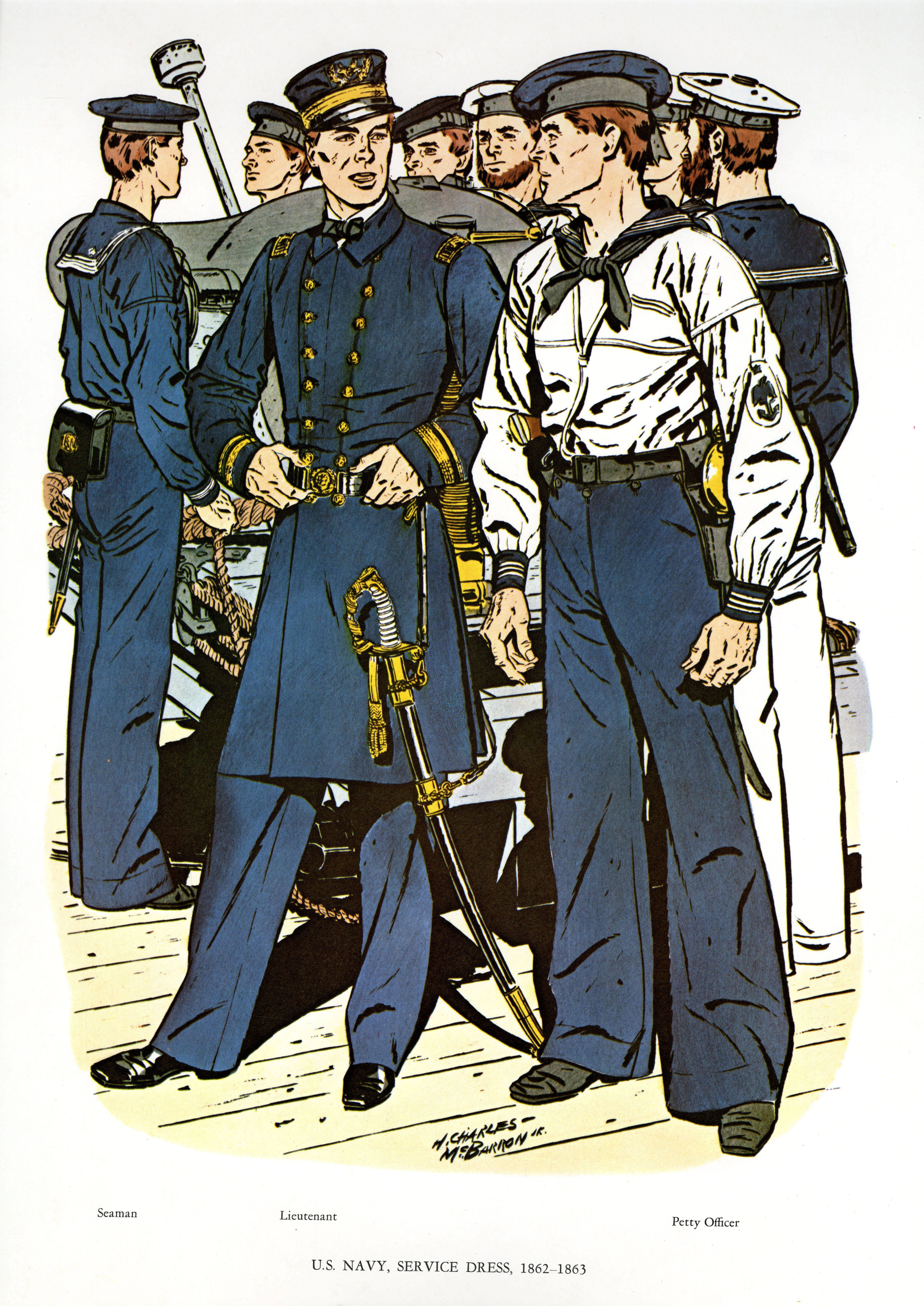
Civil War era uniforms

The U.S. Navy has had many great moments, including, but by no means limited to, the following:

* War of the American Revolution, 1775-1783: The Raid of Nassau and the Battle of Whitehaven.

* War of 1812, 1812-1815: The Battles of Lake Erie, Plattsburgh and Hampden.

* Mexican-American War, 1846-1848: The Siege of Veracruz.

* American Civil War, 1861-1865: The Battles of Port Royal, Hampton Roads, Forts Jackson and St. Philip, Memphis and Mobile Bay.

* Spanish-American War, 1898: The Battle of Manila Bay. There were no major naval battles in World War I, 1917 and 1918, involving American troops.

* World War II, 1941-1945: The amphibious invasions of North Africa, Italy and France, and the accompanying liberations thereof; the Battles of Midway and the Coral Sea; and the "island-hopping" campaign in the Pacific, including the Battles of Guadalcanal, Saipan, Tarawa, the Philippine Sea, Leyte Gulf, Iwo Jima and Okinawa.

* Korean War, 1950-1953: The amphibious landing at Incheon, saving the country, before the war dragged into a nearly three-year stalemate.
Naval operations were not nearly as important in later American wars, although it was Navy SEALs who found and killed Osama bin Laden on May 1, 2011.

Of the 45 men who have served as President, 6 have served in the Navy: John F. Kennedy, Lyndon Johnson, Richard Nixon, Gerald Ford and George H.W. Bush in World War II; and Jimmy Carter, so far the lone Annapolis graduate to become President, in the Korean War. In addition, both Theodore and Franklin Roosevelt served as Assistant Secretary of the Navy.

During World War II, the Navy would have, arguably, the 3 greatest catchers in baseball history: Mickey Cochrane, Bill Dickey and Yogi Berra. (I had thought Johnny Bench served in the Army Reserve during Vietnam, but this appears not to have been the case.)

The WWII Navy would also have Phil Rizzuto, Pee Wee Reese and, through the Marine Corps which is officially part of the Navy, Ted Williams, Jerry Coleman, and broadcasters Jack Brickhouse and Ernie Harwell. The Army would have Hank Greenberg, Warren Spahn, Jackie Robinson, and, through the Army Air Corps, forerunner of the U.S. Air Force, Joe DiMaggio.

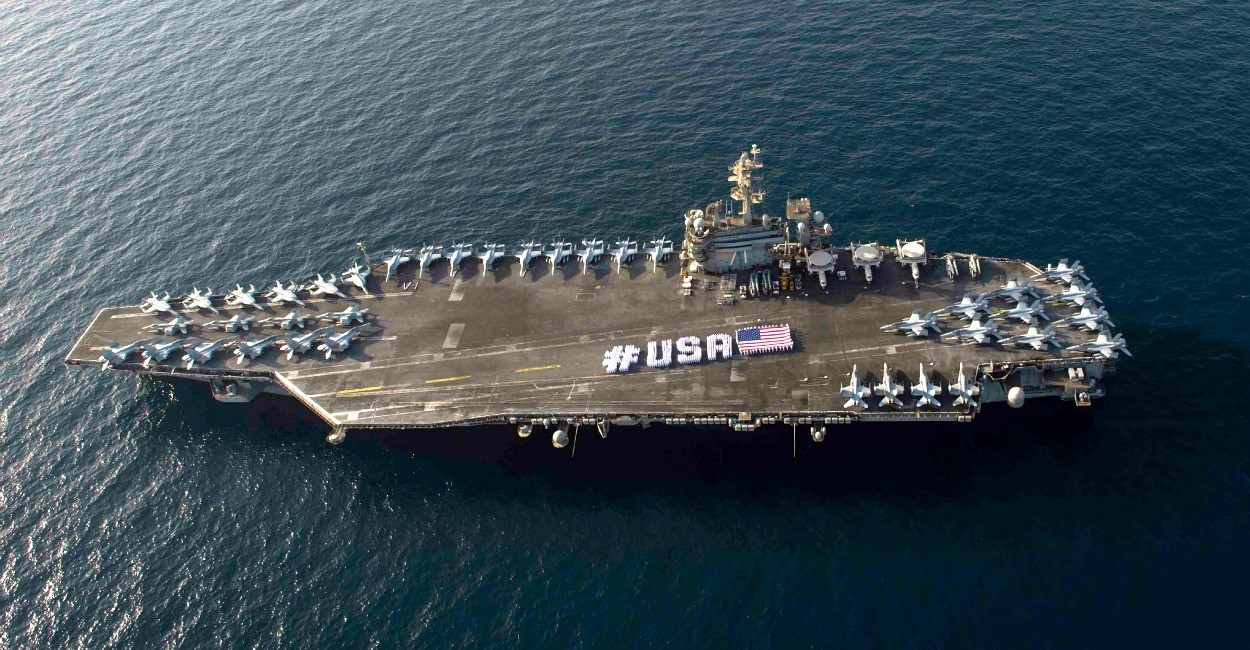
On December 24 and 25, 2000, Fox Sports would broadcast their NFL studio show live on the flight deck of the aircraft carrier USS Harry S Truman, giving those sailors on board one heck of a Christmas present. On November 11, 2011, Veterans Day, "The Carrier Classic" was held on the flight deck of the USS Carl Vinson, with President Barack Obama in attendance, with the University of North Carolina defeating Michigan State University, 67-55, before an official attendance of 8,111, all of them sailors and dignitaries.
As of October 13, 2025, the Navy has (I'm rounding off) about 345,000 active duty personnel, 57,000 reserve personnel, 210,000 civilian employees, 300 deployable ships, and 2,600 aircraft.

Tuesday, June 17, 2025

June 17, 1775: The Battle of Bunker Hill

Bunker Hill Monument

June 17, 1775. 250 years ago: The Battle of Bunker Hill is fought, the 1st battle of the War of the American Revolution after the opening battles of Lexington and Concord. It is remembered as a great heroic triumph for the American Patriots.

In fact, it was a case of "They lost the battle, but won the war." Or, as the ancient Greek King Pyrrhus of Epirus would have said, "If we are successful in one more battle with them, we shall be utterly ruined."

The battle isn't even correctly named. Although there is a Bunker Hill in Charlestown, across the Charles River from Boston and since incorporated as a neighborhood of the city proper, most of the action took place at adjacent Breed's Hill, a mile and a half from what's now known as Downtown Crossing.

On June 13, Colonel William Prescott took 1,200 colonial troops, and occupied both hills. On June 17, the British troops, under the command of General William Howe, became aware of the presence of colonial forces on the Peninsula, and mounted an attack against them. Two assaults on the colonial positions were repulsed with significant British casualties, but the redoubt was captured on their third assault, after the defenders ran out of ammunition. The colonists retreated over Bunker Hill, leaving the British in control of the Peninsula.
William Prescott

The battle was a tactical victory for the British, but it proved to be a sobering experience for them: They lost 226 men, while the colonials lost 115. The battle had demonstrated that inexperienced militia were able to stand up to regular army troops in battle.

The battle led the British to adopt a more cautious planning and maneuver execution in future engagements, which was evident in the subsequent New York and New Jersey campaign. The costly engagement also convinced the British of the need to hire substantial numbers of auxiliaries from the German province of Hesse -- the infamous Hessian mercenaries -- to bolster their strength in the face of the new and formidable Continental Army.

William Prescott served as part of the U.S. victory at the Battle of Saratoga in 1777. He lived on until 1795, at the age of 69. He has a statue on the grounds of the 221-foot-high Bunker Hill Monument, erected in 1843.

The colonials lost the battle because they ran out of ammunition. This supposedly led to the ammo-conserving order: "Don't shoot 'til you see the whites of their eyes!" But the available evidence shows that no one -- not Prescott, nor anyone else -- said this during the Battle of Bunker Hill. The saying goes back to Gustavus Adolphus, King of Sweden in the early 17th Century, at that country's peak of power.

Saturday, June 14, 2025

June 14, 1775: The Birth of the United States Army

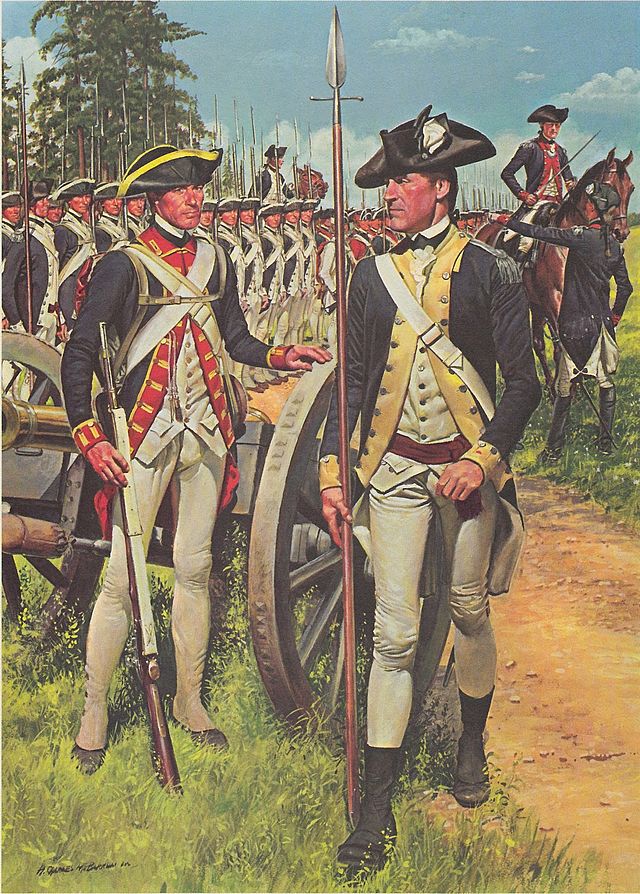
June 14, 1775, 250 years ago: Meeting in Philadelphia, at what will later be called Independence Hall, the Second Continental Congress approves a resolution to establish the Continental Army, to provide for the common defense of the 13 colonies that are, at the time, together known as British America. This is considered the birthdate of the United States Army.

It incorporates patriot forces already in place outside Boston, 22,000 of them; and New York, 5,000 of them. It also raises the 1st 10 companies of Continental Army troops on a one-year enlistment, including riflemen from the Province of Pennsylvania, the Province of Maryland, and the Colony of Virginia.

The following day, June 15, upon the suggestion of Massachusetts delegate John Adams, Virginia delegate George Washington, who had risen to the rank of Colonel in the British Army during the French and Indian War of 1755-1763, was unanimously elected to be the commander-in-chief of the Continental Army.
On June 3, 1784, after the War of the American Revolution, despite great difficulties, was won, the Congress of the Confederation created the United States Army, to replace the disbanded Continental Army. The U.S. Army would, and continues to, consider itself a continuation of the Continental Army.

In 1787, Independence Hall would again host delegates, meeting in a Constitutional Convention. They approved the Constitution of the United States, created the office of the President of the United States, and used the same language to describe the President's role in running the nation's armed forces: "Commander-in-Chief."

The United States Military Academy was founded on March 16, 1802, at Fort Clinton, named for General James Clinton, on the Hudson River at West Point, New York. The school is frequently called "West Point," although, for sports purposes, it's called "Army." The teams were officially known as the Cadets until 1999, when, to reflect the fact that its football team was nicknamed "The Black Knights of the Hudson," it was changed to the Black Knights.

On September 18, 1947, with the reorganization of the U.S. Department of War into the U.S. Department of Defense, the United States Air Force was separated from the United States Army. On April 1, 1954, a separate United States Air Force Academy was founded at Colorado Springs, Colorado.

The U.S. Army has had many great moments, including, but by no means limited to, the following:

* War of the American Revolution, 1775-1783: The Battles of Trenton, Saratoga, Monmouth Courthouse and Yorktown.

* War of 1812, 1812-1815: The Battles of Baltimore and New Orleans.

* Mexican-American War, 1846-1848: The Battles of Monterrey, Buena Vista and Chapultepec.

* American Civil War, 1861-1865: The Battles of Vicksburg, Gettysburg and Richmond, General William Tecumseh Sherman's March to the Sea, and the surrender of Robert E. Lee achieved by General Ulysses S. Grant at Appomattox Court House.

* Spanish-American War, 1898: The Battle of San Juan Hill.

* World War I, 1917 and 1918: The Battles of St-Mihiel and the Argonne Forest.

* World War II, 1941-1945: The amphibious invasions of North Africa, Italy and France, and the accompanying liberations thereof; and the "island-hopping" campaign in the Pacific.

* Korean War, 1950-1953: The amphibious landing at Incheon, saving the country, before the war dragged into a nearly three-year stalemate.

* Persian Gulf War, 1991: Rolling back the conquest of Kuwait by Iraq in a month and a half.

* Balkan Campaigns, 1995 and 1999: Removing Serbia from control of Bosnia in the former and Kosovo in the latter.

* Iraq War, 2003-2011: Removing Saddam Hussein from power in Iraq in a matter of months.
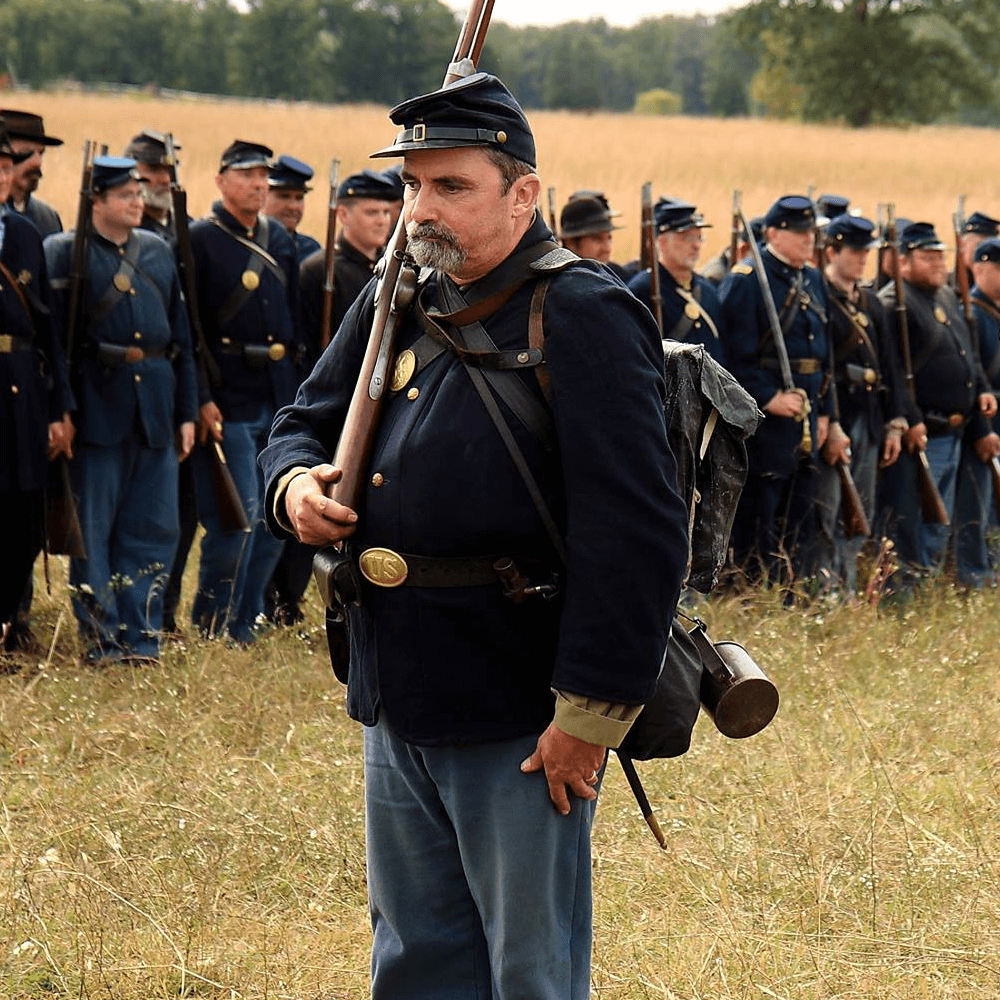
Civil War Union Army re-enactor

Unfortunately, that wasn't the end of the war. Like each of the preceding, and also the Vietnam War of 1959-1975, the Army has also had moments we'd like to forget, but dare not forget.

Of the 45 men who have served as President, 15 have served in the Army: George Washington, Andrew Jackson, William Henry Harrison, Zachary Taylor, Franklin Pierce, Abraham Lincoln, Ulysses S. Grant, Rutherford B. Hayes, James Garfield, Benjamin Harrison, William McKinley, Theodore Roosevelt, Harry Truman, Dwight D. Eisenhower and Ronald Reagan. Grant and Eisenhower are the only West Point graduates to become President.

Both of my grandfathers served in the Army: One in Alaska; the other, with General George S. Patton in the North African and Italian campaigns. My father also served, in Korea during the Vietnam War. None saw combat. Due to my congenital arthritis, I would never have passed a military physical examination; and so, if the military draft had been restored at the time when I would have been eligible, I would have been classified "4-F": Ineligible for service.
My grandfather, Staff Sergeant George Goldberg, 1945

As of June 14, 2025, the Army has (I'm rounding off) about 450,000 active duty personnel, another 330,000 in the Army National Guard, another 170,000 in the Army Reserve, and about 225,000 civilian employees.
Today, a President who lied about his physical condition to get out of serving will hold a military parade in the national capital of Washington, D.C., in celebration of his birthday (his 79th), and also of the Army's (its 250th).

I hope it rains.

Saturday, April 19, 2025

April 19, 1775: Paul Revere & the Battles of Lexington and Concord

Paul Revere

This coming Monday, April 21, the 6 New England States -- Massachusetts, Connecticut, Rhode Island, Vermont, New Hampshire and Maine -- will celebrate Patriot's Day, the 3rd Monday in April, a holiday in commemoration of the Battles of Lexington and Concord, which began the War of the American Revolution, on April 19, 1775.

The day is celebrated in Boston with the annual Boston Marathon. In order to reduce the effect on traffic -- and traffic in Boston is frequently ridiculous -- the Boston Red Sox always schedule an 11:00 AM (well, 11:10) hone game, Major League Baseball's only pre-noon (local time) game all season, so that Fenway Park will let out before the runners get to nearby Boylston Street, a block from Fenway. The Marathon's finish line is one mile east of the ballpark, across from the Central Library. 

The American Revolution is now 250 years old. A pity that we won't have a President who believes in democracy during the proceedings.

*

In 1860, with the Civil War inevitable, Boston-area poet Henry Wadsworth Longfellow was looking for an American hero that could only be claimed by the North, not the South. That let out such luminaries as Virginians, and slaveholders, George Washington, Thomas Jefferson, James Madison and Patrick Henry.

Massachusetts' John Adams, by his own admission, was "obnoxious." And Pennsylvania's Ben Franklin, well, let's just say he wasn't well-lined-up with Victorian morals, which America then shared with Britain. Same with Massachusetts' Samuel Adams and John Hancock, (the Boston Tea Party was basically a bunch of drunks pulling a prank) and New York's Alexander Hamilton (who was more affiliated with the post-Revolution, Constitution-establishing era, anyway).

Longfellow found another Massachusetts hero: Paul Revere. Born in 1735 in Boston, he was a metalsmith, and an artist: His woodcut of the Boston Massacre, of March 5, 1770, helped spark the Revolution. Longfellow began his poem:

Listen, my children, and you shall hear
Of the midnight ride of Paul Revere,
On the eighteenth of April, in Seventy-Five:
Hardly a man is now alive
Who remembers that famous day and year.

It had been 85 years. Such a man would have been at least 90 years old to have any clear memory of it. Longfellow went on:

He said to his friend, -- "If the British march
By land or sea from the town to-night,
Hang a lantern aloft in the belfry-arch
Of the North-Church-tower, as a signal-light, --
One if by land, and two if by sea;
And I on the opposite shore will be,
Ready to ride and spread the alarm
Through every Middlesex village and farm,
For the country-folk to be up and to arm."
Old North Church, with Revere's statue in front

As Joe Biden, not old enough to remember 1775 (though some have suggested otherwise), might say, "Longfellow, God love 'im, his heart was in the right place, but that poem is full of malarkey."

Robert Newman, the Sexton of the Old North Church, and John Pulling, a vestryman, hung the two lanterns in the steeple, just for a minute, just long enough for Revere to see, across the Charles River in Cambridge. But there was another man with Revere, Massachusetts militia officer William Dawes. Ever since, the joke has been that Longfellow used Revere's name, rather than Dawes', because it was easier to rhyme.
William Dawes

The image we have been given is of Revere riding through the night, yelling, "The British are coming! The British are coming!" And the poem does use the word "British." The Declaration of Independence was more than a year away, and no such declaration was even being considered. Revere, and every other "Patriot," still considered himself British. Part of the problem is that the Patriots thought that, back in London, Parliament had betrayed British values in oppressing their colonies in the Americas. And, certainly, Revere wouldn't have been yelling anything: It would have attracted too much attention.

Most of all, they wanted to reach John Hancock and Samuel Adams, Massachusetts' 2 biggest leaders of the Patriot cause, to get them to safety. So what did they actually say? "The regulars are out!" Regulars, as in "the regular army," not conscripts. These were professional soldiers, well-trained men who meant business, and were thus a threat to Hancock, Adams, and anybody else they could get their hands on.

Revere and Dawes got to Lexington, where Hancock and Adams were. They picked up a 3rd rider, Samuel Prescott, and the 3 of them rode to Concord. Between them, the 3 men knocked on the doors of 40 Patriots.

The poem doesn't mention that the riders got caught. A British patrol intercepted them in Lincoln. Prescott and Dawes got away, but Revere didn't. But he was lucky: They questioned him, and let him go. I guess they didn't know who, or what, they had. 

But the "Midnight Ride" got the "Minutemen" (said to be ready to fight at a minute's notice) ready for when the British attacked the next morning.

*

April 19, 1775, 250 years ago today: 

Lieutenant Colonel Francis Smith led 700 regulars, under orders to capture and destroy Colonial military supplies, believed to be stored by the Massachusetts Militia at Concord. 

About 80 militiamen stood on the Lexington Green, 11 miles northwest of downtown Boston. Their commander was Captain John Parker, a veteran of the French and Indian War, already stricken with tuberculosis.
Lexington Green

Parker told them, "Stand your ground. Don't fire unless fired upon. But if they mean to have a war, let it begin here." The line, "Don't shoot 'til you see the whites of their eyes," in order to conserve ammunition, is said to have originated 2 months later, at Bunker Hill, and that is also in dispute.

It was just after sunrise, around 6:00 AM. Both commanders told their men to hold their fire. Someone disobeyed, and fired what Ralph Waldo Emerson, in another poem based on the events, called "The Shot Heard 'Round the World." (That title would later be used to describe the Bobby Thomson home run of 1951.) Both sides generally agreed that the initial shot did not come from the men on the ground immediately facing each other. It may have been a Colonial from behind a hedge, or a Colonial from inside a tavern, or a mounted British officer; but no one has ever determined on which side the initial shooter was.

No British men were killed, and 8 Colonials were, before they dispersed. The idea of the Colonial men at Lexington was to stall the regulars, to buy time for the main force at Concord, 19 miles northwest of downtown Boston.

At North Bridge in Concord, it was the Colonials who had the advantage, 400 to 100. At about 11:00 AM, fire opened, and the British had to fall back, and head back toward Boston. They lost 73 men, while the Colonials lost 41.
North Bridge

A small force of barely-trained, barely-equipped men had knocked back the best army in the world -- at the least, the 2nd-best army, behind that of France. The War of the American Revolution was on.

John Parker fell victim to tuberculosis, and died on September 19, 1775. In 1900, a statue was erected at Lexington Green, sculpted by Henry Hudson Kitson, and known as The Lexington Minuteman. It has appeared on postage stamps, and on the back of Massachusetts' entry in the federal government's "State Quarters" series. It was not based on Parker's appearance, as no known likenesses of him survive today, and the figure is of a younger, healthy man, which Parker, at that point, was not. Nevertheless, it is said to depict Parker.
Francis Smith fought in several other battles in the war, rose to the rank of Major General, and lived util 1791.

History lost track of Samuel Prescott after the Midnight Ride. The best-known story says that he became a doctor in the Continental Army, was captured by the British, and died a prisoner of war in Halifax, Nova Scotia in 1777.

John Hancock became the President of the Continental Congress, including when the Declaration of Independence was approved. He was the only man who actually signed it on July 4, 1776 -- the rest of the Signers signed it later, most on August 2 -- and signed it so large that "John Hancock" has become slang for "signature" ever since. But the story that he signed it so large that, "George III can read that without his spectacles, and double the price on my head" is apocryphal.

When the Constitution of Massachusetts (written by John Adams) was approved in 1780, Hancock served as the 1st Governor. He served until 1785, returned to the post in 1787, and still held it when he died in 1793.

He was succeeded by Samuel Adams, John's cousin, who, like John, had also signed the Declaration. He served until 1797, and lived until 1803.

William Dawes never held public office, and lived until 1799. Paul Revere never served in public office, either, and lived on until 1818, making him one of the last surviving heroes of the American Revolution.

Sunday, March 23, 2025

March 23, 1775: "Give Me Liberty!" Or...

March 23, 1775, 250 years ago: Patrick Henry, considered the finest orator (public speaker) among America's Founding Fathers, makes his most famous statement. Except he might not have said it.

He was born on May 29, 1736, at Studley, his family's farmhouse outside Hanover, Virginia. The town, and its surrounding Hanover County, were named for the for House of Hanover, the royal family of Great Britain, then the rulers of British America.

Because of his uncle, a prominent minster named Patrick Henry, he frequently used the name "Patrick Henry Jr." until the uncle's death in 1777. Uncle Patrick, and American religion's "Great Awakening," inspired him to become a public speaker. But his dissatisfaction with the Church of England led him to not consider the ministry, so he turned to the law. He also became a talented violinist, and this, along with his Virginia law practice, led to his introduction to a younger Virginia lawyer and violinist, Thomas Jefferson. They would serve together in the House of Burgesses, the forerunner of the Virginia House of Delegates, and thus the oldest continuously-meeting legislative body in the Western Hemisphere.

Patrick Henry married twice. In 1754, he married Sarah Shelton. But she fell victim to mental illness, and died shortly after his famous speech of 1775. In 1777, he married Dorothea Dandridge (as far as is known, not related to 20th Century actress Dorothy Dandridge), and that marriage lasted the rest of Patrick's life. Between the two marriages, he had 17 children.

Henry was a lifelong slaveholder from the time of his first marriage, at age 18. Henry professed that slavery was wrong, and expressed hopes for its abolition; but he had no plan for doing so, nor for the multiracial society that would result. He wrote in 1773, two years before his famous speech about liberty, "I am the master of slaves of my own purchase. I am drawn along by the general inconvenience of living here without them. I will not, I cannot justify it."

He was elected to the House of Burgesses in 1765. That year, Britain imposed the Stamp Act on its American colonies. On May 29, his 29th birthday, he gave a speech protesting it. Jefferson was in attendance. So was John Tyler Sr., later a Governor of Virginia and the father of John Tyler, the 10th President of the United States. Henry invoked murdered tyrants, and compared King George III to them: "Caesar had his Brutus, Charles the First had his Cromwell, and George the Third... "

Some members yelled out, "Treason!" Henry continued: "George the Third may profit by their example. If this be treason, make the most of it!" Jefferson and Tyler both remembered the speech well, Tyler later calling it "one of the trying moments which is decisive of character."

Henry was not charged with treason, or any other crime, in regard to the speech. He remained a member of the House of Burgesses until its dissolution in 1776. He was named a Delegate from Virginia to the First Continental Congress in 1774. He was not a member of the Second Continental Congress, and was not directly involved in the declaration of independence -- upper- or lower-case.

Hanover County elected Henry as a delegate to the Second Virginia Convention, which convened at St. John's Episcopal Church in Richmond on March 20, 1775. (Williamsburg was still the capital of Virginia until 1780, when it was moved to Richmond, as it was further inland and on higher ground.) Once again, Jefferson was in attendance. So was George Washington.

The Convention debated whether Virginia should adopt language from a petition by the planters of the Colony of Jamaica. This document contained complaints about British actions, but admitted the King could veto colonial legislation, and it urged reconciliation. (Jamaica remained a British colony until 1962, and, while independent, it remains within the British Commonwealth, with the British monarch as its head of state, and represented in-country by a Governor-General.)

Henry offered amendments to raise a militia independent of royal authority in terms that recognized that conflict with Britain was inevitable, sparking the opposition of moderates. On March 23, he defended his amendments, concluding with the statement he is well known for:

If we were base enough to desire it, it is now too late to retire from the contest. There is no retreat but in submission and slavery! Our chains are forged! Their clanking may be heard on the plains of Boston! The war is inevitable, and let it come! I repeat it, sir: Let it come!

It is in vain, sir, to extenuate the matter. Gentlemen may cry, "Peace, Peace!" But there is no peace! The war is actually begun! The next gale that sweeps from the north will bring to our ears the clash of resounding arms! Our brethren are already in the field! Why stand we here idle?

What is it that gentlemen wish? What would they have? Is life so dear, or peace so sweet, as to be purchased at the price of chains and slavery? Forbid it, Almighty God! I know not what course others may take. But, as for me, give me liberty!

At this, the assembled men leapt to their feet and cheered. So, if Henry said anything after "Give me liberty," they were in no position to hear him.

In 1817, William Wirt, a Virginia politician who later served as U.S. Attorney General -- but was 2 years old at the time of the speech, and was in no position to know anything other than secondhand information -- published a biography of Henry, in which he claimed Henry said, "I know not what course others may take. But, as for me, give me liberty, or give me death!" And he then took an ivory paper cutter, simulated plunging it into his chest, in imitation of the 46 BC suicide of Cato the Younger, a patriot of the Roman Republic and a defeated enemy of Julius Caesar.

The Founding Fathers had something like a fetish for the statesmen of Ancient Rome, and to a lesser extent for those of Ancient Greece. Jefferson frequently peppered his letters with quotations from Greek historian Thucydides. Roman politicians like Cicero and Seneca, both of them martyred, were often quoted in speeches and cited in letters and newspaper articles. Latin names like "Publius" became pen names for activists who did not want to be identified. And George Washington was frequently compared to Lucius Quinctius Cincinnatus, a Roman general who was called away from his farm to be dictator in 458 BC. He straightened things out, then gave up power and went back to his farm. The City of Cincinnati was named for him.

In 1713, the British playwright Joseph Addison wrote the play Cato, a Tragedy, about Cato the Younger. The play includes the line, "Chains or conquest, liberty or death." It was popular in British America, and Henry knew it. Going back even further is the opera Artemisia, written by Nicolò Minato in 1657, which contains an aria called "Give me death or freedom." But that was about a woman's heartbreak, not political freedom.

So, while we can't be absolutely certain that Patrick Henry followed up "Give me liberty" with "or give me death," the available evidence suggests that he did.

Henry's speech carried the day, and the Convention narrowly adopted his amendments. Just 27 days later, Massachusetts militiamen and a unit of the British Army exchanged gunfire at Lexington and Concord. The War of the American Revolution was underway.

On June 29, 1776, Henry was elected Governor of Virginia by the House of Burgesses. Jefferson's Declaration of Independence was approved 5 days later. Henry remained in constant written contact with Washington, his fellow Virginian and now commander of the Continental Army, standing up for him against the Conway Cabal of early 1778. He left office in 1779, and Jefferson was elected to succeed him.

Henry was returned to the House of Delegates in 1779, from a County that was cut out of Pittsylvania County. It was named Patrick Henry County, and was later split into Patrick County and Henry County. With the war won, he was returned to the Governorship in 1784, serving 2 years.

He was an opponent of the Constitution of the United States ratified at Philadelphia in 1787, as he didn't think it went far enough. He wanted a Bill of Rights to protect individual rights, and spoke against the Constitution at the Virginia Ratifying Convention. Nevertheless, on June 25, 1788, the Convention ratified it. Congress passed a Bill of Rights the next year.

Patrick Henry died on June 6, 1799, at Red Hill, his home in Brookneal, Virginia, now a National Historic Site, about 100 miles southwest of Richmond. He was 63 years old.

Along with Benjamin Franklin, Samuel Adams, John Hancock and Thomas Paine, Patrick Henry was among the leading non-military figures of the American Revolution who didn't get to be President of the United States -- regardless of whether he actually said, "Give me liberty, or give me death!"

There's a joke dating back to World War II. A ship's captain is telling his crew that they had misbehaved, and so they would not be permitted "liberty," another term for shore leave, when they got to their next port. A sailor yells out, "Give me liberty, or give me death!" The captain yells, "Who said that?" And the sailors yells back, "Patrick Henry!"