Monday, September 18, 2023

September 18, 1873: The Panic of 1873

Drawing of a bank run during the Panic

September 18, 1873, 150 years ago: The American stock market begins a tailspin that becomes known as the Panic of 1873. It throws the country into its worst economic conditions to that point, known in hindsight as the Long Depression.

The American Civil War of the early 1860s was followed by a boom in railroad construction. 33,000 miles of new track were laid across the country between 1868 and 1873, with much of the craze in railroad investment being driven by government land grants and subsidies to the railroads. The railroad industry was the largest employer outside agriculture in the U.S., and a large infusion of cash from speculators caused spectacular growth in the industry and in the construction of docks, factories, and ancillary facilities. Most capital was involved in projects offering no immediate or early returns.

A period of economic overexpansion arose from the northern railroad boom before a series of economic setbacks. The Panic of 1869, a.k.a. Black Friday, did not cause a depression, the way the Panics of 1837 and 1857 had. But there were major fires in Chicago in 1871 and Boston in 1872. An outbreak of equine influenza in 1872 devastated American horses, and also pretty much every industry in America, which depended on horses.

The decision of the German Empire to cease minting silver thaler coins soon after its founding in 1871 caused a drop in demand and downward pressure on the value of silver, which, in turn, affected the U.S., since much of the supply of silver was mind there. This also caused a crash in the Vienna Stock Exchange on May 9, affecting the Austrian Empire, with a ripple effect across the continent. France hadn't yet recovered from the Franco-Prussian War of 1870, and Italy was also a newly unified nation, and struggling economically. Europe was a mess.

As a result of what was going on there, the U.S. Congress passed the Coinage Act of 1873, which changed the national silver policy. Before the Act, the U.S. had backed its currency with both gold and silver and minted both types of coins. The Act moved the country to a de facto gold standard, which meant it would no longer buy silver at a statutory price or convert silver from the public into silver coins, but it would still mint silver dollars for export in the form of trade dollars.

The Act had the immediate effect of depressing silver prices, hurting Western mining interests, who labeled the Act "The Crime of '73", but its effect was offset somewhat by the introduction of a silver trade dollar for use in Asia and the discovery of new silver deposits at Virginia City, Nevada, that resulted in new investment in mining activity. (Virginia City's role as a silver developer led to Nevada's Statehood in 1864, its nickname "The Silver State," and the 1959-73 TV show Bonanza, where the Cartwright family fortune was based on silver found near Virginia City, then invested in other interested like land, cattle and timber.)

The Act also reduced the domestic money supply, raising interest rates and hurting farmers and others who normally carried heavy debt loads. The perception of US instability in its monetary policy caused investors to shy away from long-term obligations, particularly long-term bonds. The problem was compounded by the railroad boom, which was then in its later stages.

Jay Cooke & Company, a major component of the country's banking establishment, found itself unable to market several million dollars in bonds it held in the Northern Pacific Railway, connecting St. Paul, Minnesota with Seattle, Washington.

Cooke, known as the Union's "Great Financier" during the Civil War, and his firm, like many others, had invested heavily in the railroads. Some investment banks were then anxious for more capital for their enterprises. President Ulysses S. Grant's monetary policy of contracting the money supply, and thus raising interest rates, made matters worse for those in debt. Businesses were expanding, but the money they needed to finance that growth was becoming scarcer.
Due to the financial crises in Europe, Cooke could not sell the securities abroad. Just as he was about to swing a $300 million government loan, reports circulated that his firm's credit had become nearly worthless. On September 18, the firm declared bankruptcy.

The New York Stock Exchange closed for 10 days, starting on September 20. (It was a Saturday, anyway, but it did not reopen on Monday, September 22.) Many insurance companies went out of business, as the deteriorating financial conditions created solvency problems for life insurers. By November, some 55 of the nation's railroads had failed, and another 60 had gone bankrupt by the first anniversary of the crisis. Construction of new rail lines, formerly one of the backbones of the economy, plummeted from 7,500 miles of track in 1872 to just 1,600 miles in 1875, and 18,000 businesses failed between 1873 and 1875.

Unemployment peaked in 1878, at 8.25 percent -- and that's just what was reported, so it was likely considerably higher. Building construction was halted, wages were cut, real estate values fell, and corporate profits vanished.

In 1874, Congress passed the Ferry Bill, proposed by Senator Thomas Ferry of Michigan, to allow for the printing of currency, increasing inflation and reducing the value of debts. Grant vetoed the bill. The poor economic conditions also caused voters to turn against Grant's Republican Party. In the 1874 Congressional elections, the Democratic Party won control of the House of Representatives for the first time since the Civil War.

The following year, Congress passed the Specie Resumption Act of 1875, which would back U.S. currency with gold. This helped curb inflation and stabilize the dollar. But public opinion made it difficult for the Grant Administration to develop a coherent policy on the Southern States, and the North began to steer away from Reconstruction.

With the depression, ambitious railroad building programs crashed across the South, leaving most states deep in debt and burdened with heavy taxes. Retrenchment was a common response of the South to State debts during the depression. One by one, each State fell to the Democrats in the South, and the Republicans lost power. So, as is usually the case, black people were hurt by a downturn in the American economy more than white people were.

What effect did the depression have on sports? Well, only one team sport was really organized in North America at the time, and that was baseball. According to historian Richard Hershberger:

The effects on the economy on the ground won't happen immediately. It will be the 1875 season that it really affects professional baseball, but it will hit hard. Professional baseball will go into decline, though there are some superficial changes that disguise this.

Early signs of recovery will appear late in the 1880 season. In 1881 baseball will be in full recovery mode, leading to the founding of the AA (the American Association) and a general expansion of the minors. In the meantime, the history of baseball, if you look past just the play on the field, doesn't make a lick of sense from 1875 through 1881 unless you take the depressed economy into account.

The end of the crisis didn't come with any measure of the government. Rather, it came with an influx of labor, with the beginning of the great wave of immigration to the U.S., spurred on by both economic hardship and religious persecution in Europe. This wave of immigration enriched the country and its businesses, if not (in most cases) the immigrants themselves, and lasted until the early 1920s.

By 1880, Jay Cooke had managed to pay off his debts, and his investment in a Nevada silver mine had restored his fortune. He died in 1905, considered not a hero or a villain, but mostly as a relic of an earlier age.

*

September 18, 1873 was a Thursday. There were 2 games played in the biggest professional baseball league of the time, the National Association, which is now regarded by most, but not all, history-minded baseball fans as a "major league." Both included teams based in what would now be considered New York City, although Brooklyn did not become a part of the City until 1898; and both played a Philadelphia team.

The New York Mutuals beat the Philadelphia Athletics, 4-2 at the Union Grounds in Brooklyn. The Mutuals had played since 1857, and would become members of the National League in 1876, but folded after that season. The Athletics would also join the NL for 1876 and then drop out after 1 season, and bear no relation to the team of the same name that started in the American League in 1901, and is now located in Oakland.

In the other game, the Brooklyn Atlantics, another survivor of the amateur era, also dating to 1857, lost to the Philadelphia White Stockings, 9-4 at the Jefferson Street Grounds in Philadelphia, which was also the home of the Athletics. Neither of these teams even got as far as the Mutuals or the original A's: They were not invited to join the NL, and the White Stockings then folded, while the Atlantics carried on as independents until 1882. 

Friday, September 15, 2023

September 15, 1963: The Alou Brothers Game

Left to right: Matty, Felipe and Jesús Alou

September 15, 1963, 60 years ago: For the 1st time, a major league outfield is made up entirely of three brothers.

All 3 brothers were from Haina, in the Dominican Republic. Felipe Rojas Alou was born on May 12, 1935. He arrived in the major leagues in 1958, with the San Francisco Giants, who were in their 1st season in San Francisco, after moving from New York. Mateo Rojas Alou was born on December 22, 1938. He debuted with the Giants in 1960. Jesús María Rojas Alou was born on March 24, 1942. He debuted with the Giants on September 10, 1963.

Five days later, the Giants played the Pittsburgh Pirates at Forbes Field in Pittsburgh. The Giants jumped out to a 3-0 lead in the 1st inning, thanks to a home run by Willie Mays, who, as would be expected, was playing center field. Willie McCovey, whose preferred position was 1st base, was playing left field, because Orlando Cepeda was a 1st baseman and he had seniority, if only by 1 year. And the starting right fielder was Felipe Alou.

The Pirates tied the game in the bottom of the 5th. But the Giants scored 5 runs in the 7th inning, including Felipe, having drawn a walk, scoring on a McCovey single; and 4 runs in the 8th, including Felipe, having singled and driven in shortstop José Pagán, scoring on a single by Mays.

For the bottom of the 7th, Giant manager Alvin Dark moved Felipe to left field, replacing McCovey in the field; and Jesús Alou was brought in to play right field, replacing McCovey in the batting order. For the bottom of the 8th, Dark rearranged the chessboard some more: He replaced Cepeda at 1st base with Norm Larker, took Mays out, moved Felipe Alou to center field, and put Matty Alou in left field.

Thus, the outfield now consisted of Matty Alou in left, Felipe Alou in center, and Jesús Alou in right. This game became one of the great baseball trivia questions: "What was the only all-brother outfield in Major League Baseball history?"

Years later, a question occurred to me: "What happened to Willie Mays? Why wasn't he playing center field for the Giants that day? Was he injured? Did he simply get the day off?"

Nothing of the kind. Indeed, Mays started in center field, and was the big hitting star of the game, going 2-for-4, with a home run, driving in 4 runs and scoring 3. It was only in the 8th inning that he was replaced, with Felipe moving from left field to center field, and Matty going into left field. So the great trivia question is flawed: The 3 brothers didn't all start the game together, and were only in the field together for 2 innings.

For the record: Felipe went 1-for-5 with a walk, an RBI and a run scored, and had 2 putouts in the field; Jesús went 0-for-2, and had no fielding chances; and Matty had neither a plate appearance nor a fielding chance.

The Giants won the game, 13-5. Billy O'Dell went the distance, and was the winning pitcher. For the Pirates, Roberto Clemente went 0-for-4, although Willie Stargell went 2-for-4 with an RBI.

Felipe would be traded to the Milwaukee Braves, and was with them when they moved to Atlanta in 1966. He returned to the postseason in 1969, when the Braves won the National League Western Division title. He made 3 All-Star Games, and last played in 1974 with the Milwaukee Brewers.

He later managed the Montreal Expos, being named NL Manager of the Year in 1994, when the Strike of '94 cut short the Expos' fine chance at a title. In 2003, he managed the Giants to an NL West title. The Giants have elected him to their Wall of Fame. As of September 15, 2002, he is still alive, at age 87.

His son Moisés played for him in Montreal and San Francisco, and was arguably the best player in the family. Another son, who goes by "Luis Rojas" instead of "Luis Alou," due to a clerical error at the start of his playing career, never played in the major leagues, but has managed the New York Mets, and has coached for both them and the New York Yankees. (Felipe and Matty both played for the Yankees. Jesús did not, but did play in New York, for the Mets.)

Matty won the NL batting title in 1966, while playing for the Pittsburgh Pirates. In 1969, he led the major leagues in hits and doubles. He made 2 All-Star Games, and won a World Series with the Oakland Athletics in 1972. He last played in the majors in 1974, with the San Diego Padres, before playing 2 more seasons in Japan. He died on November 3, 2011, at the age of 72.

Jesús was the last to leave the Giants, in 1968. With Matty having been traded by then, he was acquired by the A's, and was a member of their 1973 and 1974 World Series winners. Having been with the Houston Astros during their Ball Four season of 1969, he returned to them, and last played in the majors with them in 1979. He later scouted for major league teams, including the Expos under Felipe. He died on March 10, 2023.

Taking 3 of 4 In Boston Can't Expunge Cashman's Reverse Midas Touch

Ordinarily, I'd be thrilled to take 3 out of 4 from the Red Sox at Fenway Park. Nothing like beating The Scum. However, with both the Yankees and the Red Sox well out of the Playoff race, the last time this rivalry had so little juice, so did Boston's hypodermic needles.

It was a weird series, too, with 2 postponements due to rain forcing 2 doubleheaders, 2 games on Tuesday and 2 on Thursday. Randy Vásquez started the Tuesday opener, but was limited to 60 pitches, so Jhony Brito ended up as the winning pitcher. The Yankees only got 5 hits, but Kyle Higashioka got 3 of them.

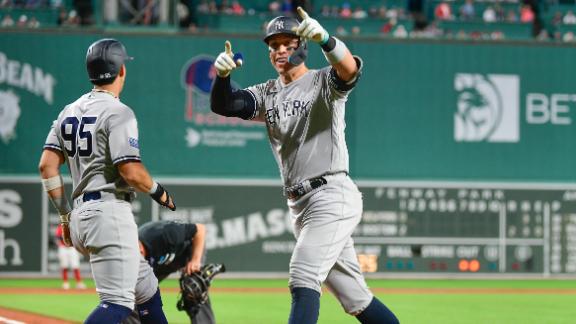
The key inning was the 6th: Rookie Everson Pereira led off by being hit by a pitch. It was the Red Sox, and it was Fenway, but doing this on stupid would have been stupid. Higashioka followed with a single, DJ LeMahieu with an RBI double, and after an Aaron Judge flyout, Gleyber Torres, who has been hot lately, singled home Higgy and DJLM. The Yankees won, 3-2. Carlos Rodón, disappointing as a Yankee thus far, started the Tuesday nightcap, and went the minimum 5 innings for the 4-1 win.

The 1st game on Thursday was a waste. We can't blame the pitchers, or Aaron Boone's choice thereof: Michael King allowed just 1 run in 4 2/3rds innings, and Greg Weissert just 1 in 2 1/3rd. But the Yankees only got 2 hits, so it didn't matter that Matt Bowman allowed 3 runs in the 9th to make it a 5-0 Sox win.

Clarke Schmidt started the series finale, and fell behind 2-0 in the 1st inning. It was Fenway, so it felt like the beginning of another off-to-the-races game. The Yankees did nothing to dismiss that idea in the top of the 2nd, scoring 5 runs, 4 on a grand slam by Judge.

But the Sox chipped away, and tied it against Wandy Peralta in the bottom of the 7th. I've said it before, and I'll say it again: A relief pitcher who blows a save should not be eligible to be named the winning pitcher, even if he's still the team's current pitcher when the winning run is scored.

Which is what happened. Anthony Volpe led off the 8th with a single. After Oswald Peraza flew out, Oswaldo Cabrera singled Volpe to 2nd, and LeMahieu doubled him home. In the 9th, Peraza hit a 2-run homer to give the Yankees some breathing room, and it ended 8-5.

So the Yankees go into this weekend at 74-73, 1 game above .500. With 15 games to go, the chance of finishing above .500 is pretty good. But to make the Playoffs, they will have to come close to running the table.

Meanwhile, because of his torn ulnar collateral ligament (UCL), it has been determined that rookie sensation Jasson Domínguez will be out for 9 to 10 months. In other words, it could be that we won't see him suit up again until after next season's All-Star Break.

Damn. You've heard of the Midas Touch, everything someone touches turns to gold? Well, Brian Cashman has the Reverse Midas Touch: No matter how good it starts out, everything he touches turns to shit.

Here's what the Yankees have left: 3 games away to Pittsburgh, 3 home to Toronto, 3 home to Arizona, 3 away to Toronto, and 3 away to Kansas City. At the rate the fans are getting mad, maybe playing the last week away from home is a good idea.

Thursday, September 14, 2023

September 14, 1923: Jack Dempsey vs. Luis Firpo

September 14, 1923, 100 years ago: A fight for the Heavyweight Championship of the World is held at the Polo Grounds in New York. It is one of the most spectacular prizefights in American history.

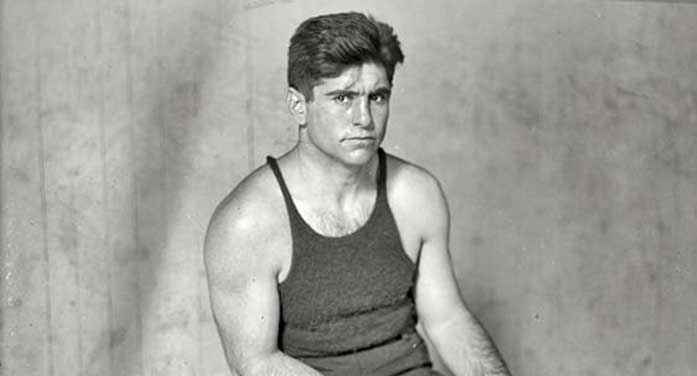
Jack Dempsey had been Heavyweight Champion since July 4, 1919. He was enormously popular with many people, but hated by others, for the accusation that he was a "slacker" in World War I. But he was still the most devastating puncher that boxing had ever seen. He was one of the people who made the 1920s "the Roaring Twenties."
Luis Ángel Firpo was the heavyweight champion of South America, and the 1st native of that continent, and the 1st fighter of Spanish descent, to get a shot at the title. Known as the Wild Bull of the Pampas, the Argentine had already faced contenders Edward "Gunboat" Smith and Bill Brennan, and had ended the career of the man from whom Dempsey brutally took the title, Jess Willard. He seemed like the obvious next opponent for Dempsey.
And it would be held in New York City. Boxing had just been legalized in the State of New York, and both the Polo Grounds, newly-expanded to 56,000 seats, and the brand-new Yankee Stadium, with 67,000, had already hosted professional prizefights. For this fight, the crowd, including in seats on the field, was 80,000. In terms of pre-fight hype, this would be the biggest fight ever held in the Empire State, and would remain so even after the old Madison Square Garden was built in 1925, and after the new Garden was built in 1968, possibly until the 1st fight between Muhammad Ali and Joe Frazier in 1971.

Firpo came in with a record of 25-2, with 2 no-contests. Dempsey was 61-4, with 9 draws. (Don't be shocked by that last statistic: In those days, some States' athletic commissions had rules that any fight that didn't end with a knockout was classified as a draw.) It was one of the earliest prizefights to be broadcast nationwide on radio.

And the bell had barely rung to begin the fight when Dempsey lunged at Firpo, and left himself undefended, and Firpo threw a right hand that knocked him down. Dempsey was one of those fighters with whom the worst thing you could do was make him mad. With no knockdown rule, and no neutral-corner rule, Dempsey was able to pound away at Firpo, knocking him down 7 times. That's not a typographical error: Dempsey knocked Firpo down seven times in one round.

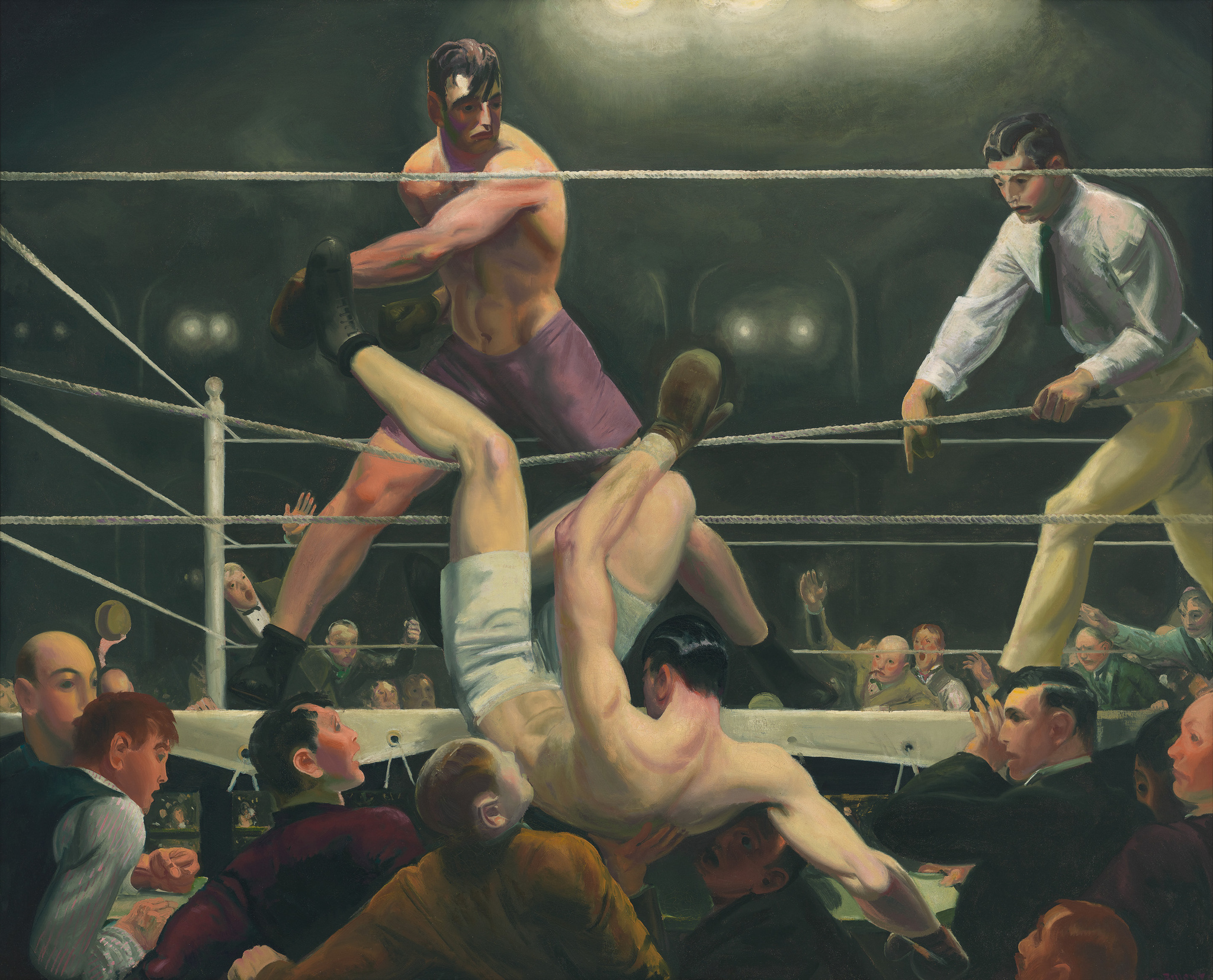
But the round still wasn't over. Firpo came back, trapped Dempsey against the ropes, and slammed a right into Dempsey's chin. It knocked Dempsey out of the ring. As he fell, he hit the back of his head against a sportswriter's typewriter. He could have been knocked unconscious, but wasn't.

According to the rules, when a fighter is knocked out of the ring, he gets 20 seconds to get back in, instead of the 10 he gets if he's merely knocked down inside the ring. It took Dempsey 14 seconds to get back in. There were those who believed that the writers had given Dempsey help in getting back in, which should have disqualified him. But he was not disqualified, and survived the round.

In the 2nd round, Dempsey knocked Firpo down twice more, and Firpo was counted out at the 57-second mark of the round. It was 4 minutes unlike any that boxing had ever seen, or has since. Bert Sugar, a sportswriter who was boxing's foremost historian, called it the greatest fight in the history of the sport. Did I mention that it wasn't even 4 minutes? Seriously: Roger Bannister's mile run that was the 1st in less than 4 minutes took 2 seconds longer than this fight.

George Bellows, one of the leading American painters of that generation, produced Dempsey and Firpo, one of the most famous paintings ever made of a sporting event. Showing Dempsey falling out of the ring, copies of it seem to appear in every saloon in America.
Firpo never fought for the title again, but remained popular, both in America and in Latin America. At the time of the fight, the Washington Senators had a pitcher named Fred Marberry. Due to a perceived facial resemblance, he was nicknamed Firpo Marberry.

Firpo retired with a career record of 31-4-2, his last fight in 1936, a defeat by another South American who would challenge for the Heavyweight Championship: Arturo Godoy of Chile, who twice fought Joe Louis, losing both times.

Firpo invested his boxing winnings in a ranch in Argentina, becoming one of the most successful ranchers in the country. He managed Abel Cestac, who became South America's Heavyweight Champion, and later fought Archie Moore for the Light Heavyweight Championship, but lost. Firpo lived until 1960.

Dempsey didn't fight again for 3 years, and when he did, he lost to Gene Tunney. He fought Tunney again, losing the "Long Count Fight." He became more popular in defeat than he ever had in victory. He ran a restaurant at the northern end of Times Square, a block from the old Madison Square Garden, from 1934 to 1974, and died in 1983.

Monday, September 11, 2023

Yankees Hitless for 10 Innings, Win In 13th

There are bad days, and then there are truly bad days. Today is September 11, the anniversary of one of the truly bad days in American history. There is no point in trying to compare any sports loss to that.

But by most standards, yesterday shaped up as a bad day for the Yankees. First of all, it was determined that the much-hyped rookie Jasson Domínguez has a torn ulnar collateral ligament. He will need Tommy John surgery, and will be out into next season. Thus endeth any hope of making the Playoffs this season.

As for the game... It was the finale of a 3-game series with the Milwaukee Brewers. In each of the 1st 2, the Yankees were tied 2-2 late, but the bullpen collapsed, and they lost 8-2 and 9-2. This was, if not worse, then, certainly, more depressing.

Gerrit Cole started for the Yankees. The ace went 7 innings, allowing no runs on 3 hits and no walks, striking out 9. He had thrown 106 pitches, so it's understandable that he was taken out.

The problem was, Corbin Burnes -- not to be confused with Corbin Bernsen, who played Cleveland Indians 3rd baseman Roger Dorn in the Major League movies -- started for the Brewers, and he pitched a no-hitter for 8 innings! Devin Williams pitched a perfect 9th. The Yankees had a no-hitter pitched against them -- at least, under the old definition. Since 1991, it has only counted as a "no-hitter" if the game is completed, not merely with 9 no-hit innings.

The "ghost runner" came into effect, but neither team scored in the 10th. Indeed, Abner Uribe pitched a 10th hitless inning. The Yankees had been no-hit for 10 innings. Their only baserunners: Giancarlo Stanton led off the 5th with a walk, Isiah Kiner-Falefa grounded into a fielder's choice that eliminated Stanton but got himself on, Everson Pereira drew a walk; and then that was it, until Stanton drew another walk in the 10th. When that inning ended, the game was still scoreless.

Aaron Boone sent Nick Ramirez to pitch the top of the 11th for the Yankees, and he allowed a run. Good defense kept it at 1-0, but the Yankees looked finished. Only 1 team has ever gone a full 11 innings in a game without getting a hit, the 1959 Milwaukee Braves against Harvey Haddix of the Pittsburgh Pirates, and they ended up breaking up his perfect game and then beating him in the 13th. With 1 out in the bottom of the 11th, the Yankees avoided ignominy by an Oswaldo Cabrera double that scored ghost runner Anthony Volpe.

Ramirez stayed on the mound for the top of the 12th, and allowed 2 runs, to make it 3-1 Milwaukee. But Stanton, already responsible for 2 Yankee baserunners, crushed a home run to score himself and ghost runner Gleyber Torres, and tied the game.

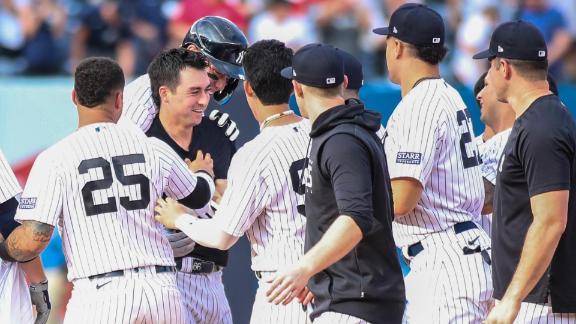
Journeyman lefthander Anthony Misiewicz made his Yankee debut, and pitched a hitless top of the 13th. With 1 out in the bottom of the 13th, Kyle Higashioka doubled ghost runner Pereira home with the winning run. Yankees 4, Brewers 3.

This was very close to being the worst loss in a season of bad losses. Instead, it was a walkoff win.

With 19 games to go, the Yankees are 8 games out of the last American League Wild Card spot. It looks hopeless. And now, they have to go to Fenway to face The Scum.

Friday, September 8, 2023

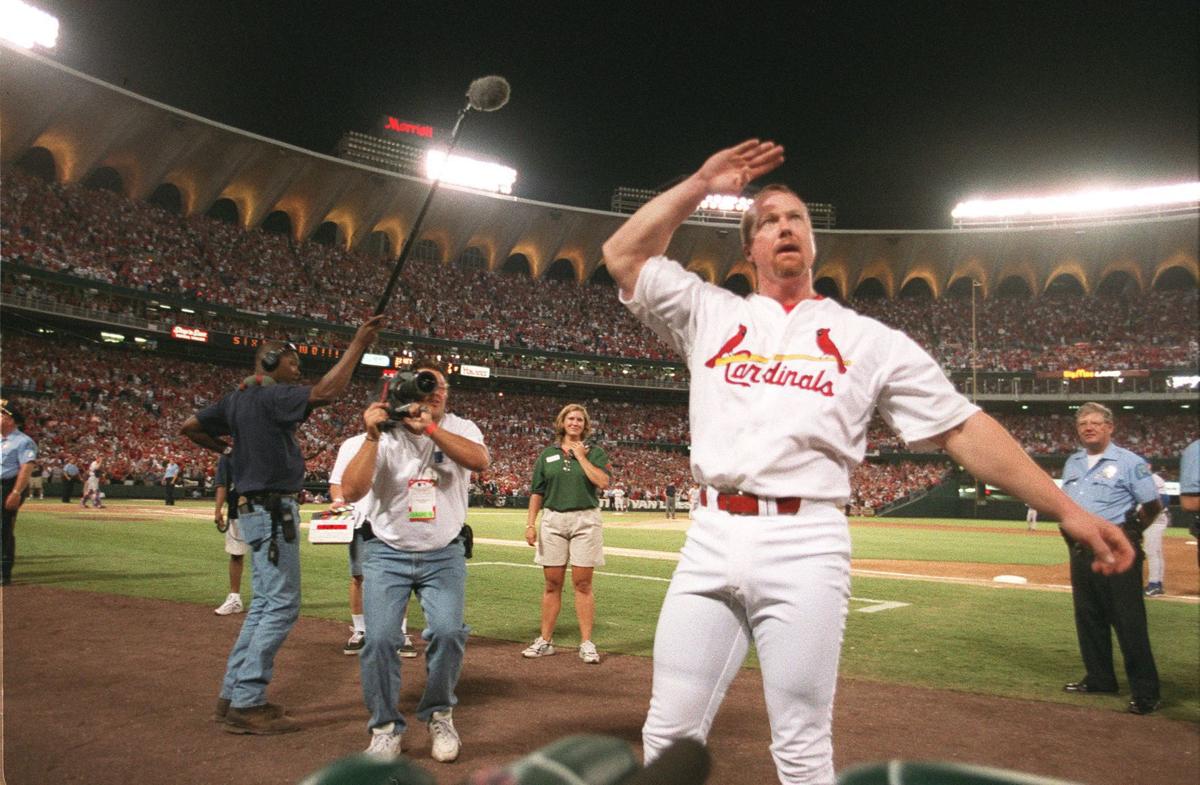
September 8, 1998: Mark McGwire Hits His 62nd Home Run

September 8, 1998, 25 years ago: The St. Louis Cardinals beat their arch-rivals, the Chicago Cubs, 6-3 at Busch Memorial Stadium in St. Louis. Ray Lankford and Ron Gant hit home runs for the Cardinals. Nobody remembers those. What they remember is the home run hit by Mark McGwire. It is his 62nd of the season, setting a new single-season record.

Babe Ruth had raised the record to 29 in 1919, 54 in 1920, 59 in 1921 and 60 in 1927. Another right fielder for the New York Yankees, Roger Maris, raised it to 61 in 1961. In spite of the media, especially in New York, seeming to not want Maris to break the record, he ended up holding it longer than Ruth did: 37 years to 34.

While there were serious challenges to Ruth's 60 before Maris' 61 -- Hack Wilson hit 56 in 1930, Jimmie Foxx 58 in 1932, and Hank Greenberg 58 in 1938 -- challenges to Maris' 61 were fewer. In 1969, Reggie Jackson, in his 2nd full season with the Oakland Athletics, had 41 home runs through August 2, and, in his memoir, said, "People were now saying I was dating a lady named Ruth Maris." But he only hit 6 more the rest of the way, and didn't even lead the American League: Harmon Killebrew topped him, 49 to 47.

Willie Mays hit 52 in 1965, but no other National Leaguer hit 50 again until George Foster hit 52 in 1977. And no American Leaguer hit 50 after Maris until 1990, when Cecil Fielder hit 51. When the Strike of '94 hit, Matt Williams was leading the majors with 43, and Ken Griffey Jr. led the AL with 40. Both were thought to have a chance at 61, but that went out the window.

And despite accusations of a "juiced ball" in 1987, no player hit 50 that season. Each League's leader hit 49: Andre Dawson of the Chicago Cubs and... Mark McGwire of the Athletics. McGwire thus set a record for home runs in a season by a rookie.

The 1st baseman was 6-foot-5 and 215 pounds, and had an even taller younger brother, Dan McGwire, who played quarterback for 5 seasons in the NFL, mostly as a backup for the Seattle Seahawks. Still, at the time, Mark was seen as big and solidly built, but not out of regular human proportions. He didn't look like a superhero, or a bodybuilder such as Arnold Schwarzenegger.

He and Jose Canseco became known as the Bash Brothers, helping the A's win 3 straight Pennants and the 1989 World Series. Through the 1992 season, he was 29 years old, and had hit 220 home runs, making 6 All-Star Games, and had even won a Gold Glove. He looked like he was headed for the Hall of Fame. So did Canseco, who was 28 and already had 231 home runs.

But between the A's perennial cash flow problems and his bad attitude, Canseco became expendable, and was traded after that season. McGwire wasn't, falling victim to injuries, making only 279 plate appearances in '93 and '94 combined.

The fact that Canseco used steroids wasn't publicly known, but it was one of the worst-kept secrets in baseball. McGwire found out that a steroid called androstendione, or "andro" for short, could make it easier to return from injury and regrow lost muscle. He came back with a bang in 1995 -- 39 bangs, in fact, and made the All-Star Game again.

In 1996, now with a goatee and his arms bulging like the cartoon character Popeye's, he led the AL with 52 home runs, the most any AL player had hit since Maris. And he was doing this while playing his home games at the Oakland Coliseum, a pitcher's park. Suddenly, the idea that Maris' record could fall was taken seriously for the 1st time.

But, again, A's management was losing money, and on July 31, 1997, with McGwire having hit 34 home runs already, he was traded to the Cardinals for pitchers Eric Ludwick, T.J. Mathews and Blake Stein. Ludwick won just 1 game for the A's, and was traded after the season. Stein did poorly, and was traded in 1999. Mathews pitched well in relief for them, but they traded him in 2001. None of these men appeared in a major league game after the 2002 season. Still, the A's had Jason Giambi coming up, and he replaced McGwire at 1st base, so the trade was pretty much a wash for them.

McGwire was warmly embraced by Cardinal fans. He seemed just the kind of wholesome player that fit in with the Midwest, and "the Best Baseball City in America." He finished the season with 58 homers, while Griffey, with the Seattle Mariners, finished with 56. Now, the national media seemed to treat the breaking of Maris' record no longer as an "if," but as a "when." In cheering on McGwire, and to a lesser extent (because he was black, of course) Griffey, it was as if the media was once again rooting against Maris, who died in 1985, and could not speak up on his own behalf.

And it wasn't just that McGwire and Griffey were hitting so many home runs, it was how far they were going. Griffey was the only batter who ever reached the upper deck of the Kingdome in Seattle, and he had now done it a few times. McGwire was hitting balls 500 feet. Not since Mickey Mantle -- not even Killebrew or Jackson -- had a guy hit the ball that far that often. McGwire may have been a righthanded batter, playing outside New York, and hadn't pitched since he was at USC, but he really was treated as if he was the closest thing to Ruth since Ruth. He was a folk hero.

As it turned out, 1998 became not only "The Year of the Home Run," but it was a 3-way race: McGwire and Griffey were joined by Sammy Sosa of the Cubs. A Dominican, Sosa had never hit more than 40 in a season, and had made just 1 All-Star Game by age 29. But he kept pace with McGwire and Griffey. In June, he topped both of them, and everybody else, too: He hit 20 home runs, still a record for a single player in a single month. When June was over, it was McGwire 37, Sosa 33, Griffey 33.

Neither McGwire nor Sosa added any homers by the All-Star Break on July 7, while Griffey had overtaken Sosa with 35. But all 3 got going after the Break: July ended with McGwire 45, Sosa 42, Griffey 41. McGwire got to 50 on August 20, Sosa on August 23. Griffey went into a slump, so, when August ended, it was McGwire 55, Sosa 55, Griffey 47.

August was also the month that the scandal surrounding President Bill Clinton and his affair with former White House intern Monica Lewinsky got more serious, with Special Counsel Kenneth Starr and the Republican-controlled Congress amping up the pressure. The general consensus was that Clinton had done something immoral, but there didn't appear to be anything illegal, and that Starr and Congress were going too far in trying to prove it. The home run race provided a distraction, much as Hank Aaron's pursuit of Babe Ruth's career record of 714 helped to distract from Richard Nixon and Watergate in 1973 and '74.

By this point, the scoreboard at Busch Memorial Stadium was keeping a running total of McGwire's and Sosa's totals -- but not Griffey's. Also by now, Steve Wilstein, a reporter for the Associated Press, had made public the fact that he had seen a bottle of andro in McGwire's locker. McGwire said it was legal -- which, at the time, it was. He said it was no big deal -- which, at the time, the public accepted.

Indeed, fans turned on Wilstein for reporting it: How dare he ruin this wonderful story with an accusation that "Big Mac" was cheating! What next? Was "Slammin' Sammy" also cheating? Was Junior cheating?

On September 5, McGwire hit his 60th, Sosa hit his 58th, and Griffey hit his 48th. Griffey was having a historic season, and yet was hopelessly behind the Southern Californian and the Dominican. On September 7, Griffey hit Numbers 49 and 50. That same day, McGwire hit Number 61, and Cardinal broadcaster Jack Buck said, "Flight 61, now leaving for Planet Maris!"

Fox Sports broadcast the September 8 Cardinals-Cubs game at Busch live, figuring that it would be the night that the record was broken. The Cardinals, for whom Maris had played his last 2 seasons, 1967 and '68, invited his widow, Pat Maris, and their 5 now-grown children to attend. Pat felt ill and couldn't go, but the kids all did.

McGwire grounded to short in the 2nd inning. With 2 out in the 4th, he again came up against Cub pitcher Steve Trachsel. He hit a screaming liner down the left-field line. Joe Buck, Jack's son, had the call: "Down the left field line! Is it enough? Gone! Number 62! Touch first, Mark: You've made history!" In his excitement, McGwire rounded 1st base without touching it, and had to go back to do so. At 341 feet, it was his shortest home run of the season.

Greeting him at home plate was his 11-year-old son Matt, a Cardinal batboy, whom he gave a huge hug. Sosa had run in from right field, and he hugged McGwire as well. McGwire then went over to where the Marises were sitting, and hugged them, too. With those andro-boosted arms.

But the home run race wasn't over: There was no guarantee that McGwire would even end up leading the NL in homers. Sosa hit his 59th on September 11 and his 60th on September 12. A week earlier, in the entire history of Major League Baseball, there had been only 2 men ever to hit 60 home runs in a season. Now, that total had doubled. On September 13, Sosa hit his 61st and his 62nd. He and McGwire were now tied. Griffey was at 51.

McGwire hit his 63rd on September 15, Sosa his the next day. McGwire hit his 64th on September 18, and his 65th on September 20. On September 23, Sosa hit his 64th and 65th. Griffey was up to 55. On September 25, against José Lima of the Houston Astros at the Astrodome, Sosa hit his 66th, making him the all-time single-season leader -- for a few minutes. This was shortly followed by McGwire's 66th.

Nobody knew it yet, but Sosa wouldn't hit another homer that season, finishing with 66. Griffey would finish with 56. On September 26, the next-to-last day of the season, back at Busch, McGwire hit his 67th off Dustin Hermanson, giving him the lead for good; and hit his 68th later in the game. On the last day, September 27, he hit his 69th, and finally, he cracked a barrier that nobody thought was possible, hitting Number 70 off Carl Pavano, then a rookie with the Montreal Expos. Joe Buck had the call: "Into left field! Number 70! How much more can you give us, Big Mac?"

The answer, at least for that season, was, "No more." The Cardinals finished 73-89, and were nowhere near the NL Pennant race. But the Cubs had finished in a tie with the San Francisco Giants for the NL's Wild Card berth, and won a Playoff at Wrigley Field. Sosa did not hit a homer, which, since this was officially a regular-season game, would have counted as his 67th. But the starting and winning pitcher for the Cubs? Steve Trachsel. That, not giving up McGwire's 62nd, was his most important moment of the year.

And, since the Cubs made the Playoffs, and the Cardinals didn't, Sosa was named the NL's Most Valuable Player, not McGwire. Nevertheless, Sports Illustrated named them joint Sportsmen of the Year -- not their first retroactively problematic choice for that title, and not their last.

In 1999, McGwire hit 65 home runs, while Sosa hit 63. Griffey led the AL with 48. Both McGwire and Sosa had, by comparison, off-seasons in 2000: Sosa 50, still enough to lead the NL; McGwire, 32. Griffey had been traded to the Cincinnati Reds, and hit 40. In 2001, Sosa hit 64. But McGwire battled injuries, hit 29 homers, and retired after the season, with 583 for his career. Griffey also faced injuries, and was limited to 22 homers.

In 2001, the Fox TV show Dark Angel, set in a dystopian future of 2020 -- the dystopia being due to an electromagnetic pulse in 2009 having led to an economic depression and a fascist government, not an epidemic and a nearly-fascist government, as actually happened -- had a story about the theft of the ball that Sosa hit for his 756th home run, breaking Hank Aaron's career record.

Barry Bonds of the San Francisco Giants hit 37 home runs in 1998, having reached a career high, to that point, of 46 in 1993. He became intensely jealous of the attention heaped on McGwire, Sosa and Griffey, and knowing he was a better all-around player than any of them (well, maybe not Griffey), and began using steroids after the 1998 season.

In 1999, he hit 34 homers. In 2000, he hit a new career high, 49. In 2001, he set a new single-season record, with 73. That record still stands. Sosa, who again led the NL in 2002, with 49, would end up with 609. Griffey would finish with 630, and, as far as is publicly known, he did that without ever using steroids. Bonds would be the one to break Aaron's record, finishing with 762 in 2007.

By then, McGwire and Sosa had already irreparably damaged their reputations: The 2005 Congressional hearings into steroid use in baseball had made them both look foolish. Sosa has never confessed to using steroids. McGwire has, and this admission allowed him to get back into baseball's good graces, as he has served as a hitting instructor for the Cardinals and the San Diego Padres. However, the section of Interstate 70 -- a convenient number -- running through St. Louis had been named the Mark McGwire Highway. In 2010, the signs were changed to honor an earlier local hero, who was a baseball fan: It became the Mark Twain Highway.

Through the 2022 election, neither McGwire, nor Sosa, nor Bonds has ever been elected to the Baseball Hall of Fame. Griffey was elected in his 1st year of eligibility. However, with known steroid cheats David Ortiz, Mike Piazza and Iván Rodríguez already in, keeping McGwire, Sosa, Bonds, Alex Rodriguez, and any other player known to have used steroids -- or, like Roger Clemens, widely believed to have used them -- out of the Hall on the basis of steroid use seems stupid: Either cheating matters, or it doesn't. If it doesn't bother you, let all of them in; if it does, keep all of them out. Be consistent.

Jose Canseco would finish his career with 462 home runs. In other words, he's a borderline candidate for the Hall of Fame even with his admission of cheating.

The Summer of '98 has been called baseball's best season, for all the home run heroics. Certainly, Yankee Fans, getting to watch a team go 114-48 in the regular season and 11-2 in the postseason, loved it. But the knowledge that McGwire and Sosa cheated to reach and pass 61 home runs taints it, irrevocably. The U.S. Senate may have acquitted Clinton, but history has convicted McGwire, Sosa and Bonds.

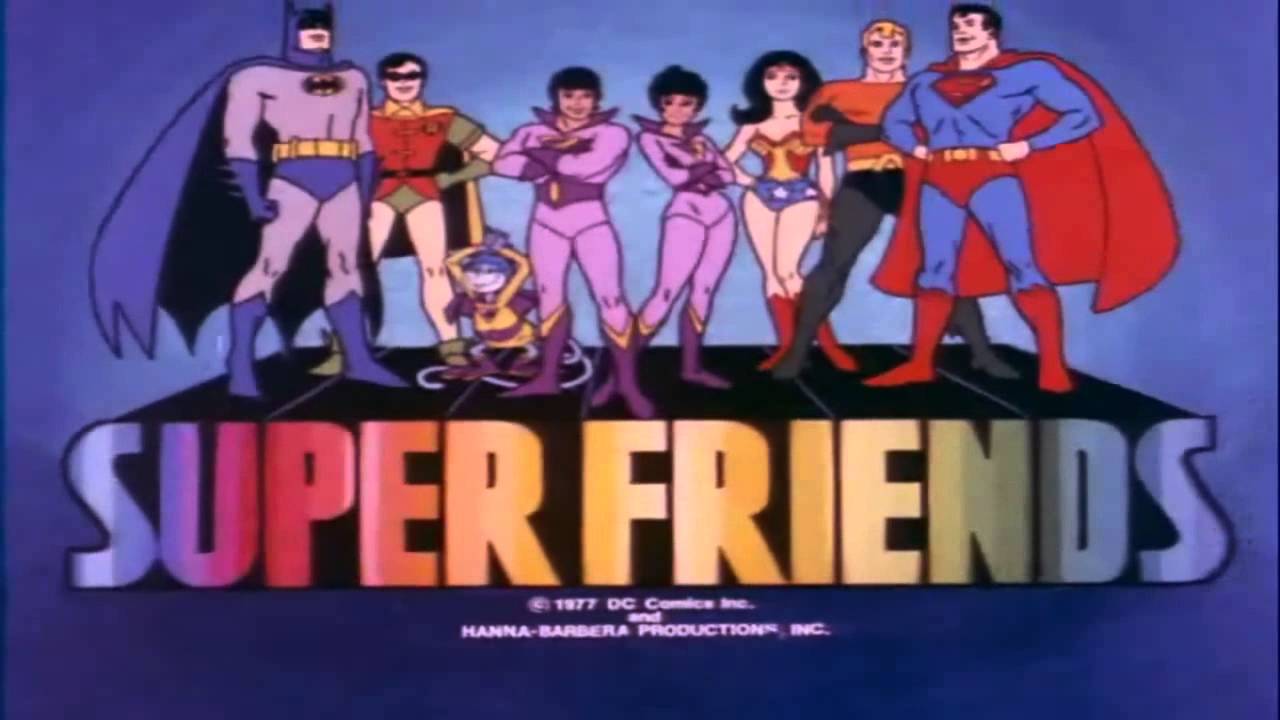
September 8, 1973: "Super Friends" Premieres

Left to right: Wonder Dog, Aquaman, Robin, Batman,
Superman, Wonder Woman, Wendy and Marvin.
Note the early '70s bell-bottom pants on both teenagers.

September 8, 1973, 50 years ago: Super Friends premieres on ABC, based on the superheroes of DC Comics. Produced by Hanna-Barbera Productions, it runs in one form or another until 1986. The animation was crude by today's standards, but, as a kid, I didn't care.

The original series, narrated by Ted Knight, a.k.a. Ted Baxter of The Mary Tyler Moore Show -- "Later, at the Hall of Justice... " -- was kid-centric. Wendy Harris (voiced by Sherry Alberoni) and Marvin White (Frank Welker) were ordinary teenagers, who had no powers, but considered themselves superheroes, or at least detectives, in training.

They had a dog named Wonder Dog (also voiced by Welker, who specialized in voicing cartoon dogs), whose only special abilities were a higher intelligence than most dogs and, sort of, the ability to talk. They were taken in by the Super Friends, who can be recognized as a subset of the Justice League.

It's understandable that the show used Superman (Danny Dark), Batman (Olan Soule), Robin (Casey Kasem) and Wonder Woman (Shannon Farnon). After all, Kal-El/Clark Kent, Bruce Wayne and Princess Diana of Themiscyra/Diana Prince are what are now called "the DC Trinity"; and, as the original Robin, Dick Grayson was Batman's sidekick. It had only been 5 years since the Adam West Batman series had gone off the air, and this version of the Dynamic Duo was more like West and Burt Ward than like later "Dark Knights" and their "Boy Wonders."

Less obvious as a choice to round out the main superhero cast was Aquaman (Norman Alden). For those of you who only know later versions, showing him with long hair and looking more like Marvel Comics' Thor -- or in the darker-skinned, dark-haired, long-haired, tattooed version played by Jason Momoa in the DC Extended Universe movies -- his appearance as a very pale white man with short but curly hair might seem like an anachronism.

There were occasional visits from other superheroes. Knight also voiced The Flash. Alden also voiced Green Arrow and Plastic Man. But each of these characters appeared in only one episode. In flashback sequences, we saw Superman's Kryptonian parents, Jor-El (Kasem) and Lara (Farnon); and his earthly parents, Jonathan Kent (Soule) and Martha Kent (Farnon again).

In later versions, Dark would also play Batman's ally, Gotham City Police Commissioner James Gordon. Farnon would also play Wonder Woman's mother, Queen Hippolyta; Superman's girlfriend and Daily Planet co-worker, Lois Lane; and, from Greek mythology, goddess of love Aphrodite and monster Medusa.

Super Friends taught me to read closing credits. I noticed that Robin sounded an awful lot like Shaggy from Scooby-Doo, Where Are You? So I looked at the credits of both shows, and wrote them down, and found two names in common: Kasem and Welker. When I found out from other shows that Welker was also the voices of Fred from Scooby, Astro from The Jetsons, Dynomutt the Dog Wonder (with Laugh-In's Gary Owens as the Batman-like Blue Falcon) and the title character in Jabberjaw, that narrowed him down to Marvin and Wonder Dog, and showed me that Kasem was Robin.

In the 1976-77 TV season, ABC's The Krofft Supershow had Electra Woman and Dyna Girl, played by soap opera star Deidre Hall and car pitchwoman (as "Mean Mary Jean") Judy Strangis, respectively. This show copied Wonder Woman by having female superheroes, copied Batman by having an older hero and a younger sidekick with a corny catchphrase ("Electra-Wow!"), and copied Superman by making them reporters in civilian life. And Alden, the voice of Aquaman, played Frank Heflin, who was less their version of Batman and Robin's butler/all-around tech whiz Alfred than he was Oscar Goldman to their Six Million Dollar Man and Bionic Woman.

Only one season of 16 episodes of Super Friends was made, although they continued to be shown in reruns. But the ABC success of Lynda Carter's Wonder Woman series and Electra Woman and Dyna Girl, and The Shazam/Isis Hour on CBS, gave ABC and Hanna-Barbera the idea to try again.

In 1977, they brought us The All-New Super Friends Hour. Noting that the core audience was a little older, Wendy, Marvin and Wonder Dog were phased out. Phased in were the Wonder Twins. They were teenagers, from the planet Exor, and they were obviously geared toward not just older kids and teenagers, but Trekkies, because they looked like Vulcans: Vaguely Asian faces, the same hairstyles, and pointed ears.
Left to right: Batman, Robin, Gleek, Zan,
Jayna, Wonder Woman, Aquaman, Superman

Unlike Wendy, Marvin and Wonder Dog, Zan (Michael Bell) and Jayna (Liberty Williams) had powers. Not a mind-meld or a nerve pinch like Vulcans. When they touched their hands, and said, "Wonder Twin powers, activate!" Jayna could say, "Shape of... " any animal, and transform into that animal. Zan could say, "Form of... " any version of water, from ice to boiling water to fog to a solid wall of liquid water.

Suddenly, Aquaman's sea-based powers didn't seem so silly: Zan was mainly comic relief. But if that wasn't enough, they had a pet monkey named Gleek (also voiced by Bell), with a rubber tail that could be used as a weapon and, if he spun it in the air like a helicopter's rotor, he could use to fly.

It still wasn't a full Justice League of America, but there were, again, cameos from other heroes, usually one guest appearance per episode. Barney Phillips took over as The Flash (the Barry Allen version). Michael Rye voiced Green Lantern (the Hal Jordan version). Jack Angel voiced Hawkman, and Farnon voiced Hawkgirl (never "Hawkwoman"). Wally Burr voiced The Atom.

Then there were the heroes created just for this series, having never before appeared in comic books. This was an attempt to appear diverse, or, as we would now say, multicultural. But the characters, all too often, seemed like stereotypes anyway.

While there were black superheroes before this, including DC's electric-powered Black Lightning and the John Stewart version of Green Lantern, they didn't use any of them for Super Friends. They wanted to use Black Lightning, but there was a legal wrinkle that prevented them from doing so. So, they created Black Vulcan (Buster Jones). No, it wasn't a black version of Star Trek's Mr. Spock: Basically, he was Black Lightning, with electric powers and a somewhat different black-and-gold costume. That and the name allowed them to meet the legal requirements. (The original Vulcan was the Roman name for the god of fire, known as Hephaestus to the ancient Greeks.)

The Asian hero was Samurai (also Jack Angel), who had wind-based powers, similar to the DC character Red Tornado. And there was a Native American hero, Apache Chief (also Michael Rye). He could grow to enormous size, which also gave him super strength and near-invulnerability. But their costumes were little better than how John Wayne would have imagined their peoples.
Clockwise from top: Superman, Hawkman, Samurai, Green Lantern,
Robin, Batman, Wonder Woman, Aquaman, Flash,
Jayna, Zan, Gleek, Black Vulcan and Apache Chief.
The Hall of Justice was based on Union Terminal in Cincinnati,
hometown of the owners of Hanna-Barbera Productions,
Taft Broadcasting (and related to President William Howard Taft).

For the 1978-79 season, Challenge of the Superfriends (one word) was made. Now, the denizens of the Hall of Justice are a full 11-member Justice League of America (JLA): Superman, Batman, Robin, Wonder Woman, Aquaman, Flash, Green Lantern, Hawkman, Black Vulcan, Samurai and Apache Chief. (But no Green Arrow, Plastic Man, Hawkgirl or Wonder Twins. By this point, Plastic Man had gotten his own show.)

And now, they had regular enemies, with a headquarters looking like Star Wars character Darth Vader's helmet (come on, let's call a spade a spade) rising out of a swamp: The Legion of Doom. Its members:

* Lex Luthor (Stanley Jones), arch-enemy of Superman. (In this series, Jones also did the voices of Superman's fathers, Jor-El and Jonathan Kent. What Sigmund Freud would have thought of that, I have no idea.)

* Bizarro (Bill Callaway), imperfect duplicate of Superman.

* Brainiac (Ted Cassidy, formerly Lurch on The Addams Family and the narrator of the opening sequence to CBS' The Incredible Hulk), robotic enemy of Superman. (Cassidy died of heart trouble during the season, only 46 years old.)

* Mr. Mxyzptlk (another Frank Welker role), magical enemy of Superman.

* Solomon Grundy (Jimmy Weldon), an incredibly strong and durable zombielike creature that debuted in the 1940s as an enemy of the "Golden Age" Green Lantern, Alan Scott, but later became an enemy of Superman and, occasionally, other heroes.

* The Toyman (another Frank Welker role), enemy of Superman, but hardly on the same level as the preceding.

* The Riddler (Michael Bell, also Zan and Gleek), enemy of Batman. (The Riddler was chosen because they couldn't get the legal rights to use the Joker or the Penguin. It's just as well: The Riddler is smarter than either one.)

* The Scarecrow (Don Messick), enemy of Batman. (Messick was also the original voice of Scooby-Doo.)

* The Cheetah (Marlene Aragon), catlike arch-enemy of Wonder Woman.

* Black Manta (also Ted Cassidy), arch-enemy of Aquaman.

* Sinestro (also Don Messick), arch-enemy of Green Lantern.

* Gorilla Grodd (Stanley Ralph Ross), a member of The Flash's "Rogues Gallery." (Ross had been a writer on the 1966-68 Batman series, and a co-creator of the 1975-79 Wonder Woman series.)

* Captain Cold (Dick Ryal), also a Flash enemy. (In a flashback sequence, Ryal also voiced Abin Sur, the dying Green Lantern who gave his power ring to Hal Jordan.)

* The Pied Piper (Bob Hastings), also a Flash enemy.

* Giganta (Ruth Forman), a giantess created for the series. Being a woman, she would seem to be an opponent for Wonder Woman. However, an episode explained that she got her powers at the same time, and from the same source, that Apache Chief got his, making for a dual origin story.

New versions of the series would continue until 1986, by which point I was too old to watch. But there would be live-action versions to come, with Superman getting 4 movies and 2 TV shows (Superboy and Lois & Clark: The New Adventures of Superman, plus a Supergirl movie), Batman getting 4 movies, and The Flash getting a single-season TV series on CBS. There would be the NBC special Legends of the Superheroes in 1979, which had the first live-action versions of The Flash, Green Lantern, The Atom and Hawkman. However, a typically small TV special-effects budget rendered it ridiculous.

Superman: The Movie came out in late 1978, and when Lois Lane (Margot Kidder) meets Superman (Christopher Reeve) for the first time, she asks him, "Who are you?" Not yet having been named Superman (in this version, it was Lois who gave him the name in her article), he says simply, "A friend." It may not have been intentional, but, in hindsight, it seems like an "Easter Egg" for Super Friends fans like me.

In 1992, Batman: The Animated Series would launch "The DC Animated Universe," which ran until 2006. Among the other series included in it were Superman: The Animated Series, The New Batman Adventures, Batman Beyond (set in a future with an elderly Bruce Wayne training a teenager, Terry McGinnis, to be a new, updated Batman, rather than the latest in a long line of Robins), Justice League and Justice League Unlimited. These shows were definitely meant for older kids, who would understand the dark themes of the Batman mythos, not little kids.

A 1997 Justice League of America movie would have only second-tier heroes, including the first live-action version of J'onn J'onzz, the Martian Manhunter, because getting the legal rights to use Superman, Batman and Wonder Woman would have been prohibitively expensive. Between 2005 and 2010, The CW's Superman prequel series Smallville would feature the first live-action versions of Aquaman, Green Arrow, and the Wonder Twins, plus new versions of some other heroes.

And, in 2020, in the last episode of The CW's Crisis On Infinite Earths, a Justice League consisting of Superman (Tyler Hoechlin), Supergirl (Melissa Benoist), Batwoman (Ruby Rose), The Flash (Grant Gustin), the White Canary (Caity Lotz), the Martian Manhunter (Dorian Harewood) and Black Lightning (Cress Williams) gathered for the first time, with an empty seat at the table in memory of Green Arrow (Stephen Amell), who had sacrificed his life to restart the multiverse.

Their building looked like the Hall of Justice. And at the end, while the old Super Friends theme played, the camera panned up to an open cage marked "GLEEK." I have to say, despite having just turned 50, I got a kick out of that.