Showing posts with label busch memorial stadium. Show all posts

Sunday, October 27, 2024

October 27, 2004: The Curse of the Bambino Is Broken

October 27, 2004, 20 years ago: The Curse of the Bambino is finally broken. Well, sort of. The Boston Red Sox win their 1st World Series in 86 years with a 3-0 victory over the St. Louis Cardinals, in Game 4 at Busch Memorial Stadium.

Derek Lowe ends up as the winning pitcher in all 3 postseason series-clinchers for the Sox, the 1st pitcher of any team to do so. (Andy Pettitte became the 2nd in 2009.) Johnny Damon hits a home run for Boston. Manny Ramirez is voted the Series' Most Valuable Player‚ as he leads Boston to the 4-game sweep with a .412 batting average and 4 RBI. The last out was Cardinal shortstop Edgar Renteria grounding back to pitcher Keith Foulke, who threw to 1st baseman Doug Mientkiewicz.

With the New England Patriots having won Super Bowl XXXVIII 9 months earlier, this win also gave Boston its 1st MLB-NFL double. They would achieve it again in 2018-19.

Some people had joked that the Red Sox winning the World Series would be a sign of the Apocalypse. Well, according to the Bible, one such sign is the Moon turning blood red -- and, in fact, there was a full lunar eclipse during the game. (Although this was hardly a surprise, as newspapers and news networks had mentioned it before nightfall.)

A sign held aloft at the victory parade in Boston sums it all up: "Our (late) parents and g'parents thank you." So many people said, "We wanted them to win it in our lifetime, just once." Well, as Dan Shaughnessy of The Boston Globe, who has written more and better about the franchise than anyone, said in the following weeks, "There was no spike in the obits. We checked. All those people who said they couldn't die until the Red Sox won a World Series decided to live a little longer."

Of course, they didn't win it just once in those people’s lifetimes – except for those who died between October '04 and October '07.

And now that we know that the Red Sox are a bunch of lying, cheating, dirty, low-down, no-good bastards, we can tell the truth: They still haven't really won a World Series since 1918*. The Curse lives.

So all those Sox fans who weren't old enough to suffer through Harry Frazee, Johnny Pesky, Harry Agganis, Tony Conigliaro, Larry Barnett, Bobby Sprowl, Bucky Dent, John McNamara and Bill Buckner – though most of them did get through what Nomar, Pedro and Grady put them through – and showed more bastardry in victory than their forebears ever showed in defeat can kiss my 27 rings (well, 7 in my lifetime – for the moment), and then they can kiss my Pinstriped ass.

Wednesday, April 17, 2024

Whitey Herzog, 1931-2024

Prior to World War II, a major league sports team's field boss, its manager, and its business boss, its general manager, were often the same person. As time went on, this became less common. We still see it every once in a while in the NBA and the NHL.

In the NFL, it usually happens when a Super Bowl-winning coach falls out with his team's owner, and another team's owner wants to hired him, and the coach says not unless I get full control over player decisions, and that usually doesn't work out well.

In Major League Baseball, since World War II, only one man has been a team's manager and its general manager, and still won a Pennant, much less a World Series. That one man was Whitey Herzog.

*

Dorrel Norman Elvert Herzog was born on November 9, 1931 in New Athens, Illinois, outside St. Louis. Like Edward Charles Ford, Don Richard Ashburn, and a previous St. Louis Cardinals legend, George John Kurowski, his light blond hair led to the nickname "Whitey." He could have gone by one of his middle names, and the English translation of his German surname: "Norman Duke." In 1953, he married Mary Lou Sinn, and they had 3 children.

"Baseball has been good to me since I quit trying to play it." A lefthanded hitter and a righthanded outfielder, he played for the Washington Senators from 1956 to 1958, making him a teammate of Harmon Killebrew; the Kansas City Athletics from 1958 to 1960, making him a teammate of Roger Maris; the Baltimore Orioles in 1961 and 1962, making him a teammate of Brooks Robinson; and the Detroit Tigers in 1963, making him a teammate of Al Kaline.

Not much rubbed off on him: In 634 major league games, he batted .257 with 25 home runs and 172 RBIs, and never got close to a Pennant. In 1964, the Kansas City Athletics hired him as a scout, and promoted him to a major league coach in 1965.

In 1966, he was hired as the 3rd base coach for the New York Mets. In 1967, the Mets made him director of player development. So he had a role in building the team that won the 1969 World Series and the 1973 National League Pennant.

Just before the start of the 1972 season, Met manager Gil Hodges died. Herzog thought he should be the next manager. Team chairman M. Donald Grant ordered Herzog not to attend Hodges' funeral, to avoid speculation. Grant hired Yogi Berra instead.

Herzog knew Grant was a rotten guy, and decided to get out of the Met organization and take the 1st managing job he was offered. After the 1972 season, Joe Burke, the general manager of the Texas Rangers, hired him. But he didn't get through the 1973 season, as the team's owner, Bob Short, fired him on September 7. In 1974, he became the California Angels' 3rd base coach, and served as interim manager for 4 games after Bobby Winkles was fired and Dick Williams was hired.

That year, Burke became the GM of the Kansas City Royals, and on July 24, 1975, he fired Jack McKeon as manager and hired Herzog. Between Burke's player moves and Herzog's managing, the Royals won the American League Western Division title in 1976, 1977 and 1978.

They were a team that used its ballpark to its advantage: Royals Stadium, now named Kauffman Stadium, had deep power alleys, so it was hard to hit home runs in, but it encouraged doubles and triples. The field was artificial turf. So Burke and Herzog built a team of line-drive hitters and speedsters who were good on defense, and pitchers who were good at inducing ground balls rather than fly balls.

Case in point was George Brett, to this day the greatest player the Royals franchise has ever had: His lifetime batting average was .305, and he collected 3,154 hits, 665 of them doubles and 137 of them triples -- but despite his obvious power, he hit "only" 317 home runs in 20 full seasons.

But, all 3 times, the Royals lost the AL Championship Series to the New York Yankees, despite Brett's tendency to use the "short porch" in right field at Yankee Stadium for home runs. Clearly, something had to change. After falling well short of the Division title in 1979, the Royals fired Herzog, and hired Jim Frey. This, and some other changes, including boosting the bullpen, gave the Royals what they needed to finally beat the Yankees in the ALCS, in 1980.

"The White Rat" was hired by the St. Louis Cardinals, as both manager and GM. It was already a rare thing to be both in MLB. But he knew that Busch Memorial Stadium was also a pitcher's park with artificial turf, and built a new "Whiteyball" team of pitching, contact hitting, speed and defense.

This time, the signature player was shortstop Ozzie Smith. But he also had good hitters and fielders, like 1st baseman Keith Hernandez, 2nd baseman Tommie Herr, right fielder George Hendrick, center fielder Willie McGee (who became that season's National League Rookie of the Year), and his former catcher in Kansas City, Darrell Porter.

With a pitching staff topped by Bruce Sutter, the best reliever in the NL, the Cardinals won the World Series in 1982, beating the Milwaukee Brewers. This made Herzog the 1st manager/GM to win a World Series since Connie Mack of the 1930 Philadelphia Athletics -- and he was also a part-owner.

Herzog found out that Hernandez was using cocaine, so he traded him in 1983, to the Mets, for pitchers Neil Allen and Rick Ownby. This trade helped rebuild the Mets, and it worked out badly for the Cards. Prior to the 1985 season, Herzog traded for San Francisco Giants' 1st baseman Jack Clark, one of the top sluggers of the time. In the 1985 NL Championship Series, Herzog outmanaged Tommy Lasorda of the Los Angeles Dodgers, and Clark's home run in the top of the 9th inning of Game 6 won the Pennant.

It would be the Royals that the Cards would face, in the 1st (and still only) All-Missouri World Series. The Cardinals led the Royals 1-0 in the bottom of the 9th inning of Game 6, and needed just 3 more outs to win the Series. Jorge Orta hit a ground ball to Clark. Clark flipped to reliever Todd Worrell, who was covering 1st base. Orta was unquestionably out. The instant replay cameras and a now-familiar photograph confirmed this. Except 1st base umpire Don Denkinger blew the call, and called Orta safe.

The next batter, Steve Balboni, popped up, and Clark couldn't handle it, and Balboni singled on his next swing. A passed ball by Porter made it men on 2nd and 3rd, and Hal McRae was intentionally walked. Dane Iorg, another former Cardinal, stepped up, and singled home Orta and Balboni, and the Royals had a 2-1 walkoff win to force a Game 7 at home.

The Cardinals were furious. So were their fans. Understandably so. They all thought Denkinger stole the World Series from them. They still think so, 39 years later. There's just one problem with this theory: There was still 1 game to go. If the Cardinals had won Game 7, Denkinger's blown call would have been just a footnote.

So Herzog should have taken his team into the clubhouse and said, "Men, we got screwed tonight, but there's nothing we can do about it now. So let's win this thing tomorrow, and what happened tonight won't matter." Instead, the White Rat whined about the call to the media, and let it get into his head, and into his team's heads. The shock isn't that the Cards lost Game 7 by a whopping 11-0. The shock is that the Royals won it by only 11 runs.

The Cardinals won another Pennant in 1987, making it 3 in 6 seasons, but lost the World Series to the Minnesota Twins. Herzog remained the Cardinal manager and GM until July 6, 1990, resigning of his own accord, saying, "I came here in last place, and I leave here in last place. I left them right where I started." He never managed again, although he did serve as GM of the California Angels in 1993 and 1994. His career record as a manager was 1,281-1,185, for a .532 winning percentage. He reached 6 postseasons, winning 3 Pennants and 1 World Series.

Whitey Herzog was elected to the Baseball Hall of Fame by the Veterans' Committee in 2009. The Cardinals subsequently retired his Number 24. Both the Royals and the Cardinals elected him to their team Halls of Fame, and he was elected to the Missouri Sports Hall of Fame. He died this past Monday, April 15, 2024, at the age of 92.

Friday, September 8, 2023

September 8, 1998: Mark McGwire Hits His 62nd Home Run

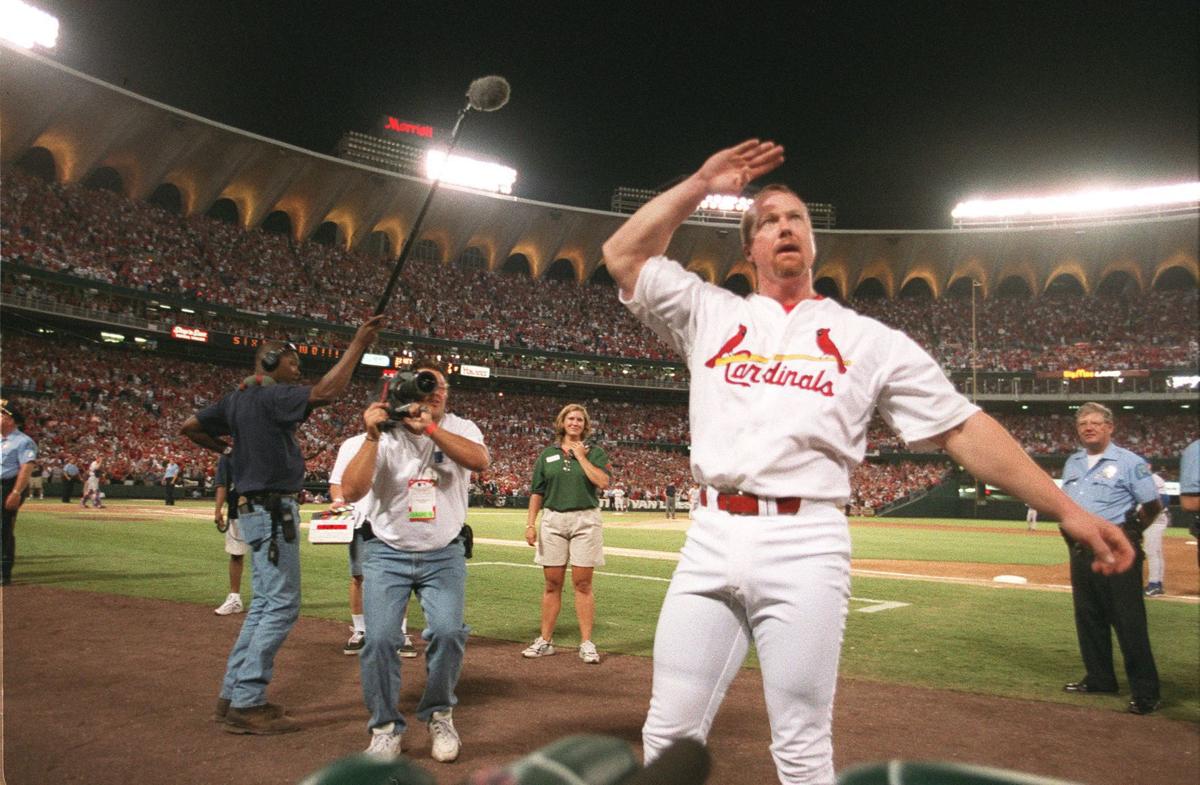
September 8, 1998, 25 years ago: The St. Louis Cardinals beat their arch-rivals, the Chicago Cubs, 6-3 at Busch Memorial Stadium in St. Louis. Ray Lankford and Ron Gant hit home runs for the Cardinals. Nobody remembers those. What they remember is the home run hit by Mark McGwire. It is his 62nd of the season, setting a new single-season record.

Babe Ruth had raised the record to 29 in 1919, 54 in 1920, 59 in 1921 and 60 in 1927. Another right fielder for the New York Yankees, Roger Maris, raised it to 61 in 1961. In spite of the media, especially in New York, seeming to not want Maris to break the record, he ended up holding it longer than Ruth did: 37 years to 34.

While there were serious challenges to Ruth's 60 before Maris' 61 -- Hack Wilson hit 56 in 1930, Jimmie Foxx 58 in 1932, and Hank Greenberg 58 in 1938 -- challenges to Maris' 61 were fewer. In 1969, Reggie Jackson, in his 2nd full season with the Oakland Athletics, had 41 home runs through August 2, and, in his memoir, said, "People were now saying I was dating a lady named Ruth Maris." But he only hit 6 more the rest of the way, and didn't even lead the American League: Harmon Killebrew topped him, 49 to 47.

Willie Mays hit 52 in 1965, but no other National Leaguer hit 50 again until George Foster hit 52 in 1977. And no American Leaguer hit 50 after Maris until 1990, when Cecil Fielder hit 51. When the Strike of '94 hit, Matt Williams was leading the majors with 43, and Ken Griffey Jr. led the AL with 40. Both were thought to have a chance at 61, but that went out the window.

And despite accusations of a "juiced ball" in 1987, no player hit 50 that season. Each League's leader hit 49: Andre Dawson of the Chicago Cubs and... Mark McGwire of the Athletics. McGwire thus set a record for home runs in a season by a rookie.

The 1st baseman was 6-foot-5 and 215 pounds, and had an even taller younger brother, Dan McGwire, who played quarterback for 5 seasons in the NFL, mostly as a backup for the Seattle Seahawks. Still, at the time, Mark was seen as big and solidly built, but not out of regular human proportions. He didn't look like a superhero, or a bodybuilder such as Arnold Schwarzenegger.

He and Jose Canseco became known as the Bash Brothers, helping the A's win 3 straight Pennants and the 1989 World Series. Through the 1992 season, he was 29 years old, and had hit 220 home runs, making 6 All-Star Games, and had even won a Gold Glove. He looked like he was headed for the Hall of Fame. So did Canseco, who was 28 and already had 231 home runs.

But between the A's perennial cash flow problems and his bad attitude, Canseco became expendable, and was traded after that season. McGwire wasn't, falling victim to injuries, making only 279 plate appearances in '93 and '94 combined.

The fact that Canseco used steroids wasn't publicly known, but it was one of the worst-kept secrets in baseball. McGwire found out that a steroid called androstendione, or "andro" for short, could make it easier to return from injury and regrow lost muscle. He came back with a bang in 1995 -- 39 bangs, in fact, and made the All-Star Game again.

In 1996, now with a goatee and his arms bulging like the cartoon character Popeye's, he led the AL with 52 home runs, the most any AL player had hit since Maris. And he was doing this while playing his home games at the Oakland Coliseum, a pitcher's park. Suddenly, the idea that Maris' record could fall was taken seriously for the 1st time.

But, again, A's management was losing money, and on July 31, 1997, with McGwire having hit 34 home runs already, he was traded to the Cardinals for pitchers Eric Ludwick, T.J. Mathews and Blake Stein. Ludwick won just 1 game for the A's, and was traded after the season. Stein did poorly, and was traded in 1999. Mathews pitched well in relief for them, but they traded him in 2001. None of these men appeared in a major league game after the 2002 season. Still, the A's had Jason Giambi coming up, and he replaced McGwire at 1st base, so the trade was pretty much a wash for them.

McGwire was warmly embraced by Cardinal fans. He seemed just the kind of wholesome player that fit in with the Midwest, and "the Best Baseball City in America." He finished the season with 58 homers, while Griffey, with the Seattle Mariners, finished with 56. Now, the national media seemed to treat the breaking of Maris' record no longer as an "if," but as a "when." In cheering on McGwire, and to a lesser extent (because he was black, of course) Griffey, it was as if the media was once again rooting against Maris, who died in 1985, and could not speak up on his own behalf.

And it wasn't just that McGwire and Griffey were hitting so many home runs, it was how far they were going. Griffey was the only batter who ever reached the upper deck of the Kingdome in Seattle, and he had now done it a few times. McGwire was hitting balls 500 feet. Not since Mickey Mantle -- not even Killebrew or Jackson -- had a guy hit the ball that far that often. McGwire may have been a righthanded batter, playing outside New York, and hadn't pitched since he was at USC, but he really was treated as if he was the closest thing to Ruth since Ruth. He was a folk hero.

As it turned out, 1998 became not only "The Year of the Home Run," but it was a 3-way race: McGwire and Griffey were joined by Sammy Sosa of the Cubs. A Dominican, Sosa had never hit more than 40 in a season, and had made just 1 All-Star Game by age 29. But he kept pace with McGwire and Griffey. In June, he topped both of them, and everybody else, too: He hit 20 home runs, still a record for a single player in a single month. When June was over, it was McGwire 37, Sosa 33, Griffey 33.

Neither McGwire nor Sosa added any homers by the All-Star Break on July 7, while Griffey had overtaken Sosa with 35. But all 3 got going after the Break: July ended with McGwire 45, Sosa 42, Griffey 41. McGwire got to 50 on August 20, Sosa on August 23. Griffey went into a slump, so, when August ended, it was McGwire 55, Sosa 55, Griffey 47.

August was also the month that the scandal surrounding President Bill Clinton and his affair with former White House intern Monica Lewinsky got more serious, with Special Counsel Kenneth Starr and the Republican-controlled Congress amping up the pressure. The general consensus was that Clinton had done something immoral, but there didn't appear to be anything illegal, and that Starr and Congress were going too far in trying to prove it. The home run race provided a distraction, much as Hank Aaron's pursuit of Babe Ruth's career record of 714 helped to distract from Richard Nixon and Watergate in 1973 and '74.

By this point, the scoreboard at Busch Memorial Stadium was keeping a running total of McGwire's and Sosa's totals -- but not Griffey's. Also by now, Steve Wilstein, a reporter for the Associated Press, had made public the fact that he had seen a bottle of andro in McGwire's locker. McGwire said it was legal -- which, at the time, it was. He said it was no big deal -- which, at the time, the public accepted.

Indeed, fans turned on Wilstein for reporting it: How dare he ruin this wonderful story with an accusation that "Big Mac" was cheating! What next? Was "Slammin' Sammy" also cheating? Was Junior cheating?

On September 5, McGwire hit his 60th, Sosa hit his 58th, and Griffey hit his 48th. Griffey was having a historic season, and yet was hopelessly behind the Southern Californian and the Dominican. On September 7, Griffey hit Numbers 49 and 50. That same day, McGwire hit Number 61, and Cardinal broadcaster Jack Buck said, "Flight 61, now leaving for Planet Maris!"

Fox Sports broadcast the September 8 Cardinals-Cubs game at Busch live, figuring that it would be the night that the record was broken. The Cardinals, for whom Maris had played his last 2 seasons, 1967 and '68, invited his widow, Pat Maris, and their 5 now-grown children to attend. Pat felt ill and couldn't go, but the kids all did.

McGwire grounded to short in the 2nd inning. With 2 out in the 4th, he again came up against Cub pitcher Steve Trachsel. He hit a screaming liner down the left-field line. Joe Buck, Jack's son, had the call: "Down the left field line! Is it enough? Gone! Number 62! Touch first, Mark: You've made history!" In his excitement, McGwire rounded 1st base without touching it, and had to go back to do so. At 341 feet, it was his shortest home run of the season.

Greeting him at home plate was his 11-year-old son Matt, a Cardinal batboy, whom he gave a huge hug. Sosa had run in from right field, and he hugged McGwire as well. McGwire then went over to where the Marises were sitting, and hugged them, too. With those andro-boosted arms.

But the home run race wasn't over: There was no guarantee that McGwire would even end up leading the NL in homers. Sosa hit his 59th on September 11 and his 60th on September 12. A week earlier, in the entire history of Major League Baseball, there had been only 2 men ever to hit 60 home runs in a season. Now, that total had doubled. On September 13, Sosa hit his 61st and his 62nd. He and McGwire were now tied. Griffey was at 51.

McGwire hit his 63rd on September 15, Sosa his the next day. McGwire hit his 64th on September 18, and his 65th on September 20. On September 23, Sosa hit his 64th and 65th. Griffey was up to 55. On September 25, against José Lima of the Houston Astros at the Astrodome, Sosa hit his 66th, making him the all-time single-season leader -- for a few minutes. This was shortly followed by McGwire's 66th.

Nobody knew it yet, but Sosa wouldn't hit another homer that season, finishing with 66. Griffey would finish with 56. On September 26, the next-to-last day of the season, back at Busch, McGwire hit his 67th off Dustin Hermanson, giving him the lead for good; and hit his 68th later in the game. On the last day, September 27, he hit his 69th, and finally, he cracked a barrier that nobody thought was possible, hitting Number 70 off Carl Pavano, then a rookie with the Montreal Expos. Joe Buck had the call: "Into left field! Number 70! How much more can you give us, Big Mac?"

The answer, at least for that season, was, "No more." The Cardinals finished 73-89, and were nowhere near the NL Pennant race. But the Cubs had finished in a tie with the San Francisco Giants for the NL's Wild Card berth, and won a Playoff at Wrigley Field. Sosa did not hit a homer, which, since this was officially a regular-season game, would have counted as his 67th. But the starting and winning pitcher for the Cubs? Steve Trachsel. That, not giving up McGwire's 62nd, was his most important moment of the year.

And, since the Cubs made the Playoffs, and the Cardinals didn't, Sosa was named the NL's Most Valuable Player, not McGwire. Nevertheless, Sports Illustrated named them joint Sportsmen of the Year -- not their first retroactively problematic choice for that title, and not their last.

In 1999, McGwire hit 65 home runs, while Sosa hit 63. Griffey led the AL with 48. Both McGwire and Sosa had, by comparison, off-seasons in 2000: Sosa 50, still enough to lead the NL; McGwire, 32. Griffey had been traded to the Cincinnati Reds, and hit 40. In 2001, Sosa hit 64. But McGwire battled injuries, hit 29 homers, and retired after the season, with 583 for his career. Griffey also faced injuries, and was limited to 22 homers.

In 2001, the Fox TV show Dark Angel, set in a dystopian future of 2020 -- the dystopia being due to an electromagnetic pulse in 2009 having led to an economic depression and a fascist government, not an epidemic and a nearly-fascist government, as actually happened -- had a story about the theft of the ball that Sosa hit for his 756th home run, breaking Hank Aaron's career record.

Barry Bonds of the San Francisco Giants hit 37 home runs in 1998, having reached a career high, to that point, of 46 in 1993. He became intensely jealous of the attention heaped on McGwire, Sosa and Griffey, and knowing he was a better all-around player than any of them (well, maybe not Griffey), and began using steroids after the 1998 season.

In 1999, he hit 34 homers. In 2000, he hit a new career high, 49. In 2001, he set a new single-season record, with 73. That record still stands. Sosa, who again led the NL in 2002, with 49, would end up with 609. Griffey would finish with 630, and, as far as is publicly known, he did that without ever using steroids. Bonds would be the one to break Aaron's record, finishing with 762 in 2007.

By then, McGwire and Sosa had already irreparably damaged their reputations: The 2005 Congressional hearings into steroid use in baseball had made them both look foolish. Sosa has never confessed to using steroids. McGwire has, and this admission allowed him to get back into baseball's good graces, as he has served as a hitting instructor for the Cardinals and the San Diego Padres. However, the section of Interstate 70 -- a convenient number -- running through St. Louis had been named the Mark McGwire Highway. In 2010, the signs were changed to honor an earlier local hero, who was a baseball fan: It became the Mark Twain Highway.

Through the 2022 election, neither McGwire, nor Sosa, nor Bonds has ever been elected to the Baseball Hall of Fame. Griffey was elected in his 1st year of eligibility. However, with known steroid cheats David Ortiz, Mike Piazza and Iván Rodríguez already in, keeping McGwire, Sosa, Bonds, Alex Rodriguez, and any other player known to have used steroids -- or, like Roger Clemens, widely believed to have used them -- out of the Hall on the basis of steroid use seems stupid: Either cheating matters, or it doesn't. If it doesn't bother you, let all of them in; if it does, keep all of them out. Be consistent.

Jose Canseco would finish his career with 462 home runs. In other words, he's a borderline candidate for the Hall of Fame even with his admission of cheating.

The Summer of '98 has been called baseball's best season, for all the home run heroics. Certainly, Yankee Fans, getting to watch a team go 114-48 in the regular season and 11-2 in the postseason, loved it. But the knowledge that McGwire and Sosa cheated to reach and pass 61 home runs taints it, irrevocably. The U.S. Senate may have acquitted Clinton, but history has convicted McGwire, Sosa and Bonds.

Saturday, April 17, 2021

April 17, 1971: The New York Cosmos Debut

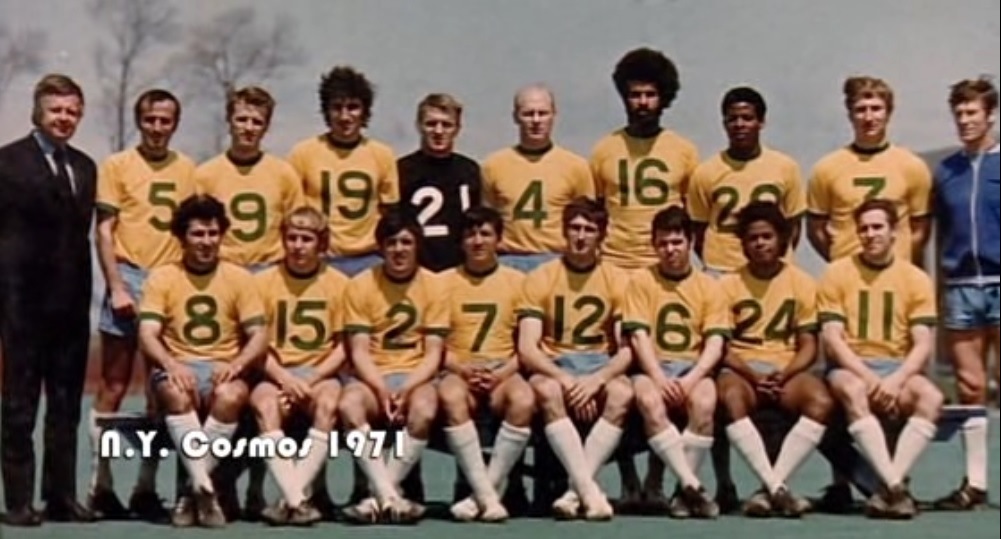
April 17, 1971, 50 years ago: The New York Cosmos make their debut in the North American Soccer League. They lose to the St. Louis Stars, 2-1 at Busch Memorial Stadium in St. Louis.

The Cosmos were not the 1st "major league" soccer team in New York. The NASL was formed in 1968.  Essentially, it was a merger of 2 leagues that began play in 1967, trying to ride the wave of interest brought about by England's home-soil World Cup win the year before, and the subsequent documentary about it, Goal!

The United Soccer Association had teams that ran a summer schedule in between the European winter seasons, importing entire teams from elsewhere: England, Scotland, Ireland, Northern Ireland, the Netherlands, Italy, Brazil, and Uruguay, whose Cerro became the New York Skyliners.

The USA did not do well. They couldn't sell out the facilities, as nearly every team played in an MLB or an NFL stadium. The Skyliners drew an average of 8,766 to the original Yankee Stadium, which in its pre-renovation configuration had 67,224 seats.

The other league was the National Professional Soccer League. Unlike the USA, the NPSL had mainly North American players. In most cases, the owners were owners of other local teams. The New York Generals were owned by RKO, which owned WOR-Channel 9 (now WWOR), and thus had an easy time getting TV rights.

Not much could be said for the Generals. Like the Skyliners, they couldn't sell out the old Garden, with its 18,496 seats, let alone the old Yankee Stadium, with 67,224. But they had 2 players whose names you should know. Cesar Luis Menotti played for a number of clubs in Argentina, including Buenos Aires giants Boca Juniors, and in 1978 would manage his country to win the World Cup on home soil. And Gordon Bradley, a midfielder from Sunderland, would play in New York again.

The NPSL had the advantage of not taking entire teams from elsewhere, teams that were emotionally committed to other places on other continents. So they could get the jump on the USA and start earlier, on April 16. But CBS didn't really know what they were doing on their TV broadcasts. There was also the issue of each league putting a team not just in one city, but in some cases both in one stadium. Both leagues' New York teams played at Yankee Stadium, both L.A. teams played at the Coliseum, and both Toronto teams played at old Varsity Stadium rather than the new Exhibition Stadium.

The Cosmos played their home games in the 1971 season at Yankee Stadium, debuting on May 5, beating the Washington Darts, 1-0. They finished 2nd in the Eastern Division, and lost to the Atlanta Chiefs in the 1st round of the Playoffs.

In 1972, they moved out to Hempstead, Long Island, playing at Hofstra University, at what would later be named James M. Shuart Stadium, across the Hempstead Turnpike from the Nassau Coliseum, the new home of the ABA's New York Nets and the NHL's New York Islanders. Led by Randy Horton, they won the title, beating the St. Louis Stars for the title.

In 1974, they moved to Downing Stadium, on Randall's Island in the East River. In 1975, they signed Pelé, the biggest sports star in the world. He hated playing on the lousy pitch in the crumbling old track & field stadium. In 1976, with Yankee Stadium renovated, they moved in. In 1977, with Giants Stadium open at the Meadowlands in East Rutherford, they won another title. Pelé retired, but, led by Giorgio Chinaglia, they won titles in 1978, 1980 and 1982. Mismanagement brought the team and the league to an end after the 1984 season. 

Monday, March 15, 2021

Top 5 Reasons You Can’t Blame Bill Bidwill for Moving the St. Louis Cardinals to Arizona

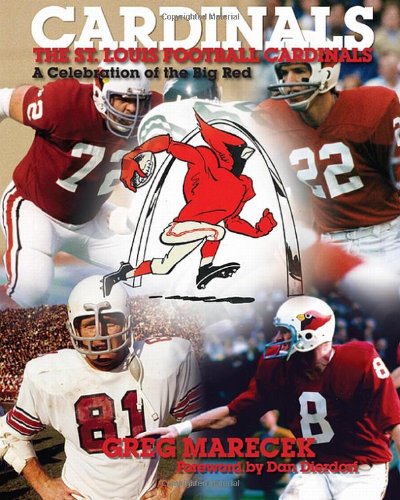
December 13, 1987: The St. Louis Cardinals football team beats the New York Giants, 27-24 at Busch Memorial Stadium in downtown St. Louis. A rumor is going around that the team will be moved, and one kid in the stands holds up a sign saying, "DEAR SANTA PLEASE DON'T LET THEM TAKE MY TEAM."

The Big Red -- the football Cardinals were often called that to differentiate themselves from the baseball Cardinals, a.k.a. the Redbirds -- play 2 more games that season, beating the Buccaneers in Tampa and losing to the Cowboys in Dallas, finishing 7-8.

March 15, 1988: Cardinals owner William V. Bidwill makes it official: After 28 seasons in the Gateway City, the NFL's Cardinals are being moved to the Phoenix area. They become the Phoenix Cardinals, and will groundshare with Arizona State University at Sun Devil Stadium on their campus in Tempe.

September 4, 1988: The Cardinals play their 1st game as a Phoenix team, losing to the Cincinnati Bengals, 21-14 at Riverfront Stadium.

September 12, 1988: The Phoenix Cardinals play their 1st home game, losing to the Dallas Cowboys, 17-14 at Sun Devil Stadium. They finish 7-9, but 6 of their losses are by 10 points or less.

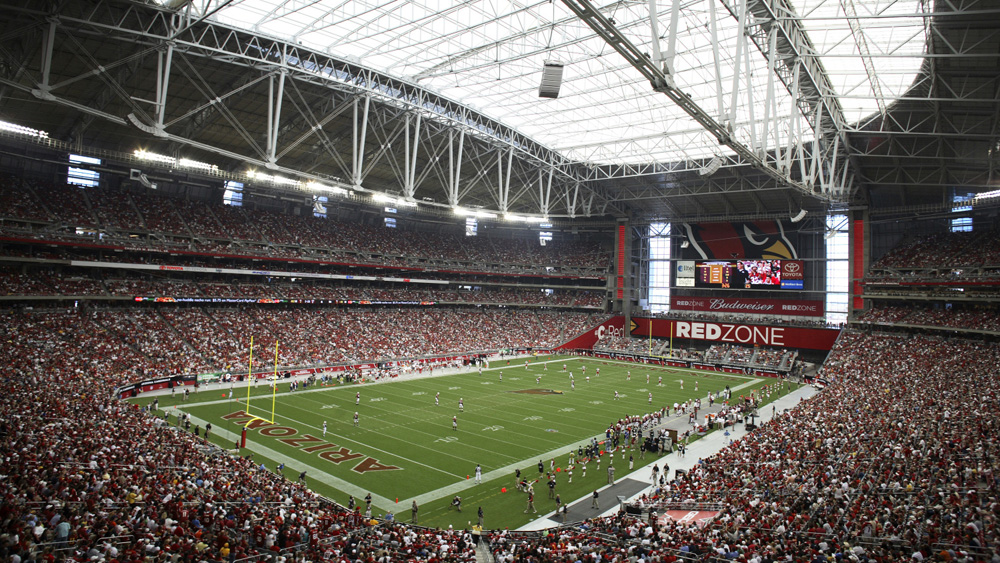
In 1994, to broaden their fanbase, Bill Bidwill changes the team's name to the Arizona Cardinals. In 2006, he moves the team to the new University of Phoenix Stadium in suburban Glendale. In 2018, the stadium is renamed State Farm Stadium.

Was this just another greed-fueled sports team move? Or was it the right thing to do?

Top 5 Reasons You Can't Blame Bill Bidwill for Moving the St. Louis Cardinals to Arizona

5. Identity. St. Louis was not the Cardinals' 1st home. They played in Chicago from 1920 to 1959. But the City of the Big Shoulders had completely lost interest in them. In their last season, they averaged 28,425 fans per home game. Take out their game against the crosstown Bears, and it dropped to 21,671. They actually moved 2 "home games" to Minneapolis, in consideration of moving there.

Even in 1948, when they were defending NFL Champions, and went 11-1, still the franchise's best regular season ever, they averaged only 29,918 fans at Comiskey Park -- 25,347 in games not against Da Bears, whose George Halas-fueled promotion machine ultimately led Bidwill's mother, Violet Bidwill Wolfner, the NFL's 1st female owner, to move the team to St. Louis.

But St. Louis never really took to them, either. Groundsharing with the baseball Cardinals, first at Sportsman's Park and then at Busch Memorial Stadium from 1966 onward, they still never had great attendance. Even when they were winning back-to-back NFC East titles in 1974 and '75, they struggled to get 50,000 fans per home game.

Throw in the fact that Bidwill himself was born and raised in Chicago, not St. Louis, and his ties to the latter city simply weren't very strong. The Cardinals hadn't done well in either city, either on the field or at the box office. 

4. The Stadium Situation. Busch Memorial Stadium was one of the multipurpose ovals built in the 1960s and '70s, which by necessity produced sight lines that, beyond the movable stands at field level, were not very good for football and terrible for baseball.
Since their move to Arizona, they have played at 2 different stadiums that were built football-specific. True, they first had to share Sun Devil Stadium with Arizona State. But they didn't have to share it with a baseball team.

3. St. Louis Is Not a Football Town. In 1995, they got the Rams to replace the Cardinals, and except for their Playoff run of 1999 to 2004, they didn't do a whole lot better, despite a new domed stadium. In 2014, the Rams averaged 57,018 fans per home game. Only the Minnesota Vikings did worse, and that was because they were groundsharing with the University of Minnesota while a new stadium was built on the site of the Metrodome. UM's stadium only seats a shade over 52,000 people, so the Vikings could have sold many more seats.

In 2015, the Rams did even worse than the Vikings: 52,402. They only filled the Edward Jones Dome to 80 percent of capacity. The next-worst in the NFL was the Raiders, who only got the Oakland Coliseum 86 percent filled.

To make matters worse, St. Louis-area fans didn't even seem to care that the team was leaving. In October 2015, the NFL owners met at a St. Louis hotel. With the threat of moving to L.A. having hung in the air pretty much for Kroenke's entire 5-year ownership, meaning a move would not have surprised anyone, how many fans showed up to tell the owners not to approve the move? About 1,500. That's right: One thousand, five hundred. I've been to high school soccer games with bigger crowds. And that's the biggest protest I could find on Google.
(The NFL owners voted 30 to 2 to allow the move. Even Alex Spanos of the San Diego Chargers, who also wants to move to L.A., possibly to share the Inglewood stadium with the Rams, voted for it. The only ones to vote against it? Understandably, Mark Davis of the Raiders. Less understandably, Mike Brown of the Cincinnati Bengals: Apparently, he thinks that the Rams being in L.A. will mean less money for team owners.)

St. Louis is not a pro football town. Busch Memorial Stadium seated about 54,000 for football, but the Cardinals played there from 1966 to 1987, and -- with brief exceptions in the mid-1970s and early 1980s when the Cards made the Playoffs -- they didn't fill it then, either. The Cards moved to Arizona, and even when they couldn't get 50,000 into Sun Devil Stadium (let alone the 64,000 that now regularly fills the University of Phoenix Stadium), Bill Bidwill never regretted the move.
Top row, left to right: Dan Dierdorf and Roger Wehrli.
Bottom row, left to right: Jackie Smith and Larry Wilson.
Are 4 are in the Pro Football Hall of Fame, but none
reached an NFL or NFC Championship Game with St. Louis.

St. Louis is not a college football town, either. The University of Missouri's Faurot Field is 126 miles from the Edward Jones Dome. And that's the closest Football Bowl Subdivision (formerly known as Division I-A) school to St. Louis. The next-closest such team is the University of Illinois (which, of course, is not in Missouri), and their Memorial Stadium is 173 miles away.

Nor is St. Louis known for producing great football players. Go ahead: Name a great football player who came from within a 50-mile radius of the Gateway Arch. The best is Kellen Winslow, the great tight end of the San Diego Chargers. The next-best is probably Jimmy Conzelman, a St. Louis native who played at the city's Washington University, and won an NFL Championship. You might not have heard of him, because that title was with the 1928 Providence Steam Roller (who went out of business 3 years later). He coached the Cardinals to the 1947 title and the 1948 title game, but that was in Chicago, not St. Louis. And he's been dead since 1970.

In other words, St. Louis' greatest football products are a guy who peaked in Ronald Reagan's 1st term, and is now 63 years old; and a guy who has been irrelevant in the game since Harry Truman was President, and dead since Richard Nixon's 1st term. Go ahead: Name another great football player from St. Louis and environs. I can't.

St. Louis is not a football town.

2. Phoenix Is a Football Town. Arizona State draws well. So does the University of Arizona, although that's in Tucson, 113 miles to the southeast. The Fiesta Bowl sells out every New Year's Day (or thereabouts).
Okay, the Cardinals had seat-filling issues at first. The only sellouts they had at Sun Devil Stadium were when they played the Cowboys, and then there were so many Cowboy fans, they took over and made it feel like an away game for the Cards. But since State Farm Stadium opened, and the Cards had first dibs, fans have come out in droves.
State Farm Stadium, sold out.

1. The Market. Look at market size. The Phoenix metropolitan area has 4.8 million people. Contrast that with St. Louis: They have just 2.9 million. Portland, Oregon and Orlando, Florida don't have NFL teams, and their metro areas have more people than St. Louis. Sacramento isn't far behind in terms of metro area population, and they've had trouble holding onto just 1 team, the NBA's Kings.

St. Louis also has Major League Baseball's Cardinals, who are by far the most popular team in town; and the NHL's Blues, who are more popular in St. Louis and its vicinity than either the Cardinals or the Rams were when they were in St. Louis.

The baseball Cardinals are a beloved, iconic franchise, backed by enough money to overcome any "small market" issues. The Blues are doing very well at the box office, and have a recent World Championship to their name (2019). Both of those teams have venues that they own, control, and sell out on a regular basis. They're not going anywhere. And St. Louis is getting a Major League Soccer team, finally acknowledging the city's contribution to American soccer history. 

But St. Louis lost the NBA's Hawks to Atlanta in 1968, right after getting the Blues, proving they couldn't hold 4 major league teams. They lost the football Cardinals in 1987, and have now lost the Rams, proving yet again that they can't even hold 3 major league teams. (If they can also support the St. Louis MLS team, that might prove that they can, and that MLS is finally a "major league.")

Somebody recently said, "How bad can St. Louis be, if it can produce Yogi Berra?" Good question. I'm not saying that it's a bad city. But it's not a big market, and it's just not a football town. Phoenix is both, and the Cardinals have done better there.

VERDICT: Not Guilty. Bill Bidwill may have been a bad owner in competitive terms: He was the controlling owner of the Cardinal football franchise for 57 years, 1962 to 2019, and only once did he get to an NFL championship game, under any name, and he lost it. But moving the team from St. Louis to Arizona was the right thing to do.