Showing posts with label weather. Show all posts

Wednesday, September 9, 2026

Football Under a Dome: Forfeiting the Home-Field Advantage

SoFi Stadium, Inglewood California,
home of the Los Angeles Rams and the San Diego Chargers.
Football under a dome might look good,
but it it takes away certain home-field advantages.

The Detroit Lions had a big home-field advantage playing at Tiger Stadium. In 1975, they moved into the suburban Silverdome. In 2002, they moved back into the city, but into Ford Field. People might be afraid of going into Detroit, but they're not afraid of the Lions.

The Minnesota Vikings had a big home-field advantage playing at Metropolitan Stadium. In 1982, they moved into the Metrodome, and in 2016 to U.S. Bank Stadium. Nobody's afraid of going into Minneapolis to play the Vikings.

Now, the Chicago Bears, the ultimate tough-guy team, the team of George Trafton, Bronko Nagurski, Bill George, Dick Butkus and Mike Singletary, want to build a new stadium. After 50 years at Wrigley Field, 31 seasons on the shore of Lake Michigan at the original Soldier Field, an interim season at the University of Illinois' Memorial Stadium, and this being their 24th season at the new Soldier Field -- admittedly, a weird-looking facility known as "The Eyesore on Lake Shore" -- the Bears' organization wants a dome. 

And the Cleveland Browns, who have played their entire existence on the shore of Lake Erie, first at the old Municipal Stadium, and now at a more modern stadium -- also want to build a new stadium. Their stadium is also relatively new, 27 years old.

Both the Bears and the Browns have long benefited from playing on the shore of a Great Lake, exposed to the elements, making warm-weather teams miserable, and making cold-weather teams wish they were in their own cold stadium back home. But these teams want to do what the Lions did in 1975, and what the Vikings did in 1982: Throw that tremendous home-field advantage away.

Domed stadiums tend to hold in noise, but, as the Green Bay Packers (in a cold-weather city but not quite on Lake Michigan), the Kansas City Chiefs (in a cold-weather city but on the Great Plains) and the Seattle Seahawks (in a cold-weather city but not quite on Lake Washington) have proven, you don't need a roof holding sound in to have a loud stadium.

What's worse, both Da Bears and the Browns want to build their new stadiums outside their cities. The Bears have narrowed their sites down to 2: In Arlington Heights, on the former city of the Arlington Park racetrack, in the northwestern suburbs of the city; or at an industrial park in Hammond, Indiana, across the State Line, but actually a little closer to downtown Chicago than the Arlington Park site. The Browns want to build in Brook Park, Ohio, southwest of Cleveland.

Each would be built close to its city's airport, but not to its downtown. Rail service is already in place to the Bears' Arlington Heights site, but only bus service is available to the Hammond site. Rail service is available to Cleveland's airport, with, presumably, a shuttle bus being provided for the stadium.

Some cold-weather teams have chosen to remain men. The Giants and the Jets did, when they chose to go in together on what became MetLife Stadium, remaining at the Meadowlands. So did the Philadelphia Eagles, who built Lincoln Financial Field at the same South Philadelphia Sports Complex where they'd previously played Veterans Stadium, and, on a few occasions before that, at Municipal/John F. Kennedy Stadium.

So did the New England Patriots, when they built Gillette Stadium next-door to Foxborough Stadium in the southern suburbs of Boston. The Buffalo Bills just built the new Highmark Stadium, to replace the old stadium with that name, formerly known as Rich Stadium, Ralph Wilson Stadium and New Era Field. It's got a roof to protect fans from rain and snow, but the cold air and the wind can still get in to provide "Bills Weather." And the Green Bay Packers chose to modernize Lambeau Field, the open-air cold-weather stadium they already had.

Why do the owners of the Bears and the Browns want to build domed stadiums? Because they want to host a Super Bowl, and make a hell of a lot of money on it.

Really? A climate-controlled Super Bowl appearance should be a reward for having survived a long season under all possible conditions. But a team shouldn't get to host a Super Bowl -- which, most likely, they won't even be playing in -- simply because its greedy owner managed to con a City, County or State government into squeezing its taxpayers to build a new stadium that the owner, most likely, can afford to build himself, a few times over.

But it's the National Football League. Built on greed and violence. The greed of the men who run it, and the violence of the men who play it, encouraged by the men who coach it and the men who run it.

Sometimes, I hate football. It's a great game when it's played well. But, sometimes, it's just not worth it.

The NFL season kicks off tonight, at 8:20, on NBC, when the Patriots visit the Seahawks in a rematch of last season's Super Bowl, won by Seattle. There will be a game tomorrow night, as the great rivalry between the San Francisco 49ers and the Los Angeles Rams is played on the other side of the Pacific Coast, at the Melbourne Cricket Ground, the foremost sporting venue in Australia. That game will only be available on Netflix.

The Jets will debut the 2026 season on Sunday, at 1:00, on CBS, away to the Tennessee Titans, who are also building a new stadium, adjacent to their current one, across the Cumberland River from downtown Nashville. I can't criticize them for throwing away a cold-weather home-field advantage, because they don't have one. The Eagles have a 4:25 kickoff, on Fox, home to the Washington Commanders. And the Giants start the season that night, at 8:20, on NBC, home to the despised Dallas Cowboys.

*

NFL teams playing home games indoors:

1932: Chicago Bears, Chicago Stadium, moved NFL Championship Game there due to a blizzard. Fixed, makeshift turf.
1968-1996: Houston Oilers, Astrodome. Fixed, artificial turf.
1971-2008: Dallas Cowboys, Texas Stadium. Fixed, artificial turf.
1975-2001: Detroit Lions, Silverdome. Fixed, artificial turf.
1975-2004, 2006-present: New Orleans Saints, Superdome. Fixed, artificial turf.
1976-1999: Seattle Seahawks, Kingdome. Fixed, artificial turf.
1982-2013: Minnesota Vikings, Metrodome. Fixed, artificial turf.
1984-2007: Indianapolis Colts, Hoosier Dome (RCA Dome). Fixed, artificial turf.
1992-2016: Atlanta Falcons, Georgia Dome. Fixed, artificial turf.
2002-present: Houston Texans, Reliant Stadium. Retractable, artificial turf.
2002-present: Detroit Lions, Ford Field. Fixed, artificial turf.
2005: New Orleans Saints, Alamodome, San Antonio, 3 games while Superdome was being repaired. Fixed, artificial turf.
2006-present: Arizona Cardinals, State Farm Stadium. Retractable, real grass.
2008-present: Indianapolis Colts, Lucas Oil Stadium. Retractable, artificial turf.
2009-present: Dallas Cowboys, AT&T Stadium. Retractable, artificial turf.
2016-present: Minnesota Vikings, U.S. Bank Stadium. Skylight, artificial turf.
2017-present: Atlanta Falcons, Mercedes-Benz Stadium. Retractable, artificial turf.
2020-present: Los Angeles Rams, SoFi Stadium. Skylight, artificial turf.
2020-present: Los Angeles Chargers, SoFi Stadium. Skylight, artificial turf.
2020-present: Las Vegas Raiders, Allegiant Stadium. Skylight, real grass.

MLB teams playing home games indoors:

1965-1999: Houston Astros, Astrodome. Fixed, artificial turf.
1977-1999: Seattle Mariners, Kingdome. Fixed, artificial turf.
1977-2004: Montreal Expos, Olympic Stadium: Fixed, artificial turf.
1982-2009: Minnesota Twins, Metrodome. Fixed, artificial turf.
1989-present: Toronto Blue Jays, SkyDome/Rogers Centre. Retractable, artificial turf.
1998-present: Arizona Diamondbacks, Bank One Ballpark/Chase Field. Retractable, artificial turf.
1998-2024, 2026-present: Tampa Bay Rays, Tropicana Field. Retractable, artificial turf.
1999-present: Seattle Mariners: Safeco Field/T-Mobile Park. Retractable, real grass.
2001-present: Milwaukee Brewers, Miller Park/American Family Field. Retractable, real grass.
2012-present: Miami Marlins, LoanDeport Park. Retractable, artificial turf.
2020-present: Texas Rangers, Globe Life Field. Retractable, artificial turf.

Monday, June 15, 2026

June 15, 1976: A Rainout at the Astrodome & a Big Baseball Trade Day

June 15, 1976, 50 years ago: A baseball game scheduled for the Astrodome in Houston is rained out.

Seriously. And while it was the weirdest event in baseball that day, it was far from the most consequential.

Until then, only one game at the Astrodome had ever been not been played, and the reason had nothing to do with the weather. On April 7, 1968, 3 days after the assassination of Dr. Martin Luther King, an exhibition game was canceled, as part of a day of mourning. But no regular-season games at the Dome, from its April 9, 1965 opening until June 15, 1976, were postponed. It was thought that preventing rain from falling onto the field would prevent that.

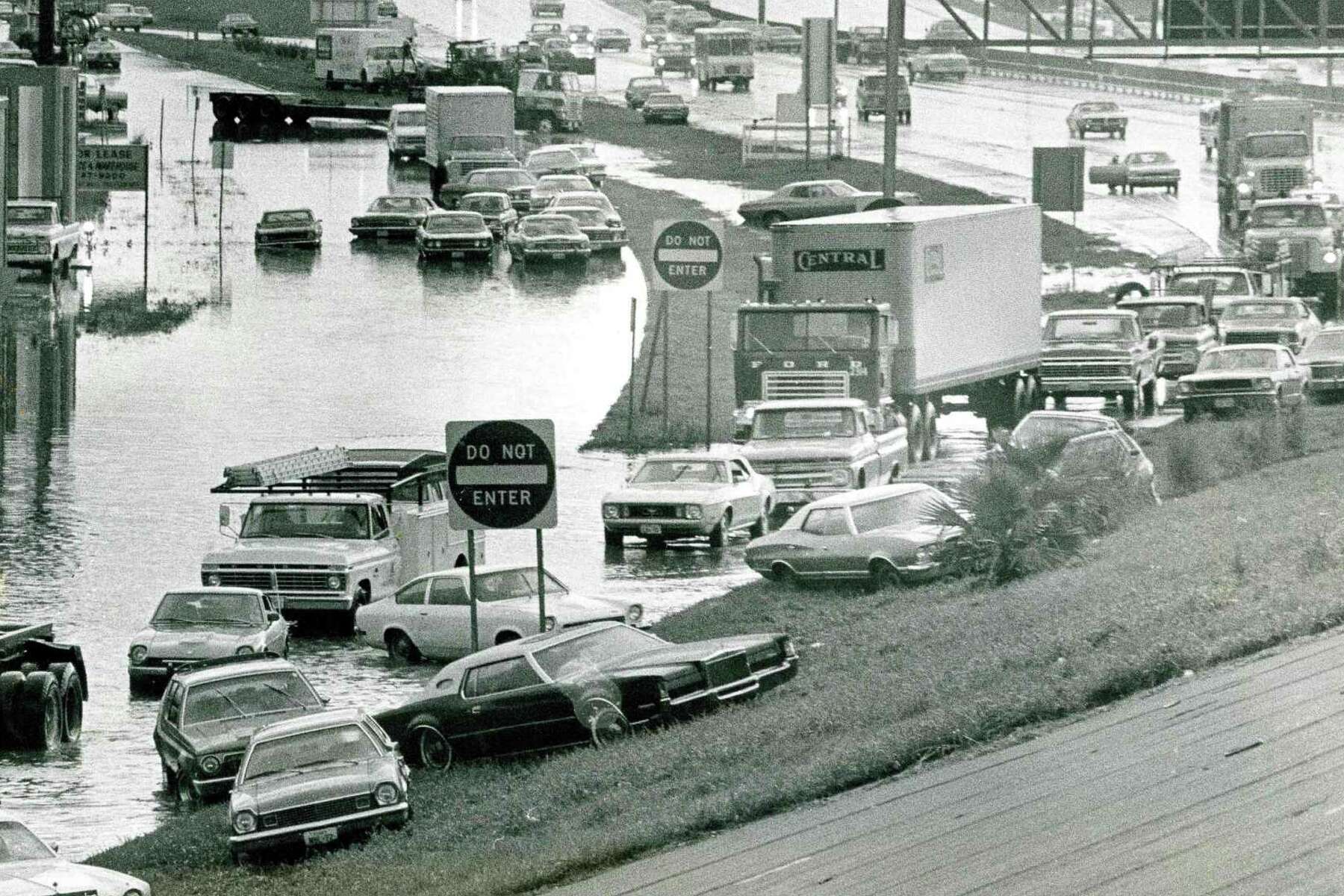
The Houston Astros were supposed to play the Pittsburgh Pirates. But heavy rain hit South Texas, and massive flooding resulted in Houston. At most, it was 13 inches deep at the Ship Channel on the city's East Side. On South Main Street, on the Southwest Side, near the Astrodome, the water was 7 inches deep.

This prevented all but a few fans from reaching the stadium. The Pirates were staying at the Shamrock Hilton. In normal weather, from there to the Astrodome would have been a 10-minute drive on the team bus. The driver had to go so gingerly, it ended up taking 30 minutes.

Both teams had arrived early for practice, and, according to Tal Smith, then the Astros' general manager, the field was dry, and there was no reason for which the home team was responsible that the game could not be played.

About 15 minutes after the Pirates got in, Tom Gorman, the crew chief for the umpires -- also including John McSherry, Paul Pryor and Art Williams -- called Smith, and told him that their car had stalled out in high water, and they couldn't get to the game. Only a few concession and security workers made it in. The broadcast crews for KPRC, both radio (950 AM) and television (Channel 2), were unable to reach the Dome, meaning that, if the game had gone on, there would be no coverage.

At 5:00 PM Central Time that day, faced with a 7:35 PM start time, the teams agreed to call the game off. Refunds were offered for 20 fans who did show up. Tables were brought onto the field, and the teams ate dinner together. The 20 fans were served separately, but it was free.

"Buffet-type, if I recall," said Pirate outfielder Al Oliver. "The Astro organization really did a great job. I tip my cap to 'em." And the players didn't seat themselves Astros at one end, Pirates at the other, or one team on each side. They mixed and mingled. "Most of us knew each other," Oliver added.
The players still couldn't get home, due to the flooding. Both teams bedded down inside their clubhouses. Having the Astroworld Hotel on the Astrodome campus didn't help: They still would have had to wade their way through the flooding to get there.

Although the Astros still had a home series with Pittsburgh in August, this game was made up at Three Rivers Stadium in Pittsburgh in July. The Pirates swept, 8-6 and 3-0.

The Astros played 35 seasons in the Astrodome, 1965 to 1999. In 2000, they moved into what's now known as Daikin Park, which has a retractable roof. This game remains their only regular-season home postponement.

*

No other Major League Baseball games was postponed that day. Among those that were played, the New York Yankees beat the Minnesota Twins, 4-2 at Metropolitan Stadium in the Minneapolis suburb of Bloomington, Minnesota. Dock Ellis outpitched Pete Redfern. Thurman Munson went 4-for-4 with a home run and 3 RBIs. Rod Carew went 0-for-3, but had an RBI on a sacrifice fly.

June 15 was then the trading deadline -- it was moved to July 31 in 1986 -- and the Yankees traded pitchers Rudy May, Scott McGregor, Felix "Tippy" Martinez and Dave Pagan, and catcher Rick Dempsey, to the Baltimore Orioles for pitchers Ken Holtzman, Doyle Alexander, Grant Jackson and Jimmy Freeman, and catcher Elrod Hendricks.

Although Holtzman, Alexander and Jackson turned out to be key for the Yankees winning their 1st American League Pennant in 12 years, and Holtzman would also feature in their winning the 1977 World Series, this trade hurt them in the long run.

May, McGregor and Martinez all became key parts of the Oriole rotation, and Dempsey became one of the game's top catchers. In 1979, Yankee catcher Thurman Munson was killed in a plane crash, and Dempsey was no longer there to succeed him, helping the Orioles run away with the American League Eastern Division title, and eventually the Pennant. When the O's won the World Series in 1983, Dempsey was named the Series' Most Valuable Player.
Rick Dempsey at Yankee Stadium.
Right guy. Right position. Right ballpark. Wrong uniform.

The Yankees did reacquire May -- no relation to Lee May, who played for the Orioles, and his brother Carlos May, who played for the Yankees, in each case including in that 1976 season -- and he helped them win the 1980 Division title and the 1981 Pennant. Would having Dempsey as catcher, instead of Rick Cerone, and later Butch Wynegar and Don Slaught, have made a difference? Maybe not. The Yankees did need that 1976 Pennant, to help set up '77 and '78, and possibly also '81. Maybe it was a wash, but it sure felt like a bad trade after Munson's crash.

*

Also that day, the Oakland Athletics beat the Boston Red Sox, 3-2 at the Oakland Coliseum. Gene Tenace hit a home run off Fergie Jenkins in the bottom of the 9th inning to win it.

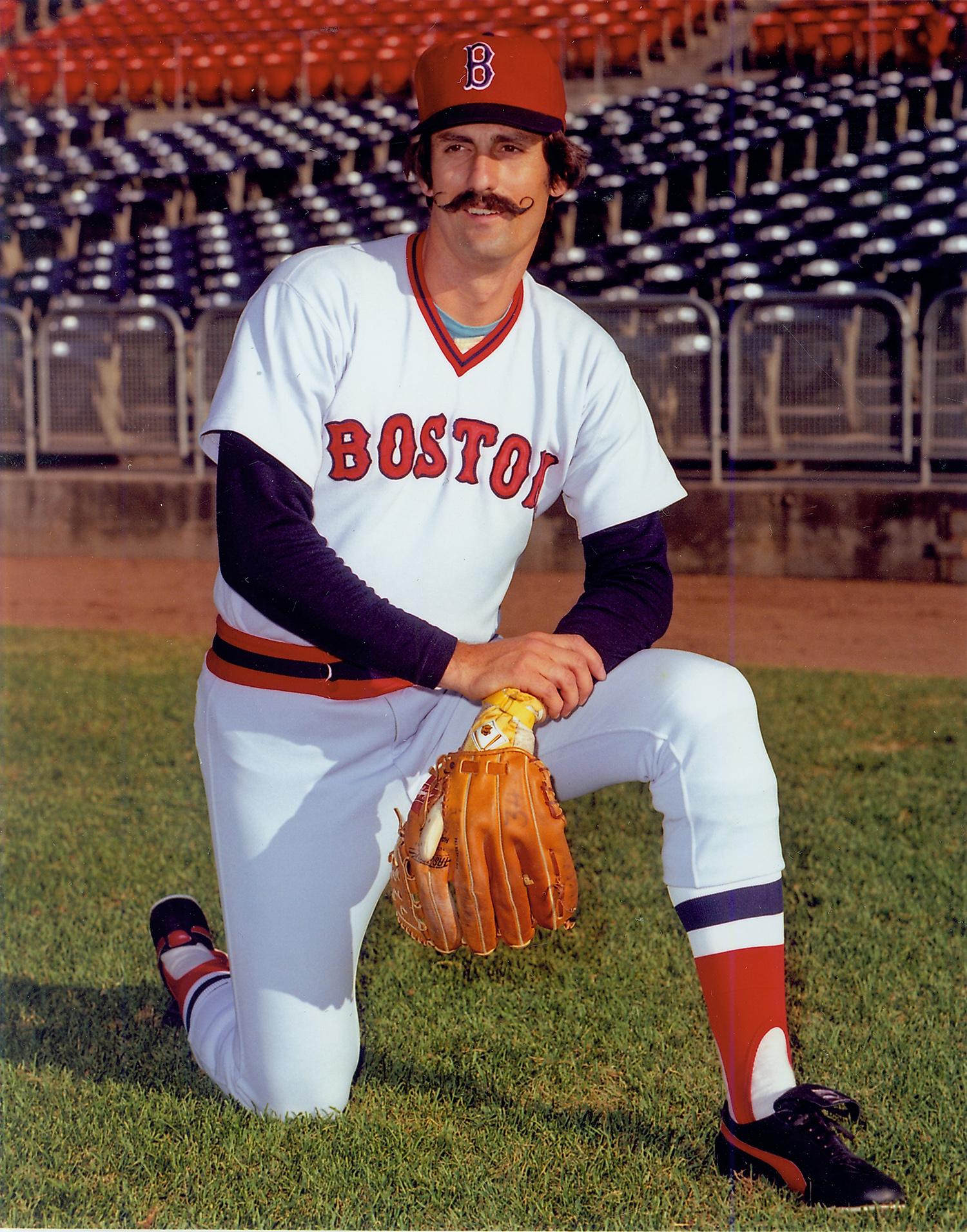
This was the day that A's owner Charlie Finley sold outfielder Joe Rudi and relief ace Rollie Fingers to the Red Sox for $1 million each, and pitcher Vida Blue to the Yankees for $1.5 million. None of those players got into this game for either team, but they did walk across the field, into their new dugout, and into their new clubhouse, and put on their new uniforms.

Charles Oscar Finley built a team that won 5 straight American League Western Division titles, 1971 to '75. And 3 straight World Series, 1972 to '74. But their attendance was never all that high. In only 2 of the 21 seasons that he owned the team in Kansas City and Oakland, 1960 to '80, did the A's get over 1 million in official attendance, '73 and '75. And the '73 figure of 1,000,763 is in dispute, because some people think Charlie O tinkered with it.

He discovered what Connie Mack, known for building up winners and then breaking them up with the earlier A's in Philadelphia, discovered: It brings in more fans if you have a good team that stays in the race most of the way and doesn't win, than if you have one that runs away with the Pennant. And then, when the players don't win, you don't have to give them big raises.

Pitcher Jim "Catfish" Hunter had it written into his contract that Finley had to pay toward an annuity -- and when Finley didn't, Hunter took Finley to an arbitrator, and Catfish was declared a free agent. Finley didn't lift a finger to re-sign him, and lots of other teams did. Of course, the fingers that George Steinbrenner of the Yankees lifted were clutching a lot of money.

Without Catfish, the A's still won the West in 1975, but got swept by the Red Sox in the AL Championship Series. At the dawn of the '76 season, Reggie Jackson (who liked to say that Finley gave him his chance in baseball, "Lord, but the man was cheap, though") and Ken Holtzman were traded to Baltimore for Don Baylor and Mike Torrez. Within a year, none of them was on either of the teams involved in this trade.

On June 15, then the trading deadline, Finley sold Vida Blue to the Yankees for $1.5 million, and Joe Rudi and Rollie Fingers to the Red Sox for $1 million each. Finley had players and the lust for money. Steinbrenner of the Yankees and Tom Yawkey of the Red Sox had money and the desire for a championship. These sounded like good deals for all 3 owners.
Rollie Fingers, a Red Sock for 3 days

Bowie Kuhn, the Commissioner of Baseball, didn't think so. He usually bent over backwards to help the owners and screw the players. Certainly, Blue could make more money with the Yanks, and Rudi and Fingers with the Sox, than anyone was making with the A's. But Kuhn hated Finley (and the feeling was mutual), and ordered the Yanks and Sox not to play their new acquisitions until he could straighten everything out.

Kuhn thought about it for 3 days, then canceled the deals, citing "the best interest of baseball." He said he didn't want Pennants to be bought outright.

Well, what the hell did he think the Yankees were doing all through the 1920s, '30s, '40s, '50s and into the '60s? What did he think Steinbrenner had been doing the last 3 years? What did he think Yawkey, who was then dying of leukemia, had been trying to do for over 40 years?

It's professional baseball. The players are paid for their services. Every championship has been bought, since the 1869 Cincinnati Red Stockings.

Clearly, Kuhn put the kibosh on the deals for one reason, and one reason only: He hated Finley. Whether this was the best thing for baseball is a debate for another time; whether the Yankees, or the Red Sox, or both, would have been better off if the deals had gone through, is still another debate.

So let's have that debate:

* The Red Sox needed a better bullpen. It's why they signed Bill Campbell in the following off-season. Fingers would have helped. But they were loaded with outfielders. They didn't need Rudi. And with the dissension they already had, things could have gotten worse. The fact that Yawkey had leukemia, and died on July 9, didn't help: His wife, Jean, inherited the team, and the guys she let run the team made a lot of mistakes over the next few years.

* But the Yankees would have had a bigger problem: Blue's drug problem. George Steinbrenner would have had to get rid of him. And who would have taken him, knowing he had that problem? Having Blue would have made no difference in the 1976 World Series, and might have prevented them from winning the Pennant over the Kansas City Royals in 1976, '77 and '78.

* So who would have benefited the most from the sales, if they had gone through? The Orioles would both have been able to take advantage of the Yanks' and Sox' problems. The Royals did take advantage of the A's' problems. And, if the Yankees or the Red Sox had managed to get past the Orioles, as the Yankees did in '76, '77, '78 and '80 (but not '79, when the California Angels beat the Royals out for the AL West title), the Royals would have faced a more troubled and possibly weaker New York or Boston team.

So, after the '76 season that we know, in which the weakened A's won 87 games, and finished 2nd in the AL West behind the Royals, came the first off-season in which free agency came into play in more than the infrequent example, such as Hunter in '74 and Ken Harrelson in '67 -- both let go by Finley, interestingly enough.

Fingers and Gene Tenace signed with the San Diego Padres, owned by Ray Kroc, the man who built McDonald's. Rudi signed with the team then known as the California Angels, owned by Gene Autry, the movies' former "Singing Cowboy" who had made millions buying and operation radio stations.

Like Steinbrenner and Yawkey, Kroc and Autry had no issue with spending big bucks, if they thought it would bring them big results. They both ended up doing better than Jean Yawkey did after Tom died. But neither did as well as Steinbrenner. A's team captain Sal Bando signed with the Milwaukee Brewers, and Bert Campaneris signed with the Texas Rangers.

In 1977, with only Blue and Bill North left from the '74 World Champs, the A's lost 98 games, and finished dead last, half a game behind the expansion Seattle Mariners.

In '78, having finally dumped off Blue (to the San Francisco Giants) and North (to the Los Angeles Dodgers), it was 93 losses. In '79, 108 losses -- the most by an AL team since the 1939 St. Louis Browns lost 111. Even the AL expansion teams of 1961, 1969 and 1977 hadn't lost that many. Attendance at the Oakland Coliseum was 306,763. That's not for a weeklong homestand, that's for an entire season, 81 home games. That's 3,787 per game. I've been to a high school basketball game with a better attendance than that. The place became known as the Mausoleum.

In the 1977-78 off-season, fed up with baseball, Finley came very close to selling the A's to Marvin Davis, who wanted to move the team to Denver and Mile High Stadium, but the deal fell through. A year later, he tried to sell them to a group that would have moved them to the Superdome in New Orleans. In 1979-80, again, he tried to sell the team to Davis, but it didn't happen.

Finally, in 1980, having hired Billy Martin as manager, the A's fortunes turned around, and Charlie O found a buyer, Levi Strauss heir Walter Haas, who kept the team in Oakland, saving the team for the East Bay for the 1980s, 1990s, 2000s and 2010s.

In 2024, A's owner John Fisher, unwilling to do what it took to get a new ballpark in or around Oakland, announced he was moving the team to Las Vegas. The new domed stadium there is on schedule to open for the 2028 season. In the interim, they're playing in the Class AAA ballpark in West Sacramento, California.

Tuesday, December 16, 2025

December 16, 1945: The Cleveland Rams' Championship Farewell

Number 24 is Jim Gillette, who scored the winning touchdown.

December 16, 1945, 80 years ago: The NFL Championship Game is played. The winning team... moves to another city.

You know how, when the Cleveland Browns announced during the 1995 season that they were moving, their fans had such a fit, and talked about how loyal they were? Well, at the time, they were averaging 66,772 fans per home game, which, given the capacity of Cleveland Municipal Stadium, was an average of about 14,000 empty seats.

The Cleveland Rams would have gladly taken that. Founded in 1936, they had hoped to use Municipal Stadium for their home games, but ticket demand was usually so low, instead, they played at 22,000-seat League Park, or the even smaller Shaw Stadium, a high school facility.

In 1945, Adam Walsh was named head coach. He was the center on Notre Dame's 1924 National Championship team, leading the line known as the Seven Mules, so named because they blocked for the backfield known as the Four Horsemen. He saw to it that they drafted UCLA quarterback Bob Waterfield.
Bob Waterfield. Teammate Fred Gehrke,
a graphic artist, invented the modern helmet logo
by painting rams' horns on the helmets in 1948.

And they went 9-1, their best season yet. They played all their home games at League Park, and averaged just 19,402 fans. Granted, a lot of would-be fans were still overseas, as the end of World War II did not mean that every serviceman went home at once. Still, their away games did better: A crowd of 46,219 saw them beat the New York Giants at the Polo Grounds, 40,017 saw them beat the Detroit Lions at Briggs Stadium (later renamed Tiger Stadium), and 38,149 saw their only loss, to the Philadelphia Eagles at Shibe Park.

Since it was the Western Division Champion's turn to host the NFL Championship Game, Rams owner Dan Reeves -- no relation to the later coach of the same name -- booked Municipal Stadium for it, hoping for a big crowd. Certainly, he got the right opponent: The Eastern Division Champions were the Washington Redskins, with superstar quarterback Sammy Baugh, in their 5th Championship Game in the last 9 seasons. (They'd won in 1937 and 1942, and lost in 1940 and 1943.)

But the weather did not cooperate: At kickoff time, it was 8 degrees below zero, the coldest NFL Championship Game ever to that point. (That temperature has only been exceeded once, and that once with an asterisk: The 1967 NFL Championship Game, "The Ice Bowl," was not the World Championship Game.) As a result, in the football-mad State of Ohio, where Ohio State had played to 4 crowds of 69,000 or more that season, only 32,178 fans paid their way into the big stadium on the shore of Lake Erie.

From 1933 to 1973, the goalposts were on the goal line, not the end line. In the 1st quarter of this game, Baugh faded back from his own 5-yard line, into the end zone, and made a bad throw, which hit the goal post. Under the rule of the time, this was a safety for the Rams, who now led, 2-0. It would matter. 
Sammy Baugh

Each team scored a touchdown in the 2nd quarter. Baugh left the game due to bruised ribs, and Frank Filchock came into replace him. The backup to Slingin' Sammy was called Flingin' Frank, and he threw a 38-yard touchdown pass to Steve "Jack Rabbit" Bagarus. Waterfield threw a 37-yard touchdown pass to Jim Benton, and it was 9-7 Cleveland at the half.

In the 3rd quarter, Waterfield threw a 44-yard touchdown pass to Jim Gillette. However, Waterfield, also the Rams' placekicker, missed the extra point, and it was 15-7. Early in the 4th quarter, Filchock threw an 8-yard touchdown pass to Bob Seymour. Joe Aguirre kicked the extra point, and it was 15-14 in the Rams' favor.
Joe Aguirre

But Aguirre, nicknamed "Hot-Toe," blew 2 chances to win the title, missing 2 field goals in the 4th quarter. The 15-14 score held, and the difference wasn't just Aguirre's toe going cold, it was Baugh's end-zone goof.

Redskins owner George Preston Marshall, who had been the driving force behind several notable rule changes, led the NFL to change the rule for the 1946 season: A forward pass that strikes the goal post would now be ruled an incomplete pass. That rule held until the posts were moved back to the end line for the 1974 season, making such a play impossible: It would have required crossing the end line, which has always been a safety.

Reeves lost $64,000 owning the Rams in the 1945 season. And, with the war over, a new league was being formed, the All-America Football Conference. And they would have a Cleveland team, soon to be named the Browns. Reeves knew that it would be folly to stay in Cleveland.

So he went to the previously untapped market of Los Angeles, and moved the Rams there. Since football is only played once a week, teams taking trains to the West Coast and back was the same kind of problem it would have been for baseball teams before jet travel made it easier. Over a decade before baseball's Brooklyn Dodgers moved there, the Los Angeles Rams became the toast of the town, reaching 4 NFL Championship Games between 1949 and 1955, winning in 1951.

Ironically, Joe Aguirre also went west in 1946, kicking for the AAFC's Los Angeles Dons. They did well at the box office, but couldn't outdraw the Rams, and folded with the league. Aguirre went to the Canadian Football League, and was its leading scorer in 1950 and 1954. But he never won a title in any league.

The Redskins got old in a hurry. And Marshall's policy of refusing to sign black players held the team back in the 1950s. Marshall's eventually fatal illness and incapacity held the team back in the 1960s. It would be 27 years before the team reached another championship game, under any name.

Monday, September 8, 2025

September 8, 1900: The Galveston Hurricane

September 8, 1900, 125 years ago: A hurricane strikes Galveston, Texas. It turns out to be the worst national disaster in American history.

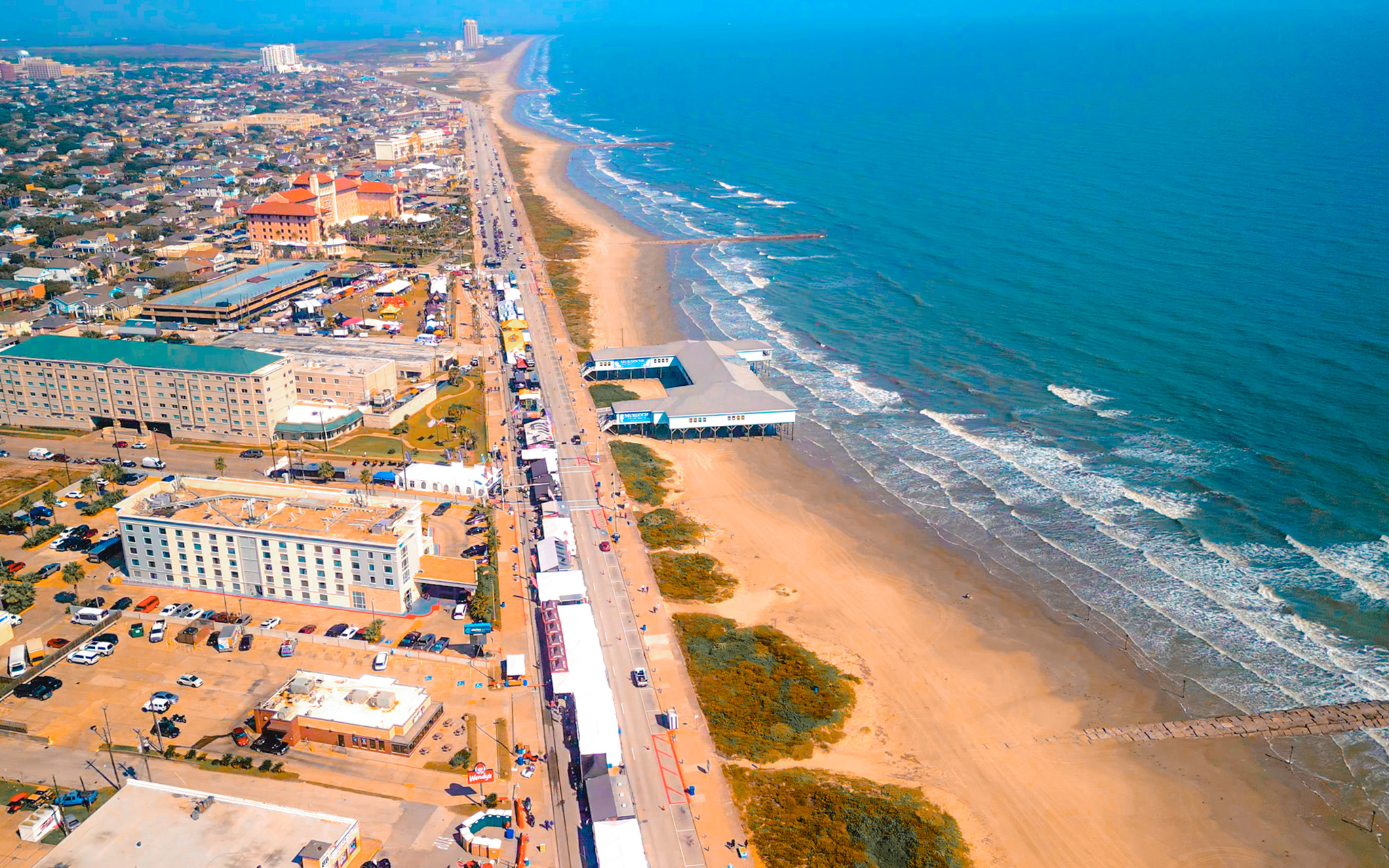
The City of Galveston is on Galveston Island, on the Gulf of Mexico, about 50 miles southeast of Houston. This has made it particularly susceptible to tropical storms. Nevertheless, it is a popular destination for beachgoers, with a large amusement park.

It was even more so in the late 19th Century, a period known as the Golden Era. Some of the largest hotels in the country were there, and Reconstruction even permitted more participation for African-Americans and Mexican-Americans than would be seen in the 20th Century. They even had a successful professional baseball team: The Galveston Sand Crabs won the Texas League Pennant in 1890, 1897 and 1899. At the time, the population was about 37,000.

But on September 4, 1900, a tropical storm was detected, and it headed straight for the Gulf Coast of Texas. The National Weather Service had been established in 1870, and did issue a warning. But hardly anybody took it seriously enough to take the bridges back to the mainland.

By 12:00 Noon on September 8, part of the island was already flooded. By 4:00, wind speeds were up to 125 miles per hour (by definition, a hurricane is a storm with sustained winds of at least 75 MPH), and waves were 15 feet high.

Many of the houses on the island were made of wood, and, with no high ground to protect them, were just plain flattened. At least 6,000 people were killed, making it the deadliest natural disaster in American history. For comparison's sake: In 2005, Hurricane Katrina killed about 1,800; and in 2012, Hurricane Sandy, despite its widespread damage, killed a comparatively low 233.

By 1904, the City of Galveston had completed a permanent concrete seawall along the beachfront. By 1910, the entire city was raised 17 feet behind the wall. It has been hit by hurricanes since, but nothing as deadly as the 1900 hurricane, or Katrina, or Sandy. Today, it is home to about 50,000 people.

It wasn't until 1947 that hurricanes began to be named, using the military phonetic alphabet in use at the time: Able, Baker, Charlie, Dog, and so on. (In 1956, that was changed to Alpha, Bravo, Charlie, Delta, and so on.) In 1955, America adopted the use of girls' names for hurricanes, starting with Alice. In 1979, boys' names began to alternate with girls' names: Ana, Bob, Claudette, David.

Sunday, March 3, 2024

No Domes for Baseball

Baseball is supposed to be played outdoors. No domes.

If I were the Commissioner of Baseball, I would order every team to play with the roof open. If that's not physically possible, given their current stadium, I would give them one year to get a deal done to build a stadium without a permanent roof, and then three years to get it done. Any team playing a game with a closed roof after April 1, 2028 would forfeit that game to the visiting team.

This would also apply to artificial turf, although that should be considerably easier to replace.

Don't tell me you can't afford it. Every MLB team is owned by a man, or a group, that can build a dozen or more new stadiums without one damned penny of the taxpayers' money.

"But what about rain?" And, "What if it's cold?" Postpone the game, and make it up later. If you need help with rescheduling, notify the MLB office, and we will accommodate you.

"But that would make the doubleheaders pile up!" So? Play them.

"But that would be a terrible inconvenience!" You're getting paid millions, team management. Suck it up.

"But it will exhaust our pitchers!" No, what exhausts your pitchers is not letting your starters pitch 7 or more innings. Trust your starters.

"But what about the fans?" Oh, so now, you care about the fans? The fans will be fine with the doubleheaders. Heck, they can plan day-long parties around them, like that other sport does with its Super Bowl.

MLB Domed Stadium History:

Houston: 1965-1999, Astrodome. Permanent Roof, with Artificial Turf from 1966 onward. 2000-present, Enron Field/Minute Maid Park. Retractable Roof with Real Grass.

Seattle: 1977-1999, Kingdome. Permanent Roof. 1999-present, Safeco Field/T-Mobile Park. Retractable Roof with Real Grass.

Minnesota: 1982-2009, Metrodome. Permanent Roof.

Montreal: 1988-1998, Olympic Stadium. Retractable Roof, with Artificial Turf. Roof had to be removed due to ineffectiveness.

Toronto: 1989-present, SkyDome/Rogers Center. Retractable Roof with Artificial Turf.

Tampa Bay: 1998-present, Tropiciana Field. Permanent Roof.

Arizona: 1998-present, Bank One Ballpark/Chase Field. Retractable Roof with Real Grass until 2019, then switched to Artificial Turf.

Milwaukee: 2001-present, Miller Park/American Family Field. Retractable Roof with Real Grass.

Texas: 2020-present Globe Life Field. Retractable Roof with Artificial Turf.

Thursday, March 30, 2023

Happy 100th Birthday, Dr. Frank Field!

March 30, 1923, 100 years ago: Franklyn Feld is born in New York. We know him as Dr. Frank Field. The U.S. Army Air Force veteran of World War II has a B.A. in geology from Brooklyn College, a B.S. in optometry from Columbia University, and an O.D. degree from the Massachusetts College of Optometry.

But he’s not, as my mother once said, just an eyeglass fitter: He’s a real doctor. If you don’t believe me, take the word of the Albert Einstein College of Medicine in The Bronx, where he taught in the Department of Preventive and Environmental Medicine.

From 1958 to 1984, he was the chief weatherman on WNBC-Channel 4 in New York, frequently hosting science- (often medicine-)based half-hour specials on weekends. From then until 1995, he held the same role at WCBS-Channel 2, later serving at WNYW-Channel 5 and WWOR-Channel 9, before retiring to Florida.

On July 3, 1978, "Doctor Frank" predicted beautiful weather for the 4th of July, perfect for going to the beach, attending parades, having backyard cookouts, and watching fireworks at night. Instead, on the 4th, it rained. It absolutely poured. Beaches were empty. Macy's, the department store that sponsored the City's main fireworks display, canceled it. More phone calls flooded the switchboard at 30 Rockefeller Plaza than at any time since the Heidi Bowl 10 years earlier, all of them angry at Frank.

He had a sense of humor about it, showing up for the 6:00 broadcast of what was then known as NewsCenter 4 with a noose around his neck, suggesting that people wanted to hang him for getting the big holiday forecast so wrong.

But the rain turned out to be a good thing: The entire Northeast got soaked, so the Yankees' scheduled game was postponed. That game was supposed to be against the Boston Red Sox, at Fenway Park. The Red Sox were healthy and leading the American League Eastern Division. The Yankees were battling injuries. Including the previous night's game, they were 2-4 against the Red Sox that season, and it would be 2-6.

But this game was postponed to September 7, making a 3-game series at Fenway a 4-game series. That turned out to be critical: By that point, the Yankees were healthy and streaking, and the Red Sox were injured and reeling. Unlike the Yankees, they didn't have a bench good enough to keep them afloat. And the Yankees swept that 4-game series, which became known as the Boston Massacre. The teams ended up tied for 1st place, and the Yankees won a Playoff for the Division title, which became known as the Bucky Dent Game, and went on to win the World Series.

Maybe George Steinbrenner should have ordered a World Series ring for Dr. Frank Field.

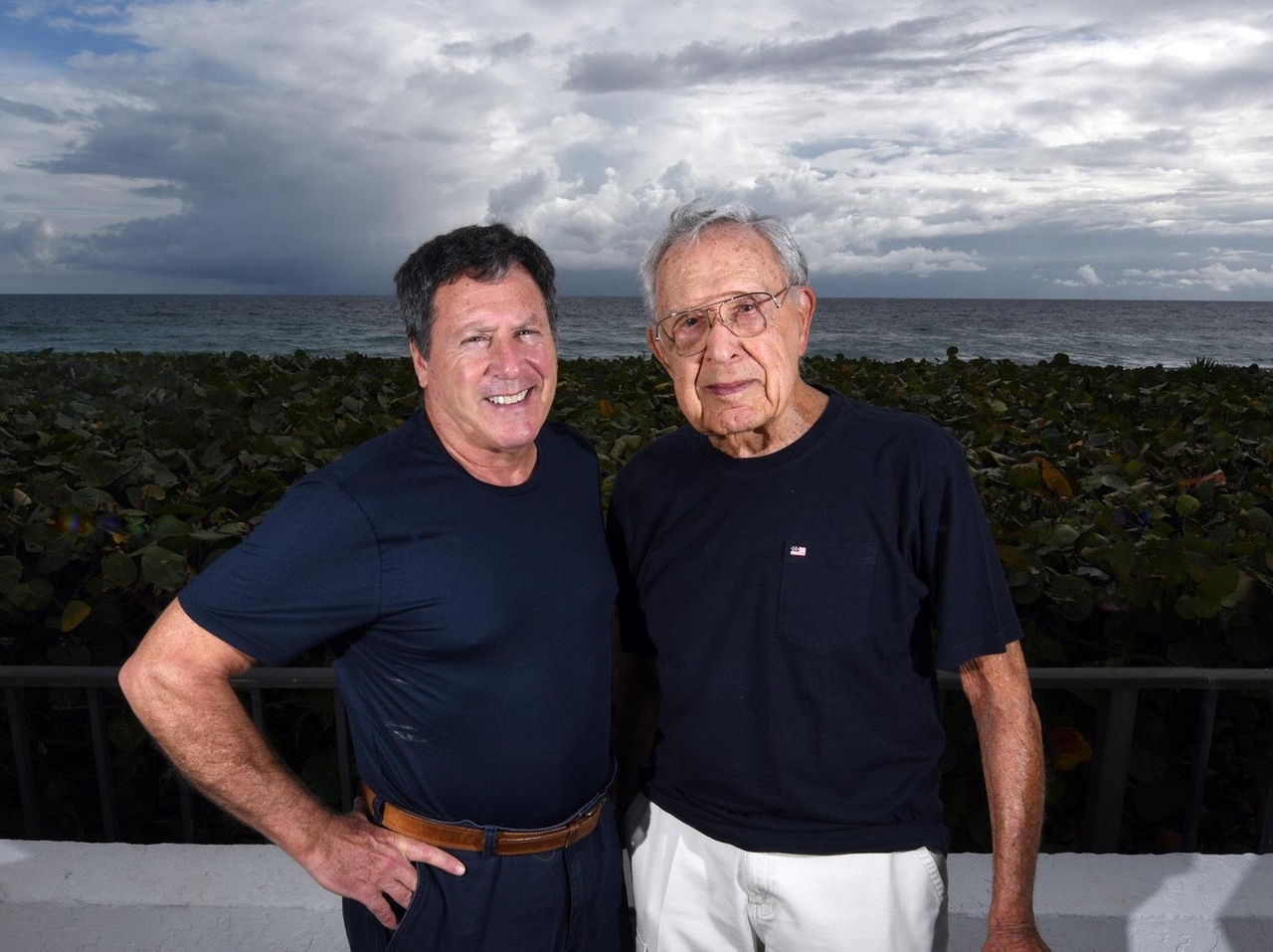
His son, Elliott David Field, went into the family business, and became known as Storm Field. From 1976 to 1991, he was the lead weatherman on WABC-Channel 7, competing with his father. Later, at both Channel 2 and Channel 9, the Fields worked together. Storm retired in 2007.
Storm and Frank, at Frank's home in Boca Raton, Florida,
in 2019. Frank was 96 years old.

Frank turns 100 today. Storm is 74.

UPDATE: Dr. Frank Field died on July 1, 2023, just 3 months after his 100th birthday.

Sunday, July 24, 2022

Yankees & I Don't Get the Job Done

Well, it finally happened: Between this seemingly never-ending heat wave getting to me, and my inability to get to sleep last night, resulting in my inability to get up this morning, for the 1st time all season, I was unable to get my written report of the Yankees' previous game done in time for their next game to begin. For only the 3rd time all season, albeit for the 2nd time in a week, I was unable to get a video report done in time for the first pitch of the next game. 

What the hell: I'm 95-1 with the former, and 93-3 with the latter. If you did this well at your job, you'd probably keep it.

And it's not like the Yankees did any better last night. They started off okay, with DJ LeMahieu beginning it with a single, followed immediately by Aaron Judge with an RBI double. Matt Carpenter hit a home run in the top of the 2nd inning. And Judge singled home another run in the 4th, to give them a three to nothing lead. 

But they scored no further runs the rest of the way. Gerrit Cole, the alleged ace, pitched brilliantly for the 1st 4 innings, then allowed 2 runs in the 5th, before settling down in the 6th. He talked manager Aaron Boone into letting him go out for the 7th, and it was a mistake for both of them. Cole had nothing left, and before the inning was over, the Birds had taken the lead. They extended it off Albert Abreu in the 8th.

Orioles 6, Yankees 3. WP: Cionel Pérez (5-1). SV: Jorge Lopez (18). LP: Cole (9-3). A bad game, and I didn't get my coverage of it done for you in time. A failure all around. The good news is, unlike the Yankees, I'm not getting paid millions of dollars a year to do my job. The bad news is, well, the same thing.

The series conclusion has already begun this afternoon. Nestor Cortes started against Dean Kremer. As I type this, it's already the bottom of the 2nd inning, and there's no score, although the O's are threatening.

Friday, December 17, 2021

Chances of a White Christmas

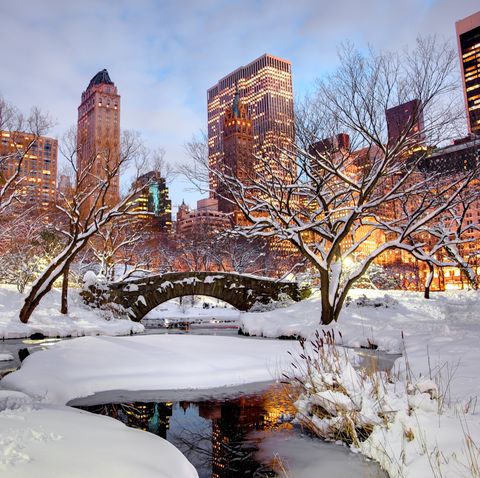
Central Park, New York

According to current weather forecasts, we might get snow on December 25.

Christmastime is the one time of the year we like to see snow -- that is, those of us too old to have snowfall cancel school.

But New York City and my part of New Jersey are too far south to have significant snowfalls until the New Year. Granted, we've had snow before Halloween a couple of times. We've also had snow on Thanksgiving Day twice, including an actual football-game-canceling blizzard in 1989. But we usually don't get our first significant snowfall -- say, more than an inch -- until January.

I can only remember snow being on the ground on December 25 about 5 or 6 times in my 52 years. Usually, it tries, but it's too warm, and it rains instead. Not a White Christmas, but a Wet Christmas. Yuck.

Note: These totals represent 1 inch or more of snow on the ground, regardless of whether it fell on December 24 or 25, or earlier:

Minneapolis: 95 times since 1899, or about 7 out of every 10 years
Buffalo: 90 times since 1871, or 3 out of 5
Cleveland: 28 times since 1969, or 3 out of 5
Milwaukee: 58 times since 1900, or 1 out of 2
Detroit: 54 times since 1900, or 2 out of 5
Chicago: 63 times since 1871, or 2 out of 5
Denver: 45 times since 1899, or 3 out of 8
Pittsburgh: 50 times since 1871, or 1 out of 3
Boston: 28 times since 1872, or 1 out of 5
New York: 18 times since 1912, or 1 out of 6
Cincinnati: 16 times since 1916, or 1 out of 6
Philadelphia: 9 times since 1940, or 1 out of 8
Baltimore: 12 times since 1872, or 1 out of 12
Washington: 9 times since 1884, or 1 out of 15
Seattle: 8 times since 1891, or 1 out of 17

In other words: Minneapolis, 70 percent; Buffalo and Cleveland, 60; Milwaukee, 50; Detroit and Chicago, 40; Denver, 37; Pittsburgh, 33; Boston, 20; Mew York and Cincinnati, 17; Philadelphia, 12; Baltimore, 8; Washington, 7; Seattle, 6; anything south of the Potomac and Ohio Rivers, forget it.

I have to admit: Given how far north it is, Seattle surprised me, although they are one of the more recent cities with one:

Last "White Christmas" up to and including 2020:
Detroit: 2018
Buffalo: 2018
Minneapolis: 2018
Pittsburgh: 2017
Denver: 2017
Seattle: 2017
Chicago: 2013
Milwaukee: 2011
New York: 2010
Cleveland: 2010
Cincinnati: 2010
Detroit: 2010
Philadelphia: 2009
Boston: 2009
Baltimore: 2002
Washington: 2002

Some cities haven't seen snow at all in a long time:

Houston: February 15, 2021 (Earlier this year, so not that long)
St. Louis: January 11, 2020
Atlanta: January 17, 2018
Dallas: December 6, 2013
Los Angeles: January 17, 2007
Phoenix: December 6, 1998
Tampa: January 19, 1977
Miami: Also on January 19, 1977
San Francisco: February 6, 1976
San Diego: December 13, 1967

I was a little surprised by San Francisco, since Northern California has mountains. But, at 37.5 degrees North latitude, it's further south than D.C., so not having snow since the Ford Administration makes some sense.

Tuesday, February 2, 2016

Top 10 Groundhog Day Jokes

This morning, in Punxsutawney, Pennsylvania, about 75 miles northeast of Pittsburgh and 300 miles west of New York, the groundhog Punxsutawney Phil came out of his hole, and did not see his shadow. Supposedly, that means an early Spring.

If he had seen his shadow, it would have meant 6 more weeks of Winter. Six weeks after February 2 is March 16 -- March 15 in leap years like 2016.

The first day of Spring is March 20 or 21. So, already, he's a little off. And, here in the New York Tri-State Area, we've been hit with snow as late as April 20. And there's no specific definition of "an early Spring": It could be tomorrow, or it could be just under the six-week threshold. Gee, thanks, Phil, ya dirty rodent!

(Well, groundhogs are rodents, and they do tend to be dirty. After all, he's coming out of a hole.)

According to the website Stormfax.com, from the first prediction in 1886 through 2015, the various Punxsutawney Phils (contrary to the legend of a Santa Claus-like immortality, they live an average of 6 years) have made 120 predictions, with an early Spring (no shadow) predicted 18 times -- 15 percent. The site states (without evidence or corroborative references) that the predictions have proved correct 39 percent of the time.

This is significantly worse than chance (p = 0.008), and, if the accuracy figure is correct, suggests the traditional interpretation of Punxsutawney Phil's predictions should be reversed.

So where does this silly legend come from, anyway? Some people have suggested a Celtic origin, which says if a hibernating animal casts a shadow on February 2, the Pagan holiday of Imbolc, Winter will last another 6 weeks. If no shadow was seen, legend says Spring would come early.

Given Pennsylvania's heavy ethnic German origins, this version is probably more accurate: Clear skies on Candlemas, February 2, were said to herald cold weather ahead. In Germany, the tradition morphed into a myth that if the sun came out on Candlemas, a hedgehog would cast its shadow, predicting snow all the way into May. When German immigrants settled in Pennsylvania, they transferred the tradition onto a local animal, replacing hedgehogs with groundhogs.

So we can blame Ze Germans for it. But, hey, they can win penalty shootouts, so these things average out, right?

Around here, there have been conflicting reports. At the Staten Island Zoo, Staten Island Chuck -- "real name," Charles G. Hogg -- also failed to see a shadow: Early Spring. But in New Jersey, at the Turtle Back Zoo in West Orange, Essex County, Essex Ed did see his shadow: Six more weeks of Winter. This was backed up in Middlesex County by Milltown Mel.

There's also an "official groundhog" in Sussex County, named Stonewall Jackson after the Confederate general of the Civil War. But the ceremony was canceled for today, because the groundhog died. Just like Stonewall himself, who was killed by "friendly fire."

Here's a link to a record of the Jersey groundhogs' recent accuracies, or lack thereof.

*

Top 10 Groundhog Day Jokes

10. Punxsutawney Phil makes conservatives out of us all. Every time it snows after February 2, I rethink my position on gun control: "I'm gonna kill that damn groundhog!"

9. Punxsutawney Phil refused to come out. "Gimme just five minutes more!" he said.

8. Punxsutawney Phil came out and said, "Brace yourself: Six more weeks of Winter is coming!"

7. Punxsutawney Phil came out of his hole with a film camera. That means that Bill Murray will be coming back for six weeks to film Groundhog Day 2: Do It Again... and Again... and Again! (Why not, they're doing a reboot of Ghostbusters.)

6. Punxsutawney Phil came out and threw his hat in the air. That means six more weeks of Mary Tyler Moore Show reruns.

5. Darth Vader choked Punxsutawney Phil, saying, "I find your lack of an early Spring disturbing."

4. Punxsutawney Phil died. That means the woman who took the test will be pregnant before Spring.

3. Punxsutawney Phil is still around in the 23rd Century. Captain Kirk visited, and asked him if he saw his shadow, and Phil said, "Damn it, Jim, I'm a groundhog, not a weatherman!"

2. Punxsutawney Phil came out with his hair messed up. That means six more weeks of Donald Trump running for President.

And finally...

1. Punxsutawney Phil came out and saw a dozen shadows. That means the worst Winter ever! Oh my God! Gotta get the bread and milk!