Top row, left to right: Melissa Benoist as Kara Zor-El, Kara Danvers, Supergirl; Brandon Routh as Ray Palmer, The Atom; Stephen Amell as Oliver Queen, Green Arrow, The Spectre; Chyler Leigh as Alex Danvers, Sentinel; Grant Gustin as Barry Allen, The Flash; and Jesse Rath as Querl Dox, Brainiac 5.
Second row, left to right: Ruby Rose as Kate Kane, Batwoman; David Harewood as J'onn J'onzz, the Martian Manhunter.
Third row, left to right: Katherine McNamara as Mia Queen, the 2nd Green Arrow; Tyler Hoechlin as Kal-El, Clark Kent, Superman.
Front row, left to right: Audrey Marie Anderson as Lyla Michaels, Harbinger; Caity Lotz as Sara Lance, White Canary; Elizabeth Tulloch as Lois Lane.
Lower right inset: Arrowverse creator Marc Guggenheim.
*
Last week, with the final episode of Superman & Lois on The CW, the Arrowverse officially came to an end, after 12 years.
Top 5 Great Things About the Arrowverse (& 5 Things They Got Wrong)
10. Got Wrong: Teasing Green Lantern, But Not Delivering. During their version of Crisis On Infinite Earths, the Flash of Earth-90 (John Wesley Shipp reprising his role from the 1990-91 CBS Flash series) recognized John Diggle, a.k.a. Spartan (David Ramsey) as "John," suggesting that his counterpart was Earth-90's Green Lantern -- possibly a version of John Stewart. In the last installment, they showed that Earth-12 had a Green Lantern Corps. And the last episode of Arrow showed Diggle finding a box with something glowing green inside. But a later episode of The Flash showed Diggle rejecting the power ring, believing he would be corrupted by it.
There was a notation for "HAL" on the speed-dial of the pre-Crisis Earth-2's version of Barry Allen, the Flash (Grant Gustin), suggesting Hal Jordan. Ferris Air, Hal's employer, was mentioned on 7 episodes of Arrow and 12 episodes of The Flash. Coast City, Hal's hometown, was mentioned on 7 episodes of Arrow, 12 episodes of The Flash, 2 episodes of Vixen, 1 episode of Supergirl, and 1 episode of DC's Legends of Tomorrow. And in 1 of those episodes of Arrow, set partly in Coast City, a man wearing a bomber jacket with the name "JORDAN" on it is shown, although his face is not.
And, aside from references to the Earth-2 Green Lantern, Alan Scott, on Stargirl, that was it. We never saw an actor play Scott, or Stewart, or Hal Jordan, or Guy Gardner, or Kyle Rayner, or any of the interplanetary GLs. After the flop of the 2011 film with Ryan Reynolds as Jordan, that was disappointing.
9. Got Right: Diversity. The writers and producers of the Arrowverse were unafraid to highlight female heroes, with Supergirl, Batwoman and Vixen as title characters. They were unafraid to highlight black heroes, with Vixen, Black Lightning, and, eventually, Batwoman as title characters. They were unafraid to show an interracial marriage between John Diggle and Lyla Michaels, a.k.a. Harbinger (Audrey Marie Anderson).
They presented gay characters as well, starting on Arrow with Curtis Holt, a.k.a. Mr. Terrific, also a black character (played by Echo Kellum). The character is straight in the comic books. (UPDATE: As portrayed by Edi Gathegi in the 2025 Superman film, he is black, but his love-life is not mentioned.)
Kara Zor-El, a.k.a. Kara Danvers, a.k.a. Supergirl (Melissa Benoist) interacted with several gay characters, including her adoptive sister, Alex Danvers, a.k.a. Sentinel (Chyler Leigh); Kelly Olsen, Jimmy Olsen's sister and Alex's eventual wife, who succeeded Jimmy as the hero Guardian (Azie Tesfai); and Lena Luthor (Katie McGrath), Lex's sister who becomes Kara's best friend.
On DC's Legends of Tomorrow, the co-captains of the time-traveling spaceship Waverider, Sara Lance, a.k.a. White Canary, and Ava Sharpe developed a romance that led to a marriage and, through means too convoluted to discuss here, a pregnancy, though the baby hadn't yet been born when the show was canceled. (In real life, their portrayers, Caity Lotz and Jes Macallan, respectively, were both straight, are married to men as of this writing, and each recently had her 1st child.)
On Batwoman, as the daughter of Jacob and Gabi Kane, Kate Kane was both female and Jewish, as was Jacob's sister, Martha Kane, who married Thomas Wayne, who wasn't Jewish, and this made their son Bruce (played only in a single hallucination scene, out of costume, by Warren Christie), Kate's 1st cousin, and half-Jewish but not raised as such. And Kate was also gay, for a trifecta of potential discrimination.
When Ruby Rose, the Australian supermodel and genderfluid actress who played Kate, left the show after Season 1 despite being "the Paragon of Courage" in the Arrowverse's version of Crisis On Infinite Earths, under controversial circumstances, a new character, who had never previously appeared in comic books, was created to be the new Batwoman: Ryan Wilder, who was written as female, gay, and black. Cast in the role was Javicia Leslie, who, in real life, is also all three. (UPDATE: Leslie is actually bi, and has since married a man. So has Megan Tandy, who played gay character Sophie Moore. Tandy has also had a baby.)
It didn't bother me that most of the people on the heroic side on Batwoman were gay -- Luke Fox, a.k.a. Batwing (Camrus Johnson), was an exception -- while the show's main villain, Kate's sister Beth, a.k.a. Alice (Rachel Skarsten), was straight. I fully support "Gay people can be heroic, too," but that doesn't mean being straight automatically makes someone the enemy.
Legends also had TV's 1st Muslim superheroes, the siblings Zari and Behrad Tarazi. (They were played by Tala Ashe and Shayan Sobhian, respectively. They are not related to each other in real life, but both are of Iranian descent).
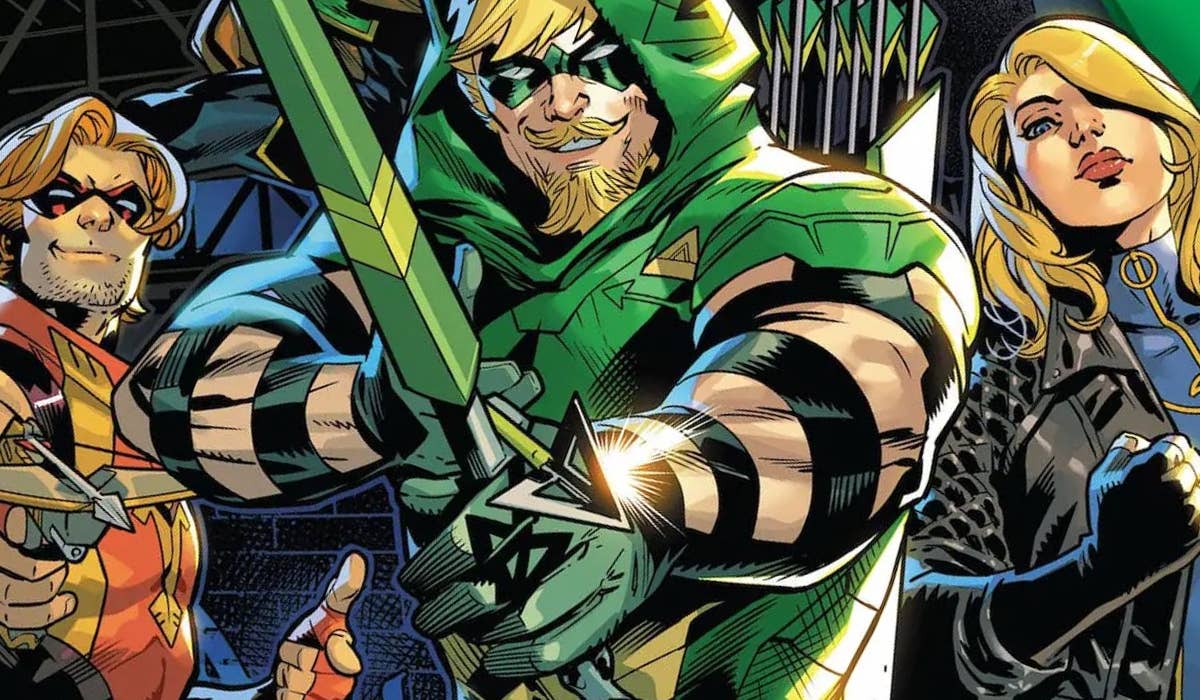
8. Got Wrong: Making Green Arrow Their "Batman." Since they followed Warner Brothers' demand to not have Batman on TV shows, they needed a stand-in for the character, and made Green Arrow a "dark knight." For fans used to the usual version of Oliver Queen -- a billionaire business lord and wisecracking playboy who fights crime by night, but doesn't even get along with Batman -- this was jarring. On the other hand...
7. Got Right: Taking Green Arrow Seriously. Like Robin and Spider-Man, he's been a bit of a quipster, the jokes hiding his pain. Throw in the Robin Hood-like costume, and it's a little difficult to take Ollie seriously. But Arrow had him written as a serious character, with plenty of depth, and Stephen Amell was more than up to the challenge. They could have made him a little less dark, and still made him completely watchable.
6. Got Wrong: The Titans. The casting of Titans was not an issue. But making the show as dark as they did was.
As Batman has said in other media, the point of taking on kids and making them his Robins isn't so that they'll end up like him, but so that they won't. Yet, looking at this version of Dick Grayson (Brenton Thwaites) and Jason Todd (Curran Walters), it's clear that this Earth's version of Bruce Wayne did make them too much like him. Throw in the demonic stuff, and just how ruthless Deathstroke (Esai Morales) could be, and you have something that would have been rated R even without the sex scenes.
Actually, one casting was a terrible mistake. When I saw Iain Glen, at that point best known as Ser Jorah Mormont on Game of Thrones, come out of Wayne Manor to greet Dick, I thought he was a great choice to play Alfred. But he was Bruce instead, a role he was way too old for.
5. Got Right: The Justice Society of America: The Next Generation. Okay, the writers and producers of Stargirl never explained how their version of the original JSA got started in the 1940s and were still alive and relatively young in 2010. But they did a terrific job of showing what it would really be like to be both a teenager and a superhero, with Brec Bassinger as Courtney Whitmore/Stargirl, Yvette Monreal as Yolanda Montez/Wildcat, Cameron Gellman as Rick Tyler/Hourman, and Anjelika Washington as Beth Chapel/Dr. Mid-Nite.
And, in what might be the most trivial piece of trivia of all time, but I noticed it, and liked it: As far as I know, Yvette Monreal is the first actor, of either gender, to play a superhero whose secret identity has the same initials.
4. Got Wrong: Teasing Batman, But Not Delivering. Batman, under that name and under his real name of Bruce Wayne, was mentioned on nearly every episode of Batwoman (on the pre-Crisis Earth-1). He was mentioned on episodes of Supergirl (on the pre-Crisis Earth-38). On The Flash, "BRUCE" was another name listed on the phone of the pre-Crisis Earth-2's Flash. Iain Glen played Bruce, but not in costume, on Titans (on Earth-9, pre- and post-Crisis). Kevin Conroy, long the voice of Batman in the DC Animated Universe, played Bruce, but not in costume, on the Batwoman installment of Crisis (on Earth-99).
A much-older (and much-fatter) Burt Ward, who played Dick Grayson, a.k.a. Robin, on the 1966-68 Batman TV series, was shown at the beginning of Crisis. So was Robert Wuhl, who played news photographer Alexander Knox in the 1989 Batman film.
But, in 12 years, except for a shadowy figure whose face would couldn't see on 1 episode of Titans, we never saw Batman in costume. Nor did we ever find out what happened to the main universe's Batman after he left Gotham City.
3. Got Right: Crisis On Infinite Earths. When the Marvel Cinematic Universe had its Infinity War, it was the end of half of all life in the universe, and they had to fix it. In the 1985 DC Comics series COIE, all the life in every universe was at risk. In the Arrowverse's adaptation, the Anti-Monitor actually went further: He did kill all the life in all the universes -- including, by inference, everyone watching -- except for, as it turned out, 11 individuals: Himself, 9 heroes, and Lex Luthor (Jon Cryer). And the heroes, plus Lex, had to restore life to the universe, and do it without a Superman, a Batman, or a Wonder Woman (though they did have a Supergirl, and a Batwoman, then played by Ruby Rose).
And they did it. In other words, in this way, the Arrowverse topped the MCU -- and the movies' DC Extended Universe. They took the darkest possible storyline, and still provided it with hope. They went for a young audience, and told an uplifting story, in a way that the MCU couldn't quite do, and the dark as hell DCEU didn't even try to do.
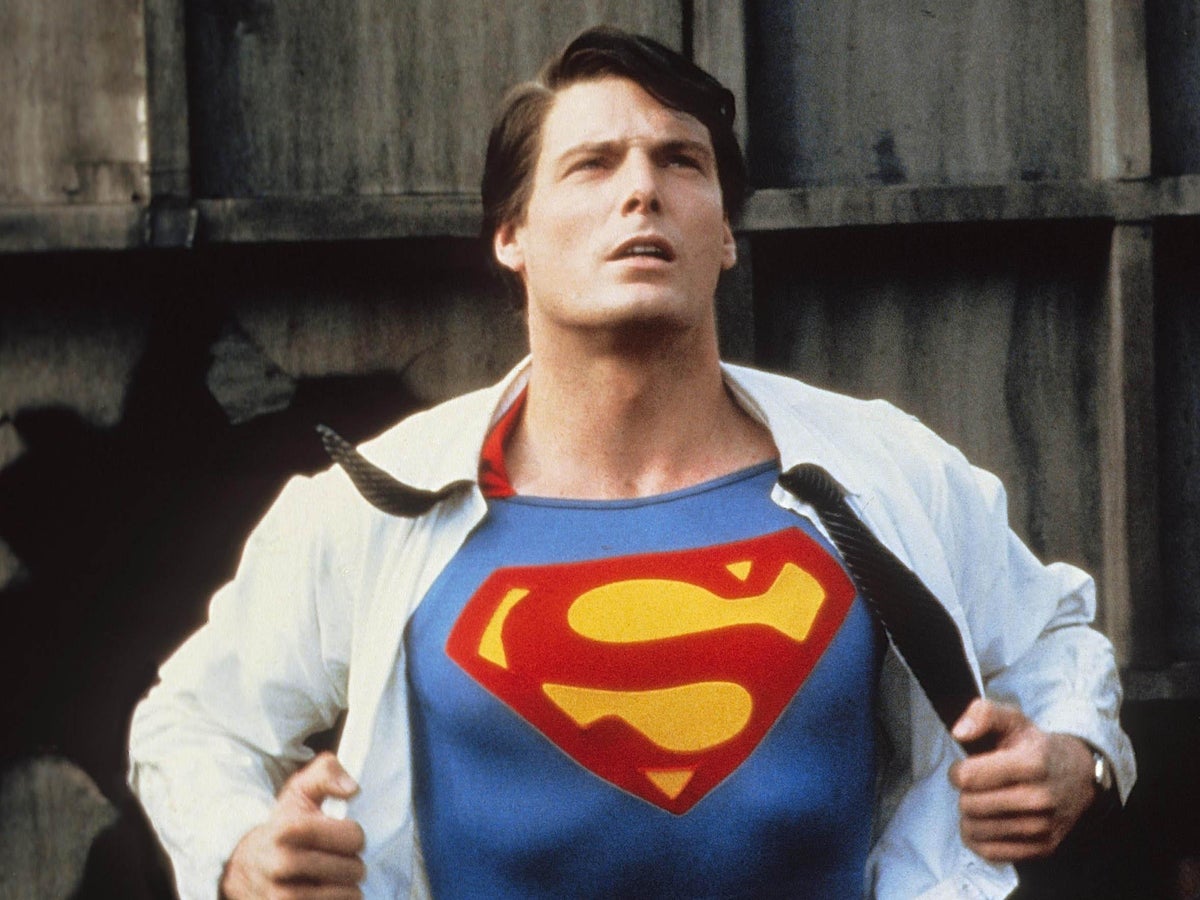
Bringing Brandon Routh, from the 2006 film Superman Returns, to play an older Superman of Earth-96, suggesting (but not outright saying) that he was the same Superman that Christopher Reeve played in 4 films from 1978 to 1987, emotionally wounded but still fighting for humanity, was the symbol of all of this.
When Earth-38's Lois Lane asks him why he added black to his S-like House of El crest, he said, "Because, Lois, even in the darkest times, hope cuts through. Hope is the light that lifts us out of the darkness."
2. Got Wrong: No Wonder Woman. The real world's leading female superhero character was mentioned on an episode of Batwoman. There was a notation for "DIANA" on the speed-dial of the pre-Crisis Earth-2's version of Barry Allen, the Flash, suggesting Princess Diana of Themyscira, a.k.a. Diana Prince, a.k.a. Wonder Woman. (In addition to "DIANA," "BRUCE" and "HAL," there was also a "CLARK.")
Themyscira, home of the Amazons and birthplace of Wonder Woman, was shown on an episode of Legends and mentioned on 2 others. And Diana's adoptive sister, Donna Troy, a.k.a. Wonder Girl (Conor Leslie -- white, and thus no relation to Javicia), was a major character on Titans, and mentioned Diana a few times.
But that was all we got. The Arrowverse's version of Crisis On Infinite Earth gave us a nod to Chris Reeve's Superman on Earth-96, and showed Burt Ward's Dick Grayson on Earth-66. (Adam West, who played Batman opposite Ward's Robin on the 1966-68 Batman series, had already died.) But no mention was made of any live-action Wonder Woman: Not Lynda Carter from the 1975-79 TV series, not Adrianne Palicki from the failed 2011 TV pilot, not Gal Gadot from the DCEU, not even Linda Harrison from the failed 1967 TV pilot. (Carter did appear on Supergirl, as Earth-38's President of the United States, though her character was forced to resign when she was exposed as an alien.)
When the end of their Crisis showed that the Multiverse had indeed been restored, including Earth-96 and its Superman, I wanted to see a scene of Ward as Dick, Routh as Clark Kent, and Carter as Diana Prince, standing together at the grave of Bruce Wayne, with an image of West carved into the tombstone. It would have been as close to perfect as they could have gotten, short of West still being alive.
1. Got Right: Superman and Lois Lane. Not just the series titled Superman & Lois, but the dynamic between them. Tyler Hoechlin gave us the best Superman since Chris Reeve, and the best Clark Kent ever. And Elizabeth "Bitsie" Tulloch took Lois to heights she'd never reached before.
No more of the games, with Lois trying to prove Clark is Superman, and Clark trying to prevent her from finding out. No more of Lois as a "damsel in distress" every week. This showed both of them as fully-rounded characters, complete with the difficulties that come from middle age and raising adolescents -- which, sometimes, is harder than saving the world.


:max_bytes(150000):strip_icc()/arrow-2000-e74e29e1fb2d4d9692084a6ce452825c.jpg)