Downtown Louisville, Kentucky
This will also allow me to get a Trip Guide done for a 49th State, leaving just 1 to go. Unfortunately, the schedule dictates that I won't get to do the 50th and final State, in this case Nevada, until March 7, 2018, as the New Jersey Devils don't make their 1st trip to the expansion Vegas Golden Knights until March 14.
Before You Go. Kentucky can get really hot in the Summer, but this will be the Winter. Both the Lexington Herald-Leader and the Louisville-based Courier-Journal are predicting this for next weekend: Low 30s by day, high teens by night. Bundle up.
Although the Western part of the State is in the Central Time Zone, most of Kentucky, including Lexington and Louisville, are is in the Eastern Time Zone, so you won't have to set your clocks back. And, while Kentucky is, despite its appearance on a map to be Midwestern, historically a Southern State, it never seceded from the Union. Regardless, you won't need a passport, and you won't have to change your money.
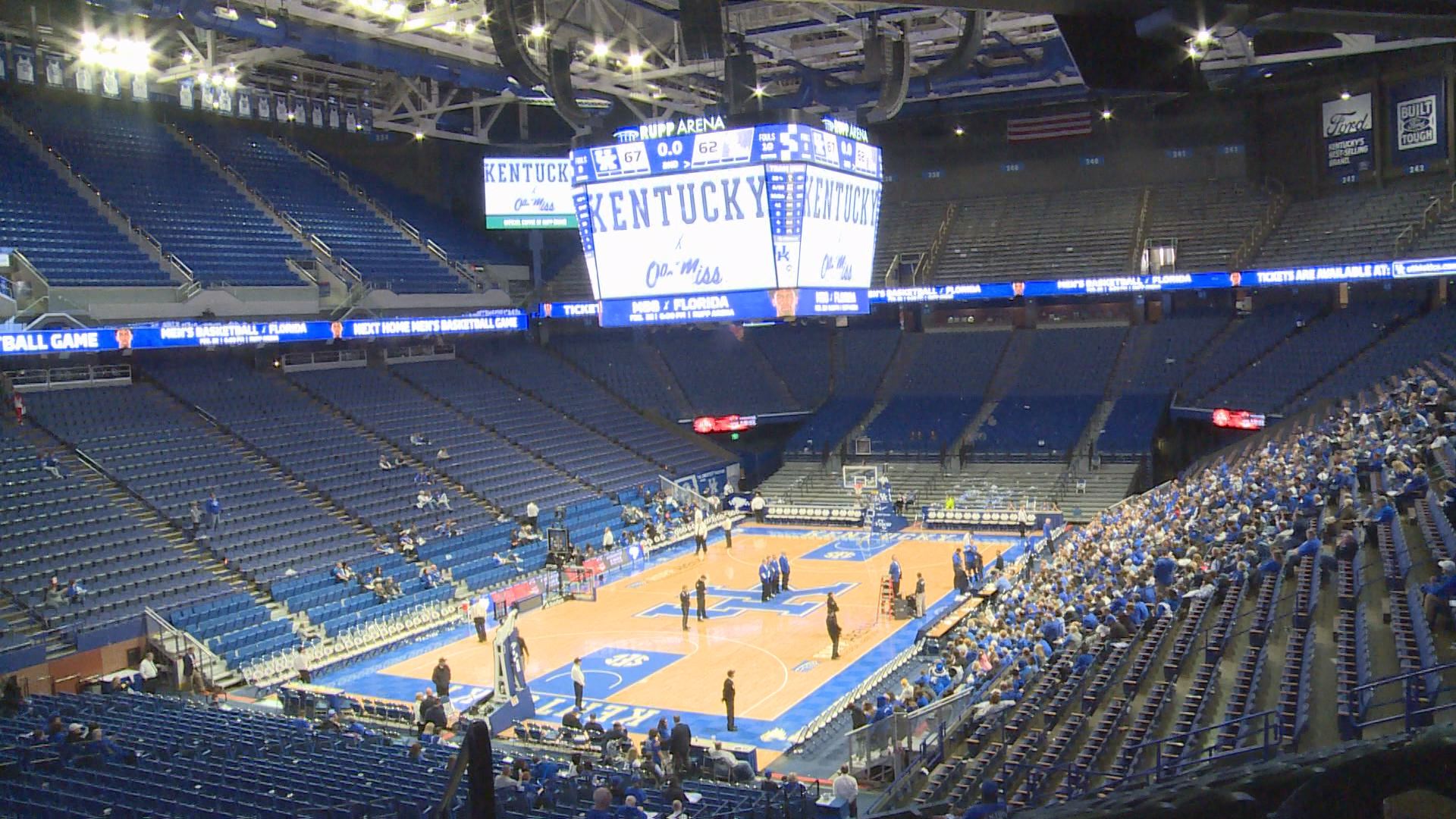
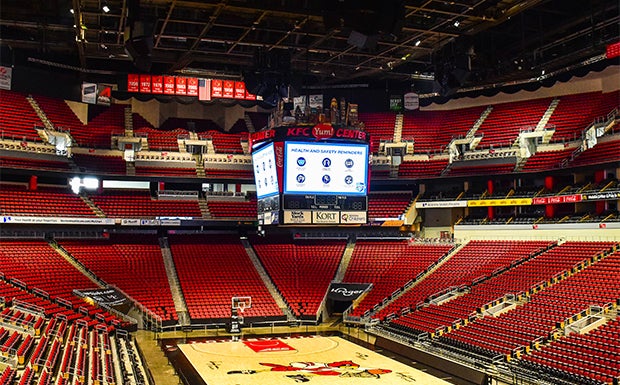
Tickets. Good luck. Rupp Arena seats 23,500 people. The Yum Center seats a little less, 22,090. Those are big arenas, but this game would sell out at either one. You may have to go to StubHub or a similar site.
Ordinarily, Kentucky basketball tickets go for $75 and up, when available. Louisville basketball tickets are a lot cheaper. Only the upper deck usually stays on sale, $65 between the baskets and $25 behind them.
Getting There. It's 706 miles from Times Square in New York to downtown Lexington, and 740 to downtown Louisville. United Airlines does fly nonstop from Newark to both, and a round-trip fare to each city can be had for under $800.
Amtrak doesn't go to either Louisville or Lexington. Greyhound does. Round-trip fare to Louisville is $556, and to Lexington it's $414. These fares can drop to, respectively, $331 and $327 with advanced purchase. The Louisville station is downtown, at 720 W. Muhammad Ali Blvd. The Lexington station is at 477 NW New Circle Road, about 3 miles northeast of downtown. Take Bus 6 to get there.
If you decide to drive, it's far enough that it will help to get someone to go with you and split the duties, and to trade off driving and sleeping. Take Interstate 78 West across New Jersey to Harrisburg, Pennsylvania. There, switch to Interstate 81 South to Williamsport, Maryland. There, switch to Interstate 68 West into West Virginia, to Morgantown. There, switch to Interstate 79 South, to the State capital, Charleston. There, switch to Interstate 64 West, which will take you into Kentucky, and to both Lexington and Louisville.
If you do it right, you should spend an hour and 15 minutes in New Jersey, 2 hours and 45 minutes in Pennsylvania, an hour and a half in Maryland, 4 hours in West Virginia, and, if your destination is Lexington, 2 hours in Kentucky, for a total of 11 and a half hours. Counting rest stops, it's more like 15 hours. If you're going on to Louisville, it'll be more like 3 hours and 15 minutes in Kentucky, for a total of 12 hours and 45 minutes, making it more like 17 hours with rest stops.
Once In the City. Like Massachusetts, Pennsylvania and Virginia, Kentucky officially calls itself a "Commonwealth" rather than a "State," thinking it more independent-sounding. Legally, though, there is no difference. The State is named for the Kentucky River, which itself appears to trace its name to an Iroquois word meaning "on the meadow."

Kentucky Turnpike logo.
Note that it has a Cardinal, not a Wildcat.
The Confederate federal government thus considered Kentucky one of its States, but, officially, it never left the Union. Oddly, the Presidents of both countries were born in Kentucky: Abraham Lincoln in Hodgenville, outside Elizabethtown; and Jefferson Davis in Fairview, in the western part of the State. But neither man lived there as an adult: Lincoln was elected to the U.S. House of Representatives by Illinois, Davis to the U.S. Senate by Mississippi.
Kentucky is famously known for its grass, often called "Kentucky bluegrass," even though it's all green. It's "the Bluegrass State," and the bluegrass form of country music, made up entirely of stringed instruments, traces its origin to the State. It has been said to have been invented by Rosine, Kentucky native Bill Monroe, and even if he isn't the inventor, he and his brother Charlie Monroe popularized term, because their band was known as the Blue Grass Boys.
At any rate, the University of Kentucky used blue as its color before either bluegrass or the blues were invented, but it's convenient. Most likely, the University of Louisville chose cardinal red as a contrast.
Bill Monroe is also known for having written "Blue Moon of Kentucky," which was one side of the 1st record made by Elvis Presley, in Memphis in 1954, on the other side of the blue song "That's All Right." Steve Martin and John Candy famously sang it in "Planes, Trains and Automobiles," even though they were in Illinois at the time. (Although Michael McKean's uniform and car are clearly those of the Wisconsin State Police, which is because the scene was filmed in Wisconsin.)
Louisville -- and that's pronounced LOO-uh-vull, maybe LOO-ee-vill, but never LOO-iss-vill -- is home to 760,000 people, which is more than half of the cities that currently have a Major League Baseball team. But its metro area of just 1.5 million would make it last in MLB and MLS, but larger than New Orleans in the NFL; New Orleans, Oklahoma City and Memphis in the NBA; and Calgary, Ottawa, Edmonton and Winnipeg in the NHL.
Louisville was founded in 1778 by General George Rogers Clark, older brother of William Clark of Lewis & Clark fame. Louisville Gas & Electric (LG&E) runs the electricity. The city is about 72 percent white, 23 percent black, 3 percent Hispanic and 2 percent Asian.
Lexington, originally named McConnell Springs but renamed when the residents heard about the Battle of Lexington and Concord on April 19, 1775, and incorporated as a city in 1783, has about 320,000 people, about 76 percent white, 14 percent black, 7 percent Hispanic and 3 percent Asian. Overall, Kentucky has about 4.4 million residents.

Louisville was struck by anti-German riots in 1855. Eastern Kentucky, along the Big Sandy River which formed a State Line with West Virginia, was the site of the Hatfield-McCoy Feud, which lasted from 1863 to 1891. (The Hatfields were on the West Virginia side, the McCoys on the Kentucky side.)
There was a riot in Louisville in 1968 -- not on April 4, when Martin Luther King was assassinated, but on May 27, when a rumor spread that civil rights activist Stokley Carmichael, who was supposed to speak there, was held up by police before he could get there. In fact, Carmichael had never even been contacted about making an appearance in Louisville.
(UPDATE: On March 13, 2020, just as America was going into lockdown due to the COVID-19 pandemic, 3 white plainclothes officers of the Louisville Metro Police Department (LMPD) forced their way into the home of Breonna Taylor. Her boyfriend, Kenneth Walker, claimed he hadn't heard them announce themselves as police, thought they were intruders, and fired his gun at them, wounding one. In return, they fired 32 shots. Walker wasn't hit, but Ms. Taylor was, 6 times, and died. One of the officers was fired, but all criminal charges against the 3 officers were dropped. The City of Louisville awarded Ms. Taylor's family $12 million in restitution.)
ZIP Codes for Kentucky begin with the digits 40 and 41, including 402 for Louisville and 405 for Lexington. The Area Code for all of Kentucky used to be 502. It still is for Louisville. But when a new one was needed, and Lexington was to be included, it was made 859 -- or UKY for the University on the keypad. The sales tax is 6 percent. The capital is Frankfort, 54 miles east of Louisville, and 25 miles northwest of Lexington.
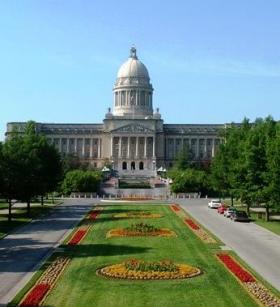
The State House in Frankfort
In Lexington, Limestone Street is the street address divider between East and West, and Main Street between North and South. In Louisville, Main Street is the North-South divider, and 1st Street the East-West. Lexington has no beltway, but Louisville has one, Interstate 465.
The Transit Authority of River City (TARC) runs Louisville's buses. A single ride is $1.75. Lextran runs the buses in Lexington, and it's even cheaper: $1.00.
I was very surprised to find out that the University of Louisville is by far the older school, founded in 1798, while the University of Kentucky wasn't founded until 1865, shockingly late, considering that Kentucky was 1 of the 1st 15 States in the Union.
Notable
non-sports graduates of UK include 14 Governors of Kentucky, and 2 of other
States: J.C.W. Beckham (Class of) 1889, William J. Fields 1896, James Scrugham
1900 of Nevada, Earle Clements 1917, Keen Johnson '22, Albert "Happy" Chandler '24 (Commissioner of Baseball 1945-51), Bert Combs '37, Ned Breathitt '48,
Julian Carroll '54, John Y. Brown Jr. '57, Martha Layne Collins and Paul Patton '59, Steve Beshear '66, Ted Strickland '66 of Ohio, Beverly Perdue '69 of North
Carolina, and Ernie Fletcher '74.
They also include Sportscaster Tom Hammond '67, Outback Steakhouse founder Chris Sullivan '72, Cartoonist Don Rosa '73, Pulitzer Prize-winning reporter Michael York '74, and actress Ashley Judd, who got famous years before going back and completing her Bachelor of Arts degree in 2007. Actor Harry Dean Stanton left the University before getting his degree to serve in World War II, went into acting, and, unlike Judd, never went back.
Alas, aside from Johnny Unitas, the most notable graduate of UL is Mitch McConnell '64, Majority Leader of the U.S. Senate and poisoner of the American political process.
They also include Sportscaster Tom Hammond '67, Outback Steakhouse founder Chris Sullivan '72, Cartoonist Don Rosa '73, Pulitzer Prize-winning reporter Michael York '74, and actress Ashley Judd, who got famous years before going back and completing her Bachelor of Arts degree in 2007. Actor Harry Dean Stanton left the University before getting his degree to serve in World War II, went into acting, and, unlike Judd, never went back.
Alas, aside from Johnny Unitas, the most notable graduate of UL is Mitch McConnell '64, Majority Leader of the U.S. Senate and poisoner of the American political process.
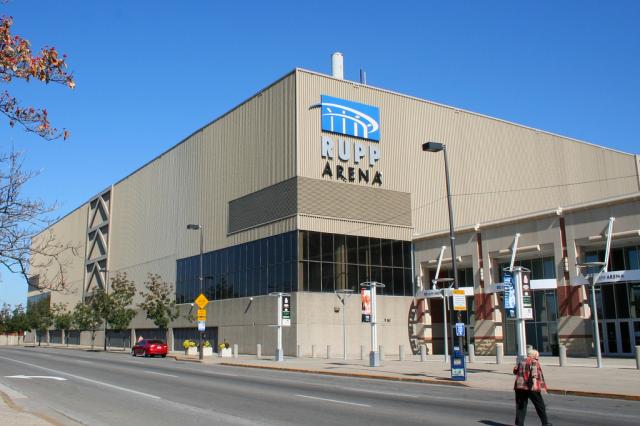
Going In. The official address of Rupp Arena is 430 W. Vine Street, in downtown Lexington, and about a mile north of the University of Kentucky campus. UK is the only Southeastern Conference school to play its home basketball games in an off-campus facility. If you drive in, parking is $10.
He then coached basketball and taught history and economics at Freeport High School in northern Illinois -- and coached the school's 1st black player, William Mosely. It appears that Mosely's race was not an issue for Rupp, who was not a Southerner.
In 1930, he was hired to coach basketball at the University of Kentucky. "The Baron of the Bluegrass" left the post in 1972, for one reason and one reason only: He turned 70, the mandatory retirement age for University employees. He lived long enough to be elected to the Basketball Hall of Fame (while still coaching) and to see the arena that bears his name opened.

Within 2 weeks of this cover, UK would lose the NCAA Final.
Even the Baron wasn't immune to The Dreaded SI Cover Jinx.
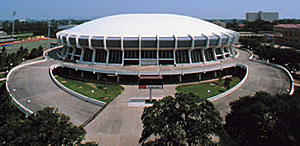
Despite hosting UK basketball, and being named for the school's leading athletic figure, it is owned not by the University, but by Fayette County. It opened in 1976, about a year before Rupp's death, with 23,500 seats, making it the largest basketball-specific building in the world. Only the Charlotte Coliseum would surpass it, and, as it has been demolished, Rupp Arena is, again, 1st in that regard. The court runs southwest-to-northeast.
The official address of the KFC Yum! Center is 1 Arena Plaza, bounded by the downtown streets of River Road, 2nd Street, Main Street and 3rd Street, about 3 miles north of the University of Louisville campus. If you drive in, parking starts at $17 and goes up from there.

It opened in 2010, not because Freedom Hall was too small or in bad shape (despite its age, it was neither), but because it didn't have the precious luxury boxes. There was opposition to the downtown site, as some people wanted the new arena at the Exposition Center site (which includes Freedom Hall), and others wanted it on campus. In the end, things were smoothed over, and the only member of the task force responsible for building the arena to vote against the downtown site was... John Schnatter, the bigoted, greedy founder of Papa John's Pizza.
Food. As you might guess, concessions at the KFC Yum! Center are dominated by the Yum! Brands: KFC, Taco Bell and Pizza Hut. But since it's the University of Louisville, Papa John's has also slithered in. They also have roasted nuts, ice cream, and Skinny Skins potatoes.
The Rupp Arena website is less specific, but mentions, beyond the usual array of comestibles (hot dogs, pretzels, popcorn, soda, ice cream), pizza (Hunt Brothers, not Pizza Hut or Papa John's), bratwursts, grilled chicken sandwiches, pulled pork BBQ sandwiches, and not "hamburgers" or "cheeseburgers," but "Steakburgers."
Team History Displays. Much like the Yankees, the Montreal Canadiens, and, more to the point of basketball, the Boston Celtics and, more recently, Duke University, the University of Kentucky has so much history, and they don't mind telling you all about it, or even shoving it in your face. The word "insufferable" comes to mind.
They've won 50 regular-season Conference Championships since 1926 -- 47 since the founding of the Southeastern Conference in 1933. They've won 31 Conference Tournaments. They've reached the NCAA Final Four 17 times, most recently in 2015. And they've won the NCAA Championship 8 times, 2nd only to UCLA's 11. Various agencies have retroactively awarded pre-NCAA titles, so, by some reckonings, Kentucky may have 11.

The Final Four and National Championship banners.
They don't hang banners for the retroactive titles.
Adolph Rupp won 28 regular-season Conference titles, won 13 Conference Tournaments, reached 6 Final Fours, and won 4 (or 5, or 6, or 7) National Championships. He won them in 1948, 1949, 1951 and 1958. They were retroactively awarded National Championships in 1933 and 1934.
The 1948 and '49 teams were nicknamed the Fabulous Five, and several of their players led the U.S. team to the Gold Medal at the 1948 Olympics in London. Rupp wasn't too confident about his 1958 team, saying they were just "fiddlin' around," so when they made their successful run at the title, they became the Fiddlin' Five.
The NCAA came down on UK after the 1951 point-shaving scandal, found that they'd done other things, and had their 1952-53 season canceled. They then went 25-0 in 1953-54, but when their graduate students were prohibited from playing in the NCAA Tournament, Rupp "took his ball and went home," boycotting the tourney rather than use his remaining players. The Helms Foundation recognized them as National Champions, rather than NCAA Champion LaSalle or NIT winners Holy Cross.
But the most famous game Rupp coached was one that he lost. As the other Southern States were struggling with legally-enforced racial integration, including whether to put black students on their sports teams, Rupp knew the end was near.
At one point, he told his 1965-66 players -- including a not-quite-21-year-old Pat Riley -- that they were ranked Number 1 in the country, Duke was Number 2, and Vanderbilt was Number 3. He wrote this on a chalkboard, and said, "Look at that! One, two, three! All Southern! All white! And you'll never see that again!" He was right.
This team, generally short and thus nicknamed "Rupp's Runts," got to the Final, at the University of Maryland, but their all-white team was defeated by the all-black starting lineup of Texas Western University (soon to become the University of Texas at El Paso, or UTEP), on March 19, 1966. As much as the 1979 Final between Magic Johnson's Michigan State and Larry Bird's Indiana State, this was a watershed moment in college basketball -- and while Rupp made what we now call the Elite Eight 3 more times, he never made the Final Four again.
Rupp was succeeded by Joe B. Hall, who got them to the 1975 Final and won the 1978 National Championship. He was succeeded by Eddie Sutton, who got them to the Final Four in 1984 (part of his unique feat of getting 4 different schools to the Final Four), but another scandal almost got them another "death penalty" in 1989.
Enter Rick Pitino. Having gotten Providence College to a Final Four, he left the Knicks to take over at UK, got them to the Elite Eight in 1992 (losing an overtime thriller to Duke), got them to the Final Four in 1993, won the 1996 National Championship, and got them back to the Final in 1997 -- and then he abandoned perhaps college basketball's most storied team to run the NBA's, the Celtics.
His assistant, Orlando "Tubby" Smith, became the team's 1st black head coach, and he won the 1998 National Championship. John Calipari came aboard in 2009, and won the 2012 National Championship, also reaching the Final Four in 2011, 2014 and 2015. Along the way in 2012, they beat Louisville in the Semifinal, the biggest bragging rights in the State's sports history. (For comparison's sake, Duke and North Carolina have made the same Final Four only once, in 1991. North Carolina lost their Semifinal to Michigan, who then lost the Final to Duke.)
The Wildcats do not retire numbers. They do hang banners of jerseys, with the numbers, honoring 37 players in this manner:
* From the 1920s: Basil Hayden, Burgess Carey and Carey Spicer.
* From the 1930s: Forest Sale, John DeMoisey and Layton Rouse.
* From the 1948 National Champions, all of the Fabulous Five: 12, Ralph Beard; 15, Alex Groza; 22, Cliff Barker; 26, Kenny Rollins; and 27, Wallace "Wah-Wah" Jones. All but Rollins were also members of the 1949 National Champions.
* From the 1951 National Champions: 77, Frank Spivey.
* From the 1954 "National Champions": 6, Cliff Hagan; 16, Lou Tsioropoulos; 20, Gayle Rose; 30, Frank Ramsey; and 42, Bill Evans.
* From the mid-1950s: 22, Jerry Bird; 44, Phil Grawemeyer; and 50, Bob Burrow.
* From the 1958 National Champions, two of the Fiddlin' Five: 24, Johnny Cox; and 52, Vernon Hatton.
* From the 1960s: 10, Louie Dampier; 42, Pat Riley; 44, Cotton Nash; and another 44, Dan Issel.
* From the 1975 NCAA runners-up: 35, Kevin Grevey.
* From the 1978 National Champions: 4, Kyle Macy; 21, Jack "Goose" Givens; and 53, Rick Robey.
* From the 1984 Final Four team: 34, Kenny "Sky" Walker.
* From the 1992 Final Four team: 11, Sean Woods; 12, Deron Feldhaus; 24, Jamal Mashburn; 32, Richie Farmer; and 34, John Pelphrey.
* From the 1996 National Champions: 0 (number zero), Tony Delk. No more recent players have been honored.

Louisville's history isn't nearly as storied. It's sort of like the Michigan State has with Michigan in football: They can hold their heads high with almost anybody, but there's those insufferable, arrogant blue bastards across the State that never shut up about their achievements!
The Cardinals have 15 regular-season Conference Championships, the 1st in 1967, and the last 3 since moving to the Atlantic Coast Conference (ACC); 19 Conference Tournament wins, starting in 1928; won the most recent of each in 2014; have been to 10 Final Fours, 1959, 1972, 1975, 1980, 1982, 1983, 1986, 2005, 2012 and 2013; and have won 3 National Championships, in 1980, 1986 and 2013.
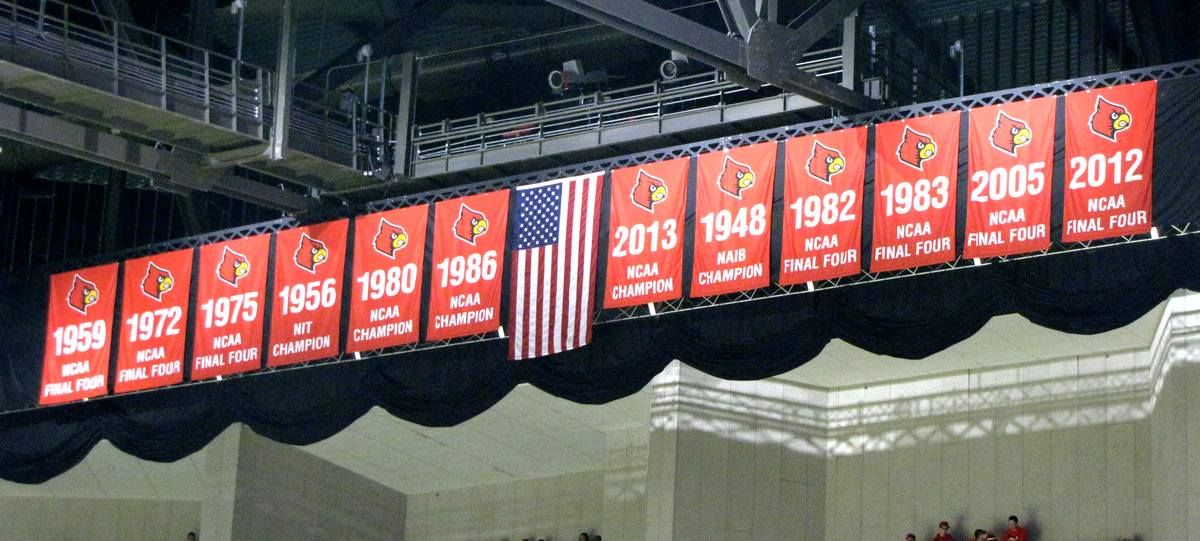
They have retired 4 numbers: 8, for forward Charlie Tyra, Class of 1957, who played 4 seasons for the Knicks; 31, for center Wes Unseld, Class of 1968, a Hall-of-Famer for the Washington Bullets; 35, for guard Darrell Griffith, star of their 1980 National Champions, a.k.a. "Doctor Dunkenstein," and a star with the Utah Jazz; and 42, for center Pervis Ellison, who led them to the 1986 National Championship just before turning 19, known as "Never Nervous Pervis," but whose injury-riddled pro career got him nicknamed "Out of Service Pervis."
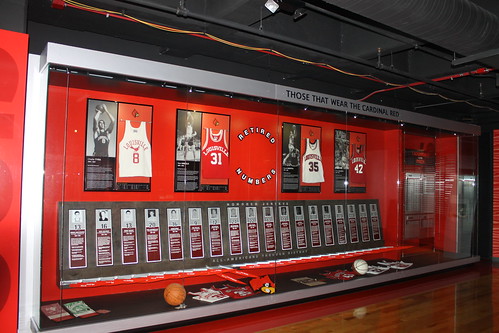
Louisville honors 20 players with banners, in addition to those 4:
* From the 1940s: 13, center George Hauptfuhrer; 13, guard Kenny Reeves (not to be confused with the coach from The White Shadow); and 16, forward Jack Coleman.
* From the 1950s: Tyra; 9, guard Phil Rollins; 12, guard Jim Morgan; 16, forward Chuck Noble; 20, forward Bob Lochmueller; and 24, forward Don Goldstein.
* From the 1960s: Unseld; 13, center Bud Olsen; 14, guard Butch Beard; and 22, forward John Turner.
* From the 1972 Final Four team: 15, guard Jim Price.
* From the 1975 Final Four team: 10, guard Junior Bridgeman; and 20, guard Allen Murphy.
* From the 1980 National Champions: Griffith; 22, forward Rodney McCray; and 43, guard Derek Smith.
* From the 1982 and 1983 Final Four teams: McCray, Smith, and 4, guard Lancaster Gordon.
* From the 1986 National Champions: Ellison, and a pair of players from Camden, New Jersey, who would go on to play for the Los Angeles Lakers' 1987 and 1988 NBA Champions: 20, guard Milt Wagner; and 55, forward Billy Thompson.
* From the 1990s: 32, guard DeJuan Wheat.
Unseld is the only Louisville player in the Basketball Hall of Fame. The coaches of their National Champions are also in: Denny Crum, 1980 and 1986; and... Rick Pitino, once despised by Cardinal fans for having coached UK, but he revived their program as much as he revived the Wildcats', and took them to the 2013 title.
For a while, both teams were damn near impossible to root for, because both coaches, Pitino and Calipari, were raging egomaniacs, seemingly more concerned with their hair, their suits, and their own glory, rather than their teams', and not unwilling to treat the rules of ethics as things that didn't apply to them.
I used to think Washington Post columnist and ESPN Pardon the Interruption co-host Tony Kornheiser coined the phrase "preening schmo" to describe one of them, but I couldn't remember which. (Turned out, it was neither: It was Brian Billick, then the head coach of the Baltimore Ravens.)
This past June 15, the NCAA ended the Pitino-Calipari rivalry by charging Pitino with failure to monitor his program, as a result of a sex-for-pay scandal. The investigative process is not yet done: While St. Joseph's in 1961, both Villanova and Western Kentucky in 1971, UCLA in 1980 (when they lost to Louisville in the Final), Memphis in both 1985 and 2008, Michigan's "Fab Five" in 1992 and 1993, Massachusetts in 1996 (coached by Calipari), Minnesota in 1997 (losing to Kentucky in the Semifinal), and Ohio State in 1999 were stripped of their Final Four berths by the NCAA, Louisville could end up being the 1st NCAA basketball program to be stripped of a National Championship.
Kentucky and Louisville have actually not met each other on the court as many times as you might think, largely due to not being in the same league. They first met in 1913, but met only 3 times from 1922 to 1983, before being paired in the Elite Eight of the 1983 NCAA Tournament in Knoxville, Tennessee. (UL won.) They've met in the Big Dance twice more, Kentucky winning both times, in the 2012 Semifinal in New Orleans, and in the 2014 Sweet Sixteen in Indianapolis. UL won the most recent meeting, but UK won 8 of the previous 9, and holds a 34-16 overall edge.
In football, they first met in 1912, but it was a rare rivalry until 1994, when they began to meet for the Governor's Cup. Louisville won this year's game, to tie the series at 15-15.
Kentucky also has rivalries with Southeastern Conference teams Tennessee (fueled mainly by football), Mississippi State (by basketball), and Louisiana State (by both). They also have a cross-conference rivalry in both sports with Indiana. Louisville has rivalries with the universities of Cincinnati (their football teams play for a trophy known as the Keg of Nails) and Memphis.
(UPDATE: Through the 2019 football season, Kentucky leads Louisville 37-16 in basketball, and has taken the lead in football, 17-15. In their other major football rivalry, Kentucky trails Tennessee by a whopping 81-25-9; in their other major rivalry, Kentucky leads Indiana 32-25 in basketball, but trails them 18-17-1 in football.)
The schools have been much less successful in football. UK has only 1 outright SEC Championship, won in 1950, coached by Bear Bryant, and quarterbacked by Babe Parilli, later Joe Namath's backup on the Super Bowl Jets. They shared the SEC title with Georgia in 1976. And that's it. Their legends include Parilli, George Blanda, Bob Gain, Steve Meilinger, Lou Michaels, Art Still, Jeff Van Note, Dermontti Dawson and Tim Couch.
They have 2 retired numbers, but none of those are among them: 21, for 1950s running back Calvin Bird; and 22, for 1980s running back Mark Higgs. I can't figure out why: Neither led them to a major title, neither had a great pro career, and neither (as is sometimes the case with retired numbers) died while still an active player.
Louisville has been more successful in football than Kentucky, winning Conference titles in 1970, 1972 (both in the Missouri Valley Conference), 2000, 2001, 2004 (those 3 in Conference USA), 2006, 2011 and 2012 (those 3 in the Big East, before moving into the ACC). In 2006, they were awarded the Lambert Trophy, for "the best college football team in the East."
As for notable players, in 1954, the produced perhaps the greatest quarterback who has ever lived, Johnny Unitas. His Number 16 is the only one they've retired, and a statue of him stands outside Cardinal Stadium. (UPDATE: They have since added the Number 8 of Lamar Jackson, the 2017 Heisman Trophy winner.)
Other Cardinal football greats include Super Bowl-winning Jet John Neidert, Doug Buffone, Bruce Armstrong, Joe Jacoby, Mark Clayton, Frank Minnifield, David Akers and Deion Branch.
Stuff. The Cardinal Authentic Store is in the Yum! Center's main lobby. Adidas makes all of UL's clothing. There is a UK Team Shop at Rupp Arena, but the University website doesn't say where it is. UK's bookstore is at 334 Lexington Avenue, UL's at the Swain Student Activities Center at 2100 S. Floyd Street.
Last year, Tom Wallace and Cotton Nash collaborated on The University of Kentucky Basketball Encyclopedia. The DVD 100 Years of Kentucky Basketball was released in 2006. There don't seem to be corresponding books and DVDs about Louisville basketball. Also available are DVDs of the National Championship games of 1978 (UK), 1980 (UL), 1986 (UL), 1996 (UK), 1998 (UK), 2012 (UK) and 2013 (UL).
During the Game. Kentucky is in the South, so the best advice I can give you is to stick with the home fans, and don't antagonize the visitors. If you abide by this, your experience will be more "Southern hospitality" than "Southern sports rivalry."
Louisville's fight song is "Fight! U of L." Kentucky's is "On, On, U of K." Not particularly imaginative. Louisville's mascot is officially "The Cardinal Bird," but is nicknamed Louie, as in "Louie-ville." His face resembles the logo on their football helmets, rather than any other Cardinals known to sports, such as the St. Louis baseball team.

Kentucky's mascot is a bit more complicated. They have a live one, not a wildcat, but a bobcat, named Blue. He is kept at the Salato Wildlife Education Center, near the State capital of Frankfort, and is never taken to games. Not because he'd be too dangerous. In fact, it's the opposite: Despite being the mascot of many high schools, a few colleges, and, formerly, the Charlotte NBA team that has reclaimed the Hornets name, bobcats are naturally shy, and don't handle crowds well.
Instead, UK uses 2 costumed mascots. The 1st one, who debuted in 1976 (no doubt due to the success of the San Diego Chicken), is usually called simply "The Wildcat." At some point, people began calling him "Scratch." A few years later, a secondary mascot -- possibly meant to be the son of the preceding character -- was introduced, and he is officially named Scratch. He's said to be more child-friendly. He wears his hat backwards, drinks Mountain Dew, and "loves to party." In other words, he's stuck in the early 1990s.

The Wildcat, left, and Scratch.
I can find no references to well-known postgame bars, or to places where New Yorkers gather in or around Louisville or Lexington.
If you visit Kentucky during the European soccer season, which is now around its midpoint, the main "football pub" in Louisville is Molly Malone's, at 933 Baxter Avenue, about 2 miles southeast of downtown. Bus 23 or Bus 40.
Sidelights. Before the Yum! Center, UL played basketball at the 18,865-seat Freedom Hall from 1956 to 2010. It was home to the Kentucky Colonels of the American Basketball Association from 1970 to 1976, winning the 1975 ABA Championship.


The Beatles never played in Kentucky, but Elvis Presley sang at Freedom Hall on November 7, 1971; June 26, 1974; July 23, 1976; and May 21, 1977.
Despite its age and its replacement by the Yum! Center, there are no plans to close or demolish Freedom Hall. It remains part of the Kentucky Exposition Center, site of the State Fair. Also part of the complex is Cardinal Stadium. Known as Fairgrounds Stadium from 1956 to 1982, it is one of the largest and greatest stadiums in minor-league baseball history, seating up to 47,925 fans for Triple-A baseball or University of Louisville football.
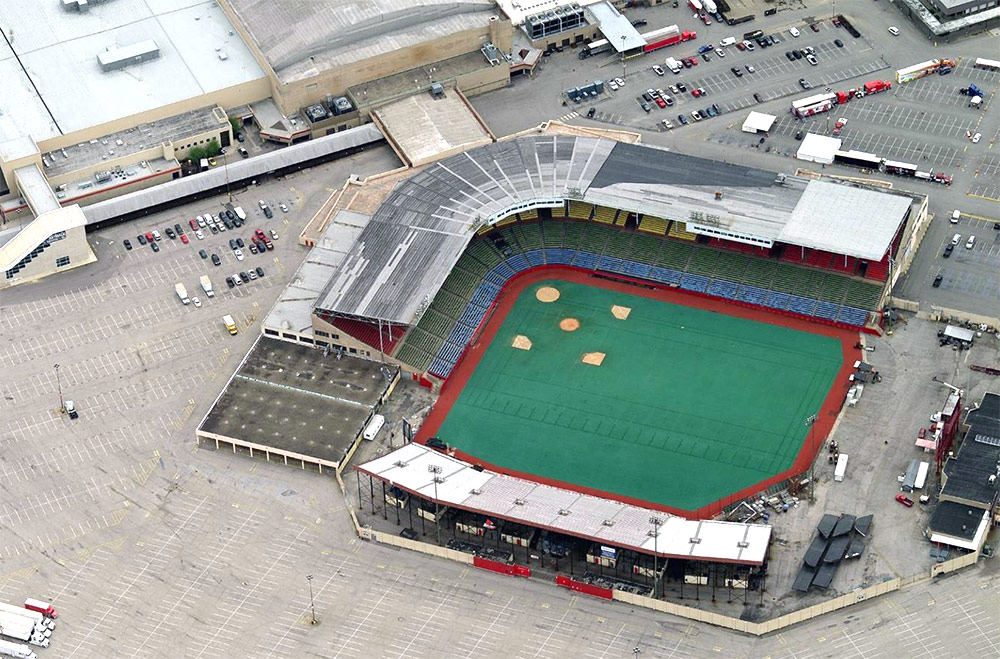
Louisville thus remained, and still does, without a Major League Baseball team since 1899. As it would rank dead last in metropolitan area population in MLB and MLS, next-to-last in the NFL, 4th-from-last in the NBA, and last among U.S. teams (5th-from-last counting Canadian ones) in the NHL, don't count on it getting a team in any major league anytime soon.
The Kentucky Exposition Center site also includes the Kentucky Kingdom theme park. 937 Phillips Lane, on the grounds of the Kentucky Exposition Center. Bus 18.
Before the construction of Cardinal Stadium, the Colonels played at Parkway Field from 1923 to 1956. Here, they won IL Pennants in 1925, 1926, 1930, 1939, 1940, 1944, 1945, 1946 and 1954. The stadium is gone, but the field still exists. 101 Eastern Parkway, on the UL campus. Bus 2.

Previously, Louisville baseball teams had played at wooden stadiums named Eclipse Park. The 1st was at 2801 W. Broadway, at 28th Street, about a mile west of downtown. It opened in 1874, and the Louisville Eclipse of the American Association began playing there in 1882, changed their name to the Louisville Colonels in 1885, won the AA Pennant in 1890, and joined the National League in 1893. But the ballpark burned down after that season. A Taco Bell is now on the site.
The 2nd Eclipse Park opened in 1894, across the street, at 2800 W. Broadway. It burned down in 1899, and this is a major reason why the team was folded by the NL after the season, its assets bought by the Pittsburgh Pirates -- mainly because their greatest asset was the contract of their best player, Pittsburgh native Honus Wagner. This team also featured Fred Clarke, Pete Browning, Hugh Jennings, Rube Waddell, and William "Dummy" Hoy, a fantastic all-around player despite being deaf. An industrial park is on the site now. For both, Bus 23.
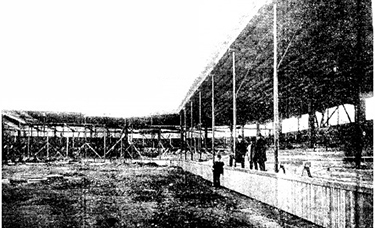
The best picture I could find of Eclipse Park II.
I couldn't find any of Eclipse Park I.
The 3rd and last Eclipse Park opened in 1902, for a minor-league team that assumed the Colonels name. They won IL Pennants there in 1909, 1916 and 1921. The Louisville Breckenridges, or Brecks for short, played football there from 1902 to 1922, including the 1st 3 seasons of the NFL (1920-22). And UL played football there from 1909 to 1922. Buildings of Simmons College are now on the site. 1000 S. 7th Street at Kentucky Street, about a mile south of downtown, in the formerly Irish neighborhood of Limerick. Bus 4.
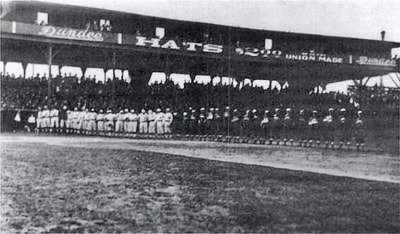
Eclipse Park III
Currently a Cincinnati Reds farm club, after spending most of their history with the St. Louis Cardinals (hence "Redbirds," not named for the UL Cardinals), the Louisville baseball club has featured such legends as Honus Wagner, Willie McGee, Vince Coleman, Deion Sanders, Adam Dunn, Joey Votto and Aroldis Chapman.
Louisville Slugger Field opened in 2000, with 13,131 seats, making it one of the largest in the minor leagues. The Bats won the Pennant in 2001, the 19th and most recent Pennant won by a Louisville team. It is also home to Louisville City FC of the United Soccer League, the 2nd division of American soccer. 401 E. Main Street, downtown, just short of the Ohio River waterfront, at the interchange of Interstates 64 and 65.

UPDATE: In 2020, the 11,700-seat Lynn Family Stadium opened, and Louisville City's owners moved the team into it. In 2021, the owners also entered the National Women's Soccer League, introducing Racing Louisville FC, who also play at Lynn Family Stadium. This team is named partly for Kentucky's horse racing tradition, but also for several European teams, which started out as footracing clubs. 350 Adams Street, about 2 miles east of downtown. Bus 15 will get you to Market & Shelby, a 15-minute walk away.

Lynn Family Stadium, with the Louisville skyline in the background
But the most famous sports venue, and the most famous building, in Kentucky is Churchill Downs, home of the Kentucky Derby, known as "The Run for the Roses" and "The Most Exciting Two Minutes In Sports," since it opened in 1875. The current grandstand, with the famed twin spires, opened in 1895. Luxury suites were added in 2005, almost obscuring the spires, but the place is still loaded with tradition.

The front entrance. The statue is of Barbaro
2006 Kentucky Derby winner, whose career ended
and whose life was cut short by an injury in the Preakness.
The Derby, the 1st leg of U.S. thoroughbred racing's Triple Crown, is still run annually, shortly after 6:00 PM on the 1st Saturday in May. Other than the Triple Crown, the biggest day in U.S. racing is the Breeders' Cup, and Churchill Downs has hosted it more often than any other track, 8 times: 1988, 1991, 1994, 1998, 2000, 2006, 2010 and 2011. It will host the Cup again in 2018.
There is a Kentucky Derby Museum on the grounds. 700 Central Avenue, about 4 miles south of downtown. Bus 4.

/cdn.vox-cdn.com/uploads/chorus_image/image/47044348/Screen_Shot_2015-08-27_at_10.19.42_PM.0.0.png)
UPDATE: Because of racist remarks made by Papa John's founder and CEO John Schnatter, the Papa John's name was taken off, and it's now just Cardinal Stadium.


It was named Stoll Field, and a stadium for UK football was built on the site in 1916, renamed McLean Stadium in 1924, named for Price McLean, a Kentucky center who died from injuries sustained in a game against the University of Cincinnati the year before. Its 37,000 seats proved too small for modern college football, and the new stadium was built. The UK marching band now practices on the site.
UK plays football at Kroger Field, which was known as Commonwealth Stadium from its 1973 opening under earlier this year, when the Kroger supermarket chain bought the naming rights. Unusual among football fields, due to the angle of the Sun, the 61,000-seat bowl has a field pointing east-to-west. Ironically, the stadium in the State known for its grass has had artificial turf since 2015. 1540 University Drive, about 2 miles south of downtown. Bus 5 from downtown.

The closest NHL team is different for each: The Nashville Predators and 177 from Louisville, and 214 from Lexington, while the Columbus Blue Jackets are 189 from Lexington and 206 from Louisville. For the moment, the Columbus Crew are the closest MLS team, 192 from Lexington and 213 from Louisville. The new Nashville franchise would complicate this even if the Crew don't end up moving to Austin.
Kentucky State University, in the capital of Frankfort, won the "National Championship of black college football" 3 straight seasons: 1933, 1934 and 1935. With integration allowing black students into UK and UL, KSU's enrollment seriously declined, and the school now competes in NCAA Division II.
In addition to his Freedom Hall shows, Elvis sang at the Rialto Theater (now the Palace Theatre, 625 S. 4th Street) on December 8, 1955; and the Jefferson County Armory (now the Louisville Gardens, also downtown at 525 W. Muhammad Ali Blvd.) on November 25, 1956.
The aforementioned Pee Wee Reese is buried at Resthaven Memorial Park, 4400 Bardstown Road, about 9 miles southeast of downtown Louisville. Bus 40. The aforementioned Earle Combs is buried at Richmond Cemetery, 606 E. Main Street in Richmond, about 30 miles southeast of Lexington, and not reachable by public transportation.
The Kentucky Horse Park is a working horse farm and an educational theme park that opened in 1978, "dedicated to man's relationship with the horse." Man o' War, the leading racehorse of the 1920s and a benchmark for them thereafter, is buried there. So is Cigar, the winner of the 1995 Breeders' Cup Classic who retired as the all-time money-winning horse. So is John Henry, the 1980s horse that Cigar replaced as the all-time money-winning horse. 4089 Iron Works Parkway, about 9 miles north of downtown Lexington. No public transportation.
The Kentucky Horse Park also has a statue of Secretariat, the 1973 Triple Crown winner, but he's buried at Claiborne Farm. 703 Winchester Road in Paris, 91 miles east of Louisville and 19 miles northeast of Lexington. No public transportation.
Whirlaway, the 1941 Triple Crown winner, and Citation, the 1948 Triple Crown winner, both ridden by Eddie Arcaro (the only jockey to win the Triple Crown twice), were born, trained, housed, died and buried at Calumet Farm. 3301 Versailles Road, about 6 miles west of downtown Lexington. No public transportation.
Keeneland Race Track hosted the 2015 Breeders' Cup, and annually hosts the Blue Grass Stakes. 4201 Versailles Road, in Lexington, about 6 miles west of downtown. Bus 21.
Of course, Louisville's, Kentucky's, and perhaps America's and even the world's greatest sports icon -- emphasis on "The Greatest" -- was not a horse. Rather, he floated like a butterfly, and stung like a bee. The Muhammad Ali Center opened in 2005 in the Champ's hometown, even though he hadn't lived there since 1960. (He lived, subsequently, in Las Vegas, Miami Beach, Houston; Cherry Hill, New Jersey; Berrien Springs, Michigan; and Phoenix.)
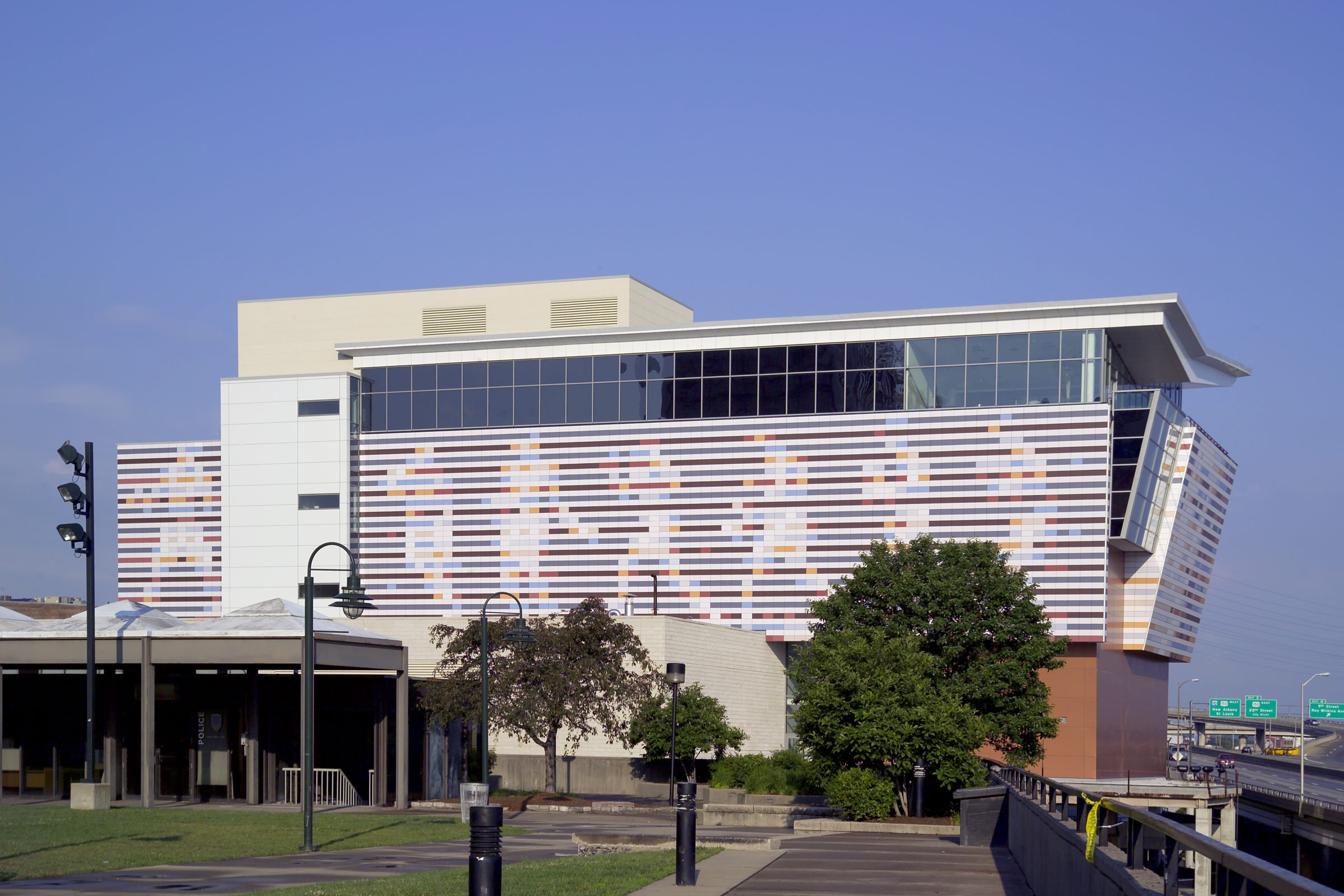
He and his wife Lonnie established the Center to teach, and to show how his life reflected, what they called his "six core principles of confidence, conviction, dedication, giving, respect, and spirituality." Indeed, his dedication changed him from an unknown young man, to one of the most exciting men alive, to (following his decision to refuse to accept being drafted) one of the most hated men alive, to (once people realized he had a point) one of the most admired men alive. 144 N. 6th Street. Admission is $12.
Ali is buried at Cave Hill Cemetery. So is Pete Browning, the Louisville native and star outfielder for the 1880s Louisville Eclipse, who first contacted John F. "Bud" Hillerich Jr., son of the founder of Hillerich & Bradsby, about making him a proper bat. As Browning was nicknamed the Louisville Slugger, so that became the name of any bat the company produced. Oddly, despite this role, and a .341 lifetime batting average, he is not in the Baseball Hall of Fame.
Also buried there is Harland Sanders, founder of Kentucky Fried Chicken. He never served in the military: "Kentucky Colonel" is a civilian award given by the Governor (in Sanders' case, Ruby Laffoon in 1935) for meritorious service to the State.
Also buried there is the city's founder, George Rogers Clark; his brother William's grandson, Meriwether Lewis Clark Jr., founder of Churchill Downs (but William is buried in St. Louis); Thruston Morton, who served Kentucky in the U.S. House of Representatives from 1947 to 1953 and the Senate from 1957 to 1968; and Harry Pulliam, the National League President who ruled that the 1908 New York Giants-Chicago Cubs "Fred Merkle Game" had to be replayed, giving the Cubs the Pennant, and was driven to suicide by the controversy. 701 Baxter Avenue, about 2 miles southeast of downtown. Bus 23 or Bus 40.
A block to the west of the Ali Center, at 727 W. Main Street, is the Kentucky Science Center. A block to the west of that, at 829 W. Main Street, is the Frazier History Museum -- not named for Ali's great rival, Smokin' Joe Frazier. As far as I know, neither the Ali Center nor the Frazier Museum is run by a man named George whose title is "Foreman."
Across the street from the Frazier Museum, at 800 W. Main Street, is the Louisville Slugger Museum, dedicated to the history of baseball bats, in particular the eponymous bat made by Hillerich & Bradsby. A mockup they call "The World's Largest Baseball Bat" is outside, although, at 120 feet, it is exactly as tall as the smokestack built outside the old Yankee Stadium, designed to look like a Babe Ruth model Louisville Slugger (with the company's participation).
In UK's seat of Lexington, the Mary Todd Lincoln House, where Abe's wife grew up, is at 578 W. Main Street, just a block north of Rupp Arena. Ashland, the estate of early Kentucky political figure Henry Clay, is at 120 Sycamore Road, about 2 miles southeast of downtown. Bus 11.
In 1853, Stephen Foster wrote "My Old Kentucky Home," which is recognized as the State Song, and is played before the running of the Kentucky Derby, allegedly making even the most hardened and cynical of people weep with sentiment. Somehow, the song became associated with Federal Hill, the farm and mansion owned by U.S. Senator John Rowan, which is now My Old Kentucky Home State Park. 501 E. Stephen Foster Avenue, in Bardstown, 42 miles southeast of Louisville, and 58 miles southwest of Lexington. No public transportation.
There are 2 Presidents traditionally associated with Kentucky. Although born in Virginia, Zachary Taylor grew up in Louisville, became the main hero of the Mexican-American War, and was elected President in 1848. The former General known as Old Rough and Ready tried to reconcile the two sides of the debate over slavery, but died in office on July 9, 1850.
His house, Springfield, is at 5608 Apache Road, 7 miles east of downtown Louisville. He is interred at Zachary Taylor National Cemetery, at 4701 Brownsboro Road, a 15-minute walk away. Both can be reached by Bus 15.
I said that Churchill Downs was the most famous building in Kentucky, but this is because the log cabin that serves as Abraham Lincoln's "birthplace" is a re-creation of the original. Actually, 7 Presidents were born in log cabins. Chronologically: Andrew Jackson, Taylor, Millard Fillmore, James Buchanan, Lincoln, Ulysses S. Grant and James Garfield. But not, as the 1840 campaign songs said, William Henry Harrison.
Abraham Lincoln Birthplace National Historical Park consists of a recreated log cabin, designed to look like the one that Abe's father, Thomas Lincoln, built, and where Abe was born on February 12, 1809, and lived for his 1st 7 years. The cabin is indoors, inside what looks like a small Greek temple, making it look more like a tomb than a birthplace. 2995 Lincoln Farm Road, in Hodgenville, 58 miles south of downtown Louisville, and 88 miles southwest of downtown Lexington. No public transportation.
The tallest building in Kentucky known only by its downtown Louisville Address, 400 West Market. Built in 1993, it stands 549 feet tall. The most secure building in Kentucky is the United States Bullion Depository, a gold preserve built in 1937 at Fort Knox, named for Henry Knox, the 1st U.S. Secretary of War (the post now called Secretary of Defense).
The fort also contains a museum dedicated to World War II General George S. Patton. It's 31 miles southwest of downtown Louisville, and you can forget about visiting. The fort, and the Patton Museum, maybe, if you can get permission; the Bullion Depository, not a chance in hell. No public transportation.
Kentucky's role in fiction is extensive. Walter Tevis' 1963 novel The Man Who Fell to Earth is set in the State, and became a movie starring David Bowie. Madison County is the setting for David Morrell's 1972 novel First Blood, which introduced the character of John Rambo. But the most famous novel set in the State was Harriet Beecher Stowe's slap against slavery, Uncle Tom's Cabin. (Reminder: While Kentucky was a slave State, it did not secede from the Union.)
In the 1960s, 2 separate TV shows titled Daniel Boone followed the legendary Kentucky frontiersman. More recently, Justified was set in Harlan. Films set in the State include a few about Boone; Coal Miner's Daughter, the film version of country singer Loretta Lynn's memoir; The People vs. Larry Flynt, about the Kentucky native porn mogul; Elizabethtown, set in the town of the same title; various films about the late 19th Century "family feud" between the Hatfields and the McCoys; various film versions of Uncle Tom's Cabin; and, perhaps, most iconically, Goldfinger, the 1964 James Bond film set partly at a Kentucky horse farm and at Fort Knox. "Operation Grand Slam."
*
Kentucky likes football. It likes baseball very much. It loves horses and horse racing. But it is absolutely nuts about basketball. The rivalry between the University of Kentucky and the University of Louisville is as intense as any in North American sport.