Showing posts with label kansas jayhawks. Show all posts

Wednesday, September 23, 2020

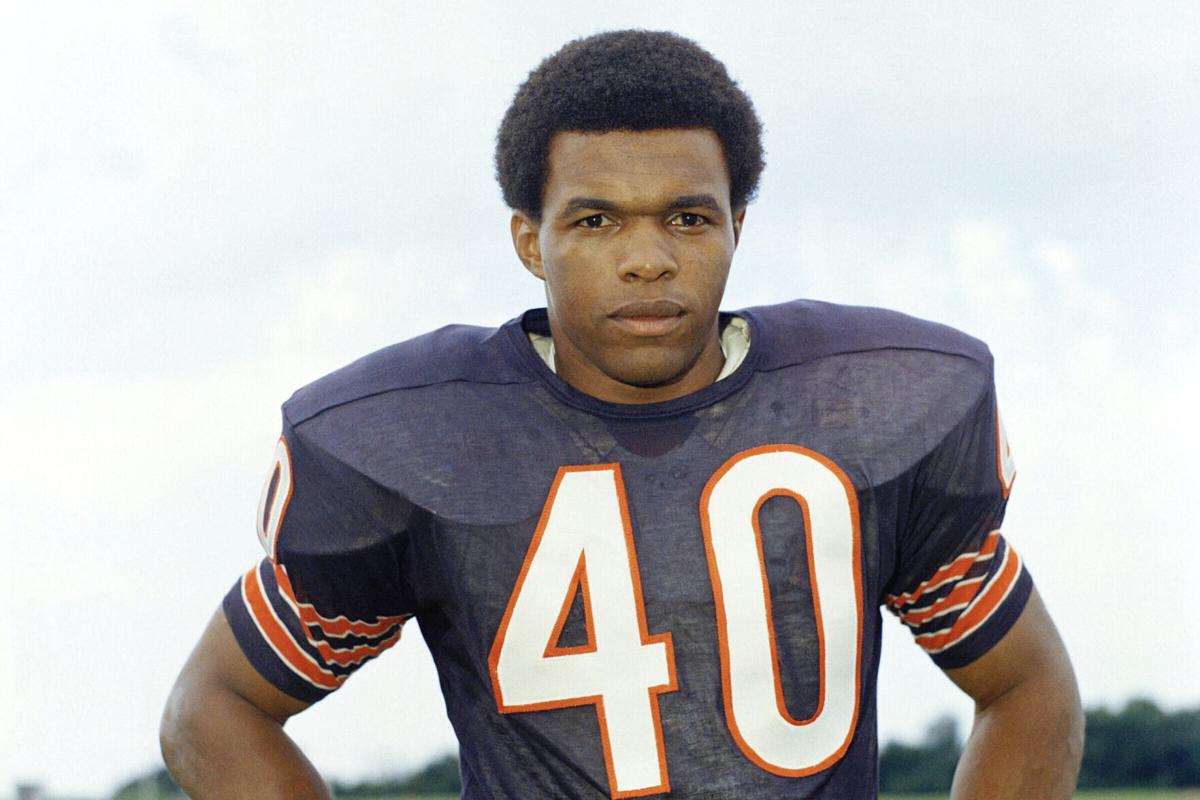
Gale Sayers, 1943-2020

One of the greatest football players who has ever lived has died, and yet, the thing most people remember about him wasn't his playing, but his example.

Gale Eugene Sayers was born on May 30, 1943 in Wichita, Kansas, and grew up in Omaha, Nebraska. He had an older brother, Roger, who became a collegiate track star; and a younger brother, Ron, who played at running back for the San Diego Chargers.

Gale graduated from Omaha Central High School, leading them to a State Championship in 1960, and set a State record in the long jump the following Spring. Other notable Central graduates include later Green Bay Packers running back Ahman Green, acting patriarch Henry Fonda, Benson actress Inga Swenson, and Omaha Mayor and later Senator Edward Zorinsky.

Gale wanted to go to the University of Iowa, which, at the time, was more open to black players than many other Midwestern schools. But on his one campus visit, he was told that the head coach didn't have time to meet with him. So Sayers did not become a Hawkeye.

That coach was Jerry Burns: Although he joined Vince Lombardi's staff on the Green Bay Packers and helped win the 1st 2 Super Bowls, in 18 years as an assistant with the Minnesota Vikings, he went 0-4 in Super Bowls; in 6 years as an NFL head coach, all with the Vikings, he never reached a Super Bowl.

So Gale went to the University of Kansas. The team wasn't special, going just 17-12-1 with no bowl game appearances in his 3 years on the varsity -- they made it to the 1961 Bluebonnet Bowl, but freshmen weren't allowed to play varsity sports until 1972 -- but he was. All 3 seasons, he was a 1st team All-Conference selection in what was then known as the Big Eight, and a 2-time consensus All-America pick.

He became known as the Kansas Comet, finishing 3rd in the nation with 1,125 rushing yards and 1st with 7.1 yards per carry in 1962. That was as a sophomore. Sophomores generally didn't do that well in those days. In 1964, he thrilled Big Eight fans, sick of seeing the University of Oklahoma win the title seemingly every year, but returning the opening kickoff 93 yards for a touchdown in a 15-14 Kansas win. He finished his college career with 2,675 rushing yards, and 4,020 all-purpose yards. The latter stat lasted into the 1980s as a league record.

And yet, he was willing to risk it all over a principle -- the biggest principle of the era: Civil rights. He was 1 of 110 students who were arrested at a sit-in demonstration at the office of the University Chancellor, W. Clarke Wescoe. They were demanding an end to racial discrimination in University-approved housing, including fraternity and sorority houses.

Gale told the press, "They accept me as a football star, but not as a Negro."

*

The arrest did not prevent him from having a professional football career. Both leagues drafted him: The Chicago Bears selected him with the 4th overall pick in the 1965 NFL Draft, and the Kansas City Chiefs took him 5th overall in the AFL Draft. He signed with the Bears, still coached and owned by team founder George Halas.

The Bears had also drafted University of Illinois linebacker Dick Butkus. Never before did an NFL team has 2 rookies like this in their lineup, and never again.

Gale Sayers scored 22 touchdowns in 1965, setting an NFL record that stood for 10 years. Think about that: 22 NFL touchdowns at age 22: 14 rushing, 6 receiving, a punt return and a kickoff return. On October 17, against the Minnesota Vikings, he had a rushing touchdown, a receiving touchdown, and a kickoff return for a touchdown in the same game. That would not happen in the NFL again until 2016, when Tyreek Hill did it for the Kansas City Chiefs.

After that game, "Papa Bear" Halas compared Sayers favorably to old-time Bears Red Grange and George McAfee. As it turned out, the Kansas Comet was just getting warmed up.

The Bears had opened the season, and thus Sayers' and Butkus' careers, on September 19 at Kezar Stadium in San Francisco, and lost 52-24. On December 12, 1965 -- not November 25, as the clip I've linked to below said -- the 49ers came to Wrigley Field, and the Bears wanted revenge. I don't think anybody expected it to take this form, though.

It rained all day, and the field on which Grange and McAfee -- and Bronko Nagurski, and Bill Osmanski, and Willie Galimore -- had run was practically a swamp. How anybody could get any speed on it was a mystery.

On that field, Gale Sayers had 113 rushing yards, 89 receiving yards, and 134 punt return yards. He scored 4 touchdowns rushing, 1 receiving, and 1 on a punt return. He had 326 total yards. He scored 6 touchdowns. That was a single-game record, previously achieved by Ernie Nevers in 1929 (who also had 4 kicking points, for a still-standing NFL record of 40 points in a game) and Dub Jones in 1951 (father of Bert Jones, and he did it against the Bears). Talk about "announcing your presence with authority."

The Bears pounded the 49ers, 61-20. One of the 49ers' receivers that day was Bernie Casey, who went on to become one of the top black actors of the 1970s. The Bears finished the season at 9-5. With 2,272 all-purpose yards, 1,371 of them rushing, Sayers was an easy choice for NFL Rookie of the Year.

He had fewer rushing yards in 1966, 1,231, but it was enough to lead the League. The Bears only went 5-7-2, and the Chicago Tribune wrote that Sayers was "the one bright spot in Chicago's pro football year."

Did someone say, "bright spot"? During that season, Sayers was interviewed for They Call It Pro Football, a short film by NFL Films, released right before the next season. (It included footage of Super Bowl I.) The film captures Sayers saying, "Give me 18 inches of daylight. That's all I need."

It wasn't arrogance: The film then showed what happened when he got at least those 18 inches. If there was a man born to run with a football while John Facenda read a script over an NFL Films soundtrack, it was Gale Sayers. Except it wasn't the martial, brassy music for which NFL Films became known that suited him: It was orchestral, string-driven music, as seen in this clip.

Or, maybe not: This clip calls him "a master of improvisation." The thought occurred to me, as I was typing this, that maybe watching Gale Sayers run with a football was like listening to John Coltrane play jazz. Sure enough, when I called up that clip, one of YouTube's other suggestions was Coltrane's soprano saxophone take on the Sound of Music song "My Favorite Things."

I've been telling people all day that, for my generation, the closest in playing style that we will get to seeing him on anything but scratchy old film is Barry Sanders. I'm just glad we have the film on Sayers. I can only surmise that it does not fully do justice to his running. I'm glad they were the same kind of person off the field, too. The world needs more people like that, and now, we have one less, and are the poorer for it.

Billy Dee Williams, who would play Sayers in Brian's Song, said, "I always sort of equated to his running style to ballet. Nijinsky. He had that kind of beauty. I loved watching him run. It was poetry." He also said it was like watching one person split into two people. Comedian Bill Cosby -- back when we liked him -- said something similar: "I did not believe what I saw. He was like an amoeba: He seemed to split into two."

The 1967 season was Halas' last as Bears had coach. He tried to diversify the Bears' offense, spreading the carries and catches around, including to Brian Piccolo, a white man born in Pittsfield, in western Massachusetts, but who grew up in Fort Lauderdale, at a time when Florida was considerably more Southern than it is now, and went to Wake Forest University in Winston-Salem, North Carolina. He had a decent college career, but was not drafted. He made the Bears as a free agent in 1965, a rookie alongside Sayers and Butkus.

In spite of Halas' attempt to stop defenses from focusing so much on one man, Gale still gained 880 yards in a 14-game season. He only returned 3 punts all season, but one was yet another mad dash across a muddy field for a touchdown against the 49ers, also returning the opening kickoff for 97 yards for a touchdown, and he ran for another, as the Bears won 28-14. They finished 7-6-1. Gale was unstoppable, the team was very stoppable.

On November 3, 1968, the Bears went into Lambeau Field to face the Green Bay Packers. Vince Lombardi had retired, so they were no longer a threat to win a 4th straight NFL Championship. Gale had a career-high 205 rushing yards, and the Bears won, 13-10.

For the 1st 50 games of his professional career, Gale Sayers may have been the single greatest runner the game of football has ever seen. Then, on November 10, 1968, disaster struck. It wasn't quite all over, but he would never be the same.

*

It was at Wrigley, and, again, the 49ers were the opponent. (By this point, Bernie Casey had been traded to the Los Angeles Rams.) In this 9th game of the season, which the Bears would win 27-19, Gale already had 856 rushing yards and was leading the League, when Kermit Alexander crashed into his right knee. Gale's anterior cruciate ligament (ACL), his medial collateral ligament (MCL), and his meniscus cartilage were torn. 

"It was my fault, all my fault," Alexander said. "God, you never want to hurt a player, never. Especially a great player like Gale." Gale forgave him, understanding that things like that sometimes happen in football. He was out for the year, and was still named to a Pro Bowl in which he had no chance to play.

Piccolo became the starting fullback in his absence, and in the 1969 off-season, he put Gale through a conditioning program that got him back in shape. In addition, the Bears changed their road-hotel policy: From now on, players would room with a player of the same position. This made Gale and Brian the 1st mixed-race roommates in NFL history.

Jim Dooley, himself a former Bears running back, who had been one of Halas' last assistants and had succeeded him as head coach, installed an offense for 1969 that had Piccolo at fullback and Sayers at tailback. Somehow, having a right knee with no cartilage in it, Gale Sayers ran for 1,032 yards to lead the NFL. UPI named him the NFL's Comeback Player of the Year.
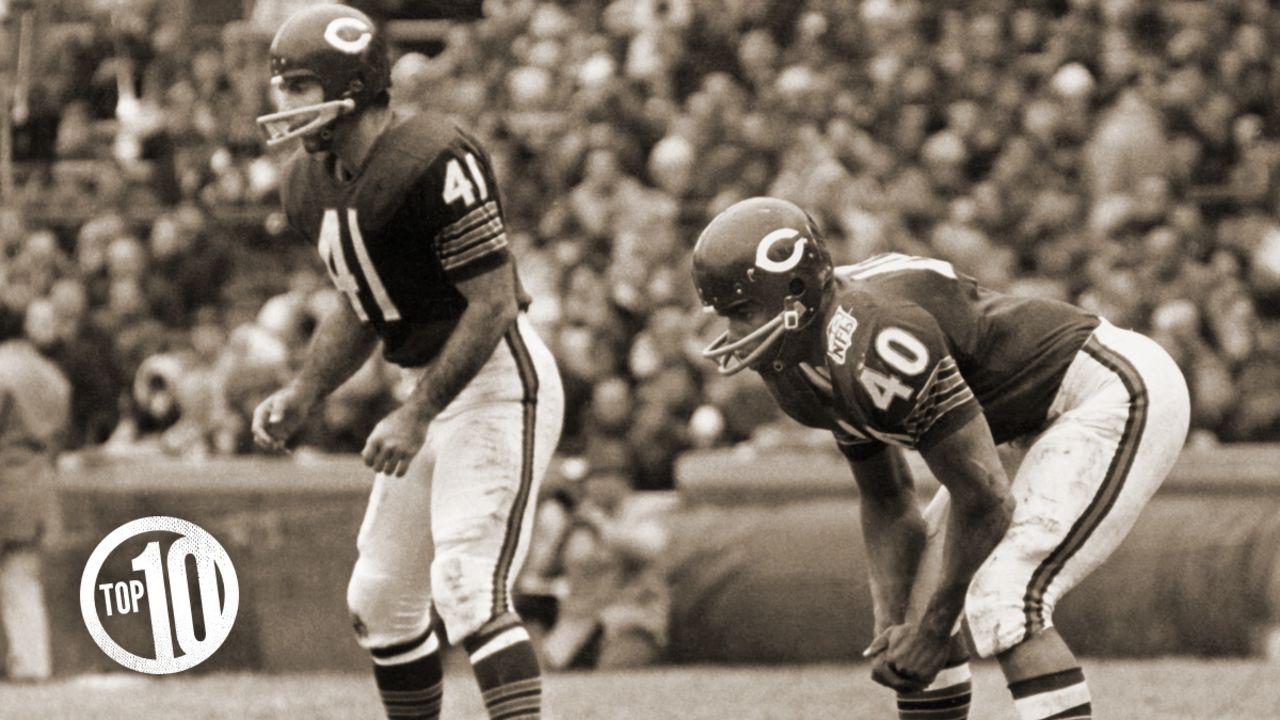
Piccolo and Sayers during the 1969 season. Note the NFL 50th Season logo.


But despite having Sayers, Butkus, running back Ronnie Bull, guard Bob Wetoska, defensive end Ed O'Bradovich, linebacker Doug Buffone, and punter Bobby Joe Green, the Bears finished 1-13, their only win coming in Week 8, on November 9, 38-7 at home to the Pittsburgh Steelers, who also finished 1-13.

The Steelers got the 1st pick in the 1970 NFL Draft, and used it on quarterback Terry Bradshaw, who had a rough start to his career, but led them to 4 Super Bowl wins and the Pro Football Hall of Fame. The Bears got the 2nd pick, but had already traded it away -- to, of all teams, their rivals, the Packers. They didn't have a pick in the 2nd round, either.

And therein lay the Bears' biggest problem: Quarterbacking. Bill Wade led them to the 1963 NFL Championship. Then, during the next season's training camp, running backs Willie Galimore and Bo Farrington were killed in a car crash. That made Halas draft Sayers and sign Piccolo for 1965.

But Wade was about to turn 35 as Sayers, Piccolo and Butkus debuted. He retired after the 1966 season, having lost the starting job to Rudy Bukich, who was not up to the task. Nor was Jack Concannon, who became the starter in 1969. Nor was Bobby Douglass, although he did go on to set an NFL record for rushing yards by a quarterback in 1972.

Without a good quarterback, the Bears never got close to a Playoff berth. Although 1969 was their only truly dreadful season, record-wise, while Sayers was on their roster, they were 39-54-3 during his career, and 46-74-4 while Butkus was on their roster.

To put it another way: Since Sid Luckman -- along with Sammy Baugh of the Washington Redskins -- invented the modern position of quarterback, the Bears have been to the NFL Championship Game, known as the Super Bowl from 1967 onward, 9 times: 5 under Luckman (1940, '41, '42, '43 and '46, winning each of those except '42), and 1 each under Ed Brown (1956, losing), Wade (1963, winning), Jim McMahon (1985, winning Super Bowl XX) and Rex Grossman (2006, losing Super Bowl XLI). That's it: Since the NFL's reintegration season of 1946, the Bears have been to just 4 NFL title games, winning 2, in 74 seasons.

The Bears had one other thing in common with the Steelers in 1969: It was time for the old man, the founder, to pass the team on to the next generation. Dan Rooney and his brother Art Rooney Jr. told their father, Art Rooney Sr., that it was time, and he agreed, and the Steelers built one of the greatest teams ever.

In contrast, George Halas acted more like Connie Mack with the Philadelphia Athletics: No matter who was officially the head coach or the general manager, he was going to be in charge no matter what, but the idea was that, eventually, he would pass control to George Halas Jr., a.k.a. Mugs, whom he named team president in 1963.

But he never truly ceded control to Mugs. And at the end of the 1979 season, Mugs died of a heart attack, only 54 years old. Papa Bear lived another 4 years, age 88, and left control of the team to his daughter, Virginia Halas McCaskey. She held the stock, and left operational control to her husband, Big Ed McCaskey, who left the running of the team to their son, Mike McCaskey.

They built the team that won Super Bowl XX, but, like the New York Mets, for all their talent, they only won the title in calendar year 1986 (in the Bears' case, the 1985 season), and their other close calls were unsuccessful. Eventually, Ed took the keys back from Mike, and handed them to their other son, George Halas McCaskey. Today, he and team president Ted Phillips run the team for his mother Virginia, at 97 the oldest NFL team owner ever.

Still, given their place in NFL history, and the resources available, in one of the biggest markets in America, the Bears are one of the great underachievers in American sports. And it all goes back to George Halas being unwilling to adapt to the times.

Part of it was his stinginess: Mike Ditka, one of his greatest players, and the last head coach he would ever hire, once said, "George Halas throws nickels around like manhole covers." And so, in competitive terms, a season like 1969 was practically inevitable.

What no one could have foreseen was what happened to Brian Piccolo. The game after the team's only win of the season, he took himself out of the game, something he had never done before. He told team management that he was having trouble breathing. When the team got back to Chicago, he was examined, and found to have cancer.

What kind is not clear. Obviously, it had gotten into his lungs, and that became the official story, including in Brian's Song. But his lungs may not have been where it started: One source I found said it was embryonal cell carcinoma, which starts in women in the ovaries and in men in the corresponding organs, the testicles -- a part of the body that was not discussed in polite company in those days, and certainly couldn't be mentioned on television in 1971. (All In the Family mentioned menopause in 1972, and used the word "breast" in 1973, but it would be a while longer before male sex organs could be mentioned on primetime network TV.)

Brian's tumor was removed, but it wasn't enough. In April 1970, his left lung was removed. It turned out that the cancer had spread to his liver, and he was doomed. A few days later, at a banquet in New York, a few blocks from Memorial Sloan Kettering Cancer Center, the world's foremost hospital for treating cancer, Sayers was given the George S. Halas Award for the NFL's most courageous player.

He told the banquet who he thought the award really belonged to: "I might have received this award tonight, but, tomorrow, I will take it to Brian Piccolo at Sloan Kettering. I love Brian Piccolo, and I'd like all of you to love him, too. Tonight, when you hit your knees to pray, please ask God to love him, too."

None of it was enough: Brian died on June 16, 1970, only 26 years old. Halas, who had gone against his frugal tendencies and paid every cent for Brian's medical care, also paid for his funeral. Sayers and Butkus were among his pallbearers.

That year, Gale published an autobiography, titled I Am Third, meaning God was first and his family was second. But the way he wrote about Brian, Gale made himself sound like he was fourth, and his friends, like Brian, were third. 
In 1972, he wrote a 2nd book, with Miami Dolphins quarterback Bob Griese, an instruction manual titled Offensive Football. In 2007, he published another autobiography, Sayers: My Life and Times.

On November 30, 1971, ABC aired the TV-movie Brian's Song, based on Gale's book. Gale was played by Billy Dee Williams. It made him a star, launching him to a career that included his role as Lando Calrissian in the Star Wars films, a status as a romantic leading man, and, playing off that image, his commercials for Colt 45 malt liquor ("It works every time").

(I wonder if he had to call himself "Billy Dee Williams" because of another Chicago athlete of that era. Future Baseball Hall-of-Famer Billy Williams, then with the Cubs, or perhaps another actor, might have already registered the name "Billy Williams" with the Screen Actors Guild. See also: Vanessa L. Williams, no relation to either of the preceding; and Michael B. Jordan.)

Brian was played by James Caan, who was a little better-known at that point, but this role got him cast as Sonny Corleone in The Godfather. He would play a very different kind of athlete in the 1975 dystopian-future film Rollerball. 
Caan and Williams in the 1971 original version

Halas was played by Jack Warden, Brian's wife Joy by Shelley Fabares (who would again play a football wife on the sitcom Coach), Gale's wife Linda McNeil Sayers by Judy Pace, Bears running back J.C. Caroline by Bernie Casey, and several still-active Bears as themselves, including Butkus, O'Bradovich and Concannon.

Brian's Song was the most-watched made-for-TV movie ever to that point, and has been called the 1st film over which it was okay for men to cry. It has become even more iconic than Gale and Brian themselves, to the point where later TV shows had women pregnant with twins that their husbands will not get to name the sons Gale and Brian.

ABC produced a remake in 2001, at a time when there was less of a stigma about cancer, and Sean Maher could portray a dying Brian with a terribly emaciated look. Mekhi Phifer played Gale. Gale's autobiography was re-released, with an update, and was officially retitled I Am Third: The Inspiration for Brian's Song.
Phifer and Maher in the 2001 remake


But by the time the original version aired, it was all over for Gale. He injured his left knee during training camp in 1970, and played just 2 games that season, before realizing that his "good knee" wasn't going to get any better, and had season-ending surgery. During his time off, he took classes, and became the 1st black stockbroker at Paine Webber & Co. (That firm, known for its "Thank you, Paine Webber" TV commercials, was absorbed by Swiss company UBS in 2000.)

He played just 2 games in 1970, and 2 more the next season, the Bears' 1st at the original Soldier Field, having to move there since Wrigley Field had no lights until 1988. His last regular-season game was on October 17, 1971. Once again, the 49ers were the opponent for a key game in his career. It was at Candlestick Park -- also the site of the Beatles' last official concert, 5 years earlier. He had only 5 carriers, for 8 yards, before injuring his ankle. The Bears lost, 13-0. He tried one more time, but was ineffective in the 1972 preseason, and retired.

It's just as well: 1971 was the 1st season that the Bears played their home games on artificial turf, and would continue to do so in 1987, switching back to natural grass the following year. Of the 26 teams in the NFL after the 1970 merger with the AFL, 9 of them had artificial turf. By 1976, it would be 15 out of 28.

Gale Sayers rushed for 4,956 yards. He caught 112 passes for 1,307 yards. Counting returns, he had 9,044 total yards, for 56 touchdowns. That would be a pretty good career for most players.

Instead, he had only half a career, much like Sandy Koufax in baseball and Bobby Orr in hockey. Koufax retired just before turning 31, due to an elbow issue, although only in 1 season did he miss significant time. Orr retired just before turning 31, like Sayers due to injuries to both knees, having played only enough games to add up to 9 full seasons.

Gale Sayers played 68 games, slightly more than 4 full 16-game seasons by today's standards, retiring at age 28. He played only 4 games past age 26. To put it another way, he never really got to have a healthy prime. Imagine if, instead of drugs, Dwight Gooden had only his injuries. Or if, after his 50.4 points-per-game season, including 100 in 1 game, in 1961-62, Wilt Chamberlain had gotten hurt, and struggled the rest of the way.

Billy Sims won the Heisman Trophy at Oklahoma in 1978, and nearly won it again in 1979. He rushed for 5,106 yards for the Detroit Lions, more than Sayers. He caught 186 passes for 2,072 yards, almost twice as much as Sayers in each category. But he landed on his knee on the Metrodome turf halfway through his 5th season, and never played again. He is in the College Football Hall of Fame, but not the Pro Football Hall of Fame.

William Andrews played 5 seasons for the Atlanta Falcons, making 3 Pro Bowls. In training camp of his 6th season, he wrecked his knee, and only played another 15 games. He finished with 5,986 yards rushing, and 277 catches for 2,647 yards. In each of those stats, he's ahead of Sims, never mind Sayers. But he is not in the College or the Pro Football Hall of Fame.

Gale Sayers is in both Halls. It helped that he was in a major market, Chicago, unlike Sims in Detroit and Andrews in Atlanta. It also helped that he was an icon for Baby Boomers, the same way Johnny Unitas, Joe Namath, and Lombardi's Packers were. It also helped that, despite his sit-in on the KU campus, he wasn't grumpy or an agitator, like Jim Brown, who also retired early, albeit not due to injury. Gale had the moves, and the personality, and the story. In the end, those things mattered more than the stats, as impressive as they were for the 1st 4 years.

*

And so, in 1977, in his 1st year of eligibility, Gale was elected to the Pro Football Hall of Fame, just 34 years old. Like Koufax in baseball (36) and Orr in hockey (31, the waiting period for eligibility waived in his case), he was the youngest living person ever elected, and none of those distinctions is ever likely to be beaten.

Like many other collegiate sports legends, Gale went back to his alma mater. After finishing his degree at KU in 1972, he was named an official in its athletic department. Southern Illinois University noticed his work back in Lawrence, Kansas, and in 1976, they named him their athletic director. He held that post until 1981. In the 1985-86 schoolyear, he served as athletic director at Tennessee State University, a historically black school in Nashville, best known for its "Tigerbelles" women's track team, which had produced, among others, 1960 Olympic heroine Wilma Rudolph.

In 1984, he founded Crest Computer Supply Company, later renamed Sayers 40, Inc., for his uniform number, and later renamed Sayers Technology. His timing was right on the money, as the growth of personal computers made him more money than he could have made playing football in the modern era. Sayers 40 branched out into technology consulting.

With his 2nd wife, Ardythe Bullard Sayers, he also started a charitable foundation for underprivileged kids and an adoption agency. In 2009, he returned to Kansas as Director of Fundraising for Special Projects.

Gale was father to a daughter, Gale Lynne; 2 sons, Timothy and Scott; and 2 stepsons, Gaylon and Gary. He lived to see 2 grandchildren.

On October 31, 1994, the Bears played the Packers in the NFL's oldest, and perhaps nastiest, rivalry on Monday Night Football. An appropriate matchup for Halloween Night. Bear management decided to give the nationwide TV audience a look at a long-overdue ceremony: The retirements of the uniform numbers of Gale Sayers, 40; and Dick Butkus, 51. Kansas had already retired the 48 that Sayers wore there, and Illinois had already retired the 50 that Butkus wore.

But the weather was scarier than the holiday. It rained all night. And a cold wind came blasting in off Lake Michigan. This was not "Bear Weather," with frigid temperatures and perhaps snow: This was close to a hurricane. Walter Payton, now retired from a career as the next great Bears running back, stood on the sideline, all wrapped up in plastic, including his feet. During the ceremony, Helen Butkus was nearly injured when the wind inverted her umbrella.
You can actually see the rain falling diagonally in this photo.

Mike McCaskey, already unpopular among Bears fans, got booed. Butkus, Sayers, and, through Sayers' mention of him, the memory of Brian Piccolo all got cheered. When the ceremony was over, with the Bears still in the game at 14-0, a big chunk of the crowd, officially listed at just 47,381 due to the bad weather, left. They didn't miss much: The Packers went on to win 33-6.

In 1999, The Sporting News named its 100 Greatest Football Players. Sayers was ranked 22nd, and Butkus 9th, 2nd only to Lawrence Taylor among defensive players. In 2010, the NFL Network named its 100 Greatest Players. Sayers was again ranked 22nd, Butkus 10th. This, despite both of them having devastating knee injuries, and despite an additional 11 years of players who could have surpassed them. Both men were named to the NFL's 75th and 100th Anniversary All-Time Teams, and to both the College and the Pro Football Halls of Fame.

In 2013, having begun to suffer from headaches and short-term memory loss, Sayers went to the famed Mayo Clinic in Rochester, Minnesota, was diagnosed with dementia. His wife announced it in 2017, saying, "It wasn't so much getting hit in the head. It's just the shaking of the brain when they took him down with the force they play the game in."

He certainly wasn't the 1st great player to be given this kind of diagnosis, and he won't be the last. Physically, he was still fine. That wasn't the case with Butkus, who was the other way around: Although his mind remains clear, he sustained damage to his neck, back, hips, knee, and digestive system. Like Donald Trump, he now needs both hands to lift a cup or a bottle. He turns 78 in December, and still believes that football had a largely positive impact on his life, but lives in constant pain.

Gale Sayers' pain is over. He died yesterday, September 22, 2020, at his home in Wakarusa, Indiana, about 110 miles east of Chicago and 20 miles south of the Notre Dame campus in South Bend, at the age of 77.

The Bears' Twitter feed: "It is with great sadness the Chicago Bears mourn the loss of Bears Hall of Fame running back Gale Sayers. Sayers amplified what it meant to be a Chicago Bear both on and off the field. He was regarded as an extraordinary teammate, leader, husband and father."

The Chicago Cubs' Twitter feed: "The Cubs are saddened by the loss of Bears Hall of Fame RB Gale Sayers. We join the Chicago sports community and football world in mourning the passing of a legend who made a home at Wrigley Field."
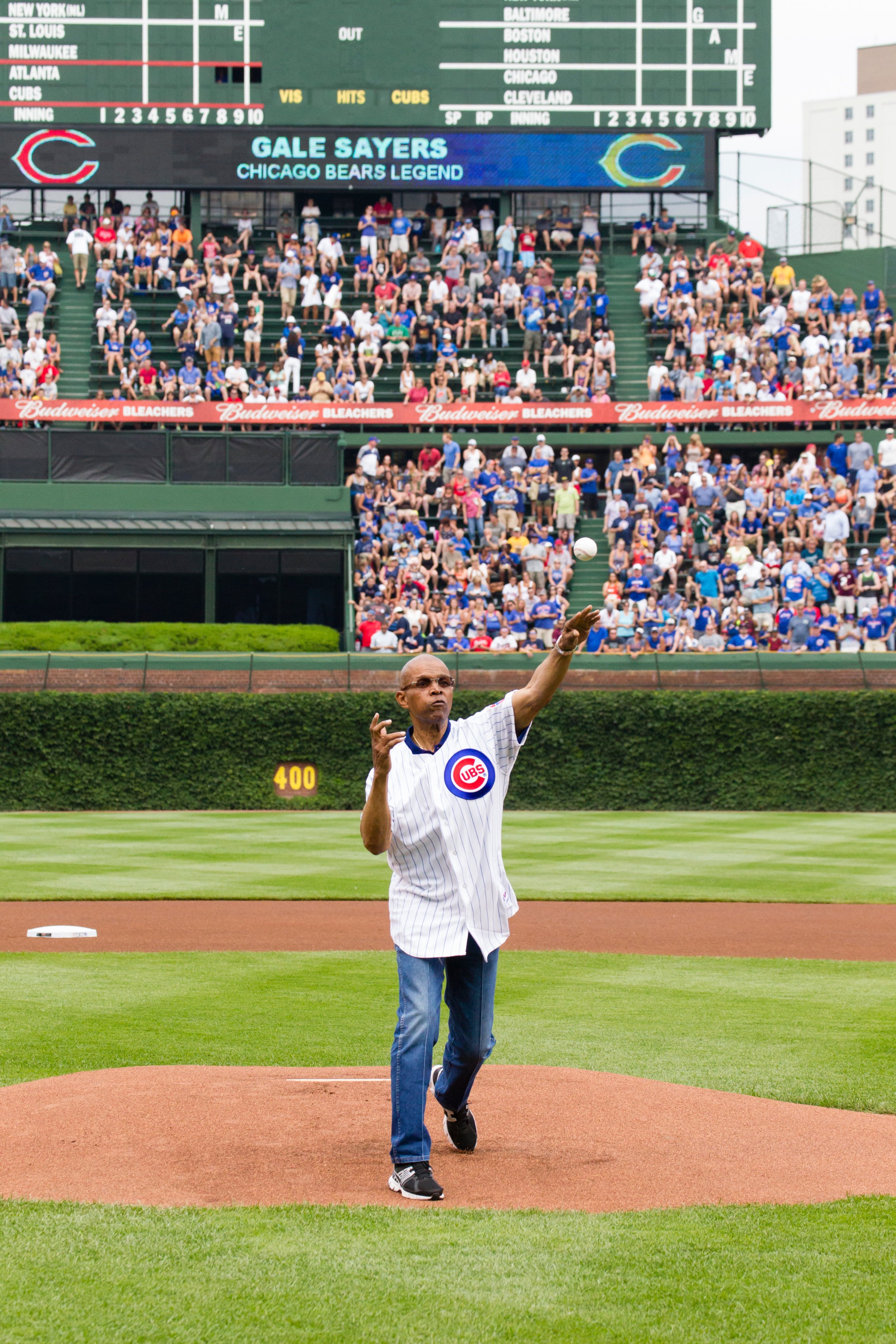
A first ball ceremony at Wrigley Field.
Presumably, at that age, he needed more
than 18 square inches of strike zone.

Dick Butkus: "We will miss a great friend who helped me become the player I became because after practicing and scrimmaging against Gale, I knew I could play against anybody. We lost one of the best Bears ever, and, more importantly, we lost a great person."
Sayers and Butkus at Wrigley Field's 100th Anniversary celebration, 2014

Mike Ditka, Bears Hall of Fame tight end and Super Bowl-winning head coach: "People will say there were better players, but I don't know who they are. I don’t know anybody that ran the football any better than Gale Sayers. I played in that game he scored 6 touchdowns. Everybody was slipping and sliding and he kept scoring. He was special. He was magic. He made things happen."

NFL Commissioner Roger Goodell: "The NFL family lost a true friend today with the passing of Gale Sayers. Gale was one of the finest men in NFL history and one of the game's most exciting players."

Jim McMahon, quarterback of the Bears' Super Bowl XX winners: "Tough to hear the news about Gale Sayers. Not only was he 1 of the most electrifying players of any generation, he was an ever better person."

Ernie Accorsi, a sportswriter for most of Gale's career, before a 46-year front office career that included a Super Bowl win as Baltimore Colts public relations director and an NFC Championship as New York Giants general manager: "Gale Sayers was the greatest halfback I ever saw. I never saw anyone who could be at full speed, stop on a dime and, in one step acceleration, be at top speed again. I saw runs he made that if it was one-handed touch football, instead of tackle, they couldn’t have caught him."

Cubs Hall-of-Famer Fergie Jenkins: "Very sad to hear of the passing of @ChicagoBears great Gale Sayers. A true legend."

Chicago Bulls Hall-of-Famer Scottie Pippen: "Gale Sayers was someone who I admired long before I arrived in Chicago. I loved his approach to the game and of course, how he played it. He inspired me to be great in a city that loves sports like no other."

Asthon Kutcher, actor and entrepreneur, who grew up a Bears fan in Cedar Rapids, Iowa: "I asked Gale Sayers for the best advise he ever received. From his HS football coach: 'When it's you vs 1 person you should win 100% of the time, when it's you vs 2 people you win 75% of the time. Set your expectations higher than others imagine, then exceed them.' RIP #BearDown"
Sayers and Kutcher at the new Soldier Field

Billy Dee Williams: "My heart is broken over the loss of my dear friend, Gale Sayers. Portraying Gale in Brian's Song was a true honor and one of the nightlights of my career. He was an extraordinary human being with the the kindest heart."

Michael Wilbon, Chicago native and co-host of ESPN's Pardon the Interruption: "I grew up watching Gale Sayers, and used to feel sorry for myself as a little kid because Gale got hurt so soon. He occupies a place alongside Ernie Banks and Mike Ditka and a handful of great athletes in Chicago."

There are no knee injuries in Heaven. No muddy, chopped-up fields, either. And he has all the daylight any runner could ever need. Now, he can run to his heart's content.

Tuesday, September 11, 2018

How to Be a Rutgers Fan In Kansas

The University of Kansas is far better known for its basketball team than its football team, which has now followed up its season-opening 26-23 home overtime loss to Nicholls State of Louisiana -- an FCS (formerly known as Division I-AA) team -- with a 31-7 win away to Central Michigan.

This coming Saturday, they will host Rutgers, which got pummeled 52-3 by Ohio State yesterday.

On November 10, they will play away to Kansas State University, in the annual "Sunflower Showdown." KSU has also split its 1st 2 games, although in a much more understandable fashion, hosting and beating an FCS team, the University of South Dakota, 27-24; and then hosting a ranked team, Mississippi State, and losing 31-10.

Before You Go. Kansas is mostly flat, and the term "plains" is appropriate: It's plain. This means that, in the Winter, it can get very windy and terribly cold. But a comparative lack of shade means that, in the Summer, it can get beastly hot. And, as anyone who's ever seen a film version of The Wizard of Oz knows, Kansas (along with neighboring Oklahoma) is "Tornado Alley."

Next Saturday is predicted to be in the mid-80s at gametime (11:00 AM Central), and should drop to the high 60s at night. "Isolated thunderstorms" are predicted for Sunday, but you may be on your way home and out of Kansas by then.

With the exception of the westernmost one-quarter or so, which is in the Mountain Time Zone, Kansas is in the Central Time Zone, 1 hour behind New York. Adjust your timepieces accordingly.

Tickets. KU's stadium seats 50,071, and a horrible 1-11 season last year meant that only once did they top 33,000 in attendance, and that was for the KSU game, and even that only drew 36,223. (Along with Indiana, Kansas is the only Midwestern State that's a basketball State, not a football State.) Getting tickets shouldn't be hard. Seats will be $55 in lower midfield, $45 in sideline ends, and $20 in the north end zone. (No seats in the south end zone.)

KSU's stadium also seats 50,000, but they were 8-5 last season, and all 7 home games were sellouts. Their tickets will be tougher to get. They're $50 on the lower sidelines, and $30 in the end zone and in the upper deck.

Getting There. It's 1,208 miles from High Point Solutions Stadium (Rutgers Stadium) in Piscataway, New Jersey to David Booth Kansas Memorial Stadium in Lawrence. Knowing this, your first instinct will be to fly out there.

Neither Lawrence nor Manhattan has a large enough population base, by itself, to warrant and International Airport. So, if you're going to fly in, you'll end up landing in Kansas City, and then you should probably rent a car, 52 miles to the southwest, down Interstates 435 South and 70 West. To KSU's Bill Snyder Family Stadium in Manhattan, it's 133 miles west. You could get a round-trip, non-stop flight for under $800.

And you may have to fly in and rent a car, or just drive all the way, to see a Kansas State home football game, because neither Amtrak nor Greyhound goes anywhere near Manhattan, Kansas.

Amtrak does go to Lawrence. It sends the Lake Shore Limited out of Penn Station at 3:40 PM Eastern Time, to Union Station in Chicago at 9:45 AM Central Time. Then you have to switch to the Southwest Chief, leaving Chicago at 2:50 PM, and arrives at Lawrence at 11:47 PM, meaning you would need to leave New York on Thursday afternoon to get there Friday night in order to attend the game. Round trip fare is $395. Lawrence's Amtrak station is at 413 E. 7th Street.

Lawrence's Greyhound station is at 6 E. 6th Street, across from the town's library. The round-trip fare is $348, but it can drop to as low as $271 with advanced purchase.

If you decide to drive, it's far enough that it will help to get someone to go with you and split the duties, and to trade off driving and sleeping. You'll need to get on the New Jersey Turnpike, and take Interstate 78 West across New Jersey, and at Harrisburg get on the Pennsylvania Turnpike, which at this point will be both I-70 and I-76. When the two Interstates split outside Pittsburgh, stay on I-70 west.

You'll cross the northern tip of West Virginia, and go all the way across Ohio (through Columbus), Indiana (through Indianapolis), Illinois and Missouri. I-70 becomes the Kansas Turnpike, and you'll take Exit 202 onto McDonald Drive. This street will flow into Iowa Street, and you'll turn left onto W. 9th Street toward the KU campus.

If you do it right, you should spend about an hour and 15 minutes in New Jersey, 5 hours in Pennsylvania, 15 minutes in West Virginia, 3 hours and 45 minutes in Ohio, 2 hours and 30 minutes in Indiana, 2 hours and 30 minutes in Illinois, 4 hours and 15 minutes in Missouri, and 45 minutes in Kansas before you reach the campus for your hotel. That's a little over 20 hours. Counting rest stops, preferably 7 of them, and accounting for traffic in both New York and Kansas City, it should be about 29 hours.

Once In the City. The Kansas Territory was the site of several conflicts between advocates for slavery and advocates for its abolition, both before and after it was admitted to the Union, on January 29, 1861, as the 34th and last State before the American Civil War began. Both the State of Kansas and the cities of Kansas City -- a bigger one in Missouri and a smaller, adjacent one in Kansas -- are named for the Kanza tribe of Native Americans who lived there.

Kansas City is set on the confluence of the Missouri and Kansas rivers, and on the Missouri/Kansas State Line. Kansas City, Kansas is a separate city with about 150,000 people, and is known locally as KCK, while the more familiar city is KCMO. KCMO is one of the smallest cities in North American major league sports, with just 480,000 people, and one of the smallest metropolitan areas, with 2.4 million.
Kansas is the Sunflower State, and is home to just under 3 million people. It is Middle America, and that's literally true: The midpoint of the 48 Contiguous States (not including Alaska and Hawaii) is within its borders.
It's also famously conservative: It's only voted for a Democratic nominee for President once since 1936, in 1964, and even then, it was one of Barry Goldwater's best States in his 44-State loss to Lyndon Johnson. It's elected archconservative Senators, one of whom, Sam Brownback, became one of the worst Governors in the country, his tax cut bankrupting the State. In 2004, historian and political scientist Thomas Frank published What's the Matter With Kansas?

The answer, as it turns out, is the Wichita-based Koch Brothers, Charles G., age 82, and David H., 78, each of whom is currently believed to have fortunes in excess of $50 billion. They call themselves "libertarian" but are actually conservative fanatics, and they donate so much to Republican politicians as to practically own their votes, manipulating the evangelical and bigoted bents of said candidates and their voters.
Presuming Brett Kavanaugh joins Neil Gorsuch as successful appointees to the Supreme Court, on top of the massive tax cut they got, they probably won't mind one bit if, sometime thereafter, Donald Trump is impeached and removed, and Midwestern conservative nut Mike Pence becomes President. They only needed Trump and his rhetoric for the 2016 election and the "right" to govern. (UPDATE: He did.)

Lawrence, founded in 1854, is home to about 95,000 people, not counting student residents, and is part of the Kansas City metropolitan area. It was named for the town of Lawrence, Massachusetts, itself named for Amos Adams Lawrence, an abolitionist, at a time when Kansas was ground zero for the debate over slavery.

This included the Sacking of Lawrence by a pro-slavery mob on May 21, 1856, killing 1 person; the subsequent Pottawatomie Massacre by abolitionist John Brown and his men 3 days later, killing 5 people; and the raid by Confederate guerrilla William Quantrill, including the brothers Frank and Jesse James, on August 21, 1863, killing over 200.

In Lawrence, the Kansas River divides addresses into North and South, and Massachusetts Street divides them into East and West. The local newspaper is the Lawrence Daily World. The city is 81 percent white, 6 percent Hispanic, 5 percent black, 5 percent Asian, and 3 percent Native American. Lawrence Transit, a.k.a. The T, runs buses. The University runs KU on Wheels. Both bus systems are free to KU students, faculty and staff. For everyone else, The T is $1.00 per ride.
The World War II Memorial Campanile,
with Fraser Hall in the background

Despite being officially named the University of Kansas, the school's name is usually abbreviated to "KU." It was founded in 1865. In addition to the main campus in Lawrence, there's one in Leavenworth. Famous alumni include:

* Sports other than football and basketball, which I'll discuss in "Team History Displays": Glenn Cunningham '31, former world record holder in the 1,500 meter and mile runs; Bill Nieder '55, Gold Medalist in the shot put at the 1960 Olympics; Al Oerter '58, Gold Medalist in the discus throw at the 1956, '60, '64 and '68 Olympics; Billy Mills '60, Gold Medalist in the 10,000 meters at the 1964 Olympics; Philip Asnchutz '61, founder of Qwest, and one of the guiding forces in Major League Soccer; and Jim Ryan '68, former world record holder in the 800 and 1,500 meters and the mile. Baseball All-Star Bob Allison attended and played at KU, but did not graduate.

* Politics, from Kansas unless otherwise stated: Governor Alf Landon, Class of 1908, and his daughter, Senator Nancy Kassebaum '54; Governors George Docking '25 and his son Robert Docking '48, Governor William H. Avery '34, Governor Robert F. Bennett '50; Juan Manuel Santos '73, who just finished 2 terms as President of Colombia, winner of the 2016 Nobel Peace Prize. Bob Dole attended KU, and played football and basketball there, but after World War II, transferred to the University of Arizona, and got his degree there.

* Journalism: William Allen White 1890, Bill Kurtis '62, baseball sabermetrician Bill James '73, and sportscaster Kevin Harlan '82.

* Arts: Playwright William Inge '35, novelist Evan Connell '47, director Herk Havey '48, actor Terry Kiser '62, novelist Sara Paretsky '67, actress Dee Wallace '70, actress Betsy Randle '77, sportscaster Kevin Harlan '82, comedian Rob Riggle '92, and actor Paul Rudd '92.

* Science: Vitamin co-discoverer Elmer McCollum 1903, Pluto discoverer Clyde Tombaugh '36, plutonium co-discoverer Joseph W. Kennedy '37 (they may have known each other, inspiring Kennedy to name his element after Tombaugh's planet), and Paul Ehrlich '57.

Manhattan, home of KSU (it has no other campuses), has about 52,000 people. It was founded in 1855, and named for what the Kanza tribue called the Great Blue Earth River, "Manyinkatuhuudje." New York's Manhattan comes from the Lenape tribe's name, "Manna-hata," or "Island of Many Hills." So, hearing the Kanza name, the white settlers in the "Popular Sovereignty" or "Bleeding Kansas" period called it "Manhattan," because that's what it sounded like to them. And, as New York is the Big Apple, the Kansas version is called the Little Apple.

The town is about 82 percent white, 6 percent Hispanic, 6 percent black, 5 percent Asian, and 1 percent Native American. The main newspaper is the Manhattan Mercury. Poyntz Avenue separates addresses into North and South, and the numbers increase westward from the Kansas River. ATA Bus has a $1.00 fare.
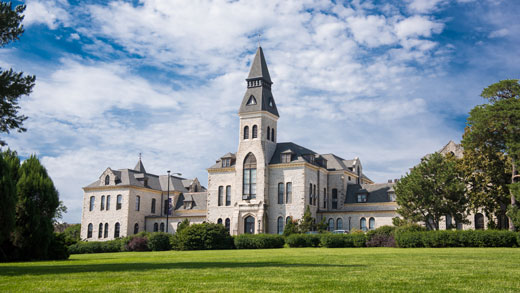
KSU's Anderson Hall

Noted KSU graduates include:

* Sports, other than Football and Basketball: Baseball pitcher Elden Auker '32, catcher Earl Woods '53 (Tiger's father, a Manhattan, Kansas native, broke the color barrier in Big Eight baseball, before embarking on a career as an Army officer), sprinter Thane Baker '56 (won a full medal set, Gold, Silver and Bronze at the 1956 Olympics), and triple jumper Kenny Harrison '88 (Gold Medal at the 1996 Olympics). Mitch Holtus '79 is a broadcaster for the Kansas City Chiefs.

* Arts: Historian Kenneth S. Davis '34, record producer Jerry Wexler '46, actor Gordon Jump '57, and actor Eric Stonestreet '96.

* Politics, from Kansas unless otherwise stated: Senator and Secretary of the Interior Fred Seaton '31, Congressman John Rhodes of Arizona '38, House Minority Leader 1973-83 and instrumental in convincing President Nixon to resign; current Senator Pat Roberts '58, Governor John Carlin '62, White House Press Secretary Marlin Fitzwater '65; General Richard Myers '65, former Chairman of the Joint Chiefs of Staff, and since 2016 the President of KSU; Governor Mike Hayden '66, and Senator and Governor Sam Brownback '79.

The Kansas State Capitol is in Topeka, 64 miles west of downtown KCMO, 26 miles west of the University of Kansas campus in Lawrence, 60 miles southeast of the Kansas State University campus in Manhattan (sure doesn't look like the one in New York), and 140 miles northeast of Kansas' largest city, Wichita.
The Kansas State House, in Topeka

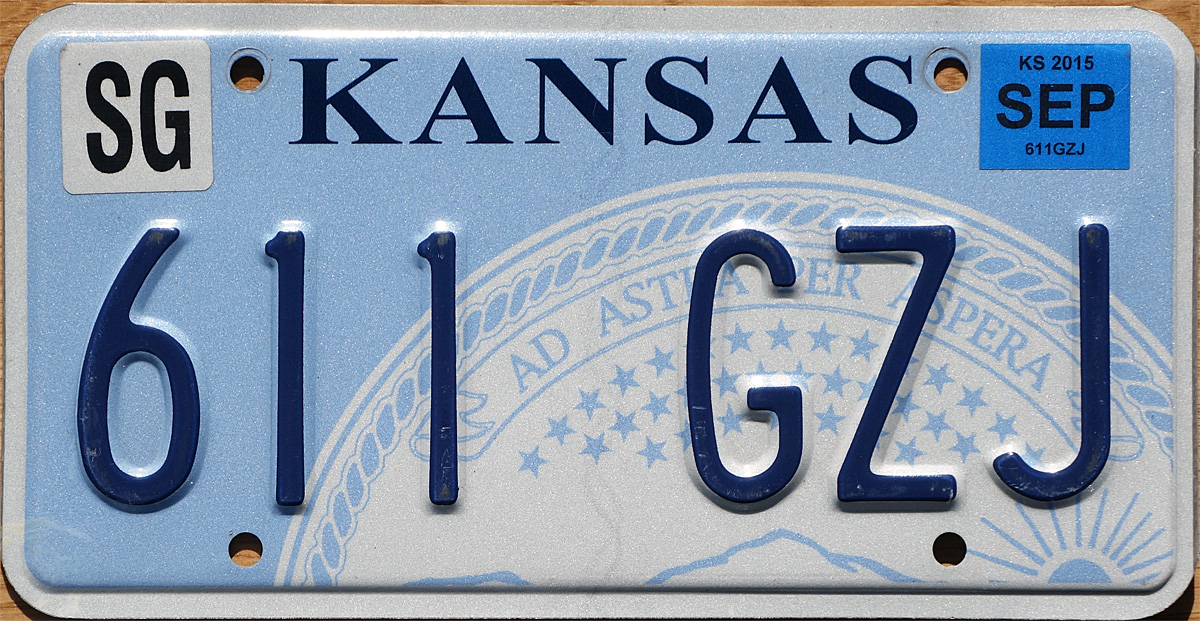
ZIP Codes for the Kansas side of Kansas City start with the digits 66 and 67; for Lawrence, 66044; and for Manhattan, 66502. The beastly prefix of 666 is in the State capital of Topeka, although Area Code 666 is not used anywhere in America. The Area Codes for Kansas are 785 (for both Lawrence and Manhattan) and 913 (for most of the Kansas side of the Kansas City metropolitan area). The sales tax for the State is 6.15 percent.

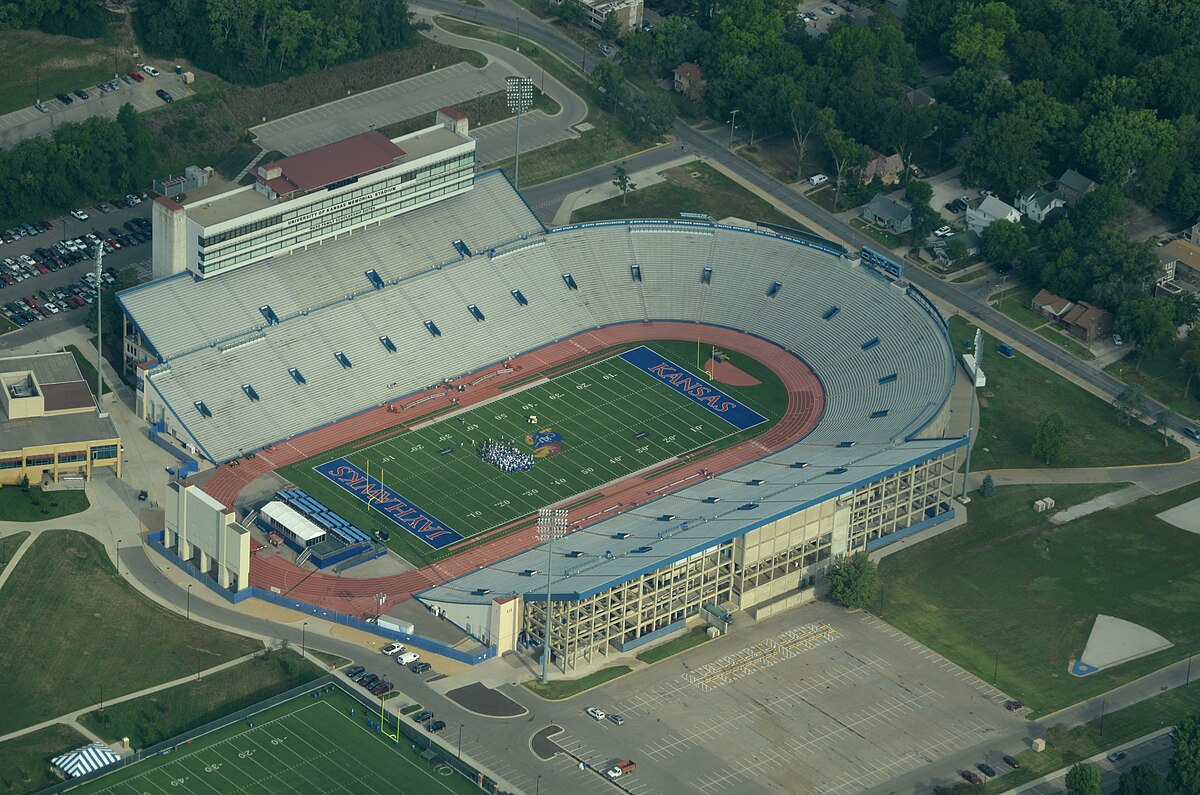
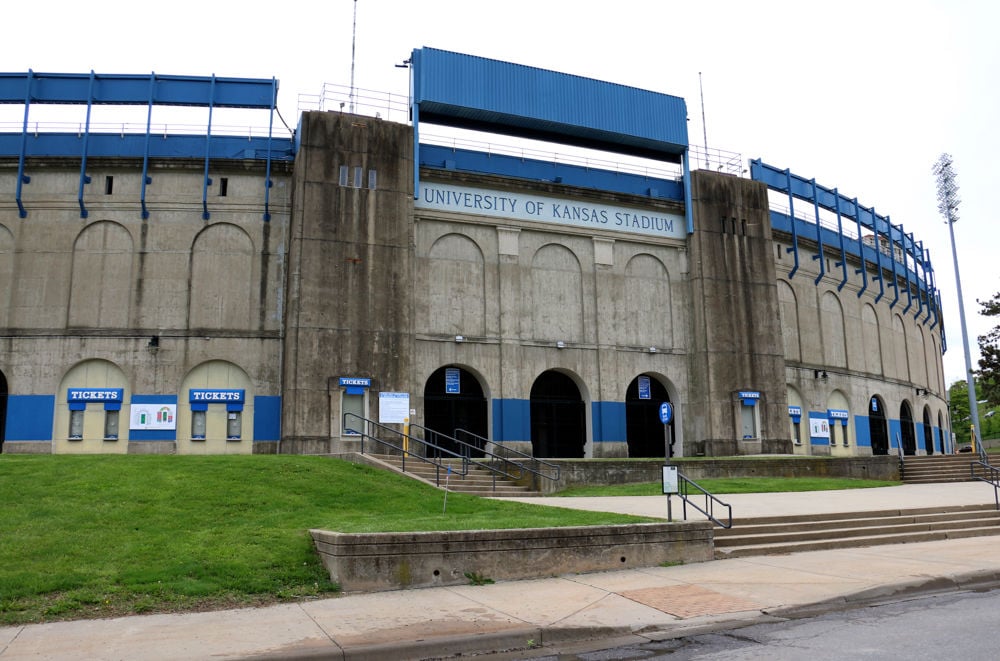
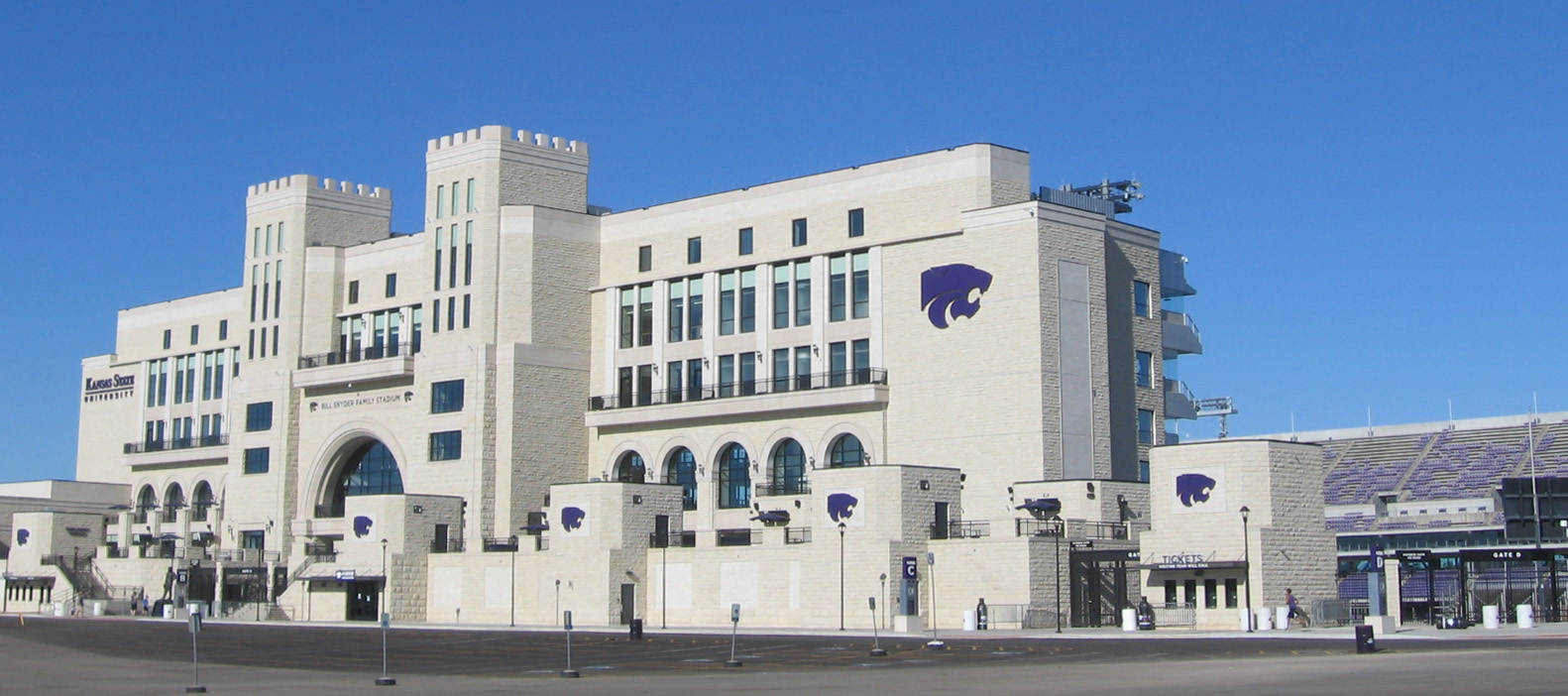
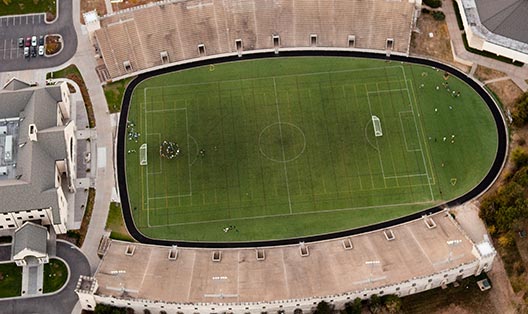
Going In. KU's Memorial Stadium opened in 1921, and, like so many college football stadiums built in the 1920s (or shortly before, or shortly after), it is a memorial to the University's, and indeed the State's, losses in World War I.
Last year, the school renamed it David Booth Kansas Memorial Stadium, after David G. Booth '68, a Lawrence native who donated $50 million to renovate the stadium. He got his graduate degree from the University of Chicago, and his $300 million to their business school, also renamed for him, is the largest donation ever given to a college's business school.
The address of the stadium is 1101 Maine Street (not "Main"), at Fambrough Way, just west of downtown. Bus 4 will get you to 9th & Maine, 2 blocks north. If you drive in, parking is $25.

The stadium is a horseshoe pointing south, and the field has been artificial turf since 1970.
UPDATE: On November 19, 2018, Moneywise compiled a list of their Worst College Football Stadiums, the bottom 19 percent of college football, 25 out of 129. KU's Memorial Stadium came in 21st, with fans polled citing "uncomfortable bench seating" and "The bathrooms were not even air condition" -- a definite problem in Kansas in September.

Mention must also be made of the most famous building in the State of Kansas, and that's the Jayhawks' basketball arena, Allen Field House. Dr. Forrest C. Allen. A student of basketball's inventor, Dr. James Naismith, who coached there from 1898 to 1907, "Phog" Allen coached KU basketball from 1907 to 1909, and again from 1919 to 1956. That last season, 1955-56, was the 1st season of the building that bears his name. It's at 1651 Naismith Drive, about 2 miles southwest of downtown. Bus 10 or 11 will get you within a 5-minute walk.

He wasn't just a Ph.D.: He had a doctorate in osteopathy, and was his team's athletic trainer as well, said to have a "magic touch." His nicknames were Doc for his profession, and Phog for his "foghorn voice."

He won 26 Conference Championships, 2 Helms Athletic Foundation-awarded National Championships in 1922 and 1923, and the NCAA Tournament in 1952. He coached the U.S. team to the Gold Medal in the 1952 Olympics in Helsinki, Finland. He coached Adolph Rupp, Ralph Miller, Dean Smith, Clyde Lovellette and Bob Dole, and, though retiring before he could coach him, recruited Wilt Chamberlain. He was a charter inductee into the Basketball Hall of Fame in 1959.
ESPN The Magazine has called the 16,300-seat Allen Fieldhouse the loudest venue in college basketball. The court has been named for Naismith. So, while basketball wasn't invented there (KU is one of the truly great basketball schools, but it's not that great), it could be argued that, between Naismith and Allen, basketball coaching was invented there.
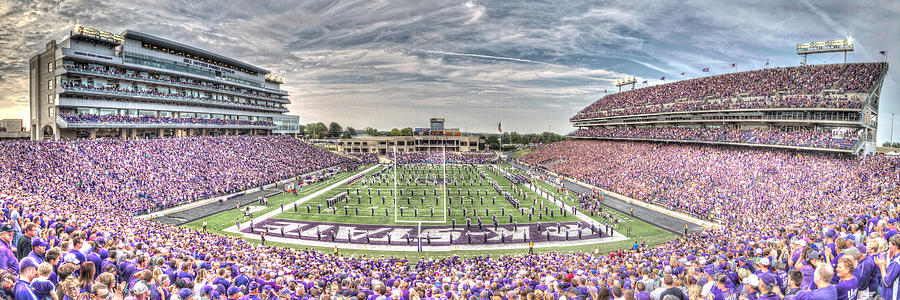
As for the Wildcats: The current KSU Stadium was named just that, "KSU Stadium," when it opened in 1968. After the 2005 season, coach Bill Snyder retired, and the school offered to rename it for him. He said, "If you are going to do it, name it after the people that I care about the most." So it became "Bill Snyder Family Football Stadium."
He returned to coach in 2009, and is 1 of only 5 Division I-A/Football Bowl Subdivision coaches ever to coach at a stadium named for him, joining Amos Alonzo Stagg at the University of Chicago, Bear Bryant at Alabama, Shug Jordan at Auburn and LaVell Edwards at Brigham Young. (Snyder is the only one still alive, let alone active.)

The address is 1800 College Avenue, at Kimball Avenue, about 2 miles northwest of downtown Manhattan. Take the Red bus in. If you drive in, parking is $20.
Snyder Family Stadium. Behind it, Bramlage Coliseum,
built in 1986, a.k.a. The Octagon of Doom.
Behind that, Ahearn Field House, built in 1950.

It is the opposite of KU's stadium: A horseshoe pointing north. Like KU's stadium, KSU's field was changed from real grass to artificial turf in 1970. Since a 1991 replacement was done, it's been named Wagner Field, in honor of donors Dave and Carol Wagner.
Prior to that, from 1922 to 1967, the Wildcats played at World War I Memorial Stadium, which had to be replaced because it seated only 17,500 people.
Food. According to a preseason 2016 article on KUAthletics.com:

Memorial Stadium concessions will showcase a variety of new items and stands. "The Lighter Side" located near sections 7 and 20 will feature grilled chicken sandwiches, veggie burgers, chicken salad, fruit cups and yogurt. Fans will also want to visit the "Bavarian Pretzel Cart" with parmesan butter and herb pretzels, pizza pretzels and pretzel bites. Some other new additions will be the giant smoked turkey leg and tornado potato fries. Click here to see a complete concession map and offerings.


KSU doesn't get specific on KStateSports.com, only saying:

The concession stands located on the concourse of Bill Snyder Family Stadium are available when stadium gates open two (2) hours prior to kickoff. No other food may be brought into the stadium.

Team History Displays. Kansas has won or tied for its conference's title 9 times: 1891, 1892, 1893, 1895, 1908, 1930, 1946, 1947 and 1968. They've won 6 bowl games: The 1961 Bluebonnet Bowl, the 1992 and 1995 Aloha Bowls, the 2005 Fort Worth Bowl, the 2008 Insight Bowl, and their only victory in a major, the 2008 Orange Bowl. They also reached the Orange Bowl in 1948 and 1970, but lost.

KU's Memorial Stadium has a Ring of Honor atop the northern bowl, honoring 14 players:

* From the 1940s: Running back and defensive back Ray Evans, end Otto Schnellbacher, and offensive tackle Mike McCormack.

* From the 1950s: Offensive linemen George Mrkonic and Ollie Spencer.

* From the 1960s: Quarterbacks John Hadl and Bobby Douglass, defensive end John Zook, and running backs Curtis McClinton, Gale Sayers and John Riggins.

* From the 1970s: Quarerback David Jaynes, and quarterback and safety Nolan Cromwell.

* From the 1980s: Linebacker Willie Pless.

The Jayhawks have retired 3 uniform numbers: Hadl's 21, Evans' 42, and Sayers' 48. They are in the College Football Hall of Fame, as is 1950s running back Jim Bausch. McCormack, Sayers and Riggins are in the Pro Football Hall of Fame, and cases can be made for Hadl and Cromwell, too.

Not on that list were 1940s Jayhawk teammates Bud Adams, founding owner of the Houston Oilers/Tennessee Titans franchise, and longtime Senate Majority Leader and 1996 Republican Presidential nominee Bob Dole.

There are 27 Kansas basketball players with their uniform numbers on banners in Allen Fieldhouse, but these numbers are not retired. The school says it's the jerseys that are retired, not the numbers. Along with longtime broadcaster Max Falkenstein, given Number 60 in honor of 60 years of broadcasting (61, actually: 1945-2006), they are:

* From the 1920s: 12, guard Paul Endacott '23; 8, guard Charlie T. Black '24; 7, center Tusten Ackerman '25; 26, guard Gale Gordon '27; and 36, center Al Peterson '27.

* From the 1930s: 5, guard Fred Pralle '38. Not yet honored is center William "Skinny" Johnson '33.

* From the 1940s: 5, forward Howard Engleman '41; 10, forward Charles B. Black '47 (no relation to Charlie T.); 15, guard Ray Evans '47 (as previously mentioned, also honored in football).

* From the 1950s: 16, center Clyde Lovellette '52; 23, forward B.H. Born '54; and 13, center Wilt Chamberlain '59 (led them to the NCAA Final in '57, played in '58, but left to play for the Harlem Globetrotters in '59 before he could legally join the NBA). Not yet honored is guard Allen Kelley '54.

* From the 1960s: 32, forward Bill Bridges '41; 13, center Walt Wesley '66; 15, guard Jo Jo White '69.

* From the 1970s: 40, forward Dave Robisch '71; and 15, forward Bud Stallworth '72.

* From the 1980s: 14, guard Darnell Valentine '81; and 25, forward Danny Manning '88.

* From the 1990s: 11, guard Jacque Vaughn '97; 34, forward Paul Pierce '98; and 45, forward Raef LaFrentz '98.

* From the 21st Century: 0, forward Drew Gooden '02; 4, forward Nick Collison '03; 10, guard Kirk Hinrich '03; 23, forward Wayne Simien '05; and 15, guard Mario Chalmers '08.

Endacott, Johnson, Lovellette, Kelley, Chamberlain and White are in the Basketball Hall of Fame. So are coaches Naismith, Allen, Larry Brown and Roy Williams.
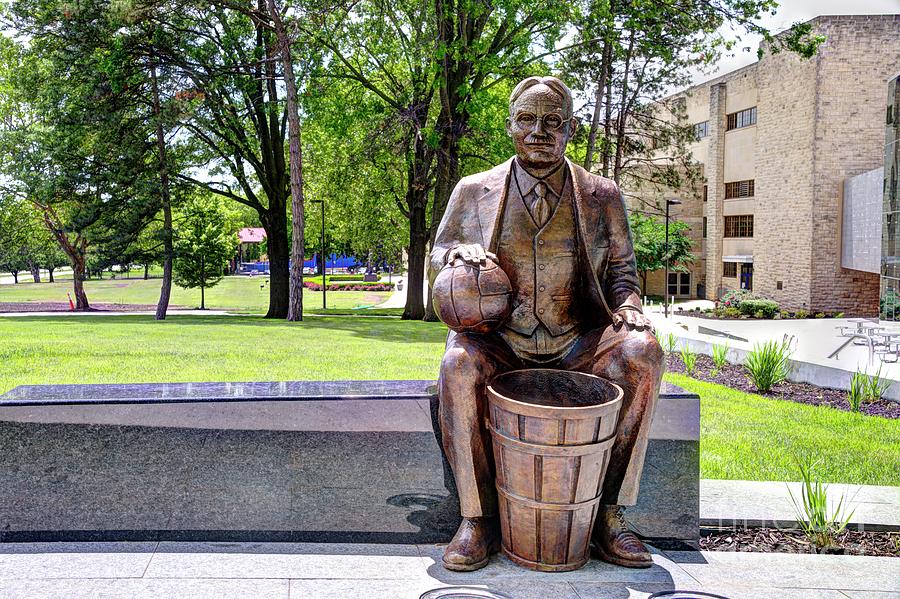
Allen has a statue outside his Fieldhouse. Behind that is the DeBruce Center, with a statue of Naismith. He also has statues in his hometown of Almonte, Ontario, Canada; and at the Basketball Hall of Fame in Springfield, Massachusetts, not far from Springfield College, formerly the YMCA where he invented the sport.
As another resourceful Canadian named James, Doohan of Star Trek,
would have said, "He invented the thing!"

While the Kansas Jayhawks have been mediocre for most of the last half-century, the Kansas State Wildcats were one of the worst programs in college football until Bill Snyder arrived in 1989. They didn't go to their 1st bowl game until the 1982 Independence Bowl, and didn't win their 1st until the 1993 Copper Bowl.

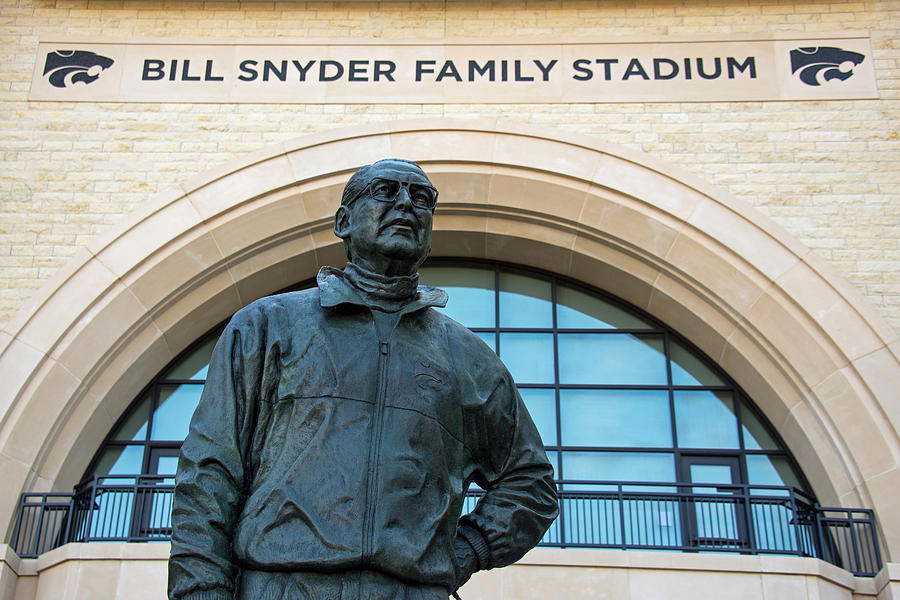
However, they've now won the 1993 Copper Bowl, the 1995 Holiday Bowl, the 1997 Fiesta Bowl, the 1999 and 2002 Holiday Bowl, the 2001 Cotton Bowl, the 2013 Buffalo Wild Wings Bowl, the 2016 Texas Bowl, and the 2017 Cactus Bowl. They've also won or shared their league's title 6 times: 1909, 1910, 1912, 1934, 2003 and 2012. They have a statue of Snyder outside the stadium that bears his name.
They've retired 1 number, 11, for 2 quarterbacks, Lynn Dickey '70 and Steve Grogan '74. Their All-Americans have included linebacker Gary Spani '77, cornerback Chris Canty '96, kicker Martin Grmatica '98, cornerback Terence Newman '02, running back Darren Sproles '03, center Nick Leckey '03, and receiver Tyler Lockett '14.

Kansas and Kansas State first played each other in 1902, and have played each other every year since except 1910. In 1969, the Governor's Cup was first awarded. KU went 17-1-3 from 1902 to 1923, 10-1 from 1941 to 1952, and 19-1-2 from 1956 to 1977. But KSU has won the last 9, and 21 of the last 25.
The 2 versions of the Governor's Cup

There is a dispute as to the all-time record, because KU refuses to accept that they had to forfeit their win in the 1980 game, because they insist that they had paperwork showing that the ineligible player they'd used was, in fact, eligible. KU say they lead 65-44-5, KSU says it's 64-45-5.

Wildcat fans say their biggest rival is the Jayhawks. But Jayhawk fans are much more likely to say their biggest rival is the University of Missouri. This was the 1st college football rivalry west of the Mississippi River, and there is real history behind it, not just sports history. Real history. Really bloody history. They didn't call the Jayhawk State "Bleeding Kansas" for nothing.

In the years immediately before, during, and even for a little while after the American Civil War, there was some deadly serious fighting. Kansas was a free State, Missouri a slave State, although it never joined the Confederacy. Confederate sympathizers from Missouri would cross over and wreak havoc in Kansas, including in Lawrence.

On May 21, 1856, "the Sacking of Lawrence" occurred. On August 21, 1863, William Quantrill led Quantrill's Raiders (including a young pair of brothers named Frank and Jesse James) in a massacre, killing 164 people, all civilians. The football rivalry between Kansas and Missouri became known as the Border War, and, perhaps appropriately, was first played on October 31, 1891 -- Halloween.
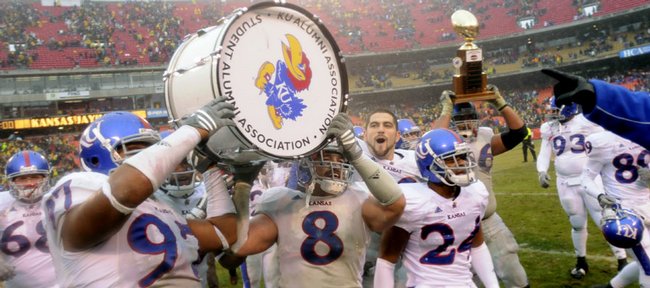
The winner receives the Indian War Drum, also known as the Osage War Drum, with a Jayhawk logo on one side, and a block M with a Missouri Tiger head on the other. The rivalry was so nasty that it sometimes had to be played on neutral ground in Kansas City -- in Missouri's State, but considerably closer to Kansas' campus, with the ticket allotment evenly divided. It was played in Kansas City from 1891 to 1906, again from 1908 to 1910 (in St. Joseph, Missouri in 1907), in 1944 and '45 (probably due to wartime travel restrictions), and at Arrowhead Stadium from 2007 to 2011.
Missouri's move to from the Big 12 to the Southeastern Conference put an end to it, at least for football. As with the KU-KSU rivalry, there is a dispute as to the record, as the 1960 game was forfeited to Missouri by the league then known as the Big Eight, because Kansas used an ineligible player. According to Kansas, Missouri leads 56-55-5 -- meaning a restart and a Kansas win in the next game would tie the series at 56-all. According to everybody else (including the Big 12 and the NCAA), Missouri leads 57-54-5.
  
Stuff.  There are souvenir stands at each school's stadium, but no team stores. KU's bookstore is in the Student Union, at 1301 Jayhawk Blvd., about a 5-minute walk south on Mississippi Street from Memorial Stadium. The KSU Campus Store is at 820 N. 17th Street, to the east of the stadium.

The best book available on KU sports is by the aforementioned broadcaster, Max Falkenstein: Max & the Jayhawks: 50 Years On & Off the Air With KU Sports, published with Doug Vance in 1996. And, as KU's other big rival is Missouri, in 2005, the sports staff of The Kansas City Star published Rivals! MU vs. KU: A Classic Sports Match-up, Since 1891. In 2000, Mark Stallard published Wildcats to Powercats: K-State Football Facts and Trivia.

During the Game. Neither Kansas fans nor Kansas State fans have a rough reputation. You should have no safety issues. But if you do manage to get a ticket for their game against each other, it's best to stick with the home fans.

What's a Jayhawk? It's a shortened form of Jayhawker, a term for guerrilla fighters in the Civil War, later generally applied to residents of Kansas and turned into the redheaded, blue-bodied bird familiar to college sports fans today. KU has used the indentifier since 1912. They have used a mascot named Big Jay since the 1960s, and his little friend (not son or brother) Baby Jay since 1971.
Big Jay and Baby Jay

At home football games, the Marching Jayhawks perform both an opening pregame show and a halftime show that changes throughout the season. The pregame program begins with the members of the band sprinting down the stairs of the northern bowl of Memorial Stadium. The band runs onto the field to a cadence by the drum line. Here the official fight song of KU "I'm a Jayhawk" is played. The "Kansas Song" is then played as the Marching Jayhawks perform their historic KU counter march. "Fighting Jayhawk" is played after the counter march.

The band is then joined by a group of the Rock Chalk Dancers, KU's dance team, for the historic "Sunflower Song" and accompanying drill. The band then performs the National Anthem, the alma mater "Crimson and the Blue," and the Rock Chalk Chant. This chant -- "Rock chalk, Jayhawk, KU" -- is the first thing most people think about when they think of Kansas sports. Rock chalk is limestone, common in Kansas. They also wave their arms back and forth, slowly, in a formation called "Waving Wheat."
I give them a 10 for passion, and a 4 for synchronization.


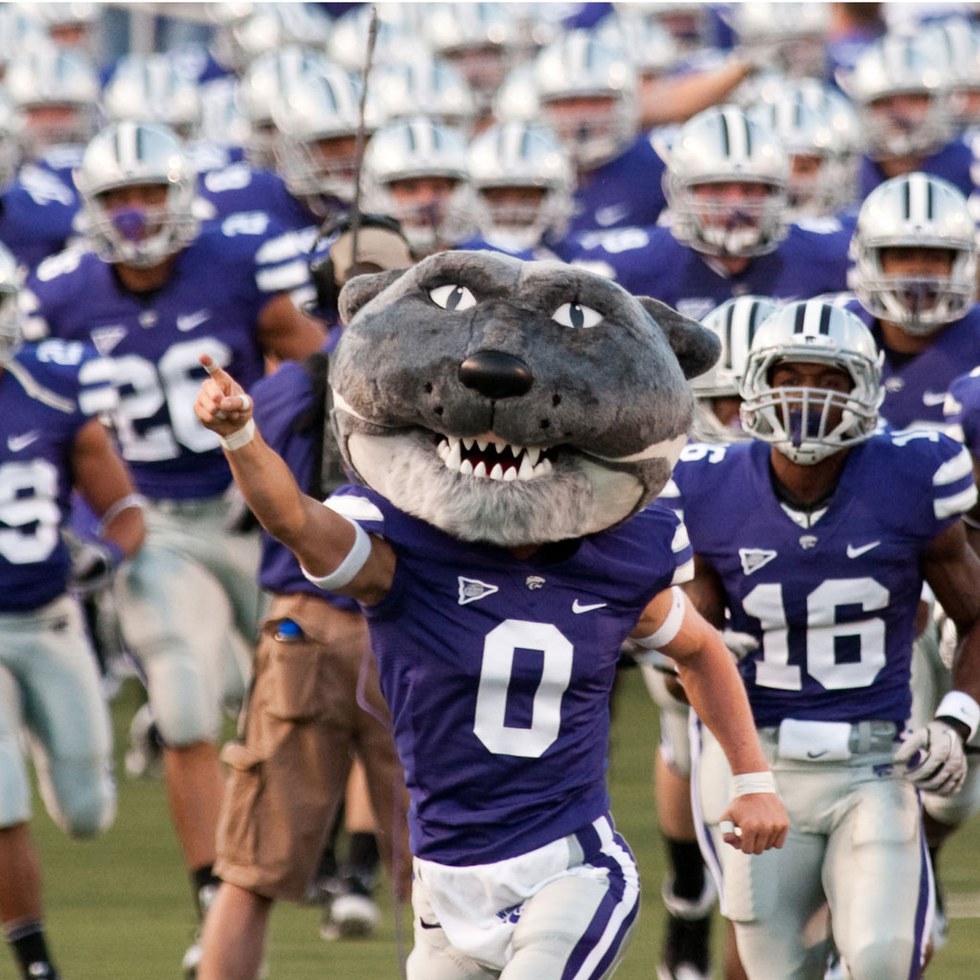
Like Northwestern, Kansas State's mascot is purple and named Willie the Wildcat. But K-State's Willie isn't much of a costume. It's just a papier-mache head on top of a guy in a football uniform, Number 0. Their band, The Pride of Wildcat Land, uses both "Wildcat Victory" and the legendary country song "The Wabash Cannonball" as fight songs. Being that they're in Kansas, "On the Atchison, Topeka and Santa Fe" might have been more geographically appropriate, but the Indiana-based "Wabash Cannoball" is a better tune.
After the Game. You (and, if you came that way, your car) should be safe. But there's not much to eat around either stadium, and you may have to go back to 9th Street in Lawrence, or to downtown Manhattan, to get something.

If you visit to Kansas is during the European soccer season, which has now begun again, the Red Lyon Tavern shows matches in Lawrence, at 944 Massachusetts Street, downtown. But in Manhattan, Kansas, you may be out of luck.

Sidelights. The Harry S Truman Sports Complex in Kansas City, which includes the Royals' Kauffman Stadium and the Chiefs' Arrowhead Stadium, is 49 miles from KU and 130 miles from KSU. Naturally, the Royals are the State's most popular MLB team, and the Chiefs the most popular NFL team. You'd have to get to westernmost Kansas to find pockets of fans of the Colorado Rockies and the Denver Broncos, and southwesternmost Kansas to find any kinds of numbers of supporters of the Texas Rangers and the Dallas Cowboys.

However, due to there being no NHL team in Kansas City since the 1974-76 experiment with the Scouts (the team that became the New Jersey Devils in 1982), the St. Louis Blues being too far to the east, and the Dallas Stars too far to the south, Denver's team, the Colorado Avalanche, is the most popular NHL team in Kansas.

Since the Kansas City Kings moved to Sacramento in 1985, the NBA has tailed off in popularity as well. The nearest NBA team is the Oklahoma City Thunder, 315 miles from Lawrence and 354 from Manhattan. The Minnesota Timberwolves are 480 and 561, respectively; the Chicago Bulls, 549 and 631; the Denver Nuggets, 566 and 610.

The nearest MLS team is Sporting Kansas City, whose Children's Mercy Park is just 29 miles from Lawrence and 111 miles from Manhattan. This complex also includes CommunityAmerica Ballpark, home of the Kansas City T-Bones of the American Association, an "independent league" roughly equivalent to Class A. The T-Bones are thus the closest professional baseball team to both Lawrence and Manhattan.

The AA also includes the Wichita Wingnuts, who replaced an affiliated team, the Wichita Wranglers, who had played in the Class AA Texas League from 1987 to 2007. Before that, the city was home to the Wichita Aeros from 1970 to 1984, and the Wichita Indians from 1950 to 1955. And the independent Pecos League has the Garden City Wind.

Wichita teams won Pennants in 1918 (Jobbers), 1921 (Witches), 1930 (Aviators), 1987, 1992 and 1999 (Wranglers). From 1934 onward, the Wichita teams played at 6,400-seat Lawrence-Dumont Stadium. After 85 seasons, the city now plans to tear it down and replace it with a new ballpark. 300 S. Sycamore Street.
Lawrence-Dumont Stadium

Basketball inventor and former KU coach Dr. James Naismith (1861-1939) is buried at Memorial Park Cemetery, 1517 E. 15th Street in Lawrence. His greatest pupil, and a lot of guys' greatest teacher, Dr. Forrest Clare "Phog" Allen, is buried across the street in Oakhill Cemetery, 1605 Oak Hill Avenue. Both are about a mile and a half east of downtown Lawrence, and about 2 miles east of Memorial Stadium.

One of the main attractions on the KU campus is the University of Kansas Natural History Museum, 1345 Jayhawk Blvd., just to the south of the bookstore. The Campanile Bell Tower, the school's memorial to World War II, is across Marvin Grove from the bookstore and the museum, on Memorial Drive.

The Beatles never performed in Kansas. Kansas City, yes, at Municipal Stadium; the State of Kansas, no. Elvis Presley did, 6 times, 3 early in his career, 3 later. He played 2 shows at the Forum in Wichita on May 18, 1956. 330 N. Broadway. On May 21, 1956, he played the Municipal Auditorium in Topeka. The 1940 structure was torn down in 1987, and replaced with the Topeka Performing Arts Center. 214 SE 8th Avenue.

In his later years, Elvis did 3 shows at the Henry Levitt Arena, now named the Charles Koch Arena, on the campus of Wichita State University: June 19, 1972; October 7, 1974; and December 27, 1976. 2100 N. Hillside Street.

The 1856 Sacking of Lawrence and the 1863 Lawrence Massacre, a.k.a. Quantrill's Raid, were both centered on the Free State Hotel, which had to be rebuilt both times. The Eldridge Hotel has been built on the site. 701 Massachusetts Street, in the downtown area known as Historic Lawrence.

Kansas has produced a President, Dwight David Eisenhower. Although born in Denison, Texas, he lived almost his entire youth in Abilene. (Note that the Texas city of the same name spells it "Abeline.") When he left the Presidency in 1961, he wanted his Presidential Library in his hometown. The complex includes the Library, the Museum, the Boyhood Home, and the Place of Meditation, where "Ike" and his wife Mamie are laid to rest.

200 SE 4th Street, in Abilene. Unfortunately, it's almost totally inaccessible without a car, as befitting the 1950s, for most of which he was President: 44 miles southwest of Manhattan, 88 miles west of Topeka, 93 miles north of Wichita, 116 miles west of Lawrence, and 153 miles west of Kansas City.

Charles Curtis, a Topeka native and the 1st person known to be of Native American descent to serve in the U.S. Senate (elected 1906), was elected Vice President with Herbert Hoover in 1928.

Alfred M. Landon, a KU grad elected Governor in in 1932, was one of the few Republicans to survive the Democratic landslides of the early 1930s, and was nominated for President in 1936. The Convention wanted Senator Styles Bridges of New Hampshire as his running mate, until someone pointed out that the Democrats could sing, "Landon-Bridges, falling down!" So they nominated the publisher of the archconservative Chicago Daily News, Frank Knox, and the slogan became, "Off the rocks with Landon and Knox!"

The Democrats noted that Landon was always wearing a sunflower pin, symbolizing his home State, and started saying, "Sunflowers wilt in the Fall." They were right: With voters remembering that the Republicans put them into the Great Depression, incumbent President Franklin D. Roosevelt won 46 out of 48 States, and 523 out of 531 Electoral Votes. Landon won only Vermont and Maine.

In a gesture toward bipartisanship, FDR appointed Knox as Secretary of the Navy in 1940, and he served until dying in office in 1944. Landon left the Governorship after one term, went back to the oil industry, supported FDR in the war effort, supported Harry Truman's Marshall Plan, and even supported Lyndon Johnson's Great Society. Alf Landon lived to be 100 years old, until 1987, long enough to see his daughter, Nancy Landon Kassebaum, elected to the U.S. Senate.

But when people not old enough to remember Ike or Alf think of Kansas politicians, they think of Robert Joseph Dole. Barely surviving a shoulder wound that cost him the use of his right arm, Bob was elected to the House of Representatives in 1960, and to the Senate in 1968. He was named Chairman of the Republican National Committee in 1971, but, as things turned out, he was RNC Chair when the Democratic National Committee's offices were broken into at the Watergate Hotel complex in Washington in 1972.

Dole was never accused of any of the Nixon Administration crimes that fell under the umbrella term "Watergate," and was nominated for Vice President alongside Gerald Ford in 1976. He did the campaign no favors, though, and his "Democrat wars" comment in his debate with Walter Mondale not only might have been enough to cost Ford a very close election with Jimmy Carter, but branded him "the Dark Prince of American Politics." Impressionist Jim Morrison called him "Darth Dole," and Saturday Night Live actors Dan Aykroyd and Norm Macdonald made hay with their impersonations.

Dole served as Senate Republican Leader from 1985 to 1996. He ran for President in 1980, but didn't win any Primaries. He tried again in 1988, but finished 2nd in delegates to the elder George Bush. Finally, in 1996, he was nominated, at 73 the oldest 1st-time major party nominee ever. But, knowing his reputation, he may have compensated too much. It didn't matter: Bill Clinton beat him easily. Dole retired from the Senate in mid-campaign, and his electoral career was over.

In spite of the many disagreements he made over the years, Dole should be commended for his efforts in favor of his fellow veterans, and for reaching across the aisle to work with Senator George McGovern on hunger and Senator Ted Kennedy on helping the disabled. His alma mater, the University of Kansas, established the Robert J. Dole Institute of Politics, not quite a Presidential Library, but close. 2350 Peterfish Drive in Lawrence, about a mile west of the main campus.

The tallest building in Kansas is the Epic Center, a rather plain-looking 385-foot structure that went up in 1987. 301 N. Main Street in Wichita.

The 1962 horror film Carnival of Souls was filmed in Lawrence. The 1983 nuclear-war TV-movie The Day After was filmed in Kansas City and Lawrence. The city was "destroyed again" in the 2006 TV series Jericho. Sam and Dean Winchester, the protagonists of the TV series Supernatural, are from Lawrence, but they travel throughout the country, and filming is done in Vancouver.

Most movies filmed or set in Kansas tend to be Westerns, such as The Plainsman, Dodge City, Santa Fe Trail, Red River, Winchester '73, Dances with Wolves and Sarah, Plain and Tall. The TV Western Gunsmoke was set in Dodge City, although that's 335 miles southwest of KCMO, 299 miles southwest of Lawrence, and 228 miles south of KSU; and, besides, it was filmed in Hollywood. Kansas' desolate plains lend themselves well to Depression-era films like Splendor in the Grass, Paper Moon and The Great Waldo Pepper.

The 1978 version of Superman established the hero's hometown of Smallville, previously considered a typical American small town, as being in Kansas, and every version of Superman since has accepted this. Plains, Trains and Automobiles had a big chunk set in Wichita, but those scenes were actually filmed in Illinois.

And, of course, Kansas was the setting for the "real" parts of L. Frank Baum's novel The Wonderful Wizard of Oz, and all its film adaptations since. (Judy Garland's line as Dorothy in the most familiar version, 1939, is one of those movie/TV lines everybody gets wrong: It's actually, "Toto, I've a feeling we're not in Kansas anymore!")

Brian McClendon, KU '86, the director of engineering for Google Earth, made Lawrence the program's default starting point.

*

The Kansas Jayhawks, and the Kansas State Wildcats, are best known for their basketball programs. But their football programs have had their moments, too. And now, Rutgers is going out to play Kansas.

The nice part is, it's a roadtrip RU fans haven't made before. The not-so-nice part is, for both Rutgers and Kansas, it may be their best chance at a win for the rest of the season!