Showing posts with label john stockton. Show all posts

Saturday, November 11, 2017

Top 10 Athletes From the State of Washington

November 11, 1889: Washington is admitted to the Union as the 42nd State.

Top 10 Athletes From the State of Washington

Honorable Mention to Fred Hutchinson of Seattle, who went 95-71 as a major league pitcher, mostly for the Detroit Tigers, making the 1951 All-Star Game. In 1955, he managed the Seattle Rainiers to 1st place in the Pacific Coast League -- 62 years later, still the last Pennant won by a Seattle baseball team. He won the National League Pennant with the Cincinnati Reds in 1961.

He had the Reds challenging for the Pennant again in 1964, but developed cancer, and had to leave late in the season to undergo treatment. He died a few weeks after the season, and the Reds retired his Number 1.

Major League Baseball then instituted the Hutch Award, to be given annually to a player noted for persevering through adversity. (The hockey is equivalent is the Bill Masterton Trophy.) The 1st winner was Mickey Mantle.

Honorable Mention to Ron Santo of Seattle, the Hall of Fame 3rd baseman and later broadcaster for the Chicago Cubs, the 1st player to admit to having diabetes while still playing. You would think that this, plus his Seattle background, would have made him a natural honoree for the Hutch Award, but he never got it.

Honorable Mention to T.J. Oshie of Everett, the greatest hockey player to come from the State thus far.

Honorable Mention to Ron Cey and Jon Lester of Tacoma, and Tim Lincecum of Renton, who won the Babe Ruth Award for most valuable player of baseball's postseason: Cey in 1981, Lincecum in 2010, Lester in 2016. Cey also won the World Series MVP award. Lester, who was treated for lymphoma at the Fred Hutchinson Cancer Research Center (founded by Fred's brother, Dr. William C. Hutchinson) in 2006, was granted the Hutch Award in 2008.

Dishonorable Mention to Alan Embree of Brush Prairie, who, with his Boston Red Sox teammates, was given Sports Illustrated's Sportspeople of the Year award in 2004, when we now know that they cheated (although, as far as I know, Embree himself was only a beneficiary of the cheating, not one of the cheaters himself).

It's worth noting that Embree was the lefthander warming up in the bullpen that manager Grady Little refused to bring in when Pedro Martinez faltered in Game 7 of the 2003 American League Championship Series.

Honorable Mention to 4 members of the U.S. team that won the 1st Women's World Cup, in 1991, 1 of whom was good enough to make the overall Top 10. The other 3 are Lori Henry of Shoreline, Shannon Higgins of Kent, and Amy Allman (now Amy Griffin) of Federal Way.

Honorable Mention to Hope Solo of Richland, the starting goaltender on the U.S. team that won the 2015 Women's World Cup.

Honorable Mention to Tara Kirk of Bremerton, whose swimming at Stanford University won her the 2003-04 Honda-Broderick Cup as female collegiate athlete of the year. She won a Silver Medal at the 2004 Olympics in Athens.

10. Phil Mahre of Yakima. The skier won 27 World Cup races, more than any American before him,  and only 3 have surpassed him (and only Bode Miller among men). He won a Gold Medal at the 1984 Winter Olympics in Sarajevo, Bosnia (then in Yugoslavia). His twin brother Steve was also a competitive skier.

9. Mark Rypien of Spokane. A 2-time Pro Bowler, he was a backup quarterback on the Washington Redskins' Super Bowl XXII winners, and led them to win Super Bowl XXVI, and was named the game's MVP. This remains the last title won by a Washington team, unless you count D.C. United's 4 MLS Cups.

Injuries led to him bouncing around, but he was named to the 70 Greatest Redskins on the team's 70th Anniversary in 2002.

8. Drew Bledsoe of Ellensburg. The Washington State University star was part of Bill Parcells' rebuilding of the New England Patriots, and he became a 4-time Pro Bowler. He led the Pats to the 1996 AFC Championship, and it certainly wasn't his fault that they lost Super Bowl XXXI to the Green Bay Packers.

But football history was changed in the 2nd game of the 2001 season, when Mo Lewis of the Jets injured him on a sack. Tom Brady stepped in, and has been the Pats' starting quarterback ever since. An injury to Brady forced Bledsoe to step back in during the 2001 AFC Championship Game, and he led them to victory over the Pittsburgh Steelers in the last game ever played at Foxboro Stadium. He then got a ring when they won Super Bowl XXXVI.

Knowing they had Brady, the Pats led Bledsoe go. He started for the Buffalo Bills the next 3 seasons and the Dallas Cowboys the year after that, and was always cheered by New England upon his return to Foxboro (now at Gillette Stadium). In spite of last being an NFL starting quarterback at age 33, he threw for 44,611 yards and 251 touchdown passes.

He is in the Patriots Hall of Fame, but not the Pro Football Hall of Fame. He is now an assistant coach at a high school in Oregon.

7. Earl Averill of Snohomish. The American League's starting center fielder in the 1st 6 All-Star Games, 1933 to 1938, he was a .318 lifetime hitter, with 238 home runs, a pretty big total for the time. The Cleveland Indians retired his Number 3, and he is in the Baseball Hall of Fame and the Cleveland Indians Hall of Fame. His son Earl Jr. was a major league catcher.

6. Earl Anthony of Tacoma. Is it a stretch to say that bowling is a sport? Maybe. Is it a stretch to say that The Earl is the best bowler ever? Not really.

No player won more tournaments on the Professional Bowlers Tour than his 43, or more PBA Player of the Year awards than his 6. Along with Dick Weber - and ABC Wide World of Sports - he made bowling big business in the 1960s and '70s.

5. Ryne Sandberg of Spokane. A 10-time All-Star and a 9-time Gold Glove, he was the spark that brought the Chicago Cubs their 1st Playoff berth in 39 years, winning him the 1984 National League Most Valuable Player award. He led the NL in home runs in 1990. The Cubs retired his Number 23, and he is in the Baseball Hall of Fame.

4. Michelle Akers of Seattle. A forward, she was the 1st woman to score 100 goals in international play. She scored both U.S. goals in the 1991 Women's World Cup Final, to gain the victory. She also converted one of the penalties in the Final of the 1999 Women's World Cup, won the Gold Medal with the U.S. team at the 1996 Olympics in Atlanta, and is in the National Soccer Hall of Fame. She and her 1999 teammates were named Sports Illustrated's Sportspeople of the Year.

3. John Stockton of Spokane. It is amazing that, within 3 years, Spokane produced Sandberg (North Central High School, Class of 1978), Rypien (Shadle Park, 1980) and Stockton (Gonzaga Prep, 1980). Each of them was an All-State baseball player, an All-State basketball guard, and an All-State football quarterback.

A 10-time All-Star, and a member of the 1992 Olympic "Dream Team," Stockton is the NBA's all-time leader in both assists and steals. His jump shot in the last play of Game 6 of the 1997 Western Conference Finals sent the Utah Jazz to their 1st NBA Finals, and they made it in 1998, too.

Gonzaga University and the Jazz both retired his Number 12. He was named to the Basketball Hall of Fame and - before reaching his 1st Finals - the NBA's 50th Anniversary 50 Greatest Players. He and Karl Malone, together, were such a force in Jazz history that they both got statues outside what's now named the Vivint Smart Home Arena.

2. Mel Hein of Burlington. "Old Indestructible" may be the greatest New York-based football player you've never heard of. The Washington State graduate played center in both sides of the ball for the Giants from 1931 to 1945, and until Frank Gifford and Sam Huff came along, he was easily the greatest player in franchise history.

An 8-time All-Pro, he helped the Giants win the NFL Championship in 1934, and again in 1938 when he was named NFL Most Valuable Player - as an offensive (and defensive) lineman.

The Giants retired his Number 7. He was a charter inductee into the Pro Football Hall of Fame in 1963, and was also named to the College Football Hall of Fame, the NFL's 1930s All-Decade and 75th Anniversary Teams, the Giants Ring of Honor, The Sporting News' 1999 list of the 100 Greatest Football Players, and the NFL Network's 2010 list of the 100 Greatest Players - 64 years after his last game and 18 years after his death.

He's arguably still the greatest center ever, and the greatest player in the history of New York pro football -- ahead of Gifford, Huff, Joe Namath, Lawrence Taylor and Eli Manning.

But he's not the greatest athlete, or even the greatest football player, from the State of Washington. That wasn't immediately clear, because the man I have listed at Number 1 was the son of a coach, and thus moved around a lot. But he lived most of his 1st 16 years in Washington, so I have him listed with this State.

1. John Elway of Port Angeles. Along with Alex Rodriguez and LeBron James, no athlete better illustrates the difference in perception between being a great athlete who's never won the big one and becoming one who has.

He was named Pac-10 Conference Player of the Year in 1982, but he didn't even take Stanford to a bowl game. "The Play," which enabled arch-rival California to beat Stanford, dropped them to 5-6, and that was Elway's last college game. Nevertheless, in 2008, ESPN named ranked him 15th on their list of the Top 25 College Football Players of All Time.

He then had to choose between baseball and football -- he'd already gotten to short-season Class A in the Yankees' system -- and chose football. From 1983 to 1996, he helped the Denver Broncos reach the Playoffs 8 times, win 6 AFC Western Division titles, and win the AFC Championship for the 1986, 1987 and 1989 seasons. Along the way, he won more regular-season NFL games than any quarterback before him, was named NFL MVP in 1987, and NFL Man of the Year in 1992.

But the defeats were glaring. They lost Super Bowls XXI, XXII and XXIV -- in each case, to a great team, but they defeats got progressively worse. They blew a 10-9 halftime lead over the Giants and lost 39-20; blew a 10-0 2nd quarter lead over the Washington Redskins and lost 42-10; and got slaughtered by the San Francisco 49ers 55-10, still the 2nd-largest margin in the history of NFL Championship Games (and the largest since they began calling it the Super Bowl). They lost the 1991 AFC Championship Game to the Buffalo Bills, and then in 1996 lost a Playoff game at home to the Jacksonville Jaguars, a 2nd-year expansion team.

Maybe it was the uniforms: Under the old ones, with the blue helmets with the orange D's, the Broncos were 0-4 in Super Bowls; with the new ones, purple with the horse's head, they're 3-1. With Terrell Davis behind him, Elway led the Broncos to back-to-back titles, winning Super Bowls XXXII and XXXIII, and closing his career in 1999 as a Super Bowl MVP and a 9-time Pro Bowler.
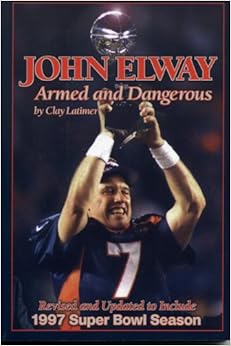
Stanford and the Broncos both retired his Number 7. He was named to the College and Pro Football Halls of Fame, the NFL's 1990s All-Decade Team, the Broncos Ring of Fame, The Sporting News' 1999 list of the 100 Greatest Football Players, and the NFL Network's 2010 list of the 100 Greatest Players.

He is now the Broncos' general manager, building the team that lost Super Bowl XLVIII and won Super Bowl 50. He is the only man ever to win the Super Bowl as both a player and a general manager.

Tuesday, June 14, 2011

Top 10 Athletes Who Never Won a Title

Ty Cobb and Ted Williams,
at the Boston Red Sox' Spring Training facility,
Scottsdale, Arizona, 1960

LeBron James, assuming you're not illiterate, you may want to take note: You aren't even good enough to make this list.

Note: This list refers only to the 4 major North American sports, plus soccer's World Cup. I couldn't decide who was the greatest boxer never to win a belt, or the greatest tennis player never to win one of the Grand Slam events. Golf? Not a sport. Auto racing? Ditto. Figure skating? Puh leese.

Nor will I count performers who never had the chance, i.e. players from the pre-World Series, pre-Stanley Cup era, and Negro League players who never made the majors, unlike such World Series heroes as Satchel Paige (1948) and Monte Irvin (1954). Players who won NBA titles, but not NCAA titles, are exempt.

10. Ernie Banks. Like Jackie Robinson, Roy Campanella, Willie Mays and Hank Aaron, he went from the Negro Leagues to the major leagues, and became a no-doubt-about-it Hall-of-Famer. Like Mays and Aaron, he hit over 500 home runs. But while each of those guys won a World Series ring (though, in each case, only one), Ernie, like another Negro Leaguer turned major leaguer, Cuban star Orestes "Minnie" Minoso, played in Chicago, at a time when Chicago teams simply didn't win Pennants. (In fact, in 1959, when the White Sox won the city's only Pennant between 1945 and 2005, Minnie was away from the ChiSox.)

The Cubs were in 1st place in September 1969, and then came the September Swoon. Oddly, they ended up closer to first in 1970 than they did in '69, but nobody remembers that because the team that beat them out in '69 was New York, and the one that did it in '70 was Pittsburgh.

Every year, Ernie would tell people this was the year the Cubs were going to the World Series. Not a boast, a la Patrick Ewing, but a joyous prediction. He really thought so.

Jack Brickhouse, who broadcast for both Chicago teams, once said he'd like to come out of retirement, to broadcast a World Series between the teams, and have it go to Game 7, and go 23 innings, and then, in the top of the 23rd, the White Sox would take the lead, but in the bottom of the 23rd, the Cubs would get a man on, Ernie himself comes out of retirement, and he hits a long fly ball down the left field line, but it's dark (Wrigley Field, as yet, had no lights), and the umpire can't tell if it's a game-winning home run or a ChiSox-lead-holding foul ball, and the game would be declared over and a tie, and both teams Co-World Champions. A version of this became part of the final scene of the Cub-themed play and movie Bleacher Bums.

9. Cornelius Warmderdam. In 1940, this American of Dutch descent (and "Dutch" became his nickname) became the 1st man to pole-vault 15 feet. He held the world record until 1957 -- and then the new holder needed a metal pole to do it, as bamboo poles had previously been used.

Unfortunately, he was unable to compete in the Olympics, as the 1940 and 1944 Games were cancelled due to World War II, and in 1948 he was barred from the Games, because he had turned professional. (Not until 1992 would professionals be allowed to compete in the Olympics.)

He's been called the greatest track-and-field performer never to win an Olympic medal. In spite of this, he competed long after the 1940s, and was a pioneer in "masters" athletics.

8. Carl Yastrzemski. Not the only Boston Red Sox left fielder to make this list. A member of the 3,000 Hit Club (unlike the other one), Yaz played more games without winning a world championship than any player in any of the 4 major sports' history: 3,308.

Not that it was his fault: Although he did make the final out of both Game 7 of the 1975 World Series and the 1978 American League Eastern Division Playoff (a.k.a. the Bucky Dent Game or the Boston Tie Party), he practically carried the Sox to the 1967 Pennant, and almost singlehandedly won 2 games in that year's World Series. It just wasn't meant to be.

7. Marcel Dionne. "The Little Beaver" scored 731 goals and had 1,040 assists. That is some serious offense. Did he ever win a Stanley Cup? Hell, in spite of some pretty good teammates with the Los Angeles Kings -- Rogie Vachon was in goal, and with Dave Taylor and Charlie Simmer he formed the Triple Crown Line, due to the crown logos on the Kings' uniforms -- he never even made the Conference Finals.

He is a major case for the prosecution in "Defense wins championships," as L.A. never had that good a D when he was there. He did help Team Canada win the 1972 Summit Series against the Soviets, and the 1976 and 1981 Canada Cups (the tournament now named the World Cup).

Honorable Mention to Gilbert Perrault, Mike Gartner, Dale Hawerchuk, Pat LaFontaine (maybe the best American player ever), Borje Salming (maybe the best Swedish player until Peter Forsberg), Peter Stastny (the best Slovakian player), and a bunch of New York Rangers, before fans like me began to say that they suck: Chuck Rayner, Harry Howell, Eddie Giacomin, Rod Gilbert, Jean Ratelle and Brad Park. But for one game -- and it was Game 6 of the 2001 Stanley Cup Finals as much as it was Game 7 -- Ray Bourque would have displaced Dionne on this list.

(EDIT: I previously included 1950s Ranger star Andy Bathgate on this list, but he was a member of the Toronto Maple Leafs team that won the 1964 Stanley Cup.)

6. Paolo Maldini. He might have been the best left back in soccer history. He played in the first team for AC Milan from age 17 until just before turning 41. He led Milan to 7 Serie A (Italian league) titles and 5 European Cup/Champions League titles.

But he didn't win the World Cup, as the Italy teams he played for finished 3rd in 1990 and lost the Final in 1994. He was too young to be chosen in 1982, when Italy won it. In 2006, despite still being Captain of one of the world's great teams, he was not chosen for Italy's World Cup team, and only then did they win.

His father Cesare Maldini was also a great player for Milan, and they are likely to remain the only father & son to captain teams (let alone the same one) to European Cups.

Honorable Mention to Ferenc Puskás, the Budapest Honvéd and Real Madrid legend who took Hungary's "Magnificent Magyars" to the 1954 World Cup Final, but lost to West Germany.

5. Joint entry: Gale Sayers and Dick Butkus. The Chicago Bears were known as the Monsters of the Midway before Chicago native Butkus was even born, yet no player has ever been a greater personification of the name.

And with all the Bears' great running backs, from Red Grange and Bronko Nagurski in ye olden days to Willie Galimore just before Sayers got there (his 1964 car-crash death was probably the reason they drafted Sayers), to Walter Payton after Sayers, "the Kansas Comet" may still be the most talented running back ever. Da Bears got both of these men in the 1965 NFL Draft. That should have been a great stroke of luck.

And yet... "Never won a Super Bowl?" Butkus has said. "I never played in a Playoff game!" It's true: They barely even had winning seasons. In 1969, with Sayers in the backfield and Butkus marauding on D, the Bears went 1-13. How did that happen? Well, the franchise never had a franchise quarterback between Sid Luckman in the late 1940s and Jim McMahon in the mid-1980s. And teammate Brian Piccolo was dying of cancer, so they were kind of preoccupied.

Bad knees ended Sayers' career in 1971, and Butkus' 2 years later. Yet their legends remain: At 34, Sayers is the youngest athlete to be elected to a major sport's Hall of Fame while still alive, and Butkus, to this day, is, for many fans, football's definitive defensive player, more than Mean Joe Greene, Lawrence Taylor or Reggie White.

4. Joint entry: Karl Malone and John Stockton. The 2 Utah Jazz legends go together like bacon and eggs. "The Mailman" may have been the best power forward ever. Stockton holds the all-time records for assists and steals. Both were named to the NBA's 50th Anniversary 50 Greatest Players in 1997 -- not just while both were still in their prime, but before either had ever appeared in an NBA Finals.

That would change that season and the next, but both times they lost to What's His Name and the Chicago Bulls. Malone got one more shot at an NBA Finals, with the 2004 Los Angeles Lakers, but, for reasons that were hardly his fault, that went up in smoke.

Honorable Mention to Charles Barkley. But not to Patrick Ewing.

3. Ted Williams. Was the Boston Red Sox left fielder "the greatest hitter who ever lived"? No, and Ted himself, in a book he wrote late in life, said that Babe Ruth was. But with a .344 lifetime batting average and 521 home runs, despite missing 5 prime years due to military service, Ted isn't that far behind the Babe.

Yet despite finishing at least 2nd 8 times in his career, only once did he get close to a World Series win, with the Sox being tied with the St. Louis Cardinals in the 7th inning of Game 7 in 1946. Alas, events conspired against the Sox, and while Ted had a ring for election to the Hall of Fame, he never got one for winning the World Series.

2. Ty Cobb. By the time he was 23 years old, he'd led the Detroit Tigers to 3 straight American League Pennants -- in a row, 1907-09. By the time he reached his prime, he was arguably the best baseball player ever, and despite Ruth's exploits, some people still think "The Georgia Peach" is the best ever. His .367 lifetime batting average is a record that still stands. His records for stolen bases in a season and in a career, and for hits and runs in a career, stood for decades.

But he never won another Pennant, and he never won a World Series. Just as well: He was a miserable human being, and would have been even if racism had never been a part of it.

(UPDATE: That assessment was based on what I knew at the time. Evidence has since come out that maybe he was a much better person. But he was still a dirty player on the field and a racist off it.)

1. Johan Cruyff. Or, as his name is spelled in his homeland, Johan Cruijff. Perhaps the best soccer player Europe has ever produced, the midfielder made his club team, AFC Ajax of Amsterdam, and his country, the Netherlands, watchwords for beautiful attacking football. With him, Ajax won 8 Eredivisie (Dutch league) titles over an 18-year stretch, including 3 straight European Cups from 1971 to '73.

In mid-career, he went to Spanish club Barcelona, winning a La Liga title and establishing them, as he had established Ajax, as one of the world's superclubs. After giving the North American Soccer League a bit of credibility with his play for the Los Angeles Aztecs and the Washington Diplomats, he returned to the Netherlands, and brought Ajax to glory, and even won an Eredivisie title with arch-rivals Feyenoord of Rotterdam. Before Thierry Henry was even born, in soccer, "Number 14" meant Cruyff.
But the Netherlands lost the 1974 World Cup Final to host West Germany. Then, learning of a bizarre kidnapping plot against his family, he decided the risk of playing in the 1978 World Cup was too great, and chose not to. The Dutch lost the Final -- again to the host country, Argentina, and while the '74 loss was dubious due to media circumstances, the surviving Dutch players are convinced that there is no way the fascist military dictatorship Argentina then had was going to let the Dutch win the Final -- or, if they did, leave the stadium alive.

Cruyff has since managed both Ajax and Barcelona to trophies, including Barcelona's 1st European Cup in 1992. But he has never been permitted to manage the Netherlands national team.