Showing posts with label joe jackson. Show all posts

Tuesday, May 23, 2017

Top 10 Athletes From South Carolina

May 23, 1788: South Carolina becomes the 8th State to ratify the Constitution of the United States, and joins the Union.

Top 10 Athletes from South Carolina

No South Carolina-trained football player has ever won the Heisman Trophy. Felix "Doc" Blanchard won it in 1944, and was born in McColl, but the family left the State at age 5, and he qualifies for Mississippi instead.

George Rogers won it at the University of South Carolina in 1980, but is from Georgia. So is Gamecocks wide receiver Sterling Sharpe. They are the only 2 players from the school only people in the Palmetto State call "USC" to make the College Football Hall of Fame.

As for Clemson, which won the National Championship in 1981 and again last year, the best player on their 1st title team was Terry Kinard, a decent defensive back for the Super Bowl-winning Giants, but hardly a pro legend. The best player on last year's team was Deshaun Watson, a quarterback who was just drafted by the Houston Texans, but it's way too soon to put him, or any other Clemson player -- including William "the Refrigerator" Perry of the Super Bowl Shuffle Bears of 1985-86 -- on this list.

Larry Doby was born in Camden, South Carolina, and Althea Gibson was born in Clarendon County. But both grew up in the New York Tri-State Area: Doby in Paterson, New Jersey; and Gibson in Harlem, before settling in East Orange. Al Rosen was born in Spartanburg, but grew up in Miami, so he qualifies for Florida.

Honorable Mention to 2 Yankees who were born in Holly Hill, South Carolina. Willie Randolph moved with his family to Brooklyn as a small boy, so he doesn't remember the place. But Brett Gardner was not only born there, but grew up there.

Honorable Mention to William Julius "Mookie" Wilson of Bamberg, South Carolina, and the 1986 Mets.

Honorable Mention to Calvin Reese Jr., a.k.a. Pokey Reese, of Columbia, who, with his teammates on the 2004 World Champion * Boston Red Sox, was selected by Sports Illustrated as their Sportspeople of the Year. (As far as I know, he didn't use performance-enhancing drugs.)

Honorable Mention to Arnold Tucker of Calhoun Falls. He was Army's quarterback in their 1944 and '45 National Championship seasons, and in 1946 finished 5th in the balloting for the Heisman Trophy, behind teammates Glenn Davis in 1st and Blanchard in 2nd. So, Honorable Mention to him. He never played pro ball, staying in the Army upon graduation from West Point, being transferred into the new U.S. Air Force in 1947, served in the Korean and Vietnam Wars, and rose to the rank of Lieutenant Colonel.

Honorable Mention to Chris Antley of Elloree. In 1991, he won the Kentucky Derby aboard Strike the Gold. But he fell victim to drug use. He got clean for a while, and in 1999 rode Charismatic to win the Derby and the Preakness Stakes. He had Charismatic leading in the Belmont Stakes. a few furlongs from winning the Triple Crown, but the horse got hurt. Antley saw this, and jumped off, and held him in place, so he wouldn't injure himself further.

He saved Charismatic's life, but couldn't save his own. He fell back into drug use, and died the next year. He was posthumously elected to the National Museum of Racing and Hall of Fame.

10. Bobby Richardson of Sumter. The 2nd baseman was an average, occasionally very good, player in the regular season, but a terror in World Series play, raising his batting average from .266 to .305. He won 7 Pennants with the Yankees from 1957 to 1964, and 3 World Series: 1958, 1961 and 1962.

Ironically, his best performances came in defeats. In 1960, he set a Series record that still stands with 12 RBIs, and became, to date, the only player from a losing team to be named Most Valuable Player of a World Series. In 1964, he became the 1st player (there are now others) to collect 13 hits in a single Series. But he's best known for catching a line drive from Willie McCovey for the last out to preserve a 1-0 Yankee win over the San Francisco Giants in Game 7 in 1962.

An injury ended his career at age 30. He became the head coach at the University of South Carolina, getting them to their 1st NCAA Tournament appearance in 1974. He was also the head coach at Jerry Falwell's Liberty University and at Coastal Carolina University. He is an ordained minister, and officiated at the funeral of teammate Mickey Mantle. He wore Number 1 through most of his Yankee career, and it is retired, but not for him. (Rather, it's for the man he succeeded as the Yankees' starting 2nd baseman, Pennant-winning manager Billy Martin.)

9. Bob Montgomery of Sumter. He might have been the 1st great boxer to grow up in South Carolina and move to Philadelphia to turn pro as a teenager, but he wasn't the last. He beat Beau Jack to become Lightweight Champion of the World in 1943, lost it to him 6 months later, and took it back again 4 months after that, holding the title until 1947. He is in the International Boxing Hall of Fame.

8. Jim Rice of Anderson. His career total of 382 home runs might not sound like a Hall of Fame-worthy total -- Frank Howard hit exactly as many, and Rice's Boston Red Sox teammate Dwight Evans hit 385 and was a great defensive outfielder, and they're not in Cooperstown. And, as a Yankee Fan who remembers 1978, I can tell you that Rice getting the nod over Ron Guidry was the most dubious decision in the history of MLB Most Valuable Player voting.

But Rice was an 8-time All-Star. He led the American League in home runs in 1977, and led it in both homers and RBI in 1978 and again in 1983. He got the Sox into the postseason in 1975, (sort-of) in 1978, and in 1986. The team has retired his Number 14, and elected them to their team Hall of Fame.

7. Alex English of Columbia. The forward was an 8-time NBA All-Star, and led the league in scoring in 1983. When he retired in 1991, he was 1 of only 7 players to have scored 25,000 career points. His Number 22 was retired by the University of South Carolina, and his 2 was retired by the Denver Nuggets. He is in the Basketball Hall of Fame.

After coaching on the staffs of Philadelphia, Atlanta, Toronto and Sacramento, he is now a color analyst for college basketball games on the SEC Network.

6. Harry Carson of Florence. The linebacker was the Captain of the Giants team that won Super Bowl XXI, the G-Men's 1st World Championship in 30 years. He was a 9-time Pro Bowler, and has been elected to the Pro Football Hall of Fame and the Giants Ring of Honor.

5. Kevin Garnett of Mauldin. After 3 years at Mauldin High School, he went to Chicago to attend Farragut Career Academy, and was named Illinois' Mr. Basketball in 1995. He skipped college to go directly to the NBA. That doesn't work out for a lot of players. It did for him, as he was an All-Star 15 times, including being named the Game's MVP in 2003.

He was named the league's MVP in 2004, and got the Minnesota Timberwolves to, to date, their only Conference Finals. He signed with the Boston Celtics, and led them to the 2008 NBA Championship, being named NBA Defensive Player of the Year. He also won a Gold Medal with the U.S. team at the 2000 Olympics in Sydney.

He retired after last season. Barring his doing something incredibly stupid, he will be elected to the Basketball Hall of Fame. The Timberwolves will almost certainly retire his Number 21. Whether the Celtics retire his 5 (they'd already retired 21 for Bill Sharman) remains to be seen. If the NBA does a 75th Anniversary 75 Greatest Players in 2021, he will surely be in it. He might even be in the top 20.

4. Art Shell of North Charleston. The Oakland Raiders had one heck of an offensive line in the 1970s and into the early 1980s, with Shell at tackle, Gene Upshaw at guard, and Jim Otto and then Dave Dalby at center, protecting first Ken Stabler, then Jim Plunkett as they won 3 Super Bowls between them.

Shell was named to the Pro Football Hall of Fame, the NFL's 1970s All-Decade Team, 8 Pro Bowls, and The Sporting News' 100  Greatest Football Players.

In 1989, during their Los Angeles sojourn, Shell was named the Raiders' head coach, making him the 1st black head coach in the NFL, unless you count Fritz Pollard in the league's early days, when it was barely a semipro league. In 1990, he coached them to the AFC Championship Game, and was named NFL Coach of the Year.

3. Pete Maravich of Central, South Carolina. The family lived there while his father, Press Maravich (Petar Press Maravich Sr.), was the head coach at Clemson. The future Pistol Pete was born, while Press was playing in the NBA's 1st season, for the Pittsburgh Ironmen (who didn't play a 2nd season), in Aliquippa, Pennsylvania -- also the hometown of Mike Ditka and Tony Dorsett.

His father became the head coach at Louisiana State University (LSU), and Pete went there, and averaged 44.2 points per game, still an NCAA record, despite there being neither a 3-point shot nor a shot clock in college ball at the time (1967-70).

He starred for the Atlanta Hawks, then back in Louisiana with the expansion New Orleans Jazz. He was with them in their 1st season in Utah, 1979-80, but was soon traded to the Boston Celtics, and a recurring knee injury ended his carer after that season. His luck was bad: Although his own play was stunning, as he made 5 All-Star Games and led the NBA in scoring in 1977 -- and his floppy hair and floppier socks made him something of an icon -- the Hawks stopped being good right after he arrived, and both the Jazz and the Celtics got good again right after he left.

That didn't stop him from being elected to the Basketball Hall of Fame, and being named to the NBA's 50th Anniversary 50 Greatest Players in 1996. Unfortunately, he was the only one of the 50 who had yet died, felled by an undetected heart defect in 1988, only 40 years old. His uniform number was retired by LSU (23), the Hawks (44), the Jazz (7), and, even though he never played for the franchise, the new team in New Orleans, the Pelicans (7).

2. Joe Jackson of Greenville. There was no All-Star Game in the era of "Shoeless Joe." If there was, he would have made it several times. His .356 lifetime batting average would surely have dropped if he'd had a full career. On the other hand, he would have been a shoo-in for 3,000 hits and the Hall of Fame. Alas...

1. Joe Frazier of Beaufort. Topping Shoeless Joe, and every other player on this list, is Smokin' Joe. He lived on a farm outside Beaufort until he was 15, before going north and famously becoming a Philadelphia fighter. So you're seeing him on this list, instead of when I do a list for Pennsylvania.

He won an Olympic Gold Medal in 1964, won his 1st piece of the Heavyweight Championship of the World in 1968, unified the title in 1970, and made it official every which way by beating the defrocked Muhammad Ali in 1971. The Ring magazine named him Fighter of the Year in 1967, 1970 and 1971.
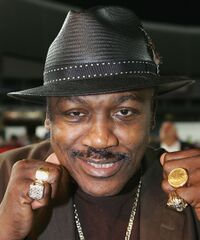
He lost the title when he got clobbered by George Foreman in 1973, and lost to Ali in 1974 and 1975, but remains one of the greatest punchers in the history of boxing, a member of the International Boxing Hall of Fame.

Tuesday, September 20, 2016

W.P. Kinsella, 1935-2016

I don't want to be one of those guys. The guys who hear about a movie, and say, "The book was better."

But if you liked the baseball-themed movie Field of Dreams, do yourself a favor, and get the book on which it was based: Shoeless Joe, by W.P. Kinsella. I am not saying the book is better. I am saying that, if you loved the movie, you will love the book.

*

William Patrick Kinsella was born on May 25, 1935 in Edmonton, Alberta, Canada. He grew up nearby in Darwell, Alberta. Like me, he was taught to read early by his mother, so he was already reading when most kids were struggling with it. The family moved to Edmonton when he was 10, and his literary education came when he worked in his high school's library.

He worked for the Alberta Provincial government, and in 1967 moved to Victoria, the capital of the Province of British Columbia, when he ran an Italian restaurant and drove a taxi. He took writing courses at the University of Victoria, got his bachelor's degree there in 1970 (at the age of 35), and then moved to Iowa, where he got a master's degree at their famed Iowa Writers' Workshop in 1978. This is why he used Iowa as the setting for his most famous work.

He moved back to Alberta, teaching English at the University of Calgary, and spent the rest of his life writing about 2 subjects: Baseball, and the indigenous peoples of North America -- which we Americans have, so frequently, ignorantly called "Indians" but have begun to call "Native Americans" or "First Americans," and the Canadians call "First Nations." About them, Kinsella would publish Dance Me Outside, Scars, Born Indian, Moccasin Telegraph, The Fencepost Chronicles, and others.

In 1979, he began to write a story about a poor Iowa farmer named Ray Kinsella,  who hears a voice in his cornfield, telling him to take steps to bring back to life the 8 Chicago White Sox players banned from baseball for life for their role in the 1919-21 Black Sox Scandal, particularly their best player, the all-time hero of the protagonist's father, Joe Jackson.

Jackson had once played a game in his native South Carolina, before signing a professional contract, with new shoes that didn't fit well, and they hurt his feet, so he took them off, and played the rest of the game in just his socks. The nickname that would follow him for the rest of his life, and would become the title of W.P. Kinsella's book, was Shoeless Joe.

SPOILER ALERT: In 1989, the film Field of Dreams was released, based on the book, with significant differences:

* Ray has an identical twin brother, Richard, distinguishable by a scar on his forehead, until Ray bumps into something, and develops an identical scar. The movie mentions no siblings for Ray.

* The author who had written about losing his dream of playing baseball was J.D. Salinger, author of Catcher In the Rye, a book that had a deep effect on W.P. and many other boys of his generation (and later ones). Salinger had used characters named Ray Kinsella and Richard Kinsella (the protagonist and his brother) in stories. He had also written that he had wanted to play for the New York Giants, but never made it, the Giants moved, and the Polo Grounds was torn down. At the time, the real Salinger was living on a hilltop in New Hampshire, and refused to write again or see visitors.

In order to avoid a lawsuit, the filmmakers made the author Terence Mann, a fictional black author involved in the 1960s civil rights and antiwar movements, who had wanted to play for the Brooklyn Dodgers with Jackie Robinson, lamented their move and the tearing down of Ebbets Field, used a character named John Kinsella (Ray's father), gave up his causes ("I was the East Coast distributor of 'involved'") after the disastrous year that was 1968, and secluded himself in a small apartment in Boston (New England's regional "capital" rather than in its countryside), where he became a computer programmer, designing ways to teach children to solve conflicts without violence.

* Ray and Salinger -- or "Jerry," as he ends up calling Jerome David Salinger -- do the smart thing and look Archibald Wright "Moonlight" Graham up in The Baseball Encyclopedia (what we used before Wikipedia and Baseball-Reference.com came along), and knew before heading out that he was already dead.

In the movie, Ray and Terence -- or "Terry," as he asks Ray's wife Annie to call him -- don't find this out until they get to Graham's adopted hometown of Chisholm, Minnesota. Maybe hoping that Graham was elderly but still alive as they set out worked better for dramatic effect, but their lack of preparation was foolish and out of character, at least for Terence.

* The timeline is moved up. The novel clearly takes place in 1979 (I'll explain later). Ray and Annie don't make mentions of any 1960s activism -- although, unlike the movie's versions of them, they would have been old enough. And Graham's real history is used. His one and only major league appearance is on June 29, 1905, 74 years before the novel's action, and in the middle of a season. The scene where Ray time-travels to see him is in 1955, and Graham dies in 1965.

In the movie, it's 1988, Ray specifically says he was born in 1952, making him 17 when the 1960s ended, and thus unlikely (though hardly impossible) to have been involved in major events, or even to have been at Woodstock. Graham's one appearance is in the last game of the 1922 season, 66 years before the film's action. He dies in 1972, and Ray's unwitting time-warp brings him to shortly before Dr. Graham dies.

* There's a character and a storyline in the book that didn't make it into the movie. Ray and Annie had bought the farm from Eddie Scissons, an old eccentric who had told the locals that he was the oldest living former Chicago Cub. He gets exposed as a fraud, something Ray had already suspected due to a mistake Scissons had made: He claimed to have played with Cub icons Joe Tinker, Johnny Evers and Frank Chance at Wrigley Field, which didn't open until after all 3 had left the Cubs (although Tinker had played there for the Chicago Whales and returned to the Cubs when they moved in).

After his exposure as a fraud, Scissons sees his younger self walk out of the cornfield in a 1908 Cubs uniform and take the mound, but, as penance for his real self's fraud, gets clobbered, and leaves without recording an out. He dies the next day, and is buried in the outfield, and Ray is now sure that if he looks in The Baseball Encyclopedia where Scissons' name would be, it will be there, with an ERA of infinity.

My favorite part of the book concerns the trip back from Chisholm to the farm in Iowa. In a scene that does not appear in the film, Ray, Salinger, and young Archie Graham stop off at Metropolitan Stadium outside Minneapolis to watch the Minnesota Twins play the Yankees. Ray takes a particular interest in the Yankees' banged-up, grumpy but heroic catcher, Thurman Munson, and notes (after the fact) that Munson would die in a plane crash only a few weeks later. (This definitively dates the story: The Yankees visited the Twins in June 12, 13 and 14, 1979. The Yankees won the opener of the series 4-1, and the Twins took the next 2, 8-7 and 4-2.)

He also mentions going back the next day, and watching the groundskeepers water the field, taking notes on how to do it for his own field back on his farm, and pointing out that, by the time the book was done, the Twins had moved out of The Met and into the downtown Metrodome, which had artificial turf, and didn't need any watering.

*

Shoeless Joe was a bestseller, and made Kinsella a literary star. Field of Dreams made him a legend. He wrote a 2nd baseball novel, The Iowa Baseball Confederacy, about an Iowa minor league team playing the 1908 World Champion Cubs in what turns out to be a days-long game that simply doesn't want to end. It was excerpted in Sports Illustrated at its publication in 1986.

He had also invoked the Cubs in a 1984 story, The Last Pennant Before Armageddon, in which it looks like the Cubs might finally win the National League Pennant for the 1st time since 1945, just as America and the Soviet Union might actually be heading for a nuclear exchange, thus preventing the Pennant -- or, if the Pennant does happen first, preventing anyone from enjoying it for very long.

It was very fortuitous: This turned out to be the same year President Ronald Reagan, himself a former broadcaster for the Cubs in Iowa (doing games by telegraph over Des Moines radio station WHO), made a joke about bombing Russia that mistakenly went out during preparations for his weekly radio address; and the Cubs reached the postseason for the 1st time since the 1945 World Series, and came within 1 game of that elusive Pennant, but blew it. The story was adapted for a stage play in 1990.

In 1993, Kinsella was made an Officer of the Order of Canada; he would later receive the Order of British Columbia. In 1996, his story Lieberman in Love was turned into a short film that won the Academy Award for Best Live Action Short Film.

Somehow, the film had been made without him even knowing about it, until he watched the Oscar telecast and heard it announced. He was not mentioned in the film's credits. Nor did Christine Lahti, the actress who directed it, mention him in her acceptance speech. Variety, the show-business newspaper, took out a full-page ad apologizing to him, and that seemed to settle things.

In 1997, Kinsella was hit by a car. His impact injuries were minor, but he suffered another injury when his head hit the ground. He would later say he lost his senses of smell and taste, and his ability to concentrate. He also developed diabetes. He became embittered about the publishing industry, bemoaning the shrinking audience for academic fiction.

Shortly after his accident, the last novel he had written before it was released: Magic Time, which followed a group of activists from the early 1960s to the late 1970s. I read it. It showed so much promise. It went someplace I didn't want it to go.

Timothy Leary, the doctor who became the high priest of LSD, was still alive when Kinsella wrote it, but had died before it came out. Early in he book, Kinsella wrote of the group's first "acid trip," and had one of them think, "Timothy Leary looked like an angel." Toward the end, one of the characters has an "acid flashback," and thinks, "Timothy Leary looked like the Devil."

By the end of the 2000s, he had settled in Yale, British Columbia, a small rural town well inland from the big city of Vancouver and the Provincial capital of Victoria. In a way, he was emulating Salinger, who died in 2010. By that point, Kinsella had begun to write again, thus deviating from Salinger's path. In 2011, another baseball novel was published, Butterfly Winter.

His diabates would soon leave him debilitated. On June 18 of this year, physician-assisted suicide was legalized in Canada. Three months later, on September 18, 2016, in Hope, British Columbia, W.P. Kinsella and his doctor took advantage of this law. The author was 81 years old. He was survived by his 4th wife, Barbara; 2 daughters, Erin Kinsella and Shannon Kinsella (Erin was the name of Ray and Annie's daughter in both book and movie); 3 stepchildren, Scarlet Gaffney, Aaron Gaffney and Lyn Calendar; and 4 grandchildren.

"I just think magically," he told the Vancouver Sun in 2011. "I always have."

Anyone who reads Shoeless Joe or watches Field of Dreams would have to agree with that.