Showing posts with label field of dreams. Show all posts

Friday, August 13, 2021

Field of Disasters

Shoeless Joe Jackson (played by Ray Liotta): "Hey! Is this Heaven?"
Ray Kinsella (Kevin Costner): "No, it's Iowa!"
-- Field of Dreams

Major League Baseball, as an overseeing organization, does few things well. But it got last night's Field of Dreams Game right. It managed to be sentimental without being maudlin. It was a great moment for the sport, and it was a great game.

But the result, oy vey.

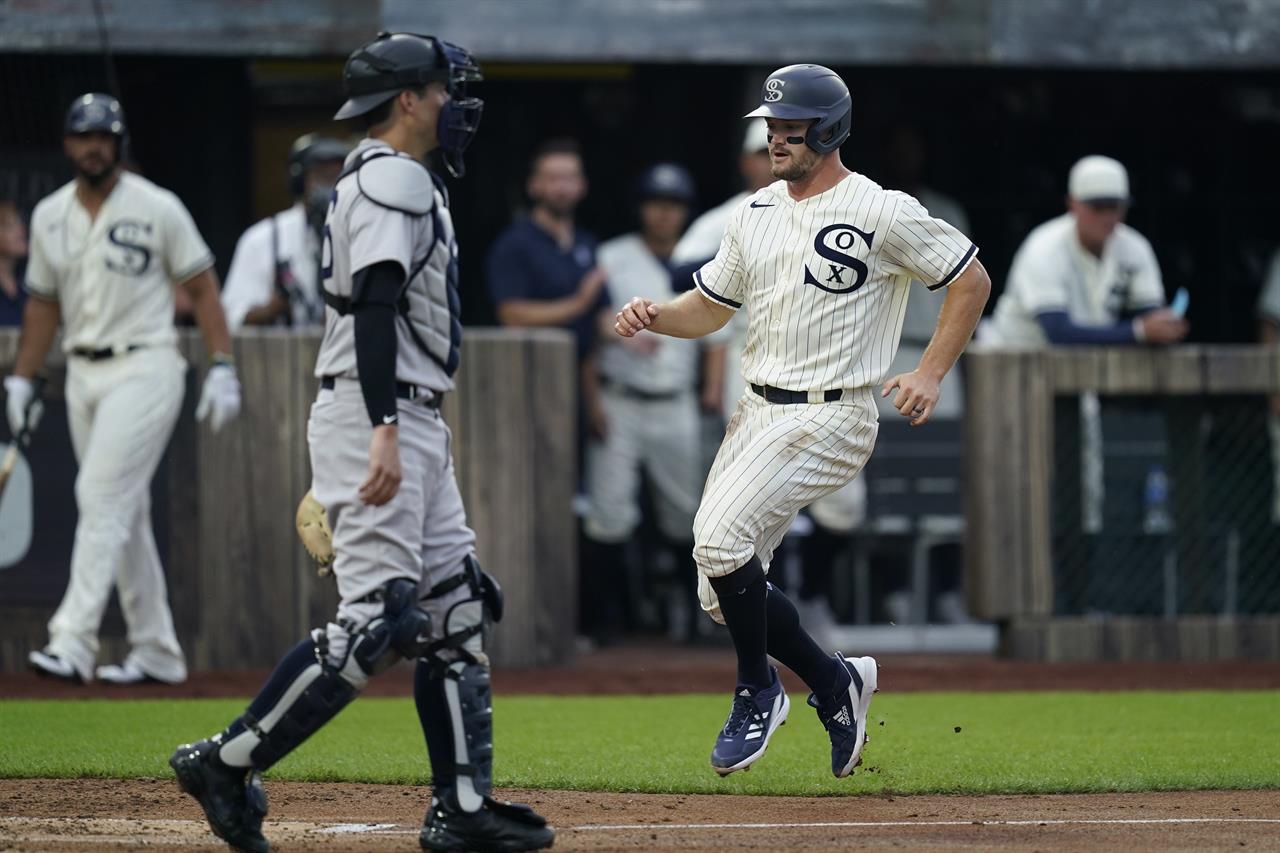
Fitting in with the film's subject matter, including the 1919 Chicago White Sox and their scandal, the Yankees and the current White Sox wore copies of their 1919 uniforms -- with Nike swooshes added.

Yankee starter Andrew Heaney didn't have it, allowing 7 runs in his 5 innings. Lance Lynn, a former Yankee, could have pitched in place of Heaney last night, but Brian Cashman let him go. Aaron Judge turned a 1-0 Chicago White Sox lead into a 3-1 Yankee lead with a home run in the top of the 3rd inning. But the ChiSox took the lead right back in the bottom of the 3rd. It was 7-3 after 4 innings.

Brett Gardner led off the top of the 6th with a home run. It stayed 7-4 Pale Hose going into the 9th inning. Tyler Wade led off with a single, but DJ LeMahieu and Gardner struck out. The Yankees looked finished. But Judge hit another home run to make it 7-6. There was hope. Joey Gallo drew a walk, and Giancarlo Stanton sent a long drive into the cornfield. 8-7 Yankees!

So now Zack Britton, the closer since Aroldis Chapman is on the Injured List, had to get 3 outs without allowing a run. He got the 1st. But then, Cliche Alert: Walks can kill you. Britton walked Seby Zavala. That brought Tim Anderson to the plate as the winning run, and he hit one out.

White Sox 9, Yankees 8. WP: Liam Hendriks (7-2). No save. LP: Britton (0-1).

The teams have today off -- the 3rd Friday off for the Yankees this season, the 2nd not counting the day after Opening Day. That is rare. They play again tomorrow and Sunday in Chicago.

Saturday, October 27, 2018

Baseball May Not Save Us, But It Does Help

Yesterday, the guy who sent pipe bombs to several Democratic Party officials, including former Presidents Barack Obama and Bill Clinton, was caught. He became known as the MAGABomber because of his van, festooned with Trump memorabilia.

This morning, a guy took an AR-15 assault rifle and shot up a synagogue in Pittsburgh. At this writing, the reports say that there are 8 dead, and that the shooter shot 3 cops before he was taken alive, shouting that the Jews must die. (UPDATE: 11 confirmed dead, 4 cops shot.)

And Donald Trump refuses to accept responsibility for his incendiary rhetoric, including bigoted "dog whistles," including the word "globalist" and references to George Soros, code words for "evil Jews." Soros was also the first person to receive a MAGABomb.

In between the arrest of the MAGABomber and the synagogue massacre, there was a World Series game that went 18 innings, and captivated the nation, as proven by those following it online.

Game 3 of the 2018 World Series, which the Los Angeles Dodgers had to win, or else they'd be down 3 games to none, tied the record for the longest postseason game ever, and easily broke the record for the longest World Series game ever, 14 innings. Oddly, it was the Boston Red Sox and the Dodgers, albeit in Brooklyn, who first did that, in 1916. The winning pitcher for the Red Sox that day? Babe Ruth. (Somehow, no matter what happens in baseball, it eventually gets back to the Babe.)

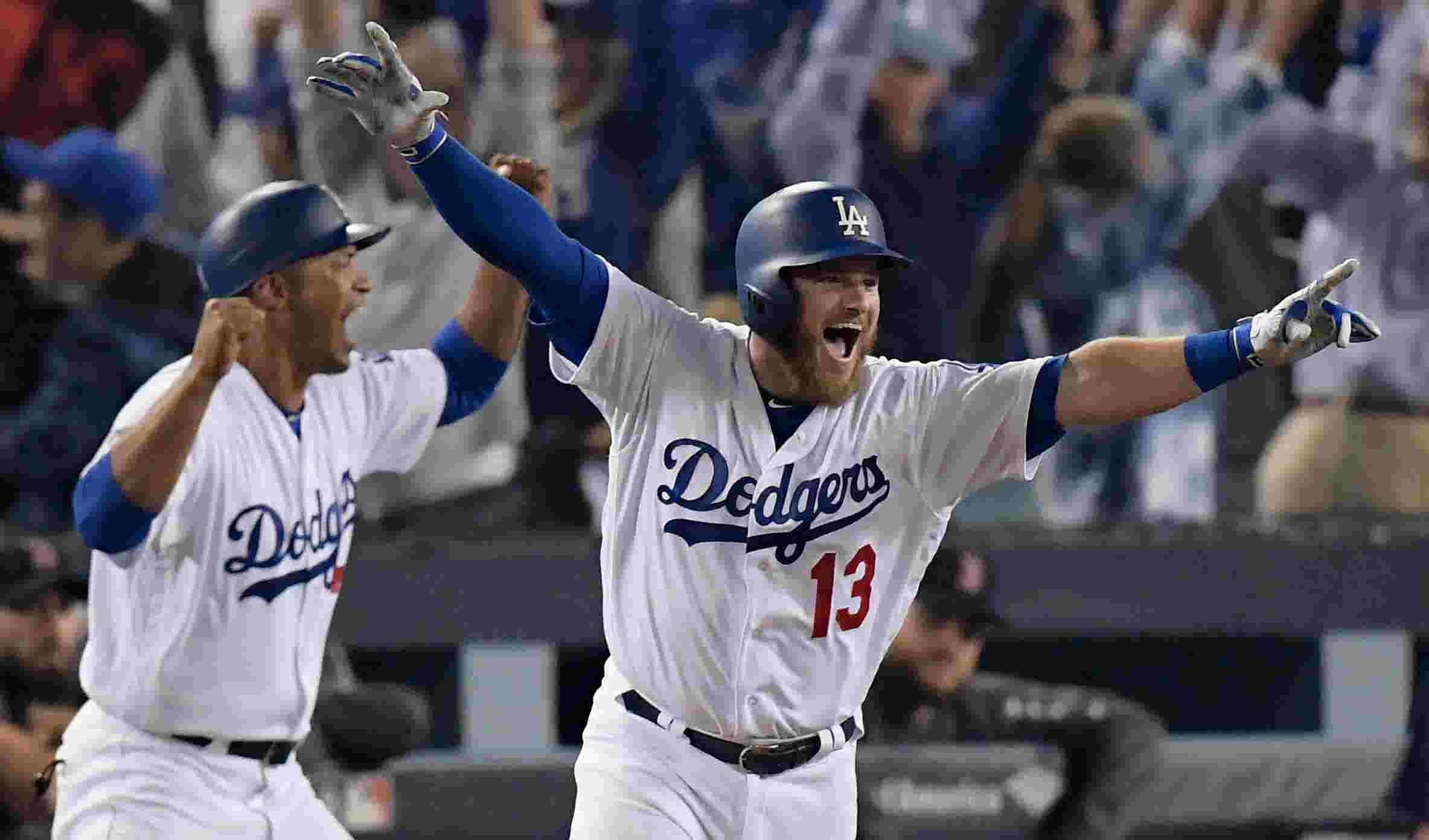
I think it ended at 3:34 AM, New York time, meaning it was after midnight even in Los Angeles, where it was played. When Max Muncy wrote his name into baseball history with a walkoff home run off the valiant ex-Yankee Nathan Eovaldi, 30 years and 8 days after Kirk Gibson did it in the bottom of the 9th inning of Game 1 of the 1988 World Series, I thought of what Jack Buck, calling the game for CBS Radio, said that night: "I don't believe what I just saw!"

Joe Buck, calling the game on TV for Fox, did not use his father's line. Joe doesn't have that kind of imagination.

A man who does have that kind of imagination is Phil Alden Robinson, the director and screenwriter of the 1989 film Field of Dreams. He had James Earl Jones, as reclusive writer and former civil rights activist Terence Mann, say this to Kevin Costner as Ray Kinsella:

The one constant through all the years, Ray, has been baseball. America has rolled by like an army of steamrollers. It has been erased like a blackboard, rebuilt and erased again.

But baseball has marked the time. This field, this game: It's a part of our past, Ray. It reminds of us of all that once was good, and could be again. Oh, people will come Ray. People will most definitely come.

Last night, millions of people who don't necessarily like either the Red Sox or the Dodgers were transfixed by this game that wouldn't end. A 14th inning stretch. Dodger Stadium's concession stands running out of food. Eovaldi forced to bat for himself. The Dodgers sending their ace pitcher, Clayton Kershaw, onto the field as a pinch-hitter.

Jokes about how Justin Turner of the Dodgers and Craig Kimbrel of the Red Sox, both known for long beards, were clean-shaven when the game began. Jokes that this game began at Ebbets Field in Brooklyn, which the Dodgers left in 1957. Jokes about who was President when the game began.

Somebody said that this game was longer in terms of elapsed time than the entire 1939 World Series, which the Yankees swept in 4 straight over the Cincinnati Reds. I told him, "I thought this was the 1939 World Series."

I was reminded of a joke that took place on a train, and adapted it: A woman walks up to a Dodger Stadium usher and says, "Help me to an ambulance, I'm having a baby!" And the usher says, "Ma'am, you shouldn't have come to the game in that condition." And she says, "I didn't!"

Sometimes, through all the anger and sadness, you just gotta laugh.

Earl Warren, Chief Justice of the Supreme Court from 1953 to 1969, said, "I always turn to the sports section first. The sports page records people's accomplishments. The front page has nothing but man's failures."

Of course, at the time, he lived in Washington, where the Senators and the Redskins spent nearly his entire tenure on the Court being terrible.

Baseball may not save us, but it does help. So do other sports.

It's only a game.

No, it's not. An individual game is only a game. But sport does things for us that few things can.

Just ask Max Muncy. Few of us outside Southern California knew who he was when the game began. And the rest of his career, and his life, might be unremarkable. But, someday, probably in the 2060s or 2070s, there will be a headline, in whatever form the news takes by then, saying something along the lines of, "Max Muncy dies at 85, his home run ended marathon World Series game" -- narrowing his life down to one swing of the bat.

That wasn't fair for Bobby Thomson and Dave Henderson, and it won't be fair for Bill Mazeroski, Carlton Fisk, Chris Chambliss, Bucky Dent, the aforementioned Kirk Gibson, Aaron Boone, and any other big-homering name you can mention, when their respective times come.

Certainly, it wasn't, or won't be, for the pitchers who gave those shots up: The already-deceased Ralph Branca and Donnie Moore, and the ones still living at the moment: Ralph Terry, Pat Darcy, Mark Littell, Mike Torrez, Dennis Eckersley and Tim Wakefield. (Except for Darcy, who wouldn't have lasted long in the majors anyway, but still won that 1975 World Series, all of those guys were good pitchers who had their moments.)

Nor is it, or will it be, fair for the guys who made famous ballfield mistakes: Fred Merkle, Fred Snodgrass, Johnny Pesky, Willie Davis, Leon Durham, Bill Buckner -- good players, all of them. Or for baseball's unwitting, unwilling most infamous fan, Steve Bartman.

But Max Muncy has joined the ranks of World Series heroes. We will talk about him forever.

Sometimes, tragedy or infamy overtakes us. Five World Series -- 1917, 1918, 1942, 1943 and 1944 -- have been played in times of World War. The 1949 Series happened right after the Communist takeover in China and the 1st Soviet nuclear test, scaring us. The 1957 Series happened right after the Little Rock school integration crisis and the launch of Sputnik. The Cuban Missile Crisis happened right after the 1962 Series, and some people took comfort during that scary time in talking about a great Series.

The Series of 1967 through 1972 were relief from having to constantly talk about Vietnam and riots; those of 1973 and 1974, Watergate. The 1977 Yankees took New Yorkers' minds off crime, riots, the Son of Sam and municipal bankruptcy. An earthquake hit San Francisco during the 1989 World Series, but the resumption helped the Bay Area heal. The Yankees' 2001 postseason run brought some relief after 9/11.

With the MAGABomber and yet another mass shooting, we need something that will make us smile again.

Last night, baseball did all it could -- for all intents and purposes, twice.

As long as baseball survives, as long as sport survives, it will help us to do the same.

*

Days until Arsenal play again: 1, tomorrow, at 9:30 AM New York time, away to South London team Crystal Palace. Following Thursday's win away to Sporting Clube de Portugal in Lisbon in UEFA Europa League play, The Arsenal are sitting on an 11-game winning streak in all competitions.

Days until the New York Red Bulls play again: 1, tomorrow afternoon at 4:30, the regular season finale, home to Orlando City. Metro still have a shot at the MLS regular-season title, the Supporters' Shield. It would be their 3rd time with the honor in the last 6 seasons. But they're still looking for that elusive 1st MLS Cup. They would have to top the performance of Atlanta United: A win for us, and a draw or a loss for them; or, a draw for us, and a loss of 2 or more goals for them. (UPDATE: We got the win, and they lost by 3 goals anyway. We got the Shield.)

Days until the Red Bulls next play a "derby": See the previous answer. The regular season ends the following Sunday, home to Orlando City. Then comes the MLS Cup Playoffs. New York City FC and Philly have qualified, and it looks like D.C. United also will, but the New England Revolution have been eliminated.

Days until Rutgers University plays football again: 7, a week from today, away to the University of Wisconsin. Mercifully, they have this weekend off.

Days until the New Jersey Devils next play a local rival: 7, a week from today, against the New York Islanders, at the Barclays Center in Brooklyn. The next game against the Philadelphia Flyers will be on Thursday night, November 15, at the Wells Fargo Center in Philadelphia. The 1st game against the New York Rangers, a.k.a. The Scum, will be on Thursday night, January 31, 2019, at the Prudential Center.

Days until the next Congressional election, when we can elect a Democratic Congress that can impeach and remove Donald Trump from the Presidency: 10, a week from this coming Tuesday, November 6. Get out and vote!

Days until East Brunswick High School plays football again: 13, on Friday night, November 9, in a "consolation game" against a local opponent to be announced, of similar enrollment and record, who also didn't make the State Playoffs. Last night, they followed up a 53-point performance against Monroe by losing to neighboring (but not really rival) North Brunswick 36-0. Normal service has been restored.

Days until the U.S. national soccer team plays again: 19, on Thursday, November 15, at 3:00 PM New York time, a friendly against England at Wembley Stadium in London. 

Days until the next Rutgers-Penn State game: 21, on Saturday, November 17, at High Point Solutions Stadium in Piscataway, New Jersey. Exactly 3 weeks.

Days until the next East Brunswick-Old Bridge Thanksgiving high school football game: 26, on Thursday, November 22. Under 4 weeks.


Days until the next North London Derby: 36, on Sunday, December 2, at the Emirates Stadium. Just over 5 weeks.

Days until a Democratic Congress can convene, and the impeachment process can begin: 68, on Thursday, January 3, 2019. Under 10 weeks.

Days until the Baseball Hall of Fame vote is announced, electing Mariano Rivera: 88, on January 23, 2019. A little under 3 months.

Days until the Yankees' 2019 Opening Day: 152, on Thursday, March 28, home to the Baltimore Orioles. Just 5 months.

Days until the next Yankees-Red Sox series begins: 171, on Tuesday, April 16, 2019, at Yankee Stadium II. Under 6 months.

Days until the next Women's World Cup kicks off: 223,  on June 7, 2019, in France. Under 8 months. The U.S. team, as 3-time and defending Champions, has, as usual, a better chance than the men's team would have had in 2018 anyway.

Days until the Yankees and Red Sox play each other in London: 245, on June 29, 2019. A little over 8 months.

Days until my 50th Birthday, at which point I can join AARP and get discounts for travel and game tickets: 417
, on December 18, 2019. A little over a year, or a little under 14 months.


Days until the Baseball Hall of Fame vote is announced, electing Derek Jeter: 452, on January 22, 2020. A little over a year, or a little under 15 months.

Days until the next Summer Olympics begins in Tokyo, Japan: 636, on July 24, 2020. Under 2 years, or a little under 21 months.

Days until the next Presidential election, when we can dump the Trump-Pence regime and elect a real Administration: 738, on November 3, 2020. A little over 2 years, or a little over 24 months.

Days until Liberation Day: 816, at noon on January 20, 2021. A little over 2 years, or a little undr 27 months. Note that this is liberation from the Republican Party, not just from Donald Trump. Having Mike Pence as President wouldn't be better, just differently bad, mixing theocracy with plutocracy, rather than mixing kleptocracy with plutocracy.

Days until the next Winter Olympics begins in Beijing, China: 1,196, on February 4, 2022. A little over 3 years, or a little over 39 months.


Days until the next World Cup for which the American team will be eligible is scheduled to kick off: 1,486, on November 21, 2022, in Qatar. A little over 4 years, or a little under 49 months. The charges of corruption against Qatar may yet mean that they will lose the tournament, in which case it will be moved to a nation where it would not be too hot to play it in June and July.

Tuesday, September 20, 2016

W.P. Kinsella, 1935-2016

I don't want to be one of those guys. The guys who hear about a movie, and say, "The book was better."

But if you liked the baseball-themed movie Field of Dreams, do yourself a favor, and get the book on which it was based: Shoeless Joe, by W.P. Kinsella. I am not saying the book is better. I am saying that, if you loved the movie, you will love the book.

*

William Patrick Kinsella was born on May 25, 1935 in Edmonton, Alberta, Canada. He grew up nearby in Darwell, Alberta. Like me, he was taught to read early by his mother, so he was already reading when most kids were struggling with it. The family moved to Edmonton when he was 10, and his literary education came when he worked in his high school's library.

He worked for the Alberta Provincial government, and in 1967 moved to Victoria, the capital of the Province of British Columbia, when he ran an Italian restaurant and drove a taxi. He took writing courses at the University of Victoria, got his bachelor's degree there in 1970 (at the age of 35), and then moved to Iowa, where he got a master's degree at their famed Iowa Writers' Workshop in 1978. This is why he used Iowa as the setting for his most famous work.

He moved back to Alberta, teaching English at the University of Calgary, and spent the rest of his life writing about 2 subjects: Baseball, and the indigenous peoples of North America -- which we Americans have, so frequently, ignorantly called "Indians" but have begun to call "Native Americans" or "First Americans," and the Canadians call "First Nations." About them, Kinsella would publish Dance Me Outside, Scars, Born Indian, Moccasin Telegraph, The Fencepost Chronicles, and others.

In 1979, he began to write a story about a poor Iowa farmer named Ray Kinsella,  who hears a voice in his cornfield, telling him to take steps to bring back to life the 8 Chicago White Sox players banned from baseball for life for their role in the 1919-21 Black Sox Scandal, particularly their best player, the all-time hero of the protagonist's father, Joe Jackson.

Jackson had once played a game in his native South Carolina, before signing a professional contract, with new shoes that didn't fit well, and they hurt his feet, so he took them off, and played the rest of the game in just his socks. The nickname that would follow him for the rest of his life, and would become the title of W.P. Kinsella's book, was Shoeless Joe.

SPOILER ALERT: In 1989, the film Field of Dreams was released, based on the book, with significant differences:

* Ray has an identical twin brother, Richard, distinguishable by a scar on his forehead, until Ray bumps into something, and develops an identical scar. The movie mentions no siblings for Ray.

* The author who had written about losing his dream of playing baseball was J.D. Salinger, author of Catcher In the Rye, a book that had a deep effect on W.P. and many other boys of his generation (and later ones). Salinger had used characters named Ray Kinsella and Richard Kinsella (the protagonist and his brother) in stories. He had also written that he had wanted to play for the New York Giants, but never made it, the Giants moved, and the Polo Grounds was torn down. At the time, the real Salinger was living on a hilltop in New Hampshire, and refused to write again or see visitors.

In order to avoid a lawsuit, the filmmakers made the author Terence Mann, a fictional black author involved in the 1960s civil rights and antiwar movements, who had wanted to play for the Brooklyn Dodgers with Jackie Robinson, lamented their move and the tearing down of Ebbets Field, used a character named John Kinsella (Ray's father), gave up his causes ("I was the East Coast distributor of 'involved'") after the disastrous year that was 1968, and secluded himself in a small apartment in Boston (New England's regional "capital" rather than in its countryside), where he became a computer programmer, designing ways to teach children to solve conflicts without violence.

* Ray and Salinger -- or "Jerry," as he ends up calling Jerome David Salinger -- do the smart thing and look Archibald Wright "Moonlight" Graham up in The Baseball Encyclopedia (what we used before Wikipedia and Baseball-Reference.com came along), and knew before heading out that he was already dead.

In the movie, Ray and Terence -- or "Terry," as he asks Ray's wife Annie to call him -- don't find this out until they get to Graham's adopted hometown of Chisholm, Minnesota. Maybe hoping that Graham was elderly but still alive as they set out worked better for dramatic effect, but their lack of preparation was foolish and out of character, at least for Terence.

* The timeline is moved up. The novel clearly takes place in 1979 (I'll explain later). Ray and Annie don't make mentions of any 1960s activism -- although, unlike the movie's versions of them, they would have been old enough. And Graham's real history is used. His one and only major league appearance is on June 29, 1905, 74 years before the novel's action, and in the middle of a season. The scene where Ray time-travels to see him is in 1955, and Graham dies in 1965.

In the movie, it's 1988, Ray specifically says he was born in 1952, making him 17 when the 1960s ended, and thus unlikely (though hardly impossible) to have been involved in major events, or even to have been at Woodstock. Graham's one appearance is in the last game of the 1922 season, 66 years before the film's action. He dies in 1972, and Ray's unwitting time-warp brings him to shortly before Dr. Graham dies.

* There's a character and a storyline in the book that didn't make it into the movie. Ray and Annie had bought the farm from Eddie Scissons, an old eccentric who had told the locals that he was the oldest living former Chicago Cub. He gets exposed as a fraud, something Ray had already suspected due to a mistake Scissons had made: He claimed to have played with Cub icons Joe Tinker, Johnny Evers and Frank Chance at Wrigley Field, which didn't open until after all 3 had left the Cubs (although Tinker had played there for the Chicago Whales and returned to the Cubs when they moved in).

After his exposure as a fraud, Scissons sees his younger self walk out of the cornfield in a 1908 Cubs uniform and take the mound, but, as penance for his real self's fraud, gets clobbered, and leaves without recording an out. He dies the next day, and is buried in the outfield, and Ray is now sure that if he looks in The Baseball Encyclopedia where Scissons' name would be, it will be there, with an ERA of infinity.

My favorite part of the book concerns the trip back from Chisholm to the farm in Iowa. In a scene that does not appear in the film, Ray, Salinger, and young Archie Graham stop off at Metropolitan Stadium outside Minneapolis to watch the Minnesota Twins play the Yankees. Ray takes a particular interest in the Yankees' banged-up, grumpy but heroic catcher, Thurman Munson, and notes (after the fact) that Munson would die in a plane crash only a few weeks later. (This definitively dates the story: The Yankees visited the Twins in June 12, 13 and 14, 1979. The Yankees won the opener of the series 4-1, and the Twins took the next 2, 8-7 and 4-2.)

He also mentions going back the next day, and watching the groundskeepers water the field, taking notes on how to do it for his own field back on his farm, and pointing out that, by the time the book was done, the Twins had moved out of The Met and into the downtown Metrodome, which had artificial turf, and didn't need any watering.

*

Shoeless Joe was a bestseller, and made Kinsella a literary star. Field of Dreams made him a legend. He wrote a 2nd baseball novel, The Iowa Baseball Confederacy, about an Iowa minor league team playing the 1908 World Champion Cubs in what turns out to be a days-long game that simply doesn't want to end. It was excerpted in Sports Illustrated at its publication in 1986.

He had also invoked the Cubs in a 1984 story, The Last Pennant Before Armageddon, in which it looks like the Cubs might finally win the National League Pennant for the 1st time since 1945, just as America and the Soviet Union might actually be heading for a nuclear exchange, thus preventing the Pennant -- or, if the Pennant does happen first, preventing anyone from enjoying it for very long.

It was very fortuitous: This turned out to be the same year President Ronald Reagan, himself a former broadcaster for the Cubs in Iowa (doing games by telegraph over Des Moines radio station WHO), made a joke about bombing Russia that mistakenly went out during preparations for his weekly radio address; and the Cubs reached the postseason for the 1st time since the 1945 World Series, and came within 1 game of that elusive Pennant, but blew it. The story was adapted for a stage play in 1990.

In 1993, Kinsella was made an Officer of the Order of Canada; he would later receive the Order of British Columbia. In 1996, his story Lieberman in Love was turned into a short film that won the Academy Award for Best Live Action Short Film.

Somehow, the film had been made without him even knowing about it, until he watched the Oscar telecast and heard it announced. He was not mentioned in the film's credits. Nor did Christine Lahti, the actress who directed it, mention him in her acceptance speech. Variety, the show-business newspaper, took out a full-page ad apologizing to him, and that seemed to settle things.

In 1997, Kinsella was hit by a car. His impact injuries were minor, but he suffered another injury when his head hit the ground. He would later say he lost his senses of smell and taste, and his ability to concentrate. He also developed diabetes. He became embittered about the publishing industry, bemoaning the shrinking audience for academic fiction.

Shortly after his accident, the last novel he had written before it was released: Magic Time, which followed a group of activists from the early 1960s to the late 1970s. I read it. It showed so much promise. It went someplace I didn't want it to go.

Timothy Leary, the doctor who became the high priest of LSD, was still alive when Kinsella wrote it, but had died before it came out. Early in he book, Kinsella wrote of the group's first "acid trip," and had one of them think, "Timothy Leary looked like an angel." Toward the end, one of the characters has an "acid flashback," and thinks, "Timothy Leary looked like the Devil."

By the end of the 2000s, he had settled in Yale, British Columbia, a small rural town well inland from the big city of Vancouver and the Provincial capital of Victoria. In a way, he was emulating Salinger, who died in 2010. By that point, Kinsella had begun to write again, thus deviating from Salinger's path. In 2011, another baseball novel was published, Butterfly Winter.

His diabates would soon leave him debilitated. On June 18 of this year, physician-assisted suicide was legalized in Canada. Three months later, on September 18, 2016, in Hope, British Columbia, W.P. Kinsella and his doctor took advantage of this law. The author was 81 years old. He was survived by his 4th wife, Barbara; 2 daughters, Erin Kinsella and Shannon Kinsella (Erin was the name of Ray and Annie's daughter in both book and movie); 3 stepchildren, Scarlet Gaffney, Aaron Gaffney and Lyn Calendar; and 4 grandchildren.

"I just think magically," he told the Vancouver Sun in 2011. "I always have."

Anyone who reads Shoeless Joe or watches Field of Dreams would have to agree with that.

Sunday, February 14, 2016

Top 10 Movies That Are Hard to Watch In Hindsight

Note: Only 1 of these movies is about sports, although James Bond did some skiing and boat racing, Dirty Harry did have a scene filmed inside San Francisco's Kezar Stadium, Revenge of the Nerds featured a college football coach and his players, and Ferris Bueller's Day Off had a scene filmed inside Chicago's Wrigley Field.

I'm not talking about movies that were hard to watch at the time. A Clockwork Orange (1971 but taking place in an indeterminate but probably near future), Taxi Driver (1976), Schindler's List (1993 but taking place in the early 1940s), Irreversible (2002), or any number of war or murder movies. We knew those movies were hard immediately. They were planned that way.

I'm talking about movies that we might see long after the fact, and realize, "Hey, that scene I loved back then? That was bad. In fact, I'm not even sure I like this guy anymore." Movies where the people we were supposed to root for may not have deserved it.

These films are listed in chronological order, and their entries, of course, contain spoilers.

1. The Wizard of Oz, 1939. Refresh my memory: Which witch is good, and which witch is wicked? You can't blame Dorothy for killing the Wicked Witch of the East: She didn't cause her house to drop on her, and didn't even realize that witch was dead until the Good Witch of the North showed her. Indeed, Dorothy is as much a victim in all this.

But the Good Witch? She manipulates Dorothy into doing her bidding. And the Wicked Witch of the West? All she wants is the ruby slippers worn by her newly-dead sister, to which, as (as far as we know) her only living relative, she is absolutely entitled. (Granted, we don't know the specifics of Ozian law, but any rational society would say she should get the slippers.)

She's got a legitimate gripe. And yet, she forfeits any claim to moral superiority and our sympathy by trying to have Dorothy and the others (including her little dog, too) killed.

Included in this is getting them stoned. "Poppies!" That's right: The Wizard of Oz had a drug reference 3 years after Reefer Madness and 5 years after the Hays Code got serious. They might as well have had the Scarecrow going Justin-to-Janet on Dorothy's dress.

What's more, she's stupid. All she had to do was tell Dorothy, "I'll make ya a deal: Give me the slippers, and I'll send you and your dog home. I'll even give you a magic spell to make that awful Elvira Gulch let you keep the dog." (Elvira and the Wicked Witch were both played by future Maxwell House coffee pitchwoman Margaret Hamilton.)

Dorothy could have turned to the Wicked Witch and said, "Deal!" and then to the "Good" Witch and said, "Tough luck, bitch, I got mine!" Of course, that would have made it a 20-minute movie, and 20-minute movies went out with the silents.

2. It's a Wonderful Life, 1946, taking place from 1911 to 1945. Is George Bailey a wonderful guy before Clarence the Angel shows him what life would be like if he'd never been born? Sure, he helped people buy and keep their homes during the Great Depression. But...

But he's verbally abusive to his wife, his children, his uncle, and one of his children's teachers. He's willing to let Uncle Billy take the fall for misplacing $8,000 (about $105,000 in today's money), even though George is the one who, legally, goes to prison if charges are filed and successfully prosecuted. He also drives drunk, and in so doing, wrecks a car and a tree. Even in the he-was-never-born fantasy sequence, he punches out a cop. Who also happens to be a real-life friend.

Is this a guy who deserves a happy ending? If the writers of Seinfeld had written it, he would have ended up in prison just like Jerry, George, Kramer and Elaine did in the finale.

But here's what gets me about this movie: George Bailey knows that Sam Wainwright is his best friend, knows Sam is rich, and knows where Sam can be found. The first thing George should've done was pick up the phone and call Sam -- or do what Mr. Gower did, and send Sam a telegram (you could do that in those days), and explain the problem. Then, that night, he could have shown the return telegram from Sam to the bank examiner, who, knowing Sam's reputation, would accept it, and give George until after the holiday to cash the money order and pay off the $8,000. So not only is George not very nice, he's not very bright.

3. Several James Bond movies, 1962 to 2002. Granted, most of the women Agent 007 has sex with are phenomenal. But sometimes he does it without thinking of how it might jeopardize his mission. Indeed, the KGB plot in From Russia With Love (1963) is dependent on Bond getting honey-trapped.

And in Live and Let Die (1973), while, to his credit, he shows he has no problem with an interracial relationship (as he already showed in Japan in You Only Live Twice in 1967), he threatens to kill Rosie Carver if she doesn't tell him what he wants to know.

Rosie: "But you wouldn't... not after what we just did!"

James: "Well, I certainly wouldn't have killed you before."

By the way, in case anybody who prefers Sean Connery to Roger Moore, thinking Connery is more of a "badass": This Moore line was more badass than anything Connery has ever said, in any movie.

And, then, of course, there is the biggest gripe with Bond. In the novel Goldfinger, Pussy Galore (right away, the name was a challenge to the Hays Code, and many countries had her name overdubbed as "Kitty Galore") was a lesbian. This is only hinted at in the 1964 film, in which she says she's "immune" to his charms. So he out-and-out rapes her in the hayloft.

And instead of this highly intelligent, greatly capable, and very determined woman avenging herself and making sure he dies, she throws away her principles and her loyalty to Auric Goldfinger (however misguided those may be), and switches sides. No man is that good in bed.

But the biggest problem with the Bond movies isn't the wanton destruction, or the innocent people who are surely accidentally killed or maimed in Bond's chase scenes and shootouts, or the time and effort MI6 (sometimes also the CIA, the KGB, and any other countries' intelligence services) has to put into covering up his Double-O-Antics.

It's the women. What happens to them after the final scene? Every time, the movie suggests to us that Bond and this film's Bond Girl may have found true happiness. The only times previous Bond girls are even referenced -- aside from the brief mentions while Bond is shown packing in On Her Majesty's Secret Service in 1969 -- are when Tracy, whom he marries and then loses to murder at the end of that movie, is brought up.

Seriously: There must have come a day when all of Bond's ex-girlfriends got together -- either on their own, or brought together by some villain -- to gang up on him, a la what happened to Hugh Grant during the 2nd wedding's reception in Four Weddings and a Funeral. We never saw that movie, but I would gladly pay to see it.

4. 2001: A Space Odyssey, 1968, with most of the action taking place in, obviously, 2001. Let's get the obvious out of the way first: For varying reasons, all Stanley Kubrick films are hard to watch, including Dr. Strangelove, his version of Stephen King's The Shining, and the aforementioned film he made of Anthony Burgess' novel A Clockwork Orange.

2001, based on the science fiction novel by Arthur C. Clarke, is hard to watch because it's long (2 hours and 41 minutes initially, and the studio forced it to be cut down to 2:22), and Kubrick's montages made it far longer than it should have been. It's hard to watch because there's instances of several minutes with no dialogue at all. (For crying out loud, at least foreign movies where we have to read subtitles usually have people talking.) And it's hard to watch because of the what-the-hell ending.

I've previously stated that this film, and its leaps forward in science fiction special effects, helped to bring the original Star Trek series to a close prior to the completion of the USS Enterprise's "five-year mission." To make matters worse, instead of getting revenge on Kubrick, Gene Roddenberry copied 2001, putting such long, wordless montages into the 1st Trek movie, which got it nicknamed Star Trek: The Motionless Picture. And also gave it a weird resolution that Kubrick probably considered a ripoff.

(Its similarity to the original series episode "The Changeling" got it nicknamed Where Nomad Has Gone Before, and its length and the fact that it came out in 1979 got it nicknamed A Spock-alypse Now.)

But the hardest thing about 2001 is comparing what the film said in 1968 that life in 2001 would be like with how it actually turned out to be. There were no Pan Am flights from the Earth to orbiting space stations and then on to the Moon. Hell, there was no Pan Am: It ceased operations in 1991. There was no civilian space travel of any kind. Our space program had been stupidly stalled after Apollo 17 (Skylab turned out to be a white elephant), and tragically set back after the Challenger disaster.

What's more, and this is one thing Kubrick never foresaw -- he died in 1999 -- is that 2001 would feature not airliners going to the Moon, but airliners being hijacked and purposely crashed into skyscrapers. For so many of us, seeing and hearing the date "2001" will forever remind us of September 11 and the weeks that followed, when it seemed like the furthest thing from anyone's mind was how humanity was about to evolve into a higher form.

One of man reasons why the 21st Century hasn't exactly gone as we had hoped. In the words of the immortal Yogi Berra, "The future ain't what it used to be."

5. Dirty Harry, 1971. Long before San Francisco cop Harry Callahan takes too much of a risk with that school bus at the end, look at the beginning: He essentially lets a robbery happen, and then causes a lot of destruction in stopping it. This isn't some rookie patrolman: His rank is Inspector. That's above Officer, Detective, Sergeant, Lieutenant, even Captain. This is equivalent in rank to Captain in the U.S. Navy, and to full Colonel in the other branches of our armed forces. He's an important guy. And this is how he does his job? Harry really is dirty.

And then, at the end, after he's killed the Scorpio Killer, he throws his badge into the reservoir, indicating that he's quitting the force. Except there were 4 more Dirty Harry movies, all the way up to 1988, with The Dead Pool. (Not to be confused with Deadpool, which is disturbing in its own right.)

By which point, Callahan has to be close to the age of mandatory retirement. Clint Eastwood was 40 while filming the 1st one in 1970, and Callahan was an Inspector already. (For comparison's sake: In the final episode of Barney Miller, the title character, a Captain throughout the show's 8 seasons and mentioned as being born in 1930, as was Eastwood, is promoted to Deputy Inspector at age 52.) If Callahan is the same age as Eastwood, and had actually made Inspector by age 40, then in the last film, he was 58, and still being an action hero. (They mocked Roger Moore for being Bond at 58 in A View to a Kill -- or even 52 in Moonraker.)

So Dirty Harry starts out in 1971 as a bad cop -- maybe not evil, certainly not corrupt, but not exactly the most competent of badgemen -- and ends in 1988 as a guy who, to borrow the phrase of Los Angeles Detective Roger Murtaugh in the Lethal Weapon movies, is "too old for this shit."

6. Animal House, 1978, but taking place in 1962. Yes, the Omegas and Dean Wormer got what was coming to them. But the Deltas were horrendous drunks, were rotten people even when sober, got expelled on merit (bad grades), caused some serious property damage both before and during the Homecoming parade, and one, Pinto, knocks up a 13-year-old girl.

Thirteen years old! He had no problem having sex with her, because he thought she was 16. Newsflash: It was not "okay in the Sixties." Not at 16, and certainly not at 13. At 13, it wasn't even okay in 1977, as Roman Polanski later found out.

Also, while it was worth it to get revenge on the Faber College administration, including Wormer, and on the Omegas, what about all the innocent people who got hurt in the sabotage of the parade? They had nothing to do with what had been done to the Deltas.

7. Revenge of the Nerds, 1984. Another misfits vs. establishment frat movie. The Tri-Lambs only got going after Booger remembered he had pot. Putting the video cameras in the Pi house was an invasion of privacy. And Lewis has sex with Betty while he's wearing a mask, letting her think he's Stan. Even though she literally asked for it, she thought she was asking someone else, so she did not give the man she was with consent. Legally, that's rape.

The fact that she chose not to press charges, and even claimed afterward to be in love with him, doesn't change the fact that he could have been charged, and maybe even should have been charged.

8. Ferris Bueller's Day Off, 1986. This remains one of my Top 5 favorite movies of all time, because it's so much fun. But when you're no longer the age of the characters, but in the age group of the adults in the film, and you look at it from that perspective... Oy vey, where to begin?

Ferris is only a few weeks from the end of the schoolyear, yet decides to burn a 9th sick day of the semester. He lies to his parents about being sick. He ignores his best friend's apparently real illness (which is conveniently forgotten about in the rest of the film). And he lets the girl he loves think that her grandmother has died. (Look at her face: She's not in on it... yet. It's not until she sees him in the disguise in front of the Ferrari that she realizes it's a ruse and that Grandma is alive.) And they both forgive him.

All that happens before they even get off the Shermer High campus, let alone onto Lake Shore Drive and into Chicago proper. Once they get there, Ferris' maneuvers include cheating a man out of a restaurant reservation, hijacking a parade (and instead of arresting him, the cops dance along to his songs), wrecking a priceless rare antique car (okay, it was Cameron who did that, but Ferris put him in that position), and leading to his sister getting arrested. At least he didn't wreck the parade, like the '62 Deltas did in Animal House.

And, for all we know, that "little chat" that Cameron said he was going to have with his father over the wrecked Ferrari (not to mention the shattered window in the garage) may have gotten Cameron beaten by his father, or even kicked out of the house.

Granted, Ed Rooney wasn't exactly heroic in his pursuit of Ferris, but he was doing his job. Of course, like Ferris (despite his own protestation), Rooney went too far. Literally: He did not have the authority to leave school grounds to go look for Ferris. Worse, he was guilty of home invasion. He should have lost his job for that, alone. And Rooney's actions are complicated by the fact that he was in charge of students' safety and discipline, and he was played by Jeffrey Jones, who later became a convicted sex offender.

9. Field of Dreams, 1989. We want to believe in the magic of this film. This allows us a tremendous amount of suspension of disbelief, from the ghosts to the time-traveling, from Mark doing a complete 180 on letting Ray keep the ballfield to people in the 1980s willingly driving to Middle of Nowhere, Iowa and paying $20 ($38 in today's money) to watch a baseball game that doesn't count in any standings. I'm not going to criticize any of that on this occasion. But...

First, Ray Kinsella jokes about kidnapping famous but reclusive author Terence Mann. Then, he (sort of) actually does it. Kidnapping is a federal crime. Then, with his "victim," he crosses several State Lines, which would have upped the charges. When they're in Minnesota, it actually makes the papers that Mann is missing, because he hadn't told anybody where he was going.

Furthermore, all those people paying to see ghost baseball? Ray could be prosecuted for fraud. And what happens to Mann after he goes into the cornfield? Does he ever come back? Could Ray be prosecuted in connection with that, too?

Speaking of "Ease his pain... " Released just 6 weeks after Field of Dreams was...

10. Dead Poets Society, 1989 but taking place in 1959. Immediately, the film was hard to watch because the school was not held accountable for Neil's suicide and the way it treated Neil's classmates and Mr. Keating.

What makes the film hard to watch now is knowing that Mr. Keating's portrayer, Robin Williams, later committed suicide himself, because even one of the most successful careers in entertainment history, which Neil never got the chance to try for, couldn't ease his pain.